



Connect with us
DAPA Banner
DAPA Coin
DAPA
COIN PAYMENT ASSET
PRIVACY · BLOCKDAG · HOMOMORPHIC ENCRYPTION · RUST
ElGamal Encrypted MINE DAPA
🚫 GENESIS SOLD OUT
DAPAPAY COMING

Tech

Samsung Galaxy Z Fold 8 Revealed in Leaks as Official Teasers Begin

Published

on

Samsung has begun teasing its upcoming foldable phones, which are scheduled to launch in July. With the theme “New Shape, New Joy,” Samsung has launched its teaser campaign hinting at the Galaxy Z Fold 8 redesign. Meanwhile, leaked images of official cases have offered an early glimpse of the phone’s design, giving a better idea of what Samsung may announce in the coming weeks. Unlike in earlier years, Samsung is building curiosity around the device before fully announcing the launch event.

The latest teaser images suggest Samsung is giving its next foldable a fresh design. The company repeatedly uses phrases like “new shape” and “cuts to what matters.” Another teaser shows purple, pink, and gold shades that could match the upcoming phone’s color options. Samsung also briefly reveals a wallpaper featuring the number “8,” hinting at the Galaxy Z Fold 8.

Leaked Images Reveal Galaxy Z Fold 8 and Other Foldables

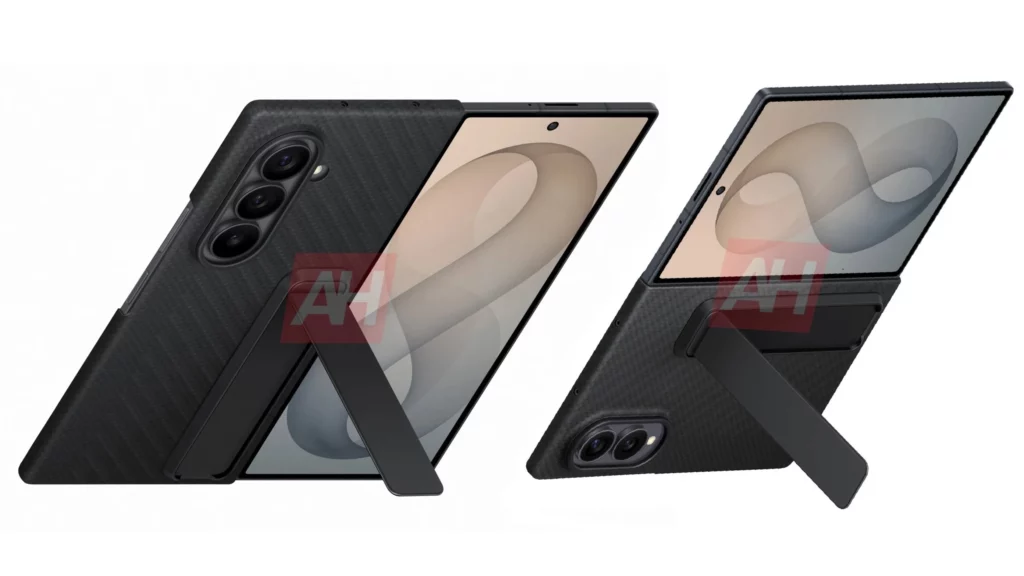
Leaked renders of the Z fold 8
Image: Android Headlines

New leaked images have provided an early look at Samsung’s upcoming foldable phones. The leaks include official protective cases for the Galaxy Z Fold 8, Galaxy Z Fold 8 Ultra, and Galaxy Z Flip 8. Some images also show the phones inside the cases, making their designs easier to understand. This gives a clearer view of the new designs teased by Samsung.

The latest leaks also highlight the key design changes across Samsung’s upcoming foldable lineup. The Galaxy Z Fold 8 appears wider than earlier Fold models. It includes a dual-rear-camera setup and a punch-hole selfie camera. The Galaxy Z Fold 8 Ultra retains a taller design and a triple-camera rear setup. The Galaxy Z Flip 8 maintains its classic flip-style design with dual cameras.

Case Options and Color Choices

Samsung seems ready to offer multiple official case options with its new foldable lineup. The collection includes kickstand cases, aramid-fiber-style finishes, and solid-color covers. Buyers may choose from purple, white, and dark gray. The company could also introduce cartoon-style cases for users who want a unique look.

Advertisement

Expected Launch Timeline

The date of release is still being kept secret. But the latest news indicates the devices could launch on July 22. The company is likely to release teaser information before making an official announcement. These updates should reveal more about the upcoming devices.

Source link

Advertisement
Continue Reading
Click to comment

You must be logged in to post a comment Login

Leave a Reply

Tech

Meet the 17 startups that took part in Creative Destruction Lab’s latest Seattle accelerator

Published

on

Emer Dooley, site lead for Creative Destruction Lab in Seattle, moderates an accelerator program session alongside mentors and startup founders. (CDL Photo)

Startups innovating across advanced manufacturing and computational health made up the latest cohort of the Seattle accelerator run by Creative Destruction Lab (CDL).

The nine-month, nonprofit program based at the University of Washington’s Foster School of Business graduated 17 early stage companies. It’s the fifth cohort since CDL launched its Seattle hub in 2021.

CDL, which runs startup programs around the world, does not take equity from companies and relies on funding from founding members such as the UW and Microsoft. Founders in the cohort get access to mentors including startup founders, investors, and other leaders from across the Pacific Northwest.

Startups that have participated have collectively raised more than $330 million in follow-on venture capital funding since 2022, according to CDL.

The list below includes the companies that just graduated, with descriptions provided by CDL. See past graduates here.

Advertisement

Manufacturing

  • 3D Spark — An AI-powered B2B platform that lets engineering, procurement, and sales teams rapidly evaluate and compare manufacturing methods for custom parts by analyzing manufacturability, cost, lead time, and CO₂ footprint. 
  • Outrun Robotics — An industrial automation company that builds and deploys capable, flexible, intelligent robotic workstations to automate stationary, repetitive work in factories. 
  • Xronos — Empowers developers to rapidly and confidently design, test, and deploy software to automate the physical world. 
  • Loadsters — A lightweight, rechargeable, modular conveyor-belt system that makes it easier for ramp agents to load and unload cargo and luggage in narrowbody aircraft, for airlines and ground handlers. 
  • Velodex Robotics — Building general-purpose robotic manipulation, initially targeting high-volume production in the food industry. 
  • AILOS Robotics — Builds the gearboxes robots need at every joint, making modern robotics lighter, faster, safer, more sustainable, and more affordable. 
  • R2 Labs — Redefining industrial automation with the R2 Autonomy Controller (RAC), bringing vision, AI, and real-time intelligence to existing PLC-based systems. 
  • Neuramill — AI tools for high-precision manufacturing; the copilot for CNC, sitting between CAD and CAM. 

Computational health

  • Navis Bio — Software and AI tools for highly-customized intelligence on biopharma assets.
  • Cubtale — The first parenting platform integrated with healthcare systems, delivering AI-powered, personalized care guidance and rich behavioral data analytics from birth to early childhood. 
  • Vocxi — A breath-based diagnostic platform that enables rapid, noninvasive detection of multiple diseases. 
  • EloraHQ  — The operating system for frontline care: 90% less paperwork, 10x clients, and full revenue capture. 
  • Vivo Surgery — A cloud platform that captures and organizes surgical video into AI-ready data, accelerating precision training, connected operating rooms, and the future of autonomous robotic surgery. 
  • LIND AI — Helps health systems accelerate trial accrual by automating screening and surfacing the most eligible patients, with source-verified evidence at their fingertips. 
  • Adentris — An AI-powered platform that integrates with EHR systems to continuously scan for quality-measure adherence and documentation issues before they lead to patient-safety risks or financial losses. 
  • Exin Therapeutics — Develops gene therapies to repair circuit dysfunction, powered by an AI drug discovery platform. 
  • Therassist.AI — Helps psychotherapists close the quality gap by automating notes and guiding expertise in evidence-based psychotherapy.

Applications are now open for the 2026-27 cohort, with a July 24 deadline to apply. The program is conducted virtually with three in-person session days in October, February, and April. Founders can apply here or reach out to CDL Seattle venture managers: cdl-seattle@creativedestructionlab.com.

Source link

Continue Reading

Tech

Wi-Fi Signals Become a Pocket Radar for Spotting Movement Through Walls

Published

on

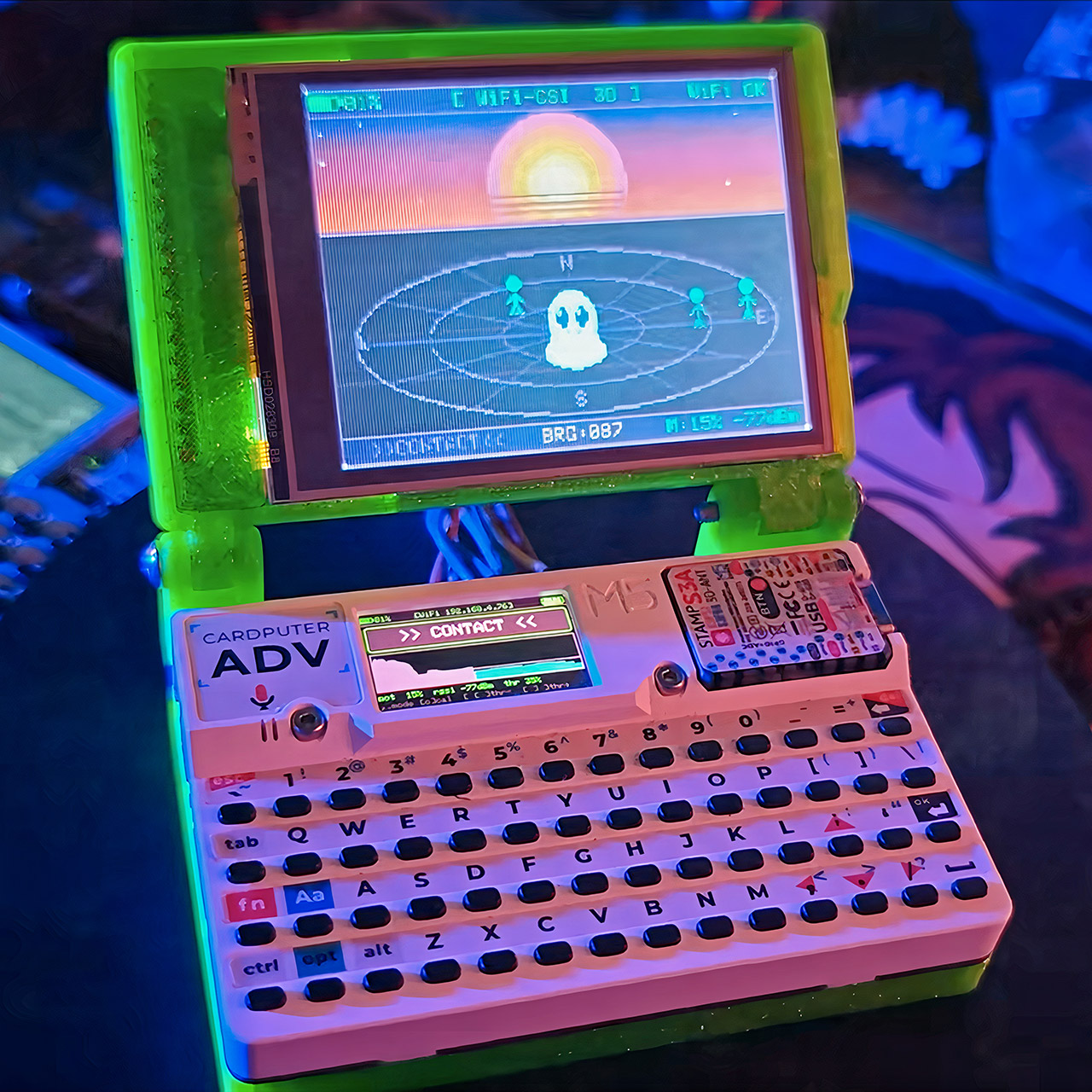
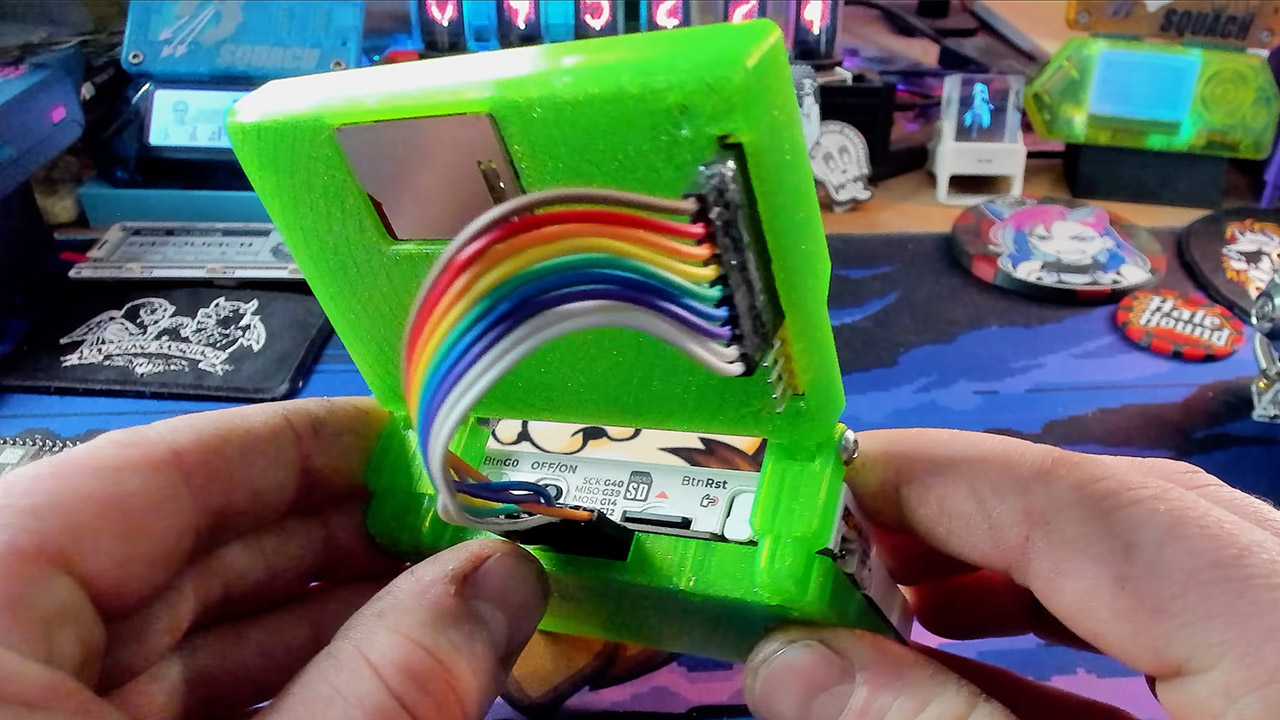
Cardputer WiFi Signals People Detection Through Walls
Makers assembled a compact handheld unit that listens to standard wireless network signals and converts subtle shifts in those signals into a real-time radar display of nearby human activity. The entire system fits comfortably in one hand and comes together for roughly fifty dollars in parts. Movement registers even when walls or other barriers stand between the device and the person. No camera, no infrared sensor, and no dedicated motion detector appears anywhere in the build. Instead the unit taps into Channel State Information (CSI) carried by ordinary Wi-Fi traffic in most homes and offices.


CSI contains a wealth of information on signal intensity and phase across several sub-channels, acting as a unique fingerprint that is written into the air by every surface, item, and person in its vicinity. Then there’s human tissue, where the water reacts with radio waves in a way that makes it stand out from everything else in the room. Of course, motion alters this distinct pattern, allowing the device to detect it. After calibrating the device with a quick empty room scan, the firmware can set a baseline and compare new data to it. Any continuous changes that exceed a specific threshold will trigger a detection and leave a mark on the radar display. One processing core is constantly collecting data, while the other maintains the screens responsive, with no lag.


GL.iNet GL-SFT1200 (Opal) Portable WiFi Travel Router, Mini VPN Wireless Router, Mobile Internet WiFi…
  • 【AC1200 Dual-band Wireless Router】Simultaneous dual-band with wireless speed up to 300 Mbps (2.4GHz) + 867 Mbps (5GHz). 2.4GHz band can handles…
  • 【Easy Setup】Please refer to the User Manual and the Unboxing & Setup video guide on Amazon for detailed setup instructions and methods for…
  • 【Pocket-friendly】Lightweight design(145g) which designed for your next trip or adventure. Alongside its portable, compact design makes it easy to…

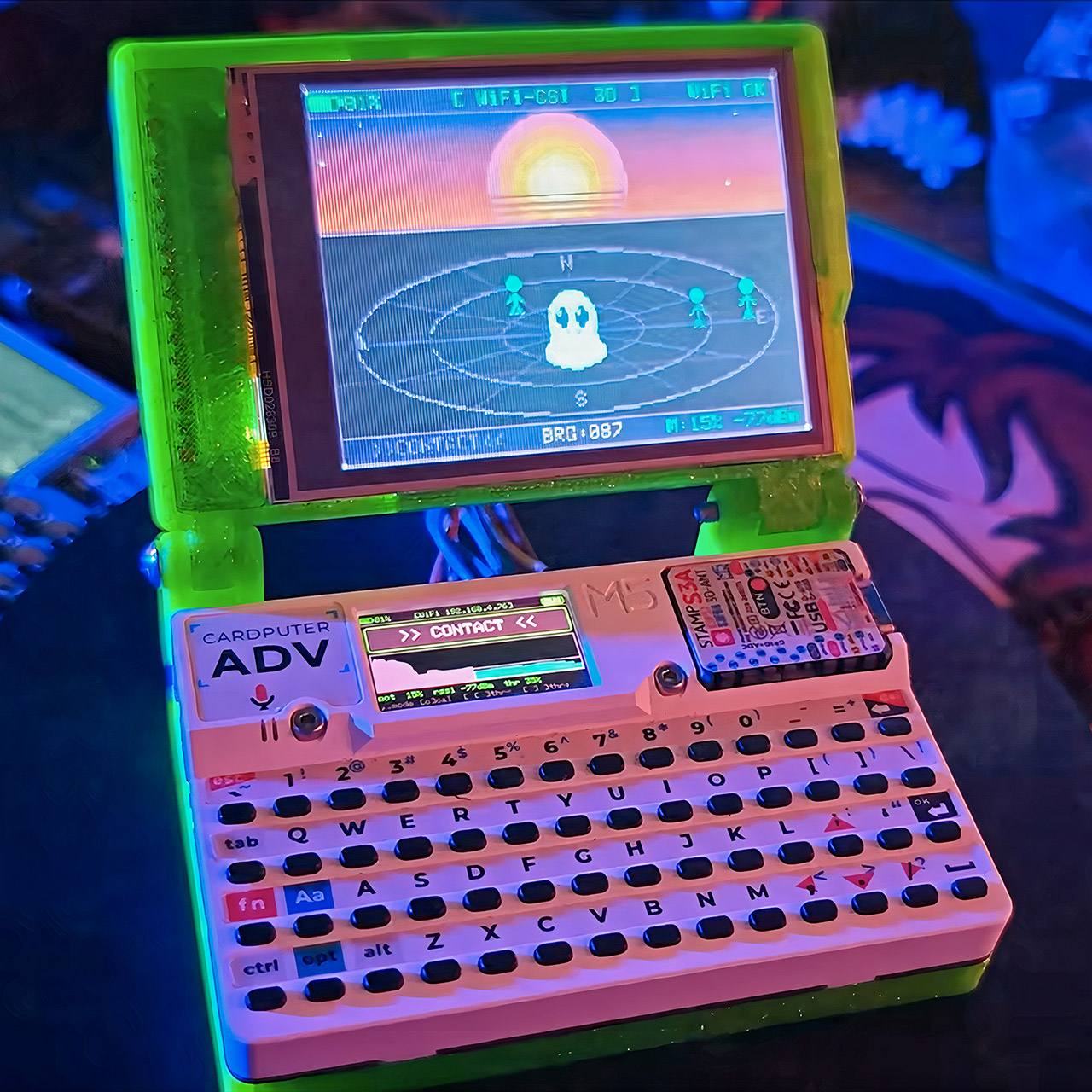
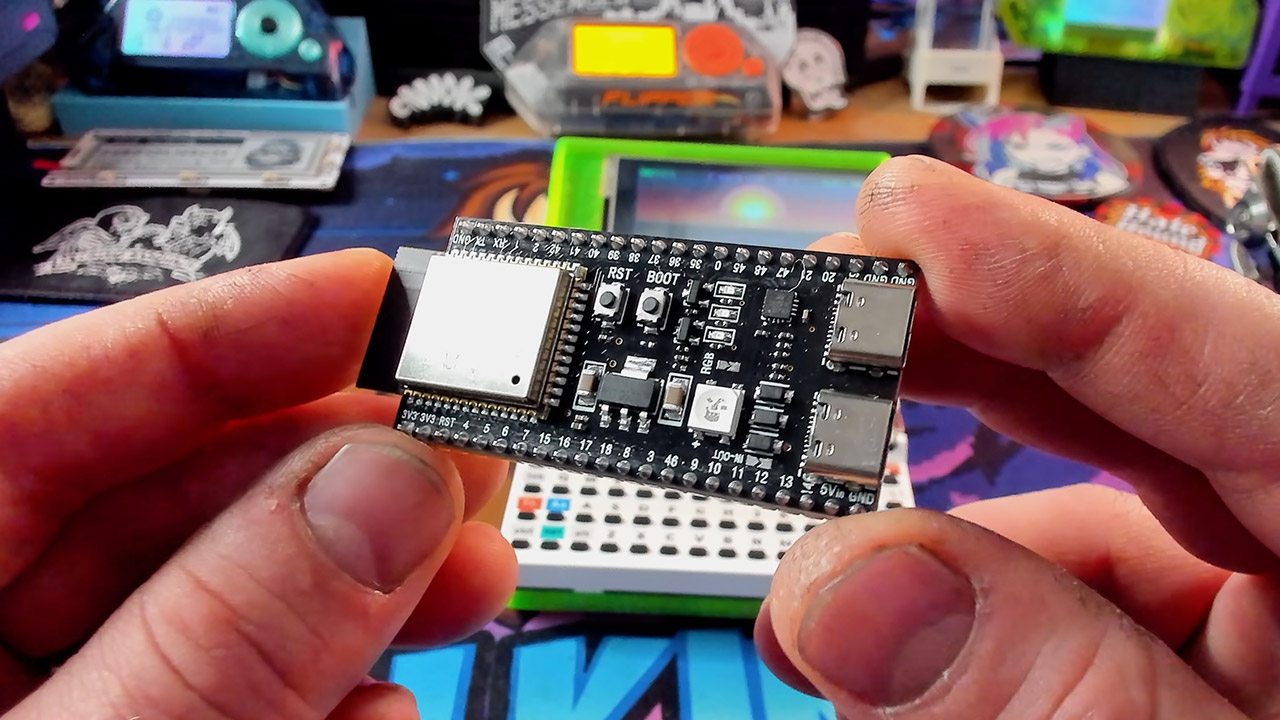
Building it all begins with an M5Stack Cardputer ADV board, which already has an ESP32-S3 microcontroller, a small screen, a keyboard, and a battery. Then you simply slap an extra display onto the board and place it in a simple 3D printed frame above the primary unit, and you’re ready to go. Dual displays are no problem, and because it reuses existing Wi-Fi networks rather than creating its own, the parts list is kept to a minimum.

Cardputer WiFi Signals People Detection Through Walls
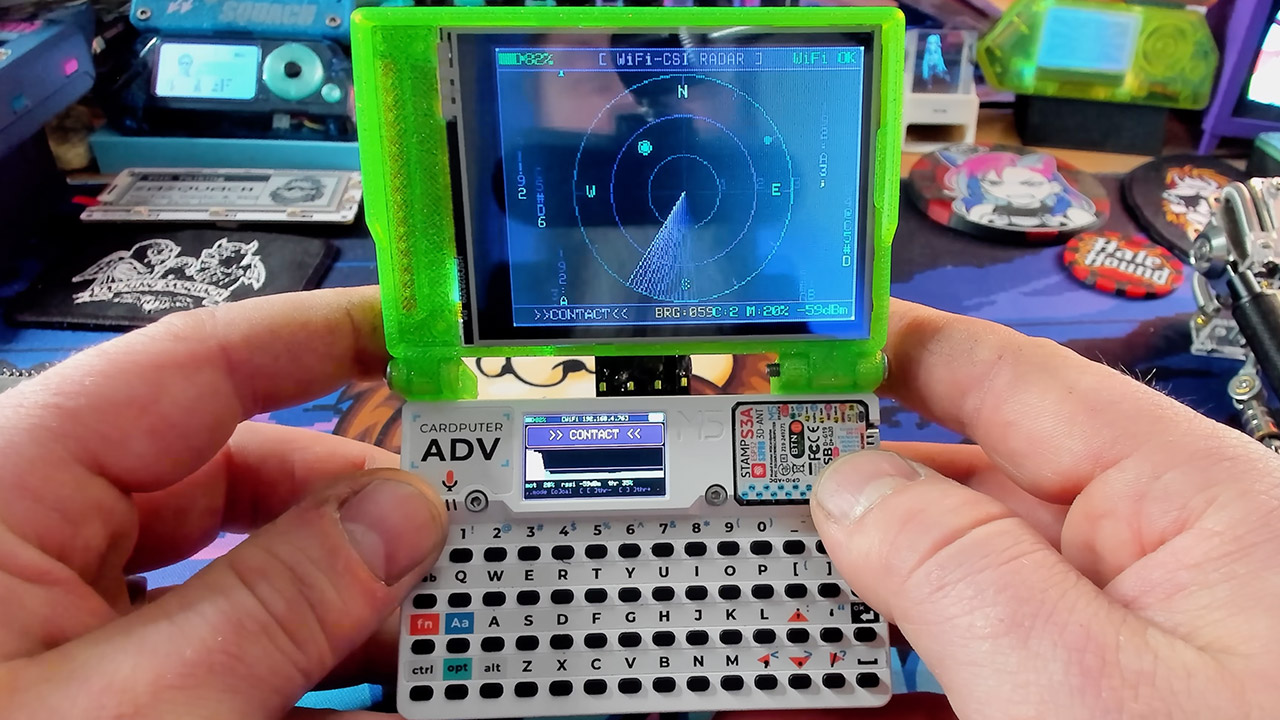
When it first powers up, it scans for available networks; select one, input your password, and you’re ready to go. Connection is confined to the networks you manage, which prevents the unit from spying on other people’s traffic. Once the connection is established, the radar activates and the smaller screen displays all connection details, a scrolling graph of recent activity, and options such as a clear or presence banner, as well as the sensitivity setting. The larger screen displays the real radar image, which is a sweep line slowly traveling across a circular view with fading trails indicating where earlier movements were identified, and as the marks emerge, they grow or shrink depending on how much the signals shifted at the time.

Cardputer WiFi Signals People Detection Through Walls
Of course, there are keyboard shortcuts for things like triggering a fresh calibration, adjusting the detection threshold, and navigating to the settings menu. The entire machine can run totally on battery power or a USB connection when necessary, and because it just uses Wi-Fi signals that are already floating around, it can work in the dark and through most interior walls. With some furniture around, readings can be thrown off as reflections bounce off everything, causing your gadget to go berserk, but with careful positioning and tweaks, you can generally keep the false triggers under control. The problem is that the current design just provides you a general sense of movement in the area and does not provide precise direction or distance.

Cardputer WiFi Signals People Detection Through Walls
Because the code, build files, and enclosure designs are now public on Github, anybody can recreate or adapt the project to meet their own requirements. The same Wi-Fi signals that make life so convenient also allow you to utilize this device to determine whether anyone is in the room or if there’s any unusual activity going on someplace. As a result, it has a variety of helpful uses, such as automatic lighting control when you enter a room and simple notifications when someone does something unexpected. The only issue is attempting to completely avoid using it without blocking Wi-Fi connections.
[Source]

Advertisement

Source link

Continue Reading

Tech

Viatel acquires Scottish cyber consultancy FullProxy

Published

on

Glasgow-headquartered FullProxy provides cyber consultancy services to public and private sector organisations across the UK.

Irish telecoms and IT company Viatel Technology Group has acquired Scottish cybersecurity consultancy FullProxy for an undisclosed amount.

The acquisition – which is backed by investment from Macquarie Capital – is designed to expand Viatel’s presence in the UK and its cyber capabilities, according to the company.

FullProxy was founded in 2015 by CEO Ewan Ferguson and CTO Chris Templeton and provides cyber consultancy services to public and private sector organisations across the UK.

Advertisement

The company, which is headquartered in Glasgow, has particular expertise in network design and implementation, cloud authentication and endpoint security, and counts customers in data-sensitive sectors such as healthcare, local government, financial services and critical infrastructure with clients including the NHS, Scottish government, Virgin Money and FNZ.

As well as being recognised as an Expert Fortinet Partner and elite F5 Gold Tier partner, FullProxy has also been featured in TechUK’s Tech200 Growing Companies, and shortlisted twice for Scottish Cyber Security Company of the Year at the Scottish Cyber Awards.

“Over the last decade we’ve built FullProxy around a deeply felt principle: helping customers solve complex cybersecurity challenges and achieve ROI through expert advice, deep technical capability and long-term trusted relationships,” said Ferguson. “The growth we’ve achieved in recent years is a testament to the quality of our people, the trust of our customers and the strength of our partnerships. We are incredibly proud of what the team has built.

“Joining Viatel gives us the opportunity to build on that success.”

Advertisement

Viatel said the acquisition will further strengthen its “core cybersecurity capabilities” at a time when organisations are under growing pressure to secure complex digital infrastructure while preparing for wider AI deployment.

“As clients adopt AI and manage increasingly complex digital estates, the need for deep cybersecurity expertise has become more urgent,” said Paul Rellis, CEO of Viatel Technology Group. “FullProxy strengthens our position as an integrated technology partner with expertise across security, networking and digital services and enhances our ability to deliver solutions that are aligned to customer priorities.

“It also represents a strong endorsement of our cyber division and our long-term strategy to help organisations build resilience today and grow securely for the future.”

FullProxy is the latest in a series of tech companies to be acquired by Viatel in recent years.

Advertisement

Last year, the company acquired the Belfast-based cyber operations of UK IT services firm Cybit.

In 2024, Viatel acquired the technology division of managed print services provider MJ Flood in a deal reportedly valued at €30m, while in 2023, it snapped up US-headquartered cloud-connected infrastructure provider Sungard Availability Services – its eighth acquisition since 2020.

Its other acquisitions include WifiberNova TelecomIrish TelecomSupportIT and Action Point.

Don’t miss out on the knowledge you need to succeed. Sign up for the Daily Brief, Silicon Republic’s digest of need-to-know sci-tech news.
Advertisement

Source link

Continue Reading

Tech

Modern E-Ink Dashboards, Kindle And Otherwise

Published

on

People have been attempting to turn Kindles into more than e-readers since the first devices came out nearly two decades ago. The e-ink displays are low-power and great for displaying information that doesn’t refresh too often, and with Amazon continuing their trend of bricking their older devices there will be more of these devices available. [Hemant] built a weather dashboard with one of his, but since then had requests for other types of e-reader dashboards and has a guide for making more general-purpose use of an old Kindle.

The first approaches outlined here involve the installation of a dashboard client on the Kindle and pointing it at a server that hosts a PNG image of whatever information needs to be displayed. The client simply displays that image and refreshes it at predetermined intervals. There are a number of options for creating that server as well, including using Home Assistant for those who already have a home automation system deployed. The benefit of using Home Assistant is that it’s much more straightforward to gather data for the dashboards from sensors and other peripherals that are already installed.

Installing a client like this might seem straightforward, and it can be, provided that the Kindle involved is jailbroken or capable of being jailbroken. An Amazon update recently broke many modern devices’ ability to execute the jailbreak, so not every Kindle can do this anymore. But [Hemant] goes into detail about this and also outlines some methods for using generic e-ink displays instead, and also dives into the hardware and software behind building a server to host the dashboard images for those without Home Assistant already running. It’s a great overview for those who have always wanted something like this but never knew where to start.

Advertisement

Source link

Advertisement
Continue Reading

Tech

Thiel Capital’s Jack Selby nabs stakes in hot startups like Etched through Arizona connections

Published

on

Nvidia competitor Etched announced this week that TSMC had manufactured its first chip earlier this year. While the four-year-old startup valued at $5 billion is getting ready to ship systems powered by that chip to customers later this summer, scaling production may prove challenging. Like other chip designers, Etched must compete for limited capacity at TSMC’s Taiwan factories.

Copper Sky Capital, one of Etched’s early investors, is hopeful that the chipmaker will find a solution to its manufacturing constraints by eventually producing chips at Arizona’s TSMC facility. When the four-year-old VC firm invested in Etched’s $120 million Series A two years ago, founder Jack Selby secured an allocation in part by promising to help the startup eventually reshore its chip fabrication to Arizona.

Selby, a former PayPal exec and longtime managing director to Peter Thiel’s family office, Thiel Capital, founded Phoenix-based Copper Sky in 2021 (formerly known as AZ-VC). The firm’s first $115 million fund focused primarily on startups based in Arizona and the Southwest. Selby’s thesis was that most coastal startups, particularly those based in California, Massachusetts, and New York, are grossly overpriced compared to companies popping up in his region. However, Selby saw an opportunity to bridge the gap in the other direction by helping California-based hardware startups move their production to Arizona.

Selby credits Copper Sky’s investment in Etched — an otherwise hard-to-access startup — to his influential role in Arizona’s economy. As a board member of the Arizona Commerce Authority, Selby is deeply involved in recruiting out-of-state businesses to set up manufacturing operations in the region.

Advertisement

“When Copper Sky invested with Etched, the company clearly understood our connectivity to the Arizona semiconductor industry, and in particular the local TSMC GIGAFAB,” Selby told TechCrunch.

While Copper Sky has recently expanded its focus beyond the Southwest to include nontraditional venture hubs nationwide, Selby said that the firm is also interested in backing hardware companies, including in the defense sector, that can set up manufacturing operations in Arizona. 

The firm is expected to soon have more capital to invest in those higher-priced coastal companies, and those throughout the United States. Copper Sky is currently raising a $300 million second fund, according to a regulatory filing.

When you purchase through links in our articles, we may earn a small commission. This doesn’t affect our editorial independence.

Advertisement

Source link

Continue Reading

Tech

Today’s NYT Connections Hints, Answers for July 3 #1118

Published

on

Looking for the most recent Connections answers? Click here for today’s Connections hints, as well as our daily answers and hints for The New York Times Mini Crossword, Wordle, Connections: Sports Edition and Strands puzzles.


Today’s NYT Connections puzzle is a real challenge. Read on for clues and today’s Connections answers.

The Times has a Connections Bot, like the one for Wordle. Go there after you play to receive a numeric score and to have the program analyze your answers. Players who are registered with the Times Games section can now nerd out by following their progress, including the number of puzzles completed, win rate, number of times they nabbed a perfect score and their win streak.

Advertisement

Read more: Hints, Tips and Strategies to Help You Win at NYT Connections Every Time

Hints for today’s Connections groups

Here are four hints for the groupings in today’s Connections puzzle, ranked from the easiest yellow group to the tough (and sometimes bizarre) purple group.

Yellow group hint: Supportive emotions.

Advertisement

Green group hint: Totally tubular would be another one.

Blue group hint: Gifts no one wants.

Purple group hint: Earl Grey, hot.

Answers for today’s Connections groups

Yellow group: Positive feelings.

Advertisement

Green group: Retro expressions of approval.

Blue group: Bad things to give someone.

Purple group: What things pronounced “T” might refer to.

Read more: Wordle Cheat Sheet: Here Are the Most Popular Letters Used in English Words

Advertisement

What are today’s Connections answers?

completed NYT Connections puzzle for July 3, 2026

The completed NYT Connections puzzle for July 3, 2026.

NYT/Screenshot by CNET

The yellow words in today’s Connections

The theme is positive feelings. The four answers are bliss, felicity, happiness and warm fuzzies.

The green words in today’s Connections

The theme is retro expressions of approval. The four answers are cool beans, far out, groovy and right on.

Advertisement

The blue words in today’s Connections

The theme is bad things to give someone. The four answers are cold shoulder, dirty look, hard time and runaround.

The purple words in today’s Connections

The theme is what things pronounced “T” might refer to. The four answers are golf accessory, gossip, hot drink and shirt.

Toughest Connections puzzles

We’ve made a note of some of the toughest Connections puzzles so far. Maybe they’ll help you see patterns in future puzzles.

#5: Included “things you can set,” such as mood, record, table and volleyball.

Advertisement

#4: Included “one in a dozen,” such as egg, juror, month and rose.

#3: Included “streets on screen,” such as Elm, Fear, Jump and Sesame.

#2: Included “power ___” such as nap, plant, Ranger and trip.

#1: Included “things that can run,” such as candidate, faucet, mascara and nose.

Advertisement

Source link

Continue Reading

Tech

Prosser denies Apple’s charges of trade secret theft

Published

on

Jon Prosser has formally responded to Apple’s lawsuit over alleged iOS leaks, claiming that he is entirely innocent and that colleague Michael Ramacciotti is solely responsible for any alleged trade secret theft.

Apple’s now year-long case against Prosser had initially seen the YouTuber repeatedly ignoring court deadlines. He began responding in April 2026, and his lawyers have now formally filed his rebuttal to Apple’s accusations that he and Ramacciotti conspired to steal trade secrets from Apple employee Ethan Lipnik.

“Ramacciotti’s is [sic] responsible for all harm caused to Prosser and should indemnify him for all harm caused,” says the filing. “Ramacciotti’s act of displaying the features was not induced by Prosser and, as such, Ramacciotti is completely responsible for the disclosure of Apple’s alleged trade secrets, if any.”

Prosser specifically denies offering money in return for the information Ramacciotti showed him. He also denies knowing how his co-defendant got his information, or conspiring ahead of time to gather it.

Advertisement

Ramacciotti unlocked Lipnik’s iPhone, which had an early release of what was then called iOS 19, and shared confidential details. Prosser claims no knowledge of whose iPhone it was, and denies knowing that Ramacciotti was in the Apple employee’s apartment.

Prosser does admit to sharing with Ramacciotti a portion of the revenue his YouTube video brought in, and said this was to secure exclusivity. “Once Prosser learned how Ramacciotti acquired the proprietary information, he disconnected communication with Ramacciotti,” says the filing.

At one point the filing says that Prosser “has not [sic] knowledge if iOS 19 was in fact ‘unreleased’.” But later it says “Prosser admits that the information was unreleased software.”

That contradictory claim appears to mean that it was during the demonstration of iOS 19 that Prosser did not know it was iOS 19 that he was being shown.

Advertisement

Prosser’s filing, as first spotted by MacRumors, requests trial by jury.

Apple has not responded publicly to the filing.

Separately, Michael Ramacciotti has been cooperating with the courts since at least October 2025, and provided Apple with his emails, computers, and archives. Ramacciotti’s lawyers have claimed that he did not appreciate the value and nature of what he showed Prosser.

Advertisement

Source link

Continue Reading

Tech

When the Law Kills Your Electric Car Dealership

Published

on

Owning a US electric vehicle dealership has been a wild ride in the 2020s.

Since Polestar Short Hills opened in northern New Jersey in 2021, it went through a Covid-era demand spike and EV shortage that left some used electrics with higher valuations than new ones; a new federal tax credit of up to $7,500 that brought a new wave of drivers in the door; lower sales volumes after the rollback of that federal tax credit, and the snipping of a state one; and then another wave of buying when EV-curious drivers began running from Elon Musk’s Tesla because of the CEO’s involvement with the Trump administration.

Now, Matthew Haiken, who owns that Polestar dealership along with three other (non-Polestar) dealerships in the Prestige Collection Auto Group, faces another and more serious challenge. Polestar said in late June that the US Commerce Department had denied an authorization that would have allowed the brand to continue selling cars in the US despite a federal rule restricting the sale of vehicles with Chinese-made connected-vehicle technology. The company, which is majority-owned by China’s Geely Holding and its founder Li Shufu, says it will stop selling Polestar vehicles in the US beginning with the 2027 model year.

“It’s so unfortunate,” Haiken says. “It’s hard for my customers who have been reaching out; it’s hard for my staff.” He says he and the owners of the US’s other 31 Polestar dealerships have invested “many millions” in selling the cars and called the authorization decision “a shock to me and all the dealers.”

Advertisement

Volvo, which is also majority-owned by Geely, received authorization from the Commerce Department in March, allowing it to continue selling its vehicles in the US, despite its Chinese connections. Volvo said at the time that it held “constructive discussions” with the department about the automaker’s “governance, technology and data security.” (When asked about the discrepancy, a Polestar spokesperson said that the company “cannot comment on how legislation applies to other manufacturers.”)

“I am very frustrated in Polestar, globally,” Haiken says. “I think they really dropped the ball, and I blame them. I don’t blame the government.”

The Commerce Department under the Biden Administration officially approved the connected-vehicle rule in January 2025, after government officials argued that a ban on Chinese- and Russian-made automotive hardware and software was necessary for national security reasons. The federal government said that internet-connected automotive cameras, microphones, and GPS equipment threatened US safety. “It doesn’t take much imagination to understand how a foreign adversary with access to this information could pose a serious risk to both our national security and the privacy of US citizens,” Commerce secretary Gina Raimondo said at the time.

The US Commerce Department did not respond to WIRED’s questions.

Advertisement

Polestar said in a statement last week that US dealerships would sell “existing stock” of the Polestar 3 and Polestar 4, and that a US service network would “continue to support customers.” It framed the move as “increasing its strategic focus on Europe,” and said that 94 percent of Polestar’s first quarter 2026 sales took place outside of the US.

Haiken calls that statistic misleading because the brand’s newest offering, the Polestar 4 coupe, went on sale in Europe in January 2024 but wasn’t available in the US until December 2025.

Some Polestar dealerships handle service issues through Volvo centers, but Haiken said his stand-alone Polestar service center will continue fixing and servicing the EVs. “We have the volume to justify it,” he says. “We have to be around to perform that work.” Not all dealerships might make the same decision, he said, though vehicles will likely be sent to the closest service center for tune-ups and fixes.

Source link

Advertisement
Continue Reading

Tech

SpaceX Reportedly Has an AI Device Prototype

Published

on

According to the Wall Street Journal, SpaceX showed investors an early prototype of a slim, “handset-like” AI device running a proprietary operating system and integrating xAI technology. Elon Musk, however, denied the report, calling it “utterly false.” TechCrunch reports: SpaceX, alongside sister company Tesla, does have the manufacturing expertise to pull off mass-producing a bunch of AI devices — not to mention access to the chips needed to power any on-device compute. SpaceX has also signaled that it’s keen to expand into wireless, with Starlink Mobile as a potential competitor to Verizon and AT&T. One analyst even went as far as to speculate that T-Mobile or AT&T would make fine acquisition targets for the rocket builder, though such a purchase would, undoubtedly, be pricey.

It’s also not clear if SpaceX is just throwing spaghetti at the wall or if it will attempt to really mass-produce and market such a device. But one thing that seems clearer is that if OpenAI is doing it, Musk would, perhaps, want to try to do it better. […]

Like OpenAI, SpaceX’s prototype is reportedly designed to run on a proprietary operating system and integrate technology from xAI, Musk’s AI company that SpaceX acquired earlier this year. This would prevent these new devices from being trapped inside another company’s platforms (like Google’s Android). But the intent also appears to be to create something new, with native AI interfaces. That said, the graveyard is crowded with the unsuccessful launches of AI devices from companies like Humane and Rabbit. A company wanting to sell an AI device does not equate to consumers wanting to buy such a thing. Yet.

Source link

Advertisement
Continue Reading

Tech

EU appears to find datacenter emissions easier to offset than lobbyists

Published

on

ON-PREM

Report says proposed rewrite gives operators more freedom to shop around for a greener grade

The European Union’s proposed environmental rating system for datacenters may be amended in response to lobbying from IT industry heavyweights, making it easier to offset greenhouse gas emissions using clean energy certificates.

According to the Financial Times, the European Commission is weakening its original proposals after pressure from datacenter operators and tech giants. The newspaper claims to have seen the revised draft of the regulations, set to be discussed by representatives of member states on Thursday.

Advertisement

We asked the Commission for comment on the leaked draft.

The Commission published a draft regulation in March proposing an A-to-G rating scale for datacenters, based on their energy and water efficiency. The system is intended to incentivize greater sustainability in their operations, especially as bit barn capacity is expected to expand greatly over the next decade, thanks to huge demand for AI and cloud services.

That earlier draft specified that facilities could offset greenhouse gas emissions by investing in clean energy certificates, but only if the projects concerned were in the same region as the data campus itself.

It is understood that this has been amended so that facilities operating in one country can offset their emissions by obtaining certificates from renewable projects in a different EU state. The proposed change was made at the behest of companies and lobby groups that argued it would increase their operating costs.

Advertisement

The EU’s efforts to press datacenters and other large energy users into adopting greater efficiency and sustainability measures have met with varying degrees of pushback.

Last year, the Climate Neutral Data Centre Pact (CNDCP) expressed concerns about standards for data campus efficiency the European Commission was considering, based on feedback from mandatory reporting introduced in the Energy Efficiency Directive (EED).

The group lists tech giants AWS, Microsoft, and Google among its signatories, as well as datacenter operators like Digital Realty, NorthC, and Vantage Data Centers.

Also last year, the Cloud Infrastructure Service Providers in Europe (CISPE) trade body was critical of the EU’s Water Resilience Strategy, warning that burdensome regulatory demands regarding water use might prompt operators to build outside Europe.

Advertisement

Another body, the European Data Centre Association (EUDCA), issued a statement this week affirming its “unwavering commitment” to climate-neutral datacenters and sustainable digital growth.

But it warned that Europe will not be able to “unlock the digital infrastructure capacity required for its AI and digital ambitions” without addressing structural challenges in the electricity system, including expansion of transmission and distribution grids, faster and more transparent permitting processes, and stable access to low-carbon electricity.

Meanwhile, Europe needs a policy framework that integrates water and energy efficiency if it wants to keep growing datacenter capacity to support its AI and cloud computing ambitions, according to a recent report.

The proposed environmental rating system is still listed as due for adoption in the third quarter of this year, but debate over the changes may push that back further. ®

Advertisement

Source link

Continue Reading

Trending

Copyright © 2025