Connect with us
DAPA Banner
DAPA Coin
DAPA
COIN PAYMENT ASSET
PRIVACY · BLOCKDAG · HOMOMORPHIC ENCRYPTION · RUST
ElGamal Encrypted MINE DAPA
🚫 GENESIS SOLD OUT
DAPAPAY COMING

Tech

Breaking: Sony is launching a new RX10 bridge camera next week! Here’s what we can learn from the shock teaser

Published

on


  • Sony teased a new RX10 on its Instagram, writing ‘The Wait is over’
  • Its previous bridge camera was the RX10 IV from 2017, which is discontinued
  • This latest in the series will arrive on July 9 at 7am PT / 10am EDT / 3pm BST

Sony just dropped exciting news for fans of its versatile bridge cameras — a new RX10 camera will be revealed next week.

The teaser on Sony’s Instagram reveals a surprising amount of detail, including the release date plus a silhouette of the next RX10, which from we can glean some info about its lens.

Advertisement

Source link

Continue Reading
Click to comment

You must be logged in to post a comment Login

Leave a Reply

Tech

NYT Connections hints and answers for Sunday, July 5 (game #1120)

Published

on

Looking for a different day?

A new NYT Connections puzzle appears at midnight each day for your time zone – which means that some people are always playing ‘today’s game’ while others are playing ‘yesterday’s’. If you’re looking for Saturday’s puzzle instead then click here: NYT Connections hints and answers for Saturday, July 4 (game #1119).

Good morning! Let’s play Connections, the NYT’s clever word game that challenges you to group answers in various categories. It can be tough, so read on if you need Connections hints.

What should you do once you’ve finished? Why, play some more word games of course. I’ve also got daily Strands hints and answers and Quordle hints and answers articles if you need help for those too, while Marc’s Wordle today page covers the original viral word game.

Advertisement

Source link

Continue Reading

Tech

Databricks unifies OLTP and OLAP, depending on what counts as a copy

Published

on

When Databricks claimed to have cracked an age-old database problem, it came with a clear marketing message: “One data, zero compromises, zero copies.” Inevitably, that led engineers to search for clarity. After all, the company claimed to have unified OLTP and OLAP with “no data duplication.”

Databricks, which was founded around the open source unified analytics engine Apache Spark, called its invention LTAP, which stands for lake transactional/analytical processing. It works with Reyden – a new compute engine – and Lakebase, its serverless PostgreSQL on open object storage.

Databricks is attempting to address a fundamental database challenge. OLTP (online transactional processing) performs small, row-oriented reads and frequent writes, while OLAP (online analytical processing) performs large, column-oriented reads and batch writes. Down to the physical level, it is challenging to get the two to coexist in a single system. The issue is seen as more pressing now as the database market chases workloads created by the booming deployment of AI agents, both in software development and business applications.

What did Databricks claim? The publicity material said that rather than forcing both OLTP and OLAP workloads into one engine or concealing the pipeline, it unifies data at the storage layer, thereby unifying transactions, analytics, streaming, and operational data on a single copy of storage in the data lakehouse, a concept Databricks created to describe the marriage of data lakes and data warehouses.

Advertisement

Does that mean there are “zero copies” of the data, as claimed in several promotional LinkedIn pieces and a Forbes CEO interview? Well, not quite.

The transactional side of LTAP is based on Databricks’ first fully managed PostgreSQL database, Lakebase, which in turn is based on technology from Neon, which Databricks bought last year to provide copy-on-write branching and autoscaling serverless compute.

In his search for clarity, one data engineer in financial services posted that LTAP proposes that the current PostgreSQL data stays in the pageserver format as local storage then is propagated to object storeage for long-term durability in the Parquet file format, where it can be queried in a columnar format. PostgreSQL/Lakebase can retrieve data from the object store and reconvert the Parquet data to a pageserver if it needs data from cold storage. In this way, Databricks has “unified” the OLTP storage and OLAP storage.

“Two copies of data, not one,” quipped one commenter from a Databricks rival.

Advertisement

Slides made available at a PostgreSQL conference in May make the link clear. Under the header “Analytics directly on OLTP data,” Databricks engineers Hristo Stoyanov and Jonathan Katz said that pageserver provides storage while the Spark analytics executor pulls layer files containing full page images from the image layers in object storage.

On a private messaging community seen by The Register, one Databricks engineer responded to the question about whether there was one copy of the data or two copies in object storage and pageservers respectively. Technically two, they responded, since pageservers act as a cache or materialization layer in the Neon architecture. PostgreSQL reads from pageservers, while the analytics engine reads PostgreSQL pages from object storage (Apache Parquet or Iceberg table format) and pageservers.

Databricks is far from alone in trying to crack this nut. Unifying OLTP and OLAP has been tried before, and solved, according to some companies. For example, in 2014, SingleStore began working on an in-memory row store and an on-disk column store with tiered storage, “meaning transactions hit memory first and then they roll off to disk storage,” allowing analytics and transactions on a single system. It launched a cloud database service (on AWS, Azure, or GCP) in 2020, which “automatically manages data across a three-tiered storage architecture comprised of memory, local cache, and storage.” It moves data “seamlessly” between memory, persistent cache, and object storage without the user being aware, the company says.

Not surprisingly, SingleStore was quick to post its reaction to Databricks’ claim that hybrid transactional/analytical processing (HTAP) had effectively failed.

Advertisement

“You don’t get to call HTAP a failure and then spend the next 20 minutes describing why the world needs exactly what HTAP promised. Unifying OLTP and OLAP so an agent can read and write in one place is the HTAP goal, whatever you print on the slide. Renaming it LTAP changes the marketing. It doesn’t change the physics, and it doesn’t retire the questions,” SingleStore CTO Nadeem Asghar said in a blog post.

He pointed out that Databricks’ claim of “one copy” of the data is about storage, not about the engine. “Three engines still sit on top, each with its own cache, its own sense of how fresh the data is, and its own way of failing at the worst possible moment. Databricks’ own framing: a row layout and a columnar layout are different things. If a write lands in a row representation for Postgres and analytics reads a columnar representation, then you have two physical shapes of the same data, and something has to keep them in step,” Asghar said.

There are other examples of efforts to bring together analytics and transactional systems. MongoDB offers column-store indexes to help developers build analytical queries into their applications. Oracle’s HeatWave for MySQL runs on Oracle Cloud Infrastructure and helps customers run analytics on transactional applications without having to export data to a specialist analytics system such as Teradata, Snowflake, or AWS Redshift. SAP has talked about real-time analytics since 2011, and bases its concept around its in-memory database, HANA, which supports the latest iteration of SAP’s enterprise applications.

Databricks maintains its “zero copy” claim is true because it avoids having two authoritative copies of the data that need to be kept in sync.

Advertisement

In a statement to The Register, a Databricks spokesperson said: “In LTAP, the user only operates on one authoritative copy of the data. [It has] one source of truth data in Iceberg (an open source table format which contains Parquet files). Yes, any database system, even a single individual database, always has many intermediate internal copies of data, ranging from memory L1/L2/L3 cache, to DRAM memory, to non-volatile storage, to blob storage etc. This is referred to as ‘the database storage hierarchy.’”

In presentations at its recent conference, Databricks qualifies the claim in several ways. There’s only one “authoritative” copy of the data, or there is one copy of the data “in storage” or “in the lake.” In effect, it is the same approach SingleStore employs when it says its storage tiers are “transparent to the user.”

Regardless of the marketing ding-dong, Databricks has done some impressive engineering in the way its new Lakehouse execution engine, Reyden, can read PostgreSQL pages, according to Andy Pavlo, associate professor of databaseology at Carnegie Mellon University.

“They are copying data out eventually,” he told The Register. “But initially Databricks is able to have the Neon/PostgreSQL front end read the writes as it normally would, but then the Reyden engine can read those writes, and that part is not easy.”

Advertisement

“The Reyden analytics engine has the ability to now interpret the contents of the PostgreSQL pages, which is a non-trivial thing to do, because the pages are not entirely self-contained, meaning that information about what you’re allowed to see, or even what the data is, is stored in separate pages, so they have the mechanism to then go back into Neon/PostgreSQL and get that metadata from the catalog.”

“Anybody can go and read a PostgreSQL page. It’s not hard to write code to read a single page of data. The challenging part is being able to understand what you’re allowed to see or what the query is allowed to read from that page, because they intermix all the different versions, then [Databricks] has got to resolve that as well. All that is not trivial.”

“Basically, it allows you to do faster analytics, or more timely analytics, without the delay of waiting for things to get shoved out to S3 and you do it in a transaction-safe manner.”

Meanwhile, the Reyden analytics engine is stateless and can scale horizontally “very well” by adding more compute, Pavlo said.

Advertisement

Databricks might have produced some impressive technology by bringing transactional and analytic workloads closer together. But in the way it presents its work, critics might argue it should be careful what it wishes for. It would be a shame if its overzealous marketing claims cast a shadow over its significant engineering achievements. ®

Source link

Continue Reading

Tech

This is our best look yet at what the Samsung Galaxy Glasses could look like

Published

on

Renders of Samsung’s long-rumoured Galaxy Glasses have appeared in a short video that gives us an interesting look at the company’s first Android XR smart glasses.

Shared by SamMobile, the 27-second clip focuses on the glasses’ design rather than their software. Nevertheless, it shows hardware details that previous leaks haven’t shown this clearly before. This doesn’t look like an official video, more likely a generated video based on leaks.

The video shows a fairly understated design with square lenses and slim arms. This look is closer to a regular pair of glasses than many existing smart glasses.

A touch-sensitive area appears on the right temple, alongside a dedicated power button, while an LED indicator is also visible.

Advertisement

On the opposite side sits what appears to be a built-in camera. Consequently, this suggests Samsung is leaning into both mixed reality and everyday photography features.

Advertisement

While the leaked video doesn’t reveal any new specifications, it lines up with previous reports about what will power the wearable. The Galaxy Glasses are expected to use Qualcomm’s Snapdragon AR1 platform and pair with Wi-Fi and Bluetooth 5.3 connectivity to link with compatible devices.

Advertisement

The timing of the leak is also notable. Samsung will likely unveil – or at least tease – the Galaxy Glasses during its next Galaxy Unpacked event in London on July 22, alongside its latest foldable phones and wearables. This will also see the launch of the much-rumoured wide Galaxy Fold.

Although Samsung has yet to officially confirm the smart glasses, the appearance of this video suggests the launch isn’t far away. If the leaks are accurate, the Galaxy Glasses could become one of the first mainstream devices to showcase Google’s Android XR platform.

This would give Samsung a direct competitor to the growing number of AI-powered smart glasses entering the market.

Advertisement

Advertisement

Source link

Continue Reading

Tech

AI bills are baffling the C-suite after shift to usage-based pricing

Published

on

AI AND ML

KPMG finds nearly a third of execs struggle to understand costs as companies rethink deployments

Nearly a third of corporate leaders report difficulty understanding and controlling operating costs when implementing business AI at scale, according to a survey from KPMG.

In recent months, Anthropic, OpenAI, and GitHub have shifted some services away from flat-rate subscriptions toward usage-based billing.

Advertisement

“As usage-based pricing models become more common, many organizations are still building the capabilities required to forecast, monitor, and manage AI spending effectively,” KPMG said.

The survey of 2,145 senior leaders across 20 countries found that 29 percent struggle to understand their operating costs as they scale their enterprise AI deployments.

A third of senior corporate leaders also identified limited understanding of AI costs and economics as a challenge to deploying AI agents.

Businesses are rethinking their AI plans in the face of changing cost structures and rising fees. The research also found nearly half of organizations have rephased AI deployments when costs have outweighed the expected value. Lower-cost, high-fidelity models are the fastest-growing influence on AI strategy, up 7 percentage points from Q1.

Advertisement

“These actions do not signal reduced confidence in AI. Rather, they suggest a growing willingness to evaluate where AI creates meaningful value and where it does not. Organizations appear increasingly focused on concentrating investment where expected returns are strongest,” the report said.

Amazon plans capital expenditure of around $200 billion this year, largely to provide capacity for AI in its AWS datacenters, an increase of 50 percent on a year earlier. Microsoft’s total capex is expected to reach $190 billion, up 61 percent from the previous year.

Both companies are now investing significantly in forward-deployed engineering to help customers develop AI applications that will generate demand for the capacity being built.

Amazon has announced a $1 billion investment in an AWS Forward Deployed Engineering organization help customers adopt AI agents and reduce timelines for deployment.

Advertisement

Microsoft is providing $2.5 billion in funding for a new operating entity called Microsoft Frontier Company, “enabling customers to amplify their IQ with AI while refining their differentiated value in the markets that they serve.”

In the KPMG report, challenges remain around AI governance: the question of who takes responsibility for decisions made by statistical models prone to erroneous outputs – or “hallucinate,” as tech vendors would prefer.

KPMG said executive accountability is important, but “governance ultimately succeeds or fails through day-to-day operating practices.”

“Organizations need clear rules for when employees can intervene, who owns AI-related costs, how AI outputs are reviewed and what happens when systems fail. While most organizations report having at least some governance mechanisms in place, relatively few describe these practices as fully embedded,” the report said.

Advertisement

Perhaps the tech consultancy and services giant speaks from experience. Last month, research outfit GPTZero claimed a forensic review of KPMG’s October 2025 report, “Total Experience: Redefining Excellence in the Age of Agentic AI,” found that only five of its 45 citations pointed accurately to the cited source. The rest contained errors ranging from misleading or invented details to references that were too vague to verify.

KPMG later removed the report from some of its websites and issued a statement.

“KPMG International takes the accuracy and integrity of its published content seriously. The report has been removed and we are reviewing the circumstances surrounding its publication. We expect all our people to follow our guidelines on the responsible use of AI, including human oversight to validate content and verify independent sources,” a spokesperson said. ®

Source link

Advertisement
Continue Reading

Tech

Submit Your Questions: Inside The World of Online Romance Scams

Published

on

For our very first WIRED Book Club livestream, Kate Knibbs will be joined by the author of The Yahoo Boys: Love, Deception, and the Real Lives of Nigeria’s Romance Scammers, Carlos Barragán.

Barragán, a journalist and researcher at The New York Times, flew to Lagos to embed himself with a group of young, desperate grifters. The account he brings back is a funny, sad, enraging read about how the internet can fuel heartbreak.

On the Panel

  • Kate Knibbs: senior writer at WIRED, covering prediction markets, the future of media, and how AI is changing the internet. She also leads WIRED Book Club.
  • Carlos Barragán: reporter and researcher for The New York Times based in Madrid. He was formerly a reporter at El Confidencial before receiving his MFA in nonfiction writing from Columbia University. The Yahoo Boys is his first book.

Ask a Question

Submit your burning questions about the book in the comments section below. The event will be streamed right here, so bookmark this page and mark your calendar to return on July 16 at 12pm ET / 9am PT.

Advertisement

How to Watch

This livestream is reserved as a subscriber benefit. For subscribers who are not able to join, a replay of the livestream will be available after the event. Not a subscriber yet? Subscribe now to get access to this livestream, plus full access to WIRED.

Join WIRED Book Club

If you’d like to start following along, you can catch up on past weeks discussions, and sign up for WIRED Book Club here.

Advertisement

In the meantime, check out past livestreams on how AI is changing work, big tech and the military, and more.

Source link

Continue Reading

Tech

New DNA Tech Identifies Soldier Killed in America’s Revolution in 1780

Published

on

South Carolina’s pine forests “have spent centuries hiding a secret as old as America itself,” reports CBS News:

In August 1780, British and American soldiers clashed there, leading to a terrible defeat for the Continental army [fighting for the 13 colonies rebelling against England]. Battlefield archaeologists Jim Legg and Steve Smith have been studying the site for decades, but recently, they made a shocking discovery: The sandy soil was home to several sets of remains buried in shallow graves. Metal buttons suggested the men had been Continental soldiers, but there was no other identification… About 2,000 Continental soldiers were killed, wounded or captured, and some men never returned home.

Their families could only guess at their fates. But Legg and Smith’s discovery, paired with an explosion in DNA technology, is changing what’s possible. A set of remains, previously known only as 9B, has been identified as John Pumphrey, a young man from Maryland who enlisted in the Continental Army’s 7th Maryland Regiment as young as 13… Pumphrey likely marched more than a thousand miles with the regiment. The unit fought in battles with then-Gen. George Washington in New Jersey and Pennsylvania.

Advertisement

Pumphrey likely marched more than a thousand miles with the regiment. The unit fought in battles with then-Gen. George Washington in New Jersey and Pennsylvania. In late June, members of the extended Pumphrey family came together to hear his story and say his name for the first time in centuries. His remains are interred in South Carolina, where he and the other soldiers were discovered, but the tombstone, once marked “Unknown,” will soon have his name carved on it.

Source link

Continue Reading

Tech

How Data Centers Grid Instability Threatens Reliability

Published

on

The rapid expansion of artificial intelligence infrastructure is typically framed as an energy problem. Data centers are projected to consume a growing share of global electricity demand: The International Energy Agency estimates they could account for 3 to 4 percent of total global consumption within this decade.

Utilities are already adjusting long-term forecasts to accommodate anticipated growth from hyperscale facilities and high-density compute clusters.

This framing captures scale. It misses behavior.

The emerging issue is not simply how much power large-scale compute systems consume, but how increasingly dense and synchronized computational workloads are beginning to alter the operating characteristics of the electrical grid itself through increasingly unpredictable demand that varies rapidly in both time and location, creating new operational challenges for grid operators.

Advertisement

AI’s capricious energy needs

Traditional grid planning assumes relatively predictable demand behavior. Industrial, commercial, and residential loads generally follow established profiles that can be forecast with reasonable accuracy. Even substantial demand growth has historically been manageable through reserve planning, transmission upgrades, and demand management programs.

Large-scale compute infrastructure introduces a different class of electrical load. Training—the computational task of making AI models—tends to be highly synchronized across clusters of GPUs, TPUs, and specialized accelerators operating in parallel, computationally dense, and relatively scheduled. Inference—the process of actually using those models—is generally more distributed and user-driven, making demand less predictable both in time and location. Both differ materially from traditional industrial demand profiles, though for different reasons. Unlike many conventional industrial processes, these workloads can ramp rapidly depending on model training cycles, distributed compute coordination, and workload scheduling strategies.

From the perspective of the grid, this is not simply higher demand. It is more abrupt demand. High-density compute workloads can produce substantial step-changes in electricity consumption over extremely short intervals, including rapid fluctuations occurring within milliseconds. Data center operators are already deploying mitigation technologies, including batteries, power-conditioning systems, and supercapacitors. Collectively, however, data centers’ rapid load changes can place additional stress on backup generation reserves, systems that adjust supply as demand changes, frequency-control mechanisms that maintain grid stability, and local transmission infrastructure.

Compute-related variability differs from the intermittency introduced through renewable energy integration. Wind and solar variability originate primarily on the supply side and is tied to environmental conditions. Compute-related variability emerges on the demand side, driven by workload synchronization, scheduling behavior, and computational intensity. The interaction between increasingly dynamic supply and demand conditions introduces additional uncertainty into forecasting, reserve management, congestion planning, and balancing operations.

Advertisement

Research organizations including the National Renewable Energy Laboratory (NREL) have emphasized the growing complexity associated with integrating highly dynamic resources into modern grid operations.

Location, location, location

The issue becomes more significant when compute activity is geographically concentrated. Large-scale data centers tend to cluster in regions with favorable conditions such as fiber connectivity, access to markets, tax incentives, and historically low electricity costs. Northern Virginia, often referred to as “Data Center Alley,” remains the most prominent example. The region hosts the world’s largest concentration of data centers and carries a substantial share of global internet traffic.

Utilities operating in these regions have already identified data center growth as a primary driver of future load expansion. Virginia-based electricity supplier Dominion Energy, for example, has repeatedly highlighted hyperscale demand growth in its integrated resource planning documents.

Aerial view of sprawling data center and warehouse complex surrounded by greenery Virginia has seen one of the largest data center buildouts worldwide. Here, Amazon Web Services and iron mountain data centers dominate the landscape in Manassas, Virginia. Nathan Howard/Bloomberg/Getty Images
A sudden increase in electricity consumption within a constrained geographic area can stress substations, transmission corridors, and local balancing operations even if the broader grid maintains sufficient aggregate capacity. This creates localized reliability challenges that are not always visible through system-wide demand metrics alone.

Advertisement

Thermal management systems further intensify these effects. Cooling infrastructure in high-density compute facilities must respond dynamically to changing workloads. As processing intensity rises, cooling demand rises with it, often nonlinearly. This coupling between compute and thermal systems means that fluctuations in workload can propagate through multiple layers of facility power consumption simultaneously.

High-density compute clusters may also introduce power quality concerns at the local level. Large concentrations of accelerators, switching power supplies, and high-frequency compute equipment can generate harmonics and nonlinear load behavior that place additional stress on distribution infrastructure. While modern facilities incorporate mitigation technologies, the scale and concentration of next-generation compute facilities may require utilities and operators to revisit assumptions surrounding localized power conditioning, harmonics management, and infrastructure resilience. These conditions can also contribute to short-duration electrical transients that place additional stress on localized infrastructure and power-conditioning systems.

Regulations need updating

Part of the challenge is that many existing regulatory and operational frameworks were designed around relatively stable industrial demand profiles. Large rapidly fluctuating loads have historically been constrained because abrupt cycling can complicate balancing operations, increase stress on transmission equipment, and reduce predictability in system operations. High-density compute clusters do not fit neatly within those assumptions.

This creates pressure for both operational adaptation and regulatory reassessment.

Advertisement

Demand response mechanisms may allow certain compute workloads to be shifted or curtailed during periods of system stress. Data-center operators are exploring flexible scheduling, battery storage, and behind-the-meter generation. Grid operators, meanwhile, are evaluating planning frameworks and interconnection approaches for increasingly large flexible loads.

The Electric Reliability Counsil of Texas (ERCOT), for example, has publicly acknowledged the growing implications of large flexible loads, including data centers, for long-term grid planning and operational stability. Interconnection queues across the United States continue to expand significantly, reflecting mounting pressure on both generation and transmission infrastructure. Grid expansion timelines, however, are measured in years rather than quarters.

This creates a structural mismatch. Compute infrastructure can scale rapidly. Electrical infrastructure generally cannot.

The broader implication is that large-scale compute infrastructure is not simply another industrial load category. It represents a shift in the temporal and spatial characteristics of electricity demand itself.

Advertisement

Framing the issue solely in terms of aggregate energy consumption risks overlooking these second-order operational effects. Capacity expansion alone does not fully address rapid ramping behavior, synchronization, localized congestion, transient instability, reserve compression, or increasingly demanding load-following requirements.

The challenge is not just how much electricity these systems consume. It is how they are beginning to change the operating conditions of the grid itself. The call is not to slow AI development but to recognize that hyperscale computing represents a new category of electrical demand. As AI infrastructure continues to scale, planning frameworks may need to account not only for total energy consumption but also for demand volatility, synchronization effects, and geographic concentration. Grid resilience will increasingly depend on understanding how these facilities consume power, not simply how much power they consume.

From Your Site Articles

Related Articles Around the Web

Advertisement

Source link

Continue Reading

Tech

A 10-Year Sky Survey Begins Filming A ‘Cosmic Movie,’ Cyborg Cockroaches Go For A Dive And More Science Stories

Published

on

This week marked the beginning of the Vera C. Rubin Observatory’s Legacy Survey of Space and Time, a massive effort to observe the sky that comes more than two decades in the making. It could help us to better understand our own solar system and the mysteries of the cosmos, from dark energy and dark matter to the expansion of the universe. Read on to learn more about that, plus other science news that grabbed our attention this week.

The Vera C. Rubin Observatory gets to work

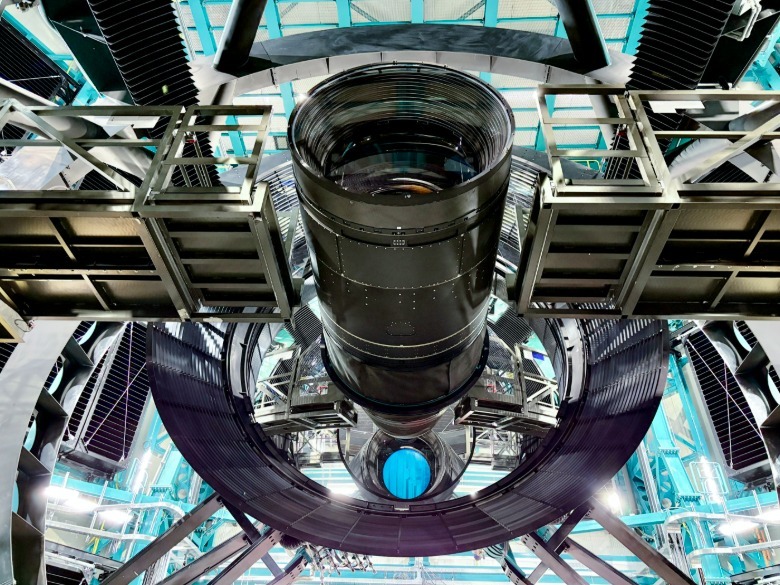
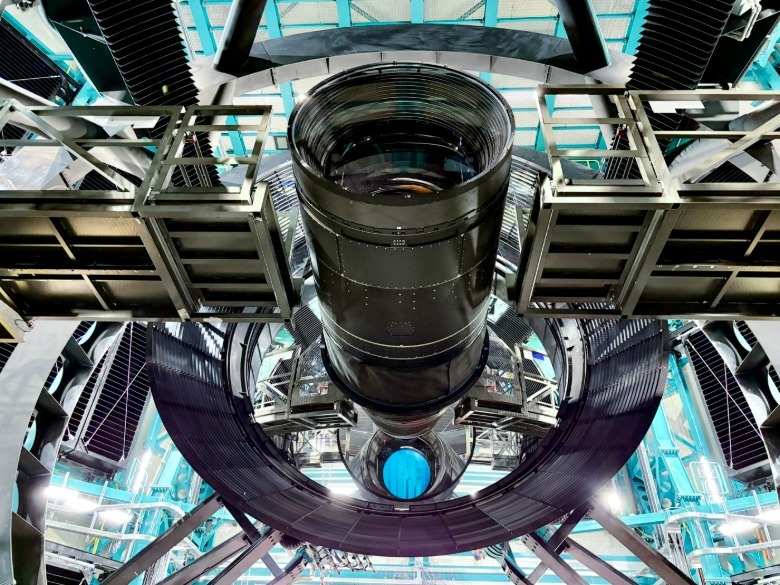
The Vera C. Rubin Observatory in Chile, which contains the largest digital camera in the world at 3,200 megapixels, has begun its 10-year survey of the universe. Its campaign kicked off on June 30, and for the next decade it will capture a new image roughly every 40 seconds, observing the entire southern sky every few nights. A press release announcing its commencement said its observations will “create an ultrawide, ultrahigh-definition time-lapse record of the universe.”

“Today, we begin filming the greatest cosmic movie ever made,” Brian Stone of the National Science Foundation said in the announcement. The observatory captured its first images last summer in a test run of its capabilities, producing a remarkable look at millions of galaxies and stars, along with thousands of previously unseen asteroids. Over the course of its decade-long survey, called the Legacy Survey of Space and Time (LSST), it will revisit each point in the sky roughly 800 times, allowing it to record changes and cosmic events. Rubin will take about a thousand images per night, amounting to about ten terabytes of data daily.

“It is embarking on a mission that will redefine modern cosmology and astrophysics,” said Darío Gil, Under Secretary for Science at the US Department of Energy. Gil added, “By seeking to understand the enigmatic phenomena of dark energy and dark matter, we are not just observing the stars; we are striving to grasp the fundamental laws that govern our existence.”

Diving suits for swimming cyborg cockroaches

This week in Research That Makes My Skin Crawl, scientists from Nanyang Technological University Singapore and Waseda University announced that they’ve developed a tiny diving suit that allows cyborg cockroaches to survive swimming underwater for hours at a time. If you’re wondering why, exactly, roaches need to be borg-ified and forced to swim underwater at all, I’m right there with you. 

Advertisement

According to the team, cyborg insects have potential for use in search and rescue operations, as they can access spaces that would be inaccessible to humans, animals and larger robots. Cyborg roaches were recently deployed in the field for the first time to assist with search and rescue efforts after a devastating earthquake in Myanmar this spring.

A flooded environment would normally prove a no-go for the cyborg roaches, which are living Madagascar hissing cockroaches fitted with electronic controllers. The flexible diving suit consists of an oxygen-generation tank, a flexible shell and four silicone supply tubes that are attached to the roaches’ spiracles, or the openings that they breathe through. The team says these tubes can be removed painlessly afterward without harming the roach. In a paper published this week in Nature Communications, the researchers report that the cyborg robots were able to swim underwater for up to 3 hours with this setup in tests.

NASA picks three companies for 2028 Moon Base deliveries

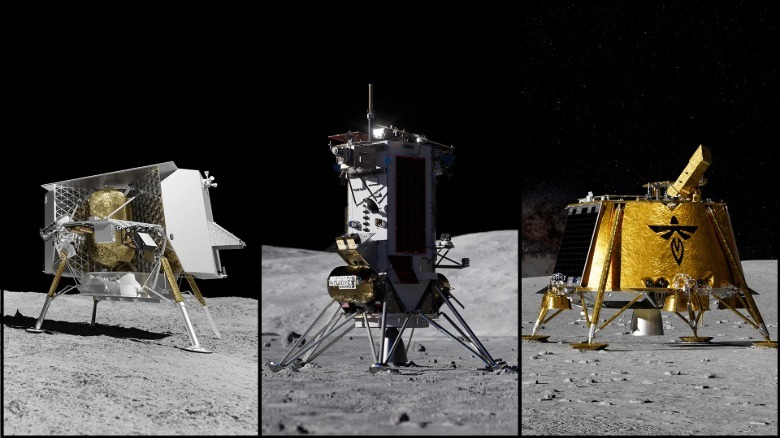
Earlier this year, NASA overhauled its plans for lunar exploration, announcing that it was hitting pause on building an orbiting Lunar Gateway space station and would instead build a $20 billion Moon Base. The first three missions to deliver payloads to the lunar surface for the eventual Moon Base are scheduled to happen before the end of 2026. This week, NASA announced four more missions heading to the moon, these ones scheduled for late 2028. The space agency says it’s awarded contracts totaling nearly $600 million to Astrobotic, Firefly Aerospace and Intuitive Machines to deliver science payloads for the Moon Base.

Astrobotic will make two trips to the moon, while the other two companies will each make one. All of these deliveries will rely on updated versions of each company’s lander designs, building on insights from previous missions under NASA’s Commercial Lunar Payload Services (CLPS) program. The payloads will be the same for each delivery: a Stereo Camera for Lunar Plume Surface Studies (SCALPSS) to collect landing data, a Laser Retroreflector Array (LRA) for precision in determining the location of spacecraft in lunar orbit or landing on the surface, and a Linear Energy Transfer Spectrometer (LETS) for measuring the energy of incoming space radiation. If it seems redundant, well, that’s the point.

“By flying the same science instruments on multiple landers, we will better understand potential hazards during landing and build out a global network of environmental data and location markers on the Moon,” said Joel Kearns, deputy associate administrator for exploration, Science Mission Directorate, at NASA Headquarters. “It’s akin to having weather stations in different locations on Earth. These three payloads are flight-proven and their data is critical to supporting safe human exploration of the lunar surface.”

Before you go, be sure to check out these stories too:

Advertisement

Source link

Continue Reading

Tech

Disk Polishing Goes Open Source

Published

on

Optical media is great — it’s pretty high density, relatively durable, and decently long-lasting if

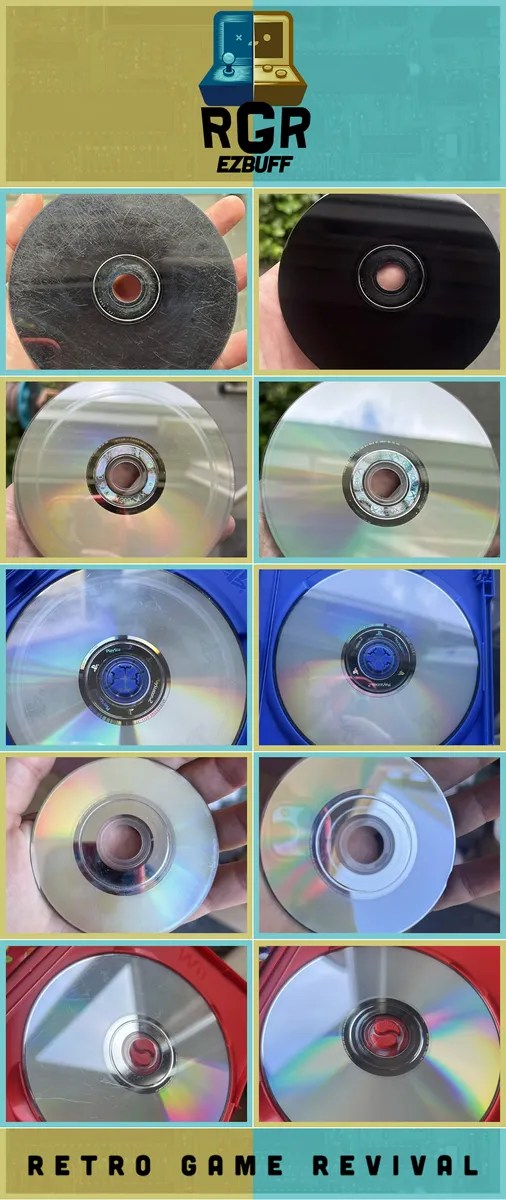
a selection of before-and-after shots
“That’ll buff out” is very often true when it comes to disks.

well cared for. If not well cared for, well, it’s only relatively durable, and we’ve probably all picked up a second-hand disk that’s too scratched to use. The X-Box 360 is notorious for causing circular damage, and while decent disk cleaners were easy to get in the 90s, we’re not sure how far we trust what’s on offer at retailers today. Hence [Dennis], aka [RetroGameRevival]’s RGR ezBuff polishing machine, which does exactly what it says on the tin: buffs disks to a polish, easily.

We’d say the whole thing is 3D printed, but of course you still need a motor and controller — if you had to turn a crank, that would just be a Buff polishing machine, no ez — and we’ve yet to see a printer poop out polishing compound. If you build it, keep in mind that you’re taking the top layer of material off the disk to polish scratches away, so don’t overdo it. It’s entirely possible to ruin a disk beyond repair with too-aggressive buffing; it’s also possible for disks to be scratched too deeply to save. Polishing can’t save genuine disk rot, though in our experience you’re more likely to find scratched disks than rotten ones. Still, [Dennis]’s birthday gift to the community — it was apparently released on his birthday — should keep more than a few disks out of the trash.

With Sony getting out of the disk game, physical media is becoming more precious than ever, so it’s good to see what looks like a quality polishing option for those of us who either never had a polisher or didn’t save theirs. If you really want your disks to last, maybe we should bring back CD caddies.

Thanks to [Dean] for the tip, via timeExtension.com.

Advertisement

Source link

Continue Reading

Tech

Ray Barretto Acid Review: Craft Latino AAA Vinyl Revives the 1968 Latin Boogaloo Soul Jazz Classic

Published

on

For many years now, I’ve been a growing fan of legendary New York percussionist, composer, and bandleader Ray Barretto, one of the arguable architects of modern Latin-infused music. After Barretto scored his first big hit with the pachanga-styled “El Watusi” in 1962, he found his next groove in the emerging boogaloo movement. His first album for Fania Records, 1968’s Acid, is widely considered a classic of the form.

Finding early editions of Barretto albums on vinyl can be a challenge, as original pressings are scarce. Like vintage soul and jazz records, these dance records were often played hard back in the day, frequently and on low quality stacking automatic record players. Surviving “OG” copies are therefore usually pretty well trashed when you do find them, while clean examples typically command hefty collector prices. At the time of this writing, Discogs had just two 1968 editions of Acid listed at $300 in only VG/VG+ condition, while a poor copy on eBay was asking $150.  

CR00997 Ray Barretto Acid Back Cover

In that light, obtaining a lovingly produced, all analog AAA 180-gram vinyl reissue cut from the original master tapes for about $30 is super appealing. This new edition comes from Craft Recordings, the respected boutique arm of Concord Music, which owns the Fania catalog.

I am especially pleased that Craft uses the original mono mix, which is likely what most people were hearing back in the day, replete with all of its effectively indie produced imperfections. The quiet, well-centered vinyl was manufactured at Well Made Music in Virginia, and Craft has even recreated the highly sought after first Fania Records gold label design. The high quality tip on style cover features the trippy original art.

Playing Acid, I did not even look at the song titles initially, but immediately recognized the boogaloo sound in full flower. This album rocks from start to finish, and along the way you will hear influences both past and future. The title track boasts a super slinky groove, while the funky, improvisational “Espiritu Libre” feels as though Dizzy Gillespie and Miles Davis were sitting in.

Advertisement

But it was the end of side one that made my head spin, when I realized that 1990 rock-rap one hit wonders Urban Dance Squad had lifted its title and sampled the hook directly from Barretto’s “A Deeper Shade of Soul.” Fortunately, they gave him writer credit, which was something of a miracle in those early sampling days. 

While I do not own one of the rare original pressings, this new edition of Acid sounds wonderful in all of its groovy monophonic glory. I recommend it without reservation. You can get it at Amazon for just $31 which is a steal when you consider what rare originals cost. 

Advertisement

Our Ratings

★★★★★★★★★★ Album

★★★★★★★★★★ Sound Quality

★★★★★★★★★★ Press Quality

Where to buy


Mark Smotroff is a deep music enthusiast / collector who has also worked in entertainment oriented marketing communications for decades supporting the likes of DTS, Sega and many others. He reviews vinyl for Analog Planet and has written for Audiophile Review, Sound+Vision, Mix, EQ, etc.  You can learn more about him at LinkedIn.

Advertisement
Advertisement. Scroll to continue reading.

Source link

Continue Reading

Trending

Copyright © 2025