Connect with us
DAPA Banner
DAPA Coin
DAPA
COIN PAYMENT ASSET
PRIVACY · BLOCKDAG · HOMOMORPHIC ENCRYPTION · RUST
ElGamal Encrypted MINE DAPA
🚫 GENESIS SOLD OUT
DAPAPAY COMING

Tech

EchoStar’s US Satellite Pay-TV Provider Dish DBS Files for Bankruptcy

Published

on

EchoStar’s satellite pay-TV unit Dish DBS has filed for Chapter 11 bankruptcy
protection, reports Reuters. The move also applies to its wireless subsidiaries, according to the article, and “facilitates the wind-down of Dish Wireless’s 5G network operations following an unexpected delay in a spectrum license sale to AT&T… under which EchoStar agreed to sell about 50 megahertz of its nationwide spectrum for $23 billion.”

Some context from Deadline.com:

Charlie Ergen, who co-founded EchoStar and Dish, recently returned as chairman and CEO to steer the company through its recent challenges…
Even prior to the merger, Ergen had been working to pivot from the pay-TV business, where Dish now has just 5 million subscribers and streaming sibling Sling TV has another 2 million, toward wireless telecom. With wireless spectrum hitting the market due to the Sprint-T-Mobile merger and then Elon Musk’s Starlink looking to ramp up in the sector, it seemed more attractive than the cord-cutting-ravaged pay-TV business. But it is still entails plenty of risk, especially given how tightly regulated the spectrum is due to security concerns.


Thanks to long-time Slashdot reader schwit1 for sharing the news.

Advertisement

Source link

Continue Reading
Click to comment

You must be logged in to post a comment Login

Leave a Reply

Tech

Apple seeks dismissal of YouTube AI training lawsuit

Published

on

Apple is asking a federal court to dismiss the YouTuber AI training lawsuit, on the grounds that publicly available YouTube videos are lawfully accessible under both the DMCA and YouTube’s Terms of Service.

In April 2026, a collection of YouTube channels sued Apple, claiming the company had scraped videos from YouTube to train internal AI models.

The class-action lawsuit was headed up by Ted Entertainment, owners of the h3h3Productions channels and podcast. Two golf channels, MrShortGameGolf and Golfholics, were also involved.

Apple has responded three months later to the suit. According to the court document spotted by MacRumors, Apple argued that the plaintiffs made the videos publicly available on YouTube, and that both the DMCA and YouTube’s Terms of Service permitted the company to access them.

Advertisement

“Plaintiffs allege that they posted audiovisual works to YouTube, and that any member of the public can see them there,” reads Apple’s response. “No password. No payment. No lock. No key. Allegedly, YouTube employs technological measures to prevent unauthorized downloading. But because YouTube provides public access to the videos, the alleged technological measures do not control access to the works, as section 1201(a) requires.”

Apple is requesting the court throw out the lawsuit as the plaintiffs have failed to state a claim.

Source link

Advertisement
Continue Reading

Tech

Time Never Moves Slowly With This Clock

Published

on

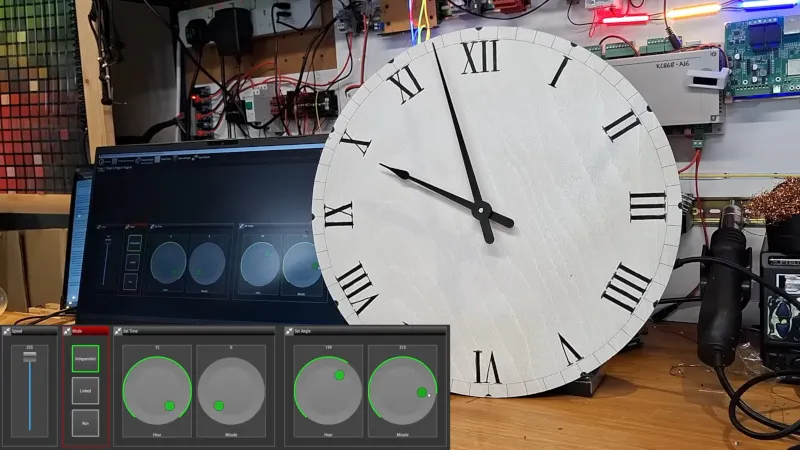
A clock is by its very nature a device for measuring time, and thus it moves forward at a constant rate. But how about in a theatrical setting, where time runs at the whim of the director? For the stage, a clock with more flexibility is required. To this endeavor [Playful Technology] has you covered, with a larger than life stage clock whose hands are independently controllable by DMX.

Behind the clock is a very unusual part, not the modified clock mechanism one might expect, but a dual stepper motor with a concentric shaft. This is driven by an Arduino with a stepper driver shield more familiar from the world of 3D printers, and an RS485 interface for DMX interfacing. The hands are built in OpenSCAD, and 3D printed to be an interference fit on the shafts. The DMX controller software has a handy rotating knob style interface, allowing easy hand manipulation.

You can see the results in the video below, complete with an exhaustive dissection of the Arduino code. Meanwhile DMX is itself a fascinating subject, and in the past we’ve taken a deep dive into RS485.

Advertisement

Source link

Advertisement
Continue Reading

Tech

Neuralink Threads Its Way Straight Through the Brain’s Armor

Published

on

Neuralink First Transdural Brain Implant Procedure
Neuralink has taken a clear step toward simpler brain implant surgery. In May a team at University Health Network’s Toronto Western Hospital carried out the company’s first transdural procedure on a clinical trial participant. Within an hour of the operation the person began moving a computer cursor using only thoughts. Recovery followed the expected path with no surprises.


The dura mater is a thick, protective membrane that wraps around the brain like a shield. It is thicker than a good piece of leather and serves to protect the delicate tissue inside from regular knocks and bumps. In the early days of Neuralink surgeries, as with most traditional brain operations, surgeons had to clip or peel aside a section of this membrane to reach the cortex. The extra procedure, a durectomy, adds a lot of time to the operation and required extremely cautious hands because the membrane is quite thick, the brain is sloshing around inside, and the blood arteries are hidden from view.

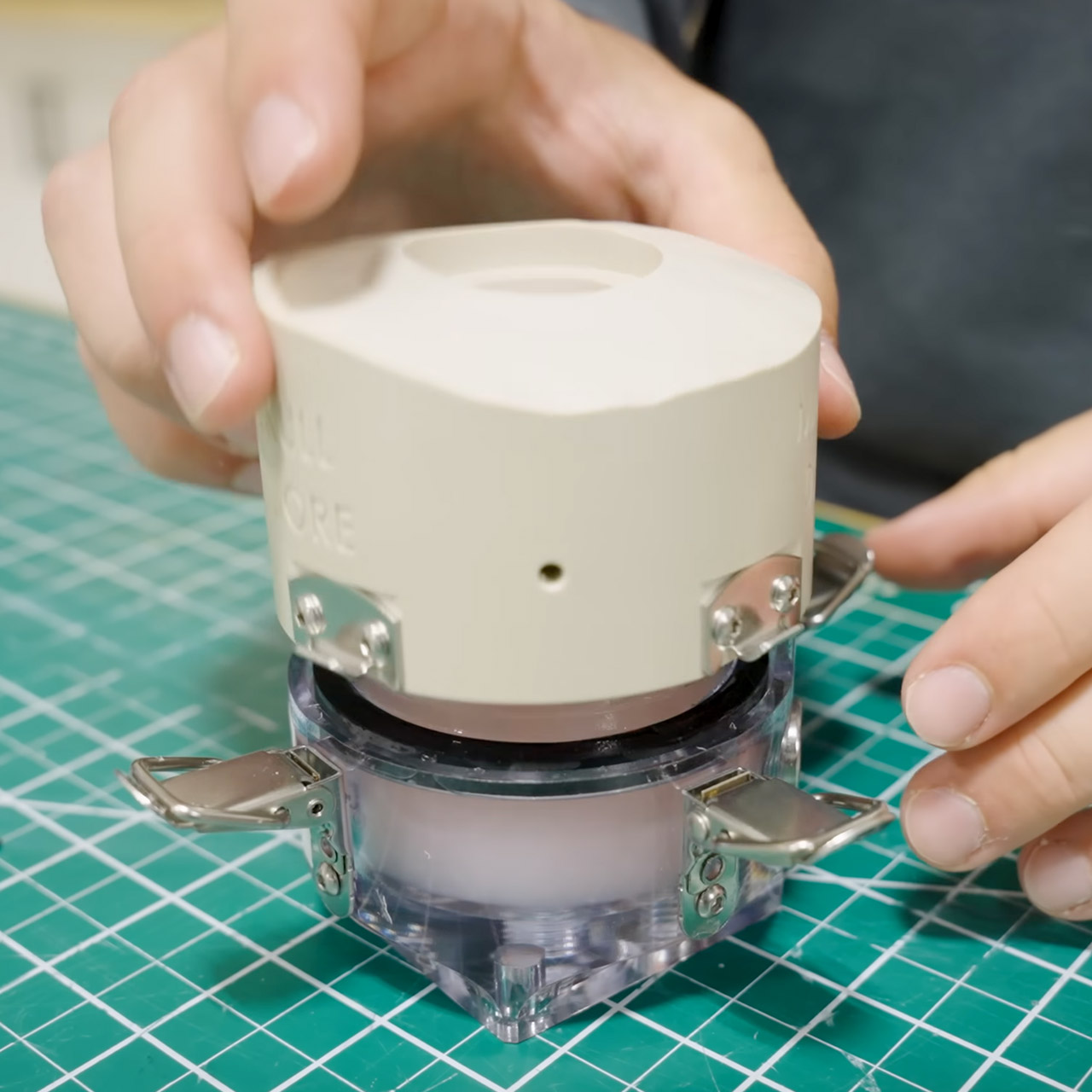
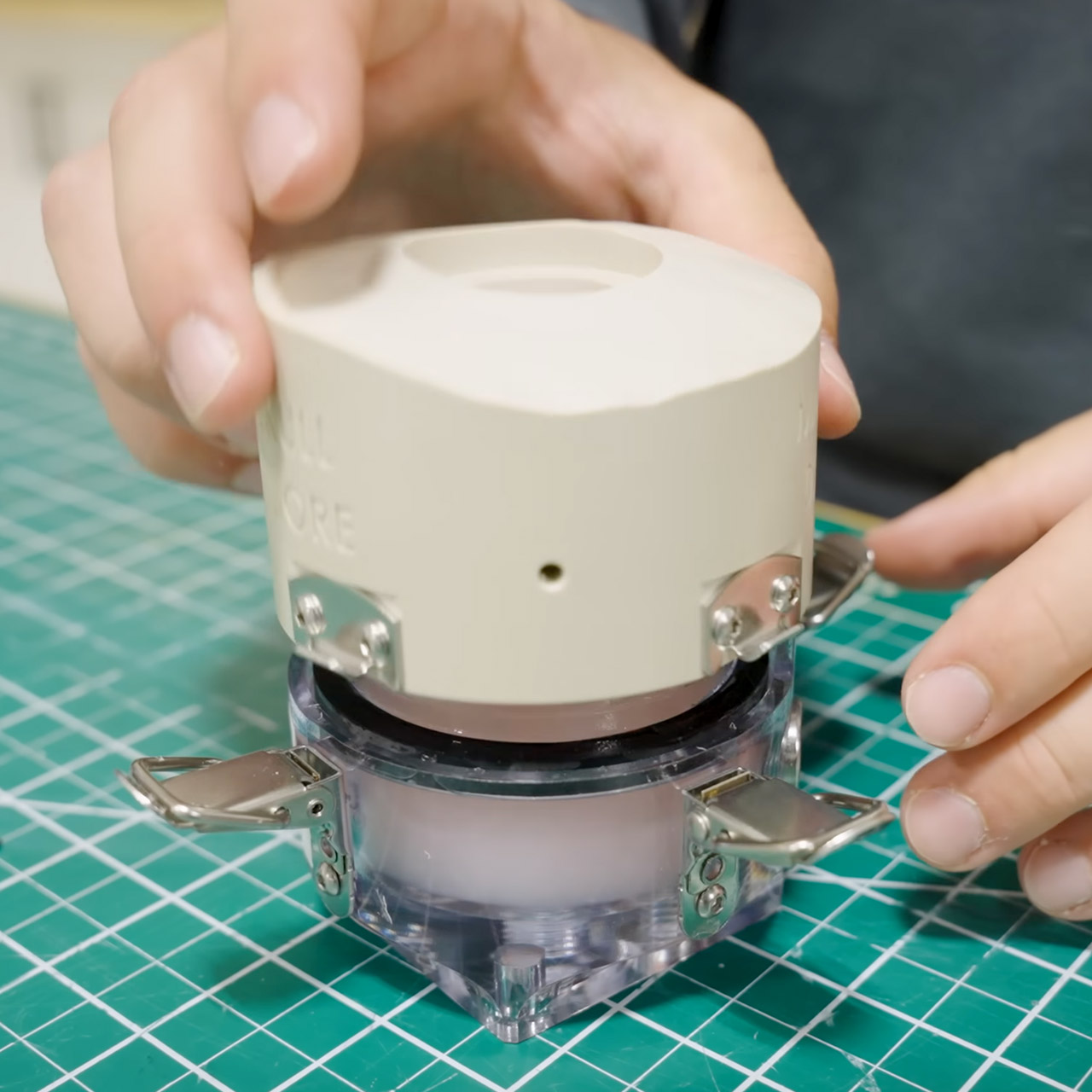
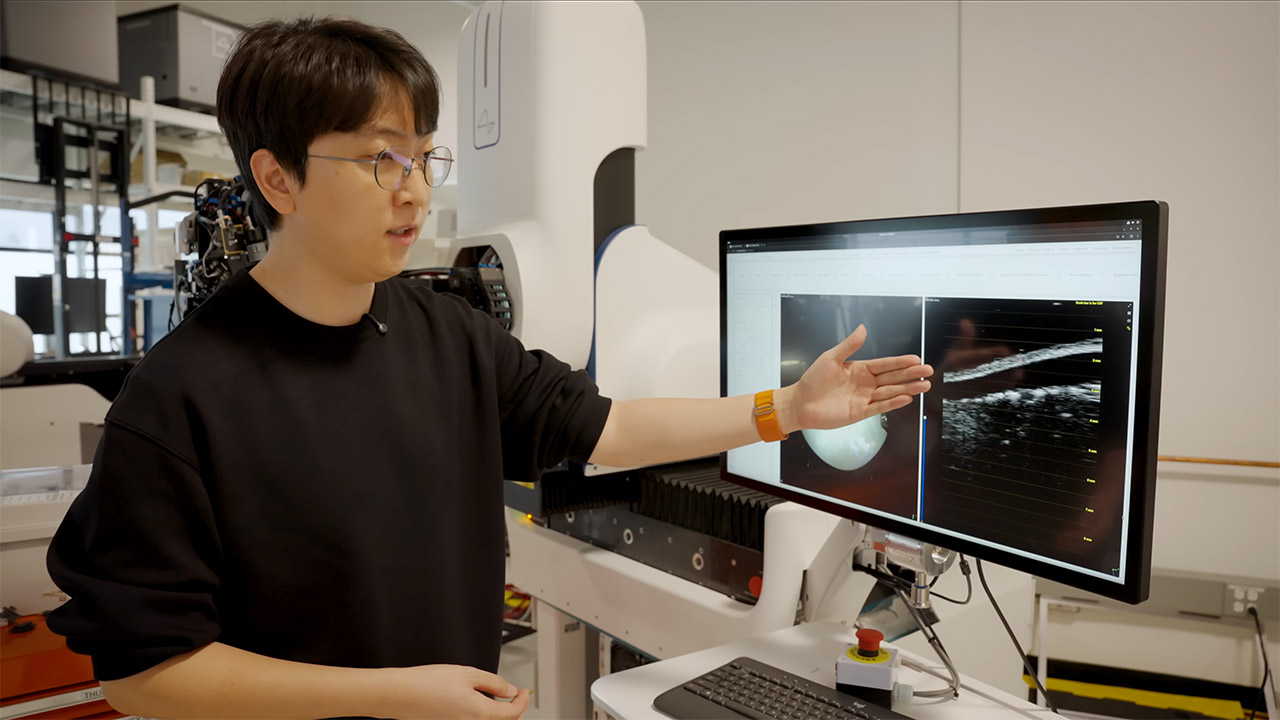
This time, the team was able to leave the dura intact, which was quite a change, since the surgical robot just drove its hair-thin electrical threads directly through the membrane and into the cortex underneath without ever touching it with a knife or pulling it back. This minor adjustment removes one of the most sensitive aspects of manual dexterity from the operating room. Getting to this stage was no easy task, as the team had to undertake a lot of new engineering on the initial needle to make it powerful enough to pierce the dura consistently. They ended up enlarging it somewhat and then spending hundreds of hours testing synthetic membranes that matched the genuine thing in terms of thickness and puncture resistance. They also developed new imaging capabilities that enabled the robot to work while the membrane was still in place.

Neuralink First Transdural Brain Implant Procedure
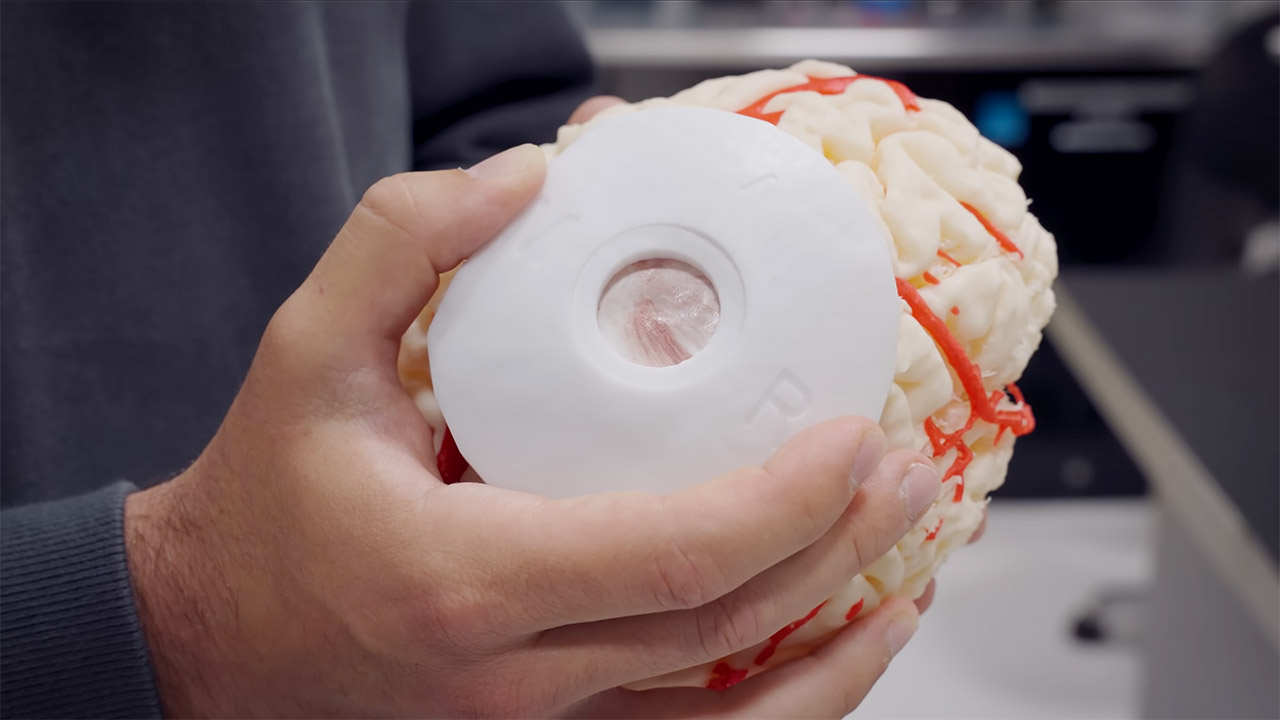
One tool uses a dye injected into the bloodstream and then infrared light illuminates all of the blood vessels through the dura, allowing the robot to delicately thread its way around them. Another approach employs a laser to bounce back a measurement of the distance from the top of the dura to the surface of the moving cortex, all while allowing for the brain’s natural squishing. The robot uses these live maps to place the threads precisely without damaging any blood vessels. The opening in the skull remains small, roughly the size of a quarter. Once all of the threads are in place, the implant is secured and the skin closes. The entire process feels more tighter and more simplified than previous versions, where the dura was trimmed.

Neuralink First Transdural Brain Implant Procedure
This person took part in Neuralink’s current clinical trials, which are aimed at patients suffering from paralysis caused by spinal cord injuries or ALS. The speedy restoration to cursor control indicated that the threads were sending signals immediately, and doctors watched recovery and found nothing strange, since the new strategy appeared to operate perfectly. Neuralink put it quite simply: the best step is no step at all. Removing the dura cut makes the entire process much safer and more repeatable, pointing toward surgeries that stay safer and repeat more easily when more patients come forward.
[Source]

Source link

Advertisement
Continue Reading

Tech

Hong Kong handles over half of China’s chip imports

Published

on

TL;DR

Hong Kong handled more than half of China’s $239bn chip imports in the first five months of 2026, a record share, as AI demand reshapes Asian trade. The city’s free-port status and air cargo network have made it the region’s crucial semiconductor middleman, though the role leaves it exposed to US-China tensions.

Hong Kong has become the main artery for high-tech goods flowing in and out of China, and its chip trade has hit record levels. The city accounted for more than half of China’s $239bn in semiconductor imports in the first five months of 2026, according to a Bloomberg review of official data.

Advertisement

That share stood at just a third a decade ago. Between January and May, Hong Kong re-exported $124bn worth of chips to the mainland, some 52% of China’s total purchases.

Official figures published in late June showed the city’s trade with China grew nearly 50% in May from a year earlier. Bloomberg reports that is the fastest rate since 1992, outside the pandemic years.

The 💜 of EU tech

The latest rumblings from the EU tech scene, a story from our wise ol’ founder Boris, and some questionable AI art. It’s free, every week, in your inbox. Sign up now!

Advertisement

“Hong Kong’s strong air cargo network and free-port status have made it a perfect trading hub for semiconductors, which are high-value, low-weight and time-sensitive,” Natixis senior economist Gary Ng told Bloomberg. “Chipmakers can ship via Hong Kong on a frequent, stable schedule or store for future sales with flexibility.”

A $2tn trade network

The former British colony operates as a free port with no import tariffs and no capital controls, a contrast with the mainland’s financial restrictions and red tape. That has made it a critical cog in the AI-driven commercial system taking shape across Asia, where governments such as South Korea are pouring hundreds of billions into chips and data centres.

Economists at HSBC estimate AI trade within Asia has doubled from pre-pandemic levels to almost $2tn in 2025. Hong Kong alone exported nearly $159bn of AI-related goods last year, according to consultancy Oxford Economics, the fifth-largest total in Asia and more than Japan.

“Hong Kong’s strength lies in facilitating the movement of AI-related goods rather than producing them,” Oxford Economics economist Yongshi Mai told Bloomberg.

Advertisement

AI-related electronics now account for 57% of the city’s exports, up from 44% in 2024, according to research by the Hong Kong Trade Development Council (HKTDC). Barclays puts the share as high as 70%.

The council this week more than doubled its 2026 export growth forecast for the city to over 20%, citing an AI-driven “technology upcycle”. The boom helped Hong Kong’s economy expand 5.9% in the first quarter, its fastest pace in almost five years.

Caught between Washington and Beijing

The middleman role cuts both ways. Hong Kong lacks the chip fabs of Taiwan and South Korea or the heft of the mainland market, leaving it exposed to the whims of the US-China chip war.

During Donald Trump’s first presidency, Washington stripped the city of its special customs privileges, treating it as part of China. Since Trump returned to the White House and tightened curbs on China’s access to advanced US chips, Hong Kong has ramped up purchases of American-made semiconductors, sourcing many from third countries.

Advertisement

Bloomberg suggests those are likely chips that fall outside the restrictions, though the data does not specify which models are moving. Asian transshipment routes have drawn growing scrutiny regardless, with US and Taiwanese authorities already probing alleged smuggling of Nvidia chips through the region.

Mainland firms may also prefer Hong Kong intermediaries because payments and currency conversion are easier than dealing directly with foreign suppliers. “As a middleman, Hong Kong has figured out a way to handle the payments,” Stanford University research scholar and former Hong Kong lawmaker Charles Mok told Bloomberg.

The geopolitical exposure is pushing the city to hunt for new markets, with Chief Executive John Lee personally leading trade missions to the Middle East, Central Asia, and Southeast Asia. His June trip to Kazakhstan and Uzbekistan yielded 96 agreements worth over $1.65bn.

For now, AI is where the growth is

Some 40% of the chips Hong Kong handles are supplied by China itself, with a fifth coming from Taiwan, followed by Singapore and South Korea. The city has overtaken the mainland as Taiwan’s top chip export market, according to Bloomberg’s calculations, a shift not yet visible in Taiwan’s own headline trade figures.

Advertisement

China’s own semiconductor exports soared 111% in May to $36bn, the fastest growth since 2013, even as the mainland remains a net importer of advanced chips and races to build domestic alternatives. In May alone, Hong Kong absorbed over $40bn of Chinese exports, the biggest monthly haul since 2015.

Semiconductors drove more than a third of that export value, according to Chinese customs data. For much of ocean freight, meanwhile, Hong Kong’s middleman role has been fading for years as mainland ports in Shanghai, Ningbo, and Shenzhen ship goods directly to global markets.

In the highest-value trade, though, the city has held on. Its common-law courts remain more trusted by international investors than the mainland’s legal system, even as Beijing tightens its political grip.

“When it comes to products that have very high intellectual property content, Hong Kong still has a role in assuring quality, verifying standards and protecting IP,” University of Hong Kong economics professor Heiwai Tang told Bloomberg. “Hong Kong still has all the institutional advantages.”

Advertisement

The city’s aviation hub status is another edge, because the mainland enforces stricter controls on electronics carried by air. “This is something that other transshipment hubs like Singapore simply cannot do,” Nam Pak Hong Association vice chairman Michael Li Chi Fung told Bloomberg.

Source link

Advertisement
Continue Reading

Tech

How Your Smartwatch And AI Might Detect Early Signs Of Illness

Published

on

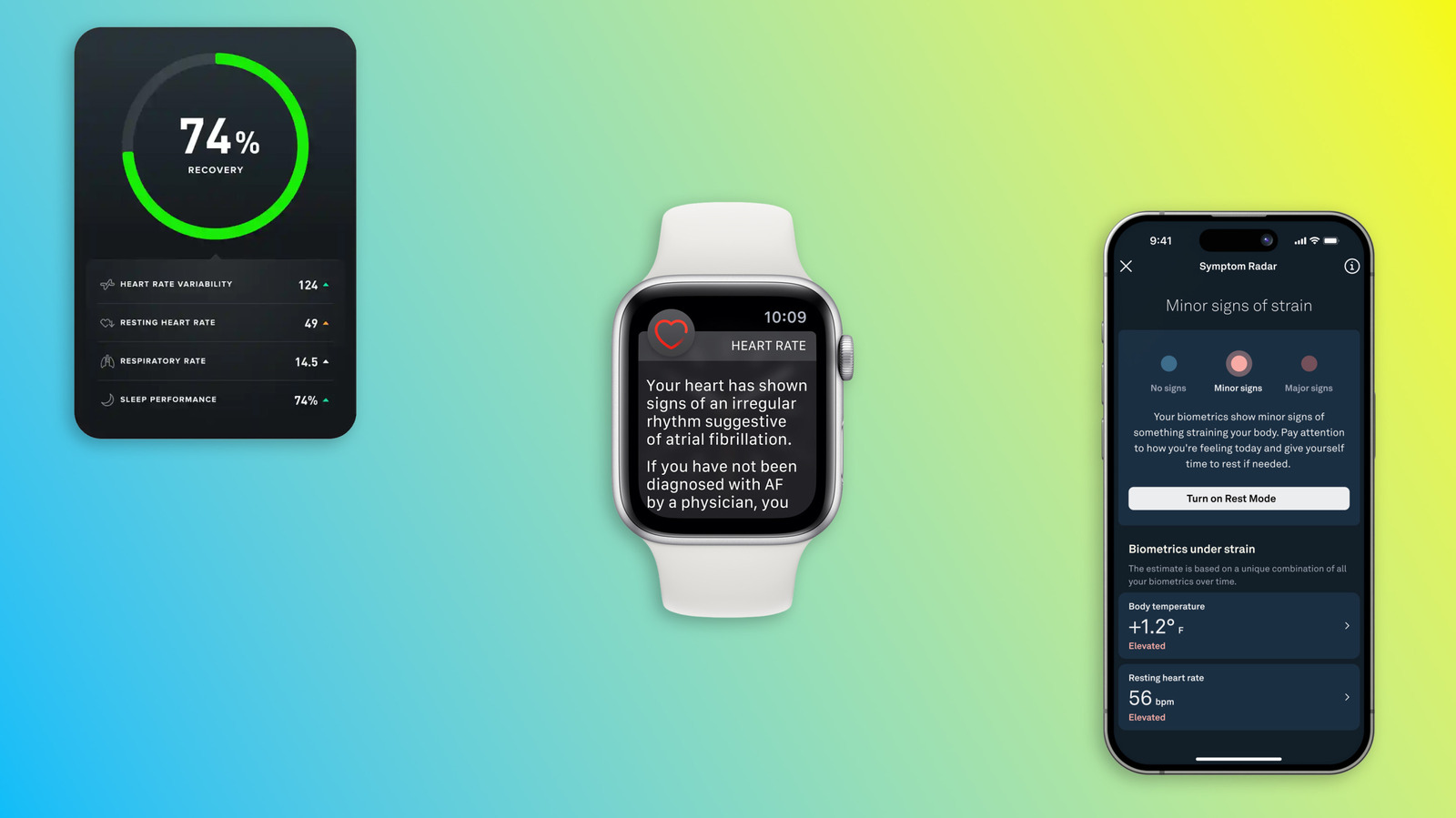
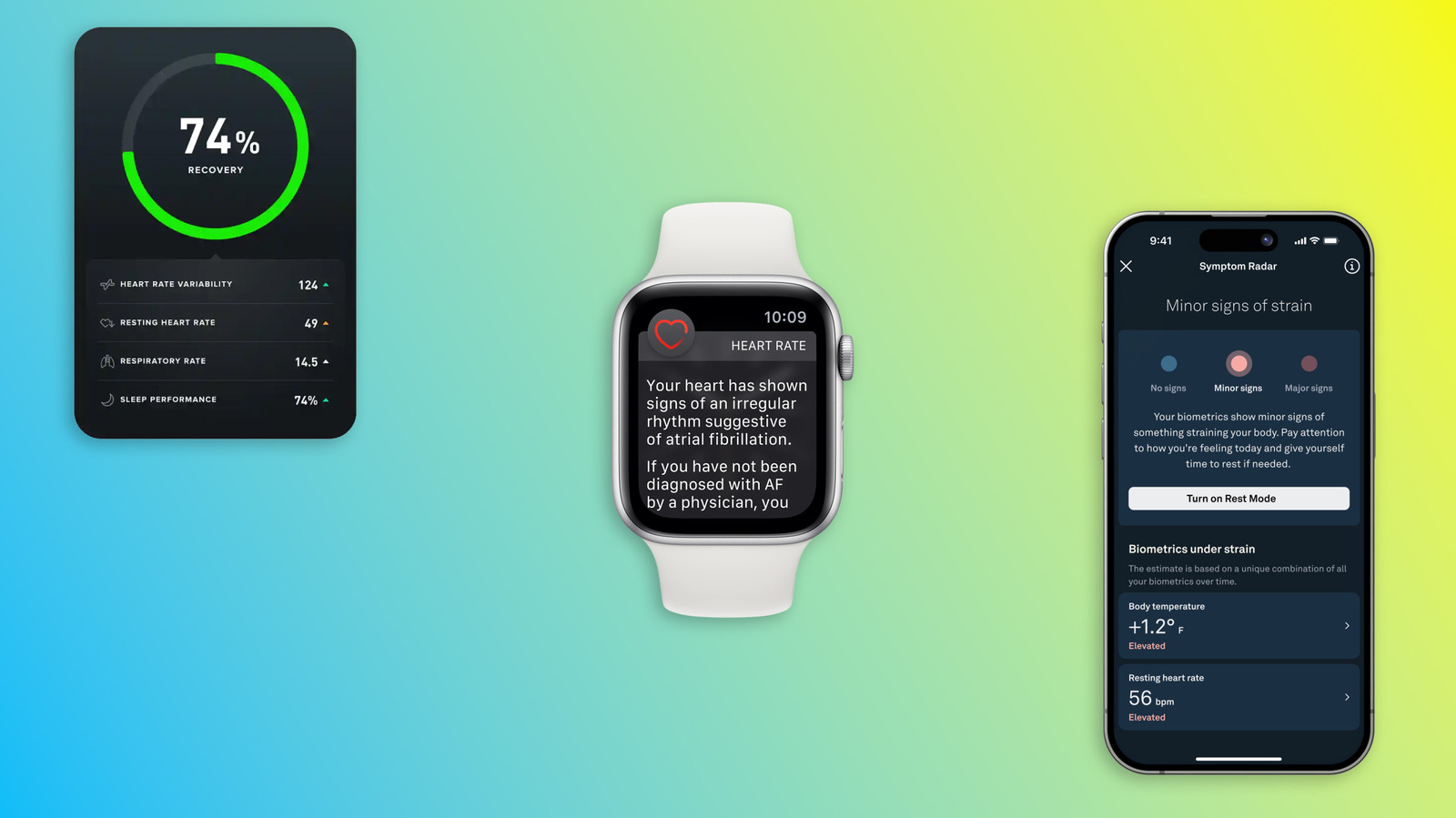
Long before you notice the symptoms of, say, the flu or COVID-19, your body starts changing in subtle ways. Taken individually, changes to your skin temperature, resting heart rate or respiratory patterns may not mean much. But when combined and compared to your baseline, they may hint that you’re coming down with something.

Research has shown that wearables can detect physiological changes from respiratory infections before symptoms appear. (It’s worth noting that they’re detecting the body’s response to an infection, not the virus or bacteria itself.) A recent study from Texas A&M and Stanford found that smartwatches may detect early signs of COVID-19 and influenza within hours of infection. The researchers estimated that encouraging people to isolate, get tested and seek treatment earlier could reduce pandemic transmission by up to 50 percent.

Of course, wearables, pandemics and the seasonal flu have been around for many years, but recent developments in AI and sensor technology could push things forward. Companies like Google, Oura and Whoop have all introduced some version of an AI coach or advisor in their apps, helping users make sense of their data. 

There are also features that aren’t labeled “AI,” like Oura’s Symptom Radar and Apple’s Vitals that piece together information from multiple sensors and compare it with your baseline. And the processing ability of the latest AI language models, like Google’s Gemini in the company’s Health Coach, will likely play an increasingly important role in tying it all together and suggesting actionable steps. But like proprietary recovery scores, much of that AI analysis will happen behind the scenes, offering little that doctors can reliably act on.

Advertisement

At best, AI health analyses will nudge people to seek treatment earlier. At worst, they might encourage people to substitute computer-generated advice for consultations with medical professionals. 

While today’s AI systems come with warnings to check with real-world doctors, there is still the risk of people taking wearable data or app insights as the be-all and end-all verdict on their health. Whether it’s information from a miniaturized sensor on your wrist or advice given by a chatbot on your phone, nothing can replace regular physical health checkups with doctors and medical professionals. 

The future of wearable health probably won’t be a smartwatch that diagnoses disease from your wrist — the fabled wrist Tricorder. Instead, it’s more likely to be a device that quietly watches for patterns, nudges you when something looks off and gives you another piece of useful information to discuss with your doctor.

Advertisement

Source link

Continue Reading

Tech

How to watch Paraguay vs France: Free Streams & TV Channels

Published

on

Paraguay are the latest team attempting to stop free-flowing France as the sides meet in Philadelphia at the FIFA World Cup 2026 — and you can live stream the last-16 clash around the world for free.

La Albirroja’s tournament has been a story of resilience. Bouncing back from a 4-1 opening-game defeat by co-hosts USA to qualify as one of the best third-place teams was impressive. Yet absorbing wave after wave of pressure against Germany in the last 32 to snatch a 1-1 draw, before beating the four-time winners on penalties, was another thing entirely. Now, manager Gustavo Alfaro faces his greatest challenge of the tournament to date, as he seeks to stop a France side who have scored 13 goals in four games. Midfielder Diego Gomez should return after missing the Germany match through suspension.

Advertisement

Source link

Continue Reading

Tech

I Love This Floating Anker Speaker, and It’s on Sale for Less Than $100 This Fourth of July

Published

on

Fourth of July update: The Anker Soundcore Boom 3I is perfect for pool parties, beach days and any other summer adventures, and you can pick one up for just $95 at Amazon thanks to Fourth of July pricing. That’s a $35 discount. While it’s not the all-time lowest price we’ve seen, it is a great bargain on an excellent portable Bluetooth speaker. Just be aware the only color in stock at the $95 price point is green.

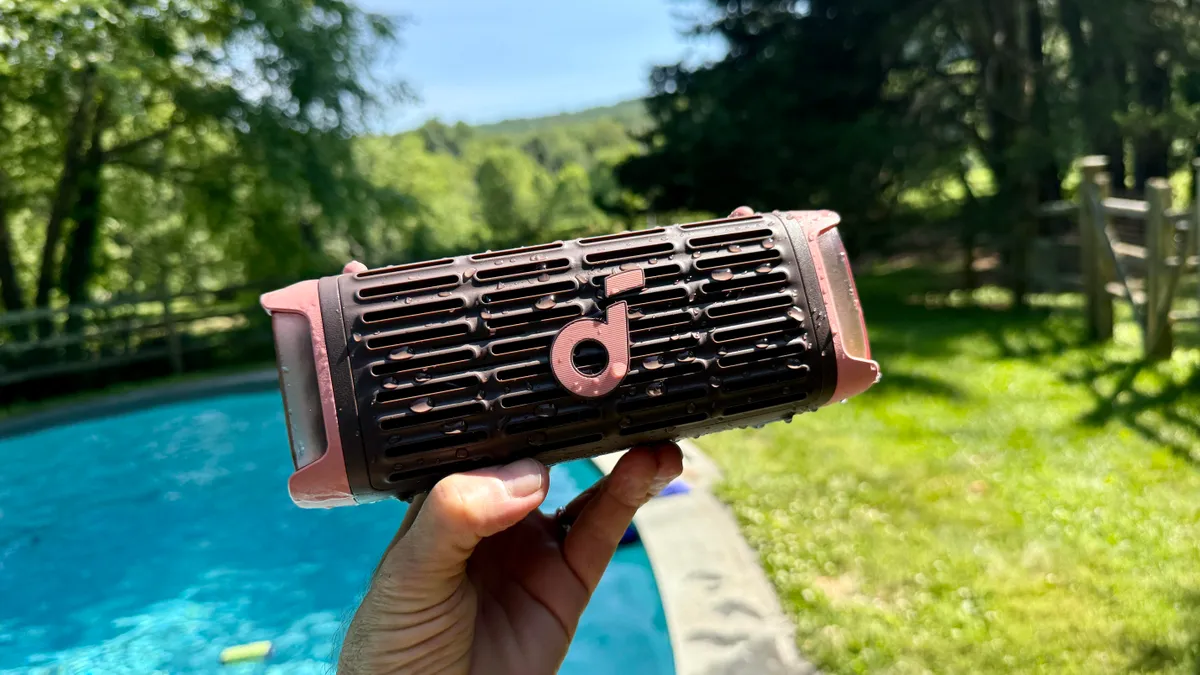
In some ways, Anker’s new Soundcore Boom 3I is the spiritual successor to the Soundcore Motion Plus. It’s similarly shaped but has more of an outdoor adventure slant, with Anker touting it as “built for the wild” and billing it as the first Bluetooth speaker with playback in water, as it floats and “auto-corrects” to keep the speaker drivers facing upward just above the surface. All that adds to a perfect speaker for backyard hangouts or hot tubbing, so you might want to snag one on the cheap while the Prime Day deals are in full swing.

I’ve used the Soundcore Boom 3I for several months and have mainly been impressed with it, though the speaker is a lot easier to recommend to CNET readers at $35 off select colors.

Advertisement

As you’d expect from a speaker that promotional photos show strapped onto a kayak (it does have a detachable carrying strap), the Soundcore Boom 3I is fully waterproof and dust-resistant, with an IP68 rating. Anker takes things a step further, touting the Boom 3I as “5x” saltwater-resistant. “While typical speakers may rust in under five months, Boom 3I stays corrosion-free for up to two years of beach, boat and seaside use.”  

Read more: Best Bluetooth Speakers of 2026

You shouldn’t expect audiophile sound from a mono Bluetooth speaker of this ilk. But for the most part, the Soundcore Boom 3I gives you what you want from a portable Bluetooth speaker from a sound perspective. By that I mean it plays loud for its size — it weighs about 1.8 pounds and measures 8.3 by 3.1 by 3.3 inches — plus it puts out a reasonable amount of bass and has fairly respectable clarity. You can find speakers that sound a little more natural, but these types of rugged portable speakers aren’t designed for critical listening.

Advertisement
The green Anker Soundcore Boom 3I on a bench.

The speaker has some colorful LED lighting on each side. 

David Carnoy/CNET

I used it outdoors and inside in a few rooms, including a bathroom (it does make for a good bathroom speaker), and it was able to fill smaller rooms with sound. You can tweak the sound with the equalizer settings in the Soundcore companion app for iOS and Android and play around with the settings for the built-in beat-synched LED light show, which I kept turned off most of the time. You can also pair two of these speakers up in stereo mode and get significantly better sound.  

I tested the speaker’s playback in water by dropping it in a pool. It indeed flipped over, so the speaker drivers were facing up, and the music kept playing, though the audio got a little garbled when a little wave passed over the speaker, and the drivers started spitting water out. In other words, it certainly sounds better out of the water than in it.

One of the problems with Bluetooth devices is that Bluetooth doesn’t transmit through water, which is why you have to load MP3s into memory when using wireless headphones while swimming (you can’t stream music to the headphones if your head is underwater). I don’t know where the Bluetooth antenna is on this speaker, but presumably it’s on the side that stays above the surface when the speaker is floating. 

Advertisement

The Soundcore Boom 3I not only floats but auto-corrects to an upright orientation. 

David Carnoy/CNET

You can actually activate a Buzz Clean mode from the app that makes the speaker vibrate and shed dirt and particles, like sand after a day at the beach. After finishing the Buzz Clean, you can then rinse off the speaker to get it truly clean. 

Advertisement

The speaker also has another interesting feature: Holding down the “BassUp” bass-boost button for 5 seconds sets off a 96-decibel emergency alarm — Anker says it’s clearly audible at up to 100 meters — with flashing red LED lights. You can hit any button to turn the alarm off. 

BLUETOOTH SPEAKER DEALS OF THE WEEK

Deals are selected by the CNET Group commerce team, and may be unrelated to this article.

Battery life is rated for 16 hours at moderate volumes, which is decent for a speaker this size. It’s also worth pointing out that the Boom 3I has a Bluetooth range of 100 feet, which is better than the more typical 33 feet you get with many Bluetooth speakers.

Advertisement
anker-soundcore-boom-3i-black1

The Soundcore Boom 3I in black.

David Carnoy/CNET

Source link

Advertisement
Continue Reading

Tech

If you use Samsung Messages, you need to read this

Published

on

Samsung’s long-running Messages app is officially reaching the end of the road.

After years of gradually shifting users towards Google’s messaging platform, Samsung will stop supporting Samsung Messages on July 6. This marks the final step in its transition to Google Messages.

The move isn’t exactly a surprise. Earlier this year, Samsung confirmed it planned to retire its in-house messaging app. However, the shutdown date has now been confirmed through an in-app notice spotted by users.

Once support ends, Samsung Messages will stop working on Galaxy devices running Android 12 or later. If you’re using a newer Galaxy phone running Android 14 or newer, the switch will be even more seamless. In this case, Samsung will automatically replace the Samsung Messages app icon on your home screen with Google Messages.

Advertisement

The change has been a long time coming. Google Messages became the default texting app on Galaxy phones back in 2022. Before 2024, Samsung stopped pre-installing its own messaging app on new Galaxy devices sold in the US. The company also encouraged existing users to move across to Google’s app throughout last year.

Advertisement

There was a brief period where Samsung Messages appeared to have a future after the company added RCS support and introduced a handful of new features in 2025. Those updates suggested Samsung might continue developing its own messaging platform alongside Google Messages. However, the company ultimately decided to consolidate around Google’s app instead.

For Samsung, the decision makes sense. Google Messages has become the centrepiece of Android’s messaging strategy, with widespread RCS support and end-to-end encryption for supported conversations. In addition, it offers spam protection and tighter integration with Android features. Therefore, maintaining two separate messaging platforms was increasingly difficult to justify.

Advertisement

That said, not everyone is happy to see Samsung Messages disappear. Many Galaxy owners preferred Samsung’s cleaner interface and customisation options. In particular, users liked its support for Samsung themes. Those features helped Samsung Messages retain a loyal following, even after Google Messages became the default.

If you’re still using Samsung Messages on a modern Galaxy device, you’ll need to make the switch before July 6. Older Galaxy phones running versions of Android earlier than Android 12 can continue using the app. However, for most users, Google Messages is about to become the only option.

Source link

Advertisement
Continue Reading

Tech

OWC 11 Port Thunderbolt 5 Dock 4th of July Sale $229.99

Published

on

Exclusive 4th of July deals are in effect at OWC, dropping prices for enclosures, docks, and Thunderbolt 5 cables to as low as $19.99.

The sale includes a variety of accessories for your Mac or iPad, with OWC’s 11-Port Thunderbolt 5 Dock especially enticing at $229.99 after a $69 discount.

You can also pick up a Thunderbolt 5 cable for $19.99 and a ThunderBay 4 Enclosure for $309.99. The four-bay Thunderbolt (40Gb/s) external storage enclosure for 2.5-inch and 3.5-inch SATA drives is a great way to expand your storage, especially if you’re a content creator needing an abundance of space.

Get exclusive savings at OWC

Advertisement

To activate the deals, you must shop through this special pricing link and look for the discount in your shopping cart. The discount will not appear on the landing page.

Exclusive OWC Thunderbolt dock deals

Exclusive OWC enclosure sale

Exclusive OWC Thunderbolt cable discounts

The exclusive offers are valid for a limited time only and inventory may be limited on the accessories.

Source link

Advertisement
Continue Reading

Tech

What Is SC’s ‘Palmetto Stop’ Cycling Law, And Do Other States Have One?

Published

on


For many Americans, learning how to ride a bike is a rite of passage. You may have fond memories of a parent running behind you as you took off without training wheels for the first time, or biking to your best friend’s house on hot summer days. PeopleForBikes reported that in 2024, more than 110 million Americans rode a bike at least once. The COVID-19 pandemic sparked enthusiasm for bike riding, and the so-called bicycle boom has seen more Americans hop on a bike than at any point in the last 25 years.

No matter where you’re cycling, safety should always be a top concern. In 2024, more than 1,100 bicyclists were killed in traffic accidents. To stay safe, the National Highway Traffic Safety Administration recommends that cyclists obey street signs just as if you were driving a car. But in some states, including South Carolina, a stop sign doesn’t always mean stop, at least if you’re on a bike.

The Palmetto State recently signed the Stop As Yield bill, S.812, into law. Nicknamed the Palmetto Stop, this new law allows people riding bikes in the state to treat stop signs as yield signs and proceed with caution when it is safe to do so. The law also allows cyclists to pass through a red light, but only after coming to a full stop first — and only if it is safe. South Carolina is the first state on the East Coast to enact such a law, but it’s following in the footsteps of several other states.

Advertisement

South Carolina joins other states to help protect bicyclists

If you live in South Carolina and are concerned that the new law means it will be a free-for-all with cyclists on the road, fear not. Cyclists must still yield to vehicles that have the right of way and cannot simply ride through a protected intersection without slowing or stopping. Because the majority of crashes involving bicyclists happen at intersections, this law is intended to provide a more predictable pattern that also reduces the time spent waiting at intersections for both drivers and cyclists when bikers are involved. It also mirrors how most cyclists naturally ride.

These types of laws are not new ideas. Idaho was the first state to pass a law that allowed bicyclists to treat stop signs as yield signs way back in 1982. The law led to a more than 14% reduction in bicyclist injuries from traffic accidents. While state laws vary, at least 13 other states have similar laws, including Delaware, Utah, and Oklahoma.

Advertisement

Following your state’s laws and wearing a helmet aren’t the only steps you can take to help protect yourself when you’re enjoying a bike ride. Make sure you’re riding a bike that’s the correct size for your height and is in good working order. In addition to a helmet, wear bright, visible colors and reflective gear. Consider adding a light or a horn if you’re riding in the dark. Plan your route carefully, be sure someone knows where you’re going, and try to avoid traffic when possible.


Advertisement

Source link

Continue Reading

Trending

Copyright © 2025