

Business
Air-Conditioned Stadiums v 39C Heat, Is This Really a Level Playing Field?

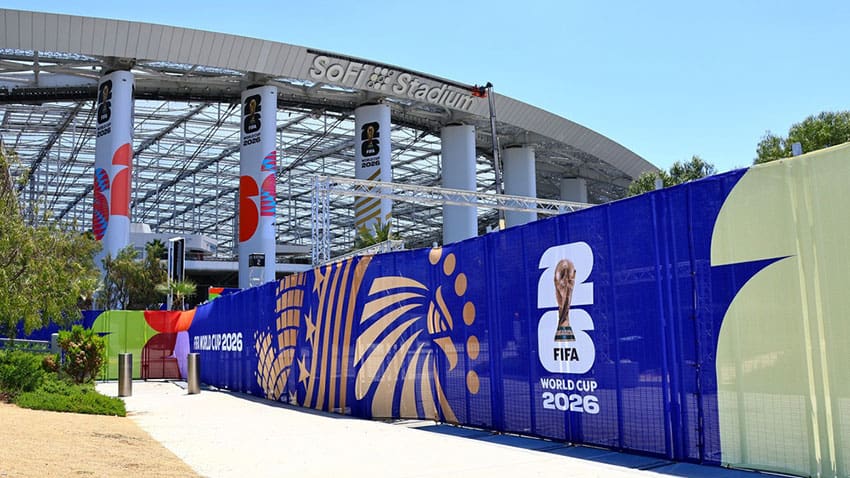
There is a phrase beloved of every business school lecturer, every venture capitalist and every man who has ever worn a gilet to a breakfast meeting: the level playing field.
It is the founding myth of competition itself, the idea that we all start from the same line, breathe the same air and sweat, roughly speaking, the same sweat. And this summer, FIFA has taken that noble concept, marched it into the Philadelphia sunshine and left it there to blister.
Because let us be clear about what is actually happening at this World Cup. On Saturday afternoon, France and Paraguay were sent out to play knockout football in Philadelphia with the heat index nudging an obscene 40C, the sort of temperature at which sensible nations close the shops, draw the shutters and lie down until October. Meanwhile, other teams in this very same tournament have spent a month wafting about in Atlanta, Dallas and Houston, three fully enclosed, climate-controlled pleasure domes where the thermostat sits at a serene 22C, roughly a fifth of all matches are being played in air-conditioned comfort, and the greatest physical hazard is an over-chilled bottle of Gatorade.
That is not a level playing field. That is not even the same sport. That is judging oranges against oranges, yes, but one orange has been kept in the fridge and the other has been left on the dashboard of a Ford Focus in a Texas car park.
And tonight it gets better, or worse, depending on whether you are English. England face Mexico at the Estadio Azteca, a cathedral of footballing suffering that sits 2,240 metres above sea level, where the air is thin, the oxygen is rationed and the home side has been living, training and playing up in the clouds all tournament. Mexico have played three of their four matches at the Azteca. England have had a few days to acclimatise to conditions that physiologists suggest need weeks. It is the sporting equivalent of asking a Surrey accountancy firm to pitch for a contract in Mexico City, in Spanish, while mildly concussed.
Now, I can already hear the rejoinder. Sport has always had its quirks of geography. True enough. But there is a difference between charming local variation and a structural inequality baked into the draw. When one quarter-finalist has spent the group stage at a constant 22C and another has been slow-roasted in Miami and Monterrey at wet-bulb temperatures the medics politely describe as dangerous, the bracket itself becomes a lottery of thermodynamics. Uzbekistan, delightfully, drew the coolest schedule of the lot. Tunisia drew the hottest. Neither earned it. The air conditioning did.
FIFA’s answer to all this has been the cooling break, that strange little ritual in which 22 millionaires gather round a cool box like wildebeest at a watering hole while the referee studies his watch. It is a sticking plaster on a sunburn. A three-minute pause does not undo 87 minutes of playing in conditions that would get a building site shut down in Britain, and everyone from the players’ union to the team doctors knows it.
Business readers will recognise this pattern instantly, because it is how markets fail. It is the incumbent with the subsidised energy contract competing against the start-up paying spot prices. We would call it an uneven regulatory environment and write furious letters about it. FIFA calls it a tournament.
And here is the properly British irony: while the players wilt, the UK economy is having a lovely time of it. The tills are singing to the tune of a £3.8 billion World Cup spending boost for pubs, bookmakers and takeaways, and smart small firms are already thinking MATCH to win the event economy. The only heat map that matters in Britain this month is the one showing which beer gardens have a big screen.
Tonight’s kick-off lands at 1am UK time, which is why unions are begging employers to allow flexible working on Monday morning, and why half the nation’s middle managers will be conducting their 9am stand-up from behind sunglasses. Spare a thought, as you yawn, for Harry Kane and colleagues, who will be conducting theirs at altitude, on 40 per cent less oxygen, against 87,000 Mexicans who regard the Azteca as a family heirloom.
So no, this World Cup is not judging oranges with oranges. It is a magnificent, chaotic, occasionally dangerous experiment in competitive inequality, and whoever lifts the trophy will deserve an asterisk shaped like a thermometer. If England prevail tonight, breathless in every sense, it will rank among our finest away days. And if we lose, well, at least we will have the excuse ready before kick-off. Which, as any England fan will tell you, is the true national sport.

Richard Alvin
Richard Alvin is a serial entrepreneur, a former advisor to the UK Government about small business and an Honorary Teaching Fellow on Business at Lancaster University.
A winner of the London Chamber of Commerce Business Person of the year and Freeman of the City of London for his services to business and charity. Richard is also Group MD of Capital Business Media and SME business research company Trends Research, regarded as one of the UK’s leading experts in the SME sector and an active angel investor and advisor to new start companies.
Richard is also the host of Save Our Business the U.S. based business advice television show.


China seeks closer business ties with Europe as Wang meets Wallenberg

With the artificial intelligence frenzy roiling benchmark gauges from Asia to the US, the NSE Nifty 50 Index is becoming a safe haven of sorts for global investors. In the first half of the year, it moved 1% or more on just about one-third of the days — less than the MSCI Emerging Markets Index and barely more than the S&P 500 Index.
India’s lack of AI plays has been a hurdle most of the year as investors turned to markets like South Korea and Taiwan that delivered stellar returns. But with concerns mounting over the sustainability of that trade, interest in India is slowly coming back. In June, the Nifty 50 outperformed the MSCI Emerging Markets Index by the most since November, while foreign outflows were the smallest in four months.
“India’s calm comes down to one thing: It sits outside the AI trade,” said Maxence Visseau, chief investment officer of Arkevium Capital in Dubai. His firm is neutral on the market and uses it as a diversifier, he said. “India works as an AI hedge inside the EM complex.”
 ETMarkets.com
Indian equities remain some of the world’s worst performers this year, but the tide is starting to turn as the rupee stabilizes after hitting a record low and oil gains that tanked shares of refiners and airlines recede on easing tensions in the Middle East. That’s reduced inflation concerns and brightened prospects for India’s economic growth, according to a government report at the end of June.

At the same time, market players are getting more upbeat about the upcoming earnings season, which Tata Consultancy Services Ltd. kicks off on Thursday.
“The fall in commodity prices has altered the macro outlook for India almost overnight,” said Sandip Sabharwal, founder of research house Asksandipsabharwal.com in Mumbai. “Lower commodity prices, improving capital flows and stable interest rates create an environment where earnings upgrades are likely to exceed downgrades over the coming quarters.”In a note to clients, Morgan Stanley analysts including Ridham Desai wrote last month that India has become a “much larger macro asset class.” The less volatile inflation data in recent years support equity valuations and turn the market into one of defensive growth that can withstand global shocks better than it used to, they said. Over the past decade, the Nifty 50 almost tripled, delivering annual gains of more than 10% on six separate years.
The benchmark index logged 38 sessions with moves of 1% or more in either direction in the first six months of 2026, compared with 59 for MSCI’s emerging-market and Asian gauges and 32 for the S&P 500. South Korea’s Kospi index was off the charts, with 79 days of fluctuations of at least 1% — or two-thirds of the days in 2026.
ETMarkets.comMeanwhile, the India NSE Volatility Index dropped for a third straight month in June, falling below its one-year average and reaching its lowest level since February on Friday. That’s a far cry from April, when the gauge of option prices was at a one-year high relative to the Cboe Volatility Index, shortly after the Nifty 50 tanked to a low.
Kruti Shah, a quantitative analyst at Equirus Securities, sees a “bullish undertone” in the Nifty 50 and favors call spreads to bet on more gains, adding that the upcoming earnings season may offer some positive surprises.
“India was held back earlier this year by higher energy prices, elevated valuations and limited exposure to the AI trade,” said Ben Powell, chief investment strategist for the Middle East and Asia Pacific at BlackRock Investment Institute. “As those pressures have eased, investors may look beyond AI-heavy markets. That could put India back on investors’ radar as a differentiated opportunity within emerging markets.”


Uber pauses Europe food delivery expansion as it pursues Delivery Hero deal, FT reports
Treasury Yields Snapshot: July 2, 2026

Week’s Best: QQQ Has Competition Now


Vessel forced out of New York ship parade over ’politically charged’ banners
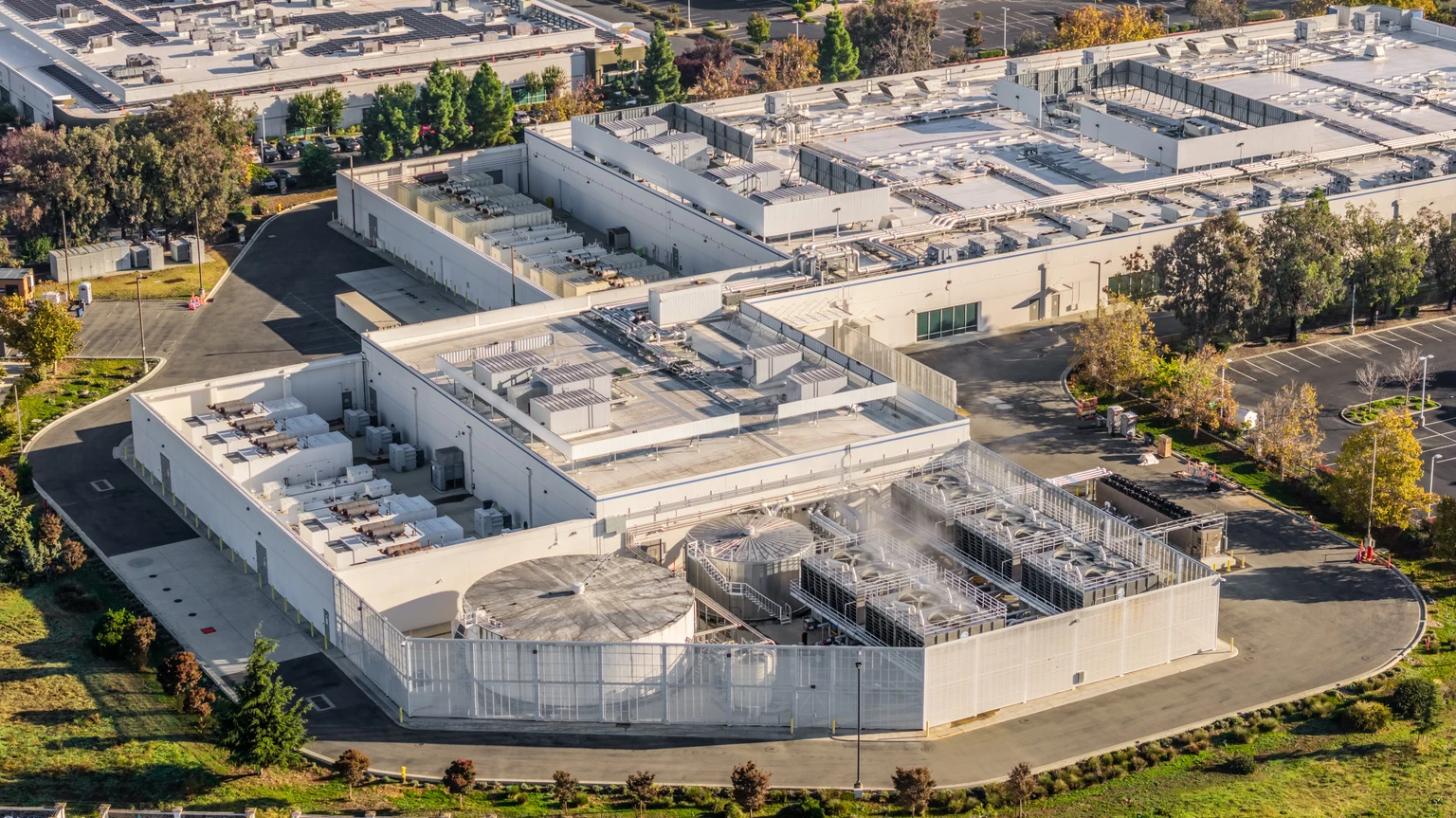
Core Scientific: A Bullish Bet On AI Power Scarcity

This is the forum for daily political discussion on Seeking Alpha. A new version is published every market day.
Please don’t leave political comments on other articles or posts on the site.
The comments below are not regulated with the same rigor as the rest of the site, and this is an ‘enter at your own risk’ area as discussion can get very heated. If you can’t stand the heat… you know what they say…
More on Today’s Markets:
Moderation Guidelines:
We remove comments under the following categories:
- Personal attacks on another user account
- Anti-Vaxxer or covid related misinformation
- Stereotyping, prejudiced or racist language about individuals or the topic under discussion.
- Inciting violence messages, encouraging hate groups and political violence.
Regardless of which side of the political divide you find yourself, please be courteous and don’t direct abuse at other users.
For any issue with regards to comments please email us at : moderation@seekingalpha.com.
Seeking Alpha’s Disclosure: Past performance is no guarantee of future results. No recommendation or advice is being given as to whether any investment is suitable for a particular investor. Any views or opinions expressed above may not reflect those of Seeking Alpha as a whole. Seeking Alpha is not a licensed securities dealer, broker or US investment adviser or investment bank. Our analysts are third party authors that include both professional investors and individual investors who may not be licensed or certified by any institute or regulatory body.
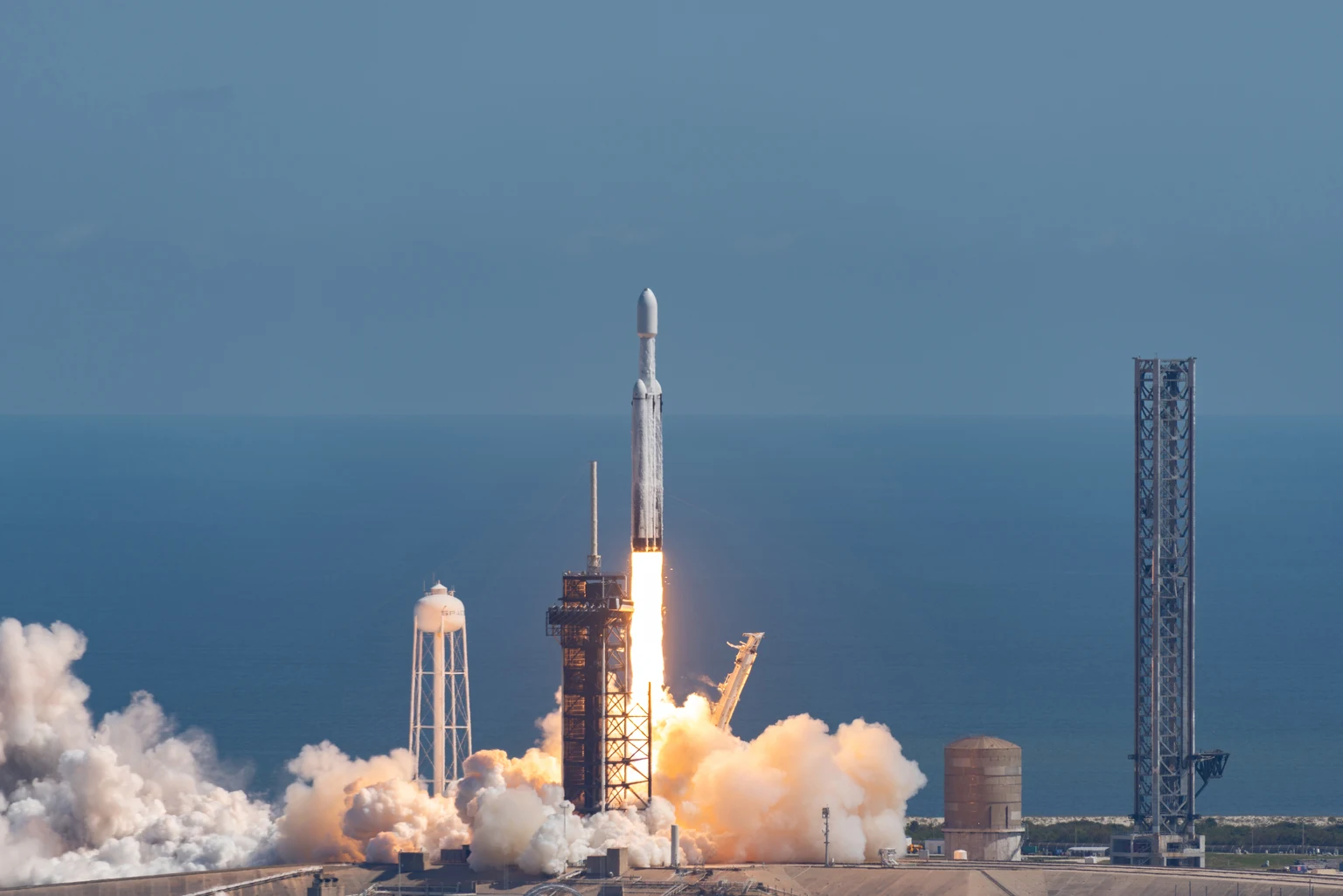
Linde: Space Growth Prospects Already At Orbit
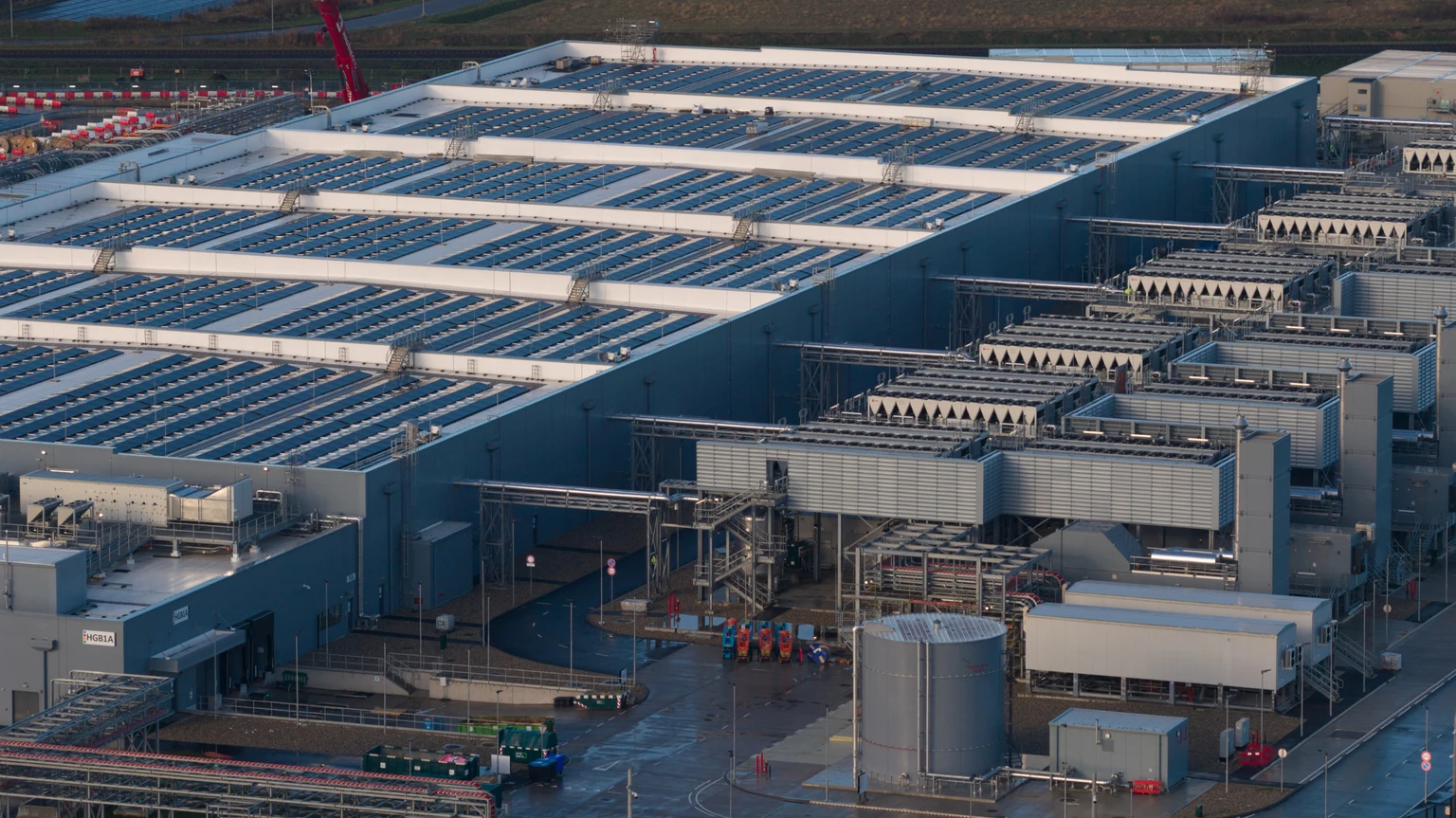
WhiteFiber: A Small-Cap Way To Own The AI Power Bottleneck

Finance & Education Minister Removed | Modi Govt. Reshuffle Exposed..!

France prove they can win ugly in bad-tempered clash – and World Cup history is repeating itself

NASA Mission To Rescue The Falling Swift Observatory Has Launched


-

 Fashion1 day ago
Weekend Open Thread: High Hopes
-

 Politics2 days ago
The House | “Reframing the debate from a binary discussion of winners and losers”: Yuan Yang reviews ‘We Are Not Machines’
-

 Crypto World5 days ago
Strategy authorizes up to $1.25B in Bitcoin sales under new capital plan
-

 News Videos6 days ago
MAJOR BITCOIN & MARKET UPDATE!!!! (MUST WATCH ASAP!!!)
-

 Tech5 days ago
Anonymous researcher drops 0-day ‘exploitarium’ repo
-

 Business5 days ago
Australia treasurer says alleged access of prime minister’s bank data ’incredibly concerning’
-
 Business5 days ago
The AI boom won’t burst all at once. It will pop in ‘rolling bubbles’: Macquarie
-

 Sports4 days ago
Broncos roster: OL Ben Powers (No. 74) entering final year of contract
-

 NewsBeat4 days ago
Presenter Caroline Flack’s brother Paul Flack dies aged 55
-

 Crypto World3 days ago
Binance stock trading tops $1B in first month after launch
-

 Crypto World3 days ago
Alibaba-affiliate Ant Group enters the humanoid robot market with 12 deals
-
 News Videos5 days ago
How to Build INSANE Live Financial Dashboards With Claude
-
 NewsBeat3 days ago
New exhibition reflects five decades of movement between island of Ireland and GB
-

 Business3 days ago
Meta Platforms Stock Jumps 7% Today as Bloomberg Reports Company Plans to Enter the Cloud Business
-

 Business2 days ago
What a 10 Percent Drop Means for Buyers, Sellers and Renters
-

 Crypto World2 days ago
Binance Re-Enters Philippines As EU MiCA Rules Restrict Access
-

 Tech5 days ago
The attack that hijacked Claude Code came through Sentry. Datadog, PagerDuty, and Jira have the same exposure.
-
 Business5 days ago
PRISM’s IPO filing mentions Zostel case, CCI investigation
-
 Crypto World4 days ago
Airdrop Registration Becomes Key Focus For Remittix As RTX Launch Updates Approach
-

 Crypto World2 days ago
Standard Chartered Secures MiCA License as ESMA Adds 37 New Crypto Firms
You must be logged in to post a comment Login