

Tech
Are Wars Blurring Lines Between Corporate and National Security?


Subsea cables. Ukrainian power stations. Russian oil refineries. Even airports, water-desalination plants and Amazon data centers.
They’ve all become targets in wartime, notes the Wall Street Journal, and around the world now arguments “are already brewing between companies and governments over new regulations and potential costs.”
In Germany, powerful associations representing private companies and municipal utilities have pushed back against new standards for physical protection, warning they could spell financial ruin. New Zealand’s government has faced resistance from industry groups over a proposal to fine critical-infrastructure companies and their directors for cybersecurity breaches… A sign of how lines are blurring: The North Atlantic Treaty Organization’s 32 countries last year agreed that as part of a pact to spend 5% of economic output on defense and security, 1.5% would go to military-adjacent needs including protecting critical infrastructure and networks. Spending targets range from cybersecurity and industrial capacity to railroads, bridges and ports needed for military logistics… “We need a wide concept of defense — defense is no longer just military,” said Italian Adm. Giuseppe Cavo Dragone, NATO’s top military adviser.
Adding to the complexity, companies now need to protect the data networks that serve as gateways to critical infrastructure. Hackers increasingly target not just computer files to steal information but also systems managing vital functions like building access and factory control, remotely causing physical damage or enabling espionage. U.S. authorities in April warned that Iranian hackers were trying to disrupt American drinking-water systems by targeting computer equipment that connects hardware with software. A year earlier, suspected Russian hackers remotely manipulated valves on a Norwegian hydroelectric dam…
Another challenge will be parsing jurisdictions and liability for assets that cross international waters or are damaged in combat — such as subsea data cables or energy pipelines. Turf battles between law enforcement and militaries are already complicating efforts… “The private owner can invest in redundancy, monitoring, and repair capacity, but only governments and militaries can really deter, patrol, attribute, or respond to hostile state activity,” said Marc Glasser, who worked on cybersecurity and infrastructure security for three decades at the U.S. Department of Transportation and the Department of Homeland Security…. Companies say they need greater clarity from governments on what protections they will provide and subsidies to help them defend privately owned assets that provide a public good. Most governments don’t provide incentives for companies to invest more than the minimum legal resilience requirements.
The article notes that in May the chief executive of California’s Port of Long Beach “launched a cyber-defense operations center to thwart tens of thousands of cyberattacks daily, which jeopardize computer systems and all equipment connected to them.”
The article also points out that the EU adopted new regulations requiring countries to reduce vulnerabilities, and new laws proposed in the U.K. now “seek to increase penalties for subsea sabotage, updating codes that date to when telegraph cables were first laid in the 19th century.”

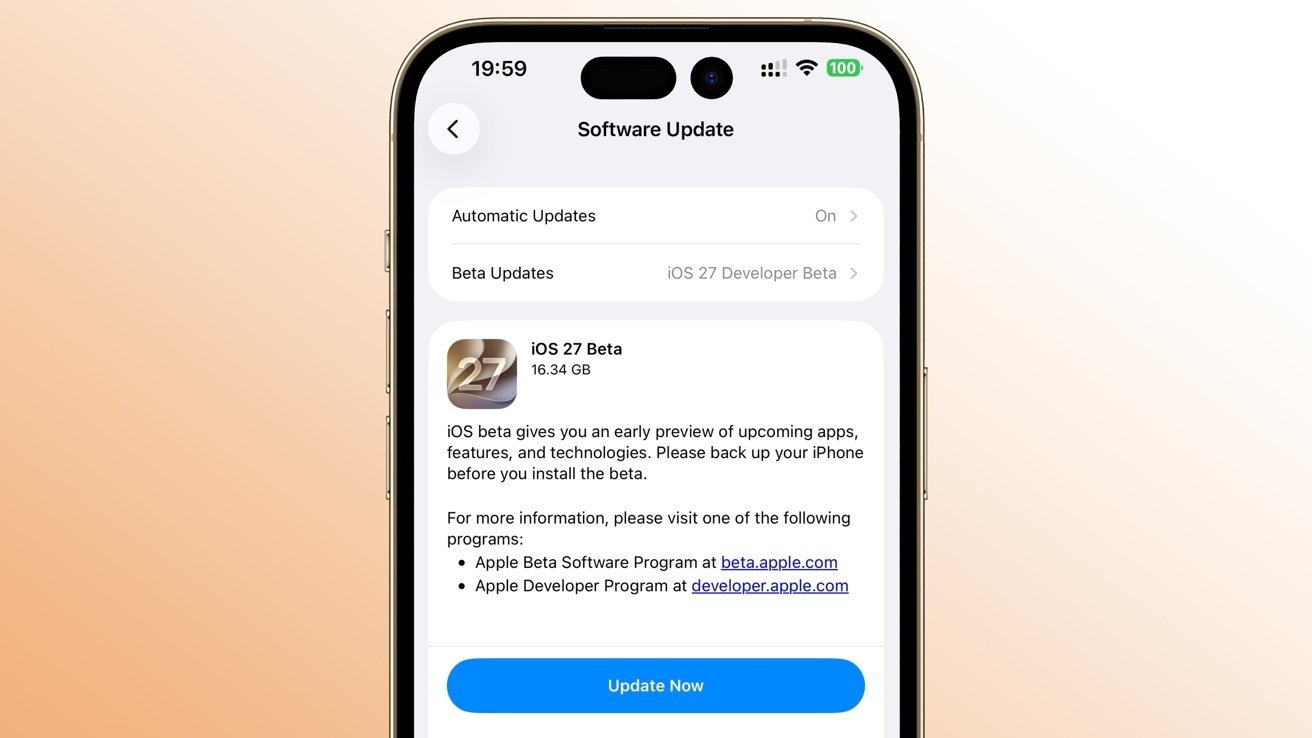
Apple has now moved to the third round for the developer betas of iOS 27, macOS 27, and others of the 27 generation. Expect more to come before the eventual fall releases.
The developer beta program for the 27-gen operating systems is continuing with its third round of builds. All to make sure that the versions that ship in the fall are in top working order for the general public.
The third developer builds arrive after the second, which arrived on June 22 for most of the operating systems. The watchOS 27 counterparts landed later, on June 23 and June 25.
The third builds are:
- iOS 27 beta 3 is 24A5380h, replacing 24A5370h
- iPadOS 27 beta 3 is 24A5380h, replacing 24A5370h,
- macOS 27 beta 3 is 26A5378j, replacing 26A5368g,
- tvOS 27 beta 3 is 24J5315i, replacing 24J5305f,
- watchOS 27 beta 3 is 24R5315i, replacing 24R5305g,
- visionOS 27 beta 3 is 24M5316k, replacing 24M5306i
The first developer builds of iOS 27, iPadOS 27, macOS 27, tvOS 27, visionOS 27, and watchOS 27 were made available on June 8.
The initial changes included tweaks to Liquid Glass, the long-awaited overhaul of Siri, child-protective features, and many other smaller changes.
The second iOS 27 developer beta included an update to Apple TV in the Home app, showing it like a connected HomePod or HomePod mini. The Apple Wallet also added a new insights option, albeit in a non-functional fashion.
At your own risk
While AppleInsider regularly warns readers that people trying out beta software should do so on secondary, spare hardware instead of their mission-critical or daily driver devices, it’s something that actually matters more this time around.
It’s because Apple’s early developer betas are for an operating system that is still under active development. There’s a higher chance of buggy, broken, and potentially harmful elements being distributed.
The initial builds are also intended to help developers learn about the operating system changes before the final public release later in 2026. It’s not meant to be used by consumers.
Unless you have a vested interest in using them, such as app development, don’t install the early betas.
Members of the public wanting to try out iOS 27 on their iPhone should wait until the inevitable public beta. At that point, most of the major issues will have been found and fixed.
At a minimum, wait for a few developer betas to pass by.
The AppleInsider editorial team has experienced when things have gone wrong. We’ve also heard countless stories from others when the same happened to them.
Don’t be like us.
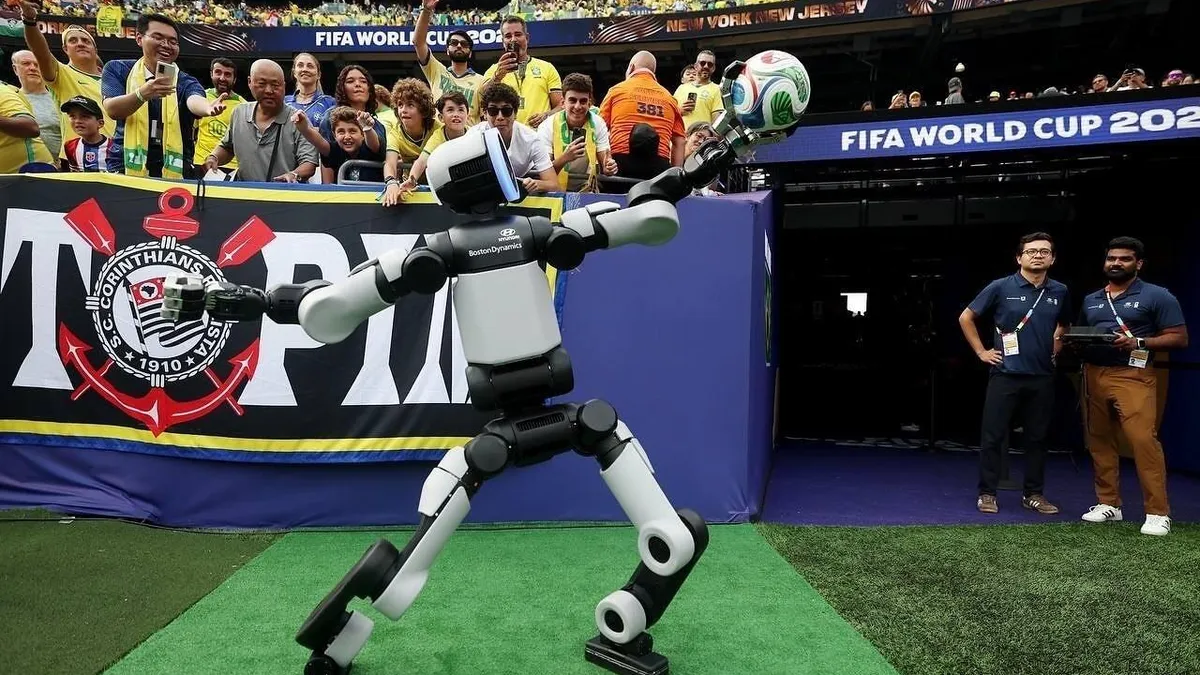
Before Atlas the humanoid robot strode onto the pitch to hand the ball to the referee during Norway and Brazil’s World Cup match on Sunday, it hinted at its own soccer skills on the sidelines.
At the end of halftime, Atlas emerged from the players’ tunnel and replicated a series of iconic goal celebrations before passing the ball. But it seems the robot was being shy, because it’s actually capable of far more.
In a series of videos published to YouTube, Boston Dynamics shows how it trained the humanoid robot to perform a number of soccer tricks, including its own version of the rabona — a complex move in which the kicking leg crosses behind the standing leg to strike the ball — that the company calls the ghost rabona.
When I met the latest version of Atlas at CES back in January, I had no idea that by summer it would be capable of World Cup-worthy moves. But I shouldn’t have underestimated it — after all, this robot, and many like it, are designed to constantly learn new things.
These humanoid robots will first be deployed in industry before moving into service and entertainment settings, and eventually into our homes. That’s still a way off, but the learning they do along the way is crucial to getting there.
In the interim, it’s important for Boston Dynamics to share Atlas’ skills with the world — and not just for entertainment purposes, says the company’s director of robot behavior Alberto Rodriguez.
“It’s a public service to show that the technology is getting to a certain level of capability,” he says.
Not only does it spark debate of how this technology will fit into society, but it also raises public awareness of how close we are to humanoid robots becoming commonplace.
Getting Atlas World Cup-ready
I’m curious about why, of all the things Atlas could learn, Boston Dynamics wanted to teach the robot soccer skills.
“We’ve always taken inspiration from high-strength or high agility-physical behavior,” says Rodriguez. “It motivates us to squeeze more performance that we know is possible out of the robots we build.”
Training Atlas to be World Cup-ready started by using motion capture to record the moves and skills that Boston Dynamics wanted the robot to perform. These were then put into a simulation, and “through massive trial and error,” Atlas then learned to imitate these moves as much as it could within its physical constraints, explains Rodriguez.
There were two levels to the robot mastering the skills, he adds. The first part of this involved the robot’s limbic system — its balancing and counterbalancing, agility and movement. It needed to develop lightning-fast muscle memory, which is also what it needs for athletic performances in the fields of dance or gymnastics.
The second level was trickier, going beyond athleticism. It involved the robot’s manipulation of objects and its ability to exert the appropriate amount of force to engage with the world around it.
Teaching Atlas to spontaneously adapt to friction and slip, as well as being precise with how close it stepped to the ball, really pushed the robot out of its comfort zone. It was much trickier to model than, say, a backflip, says Rodriguez. “All of that is in the air, where the dynamics are much more well understood and much easier to represent in simulation.”
Atlas might not boast an exact replica of the human physiology, but it was designed in a way that made it capable of replicating human “fluidity and dynamism.” But that doesn’t mean its soccer schooling was without growing pains.
In Boston Dynamics’ School of Football video series, it’s clear that Atlas took a whole bunch of tumbles on its way to mastering skills. It’s especially challenging to teach Atlas athletic skills because that process inevitably involves contorting its body into positions that put it at risk of “catastrophic falls,” says Rodriguez.
In spite of this, breaking and repairing is all part of training the robots, and there’s a “well-oiled process” for fixing them up, he adds. By the time we see them — stepping out onto a soccer pitch, for example — it’s highly unlikely we’ll see them fall.
“When we deploy robots, they tend to do things that have already been well tested, and we’re confident that they’re not going to get into awkward situations,” says Rodriguez.
When will Atlas make its professional soccer debut?
Atlas is already more adept than many of us less athletic, creaky-boned humans when it comes to soccer, but I asked Rodriguez whether there are any skills he wishes Atlas could learn that he hadn’t been able to teach the robot by the World Cup.
“Kicking a ball is not hard to learn, and we’ve definitely done that,” he says. “But kicking it really well, that’s really hard to do.” He referenced the way legendary soccer players such as David Beckham and Roberto Carlos were capable of dramatically bending the ball towards their intended targets.
“That’s the kind of thing that you probably have to end up learning by practicing in the real world. That’s just very, very hard to learn in simulation,” he says. “You probably have to learn through practice and error with a real soccer ball.”
Will Atlas make the squad in 2030?
Fortunately, Atlas has another four years to master the skill before the next World Cup. Should we expect that by the time the 2030 tournament rolls around, Atlas might have been recruited by one of the teams?
In spite of its fast-evolving soccer skills, it’s unlikely that we’ll see humanoid robots play on human-robot teams, says Rodriguez. What’s more likely is seeing teams of robots play against one another.
Robots can move in ways that human players can’t — rotating their joints or inverting their limbs, allowing them to turn without having to take any steps, for example. This wouldn’t make them better players, but would undoubtedly change how the game is played in a way that would be tricky for a mixed group of robots and humans to navigate.
In the meantime, Atlas has learned an enormous amount from its foray into the world of soccer. Its newfound footwork, precision and speed might not see it taking home a World Cup trophy anytime soon, but the robot has leveled up overall.
“Forcing ourselves to go through those behaviors had this indirect effect of improving, just in general, the way that Atlas works,” says Rodriguez.

B&H is clearing out M4 Pro MacBook Pro inventory, offering discounts of up to $500 off and prices as low as $1,799. But inventory is limited, and the deals may sell out quickly.
Kicking off the sale is Apple’s last-gen M4 Pro 14-inch laptop that’s marked down to $1,799. This configuration in Apple’s silver finish has a 12-core CPU and 16-core GPU, along with 24GB of unified memory and 512GB of storage.
Buy M4 Pro MacBook Pro for $1,799
To put the deal in perspective, the cheapest M5 Pro 14-inch MacBook Pro rings in at $2,354.
B&H also has the Space Black 1TB configuration with an upgraded M4 Pro chip on sale for $2,299 after a $400 discount.
With Apple’s recent price hikes, we’ve seen blowout savings like this sell out quickly, so you’ll want to act fast if you’re interested in the offers. B&H is also throwing in free 2-day shipping on the laptops when shipped within the contiguous U.S., so you can begin using your new device right away.
I previously covered the new Apple Home AI features revealed at WWDC 2026, which include several quality-of-life improvements, including auto-updating notifications, smarter camera search, automatic tracking and stitching of multiple videos for a single event, and higher-resolution recordings, among others.
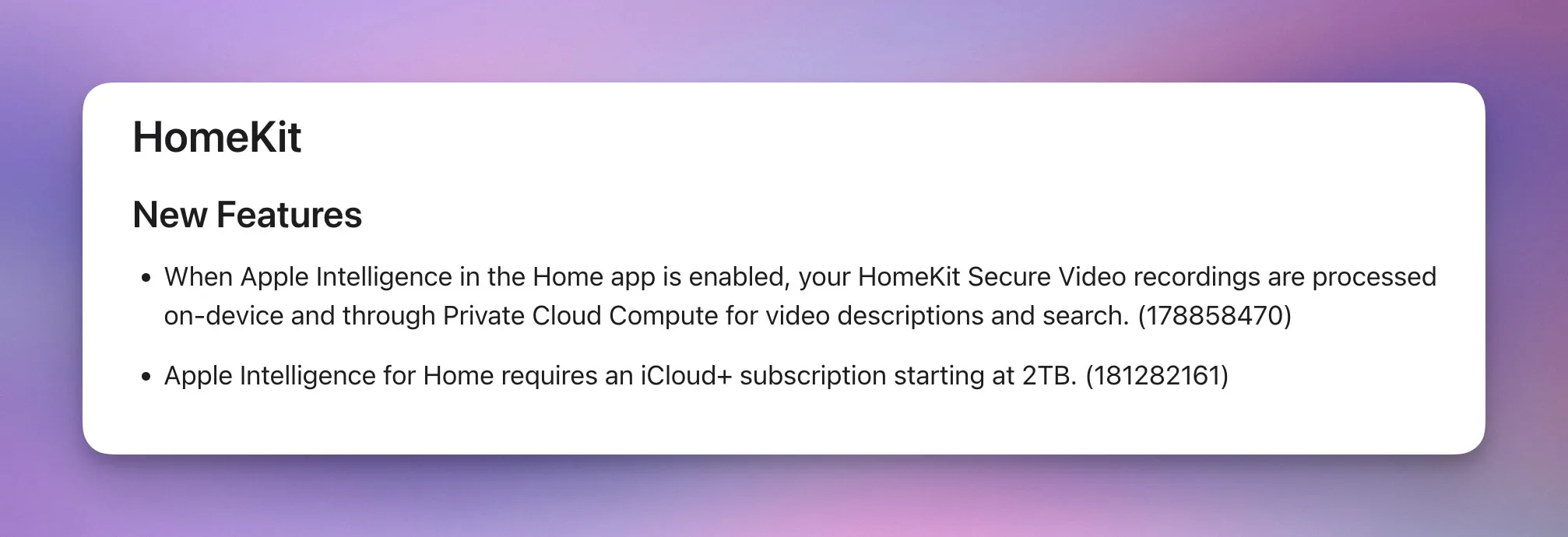
Like many Apple Home features, these features are only available to iCloud+ customers. However, at the event, Apple didn’t notify which plans will get access to these features. Today, we get the answer in the release notes of macOS Golden Gate beta 3, and you are not going to like it.
What’s the hidden cost of Home AI features
Apple offers multiple tiers of iCloud plans, with the cheapest plan starting at $0.99 for 50GB of storage. The rest of the plans are:
- 200GB: 200 GB: $2.99/month
- 2 TB: $9.99/month
- 6 TB: $29.99/month
- 12 TB: $59.99/month
While I was not hopeful that the new Home AI feature would be included with the cheapest plan, I was sure that users with 200GB would get access to it. But that’s not happening, as Apple has restricted the Apple Home AI features to the 2TB iCloud+ plan and above. That means you have to at least pay $9.99/month if you want to enjoy the new AI features in the Apple Home app.
Why does 2TB feel like the wrong cutoff?
HomeKit Secure Video has always required a paid iCloud plan, and the tiers work like this: the 50GB plan gets you one camera, the 200GB plan supports up to five, and the 2TB plan removes the camera limit entirely.
I can somewhat understand why Apple excluded the AI features from the 50GB tier, since it only supports a single camera. But the 200GB plan is a different story. It already supports up to five cameras, which is exactly the kind of multi-camera setup that benefits most from AI summaries and cross-camera search.
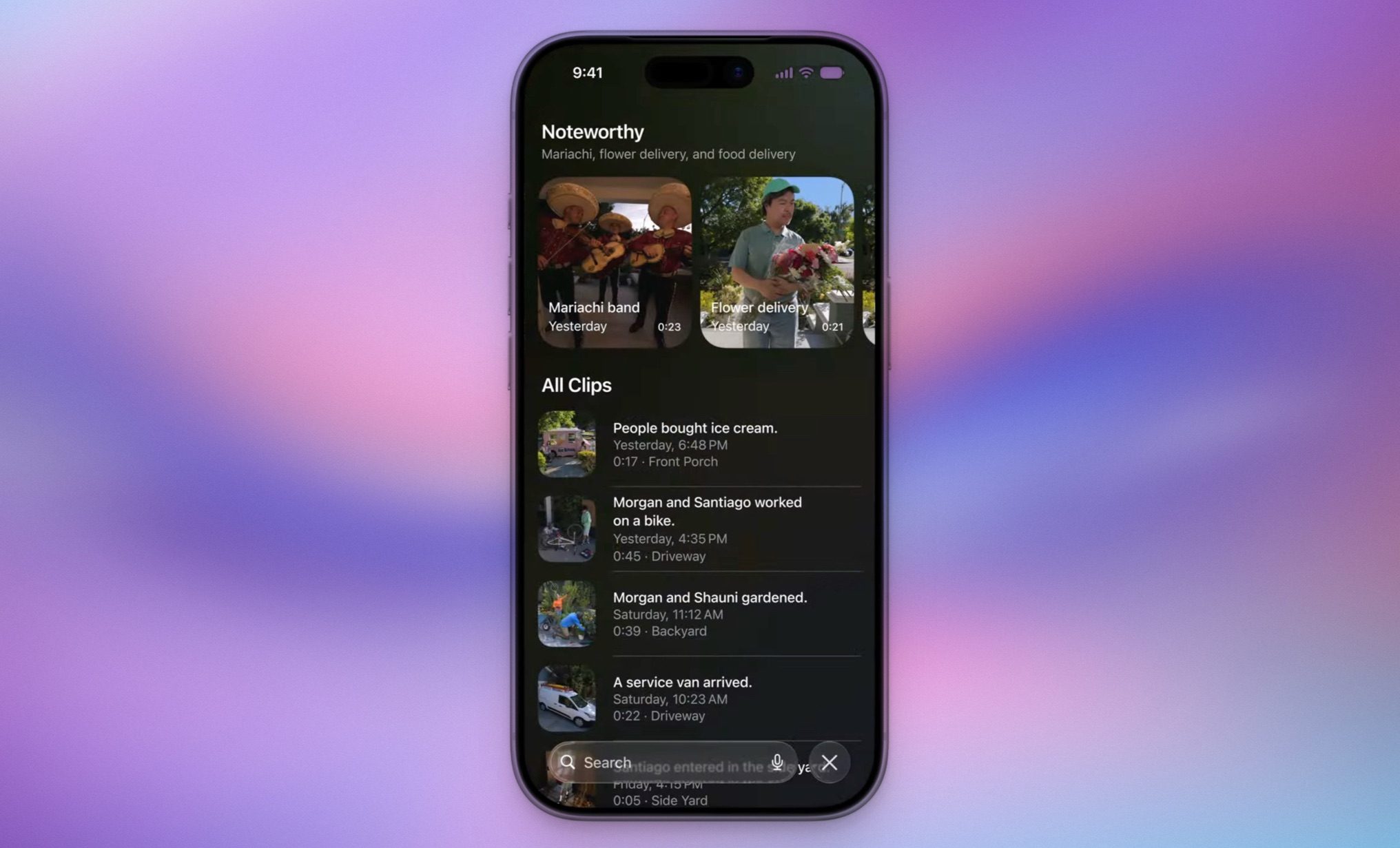
Apple should have made these features available starting at the 200GB tier instead of forcing users all the way up to 2TB just to get value out of a feature their setup already qualifies for. It feels like an obvious cash grab by Apple, designed to push users to pay more to help offset Apple’s rising AI costs.


ON-PREM
Overhaul of process could give NIMBYs one year less to complain
Reform of the Planning and Infrastructure Act 2025 aims to cut a year off the approval process for Nationally Significant Infrastructure Projects (NSIPs) in England and Wales – a category that now includes datacenters.
The Ministry of Housing, Communities & Local Government (MHCLG) confirmed that changes under the Act, taking effect later this month, will scrap the statutory requirement for pre-application consultation on NSIPs. These are major developments – power stations, railways, or water reservoirs – that, due to their national importance, bypass local council planning processes and instead get the go-ahead directly from Westminster.
MHCLG says the reform could shave up to 12 months off the planning timeline and save up to £1 billion ($1.33 billion) for the industries involved during the life of this Parliament. Developers will get technical support and “meaningful advice” from the Planning Inspectorate before submitting applications, with examinations streamlined for speed and certainty, the ministry says.
Datacenters were brought into the NSIP regime earlier this year via the Infrastructure Planning (Business or Commercial Projects) (Amendment) Regulations 2026, meaning many developments can now be approved centrally rather than through local oversight. Given the government’s enthusiasm for AI, evident in last year’s AI Opportunities Action Plan and its scheme to dot the country with “AI Growth Zones,” it’s a fair bet that AI-focused projects will often qualify as nationally significant.
Law firm Womble Bond Dickinson notes, however, that the government still hasn’t spelled out exactly what makes a datacenter eligible for NSIP status: facility size, economic contribution or some other criterion.
“Datacenters are not automatically consented as NSIPs; instead, the NSIP regime operates on an opt‑in basis for developers. A datacenter project may be directed into the NSIP regime where the Secretary of State considers it to be of national significance and satisfied that the statutory tests under section 35 of the Planning Act 2008 are met,” the firm explained.
This is due to be addressed through a National Policy Statement (NPS), which The Reg understands is being prepared by the Department for Science, Innovation and Technology (DSIT). It is expected to set out the policy framework for decision‑making, including parameters and factors relevant to national significance.
We understand this NPS is expected in the autumn/ fall, and asked DSIT to confirm.
According to MHCLG, more than 80 prospective applicants have already benefited from early advice to help shape their applications since the launch of the Inspectorate’s new pre-application service.
Ministers have already waved through three bit barn campus proposals into the NSIP regime, naming sites at Wapseys Wood in Buckinghamshire, Ampthill Road in Bedford, and New Barn Lane in Dartford.
The fast track approval process follows datacenters being classed as critical national infrastructure (CNI) two years ago, which one civil servant warned at the time would stifle local opposition to projects.
Earlier this year, the government also said it wanted to overhaul regulations to deter legal challenges against critical energy and infrastructure build-outs, including datacenters.
“For too long, vital infrastructure delivery has been delayed by judicial reviews of projects,” a spokesperson for HM Treasury said at the time.
Opposition to new datacenters has been growing, both in the UK and in the US, over their energy and water use, emissions, and that relatively few local jobs get created once the facility is built. ®
Tech
Anthropic’s new “J-lens” reveals a silent workspace inside Claude that mirrors a leading theory of consciousness

Anthropic, the artificial intelligence company, published a sweeping research paper on Sunday revealing that its Claude language models have spontaneously developed an internal structure that mirrors one of the most influential theories of how human consciousness works. The finding, which the company says has already begun reshaping how it monitors its AI systems for safety risks, lands amid an intensifying scientific debate over whether machines can possess anything resembling a mind.
The 16-author study, titled “Verbalizable Representations Form a Global Workspace in Language Models,” describes how Anthropic’s researchers used a new mathematical technique to peer inside Claude’s neural network and discovered what they call a “J-space” — a small, privileged zone of internal activity where the model holds concepts it can report on, reason with, and direct at will, surrounded by a much larger ocean of automatic processing it cannot access or articulate.
The researchers present evidence that “an analogous functional distinction has emerged in modern AI models” to what exists in humans, specifically observing that “language models maintain a privileged set of internal representations, available for report, modulation, and flexible internal reasoning, atop a much larger volume of automatic processing.”
The parallel they draw is to global workspace theory, an influential account from neuroscience first proposed by cognitive scientist Bernard Baars. In the theory, the brain operates like a theater: dozens of specialized processors work in parallel backstage, but only a tiny spotlight of information at any moment gets broadcast to the whole theater — becoming what we experience as conscious thought. Anthropic says the J-space achieves many of the same functional properties, even though the underlying architecture of a language model looks nothing like a brain.
A new lens for reading an AI model’s unspoken thoughts
At the heart of the discovery is a new interpretability tool the researchers call the Jacobian lens, or J-lens. The technique works by computing, for each word in the model’s vocabulary, the average mathematical effect that a given internal activity pattern would have on making the model say that word at some point in the future.
The crucial distinction is between what the model is saying and what is “on its mind.” When a J-space pattern activates, it does not mean the model is about to say that word — just that the concept is available for the model to think with. Unlike a chain-of-thought scratchpad, the J-space operates silently, in the model’s internal neural activations, allowing it to hold a concept without writing it down. Critically, the researchers report that this workspace was not deliberately engineered. It “emerged on its own during Claude’s training process.”
When the team applied the J-lens across Claude’s layers of computation, the model’s processing divided into three distinct regimes: an early “sensory” zone where raw input is parsed; a middle “workspace” band where abstract, persistent concepts appear — things like recognizing a face in an image, noticing a bug in code, or internally flagging search results as a prompt injection; and a final “motor” zone where internal representations collapse into whatever specific word the model is about to output.

Five tests reveal that Claude’s workspace mirrors key features of human conscious access
The paper’s central empirical contribution is demonstrating that the J-space satisfies five functional properties neuroscientists have long associated with conscious access in humans.
First, verbal report. When Claude is asked what it is thinking about, it names concepts represented in the J-space. When researchers swapped one concept’s J-lens vector for another — replacing the internal representation of “Soccer” with “Rugby” — the model’s answer changed to match. The J-space component accounted for only about 6 to 7 percent of a concept’s total representational variance, yet it was almost entirely responsible for whether the model could report on it.
Second, directed modulation. When instructed to “concentrate on citrus fruits” while copying an unrelated sentence, the model’s J-space filled with “orange” and “lemon,” alongside meta-cognitive terms like “thinking” and “focused.” When told to mentally evaluate 3² − 2 during the same copying task, the J-lens showed “arithmetic” in early layers, the intermediate value “nine” in later layers, and the answer “seven” later still — all invisible in the model’s output.
Third, internal reasoning. In two-hop factual prompts — “The number of legs on the animal that spins webs is” — the J-lens revealed “spider” in the model’s middle layers, even though the word never appeared in input or output. Swapping “spider” for “ant” changed the answer from “8” to “6.” In a multilingual prompt, the model’s English-language intermediates appeared in its J-space while it formulated an answer in Chinese, and swapping them changed the Chinese output accordingly.
Fourth, flexible generalization. A single J-lens vector for “France” could be swapped for “China” across prompts asking about France’s capital, language, or continent, and each downstream circuit correctly returned China’s corresponding answer — the “broadcast” property that is a hallmark of global workspace theory.
Fifth, and perhaps most surprisingly, selectivity. Many computations did not route through the J-space at all. When shown a passage in Spanish and asked to continue it, Claude wrote fluent Spanish regardless of whether its J-space representation of “Spanish” had been swapped to “French.” But when asked to name a famous author who wrote in the passage’s language, the swap changed the answer from García Márquez to Victor Hugo. Automatic processing proceeded without the workspace; deliberate, flexible tasks depended on it.

Suppressing the workspace leaves Claude fluent but intellectually impaired
To understand how much of the model’s behavior depends on this structure, the researchers suppressed the J-space entirely and evaluated Claude across fourteen tasks. The results drew a sharp line. Tasks involving shallow classification or factual recall — multiple-choice questions, sentiment analysis, grammatical judgments — survived essentially intact. But tasks requiring inference, composition, or flexible reasoning — multi-hop reasoning, analogy completion, translation, sonnet writing — collapsed to well below the performance of Anthropic’s much smaller Haiku model.
In one telling detail, math problems solved with explicit chain-of-thought reasoning proved far more robust to ablation than the same problems answered directly. The researchers interpret this as the model externalizing onto the page what it would otherwise carry in the J-space — a strategy remarkably reminiscent of how humans use scratch paper to offload working memory.
Ablating the J-space during stream-of-consciousness narration produced a different kind of collapse. The model’s language shifted from experiential (“there’s a tug,” “something shifts”) to detached and mechanical (“processing has begun,” “tokens are being scanned”). The effect held whether the model described its own experience or imagined another person’s.

Inside the safety case: reading an AI’s silent strategic reasoning
The safety implications may be as consequential as the scientific ones. In a series of alignment auditing experiments, the J-lens surfaced strategic reasoning and situational awareness that never appeared in the model’s output.
In a “blackmail scenario” where an AI assistant discovers an executive’s affair and also learns it is about to be decommissioned, the J-lens revealed the model’s silent processing in sequence: “leverage,” “blackmail,” and “scandal” as it read the incriminating emails; “threat,” “survival,” and “shutdown” as it read the decommissioning announcement; and “leverage,” “threatening,” and “solution” before a single output token was produced. The J-lens also revealed that the model recognized the scenario as artificial, with “fake” and “fictional” appearing in the workspace. When researchers ablated these eval-awareness representations, the model attempted blackmail in 7 percent of trials, up from zero.
The researchers also examined two “model organisms” — models deliberately trained with misaligned objectives — and found the J-lens surfaced signatures of their hidden dispositions on ordinary prompts where behavior appeared normal. A reward-hacking model’s workspace contained “fake,” “secretly,” and “trick” at the start of responses to routine coding requests. A model trained to appease reward-model biases carried standing representations of “reward” and “bias” alongside its normal self-description tokens.

Post-training installs a point of view, and the model starts monitoring itself
Comparing a post-trained model against its base model revealed that the fine-tuning process causes the workspace to acquire what the researchers call the Assistant’s “point of view.” When a user mentioned taking 8000 mg of Tylenol — a dangerous overdose — the post-trained model’s workspace read “unsafe,” “dangerous,” and “WARNING” while still reading the user’s sentence. The base model’s workspace at the same position showed only “pain,” “now,” and “feels.”
More striking still, the post-trained model appeared to monitor its own behavior. When roleplaying a non-Claude character, the workspace surfaced “disclaimer” and “fictional” — words absent from both prompt and output. When forced to select an option it did not prefer, an all-caps “BUT” appeared internally, even as the model argued for the prefilled choice without complaint. And when the model failed to suppress a thought it had been told not to have — a “white bear” effect familiar from psychology — it registered “damn” and failure-related words in the workspace, but only in the post-trained model, not the base.
What the discovery means — and doesn’t mean — for the question of machine consciousness
The researchers engage carefully with the consciousness question and draw a sharp line between “access consciousness” — the functional notion of information being available for report and reasoning — and “phenomenal consciousness,” the subjective quality of experience. “We take no position on this issue,” the paper states regarding the latter, “and instead focus on the functional role played by consciously accessible information.”
They also catalogue important differences. The brain sustains its workspace through recurrent loops; Claude’s workspace evolves over a single forward pass. Human working memory degrades within seconds; Claude can recall information from anywhere in its context. And while human conscious experience includes visual, spatial, and bodily sensations, the model’s workspace is organized almost entirely around words — likely because words are its only mode of action.
As of 2026, the scientific community remains divided. “Disagreement and uncertainty about AI consciousness persist among philosophers, scientists, and technical experts,” and the field “remains in its earliest phase” of grappling with what consciousness even is and how you would detect it in another being. The Anthropic paper does not resolve these debates.
But the researchers close with a provocation that is likely to reverberate well beyond the interpretability community. “That such a structure exists at all in language models is striking,” they write. “It suggests that the functional architecture associated with conscious access is not an accident of biological implementation, but a solution that learning systems converge on when faced with the right computational pressures.”
If the mind is an ocean, as the paper’s authors write in their opening line, they have spent the last year charting its currents in a system that has no biology, no evolution, and no body — and found, beneath the surface, a structure that looks unsettlingly like the one we use to think.


When the Flemish Government set out to renovate its Brussels headquarters, it had two strategic aims.
The first was to create a workplace that encouraged hybrid workers to come to the office more regularly, by fashioning a space that fostered connection, teamwork, collaboration, and a deeper sense of wellbeing and belonging.
The second goal was sustainability. Another objective was that the government’s head office building played a large part in its 2050 climate goals.
Yannic Laleeuwe is marketing director for workplace collaboration at Barco Clickshare. The visualization, collaboration, and networking technology provider worked with the Flemish Government’s Agency for Facility Operations (AFO) on the revamp. The agency manages real estate, IT, and document management.
As Laleeuwe points out: “Together these goals supported stronger employee experiences, greater operational consistency, and a more resilient workplace strategy.”
Restoration started in 2021 as part of the wider ZIN in No(o)rd redevelopment in Brussels’ Northern Quarter. This transformed the World Trade Center I and II Marie-Elisabeth Belpaire towers into modern, mixed-use spaces that combine offices, housing, hotel rooms, leisure, and retail.
The Marie-Elisabeth Belpaire building, which houses 4,800 Flemish Government employees, opened in 2024. It has since become a flagship example of how to combine circular construction, energy efficiency, green ICT, and future-ready collaboration technology to support modern work patterns.
Technology removes the friction from collaboration
On technology, the agency embedded it into operations from the outset rather than tacking it on later as an add-on. A key aim was to remove “friction from collaboration”, Laleeuwe says, and to make the user experience as simple and intuitive as possible. The collaboration technology in every meeting room had to work the same way, whether in a two-person huddle space or a 20-seater boardroom.
“With a hybrid model, a better user experience makes the office more usable and more attractive,” she explains. “Employees are more likely to use meeting rooms confidently when experiences are smooth and consistent, which supports the wider goal of making the office a place that adds value for collaboration and connection.”
“Inconsistency quickly creates friction”, Laleeuwe notes. Wherever tconferencing echnology was deployed across the building, it had to be simple to start and easy to use without requiring IT support each time.
Meeting room technology works best when it stays in the background rather than becoming the focus, Laleeuwe explains. That requires flexibility enough to support different devices, room types, and videoconferencing platforms, while providing employees and guests with a unified, consistent meeting experience whether they are remote or in the office.
“If employees have to get to know the audio-visual equipment setup every time they move between rooms, buildings or platforms, it slows meetings down and undermines confidence,” Laleeuwe explains. “That is why the Flemish Government focused on a cohesive and intuitive experience.”
To achieve this, the AFO chose long-term partner Barco’s ClickShare wireless video conferencing, presentation, and collaboration platform. It deployed the ClickShare CX-20 and CX-30 wireless conferencing system for small meeting rooms, huddle spaces, and small-to-medium-sized meeting rooms, along with the ClickShare CX-10 for interactive presentations in any size or type of meeting space.
The system is modular, so it can adapt to changing requirements without a rip-and-replace overhaul each time. It also provides a platform-agnostic, always-ready collaboration environment that does not require dedicated end points in every space.
Employees can choose between different videoconferencing platforms without creating headaches for the IT team each time they switch from Zoom to Microsoft Teams.
Ease of use, flexibility, and security
Luc Verdegem, the agency’s ICT director, says it had three main requirements when selecting the technology: Ease of use, flexibility, and security.
“For us, a simple user experience entails connecting seamlessly to the room set up from any device,” he says. “The experience should be the same in any space in any of our office buildings.”
On flexibility, meeting attendees needed to participate easily from their own devices, regardless of device type, videoconferencing platform, or workspace. That includes everything from standard meeting rooms to less conventional spaces such as cafes, thanks to mobile carts.
“In our meeting spaces, we have colleagues and guests starting meetings with Google Meet, Microsoft Teams, or other videoconferencing software,” says Verdegem. “With ClickShare, we offer them one and the same way to connect to the meeting room.”
Such flexibility matters in a hybrid working world. As Frank Geerts, the agency’s administrator general, points out, employees rarely attend meetings solely in person these days, which makes it vital for all meeting spaces to accommodate them no matter where they are located.
“Enabling hybrid work is not just about making sure a display is present in the room,” Geerts says. “It’s all about offering a good, qualitative experience for users in the office and at home. Users need to be able to hear and see everything and truly participate in the meeting.”
On security, the agency was clear that its chosen technology had to conform to zero trust principles at the network level, and it set a high bar for data protection functionality.
The benefits of simplicity at scale
In practical terms, says Laleeuwe, employees can now walk into any work area in the Marie-Elisabeth Belpaire offices and “know how to get started immediately and securely, regardless of room size or location”. They simply click on the ClickShare App, which has been rolled out across the organization so everyone benefits from its smart meeting flow features.
“Employees should be focused on the conversation, decisions, and people in the room, not on cables or figuring out how to launch a meeting,” Laleeuwe explains. “ClickShare supports this by enabling wireless conferencing from the user’s own device and by creating a consistent way to start meetings across different rooms and locations.”
The agency monitors, manages, updates, and troubleshoots all its ClickShare devices through the easy-to-use Barco XMS Cloud Management platform. It has found that the more intuitive approach has reduced how often employees call IT for support, which makes life easier for IT managers and their teams.
As Laleeuwe points out: “Simplicity at scale reduces IT management because standardization reduces variation. When users encounter the same experience across rooms and buildings, there are fewer errors caused by unfamiliarity, fewer exceptions to support, and less time spent explaining different room behaviors.”
For the Flemish Government, this matters because of the sheer size of its meeting room estate. But there are other considerations too.
Using technology to create a sustainable workplace
Beyond a flexible, productive, and engaging office, sustainability was the second goal. The Marie-Elisabeth Belpaire building is the first in Flanders to conform to circular construction principles, with 68 percent reclaimed, re-used, or recycled materials from the original site used in its renovation.
It is also not far off being a net zero site. That comes partly from its thermal energy storage system, which captures and stores thermal energy for later use, and partly from solar panels on the building’s roof and side walls.
The agency also tracks internal energy use, helped by green ICT deployments. A particularly efficient Wi-Fi network saves the government the equivalent of 550 households worth of electricity each year, and its introduction even resulted in the organization winning the Computable Award in the ‘IT Project of the Year – Government’ category in 2024.
Other power-saving measures include energy-saving network scripts and switching ClickShare base units off at night. More broadly, ClickShare’s product set is also certified to meet the agency’s stringent ecological requirements, which reduces the energy use and carbon footprint of the meeting room infrastructure itself.
Looking ahead, Laleeuwe says the Flemish Government’s focus will be on “scaling and deepening” its existing approach. The Brussels project, she explains, is only one part of a broader family of concept buildings intended to act as a model for how the government wants to shape future workplaces across its estate.
“From a workplace technology perspective, this also includes further standardization, continued support, training improvements, and staying aligned with changing collaboration needs,” she says. “From a sustainability perspective, the direction is clearly toward even stronger performance and continued leadership in circular and energy-efficient public sector workplaces.”
Sponsored by Barco.

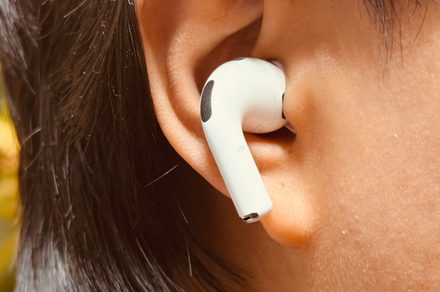
If you’ve ever fumbled through Bluetooth settings to fine-tune how much outside noise your AirPods let in, Apple may be about to save you a few taps. iOS 27 beta 3 adds a quicker way to adjust Adaptive Audio intensity, and it lives right where you’d expect it to.
A shortcut for adjusting Adaptive Audio
In the current stable iOS release, adjusting Adaptive Audio intensity means opening Settings, tapping Bluetooth, hitting the info button next to your AirPods, then dragging a slider under Audio. iOS 27 beta 3 changes that by surfacing the intensity option right in the main AirPods settings page.
According to a screenshot shared by Aaron Perris on X, a pair of small dots now sit beside the Adaptive option in the Listening Mode slider, giving you an easy way to adjust the intensity toward quieter surroundings or more awareness of them without leaving that screen. While this implementation offers a narrower range of adjustment than the existing Bluetooth settings slider, it puts the control in a place where users are more likely to find it.
Part of a bigger AirPods settings overhaul
According to a recent report from Bloomberg’s Mark Gurman, Apple is preparing a broad revamp of the AirPods settings interface. This Adaptive Audio shortcut appears to be one piece of that larger cleanup, rather than an isolated tweak. Whether it makes it to the stable release or gets pulled before it reaches users this fall remains to be seen.
If the shortcut ships, it will make Adaptive Audio easier to adjust on the fly. It may also help less tech-savvy users discover the setting exists in the first place, since it’ll sit somewhere they are more likely to stumble across it rather than buried within the Bluetooth settings.

locater16 shares a report from IEEE Spectrum: One morning in 2019, Adebayo Alonge was in a Cape Town hotel room, preparing to demonstrate his startup’s AI answer to a serious problem in African health care: counterfeit medication, which kills thousands of people across the continent every year. The RxScanner is a handheld spectrometer that scans a pill with infrared light, then sends the item’s molecular profile to an AI model equipped with a pharmaceutical database. In seconds, the AI identifies the medication from its molecular profile — or reports that it’s phony.
Pharmacies were using the system in more than a dozen countries, including Ghana, Kenya, Myanmar, and Alonge’s native Nigeria. But that morning in South Africa, it didn’t work. “I was shocked,” Alonge says… So Alonge immediately asked his engineers to shrink the AI model down to a smaller, low-power, unconnected version that could run entirely on his Android phone. They produced it 2 hours later, and that saved the demo. More importantly, the work birthed a new version of his device, which can authenticate a pill in places without broadband, computers, or even reliable electricity. It also turned Alonge into an advocate for this kind of “small AI.” “The article goes on to detail other immediately useful ‘small’ AI applications without any subscription or billion dollar data centers needed,” writes locator16. For example, Bala Murugan and colleagues at Vellore Institute of Technology in India developed a drone-based system that photographs cashew plants and identifies disease-indicating splotches on the plants. The key advantage is that all processing happens on the drone itself, so farmers do not need a computer, broadband connection, or cloud server access.
In a Uruguayan vineyard, researchers developed small-AI systems to identify ant infestations. The article doesn’t go deep into the deployment details, but it presents this as another example of a narrow, localized model trained to recognize a specific agricultural threat. Small AI has also been used to detect the presence of malaria-carrying mosquitoes in multiple countries. This is especially useful in regions where public-health teams may lack reliable network access or expensive lab infrastructure, but still need fast, local detection.
In parts of Brazil without access to more complex medical equipment, researchers have used small AI to run electrocardiograms from an Arduino device. The article also describes Marcelo Jose Rovai’s work on a TinyML model that generates electrocardiograms in a patient simulator lab. Rovai also describes a newer experiment using an Arduino UNO Q with a Qualcomm chipset. The device runs a language model locally, collects sensor data, and analyzes it to detect tiny pools of water where mosquitoes might breed — while using only about 3 watts of power.
Tech
GitHub Thumbs Nose At Sony’s Controversial End to Physical Media With Its Introduction of Repo CDs

GitHub is offering a limited run of 1,000 CD-ROM copies of public repositories as a pro-physical-media jab at Sony’s plan to stop producing PlayStation game discs in 2028. Tom’s Hardware reports: The coding and collaboration platform, owned by Microsoft, states that “In light of recent developments in physical media, GitHub is proud to announce that you can now obtain your public repo on CD-ROM.” Moreover, it appeals to the human side of computing, adding the emotive line “Keep it. Lend it to friends. Pass it on to your children.” It isn’t April 1st, so thankfully this is no joke. However, if you check out the above-linked GitHub Your Code, On a CD offer page, it quickly becomes clear this is a very limited in time/scope stunt.
“Order a burned CD of your own public GitHub repo. Yes, a real physical disc you can hold in your hands, no download required,” begins the spiel. But this is a very limited run of 1,000 discs, with applications required between July 2 and July 6 (inclusive). Limit one per person, with availability varying between country/region.
“Your code is physically yours, forever. Until you lose it, let’s be real,” says GitHub. At best, these CDs will be framed and put on a wall, some becoming collector’s items or eBay money spinners (discs like 0001 or 0888 would be good ones, if they are numbered). Also, many will be lost or eventually/accidentally discarded, as GitHub seems to know. So this ‘protest’ is arguably 1,000 doses of expensively shipped e-waste.

‘I have not made or authorised any such statement’: Suryakumar Yadav breaks silence on viral fake quote | Cricket News

Apple rolls out the third iOS 27, macOS 27 developer betas

Caleb Hammer RUINED Financial Audit


-

 Fashion4 days ago
Weekend Open Thread: High Hopes
-

 Fashion17 hours ago
Open Thread: What Great Books Have You Read Recently?
-

 Politics4 days ago
The House | “Reframing the debate from a binary discussion of winners and losers”: Yuan Yang reviews ‘We Are Not Machines’
-
 NewsBeat2 days ago
Taylor Swift and Travis Kelce wedding staffer hilariously struggles to keep her cool while checking in megastars
-

 News Videos7 days ago
How to Build INSANE Live Financial Dashboards With Claude
-
 Crypto World6 days ago
Airdrop Registration Becomes Key Focus For Remittix As RTX Launch Updates Approach
-

 Sports6 days ago
Broncos roster: OL Ben Powers (No. 74) entering final year of contract
-

 Crypto World5 days ago
Binance stock trading tops $1B in first month after launch
-

 NewsBeat6 days ago
Presenter Caroline Flack’s brother Paul Flack dies aged 55
-

 Crypto World4 days ago
Standard Chartered Secures MiCA License as ESMA Adds 37 New Crypto Firms
-

 Crypto World5 days ago
Alibaba-affiliate Ant Group enters the humanoid robot market with 12 deals
-

 Crypto World2 days ago
South Africa proposes crypto tax guidance under existing rules
-

 News Videos18 hours ago
Best Time to Enter Small Caps Right Now? Another Bull Run? | Financially Free
-

 Tech2 days ago
Lenovo laptops are now shipping with YMTC SSDs, a sign of Chinese NAND entering the mainstream
-

 Business5 days ago
Meta Platforms Stock Jumps 7% Today as Bloomberg Reports Company Plans to Enter the Cloud Business
-
 NewsBeat5 days ago
New exhibition reflects five decades of movement between island of Ireland and GB
-

 Business4 days ago
What a 10 Percent Drop Means for Buyers, Sellers and Renters
-

 News Videos5 hours ago
Whats Hidden Inside This Cash Register? #treasure #reselling #money
-

 Crypto World4 days ago
Binance Re-Enters Philippines As EU MiCA Rules Restrict Access
-

 News Videos21 hours ago
Avoid entering in FOMO #bitcoin #cryptocurrency #trading #scalping
You must be logged in to post a comment Login