

Crypto World
Binance Net Outflows Triple to $1.23B as ETH Withdrawals Hit 3-Year High

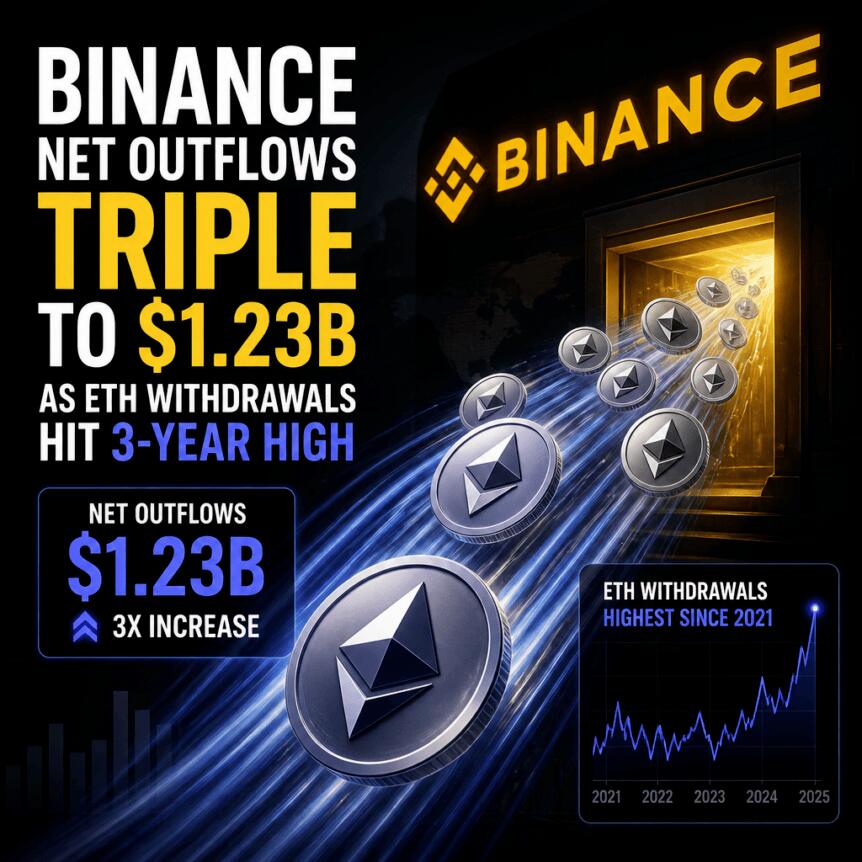
Binance has seen a pronounced shift toward withdrawal activity, with weekly net outflows jumping to $1.23 billion—more than doubling from the week prior—while Ethereum withdrawals rose to their highest level in over three years. The pattern is drawing renewed attention from on-chain analysts because it suggests large volumes of ETH may be moving off exchanges, even as ether’s price begins to stabilize.
Data from DefiLlama, as reviewed by Cointelegraph, shows Binance recorded $1.23 billion in net outflows for the week beginning June 29. That figure represents a 207% increase versus about $400 million in net outflows during the preceding week, while monthly net outflows totaled roughly $3.2 billion. At the same time, CryptoQuant community analyst Darkfost reported that Binance’s Ethereum withdrawal transactions reached a multi-year peak—over 166,000 withdrawals in a single day.
Key takeaways
- Binance’s weekly net outflows rose to $1.23 billion in the week starting June 29, up 207% from roughly $400 million the week before.
- Ethereum withdrawal transactions on Binance hit the highest level in more than three years, exceeding 166,000 withdrawals in one day.
- Analysts link the withdrawals to both potential accumulation behavior and market/regulatory uncertainty tied to the EU’s MiCA transition.
- Other major centralized exchanges also posted outflows, while inflows appear more scattered across several platforms.
Ethereum withdrawals intensify as exchange balances change
The most striking element of the move is the concentration on Ethereum. Darkfost, writing for the CryptoQuant community, said Binance ETH withdrawal transactions reached their highest point in more than three years, indicating that the surge is not just routine exchange movement. The analyst also pointed to specific dynamics that could be influencing investor decisions around the time of the withdrawals.
Cointelegraph previously noted regulatory uncertainty connected to the European Union’s application timeline and enforcement environment as the Markets in Crypto-Assets Regulation (MiCA) framework comes into focus. Darkfost suggested this uncertainty—alongside near-term positioning by traders—could help explain why more users are pulling ETH off Binance.
Even if some withdrawals are consistent with accumulation behavior, the key takeaway for traders and long-term investors is what the directionality implies: increased transfers from exchange custody typically reduce readily available liquidity on that venue. While that does not automatically translate into immediate price gains, it can affect how markets absorb sells and buys.
Withdrawal surge coincides with ether’s modest rebound
CryptoQuant data highlighted a timing alignment between exchange activity and price performance. Darkfost noted that Binance’s ETH withdrawals represented the sharpest rise in withdrawal transactions recorded on the exchange since March 2023, occurring as ether posted a modest rebound of around 10% over two days.
In a separate framing, Darkfost characterized the withdrawal surge as potentially reflecting genuine demand building around the $1,500 area. The rationale is that some participants may prefer to hold ETH in self-custody rather than keep exposure on an exchange, behavior that more often aligns with longer-term accumulation than short-term trading.
Price data at the time of publication suggested ether’s recovery broader in scope. According to CoinGecko, ETH rose about 12.5% over the past seven days, trading around $1,766. Over the same period, Bitcoin edged up approximately 4.3% to about $62,925, also based on CoinGecko’s figures.
Centralized exchange flows: outflows lead, inflows remain uneven
Binance was not acting in isolation. DefiLlama’s exchange flow data indicates that centralized exchange net flows skewed toward outflows across multiple platforms over the same week. Bitfinex recorded $407.5 million in outflows, followed by Gate with $214.3 million. OKX saw $87.1 million in outflows and Bybit posted $78.4 million, underscoring that the broader pattern is not limited to a single venue.
On the opposite side of the ledger, inflows were present but more fragmented. Crypto.com led with about $63 million in net inflows, while HashKey Exchange added roughly $53.3 million. Additional inflows appeared across KuCoin (about $22.1 million), Gemini (about $17.4 million), and Bitvavo (about $15.8 million).
For market participants, this mix can matter because it hints at where new risk might be concentrating. When outflows dominate across multiple large exchanges, it often suggests a shift in custody preferences—either toward self-custody or toward venues not classified as “top movers” by weekly net flows.
Why this matters as regulatory pressure and market positioning evolve
The withdrawal surge comes at a time when European crypto market participants have been adjusting to regulatory uncertainty around MiCA. Darkfost specifically cited uncertainty related to MiCA and short-term positioning as possible contributors to the elevated withdrawal activity. While the exact share of withdrawals driven by regulation versus trading strategy is not provable from the available data alone, the combination is consistent with what investors frequently do during transitional periods: reduce exposure to venues where compliance timelines or operational constraints may become clearer.
At the same time, it would be premature to interpret every outflow event as a bullish signal. Some withdrawals can reflect operational transfers, liquidity management, or rebalancing between services. Still, the scale—particularly the jump in daily ETH withdrawal transaction counts to a level not seen in more than three years—means investors will likely watch whether the trend continues and whether it corresponds to further shifts in exchange balances.
Next, readers should focus on whether Binance’s ETH outflows remain elevated over subsequent weeks and whether similar patterns appear on other major venues, while also tracking ongoing developments in EU MiCA implementation that can alter how and where users prefer to hold assets.

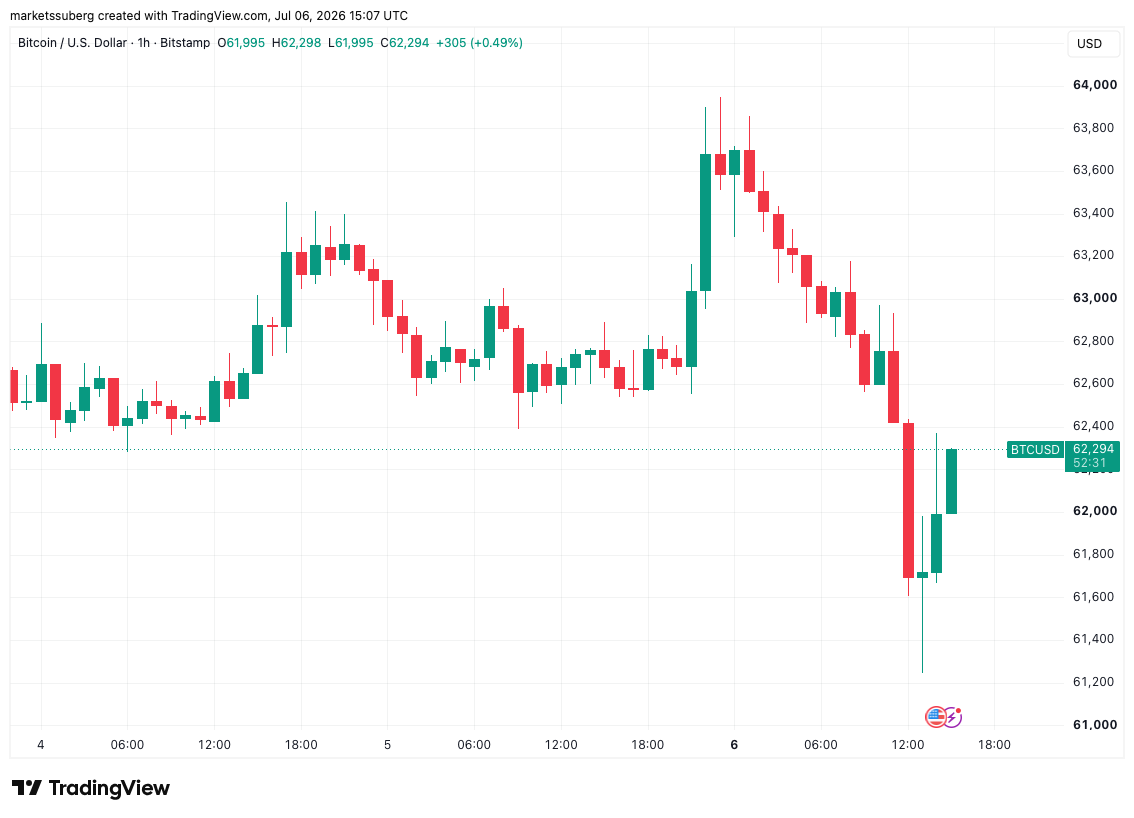
Bitcoin (BTC) saw flash volatility into Monday’s Wall Street open as markets reacted to tech company Strategy’s new BTC sales.
Key points:
- Bitcoin reacts sharply to news that Strategy had sold nearly 3,600 BTC.
- A rebound during the US trading session failed to recoup more than half of the day’s losses.
- Strategy may reveal a compensatory BTC buy, an analyst suggests.
Bitcoin erases holiday gains on Strategy sale
Data from TradingView showed BTC/USD dropping to near $61,000, sparking daily losses of more than 4%.
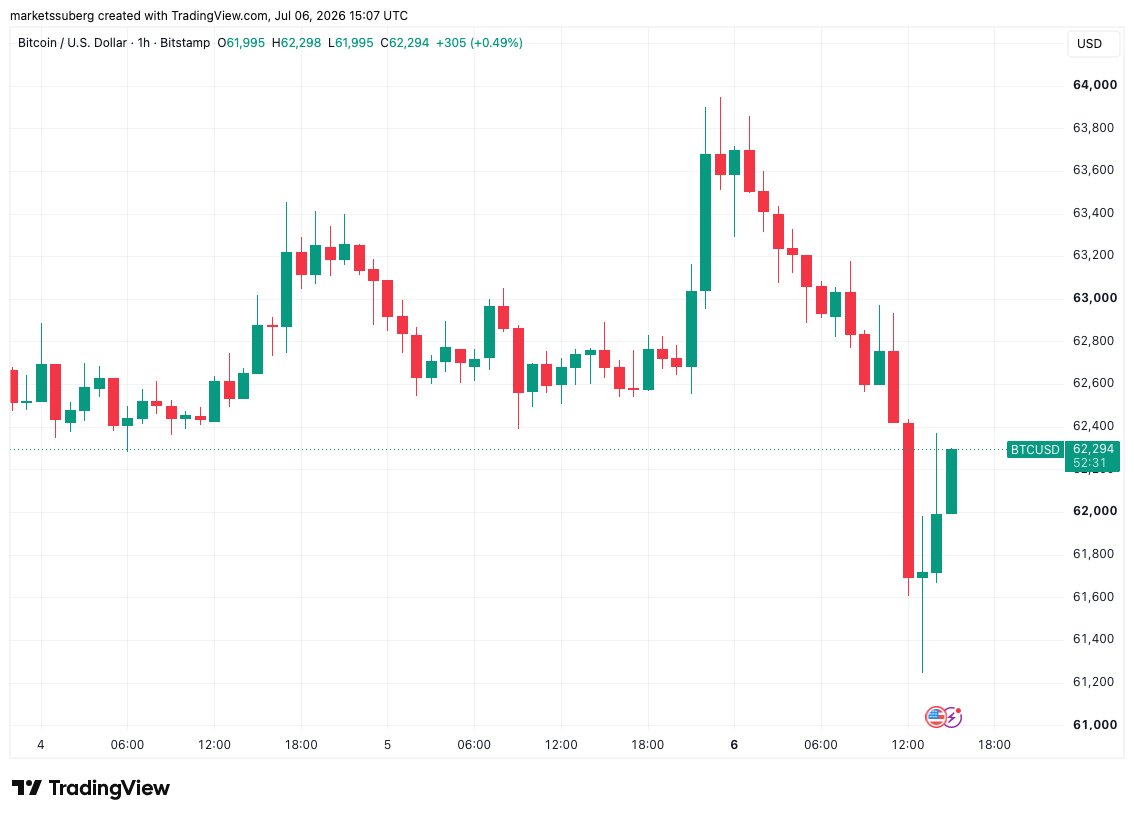
BTC/USD four-hour chart. Source: Cointelegraph/TradingView
A rebound at the start of the US session pushed the price higher before settling around the $62,000 mark at the time of writing.
Strategy revealed that it sold 3,588 BTC through July 5 to fund preferred stock dividend payments and replenish cash reserves.
Commenting on the latest BTC price moves, X commentator Exitpump suggested that the Strategy news was the catalyst for an already weakening market.
“Bearish signs were there, posted about it yesterday, news about Saylor selling just triggered more dump,” they wrote.
“Funding is still pretty positive. That was it i guess. Short term bounce from 61.2k and then more dump imo.”
Exitpump referred to funding rates across exchanges, with a post on Sunday eyeing a buyer entity using a time-weighted average price (TWAP) method to add exposure.
“Once the TWAP buyer backs off, I wouldn’t be surprised to see a fast flush lower,” they wrote, anticipating a price ceiling at $64,000.
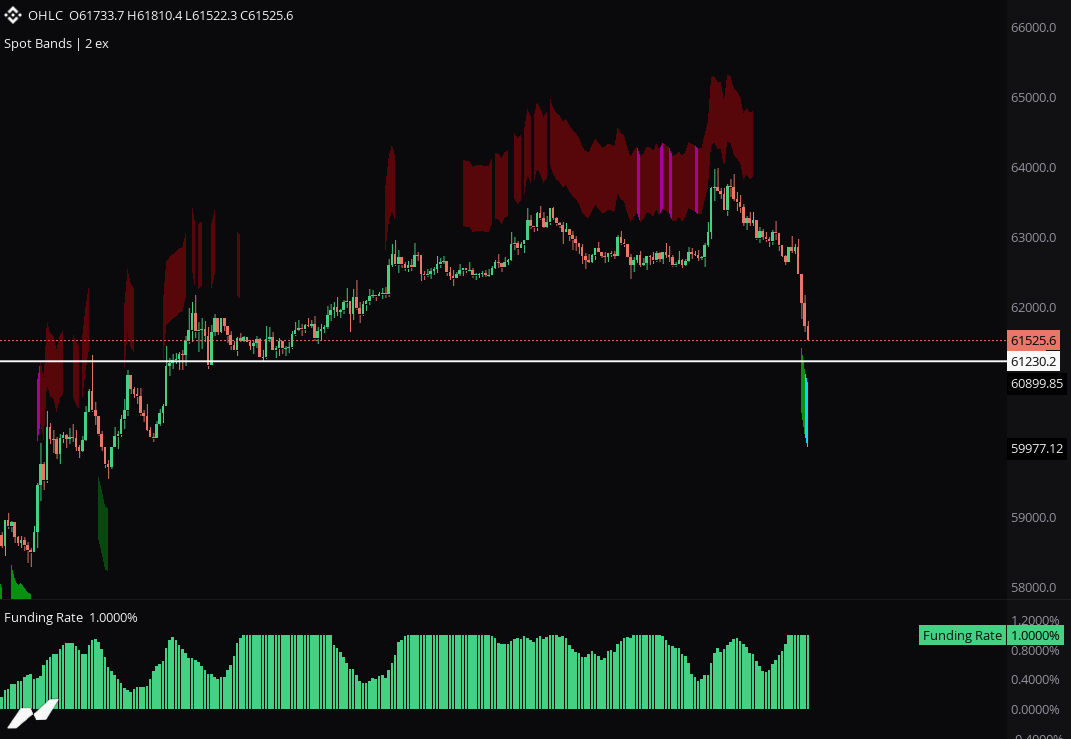
BTC chart with funding rate data. Source: Exitpump/X
Trader and analyst Rekt Capital appeared unsurprised by the behavior, reiterating similarities between current price action and the latter portion of the 2022 bear market.
“Generally, Bitcoin is doing the same exact thing now as it was doing in the Summer of 2022,” he told X followers.
An accompanying chart showed the 50-month exponential moving average (EMA) trend line potentially becoming new resistance, just like four years ago.
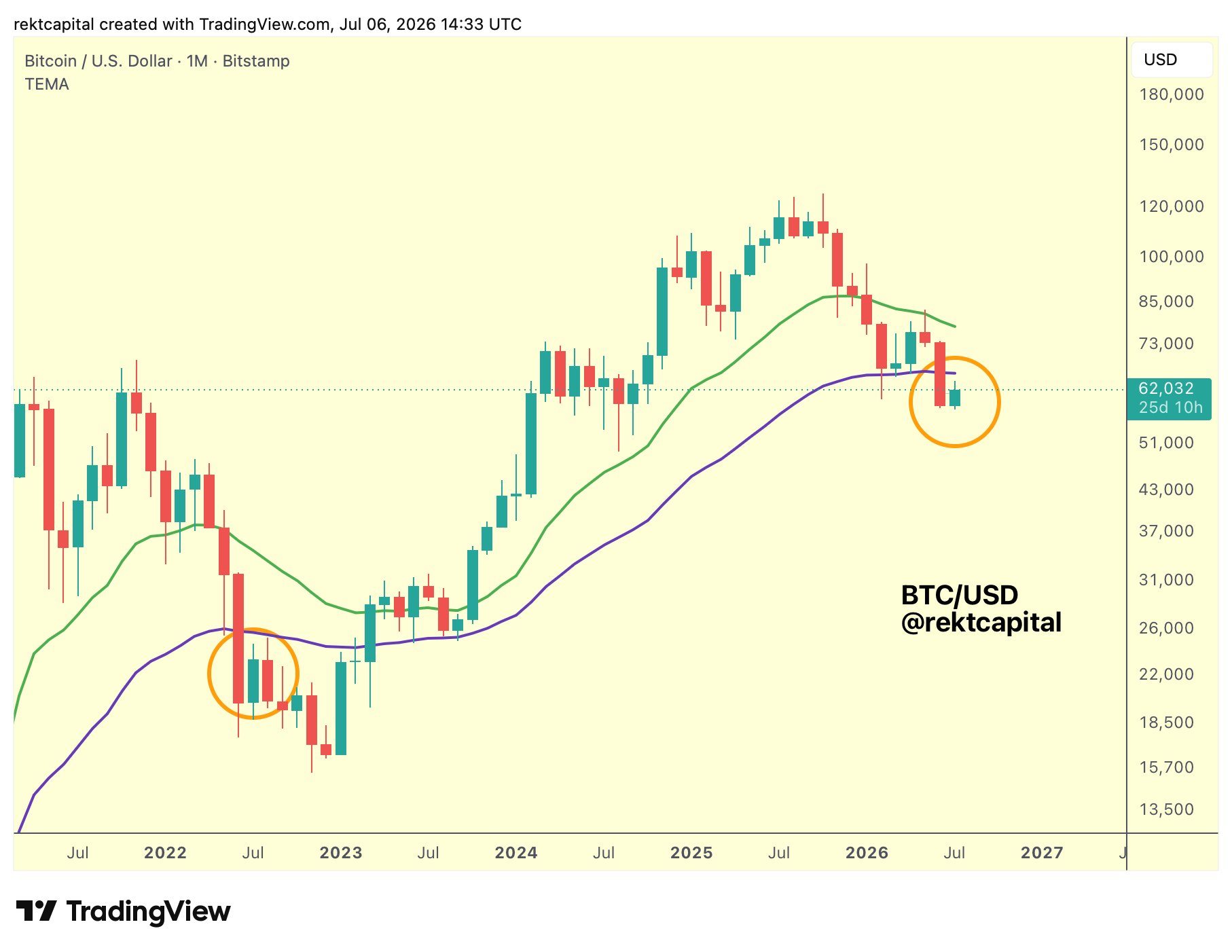
BTC/USD one-month chart with 21, 50EMA. Source: Rekt Capital/X
Analyst: Strategy may reveal more BTC buys
Others remained upbeat, with trader Jelle eyeing bullish divergences on weekly time frames on the BTC/USD relative strength index (RSI).
Related: $60.4K Becomes ‘most important area’: Five things to know in Bitcoin this week
“I have seen the $BTC chart look much worse than this over the years,” he argued.
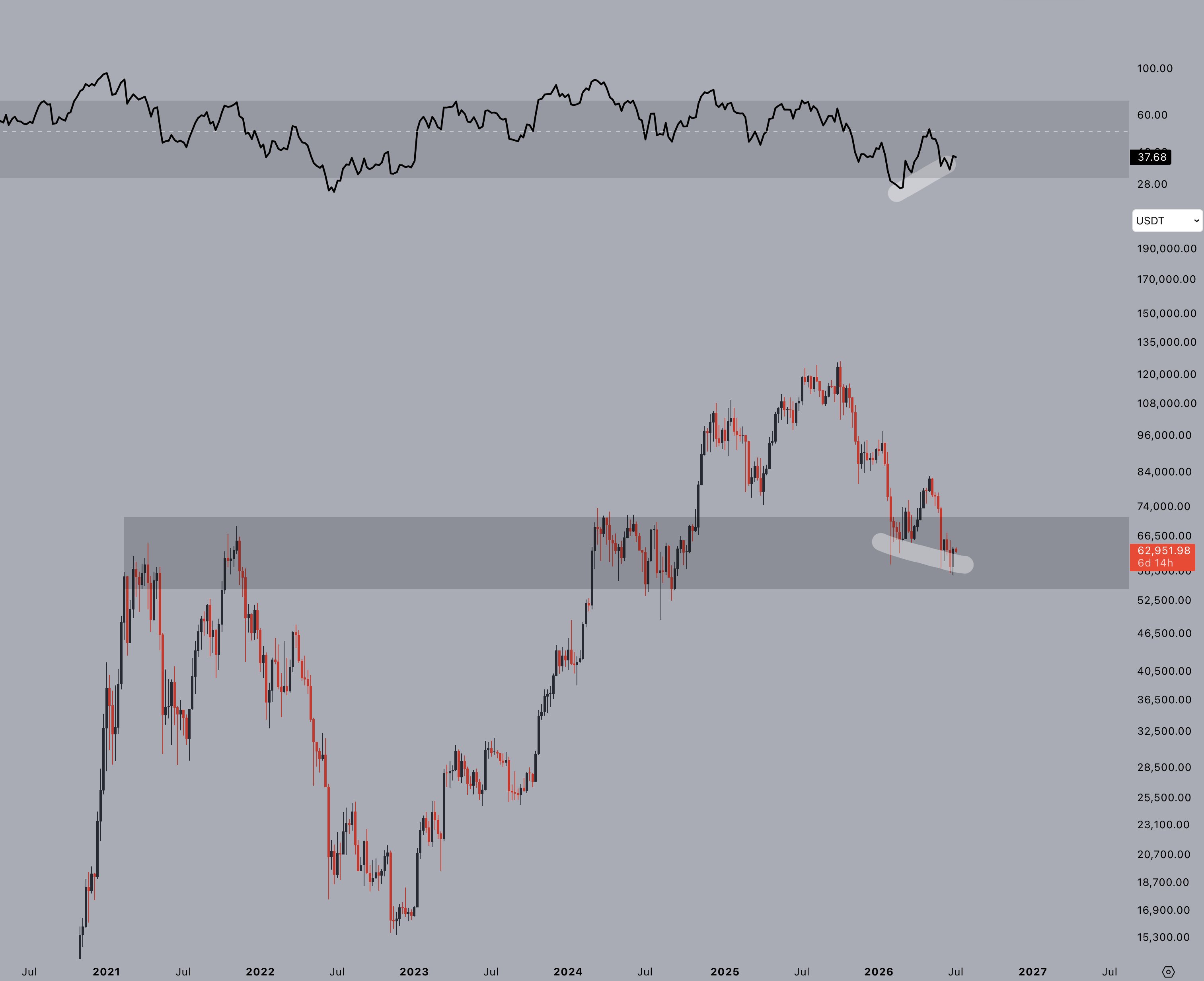
BTC/USDT one-week chart with RSI data. Source: Jelle/X
As Cointelegraph continues to report, various onchain indicators have printed reversal signals absent since late 2022.
Crypto trader and analyst Michaël van de Poppe, meanwhile, suggested that Strategy itself could end up delivering a market rebound.
“The markets are reacting with a shock response to this news. $BTC drops, and it’s clearly valuing the potential impact that Strategy can continue to sell Bitcoin going forward,” he wrote on X.
“However, I wouldn’t be surprised to see a message in the coming days that they’ve been buying more $BTC than they’ve sold.”

Sebastian Siemiatkowski, CEO and Co-Founder of Swedish fintech Klarna, gives an interview with CNBC during the company’s IPO at the New York Stock Exchange (NYSE) in New York City, U.S., September 10, 2025.
Brendan Mcdermid | Reuters
Klarna, the Swedish fintech firm best known for its buy now, pay later offerings, said Monday it applied to federal and state regulators to establish a U.S. bank subsidiary.
The firm said that, if approved, Klarna Bank USA would be a Federal Deposit Insurance Corporation-backed institution chartered in Utah. The proposed bank would be led by Gary Harding, former CEO of Milestone Bank and Prime Alliance Bank, according to Klarna.
“We’ve seen firsthand the appetite for a fairer, more transparent approach in the U.S., and our own banking license is the natural next step,” said Sebastian Siemiatkowski, co-founder and CEO of Klarna.
The move will give “customers tools to borrow responsibly and build financial confidence, while bringing greater competition, innovation, and choice” to the market, he said.
Klarna’s application is the latest sign that fintech firms, which mostly partner with U.S. banks to offer services, now see owning their own charters as a key advantage. In April, fintech provider Mercury said it won conditional approval to establish its own bank, joining a wave of fintech and crypto firms seeking entry to the traditional banking system.
Klarna said that its charter, if approved, would let it bring its banking operations in-house and strengthen reliability across payments, credit and merchant services.
The application marks Klarna’s latest step toward becoming a broader consumer bank rather than just a buy now, pay later provider. Last month, Klarna introduced high-yield savings accounts to U.S. customers, though its partner WebBank holds those accounts.
By owning a bank, fintech firms can fund loans with their own customer deposits instead of more expensive wholesale financing, directly offer checking accounts and credit cards, and rely less on third-party banking partners.
Klarna, which went public last September, is trading for about half of its IPO price of $40.


Key takeaways
- Bitcoin is trading below $64,000 after rallying more than 6% last week.
- U.S. spot Bitcoin ETFs recorded $526.64 million in net outflows, marking an eighth consecutive week of withdrawals.
- Renewed geopolitical concerns surrounding the Strait of Hormuz are limiting demand for risk assets.
Bitcoin (BTC) is trading slightly lower on Monday after climbing more than 6% last week, with buyers struggling to push the cryptocurrency above the key $64,000 resistance level.
Although last week’s rebound improved short-term sentiment, persistent institutional selling and renewed geopolitical uncertainty continue to cap upside momentum.
For now, Bitcoin remains caught between improving technical conditions and cautious macroeconomic sentiment.
Spot Bitcoin ETFs extend historic outflow streak
Institutional demand for Bitcoin remains under pressure. According to CoinGlass data, U.S. spot Bitcoin exchange-traded funds (ETFs) recorded $526.64 million in net outflows during the previous week.
The withdrawals mark the eighth consecutive week of net redemptions, extending the longest outflow streak since spot Bitcoin ETFs began trading.
If institutional investors continue reducing exposure this week, Bitcoin could face renewed selling pressure despite last week’s rebound.
Global geopolitical uncertainty remains another obstacle for Bitcoin. The cryptocurrency rallied last week after easing tensions between the United States and Iran briefly improved investor sentiment.
However, optimism has faded as concerns surrounding the Strait of Hormuz resurfaced.
Reports that Iran may introduce new service fees for vessels passing through the strategically important shipping route have renewed uncertainty, while the United States and several Gulf allies continue opposing such measures.
The lingering geopolitical risks have kept investors cautious, limiting demand for higher-risk assets such as cryptocurrencies.
Bitcoin price outlook: Bulls defend long-term support
From a technical perspective, Bitcoin continues to trade above a critical long-term support level.
Last week’s rally allowed BTC to reclaim the 200-week Simple Moving Average (SMA) at $62,867 after bouncing from an ascending trendline that has supported prices since early 2023.
Holding above this level keeps the broader recovery intact. If buyers maintain control above the 200-week SMA, Bitcoin could extend its advance toward the 78.6% Fibonacci retracement level at $65,520, measured from the August 2024 low to the October 2025 record high.
On the daily timeframe, Bitcoin continues to trade below its major moving averages. The cryptocurrency remains beneath the 50-day EMA at $65,744, the 100-day EMA at $69,455, and the 200-day EMA at $75,471, leaving the broader trend tilted to the downside despite recent gains.
Immediate resistance is located around $64,004. A successful breakout above that level could allow Bitcoin to challenge the 50-day EMA, with additional upside targets at the 100-day EMA, the 200-day EMA, and eventually the major resistance area near $84,410.
While momentum has improved, the daily RSI near 49 and a positive MACD crossover indicate buyers are gradually regaining strength, although confirmation of a sustained uptrend is still lacking.
The 200-week SMA at $62,867 remains the most important support level in the near term.
A sustained move below that area would weaken the current recovery and expose the long-term ascending trendline near $58,000. If selling pressure intensifies further, Bitcoin could revisit its yearly low around $57,800.
Bitcoin has recovered significantly from recent lows, but the rally is encountering resistance just below $64,000.

Persistent ETF outflows, geopolitical uncertainty, and overhead technical resistance continue to limit upside potential.
As long as BTC holds above its 200-week SMA, the recovery remains intact. However, buyers will need to reclaim $64,004 and then $65,744 to build momentum for a broader move higher.


SpaceX (SPCX) is set to officially join Wall Street’s tech-heavy Nasdaq 100 index on July 7 after raising $75 billion in the largest iPO of all time in mid-June.
The stock immediately surged to as high as $225 in the days after the June 12 IPO,only to deflate to $162 last week. Now the big question is what happens after it is included in the Nasdaq index.
The answer is not necessarily bullish when viewed through the lens of history.
Past data suggests that index inclusion, often viewed as a positive milestone, is not a reliable bullish signal, particularly after a stock has already experienced a significant rally.
That’s because, in many cases, investor optimism is already elevated and peaked, passive fund buying has largely been anticipated, and expectations are priced in.
The two most notable recent additions to the Nasdaq 100 highlight this pattern.
Palantir (PLTR), the software giant, joined the index on Dec. 23, 2024, but the stock peaked around the time of its inclusion and declined roughly 25% in the weeks that followed.


Non-qualified investors will be allowed to trade under testing requirements and limits capped at roughly 300,000 rubles (around $3,800) per year, while market participants will have until July 1, 2027, to enter the official registry.
Russia’s complicated crypto history
The developments follow years of resistance from the Bank of Russia. In January 2022, the central bank called for a broad ban on crypto trading, mining, and usage, citing risks to financial stability and monetary policy.
Russia’s government was less hostile. The Finance Ministry pushed a regulatory bill over the central bank’s objections, keeping crypto payments prohibited while creating a path for licensed trading.
After the country’s invasion of Ukraine started, President Vladimir Putin signed a law in 2022 tightening the ban on using cryptocurrencies to pay for goods and services in Russia.
Cross-border use became the exception after sanctions cut Russian banks off from parts of the global payments system. Russia legalized crypto mining and an experimental cross-border settlement regime in 2024, giving the central bank authority to approve selected firms for foreign trade transactions.
The Moscow Exchange (MOEX) has also been moving into the cryptocurrency space, with the rollout of cash-settled futures contracts tied to various coins.
VTB and T-Bank, two other major financial institutions, are working on digital depositories after the law takes effect, RBC’s report added.


Bitmine Immersion (BMNR), the largest Ethereum (ETH) treasury company, stepped up its buying pace last week, purchasing 42,197 ether (ETH) as chairman Thomas Lee pointed to improving prospects for U.S. crypto legislation as a catalyst for the asset.
The latest purchase, worth roughly $74 million based on ether’s current price of around $1,750, lifted the company’s holdings to 5.74 million ETH, according to a Monday update. The stash is now worth about $10 billion and represents 4.8% of Ethereum’s circulating supply, inching closer to the firm’s goal of cornering 5% of the asset’s supply.
The company also held 206 bitcoin, $527 million in cash and marketable securities, plus stakes in Beast Industries and Eightco Holdings, bringing its total crypto, cash and investment holdings to $11.1 billion.
The acquisition marks an increase from the prior week’s purchase of 27,084 ETH, though it remains below the six-figure weekly buying pace BitMine maintained earlier this year.
Bitmine buys as Strategy sells
Bitmine’s continued buying contrasts with a shift at Strategy (MSTR), the largest digital asset treasury and corporate bitcoin holder, which sold about $216 million worth of BTC to raise cash. The sale marked a rare reduction in Strategy’s bitcoin holdings and underscored the funding pressures the company faces amid the crypto market downturn and increased dividend obligations.
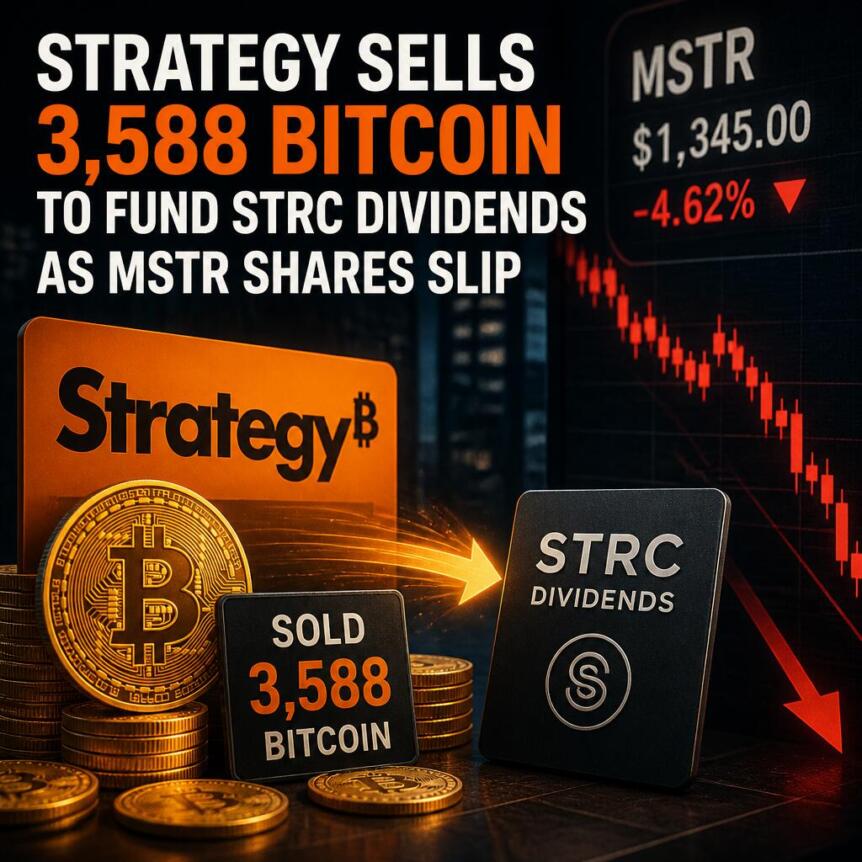
Strategy sold 3,588 Bitcoin worth $216 million during the past week to support dividend payments on its STRC preferred securities. The transaction marked the company’s largest Bitcoin sale so far this year and reduced its total holdings to 843,775 BTC. Meanwhile, MSTR shares declined in premarket trading, while Bitcoin also traded lower after the disclosure.
Strategy Uses Bitcoin Sale to Support STRC Dividend Payments
Strategy completed two Bitcoin sales between June 29 and July 5 and raised about $216 million. The company disclosed the transactions through a filing with the U.S. Securities and Exchange Commission. Therefore, the move confirmed its decision to use Bitcoin reserves for funding preferred stock obligations.
The company sold 1,363 BTC between June 29 and June 30 for approximately $80.8 million. It then sold another 2,225 BTC between July 1 and July 5 for about $135.2 million. Together, both transactions represented the company’s largest Bitcoin sale to date.
Following the transactions, Strategy held 843,775 Bitcoin and maintained approximately $2.55 billion in U.S. dollar reserves. The filing stated that the proceeds would fund dividend payments linked to its digital credit securities. As a result, the company continued executing the financing framework introduced through its preferred securities programme.
STRC and MSTR Shares React After Latest Company Update
The latest filing also showed that Strategy did not issue common shares through its at-the-market programme during the reporting period. In addition, the company did not repurchase any common stock under its authorised buyback programmes. Therefore, the update focused attention on the Bitcoin sale instead of equity activity.
STRC shares remained below their $100 par value despite recent market activity. However, the preferred security recorded modest gains after Binance introduced continuous 24-hour trading support. The stock traded near $88 in premarket trading and posted a gain of less than 1%.
Meanwhile, MSTR shares moved lower after the disclosure reached the market. Premarket data showed the stock trading around $98 with a decline approaching 2%. At the same time, Bitcoin traded near $61,700 and lost more than 2% during the session.
Bitcoin Holdings Record Quarterly Loss Despite Long-Term Treasury Strategy
Strategy also reported an $8.32 billion loss on its Bitcoin holdings for the quarter ended June 30. The filing separated the total into an unrealised loss of about $8.31 billion and a realised loss of approximately $900 million. Consequently, accounting adjustments reflected weaker Bitcoin valuations during the reporting period.
The company reported a carrying value of approximately $49.67 billion for its Bitcoin holdings as of June 30. However, the filing stated that the cost basis exceeded the fair value of the digital assets. Therefore, Strategy expects to recognise a valuation allowance against deferred tax benefits connected to the unrealised losses.
Strategy has continued building one of the world’s largest corporate Bitcoin treasuries despite recent market volatility. Earlier this year, the company indicated that it could sell portions of its Bitcoin holdings to support obligations tied to its digital credit products. The latest transaction followed that framework and demonstrated how Strategy plans to balance treasury management with commitments to preferred security holders.


Decentralized finance protocol Summer.fi has paused its Lazy Summer vaults after an exploit that drained about $6 million from the Ethereum-based yield platform, according to the project and several blockchain security firms.
Lazy Summer is an automated yield platform that routes deposits across lending markets such as Aave and Morpho in search of higher returns while handling rebalancing on behalf of users.
The incident was first flagged by blockchain security firm Blockaid, with PeckShield and CertiK also reporting suspicious activity. Summer.fi later confirmed it was investigating the attack and said protocol guardians had paused affected vaults to prevent additional losses.
Early analyses suggest the attacker leveraged a large flash loan attack, reportedly sourced through Morpho, to manipulate the accounting logic of Lazy Summer’s automated USDC vaults.
DeFi security researcher Bhari noted that the exploit took advantage of a flaw in the code to inflate total assets, which they were then allowed to redeem for a net profit. The stolen funds were apparently converted to DAI on Curve before being transferred to the attacker’s wallet.
The protocol had $22 million in total value locked before the exploit, according to DeFiLlama data. The protocol’s SUMR token lost more than 18% of its value after the exploit was uncovered.


Russia’s largest lender, Sberbank, has confirmed plans to launch a cryptocurrency wallet and digital asset depository within months after the country’s proposed digital asset law takes effect on Sept. 1.
Summary
- Sberbank plans to launch a crypto wallet and digital asset depository after Russia’s new digital asset law takes effect on Sept. 1.
- Russia’s largest bank is also considering providing access to foreign crypto exchanges, subject to the final regulatory framework.
- The planned launch comes as Russia prepares to roll out both its digital asset rules and the digital ruble from Sept. 1.
According to local news outlet RBC, Sberbank expects to integrate a crypto wallet into its mobile applications shortly after the legislation comes into force, while its digital asset depository infrastructure is scheduled to be ready by Dec. 1.
First Deputy Chairman Kirill Tsarev said the rollout timeline depends on the publication of the final version of the law and the availability of updated Sberbank mobile apps through online app stores. He added that Android users could receive the updated interface earlier than iPhone users.
Sberbank, which holds about one-third of Russia’s banking assets and is majority-owned by the Russian government, is also considering becoming an intermediary that would allow Russians to trade on foreign cryptocurrency exchanges under a proposed amendment to the legislation. Tsarev said the decision will depend on domestic regulatory requirements and the rules governing foreign exchanges.
Sberbank has steadily expanded its digital asset activities in recent years. In December, Deputy Chairman Anatoly Popov said the bank was exploring crypto-backed lending and was working with regulators on the legal and technical infrastructure needed to support such products.
He also disclosed that Sberbank had completed more than 160 digital asset issuances on its proprietary platform since the beginning of 2025 while continuing to evaluate decentralized finance applications and asset tokenization within Russia’s regulated financial system.
Banking sector prepares for new crypto rules
The planned launch follows comments from First Deputy Chairman of the Central Bank Vladimir Chistyukhin, who has said the new digital asset framework is expected to take effect on Sept. 1. Under the legislation, companies offering cryptocurrency custody, trading services and cross-border settlements would be required to operate under a licensing regime.
Separately, Russia’s second-largest lender, VTB, and T-Bank Group have also announced plans to establish digital asset depositories after the law comes into force, RBC reported. Moscow Exchange has likewise said it intends to begin crypto-related operations before the end of 2026.
The preparations come as Russia also moves ahead with its digital ruble rollout. Earlier this month, Bank of Russia Governor Elvira Nabiullina said the central bank remains on track to launch the central bank digital currency on Sept. 1, with major banks expected to begin offering digital ruble services through their applications from the same date.


The firm is not interested in buying rivals, Domingo said. “They’re not going to bring anything to me that I don’t have in terms of tech.”
Instead, Domingo said Securitize is looking at businesses that complement its institutional tokenization offering, aiming to build a broader “one-stop shop” for customers.
“We’re going to look at what things are adjacent to tokenization that either our existing customers from the tokenization space,” he said.
Tokenization of public markets
The broader tokenization market has grown rapidly as banks, asset managers and exchanges embrace blockchain-based financial infrastructure. Tokenized real-world assets now exceed $32 billion, RWA.xyz data shows. Citi has projected tokenized securities could grow into a $5.5 trillion market by 2030, while Boston Consulting Group and Ripple estimate the sector could reach $18.9 trillion by 2033.
Much of that momentum is now shifting beyond tokenized Treasury funds toward public markets.
Earlier this year, NYSE parent Intercontinental Exchange (ICE) partnered with Securitize to develop infrastructure for tokenized equities. The company also teamed up with transfer agents Computershare and Continental to enable public companies to issue shares directly on blockchain rails.
Elsewhere, Nasdaq has publicly explored tokenization initiatives, while DTCC, the backbone of U.S. securities settlement overseeing more than $114 trillion in assets, recently unveiled plans to introduce a tokenized securities platform targeting an October launch.

‘Made the right decision’: Donald Trump confirms he asked FIFA to review Folarin Balogun decision | Football News

Save $100 on Apple Watch Ultra 3 at Amazon now only $699

Waterloo Road legend reported to join Emmerdale as new baddie


-

 Fashion3 days ago
Weekend Open Thread: High Hopes
-

 Politics3 days ago
The House | “Reframing the debate from a binary discussion of winners and losers”: Yuan Yang reviews ‘We Are Not Machines’
-

 Crypto World7 days ago
Strategy authorizes up to $1.25B in Bitcoin sales under new capital plan
-

 News Videos6 days ago
How to Build INSANE Live Financial Dashboards With Claude
-

 Tech7 days ago
Anonymous researcher drops 0-day ‘exploitarium’ repo
-

 Business7 days ago
Australia treasurer says alleged access of prime minister’s bank data ’incredibly concerning’
-
 NewsBeat1 day ago
Taylor Swift and Travis Kelce wedding staffer hilariously struggles to keep her cool while checking in megastars
-
 Crypto World5 days ago
Airdrop Registration Becomes Key Focus For Remittix As RTX Launch Updates Approach
-

 Sports5 days ago
Broncos roster: OL Ben Powers (No. 74) entering final year of contract
-
 Business7 days ago
The AI boom won’t burst all at once. It will pop in ‘rolling bubbles’: Macquarie
-

 Crypto World4 days ago
Binance stock trading tops $1B in first month after launch
-

 NewsBeat6 days ago
Presenter Caroline Flack’s brother Paul Flack dies aged 55
-

 Crypto World5 days ago
Alibaba-affiliate Ant Group enters the humanoid robot market with 12 deals
-
 NewsBeat4 days ago
New exhibition reflects five decades of movement between island of Ireland and GB
-

 Crypto World3 days ago
Standard Chartered Secures MiCA License as ESMA Adds 37 New Crypto Firms
-

 Crypto World1 day ago
South Africa proposes crypto tax guidance under existing rules
-

 Tech1 day ago
Lenovo laptops are now shipping with YMTC SSDs, a sign of Chinese NAND entering the mainstream
-

 Business5 days ago
Meta Platforms Stock Jumps 7% Today as Bloomberg Reports Company Plans to Enter the Cloud Business
-

 Business3 days ago
What a 10 Percent Drop Means for Buyers, Sellers and Renters
-

 Crypto World4 days ago
Binance Re-Enters Philippines As EU MiCA Rules Restrict Access
You must be logged in to post a comment Login