

Crypto World
Ex-Tether CIO Pursues Stake Sale in Stablecoin Issuer, Bloomberg Says


Richard Heathcote, the former chief investment officer of Tether, is reportedly looking to sell part of his stake in the stablecoin issuer, according to a Bloomberg report citing people familiar with the matter. Heathcote holds 1.26% of Tether, and the planned transaction would involve only a portion of that ownership.
Tether, which issues USDt (USDT), remains privately held despite operating as one of crypto’s most profitable businesses. The reported partial sale is notable not only because of Heathcote’s senior role, but also because it would be among the few glimpses into ownership at a company that underpins a large share of the stablecoin market.
Key takeaways
- Bloomberg reports that former Tether CIO Richard Heathcote plans to sell part of his 1.26% stake, offering rare insight into Tether ownership.
- USDT remains the dominant stablecoin by market capitalization, with DefiLlama data placing its circulating supply around $184 billion (about 59% market share).
- The potential sale comes as Tether faces increased regulatory pressure in Europe, including platform delistings after Tether did not align with the EU’s MiCA framework.
- Broader IPO chatter continues in crypto, even as exchanges weigh listing paths amid regulatory and operational constraints.
Why Heathcote’s stake sale matters
Bloomberg’s report focuses on the planned sale by Richard Heathcote, who stepped away from the role of Tether’s chief investment officer in March. The report says he moved into an advisory capacity after overseeing the company’s investment portfolio.
For markets, transactions involving insiders in key stablecoin issuers are often watched closely—even when only partial. Tether’s scale means its ownership structure and governance are relevant to traders and institutions that rely on USDT’s liquidity. While the report does not specify deal size beyond the portion of the stake, it underscores that influential executives at stablecoin issuers are not necessarily bound to long-term illiquidity, despite the asset’s centrality to crypto settlement and exchange activity.
Heathcote’s stake also highlights the challenge of assessing control and incentives in privately held crypto firms. With Tether not publicly listed, investors and observers have fewer direct market signals about internal changes. A reported sale, even a partial one, can become a data point for how senior stakeholders view holding periods, risk, and governance in a fast-changing regulatory environment.
USDT’s market position remains central
Any ownership move at Tether inevitably ties back to USDT’s dominance. According to DefiLlama data, USDT has a circulating supply of roughly $184 billion and accounts for approximately 59% of the stablecoin market by market capitalization.
This matters because USDT is not just a retail token—it is deeply embedded in the infrastructure of exchanges, trading pairs, and on-chain activity. When large portions of market liquidity are concentrated in a single issuer, stakeholders tend to pay particular attention to credible updates on that issuer’s financial posture, governance, and regulatory standing.
At the same time, the reported sale is not automatically a signal about USDT’s strength or weakness. Stablecoins can remain widely used even as regulatory constraints limit where they are permitted. The more meaningful question for investors is whether Tether’s regulatory path and distribution access continue to affect demand for USDT in key jurisdictions.
Regulatory pressure in Europe intersects with business uncertainty
The Heathcote sale report arrives as Tether faces heightened scrutiny in Europe. Earlier coverage from Cointelegraph noted that USDT has been delisted by an increasing number of platforms operating under MiCA authorizations after Tether chose not to comply with the EU’s crypto framework.
That tension has been visible in operator decisions. Cointelegraph previously reported that Revolut would remove USDT from its platform, reflecting how regulatory alignment—or lack of it—can translate into immediate distribution losses for a stablecoin issuer.
For market participants, this creates a split reality: USDT may remain dominant by market size, but issuer exposure to regulation can change the on-ramps and availability that sustain that market share in Europe. In that context, insider ownership moves may be read less as a market bet on USDT itself and more as an adjustment to the broader uncertainty around compliance, platform access, and long-term growth channels.
IPO speculation continues elsewhere in crypto
While Tether’s executives have publicly indicated the company does not need to go public, crypto’s IPO debate appears to be broadening beyond stablecoins. Several other firms have reportedly explored listing routes.
Cointelegraph previously highlighted that Kraken has taken steps that could lead toward an IPO. Fortune reported in September 2025 that Kraken raised $500 million at a $15 billion valuation, fueling expectations that the exchange was positioning for a public listing. Kraken also announced it had confidentially filed a draft registration statement with the US Securities and Exchange Commission in November 2025 for a proposed initial public offering.
However, Bloomberg later reported that Kraken’s IPO timeline could slip into 2027 after layoffs tied to the company’s increasing use of artificial intelligence. The implication for readers is that even when a path to liquidity exists, operational restructuring and market conditions can delay capital-market milestones.
In South Korea, Cointelegraph reported that Bithumb delayed its IPO until after 2028. The exchange said it was working to strengthen accounting policies and internal controls after earlier regulatory setbacks, underscoring how compliance process—not only investor demand—can shape public-market timing for crypto firms.
Separately, Cointelegraph has also published coverage focusing on anonymity-related risks and how AI may be used to identify hidden identities in crypto activity, reflecting the broader environment in which regulators, exchanges, and compliance teams are operating.
What to watch next
For Tether, the next signals likely won’t come from ownership headlines alone. Investors should track whether additional European platforms follow through on delistings under MiCA and how Tether responds operationally and commercially in regions tightening stablecoin rules. Meanwhile, Bloomberg’s reported stake sale may prompt renewed attention to how insiders manage liquidity in privately held firms as crypto firms weigh—or postpone—public listings.

Crypto World
While ADA, ETH sink to multi-year lows, money is rotating into AI, Stargate LLM leads the charge with 50x potential

Disclosure: This article does not represent investment advice. The content and materials featured on this page are for educational purposes only.
As Ethereum and Cardano face steep declines, investors are increasingly exploring AI-focused blockchain projects such as Stargate LLM.
Summary
- Ethereum and Cardano remain under pressure as Stargate LLM promotes its AI-focused crypto presale to investors.
- Stargate LLM highlights its AI token presale as Ethereum and Cardano continue searching for market support.
- AThe project is gaining attention amid prolonged weakness in Ethereum and Cardano prices.
Ethereum spent 2025 in the room with the majors, trading near $5,000 and trading places with Bitcoin as the asset every altcoin measured itself against. It’s now sitting at $1,700, down 66% in less than a year, still searching for a floor.
Cardano’s story is quieter but just as brutal: a 40% drop in June alone dragged it to territory it hasn’t traded at since 2020, even as whales keep buying the exact dip that’s scaring everyone else out. Neither of these declines happened because the technology broke. They happened because capital moved somewhere else, and it’s worth asking where.

The honest answer this year is AI, a sector on track to more than double into a $1.2 trillion market by 2030, pulling in investment on a scale crypto’s current downturn simply isn’t matching. Stargate LLM is where that rotation is actually landing: a presale still in its early batches, priced at $0.0005 against a $0.025 launch target, a 50X gap that ETH and ADA buyers would need years of recovery to even approach.
Stargate LLM: Positioned for the AI capital rotation
While ADA and ETH search for support levels, Stargate LLM is running a presale built around the opposite dynamic: escalating price batches designed to reward early entry rather than punish it. The presale runs across ten batches, starting at $0.0005 and climbing through $0.0015, $0.002, $0.0025, $0.003, $0.003, $0.0035, $0.0045, and $0.007, before reaching $0.0125 in the final batch, building toward a $0.025 launch price target. That structure puts Batch 1 participants at a 50x price ratio to the launch target, a stark contrast to buying ETH or ADA today and hoping for a bounce back toward levels they’ve already visited before.
This is why Stargate keeps surfacing on lists of the best crypto to buy now: it isn’t asking investors to bet on a recovery. It’s offering ground-floor pricing into a sector, AI, that’s growing independently of the broader crypto market’s current weakness. Of the fixed 150 billion coin supply, 96% is allocated to community, ecosystem, and presale participants, with staking rewards, governance votes, and Proof of Usage rewards built into the coin’s utility from day one.
For anyone scanning the market for the best crypto to buy now while ETH and ADA remain stuck in drawdowns, Stargate’s presale batches represent a structurally different kind of entry point, priced for early participation rather than recovery speculation.

Ethereum price: Stuck below $1,900 support
The Ethereum Price picture through early July remains bearish across nearly every timeframe. ETH is trading near $1,700, roughly 66% below its August 2025 all-time high of $4,951.66, and sits below its 20-day, 50-day, 100-day, and 200-day exponential moving averages, a technical setup showing sustained weakness rather than a temporary dip. The 14-day RSI near 29 places Ethereum close to oversold territory, and while some analysts point to ETH spot ETF inflows and continued protocol development as longer-term positives, near-term price action tells a story of consolidation, not recovery. Vitalik Buterin’s own sale of ETH holdings earlier in 2026 added further pressure during the slide. Ethereum’s fundamentals as a smart contract platform remain intact, but the immediate technical structure offers little for investors looking for near-term upside.
Cardano News: Whale buying meets falling activity
The biggest Cardano News this week is a split between accumulation and decline. ADA closed June at $0.1453, down nearly 40% for the month, even as wallets holding 10 million to 100 million ADA grew their share of supply from 37.66% to 38.13%, signaling whale conviction despite the drop. But on-chain activity tells a weaker story: daily transactions fell to around 17,400, a 45-day low, and smart contract transactions dropped sharply from a June 5 peak near 26,000.

A separate exploit drained roughly $2.4 million in ADA from 374 addresses in late June, though EMURGO has confirmed a recovery path for affected wallets. Support sits near $0.1435, with resistance at $0.1596, leaving ADA in a fragile technical position heading into July.
The bottom line
Ethereum and Cardano will likely recover eventually; they usually do. But “eventually” isn’t a strategy, and right now both are stuck defending support levels with no clear catalyst in sight, while an entirely different sector is pulling in capital at a pace neither can currently match. That’s the actual choice in front of anyone deciding where to put money this month: wait for two established assets to rebuild what they’ve lost, or get positioned early in a category still building its floor upward instead of downward. Stargate LLM’s presale, running Batch 1 at 50X below its launch target, is built specifically for that second option. ADA and ETH aren’t going anywhere. The question is whether the next twelve months belong to them catching back up, or to whoever got into AI before the rotation finished.
For more information, visit the official website, buy Stargare, X, and Telegram.
Disclosure: This content is provided by a third party. Neither crypto.news nor the author of this article endorses any product mentioned on this page. Users should conduct their own research before taking any action related to the company.
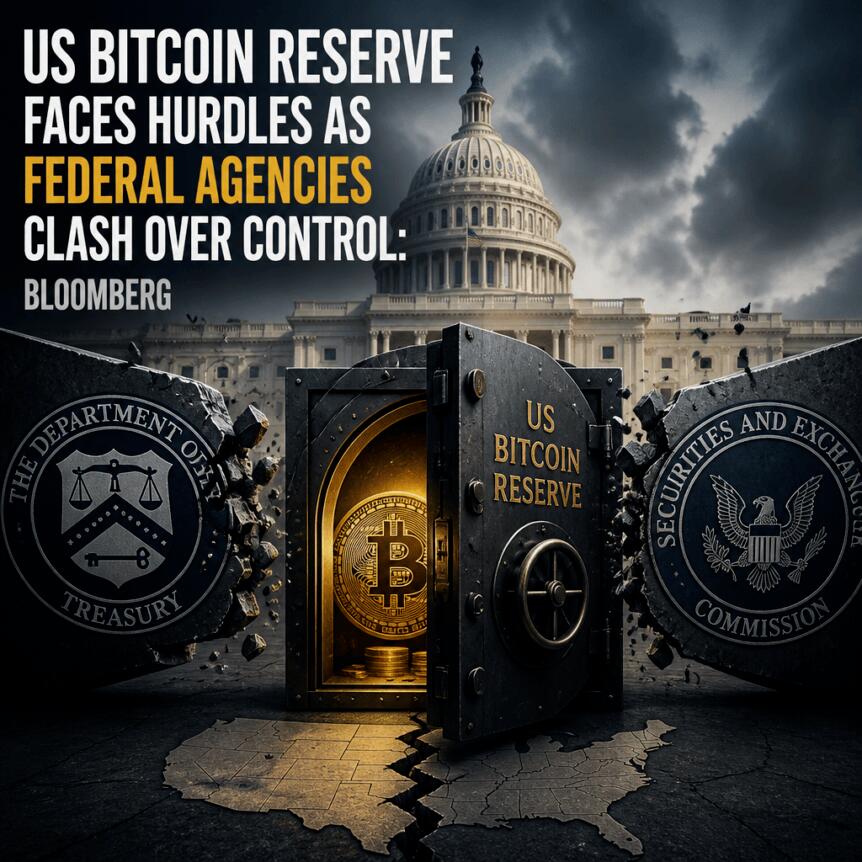
The Trump administration’s plan to create a US Strategic Bitcoin Reserve (SBR) is reportedly running into an unexpected hurdle: an internal dispute over the reserve’s legal structure and which federal agency should hold primary oversight of the Bitcoin assets. The disagreement centers on how the reserve would be organized and managed, according to reporting from Bloomberg and people familiar with the matter.
While US President Donald Trump’s March 2025 executive order envisioned housing the SBR within the Treasury Department—with other agencies supporting tasks tied to asset seizures—questions have emerged about whether Treasury has the legal authority to manage Bitcoin holdings. Bloomberg reported Monday that these issues are part of the reason the plan has not moved forward as smoothly as originally outlined.
Key takeaways
- Bloomberg reports a roadblock in the SBR effort due to disagreements among the Commerce and Treasury departments over structure and oversight.
- Legal concerns have been raised about whether Treasury can manage Bitcoin directly, given the asset’s volatility and the scope of its authority.
- Commerce has reportedly emerged as a potential alternative for primary oversight, with the Justice Department also assessing legally available options.
- Congress is pursuing parallel legislation—such as the BITCOIN Act and ARMA Act—that aims to establish a Bitcoin accumulation plan over five years.
- Industry advocates view the SBR concept as creating a new “capital allocation” category, even as execution details remain unsettled.
Treasury vs. Commerce: the dispute behind the reserve
Trump’s executive order calls for a Strategic Bitcoin Reserve housed in the Treasury Department, with other agencies playing supporting roles in building the reserve through asset seizure mechanisms. However, Bloomberg’s Monday report indicates that the departments are now at odds over how the reserve should be structured and which agency should have primary oversight of the holdings.
Central to the reported problem is a question of authority. Bloomberg cited concerns about whether Treasury has the legal power to manage the Bitcoin assets themselves, pointing to the asset’s volatility as part of the legal and regulatory complexity. The report also says Commerce may be positioned as an alternative lead agency, while the Department of Justice is working alongside relevant departments to identify options that are legally available.
For investors and market participants, the significance is not just bureaucratic. If the reserve’s governance framework ends up different than originally proposed, it could affect how assets are safeguarded, how decisions about holding or selling are made, and what kinds of legal constraints apply over time.
Why the SBR concept matters for US policy
The SBR proposal is designed to reposition Bitcoin within government financial planning. Rather than treating Bitcoin primarily as an asset to be seized and liquidated under court processes, the administration’s approach—at least in intent—would treat it as a strategic reserve asset. The White House has framed this as a shift toward making the United States a more central “crypto capital” by formalizing Bitcoin’s role.
In comments to Cointelegraph, a White House spokesperson, Liz Huston, said the administration continues to evaluate “the best structure for a Strategic Bitcoin Reserve and US Digital Asset Stockpile,” emphasizing that the effort is still underway. That statement is consistent with the reported internal review described by Bloomberg, which suggests the plan is still in a formative stage.
Bitcoin held by the US already exists in practice. The US currently holds 328,372 Bitcoin, valued at $21.1 billion, making it the largest known nation-state Bitcoin position. Over the years, the government has sold portions through court-ordered actions, underscoring that the operational reality of state-held Bitcoin is shaped by ongoing legal processes—not only by policy ambitions.
Congress moves in parallel: BITCOIN Act and ARMA Act
While the executive branch works through interagency questions, lawmakers are also attempting to codify the reserve through legislation. Efforts referenced in Cointelegraph’s coverage include the BITCOIN Act and the ARMA Act, introduced in May, both aimed at acquiring a total of 1 million Bitcoin over five years using budget-neutral strategies.
ARMA is described as a step that builds on prior proposals. One of the White House’s top crypto advisers, Patrick Witt, characterized ARMA as “Version 2” of the BITCOIN Act and said the White House had spent significant time examining the legal implications of establishing a Bitcoin reserve. In the same context, Witt said it was a “breakthrough” for putting the program on a legally sound footing and ensuring safeguards for the assets.
Under ARMA, Bitcoin would be held for at least 20 years unless sold to reduce America’s national debt, which is near $40 trillion. That framework highlights a key tension investors may watch: the policy aims to create durability and strategic value over the long term, yet it also provides a pathway for eventual use in debt reduction. How such sell-down authority is implemented could be influenced by the same legal and oversight questions now reportedly complicating the executive branch’s structure.
Industry reaction: “validation” rather than just accumulation
Even with reported disagreements inside government, industry observers continue to see the Strategic Bitcoin Reserve as potentially bullish for Bitcoin’s broader role. Advocates argue that formalizing Bitcoin as a strategic reserve could reinforce its legitimacy as an investment and policy asset—moving it closer to how traditional institutions treat reserve categories.
Tim Kotzman, host of the Bitcoin Treasuries Podcast, commented that the SBR is not only supportive of Bitcoin, but “validates an entirely new category of capital allocation.” He added a comparison between earlier adoption by public companies and the idea that nation-states are now moving in the same direction.
That perspective aligns with the existing landscape of state-level Bitcoin holdings. Cointelegraph’s earlier coverage noted that 15 nation-states hold Bitcoin, but El Salvador is singled out as the only country that has formally established a Bitcoin reserve and makes routine purchases.
For readers, the practical takeaway is that the debate now appears to be shifting from whether the reserve should exist to how it should be governed—particularly which agency leads, what legal authority applies, and how long-term safeguards and eventual liquidity mechanisms would work.
What to watch next is whether the interagency review resolves the legal authority questions quickly, and whether Congress’s ARMA framework—and its long-hold rules tied to debt reduction—moves toward becoming a binding structure that can reduce uncertainty around who controls the reserve in practice.
Microsoft is cutting 4,800 jobs, about 2.1% of its global workforce, and Xbox will absorb a large share of the reduction.
The company laid off 1,600 Xbox workers on Monday, July 6. It expects another 1,600 cuts later this fiscal year, raising Xbox’s total to roughly 3,200 roles.
Xbox CEO Cites Margin Gap
Xbox CEO Asha Sharma took over the gaming unit in February after Phil Spencer’s retirement. She told staff the division’s economics no longer hold up.
“Our business today is not healthy.”
Asha Sharma, Xbox
Sharma said Xbox’s margins run three to ten times lower than comparable platform and publishing businesses. She blamed a worsening hardware crisis as console component costs climb, intensifying competition with Sony’s PlayStation and Nintendo’s Switch.
Sony also plans to end physical disc production in January 2028. The shift mirrors a broader industry pivot toward digital distribution that Xbox appears to be following.
Microsoft is also spinning off four studios it once acquired. Compulsion Games and Double Fine Productions will go independent, while Ninja Theory and Undead Labs will move to new owners.
The moves unwind part of the Activision Blizzard portfolio Microsoft built through its $69 billion deal three years ago.
Cuts Follow Buyout Program
Chief People Officer Amy Coleman said fast-changing technology drove the decision. She noted Microsoft offered buyouts in April, and more than a third of eligible employees accepted them.
The reduction follows a broader trend. Tech and finance jobs have fallen at a steady monthly pace in 2026 as companies lean further into AI.
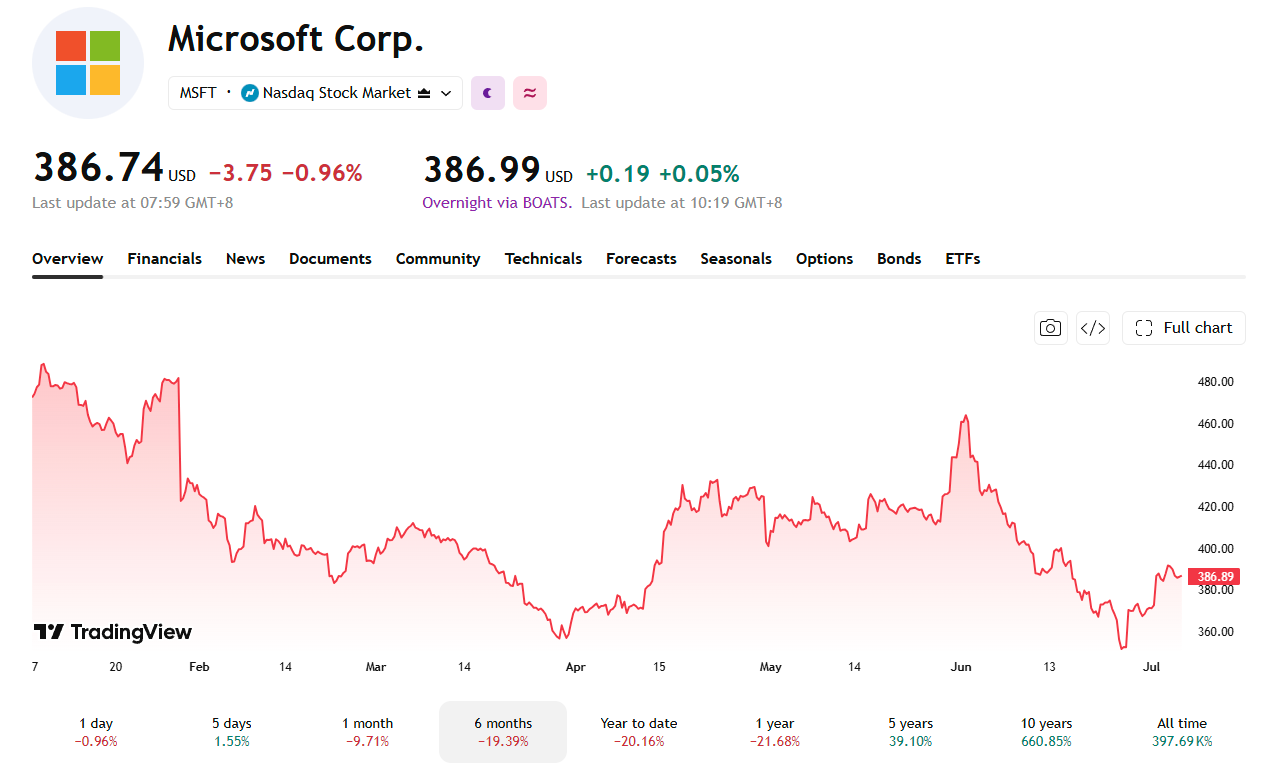
The gaming reset lands as Microsoft shares have slid roughly 19% over the past six month. Investors are weighing whether heavy AI spending is paying off amid broader pressure on tech stocks.

Xbox’s restructuring runs through fiscal 2027. That leaves open how much further the division will shrink before Sharma’s reset takes hold.
The post Microsoft Cuts 4,800 Jobs as Xbox Loses 3,200 Roles in Reset appeared first on BeInCrypto.


The European Securities and Markets Authority (ESMA), the EU's securities regulator, said in a statement that many prediction market event contracts may already fall within the bloc's existing ban on marketing binary options to retail investors. The regulator reminded firms they must assess whether… Read the full story at The Defiant
Crypto World
Vitalik Buterin Outlines 'Lean Ethereum' Roadmap, a Three-to-Four-Year Protocol Overhaul


Ethereum co-founder Vitalik Buterin published a new set of takeaways on "Lean Ethereum," the multi-year plan to rebuild most of the network's protocol, in a post on X on July 4. Buterin said the update follows a meeting of Ethereum researchers in Berlin two weeks earlier, which continued… Read the full story at The Defiant

Belgium’s financial regulator has escalated enforcement under the EU’s Markets in Crypto-Assets (MiCA) framework by issuing a fresh warning to consumers about six crypto-asset service providers (CASPs) it says are operating without authorization. The notice comes days after the EU’s MiCA transitional period ended, pushing regulators across member states into a more active licensing enforcement phase.
On Monday, the Financial Services and Markets Authority (FSMA) published a list of entities it identified as unauthorized CASPs active in Belgium. The regulator named Aurum Foundation, Bank Bit, Bithf Pro, Dxago, Global Dynamic Trade, and ZeriaFunding, and said it has added them to its roster of fraudulent CASPs.
Key takeaways
- FSMA warns consumers not to engage with six named crypto firms it says are not authorized under MiCA in Belgium.
- The regulator urges users to verify a provider’s status using the official FSMA CASP register before depositing funds or trading.
- MiCA entered into force at the end of 2024, and Belgium’s transitional licensing window closed on July 1.
- FSMA reiterates that crypto assets are volatile, may face liquidity constraints, and are not protected by compensation schemes that could reimburse losses.
FSMA names six unauthorized CASPs in Belgium
FSMA’s consumer warning is anchored in the idea that MiCA authorization is now the gatekeeper for crypto services offered in the country. In its notice, the regulator points out that the specified CASPs are operating without the required permission and therefore fall outside the legal perimeter set by Belgium’s MiCA guidance.
The FSMA advised consumers to reject offers from the named companies and to check whether any crypto-asset provider appears on its official CASP register. That emphasis matters for users because it shifts the compliance question from “is this company active?” to “is it authorized to operate what it claims to offer in Belgium?”
FSMA also reminded readers that even legitimate crypto activity carries risk: crypto assets can be highly volatile, liquidity can be limited, and—critically—losses are not covered by a compensation scheme that would reimburse clients in the event of provider failure.
MiCA licensing moves from transition to enforcement
MiCA entered into force at the end of 2024 and establishes a harmonized EU-wide framework for CASPs and issuers. According to FSMA’s guidance, authorized CASPs are the only entities permitted to offer a range of crypto asset services in Belgium, including custody, trading platforms, exchange services (both crypto-to-fiat and crypto-to-crypto), order execution, transfer services, advice, and portfolio management.
Belgium’s transitional regime expired on July 1—the same day by which existing providers across the EU were generally required to obtain authorization or stop offering crypto-asset services. In practice, that timing is what turns the MiCA deadline into an enforcement moment: regulators can more clearly differentiate between entities actively complying with authorization requirements and those that continue to market services without approval.
Earlier coverage from Cointelegraph noted that the transition period gave some companies time to apply and adjust operations ahead of the formal licensing cut-off. As that period ended, enforcement actions like FSMA’s warning suggest regulators are now leaning harder into compliance checks rather than relying on transitional cover.
Pressure on European crypto firms around July 1
The July 1 deadline has been a recurring stress point for crypto businesses that planned to operate within the EU while navigating authorization requirements. In June, Cointelegraph reported that Binance withdrew its MiCA application in Greece and intended to seek authorization in another EU jurisdiction just before the deadline.
At the time of the withdrawal, Binance said it was “not leaving Europe,” while acknowledging that some users could be affected during the compliance process. That episode illustrated a broader pattern: the closer firms got to July 1, the more authorization strategies became dependent on selecting the right jurisdiction and meeting local procedural requirements under the broader MiCA regime.
While FSMA’s latest warning focuses on unauthorized entities, the Binance case highlights the difference between firms that are actively attempting to route compliance correctly versus those that continue operating without authorization at all. For investors and users, that distinction is practical: the risk profile changes when a provider is unlicensed under the regime designed to regulate custody, exchanges, and related services.
What Belgium users should do now
FSMA’s notice is straightforward in its consumer orientation. The regulator’s advice is to avoid the named companies and to verify any crypto-asset provider through the official CASP register before sending funds or relying on services such as custody or trading access.
Given FSMA’s reminder that crypto exposures are not protected by compensation schemes, the regulator’s warning underscores a key investor takeaway: authorization is not just paperwork—it can signal that the provider falls under a supervisory perimeter, which matters when liquidity problems or platform disruptions occur.
Readers should watch how FSMA’s enforcement posture evolves in the weeks ahead, particularly whether additional CASPs are added to its warnings list and how quickly consumers see authorization status reflected in the regulator’s CASP register following the end of the transitional period on July 1.

The Trump administration’s push to establish a US Strategic Bitcoin Reserve has reportedly hit a roadblock, as the Commerce and Treasury departments are at odds over how the reserve should be structured and which agency should have primary oversight of the holdings.
US President Donald Trump’s March 2025 executive order called for the SBR to be housed inside the Treasury Department, while other agencies would assist with asset seizures to build the reserve.
However, concerns have emerged over whether the Treasury has the legal authority to manage the Bitcoin (BTC) holdings, partly because of its volatility, Bloomberg reported Monday, citing people familiar with the matter.
The Commerce Department has emerged as a contender to oversee the reserve, they said. The Department of Justice is also reportedly working with the departments to determine legally available options, they added.
The Bitcoin reserve is a key part of Trump’s plan to make the US the “crypto capital of the world,” marking a major shift in the government’s approach to digital assets by positioning Bitcoin as a strategic reserve asset rather than a seized commodity.
“To deliver on the President’s vision, the Trump administration continues to evaluate the best structure for a Strategic Bitcoin Reserve and US Digital Asset Stockpile,” White House spokesperson Liz Huston told Cointelegraph.

Source: Cointelegraph
The US currently holds 328,372 Bitcoin worth $21.1 billion — the most of any nation-state — but has sold portions through court-ordered actions over the years.
Senators look to codify the Bitcoin reserve
Efforts have been made to codify the Bitcoin reserve in Congress through the BITCOIN Act and ARMA Act, introduced in May, which seek to acquire 1 million Bitcoin over five years using budget-neutral strategies.
Related: Has Strategy’s capital overhaul put an end to ‘death spiral’ fears?
One of the White House’s top crypto advisers, Patrick Witt, described ARMA as “Version 2” of the BITCOIN Act and said the White House had spent significant time examining the legal implications of creating a Bitcoin reserve.
“It’s a breakthrough as far as getting everything in place — legally sound — properly safeguarding the assets,” Witt said at the time.
Under ARMA, Bitcoin must be held for at least 20 years unless it is sold to reduce America’s national debt, which is nearing $40 trillion.
Bitcoin reserve developments viewed bullishly
Despite the interagency issues, many industry advocates say the SBR could strengthen the case for Bitcoin as a strategic reserve asset.
“The Strategic Bitcoin Reserve isn’t just bullish for Bitcoin. It validates an entirely new category of capital allocation,” Tim Kotzman, host of the Bitcoin Treasuries Podcast, said.
“Public companies moved first. Nation-states are beginning to follow.”
While 15 nation-states hold Bitcoin, El Salvador is the only country that has formally established a Bitcoin reserve and is making routine purchases.
Magazine: Does ‘Paper Bitcoin’ mean there’s an unlimited supply of BTC?


Web3 security incidents cost the industry more than $1.31 billion across 344 events in the first half of 2026, according to CertiK's Hack3D H1 2026 Report, published Monday. Net losses stood near $1.2 billion after frozen and recovered funds, the blockchain security firm said. Headline totals show… Read the full story at The Defiant
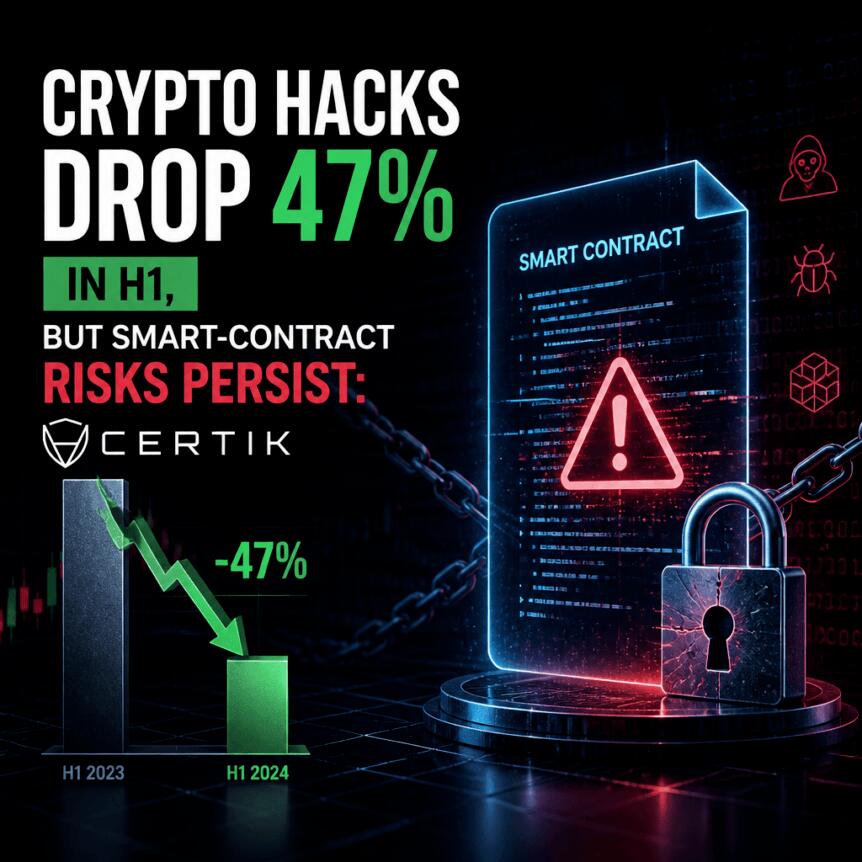
Crypto losses from hacks and scams dropped in the first half of 2026, according to new figures cited by CertiK. In the period, overall losses fell 46.8% year-on-year to $1.32 billion—yet the security firm argues the headline decline is deceptive, pointing to a shift toward more targeted and destructive attacks.
CertiK’s report breaks the half-year down by quarter: phishing drove $508.2 million in losses in Q1, while wallet compromises became the dominant threat in Q2 with $807.5 million attributed to that attack vector. The firm also highlighted that more than 70% of Q2 losses came from two major incidents—KelpDAO and Drift Protocol—events tied to North Korean state-sponsored hacking activity.
Key takeaways
- First-half 2026 crypto losses fell 46.8% year-on-year to $1.32 billion, but CertiK says the reduction does not indicate a safer ecosystem.
- Attack dynamics shifted: phishing dominated Q1 ($508.2M), while wallet compromises were the largest driver in Q2 ($807.5M).
- Over 70% of Q2 losses were linked to the KelpDAO and Drift Protocol hacks, which are believed to involve North Korean state-sponsored actors.
- CertiK warns attackers are becoming more “targeted and more financially destructive per event,” even if total dollars stolen appear lower.
- TRM Labs reported a sharp rise in the number of incidents in H1 2026 (83 to 207), reinforcing that volume—not just dollar totals—matters.
Why “losses down” may be the wrong signal
At first glance, the year-on-year decline looks encouraging. CertiK, however, cautions against interpreting the data as evidence that security has improved. The firm told Cointelegraph that a “headline reading” of losses down nearly 50% could mislead readers because the prior-year comparison was distorted by an exceptionally large theft.
CertiK specifically referenced the $1.4 billion Bybit hack as the type of outlier that can skew year-over-year comparisons. In the same reporting, CertiK noted that such comparisons can mask underlying changes in attacker behavior—particularly as threat actors adapt tactics and select targets more precisely.
This is where the firm’s analysis becomes investor- and operator-relevant: if the ecosystem is seeing fewer total dollars stolen but more attacks that are more damaging per incident, then risk is not actually decreasing. Traders may feel this first as volatility tied to exploit headlines, but the deeper impact lands on protocols, custodians, and institutions that must continually adjust defensive controls.
Phishing vs. wallet compromise: Q1 and Q2 split
CertiK’s quarterly breakdown shows how different attack categories shaped the first half of the year. In Q1, phishing was responsible for the bulk of losses, totaling $508.2 million. By Q2, the picture changed significantly: wallet compromises contributed $807.5 million, making that category the largest single driver of losses during the quarter.
For market participants and builders, that shift matters because it points to different failure modes. Phishing typically targets human behavior—seed phrases, approvals, and credentials—while wallet compromise often reflects deeper weaknesses around key custody, multisignature operations, signing procedures, and operational security. The change in the dominant vector suggests defenders cannot rely on improvements in one area alone; they have to treat the security stack as layered.
North Korean hacking remains central, and volume may be rising
CertiK’s report places disproportionate emphasis on state-linked activity during Q2. More than 70% of the losses in the quarter came from the KelpDAO and Drift Protocol hacks. Cointelegraph previously reported on both incidents, including coverage of KelpDAO being exploited and the Drift Protocol hack raising questions about the protocol’s response.
Beyond the immediate losses, the incidents also intersect with government-level discussion. The attacks reportedly even prompted a late-month meeting between US, Japanese and South Korean authorities focused on mitigating North Korea’s cyber activity and illicit revenue generation. Officials also acknowledged that North Korean IT workers are increasingly using AI to improve their schemes—an issue cybersecurity leaders believe can increase the scale, speed, and sophistication of protocol exploitation.
CertiK’s broader warning aligns with another dataset. TRM Labs, in its H1 2026 reporting, argued that declining total dollars stolen should not be mistaken for a safer environment. In TRM’s analysis, the number of incidents more than doubled from 83 to 207 in the first half of 2026, the highest number TRM has recorded across a six-month period. TRM also found that smart contract exploits accounted for 125 incidents—about 60% of all events—in H1.
That juxtaposition is important: even if fewer dollars are being stolen than in a year with record outliers, the ecosystem can still be exposed to a higher frequency of attacks. More incidents mean more operational disruptions, more incident response overhead, and more opportunities for failures—especially in fast-moving DeFi environments.
Private key management: the “most consequential” security surface
CertiK singled out private key handling as the area most likely to determine outcomes for attackers. According to the firm, private keys and multisignature wallet management remain the “most consequential security surface” for exploitation—particularly because weaknesses there can enable large transfers even when other controls appear in place.
To address this, CertiK urged protocols and institutions holding significant onchain assets to harden every layer of private key management. The recommendations span hardware security, multisignature governance, and even the geographic distribution of signers. The core argument is that defenses should be designed to reduce the chance that a single point of compromise results in irreversible loss.
CertiK also framed security investment as asymmetric: it said this is an area where spending on the right controls can produce unusually large risk reduction relative to the cost. That theme echoes long-standing guidance from hardware wallet providers. For example, Ledger has previously warned users to keep seed phrases offline and never share them, emphasizing that basic operational discipline remains one of the most effective barriers to phishing-driven theft.
While these recommendations may sound familiar, the data behind them—especially Q2’s wallet compromise losses—underscores that key management is not a “set it and forget it” task. Attackers often shift tactics toward whatever control surface shows the most leverage, and wallet compromise outcomes suggest that leverage is still available to criminals and state-linked groups.
Looking ahead, the key question is whether the first-half pattern persists: phishing-heavy losses in the first quarter followed by wallet compromises and concentrated state-linked incidents in the next. Readers should watch not only aggregate loss totals, but also incident frequency, which TRM’s reporting suggests is rising—an indicator that the threat environment may be intensifying even when dollar figures temporarily fall.

Richard Heathcote, the former chief investment officer of stablecoin issuer Tether, is reportedly looking to sell part of his stake in the company. Bloomberg, citing people familiar with the matter, said Heathcote wants to liquidate only a portion of his 1.26% ownership in Tether, after stepping down from the role in March to move into an advisory position.
Tether’s continued private ownership structure makes any sale by a senior insider notable. The company behind USDt (USDT)—the largest stablecoin by market capitalization—remains privately held even as it operates at massive scale, with circulating supply of roughly $184 billion and a reported share of about 59% of the stablecoin market, according to DefiLlama data.
Key takeaways
- Bloomberg reports Richard Heathcote plans to sell only part of his 1.26% stake in Tether, after leaving his chief investment officer post in March.
- USDT remains dominant in stablecoin markets, with DefiLlama estimating around $184 billion in circulating supply and ~59% share.
- The reported sale unfolds alongside increased regulatory friction for USDT in Europe, including delistings by MiCA-authorized platforms.
- Broader capital-market ambitions continue elsewhere in crypto, with multiple exchanges weighing—but adjusting—paths toward IPOs.
Insider ownership sale spotlights Tether’s private structure
Heathcote’s reported plan offers rare visibility into Tether’s ownership. With the company privately held, there is limited public detail on how large stakeholders are positioned, how their holdings evolve, or whether any strategic shifts accompany changes in leadership and investment oversight.
Bloomberg said Heathcote exited his chief investment officer role in March to take an advisory position after overseeing Tether’s investment portfolio. His stake, at 1.26%, is large enough that even a partial sale could be meaningful—though the report characterizes the intention as selling only a portion rather than unwinding his position entirely.
For investors and market participants, the significance is twofold. First, any insider distribution can become a proxy for internal confidence or liquidity planning. Second, ownership changes at a stablecoin issuer can matter indirectly to market confidence, because USDT is central to trading pairs, liquidity provisioning, and settlement across crypto markets.
USDT’s European regulatory headwinds continue
The ownership sale report arrives as Tether navigates regulatory pressure in Europe. Cointelegraph previously reported that USDT has been delisted by an increasing number of MiCA-authorized platforms after Tether chose not to comply with the European Union’s crypto framework.
One prominent example cited in that earlier reporting was Revolut’s decision to remove USDT from its platform, announced during the month covered by the Cointelegraph update. While platform-level delistings do not necessarily change the underlying global demand for USDT overnight, they can influence where consumers can access the token and how easily it can be onboarded through mainstream channels.
That dynamic matters for Tether because stablecoin access increasingly intersects with regulated on-ramps. If distribution opportunities narrow in certain jurisdictions, issuer narratives may shift from pure growth to compliance, market structure, and risk management. The partial nature of Heathcote’s reported sale suggests, at minimum, that liquidity planning is not necessarily tied to a single near-term regulatory decision—but the timing still reinforces that Tether is operating amid heightened oversight.
Crypto IPO plans keep shifting from exchange to exchange
While Tether leadership has been publicly skeptical about the need for an IPO, other crypto businesses have continued exploring public listings—often with delays driven by changing market conditions or internal restructuring.
Cointelegraph reported that Kraken has taken steps toward a public listing. Fortune previously reported in September 2025 that Kraken raised $500 million at a $15 billion valuation, fueling expectations for an IPO. Separately, Kraken announced it had confidentially filed a draft registration statement with the U.S. Securities and Exchange Commission for a proposed initial public offering in November 2025.
However, Bloomberg later reported that Kraken’s IPO plans could slip until 2027 after layoffs tied to the company’s expanding use of artificial intelligence. The implication for readers is that even when IPO work is underway, execution timelines can be highly sensitive to operational priorities and cost structure.
South Korean exchange Bithumb has also faced a moving target. Cointelegraph noted in April that Bithumb said it is delaying its IPO until after 2028, citing efforts to strengthen accounting policies and internal controls following earlier regulatory setbacks.
Taken together, these updates underline a broader theme in crypto’s attempted migration to traditional capital markets: going public has become less a straightforward fundraising event and more a compliance-heavy, execution-dependent process. Even companies that proceed with filings can still experience delays as they balance governance upgrades, regulatory expectations, and internal transformation.
What to watch next for Tether and the stablecoin market
Bloomberg’s report did not specify deal timing, counterparties, or regulatory requirements tied to Heathcote’s planned partial sale. The next key question for the market is whether the transaction influences investor perceptions of Tether’s governance and long-term positioning—especially as USDT continues to face uneven access across Europe. In the meantime, stablecoin holders and traders should monitor platform delistings, jurisdiction-by-jurisdiction compliance signals, and any additional transparency that may emerge around insider ownership and capital-market readiness across major crypto firms.

Police tape off area with blue tent erected following Piccadilly Gardens incident

71% of Gamers Say They’re Not Ready to Let Physical Games Die as PlayStation and Xbox Go Fully Digital

While ADA, ETH sink to multi-year lows, money is rotating into AI, Stargate LLM leads the charge with 50x potential


-

 Fashion3 days ago
Weekend Open Thread: High Hopes
-

 Politics4 days ago
The House | “Reframing the debate from a binary discussion of winners and losers”: Yuan Yang reviews ‘We Are Not Machines’
-

 Fashion10 hours ago
Open Thread: What Great Books Have You Read Recently?
-

 News Videos7 days ago
How to Build INSANE Live Financial Dashboards With Claude
-
 NewsBeat2 days ago
Taylor Swift and Travis Kelce wedding staffer hilariously struggles to keep her cool while checking in megastars
-

 Business7 days ago
Australia treasurer says alleged access of prime minister’s bank data ’incredibly concerning’
-
 Crypto World6 days ago
Airdrop Registration Becomes Key Focus For Remittix As RTX Launch Updates Approach
-

 Sports6 days ago
Broncos roster: OL Ben Powers (No. 74) entering final year of contract
-

 Crypto World5 days ago
Binance stock trading tops $1B in first month after launch
-

 NewsBeat6 days ago
Presenter Caroline Flack’s brother Paul Flack dies aged 55
-

 Crypto World5 days ago
Alibaba-affiliate Ant Group enters the humanoid robot market with 12 deals
-

 Crypto World3 days ago
Standard Chartered Secures MiCA License as ESMA Adds 37 New Crypto Firms
-

 Crypto World2 days ago
South Africa proposes crypto tax guidance under existing rules
-

 News Videos11 hours ago
Best Time to Enter Small Caps Right Now? Another Bull Run? | Financially Free
-

 Business5 days ago
Meta Platforms Stock Jumps 7% Today as Bloomberg Reports Company Plans to Enter the Cloud Business
-
 NewsBeat5 days ago
New exhibition reflects five decades of movement between island of Ireland and GB
-

 Tech2 days ago
Lenovo laptops are now shipping with YMTC SSDs, a sign of Chinese NAND entering the mainstream
-

 Business4 days ago
What a 10 Percent Drop Means for Buyers, Sellers and Renters
-

 News Videos14 hours ago
Avoid entering in FOMO #bitcoin #cryptocurrency #trading #scalping
-

 Crypto World4 days ago
Binance Re-Enters Philippines As EU MiCA Rules Restrict Access
You must be logged in to post a comment Login