
Business
Lennar: Incentives Are Finally Better, But Demand Still Needs Work (NYSE:LEN)



I’m a fundamental, valuation-driven investor with a strong focus on identifying businesses that have the potential to scale over time and unlock massive terminal value. My investment approach centers around understanding the core economics of a business—its competitive moat, unit economics, reinvestment runway, and management quality—and how those factors translate into long-term free cash flow generation and shareholder value creation. I focus on fundamental research, and I tend to focus on sectors with strong secular tailwinds. Professionally, I am a self-educated investor that started this journey 10 years ago. Currently, I am managing my own funds, seeded from friends and family. My motivation for writing on Seeking Alpha is to share investment insights, and also at the same garner feedback from fellow investors in this site. My aim is to help readers focus on what truly drives long-term equity value. I believe good analysis should be both analytical and accessible, and I hope my work adds value to readers looking for high-quality, long-term investment opportunities.
Analyst’s Disclosure: I/we have no stock, option or similar derivative position in any of the companies mentioned, and no plans to initiate any such positions within the next 72 hours. I wrote this article myself, and it expresses my own opinions. I am not receiving compensation for it (other than from Seeking Alpha). I have no business relationship with any company whose stock is mentioned in this article.
Seeking Alpha’s Disclosure: Past performance is no guarantee of future results. No recommendation or advice is being given as to whether any investment is suitable for a particular investor. Any views or opinions expressed above may not reflect those of Seeking Alpha as a whole. Seeking Alpha is not a licensed securities dealer, broker or US investment adviser or investment bank. Our analysts are third party authors that include both professional investors and individual investors who may not be licensed or certified by any institute or regulatory body.


DTCR: Deleveraging And A Hedge Fund Collapse Point To A Possible AI Bottom
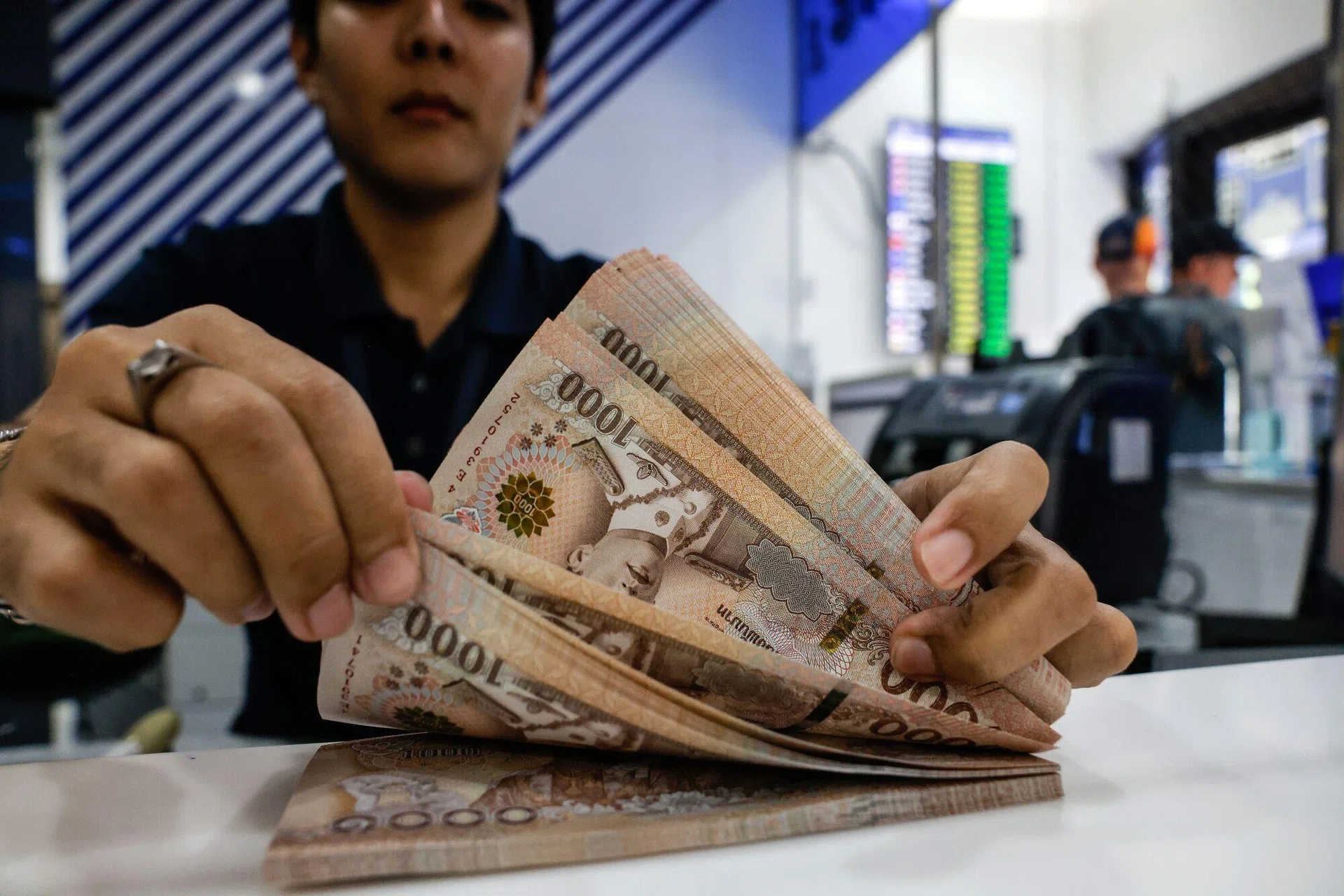
OCBC analysts report the Thai Baht is near a 15-month low against the USD, pressured by rising oil prices, a stronger dollar, and higher US yields. The Bank of Thailand’s accommodative stance offers little support, though sharper depreciation could challenge policymakers if inflation concerns intensify.
Baht Under Pressure from Global Headwinds
The Thai Baht (THB) is trading near its weakest level in over 15 months against the US Dollar, as a confluence of external pressures continues to erode its value. According to OCBC’s Sim Moh Siong and Christopher Wong, the currency’s decline has been driven by a renewed spike in oil prices, compounded by a firmer USD and rising US Treasury yields. Thailand’s heavy reliance on imported energy makes it especially vulnerable to these global cost pressures, which in turn have stoked concerns about imported inflation. This dynamic has reinforced market expectations that US interest rates may remain elevated for longer, further diminishing the Baht’s relative appeal and sustaining depreciation pressure across the currency pair.
Bank of Thailand’s Accommodative Policy Adds to the Drag
Beyond external forces, the Bank of Thailand’s (BoT) monetary policy stance has also weighed on the currency. The central bank has maintained a notably accommodative posture, offering little support to counteract the Baht’s slide. Governor Vitai has publicly signaled no urgency to tighten policy, suggesting that authorities remain comfortable allowing gradual currency softness rather than intervening aggressively. This tolerance for gradual depreciation reflects a broader policy philosophy prioritizing growth and financial conditions over near-term currency stability. However, this passive approach means the THB currently lacks a domestic monetary policy buffer against the ongoing external shocks stemming from oil markets and shifting US rate expectations, leaving it more exposed to further weakening.
Risks of a Sharper Depreciation
Despite the BoT’s current tolerance for gradual THB softness, analysts caution that this stance could be tested if conditions worsen. Should oil prices remain elevated and imported inflation continue to build, the resulting economic strain may force policymakers to reconsider their passive approach. A sharper, more disorderly depreciation — rather than the current gradual slide — would likely raise concerns about financial stability and inflationary spillovers, potentially prompting the BoT to intervene or adjust its policy tone. In essence, while the central bank currently views Baht weakness as manageable, the combination of energy shocks and firm US monetary conditions represents a critical threshold that could compel a shift in Thailand’s policy calculus should pressures intensify further.
Other People are Reading

CoStar Group: Growth Expectations Are Fading (Rating Downgrade)

Bessent ready to repeat joint yen intervention, urges bigger Fed backstop

Expanding specialty and innovative medicines portfolio, semaglutide launches across India and international markets, and the proposed Organon acquisition are major growth drivers in the medium term for the country’s largest pharma company by revenue and market cap. Despite pressure in the US generics segment, it has maintained the FY27 guidance of high single-digit revenue growth on account of continued traction in specialty products such as Leqselvi and Unloxcyt and strong momentum in the domestic business.
Read more: New F&O closing auction rules: Impact on traders, investors decoded
The short-term growth narrative is shifting away from traditional generics and toward specialty and innovative products. While the US formulations business declined 9.7% due to lower contribution from generic Revlimid and increased competition in some products, the company’s innovative medicines portfolio continued to gain traction across the US and international markets. The innovative portfolio will likely remain a key growth engine supported by products such as Ilumya, Odomzo and Cequa, along with the ramp-up of new launches. Motilal Oswal Financial Services (MOFSL) expects the specialty portfolio to deliver a 13% annual growth over FY26-FY28, aided by improving physician adoption and expanding market access.
 Agencies
Another potential growth lever is semaglutide. Beyond India, the company has secured approvals for generic semaglutide injections for Type-2 diabetes in South Africa and Brazil. The commercialisation is underway in South Africa while the Brazil launch is expected soon through a partner.

The medium-term outlook is led by a healthy innovation pipeline. Key milestones over the next 12-18 months include a USFDA decision on Ilumya for psoriatic arthritis in October 2026, topline phase-II data for GL0034 in Type-2 diabetes during the second half of 2027, progress on Fibromun, and regulatory filings for dermatology and oncology assets. The Organon acquisition is expected to complete by March 2027 quarter, which could expand Sun Pharma‘s global scale and product portfolio.
MOFSL has retained a ‘buy’ rating on the stock with a target price of ₹2,310, implying a 16% upside to Friday’s closing price of ₹1,989.4.The broking firm believes Sun Pharma remains on track for strong growth, supported by expansion in innovative medicines through partnerships, launches and wider reach.

Dollar suddenly falls against yen, traders on alert for further intervention

Earnings call transcript: Biome posts record FY 2026 sales, cash flow in Q4 2026

Oil tumbles as Trump cancels attack on Iran to reach nuclear deal
What are exchanges changing?
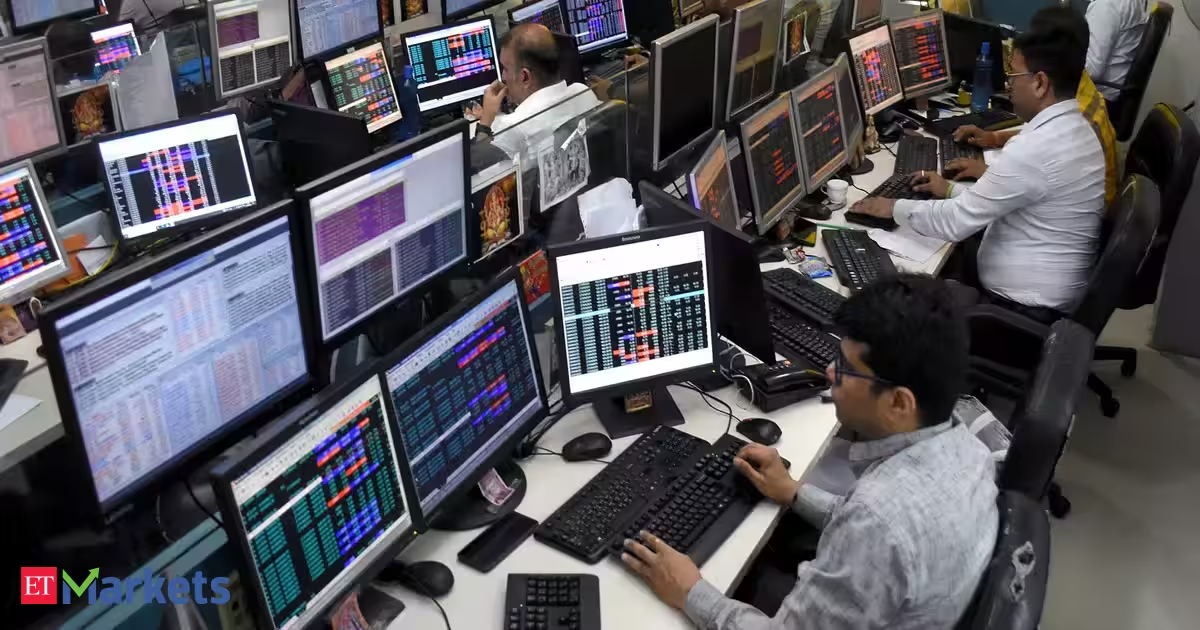
Exchanges are changing the way the official closing prices of certain stocks are decided. The daily closing price is one of the most important numbers for market participants. It is used to calculate index closing levels, mutual fund portfolios, and settle derivatives contracts.
At present, a stock’s closing price is based on the average price of trades done in the last 30 minutes, between 3 PM and 3:30 PM.
From August 3, stocks that are available in the futures and options segment will have a separate closing auction. Their final closing price will be decided through this auction, instead of using the average price over last 30 minutes.
AgenciesTill now a stock’s closing price was based on average price of trades done in last 30 mins
How will the new closing auction work?
For stocks part of the F&O segment, normal trading will end at 3:15, after which the closing auction will begin. During this session, buy and sell orders are collected instead of being executed immediately. The exchanges will then calculate a single price at which the maximum number of buy and sell orders can be matched. That price becomes the stock’s official closing price.
To prevent sharp price swings, the auction price can generally move only within 3% above or below the stock’s average traded price between 3 and 3:15.
Read more: RBI likely to extend rate pause; neutral stance seen unchanged
Investors can place both market and limit orders until 3:25. After that, only fresh limit orders are accepted, while market orders already entered cannot be changed or cancelled. These restrictions are meant to discourage last-minute changes or large market orders that could influence the closing price. Also, the auction will close at a random time between 3:28 and 3:30, making it harder for traders to time their orders at the last second.
What’s the big deal about last-minute order changes? Why should it matter?
One reason for the change is that there have been complaints about large orders being placed at the close of trading in a bid to influence the final price. Think of it as the final over of a cricket match. A few big shots in the last moments can alter the final score. Similarly, a few large trades just before the market closes can influence the closing price.
A closing auction helps find one common price at which the maximum quantity can be traded. This is expected to make the closing price more reliable and reduce the impact of sudden orders placed near the end of the session.
Another key reason for the change is to help mutual funds, especially passive funds, execute all their buy and sell orders in the closing auction. This will help them transact at or very close to the official closing price. Currently, asset managers place orders between 3 PM and 3:30 PM at different prices depending on available liquidity, which can lead to tracking errors. Brokerage Zerodha said the new rule helps improve the efficiency of the execution of large orders.
Then, what’s the relevance of the period between 3:30 and 3:40?
By around 3:35, the closing auction for stocks that have F&O contracts will be over. However, F&O contracts continue trading until 3:40. This gives F&O traders a few extra minutes to react to the stock’s final closing price before derivatives trading ends.
Does this mean the market will now close at 3:40?
No. For most stocks, trading will continue to end at 3:30. For stocks that have futures and options (F&O) contracts, normal cash-market trading will end at 3:15, after which a closing auction will determine the final closing price. Only the futures and options market will continue trading until 3:40.
Who will be impacted by the new rules? Do traders need to do anything differently?
The biggest impact will be on active traders, proprietary desks and other institutions that trade near the market close. Brokers could advance intraday square-off timings, so traders should check the revised cut-off times. Investors in non-F&O stocks are unlikely to notice much difference.

Prysmian nears deal to acquire U.S. electrical maker Atkore- Bloomberg

Bernie Moreno Claims Max Miller Is a ‘Danger’ to His Daughter

Today’s NYT Strands Hints, Answers and Help for Aug. 3 #883

#crypto #cryptocurrency #cryptonews #cuet2026 #ceuta

Renter of Home in Anne Heche Crash Denies Settlement With Son

No Jackpot Winner as $257 Million Prize Rolls Over to $269 Million Monday Draw

Weekend Open Thread: Staud – Corporette.com
#crypto #cryptocurrency #cryptonews #cuet2026 #ceuta

coffee ||made so much money| aeroplane , coffee , owner with| if you think money is nothing

#xrp #xrpripple #xrparmy #xrpnews #bitcoin #btc #crypto #cryptocurrency #blockchain #viral
-

 Business4 days ago
Why Trees Belong on the Risk Register
-

 Fashion2 days ago
Weekend Open Thread: Wit & Wisdom
-

 Politics2 days ago
Meta enters AI-training agreement with far-right ‘propaganda rag’ Newsmax
-
 Entertainment5 days ago
‘Stargate’ Creator’s New Sci-Fi Series Returns for Season 3 Tomorrow
-

 Politics7 days ago
Luke Littler dismantles Gerwyn Price to retain title in Blackpool
-

 Crypto World1 day ago
MicroStrategy Post-Earnings CLARITY Act Push Could Add New Catalyst for Its Stock
-

 Politics6 days ago
The Part of the Electric Transition Nobody Wants to Discuss
-

 Business5 days ago
Major shareholder moves on Canyon
-

 Crypto World2 days ago
XRP Ledger v3.3.0 brings five institutional features
-

 News Videos4 days ago
Bitcoin Enters the 3rd Stage of the Bear Market
-

 Crypto World5 days ago
Kraken Enables Retail Access to Jersey Mike’s IPO via Tokenized Shares
-

 Tech6 days ago
New macOS Sequoia & Sonoma security updates for older Macs
-

 News Videos5 days ago
Claude: Build Financial Dashboards in Minutes (2026)
-

 Politics3 days ago
Luke Littler’s dominance sparks GOAT debate
-

 Business5 days ago
Johnson & Johnson agrees to $5.5B settlement over talc cancer claims
-

 Sports3 days ago
Seema Kaliramna Wins Discus Throw Bronze, Takes India’s CWG Medals Tally To 17
-

 Crypto World16 hours ago
Crypto PAC spending tops $2M in Michigan House race
-

 Business2 days ago
Trump Announces Hamas Disarmament Agreement as Iran Strikes Kuwait Air Base and US Attacks Pause Overnight
-

 Tech5 days ago
Gemini can now summarize the messiest comment threads in Google Docs
-

 Tech19 hours ago
ESET tracks rise in malicious AI skills and adaptable malware
You must be logged in to post a comment Login