
Business
Ochre founder Joanne Pellew convicted




Plans to restrict zero-hours contracts will create barriers to opportunity by making it more expensive for companies to employ young people, retailers, business leaders and the hospitality trade body have warned.
The government intends to give new rights to all workers on zero-hours contracts, which at present do not specify a minimum number of hours of employment. The reforms would force companies to give staff a guaranteed number of hours a week reflecting their workload, to provide reasonable notice of shifts, and to pay workers for shifts that have been “cancelled, curtailed or moved at short notice”.
The British Retail Consortium, UKHospitality and the British Chambers of Commerce warned that the move could “worsen the jobs crisis”, pointing to the possible consequences for the number of Neets, the one million young people not in education, employment or training.
The three bodies called on the government to delay implementation so that a “proportionate” approach can be developed, and to set guaranteed hours at eight hours a week or fewer so that the rules target “genuinely low hours work”.
The measures sit under the Employment Rights Act 2025, and ministers have been consulting on the detail since June. The consultation closes on 25 August.
An official impact analysis of the plans found they could impose costs of up to £3 billion a year on employers, with companies facing extra red tape, higher staffing costs and lost revenue. The analytical note published alongside the consultation puts the direct cost to business at between £350 million and £2.9 billion a year.
The analysis found that sectors such as hospitality and retail, which have already borne the brunt of increases in employers’ national insurance contributions and the minimum wage, would be worst affected. It also warned that the plans would make it harder for employers to respond to changes in demand, with potential knock-on effects on revenue and investment.
Helen Dickinson, chief executive of the British Retail Consortium, said: “Government must stamp out exploitation, not flexibility, with employment reforms that close loopholes, not doors to opportunity.
“With more than a million young people out of work, education or training, we need policies that encourage businesses to hire and create pathways into employment. Get this wrong, and we’ll close off opportunities for the very people these reforms are intended to help.”
Allen Simpson, chief executive of UKHospitality, said: “Hospitality can deliver jobs in every postcode, but the reforms as they stand will add yet more cost, reduce flexibility for staff who need it and impact job opportunities for young people.”
Shevaun Haviland, director general of the British Chambers of Commerce, said: “These guaranteed hours reforms risk being hugely counterproductive for growth, damaging recruitment and investment. For many employees and businesses, zero-hours contracts are a valuable and legitimate form of flexible work.”
The Confederation of British Industry said that higher national insurance contributions, increases to the living wage, new costs associated with the Employment Rights Act and wider pressures from energy bills, taxation and borrowing costs were all squeezing recruitment and investment budgets.
“The same challenges that are holding back growth are hurting young people and their ability to enter the labour market,” Rain Newton-Smith, the CBI chief executive, said. “For it to work, growth must be at the heart of the youth employment strategy. Treating them as two separate challenges, and assuming the businesses can deliver opportunities without growth, will result in more young people falling into unemployment and inactivity.”
Research by the Chartered Institute of Personnel and Development, the HR trade body that has previously warned of unintended consequences from the reforms, found that 65 per cent of employers using zero-hours contracts expect their HR and management costs to rise as a result of the changes, while 31 per cent anticipate that they could have to make redundancies. A further 33 per cent expect to increase their use of self-employed contractors or other temporary and casual workers, raising concerns that efforts to tackle insecure employment could simply shift workers into other forms of non-permanent work.
A government spokesman said: “We are committed to ending exploitative zero-hours contracts, where workers bear all the financial risk when hours, shifts and earnings are unpredictable.
“These reforms will give workers in every postcode greater income security and predictability of hours. We have not made final decisions yet as we have been consulting since June to make sure we get the detail right.”

Amy Ingham
Amy Ingham is a reporter at Business Matters, covering UK business news with a focus on breaking news, business policy, late payments and insolvency. She joined the magazine in 2026 after completing the NCTJ Diploma in Journalism at Harlow College’s journalism school. Her recent reporting includes British Steel’s nationalisation and its impact on SME suppliers, the decline in late payments by large firms, and Insolvency Service director disqualifications. Reach her at aingham@cbmeg.co.uk.

TAMPA, Fla. — Benjamin William Lattimore, the soul and blues singer known professionally as Latimore whose rich baritone powered the 1974 R&B chart-topper “Let’s Straighten It Out,” has died at age 86.
Lattimore died Aug. 22 in Tampa, according to multiple reports. The Miami Herald, in an obituary published this week, described him as possessing “a voice that would swallow you up,” capturing the commanding yet intimate quality that defined his recordings and live performances for more than five decades.
Born Sept. 7, 1939, in Charleston, Tennessee, Lattimore grew up influenced by country music, the Baptist church choir and the blues. He began his professional career as a pianist for Florida-based groups, including work with Steve Alaimo, before cutting his first records in the mid-1960s for Henry Stone’s Dade label in Miami. He later moved to Stone’s Glades imprint, part of the influential TK Records family that helped define Miami’s soul and disco sound in the 1970s.
His breakthrough arrived in 1973 with a jazz-inflected version of T-Bone Walker’s “Stormy Monday,” which reached the R&B charts. The following year, the self-written “Let’s Straighten It Out” became his signature hit, climbing to No. 1 on the Billboard R&B chart and crossing over to the Hot 100. The slow-burning song about relationship tension and reconciliation established Lattimore as a leading voice in Southern soul. He followed it with additional R&B successes, including “Keep the Home Fire Burnin’” and “Somethin’ ‘Bout ‘Cha,” the latter becoming one of his two Top 40 Hot 100 singles.
Standing tall and delivering material with a smooth yet powerful delivery, Lattimore specialized in songs of romance, heartache and adult relationships. His piano skills remained central to his identity as both a solo artist and session musician. He contributed keyboards to recordings by other artists and later appeared on Joss Stone’s early albums “The Soul Sessions” and “Mind Body & Soul” alongside fellow Miami veterans including Betty Wright and Timmy Thomas.
In the 1980s, Lattimore joined Malaco Records in Jackson, Mississippi, a label known for sustaining Southern soul and blues artists. He released a string of albums there and remained active on the touring circuit. He later formed his own LatStone Records with longtime associate Henry Stone and continued recording into the 2010s, including a 2013 tribute to Ray Charles. In all, he released more than two dozen albums.
Recognition of his contributions came in 2017 when he was inducted into the Blues Hall of Fame. He made a notable television appearance in 2014 on “The Tonight Show Starring Jimmy Fallon.” He had been scheduled to perform at the Mississippi Delta Blues and Heritage Festival in September.
Colleagues remembered him as a dedicated road performer and distinctive talent. Harry Wayne Casey, known as KC of KC and the Sunshine Band and a fellow product of the Miami TK Records scene, was among those who paid tribute. One contemporary description called him “a true southern soul man who played the road and entertained millions.”
Lattimore’s survivors include his wife, Yvonne Lattimore. Details of funeral arrangements were not immediately available.
His catalog has found new audiences in recent years. Tracks such as “Let Me Go” gained renewed streaming attention through social media platforms, introducing younger listeners to the deep-soul sound he helped popularize. “Let’s Straighten It Out” remains a staple on classic R&B and Southern soul playlists and continues to be covered and sampled.
Lattimore’s career bridged several eras of Black popular music, from the independent label scene of 1960s Miami through the commercial peak of 1970s soul and into the contemporary blues and Southern soul circuit. His ability to convey emotional complexity with restraint and power earned him a devoted following that outlasted the peak commercial years of his biggest hits.
The Miami recording community of the 1960s and 1970s, centered around figures such as Henry Stone, produced a distinctive blend of R&B, soul and later disco. Lattimore stood out within that ecosystem for the blues-rooted authority of his singing and the sophistication of his songwriting and piano work. His move to Malaco later in his career aligned him with a label that prioritized artists with lasting appeal to core Southern audiences rather than fleeting crossover trends.
Peers and fans have emphasized both the technical strength of his voice and the personal connection his music created. Descriptions of his live performances often noted the way his baritone filled a room while retaining an intimate, conversational quality—an effect the Herald’s phrasing of a voice that “would swallow you up” sought to capture.
Though he never achieved the sustained pop stardom of some contemporaries, Lattimore’s influence is evident in the continued circulation of his key recordings and in the respect accorded him by later generations of soul and blues performers. His induction into the Blues Hall of Fame formalized a reputation built over decades of consistent work rather than a single moment of chart success.
In the days following news of his death, tributes highlighted the durability of “Let’s Straighten It Out” and the breadth of a career that began in church choirs and Florida nightclubs and extended to national stages and major-label sessions. The song’s themes of honesty and reconciliation in relationships have given it a lasting relevance beyond its original chart run.
Lattimore’s passing marks the loss of one of the distinctive voices of Miami’s soul era and of the broader Southern soul tradition. His recordings preserve a style of adult-oriented R&B that prioritized emotional directness and musical craftsmanship. For listeners who discovered him through radio in the 1970s or through later reissues and streaming playlists, the voice remains immediately recognizable—deep, assured and capable of conveying both vulnerability and strength.
He is remembered as a singer, songwriter, pianist and working musician who maintained a professional presence across more than half a century. From early sessions in Miami studios to later years on the blues festival circuit, Latimore left a body of work that continues to resonate with audiences drawn to authentic Southern soul.

Allianz chief economic advisor Mohamed El-Erian joins ‘Varney & Co.’ to discuss concerns over higher interest rates, America’s $40 trillion debt and the Trump administration’s economic pressure campaign against Iran.
United Airlines announced on Tuesday that it is adding new routes from the U.S. to Europe and Asia, the largest international network expansion in company history.
Beginning as early as March 2027, United will fly to 10 new international cities across Europe and Asia, with flights originating from its hubs in San Francisco, Washington, D.C., and Newark, N.J. The airline currently flies to more international destinations than any other U.S. carrier.
“The creative and strategic way we’ve expanded our international network since the pandemic has made all the difference, not only for our customers and employees, but also as a way to differentiate United and build a brand focused on customers,” said United CEO Scott Kirby.
UNITED REPORTEDLY APPROACHED DELTA AIR LINES ABOUT A POTENTIAL MERGER

United said the latest route additions are the largest international network expansion in company history. (United Airlines)
From San Francisco to:
- Okinawa, Japan (begins March 27; three times weekly on the Boeing 777-200ER)
From Washington Dulles to:
- Toulouse, France (begins April 26; daily on the A321XLR)
From Newark to:
- Luxembourg City, Luxembourg (begins April 2; daily on the A321XLR)
- Ljubljana, Slovenia (begins May 12; four times weekly on the Boeing 767-400ER)
- Olbia (Sardinia), Italy (begins May 27; three times weekly on the Boeing 767-300ER)
- Catania (Sicily), Italy (begins May 28; four times weekly on the Boeing 767-300ER)
- Ibiza, Spain (begins May 31; four times weekly on the A321XLR)
- Valencia, Spain (begins June 2; three times weekly on the A321XLR)
- Marseille, France (begins June 4; daily on the A321XLR)
- Terceira, Portugal (begins June 9; three times weekly on the Boeing 737 Max 8)
UNITED AIRLINES DROPS MERGER PURSUIT WITH AMERICAN, CEO KIRBY DETAILS WHY
The airline is also adding flights to destinations it already serves, including Los Angeles to Osaka, Japan (begins March 27); Washington, D.C., to Milan, Italy (begins May 28); and Denver to Paris (begins May 27). United will also resume service from San Francisco to Tel Aviv on March 28.
United said on Tuesday it expects enough Airbus A321XLR deliveries to support its European expansion next summer, as the carrier pushes into smaller markets and sees travel to the region staying strong into the autumn months.

United will fly the Boeing 767 on flights from Newark to Slovenia and Italy. (Getty Images)
Patrick Quayle, United’s senior vice president of global network planning and alliances, acknowledged “a few teething issues” with the A321XLR program but said the airline expects to have an adequate number delivered to fly the routes.
“We feel confident that we will have the number of aircraft needed in order to operate the schedule,” he told reporters.
UNITED’S NEW SEATING OPTION DITCHES THE MIDDLE SEAT
| Ticker | Security | Last | Change | Change % |
|---|---|---|---|---|
| UAL | UNITED AIRLINES HOLDINGS INC. | 113.57 | +0.40 | +0.35% |
United ordered the A321XLR, a long-range single-aisle jet, in 2019 and plans to begin international service with the aircraft on Dec. 1, 2026, from Washington Dulles to Amsterdam and Dublin.
GET FOX BUSINESS ON THE GO BY CLICKING HERE

United is phasing out its aging Boeing 757 fleet and will use the Airbus A321XLR on some of the Europe routes. (Kevin Carter/Getty Images)
Quayle said United is phasing out its Boeing 757s as the A321XLR jets enter service, and that the fleet plan is continually updated to account for delays at aircraft manufacturers.
Reuters contributed to this report.

US Treasury Secretary Scott Bessent said the sanctions against Iran will “tighten the noose and block every potential source of revenue”.
Yet, many experts disagree. Advisory firm Oxford Economics said the direct impact on Iran’s revenues would be “somewhat of a damp squib”.
Ali Vaez, deputy director at the International Crisis Group, said: “Anything that moves in Iran has already been sanctioned by multiple layers of sanctions, in fact.
“So the question now is one of enforcement. Does the United States have what it takes to impose fines and levies on countries that continue to trade with Iran?”
He noted how the US started an economic war with China, Iran’s biggest trading partner, last year but “backed out of it”.
Former senior advisor at the state department Aya Ibrahim said the US’s overreliance on them “incentivises countries to find ways around that system”.
She also raised concerns that the sanctions may have the biggest affect on people, rather than economies, as they “deny people necessities to stay alive”.
Meanwhile, global markets have had a muted response to the announcement.
Global oil prices fell following the announcement, but are still far higher than pre-war levels.
Stock traders were even less moved by the news, with the major indexes of the biggest companies listed in the US, Europe, and Asia barely shifting.
The US will has a way to go before it convinces economists, investors, and the nations trading with Iran that its sanctions threat is to be taken seriously.
Additional reporting by Miguel Roca-Terry


ARDEN HILLS, MINN. — Land O’Lakes Dairy Foods is launching bite-sized cheese cubes.
The single-serve snacks are available in such varieties as Colby jack, pepper jack and extra sharp white cheddar. Each package contains eight 1-oz packs of the cheese cubes.
“As consumers increasingly seek convenient, high-quality foods that fit today’s busy lifestyles, we’re focused on delivering products that make every eating occasion more enjoyable,” said Heather Anfang, executive vice president and president of dairy foods at Land O’Lakes.
The cheese snacks may be purchased at retailers across the Northeast.
Business
Apple Launches Updated Polishing Cloth at $9, Half the Price of Original Meme-Worthy Version
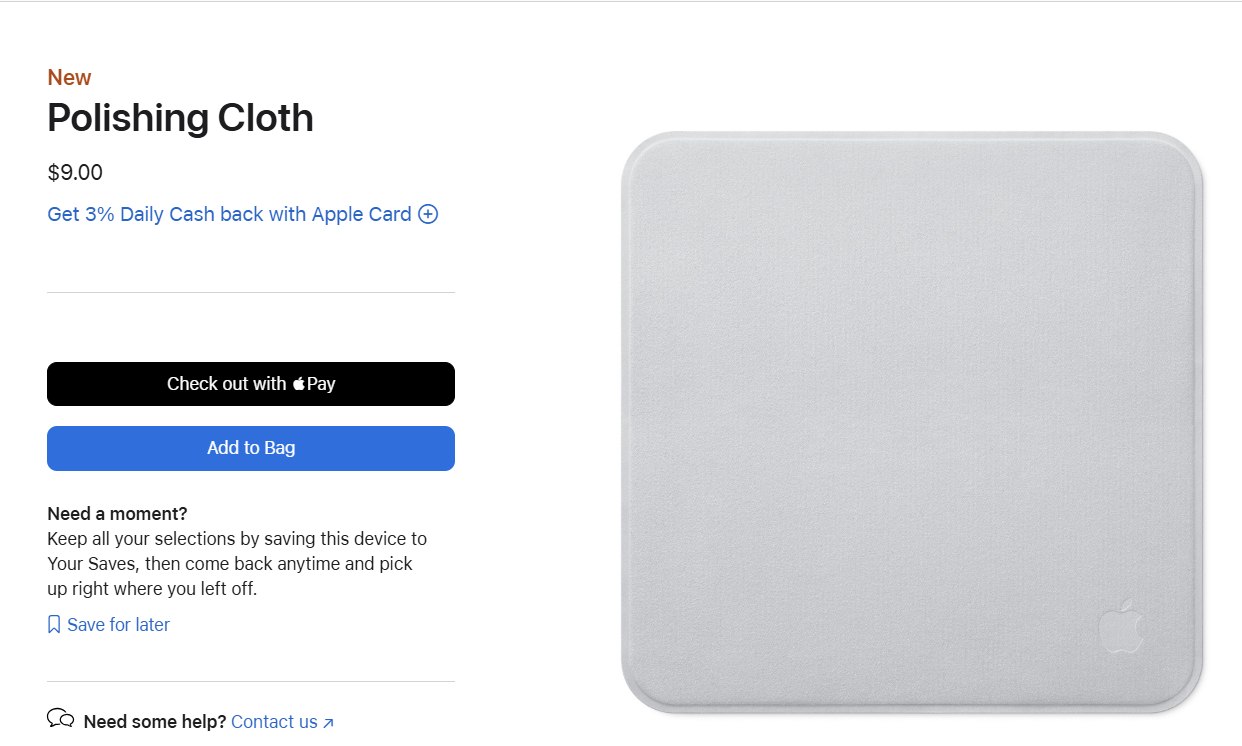
CUPERTINO, Calif. — Apple on Tuesday released an updated version of its Polishing Cloth, cutting the price to $9 from the previous $19 while maintaining the same product description focused on safe cleaning of the company’s displays.
The soft, nonabrasive cloth is designed to clean any Apple display, including those with nano-texture glass, without causing scratches or damage. Apple’s official description remains unchanged from the original: “Made with soft, nonabrasive material, the Polishing Cloth cleans any Apple display, including nano-texture, safely and effectively.”
The new listing appeared quietly on Apple’s online store alongside more prominent announcements of refreshed Mac mini and Mac Studio models. The original Polishing Cloth, introduced in October 2021, quickly sold out and became a frequent subject of online jokes because of its relatively high price for a simple cleaning accessory. Despite the humor, many owners reported that the cloth performed well on screens and devices with sensitive coatings.
No detailed specifications were provided on whether the updated cloth differs in size, material composition or manufacturing process from the earlier version. The product code changed on the store, indicating a refreshed listing, but Apple has not issued a separate press release highlighting any technical improvements. Compatibility continues to cover a wide range of Apple products with displays, from older iPhones to current iPads, MacBooks and external monitors featuring nano-texture glass.
The price reduction stands in contrast to increases seen in other products announced the same day. The new Mac mini with M6 chip starts at a higher price than its recent predecessor, and the Mac Studio with M5 Ultra also carried an elevated starting cost. In that context, the lower-priced polishing cloth drew particular attention from observers who noted it as one of the few Apple items becoming more affordable.
Nano-texture glass, first introduced on high-end displays such as the Pro Display XDR and later extended to certain Studio Displays, iMacs, MacBook Pros and iPad Pros, reduces glare through microscopic etching. Standard cleaning cloths or paper towels can leave residues or risk microscopic damage, which is why Apple has long recommended specific materials for those surfaces. The company’s polishing cloth was positioned as a purpose-built solution for that need.
The original cloth’s launch in 2021 generated widespread commentary. Critics questioned the cost relative to generic microfiber alternatives available for a few dollars, while supporters argued that the product’s consistent performance and official endorsement justified the premium for users protecting expensive equipment. Demand was strong enough that wait times stretched for weeks in some periods after release.
Availability of the updated cloth began immediately on Apple’s website in the United States and other markets, with local pricing adjusted accordingly. In some regions the reduction amounted to roughly half the previous cost. Third-party retailers continued to list remaining stock of the earlier version at the higher price, creating a temporary two-tier market for essentially the same described product.
For many Apple device owners, screen cleaning is a routine maintenance task. Fingerprints, dust and smudges accumulate quickly on smartphones, tablets and laptops used throughout the day. A dedicated nonabrasive cloth reduces the chance of introducing scratches that become more noticeable on high-resolution or anti-reflective displays. The product’s simple design—a square of fabric with rounded corners and a subtle Apple logo—has remained consistent.
The decision to lower the price may reflect a recalibration of accessory pricing or an effort to broaden access to an officially recommended cleaning tool. Apple has not commented publicly on the reasons for the change. The company typically updates accessory listings without fanfare when making minor revisions or price adjustments.
Observers noted the ironic timing: while core computing products moved higher in price, the most-memed accessory of recent years became more accessible. Social media reactions mixed genuine interest in the lower cost with continued jokes about the product’s history. Some longtime owners of the original cloth expressed curiosity about whether the new version offered any tangible improvement, while others saw the price cut as sufficient reason to purchase one for the first time.
The polishing cloth joins a broader lineup of Apple-branded accessories that include cables, chargers, cases and input devices. Unlike those items, which often incorporate proprietary connectors or software features, the cloth relies solely on material quality. Its value proposition rests on the assurance that it will not harm specialized display coatings.
Retailers and resellers are expected to adjust inventory as the new lower-priced version becomes the primary offering. Apple Stores and the online shop now direct customers to the updated listing. The original product page has been removed from the main catalog, though secondary market listings persist.
In practical terms, the cloth remains a straightforward tool. Users are advised to use it dry or slightly dampened for best results on glass surfaces, avoiding harsh chemicals that could degrade coatings or leave films. The nonabrasive nature makes it suitable for daily light cleaning rather than heavy scrubbing.
The release underscores how even minor product updates can generate discussion when they involve a previously polarizing item. By cutting the price substantially while keeping the functional description identical, Apple has altered the cost-benefit calculation for a niche but widely recognized accessory. Whether the change leads to significantly higher sales volumes or simply removes a long-standing point of criticism remains to be seen through future availability and customer response.
For now, the updated Polishing Cloth is available for order at $9, offering the same stated cleaning capability at half the previous price. It continues to serve the practical purpose of maintaining the clarity of Apple’s many display-equipped devices while occupying a unique place in the company’s product lore.


RHINEBECK, NY — Maya Kaimal Foods, an Indian-food manufacturer, is unveiling a line of non-GMO Chinese Indian products.
Select products are available at Whole Foods Markets and Sprouts Farmers Markets nationwide.
The Whole Foods Market lineup features pineapple fried rice, toasted garlic fried rice, Hakka-style noodles and sweet chili crip noodles.
The Sprouts Farmers Market lineup contains pineapple fried rice, toasted garlic fried rice, soy ginger stir fry sauce, hot garlic stir fry sauce and honey chili stir fry sauce.
“Chinese Indian food has been part of everyday life in India for generations and a huge source of joy for me, with these beautiful flavors that feel so distinct yet so familiar,” said Maya Kaimal, founder. “I can’t wait for American home cooks to experience that same thrill of bold, craveable food, but in minutes.”

Sinology | Moment | Getty Images
A version of this article first appeared in the CNBC Property Play newsletter with Diana Olick. Property Play covers new and evolving opportunities for the real estate investor, from individuals to venture capitalists, private equity funds, family offices, institutional investors and large public companies. Sign up to receive future editions, straight to your inbox.
Investors are flooding back into the commercial real estate market, powered by a steep rise in liquidity from sources across the finance spectrum. That’s despite stubbornly high borrowing rates.
Bidding for properties in July posted its strongest monthly improvement in a year, according to quarterly bidding and credit indexes released Tuesday from JLL. The month also saw the second highest count of unique bidders in the index’s five-year history. Competition among lenders is also well above previous record highs, according to JLL.
“An interesting finding with the most recent data in this index is the lessening divergence between the credit intensity index and bid intensity index,” said Lauro Ferroni, JLL’s head of capital markets research for the Americas. “We’ve actually found that the credit intensity index is a leading indicator for the bid intensity index, because credit availability sets the tone for liquidity.”
Even though macro uncertainty and volatility continue to show up in the broader economy, bidding keeps rising. Ferroni said that’s likely because the weight of active capital in the market is counteracting and potentially working as a stronger force than that ongoing volatility.
Credit is now flowing more freely from commercial mortgage-backed securities, insurance companies, government agencies and debt funds. This was not the case in the first few years following the pandemic, thanks to distress in several CRE sectors and then higher interest rates starting in 2022.
“It’s because they like real estate. They want to increase their real estate books. In some cases, they can generate more of a yield there,” Ferroni said. “They’ve seen how the sector has played out. There was not a big wave of distress or defaults or anything like that. So they’re coming back into the sector.”
Specifically, investors are flooding into retail and industrial. Retail is a newer phenomenon, as it had been one of the worst performing sectors due to the growth of e-commerce during the pandemic. Retail is getting more competitive because owners like the returns they’re getting and therefore have no interest in selling, according to JLL.
Industrial has already been strong for several years, due to the explosion of e-commerce, but also because of recent reshoring and reindustrialization. Companies are moving or expanding manufacturing closer to the U.S. to shorten lead times, reduce supply-chain risk and, in some cases, reduce tariff exposure, according to a midyear report from CBRE. The report shows manufacturing leasing was up 27% year-over-year.
The weakest sector for bidding and credit activity continues to be multifamily. It is still working its way through a historic supply of new construction. Vacancies are finally falling nationally, but that is largely driven by new properties. Stabilized vacancies, which strip out properties still in lease-up, were up 34 basis points in the second quarter of this year, according to CoStar.
Ferroni said he doesn’t see any major warning signs for competition in overall CRE. The U.S. Treasury Department’s move last week to buy long-term bonds could help those currently underwriting property transactions. It also boosts confidence among investors that they can be more competitive in their bidding.
“There’s quite a bit of gas left in the tank for further growth, and we think it’ll be gradual, not explosive momentum,” Ferroni said. “It doesn’t appear to be frothy at all.”

Earnings call transcript: Phoenix Financial posts strong H1 2026 growth

OPINION: Many boys and young men are underachieving and often failing, falling prey to negative role models and influencers.

Coffee Break: Riley Heels – Corporette.com

Dolly Parton, Jolene And 9 To 5 Singer, Has Died Aged 80

Zero-hours contracts reforms ‘risk jobs for young people’

Weekend Open Thread – Corporette.com

Weekend Open Thread: Brooks Brothers

London Mayor Sadiq Khan handed a peerage by Keir Starmer alongside 15 other Labour figures… just days before the PM leaves No10

How Companies Quietly Steal $165,000 From You #shorts #buildwealth #financialfreedom #financial

Inflation Is Stealing $4,000 From You Every Year #shorts #buildwealth #financialfreedom #financial

olympics champion rich to rag story #facts #olympics #champions #china #game #money
-

 Fashion4 days ago
Weekend Open Thread: Madewell – Corporette.com
-

 Business3 days ago
Musk’s Tesla, SpaceX Confirm $16.8 Billion ‘Terafab’ Chip Plant as World’s Largest Building in Texas
-

 Crypto World4 days ago
anatomy of crypto’s biggest liquidation event since 2021
-

 Politics3 days ago
6 months on, Irish renters crushed by effects of government housing bill
-
 NewsBeat3 days ago
The ‘Lucky Dip Gang’ causing carnage for clicks: After five thugs were killed speeding in the wrong direction on a motorway, GUY ADAMS investigates a sick new trend… and why police aren’t even allowed to pursue them
-

 Tech6 days ago
GLM-5.3 hits the API at $1.4/$4.4 per million tokens
-

 News Videos6 days ago
Don’t Leave Your Financial Future To Chance | August 19, 2026
-

 Business2 days ago
Mystery AI Model ‘Ox Alpha’ Draws Developers With Free Access as Chinese Lab Origins Remain Debated
-

 Crypto World18 hours ago
A $30 Billion AI Fund Implodes, Now the SEC Is Investigating Wall Street’s Role
-

 Business6 days ago
Marvell Shares Jump 7% as Google Chip Deal Confirms Custom AI Silicon Partnership, Analysts
-

 Business5 days ago
Five Below: Kids Discount Retailer Reaps Rich Rewards
-

 Business4 days ago
UK firms in critical financial distress rise 9% to 53,756
-

 Sports3 days ago
Deshaun Watson fires back at Browns fans after being booed: ‘It’s a disrespectful thing’
-

 Fashion6 days ago
Jimmy Choo Autumn 2026 collection
-

 Tech6 days ago
OpenAI confirms ChatGPT is down as logins and signups fail
-

 Crypto World5 days ago
Optimism-funded team's deciding vote shifts $49 million in OP tokens away from users
-

 Crypto World2 days ago
Google Gemini AI Predicts Ethereum Could Become the Trade Retail Misses in 2026
-

 Business5 days ago
PayPal and Venmo now accepted for tuition at several universities
-
 Sports6 days ago
Chaos! Daniil Medvedev loses cool, breaks two advertising boards at Cincinnati Open – Watch | Tennis News
-
 Entertainment6 days ago
10 Most Perfect Fantasy Shows of the Last 25 Years
You must be logged in to post a comment Login