

Crypto World
Ill Bloom Vulnerability Drains $3.1 Million From Crypto Wallets: Are You Exposed?

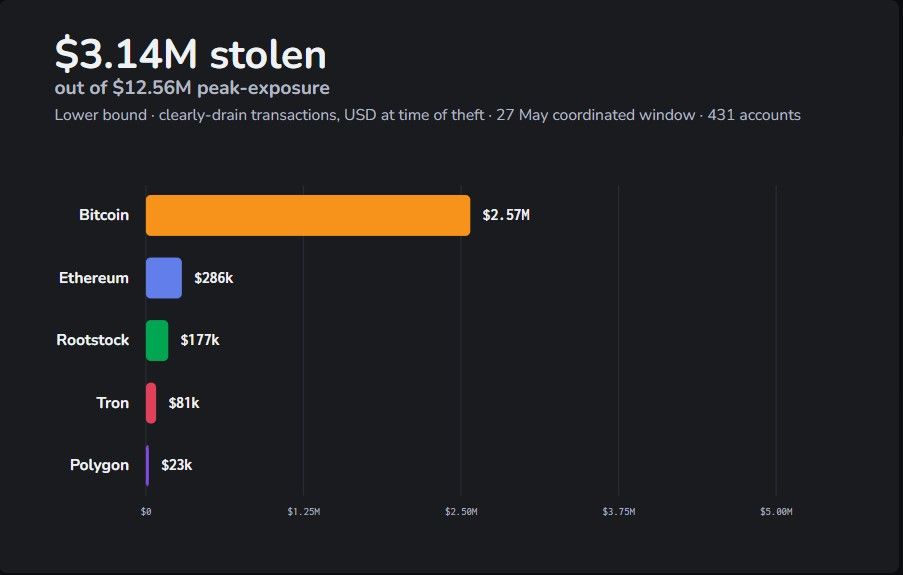
Coinspect has disclosed the Ill Bloom vulnerability, a crypto wallet flaw that created weak recovery phrases on multiple blockchains. Attackers exploited the weakness on May 27, draining 431 wallets for about $3.1 million.
Coinspect traced the flaw to an insecure pseudorandom number generator used during wallet creation. The weakness spans multiple chains, including Bitcoin (BTC), Ethereum (ETH), and Solana (SOL).
How the Ill Bloom Vulnerability Breaks Crypto Wallets
According to Coinspect, the faulty generator produced recovery phrases with far less cryptographic strength than intended. As a result, attackers can regenerate the whole range of possible phrases and sweep any funded address.
The researchers reproduced the attack end-to-end. They derived every address the weak phrases could produce and matched them against funded wallets on public blockchains. Affected addresses date back to 2018, and most trace to lesser-known mobile crypto wallets.
Users are asked to review their historical wallet addresses. Hardware wallet users remain unaffected. Earlier this year, Binance issued a critical iOS alert for mobile users.
Coordinated May 27 Sweep Drained 431 Wallets
According to Coinspect’s analysis, the monitored set contains 2,114 funded addresses across Bitcoin, Ethereum, Tron, Rootstock, and Polygon. On May 27, drained accounts sent their balances to a handful of shared collector addresses within hours.
Bitcoin absorbed the biggest hit at $2.57 million, and one account alone lost over $1.1 million. Historically, the exposed set held up to $12.56 million at its April 2022 peak.
The firm calls the $3.1 million figure a lower bound because new affected accounts keep surfacing. The sweep also adds to heavy crypto theft losses this year, which topped $400 million in January alone.
Compromised keys drain value fast, as the recent private key breach at Humanity Protocol showed. Notably, earlier incidents such as Milk Sad stemmed from the same class of weak randomness.

How Crypto Users Can Protect Their Funds
Coinspect published a checker that compares public addresses against the known vulnerable dataset. However, a negative result does not guarantee safety because the dataset remains incomplete.
Matched users should create a brand-new crypto wallet and migrate funds to its addresses. In contrast, importing the old phrase into another app leaves the money exposed.
Meanwhile, scammers exploit scares like this one, as a recent fake airdrop drain on Hyperliquid showed. Coinspect stressed it will never request secrets.
“We will never ask for seed phrases, private keys, signatures, or approvals, or ask users to send funds to ‘recover’ or protect a wallet”
Wallet vendors keep pushing safer defaults, including Ethereum’s new Clear Signing standard. Still, the coming days should reveal which apps generated the weak phrases. Until then, moving crypto off flagged addresses remains the only reliable fix.
The post Ill Bloom Vulnerability Drains $3.1 Million From Crypto Wallets: Are You Exposed? appeared first on BeInCrypto.

Tether has invested $20 million in Brazilian crypto platform Mercado Bitcoin to support the company’s expansion into tokenized assets, stablecoin payments, lending and other blockchain-based financial services across Latin America.
Since its 2013 launch, Mercado Bitcoin has expanded beyond crypto trading into regulated financial services, including tokenized assets, credit, stablecoin payments and cross-border services.
The company said it has more than 4.5 million users, has issued more than 2 billion Brazilian reais (about $370 million) worth of tokenized assets, and operates under nearly a dozen licenses across Brazil and Europe, including a payment institution license from Brazil’s central bank.
Tether CEO Paolo Ardoino said Mercado Bitcoin has built one of Latin America’s most comprehensive regulated onchain financial platforms, citing its licensing, tokenization infrastructure and integrated financial services.
In February, Mercado Bitcoin announced it had deployed more than $20 million in tokenized private credit, one segment of its broader tokenization business, on Bitcoin (BTC) sidechain Rootstock.
Related: Former Tether CIO seeks to sell stake in stablecoin issuer, Bloomberg reports
Tether using profits for strategic investments
The Mercado Bitcoin investment aligns with Tether Investments’ strategy of backing companies developing blockchain-based financial infrastructure.
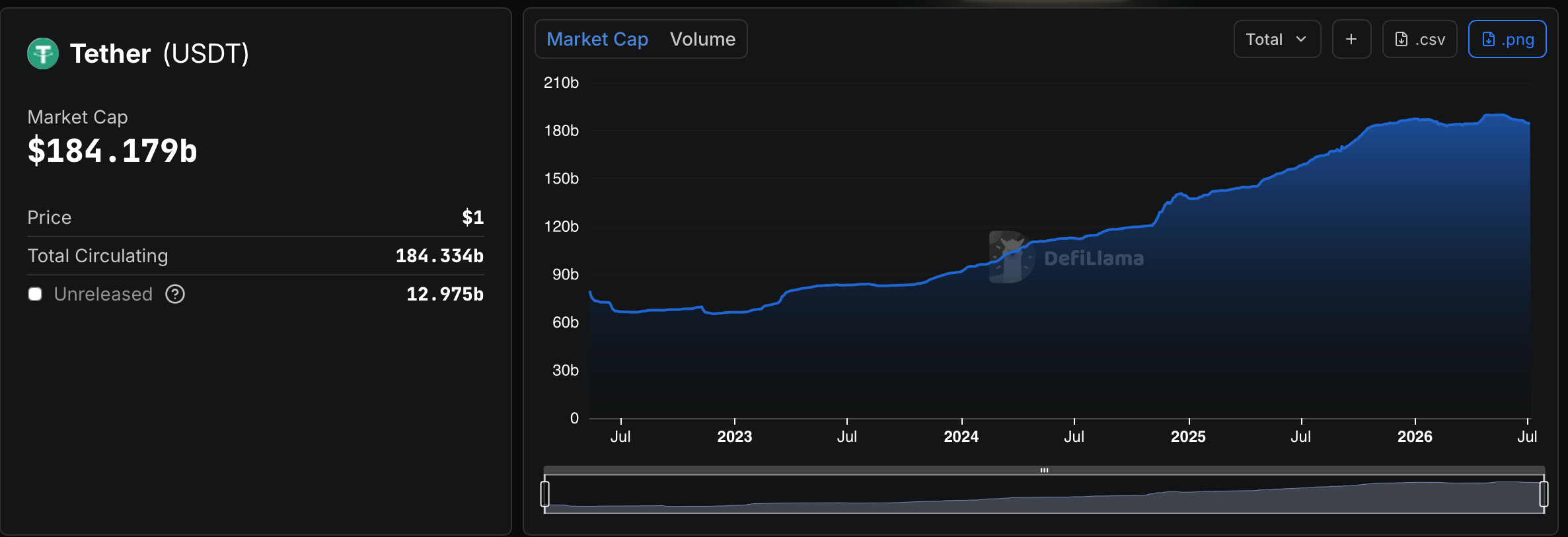
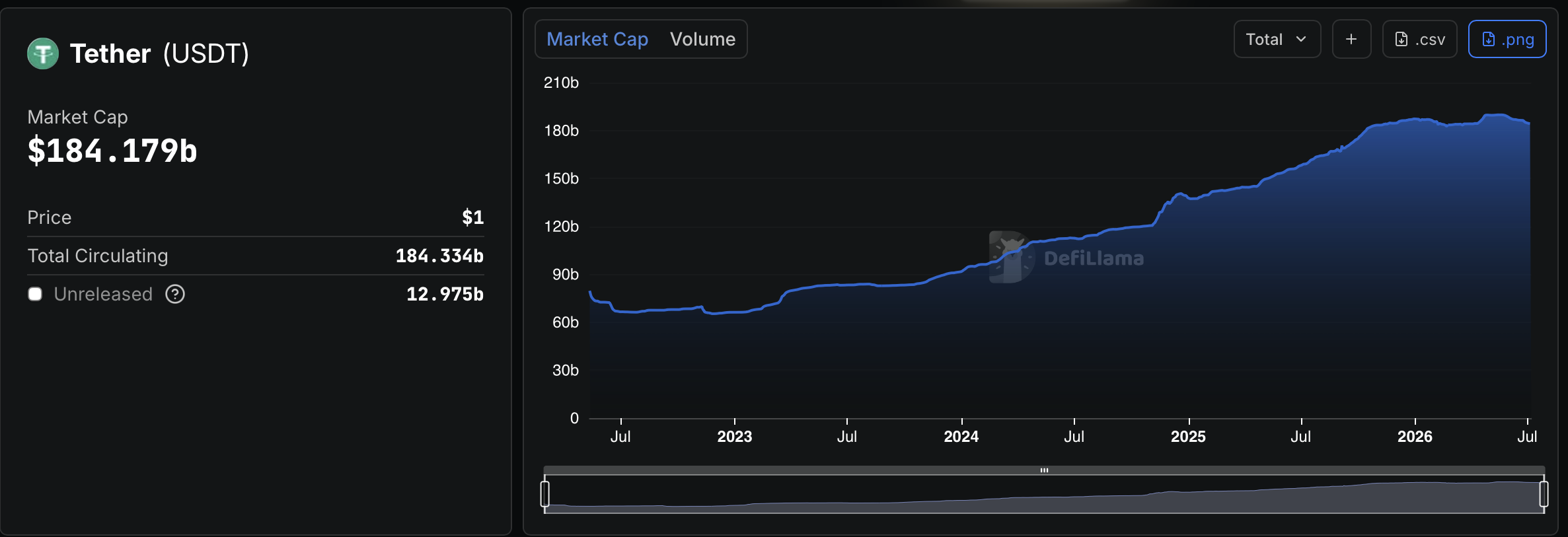
Tether issues USDT (USDT), the world’s largest stablecoin, with about $184 billion in circulation. In the first quarter of 2026, the company reported approximately $1.04 billion in net profit, which it is tapping for strategic investments.
In April, the firm participated in a $134 million funding round for Stablecoin Development Corporation, a NYSE American-traded company focused on expanding access to the stablecoin economy and digital asset infrastructure.
A month later, Tether invested in remittance platform LemFi to support the integration of USDT as a settlement layer for cross-border payments across Africa and Asia. The companies said the partnership would expand stablecoin-based payment infrastructure across key remittance corridors.
Later in May, Tether announced plans with the Government of Georgia to launch a stablecoin pegged to the Georgian lari under the country’s digital asset framework.
Beyond stablecoin-related initiatives, Tether has also invested in sectors including artificial intelligence, energy, biotechnology and digital media through its investment arm.
Despite speculation about a potential listing, CEO Paolo Ardoino has said the company has no plans to go public.
Source: DefiLlama
Magazine: AI is banking the unbanked in Africa… faster than crypto

Crypto analyst Matthew Hyland says the macro backdrop that punished digital currencies for four straight years is finally turning, pointing to patterns that came before crypto’s two biggest bull runs.
In a pair of posts on X, he argued that the market is entering a two- to three-year stretch of what he calls “max opportunity,” with risk appetite moving back toward crypto for the first time since 2016 and 2020.
A Repeating Four-Year Pattern
Hyland’s case rests on comparing three stretches he labels macro risk bear markets: 2014 to 2016, 2018 to 2020, and 2022 through 2026. In each of them, he says, crypto performed poorly while the wider risk backdrop stayed hostile, only for conditions to flip and set off the sector’s strongest runs. He’s now betting the current cycle is following the same script.
“Macro-Risk is now exiting the Bear Market for the first time since Mid-2016 & Mid-2020,” he wrote, adding that this kind of setup produced “max opportunity for the long term” both previous times it showed up.
He also pointed to two chart signals he sees as confirmation. Bitcoin dominance just posted a death cross for the first time since 2016 and 2020, which he treats as an early marker of the shift. He also expects altcoin dominance to follow with a golden cross this fall, something that he says would repeat what happened in those earlier cycles.
According to the market watcher, his own macro risk ratios turned at the same points in 2016 and 2020, and are turning again now, which is why he’s calling the next two to three years “the most optimal time” for crypto. However, his forecast should be taken as a market thesis and not a certainty, especially since crypto cycles have also historically been influenced by liquidity, investor sentiment, and broader economic conditions.
Wider Markets Still Sending Mixed Signals
Hyland’s call landed with Bitcoin (BTC) trading near $63,000 after earlier hitting a two-week high above $64,000, even after Strategy sold 3,588 BTC on Monday to fund dividends.
Analytics firm Swissblock described the price action as showing “signs of stabilization,” although it cautioned that a genuine recovery still needs buyers to keep showing up.
Elsewhere, analyst Credible Crypto has argued that altcoins trading 80% to 90% below their highs could outperform BTC if sentiment turns, pointing to long-term holders now controlling close to 80% of the flagship cryptocurrency’s supply. On Ethereum, trader Michaël van de Poppe said over the weekend that “the worst period for ETH is over” and cited a possible higher low against Bitcoin after three straight quarterly losses of more than 20% each.
Another market observer, Merlijn The Trader, separately flagged ETH’s dip to 0.026 against BTC, a level that foreshadowed a 230% run against Bitcoin last time it showed up. While none of these calls directly tie to Hyland’s thesis, the timing, with all landing within the same week, is hard to ignore.
The post Analyst Predicts 2-3 Years of Crypto Gains as Risk-On Environment Emerges appeared first on CryptoPotato.
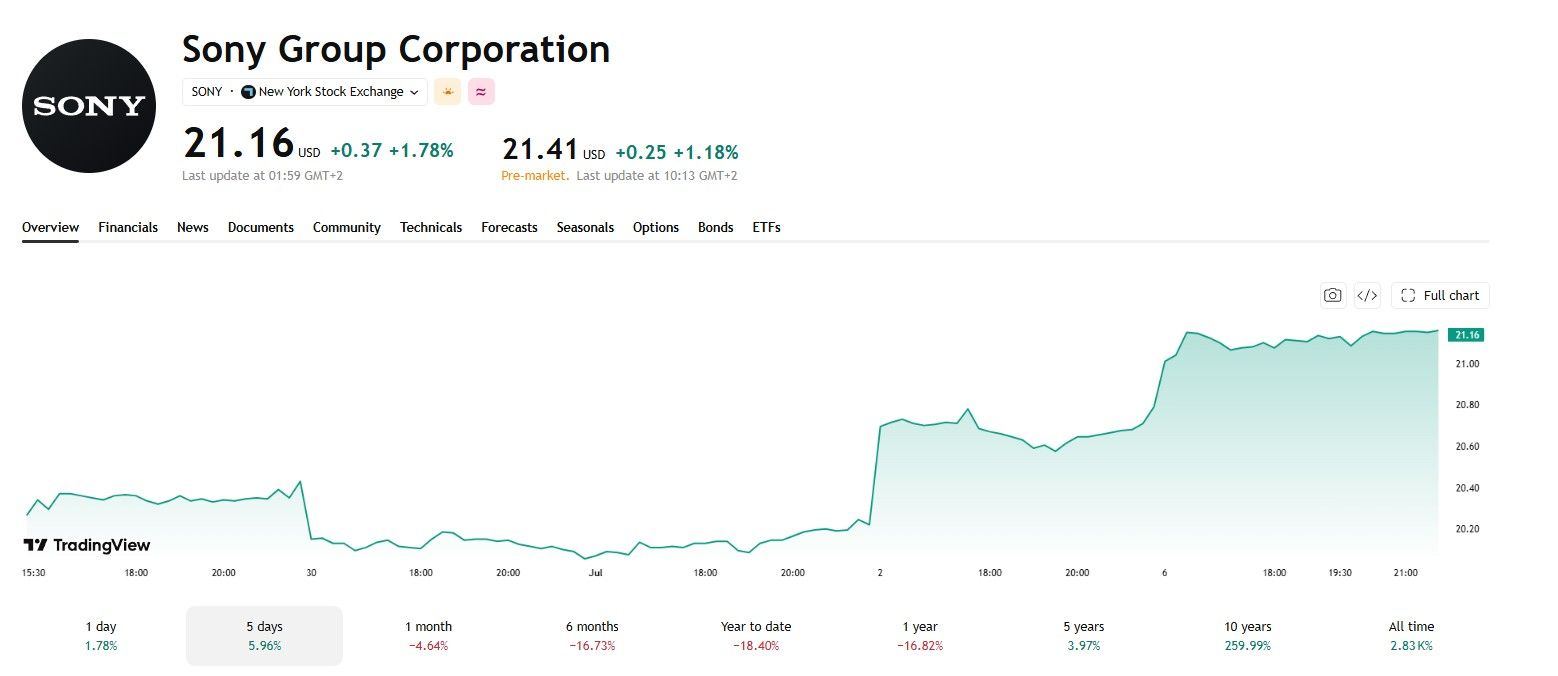
Sony shares have gained about 8.6% since July 1, even as the PlayStation disc backlash stretches into a sixth day without any response from the company.
The “Don’t Kill the Disc” movement now spans a six-figure petition, protest posts that rival GTA 6 trailer views, and eight Community Notes accusing Sony of misleading sales data.
Investors Reward the All-Digital Pivot
Sony confirmed on July 1 that it will stop making physical discs for new PlayStation games from January 2028. Investors welcomed the plan almost immediately. Sony’s Tokyo-listed shares have risen around 8.6% since the announcement. The US-listed stock added almost 6% across the same five sessions on the NYSE.

The market logic looks simple. Every digital sale runs through the PlayStation Store, where Sony sets prices and keeps higher margins. Sony says digital formats already made up close to 80% of its full-game sales last year.
In contrast, Take-Two stock fell in June after GTA 6 pre-orders arrived with a disc-free box. Meanwhile, Microsoft announced plans to cut 3,200 Xbox roles, a sign of cost pressure across the console business.
PlayStation Disc Backlash Tops 166,000 Signatures
Consumers read the same plan very differently. A Change.org petition urging Sony to keep disc-based games alive counts more than 166,000 verified signatures. The campaign launched on July 1, within hours of Sony’s announcement.
Retailers and distributors back it as well, since an all-digital future threatens trade-in and second-hand businesses. Signers also recall Sony’s E3 2013 marketing, which promoted disc sharing and permanent ownership.
Protest slogans such as “Stop the Digital Monopoly” keep spreading across X. Sony’s July 1 post alone has passed 162 million views, drawing even more views than the official post for the first GTA 6 trailer.
Timing feeds the anger. GTA 6 launches on November 19 without a disc, and the earlier GTA 6 pricing debate had already left players questioning value and ownership.
Eight Community Notes Challenge Sony’s Sales Data
PlayStation’s announcement post now carries eight Community Notes, and X users currently rate all of them as helpful. Several notes argue that Sony’s 78/22 digital-to-physical split overstates the shift away from discs. According to the notes, that figure counts DLC, live-service titles, and digital-only releases.
One note cites leaked Insomniac data suggesting far higher physical shares for Sony’s single-player titles.
Other notes cite EU competition law and warn that digital purchases remain revocable licenses rather than owned goods. Sony strengthened that fear in June when it announced plans to delete purchased StudioCanal movies from PlayStation accounts in September.
So far, Sony has answered the protest with silence while the pressure compounds daily. The coming weeks may reveal whether the company defends its data before GTA 6 arrives disc-free in November.
The post How to Anger 166,000 Fans and Please Wall Street in One Post: Ask Sony appeared first on BeInCrypto.


“To deliver on President Trump’s goal to ensure that the United States is the crypto capital of the world, we are embracing innovation to bring more products onshore, creating clear rules of the road for capital raising with crypto assets, and providing clarity as to how market participants can custody and facilitate trading of tokenized securities onchain,” Atkins said in a statement on Tuesday, mentioning his agency’s crypto agenda before any other specific rulemaking effort.
As the process to advance a crypto market structure bill has languished in Congress, the SEC has been a bright spot for the industry’s regulatory hopes, though the agency has sometimes moved more slowly to issue policies than expected. When Atkins addressed this coming regulation almost four months ago in mid-March, he said it would be proposed in the “coming weeks.”
The busy new SEC agenda has “Regulation Crypto” slated for July, though it’s still under review at the White House Office of Information and Regulatory Affairs. When proposed, it would mark the first major crypto-specific rulemaking pursued under Atkins’ leadership. Though the regulator has established a wide range of staff statements and guidance on crypto, those positions don’t carry the weight of a full rule, which can’t be changed as easily when future leaders arrive at the agency with different ideas.
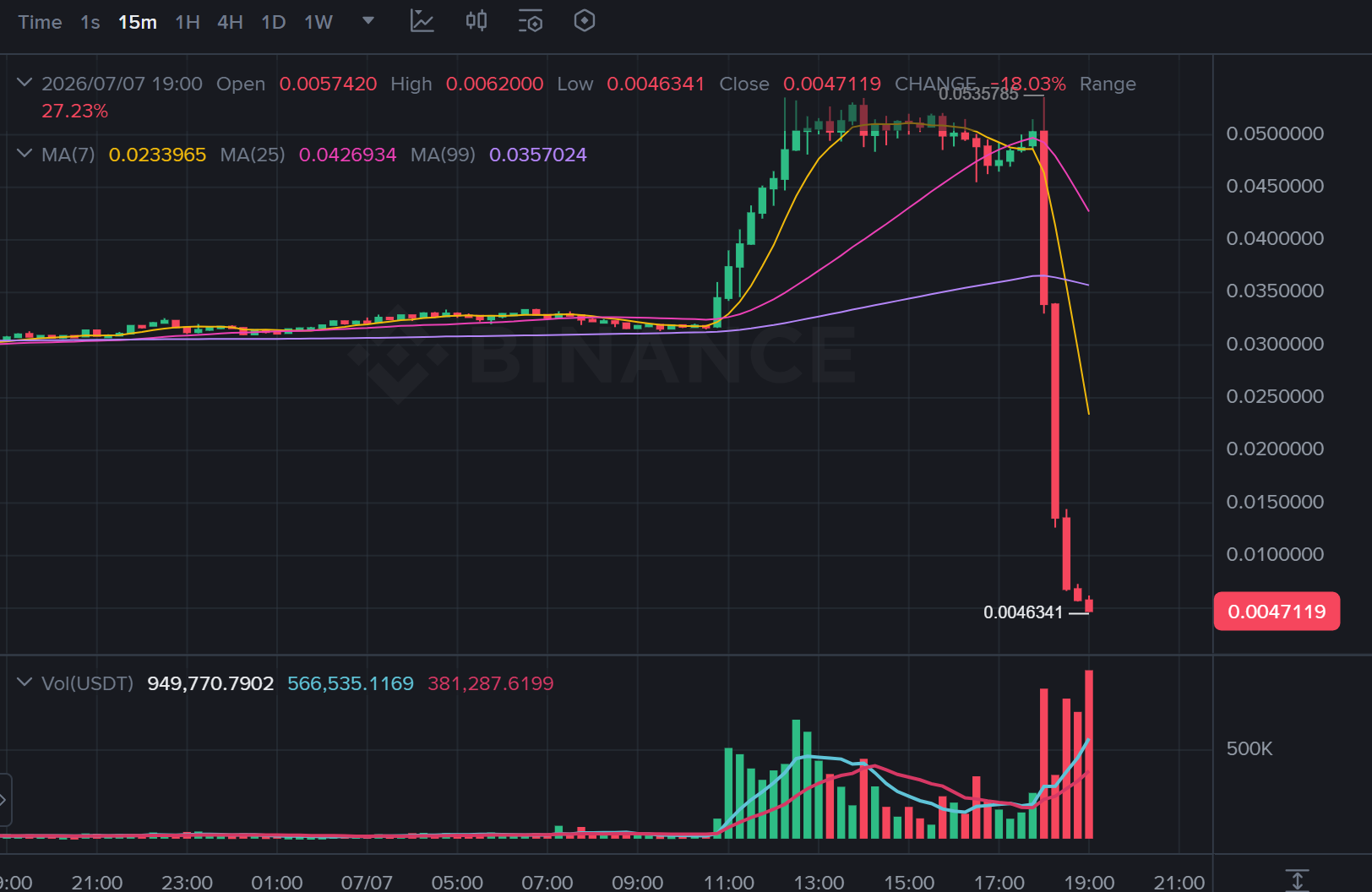
Binance Alpha-listed TAC suffered one of the sharpest crypto flash crashes of the year after its token plunged more than 90% in roughly 15 minutes on July 7.
While no security breach or protocol failure has been confirmed, the crash has renewed concerns about liquidity risks and token concentration among newly listed crypto assets.

TAC Suffers Violent Flash Crash
TAC dropped from around $0.06 to nearly $0.004 within minutes, with trading volume surging as panic selling accelerated. The token later stabilized near its lows, remaining down more than 90% from prices seen earlier in the day.
The move came just one week after TAC reached an all-time high of approximately $0.067, highlighting the extreme volatility that can accompany newly listed digital assets.
Strong Backers, But No Official Explanation
TAC is developing an Ethereum Virtual Machine (EVM)-compatible blockchain designed to bring Ethereum applications into the TON and Telegram ecosystem.
The project has raised roughly $11.5 million from prominent crypto investors, including TON Ventures, Hack VC, Animoca Ventures, Symbolic Capital, Primitive, and Spartan Group.
Despite the dramatic price collapse, neither the TAC team nor Binance had announced a confirmed cause at publication. There is also no evidence that today’s move resulted from a hack or network exploit.
Liquidity and Token Concentration Under Scrutiny
Market observers have pointed to several possible factors behind the collapse, including thin order-book liquidity, large holder selling, and cascading liquidations.
Unverified on-chain discussions have also questioned whether a small number of wallet clusters control a significant share of circulating supply. However, these claims remain unconfirmed and should not be treated as established fact.
The selloff follows TAC’s May 2026 cross-chain bridge exploit, which resulted in approximately $2.8 million in losses before affected users were later compensated. Although unrelated to today’s price action, the earlier incident may have contributed to fragile market sentiment.
What’s Next for TAC?
Investors are now watching for an official statement from the TAC team, exchange updates, and on-chain data that could explain the sudden collapse. Until more information emerges, TAC is likely to remain highly volatile, with liquidity conditions and large-wallet activity becoming key indicators for traders assessing the token’s recovery prospects.
The post Binance Alpha Token TAC Wipes Out 90% in Sudden Collapse appeared first on BeInCrypto.
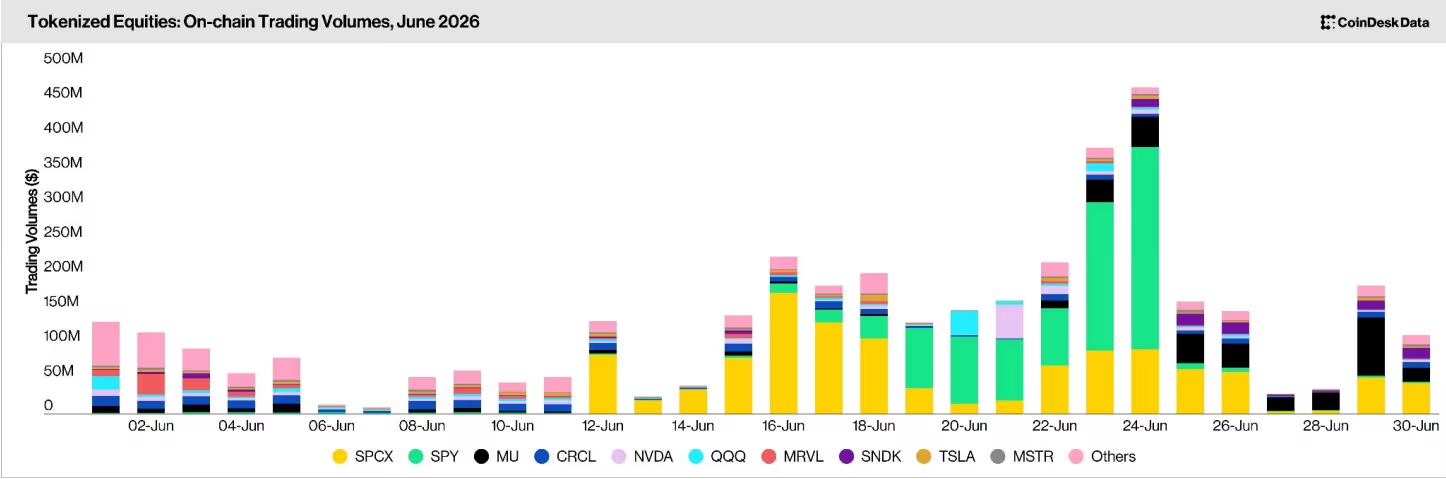
Tokenized equities posted record trading activity in June as investors piled into blockchain-based versions of SpaceX (SPCX) stock following the aerospace company’s blockbuster initial public offering.
On-chain trading volume climbed 145% from May to $3.86 billion, according to CoinDesk Data’s latest Stablecoins & Tokenized Assets report. Tokenized SpaceX shares accounted for $1.19 billion of the total, or about 31% of all tokenized equity trading during the month.

The surge followed SpaceX’s $75 billion IPO, the largest on record, which valued the company at roughly $1.8 trillion on a fully diluted basis.
Backpack Securities’ SPCX token was the most popular tokenized version of the stock, with $1.08 billion in onchain trading volume, followed by xStocks’ SPCXx, which reached $852 million.
The figures point to a change in what is driving demand for tokenized equities. Established names like Nvidia, Tesla, SPY and QQQ remained actively traded, but none matched the interest in SpaceX. For context, Backpack’s tokenized instruments traded $1.42 billion for the month, the lion’s share of which was in SPCX tokens.
The sector reached a record $1.53 billion in market capitalization during June, up 6.64% from the previous month and marking its fifteenth straight month of growth, the report adds.


Richard Heathcote, who until earlier this year served as Tether Holdings SA's chief investment officer, is planning to sell a small stake in the stablecoin issuer, Bloomberg reported Monday, citing people familiar with the matter. Heathcote is working with investment bank PJT Partners to sell part… Read the full story at The Defiant
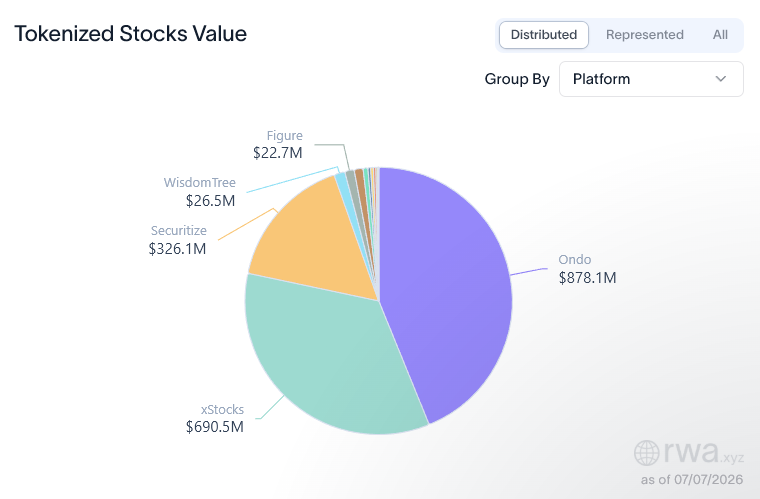
Tokenized stocks are still tiny compared with traditional equity markets, but they are no longer an experiment inside crypto. Tokenized stocks have surged to nearly $1.08 billion in total value and $2.10 billion in monthly transfer volume.
Ondo leads the category with 405 tokenized stock assets valued at about $870 million and 43.61% market share. Now, Ondo is trying to push this growing market into derivatives.
Ondo Perps launched in public beta in June, giving selected eligible users outside the United States access to perpetual futures on tokenized versions of US stocks, ETFs, commodities, and indices.
The platform offers up to 20x leverage and 24/7 trading on markets linked to assets such as Nvidia, Tesla, gold, oil, silver, the US 100, and the US 500.
In simple terms, users can take long or short leveraged positions on real-world markets without waiting for traditional exchange hours. They can also use tokenized securities as collateral, rather than relying only on stablecoins.
That collateral feature is the real story. Ondo is trying to turn tokenized stocks from passive market exposure into working infrastructure for on-chain trading.
Ondo Already Has the Stock Base
Ondo Perps does not start from a blank market. It builds on Ondo Global Markets, the company’s tokenized stocks and ETFs platform for eligible non-US users.
Ondo announced in May that Global Markets had crossed $1 billion in TVL in under eight months. At the time, the platform offered more than 260 tokenized US stocks and ETFs across Solana, Ethereum, and BNB Chain, and had passed $18 billion in cumulative trading volume.
Its distribution has expanded since then. Blockchain.com added 173 new tokenized stocks and ETFs through Ondo in June, bringing its total Ondo-powered tokenized asset offering to more than 430 across Ethereum, Solana, and BNB Chain.
These assets are designed to give users economic exposure to traditional securities. They are not the same as holding the actual stock, ETF, or ADR, and Ondo’s own disclosures say holders do not receive rights to the underlying assets themselves.
That distinction matters. Tokenized stocks are still wrapped in financial exposure, with jurisdictional restrictions and product-specific risks. However, they now have enough on-chain distribution for derivatives platforms to build around them.
Ondo Perps is the first major test of that next step.

Why the Collateral Model Matters
Most crypto perpetual exchanges use stablecoins or crypto assets as margin. That works well for Bitcoin, Ethereum, and other native crypto markets. It becomes less efficient when the product is tied to equities, ETFs, commodities, or indices.
A trader might hold tokenized Nvidia or Tesla exposure, but still need to post stablecoins separately to trade a perp. A market maker might quote an equity perp on-chain, then hedge through traditional brokers off-chain. The result is a split system where collateral, pricing, and hedging sit in different places.
Ondo Perps tries to narrow that gap by allowing tokenized securities to serve as collateral.
A user holding tokenized stocks can use those assets as margin for leveraged trades. A market maker can manage exposure with collateral linked to the same real-world markets it is quoting. That can improve capital efficiency because fewer assets need to sit idle across separate systems.
It also gives Ondo a clearer liquidity argument. The platform is connecting those perps to an existing tokenized stock ecosystem with users, integrations, and market access already in place.
The Hard Part Comes After Launch
RWA perps are difficult because they promise crypto-style access to markets that still depend on traditional infrastructure. Traders want 24/7 exposure. The deepest liquidity for stocks and ETFs still lives inside traditional exchanges, brokers, and clearing systems.
That creates pressure during volatile periods. Equity prices can react to earnings, macro data, or company news when traditional venues are closed. A 20x leveraged position can move from profitable to liquidated quickly if pricing, collateral valuation, or hedging fails to keep up.
This is why Ondo Perps should be judged less by the number of markets it lists and more by how it performs under stress. Tight spreads, reliable depth, clean liquidations, and accurate collateral pricing will matter more than launch-day asset coverage.
The broader opportunity is clear. Crypto traders already understand perpetual futures. Tokenized stocks give them a route into US equity exposure without leaving blockchain-based accounts. Ondo is now trying to combine the two into one trading environment.
The risk is also clear. Once tokenized stocks become collateral for leverage, the quality of the collateral layer becomes central to the market. Any weakness in pricing, liquidity, or redemption can spread faster through derivatives than through spot trading.
Ondo Perps, therefore, marks a useful shift in the RWA market. The category is moving beyond the question of whether stocks can be tokenized. The next question is whether those tokens can support serious trading infrastructure.
The post Ondo Perps Pushes Tokenized Stocks Into 20x Leveraged Trading appeared first on BeInCrypto.

Ripple’s cross-border token is among the most polarizing, often being the center of attention within the cryptocurrency community for major price predictions (whether bullish or bearish).
One of the recent examples came from EGRAG CRYPTO, among the most optimistic XRP commentators on X, who outlined a highly favorable chart for the asset. On the other hand, shah wondered what all the hype is about the token.
XRP’s Chart Doesn’t Lie
EGRAG has made some major price predictions in the past for XRP, many of which sound unreasonable now given the asset’s struggles to remain above $1.10. However, the analyst tends to focus on the long-term price performance, trying to isolate the structure from the noise and emotion.
In their latest post on the matter, they published a chart mapping out the token’s possible future movement. It first envisions a price dip to $0.95, which aligns with other analysts’ expectations for a new low beneath $1.00, before the next major leg up.
The promising green wick for the bulls charts a run toward a new all-time high and well above. In fact, EGRAG has frequently posted targets of up to $27 for XRP during the most intense expansions of the next bull cycle.
#XRP – CHART, No Comment
:
Men Lie, Women Lie But Charts and Numbers do not Lie.
Structure > Noise > Emotion. ONLY FEW
pic.twitter.com/GLbM1W1Xpd
— EGRAG CRYPTO (@egragcrypto) July 7, 2026
What’s All This Hype?
In contrast to EGRAG’s bullish charts on XRP, shah asked their over 400,000 followers on X to explain all the hype around XRP. They wondered, “Why on Earth would this coin ever go to hundreds per coin?”
The comments below were quite unfavorable for the cross-border token and those who believe it may go beyond $100. Kendall Tart explained that a triple-digit price tag would require its market cap to rocket past $6 billion. This would make XRP bigger than Apple, which sounds far-fetched, to say the least, at the moment.
Others compared XRP holders to MAGA believers, indicating that Ripple’s CEO, Brad Garlinghouse, is “their president and his cabinet are paid influencers that say buzzword points that get regurgitated over multiple social media platforms.”
Another comment predicted that it can’t and won’t go anywhere near $100. Moreover, the user proclaimed XRP as “dead” given its tokenomics, never-ending selling pressure, and “horrible internal organization.”
The post XRP’s Chart Doesn’t Lie: Analysts Clash Over Ripple’s Next Move appeared first on CryptoPotato.
Crypto World
Bitcoin Price Analysis: BTC’s Structure Remains Bearish Until This Key Level Is Reclaimed
Bitcoin continues to recover from its recent sell-off, but the market remains trapped beneath a major resistance cluster that has capped every relief rally since the June breakdown. While short-term momentum has improved, BTC is now approaching a decisive area where the next move could determine whether the recovery evolves into a larger trend reversal or remains a corrective bounce within a broader bearish structure.
Bitcoin Price Analysis: The Daily Chart
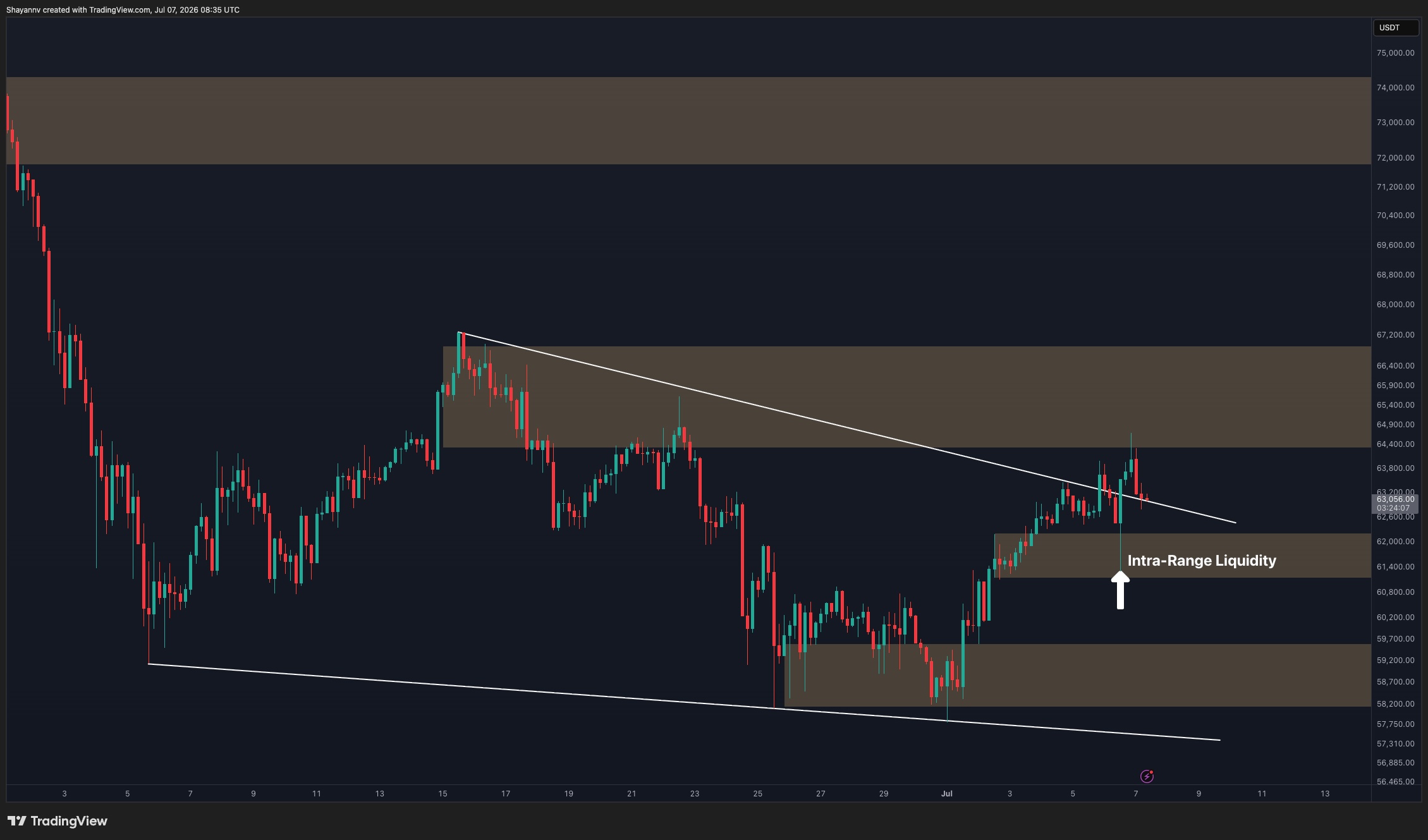
On the daily timeframe, Bitcoin remains in a clear downtrend, trading below the 100-day and 200-day moving averages, both of which continue to slope lower. The recent recovery from the $58K-$61K demand zone has helped stabilize the price action, but the asset is still trading beneath the major resistance area between $64K and $66.5K.
It recently formed another higher low inside the broader support region, while the RSI has continued to print higher lows despite the weakness seen throughout June. This developing bullish divergence suggests that downside momentum is fading and that buyers are gradually regaining control.
However, the market structure remains bearish until Bitcoin can reclaim the $64K-$66.5K supply zone. This area aligns with previous support turned resistance and continues to act as the primary obstacle preventing a larger recovery. A successful breakout above this region would likely expose the next major resistance near $72K-$74K, while rejection could send the price back toward the $60K support zone.
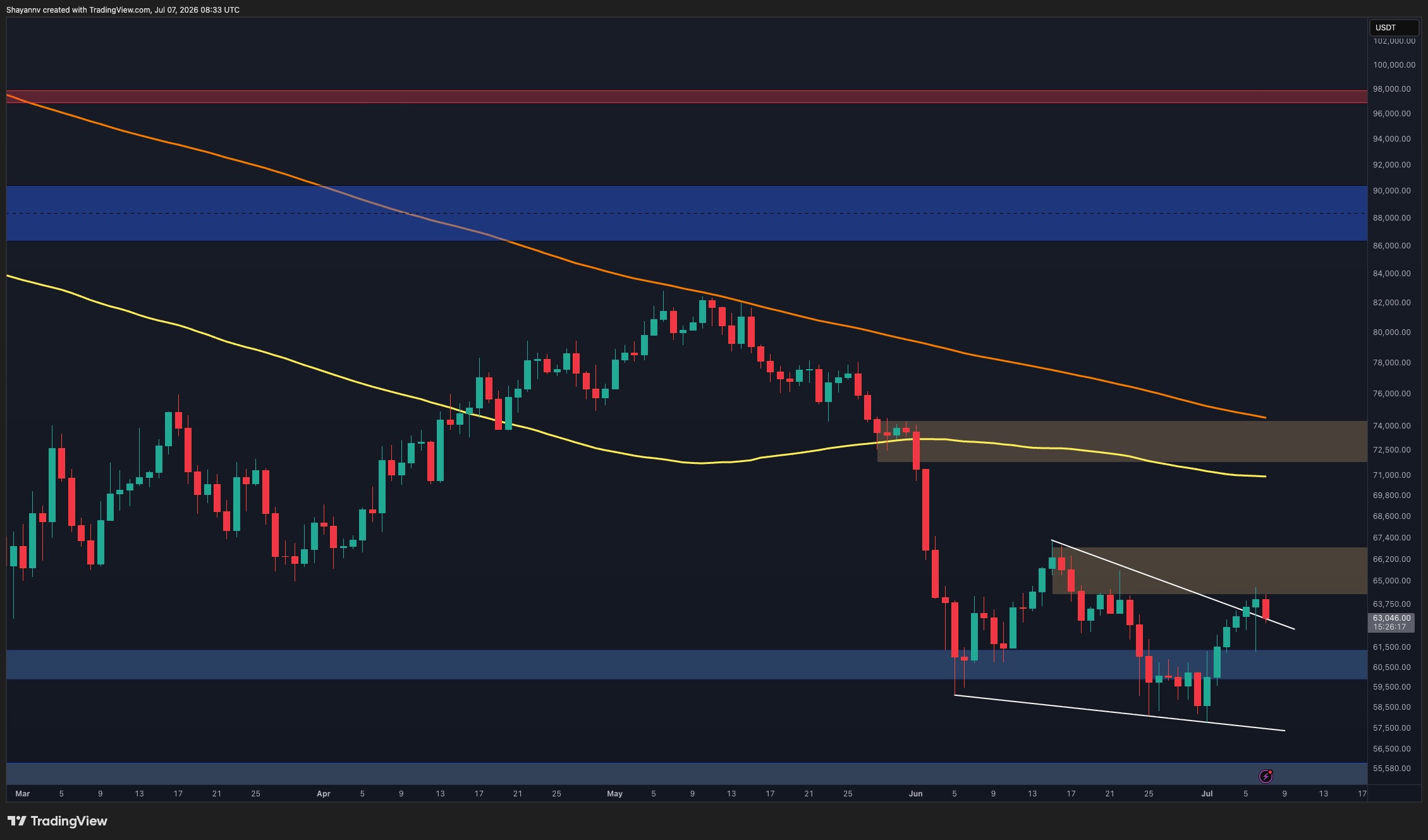
BTC/USDT 4-Hour Chart
The 4-hour chart shows a much more constructive picture. After establishing a base around the $58K-$59K demand region, Bitcoin produced a strong impulsive rally and pushed directly into the descending trendline that has defined the corrective structure since mid-June.
The asset recently swept the local liquidity resting above previous highs within the $61K-$62K region before encountering resistance near the descending trendline. This liquidity grab is important because it removed nearby buy-side liquidity and allowed the market to test a key technical level.
The current structure suggests that Bitcoin is attempting to transition from a series of lower highs into a potential breakout formation. A confirmed move above the descending trendline and the $64K-$66K resistance zone would significantly improve the bullish outlook and could accelerate upside momentum toward higher resistance levels.
Conversely, failure to break the trendline could trigger another period of consolidation between the $60K support and the $64K-$66K supply zone. As long as Bitcoin holds above the $60K-$61K support area, the short-term recovery structure remains intact.
Sentiment Analysis
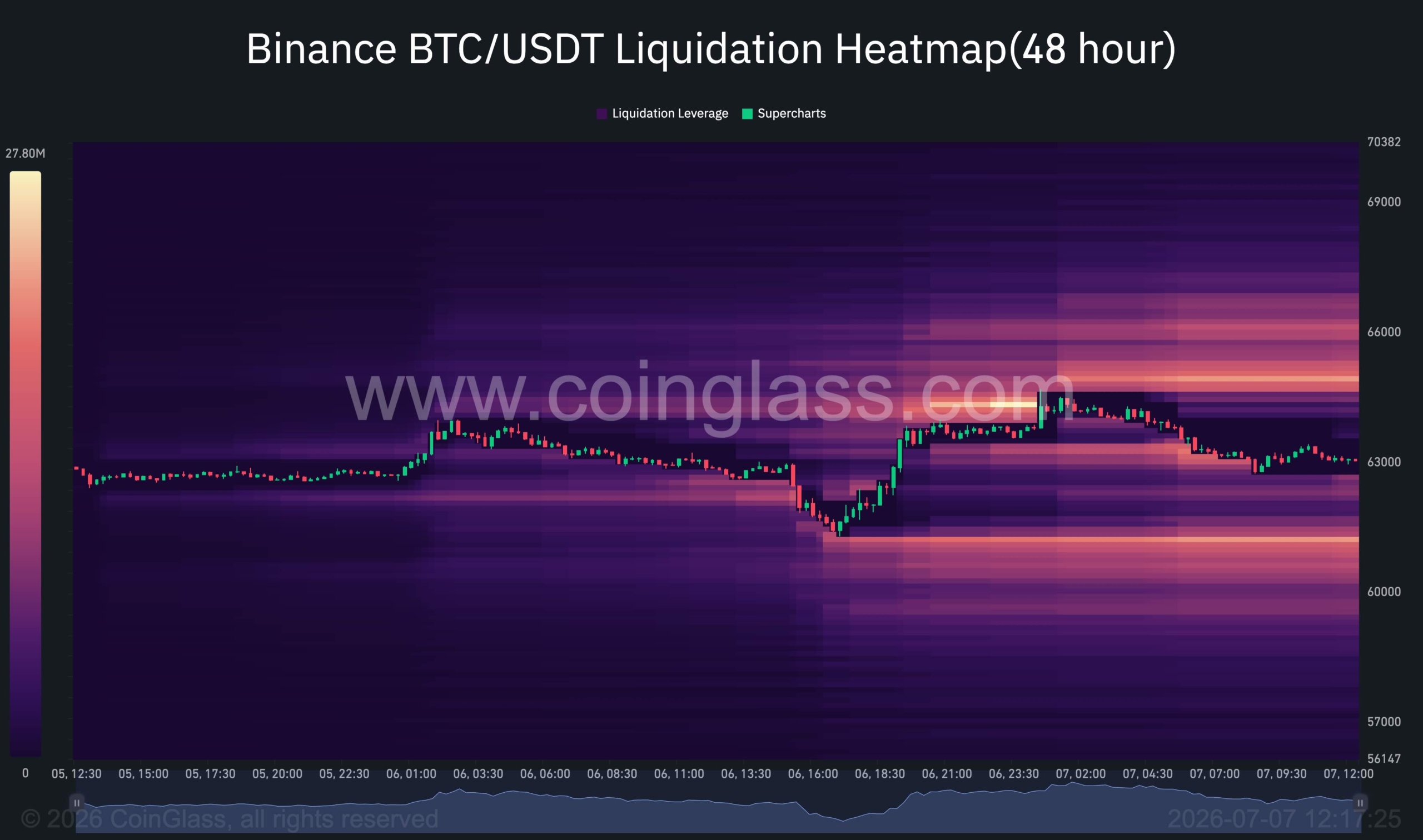
The 48-hour liquidation heatmap highlights a notable concentration of liquidity above the current market price, particularly around the $64K-$66K region. This cluster aligns closely with the resistance zone identified on the 4-hour chart, reinforcing its significance as a major magnet for price action.
Importantly, the intra-range liquidity highlighted on the technical chart is also confirmed by the liquidation heatmap. The recent push into the $61K-$62K area successfully targeted nearby liquidity resting within the range, validating the idea that price has been moving between liquidity pockets rather than trending directionally.
At present, the largest liquidation concentration remains overhead near $65K-$66K, making it a logical target if buyers maintain momentum. Markets often gravitate toward these liquidity pools before determining the next directional move.
If Bitcoin manages to sweep this overhead liquidity and secure acceptance above the $64K-$66K region, it would strengthen the case for a broader recovery toward the higher resistance zones. However, if the sweep is followed by rejection and an inability to sustain prices above resistance, the move could simply represent a liquidity-driven rally before another test of lower support levels.
For now, both the technical structure and the liquidation data suggest that the path of least resistance remains slightly higher, with the overhead liquidity cluster acting as the most likely near-term destination.
The post Bitcoin Price Analysis: BTC’s Structure Remains Bearish Until This Key Level Is Reclaimed appeared first on CryptoPotato.

How to Watch the World Cup Today: Schedule, Times, TV, Streaming for Argentina, Egypt, Switzerland, Colombia

Samsung HW-Q990H Soundbar System Review: Praising the Bar

XRP MAX PAIN… you need to hear this!


-

 Fashion4 days ago
Weekend Open Thread: High Hopes
-

 Fashion1 day ago
Open Thread: What Great Books Have You Read Recently?
-
 NewsBeat3 days ago
Taylor Swift and Travis Kelce wedding staffer hilariously struggles to keep her cool while checking in megastars
-

 Politics4 days ago
The House | “Reframing the debate from a binary discussion of winners and losers”: Yuan Yang reviews ‘We Are Not Machines’
-
 Crypto World6 days ago
Airdrop Registration Becomes Key Focus For Remittix As RTX Launch Updates Approach
-

 Crypto World4 days ago
Standard Chartered Secures MiCA License as ESMA Adds 37 New Crypto Firms
-

 Sports6 days ago
Broncos roster: OL Ben Powers (No. 74) entering final year of contract
-

 Business22 hours ago
AXT Shares Jump Nearly 14% as Semiconductor Materials Maker Rebounds on AI-Linked Indium Phosphide Demand
-

 Crypto World5 days ago
Binance stock trading tops $1B in first month after launch
-

 NewsBeat7 days ago
Presenter Caroline Flack’s brother Paul Flack dies aged 55
-

 Crypto World6 days ago
Alibaba-affiliate Ant Group enters the humanoid robot market with 12 deals
-
Crypto World22 hours ago
SK hynix (000660.KS) Stock Dips as $28B Nasdaq ADR Offering Drives AI Memory Expansion
-

 Crypto World2 days ago
South Africa proposes crypto tax guidance under existing rules
-

 News Videos1 day ago
Best Time to Enter Small Caps Right Now? Another Bull Run? | Financially Free
-

 Tech2 days ago
Lenovo laptops are now shipping with YMTC SSDs, a sign of Chinese NAND entering the mainstream
-

 Business6 days ago
Meta Platforms Stock Jumps 7% Today as Bloomberg Reports Company Plans to Enter the Cloud Business
-
 NewsBeat5 days ago
New exhibition reflects five decades of movement between island of Ireland and GB
-

 News Videos13 hours ago
Whats Hidden Inside This Cash Register? #treasure #reselling #money
-

 Business5 days ago
What a 10 Percent Drop Means for Buyers, Sellers and Renters
-

 Crypto World5 days ago
Binance Re-Enters Philippines As EU MiCA Rules Restrict Access
You must be logged in to post a comment Login