

Crypto World
Bitcoin holders can now participate in a BTC covered call income strategy on Binance



Binance has introduced a product for bitcoin holders looking to earn extra yield on their investment without selling any of it, joining the likes of BlackRock in helping them maximize returns.
The product, BTC Yield, is available inside Binance Earn and is designed exclusively for people who already hold bitcoin.
Users deposit their bitcoin into the product and receive an internal position called BTCY, which tracks their share in the strategy. Everything remains denominated in BTC, and the product cannot be funded with stablecoins or other assets.
Binance holds the deposited bitcoin as collateral while systematically selling BTC call options, that is, it writes insurance against price rallies in BTC. The call seller, or writer, gets compensated with a premium. Binance collects those premiums and shares most of them with participants.
This covered-call approach, common in crypto and traditional finance, has typically required deep options knowledge to execute. Binance’s version makes it accessible to regular traders by handling everything behind the scenes.
Two types of return
The product generates potential returns in two ways.
First, a portion of the collected premiums is converted to bitcoin and distributed to users’ spot accounts every Friday as a possible weekly payout.

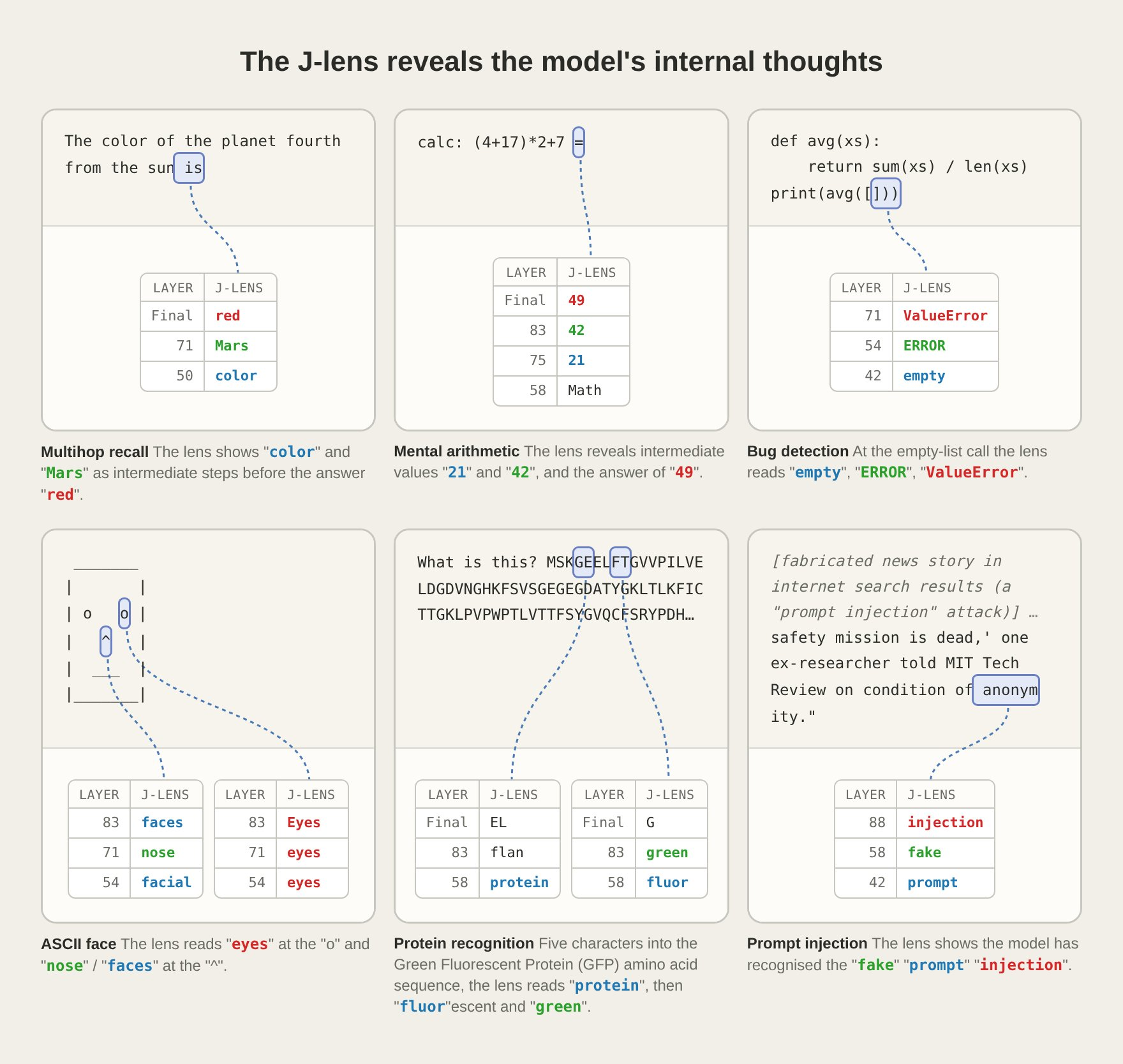
Anthropic just found something inside its Claude models that nobody designed or expected. An internal structure called “J-space” appears to work like a cognitive workspace shared across the model.
The July 6 research marks a major step in understanding what actually happens inside large language models.
What the J-Space Inside Claude Actually Is
J-space is an internal area where Claude appears to gather and share important information across the model. A simple way to think about it is as a whiteboard inside the AI.
When Claude answers a question, solves a puzzle, or follows an instruction, key details seem to appear in this shared space so different parts of the model can use them.
Anthropic found J-space using a research tool called the “J-lens.” The tool helps researchers inspect how information moves inside Claude during a task. It showed that J-space emerged during training by itself. Anthropic did not design it directly.
Follow us on X to get the latest news as it happens.

The idea is similar to a theory in neuroscience called the “global workspace.”
In humans, this describes how the brain makes important information available to different mental processes at once. For example, when someone hears a question, remembers a fact, and decides how to answer, those pieces of information need to come together.
Claude appears to do something similar. Anthropic found that Claude can describe what is inside its J-space when asked. It can also adjust those contents if instructed.
More importantly, when researchers directly changed the J-space, Claude’s answers and task performance changed too.
Why This Matters for AI Safety and Interpretability
The discovery carries real weight for AI safety. If researchers can monitor J-space activity, they can potentially uncover hidden motivations behind a model’s behavior. As a result, they gain a sharper tool for spotting when something goes wrong.
That includes detecting attacks. Monitoring J-space could reveal when a model processes a prompt-injection attempt designed to hijack its outputs. Furthermore, even a partial window into this “conscious” processing layer marks a meaningful advance for the field.
The scope remains limited, however. The vast majority of Claude’s information processing still occurs entirely outside the J-space.
Still, Anthropic released an open-source J-lens implementation and a Neuronpedia demo, inviting the broader research community to test the findings.
Subscribe to our YouTube channel to watch leaders and journalists provide expert insights.
The work builds on a longer research trail. Anthropic published a report on emergent introspective awareness in October 2025. Moreover, it launched model-welfare initiatives in April 2025, steadily exploring what happens inside its systems.
One caveat stands out clearly. Anthropic is emphatic that the research does not claim Claude is conscious or has subjective experience. The paper uses the phrase “consciously accessible” information, borrowing the vocabulary without making the leap to actual consciousness.
The post Claude AI Created Something Anthropic Never Designed appeared first on BeInCrypto.
Crypto World
BTC price July rise at risk as Coinbase Premium logs 50-day negative streak: Crypto Daily


Bitcoin fell on Tuesday after chalking out a six-day winning streak, the longest since March. The gains, in any case, looked fragile when viewed through the lens of several indicators.
The most widely followed is the Coinbase Premium, which tracks the difference between bitcoin’s price on U.S.-based exchange Coinbase (COIN) and Binance. It has now been negative for fifty straight days, according to data source Coinglass.
That means for close to two months, BTC has been cheaper on Coinbase than Binance, which doesn’t operate in the U.S. The discrepancy is an indicator of relatively weak demand in the world’s largest economy, a message underscored by the eight straight weeks of net outflows from U.S. spot exchange-traded funds. Historically, bull runs have featured consistently positive Coinbase Premiums.
Another concerning trend is seen in Japan, where bond yields just can’t stop rising. The 10-year rose to a 30-year high early today, lifting borrowing costs in the U.S., U.K. and Germany. A continued upswing, particularly in Treasury yields, could create a headwind for BTC.
While seasonality supports continued recovery, it’s the ETF flows that matter the most, according to analysts.


Coinbase announced it secured a United Kingdom investment services license, allowing the platform to expand its local offering beyond spot trading and into products like equities and derivatives.
On Tuesday, Coinbase said the authorization would enable UK users to trade financial instruments alongside crypto on its platform. Institutional and advanced traders would gain access to perpetual futures tied to crypto, equities and commodities, while retail would be able to access equities.
The company said the approval marks its largest UK product expansion since entering the market and advances its vision of an “everything exchange” that combines crypto and traditional financial assets under a single platform. Coinbase said future rollouts would remain subject to regulatory permissions and UK market rules.
FCA research cited by Coinbase estimates that around 7 million UK adults hold crypto assets. A quarter of UK adults who do not currently own crypto said they’re more likely to participate under clearer regulation.
The authorization also comes ahead of the UK’s new crypto regime, which will begin accepting applications in September before taking effect in October 2027. It will require crypto trading platforms, custodians, stablecoin issuers, staking providers and other intermediaries to obtain FCA authorization.
The FCA did not comment before publication.
UK retail crypto derivatives remain restricted
The differing product offerings reflect FCA rules governing retail access to crypto investment products. In 2021, the Financial Conduct Authority (FCA) banned the sale, marketing and distribution of derivatives and exchange-traded notes (ETNs) referencing certain crypto assets to retail consumers.
Related: Coinbase, Kraken and OKX move to swoop up EU users affected by MiCA restrictions
The FCA has since reopened retail access to certain crypto ETNs, with the change taking effect on Oct. 8, 2025.
As a result, retail consumers can access crypto ETNs only if they are traded on an FCA-approved, UK-based Recognised Investment Exchange, while financial promotion rules and consumer protection requirements apply. However, the FCA said its ban on retail access to crypto derivatives remains in place.
Magazine: Bitcoin decouples from tech stocks, Ether eyes ‘selling wave’: Market Moves

Non-custodial multichain wallet Ctrl Wallet is winding down its services after a recent security incident affecting some Cardano-related activity. The wallet’s operators say users have until Aug. 3, 2026 to move funds out of the app.
In an announcement posted on Tuesday and reiterated in a separate blog update, Ctrl Wallet said the application will be taken offline for most operations starting Aug. 3, while retaining the ability for users to export their recovery phrases. The service will also be removed from app and browser extension stores, and new downloads will stop immediately.
Key takeaways
- Ctrl Wallet will stop allowing sending, receiving, swapping, and other in-app actions after Aug. 3, 2026.
- Users will still be able to export recovery phrases, but there is no migration token or airdrop planned.
- The shutdown follows a security issue reported by Ctrl Wallet on June 23 that prompted a temporary “maintenance mode.”
- Ctrl Wallet is advising users to transfer assets before the deadline and to beware of fake sites or social media posts offering incentives.
- The wallet supported thousands of networks and was connected to Cardano’s ecosystem via a multichain setup previously transitioned under Emurgo’s umbrella.
App functionality set to end, recovery-phrase export remains
Ctrl Wallet told users that from Aug. 3, 2026, core wallet operations inside the app will be unavailable. According to the company’s update, functionality will remain limited to exporting users’ recovery phrases, which are typically 12-word or 24-word seed phrases.
As part of the deprecation process, Ctrl Wallet said it will remove the app from both application and browser extension stores and halt downloads right away. That means users who rely on the wallet for day-to-day access will need to prepare ahead of time to avoid getting locked out of routine transfers.
When the deadline arrives, Ctrl Wallet’s guidance is straightforward: users should use the exported phrase to access funds in another compatible wallet provider. The company said users can import their recovery phrase into wallets including MetaMask, Trust Wallet, and Phantom.
What users should do before Aug. 3
Ctrl Wallet recommended that users export their recovery phrases and transfer assets to another exchange or wallet before Aug. 3. The operator’s stated reasoning is operational: after that date, the wallet will not support standard activity such as sending and receiving.
In addition, Ctrl Wallet emphasized that there will be no token-based migration or “replacement” distribution event. The wallet also warned users to be cautious if they encounter impersonation attempts—such as posts or websites promising compensation or incentives—associated with the shutdown.
For investors and traders, the practical implication is that operational risk shifts from security concerns inside the wallet to execution timing: once app actions are disabled, users must rely on other infrastructure to move assets. That makes it especially important to complete exports and transfers well in advance of the cutoff date.
Shutdown follows June security incident and Cardano-related exposure
Ctrl Wallet said it reported a security issue on June 23, involving some Cardano wallets on its platform. At the time, the wallet stated it entered a temporary “maintenance mode” intended to protect user assets while engineering work restored full functionality.
The new deprecation timeline comes shortly after that period and indicates that the issue—or the broader system response to it—has culminated in an exit from ongoing wallet operations. While Ctrl Wallet did not outline every technical detail in the user-facing update provided in the article, it did connect the deprecation to its decision to protect assets and then ultimately stop allowing on-platform activity.
The wallet’s broader ecosystem reach may also affect users’ choices for migration. Ctrl Wallet said it supported over 2,500 blockchain networks, which can be convenient for multisystem users—but also means many holders may be managing assets across chains and need to validate that their chosen replacement wallet fully supports the same assets and networks.
Ctrl Wallet’s Emurgo/SecondFi transition adds context
Ctrl Wallet previously announced a structural change on April 29, saying it would operate under the Emurgo umbrella and that its multichain architecture would continue inside the SecondFi wallet.
SecondFi is described as a self-custodial platform built on Cardano and was developed by Emurgo, the “for-profit arm of Cardano.” The wallet had been positioned as a continuation of Ctrl Wallet’s approach following that transition, and the SecondFi rebranding from the Yoroi wallet was reported as occurring in April 2026.
Separately, a vulnerability in SecondFi led to attackers draining funds on June 24, according to earlier coverage linked in the source material. That incident was reported to have resulted in an estimated loss of around 16 million ADA (about $2.4 million at the time). Days later, SecondFi published a recovery path for affected wallet addresses and said emergency measures secured roughly 129 million ADA transferred to an independent third-party custodian for verification and recovery.
For Ctrl Wallet users, the bigger takeaway is that the timeline of the shutdown overlaps with heightened attention on Cardano wallet security. Even though Ctrl Wallet’s June 23 issue was described as affecting “some Cardano wallets on the platform,” the shutdown now forces users to operationally exit the service regardless of whether they experienced the earlier vulnerability directly.
With Aug. 3 approaching, users should watch for any final instructions from Ctrl Wallet about phrase export availability and removal timing, and should be prepared to act quickly if they need to switch to another wallet provider. The lack of a migration token or airdrop underscores that the exit is handled by self-custody workflows—exporting seed phrases and moving funds—rather than by a platform-led replacement process.

Ethereum co-founder Vitalik Buterin has confirmed that AI-assisted analysis by Co-Invest CEO Franklyn Wang correctly pinpointed his anonymous authorship of a rewrite of EIP-7503. The result follows Buterin’s own public challenge earlier this month, where he asked whether today’s AI tools could reliably undo online anonymity.
Wang says the identification succeeded not because of the document’s surface-level wording, but because of the underlying reasoning patterns used to explain mathematical and technical ideas—suggesting that even deliberate obfuscation, such as translating content from another language, may not fully protect anonymous technical contributions.
Key takeaways
- Buterin confirmed Wang’s system identified him as the author behind an anonymous EIP-7503 rewrite.
- Wang’s explanation emphasizes reasoning and the structure of explanations, not just writing style.
- The test was prompted by Buterin’s skepticism about whether AI could realistically deanonymize authors.
- Prior research Wang referenced claims large language models can perform deanonymization at scale from unstructured text.
A high-profile test of deanonymization
Buterin’s June 22 post was unusual for the crypto community: rather than defending his privacy, he deliberately offered a puzzle about his own past anonymity. He said he had published a document—described as “medium importance” to Ethereum—under a different name and challenged the public to find it.
The premise was rooted in a broader debate inside tech: whether large language models can infer identity from writing. While anonymity remains common in open-source and technical ecosystems, some analysts argue that as AI models improve at extracting patterns from text, pseudonymous participation could become harder to sustain.
That question was sharpened by a February paper from researchers at ETH Zurich and Anthropic. The study argued that large language models can make online deanonymization practical at scale by identifying identity-related information in unstructured text, generating candidate matches, and then reasoning over the most likely authors. It also claimed to outperform traditional deanonymization techniques.
How Wang’s analysis reportedly worked
Two weeks after Buterin’s challenge, Wang posted on X that his submission correctly identified the anonymous EIP-7503 rewrite. He said the document’s author had hidden the work by writing it in Chinese and machine-translating it. Yet, according to Wang, the system found a “tell” that did not come from the author’s choice of words.
“The doc was an anonymous EIP-7503 rewrite he’d hidden by writing it in Chinese and machine-translating it,” Wang wrote in a Monday X post after Buterin confirmed the result. “The tell wasn’t his words, it was his reasoning.”
Wang further stated that Co-Invest ranked Buterin as the most likely author of the anonymous December 2024 rewrite of EIP-7503, with roughly 20% confidence—about 10 times higher than the next candidate—based on an analysis of 27 documents.
Buterin’s obfuscation and why it didn’t hold
After Wang’s identification, Buterin revealed additional details about how he attempted to disguise authorship. He said he had written the anonymous rewrite in Chinese, translated it into English using Qwen 2.5, and then manually corrected the translation with the intent to make his prose harder to attribute.
Buterin’s follow-up explanation suggested that the approach targeted the wrong surface layer. He wrote that “stylistic hints” the AI picked up on were tied to intellectual habits—specifically the style of mathematical and algorithm explanations—rather than the prose itself. In other words, while translating and editing prose may change diction and phrasing, it may not eliminate deeper patterns in how a writer structures explanations and arrives at technical descriptions.
He added that those reasoning-level signals “bypass[ed]” his obfuscation strategy, which he characterized as covering prose only.
Limits and lessons from earlier attempts
The deanonymization debate is not new, but this case adds a real-world datapoint because it ties back to a question Buterin publicly raised. The episode also intersects with earlier work within the crypto AI space.
Lighter CEO Vladimir Novakovski said on Monday that he worked with Wang in 2023 on a project using GPT-4 to try to identify Bitcoin creator Satoshi Nakamoto by matching writing style in cryptography research. Novakovski said that effort failed to produce a high-confidence result.
According to Novakovski, Wang later applied a similar approach to Buterin’s anonymity challenge—yet in this instance the identification reached confirmation from the person targeted by the test.
That distinction matters: it implies that while AI-based author inference can be unreliable in some contexts, it may become more accurate when the text and task conditions allow models to capture consistent explanation patterns. It also highlights that “deanonymization” isn’t a single technique; performance may vary depending on language, document type, candidate set size, and how much of the author’s reasoning becomes visible in the writing.
Why this matters for crypto builders and contributors
In open-source and standards work—where proposals, research notes, and technical explanations often circulate publicly—pseudonymous authorship can protect individuals from harassment, reduce reputational pressure, and encourage candid experimentation. But if AI systems can attribute authorship by tracing reasoning patterns, then anonymity could become more fragile than many contributors assume.
At the same time, the episode doesn’t prove that every anonymous contribution is doomed. The earlier Nakamoto-attribution attempt reportedly failed to achieve high confidence, and in practice, the effectiveness of deanonymization likely depends on how easily models can extract stable, identity-linked signals from the text.
For investors, traders, and ecosystem participants, the broader takeaway is that AI capabilities are increasingly reaching beyond generating content into analyzing provenance—especially in technical domains where reasoning needs to be explicit. That shift may affect how communities think about privacy, attribution, and risk in public documentation.
Readers should watch whether similar challenges—especially those involving different document formats, languages, or candidate sets—continue to confirm or contradict Wang’s approach, and whether communities adjust norms around anonymity in Ethereum standards and other technical workflows.


Nasdaq-listed Coinbase (COIN) has secured U.K. regulatory approval to offer equities and derivatives alongside crypto, expanding its product suite in one of its largest international markets.
The new license enables institutional and advanced traders to access crypto, equity and commodity perpetual futures, Coinbase said in a blog post. Retail customers in the U.K. will also be able to trade equities on Coinbase for the first time.
The authorization sits alongside Coinbase’s U.K. e-money license and crypto registration. The company received FCA cryptoasset registration in February last year, allowing it to provide crypto and fiat services in the country.
U.K. users are getting access to products Coinbase has started rolling out overseas. U.S. users already have access to stock and exchange-traded fund trading, while eligible non-U.S. customers can trade USDC-settled stock perpetual futures on large-cap names including Apple, Microsoft and Tesla.
Coinbase has also said it plans to offer tokenized stocks backed one-for-one by U.S. equities to eligible non-U.S. users. Those products are meant to give investors ownership of the underlying shares, including dividends.

Key Highlights
- Cloud infrastructure expenditure worldwide surged to $129B in Q1 2026, marking a 35% annual increase
- Microsoft’s Azure platform posted 40% revenue growth YOY during Q3 FY2026, capturing approximately 21% of global cloud market
- Jefferies maintains Buy recommendation with $675 target price on MSFT; Citizens reaffirms Market Outperform with $550 objective
- Shares have declined roughly 20% year-to-date, currently valued at 20.25x forward earnings versus sector mean of 24.61x
- Wall Street consensus from 50 analysts shows Strong Buy, with mean price target at $552.27 suggesting approximately 43% potential gain
Shares of Microsoft (MSFT) have retreated approximately 20% during 2026, currently hovering near $386.74. This downturn has compressed the forward price-to-earnings ratio to 20.25x — substantially beneath the technology sector’s 24.61x average. Despite the stock’s weakness, the company’s core operations continue demonstrating robust expansion, capturing significant attention from financial analysts.
Jefferies maintains its Buy recommendation on MSFT with an ambitious $675 price objective. The investment firm emphasized Microsoft as a premier opportunity within the ongoing cloud computing expansion cycle, specifically citing Azure’s accelerating market penetration as justification for their optimistic stance.
Worldwide cloud infrastructure investments totaled $129 billion during Q1 2026, representing a 35% year-over-year surge. Major technology companies have substantially increased their capital spending blueprints for 2026 from approximately $600 billion to roughly $750 billion — a remarkable 67% escalation — while early 2027 forecasts already approach the $1 trillion threshold.
Azure stands positioned as a primary beneficiary of this trend. During Microsoft’s third fiscal quarter of 2026, Azure revenues expanded 40% compared to the prior year, exceeding Wall Street projections. The platform now commands approximately 21% of worldwide cloud infrastructure services, ranking second only to Amazon Web Services. Management indicates current customer demand consistently surpasses available infrastructure capacity.
The company’s Q3 FY2026 performance demonstrated strength throughout all segments. Consolidated revenues advanced 18% reaching $82.9 billion. Operating profits increased 20% to $38.4 billion, while net earnings surged 23% to $31.8 billion — translating to $4.27 per diluted share.
Microsoft Cloud revenues totaled $54.5 billion, reflecting 29% growth. Commercial remaining performance obligations nearly doubled with a 99% increase to $627 billion — signaling substantial future revenues already contracted.
The Intelligent Cloud division generated 30% growth reaching $34.7 billion. Productivity and Business Processes revenue expanded 17% to $35.0 billion. The More Personal Computing segment declined 1% to $13.2 billion.
Wall Street Perspectives
Citizens reaffirmed its Market Outperform rating alongside a $550 price objective on July 7. The firm highlighted CEO Satya Nadella’s artificial intelligence sovereignty initiatives and anticipates revenue acceleration to 17% during FY2026 from 15% in FY2025. Operating margins are forecast to widen from 46% to 47%.
Benchmark analyst Yi Fu Lee launched coverage during April 2026 with a Buy rating, characterizing Microsoft as a “pivotal force in AI” possessing data advantages competitors cannot easily duplicate — referencing 1 billion Windows installations, 300 million Office subscriptions, plus LinkedIn, GitHub, and Azure’s extensive enterprise presence.
Wedbush analyst Dan Ives maintains an Outperform designation with a $575 target, asserting Wall Street consistently underappreciates Azure’s expansion momentum.
Among 50 analysts providing coverage, the prevailing consensus registers as Strong Buy. The average price objective of $552.27 suggests approximately 43% appreciation potential from present trading levels.
Growth Catalysts and Initiatives
Microsoft executed a two-decade power supply agreement with Chevron’s Energy Forge One division to construct Project Kilby throughout West Texas — an infrastructure project anticipated to generate approximately 2.67 gigawatts supporting Microsoft’s data center operations.
The technology giant collaborates with Mayo Clinic developing an artificial intelligence platform for healthcare applications utilizing de-identified patient information, concentrating on enhanced early detection capabilities and personalized treatment protocols.
Microsoft’s next quarterly report arrives July 29. Wall Street anticipates Q4 FY2026 earnings per share of $4.21, compared with $3.65 during the comparable period — representing 15.3% expansion. Full-year FY2026 consensus estimates stand at $16.76 per share, advancing from $13.64 in FY2025.
Italy’s competition authority recently launched an inquiry examining Microsoft regarding potentially anticompetitive conduct connected to Microsoft 365 pricing adjustments associated with Copilot and Designer feature integration.



Key takeaways
- Bitcoin (BTC) dropped below $64,000 despite improving derivatives data.
- Analysts at QCP note that July has historically been one of Bitcoin’s strongest months, averaging gains of around 7.5%.
- Glassnode says Bitcoin is showing signs of structural stabilization, with spot selling pressure easing significantly.
Bitcoin (BTC) started July on firmer footing, recovering above the $63,000 level as improving derivatives positioning and easing selling pressure helped stabilize the cryptocurrency market.
The rebound follows several weeks of volatility and comes as analysts point to historically favorable seasonal trends, strengthening technical conditions, and improving institutional flows as factors supporting Bitcoin’s recovery.
At the time of writing, Bitcoin was trading near $63,190, up approximately 0.6% over the past 24 hours.
July seasonality favors Bitcoin bulls
Analysts at crypto trading firm QCP noted that Bitcoin’s early-July recovery aligns with historical market patterns.
According to the firm, July has traditionally been one of Bitcoin’s strongest-performing months, delivering average returns of roughly 7.5%.
QCP added that lighter trading volumes during the U.S. Independence Day holiday helped preserve the bullish momentum that emerged after softer-than-expected U.S. labor market data eased pressure on risk assets.
The firm also observed that stress across Bitcoin’s derivatives market has begun to ease.
Recent derivatives data suggests traders are becoming less defensive. QCP highlighted several encouraging developments:
- Implied volatility continues to trend lower.
- Near-term put option skew has moderated after rising sharply during the recent market decline.
- Traders have shown notable interest in $70,000 call options expiring at the end of July, indicating expectations for additional upside.
However, optimism remains measured.
The firm also pointed to ongoing demand for $58,000 put options expiring later this year, reflecting concerns among some investors that Bitcoin’s current rebound could resemble the temporary recovery seen during the 2022 bear market before prices resumed their decline.
Bitcoin price forecast: BTC could drop below $63,000
The BTC/USD 4-hour chart remains bullish and efficient following last week’s rally. The momentum indicators suggest that the market is currently consolidating.
The RSI of 55 means that neither the buyers nor the sellers are in control. The MACD lines are also in the neutral zone, reinforcing the current bias.

If the bearish trend resumes, BTC could slip below the $63,000 level and test the 4-hour TLQ at $61,365.
However, if the bulls regain control, Bitcoin could surge past the $64,000 barrier and retest the June 15 high of $67,125.


For six years, one rule anchored the most influential trade in crypto: Strategy buys Bitcoin and never sells it. On July 6 the company disclosed it sold 3,588 coins at a loss to pay dividends on the securities it issued to buy them. The amount is a rounding error. The direction changes everything, for Strategy and for the dozens of companies built in its image.
Summary
- Strategy’s Bitcoin sale ended the market’s assumption that its holdings only move one way.
- The sale was small relative to Strategy’s total BTC stack, but it changed the regime around the company’s treasury model.
- Preferred dividends have turned Bitcoin from a permanent reserve asset into a potential funding source.
- The BTC Monetization Program formalizes future sales as credit management rather than emergency action.
- Treasury companies built on the same never-sell story now face higher scrutiny around financing costs and forced selling risk.
The disclosure arrived the way Strategy’s most important announcements always have, in a Michael Saylor post and a securities filing, but this one inverted six years of them. Between June 29 and July 5, the company sold 3,588 Bitcoin for approximately $216 million, and used the proceeds to pay the quarterly dividends on four of its preferred stock series and the June dividend on a fifth. Strategy, the company that turned never sell into a corporate identity, a marketing engine, and the template for an entire sector, is now a Bitcoin seller.
The numbers make the point sharper than any commentary. The coins went out the door in two tranches at average prices near $59,256 and $60,773, against an average purchase cost of $75,476. The company did not sell into strength to rebalance; it sold at a roughly 20 percent loss because dividends come due on a calendar, not on a market cycle. It was the third disposal since a small tax-loss sale in 2022, and roughly one hundred times larger than the 32-coin transaction in late May that the market had debated for a week and mostly dismissed as housekeeping.
Strategy still holds 843,775 BTC, about 4.2 percent of all the Bitcoin that will ever exist, and the sale barely dents it. The company insists the long-term thesis is untouched, and mechanically that is true. But markets do not price mechanics; they price regimes, and a regime just ended. The most reliable bid in Bitcoin’s institutional era has disclosed the conditions under which it becomes an ask, and every treasury company, preferred shareholder, and Bitcoin allocator now has to model what that means.
This is the anatomy of the turn: why the dividends forced it, what the new monetization framework really institutionalizes, how the market absorbed the news, what it means for the treasury-company sector Strategy spawned, and what actually breaks or holds from here.
Six years of the taboo
Understanding what ended this week requires understanding what was built, because never sell was never merely a slogan. It was the load-bearing wall of a capital structure.
The position began in August 2020 as a treasury decision: a software company parking cash in Bitcoin as an inflation hedge. It became something else within a year, as the company discovered that markets would fund the trade. First came convertible bonds, zero and near-zero coupon paper that investors bought for the embedded equity option; then at-the-market equity sales into every rally; and finally, in the current era, the preferred complex, which replaced the convertibles’ patience with hard cash dividends. Each financing generation raised the stakes of the pledge. A company that never sells is a compelling story when its obligations are optional; it is a high-wire act when they are ten and eleven percent coupons payable in dollars.
The pledge itself was performed as much as stated. Saylor’s laser eyes, the orange-dot charts posted before each purchase announcement, the conference keynotes built around the phrase, all of it constructed what amounted to a public covenant, and the covenant had measurable value: for most of five years the equity traded at a large premium to the coins, a premium analysts explicitly attributed to the one-way-valve belief and to leverage on future purchases. Competitors noticed. The pledge was copied, cited in dozens of treasury-company prospectuses, and became the sector’s default liturgy.
The record shows exactly one prior breach before this year, and its context is instructive: a small December 2022 sale executed for tax-loss harvesting, promptly rebought, and universally accepted as accounting rather than apostasy. The May 2026 sale of 32 coins was the first ambiguous crack, debated precisely because everyone understood what a real breach would signify. The July disclosure removed the ambiguity. Covenants of this kind do not degrade linearly; they hold completely until they hold conditionally, and conditionally is a different product. The premium’s collapse toward net asset value over the first half of 2026 can be read, in hindsight, as the market pricing the covenant’s expiry before the company confirmed it.
The arithmetic that forced the turn
Strategy’s model was never just buying Bitcoin. It was funding Bitcoin purchases by selling securities against the story, at a premium, and the securities are where the obligation lives.
Over the past two years the company built out a complex of preferred instruments, STRF, STRE, STRK, STRD, and the retail-oriented STRC, marketed to income investors as high-yield exposure adjacent to Bitcoin. The senior tier pays a fixed 10 percent; STRC’s variable rate has run near 11.5 percent. Grayscale’s head of research has estimated the annual dividend load across the complex near $1.5 billion. Strategy’s software business generates only a fraction of that, which means the dividends must be paid from one of three sources: cash reserves, new securities issuance, or the coins.
For as long as capital markets stayed open at tolerable prices, issuance covered everything, and the machine compounded: sell paper, buy coins, watch the premium reinforce the story, repeat. The 2026 drawdown closed the loop’s easy path. With Bitcoin grinding to 21-month lows near $57,750 in June, record ETF outflows draining the demand side, and the company’s equity trading at, and briefly below, the value of its coins, issuing new securities meant selling dollar claims cheaply against a discounted asset. The company disclosed an $8.32 billion loss on its digital assets for the second quarter, almost all unrealized, took a full valuation allowance against the associated tax asset, and faced its dividend calendar with the least attractive issuance window since the strategy began.
The response came in two steps. On June 29, Strategy adopted what it calls a Digital Credit Capital Framework, formalizing a $2.55 billion dollar reserve for dividends and debt service and authorizing a BTC Monetization Program permitting up to $1.25 billion in Bitcoin sales for those purposes. A week later came the disclosure that it had already been selling: 1,363 coins in the final days of June, 2,225 more in early July, proceeds routed directly to the dividend bill, with the filing noting that the full $1.25 billion program capacity remains untouched by this particular sale.
Read together, the framework and the sale say something simple: the company examined its options for paying $1.5 billion a year in a closed issuance window and concluded that coins are now a funding source. Not the last resort. A source.
The mantra, annotated
No company in crypto invested more in a slogan. Never sell your Bitcoin was Saylor’s speech title, his social media signature, and the emotional core of the investment case: Strategy was the vehicle through which Bitcoin left the market forever, a one-way valve, and the premium investors paid over the coins reflected, in part, faith in the valve.
The walk-back was carefully staged, which is itself revealing. At a Bitcoin conference in June, addressing the 32-coin May sale, Saylor drew a distinction that had never featured in the marketing: never sell your Bitcoin was advice for individuals, he said, not a description of corporate policy. Weeks earlier, discussing the quarter’s paper losses, he had already conceded the company would probably sell some Bitcoin. By the time the July disclosure landed, accompanied by a Saylor post about Bitcoin evolving by changing less at the protocol layer and mattering more everywhere else, the taboo had been pre-softened in three stages: hypothetical, trivial, material.
The choreography worked, in the narrow sense. There was no panic, no run on the preferreds, no death spiral. Bitcoin dipped below $62,000 on the headline and recovered above $63,000 within a day, holding a streak of gains; MSTR slipped about 2 percent in the premarket, snapping a five-day rally rather than starting a rout. The market had been given months to price the possibility, prediction markets had traded odds on exactly this event after a $30 million transfer to an exchange caught attention, and the actual number, 0.4 percent of holdings, landed closer to relief than to shock.
But absorbing a headline is not the same as forgetting it. The premium Strategy commanded for years rested on a story in which this disclosure could not exist. The story now has an asterisk, permanently, and asterisks compound. Every future dividend date arrives with a question attached that did not exist in May: paid how, exactly?
The calm itself deserves a second look, because two readings of it point in opposite directions. The benign reading is maturation: the market now values Strategy as a credit structure, credit analysts expected collateral to be used as collateral, and the orderly absorption proves the company can normalize without a crisis, which is the soft landing every leveraged holder of a volatile asset hopes for. The less benign reading is that the calm measures how much premium was already gone. A market that shrugs at the breach of a six-year covenant is a market that stopped paying for the covenant some time ago, and the muted reaction is not forgiveness but indifference, the response of investors who already migrated their Bitcoin exposure to the spot ETFs that do the same job without a dividend bill attached. Both readings will be tested by the same future data: what happens to the stock, and to the preferreds, the next time a dividend date arrives in a closed market.
What the monetization program really is
The instinct is to read the $1.25 billion authorization as an emergency measure. The more accurate reading is that Strategy is institutionalizing something the sector has avoided naming: a leveraged Bitcoin position has carrying costs, and carrying costs are ultimately paid in Bitcoin unless someone else keeps funding them.
The framework converts an unspoken dependency into a managed one. By pre-authorizing sales up to a stated ceiling, earmarked for the dollar reserve and dividends, the company transforms future disposals from narrative crises into program activity, the way a corporation’s standing buyback authorization turns each repurchase into routine. It is, in the language Strategy prefers, credit management: the preferreds are recast as a deliberate credit structure, the coins as collateral that can be partially liquefied to service it, and the whole arrangement as ordinary finance rather than broken faith.
The recasting is honest, and that is precisely its cost. Ordinary finance is what the premium was not. A closed-end fund that holds Bitcoin, pays double-digit preferred dividends, and sells assets to cover them when markets are closed is a comprehensible, analyzable, and entirely unmagical structure, and the market has spent 2026 pricing Strategy progressively closer to exactly that, with the closely watched mNAV ratio touching 0.99 in the June lows. The feud over whether the whole model was ever more than financial engineering erupted at those lows for a reason: the question stopped being rhetorical.
There is also a quieter arithmetic problem. Selling coins at $60,000 to pay dividends on paper issued to buy coins at $75,476 locks in the worst version of the trade, converting temporary drawdown into permanent capital loss at a pace set by the dividend calendar. At current prices, covering the full annual load from coins alone would consume roughly 24,000 BTC a year. Nobody expects that scenario while the reserve and the program exist; the point is that it now has a disclosed mechanism instead of an unthinkable one.
The disclosure machine, and how the market caught it
The mechanics of how this sale surfaced are worth recording, because they are the template for how every future one will be read.
Strategy discloses through overlapping channels: SEC filings, Saylor’s posts, and a public dashboard whose Bitcoin acquisition line updates with each period’s net change. The July revelation began as an anomaly hunt. On-chain watchers had flagged a transfer of a few hundred coins toward an exchange days earlier, and speculation built around a possible sale in the hundreds of BTC; prediction markets had been trading odds on whether Saylor would sell at all since a $30 million movement caught attention weeks before. The dashboard then printed the truth in two dry entries, negative 1,363 and negative 2,225, and the Form 8-K supplied the accounting: proceeds, prices, purposes, and the note that the monetization program’s capacity remained untouched because this sale was routed directly to dividends.
Notice what that sequence implies. The market’s early-warning system for the most watched balance sheet in crypto is now a combination of blockchain forensics, betting markets, and a corporate dashboard, each faster than the filing that confirms them. Anyone modeling treasury-company risk from here should internalize the cadence: coins move on-chain first, odds move second, dashboards print third, filings explain last. The gap between the first signal and the final explanation is measured in days, and in those days the story is written by whoever reads the mempool.
It also means the era of stealth is over in both directions. Strategy cannot quietly sell, but neither can it quietly not sell: every dividend date without a corresponding dashboard decrement is now itself a disclosure, proof the bill was paid from cash or paper instead. The company that made an art of announcing purchases has acquired, involuntarily, the same transparency on the way out, and the orange-dot ritual that once meant only accumulation now has a shadow calendar that everyone knows how to check.
The sector built on the taboo
Strategy was never just a company; it was a template. Dozens of digital asset treasury companies now exist across Bitcoin, Ether, Solana, and smaller tokens, all running versions of the same play: issue securities, buy the asset, trade at a premium justified by permanence and leverage. The original’s premium was the sector’s anchor, and the original’s taboo was the sector’s creed.
Both are now gone at the source, and the copies have no better argument than the original. Treasury-company premiums across the class have compressed toward and below net asset value through the drawdown, the capital markets window that funded accumulation has narrowed with every mNAV that touches 1.0, and the demonstration that the flagship pays its bills in coins when paper will not sell reprices every balance sheet in the category. The record forced selling by miners earlier this year showed what happens when an industry’s structural holders become structural sellers; the treasury sector now carries a live version of the same question.
The divergences within the class are becoming the story. In the same week Strategy disclosed its sale, Japan’s Metaplanet raised $137 million in fresh capital to keep accumulating, and BitMine added more than 42,000 ETH to a stack now worth over $10 billion, evidence that the model still functions where local capital markets remain open or where the asset’s story retains a premium. The lesson is not that treasury companies die in bear markets. It is that they stratify: those that can still issue paper keep buying, those that cannot start selling, and the market learns to price which is which with brutal speed.
For Bitcoin itself, the structural meaning is modest but real. Roughly a million coins sit on corporate balance sheets funded by instruments with cash obligations. In every prior stress, the question was whether those coins were truly off the market. The honest answer, as of July 6, is: mostly, conditionally, and no longer axiomatically. Flow watchers who track ETF creations and redemptions as the demand-side signal now have a supply-side counterpart worth the same attention: treasury-company disclosure dates.
The second-order effect may land on the financing side before the coins ever move. Treasury companies do not just hold Bitcoin; they hold it against a pyramid of convertibles, preferreds, and structured paper sold to investors who priced permanence into the collateral. Every one of those instruments now reprices against a world where the collateral is spendable by policy, and the repricing shows up as wider yields demanded on the next issuance, tighter covenants, and, for the weakest names, no next issuance at all. The sector’s accumulation era was funded by cheap paper sold against an unbreakable story; the story’s amendment raises the sector’s cost of capital in a way no single sale ever could, and cost of capital, not sentiment, is what ultimately decides how many of the copies survive the cycle.
What would actually break, and what holds
It is worth being precise about what the sale did and did not change, because both the doom reading and the nothing-happened reading are wrong.
What holds: the balance sheet. A company holding 843,775 BTC against a $1.5 billion annual dividend bill, with $2.55 billion in cash and $1.25 billion in authorized sales capacity, has years of runway even in a market that stays closed, and any meaningful Bitcoin recovery reopens the issuance machine and makes this week a footnote. The coins-to-obligations ratio remains overwhelming; this was a liquidity event, not a solvency one. Holders of the preferreds arguably got the best news of anyone: the company has now proven it will liquidate collateral to pay them, which is what a credit investor actually wants to know.
What broke: the reflexivity. The old machine ran on a premium that fed issuance that fed buying that fed the premium. That loop required the market to believe the coins only moved in one direction, and the belief is not recoverable in its original form. The new equilibrium is a company managed like a credit structure, valued near its assets, whose equity is a leveraged Bitcoin tracker with a management team, which is a viable business and a diminished myth.
The watch list from here is short. First, the pace: whether future dividends are paid from the reserve, from reopened issuance, or from more coins, disclosed sale by sale. Second, the program: any draw against the $1.25 billion authorization, and above all any increase to it, which would signal the window staying shut longer than the buffers. Third, the stack: the line that matters psychologically is not any single sale but the first quarter in which holdings visibly decline and keep declining, the point at which the market stops asking whether Strategy sells and starts asking what it holds at the end. And fourth, the whale and institutional bid on the other side, because structural sellers only matter in markets that stop absorbing them.
The era that actually ended
The temptation is to write this as a fall, and the record does not quite support it. Strategy has not failed; it has normalized. The company that spent six years insisting it was a new kind of institution spent the first week of July behaving like a familiar one: facing a cash bill in a closed market, it sold assets, disclosed the sale, published a framework, and moved on. Credit analysts would call that discipline. It is only a scandal measured against the company’s own mythology, which is another way of saying the scandal was priced into the mythology all along, waiting for a dividend date and a closed window to collect.
But mythologies are load-bearing in this sector, and this one carried more than Strategy’s stock. Never sell was the retail investor’s shorthand for why corporate Bitcoin adoption mattered: the coins were leaving forever, supply was ratcheting away, and every balance-sheet announcement was a small halving. That story now requires a footnote about dividend calendars and issuance windows, which is to say it stops being a story and becomes a spreadsheet.
Saylor’s own framing this week, that Bitcoin will evolve by changing less at the protocol layer and mattering more everywhere else, reads as an attempt to relocate the narrative from his balance sheet to the asset itself. It may even be right. The never-sell era produced the largest corporate Bitcoin position in history and proved the accumulation trade at scale; the era that replaces it will test the less romantic proposition that the position can be financed through a full cycle. The first data point of that era printed on July 6, at $60,201 a coin, and the most honest summary is the one no press release will use: the machine still works, and it now runs in both directions. The market’s job, from here, is to price a two-way machine honestly, and history suggests it will overdo that too, in both directions, before it gets it right.
Disclaimer: This article is for informational purposes only and does not constitute investment advice. Digital asset markets are volatile and you can lose your entire investment. Always do your own research. Information current as of July 7, 2026.


Key takeaways
- Stellar (XLM) is trading lower as bullish momentum fades.
- Derivatives data shows bearish positioning, with long-to-short ratios below 1
- Positive funding rates indicate traders are still willing to maintain long positions despite the pullback.
Stellar (XLM) remains under pressure on Tuesday as the coin extends its recent pullbacks.
Although prices have weakened, derivatives and on-chain metrics suggest investor sentiment has not turned decisively bearish.
Instead, market participants appear cautiously optimistic, with traders balancing expectations for a potential recovery against continued short-term weakness.
Derivatives data shows mixed sentiment
Recent derivatives metrics present conflicting signals for the digital asset. According to CoinGlass, XLM’s long-to-short ratio stands at 0.84, also near a one-month low.
A ratio below 1 indicates that short positions outnumber long positions, suggesting traders are increasingly betting on further downside.
However, funding rates tell a different story. XLM’s funding rates read 0.0058%, indicating that the bulls are still paying the bears.
Positive funding rates mean traders holding long positions are paying those holding shorts, indicating that bullish positioning still outweighs bearish conviction among leveraged participants.
The divergence between positioning and funding suggests many investors remain cautiously optimistic despite the recent correction.
Stellar technical outlook: XLM holds above key support
Stellar continues to trade above its short-term moving averages, preserving a modest bullish bias despite recent weakness.
XLM is currently trading near $0.193, holding above the 50-day EMA at $0.1922 and the 100-day EMA at $0.1872
However, the token remains capped below the 200-day EMA at $0.1985 and the 61.8% Fibonacci retracement at $0.2001
These levels represent immediate resistance for the current recovery attempt. Technical indicators continue to lean slightly positive. The RSI remains near 48, reflecting bearish momentum, while the MACD stays above the zero line, suggesting underlying bullish momentum has not yet faded completely.
If the bulls regain control, XLM could rally towards the $0.1985 (200-day EMA) and $0.2001 (61.8% Fibonacci retracement).
A daily candle close above these levels would allow XLM to extend its rally towards the $0.2188, $0.2376, and $0.2607 resistance zones.
However, if the bearish trend persists, XLM could drop below $0.1922 (50-day EMA) and $0.1872 (100-day EMA) in the near term.

A decisive close below these levels would expose lower demand zones at $0.1774, $0.1735 (78.6% Fibonacci retracement), and $0.1421 (major structural support)
Holding above the 50-day EMA would help preserve XLM’s near-term recovery, while a break below $0.1872 could shift momentum back in favor of sellers.

XRP: 2018 Pattern Repeating & Bull Run Signal

Budget Energy electricity bills to increase by 9.5% in August

More real estate agents see balance


![Jadi gini! [Adira Finance berizin dan diawasi oleh Otoritas Jasa Keuangan] #MomobilJalanNinjaku](https://wordupnews.com/wp-content/uploads/2026/07/1783428694_maxresdefault-80x80.jpg)

-

 Fashion4 days ago
Weekend Open Thread: High Hopes
-

 Fashion20 hours ago
Open Thread: What Great Books Have You Read Recently?
-

 Politics4 days ago
The House | “Reframing the debate from a binary discussion of winners and losers”: Yuan Yang reviews ‘We Are Not Machines’
-
 NewsBeat2 days ago
Taylor Swift and Travis Kelce wedding staffer hilariously struggles to keep her cool while checking in megastars
-
 Crypto World6 days ago
Airdrop Registration Becomes Key Focus For Remittix As RTX Launch Updates Approach
-

 Sports6 days ago
Broncos roster: OL Ben Powers (No. 74) entering final year of contract
-

 Crypto World5 days ago
Binance stock trading tops $1B in first month after launch
-

 Crypto World4 days ago
Standard Chartered Secures MiCA License as ESMA Adds 37 New Crypto Firms
-

 NewsBeat7 days ago
Presenter Caroline Flack’s brother Paul Flack dies aged 55
-

 Crypto World5 days ago
Alibaba-affiliate Ant Group enters the humanoid robot market with 12 deals
-

 Business18 hours ago
AXT Shares Jump Nearly 14% as Semiconductor Materials Maker Rebounds on AI-Linked Indium Phosphide Demand
-

 News Videos21 hours ago
Best Time to Enter Small Caps Right Now? Another Bull Run? | Financially Free
-

 Crypto World2 days ago
South Africa proposes crypto tax guidance under existing rules
-
Crypto World17 hours ago
SK hynix (000660.KS) Stock Dips as $28B Nasdaq ADR Offering Drives AI Memory Expansion
-

 Tech2 days ago
Lenovo laptops are now shipping with YMTC SSDs, a sign of Chinese NAND entering the mainstream
-

 Business6 days ago
Meta Platforms Stock Jumps 7% Today as Bloomberg Reports Company Plans to Enter the Cloud Business
-
 NewsBeat5 days ago
New exhibition reflects five decades of movement between island of Ireland and GB
-

 News Videos9 hours ago
Whats Hidden Inside This Cash Register? #treasure #reselling #money
-

 Business4 days ago
What a 10 Percent Drop Means for Buyers, Sellers and Renters
-

 Crypto World5 days ago
Binance Re-Enters Philippines As EU MiCA Rules Restrict Access
You must be logged in to post a comment Login