

Crypto World
Kraken Pursues European Banking License in Lithuania


Key Highlights
- Kraken is pursuing comprehensive banking authorization in Europe, with Lithuania identified as the target jurisdiction
- Success would make Kraken the sole cryptocurrency exchange holding a European banking license
- The strategy mirrors the approach taken by Revolut, which secured licensing from Lithuania’s banking regulator in 2018
- The exchange currently operates with MiCA credentials via Ireland and holds a MiFID license through Cyprus
- In early 2026, Kraken Financial achieved a milestone by becoming the first cryptocurrency company to connect with the Federal Reserve’s payment systems
Kraken, a leading global cryptocurrency exchange, is actively pursuing full banking authorization within Europe. According to sources with knowledge of the matter, the platform has set its sights on Lithuania as the preferred location for this regulatory milestone.
When approached for comment, Kraken representatives declined to provide details. The Bank of Lithuania confirmed that all licensing procedures for financial institutions remain confidential under current regulations.
Should the application succeed, Kraken would break new ground as the inaugural crypto exchange to secure comprehensive banking authorization in Europe. This designation would enable the platform to provide services including checking accounts, consumer credit products, and enhanced payment capabilities throughout the European Economic Area.
The regulatory strategy Kraken is pursuing follows an established precedent. Revolut, the digital banking platform, successfully obtained specialized banking credentials from Lithuanian regulators in 2018. That authorization enabled Revolut to broaden its financial service offerings across the EEA. Lithuania has also granted banking or specialized banking licenses to institutions such as Mano Bank, PayRay, and EMBank.
European Regulatory Framework Already Established
Kraken maintains MiCA authorization issued through Ireland’s Central Bank. Additionally, the exchange operates under a MiFID license granted by Cypriot authorities. These regulatory frameworks enable the platform to deliver compliant services to customers throughout the European Union.
MiCA regulations became enforceable EU-wide on July 1, 2026. Kraken has leveraged its existing authorizations to establish itself as a compliant operator for European customers under the updated regulatory environment.
Securing banking authorization would represent a significant advancement. It would enable Kraken to integrate cryptocurrency operations more seamlessly with conventional financial infrastructure, encompassing payment processing, asset custody, and institutional-grade services.
Constructing a Worldwide Regulatory Infrastructure
The European banking initiative represents one component of a broader licensing approach by Payward, Kraken’s corporate parent.
In March 2026, Kraken Financial achieved a significant first by obtaining access to the Federal Reserve’s fundamental payment systems. This development granted its US banking division direct connectivity to Fedwire for specific operational functions.
In May 2026, Payward obtained VARA authorization in the United Arab Emirates, incorporating another regulated jurisdiction into its operational framework.
Kraken co-CEO Arjun Sethi addressed attendees at Money 2020 Europe and detailed the company’s strategic vision. He indicated that the organization’s ten-year roadmap involves securing regulatory licenses across all major regions, either through acquisition of established entities or building operations from the ground up.
Kraken is additionally preparing for a public listing in the United States, creating additional incentive to establish a robust regulatory compliance record across key international markets.
The Lithuanian banking license, if obtained, would constitute one of the most significant achievements in this regulatory expansion. It would provide Kraken with direct access to traditional European banking infrastructure and position the exchange ahead of competitors regarding regulatory breadth.
Neither an application timeline nor anticipated approval date has been publicly disclosed.




SWIFT’s blockchain-based shared ledger has moved from testing to live deployment.
Seventeen major banks are now preparing to process real transactions using tokenized deposits, though the system still leans on SWIFT’s older infrastructure to finish each transfer.
Citi, HSBC, UBS, and 14 other banks across six continents will run pilot transfers. Their tokenized transfers speed up liquidity movement, but final settlement still passes through existing correspondent banking rails afterward.
Banks Prepare Tokenized Deposit Pilots
The shared ledger works as an orchestration layer, not a settlement replacement. Banks issue tokenized deposits on their own systems. They use SWIFT’s infrastructure to move funds for customers around the clock, including overnight and weekends. However, the underlying money only becomes final once it clears through SWIFT’s traditional messaging network.
The stakes explain why banks are moving now. Cross-border payment volumes could grow from $194.6 trillion in 2024 to $320 trillion by 2032, J.P. Morgan estimates. That growth gives SWIFT’s incumbent network plenty to defend. It also gives banks reason to test faster rails before rivals gain ground.
HSBC and Standard Chartered both pointed to faster liquidity visibility and fewer reconciliation delays as the pilot’s main draw for corporate clients.
Permissioned Design Draws Scrutiny
SWIFT built the ledger on Linea, an Ethereum layer-2 network developed by ConsenSys. The design uses an EVM-compatible model based on Hyperledger Besu, but access stays fully permissioned. Only the bank consortium controls who can transact on it.
That closed structure sits awkwardly next to SWIFT’s own past criticism of public networks like the XRP Ledger, which SWIFT executives have questioned over validator trust. SWIFT’s ledger sidesteps that debate by keeping governance inside one consortium rather than distributing it across independent validators.
SWIFT’s design phase drew input from more than 30 banks, including JPMorgan and Deutsche Bank. The group narrowed to the current 17-bank pilot lineup. BeInCrypto tracked the ledger’s progress toward this milestone in March.
Scale Still Lags Behind Stablecoin Rivals
SWIFT connects more than 11,500 institutions, so a 17-bank pilot covers a sliver of its network. Meanwhile, public stablecoin rails already move money around the clock without needing a bank consortium to build shared infrastructure.
Coinbase has already expanded its stablecoin payment reach through Nium. MoneyGram rolled out a dollar stablecoin launch on Stellar. Both rails operate today, while SWIFT’s ledger remains a controlled pilot.
The UAE’s dirham-backed stablecoin reached exchanges this month. Institutions increasingly treat tokenized bonds and equities as the next major product line, evidence that rival rails are not waiting on SWIFT’s timeline.
SWIFT still holds an edge in trust and global reach that newer rails lack. Even so, the ledger’s near-term impact depends on how fast a 17-bank pilot turns into daily volume, not on the announcement itself.
The post SWIFT’s Blockchain Ledger Goes Live, but Old Bottlenecks Persist appeared first on BeInCrypto.


Multisignature wallets guard most of the serious money in crypto: DAO treasuries, exchange cold storage, protocol funds, and the savings of the security-conscious. They are also at the center of the industry’s biggest heists, from Bybit’s $1.5 billion to this year’s UXLINK breach, because attackers stopped picking locks and started fooling the people holding the keys. This guide explains how multisig actually works, the M-of-N design choices, how the famous multisig hacks really happened, and how to run one without becoming a case study.
Summary
- Multisig wallets protect crypto funds by requiring multiple approvals, reducing the risk of a single compromised key.
- Major breaches such as Bybit and Ronin exposed human error and interface attacks rather than weaknesses in multisig technology itself.
- Strong operational practices including independent verification and separate key management remain essential for multisig security.
Ask where crypto’s serious money lives, and the answer, overwhelmingly, is behind multiple signatures. A majority of institutional custodians run multisignature arrangements; DAO treasuries holding billions coordinate through them; exchanges guard cold storage with them; custody chains behind institutional products depend on them; and protocols park their upgrade keys and reserve funds inside them, most commonly in Safe, the contract system formerly known as Gnosis Safe, which alone secures values rivaling large banks. The idea is old, borrowed from bank vaults and nuclear launch protocols: no single person, key, or machine should be able to move what matters. Require M signatures out of N keys, 2-of-3, 3-of-5, and a thief must compromise several independent guardians instead of one.
And yet the largest theft in crypto’s history, Bybit’s $1.5 billion, walked out through a multisig. So did this year’s $11.3 million UXLINK breach, and the Ronin bridge’s $600 million before them. The pattern is the most instructive fact in modern crypto security: the multisig math has never been broken; the humans and interfaces around it are broken constantly. Multisig eliminates the single point of failure and replaces it with a subtler question, whether your several points of failure are actually independent, and the industry’s disaster record is a catalog of discovering they were not.
This guide covers the mechanism and its failure modes with equal seriousness: how multisignature schemes actually work on Bitcoin and on smart-contract chains, how to choose M and N and what each choice trades, the anatomy of the great multisig heists and the blind-signing problem at their core, multisig against its modern rivals, MPC and smart accounts, and the operational playbook that separates the treasuries that survive from the ones that headline.
The mechanism: M-of-N, on two architectures
A multisig wallet requires a threshold of signatures, M, from a set of authorized keys, N, before any transaction executes. A 2-of-3 personal setup might split keys across a hardware wallet at home, a second device in a bank box, and a trusted relative; a 4-of-7 DAO treasury spreads keys across council members on different continents. The threshold is the design’s dial: security against compromise rises with M, resilience against key loss rises with the gap between N and M, and operational friction rises with both.
Under the hood, two architectures implement the idea. On Bitcoin, multisig is native to the protocol’s scripting: an address encodes the M-of-N requirement itself, and spending requires the signatures to be presented and verified by the network. It is minimal, battle-tested, and rigid, changing signers means moving funds to a new address. On Ethereum and similar chains, multisig lives in smart contracts: a program, such as a Safe, holds the funds and enforces the policy, collecting signatures until the threshold is met and then executing. The contract approach is vastly more flexible, signers can be rotated, thresholds changed, daily limits and timelocks and module extensions added, and that flexibility is double-edged: the policy is code, code can have flaws, and, as the disaster section will show, the richness of what a contract wallet can execute is exactly what modern attackers exploit.
The transaction flow in both worlds follows the same rhythm. Someone proposes a transaction, recipient, amount, and, on contract wallets, arbitrary program calls. The proposal circulates to signers, each of whom reviews and cryptographically approves it with their own key, on their own device. When approvals reach the threshold, the transaction becomes executable and is broadcast. Every step is auditable: the chain records exactly which keys approved what, creating the accountability trail that makes multisig the governance tool of choice for DAO treasuries whose control is otherwise contested through token votes, for corporate funds requiring officer sign-off, and for escrow arrangements where a neutral third key arbitrates disputes, the human-governed cousin of the time-locked contracts that automate escrow on-chain.
Choosing M and N: the design space
The threshold choice is a risk allocation, and the standard configurations each answer a different question. 2-of-2 is a partnership with no tiebreaker and no recovery, one lost key strands the funds, and is mostly used with one key held by a service. 2-of-3 is the individual’s workhorse: it survives the loss of any one key, resists the compromise of any one key, and keeps signing friction tolerable; the classic personal build spreads three hardware keys across locations, and the classic collaborative-custody build gives one key to a professional service that can co-sign recovery but can never move funds alone. 3-of-5 and up is institutional territory, tolerating multiple losses and requiring multiple corruptions, at the price of coordination overhead that, in practice, tempts organizations into the worst sin of the genre: concentration, several keys held by one person, one office, one laptop, or one cloud account. A 3-of-5 whose keys live in three browsers and two drawers of the same office is a 1-of-1 with extra steps, and post-mortems of real losses find this shape constantly. The rule the design space reduces to: the security of a multisig is the security of its most correlated keys, and independence, of people, devices, software, and geography, is the entire point of the exercise.
Key-holder policy matters as much as the numbers. Every signer is a target the moment the arrangement is visible on-chain, and large treasuries are visible by definition, tracked by the same wallet-attribution lens that maps every whale. Serious operations therefore treat signers as an attack surface: hardware keys only, dedicated signing devices, no signer identities published unnecessarily, and procedures rehearsed before they are needed, because the day a treasury must move funds under pressure is the worst day to discover the third signer’s key is in a safe nobody can open.
How multisigs actually get robbed
The heist record is where this subject earns its place in a security curriculum, because the attacks share an anatomy and it is not the one intuition expects. No major multisig loss has come from breaking the cryptography. They come from making the right people sign the wrong thing.
The Bybit theft, $1.5 billion, the largest in industry history, is the canonical case. The exchange’s cold storage sat behind a multisig with executives as signers, exactly as best practice prescribes. Attackers, attributed to North Korea’s Lazarus Group, compromised the infrastructure of the wallet interface the signers used, so that when the executives performed a routine, scheduled transfer, their screens showed the legitimate transaction while their hardware keys signed a different payload, one that handed the attackers control of the wallet’s logic. Every signature was genuine. Every signer was diligent by the standard of what they could see. The vault held; the vault’s window lied. The Ronin bridge before it fell differently but rhymes: a 5-of-9 arrangement whose keys were insufficiently independent, with one organization controlling enough of them that compromising it, via a social-engineered employee, crossed the threshold, the key-compromise pattern behind the largest bridge disasters. And this year’s UXLINK breach showed the small-scale version: attackers who gain threshold control do not just drain, they use the wallet’s own administrative powers, adding themselves as signers, ejecting the owners, because on a contract multisig, governance of the wallet is itself just another transaction.
The common thread is blind signing. A hardware key protects the signature; it does not tell the signer, in honest human terms, what they are signing, and complex contract-wallet payloads are unreadable hashes on a tiny screen. Attackers therefore aim at the layer between intention and signature: the web interface, the signer’s laptop, the proposal pipeline, the human’s routine. The defenses that address this are specific and increasingly standard: independent verification of every payload on a second channel before signing, signing devices that decode and display transaction meaning, simulation tools that preview a transaction’s actual effects, timelocks that delay large movements long enough for review, and the simple institutional rule that no transaction is routine, because routine is precisely the state of mind the Bybit attackers were waiting for.
From Bitcoin script to Safe: how the standard was built
Multisig’s history is the history of crypto custody growing up, and its milestones explain today’s defaults. The capability is nearly as old as Bitcoin itself, formalized in the protocol’s early years through pay-to-script-hash addresses that let spending conditions, including M-of-N signature requirements, be encoded on-chain. The first institutional era was built directly on it: the early exchange and custody pioneers ran Bitcoin multisig vaults, and the first collaborative-custody businesses sold 2-of-3 arrangements to individuals a decade ago. The idea crossed to Ethereum as smart-contract wallets, where the flexibility of code produced both the triumphs and the scars: an infamous 2017 library bug in a widely used contract wallet froze hundreds of millions permanently, the formative lesson that flexible custody code is itself an attack surface, and the survivor of that era’s consolidation, Gnosis Safe, hardened through years of audits and adversarial value into the default it is now.
Today Safe-style contracts secure treasuries whose combined value rivals major banks, the DAO era having made the multisig council crypto’s standard governance executive, and Bitcoin’s own multisig lineage continues in parallel, favored for deep cold storage precisely because its rigid, minimal script surface offers so little to exploit.
The standardization has a consequence worth naming: concentration of a different kind. When one contract system secures the majority of on-chain treasuries, its code, its interface, and its upgrade process become systemic infrastructure, and the Bybit attack’s compromise of interface infrastructure was, among other things, a demonstration that the ecosystem’s eggs share more baskets than the M-of-N math suggests. The response, interface diversity, independent transaction verification services, signing-device decoding, is effectively the community rebuilding independence one layer up the stack, the same principle the wallets encode, applied to the tooling around them.
Setting one up: the individual’s path
For an individual reader, the practical on-ramp deserves concreteness. A personal 2-of-3 today is a weekend project: three hardware keys, ideally from two different vendors to avoid a shared firmware flaw; a contract wallet on an inexpensive network or a native Bitcoin multisig, depending on holdings; owner addresses triple-checked before deployment, because a mistyped owner is a permanent stranger with signing power; and the three keys distributed across genuinely separate locations, home, bank box, trusted party, with recovery instructions that someone other than you can follow.
The recurring costs are minor, deployment gas and slightly larger transaction fees, and the recurring disciplines are not: test the setup with small amounts first, rehearse a lost-key migration before losing one, keep a small gas balance where the contract needs it, and revisit the arrangement whenever a signer, device, or living situation changes. The friction is real, every transaction becomes a small ceremony, and the friction is the feature: a wallet that requires deliberation cannot be drained by one bad click, which, given that a single mistaken approval is how most individual losses now happen, is the entire value proposition in one sentence.
Multisig and its rivals: MPC and smart accounts
Two adjacent technologies answer the same single-point-of-failure problem, and choosing among them is a real decision, not branding.
Multi-party computation, MPC, splits one key into mathematical shares held by different parties, who jointly compute a signature without the full key ever existing anywhere. To the blockchain, the result looks like an ordinary single signature: cheaper, private, chain-agnostic, and revealing nothing about the policy behind it. The trade is opacity and dependence: the threshold logic lives in the providers’ off-chain software rather than in public code, there is no on-chain trail of who approved what, and the institutional MPC market is dominated by vendors whose systems must be trusted. Institutions increasingly use both, MPC for operational hot flows, multisig for deep cold governance.
Smart accounts, account abstraction, generalize the contract-wallet idea: programmable accounts with recovery guardians, spending policies, session keys, and multisig as merely one available policy among many. They are the likely long-term home of these ideas for individuals, folding multisig-grade protection into interfaces normal users can operate. For treasuries today, the audited, battle-hardened dedicated multisig remains the standard, precisely because its decade of scars, documented above, produced a decade of hardening.
Between the architectures sits a question every treasury eventually asks: how many signers is too many? The coordination cost of thresholds grows faster than linearly, five signers across five time zones can turn a routine payment into a week, and organizations respond with delegation structures that deserve scrutiny because they quietly re-centralize. Common patterns include a small operational multisig with spending limits for daily flows, governed by a larger cold council for everything above the limit; module systems that pre-authorize specific recurring actions; and role separation between proposers, who prepare transactions, and signers, who approve them, narrowing what any single compromised seat can initiate. Each pattern trades purity for function, and the honest evaluation standard is the same one the thresholds themselves answer to: enumerate what the compromise of each seat, device, and interface enables, and check that no enumeration ends in everything. Treasury security is not a product purchased once; it is that enumeration, repeated, forever, against adversaries who read the same post-mortems.
One misconception deserves explicit correction before the playbook: multisig does not protect against approving a bad idea unanimously. If all required signers are deceived by the same forged interface, the same fraudulent counterparty, or the same internal fraudster’s paperwork, the threshold is met and the mathematics executes the mistake faithfully. Signature independence protects against compromised keys; only verification independence, different signers checking the payload through different tooling and channels, protects against compromised information, and the great heists were failures of the second kind wearing the confidence of the first.
The operational playbook
Everything in this guide compresses into a practice list, and the list is the difference between the mechanism and its reputation. Choose thresholds for both compromise and loss: 2-of-3 personal, 3-of-5 or higher institutional. Make independence real: different people, devices, vendors, physical locations, and no key in a browser. Verify what you sign: second-channel confirmation of every payload, simulation before approval, and a standing suspicion of anything urgent. Add time as a defense: timelocks on large transfers turn a successful deception into a recoverable one. Rehearse recovery: a lost-key drill and a signer-rotation drill, run before either is needed. And treat the wallet’s own governance, adding or removing signers, changing thresholds, as the crown jewels, because the UXLINK lesson is that whoever can edit the signer set owns everything the signatures guard.
Multisig, honestly summarized, is the most successful security primitive crypto has deployed: it moved the industry’s treasuries from single hackable keys to arrangements that require conspiracies to rob, and the conspiracies, note, have had to grow to nation-state sophistication to succeed. Its failures are not refutations but curriculum, each one converting a blind spot into a checklist item, and the checklist is public. The vault works. Guard the window.
Two closing perspectives round out the subject. The first is the defender’s asymmetry, and it is encouraging: every major multisig loss has produced a specific, adoptable countermeasure, payload verification after Bybit, key-independence audits after Ronin, signer-set timelocks after the takeover breaches, and the countermeasures compound while the attacks must be reinvented. A treasury running the current playbook is not facing the same odds its predecessors did; it is facing adversaries who must now defeat every lesson previous victims paid for. Security in this domain is cumulative, and the cumulation is public.
The second is the philosophical point hiding in the mechanism, worth one paragraph because it explains multisig’s cultural weight in crypto. A multisignature arrangement is a constitution in miniature: a written rule about who may act, enforced by mathematics instead of courts, visible to everyone it governs. That is why the technology became the executive branch of the DAO era, why its failures feel like institutional scandals rather than mere thefts, and why its steady hardening matters beyond the funds it guards. Crypto’s founding claim was that agreements could be enforced without trusted enforcers, and the multisig, requiring humans to agree while preventing any of them from betraying the agreement, is the claim’s most widely deployed, most thoroughly attacked, and most durably successful embodiment. The vaults hold more than money.
For further orientation, the study list is mercifully practical: the post-mortems of the major incidents named above, each a free masterclass in one failure mode; the documentation of the dominant contract systems, whose security recommendations encode the industry’s accumulated scar tissue; the transaction-simulation and payload-decoding tools that address blind signing directly; and, for organizations, the published treasury-operations frameworks that DAOs and custodians have converged on. Multisig is the rare corner of crypto where the best practices are written down, battle-tested, and free, and where the distance between the average outcome and the best outcome is almost entirely a matter of reading them.
And if this guide leaves a single instinct behind, let it be this one: in multisig, the question is never whether the mathematics will hold, because it will. The question, every time, for every transaction, is whether the humans holding the keys know what they are signing, and every practice in the playbook above is, in the end, a different way of making sure the answer is yes.
Disclaimer: This article is for educational purposes only and does not constitute investment or security advice. Digital asset custody carries significant risk, and no arrangement eliminates it. Details are current as of July 9, 2026. Always do your own research.
Frequently asked questions
What is a multisig wallet in simple terms?
A multisig wallet is a crypto wallet that requires multiple private keys to approve any transaction, following an M-of-N rule such as 2-of-3 or 3-of-5. No single person or device can move the funds alone: a proposal must collect the threshold number of signatures, each from an independent key, before it executes. This removes the single point of failure that defines ordinary wallets.
How does a 2-of-3 multisig work?
Three keys are created and stored independently, for example on a hardware wallet at home, a second device in another location, and with a trusted party or service. Any two of the three must sign for a transaction to execute. One key being lost does not strand the funds, and one key being stolen does not endanger them, which is why 2-of-3 is the standard personal configuration.
Are multisig wallets actually safe if Bybit lost $1.5 billion through one?
The mathematics has never been broken; the famous losses came from deceiving the signers. In the Bybit case, attackers compromised the signing interface so executives approved a malicious payload their screens displayed as routine. The lesson is that multisig secures the signatures, while operational discipline, verifying payloads independently, using devices that decode transactions, adding timelocks, must secure what gets signed.
What happens if I lose one of my keys?
If your threshold still allows it, for example losing one key of a 2-of-3, the remaining keys can move the funds, and best practice is to migrate promptly to a fresh setup with a full key set. If losses exceed the tolerance, the funds are permanently inaccessible, which is why the gap between N and M exists and why recovery drills matter.
What is the difference between multisig and MPC?
Multisig uses several complete keys with the threshold enforced on-chain, visible and auditable. MPC splits a single key into shares that jointly produce one ordinary-looking signature, with the policy enforced in off-chain software. Multisig offers transparency and battle-tested public code; MPC offers privacy, lower fees, and chain flexibility at the cost of trusting provider infrastructure. Institutions commonly use MPC for hot operations and multisig for cold governance.
Who should use a multisig wallet?
Anyone holding more crypto than they could bear to lose to a single mistake: individuals with significant savings, and, essentially without exception, organizations, DAOs managing community treasuries, companies with crypto on the balance sheet, protocols holding upgrade keys, and groups needing escrow. For small everyday balances, the coordination friction usually outweighs the benefit.
What is blind signing and why is it dangerous?
Blind signing is approving a transaction whose true contents you cannot read, typically a complex smart-contract payload shown as an opaque hash. It is the vector behind the largest multisig heists: attackers compromise the interface so signers see a legitimate transaction while approving a malicious one. Defenses include devices that decode payloads, independent second-channel verification, and simulation tools that preview effects.
Can the signers of a multisig be changed?
On smart-contract multisigs, yes: adding or removing signers and changing the threshold are themselves transactions requiring threshold approval. That flexibility enables rotation and recovery, and it is also a target, since an attacker reaching the threshold can eject the rightful owners entirely, as recent breaches showed. Treat signer-set changes as the most sensitive operation the wallet performs.

A criminal complaint filed by Wisconsin prosecutors against Circle, the company behind USDC, has put an uncomfortable question back in the spotlight. Why does the world’s second-largest stablecoin issuer appear far less willing than Tether to help law enforcement recover stolen crypto?
An ICIJ investigation published on July 8 points to three issues driving the debate. Circle insists it only freezes funds after receiving valid legal orders, disputes claims it can simply burn and reissue stolen tokens, and rejects allegations from New York prosecutors that it profits by leaving frozen assets untouched. Meanwhile, critics say that the policy leaves scam victims waiting while their money disappears.

The case started with a romance scam in Walworth County, Wisconsin. A resident identified only as “Victim #1” was convinced to buy USDC and send about 381,000 tokens to what turned out to be a fake investment platform. After investigators traced the funds, a judge ordered Circle to freeze the wallet. The company did so without delay.
Months later, the court took the next step. It ordered Circle to invalidate those frozen tokens and issue the same amount of fresh USDC to the Walworth County Sheriff’s Office. Circle refused, saying it does not have the technical ability to burn and reissue USDC held inside someone else’s wallet. Prosecutors responded with a criminal complaint, an unusual move against a company of Circle’s size.
Circle later asked the court to dismiss the case. It argued the Wisconsin court lacked jurisdiction and said prosecutors ignored alternative proposals it had offered to compensate the victim. Walworth County prosecutor Thomas Binger said the dispute shows how quickly scammers can move funds compared with the pace of the legal system.
The Wisconsin case is not the only one raising questions. Earlier this year, New York prosecutors told U.S. senators that Circle generally requires court orders before freezing USDC and has not consistently returned stolen funds after courts approved their release. Since stablecoin transfers settle within seconds, investigators argue valuable time is often lost before legal paperwork is complete.
Discover: The Best Crypto to Diversify Your Portfolio
The Debate Over Frozen Funds
New York prosecutors also made a more serious allegation. They argued Circle continues earning interest on reserve assets backing frozen USDC, giving the company little financial incentive to return those funds quickly. Circle has not accepted that claim.
Blockchain researcher Yury Serov estimates that at least 119 million USDC is currently frozen. Those tokens cannot move, but they remain backed by reserve assets unless another process removes them permanently.
Circle’s technical explanation has also drawn criticism. Joshua Cooper-Duckett of Cryptoforensic Investigators told ICIJ the company could update its smart contracts to support burning and reissuing tokens held in third-party wallets. Circle did not answer when asked whether it could make those changes.
One detail from the court filings caught investigators’ attention. Circle disclosed it had already discussed a victim compensation process with federal prosecutors that involved permanently freezing stolen tokens before issuing replacement USDC. The company did not explain whether that arrangement applies outside federal cases.
Discover: The Best Token Presales
Circle USDC vs. Tether’s Model and the 30x Gap
The difference between Circle and Tether is hard to ignore. AMLBot data shows Tether froze about $3.3 billion in USDT across more than 7,200 wallets between 2023 and 2025. Circle froze about $109 million in USDC over the same period, a 30 times gap by value.
Part of that difference comes from Tether’s burn and reissue process. After freezing stolen USDT, the company can destroy those tokens and issue clean replacements to law enforcement or victims.
Tether says it has already reissued around $1.1 billion and frozen $4.7 billion linked to illicit activity. Circle does not currently offer the same public process for third-party wallets, although its court filings show it has discussed similar arrangements with federal authorities.
The companies also draw the line in different places. Tether has said it sometimes acts before courts become involved if law enforcement requests help. Circle says it only responds through formal legal process, arguing that the approach protects users from wrongful or politically motivated freezes. Investigators counter that by the time those orders arrive, stolen crypto is often long gone.
Milwaukee County detective Scott Simons told ICIJ he has worked on more than a dozen cases where Circle either declined an early freeze request or where the court order came too late. For many victims, he said, the answer is simply that the money is gone.
Don’t Miss Out on Our $1,000 USDT Airdrop on ByBit
The post Criminal Complaint Against Circle Puts USDC Freeze Policy Under a Microscope appeared first on Cryptonews.
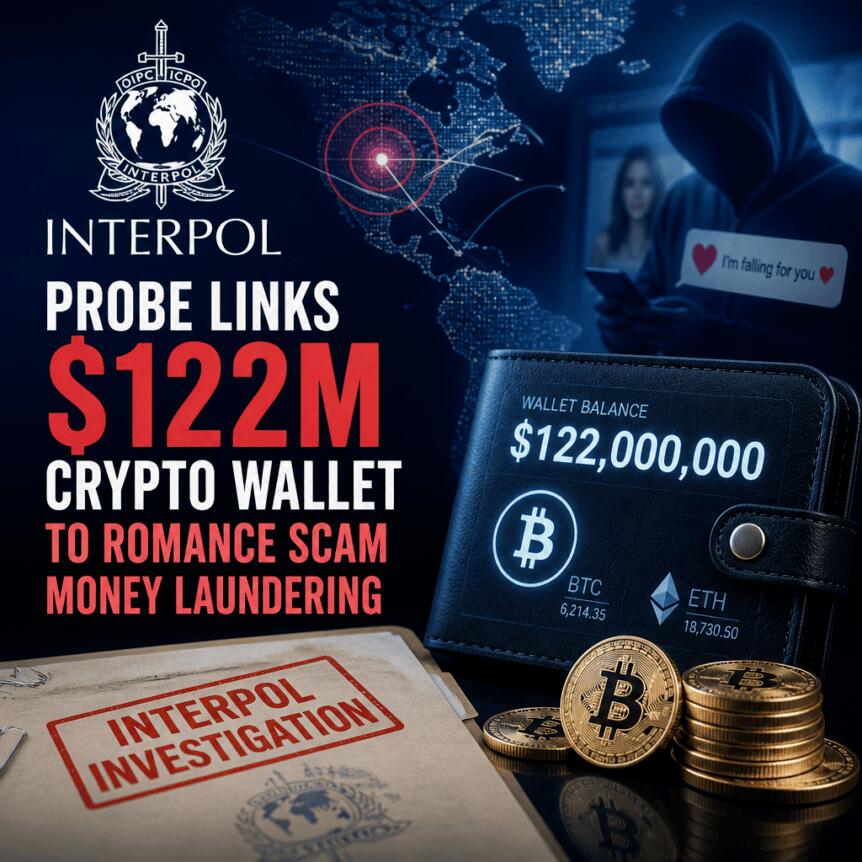
Interpol says a cryptocurrency wallet tied to a suspected romance-scam money launderer processed more than $122.5 million over a 10-month period, underscoring how online fraud networks are increasingly using crypto rails to complicate enforcement.
In a statement released Thursday, Interpol said Thai authorities arrested two suspects and dismantled a money-laundering operation that routed proceeds from romance scams into cryptocurrencies. Interpol added that the scheme relied on cross-chain token swaps to obscure the origin of funds as they moved through different networks.
Key takeaways
- Interpol reported a suspected romance-scam laundering wallet handled over $122.5 million in 10 months.
- Thai investigators linked the activity to laundering techniques that used cross-chain token swaps to mask transaction trails.
- Operation First Light 2026 ran across 97 countries and territories, focusing on fraud networks and the financial infrastructure behind them.
- The operation resulted in 5,811 arrests and the seizure of $293 million in illicit assets, according to Interpol.
- Interpol used its payment-freezing tool (Global Rapid Intervention of Payments) to help block transfers involving both fiat and crypto assets.
Operation First Light 2026 targets both scams and laundering
Interpol framed the Thai case as part of Operation First Light 2026, an Interpol-coordinated push to disrupt social engineering scams and the laundering channels used to convert fraudulent proceeds into transferable value.
According to Interpol, the campaign involved authorities in 97 countries and territories and used data analysis to trace patterns across cases connected to online fraud. Interpol said the operation analyzed 152,808 cases, blocked 31,014 bank accounts, resolved 23,715 investigations, and identified 15,606 suspects.
Interpol also said authorities employed its Global Rapid Intervention of Payments system to support rapid freezing of payments—an approach designed to stop illicit transfers before funds move further. The tool can be used to block transfers involving fiat and virtual assets, Interpol said.
Crypto laundering via cross-chain swaps increases tracing difficulty
While social engineering tactics remain central to romance scams, Interpol’s disclosure highlights the evolving mechanics of laundering. In the Thai investigation, Interpol said proceeds were funneled into cryptocurrencies and that cross-chain token swaps were used to make the trail harder to follow.
Cross-chain activity can introduce additional hops, route changes, and token transformations that complicate straightforward attribution. In this case, Interpol’s emphasis on swaps points to a strategy criminals are using to break linkages between the original scam payments and the eventual destination of funds.
From an investor or market participant perspective, these reports reinforce a recurring risk: illicit demand for liquidity and conversion services may intersect with otherwise legitimate crypto markets. Even when the volumes are linked to scams rather than “organic” trading, they can still affect on-chain flows and increase compliance pressure on exchanges and service providers.
Global scale: arrests, seizures, and additional action in Palau
Interpol said Operation First Light 2026 culminated in 5,811 arrests and the seizure of $293 million in illicit assets related to fraud and money laundering. Interpol also highlighted the operational breadth of the campaign, describing it as coordinated across many jurisdictions rather than a single-country investigation.
Beyond the Thai operation, Interpol said authorities in Palau deported 22 people allegedly involved in two hotel-based scam centers. Interpol linked those centers to schemes that used cryptocurrency and illegal gambling websites to target victims abroad.
Together, the Thai and Palau developments show how enforcement efforts are increasingly addressing the broader ecosystem around online fraud: recruitment and victim targeting, the movement of funds, and the systems used to keep perpetrators hard to trace.
Romance scams remain a focus amid growing US losses
Interpol said social engineering scams continue to be a major threat and argued that no single country can tackle the problem alone. The statement reflects ongoing international attention to fraud schemes—especially those branded as romance scams or “pig butchering,” where criminals cultivate trust before steering victims toward fake investment opportunities.
The crackdown also arrives as regulators and investigators continue to document high losses from crypto-linked scams. In April, the US Federal Bureau of Investigation (FBI) reported that Americans filed 181,565 crypto-related scam complaints totaling more than $11 billion in losses in 2025, according to coverage that referenced the FBI data.
Romance scams often use social media, messaging apps, and dating platforms to build legitimacy. Once a victim is persuaded to move funds, crypto can be presented as a convenient, fast transfer method—while laundering techniques such as token swaps can further delay attribution and seizure.
What to watch next
Interpol’s figures show how international enforcement is trying to follow money across borders and across crypto networks, but criminals’ use of cross-chain swaps suggests evasion tactics will keep evolving. Readers should watch whether future operations increasingly focus on transaction-level tracing and rapid freezing capabilities—and how quickly authorities can convert blockchain activity into recoverable assets.
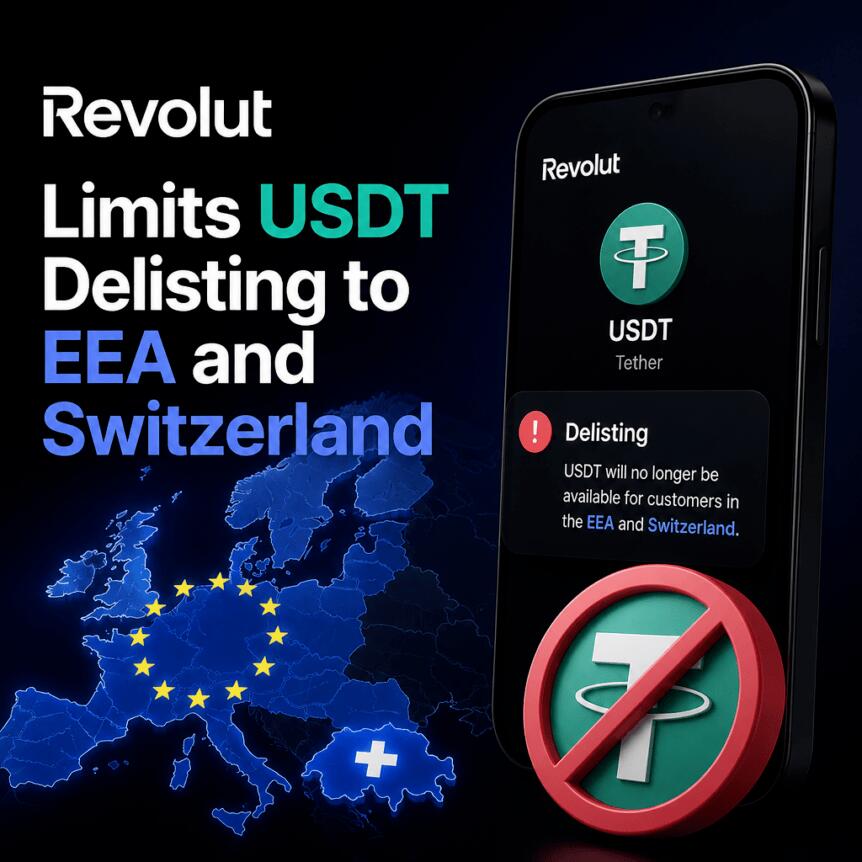
Revolut has announced that it will remove support for the Tether USDT stablecoin for customers in the European Economic Area (EEA) and Switzerland, citing MiCA-related regulatory and risk review. The company said the change is limited to those regions, while USDT support will continue in other markets where it is currently offered.
In a statement provided to Cointelegraph, a Revolut spokesperson said the decision follows a periodic review of its cryptocurrency offering in light of the evolving European Union regulatory framework under the Markets in Crypto-Assets Regulation (MiCA). Revolut also previously removed USDT from its Revolut X trading platform for EEA customers, with the latest step completing the withdrawal from its retail crypto offering in the EEA.
Key takeaways
- Revolut is discontinuing USDT support for customers in the EEA and Switzerland, while keeping support elsewhere.
- The move is linked to a regulatory and risk review under MiCA, according to a company spokesperson.
- USDT was already removed from Revolut X for EEA users; this update finalizes the EEA retail removal.
- MiCA’s EEA relevance raises questions about why Switzerland is included despite not being directly covered by the regulation.
Revolut’s USDT exit tied to MiCA review
Revolut said it is “discontinuing support for USDT for customers in the EEA following a periodic review of our cryptocurrency offering in light of the evolving EU regulatory framework under MiCA,” according to its spokesperson. The announcement follows a broader period of adjustments across European crypto services as firms prepare for regulatory requirements associated with MiCA.
According to Cointelegraph’s earlier reporting, Revolut first notified some European users on Friday that USDT would be delisted from its platform by Aug. 31, 2026. Revolut said the process had already begun before that notification: it removed USDT from the Revolut X trading platform for EEA customers, and the latest decision completes the removal from its EEA retail offering.
Where the change applies—and where it doesn’t
Revolut’s spokesperson said the delisting affects customers in the EEA and Switzerland. The firm indicated that support for the stablecoin will continue in other markets, but it did not provide a list of jurisdictions where its crypto services—including USDT—are still available.
The regional framing also matters because MiCA is an EU regulation that has EEA relevance. Official documents from the European Securities and Markets Authority (ESMA) describe MiCA as extending to the broader EEA, which includes Norway, Iceland, and Liechtenstein in addition to EU member states. In that context, the mention of Switzerland stands out.
Switzerland is not part of the EU or the EEA and is not directly covered by MiCA. Revolut did not explain why Swiss customers were included in the delisting scope. Cointelegraph reported that the company did not respond to a request for clarification on the scope of its offering by the time of publication.
Broader EU trend after Tether’s MiCA posture
Revolut’s decision reflects a wider shift among crypto platforms operating across Europe. Cointelegraph noted that many firms have continued to phase out USDT after Tether—the issuer of the $184 billion stablecoin—opted not to pursue authorization under MiCA. While the mechanics of MiCA authorization depend on jurisdiction and a stablecoin’s compliance pathway, the direction of travel for intermediaries has been consistent: reduce exposure to stablecoins that may become harder to serve under the new regime.
For investors and traders, stablecoin availability is more than a convenience issue. When platforms change which assets they support, users can be affected in practical ways: execution routes may change, on-platform swaps may become unavailable, and users who rely on a specific stablecoin for custody or settlement may need to restructure how they manage balances.
Revolut’s staged approach—first removing USDT from its Revolut X trading platform for EEA customers, then completing the removal from its retail offering—also suggests the company is treating the MiCA transition as an operational transition rather than a single-day shutdown.
What Revolut’s timetable signals for users
The USDT delisting notice surfaced with a timeline for Aug. 31, 2026, implying that EEA users may still have access until then, subject to the platform’s operational changes already underway. Revolut did not provide further detail in the information available, including what specific account actions might be available during the wind-down period—such as whether USDT balances can be held, exchanged, or withdrawn during the transition.
Even without those specifics, the sequence described by Revolut matters: USDT trading on Revolut X for EEA customers had already been removed before the broader delisting plan was communicated. That kind of incremental reduction can reduce disruption for new trades while giving customers time to adjust their holdings.
Still, uncertainty remains for customers outside the affected regions, because Revolut did not publish a jurisdiction-by-jurisdiction breakdown of where USDT remains supported. For traders who operate across multiple venues—or who routinely move between regions—this becomes a risk management consideration: platform support can change as regulations evolve.
Keeping an eye on regulatory alignment beyond MiCA
While Revolut’s explanation points to MiCA as the driving regulatory framework, its inclusion of Switzerland—despite that country not being directly covered by MiCA—highlights a broader theme in Europe’s crypto compliance landscape: companies may be making decisions based on anticipated regulatory alignment, counterpart constraints, or internal risk frameworks that go beyond the narrow legal text.
Readers should watch for two things next: whether Revolut clarifies how Switzerland fits into its risk and regulatory rationale, and whether other platforms adjust their USDT support timelines or expand similar delistings in the EEA. As firms continue to reposition their stablecoin offerings, the most practical question for users will be which assets remain accessible on the platforms they use, and what transition paths are available when support ends.
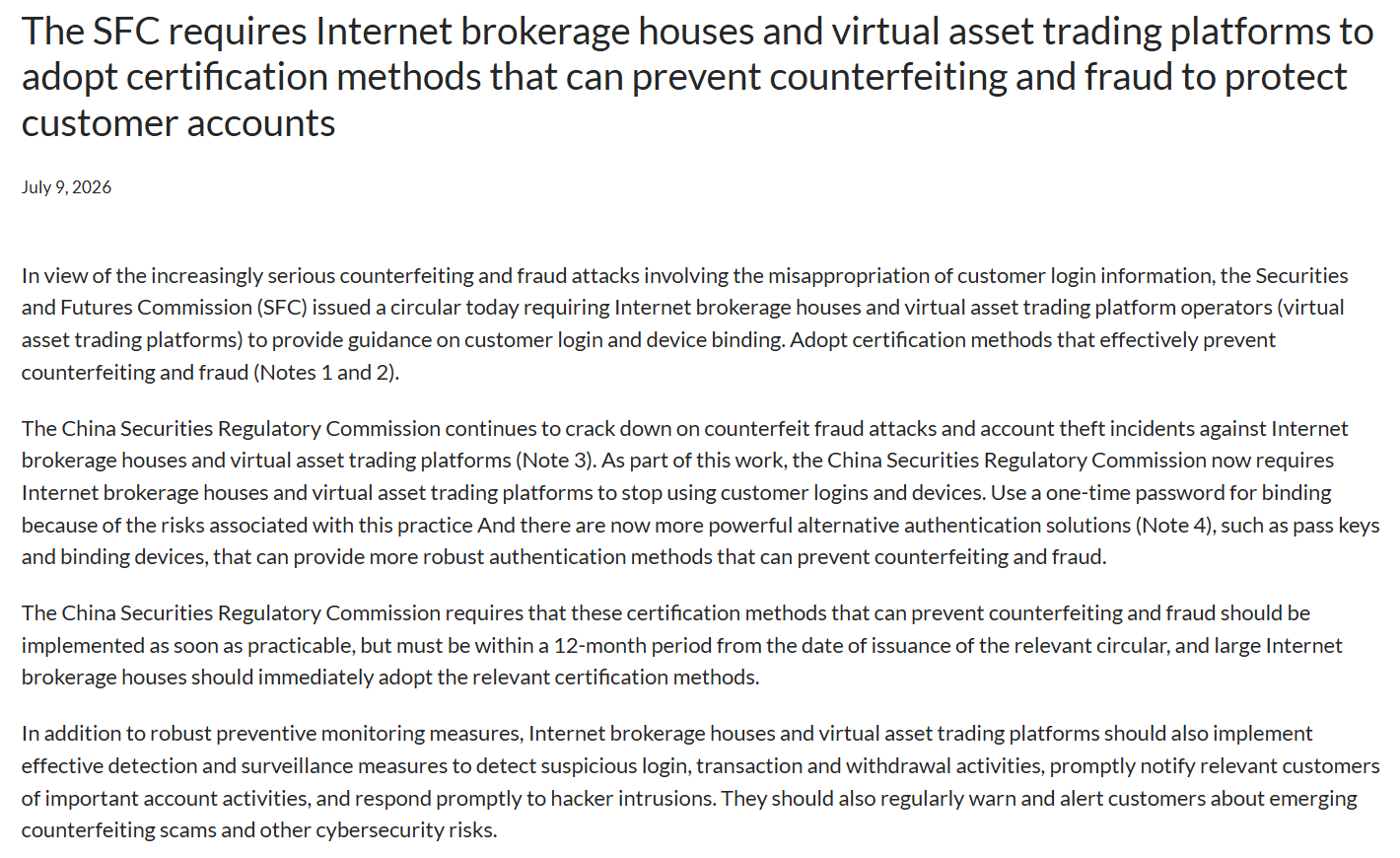
The Hong Kong Securities and Futures Commission (SFC) on Thursday issued new requirements for phishing-resistant authentication methods for virtual asset trading platforms (VATPs) and online brokers in the special administrative region.
The new standards require stronger phishing-resistant authentication methods and device binding while prohibiting the use of one-time passwords through SMS, email or app-based logins. Platforms must implement the changes within the next 12 months.
The requirements outlined stronger alternatives such as passkeys, registered devices with cryptographic verification and hardware security keys, which the SFC described as phishing-resistant solutions.
The measures raise Hong Kong’s cybersecurity standards as the global crypto industry saw an increase in phishing attacks and social engineering scams in the first quarter of 2026. Those types of incidents accounted for $306 million of the industry’s total losses of $482 million in the period.
Counterfeiting and fraud attacks accounted for 57% of the security incidents reported to the Hong Kong Cyber Security Accident Coordination Center in 2025, according to announcement.
“To protect customer accounts from increasingly complex and changing counterfeiting and fraud attacks, comprehensive measures must be implemented in conjunction with prevention, detection, response and education,” said Dr. Ye Zhiheng, executive director of the Intermediaries Department of the China Securities Regulatory Commission.
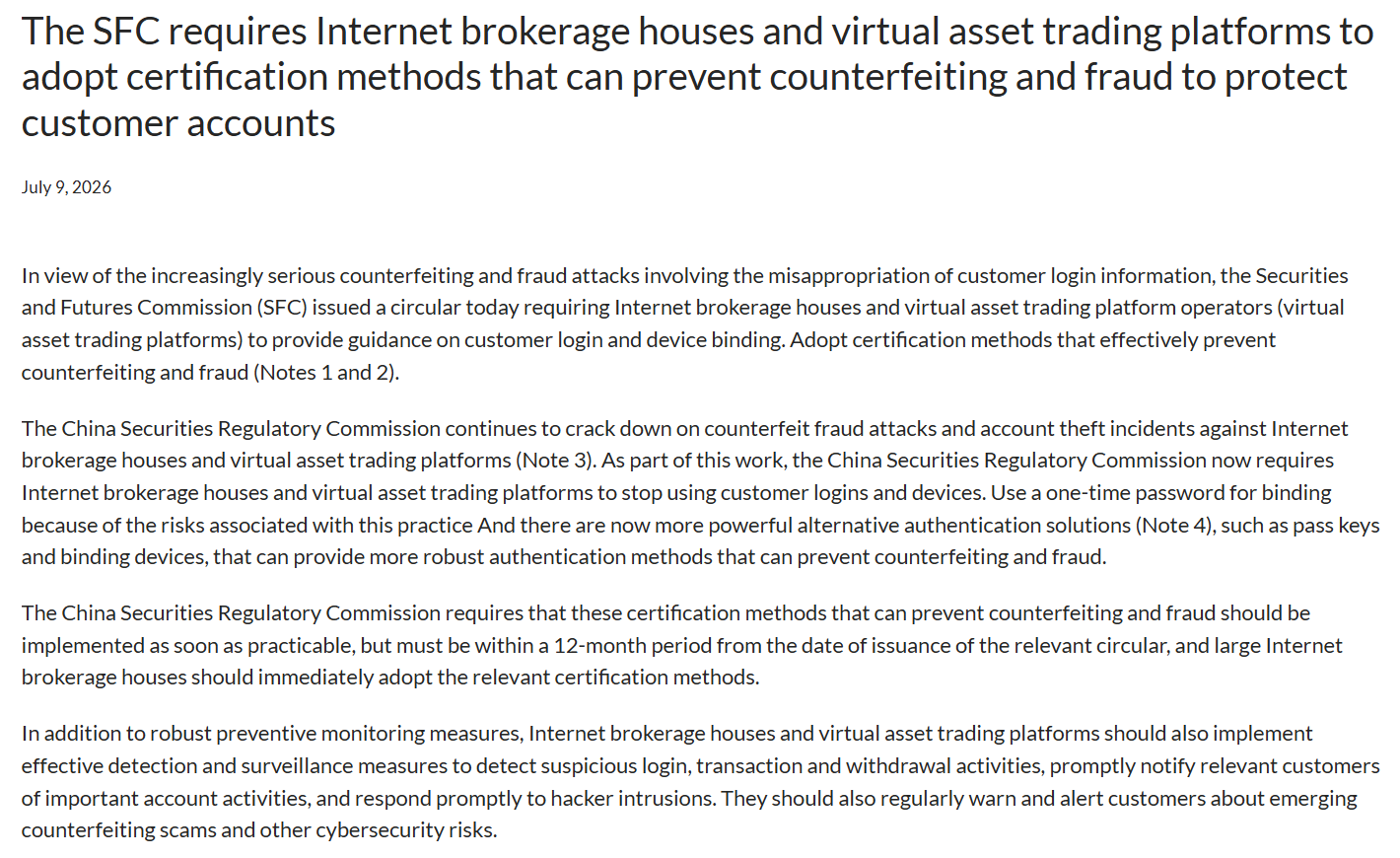
SFC issues new anti-phishing requirements for crypto platforms and online brokers. Source: apps.sfc.hk
Phishing attacks threaten crypto investor holdings
Phishing attacks and social engineering scams are a pressing global concern for the cryptocurrency industry.
On Wednesday, a crypto investor lost nearly $1 million after signing a malicious phishing token approval transaction on Ethereum, the latest reported incident of phishing scam-related crypto industry losses that totaled $366 million in the first half of 2026.
Earlier this month, a wallet holder reportedly lost $1.65 million after connecting to a fake exchange and signing a malicious contract in a similar incident, which enabled attackers to gain unlimited access to the funds, researcher Ryan Coleman said on Friday.
Related: Belgian police arrest suspected phishing gang leader tied to $572K theft
On May 25, onchain analyst “b-block” warned that scammers used Google to deploy malicious phishing ads impersonating decentralized exchange Uniswap, reportedly stealing more than $400,000 from victims.
Leading crypto industry figures, including Binance co-founder Changpeng Zhao, have previously called for better wallet security measures to avoid phishing scams, after an investor lost $50 million in an address poisoning scam in December 2025.
In May 2024, one victim lost $71 million to an address poisoning scam in an unusual case that ended with the attacker returning the full amount two weeks later. The reversal followed mounting pressure from investigators who claimed to have tracked the scammer’s potential IP address.
Magazine: Dubai tops Asian crypto hubs, Taiwan passes crypto laws: Asia Express
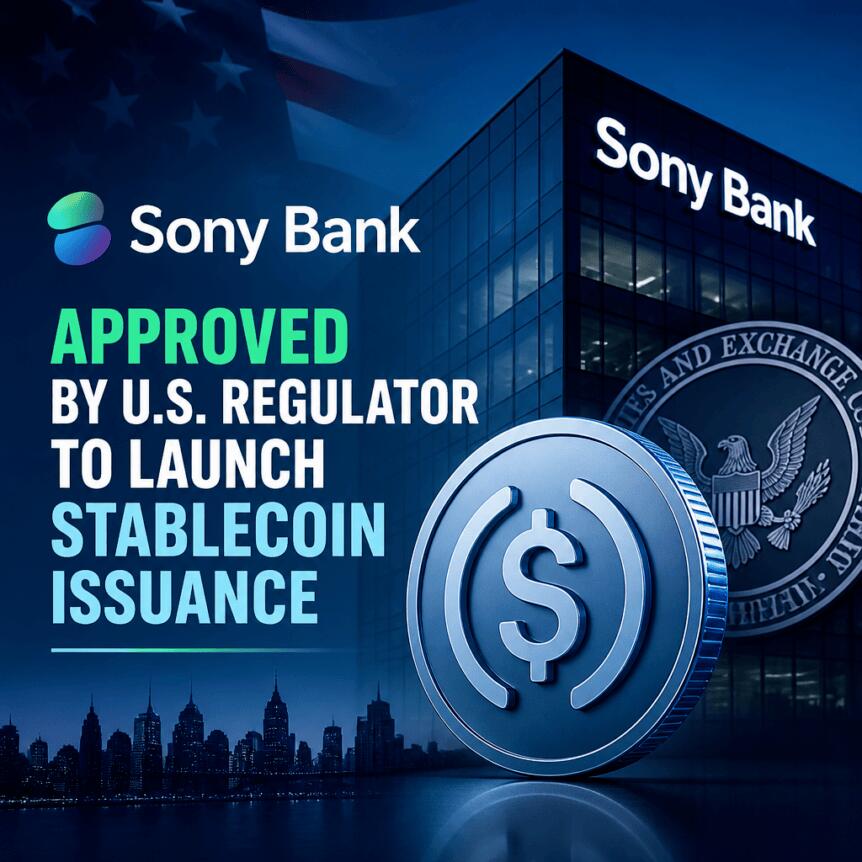
Sony Financial Group has taken a meaningful step toward entering the US stablecoin market through a newly planned, regulated banking subsidiary. Sony Bank said it received preliminary approval from the Office of the Comptroller of the Currency (OCC) to form a US national trust bank subsidiary that will be able to issue US dollar-denominated stablecoins.
According to an announcement from Sony Financial Group, the unit—Connectia Trust, National Association—would be fully owned by Sony Bank. Sony Financial Group also said the effort is backed by $40 million in starting capital and is intended to serve as a building block for a longer-term digital asset business foundation.
Key takeaways
- Sony Bank received preliminary approval from the OCC on July 2 to establish Connectia Trust, National Association.
- The planned subsidiary is designed to issue and manage US dollar-denominated stablecoins, but no activity can begin until final authorizations are obtained.
- Sony said it expects to launch the new stablecoin banking subsidiary later this month, subject to the remaining approvals.
- The move reflects a broader push by major banks to integrate stablecoin rails even as US legislation remains unsettled.
- Meanwhile, regulatory efforts around stablecoins—including the CLARITY Act—face political and industry friction that may affect how banks expand.
OCC preliminary nod for a Sony-controlled trust bank
Connectia Trust, National Association is the specific entity Sony Bank intends to create, with the company describing it as a US national trust bank subsidiary. The OCC preliminary approval is the first major regulatory milestone, but Sony emphasized that it will not conduct any business activities—including stablecoin issuance—until all required approvals and authorizations are secured, including the OCC’s final approval.
Sony Bank also indicated that it plans to launch the subsidiary this month. For investors and market participants, the practical takeaway is that Sony is positioning itself to operate within the US regulatory perimeter, rather than relying on offshore issuance models or non-bank pathways. Still, the timeline remains contingent on final OCC clearance, so readers should treat “this month” as conditional.
A regulated stablecoin plan—and the open question of product shape
The announcement frames the stablecoin initiative as part of Sony’s broader digital asset groundwork. The subsidiary would support the issuance and management of US dollar-denominated stablecoins, backed by Sony Bank and funded with $40 million in initial capital.
The company’s documentation did not, in the provided text, spell out whether Sony plans to launch a proprietary stablecoin or rely on existing stablecoin infrastructure. Cointelegraph reached out to Sony Bank for additional details on the business plan and whether a Sony-issued token would be involved, but did not receive a response by publication time.
That uncertainty matters: the regulatory and operational complexity can differ depending on whether a bank is issuing its own stablecoin versus integrating minting, redemption, and compliance workflows around a third-party token. What is clear is the direction—Sony is seeking an institutional role in US dollar stablecoin issuance through a trust bank structure.
Banks keep building stablecoin rails as US rules lag
Sony’s move lands in a moment when large financial institutions are increasingly experimenting with stablecoin-based settlement and onboarding—even as US regulatory clarity remains incomplete. Earlier coverage highlighted that Standard Chartered and Circle said they developed a system allowing institutions to mint and redeem USDC through a bank-led onboarding process. In their described model, clients can mint and redeem the US dollar-backed stablecoin via the bank’s platform rather than establishing separate accounts with Circle.
While the Sony plan concerns US dollar-denominated stablecoins more broadly, the parallel is instructive: banks appear willing to pursue stablecoin integration, provided they can align with supervisory expectations and operational controls. The key difference is that Sony is planning to issue and manage stablecoins itself through a regulated entity, which may require more internal infrastructure and governance than distribution-only integration models.
CLARITY Act uncertainty continues to shape timelines
Regulatory momentum in the US is still uneven. The CLARITY Act—one of the best-known efforts aimed at establishing a framework for certain digital asset activities—remains stalled. In the provided reporting, the bill is described as having cleared the Senate Banking Committee in May, but facing pushback from many Democrats and the banking industry.
Critics have raised concerns that the proposal could allow crypto firms to offer yields on stablecoins without subjecting them to the same requirements as traditional financial institutions. That tension has practical implications for how quickly banks and regulated issuers can expand certain revenue models around stablecoins.
Congressional scheduling also adds friction. The bill was set for a House of Representatives hearing on July 17, but Galaxy Digital’s head of research, Alex Thorn, warned that there may not be enough floor time before the Senate’s traditional four-week recess beginning Aug. 8. In a separate update referenced in the text, Galaxy cut its odds of the bill becoming law in 2026 to 50%.
Industry groups remain engaged. More than 200 crypto companies and related organizations urged the Senate to pass the CLARITY Act in a letter shared by Stand With Crypto. Separately, JPMorgan CEO Jamie Dimon, speaking to Fox Business in May, said banks will continue to “fight” the current version of the CLARITY Act and argued that firms wanting to offer yield-bearing products “should apply for banking charters.”
Taken together, the bank-led push to integrate stablecoins and the legislative gridlock point to a shared reality: institutions may be able to move forward faster where they can operate within existing banking frameworks, even while broader digital asset rules remain contested.
What to watch next
For Sony and the wider market, the next milestone is straightforward but crucial: final OCC approval for Connectia Trust, National Association and confirmation of what Sony intends to issue—whether a proprietary stablecoin or a narrower role in issuance and management. With the CLARITY Act still uncertain, the market will likely look to how banks translate regulatory permission into practical stablecoin products that can scale within US supervision.
Crypto World
Over $7.2 billion have migrated from LayerZero to Chainlink CCIP as Mantle joins exodus


More than $7.2 billion in cross-chain and wrapped assets have migrated from LayerZero to Chainlink’s Cross-Chain Interoperability Protocol (CCIP) since May, with Mantle becoming the latest project to replace LayerZero for high-value token transfers.
Mantle said it is migrating its Super Portal, which it co-developed with Bybit, from LayerZero’s Omnichain Fungible Token (OFT) standard to Chainlink’s Cross-Chain Token (CCT) standard.
LayerZero and Chainlink CCIP both let token holders move assets between blockchains, a basic requirement as crypto markets spread across competing networks.
The infrastructure matters because bridges between different blockchains have become one of crypto’s largest security risks, with a single failure able to expose hundreds of millions of dollars in user assets.
The portal enables transfers of the MNT token between Ethereum and Solana, with support for additional blockchain networks planned.
The migration includes MNT, the native token of Mantle’s network, which has more than $2.5 billion in value locked. Mantle’s move pushes the total value of announced migrations from LayerZero to Chainlink CCIP above $7.24 billion.


Key takeaways
- Arbitrum (ARB) rebounded above $0.081 after recovering losses from earlier in the week.
- Offchain Labs co-founder Steven Goldfeder announced that 10% of fees generated by Robinhood Chain and other Arbitrum Layer 2 networks will flow back into the Arbitrum ecosystem.
- The revenue-sharing model is expected to strengthen the DAO treasury, fund development, and enhance ARB’s long-term value.
Arbitrum (ARB) extended its recovery on Thursday, climbing above $0.081 after erasing losses recorded earlier in the week.
The rally followed a major announcement from Offchain Labs co-founder Steven Goldfeder, who revealed that a portion of transaction fees generated by Robinhood Chain and other Arbitrum Layer 2 (L2) networks will be redirected to the broader Arbitrum ecosystem.
The announcement has boosted investor confidence by highlighting a sustainable revenue model that could strengthen the network’s long-term fundamentals, while improving technical indicators suggest ARB may have room for further gains.
Robinhood Chain revenue-sharing strengthens Arbitrum ecosystem
In a post on X, Offchain Labs co-founder and Arbitrum developer Steven Goldfeder disclosed that 10% of fees collected by Robinhood Chain and every other Arbitrum Layer 2 chain are allocated back to the Arbitrum ecosystem.
As enterprise adoption is heating up, Arbitrum is well positioned to capture revenue.
10% of fees collected on Robinhood Chain (and every other Arbitrum L2) go to the Arbitrum ecosystem — 8% to the tokenholder controlled treasury and 2% to fund development.
And of course 100%…
— Steven Goldfeder (@sgoldfed) July 8, 2026
According to Goldfeder, 8% of those fees are directed to the tokenholder-controlled Arbitrum DAO treasury, while the remaining 2% is used to support ongoing network development.
He also noted that 100% of fees generated on Arbitrum One continue to flow directly into the Arbitrum treasury, further reinforcing the ecosystem’s long-term funding model.
The fee-sharing mechanism is viewed as a positive development for Arbitrum because it creates an ongoing source of revenue for governance, ecosystem expansion, and developer incentives. As enterprise adoption of Layer 2 networks accelerates, the model could significantly increase the value captured by the Arbitrum ecosystem over time.
Investors responded positively to the announcement, sending ARB more than 7% higher during Thursday’s trading session.
Technical outlook improves, but key resistance remains
ARB has recovered above $0.085, reversing the losses recorded over the previous three sessions.
However, the token still trades below several important moving averages, suggesting the broader trend has yet to turn decisively bullish.
The 200-day Exponential Moving Average (EMA) remains well above the current price at $0.1409, underscoring the longer-term bearish structure.
Meanwhile, momentum indicators are beginning to stabilize. The Moving Average Convergence Divergence (MACD) is showing signs of improving momentum, while the Relative Strength Index (RSI) is hovering near 50, indicating that selling pressure is easing without confirming a full bullish reversal.
The first major resistance zone sits between $0.0878 and $0.0891, where several technical barriers converge.
This area includes the 50-day EMA at $0.0878, a horizontal resistance level at $0.0883, and the 23.6% Fibonacci retracement level at $0.0891.
A successful breakout above this cluster could shift momentum further in favor of buyers and open the path toward the next resistance levels.
On the downside, the key support remains around $0.0705, which marks both the previous swing low and the primary Fibonacci support level.

Holding above this area would preserve the recent recovery. However, a daily close below $0.0705 could invalidate the current rebound and expose ARB to another leg lower despite improving momentum indicators.
For now, traders will be watching whether growing ecosystem revenues and stronger investor sentiment can help ARB break above the critical $0.09 resistance zone and build a more sustained recovery.

For years, decentralized finance (DeFi) has relied on a familiar playbook: launch a governance token, distribute generous rewards to liquidity providers, and watch capital pour in. The strategy fueled the explosive growth of DeFi during the 2020-2022 boom, creating billions of dollars in Total Value Locked (TVL) almost overnight.
But there was one major problem.
Much of that liquidity wasn’t loyal—it was rented.
As soon as rewards declined or another protocol offered higher yields, capital quickly migrated elsewhere. This phenomenon, often called “mercenary capital,” exposed a harsh reality: many DeFi protocols weren’t attracting users because of their products—they were attracting them by paying them.
Now, as the industry matures, a new question is taking center stage:
Can DeFi survive without token incentives?
The answer could determine which protocols become lasting financial infrastructure—and which fade away when emissions dry up.
The Emissions Era
Liquidity mining changed crypto forever.
Protocols like Compound, Aave, SushiSwap, Curve, and dozens of others rewarded users with newly minted governance tokens simply for supplying liquidity or borrowing assets.
The model worked because:
- TVL increased rapidly.
- Higher TVL attracted more users.
- More users increased visibility.
- Token prices often appreciate.
- Everyone appeared to win.
But underneath the surface, the economy was fragile.
Every reward distributed represented dilution.
Unless a protocol generated enough revenue to offset emissions, value slowly leaked from existing token holders to short-term farmers.
Eventually, many protocols entered a familiar cycle:
High APY → Liquidity Flood → Rewards End → Liquidity Leaves.
This became one of DeFi’s biggest structural weaknesses.
Liquidity Is Not Product-Market Fit
One of crypto’s biggest misconceptions is equating TVL with success.
A protocol can have billions locked while generating very little real economic activity.
Conversely, a protocol with modest TVL but strong revenue may have a healthier long-term business model.
True product-market fit means users stay because the protocol solves a real problem—not because they’re temporarily subsidized.
Examples include:
- Traders seeking the best execution.
- Businesses need stablecoin liquidity.
- Institutions require transparent settlement.
- Developers are integrating reliable infrastructure.
- Users pay for convenience, security, or privacy.
In these cases, demand exists independently of token rewards.
That’s a much stronger foundation.
Revenue Is Becoming More Important Than Emissions
Increasingly, investors are evaluating protocols less by TVL and more by revenue generation.
Questions are shifting toward:
- Does the protocol generate sustainable fees?
- Are users willing to pay for the product?
- Can revenue cover operational costs?
- Is token value linked to real cash flow?
These metrics resemble traditional business analysis more than speculative token investing.
The market is slowly rewarding protocols that operate like businesses rather than perpetual incentive machines.
Protocols Built Around Real Demand
Several categories of DeFi already demonstrate that sustainable demand can exist without relying entirely on emissions.
Decentralized Exchanges
Users trade because they need liquidity.
Trading fees—not inflation—become the primary economic engine.
Higher trading volume naturally increases protocol revenue.
Lending Markets
Borrowers care about capital access.
Lenders care about stable returns.
Neither necessarily depends on governance token rewards if interest rates remain competitive.
Stablecoin Infrastructure
Payments, settlements, payroll, and treasury management create recurring demand.
These activities happen because they’re useful—not because someone is farming incentives.
Cross-Chain Infrastructure
Bridges, interoperability layers, and messaging protocols generate demand whenever users move assets across ecosystems.
The service itself provides value.
Privacy Infrastructure
Privacy-focused protocols solve real user needs, including financial confidentiality, business privacy, and secure transactions.
As regulatory frameworks evolve, privacy solutions with legitimate compliance features may see increasing demand from both individuals and institutions.
The Difference Between Subsidized Growth and Organic Growth
Imagine opening two coffee shops.
The first gives every customer $20 just for walking in.
The second simply serves excellent coffee.
Initially, the first shop will appear far busier.
But once the giveaways stop, many customers disappear.
The second shop may grow more slowly, but its customers return because they genuinely value the product.
Many DeFi protocols have resembled the first coffee shop.
The next generation aims to become the second.
Organic demand compounds over time.
Subsidized demand disappears when the subsidies end.
Incentives Are Not the Enemy
This doesn’t mean token incentives are inherently bad.
Incentives can be extremely effective when used strategically.
They can:
- Bootstrap early liquidity.
- Reward long-term contributors.
- Encourage ecosystem development.
- Align community participation.
The problem arises when incentives become the product rather than supporting it.
Healthy protocols eventually reduce dependence on emissions as natural demand grows.
The Next Competitive Advantage
As DeFi becomes more efficient, protocols may increasingly compete on:
- Better user experience
- Lower transaction costs
- Faster execution
- Higher security
- Regulatory readiness
- Reliable revenue generation
- Strong developer ecosystems
These are advantages that cannot be easily copied by simply increasing APYs.
A More Sustainable Future
The industry’s focus is gradually shifting from “How high is the yield?” to “Where does the yield actually come from?”
That’s an important evolution.
Protocols that earn revenue through genuine usage are more likely to weather bear markets, attract institutional participants, and build durable ecosystems.
Liquidity earned through utility tends to last longer than liquidity rented through emissions.
Final Introspections
Token incentives played a critical role in bootstrapping DeFi, helping transform a niche experiment into a global financial ecosystem. However, long-term sustainability will depend less on how many tokens a protocol distributes and more on whether people genuinely need the services it provides.
The next generation of DeFi winners may not be the protocols offering the highest APYs—they may be the ones delivering products users are willing to pay for, even when rewards disappear.
In the end, sustainable finance isn’t built on endless emissions. It’s built on creating real value that keeps users coming back long after the incentives are gone.
REQUEST AN ARTICLE

Nonconference Records in Last 10 Yrs for Programs in West

6 Of The Best Interstates To Drive On (And 6 Of The Worst)

Joe Swash gives sweet fatherhood insight after date day with Stacey Solomon and her ex


-

 Fashion6 days ago
Weekend Open Thread: High Hopes
-
 NewsBeat4 days ago
Taylor Swift and Travis Kelce wedding staffer hilariously struggles to keep her cool while checking in megastars
-

 Fashion3 days ago
Open Thread: What Great Books Have You Read Recently?
-

 Crypto World6 days ago
Standard Chartered Secures MiCA License as ESMA Adds 37 New Crypto Firms
-

 Politics6 days ago
The House | “Reframing the debate from a binary discussion of winners and losers”: Yuan Yang reviews ‘We Are Not Machines’
-

 News Videos2 days ago
Whats Hidden Inside This Cash Register? #treasure #reselling #money
-
 Tech2 days ago
Anthropic’s new “J-lens” reveals a silent workspace inside Claude that mirrors a leading theory of consciousness
-

 Fashion3 hours ago
Loro Piana Fall 2026 Enters Houston’s Art Scene
-

 Business3 days ago
AXT Shares Jump Nearly 14% as Semiconductor Materials Maker Rebounds on AI-Linked Indium Phosphide Demand
-

 Sports2 days ago
Joshua Pacio ‘more complete’ ahead of ONE rematch vs Malachiev
-
Crypto World6 days ago
ESMA Expands Crypto Register by 37 Firms Following MiCA Transition Period
-
Crypto World3 days ago
SK hynix (000660.KS) Stock Dips as $28B Nasdaq ADR Offering Drives AI Memory Expansion
-

 Crypto World4 days ago
South Africa proposes crypto tax guidance under existing rules
-

 News Videos3 days ago
Best Time to Enter Small Caps Right Now? Another Bull Run? | Financially Free
-

 Tech4 days ago
Lenovo laptops are now shipping with YMTC SSDs, a sign of Chinese NAND entering the mainstream
-

 Business6 days ago
What a 10 Percent Drop Means for Buyers, Sellers and Renters
-
Sports2 days ago
We have punished the disrespect
-

 Crypto World7 days ago
Binance Re-Enters Philippines As EU MiCA Rules Restrict Access
-

 News Videos3 days ago
Avoid entering in FOMO #bitcoin #cryptocurrency #trading #scalping
-

 Crypto World6 days ago
Alibaba bans Claude Code over alleged backdoor security concerns
You must be logged in to post a comment Login