







Connect with us
DAPA Banner
DAPA Coin
DAPA
COIN PAYMENT ASSET
PRIVACY · BLOCKDAG · HOMOMORPHIC ENCRYPTION · RUST
ElGamal Encrypted MINE DAPA
🚫 GENESIS SOLD OUT
DAPAPAY COMING

Business

Digital trade reform leaves UK SMEs behind, research finds

Published

on

Digital trade reform leaves UK SMEs behind, research finds

Small firms were meant to be the biggest winners from Britain’s shift to paperless trade. Three years on, government-commissioned research has found them “untouched” by the reforms, while large companies and shipping carriers quietly pocket the savings.

The Electronic Trade Documents Act 2023 made the UK the first G7 country to give digital trade documents full legal status, promising smaller exporters lower courier fees, less administration and better access to trade finance.

The scale of the potential prize is hard to overstate. The World Trade Organisation estimates that a typical cross-border transaction requires the exchange of 36 documents and 240 copies of the paperwork. The government suggested the reforms could generate £1.4 billion in net benefits for importers and exporters over ten years, with bilateral trade with a country such as the US rising by 6.8 per cent for non-agricultural goods.

Yet evidence gathered by Ipsos for the Department for Business and Trade, drawn from 23 interviews with traders and industry experts in March, tells a different story. Awareness of the reforms among small business owners is “low”, and most simply follow whatever their courier asks for rather than driving change themselves.

The researchers concluded that widespread adoption of electronic trade documentation would only happen “once Customs authorities, carriers, and ports stopped issuing physical paper.” The common view among experts was that “voluntary adoption by small businesses would not scale, and that progress depended on co-ordinated action by the government and large supply chain actors.”

Advertisement

The big players are not waiting. Use of electronic bills of lading, the legally binding document that acts as receipt, contract and proof of ownership in one, has doubled since 2023, but largely thanks to major commodity traders and shipping lines. Nine of the biggest carriers, representing 75 per cent of global capacity, have committed to 100 per cent digital adoption by 2030.

For the SME owner, the practical catch is worse than the awareness gap. Even where digital documents are legally accepted, Customs, health authorities, banks and couriers “still require paper originals for some steps”, so early adopters end up running costly hybrid paper and digital processes. Overseas banks and trading partners may reject UK digital documents simply because they lack the software to verify them.

Nor did Whitehall’s sales pitch land. Government messaging about “improved access to trade finance” did not resonate with owners, who were far more interested in direct savings on courier fees and less red tape, a familiar refrain from firms already frustrated by post-Brexit border checks and paperwork.

The findings have prompted the British Chambers of Commerce, which has repeatedly warned that small exporters are being left behind while larger firms surge ahead, to call for paper documentation to be phased out and for closer co-ordination with the UK’s leading trading partners.

Advertisement

William Bain, head of trade policy at the BCC, said: “This research paints a clear picture: that governments, globally, must work together better to advance digital trade.

“It is a travesty that far too few SMEs are taking advantage of the time and cost savings that a shift to using online documentation can bring.

“This is not just about authorities passing laws to digitise documents, it also needs them to get behind the drive to increase take up. This should include a timeline for phasing out paper-based documentation.

“More resources also need to be invested in implementation by the government. Our chamber network is ready to work in partnership with them to raise awareness and fully embed digitisation into our trade culture.”

Advertisement

With Britain nursing a £74 billion slump in goods exports since Brexit, the stakes for getting smaller firms trading efficiently are considerable.

A government spokesperson said: “Making trade paperless saves businesses a lot of time and money, which is why the UK was the first G7 country to give electronic documents full legal status.

“We want more business across the country to benefit from these changes, and are working hard to address remaining barriers so we can make digital trade simpler, faster and more efficient.”


Jamie Young

Jamie Young

Jamie is Senior Reporter at Business Matters, bringing over a decade of experience in UK SME business reporting.
Jamie holds a degree in Business Administration and regularly participates in industry conferences and workshops.

When not reporting on the latest business developments, Jamie is passionate about mentoring up-and-coming journalists and entrepreneurs to inspire the next generation of business leaders.

Advertisement

Continue Reading
Click to comment

You must be logged in to post a comment Login

Leave a Reply

Business

Dollar Benefits as Investors Seek Safe Havens

Published

on

Stocks Little Changed After Fed Decision

The dollar is gaining from broader risk aversion after the U.S. and Iran resumed attacks and President Trump announced that the ceasefire deal is over, eToro’s Lale Akoner says.

“The dollar is benefiting from a more cautious tone across markets,” she says.

However, the latest moves so far don’t represent a significant shift in sentiment.

Continue Reading

Business

Bakeful snacks portfolio increases at Target

Published

on

Bakeful snacks portfolio increases at Target

Mini donuts, mini muffins and mini brownies come in more flavors.

Continue Reading

Business

10 Key Facts About the Disappearance of K2 Airways Boeing 737 Freighter Over the Arabian Sea

Published

on

Pakistan Expands Search for Missing K2 Airways Cargo Plane With
Pakistan Expands Search for Missing K2 Airways Cargo Plane With Five Crew Aboard as Seas Hamper Efforts

KARACHI, Pakistan — A Pakistan-registered Boeing 737-400 cargo plane operated by K2 Airways vanished over the Arabian Sea on Tuesday night while en route from Sharjah, United Arab Emirates, to Karachi, prompting an extensive search and rescue operation involving multiple agencies. The aircraft, carrying five crew members and no passengers, lost contact after reporting a navigation system issue, with preliminary tracking data showing erratic altitude changes before a steep descent.

Here are 10 essential details about the incident based on available information from authorities and flight tracking services:

  1. Flight Details and Route: The aircraft, registration AP-BOI, was operating flight KTA1732 as a cargo service from Sharjah International Airport to Jinnah International Airport in Karachi. It departed on the evening of July 7 and was approximately 155 nautical miles west of Karachi when contact was lost.
  2. Crew Composition: Five Pakistani crew members were aboard: Captain Muhammad Rizwan Idris, First Officer Faisal Jatui (or Faisal Mehmood in some reports), Flight Engineers Muhammad Hamid and Muhammad Arif Siddiqui, and Loadmaster Muhammad Taufiq Khan. No passengers were on the flight.
  3. Navigation System Report: The crew reported a navigational system issue to Karachi Area Control Centre at approximately 21:18 Pakistan Standard Time. Controllers provided heading guidance, but contact was lost shortly afterward.
  4. Erratic Flight Path: Preliminary data from Flightradar24 showed chaotic final moments. The plane descended rapidly at around 5,600 feet per minute, then climbed about 7,200 feet before a catastrophic dive from cruising altitude. The last recorded position was around 1,100 feet with a descent rate exceeding 22,000 feet per minute.
  5. Aircraft Background: The 27-year-old Boeing 737-400 was originally delivered as a passenger jet in 1999 and converted to a freighter. It was the sole aircraft in K2 Airways’ fleet, which began operations in 2024. The plane had not flown since late June prior to the incident.
  6. Search and Rescue Efforts: Pakistan’s Rescue Coordination Centre activated immediately, with the Navy diverting a frigate, the Air Force deploying aircraft, and other vessels joining the operation. No wreckage, emergency locator signals or survivors have been confirmed as of the latest updates.
  7. Location Context: The disappearance occurred over the Arabian Sea near Ormara in Balochistan province. The area is part of a busy aviation corridor, and conditions at the time are under investigation.
  8. Operator Response: K2 Airways expressed concern for its colleagues and stated that search efforts are ongoing. The airline has a limited fleet, making this incident particularly significant for the small carrier.
  9. Regulatory and Safety Questions: The incident has drawn attention to Pakistan’s aviation oversight, with previous concerns noted about maintenance and operational standards for smaller carriers. Boeing has not immediately commented.
  10. Broader Implications: If confirmed as a crash, this would be Pakistan’s first fatal aviation incident since 2020. The event highlights risks in cargo operations and the challenges of search and rescue over open water, with investigations expected to focus on mechanical issues, weather or human factors.

Pakistani authorities, including the Civil Aviation Authority and military branches, continue coordinated efforts to locate the aircraft. International assistance may be requested as the search expands. Aviation experts caution that early data is preliminary and full analysis will require recovered flight recorders if the plane is found.

The disappearance of the K2 Airways flight adds to a list of recent aviation incidents globally, renewing focus on safety protocols for older converted freighters and navigation reliability in busy corridors. Families of the crew await updates as operations proceed around the clock.

Officials have urged the public to avoid speculation while search teams work diligently. The Pakistan Airports Authority and related agencies are providing regular briefings as more information becomes available. This developing story underscores the inherent risks of air travel over remote maritime regions and the critical importance of robust emergency response systems.

Advertisement
Continue Reading

Business

PepsiCo unveils whole grain oat-based shake

Published

on

PepsiCo unveils whole grain oat-based shake

The shakes are available in two flavors.

Continue Reading

Business

Senedd members reject motion calling for new funding model for Welsh Goverment

Published

on

Business Live

The Welsh Goverment was seeking support for motion calling on the UK Goverment to provide fairer funding mechanism

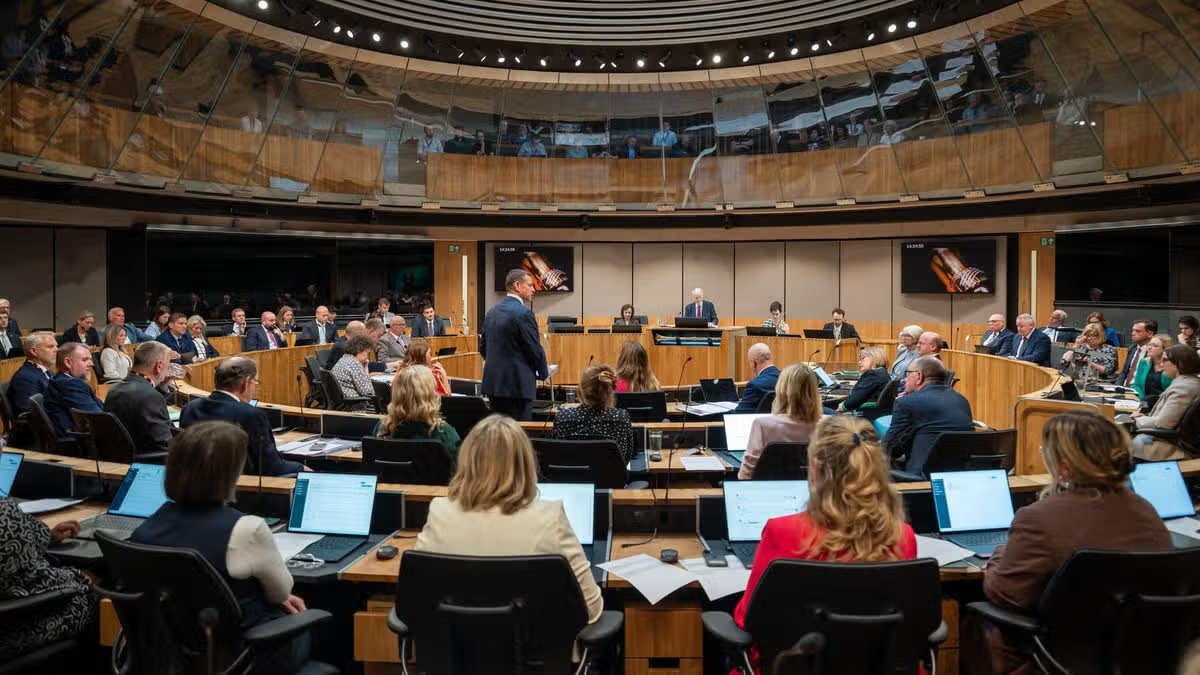
A wide shot of the Senedd chamber

The Senedd chamber.

Senedd Members have narrowly rejected a Welsh Government bid to reform the way Wales receives money from Westminster.

A motion calling for “fair funding for Wales”, put forward by Welsh Government Trefnydd Heledd Fychan, was beaten by 46 votes to 45. The motion called on MSs to back the Welsh Government as it seeks changes to the Barnett Formula.

Advertisement

The Barnett Formula is used by the UK Treasury to calculate changes in the funding provided to the devolved administrations in Wales, Scotland, and Northern Ireland.

According to the Institute for Government, the Barnett Formula “calculates devolved budgets by using the previous year’s block grant as a starting point (or ‘baseline’), and then adjusts it based on increases or decreases in ‘comparable’ spending per person in England, meaning spending by the UK government on services in England that are devolved to one or more of the other nations.

“Changes to the devolved block grants are calculated by multiplying the change in spending by UK government departments by the comparability factor and the population proportion of each nation.”

Though initially intended to be used as a temporary solution for determining funding allocations between the UK nations, the formula has remained in used since its introduction in 1979. Each of the opposition parties tabled an amendment to the motion.

Advertisement

Labour’s amendment called to delete all of the Plaid Cymru motion and instead recognise “that redistribution of wealth is a major benefit of being part of the United Kingdom”.

It also stated that Scottish resistance to Barnett formula reform should be the “primary focus” in the Welsh Government’s engagement with the Scottish Government.

Reform’s amendment similarly proposed to delete the entirety of the Plaid Cymru motion and called for the Welsh Government to focus spending on devolved areas, noting that, according to analysis from the Institute for Fiscal Studies, reforming the Barnett formula could result in Wales receiving £1 billion less a year.

It also called on the UK Government to cut international spending to deliver fairer funding for Wales.

Advertisement

The Conservative amendment meanwhile called on the Welsh Government to use its existing budgets to deliver “better value for money for Welsh taxpayers”. It also noted the work of previous Conservative UK governments, including the 2016 introduction of a “need-based factor into the funding formula for Wales”. First Minister Rhun ap Iorwerth told the Siambr that fair funding for Wales is “more than just politics or political party rhetoric”.

He said: “It relates to Wales, which has the tools in its hands to build a better future for ourselves.

“The current fiscal arrangements in the United Kingdom aren’t just unfair to Wales, they make economic failure more likely, and through reforming the current system we will ensure that the Welsh Government has the resources and the powers… to invest in public services, in infrastructure and in economic growth.”

Mr ap Iorwerth vowed to work “constructively” with the UK Government, noting Andy Burnham – the likely next Prime Minister – has experience of devolution from his time as Mayor of Manchester.

Advertisement

He urged Labour MSs to vote for his party’s motion, noting their manifesto committed to fair funding.

Taking an intervention shortly before closing his speech, the First Minister was questioned by Tory MS Andrew RT Davies on whether he had reached out to opposition parties to find a consensus.

Noting the “simplicity” of the Plaid Cymru motion, Mr ap Iorwerth said it was “worrying” that Mr Davies believes it is something consensus needs to be found on.

He said: “This is the fundamental of what we are here as a Senedd to do. This is the fundamental of us being able to speak with one voice as a nation.”

Advertisement

Concluding, the First Minister added: “This Senedd has voted unanimously in favour of fairer funding for Wales before.

“It’s my sincere hope that we can do so once more today, in the interest of the wellbeing and prosperity of our people.

“And this is bringing to the Senedd that pursuit of consensus right here in our national parliament today..”

Caerdydd Penarth MS Huw Thomas spoke of Welsh Labour’s belief that Wales “benefits from being part of a union”.

Advertisement

Describing Wales and the UK as “stronger together”, Mr Thomas said: “The Welsh Government continues to receive over 20% more per person than equivalent UK Government spending in the rest of the UK.

“That means that, for every £1 spent by the UK Government in devolved policy areas, the Welsh Government is able to spend at least £1.20 on devolved priorities like health and education.

“On the most basic level, this is redistributive. It brings a material benefit to public services and communities in Wales and I would urge those members, who cheerfully advocate leaving such an arrangement by exiting the United Kingdom, to consider those impacts extremely carefully.”

Acknowledging the Barnett Formula is not “perfect”, the Labour finance spokesperson said reforming it requires negotiation between all four nations.

Advertisement

He said: “Fundamentally reforming the Barnett formula in favour of a needs-based system will require negotiation, and ultimately agreement between all four nations. No single nation can do this alone, and yet, that agreement between nations is not forthcoming”.

Mr Thomas, the former leader of Cardiff Council, said the Scottish Government “stops short” of calling for a needs based system because “the current system benefits Scotland further”.

Quoting the Institute for Fiscal Studies, he said: “’No needs-based factor has been introduced for Scotland, likely reflecting the fact that it currently receives more funding per person than Wales, despite assessments suggesting it has lower needs’.” Reform’s Welsh leader Dan Thomas described the debate as more about “Plaid’s unfunded manifesto” than securing fair funding.

He said: “The First Minister is taking his begging bowl to London not because Wales doesn’t get enough funding, but because Plaid, in my opinion, misled voters when they said that their manifesto was fully costed.”

Advertisement

Similarly to Welsh Labour, the Casnewydd Islwyn MS said Plaid Cymru’s first step in calling for changes to the funding formula should be to “align with their sister nationalist party”.

But the opposition leader said the Welsh Government confirmed to him in writing that no discussions have yet been held with the Scottish Government.

He told the government it should “turn their attention” instead to the “huge amount of waste within the Welsh public sector”.

Mr Thomas, a former leader of Barnet Council in London, said: “Standing up for Wales is not about taking a begging bowl to London, asking for more money when we already receive more than England.”

Advertisement

He called on the Welsh Government to make “solid business cases” for investment in Wales, to focus on the M4 relief road and A45 upgrades, and to seek private sector and UK Government money to build houses in Wales.

He added: “Make no mistake, Reform is in favour of making the case for capital investment above and beyond our block grant.

But we need to do some of the heavy lifting ourselves, and we need to be much more ambitious. “So, it’s time to end the blame, the excuses, the platitudes, the begging. Let’s stand up for Wales by taking action and taking our ambition to another level.”

Welsh Conservative leader Darren Millar described the Barnett Formula as “beyond its shelf life” and “out of date”.

Advertisement

He said there is a need for a new funding mechanism for the UK, but said the “big issue” with the fair funding debate is there is “always a risk” when asking for a review of the funding arrangements.

Mr Millar also criticised what he described as the “political game” played by Plaid Cymru where “it has lots of disagreements with the government down the other end of the M4”. Responding to the debate, Mr ap Iorwerth said: “There’s a straightforward question at the heart of this debate. Should we always seek to stand up for Wales and stand up for fairness? […] Or do you believe Westminster is being generous to Wales and we should be grateful for what we get?

“That is clearly Reform’s position. To seek fairness for Wales is to hand out a begging bowl. That is their level of respect for Wales.

“They are happy for Wales to languish. Pitching people against each other is what they do, creating divisions within our communities that deepen the challenges that face us as a nation, and blaming some of the most vulnerable people, rather than being willing to stand up against the deep inequalities within the UK.”

Advertisement

Mr ap Iorwerth also criticised Labour’s position on the debate, describing it as a “remarkable” shift in tone.

Addressing calls for the Welsh Government to tackle Scottish resistance to reforming the Barnett Formula, the First Minister said: “It is not the position of Welsh Government versus Scottish Government that is important here.”

He continued: “It is not Scottish Government that will block the devolution of rail or will block the devolution of the Crown Estate, which is essential to bringing about fair funding for Wales.

“It is not Scottish Government that is blocking Wales from being able to get the consequentials of HS2 that can transform our infrastructure and lead to the improvement in Welsh productivity that we should all strive for.”

Advertisement

Mr ap Iorwerth stressed the need for a “fair” and “transparent” funding system reflecting Welsh needs.

Continue Reading

Business

Dell Technologies Stock Surges 220% This Year on AI Server Boom and Trump’s ‘Buy a Dell’ Endorsement

Published

on

Dell Cuts Its Workforce as Part of Broader Initiative to Reduce Costs After Sluggish Demand in PC Market

Shares of Dell Technologies traded at $420.44 on Tuesday, up $3.17, or 0.76 percent, continuing a remarkable rally that has pushed the stock up more than 220 percent so far in 2026, fueled by surging demand for AI-optimized servers and an unusual endorsement from President Donald Trump.

Note: This article is intended to provide factual context and does not constitute financial advice. Readers should consult a licensed financial advisor before making investment decisions.

Dell’s stock jumped sharply Monday after Trump publicly encouraged Americans to purchase the company’s computers during a nationally televised White House event launching the administration’s new Trump Accounts program. According to CNBC, Trump told attendees to “go out and buy a Dell computer,” a comment that immediately sent shares climbing more than 8 percent during the session and, at one point Monday, saw the stock rise nearly 10 percent intraday. The move extended into Tuesday’s session, with Dell shares closing at $411.80 on Monday after touching an intraday high of $429.74, a gain of roughly 4.43 percent for the day, according to TradingKey.

Trump’s endorsement marked the second time in recent weeks the president had publicly promoted the company, a pattern that has contributed what analysts describe as a “sentiment premium” to Dell’s stock price independent of the company’s underlying financial performance. TradingKey’s analysis cautioned that such political endorsements typically generate a short-term boost that fades relatively quickly absent additional supporting news, such as new orders, updated financial guidance, or stronger-than-expected earnings results.

Advertisement

Beyond the political tailwind, Dell’s rally has been substantially driven by explosive growth in its AI-optimized server business. According to TradingKey, revenue from that segment surged 757 percent year over year, prompting the company to raise its full-year revenue guidance to $60 billion. According to CNN, Dell’s total revenue increased 19.12 percent compared with the prior year and 31.44 percent compared with the previous quarter, while net income climbed 29.27 percent year over year and 52.19 percent quarter over quarter. Earnings per share rose 36.07 percent year over year and 55.51 percent from the prior quarter, reflecting the company’s continued acceleration tied to enterprise AI infrastructure spending.

Dell’s stock performance in 2026 has significantly outpaced its closest competitors in the AI server hardware space. According to 24/7 Wall St., Dell’s 232 percent year-to-date gain has far exceeded the 81 percent year-to-date gain posted by rival Hewlett Packard Enterprise over the same period. The outlet noted that Dell’s gross margin has compressed from 21 percent to 18 percent as the company’s product mix has shifted more heavily toward AI servers, a lower-margin but higher-volume category, and that the stock now trades at a stretched price-to-earnings ratio of roughly 31 to 33 times, reflecting the substantial run-up in its valuation.

Dell’s stock has traded within an extraordinarily wide range over the past year, moving between a 52-week low of $110.22 and a 52-week high of $469.47, according to data from Google Finance and Robinhood. The stock reached that all-time high in early June before closing the following week below a key resistance level near $442, a level TradingKey identified as a critical technical threshold. According to the firm’s analysis, the stock has faced heavy resistance at that price point in recent weeks, with repeated failed attempts to break through triggering what the firm described as a high-level correction phase within a broader $357 to $442 trading range. TradingKey’s technical outlook suggested that a decisive break above $442 could open the door to a run toward $500, while a failure to hold support near $357 could risk a deeper pullback toward $310.

Wall Street analysts have generally remained bullish on Dell despite the stock’s dramatic run-up. According to Public.com, 18 analysts currently maintain a consensus Buy rating on the stock, with an average price target of $484.28 as of July 7. Separately, MarketBeat reported a current price target of $490.38 among analysts it tracks, both figures suggesting continued confidence in the company’s growth trajectory even after its substantial gains this year.

Advertisement

Dell has also made several corporate governance and structural changes in recent weeks. The company completed a redomestication to Texas as its state of incorporation, effective July 1, according to CNN, and separately amended its corporate bylaws effective July 2 to adopt new restrictions on shareholder proposals at company meetings, according to Investing.com. Silver Lake Group, a significant Dell shareholder, and Egon Durban, a Dell director affiliated with Silver Lake, have also been involved in recent corporate filings tied to the company’s ownership structure, according to the same report.

Dell, headquartered in Round Rock, Texas, since 1994, was formed through the September 2016 merger of Dell Inc. and EMC Corporation. The company operates through two primary business segments: the Infrastructure Solutions Group, which addresses artificial intelligence, machine learning, data analytics and networking infrastructure needs for enterprise customers, and the Client Solutions Group, which produces notebooks, desktops, workstations and related peripherals for both business and consumer markets. Dell ranked 48th on the 2024 Fortune 500 list of the largest U.S. corporations by revenue, and the company employs approximately 97,000 people worldwide, according to Google Finance.

Not every recent development has been unambiguously positive for the company. Raymond James noted that the financial impact of a recently terminated agreement involving distributor Arrow Electronics was likely to be “immaterial” to Dell’s overall results, according to CNBC, while a top Dell insider was reported to have made a significant multimillion-dollar stock sale in mid-June, a transaction that some market watchers have flagged as worth monitoring even amid the stock’s otherwise strong upward trajectory.

With Dell’s stock having already delivered extraordinary gains in 2026, driven by a combination of surging AI server demand, raised financial guidance, and repeated public endorsements from President Trump, investors are likely to continue watching closely for signs of whether the stock’s momentum can be sustained through continued fundamental growth, or whether the recent political-endorsement-driven gains will prove more fleeting once market attention shifts back toward the company’s underlying earnings performance and margin trends heading into its next quarterly report.

Advertisement
Continue Reading

Business

Jackdaw owner says gas field will ‘not materially influence’ climate change

Published

on

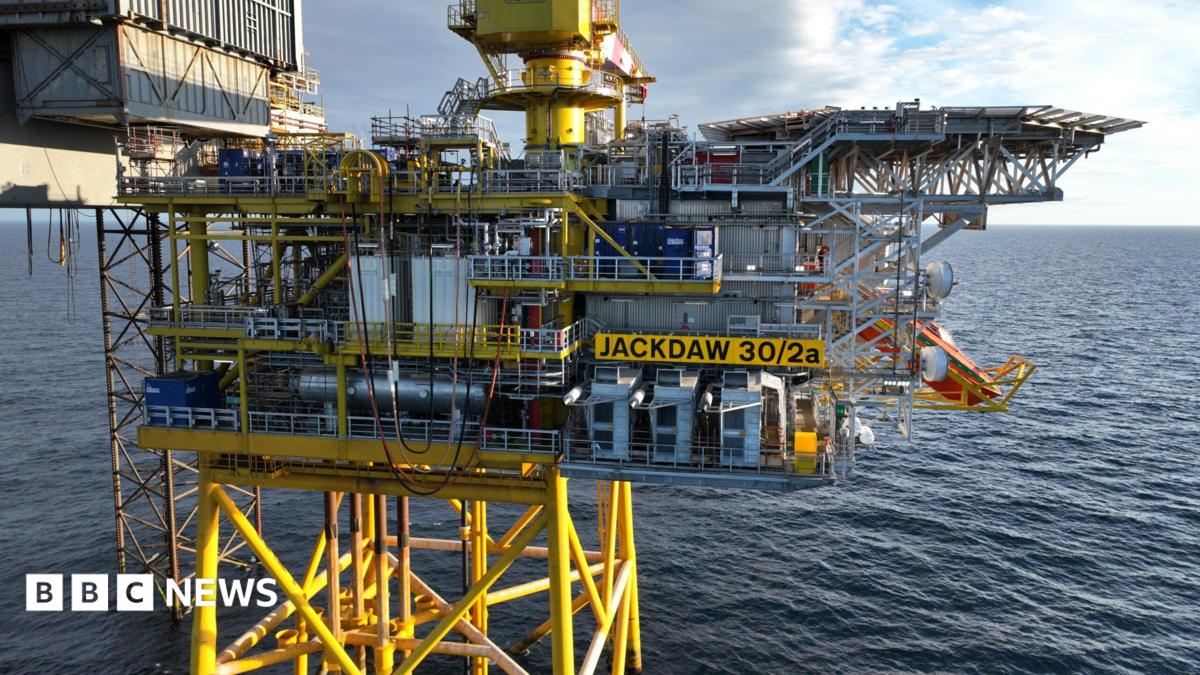
Offshore oil and gas platform marked “JACKDAW 30/2a” standing on yellow support legs above the sea, with industrial equipment, pipework and a crane visible under a partly cloudy sky.

Adura is a joint venture between UK energy giant Shell and Norwegian firm Equinor.

Its 159-page submission said that displacing imported liquified nature gas (LNG) from the United States with gas from the Jackdaw field would save the equivalent of four million tonnes of CO2 equivalent.

It says that could result in around 20% more emissions from imports compared with gas produced domestically.

Those “losses” would principally come from eliminating the need to liquify, transport and then regasify the imported product.

Advertisement

It also said the climate effects would be “minor” because the UK has a “well-regulated industry, with targets and commitments that are aligned with the expectations of the Paris Agreement”, a legally binding commitment to limit global warming to between 1.5 and 2C.

Last year, the Court of Session in Edinburgh ruled that both Jackdaw and Rosebank had been unlawfully approved, because the government failed to take into account the climate impact of burning extracted oil and gas from the fields.

The legal case had been brought by environmental groups Uplift and Greenpeace.

In his judgement, Lord Ericht required a more detailed climate assessment and fresh approval from the UK government before production could begin.

Advertisement
Continue Reading

Business

2026 Emmy Nominations Begin With Variety and Reality Categories as Full List Arrives Later This Morning

Published

on

US actress Liza Colon-Zayas, a Golden Globe nominee for her work on 'The Bear,' was one of the first on the red carpet

The nominations for the 78th Primetime Emmy Awards began rolling out Wednesday morning, with the Television Academy revealing two categories early on NBC’s “Today” show before the full slate of nominees was set to be announced later in the morning from the academy’s Saban Media Center.

The first two categories unveiled, Outstanding Reality Competition Program and Outstanding Variety Series, offered an early glimpse into this year’s field. The reality competition nominees are “Dancing With the Stars,” “RuPaul’s Drag Race,” “Survivor,” “Top Chef” and “The Traitors.” The “Dancing With the Stars” nomination marks the first time the ABC series has been recognized in the category since 2016. The variety series nominees are “The Daily Show,” “Jimmy Kimmel Live!,” “Last Week Tonight With John Oliver,” “The Late Show With Stephen Colbert” and “Saturday Night Live.” Notably, “The Late Show” earned its nomination despite having been canceled by CBS.

The variety series category itself reflects a significant rules change implemented by the Television Academy this year. The academy merged its previous best scripted variety series and best talk series categories into a single, revived Outstanding Variety Series category. As part of that restructuring, “Last Week Tonight With John Oliver,” a perpetual winner in its prior category, now competes directly against long-running sketch series “Saturday Night Live” and late-night talk shows hosted by Kimmel and Colbert, setting up what industry observers have described as one of the more unpredictable races of this year’s ceremony given the shift in competitive dynamics.

The remainder of this year’s nominations were scheduled to be revealed starting at 8:20 a.m. Pacific time, with actors and recent Emmy winners Liza Colón-Zayas and Jeff Hiller announcing the nominees alongside Television Academy chair Cris Abrego. The full ceremony was set to be livestreamed beginning at 11:30 a.m. Eastern time. Colón-Zayas won an Emmy for Outstanding Supporting Actress in a Comedy for her role in “The Bear” in 2024, while Hiller won Outstanding Supporting Actor in a Comedy for “Somebody Somewhere” in 2025.

Advertisement

This year’s nominations cover eligible programming that aired between June 1, 2025, and May 31, 2026. Unlike previous years, in which nominees were sometimes revealed in two separate batches roughly a week apart, the Television Academy opted to announce all of this year’s nominees in a single ceremony on July 8, a change the organization said was designed to better accommodate promotional campaign schedules for shows and performers hoping for Emmy recognition.

Ahead of the official announcement, awards prognosticators had offered detailed predictions for how this year’s field might shake out across the major drama, comedy and limited series categories. In the drama race, “The Pitt,” HBO Max’s medical drama and last year’s reigning Outstanding Drama Series winner, was widely projected to remain a top contender as it seeks to repeat its 2025 victory. The show faces competition from newer entries including Apple TV’s dystopian sci-fi drama “Pluribus” and “Task,” alongside established favorites such as “Slow Horses,” “Stranger Things” and “The Diplomat.” According to predictions from Variety, “Pluribus” was projected to lead all programs with as many as 22 total nominations, narrowly ahead of “The Pitt” at 21, reflecting a potentially significant expansion for both shows compared with their previous awards performances.

The comedy category appeared considerably more open heading into nomination morning, given that last year’s top winner, “The Studio,” has not yet released a second season and was therefore ineligible for this year’s awards. Two shows emerged as likely frontrunners in predictions: “Hacks,” a previous Outstanding Comedy Series winner that recently aired its fifth and final season, and “Widow’s Bay,” the breakout Apple TV+ series that just wrapped its celebrated first season. Predictions suggested “Hacks” could earn as many as 18 nominations for its final season, a total that would surpass “Schitt’s Creek’s” 2020 record for the most nominations earned by a comedy series in its concluding season. “Widow’s Bay” was similarly projected for around 18 nominations, including acting bids for stars Matthew Rhys and breakout performer Kate O’Flynn. Other likely comedy contenders included “The Bear,” “Only Murders in the Building,” “Shrinking” and “Abbott Elementary.”

In the limited series category, the second season of Lee Sung Jin’s anthology series “Beef” was expected to draw strong consideration, alongside Ryan Murphy’s latest project, “Love Story: John F. Kennedy Jr. and Carolyn Bessette,” which was projected to earn as many as 19 nominations, including acting bids for stars Sarah Pidgeon and Alessandro Nivola. Other limited series expected to factor into this year’s field included “DTF St. Louis,” “Half Man,” “The Beast in Me” and “All Her Fault.”

Advertisement

Beyond individual show and performer predictions, the competition between major studios and streaming platforms has also become a significant subplot of Emmy nomination season in recent years. Predictions ahead of Wednesday’s announcement suggested Netflix could lead all distributors with as many as 124 total nominations, surpassing its 120 nominations from the previous year, while HBO Max, which set a personal best of 142 nominations in 2025, was projected to settle closer to 108 nominations this year.

Beyond the competitive categories, the Television Academy also announced several rules changes for this year’s awards in January, including a new “outstanding movie” designation replacing the previous television movie category, updated artificial intelligence guidelines governing eligibility, and expanded eligibility criteria within the casting, costume, lighting, camera and technical arts categories.

This year’s Primetime Emmy Awards ceremony is scheduled to air live on NBC and Peacock from the Peacock Theater in Los Angeles on Monday, September 14, at 8 p.m. Eastern time, shifted from the traditional Sunday broadcast slot due to an NFL game airing on NBC that weekend. The ceremony will be hosted by longtime “Law & Order: SVU” star Mariska Hargitay, who is also eligible for a nomination this year in connection with her HBO documentary “My Mom Jayne,” about her mother, actress Jayne Mansfield. The Creative Arts Emmy Awards, which distribute the majority of the ceremony’s trophies, are scheduled to take place the weekend prior, on Saturday, September 5, and Sunday, September 6.

With the full nominations list set to be revealed later Wednesday morning, this year’s Emmy race appears poised to feature a genuinely competitive field across drama, comedy and limited series categories, setting the stage for what awards observers have described as one of the more unpredictable nomination mornings in recent years.

Advertisement
Continue Reading

Business

Sustainable Boxes & Mailers Compared

Published

on

Sustainable Boxes & Mailers Compared

Picture 2027: your customer lifts a perfectly sized, plastic-free box from the porch, scans a QR code, and shares the unboxing clip moments later. With Britain already shipping 5.1 billion parcels a year, every package now carries cost, carbon, and brand equity—yet founders still gripe about soaring box prices and soggy mailers.

This guide ranks the three packaging solutions most likely to boost profit and customer loyalty by 2027, weighing sustainability, cost, brand experience, protection, and scalability so you can make data-backed decisions with confidence.

3 Best Custom Packaging Companies for Ecommerce Brands

Knowing which packaging format to use is one thing; choosing a supplier who can design, produce, and ship it sustainably is another. These three companies stand out for ecommerce brands heading into 2027, each suited to a different stage of growth.

1. Zenpack: Best End-to-End Custom Packaging Partner

Zenpack tops the list because it handles strategy, design, manufacturing, and logistics in one workflow, so a growing store never juggles a separate designer, factory, and freight desk. There is no hard minimum order, which makes bespoke boxes realistic for a first run, yet the same partner scales past 50,000 units once a product takes off. Its custom packaging for ecommerce program right-sizes each box to cut DIM-weight postage and damage claims, while FSC-certified board and plastic-free inks keep you ahead of the Plastic Packaging Tax and EPR fees. Best for brands that want one accountable partner from concept to delivered parcel.

2. Packhelp: Best Self-Serve Platform for European DTC Brands

Packhelp is a Warsaw-based online platform where you design branded mailers and boxes in the browser, order modest quantities, and receive proofs in days. Low minimums and quick turnaround make it a favourite for UK and EU sellers testing a look before committing to volume. It offers recycled and compostable options, though very high-volume or heavily engineered projects are better served by a full-service partner. Best for smaller branded runs that need speed and self-serve control.

Advertisement

3. noissue: Best for Sustainability-First Small Brands

noissue built its name on compostable and recycled custom packaging—mailers, tissue, tape, and stickers—aimed squarely at eco-conscious DTC brands. Low minimums and carbon-neutral shipping appeal to founders who want green credentials from day one. The catalogue leans toward soft goods and lighter formats rather than heavy protective engineering. Best for apparel, beauty, and lifestyle brands that put sustainability front and centre.

Match the partner to your stage: Zenpack for an end-to-end custom program that scales, Packhelp for fast self-serve branded runs, and noissue when compostable materials lead your brand story.

How we picked the winners

Choosing packaging is not guesswork. We ran every option through a five-point stress test that mirrors the real questions you face each day.

We weighted sustainability most heavily. With EPR fees and the Plastic Packaging Tax on the horizon, recycled content moves from nice-to-have to line-item cost. Formats that sidestep those penalties score highest.

Advertisement

Next was cost efficiency. We compared quotes at 1,000-unit and 10,000-unit runs and added the postage each format triggers. A carton that cuts fifteen pence in shipping often beats one that costs ten pence less to buy.

Brand experience came third. Half of UK shoppers say bespoke or reusable packaging nudges them toward a repeat purchase. If the parcel delights on arrival, it rises in the rankings.

We also tracked protective performance. Courier damage sits at a painful three to four percent of parcels. Any format that shrinks that loss earns extra credit.

Finally, we judged flexibility and scale. Low minimums suit cash-tight start-ups, while automation readiness helps high-volume brands. Solutions that cover both picked up bonus points.

Advertisement

We applied a clear weighting (30-25-20-15-10) and calculated a composite score. Where two options tied, sustainability broke the deadlock because compliance pressure keeps climbing.

The outcome: a ranking you can trust. Every pick checks at least three boxes with data behind it, so you know exactly why it deserves a slice of your packaging budget between now and 2027.

1. Custom Sustainable Packaging: Your Brand, Your Box

Custom packaging works like a white-glove concierge for every order. Instead of squeezing products into stock cartons, you partner with a specialist to build a box or mailer matched to your dimensions, story, and sustainability goals.

What it is and why it tops the list

Custom packaging works like a white-glove concierge for every order. Instead of squeezing products into stock cartons, you partner with a specialist to build a box or mailer matched to your dimensions, story, and sustainability goals.

Advertisement

That design freedom delivers three key wins.

First, it turns delivery into marketing. A branded interior print, tactile paper, or clever tear-strip sets you apart in a mailbox of plain brown. Dotcom Distribution data shows 52 percent of consumers are likely to make a repeat purchase from an online merchant that delivers premium packaging. Those extra seconds of unboxing joy translate into repeat revenue and social content you never had to fund.

Second, custom engineering wipes out the “box full of air” problem. By right-sizing from day one, you cut DIM weight charges and trim damage claims that sit in the three-to-four-percent range for standard cartons.

Finally, because you control the spec sheet, you can bake in eco materials—FSC-certified board, algae ink, mycelium inserts—without reducing strength. Packaging engineer Lofty Shen notes, switching to sustainable substrates need not weaken protection. This keeps you compliant with the Plastic Packaging Tax and proves you act on climate promises.

Advertisement

Custom packaging is not just a pretty box; it is a revenue lever, a cost lever, and a compliance lever wrapped in one tidy parcel.

2. Eco-Friendly Corrugated Mailer Boxes: The Versatile Workhorse

Cardboard is still the backbone of e-commerce because it works. A well-designed corrugated mailer shrugs off knocks, stacks neatly in a van, and drops straight into household recycling without fuss.

Most UK suppliers now ship board containing 70 to 100 percent recycled fibre and an FSC stamp as standard. New self-locking designs arrive flat, pop open in seconds, and need no plastic tape, so your pack bench moves faster and labour costs dip.

Protection is where corrugated excels. The fluted core acts as a built-in shock absorber, keeping cosmetics, tech, and even a bottle of craft gin safe on the bumpiest courier run. Packaging engineer Lofty Shen says, “Brands often fear that switching to eco materials will weaken the box, but a properly specced corrugated mailer offers the same crush resistance as older virgin board.”

Advertisement

Cost control is the other headline. A medium postal box costs about forty to fifty pence at five hundred units and drops to roughly twenty-five pence beyond five thousand. Because the box folds to Royal Mail “large letter” or “small parcel” sizes, you save on postage too. That double saving earns corrugated second place on our list.

If you still pack small items into oversized cartons, start here. Choose two or three stock mailer sizes, add a branded sticker, and—if volume justifies it—explore right-sizing machines to cut void space, then watch your shipping bill and damage claims fall together. Sometimes the workhorse deserves fresh praise.

3. Recycled and Biodegradable Mailer Bags: Lightweight, Low-Cost Shipping

Soft goods rarely need a box. For a hoodie, a novel, or a set of socks, a slim mailer does the same job with a fraction of the cardboard and grams. That weight saving matters: drop just fifty grams and many parcels slide under Royal Mail’s next price band, trimming pence from every label.

Greener mailers now on the market address the plastic dilemma directly. Choose LDPE bags made from 100 percent post-consumer waste that shoppers can recycle at supermarket drop points, or compostable blends of PLA and PBAT that break down in industrial facilities. Either option signals progress to customers who link thin plastic with landfill.

Advertisement

Cost stays appealing. A plain recycled poly mailer often lands under ten pence in ten-thousand lots. Branded compostable versions hover around twenty pence, still cheaper than a small box once you add filler and higher postage. For subscription brands, that gap compounds into real margin.

Protection is the trade-off. Mailers cushion nothing, so reserve them for items that bend, fold, or bounce back unscathed. Quick rule: if you could toss the product across your desk without worry, a mailer is safe. Everything else earns a box.

Upgrade the experience with a dual-seal strip so returns ride back in the same bag, and print a clear “Recycle me” or “I’m compostable” icon front and centre. Those small cues guide disposal and earn sustainability points without extra cost or complexity.

Compare your options in one quick scan

You now know the story behind each solution, but choices get easier when the facts sit side by side. Use the table below as a quick reference the next time you review packaging spend or pitch an upgrade to finance.

Advertisement
Solution Sustainability Cost efficiency Brand impact Protection Flexibility Best fit
Custom sustainable packaging High: FSC board, plastic-free inks; future-proof for EPR Medium: higher unit price, offset by lower DIM weight Excellent: full unboxing theatre fuels repeat buys High: engineered inserts cut damage Medium: minimum order of 500+ typical Premium DTC, launches, gifting
Corrugated mailer boxes High: 70–100 percent recycled fibre; easy curbside recycle High: £0.25–£0.50 at scale Moderate: stickers or single-colour print High: built-in cushioning High: dozens of stock sizes Everyday products, mixed catalogues
Recycled / compostable mailers High: 100 percent PCR or industrial composting Very high: sub-£0.10 at 10 k Low: limited canvas, but custom colours possible Low: only for soft goods High: store flat, no minimum Apparel, books, refills

Conclusion

Adopting any of these three packaging solutions moves your brand closer to a leaner cost base and a lighter environmental footprint. Weigh their strengths against your catalogue and shipping profile, then pilot the best fit before 2027 arrives.

Advertisement
Continue Reading

Business

Outcry as Meta lets users make AI images from public Instagram profile pics

Published

on

An AI-altered image generated using Muse Image of a woman against a Bauhaus art background and wearing red blue and yellow, with black curly hair

Meta is facing a backlash over its new AI tool Muse Image, which can generate pictures using other people’s profile pictures without telling them.

It is one of many text-to-image tools publicly available, which as the name suggests can create pictures from a few lines of simple written text.

Muse Image is available through the Meta AI app and web browser, as well as on WhatsApp and in Instagram Stories for US users.

While Meta says users can opt out of their image being used even with a public account, Donald Campbell, advocacy director at tech justice non-profit Foxglove told the BBC it was an “obvious recipe for disaster”.

Advertisement

“We’ve already seen a catalogue of harms from non-consensual AI-altered images on social platforms just in the past year,” he said.

“It is hard to see why Mark Zuckerberg thinks facilitating yet more of this creepy image manipulation is a good idea.”

The feature is likely to face heightened scrutiny as regulators and campaigners raise concerns about AI-generated images, with Ofcom currently investigating X over Grok’s role in creating and sharing non-consensual AI-altered images of real people.

Privacy International also criticised the feature, telling the BBC it was “the latest sign AI companies see people’s images and data as raw material to be exploited”.

Advertisement

“Pulling real users into generated photos without explicit consent is a privacy landmine waiting to detonate,” one user wrote on X, external.

Meta said a dedicated setting, separate from account privacy controls, allows users to opt out even if they have a public account.

To do so, users must go to Instagram’s settings menu, select “Sharing and Reuse” and switch off “Allow people to reuse your content on Instagram and with AI features at Meta” for posts and reels.

Advertisement
Continue Reading

Trending

Copyright © 2025