

Crypto World
Sadot Group crashed 72%, halted five times today after short-seller report



Nasdaq halted trading in Sadot Group (SDOT) five times this morning as its shares collapsed as much as 72% from yesterday’s close.
The plunge followed a report from short-seller Fugazi Research, which declared that the company has “no meaningful fundamental value and is unsuitable for investment.”
The Nasdaq-listed agri-food company, once a burger chain known as Muscle Maker Grill, still has large financial obligations and evidently collapsing investor confidence.
By late morning in New York, the stock changed hands near $14, down about 65% from Tuesday’s $40.00 close. It briefly traded down to an intraday low of $11.01, or 72% below its 4pm price yesterday.
Each plunge tripped Nasdaq’s trading breakers, designed to maintain orderly market pricing.
As the volatile and relatively small company has swung wildly over the past few weeks, Nasdaq’s limit-up and limit-down circuit breakers have interrupted SDOT trading on roughly a dozen business days since early June.
From burgers to commodities trading
Fugazi Research’s report frames Sadot’s serial reinventions as “monkey-branching” across flimsy businesses. The report’s title derided the company, reading, “Raise Money, Change the Story, Sell Nothing, Repeat.”
The short-seller’s central allegation is that after all of Sadot’s pivots “there is no longer an operating business generating revenue.”
Sadot Group began as Muscle Maker, Inc., a fast-casual restaurant operator, rebranding in 2023 as a global agricultural commodities trader. It positioned itself alongside giants like Cargill and Bunge.
That trading arm booked $132 million in revenue in the first quarter of 2025. One year later, for the quarter ending March 31, 2026, that division reported $0.
Pivots came fast. Sadot sold Muscle Maker Grill and its Pokémoto restaurant brands to Marv Brands in December 2025.
It lost a food farm to a court judgment the same month.
Next, it sold its last trading unit, Sadot Latam LLC, on June 26 for $1,000 in cash plus a share of receivables it does not expect to collect.
As the company pivoted its strategic direction, its balance sheet persisted and deteriorated.
Read more: This penny stock pivoted to Solana and Hyperliquid and lost 99.9%
Sadot Group’s lopsided balance sheet
The company’s Q1 filing shows total liabilities of $60.8 million against total assets of $2.4 million, a shareholders’ deficit of $58.4 million, and discloses substantial doubt about its ability to continue as a going concern.
Management, meanwhile, have been busy diluting shareholders to try to rescue the failing enterprise. In early June it acquired a UAE software company and its trading platform for a headline $12 million, payable almost entirely in stock.
It also took a six-month option on a $125.5 million California real estate portfolio, again payable in stock.
These dilutive events for shareholders have decimated its long-term stock price. Sadot has executed three reverse stock splits within the past two years, most recently a 1-for-20 reverse split on May 27.
Shares have lost 90% of their value over the past 12 months, and 99% over the past five years.
Distressed companies use the reverse split maneuver to manufacture a share price above Nasdaq’s $1 minimum bid requirement per share.
Not enough stockholder equity
However, using reverse splits is not enough to stay listed. Separately, Nasdaq has warned that the company no longer meets its minimum stockholders’ equity rule, and also flagged it in April for filing its annual report late.
Nasdaq’s minimum equity requirement is “either a market value of listed securities of $35 million or net income from continuing operations of $500,000 in the most recently completed fiscal year or in two of the last three most recently completed fiscal years.”
It’s not a particularly high bar for a publicly traded company, yet Sadot Group is certainly struggling to meet it.
Nor is it particularly difficult for a public company to file annual reports on time, but Sadot failed to do that, too.
Fugazi Research also cited a near-term, upcoming catalyst as a possible date of reckoning.
On August 13, Sadot Group is due to release its Q2 earnings announcement. When it discloses results for this quarter, Fugazi Research predicts, the company could disclose that it doesn’t have an operating business generating revenue.
For now, the Nasdaq tape is recording the panic among traders vying for position ahead of the company’s upcoming disclosures about its good, bad, or possibly non-existent Q2 revenue.
SDOT traded as high as $106 intraday on July 2 and closed yesterday at $40.
Shares hit an intraday low of $11.01 today, and its terrifying 52-week range spans from $460 down to $2.63.
Got a tip? Send us an email securely via Protos Leaks. For more informed news and investigations, follow us on X, Bluesky, and Google News, or subscribe to our YouTube channel.

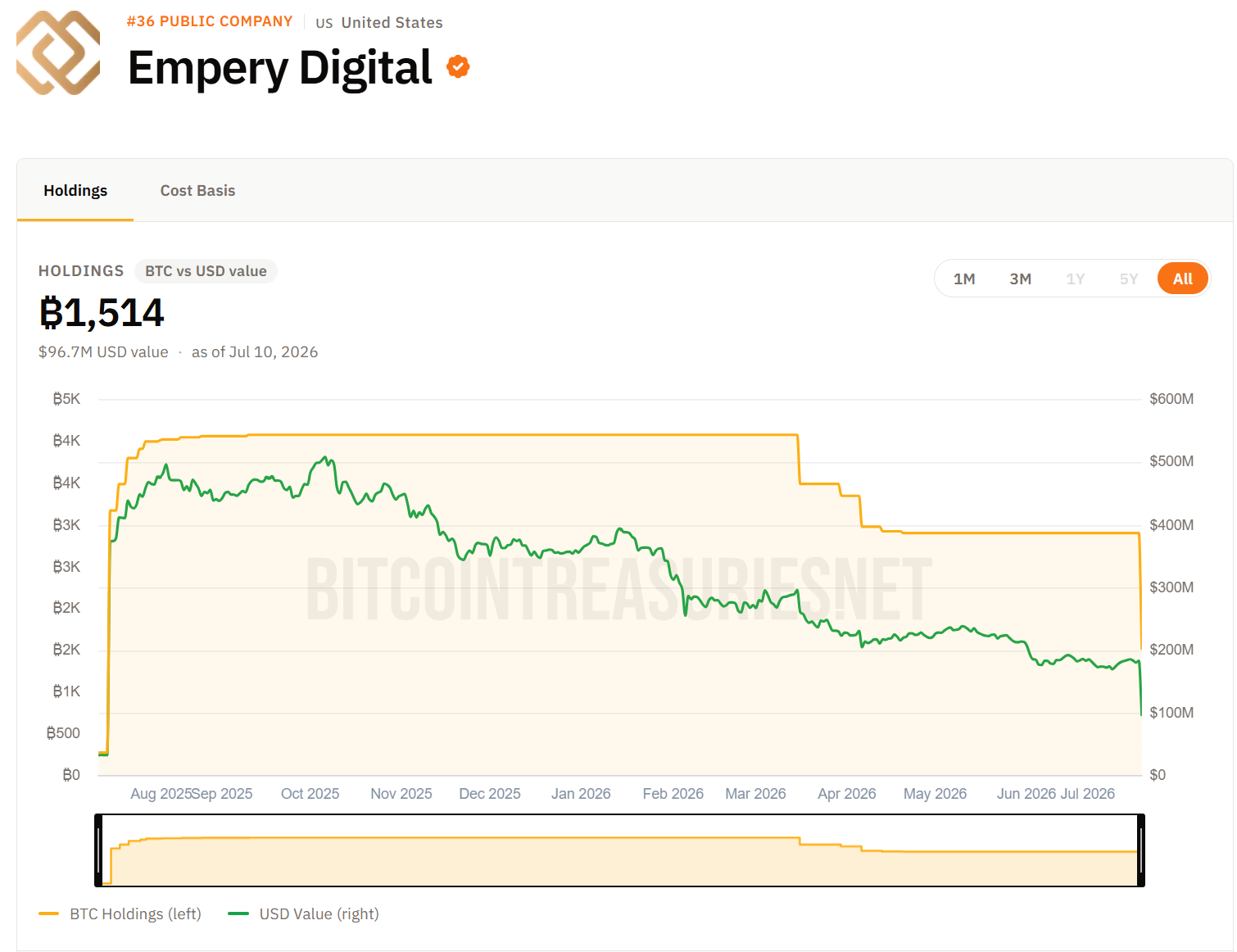
Empery Digital has sold 1,400 Bitcoin (BTC) since early May, cutting its Bitcoin holdings by roughly 48%. The sale raised about $87.1 million as the Nasdaq-listed firm pivots toward AI infrastructure.
The company sold at an average price of $62,200 per token, according to a securities filing. It joins a growing list of treasury firms trimming Bitcoin to fund other priorities.
Empery Digital Cuts Bitcoin Holdings to Repay Debt
Empery Digital disclosed the sales in a July 10 filing with the Securities and Exchange Commission. The company began selling after May 7.
It repaid $10 million of debt on July 7. Empery set aside the rest for a planned property deal and legal costs tied to shareholder litigation.
As of July 10, the firm held 1,514 BTC and roughly $73.9 million in cash. It still owes $45 million on its debt facility.

The selling is not new. Empery began offloading Bitcoin in February to buy back shares and repay its Two Prime Lending facility.
By early April, it had already sold hundreds of coins in weekly batches, including 370 in one week. The pace accelerated as Bitcoin slipped from its highs.
EMPD Stock Holds Near a 52-Week Low
Investors reacted calmly. EMPD traded around $3.83 on Friday, up less than 1%, after an early spike to $3.96 faded. The shares still sit about 75% below their 52-week high of $15.80.

At that level, the market values Empery near $108 million. That trails the roughly $126 million of Bitcoin and cash on its books, net of debt. The gap has dogged other Bitcoin treasury companies.
Activist investors have seized on the discount. In April, 12% shareholder Tice Brown urged the board to restart maximum daily buybacks. Empery has funded past buybacks by selling Bitcoin, the very approach the activists want expanded.
Bitcoin Treasury Firms Pivot to AI Infrastructure
The retreat extends past Empery. MicroStrategy has reduced its Bitcoin holdings after years of buying. Nasdaq-listed miner Riot has sold Bitcoin to fund its own AI data center build.
On June 29, Empery announced a $65 million investment for a 25% stake in a Midwest facility. The deal is set to close in the third quarter.
The site carries about 150 megawatts of power and could expand to 300. Its partner, Hunt Properties, was formed to manage the holdings of Texas oil tycoon H.L. Hunt’s family. The developer has handled more than $2.5 billion in real estate since 1987.
A non-binding agreement outlines a triple net lease worth up to $1 billion. The tenant would be a global AI hardware leader. Empery also scrapped its Bitcoin treasury dashboard, saying holdings no longer capture its full value.
Bitwise executive Matt Hougan said MicroStrategy’s run as top buyer is likely over, with mining and treasury stocks now trading like AI infrastructure plays.
The lease is still non-binding, and the deal must clear a third-quarter close. For now, Empery has traded a shrinking Bitcoin stack for a bet on the infrastructure powering the AI boom.
The post Another Publicly Traded Company Just Cut Bitcoin Holdings by 48% appeared first on BeInCrypto.

Bitcoin-backed preferred shares STRC and SATA posted their highest combined monthly trading volume on record in June, surpassing $10 billion amid a BTC sell-off that pushed both below their $100 par value.
According to data from BitcoinTreasuries.net (BTN), Strategy’s STRC generated $8.7 billion in trading volume last month, while Strive’s SATA recorded $1.5 billion, and this happened with the price of BTC falling near the $57,000 level.
June Trading Sets New Preferred Stock Record
BitcoinTreasuries’ latest corporate adoption report shows that the $8.7 billion recorded by STRC represented a 20.8% jump from the $7.2 billion in May and 11.5% above April’s $7.8 billion. The amount was also more than 52% higher than what the shares generated in March after a much quieter start to the year.
Strategy’s perpetual preferred stock volumes had reached $2.2 billion in February before climbing 159.1% in March. January recorded $2.4 billion, following $1.2 billion in December 2025.
The BTC treasuries market aggregator pointed to June as the first major stress test for the digital credit products after STRC and SATA both dropped well below their $100 par value beginning June 18. According to the firm, margin calls forced STRC and SATA leveraged traders to liquidate positions after an extended period of trading near par.
After weathering Bitcoin’s fall to a price level below $60,000, STRC recovered to about $87 by July 2 after falling as low as $75, while SATA traded near $97. A survey by BTN found that investors were quite headstrong despite the volatility, with more than half of respondents saying that the price decline was not a significant concern. 84% did not sell either of the stocks during the decline, and 52% bought one or both of them after June 18.
“The instinct after June 18 is to ask whether STRC and SATA are safe,” the survey read. “That is the wrong question. Strategy holds 847,363 BTC acquired at an average cost of approximately $75,651. The dividend obligation is a cash flow question, not a solvency question.”
It also pointed out that none of the issuers had missed a payment, and none of them had seen their credit quality change from mid-June.
Strategy, Strive, Metaplanet Lead in Issuer Confidence
In the investor confidence part of the BTN study, respondents projected the strongest issuance potential for Strategy, with the most common expectation placing new digital credit issuance between $10 billion and $30 billion for the Michael Saylor-led firm by the end of 2027.
Strive came in second place on a forecast between $2 billion and $5 billion in additional issuance, followed by Metaplanet, Smarter Web Company, and Bitmine, respectively.
When asked which digital credit issuers appeared most promising, 78.4% of those who took the poll ranked Strategy first, 74.5% tapped Strive second, and Metaplanet took third spot with 49%.
The post STRC, SATA Hit Record $10B Monthly Trading High Despite Price Drop Below Par appeared first on CryptoPotato.


United States prosecutors have charged a man serving a federal prison sentence over the alleged removal and laundering of about $290,000 in crypto assets held in a Kraken account subject to a forfeiture order.
The Department of Justice said on Thursday that Rossen Iossifov, a Bulgarian national, conspired in January 2024 to withdraw and transfer crypto that a federal court had ordered forfeited following his 2021 conviction. Prosecutors allege that the assets were moved through illicit mixing services and crypto exchanges before the US could take possession.
The case shows how attempts to move crypto after a forfeiture order can trigger fresh criminal charges, even after the underlying conviction.
The US Attorney’s Office for the Eastern District of Kentucky said the cryptocurrency was held in an account registered to Iossifov at Kraken and had been restrained during the investigation. The DOJ announcement did not say how the account was accessed or whether the funds were recovered.
Crypto laundering draws wider enforcement scrutiny
Iossifov was previously convicted of racketeering conspiracy and money laundering conspiracy for his role in an online auction fraud network that victimized at least 900 Americans.
Prosecutors said Iossifov owned and operated a crypto exchange called RG Coins, which converted criminal proceeds into crypto and cash for the network. Earlier evidence showed that he laundered nearly $5 million in crypto in less than three years.
The court ordered Iossifov to pay over $2.6 million in restitution and forfeit crypto assets. He is now charged with removing property to prevent seizure, aiding and abetting and conspiracy to commit money laundering. The charges carry a maximum penalty of 25 years if convicted.
An indictment is an allegation, and Iossifov is presumed innocent unless proven guilty.
Related: US DOJ sentences man to 70 months in prison for role in $263M scam group
The charges come as authorities intensify scrutiny of crypto infrastructure used to obscure illicit flows. On Thursday, Interpol said that a wallet tied to a suspected romance-scam money launderer processed over $122 million in 10 months, using cross-chain swaps to move proceeds from online fraud.
The investigation was part of a broader operation involving 97 countries and territories. The campaign led to 5,811 arrests and the interception of $293 million in assets tied to fraud and money laundering.
Magazine: Bitcoin’s quantum dilemma: Bigger blocks or STARK proofs?
Bitcoin’s gradual recovery took the asset to and just above $64,000, and it has been able to maintain that level for the past 24 hours or so.
Most larger-cap altcoins are slightly in the green on a daily scale, but they have mostly remained sideways since yesterday.
BTC Sustains $64K
The primary cryptocurrency reacted well to the July 1 dump below $58,000 when it marked a new multi-year low. It rebounded quickly to reclaim the $60,000 level and jumped to $63,000 during the previous weekend. It bounced to $64,000 on Monday before Strategy announced its biggest BTC sale ever, disposing of over 3,500 units.
The immediate FUD resulted in a nosedive to $61,200. However, the asset jumped hard in the following hours and challenged $64,500. Another rejection took place after the US and Iran initiated new attacks against each other, and bitcoin slipped to $61,500.
Nevertheless, the bulls appeared more persistent this week and, perhaps driven by positive net inflows into the spot Bitcoin ETFs, helped the asset recover to over $64,000 on Friday. After a minor dip below that level, BTC is back at it again, trading inches above it.
Its market capitalization has climbed to almost $1.290 trillion on CG. Its dominance over the alts, though, has taken a hit and is down to 56.3% from 56.6% just days ago.

PI’s Lows
Pi Network’s native token simply cannot catch a break these days. It continues to chart consecutive all-time lows, and the latest came a couple of days ago at $0.09663 (CoinGecko data). Although it has rebounded by just over 2%, it still struggles below $0.10.
Most larger-cap alts have remained sideways on a daily scale. ETH is close to $1,800, BNB has neared $580, while XRP fights for $1.10. In contrast, SOL is below $80, while HYPE has dropped further away from $70 after a 2.7% decline.
BEAT has outperformed the rest of the top 100 alts, soaring by 30% to almost $3. In contrast, BDX and MORPHO have plummeted by 9% daily.
The total crypto market cap has remained at around $2.280 trillion, showing no major change since yesterday.

The post Bitcoin Price Holds Above $64K, Pi Network’s PI Token Digs New Lows: Weekend Watch appeared first on CryptoPotato.
The crypto industry has spent years convincing Washington that it deserves a seat at the table. Now, as Congress inches toward passing the CLARITY Act, a long-awaited crypto market structure bill, it seems it finally has one.
The question is no longer whether lawmakers are listening to digital asset advocates, but whether the crypto lobby’s deep pockets and influence in election campaigns will be enough to get the legislation over the line.
That debate comes as Senate negotiators work toward a potential floor vote before Congress breaks for its August recess.
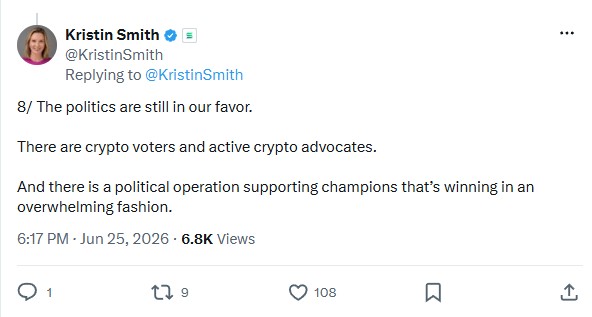
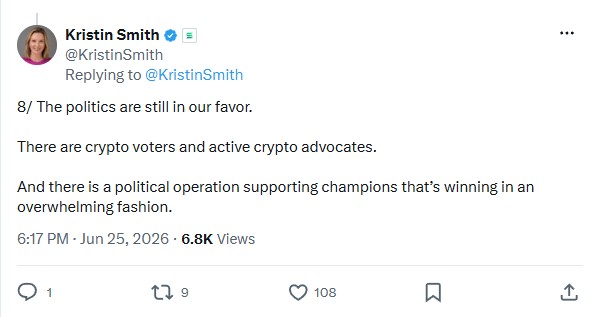
In a June 25 thread on X, Kristin Smith, president of the Solana Policy Institute and former chief executive of the Blockchain Association, argued that crypto’s advocacy operation is “the strongest and most sophisticated it has ever been.”
She pointed to bipartisan negotiations, daily meetings with lawmakers, and what she described as “a political operation supporting champions that’s winning in an overwhelming fashion” to illustrate her point.
Source: Kristin Smith
According to a report from consumer advocacy organization Public Citizen, that “political operation” has spent $189 million so far to influence the 2026 midterm elections. Crypto’s opponents see the war chest as an illegitimate attempt to buy influence and votes, while the industry argues it’s a much-needed corrective to the anti-crypto forces that have dominated politics since 2022.
Colin McLaren, the Solana Policy Institute’s head of government relations, told Cointelegraph the industry’s political infrastructure did not emerge overnight.
“Fairshake, Cedar Innovation Foundation, Stand With Crypto, and the Blockchain Association built the political infrastructure that’s moving pro-crypto legislation forward,” he said.
“These groups, alongside the advocacy of companies and projects, created and supported allies in Congress, giving them the resources and cover to legislate and lead without fear of electoral reprisal from the anti-crypto army.”
The tide begins to turn on CLARITY
There are signs that momentum to pass the CLARITY Act is building.
On July 3, the Major County Sheriffs of America (MCSA), a national association representing elected sheriffs from some of the largest counties in the US, announced that it had shifted from opposing the CLARITY Act to a neutral position following discussions over Section 604, also known as the Blockchain Regulatory Certainty Act. As Coinbase chief executive Brian Armstrong commented on X, that development is “huge.”
Earlier that same day, the National Organization of Black Law Enforcement Executives (NOBLE) became the first major law enforcement body to endorse the bill.
But the BRCA, which includes protections for developers decentralized smart contracts, remains a sticking point. Four other attorneys and law enforcement groups representing 70,000 members between them, warned the Acting U.S. Attorney General in late June that the bill’s “broad exemptions could create gaps in oversight and accountability that sophisticated criminal actors may exploit.”
So the race is far from won.
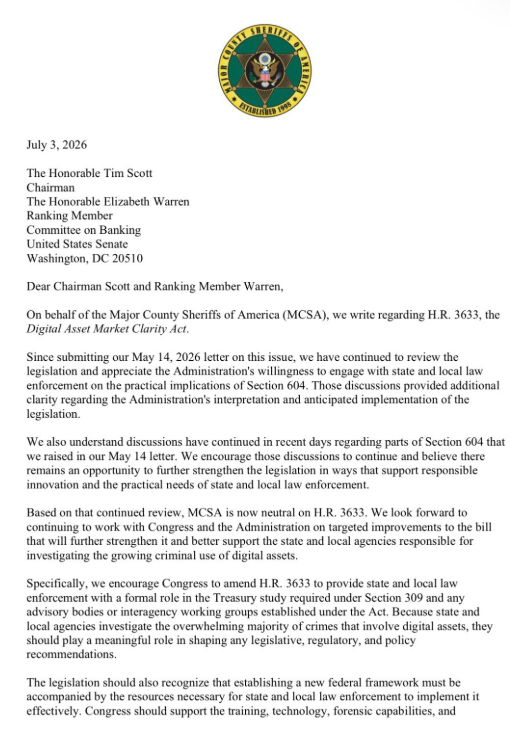
MCSA letter to Senate Banking Leaders. Source: Eleanor Terrett
Related: Senate leaders push for July passage of CLARITY Act
How is the crypto lobby campaigning?
Smith’s comments spotlight how closely the industry’s political organization has become intertwined with its legislative ambitions. No organization better exemplifies that shift than Fairshake, the crypto-backed political action committee (PAC), funded by companies like Coinbase, Ripple and Andreessen Horowitz.
A PAC is an organization that raises and spends money to support or oppose political candidates and causes, and can pool contributions from multiple donors to fund campaign advertising and other political activity, subject to federal election rules.

Political Action Committees (PACs). Source: Federal Election Commission
Throughout the 2026 US congressional primary election cycle, Fairshake and affiliated PACs have spent tens of millions of dollars supporting candidates in various races who are viewed as favorable to digital assets while opposing others seen as hostile to the sector.
In May, affiliated PACs spent more than $20 million supporting candidates in Republican congressional primaries across Georgia, Alabama and Kentucky, including more than $7 million backing Rep. Andy Barr in Kentucky’s Senate primary.
The group later expanded its efforts into Democratic contests, spending millions of dollars in Maryland and New York. Several crypto-backed candidates advanced in these states, further reinforcing Fairshake’s reputation as the industry’s most influential political organization.
McLaren argued that the crypto’s lobby’s willingness to back candidates in competitive races is making a difference.“Adrian Boafo was polling behind the field in Maryland before the crypto industry’s ads ran. He won,” he said.
“In Houston, the industry backed Christian Menefee, a young upstart challenging a sitting incumbent. He won. The industry supports its champions, even when that means taking risks.”
Related: Democrat backed by Ripple co-founder’s PAC wins Colorado primary
Fairshake spokesperson Geoff Vetter told Cointelegraph that election victories are only one measure of success.
“Our goal is to increase the number of members who understand and are willing to act on these issues in good faith,” Vetter told Cointelegraph.
“The difference we make will be creating the largest crypto-literate caucus in history, ready to act on responsible regulation.”
But is Fairshake’s influence overstated?
But how much of Fairshake’s influence stems from election outcomes themselves rather than simply the perception that it can shape them?
In a June 30 analysis published by Brogan Law, journalist Veronica Irwin examined Fairshake’s involvement in 40 decided races during the current election cycle, comparing Federal Election Commission filings with polling data and election results.
While Fairshake-backed candidates won in 38 of those contests, Irwin’s analysis found that many of those races already leaned heavily toward the eventual winner before the PAC entered the picture.
Based on her methodology, only 16 races appeared to be genuinely competitive enough for Fairshake’s spending to have plausibly adjusted the outcome.
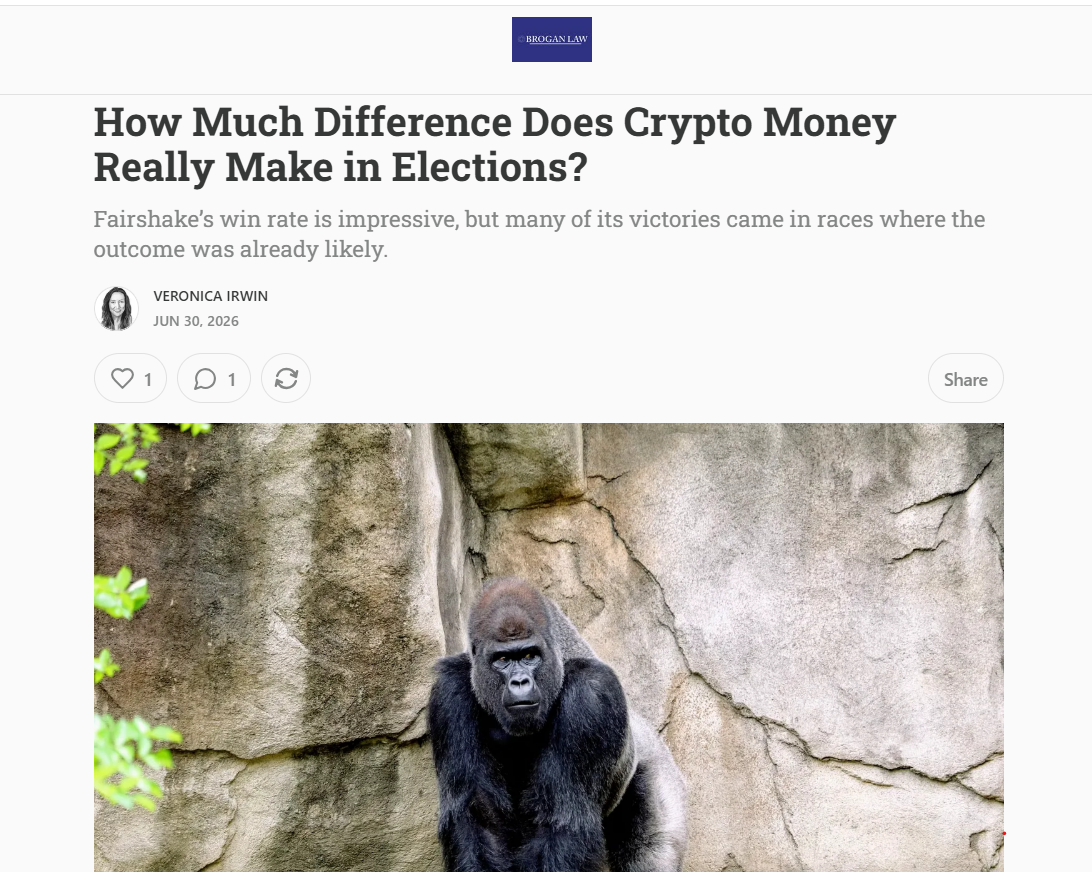
How much difference does crypto money really make in elections? Source: Brogan Law
That’s still a considerable impact, and Irwin said her goal was never to argue that Fairshake lacked influence, but to show that its strategy is more sophisticated than many observers assume.
“I was reading a lot of stories that were basically just the press release,” she told Cointelegraph. “That top-line narrative implies they are just buying up all of the elections outright and having these huge, huge wins. That kind of betrays the more complex strategy underlying it.”
Rather than simply trying to swing every race, Irwin said Fairshake has the financial resources to “spray” campaign spending across a much wider range of contests than most PACs could afford.
“They’re in this position where they have so much money that they can pursue these costly strategies,” she said.
Her analysis raises the nuanced possibility that the organization’s greatest political strength may lie not in deciding elections outright, but in cultivating the belief that it can.
Beyond campaign spending
Campaign spending alone does not always move legislation through Congress. The CLARITY Act’s progress also reflects months of negotiations involving lawmakers, industry groups and outside stakeholders.
The MCSA’s shift to a neutral position shows that legislation still depends on coalition-building and compromise, particularly when addressing concerns around financial crime, consumer protection and law enforcement.
“It is a combination of factors,” Ron Tarter, founder of self-custodial, multi-currency cryptocurrency wallet RockWallet and a former attorney, told Cointelegraph. “Adoption is the foundation… Lobbying translates that adoption into direct policy engagement… and campaign spending is the accelerant.”
Irwin also argued that crypto’s political influence comes from more than campaign spending alone. “Crypto occupies this space where it matters a lot to you and me, but to the average voter it isn’t a top-five issue,” she told Cointelegraph.
“That’s the sweet spot where lobbying and election influence can really flex their muscles… It’s pretty easy for a politician to switch to a more pro-crypto perspective without a lot of downside,” she said.
“It’s this one-two punch between lobbying being really effective and the potential to raise a bunch of money if you side with crypto.”
McLaren argued that campaign spending succeeded because it was built on a broader political strategy rather than replacing one.
“Crypto didn’t come to Washington because it wanted to,” he said.
“The industry played defense for years, then decided to meet the threat at the ballot box and build the apparatus to advocate for the clarity needed.”
Magazine: Bitcoin’s quantum dilemma: Bigger blocks or STARK proofs?
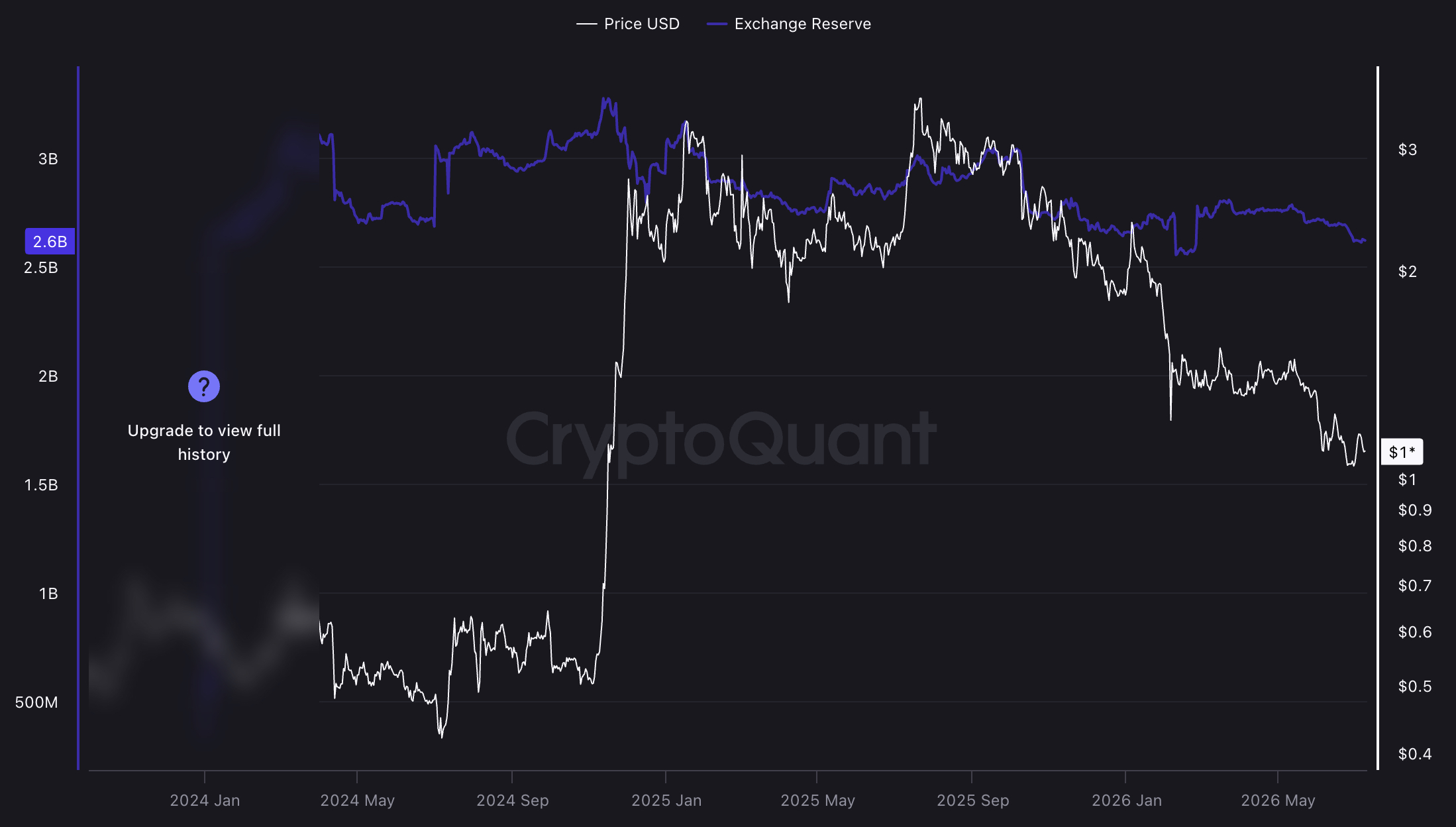
XRP price prediction remains centered on one question: can buyers finally push through the $1.15 to $1.20 resistance range? For now, XRP is changing hands around $1.08 to $1.12, staying trapped in a familiar range. Holding support is nice, but markets rarely hand out trophies for standing still.
Still, the defense of the $1.00 to $1.05 area over several weeks deserves attention. Sellers have tested that floor repeatedly without forcing a lasting breakdown. That keeps the bullish case alive, even if it has not earned a victory lap.
Meanwhile, exchange outflows have climbed from roughly 41 million XRP to about 123 million. That usually points to coins leaving trading platforms instead of preparing for sale. It is a positive signal, although one metric alone cannot carry the entire chart.
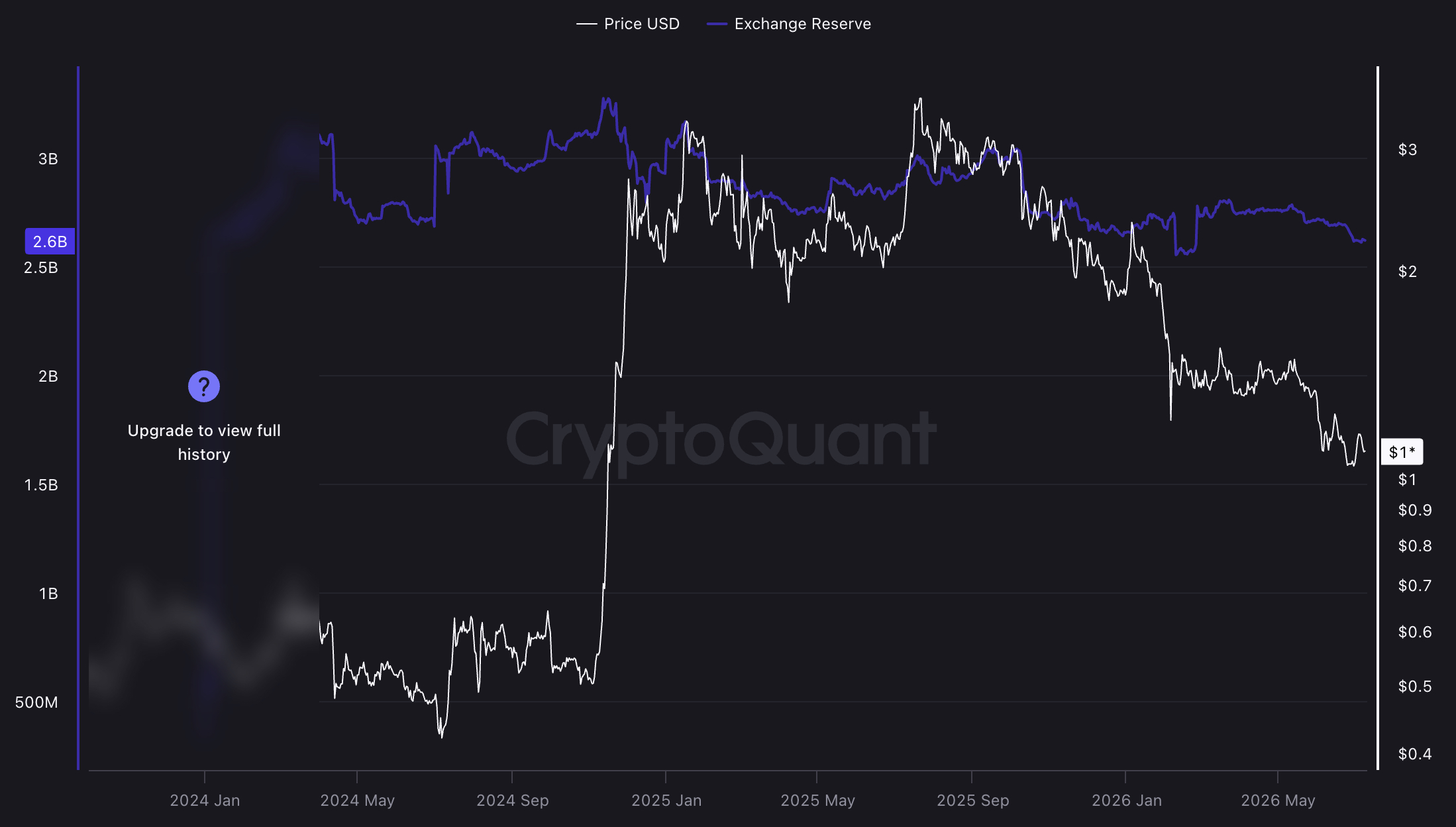
Even so, price action still needs a spark. Without fresh buying pressure, XRP could continue drifting between support and resistance. Markets can be patient, but traders usually are not.
If buyers reclaim the $1.15 to $1.20 zone, momentum could improve quickly. Until then, XRP remains in consolidation, waiting for a catalyst instead of creating one.
Don’t Miss Out on Our $1,000 USDT Airdrop on ByBit
XRP Price Prediction: Can it Hit $1.20 Before the CLARITY Act Vote?
XRP is trading around the $1.08 to $1.10 area, but the real battle sits closer to $1.18. That is where the 50 day EMA meets a crowd of sellers hoping to get out even. Push through that zone, and $1.20 to $1.25 becomes the next target. Breaking resistance is one thing. Staying above it is another.
The chart has started to look healthier, although it is not waving a green flag yet. RSI remains below 50, while the MACD has edged back into positive territory. That tells us selling pressure is easing, but buyers have not fully taken charge. For now, the market still wants a reason to commit.
That reason could come from Washington. The CLARITY Act remains on traders’ radar after missing its original timeline, with the Senate expected to revisit the issue later this month. Any sign of progress could quickly improve sentiment. If lawmakers kick the can again, XRP may stay trapped in its current range a little longer.

Prediction markets paint a balanced picture. Traders give XRP almost the same chance of testing $1.20 as revisiting the $1.00 area this month. A clean move above $1.18 could open the door to $1.25 or even $1.30. On the flip side, losing $1.00 would expose $0.87, while $0.80 remains the next notable support.
Institutional demand has not disappeared. Spot XRP ETFs continue to attract steady inflows, suggesting bigger investors are still accumulating. Ripple’s recent partnerships have also helped sentiment. Even so, XRP keeps bumping into sellers before reaching $1.20. The market can be stubborn, especially when everyone expects the same breakout.
Discover: The Best Crypto to Diversify Your Portfolio
LiquidChain Targets Early Mover Upside as XRP Tests Key Levels
XRP’s ceiling problem with its strong demand base, capped upside by overhead supply and regulatory timing, is precisely the kind of setup that sends traders scanning for asymmetric exposure elsewhere. At here with a contested move to $1.20, the upside math on a near-term XRP trade is measured in percentages. XRP Ledger infrastructure continues to develop, but near-term price catalysts remain binary and event-dependent.
LiquidChain ($LIQUID) is a Layer 3 infrastructure project taking a different angle on the multi-chain problem: rather than bridging assets between ecosystems. It fuses Bitcoin, Ethereum, and Solana liquidity into a single execution environment.
All eyes are on LiquidChain. — LiquidChain (@getliquidchain) July 7, 2026
 ⟁https://t.co/vqvBcdSQYC pic.twitter.com/GsuIe1xMnJ
The architecture centers on a Unified Liquidity Layer with single-step execution and verifiable settlement. So, with Liquid, developers deploy once and access all three ecosystems without the usual bridge overhead or fragmented liquidity pools.
The presale is live at $0.01478 per $LIQUID, with $900K raised to date. For traders comfortable with that risk profile, the LiquidChain presale warrants research as a speculative position distinct from the regulatory-driven binary that XRP currently represents.
Discover: The Best Token Presales
The post XRP Price Prediction: Can XRP Crack $1.20 Before Clarity Act? appeared first on Cryptonews.
Indian jewelers are cutting gold prices by as much as $19 an ounce this week as sharp volatility freezes retail buying, while China’s central bank keeps adding to its reserves.
The contrast highlights diverging gold strategies across Asia’s two largest markets during a volatile month for the metal. Spot prices dropped to a seven-month low in late June before rebounding, fueling the wide swings dealers cite this week.
India’s Discounts Deepen as Buyers Hesitate
Dealers in India cut prices by up to $19 an ounce this week, according to Reuters. Sharp volatility has discouraged fresh purchases, and many buyers are avoiding the market entirely.
Retail activity has shifted toward exchanging old jewelry for new pieces, so jewelers do not need to restock as often. This shift lowers demand for freshly mined bullion and keeps discounts elevated. Indian jewelry volumes fell 19% year over year in the first quarter, while investment demand for bars and coins climbed, according to World Gold Council data.
Buyers are weighing gold’s July price outlook before committing fresh capital, dealers said.
China’s Central Bank Extends Its Buying Streak
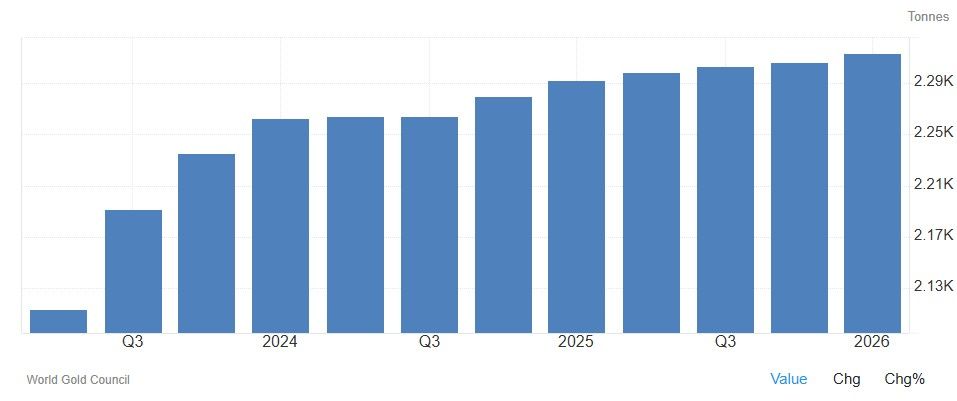
The People’s Bank of China added 480,000 ounces of gold in June, marking its 20th consecutive month of purchases. The streak ranks among the longest since 2015 and signals Beijing’s push to diversify reserves away from the dollar. Total holdings have grown to roughly 2,346 tonnes, under 10% of China’s overall foreign-exchange reserves.
Steady accumulation has helped stabilize spot prices even as broader demand cools. JPMorgan recently trimmed its Q4 price target, citing softer momentum, though Chinese purchases continue to offset some of that pressure. This pattern echoes the central banks’ gold buying trend recorded earlier this year.

Hong Kong Pushes to Become a Regional Gold Hub
Meanwhile, Hong Kong launched a central clearing system for gold on July 7 and revived dollar-denominated futures trading. Volumes on the new contracts hit a record high, more than double the previous peak set in 2022. The exchange waived trading fees for a year, an incentive designed to draw banks and bullion producers into the new market.
The moves aim to cement Hong Kong’s role as a settlement and pricing center for Asian gold flows. A planned yuan-denominated contract, backed by the Shanghai Gold Exchange, could eventually rival established dollar benchmarks. Investors weighing gold’s long-term outlook may watch how this new infrastructure affects regional premiums in the months ahead.
Analysts will track whether Chinese buying continues to offset soft Indian demand in the coming weeks. Some retail investors are comparing gold’s appeal against Bitcoin as portfolios shift toward safer assets. A weaker rupee and looming festival-season buying could reshape Indian demand before the year ends. Hong Kong’s new infrastructure and Beijing’s reserve strategy could jointly shape gold pricing well beyond this quarter.
The post India Gold Discounts Widen to $19 as China Buying Streak Hits 20 Months appeared first on BeInCrypto.


The European Securities and Markets Authority (ESMA) has launched a supervisory review of MiCA-authorized crypto custodians, moving its focus from licensing to testing how firms handle operational risks in practice.
Summary
- ESMA has launched a review of MiCA-authorized crypto custodians’ operational resilience.
- Regulators will examine custody controls, key management, incident response and third-party risks.
- The review comes as the EU prepares to revisit parts of MiCA following the U.S. GENIUS Act.
According to the European Securities and Markets Authority, the regulator has started a Common Supervisory Action (CSA) covering a sample of authorized crypto-asset service providers (CASPs) under the European Union’s Markets in Crypto-Assets (MiCA) framework.
The review concentrates on custody services and will examine whether firms have effective operational resilience measures rather than relying only on regulatory approval.
ESMA examines custody controls after MiCA licensing
As outlined by ESMA, supervisors will assess digital operational resilience in several critical areas, including private key and storage management, transaction controls, incident response procedures and reliance on third-party technology providers. The review comes soon after MiCA’s transitional period ended, making it one of the first coordinated supervisory exercises under the EU’s crypto rulebook.
In a statement, Sebastien Dessimoz, co-founder and managing partner of digital asset infrastructure company Taurus, said the message from regulators is that obtaining a MiCA licence is only the starting point for custodians.
Dessimoz said custody providers are now expected to demonstrate that their operational controls can withstand real-world risks instead of simply asserting that their systems are secure. He added that as digital assets become more integrated into regulated financial infrastructure, regulators expect the same level of security, accountability and resilience seen in traditional financial markets.
Institutional clients have already increased scrutiny of custody practices, according to Jody Mettler, chief operating officer of BitGo and president of BitGo Trust. In a statement, Mettler said clients increasingly ask how custodians segregate customer assets, manage access controls, respond to security incidents and maintain business continuity during periods of market stress.
She added that regulators are paying closer attention to the operational standards supporting digital asset services rather than limiting their assessment to licensing requirements.
MiCA oversight expands as Europe revisits crypto rules
Industry participants also see the review as an early indication of how MiCA supervision could evolve. Markus Levin, co-founder of blockchain infrastructure company XYO, told Cointelegraph that receiving MiCA authorization and proving operational resilience are separate challenges. He said firms that can demonstrate strong operational controls before supervisory reviews conclude could be better positioned as institutional participation in digital assets increases.
Meanwhile, Yuriy Brisov, a lawyer at Digital & Analogue Partners, said the review combines obligations under both MiCA and the Digital Operational Resilience Act (DORA). According to Brisov, concentration among custody technology providers means weaknesses at a single vendor could affect multiple regulated firms simultaneously, making supply chain resilience a key compliance issue.
At the same time, European regulators are already preparing the next stage of MiCA. According to a Euronews report, European Commission officials are planning a review of parts of the framework from 2027 after the United States enacted the GENIUS Act.
The review is expected to examine how non-EU stablecoin issuers should be treated under existing rules as international crypto regulation continues to develop.
Current market data also shows MiCA’s regulated exchange ecosystem continuing to expand. DefiLlama’s MiCA exchange dashboard, cited by Wu Blockchain, ranked Kraken as the largest regulated venue by liquidity, with more than $400 million in spot liquidity and over $220 million in perpetual liquidity on the live dashboard.
Coinbase remained the second-largest regulated exchange by liquidity, according to the same data, underscoring the growing scale of platforms operating under Europe’s licensing framework.

Kraken is rolling out a new set of AI-driven “financial intelligence” tools inside its mobile app, aiming to make crypto investing feel less like an interface challenge and more like decision support. The exchange says users will start by setting financial goals and preferences, after which the app will tailor what it shows and which portfolio recommendations it surfaces—without taking control of trades.
According to an announcement, Kraken’s system continuously monitors markets and flags opportunities, but every suggested action must be approved by the user. In reporting from CNBC, the updated app uses a customer’s goals, risk tolerance, funding preferences and broader financial profile to generate a suggested portfolio, which users can review and adjust before investing. After funds are deployed, it provides personalized portfolio updates and additional investment suggestions based on what the user holds.
Key takeaways
- Kraken’s mobile update personalizes recommendations around user-set goals like buying a home, retirement savings, or an emergency fund.
- Despite AI “financial intelligence,” Kraken’s recommendations are decision-support only—users must approve every trade before execution.
- The approach mirrors a wider industry shift: exchanges are moving from basic order entry toward conversational portfolio guidance.
- Other major platforms are already testing AI agents and assistants that can transact or place orders, though user review and consent remain a common requirement.
From trading screens to goal-based investing
Kraken’s update is built around a simple premise: most investors don’t want to start with complex trading tools—they want clarity around outcomes. The company says its redesigned app begins by asking users to define financial goals and preferences, then adapts its interface and recommendations to match those objectives. Instead of treating crypto as just another asset to trade, Kraken is positioning the tools as a way to support structured investing decisions.
Kraken describes its AI system as “financial intelligence” that watches markets for potential opportunities and recommends trades. However, the company draws a clear line between guidance and automation: it does not execute transactions on a user’s behalf. Each recommendation requires the user’s approval, making the experience more like an assistive layer on top of existing trading functions rather than an autonomous trading engine.
How the app generates portfolios—and where approval fits
CNBC reports that Kraken’s platform incorporates market monitoring data alongside personal inputs—risk tolerance, funding preferences and financial profile—to produce a suggested portfolio. That portfolio is not presented as a final instruction. Users are expected to review and adjust the proposal before investing.
Once a user has acted, the system continues to provide personalized portfolio updates and further suggestions that reflect the user’s holdings. The key element for investors and traders is the workflow: the AI proposes, the user disposes. That distinction matters for both risk management and compliance concerns, and it helps explain why exchanges are able to market AI capabilities without fully removing human control.
In comments to CNBC, Kraken chief data officer Kamo Asatryan said the technology is intended to give everyday investors visibility similar to what active traders may already have, by continuously monitoring markets, identifying opportunities and recommending trades. He framed the goal as enabling non-experts to participate in more sophisticated decision-making “using plain English,” rather than requiring constant manual interpretation of market data and trading mechanics.
The broader push for agentic tools across crypto
Kraken’s move fits a broader competitive pattern across crypto exchanges and fintech platforms: adding AI to help users analyze markets, manage portfolios, and interact with trading systems via more natural, assistant-like experiences. Instead of only supporting traditional order types, these products increasingly aim to translate user intent—often stated in conversational language—into actionable guidance.
In June, OKX launched a beta marketplace for AI agents that can transact autonomously, complete onchain tasks, and build blockchain-based reputations. Around the same time, Coinbase introduced a tool allowing AI agents to make payments and trade cryptocurrencies on behalf of users using its x402 payments protocol. In both cases, the industry debate is not whether AI can be useful, but how much autonomy it should be given and how responsibility is handled.
Chainalysis reported last month that agentic payment activity on Coinbase’s Base network surpassed 100 million transactions. While transaction growth has stabilized, the report indicated that higher-value transfers have become more common—suggesting agent-driven payments are evolving beyond the earliest wave of small, test-like activity. For investors and builders, that shift is a signal that AI-enabled “agentic” actions may increasingly be used for meaningful payments rather than only experimentation.
Meanwhile, fintech firm Revolut announced an upgrade to its Revolut X exchange, enabling customers to connect AI assistants—including Claude, Gemini, Cursor and OpenClaw—to analyze markets, backtest trading strategies and place orders through natural-language prompts. Like Kraken, Revolut’s approach requires customers to review and approve every trade before execution, reinforcing the notion that user consent remains the default boundary even as interfaces become more automated.
Why Kraken’s positioning matters for users
Kraken’s “financial intelligence” framing highlights an important distinction in how exchanges are adopting AI. Autonomy is one dimension, but user experience and decision architecture are another. By centering the workflow on goals and risk preferences, Kraken is trying to reduce friction for users who may otherwise struggle to map personal objectives onto trading choices.
For retail investors, goal-based guidance could make portfolio management more consistent—especially when combined with ongoing updates after investment. Still, the success of such tools will likely depend on how effectively recommendations reflect the user’s stated objectives and how clearly the system explains why a particular trade or portfolio shift is suggested. Kraken’s insistence on approval before execution provides a safety valve, but users will still need to understand the recommendations they accept.
For market participants more broadly, Kraken’s rollout underscores that AI features are becoming a competitive baseline rather than a differentiator reserved for the most tech-forward platforms. Even where full agentic autonomy is not enabled, exchanges are competing on the quality of their guidance, the speed at which they can interpret market conditions, and the clarity with which they translate complex strategies into something everyday customers can act on.
Next, investors should watch how Kraken measures engagement and outcomes from the new goal-based recommendations—particularly whether users stick with the guidance after the initial setup—and whether similar interfaces expand beyond portfolio suggestions into deeper automation. The remaining uncertainty is how quickly the market will move from decision support to fully autonomous action, especially as regulators, user expectations, and platform designs continue to converge.
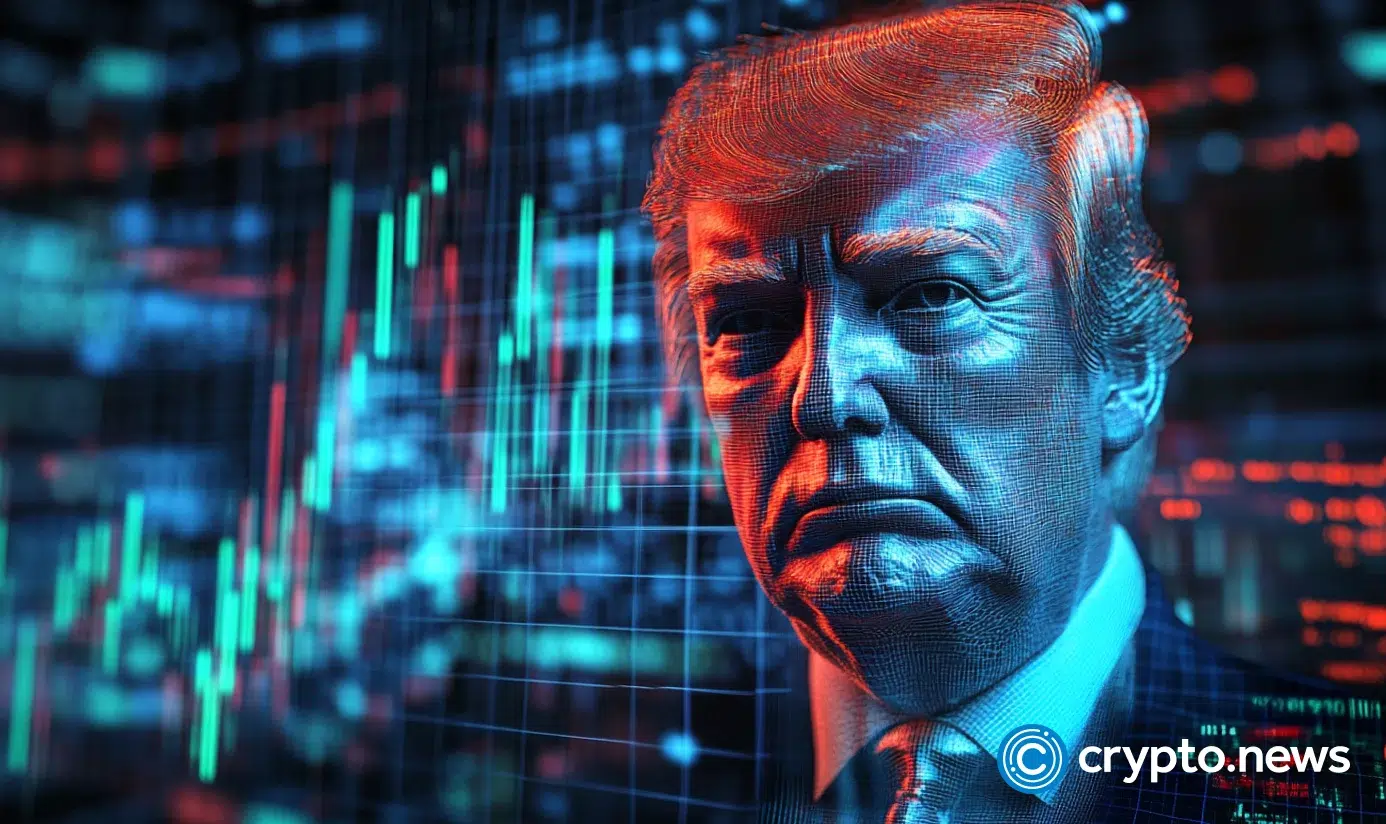
President Donald Trump has refused to sign the 21st Century ROAD to Housing Act, even as the bill containing a provision blocking a U.S. central bank digital currency through 2031 has remained on course to become law.
Summary
- Trump has refused to sign the 21st Century ROAD to Housing Act over the Senate’s failure to pass the Save America Act.
- The housing bill is still expected to become law because the White House has confirmed Trump will not veto it.
- The legislation would bar the Federal Reserve from issuing a U.S. CBDC until 2031 if it takes effect.
According to a Truth Social post by President Trump, he decided not to sign the housing bill because the Senate has yet to pass the Save America Act, which he has repeatedly urged lawmakers to approve.
Congress passed the housing legislation last month and sent it to the White House, but Trump argued that he would withhold his signature until the voting bill advances.
Last month, crypto.news reported that Trump had already delayed signing the legislation for the same reason. At the time, he described the Save America Act as “desperately needed” and said he would not approve the housing package until Congress acted on the separate proposal.
CBDC restriction remains on track despite Trump’s decision
Although Trump has declined to sign the legislation, the housing bill is still expected to become law because he has not issued a formal veto. A White House official confirmed that the president does not intend to veto the measure, allowing it to take effect automatically after the constitutional review period expires without his signature.
For the crypto industry, one section of the legislation has attracted particular attention because it would prohibit the Federal Reserve from issuing a central bank digital currency until 2031.
The restriction would extend the administration’s earlier position after Trump signed an executive order directing federal agencies not to take steps toward creating a U.S. CBDC.
Unlike a pocket veto, which can permanently block legislation under specific congressional timing conditions, the current situation allows the bill to become law automatically because Congress remains in session and the president has not exercised his veto authority.
Save America Act remains Trump’s priority
In his Truth Social statement, Trump argued that the Senate’s failure to pass the Save America Act is unacceptable despite what he described as overwhelming support among Republican voters. The legislation would require voters to present photo identification in federal elections, a measure the president has continued to promote as an election integrity safeguard.
Separately, Democratic Senator Elizabeth Warren criticized Trump’s decision in a post on X, arguing that refusing to sign the housing legislation delayed action on a bill designed to address housing affordability. Warren also stated that the legislation would become law regardless because the president had chosen not to veto it.
The latest dispute comes as lawmakers continue debating other crypto legislation on Capitol Hill. Warren has previously joined other Democratic senators in calling for hearings into Trump’s cryptocurrency holdings, while the Senate is also considering the CLARITY Act, a separate bill intended to establish a regulatory framework for digital assets.
Taken together, the developments leave the housing bill on track to take effect despite the absence of Trump’s signature, while the dispute over the Save America Act and broader crypto legislation continues to shape debate in Washington.

Another Publicly Traded Company Just Cut Bitcoin Holdings by 48%

Netanyahu says Israel will occupy Lebanon for as long as they ‘need’

Derek Chisora delivers his verdict on reported Usyk vs Deontay Wilder fight after losing to both: “He always has that”

No Jackpot Winner as $257 Million Prize Rolls Over to $269 Million Monday Draw

Renter of Home in Anne Heche Crash Denies Settlement With Son

Weekend Open Thread: Staud – Corporette.com

How To Hit Financial Freedom SO Fast It’s Almost Unfair

Live GOLD and CRYPTO Scalping Trading | DAY 277 #goldtrading #cryptotrading #bitcoin

Never Lend Money to These People! Life-Changing Money Advice | Telugu Financial Tips
-
 NewsBeat6 days ago
Taylor Swift and Travis Kelce wedding staffer hilariously struggles to keep her cool while checking in megastars
-

 Fashion5 days ago
Open Thread: What Great Books Have You Read Recently?
-

 News Videos4 days ago
Whats Hidden Inside This Cash Register? #treasure #reselling #money
-

 Fashion2 days ago
Loro Piana Fall 2026 Enters Houston’s Art Scene
-

 Fashion9 hours ago
Weekend Open Thread: Nutriplenish Leave-In Conditioner
-
 Tech4 days ago
Anthropic’s new “J-lens” reveals a silent workspace inside Claude that mirrors a leading theory of consciousness
-

 Business5 days ago
AXT Shares Jump Nearly 14% as Semiconductor Materials Maker Rebounds on AI-Linked Indium Phosphide Demand
-

 Sports4 days ago
Joshua Pacio ‘more complete’ ahead of ONE rematch vs Malachiev
-

 Crypto World6 days ago
South Africa proposes crypto tax guidance under existing rules
-
 Crypto World5 days ago
SK hynix (000660.KS) Stock Dips as $28B Nasdaq ADR Offering Drives AI Memory Expansion
-

 Crypto World5 days ago
$1,000 Credit Alert! BlockDAG X Exchange Pre-Registration Now Officially Open, Polkadot Dips & Zcash Rebounds
-

 News Videos5 days ago
Best Time to Enter Small Caps Right Now? Another Bull Run? | Financially Free
-

 Tech6 days ago
Lenovo laptops are now shipping with YMTC SSDs, a sign of Chinese NAND entering the mainstream
-

 Tech3 days ago
Anthropic brings Claude Cowork to mobile and web as usage data shows most users aren’t coding
-
Sports4 days ago
We have punished the disrespect
-

 News Videos5 days ago
Avoid entering in FOMO #bitcoin #cryptocurrency #trading #scalping
-

 Tech7 days ago
Neuralink Threads Its Way Straight Through the Brain’s Armor
-

 Crypto World4 days ago
Binance lists Strategy’s STRC stock as company expands Bitcoin funding
-
 Crypto World7 days ago
Bitcoin Miner IREN Falls After $700 Million CEO Stock Award
-

 Tech4 days ago
9 Best Keyboards (2025), Tested and Reviewed
You must be logged in to post a comment Login