

Politics
The House Article | We must increase support for the women who lose when England win

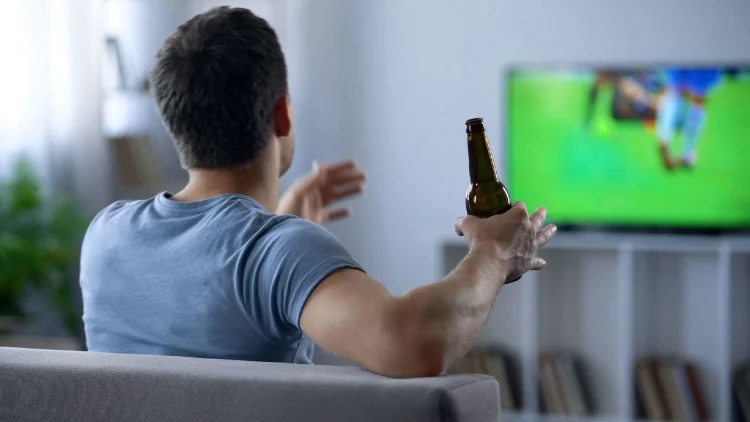

(Ievgen Chabanov/Alamy)

4 min read
The World Cup has a remarkable ability to bring the nation together. Families, friends, neighbours and colleagues all unite behind the national team, anxiously watching the games.
But for many across the country, an England match brings a different sense of anxiety entirely. Instead of celebrating the result, they are bracing themselves for the final whistle.
Incidents of domestic abuse increase by 38 per cent when England lose and 26 per cent when they win or draw. According to domestic abuse charity Refuge, sadly fewer than 24 per cent of domestic abuse incidents are reported, so the real increase is likely to be much greater.
In a now-infamous video posted on X, Reform MP for Runcorn and Helsby, Sarah Pochin, is filmed saying that “on the occasions that England lose their football matches, instances of domestic violence go through the roof”, ending the video urging the “boys” to “keep winning”. She flippantly captioned the video: “For the sake of women’s safety, we need England to keep winning”.
I won’t speculate as to whether she is intentionally espousing disingenuous narratives around domestic abuse for views or genuinely believes the responsibility of keeping women safe lies with the England team and its performance. This issue is beyond political point scoring. This is about violence.
I’ll be clear: women’s safety does not depend on whether Harry Kane scores a penalty. It depends on whether we are prepared to hold perpetrators to account, properly fund survivors’ support services, invest in preventative measures, and stop allowing politicians to treat violence against women as fodder for social media clips. No result – win, lose or draw – ever justifies abuse.
Getting the language right is only the first step. We also need to prepare for the reality that frontline organisations know is coming. That’s why I’m supporting Women’s Aid’s new campaign, The Other Kick Off, which highlights the estimated time that domestic abuse is predicted to rise after the final whistle. Raising awareness is especially poignant this year, as the late-night matches alongside a perpetrator’s likely increased alcohol consumption heighten the chances of domestic abuse occurring and create an even more isolating, frightening environment for survivors.
Football and alcohol do not cause domestic abuse. But major tournaments can intensify the circumstances in which abuse pre-exists. Heightened emotions, drinking and gambling can increase volatility and coercive behaviour – but responsibility always lies with the perpetrator.
Many perpetrators of domestic abuse are completely sober, and identifying alcohol as the cause incorrectly shifts the blame away from them.
Incidents of domestic abuse increase by 38 per cent when England lose and 26 per cent when they win or draw
None of this should diminish the joy that football brings millions of people. But enjoying the tournament shouldn’t mean ignoring the evidence. One in three women will experience domestic abuse during their lifetime. Reports increase when England play, and after England’s next game, women in abusive relationships are more likely to experience harm.
I regularly meet with domestic abuse organisations in my constituency of Bath. Before the tournament began, they told me that they expected a surge in demand on top of their already overstretched services.
With cuts to health and social services, ever-reducing government funding and short-term commissioning rounds, domestic abuse organisations are struggling to meet the growing demand for their services all year round – not just during the World Cup.
And yet these vital organisations help survivors access the tools needed to recognise abuse, support them to escape harm, offer housing, legal advice and health services, and are integral to stopping the cycle of abuse.
We need guaranteed long-term funding for these life-saving domestic abuse services. I’m calling on the government to end the short-term competitive commissioning rounds that pit domestic abuse organisations against each other in a fight for the same small pot of money.
I’ll be cheering England on like millions of others this summer. Whatever the score, though, women’s safety depends not on what happens on the pitch but on whether we are serious enough to confront violence against women and girls off it.
Wera Hobhouse is Liberal Democrat MP for Bath

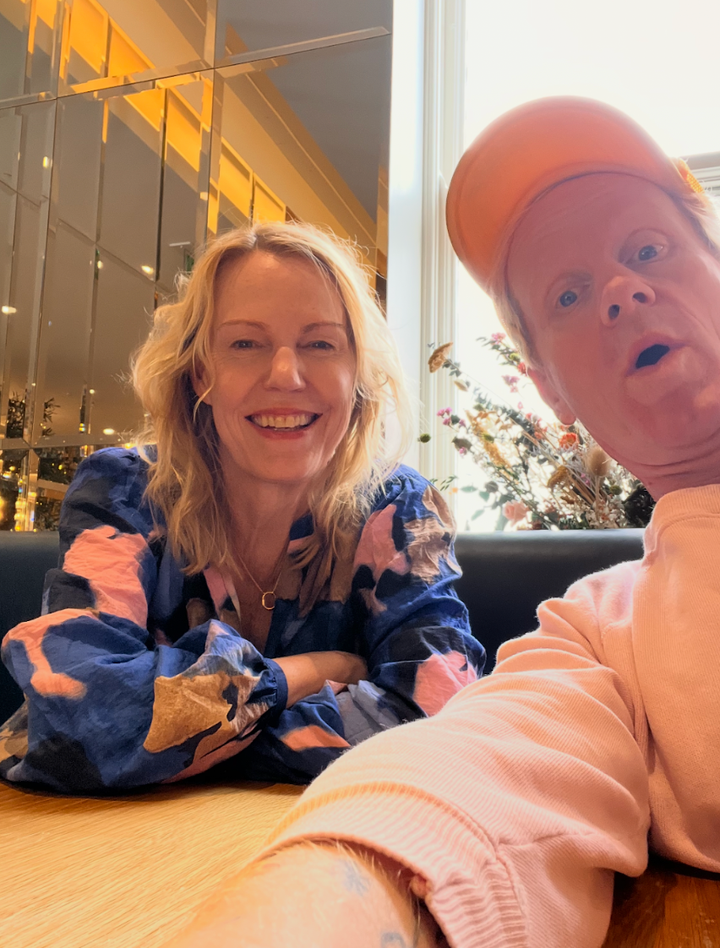
“Wait, why weren’t we invited? There are a thousand people there!” I asked my husband Garret, a well-known music producer in LA.
I scrolled on Instagram as we talked, watching the celebrities roll into Taylor Swift and Travis Kelce’s wedding at Madison Square Garden.
“I got a text but I thought it was spam,” he told me, sounding defensive.
“WHAT!?” I asked in total disbelief.
I could feel my heart pulsing in my fingertips as I continued to scroll through the barrage of wedding-related posts popping up online.
“Yeah – remember I told you I got a text from her manager? But I didn’t respond to it. It didn’t sound like him.”
“It was probably an assistant!” I scolded him, my frustration growing by the second.
“Oh,” Garret said, seemingly apologetic.
We’ve been married for 32 years and have lived in the same house all of that time, but apparently we occupy two different worlds.
As a psychotherapist with over a decade of experience in marriage and family therapy, I’ve seen my fair share of women who say their husbands don’t understand them. At that moment, I could relate on an entirely new level.
“So let me get this straight: You mean to tell me that we were invited… and you didn’t click on the invite?” I asked.
“Yeah,” he shrugged. “I guess I thought someone was trying to hack my address book or something.”
Reeling in frustration, I left the room. My jaw was clenched tight, so I purposefully took a deep breath and let it out slowly.
I thought back to 2012, when my husband worked with Swift on her album, Red. She came to our remote music studio in Topanga, California, and sang The Last Time with Gary Lightbody. My husband said she was the driving force in the room.
Afterward, she had dinner with our family. She was a warm and confident young woman – and a true storyteller. She charmed all of us with her wit and grace.
I walked back into the room, intent on hearing my husband out, but I wasn’t really listening.
“But it’s Taylor Swift!” was all I could manage to say.
“I know,” he said, “but why would you even want to go?”
Because it’s fun and romantic, I thought.
When everything feels so nightmarish and hopeless in America right now, it seems like many of us are looking for something sweet like a fairytale wedding to cheer us up – or at the very least, distract us for a moment.
I’ve never considered myself a die-hard Swiftie, but as a therapist, I understand the impact of young women hearing their experiences play out in her songs.
Taylor sings about love and heartbreak – something most of us can relate to at some point in our lives – but she also sings about things many women often keep hidden (and are encouraged to keep hidden): jealousy, anxiety, body issues, relationship problems, overthinking, and being self-critical.
She is vulnerable and willing to expose pieces of herself that aren’t always pretty. She says things that so many of us have thought but never said out loud.
She’s a complicated icon who has challenged homophobia, donated millions to charities and challenged right-wing politicians. At the same time, she’s been critiqued for her shrewd capitalism, private jet usage and “white victimhood”. And, at the end of the day, she was putting on a spectacle that felt dreamy and optimistic.
“I wanted to go because it would give me a bit of hope,” I told Garret.
“Hope for love! Hope for some good in the world! I don’t know… maybe hope in America at a dark time? And I obviously would have loved to hear the musical guests. I mean… Stevie Nicks was supposed to play!”

Courtesy of Melissa Garner Lee
He didn’t say anything for a minute, and then he seemed to realise what had really happened: he’d disappointed me. Not on purpose, of course, but the disappointment was still very real.
We were both quiet for a moment.
“Sorry hon… I’m sorry,” he said, adding, “It’s really hot out there – it would’ve been hot.”
I felt myself starting to lose my mind again.
We were invited to the wedding of the decade and we didn’t go because it might be too hot? We didn’t even RSVP “no”. How rude is that? (Sorry Taylor and Travis!)
I couldn’t help but think about how it sometimes seems women carry the emotional baggage in our culture and men often focus more on function.
Research from the University of Texas showed that women are often centred on building bonds, while men are typically concentrated on fixing problems. So, what do I see in this case that he doesn’t? A need at this time in our collective consciousness to concentrate on love (building bonds), milestone stories and hope in this country – a current desert of levity.
So there we were on a hot, smoggy day in LA at an impasse. An hour later Garret brought home my favourite dinner, gave me a hug and kissed me.
And just like that, we were back in our usual flow – together. Julie and John Gottman, world-renowned researchers and psychologists, would call this a repair attempt – a small gesture to de-escalate tension and get back to a strong bond.
As we sat down at the kitchen table to eat, he said, “Sorry again.”
“No worries, honey,” I said.
Our marriage has never been perfect and sometimes we’re surprised that it’s still going. We struggled last year after we became empty nesters and moved from the countryside to the city. It was a tough transition for both of us.
I was recovering from a brain tumour and he was working on the longest and hardest project in his life. We were both on edge. There were many conflicts and late-night arguments about our future, but we always end up in repair.
Thankfully, repair is the heart of our partnership.
After I cooled down, I thought about how our lives are currently filled with much bigger things to worry about than Taylor Swift’s wedding. My mom had just passed. Garret is dealing with an ageing father in Ireland. We’re contemplating another move. And, of course, it feels like the entire world has come undone.
Every day some new terrible thing is happening somewhere. So despite my disappointment and frustration, I forgave him.
A missed wedding will not be what breaks us. We’re stronger than that.
Still, it would’ve been fun to see her dress.
Melissa Garner Lee is a writer and licensed marriage and family therapist based in Los Angeles, California. Her work has appeared in The New York Times, HuffPost, USNews and Newsweek. She is currently working on her first novel, “The Gleaner.” Find more from her on Instagram @themindfulheartla and Substack @slouchingliterary.
Do you have a compelling personal story you’d like to see published on HuffPost? Find out what we’re looking for here and send us a pitch at pitch@huffpost.com.
There have been plenty of social media trends that end with “maxxing” thus far – looksmaxxing, sleepmaxxing, jestermaxxing and fibremaxxing, to name a few.
But the latest trend adopting the much-used suffix is certainly one to be wary of – tanmaxxing is, as the name suggests, about achieving the most optimal tan possible.
Skin health experts are understandably worried about the repercussions of this – especially on young skin.
Dermatologist Dr Rachel Nazarian told CBS Mornings that the trend for getting a dramatic tan – whether by using sunbeds or sitting in the midday sun without sunscreen – is “very dangerous”.
She highlighted how lots of these trends are doing the rounds on social media, where misinformation is rife. She’s right – a quick look online and there are videos where people are suggesting getting a tan is safe (spoiler: it isn’t).
Dr Zainab Laftah, consultant dermatologist and British Skin Foundation spokesperson, told HuffPost UK: “The ‘tanmaxxing’ trend is concerning because there is no such thing as a safe tan.”
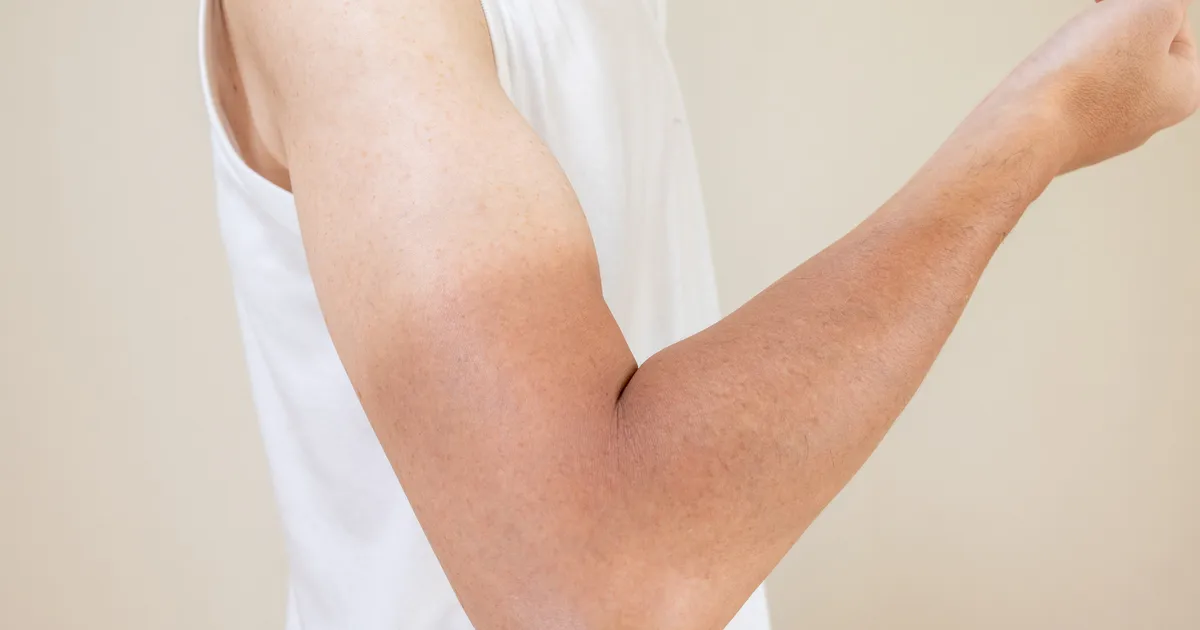
Basically, a tan is visible evidence of your skin being damaged. Or as Dr Laftah puts it: “A tan is the skin’s response to UV radiation causing DNA damage.”
The risks of ‘tanmaxxing’
There are two main risks to teens and young adults hopping on the tanmaxxing trend. The first is an obvious one: skin cancer. Your risk of melanoma – a potentially deadly form of skin cancer – doubles with a history of five or more sunburns, according to the Skin Cancer Foundation.
Sun burn is also the leading cause in most cases of basal cell carcinoma, squamous cell carcinoma and melanoma.
As for tanning beds, they emit up to 15 times more UV radiation than the midday sun – and people who start using tanning beds before the age of 35 have a 75% increased risk of developing melanoma, according to the Skin Cancer Foundation.
The second risk is more of a cosmetic one, but it’s one that Dr Nazarian flagged in the hopes it will deter people from jumping on the trend: sun damage ages you. In fact it can cause wrinkling, loss of skin elasticity, pigmentation, sun spots and redness, according to Yale Medicine.
“It happens when ultraviolet (UV) light hits skin unprotected by sunscreen, causing DNA changes at a cellular level. Because photodamage happens in the deepest layers of the skin – the dermis – it can take years before the damage surfaces and becomes visible,” reads the site.
How to talk to teens about ‘tanmaxxing’
This is the tricky bit because you can tell kids to wear sun cream until the cows come home, but will they actually do it?
Tanning culture is huge – and the desire to fit in can outweigh the desire to stay safe (we see this time and time again with teens jumping on risky trends).
The key is education, but not in a lecturing way (as that rarely works either). “Conversations about skin health, rather than appearance, can help teenagers develop healthier attitudes towards sun safety,” said Dr Laftah.
The dermatologist urges parents to encourage teens to question social media trends and explain “that influencers often overlook the long-term consequences of UV damage”.
Reinforce practical habits during these informal chats, such as using broad-spectrum SPF 30+ sunscreen, wearing protective clothing, seeking shade during peak UV hours, and avoiding intentional tanning.
Lastly, offer safer ways to achieve the look. Mary Wu Chang, associate professor of Dermatology and Pediatrics at UConn Health, recommended self-tanning lotions and spray tans, for instance.
Dr Laftah agrees: “If teens want a bronzed look, self-tanning products are a much safer alternative to tanning in the sun or using sunbeds.”
We’ve written about dishydrotic eczema, or pompholyx, before at HuffPost UK.
That shows up as tiny, incredibly itchy, usually flesh-coloured bumps on your hands and feet. It should always be investigated if it’s new and/or if you suspect infection.
But what does it mean if you have little white or yellow lumps by your eye?
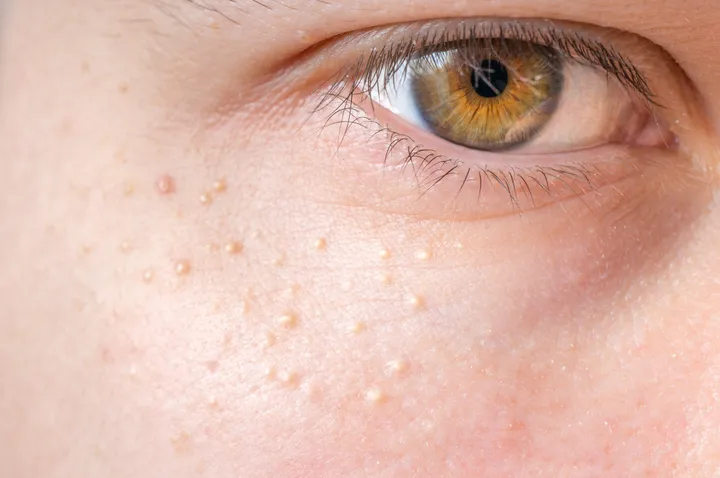
Sometimes, these can be milia, or “milk spots,” the Cleveland Clinic said.
Interestingly, they can affect up to 50% of newborns, though they can happen in adults too.
Here’s what chartered chemist and founder of SOS Serum Skincare, Bruce Green, said about them:
What are milia?
These “are tiny, white or yellowish bumps that usually appear on the face, most commonly around the eyes or cheeks. They’re formed when keratin (a protein in the skin) becomes trapped beneath the surface,” Green said.
Milia aren’t formed in the same way as spots and whiteheads, which occur when oil and bacteria gather in a clogged pore.
Instead, dead skin cells slowly build up and can’t escape your skin.
Milia are “completely harmless, but can be frustrating cosmetically,” Green continued.
They’re especially common among newborns – hence the nickname “milk spots” – and adults with thicker, drier skin.
“They can also appear after skin trauma, such as burns, or even from using heavy skincare products that clog the surface of the skin. People with sun-damaged skin may also be more prone,” the expert said.

What should I do if I think I have milia?
Luckily, Green told us, most milia will resolve on their own over time.
Still, if you want to speed the process up, “regular gentle exfoliation using chemical exfoliants (like AHAs or BHAs) can help them to clear up and to prevent new ones forming,” Green shared.
Retinol can also increase the rate at which your skin cells turnover, which may help.
“It’s important never to pick at milia, as this can damage the skin. For stubborn or long-lasting milia, professional extraction by a dermatologist or trained aesthetician is the safest option,” the expert continued.
To keep them at bay, maintain a good skincare routine, involving a gentle cleanser, hydrating moisturisers, SPF, and up to twice-weekly gentle exfoliation can help.
“If milia persist or you’d like them removed, it’s best to seek professional help from a dermatologist or trained aesthetician. Trying to extract them at home can damage the skin and increase the risk of scarring or infection,” Green ended.
Watch out for yellow, waxy bumps (xanthelasmas)
These can also develop around the eye area. They’re cholesterol deposits that develop in the skin around the lower eye area and on the eyelid and typically appear as little, pale yellowish bumps.
They can be a sign you have familial hypercholesterolemia (FH), a genetic condition that means your liver can’t process cholesterol properly.
Xanthelasmas are harmless in and of themselves, but they’re linked to an increased risk of heart disease.
You can get a genetic test if you think you may have FH.
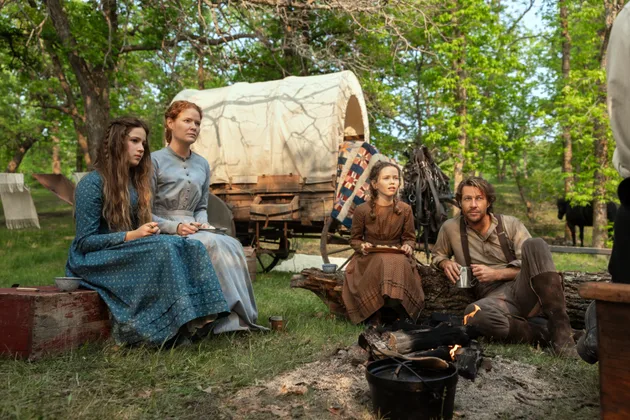
 Little House On The Prairie is now streaming on Netflix
Little House On The Prairie is an American institution, and it’s now back in Netflix’s cosy new adaptation.
Based on author Laura Ingalls Wilder’s semi-autobiographical accounts of growing up on the American frontier in the 1870s and 1880s, the streamer’s new eight-part series follows a beloved book and the original TV show, which ran in the late 1970s and early 80s.
So, can this new take on the source material live up to its predecessors?
This new adaptation, which follows the Ingalls family as they leave Wisconsin to start a new life on the frontier in Kansas, modernises the source material for a contemporary audience.
Critics have mostly praised these updates, which fix some of the more problematic depictions of women, minorities and Native Americans.
While plenty of reviews have praised the show’s performances, production value and script, it’s fair to say that the wholesome and twee nature of Little House Of The Prairie isn’t for everyone.
Here’s what critics are saying about the 2026 reimagining Little House Of The Prairie so far…
The Hollywood Reporter
“Over eight episodes, most running under 50 minutes but never dull even in the longer instalments, Little House On The Prairie captures a tumultuous year in the life of the Ingalls family, a year with danger, romance, heroism and the learning of many important lessons.
“I don’t gravitate toward ‘wholesome’ or ‘earnest’ as attributes in most of my favourite shows, but I bought into Little House On The Prairie and I’m relieved that Netflix has already renewed it for a second season.”
Radio Times (4/5)
“An undeniably heartfelt family drama that, for all its coming-of-age anxieties and sweeping vistas, also dares to ask some difficult questions about the true price of progress.”
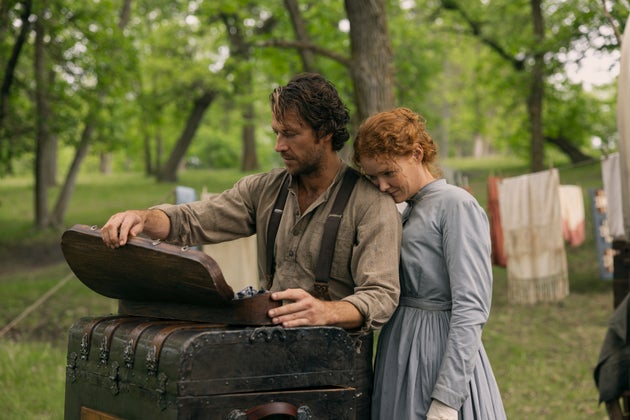 Luke Bracey as Charles Ingalls and Crosby Fitzgerald as Caroline Ingalls in Little House On The Prairie
Variety
“Overall, for those who loved the original show and books, and for viewers being introduced to the Ingalls for the first time, Little House illustrates the beauty of community, the horrors of encroachment and displacement, and the cost of being an American.”
Collider (9/10)
“A must-watch Western masterpiece […] throughout the course of the series, the town of Independence grows and changes, reflecting the slow growth of the community across a span of seasons, and that change is visible in the set pieces and props, both close to the camera and in the deep background. All of these small details help to build a fully realised world that feels tactile and familiar, in the same way that the book series inspired a generation of children to pretend they were a member of the Ingalls family travelling across the American frontier.”
The Guardian (3/5)
“It is exactly the revamp you would expect. The new LHOTP is a precision-tooled and well-oiled machine. All children’s and most adult problems are solvable within a one-to-three episode arc.
“Kansas may contain malaria, medicine-hoarders and mentions of how hard the war was but ultimately the vibe is the one we recognise: faith, hope and the American way will carry us cosily through.”
Financial Times (3/5)
“There is comfort to be found, too, in the show’s familiar, episodic structure, which plays out in a knowingly soapy style. Over eight episodes, the Ingalls are together, something bad happens to them or their newfound community, and then they sort it out. Job done.”
Tech Radar (3/5)
“This is also the closest Netflix has come to straying into Hallmark territory in its original content. What I mean by this is that the drama is often so twee that you’d expect someone to randomly burst into song like it’s a production of Oklahoma! It can be grating, but if you look past the form, the content is meaningful.”
The Herald (3/5)
“Is there such a thing as enjoyable trauma? If so, Little House On The Prairie perfected it.”
The Telegraph
“Anyone old enough to remember the 1970s series will regard it with misty-eyed nostalgia. Anyone young enough to be in the market for children’s programmes will prefer the streamer’s more garish options to a wholesome story of pioneer life in pretty bonnets. It’s the reboot that nobody needed.
AV Club
“The first season of Netflix’s Little House On The Prairie is less of a revival than it is a well-intentioned yet stiff CliffsNotes version.
“It’s fine enough, finding a couple of solid episodes when it slows down to delve into its characters and the way that the remote community they find themselves in is growing.”
Time
“Although it’s been updated for the streaming era with a serialised plot and revisionist overtones, this Little House suffers from the same cloying excesses as its predecessor. More childlike mischief might’ve helped.
“Yet instead of contorting the Ingallses into the people we wish they’d been, maybe it’s simply time we acknowledge that theirs may not be the enduring story we once imagined it to be.”
Roger Ebert
“Netflix’s Little House On The Prairie is the kind of remake that’s essentially designed in a lab to appeal to the broadest possible swath of viewers. That’s not necessarily a criticism – the experience of watching the show is perfectly enjoyable. But it’s difficult not to wonder what a version of this show that wasn’t quite so aggressive…adequate might have been like.”
Little House On The Prairie is now streaming on Netflix.
MORE NETFLIX:
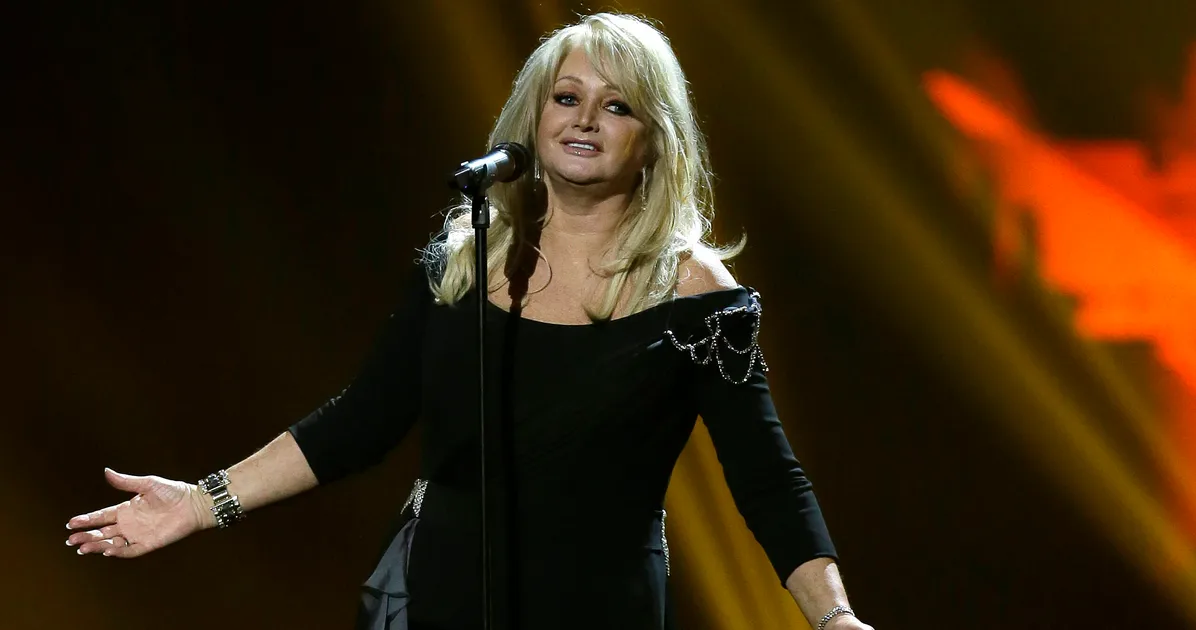
Singer Bonnie Tyler has died aged 75.
On Thursday morning, a statement was published on her official website, which read: “Bonnie’s family and team are heartbroken to announce that Bonnie unexpectedly passed away last night in hospital in Portugal as a result of the illness that she was being treated for.
“We will issue a further statement shortly but for now ask for privacy to deal with this tragedy.”
The Total Eclipse Of The Heart singer was rushed to hospital near her home in Faro in May, to undergo emergency intestinal surgery.
On 6 May, the Holding Out For A Hero singer’s team released a statement on Instagram informing fans that Bonnie had “been admitted to hospital in Faro, Portugal, where she has a home, for emergency intestinal surgery”.
The Welsh-born performer, who turned 75 earlier this year, had been due to tour Europe in 2026 to mark 50 years since the release of her 1976 breakthrough hit Lost In France, which charted across Europe.
A week later, it was confirmed she’d been placed in an induced coma “to aid her recovery”, with her digital team sharing a new statement on her official website last week, following speculation about her condition on social media.
Last month, her spokesperson said she was out of the coma but remained “very unwell and in intensive care”.
The spokesperson thanked fans for their “huge outpouring of love and support” from around the world, adding that Bonnie was aware of it and grateful for the good wishes.
Bonnie – whose legal name is Gaynor Hopkins – first shot to fame in the late 1970s thanks to singles like Lost In France and It’s A Heartache.
In the years that followed, she became known for hits including Holding Out For A Hero, the number one single Total Eclipse Of The Heart and a cover of Creedence Clearwater Revival’s Have You Ever Seen The Rain?.
Her massive hit Total Eclipse Of The Heart, written by Meatloaf lyricist Jim Steinman, saw Bonnie become the first ever Welsh person to bag a number one spot in the US.
The song was inspired by, and written for a Nosferatu musical originally, with the singer telling The Guardian back in 2023 that she “understood immediately what an incredible song it was”.
She later added: “He told me he had started writing the song for a prospective musical version of Nosferatu years before, but never finished it.
“Around the time we were recording, Meat Loaf had lost his voice, and after it was a hit he always used to say: ‘Dang. That song should have been mine!’ I poured my heart out singing it.”
Over the course of her music career, Bonnie released 18 studio albums, most recently in 2021, and was nominated for three Grammy Awards and three Brit Awards.
She also represented the United Kingdom at the Eurovision Song Contest in 2013 with her song Believe In Me, and was awarded an MBE by the late Queen Elizabeth II for her services to music in 2022.
This is a developing story, check back for more updates.
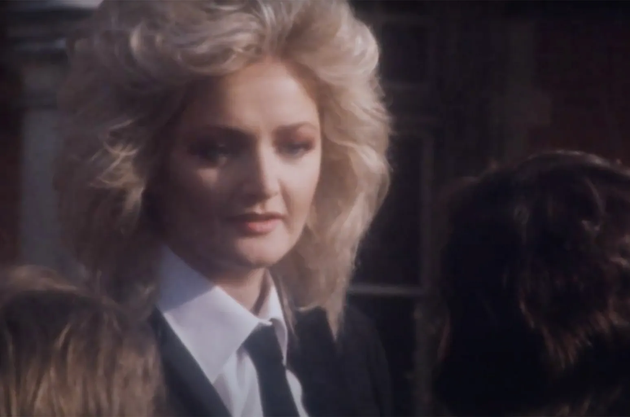
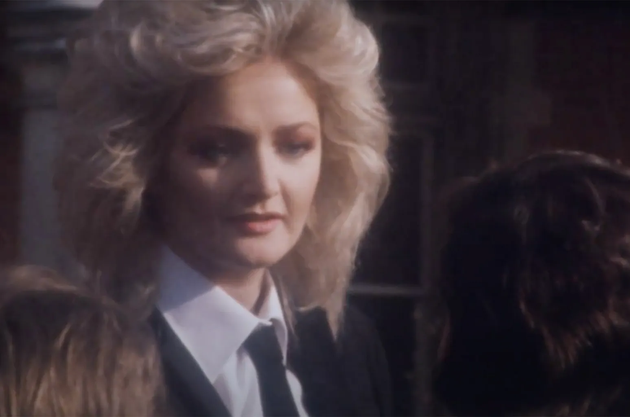 Bonnie Tyler in the Total Eclipse of the Heart music video.
Bonnie Tyler’s song Total Eclipse of the Heart (Turn Around) is one of those tracks that is just completely timeless. Every generation can appreciate the theatrics, the vocals and that intense music video.
Despite being released over 40 years ago, the song still resonates with music fans and karaoke aficionados alike, with striking lyrics such as: “Together we can take it to the end of the line/your love is like a shadow on me all of the time” scattered throughout the lyrics.
An unkind reading of the song could place it as a situationship that got out of hand, while others may see it as longing for a lost love but, uh, the inspiration was actually a lot more spooky than that.
The inspiration behind Total Eclipse of the Heart
You may want to hold onto your fangs here because actually, this song was inspired by, and written for a Nosferatu musical.
Yes, really.
In an interview with The Guardian back in 2023, Bonnie revealed that when she wanted to make the move from country rock to rock, she hoped to work with Jim Steinam, who wrote and produced for Meat Loaf at the time.
Fortunately for her, Jim really loved her voice and played Total Eclipse of the Heart to her. Bonnie muses: “I understood immediately what an incredible song it was.”
She later added: “He told me he had started writing the song for a prospective musical version of Nosferatu years before, but never finished it.
“Around the time we were recording, Meat Loaf had lost his voice, and after it was a hit he always used to say: “Dang. That song should have been mine!” I poured my heart out singing it.”
40 years later, and the lore just solidifies the legend status of the song.
Related…
There are two common themes running through the Office for National Statistics’ (ONS) latest baby name data for girls born in England and Wales.
So-called “old lady” baby names continued to dominate in 2025, according to the data, with Florence, Elsie, Ivy, Evelyn and Mabel sitting within the top 20 – all names that would’ve been popular a century ago.
In addition to vintage baby names, nature-inspired names like Lily, Willow, Ivy, Poppy and Daisy are also increasingly popular for girls, will them all making an appearance in the top 20.
Eliana made huge gains in popularity
Mair Garland, a baby naming celebrant, noted that Eliana – which previously wasn’t in the top 100 list – also made “huge gains”, moving to 62nd place.
HuffPost UK recently reported that BabyCentre data showed Eliana is currently more popular than Olivia – which has been the top girls’ name choice for years – as a baby name option in 2026.
When asked how they determined this, BabyCentre told me the rankings are compiled using data provided directly by users when they join the site – as part of this process, parents share what they called their baby. And so far, in 2026, Eliana is reigning supreme.
“Other new names for girls in the top 100 are Gracie (though Grace is still more popular), Anaya, Alba, Marnie, Lilah and Frankie,” added Garland.
Here’s the full list.
The top 100 baby names for girls in 2025
1 Olivia
2. Lily
3. Amelia
4. Isla
5. Florence
6. Freya
7. Poppy
8. Elsie
9. Ivy
10. Isabella
11. Ava
12. Evelyn
13. Sophia
14. Phoebe
15. Sienna
16. Mabel
17. Sofia
18. Daisy
19. Matilda
20. Willow
21. Mia
22. Arabella
23. Harper
24. Rosie
25. Charlotte
26. Maeve
27. Grace
28. Maya
29. Hallie
30. Margot
31. Lottie
32. Delilah
33. Penelope
34. Aria
35. Evie
36. Millie
37. Violet
38. Ruby
39. Aurora
40. Ada
40. Mila
42. Ayla
43. Maisie
44. Emily
45. Esme
46. Ella
47. Olive
48. Bonnie
49. Elodie
50. Layla
51. Emilia
52. Alice
52. Maryam
54. Isabelle
55. Ottilie
56. Eleanor
57. Iris
58. Eva
59. Harriet
59. Luna
61. Lyla
62. Eliana
63. Sophie
64. Orla
65. Eliza
66. Thea
67. Rose
68. Nova
69. Imogen
70. Lyra
71. Hazel
72. Erin
73. Zara
74. Elizabeth
75. Nora
76. Robyn
77. Clara
78. Nancy
79. Fatima
80. Eden
81. Ophelia
82. Raya
83. Eloise
84. Gracie
85. Emma
86. Anaya
87. Lola
88. Maria
89. Chloe
90. Athena
91. Bella
92. Darcie
93. Scarlett
94. Myla
95. Alba
96. Rosa
97. Marnie
98. Lara
99. Lilah
100. Frankie
Related…
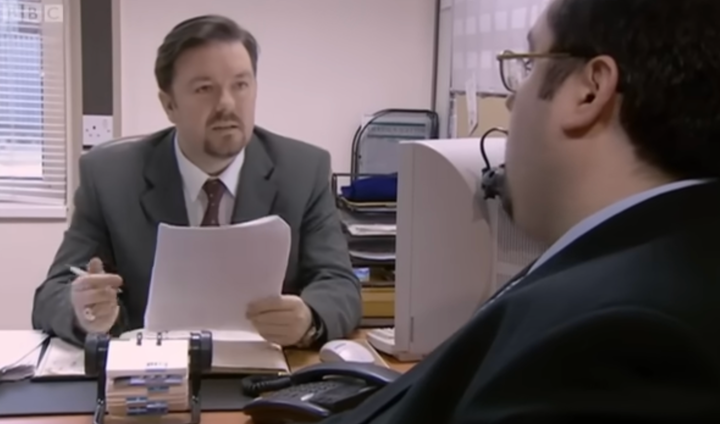
Martin Freeman has something to get off his chest about his time appearing in The Office.
The Love Actually star played Tim in the original British sitcom, which ran for two seasons in the early 2000s, ending with a two-part Christmas special.
It’s now been 25 years since The Office premiered on the BBC, and to mark the occasion, Martin and his co-star Mackenzie Crook recently took part in a one-off BBC special reflecting on their time on set.
During the conversation, the Sherlock actor recalled how creators Ricky Gervais and Stephen Merchant were always quick to dismiss the suggestion there was any improvisation in the game-changing mockumentary, which Martin has a different view on.
“When it became the monster that it did, and people would say it sounded improvised, then understandably, Ricky and Stephen went, ‘No, none of it’s improvised’, which is not true,” he said.
Martin continued: “What slightly annoyed me at the time – but only slightly, at the time – is when the scripts were published, they weren’t the scripts. They were the transcriptions of what had been on television.
“So, that annoyed me a little bit, because… well… anyone who knows any of us knows that that line came from you in that moment, that line came from me…”

The Marvel cast member praised Ricky and Stephen’s “brilliant” writing, but pointed out that the original scripts were “loose”, which allowed the cast to play with the material somewhat.
“I can understand why there was a little bit of protection about that, because otherwise people would’ve gone, ‘Hey, you just rock up and you just make it all up’, which clearly was not the case,” he added.
“The writing on it that they did was brilliant. But you only need to know us a little bit or know the process of it. We’re also in there, you know? It doesn’t mean it’s a co-credit. Doesn’t mean [the whole show was] improvised, but it’s nicely loose.”
HuffPost UK has contacted Ricky Gervais’ team for comment.
Ricky previously told The Independent that he was invited to take part in the BBC’s special, but turned it down as he was “not available” at the time.
A video in which Ricky shares his own memories of working on The Office has since been uploaded to the comedian’s YouTube page.
During a new interview with Empire about the show, the After Life creator also claimed: “It was so important [for the cast] to be naturalistic. Some people thought The Office was ad-libbed. And that’s a testament to the actors, making it look like they came up with it off the top of their heads.”

With summers getting hotter and rates of skin cancer rising, it might come as a surprise to hear some UK schools have policies in place that do not allow children to bring in their own sunscreen for reapplication throughout the day.
At some UK primary schools, for instance, parents are encouraged to apply sunscreen to their children before school – and that’s it.
Yet even sun creams claiming to be long-lasting wouldn’t last the entire school day, nor would it outlast after-school clubs.
Dr Emma Wedgeworth, consultant dermatologist and British Skin Foundation spokesperson, said if kids are in direct sunlight (which they typically will be at break and over lunch) “sunscreen should be reapplied every three hours”.
Government guidance says that in early years childcare settings (typically under-4s), sunscreen should be applied generously and reapplied every two hours. The NHS advises the same.
But for children in primary school, there is no blanket guidance.
Marie Tudor, CEO of national skin cancer prevention charity SKCIN, told HuffPost UK that applying sunscreen before school, while important, “is highly unlikely to provide adequate protection throughout an entire school day, especially during the summer months when UV levels are highest”.
Why do some schools not let kids take sunscreen in?
There are a few factors to consider: one is the application of sunscreen. For those teaching younger children in particular, they simply wouldn’t have time to apply sun cream to 30+ students.
There’s also a safeguarding consideration. The National Education Union (NEU), for example, advises teachers not to apply sunscreen to pupils, “mainly because of the potential for allegations of abuse but also because allergies”.
NEU guidance is that if schools do opt to let teachers apply sun cream, parental consent should be obtained – and staff should only apply sunscreen to the face, neck and arms of pupils.
One way to navigate this is that children could apply it themselves – and some schools do allow this, but not all. Roll-on sun creams and applicators like Solar Buddies can be useful for teaching younger kids in particular how to apply it themselves.
Allergies are also a cause for concern – although allergic reactions to sunscreens are pretty uncommon.
Anne Biggs, deputy head of clinical services at Allergy UK, said that while some sunscreens can cause an itchy reaction, “it is more likely to be that the skin is sensitive and irritated by that product rather than an allergy”. For children with eczema and sensitive skin, this may be more likely.
The charity SKCIN launched a Sun Safe Schools programme in 2012 and, since then, has focused on embedding preventative sun safety education into UK primary schools.
Tudor, the CEO, said most reactions are linked to specific ingredients rather than sunscreen itself, and these can often be avoided through careful product selection.
“Parents can support schools by providing clearly labelled sunscreen suitable for their child, informing schools of any known allergies and carrying out patch testing where there are concerns,” she explained.
“Schools can minimise risk by having clear sun protection policies, obtaining parental consent where appropriate and encouraging children to use their own named products rather than sharing sunscreen.”
She added: “In our experience, the risks associated with inadequate sun protection and sunburn far outweigh the relatively low risk of adverse reactions when sensible precautions are in place.”
Skin cancer’s on the rise in the UK
Melanoma, the most deadly skin cancer, is now the UK’s fifth most common cancer and deaths from melanoma skin cancer have risen by 150% since the 1970s, according to Cancer Research UK.
A person’s risk of developing melanoma doubles with a history of five or more sunburns.
SKCIN is calling for UK schools to adopt practical sun protection measures that reflect current public health guidance – especially as data shows UK summers are getting hotter, and around 90% of melanoma cases are linked to UV exposure.
Data shared by the Children’s Burns Trust shows severe child sunburn injuries increased sharply in 2025, when 252 sunburn cases in children were admitted to a Specialist Burns Unit – a 46.5% rise from 172 cases in 2024. Ken Dunn, vice chair at the charity, said sunburn is “painful, distressing and entirely preventable”.
“Schools have a duty of care to safeguard children’s health and wellbeing, and sun protection should be viewed no differently from other measures taken to protect pupils from avoidable harm,” said Tudor.
“While schools routinely manage medicines, allergies and a wide range of health and safety considerations, sunburn remains one of the few entirely preventable health harms that many children still experience during the school day.
“Given the well-established link between childhood sunburn and future skin cancer risk, this is an issue that deserves greater attention.”
The charity is calling for school policies to be amended so that children can bring sunscreen to school for self-application, where age-appropriate, or with support from staff where required.
“This should sit alongside other important sun safety measures such as providing shade, encouraging the use of hats and protective clothing, and avoiding prolonged exposure during peak UV hours,” Tudor added.
“Ultimately, the goal is to prevent sunburn and establish lifelong sun-safe habits that can significantly reduce future skin cancer risk.
“By normalising sun protection in schools, we have an opportunity not only to protect children today, but to reduce the burden of skin cancer for future generations.”
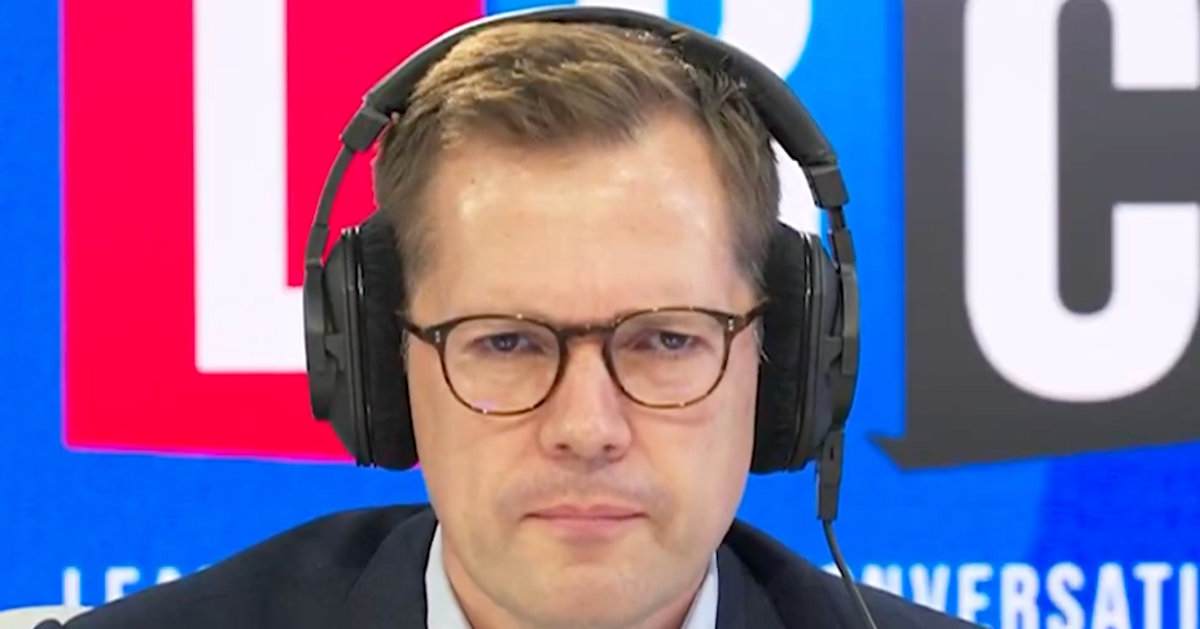
Callers to a radio phone-in savaged Robert Jenrick as he defended Nigel Farage’s decision to trigger a by-election in Clacton.
Reform UK’s Treasury spokesman was standing in for regular presenter James O’Brien on LBC.
Farage unexpectedly quit as an MP on Tuesday amid controversy over the £5 million gift he received from a crypto billionaire, which is being investigated by parliament’s commissioner for standards.
The Reform leader said he was triggering a “people versus the establishment” by-election, but so far his only confirmed opponent is Count Binface after Labour, the Tories, the Lib Dems and Greens all refused to take part.
Jenrick said Farage had shown “balls” by putting his political career on the line, despite the fact that he won his Clacton seat with a majority of 8,400 just two years ago.
He also said the other parties were “cowards” for not putting up their own candidates.
But the vast majority of people who rang in during the hour-long debate took a different view.
Al in Glasgow said: “I think Farage is throwing toys out of his pram.
“He cannot deal with challenge, and so he has to have some kind of primadonna reaction. It’s nothing to do with democracy.
“His democratic vote has already been taken, the other parties shouldn’t rise to the bait, he’s just being a child.”
John in Sheffield said: “I think that Nigel Farage isn’t a sensible candidate, even when compared to Count Binface.”
But Jenrick hit back: “I do think Count Binface is an interesting character. Nigel has been in the House of Commons now for two years, so he’s used to people who’ve got robotic voices and a head full of rubbish, so I’m sure he’ll be able to take on Binface.”
Another caller, Ben from Leigh-on-Sea, said Farage was “insulting the voters of Clacton by not waiting for the commission to produce their report and their findings, and then there potentially being a by-election when they’ve got all the facts in front of them”.
“Do you not think he’s being cowardly by trying to get out in front before we know the full facts and evidence against him,” he said.
Even Reform member Nicola from Horsham did not agree with Farage’s move.
She said: “What’s happening now is leaving me in despair. I don’t like this by-election sideshow nonsense.
“Nigel is giving the media exactly what they want. No matter what channel you turn to – TV, radio, they’re loving it. All slagging off Nigel, when really all this is going on and Andy Burnham is sliding straight into No.10 unchallenged.
“I just feel if Nigel wasn’t doing this, perhaps people would be on Andy’s case.”
Lisa in Brentwood said Farage was “a vile, repulsive individual”.
“Everything that comes out of his mouth is a lie,” she told Jenrick, who defected from the Tories to Reform earlier this year.
“The fact that you’re sticking up for him just shows what a person you are because you didn’t have a by-election, you were quite happy to just walk across the floor without giving the people of Runcorn a chance to decide whether they wanted Reform.”
Another caller, Tom from Bury St Edmonds, said the by-election “does nothing for the people of Clacton”.
“At the end of the day these are constituents who have genuine concerns and genuine issue and they need help and support from their member of parliament, and they’ll be lacking that if there’s by-election after by-election,” he said.
“That to me makes this feel like a political stunt.”
Bea in Northampton said Farage and Jenrick were trying to “muddy the waters” by deflecting attention away from the standards probe.
Simon in Taunton told Jenrick: “How do I follow those earlier callers who absolutely wiped the floor with you?
“As you sit there as Nigel’s foot soldier trying to gaslight Reform supporters and the poor unsuspecting electorate of Clacton-on-Sea, have you got your fingers crossed behind your back? Do you actually believe anything you’re saying?
“You know and I know that this by-election is completely unnecessary. It is a complete circus show that Nigel Farage is putting on as part of his usual theatrics to garner the spotlight.”
Reform MP Lee Anderson this morning kick-started the by-election process by “moving the writ” in parliament.
It confirms that Farage is no longer Clacton’s MP, and that a date for a by-election will now need to be set.
Reform want it to take place on August 6, but it may end up being on August 13.
Listen to Commons People, the podcast that makes politics easy. Every week, Kevin Schofield and Kate Nicholson unpack the week’s biggest stories to keep you informed. Join us for straightforward analysis of what’s going on at Westminster.

Fresh attempt to reopen Sam Smith pub Trafalgar Bay in York

Tryg A/S (TGVSY) Q2 2026 Earnings Call Transcript

EU Vote Revives Chat Control Rules With Encryption Exemption


-

 Fashion7 days ago
Weekend Open Thread: High Hopes
-
 NewsBeat5 days ago
Taylor Swift and Travis Kelce wedding staffer hilariously struggles to keep her cool while checking in megastars
-

 Crypto World7 days ago
Standard Chartered Secures MiCA License as ESMA Adds 37 New Crypto Firms
-

 Fashion4 days ago
Open Thread: What Great Books Have You Read Recently?
-

 Fashion1 day ago
Loro Piana Fall 2026 Enters Houston’s Art Scene
-

 News Videos3 days ago
Whats Hidden Inside This Cash Register? #treasure #reselling #money
-
 Tech3 days ago
Anthropic’s new “J-lens” reveals a silent workspace inside Claude that mirrors a leading theory of consciousness
-
Crypto World7 days ago
ESMA Expands Crypto Register by 37 Firms Following MiCA Transition Period
-

 Business4 days ago
AXT Shares Jump Nearly 14% as Semiconductor Materials Maker Rebounds on AI-Linked Indium Phosphide Demand
-

 Sports3 days ago
Joshua Pacio ‘more complete’ ahead of ONE rematch vs Malachiev
-

 Crypto World5 days ago
South Africa proposes crypto tax guidance under existing rules
-
Crypto World4 days ago
SK hynix (000660.KS) Stock Dips as $28B Nasdaq ADR Offering Drives AI Memory Expansion
-

 News Videos4 days ago
Best Time to Enter Small Caps Right Now? Another Bull Run? | Financially Free
-

 Tech5 days ago
Lenovo laptops are now shipping with YMTC SSDs, a sign of Chinese NAND entering the mainstream
-
Sports3 days ago
We have punished the disrespect
-

 News Videos4 days ago
Avoid entering in FOMO #bitcoin #cryptocurrency #trading #scalping
-
 Tech2 days ago
Anthropic brings Claude Cowork to mobile and web as usage data shows most users aren’t coding
-

 Crypto World4 days ago
$1,000 Credit Alert! BlockDAG X Exchange Pre-Registration Now Officially Open, Polkadot Dips & Zcash Rebounds
-
 Tech6 days ago
Neuralink Threads Its Way Straight Through the Brain’s Armor
-

 Crypto World3 days ago
Binance lists Strategy’s STRC stock as company expands Bitcoin funding
You must be logged in to post a comment Login