



Connect with us
DAPA Banner
DAPA Coin
DAPA
COIN PAYMENT ASSET
PRIVACY · BLOCKDAG · HOMOMORPHIC ENCRYPTION · RUST
ElGamal Encrypted MINE DAPA
🚫 GENESIS SOLD OUT
DAPAPAY COMING

Tech

Apple Calls OpenAI’s Hardware Business ‘Rotten To Its Core’ In Trade Secret Theft Lawsuit

Published

on

Apple is suing OpenAI and two of its former employees who currently work at the AI company, for theft of its trade secrets. In a lawsuit filed in federal court Friday, Apple alleges extensive misconduct by the company it once partnered with, describing its hardware business as “rotten to its core.”

The lawsuit also names io Products, the Jony Ive-led hardware startup acquired by OpenAI last year, as complicit in the trade secret theft. It doesn’t mention Ive by name, but described the organization as complicit in “a coordinated pattern of misconduct at an institutional level” within OpenAI.

The filing also names Chang Liu, a former senior system electrical engineer at Apple, and Tang Yew Tan, a former Apple VP who is now OpenAI’s Chief Hardware Officer. Apple claims that both Liu and Tan shared trade secrets with OpenAI. Liu, according to Apple’s lawyers, “surreptitiously accessed and downloaded dozens of Apple’s confidential hardware-related files, including voluminous, detailed information about unreleased products, engineering presentations, technical specifications, and proprietary project data.”

Apple also claims that Tan “has directed job candidates still working for Apple to bring ‘actual parts’ from Apple to their interviews for ‘show and tell’ sessions in which he and his team at OpenAI can elicit still more Apple confidential information.” In all, Apple says that more than 400 of its former employees have taken jobs at OpenAI and that the company’s interview process if structured “to try to solicit additional confidential Apple information.”

Advertisement

OpenAI didn’t immediately respond to a request for comment on the allegations. The company “never responded” when Apple reached out about its concerns, the lawsuit says. Drew Pusateri, OpenAI’s director of strategic communications, tweeted that the company has “no interest in other companies’ trade secrets” in reaction to the suit.

In the filing, Apple says that it’s likely not aware of the full extent of OpenAI’s misconduct. “This much is clear, however: at every level, from members of its Technical Staff to its Chief Hardware Officer, and in coordination with business partners, OpenAI has been stealing Apple’s trade secrets and confidential information,” it says. “As a natural result, OpenAI’s nascent hardware business now rests on the shakiest of foundations, rotten to its core by its illegal reliance on misappropriated trade secrets.”

The lawsuit comes as Apple is still partnering with OpenAI for Apple Intelligence. In a footnote, Apple says that its existing agreement, which allows the iPhone maker to integrate chatGPT into its devices, “is not at issue here” and that its allegations of trade secret theft have “no connection” to the arrangement.

Advertisement

Update, July 10, 7:30PM ET: This story was updated after publish to include a public comment from Drew Pusateri, OpenAI’s director of strategic communication.

Source link

Advertisement
Continue Reading
Click to comment

You must be logged in to post a comment Login

Leave a Reply

Tech

Orbital datacenter gold rush needs an environmental review, FCC told

Published

on

On-Prem

Green groups want licenses frozen before a million satellites litter the exosphere

Environmental groups want the FCC to slam the brakes on orbital datacenters, arguing the agency shouldn’t approve constellations they say would total more than a million satellites before taking a hard look at their environmental impact.

Earthjustice, acting on behalf of DarkSky International, Environment America, and Public Employees for Environmental Responsibility (PEER), filed a petition this week urging the regulator to prepare a Programmatic Environmental Impact Statement (PEIS) under the National Environmental Policy Act (NEPA) before approving any of the pending applications.

Advertisement

The filing doesn’t target any single company. Instead, it asks the regulator to put the entire emerging orbital datacenter sector on hold while it assesses the cumulative effects of proposals from SpaceX, Starcloud, Blue Origin, Cowboy Space, and any similar applications that follow. According to the petition, those proposals collectively seek “well over a million datacenter satellites” in low Earth orbit.

“The FCC is currently considering multiple requests for licensing extraordinary numbers of satellite-based datacenters to be placed into low-earth orbit over the next decade,” the petition states. “Collectively, the proposals seek to place well over a million datacenter satellites into orbit, increasing the existing volume of satellites in low-earth orbit by multiple orders of magnitude.”

The groups argue that the FCC is trying to apply licensing rules written for much smaller satellite constellations to an entirely new class of infrastructure.

“If ever a situation warranted a PEIS, it is this one,” the petition says. It argues that a single review would allow the agency to examine “the risks, alternatives, needs, costs, and impacts of this sudden transformation of Earth’s exosphere” before deciding whether any of the projects are in the public interest.

Advertisement

The petition raises concerns about rocket launch emissions, pollutants released as satellites burn up during atmospheric reentry, depletion of the ozone layer, orbital debris, light pollution, impacts on wildlife, and interference with astronomy.

It also argues that the combined effects of these constellations cannot be understood by evaluating applications one at a time.

“It is difficult to imagine a better example of multiple projects presenting essentially identical impacts and risks that compound synergistically and cumulatively than the present proposals for orbital datacenter constellations,” the petition argues. “The FCC’s default position that such projects ‘individually and cumulatively’ have no environmental impact is plainly inapplicable here.”

The groups also criticize the applicants, saying they make expansive claims about the benefits of orbital computing while offering little detail about its environmental consequences.

Advertisement

“The proponents of these proposals describe their plans in grandiose, civilization-changing terms,” the petition states. “But these same proponents have refused to embrace any inquiry into the impacts of their self-claimed epochal technology on the environment, science, economy, or other values.”

The petition arrives as the FCC reconsiders its environmental review rules for satellites, acknowledging that rapid growth in the space industry has raised new questions about how to apply its existing framework. The petition argues that the FCC’s current approach, which generally treats satellite licenses as categorically excluded from detailed environmental review, is no longer fit for proposals measured not in dozens or thousands of spacecraft but in hundreds of thousands and, potentially, millions.

If the FCC agrees, orbital datacenter operators will have a mountain of paperwork to clear before sending their hardware skyward. ®

Source link

Advertisement
Continue Reading

Tech

LisaFPGA brings Apple’s magnificent misfire back in programmable logic

Published

on

PERSONAL TECH

Open source recreation costs a fraction of the original and may even work with Twiggy drives

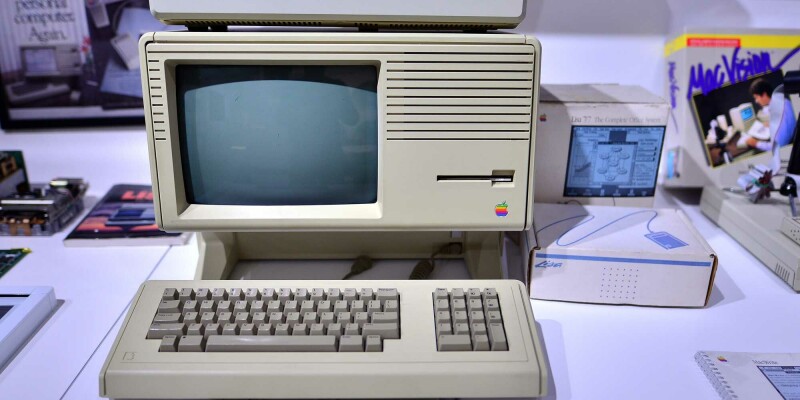
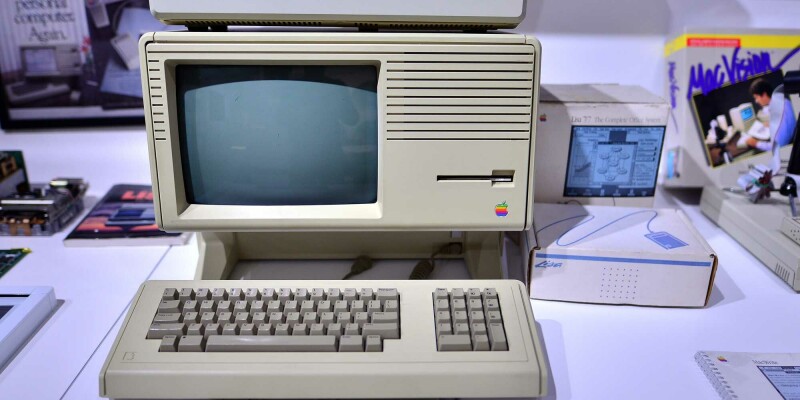
Apple Lisas are rare now. Here’s a rather cheaper way to build your own – and in theory, it can even use original floppy drives.

LisaFPGA does what it says on the GitHub repo: “The Apple Lisa computer implemented inside an FPGA!”

Advertisement

It’s an open source project that recreates a complete Apple Lisa on an FPGA board. It’s not entirely complete yet, but hardware went on sale in May and you might still be able to buy one – or download the bitstream of the model and build your own.

Advertisement

The Apple Lisa was a very strange computer, in part because it was pioneering new design territory. Apple started the project before the famous visits to Xerox PARC to see what became the Alto – also a radical machine, as The Reg FOSS desk tried to describe in 2023 for the machine’s 50th anniversary. After those visits (for which Apple paid Xerox in shares, which the photocopier giant promptly sold), Apple changed course. Now the Lisa would be the first mass-market computer with a GUI. (The “mass market” bit didn’t work out, and 2,700 unsold Lisas ended up as landfill in 1989.)

Even so, it was a very important and influential machine: The Register celebrated its 30th birthday and indeed took another look back in 2019.

So it’s quite hard to find an Apple Lisa today, and if you manage to do so, it will probably (a) cost you quite a lot of money and (b) not be in working condition. That’s a shame because Apple released the source to Lisa OS for the machine’s 40th birthday in 2023.

The enterprising developer behind LisaFPGA is Alex Anderson-McLeod, and he built his knowledge of the Lisa and its implementation from an earlier project. Last year, he managed to work out how to compile and build Lisa OS from Apple’s source code. This was a particularly difficult effort, and he documents the process of Lisa OS Source Code Compilation at length. We’ve read the account closely and we think it’s fair to say the build process is deeply arcane.

Advertisement

(Sadly, the repo does not contain the source code itself, as the very strange “Apple Academic License Agreement” allows recompilation and study, but it forbids redistribution. To get the code, you’ll have to agree to the license on the Computer History Museum.)

Anderson-McLeod learned a great deal about how the Lisa works while rebuilding the OS, and he’s applied that knowledge to designing and building LisaFPGA. It is not completely finished – under “Features,” the Introduction section of the README states: “Onboard ESP32-based floppy drive emulation (NOTE: THIS DOESN’T WORK YET).”

And a few lines down: “Supports Twiggy drives with an optional breakout board. Note that this is CURRENTLY UNTESTED as I don’t have a set of Twiggy drives.”

Even so, we are impressed by the effort, and it sounds like a very entertaining bit of kit. The first batch has already sold out, but finished boards were on sale from two official outlets: MacEffects for £264.89, and from Joe’s Computer Museum for $350. Both will take your info and contact you when the next batch is ready.

Advertisement

If you can’t wait, there is Ray Arachelian’s Lisa Emulator Project. The history section is particularly interesting, starting with So, Ray, how come you care about ancient, obsolete machines?

The LisaEm source code is on GitHub, but sadly, Arachelian died of cancer in 2023, which is why version 1.2.7 never got past Release Candidate 4. We feel it would be a good tribute for someone to pick it up and produce a finished release.

In the meantime, we wrote about the remarkable LisaGUI website last year, which recreates the machine’s user interface inside your browser. ®

Source link

Advertisement
Continue Reading

Tech

Dreame X50 Ultra Prime Day deal drops robot vacuum to AU$1,479

Published

on

Amazon‘s Prime Day sale has delivered another very tempting robot vacuum deal, with the Dreame X50 Ultra dropping to just AU$1,479. That’s a huge discount from its AU$2,999 launch price last year, and well below the usual AU$2,000 price we’ve seen it discounted to in recent months.

It isn’t a budget buy, even at AU$1,479, but this is the lowest price we’ve seen for this robovac so far and, given it scored an impressive 4.5 stars in our Dreame X50 Ultra Complete review, we think it’s worth considering at this price.

This isn’t just another robot vacuum with a mop attached to the rear. The Dreame X50 Ultra is built to be a proper hands-off floor cleaner, with a self-emptying, self-refilling and self-cleaning dock, 20,000Pa suction, extendable mop pads and a side brush designed to reach into edges and corners.

Advertisement

In our review, the Dreame X50 Ultra was described as setting “a new standard” for the best robot vacuums, with the reviewer praising its cleaning results and low-maintenance design.

The model reviewed was the Complete version, which means it comes with an accessory bundle, but the core robovac and dock is the same X50 Ultra you’ll find in this Amazon Prime Day deal.

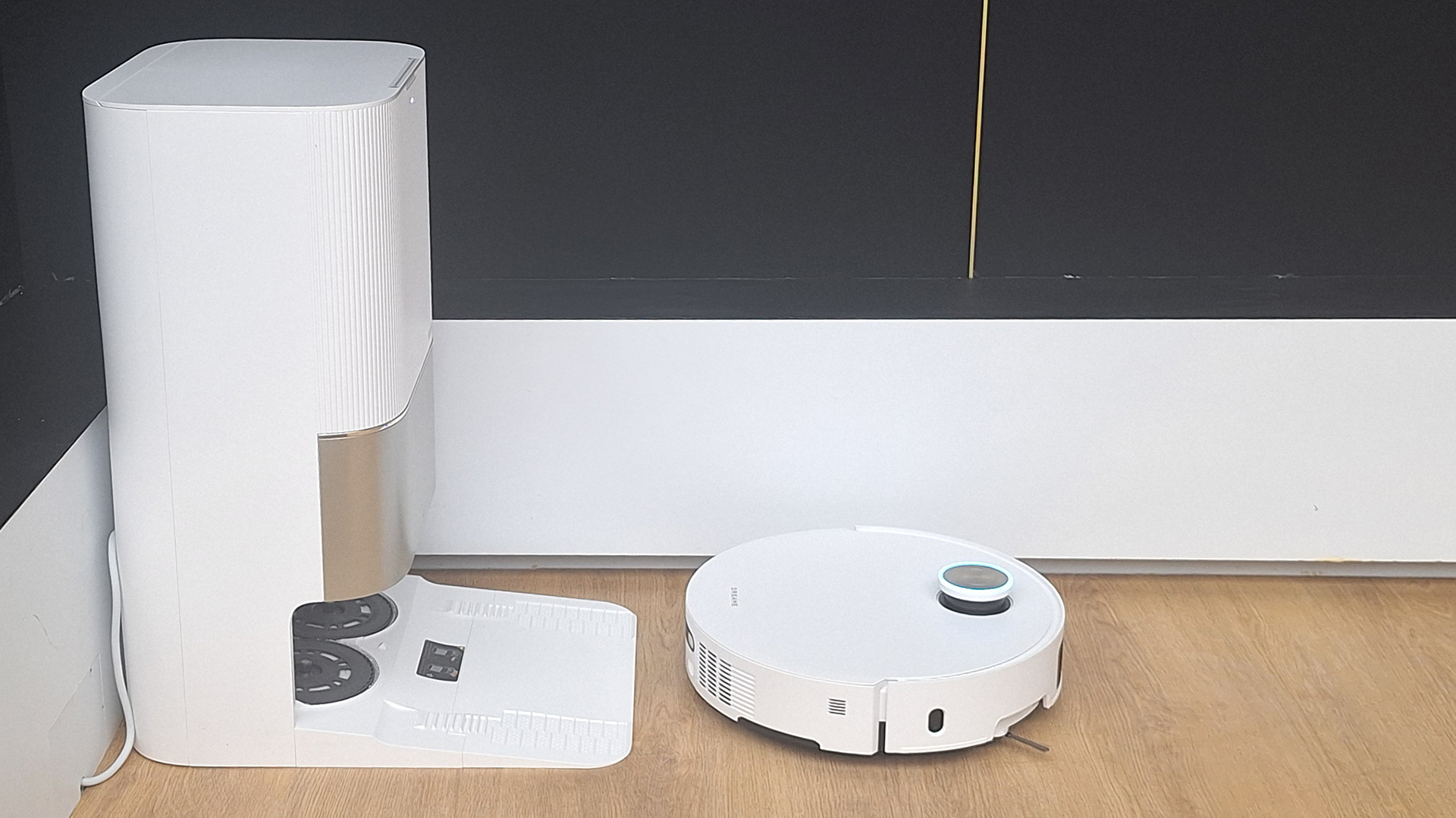
Dreame X50 Ultra Complete robot vacuum and dock

(Image credit: Future)

The X50 has a lot of clever features that make it more capable than previous models. Its navigation puck can retract so the robovac can clean under lower furniture, while its small threshold-hopping legs help it clear raised room dividers and other tricky transitions around the home.

Our review also highlights its mopping and vacuuming performance — especially its ability to make use of its extending side brush and mop pads.

Advertisement

Dreame X50 Ultra Complete

(Image credit: Future)

However, our reviewer found the X50 Ultra’s object avoidance wasn’t always as reliable as expected, and its pet-waste detection needed the right settings to work properly in testing. Despits these shortcomings, it still scored very well in our tests, which is saying something.

If you’ve been waiting for Dreame’s top model to fall to a more tempting price, Prime Day has delivered exactly that.


More Amazon Prime Day deals in Australia

Advertisement

You might also like…

Source link

Continue Reading

Tech

Destructive Windows backdoor stuffs multiple wipers and ransomware code into a single package

Published

on

security

Microsoft says GigaWiper combines at least 3 malware families into one modular tool

A newly identified destructive Windows backdoor combines ransomware-like encryption with multiple data-wiping features, according to Microsoft.

Last October, the Redmond threat-hunting team first spotted attacks using the Golang-based implant they’ve named GigaWiper. 

Advertisement

Its developers stuffed multiple malware families into the software as on-demand commands, giving criminals a Swiss Army knife of command-and-control (C2) and destructive capabilities, including multiple wiping commands and file encryption without any possibility of decryption.

“The consolidation of multiple destructive capabilities into a modular backdoor reflects a notable shift in wiper malware, which are typically designed purely to destroy rather than to extort and carry real-world consequences,” Microsoft Threat Intelligence wrote in a Thursday blog.

Microsoft declined to answer The Register‘s questions about the scale and scope of GigaWiper attacks.

In the blog, Redmond’s malware analysts said they uncovered two types of GigaWiper samples in victims’ environments, and both are unstripped portable executable files written in Golang. 

Advertisement

One is a standalone wiper that operates at the physical disk level, as opposed to deleting individual files. It overwrites raw disk content, removes partition metadata, and then reboots the system using Windows shutdown functionality with restart and zero-delay.

The second sample is the more interesting one. It includes the same disk-wiping functionality, but that’s just one component of the backdoor. This malware also establishes persistence and sets up C2 communication using RabbitMQ over AMQP for receiving commands from the C2 server, and Redis for updating command status and output.

GigaWiper also organizes its commands into different categories, including “always run” for tasks such as continuous screen recording, “manage command” for system management functions, and separate “special command” and “shell command” modes for executing additional functionality.

These include the standalone wiper command, along with another command that disables Windows recovery, triggers a blue screen of death (BSOD), and leaves the device unable to boot.

Advertisement

It also has a destructive command based largely on Crucio ransomware. It encrypts files with randomly generated keys that are never saved, which means victim organizations will never be able to decrypt these files.

Another command bulk encrypts or decrypts files with AES-256 in Cipher Block Chaining (CBC) mode, while a different command uses MinIO Client (mc) to upload stolen files to remote storage.

The malware also runs PowerShell commands, takes screen shots and recordings of the compromised device, collects system info, clears Windows event logs, and allows remote control over the system along with keyboard and mouse control – among other capabilities that attackers can use at will.

According to Redmond, GigaWiper combines components from at least three previously separate malware families, including Crucio ransomware, a Go reimplementation of FlockWiper, and a standalone disk wiper.

Advertisement

“Overall, these findings show the evolution of the actor’s tooling over time,” the security sleuths wrote. “Functionality was merged into a single robust backdoor, granting the actor more ways to control and destroy infected systems.” ®

Source link

Continue Reading

Tech

Spider-Man Snares Galaxy Z Fold 8 in Samsung Tie-in Teaser

Published

on

If you still doubted it, a new Samsung Galaxy Z foldable looks like a sure thing for the company’s upcoming Galaxy Unpacked event this month — a Spider-Man tie-in teaser posted on X on Wednesday pretty much confirms it. And it’s likely the Z Fold 8 or one of the expected variants, as rumors indicate.

Samsung’s been playing up its tie-in with new movie Spider-Man: Brand New Day for a while, including its launch of a functional Spider-Man tracking site that mimics the one appearing in the upcoming movie.

While the tracker promotion showed the site running on the screen of a foldable model, in the latest teaser, we can see a bit of the outside, including the profile of the phone’s folded halves when closed. Because it’s Spider-Man, the phone is shown being snatched out of the air by one of his web shooters.

Advertisement

The Galaxy Z Fold 8, or whatever it will be called, is rumored to feature a new, wider passport-style chassis. The teaser image suggests that might be true, but it also masks the width of the phone with a cleverly placed flare.

The post also links to Samsung’s site, where you can reserve a mystery phone (“your next galaxy device”) before Unpacked in exchange for a chance to win a $500 Samsung gift card and a $30 “gift” that can only be applied to a second device you purchase at the same time.

That may not be enough to make a dent in the potentially high price of upcoming models. Phone prices are rising along with those of many electronics, including consumer laptopsexternal storage devicesgaming consoles and more, thanks to the current memory- and component-supply shortage caused by RAM resources being reallocated toward more lucrative AI-related sales.

Whatever their cost, the new foldables are expected to be unveiled at Samsung Galaxy Unpacked on July 22 in London.

Advertisement

Source link

Continue Reading

Tech

Prime Day may be over, but the Echo Dot 5th Gen is still well below RRP

Published

on

The Echo Dot (5th generation) is small enough to fit anywhere in your home, and loud enough that you’ll actually want to listen to music through it.

Right now, you can get that balance in the Echo Dot (5th generation) at £44.99, down from an RRP of £54.99, which represents a saving of 18%, which makes the choice to finally try smart home obvious.

Deal Amazon Echo DotDeal Amazon Echo Dot

Prime Day may be over, but the Echo Dot 5th Gen is now 18% off, with a tidy post‑sale saving

Even with Prime Day behind us, the Echo Dot 5th Gen has dropped by 18%, offering a tidy follow‑up saving for anyone who missed the rush.

Advertisement

View Deal

What holds most people back from adopting smart home technology isn’t usually the availability of features themselves; it is the assumption that you need to be a tech enthusiast or technology early adopter to make the system work.

Advertisement

The Echo Dot (5th generation) demolishes that assumption completely: plug it in, open the Alexa app on your phone, connect to Wi-Fi, and you are controlling lights, thermostats, and routines with your voice in minutes.

The improvements Amazon made to the fifth-generation Echo Dot matter most in everyday use, where they show up most obviously in how substantially the speaker now handles music and podcast playback throughout your entire home.

Advertisement

The Whatsapp LogoThe Whatsapp Logo

Get Updates Straight to Your WhatsApp

Advertisement

Join Now

Echo Dot’s speaker is audibly richer than previous iterations, with clearer vocals and deeper bass that mean playing Spotify or a podcast through it is genuinely satisfying, not just barely tolerable.

Advertisement

Pair it with compatible smart bulbs, thermostats, or smart locks, and it becomes the operational centre of a system that learns your patterns and then acts automatically on your behalf throughout the day.

You can even ask for weather updates while making breakfast, set timers hands-free, dim the lights as part of a bedtime routine, or have the heating adjust when the room temperature drops below a threshold you set.

Privacy is genuinely baked in with a dedicated Microphone Off button that physically disconnects the microphones, and at £44.99, the 5th generation of Echo Dot stops being the device you hesitate over and becomes the one you actually buy.

An audio upgrade on the previous model, the Amazon Echo Dot (5th generation) is now a capable music speaker, as well as a great smart speaker for smart home control and general enquiries. Overall, this is the best value smart speaker you can buy, although owners of the previous generation will struggle to justify the upgrade.

Advertisement
  • Improved audio

  • Looks great

  • Improved tap controls

Advertisement

Advertisement

SQUIRREL_PLAYLIST_10148964

Source link

Continue Reading

Tech

Ctrl-Alt-Speech: Sell Me Lies, Sell Me Sweet Meta Lies

Published

on

from the ctrl-alt-speech dept

Ctrl-Alt-Speech is a weekly podcast about the latest news in online speech, from Mike Masnick and Everything in Moderation‘s Ben Whitelaw.

Subscribe now on Apple Podcasts, Overcast, Spotify, Pocket Casts, YouTube, or your podcast app of choice — or go straight to the RSS feed. To get extended episodes with additional coverage, support us on Patreon.

In this week’s episode, Mike and Ben cover:

Advertisement

And in the extended episode for Patreon supporters, they cover:

Our fun links this week are Roost, the “slow-cial” messaging app, and PlotLines for visualizing classic novels on a map.

If you’re already a Patreon supporter, you can get the extended episode on Patreon.

Filed Under: ai, artificial intelligence, china, content moderation, trust and safety

Companies: anthropic, google, meta, openai

Advertisement

Source link

Continue Reading

Tech

Meta just pulled its most controversial AI image generation feature days after launch

Published

on

A couple of days ago, I covered Meta’s announcement of the Muse Image, an AI tool that lets users generate images based on someone’s Instagram profile without asking the account owner. 

I also highlighted the risks associated with it in another piece, along with steps for opting out. Three days later, the feature is no longer available. 

Statement from Meta:

Earlier this week, we announced that one way for people to generate images in Meta AI is by @-mentioning public Instagram accounts that they want to reference. Our intent was to provide a useful creative tool and to give people control over whether their…

— Dylan Byers (@DylanByers) July 10, 2026

Advertisement

What exactly happened there?

As more and more people picked up on Meta’s Muse Image and how it assumed you’re okay when someone else used your Instagram pictures as a reference for generating AI pictures, the tool started to face a massive backlash. 

Opt-out controls existed for users who wanted to protect their likeness, but the default was in, which meant millions of public Instagram users were enrolled in a system that could generate AI images of them without ever clicking anything to agree.

However, in a statement to Puck News’ Dylan Byers, Meta acknowledges that the feature “missed the mark” and is therefore “no longer available.”

What did Meta say about it?

“Earlier this week, we announced that one way for people to generate images in Meta AI is by @-mentioning public Instagram accounts that they want to reference,” says Meta in a statement to the outlet. 

“Our intent was to provide a useful creative tool and to give people control over whether their public content could be referenced in this way. We’ve heard the feedback that this feature missed the mark, so it’s no longer available.”

Advertisement

Byers highlights that the pushback from talent agencies, most notably CAA, one of the largest in the entertainment industry, could have played a major role in rolling the feature back. 

While I would have argued that turning it off by default for all Instagram accounts and allowing experimental users to opt in would have been the right approach, the feature is gone, and I beleive it’s for good. 

Source link

Advertisement
Continue Reading

Tech

Autonomous AI Russian 'Molniya' drone could be using the Nvidia Jetson Orin platform by exploiting a common COTS loophole

Published

on

  • A Molniya drone struck without any visible control antenna at all
  • Only a camera and computer were found inside the recovered drone
  • Ukraine believes navigation and targeting may now run without humans

A Russian Molniya drone recently struck a Ukrainian facility without a visible control antenna, and the strike appeared unusual to observers tracking the weapon’s design.

The recovered drone carried only a camera and an onboard computer, a stripped configuration that suggests a move toward greater autonomy in strike sequences.

Radio technology specialist Serhii “Flash” Beskrestnov, an adviser to Ukraine’s defence minister, said the finding points toward navigation and targeting functions operating without a human operator.

A familiar pattern from the V2U platform

The same onboard setup had previously appeared only on the V2U drone, a separate Russian platform used earlier in the conflict.

“The enemy is using the V2U platform to train its neural network,” Beskrestnov wrote, adding that the repeated hardware marked a troubling development.

Advertisement

“The UAV had only a camera and a computer. This is where everything is heading. Navigation, target acquisition and the attack will become fully autonomous.”

Ukraine’s Defence Intelligence, through its War&Sanctions portal, already classifies the V2U as an AI-enabled loitering munition, though independent confirmation remains absent from other sources.

This overlap raises fresh questions about whether commercial processors, originally built for civilian robotics, are being repurposed for battlefield autonomy across programmes.

There are speculations that Russia’s drone programme is drawing on Nvidia’s Jetson Orin platform, a processor widely used in hobbyist and commercial drone projects for onboard image recognition.

Advertisement

That kind of chip could plausibly allow a drone to identify and track targets without needing constant external human guidance.

However, no independent laboratory analysis has publicly confirmed the specific chip inside the recovered Molniya drone.

That gap leaves the true source of the hardware unclear, and points to a wider question of how such components may be reaching Russian manufacturers at all.

COTS components complicate export controls

Russian reliance on commercial off-the-shelf, or COTS, hardware appears to expose a persistent gap in international sanctions enforcement efforts worldwide.

Advertisement

Such components are typically manufactured for civilian markets and often reach restricted buyers through intermediaries, complicating end-use verification across borders.

Once a chip like the Jetson Orin leaves its original supply chain, tracing its final destination becomes difficult for export control agencies to manage in practice.

Manufacturers rarely sell directly to sanctioned states, so a single chip can pass through several resellers before reaching its final buyer.

Each additional link in that chain makes it harder for regulators to know exactly where a processor ends up.

Advertisement

This loophole means sanctioned states can potentially acquire advanced processors meant for hobbyist or commercial use, then repurpose them for weapons development.

A chip designed for a drone hobbyist’s camera rig can, in principle, end up guiding a loitering munition instead.

Closing that gap would likely require tighter monitoring of resellers and distributors rather than restrictions on the manufacturers themselves.

Export control regimes were largely built around large, traceable defence contracts rather than small consumer electronics shipments.

Advertisement

That mismatch leaves regulators several steps behind when commercial parts are diverted toward military applications.

Until distributors face stricter tracking requirements, similar hardware may keep surfacing in future weapons regardless of existing sanctions.

Via Ukrainska Pravda

Source link

Advertisement
Continue Reading

Tech

Castlelion sells affordable hypersonic Mach 5 missiles for the price of a supercar by tapping into the O&G and audio industries to get cheaper components faster

Published

on

  • Navy orders first 50 Blackbeard hypersonic missiles for $23.4 million total
  • Each Blackbeard missile reportedly costs under $300,000 once full production begins
  • Castelion has received three separate Navy funding rounds since February 2026

A California defense startup is now selling hypersonic missiles priced like a luxury vehicle rather than a mansion, marking a shift in weapons pricing.

Castelion’s Blackbeard missile travels in excess of Mach 5 and reportedly costs under $300,000 per completed round, a fraction of typical hypersonic pricing.

The pricing became real on June 16 2026, when the US Navy ordered the first 50 production rounds for $23.4 million.

The Navy’s first real purchase

The order also covers 50 shipping and storage containers, running primarily through Castelion’s sprawling New Mexico factory campus.

It is the third Navy payment in five months, following $50 million in February to push Blackbeard from prototype toward operational use.

Advertisement

In April 2026, the Navy committed a further $105 million specifically to integrate Blackbeard onto the F/A-18 and to run the carrier-suitability testing required before any missile can operate safely from a carrier deck.

According to Bryon Hargis, CEO and co-founder of Castelion, the funding reflects the Navy’s commitment to “advancing affordable, manufacturable long-range strike capability.”

Castelion was founded by former SpaceX engineers and has already completed more than two dozen flight tests within three years.

One of those flight tests took place at the Army’s Dugway Proving Ground in Utah during the latter part of 2025.

Advertisement

Castelion has also partnered with uncrewed-boat maker Saronic to demonstrate launching Blackbeard missiles from a robotic surface vessel at sea.

If testing continues to succeed, the eventual plan is to purchase Blackbeard missiles by the thousand rather than by the dozen.

In May 2026, the company signed a framework agreement with the Department of War covering multi-year production of roughly 500 weapons annually.

Cheaper parts from unrelated industries

The affordability behind Blackbeard rests heavily on components borrowed from several industries far removed from traditional aerospace manufacturing methods and vendors.

Advertisement

Chief Operating Officer Sean Pitt said the company uses automotive-grade Field-Programmable Gate Arrays originally built for driver assistance systems and electric vehicles.

These automotive processors cost roughly one-tenth as much as aerospace equivalents and arrive about six times faster, Pitt said.

Castelion has also replaced aerospace-grade metal tubing with precision-machined tubes originally designed for fracking operations in the oil and gas sector.

These tubes withstand heat and pressure levels comparable to rocket motor requirements, yet come from many more vendors at lower prices.

Advertisement

Rival startup Anduril has adopted a similar approach, using pharmaceutical-industry mixing technology to process rocket motor propellant far faster than legacy methods.

Castelion, recently valued at nearly $3 billion, has secured Pentagon contracts covering more than 500 hypersonic weapons under current agreements.

Via Defense News

Source link

Advertisement
Continue Reading

Trending

Copyright © 2025