

Crypto World
China’s AI Models Process 98 Trillion Tokens, 85% Above US

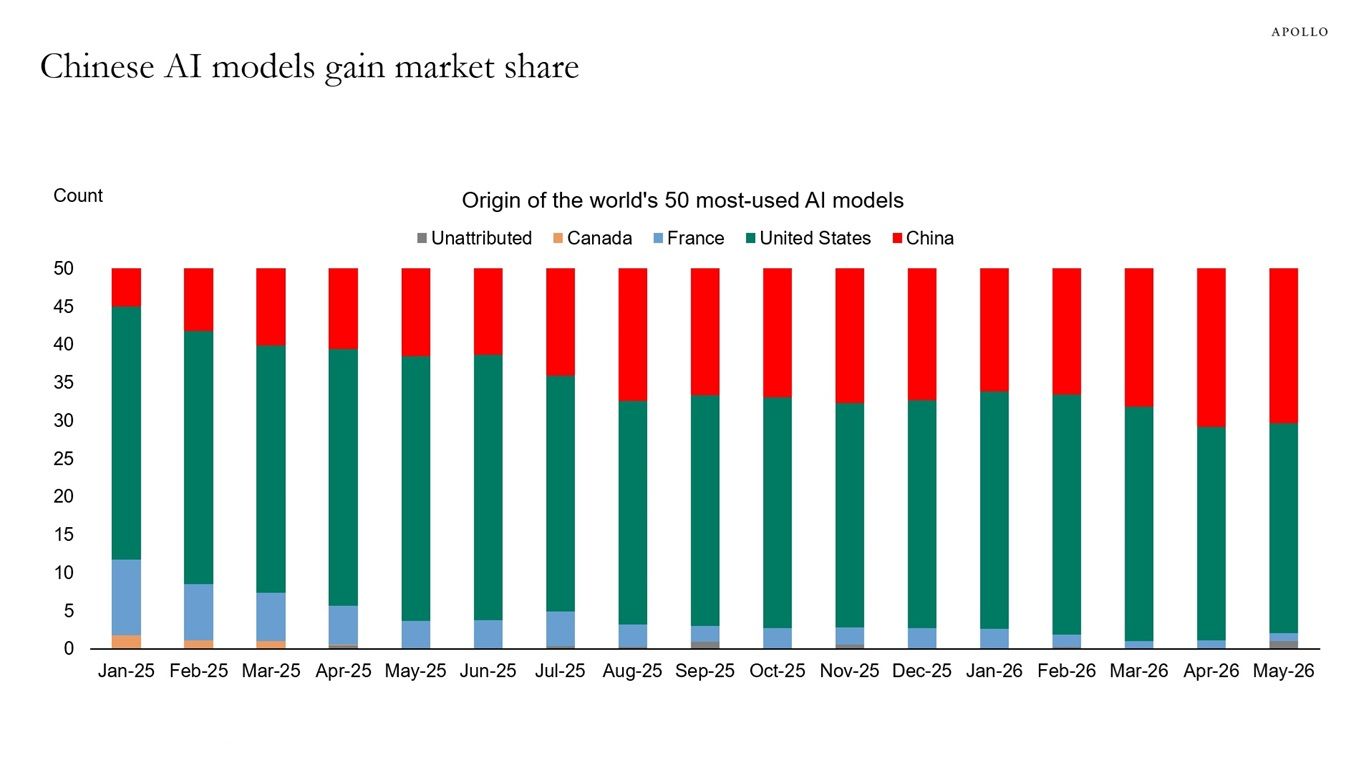
China now accounts for roughly 40% of the 50 most widely used artificial intelligence (AI) models worldwide. Its models have also overtaken US rivals in monthly token usage.
The numbers point to developers increasingly reaching for Chinese systems, even as US usage keeps rising.
China Closes the Gap in Global AI Usage
Just 5 of the top 50 models were Chinese at the start of 2025. That count reached around 20 by May 2026, a fourfold rise that lifted its share to 40%.

According to Apollo Global Management, US models moved in the opposite direction. Their count in the top 50 fell to around 28 from 33 over the same stretch.
Token usage tells a sharper story. Among the top 20 most used models, Chinese AI models processed 98 trillion tokens in June, against 53 trillion for US models.
Chinese token usage climbed 113% from May to June. US usage grew 43% over the same month. That widened China’s lead to 85%, well above the 24% margin recorded in May, the Kobeissi Letter noted.

Rising Usage Meets Deepening US-China Friction
The usage boom arrives as ties between US and Chinese AI firms fracture. Alibaba banned its staff from Anthropic’s Claude Code from July 10, citing back-door risks, and told them to switch to its own Qoder tool.
Anthropic had earlier accused Alibaba of the largest known distillation attack against it. The firm has also pressed Washington for tighter chip export controls, arguing the US can still secure a decisive edge.
“But if the US and its allies act now to address both issues, it may be possible to lock in a 12-24 month lead in frontier capabilities. A lead that large by 2028 would be enormously advantageous,” it said.
Beijing is tightening its own grip. A regulatory purge removed more than 14,000 non-compliant AI products from Chinese networks this month.
Subscribe to our YouTube channel to watch leaders and journalists provide expert insights
The post China’s AI Models Process 98 Trillion Tokens, 85% Above US appeared first on BeInCrypto.



The Coinbase-backed Ethereum layer-2 is preparing to expand its financial offerings as it pivots away from its earlier social-first strategy.


U.S. Senator Bernie Sanders has renewed his criticism of the crypto industry, placing digital asset groups alongside other well-funded political interests during a campaign event supporting Minnesota Lieutenant Governor Peggy Flanagan’s Senate bid.
Summary
- Bernie Sanders pledged to challenge crypto while campaigning for Minnesota Senate candidate Peggy Flanagan publicly.
- Crypto-backed PACs have become major election spenders as lawmakers debate new digital asset regulation nationwide.
- Fairshake and allied groups continue deploying industry funds across closely watched congressional races in 2026.
In a July 21 post on X, Sanders wrote, “Together, we are going to take on crypto, the AI industry, AIPAC and other billionaire super PACs.” He added that the campaign aimed to send Flanagan to the U.S. Senate. The comments focused on political spending and industry influence rather than cryptocurrency prices or blockchain technology.
Meanwhile, Sanders made the remarks while campaigning with Flanagan in Minneapolis. His statement grouped crypto with industries and political organizations that he says can use large financial resources to shape elections. He did not name a specific crypto company or political action committee in the post.
The timing comes as crypto-backed political groups spend heavily ahead of the 2026 midterm elections. As previously reported, Public Citizen estimated that the crypto industry had contributed about $189 million during the current election cycle by late June. Ripple- and Coinbase-backed groups, including Fairshake, have remained among the largest sources of industry political funding.
The spending has moved beyond national lobbying campaigns and into individual congressional races. Crypto.news reported in June that Fairshake-linked groups had deployed more than $8 million ahead of several closely watched primaries in Maryland, New York and Utah.
Fairshake and its affiliated groups have generally backed candidates viewed as supportive of clearer digital asset rules. Major industry companies, including Ripple, Coinbase and Andreessen Horowitz, have provided funding to the broader network over recent election cycles.
Crypto PACs become a larger force in the 2026 elections
The industry’s political spending has already appeared in several election results. In Maryland, as crypto.news reported, Adrian Boafo won a Democratic primary after receiving support from crypto-linked political groups. Fairshake affiliates also spent in other Democratic contests where digital asset policy formed part of the wider campaign debate.
The same network has also backed Republican candidates. In Alabama, a Fairshake-linked PAC spent more than $12 million supporting Barry Moore during his Senate primary and runoff campaign, according to related coverage. The activity shows that the groups have directed funding across party lines rather than limiting their spending to one political party.
Sanders’ latest remarks place him on the other side of that spending campaign. His criticism centers on the role of large political donors and corporate interests in elections. The July 20 statement did not call for a crypto ban or identify a new legislative proposal targeting digital assets.
Instead, Sanders framed crypto as one of several well-funded interests that Flanagan and her supporters would oppose. That distinction matters because his post focused on political influence rather than announcing a new position on individual cryptocurrencies, exchanges or blockchain networks.
Sanders has maintained pressure on crypto policy
The statement follows other recent moves by Sanders involving digital asset policy. In June, he joined Senator Elizabeth Warren and Representative Bobby Scott in asking the U.S. Labor Department to withdraw a proposal that could expand access to crypto and other alternative assets inside 401(k) retirement plans.
Moreover, the lawmakers argued that retirement savers could face volatility and weaker investor protections if plan providers added digital assets without enough safeguards. The Labor Department’s proposal would not require employers to offer crypto, but it would allow plan managers to consider alternative investments under existing fiduciary duties.
Sanders has also remained part of a wider group of lawmakers raising concerns about crypto regulation, investor protection and potential conflicts involving public officials. Those debates continue as Congress considers market structure rules and other legislation that could define how the U.S. treats digital asset companies.
At the same time, industry-backed political organizations have increased spending as those policy debates move through Congress. Previous crypto.news coverage found that Fairshake affiliates had spent about $7 million on selected Democratic primary races while lawmakers continued negotiating the CLARITY Act.
Minnesota race brings crypto politics onto the campaign stage
Sanders’ support for Flanagan now brings that national fight over political money into Minnesota’s Senate race. His July 20 message did not provide details about what “take on crypto” would mean in legislative terms, leaving the phrase tied mainly to the campaign’s broader criticism of wealthy industries and super PAC spending.
Crypto-funded groups have not remained on the sidelines in 2026. Their spending has already reached congressional primaries, Senate races and wider efforts to support candidates who favor industry-backed regulatory policies. Critics such as Sanders continue to frame that activity as part of a broader fight over large donors and political influence.
The debate is likely to remain active as the U.S. moves closer to the midterm elections and Congress continues work on digital asset legislation. Fairshake and allied groups still have substantial resources available, while lawmakers who oppose parts of the crypto industry’s policy agenda are making campaign finance a larger part of their response.
Crypto World
Coinbase's Jesse Pollak Hands Base App to Cobie, Says Social Bet Was 'Definitively Wrong'


Jesse Pollak, the Coinbase executive who created Base, handed the consumer Base app back to Coinbase and named crypto investor Jordan Fish, known as Cobie, to lead it, while admitting that his two-year bet on onchain social products and creator coins was a mistake. Pollak said in a post on X on… Read the full story at The Defiant


Wanchain’s Cardano-to-BNB Chain bridge has reportedly suffered an exploit that drained about 515 million NIGHT from its Cardano-side treasury, according to blockchain security firm BlockSec.
Summary
- BlockSec said roughly 515 million NIGHT left Wanchain’s Cardano bridge treasury during the reported exploit.
- Midnight said its core network remained secure, describing the incident as isolated to bridge infrastructure.
- NIGHT fell more than 30% as investigators examined possible signature reuse in Wanchain validator logic.
The incident triggered heavy selling of Midnight’s native token and sent NIGHT down more than 30% within 24 hours.
BlockSec’s Phalcon said its initial investigation pointed to a possible flaw in the TreasuryCheck validator used by the bridge. The security firm stressed that its findings remain preliminary. Meanwhile, the Midnight Foundation said the incident affected third-party bridge infrastructure rather than the Midnight blockchain itself.
BlockSec points to possible signature reuse flaw
According to BlockSec, the reported Wanchain Cardano bridge exploit may stem from the way the TreasuryCheck validator creates messages for signing. The firm said the validator combines 14 fields of varying lengths without adding clear separators or recording the length of each field. That structure could allow different sets of data to produce the same final byte string.
BlockSec said this could create a path for a signature reuse attack. An attacker may be able to reorganize field values while keeping the same signed message, allowing a previously valid signature to authorize a different transaction.
The firm said it reached its initial view after examining the onchain Plutus V2 code and the transaction linked to the reported attack. The investigation remains ongoing, and Wanchain had not published a full technical postmortem at the time of writing.
The security firm said a more structured encoding method could have prevented this type of ambiguity. Its analysis noted that the contract already contained Cardano’s SerialiseData function, but the bridge did not appear to use it when building the signature hash. BlockSec said encoding each field with clear boundaries would prevent two different data sets from producing an identical signed message.
Wanchain originally launched cross-chain support for NIGHT between Cardano and BNB Chain in December 2025. The bridge allows users to move the token between the networks through cross-chain infrastructure operated by Wanchain. Cardano’s official ecosystem directory describes WanBridge as using threshold-signature relayers to connect Cardano with EVM and non-EVM networks.
Midnight says the core network remains secure
The Midnight Foundation initially said it was investigating reports of an incident involving the Wanchain Cardano-to-BNB bridge and bridged NIGHT. It later issued a clarification saying the event was limited to Wanchain’s third-party bridge infrastructure.
“The incident is isolated to the Wanchain Cardano–BNB bridge and does not involve the Midnight Network itself,” the foundation said.
It added that Midnight’s protocol, validators, consensus system and core infrastructure continued to operate normally. The organization said it was working with Wanchain as the bridge operator continued its investigation.
The distinction matters because the reported attack involved tokens held to support cross-chain transfers rather than a change to NIGHT’s total supply. NIGHT is Midnight’s native governance token and also generates DUST, the network resource used for transactions and smart contract execution. Midnight lists the token’s total supply at 24 billion.
Midnight operates as a privacy-focused Cardano partner chain with a dual-token economic model built around NIGHT and DUST. The project launched its mainnet in March 2026, while NIGHT remains publicly transferable and tradable.
NIGHT sinks as hundreds of millions of tokens move
NIGHT sold off sharply as reports of the bridge incident spread. CoinGecko data showed the token trading near $0.0186, down about 31% over 24 hours. At those prices, 515 million NIGHT would carry a market value of roughly $9 million to $10 million. The value can move quickly because of the token’s volatility.
The large movement of NIGHT created immediate selling pressure because hundreds of millions of tokens reportedly left the bridge treasury within a short period. However, the Midnight Foundation has not said that the Midnight protocol itself created new tokens or suffered a consensus failure. Its statements have consistently described the event as a cross-chain bridge issue.
The price decline reversed part of NIGHT’s earlier market gains since Midnight’s launch. As crypto.news reported in March, NIGHT rose more than 20% around the mainnet rollout. The token has since faced a more volatile market, and the latest bridge incident has brought renewed attention to the risks created when native assets move through third-party infrastructure.
Bridge security remains a recurring problem across crypto
The reported Wanchain incident follows several bridge attacks in 2026. As previously reported, Taiko halted parts of its network after a verification problem affected its bridge system. Other recent incidents involved Verus Protocol, Axelar-linked routes and older Aztec infrastructure.
A separate crypto.news guide on cross-chain bridge security explains that bridges often hold large pools of assets while relying on complex systems to verify transactions between networks that cannot communicate directly. Weaknesses in message validation, signer systems and smart contract logic have repeatedly provided attack routes.
The Wanchain case remains under investigation. BlockSec has presented a possible technical cause, while Midnight has limited its confirmed assessment to the bridge layer. Wanchain still needs to provide a full account of the transaction flow, the exact vulnerability, the status of bridged NIGHT
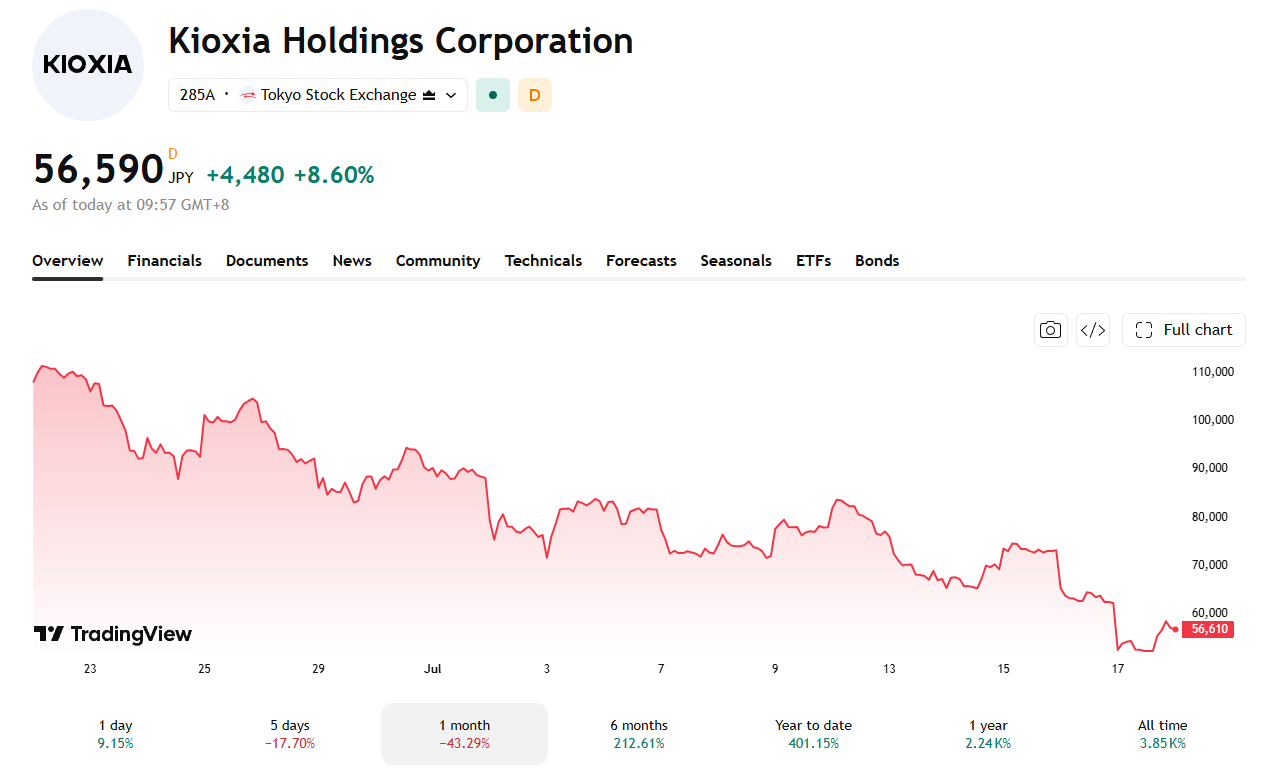
Japan’s Kioxia Holdings Corporation (285A) stock crashed 45% in a month, but Wall Street analysts still expect it to climb another 118% from here.
That gap raises an obvious question. Why do so many analysts still back a stock that crashed this fast?
The Bull Case Analysts Are Sticking To
Kioxia shares fell to a low of ¥52,110 last Friday, but have managed a small comeback, up nearly 9%, to ¥55,860 on Tuesday, July 21. However, this still leaves the stock down 42% for the month, currently.
This is especially noteworthy given Kioxia hit a record high of ¥111,250 on June 22, making it briefly Japan’s largest company by market cap, overtaking Toyota.
Despite this boom-and-bust, Kazuyoshi Saito, senior analyst at Iwai Cosmo Securities, still holds his target at ¥132,000.
“The fundamentals have not changed at all,” Saito said.
He argues the AI-driven demand story remains solid. He expects the shares to recover once technical selling fades.
Meanwhile, Nomura Securities raised its target from ¥115,000 to ¥126,000 last week. Huaxing Research lifted its target above ¥100,000 around the same time. The consensus target near ¥121,959 implies about 118% upside from Tuesday’s close.
Why the Bulls Look Out of Step With the Chart
Kioxia’s chart doesn’t look like a stock about to rally 118%. The stock’s boom-to-bust reversal has wiped out most of this year’s gains.

Some analysts say the memory stock rally has run too far, not just cooled off.
In contrast, Ikio Mitsuishi, portfolio manager at Aizu Securities, expects Kioxia to stay weak until at least late August. He said investors may avoid piling back into one stock so fast. Many could rotate into cheaper, less volatile names instead.
A Pattern That Goes Beyond Kioxia
Kioxia isn’t the only Asian chipmaker swinging this hard. SK Hynix’s Nasdaq-listed shares have surged more than 20% in a day, then dropped double digits days later.
The wider chip selloff across Japan has erased trillions of yen in market value this month.
The real test for Kioxia bulls isn’t the target price. It’s whether Asia’s chip-stock volatility settles down before earnings season arrives.
The post Kioxia Crashed 45% in a Month: Why Are Analysts Still This Bullish? appeared first on BeInCrypto.
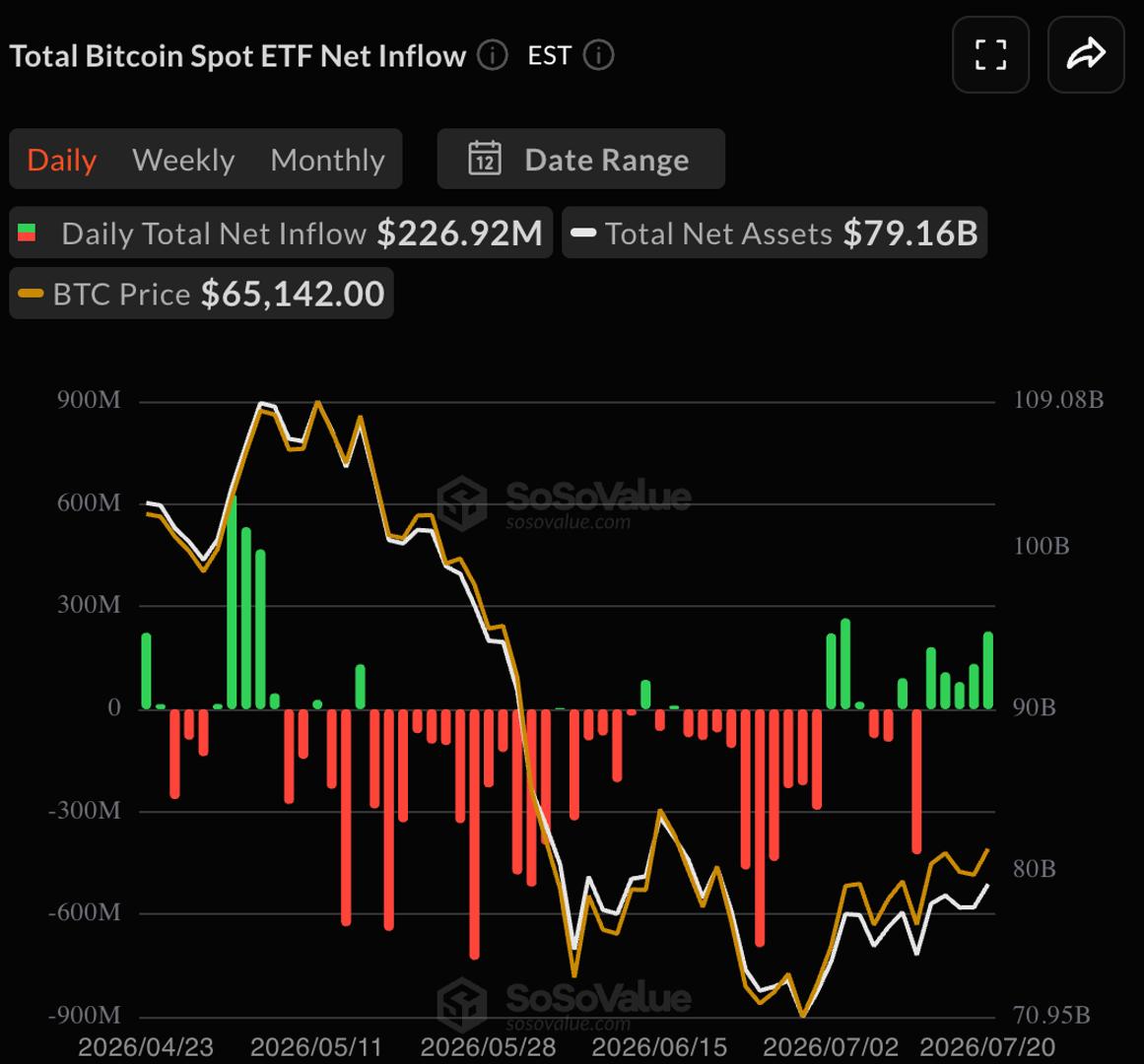
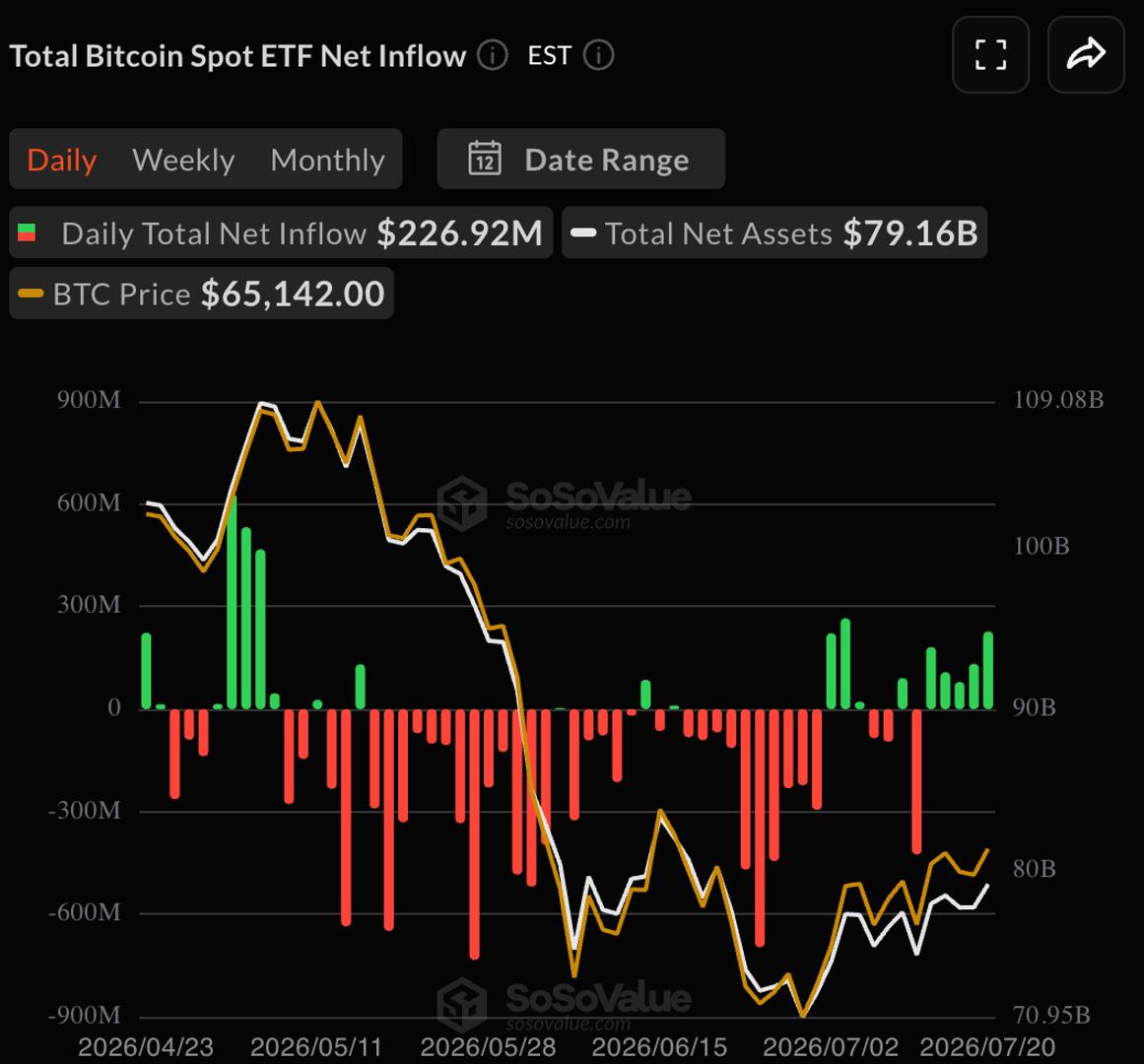
U.S. spot bitcoin ETFs took in about $227 million on July 20, a fifth consecutive day of net inflows for the first time since late April, per SoSoValue data. Ether ETFs added about $38 million, led by BlackRock’s ETHA.
The five-day run has pulled in roughly $727 million, the most sustained stretch of buying since the record outflows of June. Total bitcoin ETF assets have climbed back to about $79 billion from a July low near $75 billion. BlackRock’s ETHA drove the ether side with about $34 million.
Bitcoin has held its range near $63,000 as last week’s chip-driven selloff paused, and the return of the ETF bid is the piece that had been missing through a quarter of mostly outflows.
The test is what it holds through. The Fed meets July 28 and 29, and Big Tech earnings land this week, with Alphabet, Tesla and Intel reporting the numbers that will show whether AI spending, the trade bitcoin has moved with all month, is still climbing.


UK politicians want to know the extent to which the country’s banks have choked-off cryptocurrency firms by refusing them bank accounts and introducing restrictions on crypto-related payments, in a cross-party inquiry kicked off on Tuesday.
The UK’s Crypto and Digital Assets All-Party Parliamentary Group (APPG) is chaired by Lord Vaizey of Didcot, the former UK Government Minister for the Digital Economy, and Labour MP Gurinder Singh Josan CBE, according to a press release.
Ever since crypto came into being, difficulties around attaining banking relationships have made life hard for players in the space, with a systematic debanking of firms and individuals, particularly in the U.S. being referred to as “Operation Chokepoint 2.0.”
Several major UK banks have also introduced restrictions on crypto-related payments, the APPG said in a statement. As such the inquiry will focus on a dearth of bank accounts for crypto businesses, including associated professional services such as insurance.

The U.S. Securities and Exchange Commission (SEC) has filed a lawsuit against crypto mining investment firm Mining Automatic and its founder, Zan Shaikh, accusing them of raising $22 million from investors while allocating only a small portion of the money—about 13%—to mining operations.
According to the SEC’s complaint, the scheme was run through Massachusetts-based Bright Vision Distribution LLC. The agency alleges the business collected funds from more than 380 investors between June 2023 and May 2025, promising monthly, guaranteed returns tied to cryptocurrency mining.
Key takeaways
- The SEC alleges investors were promised guaranteed monthly returns from mining, despite the company generating far less revenue from mining than it paid out.
- Proceeds, according to the SEC, were heavily directed toward advertising and personal or unrelated expenditures rather than mining operations.
- The SEC says Mining Automatic stopped making investor payments by March 2025 and that investors had not recovered their principal.
- The regulator is also signaling a broader shift toward rulemaking for digital assets alongside enforcement actions.
SEC alleges mining payouts didn’t match promised returns
The core allegation in the SEC’s complaint is that the promotional claims did not reflect the operation’s financial reality. The agency states that Mining Automatic advertised payouts as returns from crypto asset mining while its mining activities allegedly produced only about $1.1 million.
Meanwhile, the SEC claims investors received roughly $1.8 million in purported returns. The agency argues that the shortfall required payments to be funded using money from other investors, describing the operation as having “some of the hallmarks of a Ponzi scheme.”
In addition to questioning the returns model, the SEC points to how investor funds were used. The complaint alleges that about $7 million was spent on advertising to attract additional investors, while Shaikh purportedly used investor money for real estate, vehicles, entertainment, and transfers into personal accounts.
Fundraising scope and alleged investor exposure
In its filing, the SEC says Bright Vision Distribution LLC collected the $22 million from more than 380 investors over a two-year span, from June 2023 through May 2025. The SEC also alleges that as the program unraveled, payments stopped by March 2025.
Once payments halted, the SEC contends that none of the investors had recovered their original investment amounts. The complaint states that more than $20 million in principal remains unpaid, according to the SEC’s allegations.
For investors and market participants, the lawsuit underscores a recurring risk in the crypto-adjacent “yield” space: returns tied to mining or other on-chain activities can be presented in a way that obscures financing gaps, and “guaranteed” payout language can draw closer scrutiny from securities regulators.
Regulator seeks penalties and restrictions on Shaikh
The SEC is seeking multiple remedies in the case, including disgorgement and civil penalties. The agency also requests permanent injunctions and asks the court to bar Shaikh from selling securities and from serving as an officer or director of a public company.
These requests reflect the SEC’s typical enforcement posture in cases that it frames as securities fraud and unregistered securities activity, particularly where the regulator argues investor money was misused and returns were not supported by the underlying business model.
The complaint is publicly available on the SEC’s website: SEC litigation document.
Enforcement arrives amid SEC’s stated rulemaking push
While the Mining Automatic case focuses on alleged wrongdoing by a specific operator, it is also landing during a broader period in which the SEC has emphasized building clearer regulatory frameworks for digital assets. Under Chair Paul Atkins, the agency has increasingly pointed to rulemaking efforts rather than relying solely on enforcement.
In June, the SEC published its 2026–2030 Strategic Plan, identifying blockchain technology, tokenization, and crypto market infrastructure among its long-term priorities while reaffirming its investor-protection mandate. Later, in July, the SEC outlined a 2026 rulemaking agenda that includes potential new rules for crypto broker-dealers, digital assets traded on national securities exchanges and alternative trading systems, and possible exemptions or safe harbors for certain digital asset offerings. (The SEC’s agenda was covered in earlier reporting by Cointelegraph: SEC crypto rule changes 2026 agenda.)
At the same time, congressional activity is also aimed at reshaping how U.S. oversight works across agencies. A proposed legislative package—referred to as the Digital Asset Market Clarity Act—would, if enacted, clarify the respective roles of the SEC and the Commodity Futures Trading Commission (CFTC). The bill is expected to face a key Senate vote before the August recess, according to the broader legislative timeline described alongside recent crypto oversight coverage.
In that context, the Mining Automatic lawsuit functions as both a case-specific warning and a signal of where the SEC may draw lines: where a company offers “investment” arrangements with promised returns, the regulator may treat the arrangement through a securities lens—especially when the underlying economics do not appear to support the payout structure.
What to watch next
Investors and builders should watch how the court addresses the SEC’s allegations about the mismatch between advertised mining returns and the company’s stated mining revenue, as well as whether the SEC’s accompanying push toward digital-asset rulemaking eventually narrows the space for similarly structured “guaranteed return” offerings. In the meantime, the case adds another enforcement datapoint for anyone evaluating crypto-linked investment products marketed as stable, predictable yield.
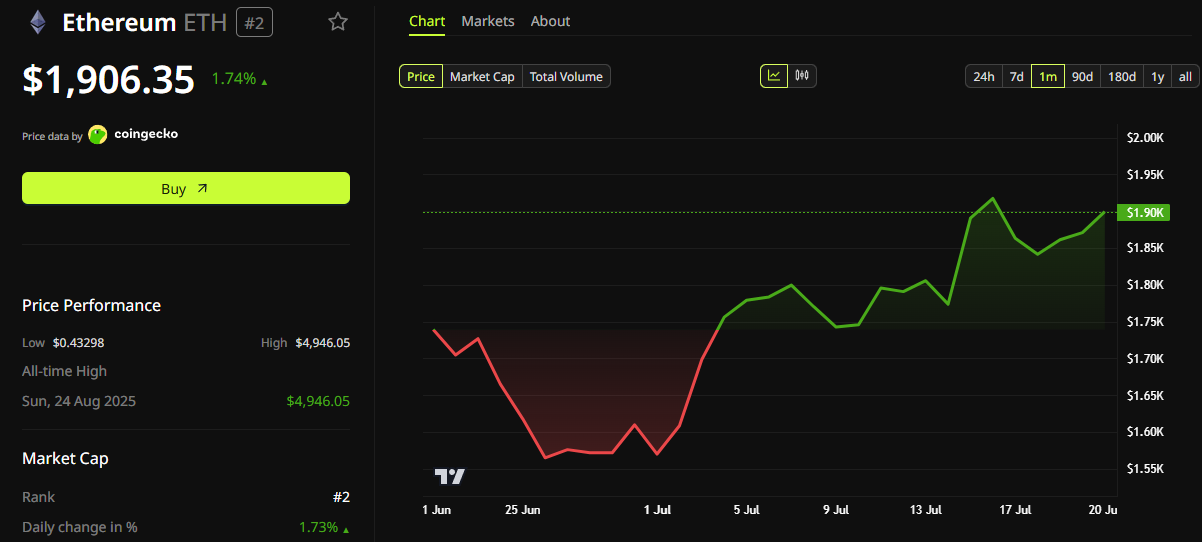
Arthur Hayes bought another 1,332.5 ETH ($2.53 million) today, according to on-chain tracking data shared on X. The purchase extends a buying streak from the BitMEX co-founder. It also renews attention on Ethereum’s institutional demand story.
Hayes sold 6,000 ETH at a roughly $606,000 loss in June. He then reversed course with a series of buybacks in July as some discuss Ethereum’s role in the next bull run for crypto.
Hayes Extends a Pattern of ETH Accumulation
The latest purchase follows Hayes’ return to Ethereum earlier this month. He acquired roughly 1,939 ETH then across two OTC-style transactions. That reversal came weeks after his June exit.
Critics have flagged Hayes’ record of praising tokens like HYPE, ZEC, and WLD before quietly exiting those positions. Ether trades at $1,906, up 1.74% over 24 hours, with a market capitalization over $230 billion.

Some See Institutional Demand Driving the Next Cycle
With some larger accumulation and whale movement around ETH, some are noting a broader shift in Ethereum’s bull case toward institutions. Bitmine Immersion Technologies Chairman Tom Lee argues that Wall Street adoption now drives Ethereum’s growth, not crypto-native speculation. He points to BlackRock’s tokenized BUIDL fund and Robinhood Chain’s use of ETH as a gas token.
“Unlike the crypto bear market of 2022, Wall Street is building on Ethereum.”
— Tom Lee
The staking data backs that thesis. Ethereum’s staking ratio hit an all-time high of above 33% at the end of June, according to CryptoQuant. BlackRock helped drive that shift when it launched the iShares Staked Ethereum ETF, which locks most of its holdings in staking contracts.
Institutions and ETFs held more than 9% of Ethereum’s total supply as of last year, and that share has likely grown since. Also last year, Standard Chartered’s Geoff Kendrick argued that Ethereum treasuries are among the strongest institutional crypto trades available, citing staking yield and stronger valuations compared with Bitcoin and Solana treasury vehicles.
Hayes’ latest buy may reflect conviction in that institutional thesis. Or it may just be another short-term trade. The coming days should make it clearer.
The post Ethereum Could Lead the Next Bull Market: Is Hayes Preparing with More Buys? appeared first on BeInCrypto.
Crypto World
Cramer Says Dump Tech Before Intel, Tesla, Alphabet Earnings: Will Inverse-Cramer Strike?

Jim Cramer told “Mad Money” viewers to avoid new tech buys just as Intel, Tesla, and Alphabet prepare to report earnings this week, reviving questions about whether the Inverse-Cramer Effect will strike again.
The host said he is directing new money into industrials and financials instead. He named FedEx, Honeywell Aerospace, and Goldman Sachs as safer bets during the current selloff.
A Pattern Already in Motion for Cramer
Cramer’s tech retreat follows his own Inverse-Cramer Effect moment. He called Intel his favorite chip stock on July 15. The shares sank roughly 8% hours later, even after ASML confirmed a manufacturing milestone.
That reversal revived a running Wall Street joke. Traders often profit more from betting against Cramer’s on-air calls than from following them. The same pattern hit Nike, which crashed 15% hours after a bullish Cramer call.
Cramer has swung bullish elsewhere too. He issued a call to buy Nvidia even as a broader AI chip stock selloff rattled the sector.
Three Earnings, One Test
Intel reports second-quarter results Thursday, July 23 and analysts expect earnings near $0.21 per share. That would mark a swing from a $0.10 per-share loss a year ago. They also expect revenue of roughly $14.4 billion, up close to 12% year over year.
Alphabet and Tesla both report Wednesday, July 22, after the close. Analysts expect Alphabet to post earnings of $2.87 per share, up 24.2% year over year. They project Google Cloud revenue will reach $22.79 billion, up 67.3%.
Tesla delivered 480,126 vehicles last quarter, well above estimates. Analysts expect revenue near $25.81 billion and earnings of $0.50 per share. The stock still trades at 177 times forward earnings, the richest multiple among its mega-cap peers.
Some analysts already see a bull case forming for chip stocks if Alphabet’s cloud and AI hardware numbers beat expectations.
If all three names rally on their reports, Cramer’s tech exodus will look premature. If they stumble, his rotation call holds, and the Inverse-Cramer Effect stays benched for at least one more week.
The post Cramer Says Dump Tech Before Intel, Tesla, Alphabet Earnings: Will Inverse-Cramer Strike? appeared first on BeInCrypto.

UK government borrowing falls in June

Base’s 1:1-backed tokenized equities launch ‘imminent,’ Pollak says

Trump’s latest AI czar has already resigned


-
 NewsBeat5 days ago
London Mayor Sadiq Khan handed a peerage by Keir Starmer alongside 15 other Labour figures… just days before the PM leaves No10
-

 Fashion4 days ago
Weekend Open Thread – Corporette.com
-

 Politics3 days ago
The House | The City of London can help the new chancellor deliver growth in every postcode
-

 Politics6 days ago
Young campaigners urge incoming PM to act on outdoor junk food ads
-

 Crypto World5 days ago
CFTC blocks Kalshi from unwinding Michigan trades after court order
-
 Crypto World4 days ago
Two July Windows Left: The CLARITY Act’s Senate Fight and What Failure Means
-

 Crypto World3 days ago
Ripple Payments Joins MiCA With 14 Firms, Does It Mean Anything For XRP?
-

 Business5 days ago
Nvidia Stock Slips After Big Tuesday Rally as Huang Confirms Vera Rubin Chip Is Now in Production Today
-

 Politics2 days ago
Democrats look to World Cup watch parties to register thousands of voters
-
 Entertainment6 days ago
Disney’s Most Ambitious Failed Star Wars Attraction Is Coming to SDCC
-

 Crypto World3 days ago
Ripple wins EU-wide access as ESMA adds it to MiCA register
-

 Crypto World4 days ago
Injective Submits SEC Transfer-Agent Registration to Onchain Ownership Records
-

 Business5 days ago
Palantir Shares Rise After Expanded Nvidia Partnership and Fresh Analyst Upgrades Ahead of Earnings Day
-

 Tech7 hours ago
Sail Virtually Aboard The “Itanic” With IA-64 Emulator
-
 Tech4 hours ago
Turtle Beach Command Series KB7 review: a nifty screen-equipped gaming keyboard
-

 News Videos6 days ago
XRP BOMBSHELL… XRP OMBOARDED FOR TRANSACTIONS!!!
-

 Tech6 days ago
Dark Secrets Emerge When Jailbreaking LLMs
-

 NewsBeat4 days ago
Registration is now open for March for Men with Kev 2026
-

 NewsBeat20 hours ago
Unregistered fitter used Gas Safe logo on business flyers
-
 Sports5 days ago
New Cornerback Enters Vikings Trade Rumor Mill
You must be logged in to post a comment Login