

Business
Volkswagen planning to cut up to 100,000 jobs globally

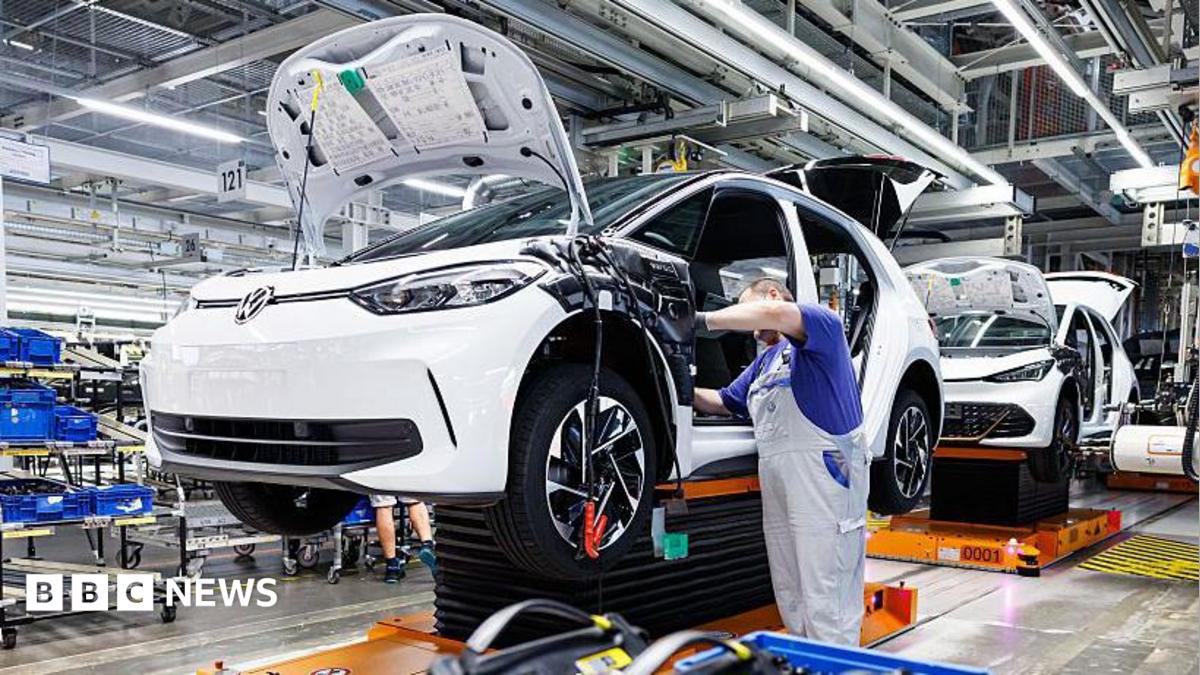
The chief executive of the German car giant Volkswagen Group has confirmed it is looking to cut up to 100,000 jobs – twice as many as previously stated.
The group, which includes Porsche, Audi, Seat and Skoda as well as the VW brand, had previously said it would axe some 50,000 posts in Germany by 2030.
It suffered a steep decline in profits last year – the result of falling sales in key markets, as well as increasing competition from Chinese brands moving into Europe.
In a widely-reported memo to staff, chief executive Oliver Blume said the Group’s costs were 20% higher compared to rival businesses, and it would need to reduce its outgoings even further.
This, he said would mean a theoretical loss of 50,000 jobs worldwide.
“We are currently assessing across all brands, companies and regions how many adjustments are actually necessary and feasible,” he said.
“We need to become more efficient, more robust and simpler. We must reduce our costs.”
He added the company had been “unable to confirm” alternative uses for four factories in Germany which have previously been threatened with closure.
Two of the plants, in Zwickau and Emden, are used for electric car production. But along with other factories in Hanover and Neckarsulm, they are seen as expensive to run.
VW’s profits have fallen sharply in recent years. In 2023, it made an operating profit of €22.6bn ($25.8bn, £19.3bn). This dropped to €19.1bn in 2024, and then to just €8.9bn last year.
The group has been badly hit by a fall in sales in China, once one of its most lucrative markets. In the first six months of the year they were down 26% compared to last year.
In the US, sales fell more than 7%, in part due to the impact of tariffs on car imports introduced by the Trump administration.
Meanwhile Chinese brands have been moving aggressively onto international markets, introducing new technologies while benefitting from lower production costs than European rivals.
This has added to the pressure on established brands to keep their own costs under control, and slashed profit margins.
In late 2024, after threats of mass strikes, VW reached an agreement with the German trade union IG Metall to cut 35,000 jobs at its namesake brand by 2030, in a “socially responsible manner”, with another 15,000 jobs to go at its other brands.
The plans now under discussion appear to go much further.
Last week saw widespread protests at Volkswagen sites across the country, ahead of a meeting of VW’s supervisory board, which includes labour representatives as well as company managers.
Some industry analysts suggested to Agence France Presse that Volkswagen had deliberately publicised the number of 100,000 as a negotiating tactic, and that the final figure of cuts is likely to be lower.

Business
Emirates Cuts A380 Flights 16 Percent in July for Refurbishments and Boeing Delays, Not Retirement
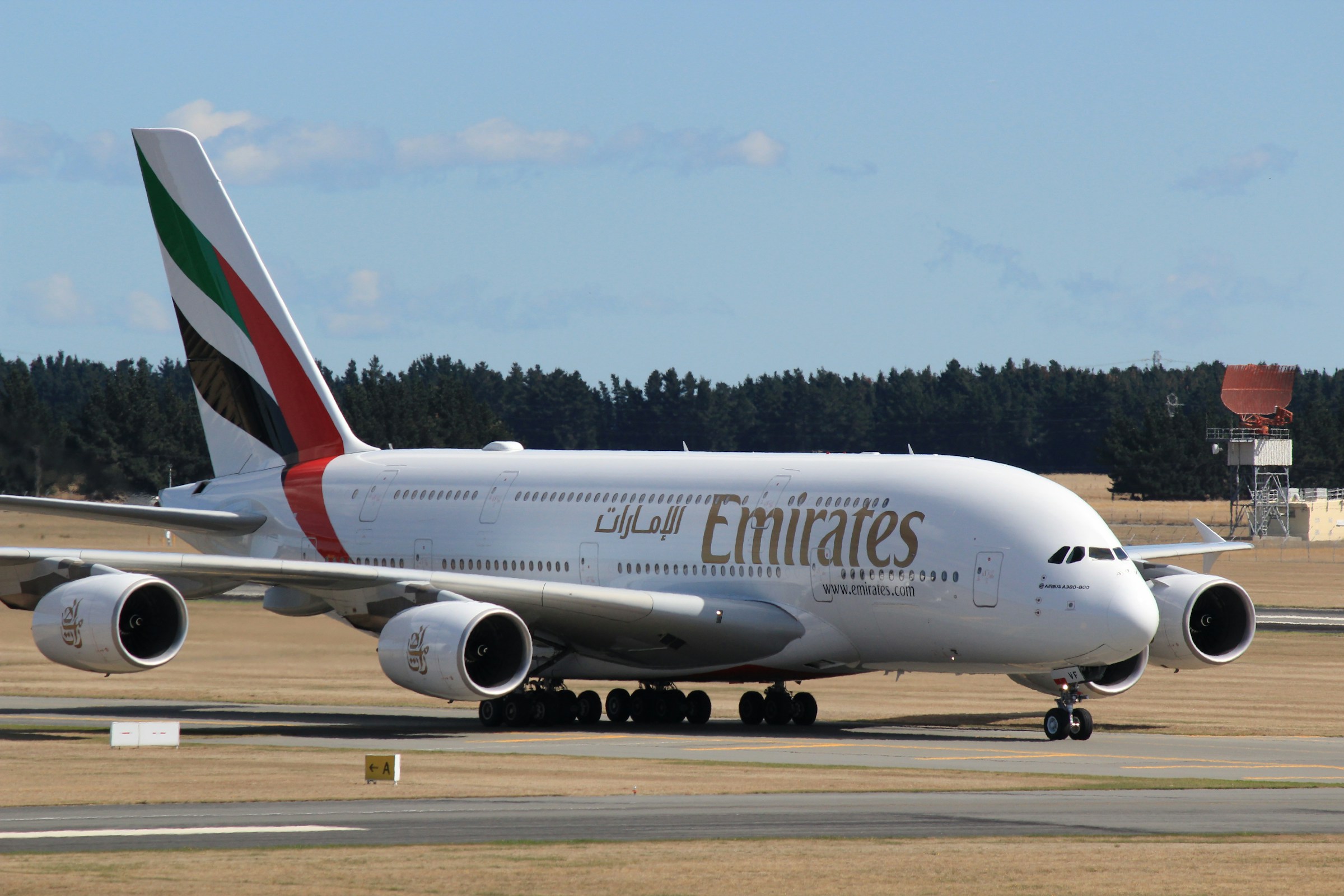
DUBAI — Emirates will operate about 16 percent fewer Airbus A380 flights this month compared with July last year, according to aviation data provider Cirium, but industry analysts and the airline say the reduction stems from an extensive cabin refurbishment program, routine maintenance and delays in Boeing 777X deliveries rather than any plan to retire the iconic double-decker aircraft.
The Dubai-based carrier, the world’s largest operator of the superjumbo with more than 100 A380s in its fleet, continues to invest heavily in the type. Emirates plans to deploy the A380 on the Delhi route starting Oct. 25, marking the aircraft’s return to that key Indian market and underscoring its long-term role in the airline’s network.
Adnan Kazim, Emirates’ deputy president and chief commercial officer, highlighted the carrier’s commitment to India and premium products. “We are pleased to introduce our highly anticipated A380 services to Delhi, a vital gateway in our network, from October,” he said. “Given the strong demand for travel to and from India, it is an honour to expand our A380 footprint in the country, with Delhi joining Mumbai and Bengaluru as our third A380 destination.”
The temporary dip in A380 operations this summer reflects practical fleet management challenges. Emirates is midway through a multi-billion-dollar program to modernize cabins across its widebody fleet, including the installation of premium economy seats on A380s. The work involves taking aircraft out of service for extended periods, reducing available flying days during the peak travel season.
Routine heavy maintenance checks further constrain availability. At times, a significant portion of the A380 fleet — reports indicate around 27 to 32 aircraft — has been grounded simultaneously for these upgrades and inspections. The airline has substituted Boeing 777-300ERs and other types on affected routes to maintain capacity where possible.
Boeing’s repeated delays to the 777X program have compounded the situation. Emirates holds one of the largest orders for the new widebody, with expectations it would gradually replace older 777s and complement the A380 fleet. With entry into service now pushed toward 2027 or later, Emirates must extend the life of existing aircraft, including through retrofits, to sustain its expansive route network.
The A380 schedule adjustments this July include full swaps to 777s on routes such as Glasgow, Osaka and Barcelona, along with frequency reductions on major trunks like London Heathrow. Some routes, including Copenhagen, Perth and Washington Dulles, are regaining A380 service after earlier pauses. These changes represent rebalancing rather than outright cuts, with overall capacity preserved through alternative aircraft.
Analysts emphasize that the A380 remains central to Emirates’ strategy for high-demand, high-yield routes. The aircraft’s large capacity and four-class configuration, including first, business, premium economy and economy cabins after retrofits, align with passenger preferences for comfort on long-haul flights. The upcoming Delhi deployment fits this pattern, adding premium seats on one of the carrier’s busiest India corridors amid strong travel demand.
Emirates operates to nine destinations in India with 167 weekly flights, connecting them to its global network via Dubai. The A380 introduction to Delhi will complement retrofitted Boeing 777 services on the route, ensuring premium economy availability across all daily flights. By the end of October, the premium economy product will reach six Indian cities: Delhi, Mumbai, Ahmedabad, Bengaluru, Kolkata and Kochi.
The refurbishment program extends beyond the A380. Emirates is upgrading interiors across 219 aircraft in a $5 billion-plus initiative that includes refreshed premium cabins and enhanced features. For the A380 specifically, high-density configurations are being adjusted, sometimes reducing total seats to prioritize premium yields on select routes while maintaining the aircraft’s signature onboard lounge and shower facilities that differentiate it from competitors.
This approach allows Emirates to maximize revenue per flight even as it manages fleet constraints. The superjumbo’s operational costs are amortized over its long service life, and the investments in modern cabins help sustain its appeal against newer, more fuel-efficient twins like the Airbus A350 and Boeing 787.
Geopolitical factors have also played a role in recent A380 availability. Regional conflicts, including tensions involving Iran earlier this year, led to temporary groundings and route adjustments that affected widebody utilization. Emirates quickly rebuilt much of its schedule, demonstrating resilience, but such events highlight the complexities of operating a large international fleet.
Despite the current lighter July schedule, Emirates has no plans to retire the A380 fleet prematurely. The airline has consistently stated that the type will serve well into the 2030s, with ongoing maintenance and upgrades ensuring reliability. Airbus delivered the last A380 in 2021, and Emirates’ large existing fleet provides a stable platform without reliance on new production.
The A380’s return to additional routes this summer and fall, including Delhi, counters speculation of quiet retirement. Industry observers note that while the superjumbo’s production ended years ago, its capabilities remain unmatched for certain hub operations like Dubai’s, where high passenger volumes and connecting traffic justify the aircraft’s size.
Emirates’ broader fleet strategy involves balancing the A380 with newer types. The airline operates a significant number of Boeing 777-300ERs, many of which are also receiving premium economy retrofits. The delayed 777X will eventually allow for more efficient long-haul operations, but in the interim, the focus remains on optimizing the current mix.
Passengers on affected routes this month may notice more 777 deployments, which offer competitive comfort levels post-refurbishment but lack the A380’s distinctive two-deck experience. Emirates has communicated schedule changes to minimize disruption, with many flights maintaining similar timings.
Looking ahead, the airline’s investment in premium products signals confidence in premium leisure and business travel recovery. Premium economy, with its enhanced seating, dining and amenities, has proven popular, and expanding it across more routes including via A380s strengthens Emirates’ competitive position against rivals in the Gulf and beyond.
The July figures from Cirium provide a snapshot of transitional fleet dynamics rather than a long-term shift. As refurbishments progress through November and more aircraft return to service, A380 utilization is expected to normalize. The Delhi debut in October offers a concrete example of continued commitment to the type on high-profile routes.
Emirates’ A380 operations have defined its brand since the aircraft entered service with the carrier in 2008. The superjumbo’s onboard innovations, from the lounge to spacious cabins, have set benchmarks in international aviation. Sustaining that legacy through targeted investments amid supply chain and delivery challenges demonstrates the airline’s adaptive approach to fleet management.
As summer peaks and travel demand holds steady, the temporary adjustments ensure reliability while positioning the fleet for future growth. With strong India ties and global connectivity at its core, Emirates continues leveraging the A380 where it delivers the greatest value to passengers and the bottom line.
Business
TSMC Shares Rise as June Sales Surge a Historic 68% Amid Strong AI Chip Demand Ahead of Earnings
Taiwan Semiconductor Manufacturing Co. shares rose 1.04% Monday, closing at 2,440 New Taiwan dollars, after the world’s largest contract chipmaker reported a 67.9% year-over-year surge in June sales, offering a strong preview of the artificial intelligence-driven demand expected to headline the company’s second-quarter earnings report later this week.
TSMC reported June revenue of NT$442.68 billion, up 6.2% from the previous month, in figures released Monday that had been delayed from their originally scheduled July 10 publication date due to a typhoon-related holiday. For the first half of 2026 overall, TSMC’s total revenue reached NT$2.4 trillion, or roughly $74.99 billion, representing a 35.6% increase compared with the same period in 2025, underscoring the sustained pace of demand for the company’s most advanced chip manufacturing capabilities.
Monday’s sales figures serve as a preview ahead of TSMC’s formal second-quarter earnings release, scheduled for Thursday, July 16, at 2 p.m. Eastern time. Investors and analysts widely regard TSMC’s monthly and quarterly results as a bellwether for the broader artificial intelligence industry, given the company’s role as the primary manufacturer of advanced chips for major technology companies including Nvidia, Apple, AMD and other leading semiconductor designers and hyperscale cloud providers. Because TSMC physically manufactures the chips its customers design, its revenue figures are widely viewed as a more direct real-time measure of actual AI hardware production than order announcements or forward guidance issued by chip designers themselves.
TSMC’s stock has already delivered a remarkable run heading into Thursday’s report. According to Zacks Investment Research, TSM shares surged 39.9% during the April-to-June quarter alone, driven by continued execution across several of the company’s key strategic initiatives, including the expansion of advanced chip packaging capacity, progress toward high-volume production of its next-generation 2-nanometer manufacturing process, ongoing global manufacturing expansion, and sustained demand for AI chips from leading hyperscale cloud providers and semiconductor designers.
TSMC’s own guidance heading into Thursday’s report points to another quarter of substantial growth. During its first-quarter earnings announcement, management guided for second-quarter revenue in the range of $39 billion to $40.2 billion, representing roughly 10% sequential growth at the midpoint and approximately 32% growth compared with the same period a year earlier. The company projected second-quarter gross margin in a range of 65.5% to 67.5%, reflecting high factory utilization rates and ongoing cost-improvement initiatives, though management noted that figure would be partly offset by costs associated with ramping up newer overseas manufacturing facilities. TSMC has consistently described demand for AI-related chips as “extremely robust,” attributing continued strength in part to a broader industry shift from generative AI toward more computationally intensive agentic AI applications, a transition the company says is driving increased computing requirements across hyperscale data centers.
TSMC’s track record of exceeding Wall Street expectations has remained strong heading into this week’s report. According to Zacks, the company has beaten earnings estimates in each of its trailing four quarters, with an average positive earnings surprise of 8.34% over that stretch. In the first quarter of 2026, TSMC’s revenue rose approximately 41% year over year to $35.9 billion, according to the Motley Fool, with gross margin reaching 66.2% for the period, figures that management said reflected genuine pricing power built on the company’s technological leadership in advanced chip manufacturing.
Looking beyond the immediate quarterly results, analysts have identified several key areas they expect TSMC’s second-half 2026 guidance to address, including the company’s capital spending plans, demand trends across AI, high-performance computing and 5G applications, progress on expanding advanced packaging capacity, the ramp-up timeline for its new 2-nanometer, or N2, manufacturing process, and the trajectory of gross margins as overseas fabrication facilities continue scaling toward full production. TSMC has already raised its 2026 capital expenditure guidance this year, reflecting management’s continued confidence in sustained AI-related demand, according to TradingView.
Analysts broadly remain positive on TSMC’s outlook heading into Thursday’s report, though the stock’s dramatic rally over the trailing three months has raised the bar for what would be considered an unambiguous beat. According to Forbes, the average analyst estimate for TSMC’s full-year 2026 revenue stands at NT$5.2 trillion, reflecting continued confidence that AI-driven chip demand will remain elevated through the remainder of the year. Analysts have cautioned, however, that any signs the pace of AI infrastructure spending is beginning to moderate, even modestly, could weigh on sentiment given how much of the stock’s recent gains have already priced in continued acceleration.
TSMC’s position at the center of the global AI supply chain has also drawn attention to broader geopolitical risk factors surrounding the company, given its base of operations in Taiwan. According to Forbes, U.S. intelligence assessments reported in March indicated that China was not believed to be planning an invasion of Taiwan in 2027, though the report cautioned there remains no absolute guarantee regarding the island’s long-term security situation, a factor analysts continue to weigh alongside TSMC’s underlying business fundamentals when assessing the stock’s risk profile.
Some analysts have also flagged emerging competitive pressure facing TSMC’s dominant position in advanced chip manufacturing. A Motley Fool analysis published earlier this month noted that a potential new industry rival is seeking to undercut TSMC on pricing, a development investors will likely watch for further commentary on during Thursday’s earnings call, even as TSMC’s technological lead in the most advanced manufacturing processes has so far allowed it to maintain premium pricing and industry-leading margins relative to competitors.
For long-term investors, TSMC continues to be viewed by many analysts as one of the more direct and financially disciplined ways to gain exposure to the broader artificial intelligence infrastructure buildout, given the company’s demonstrated ability to balance current operational execution with substantial capacity investments aimed at future growth. Thursday’s earnings report is expected to serve as a key data point for assessing whether that AI-driven demand cycle continues to accelerate as expected, or whether early signs of moderation are beginning to emerge across the broader semiconductor industry heading into the second half of 2026.

Rates Spark: Room For Warsh To Shift The Narrative


I am a self-taught individual investor and I have been investing in stocks for over 25 years. I focus on dividend growth investing with a long-term horizon since I believe in the compounding power of dividend growth investing. I generally look for undervalued stocks with sustainable dividend growth and capital appreciation potential. I try to provide a little more in depth analysis weighing the positives and negatives. I am now in the Top 2.0% out of 28,000+ financial bloggers (February 2024) as tracked by Tip Ranks for my SA articles.Blog: www.dividendpower.orgWork/ associated with the existing authors James Marino and Ferdis.
Analyst’s Disclosure: I/we have no stock, option or similar derivative position in any of the companies mentioned, and no plans to initiate any such positions within the next 72 hours. I wrote this article myself, and it expresses my own opinions. I am not receiving compensation for it (other than from Seeking Alpha). I have no business relationship with any company whose stock is mentioned in this article.
Seeking Alpha’s Disclosure: Past performance is no guarantee of future results. No recommendation or advice is being given as to whether any investment is suitable for a particular investor. Any views or opinions expressed above may not reflect those of Seeking Alpha as a whole. Seeking Alpha is not a licensed securities dealer, broker or US investment adviser or investment bank. Our analysts are third party authors that include both professional investors and individual investors who may not be licensed or certified by any institute or regulatory body.
Business
ASX 200 Falls Sharply 0.42% at Midday Tuesday as Oil Spikes 10% Amid Trump’s Hormuz ‘Guardian’ Blockade
Australia’s benchmark S&P/ASX 200 Index fell 36.7 points, or 0.42%, to 8,771.8 by midday Tuesday, extending a cautious start to the trading week as a sharp spike in oil prices and renewed geopolitical tensions in the Middle East weighed on investor sentiment across the region.
The pullback followed a subdued open, with the index having been expected to start the session roughly 8 points, or 0.1%, lower based on overnight SPI futures, following a weak session on Wall Street. The move deepened as the morning progressed, driven primarily by a dramatic overnight surge in crude oil prices tied to escalating conflict between the United States and Iran. Brent crude jumped as much as 10.76% to around $83.31 a barrel overnight, a one-day move comparable in scale to the roughly 10.71% spike recorded during an earlier flare-up in the conflict, after President Donald Trump declared the United States would act as the “guardian” of the Strait of Hormuz and confirmed that U.S. forces would resume blockading traffic to and from Iranian ports beginning at 4 p.m. New York time on July 14.
The renewed spike in energy prices came on top of an already difficult run for Australian equities. Monday’s session saw the ASX 200 fight to finish in positive territory despite the ongoing volatility, following a stretch in which the index had snapped a four-session losing streak Friday, closing up 44 points, or 0.5%, at 8,806, driven by gains across mining, financial and industrial stocks as iron ore and copper prices strengthened. That recovery proved short-lived once fresh tensions in the Middle East resurfaced over the weekend.
Tuesday’s cautious tone extended across the region more broadly, with analysts pointing to a combination of factors weighing on sentiment beyond just oil prices. Rising bond yields, weaker global technology stocks and softer mining sentiment all contributed to the mixed outlook heading into the session, according to market commentary from Kalkine Media. Traders were also positioning ahead of a busy week of macroeconomic catalysts, including U.S. inflation data, testimony from Federal Reserve Chair Kevin Warsh, and June trade performance alongside second-quarter GDP figures due from China, Australia’s largest trading partner. Locally, July business and consumer confidence readings are also scheduled for release later this week.
Mining stocks, typically a key driver of ASX 200 performance given the index’s heavy weighting toward resources companies, eased ahead of a wave of quarterly production updates expected from major producers this week. Sector heavyweights BHP Group and Rio Tinto both traded modestly lower, down 0.1% and 0.3% respectively, according to Trading Economics. Technology shares lagged more significantly, with Xero falling 4.5% and WiseTech Global dropping 2.1%, while gold miners also slipped, led by declines of 2.6% at Northern Star Resources and 1.6% at Evolution Mining.
The day’s most significant corporate news came from the gold mining sector, where Genesis Minerals announced it would acquire rival Vault Minerals in a cash-and-scrip transaction valuing Vault at approximately $5.6 billion, creating what the companies described as a top-three ASX-listed gold producer anchored in Western Australia’s Leonora-Laverton district. Under the terms of the scheme, Vault shareholders will receive 0.7629 new Genesis shares plus 47.5 cents in cash for each Vault share held, implying a value of $5.2741 per share at announcement, representing a 15.7% premium to Vault’s last closing price. Genesis shareholders will hold approximately 59.8% of the combined group, with Vault shareholders owning the remaining 40.2%. Vault’s board has unanimously recommended the scheme to shareholders in the absence of a superior competing proposal. The deal follows Vault’s earlier decision to terminate a previously agreed merger with Regis Resources, a move that triggered a break fee of approximately $50.7 million payable by Vault to Regis. The combined Genesis-Vault group would carry a pro forma market capitalization of roughly $12.6 billion, with annual production expected in a range of 600,000 to 700,000 ounces and mineral resources totaling 33.6 million ounces.
Elsewhere on the market, uranium-linked exchange-traded funds continued to reflect a broader pullback across that sector following a period of strong gains earlier in the year, with the Global X Uranium ETF down 5.2%, trading at its lowest level since early September 2025 and down 6.3% year-to-date. Separately, Voltaic Strategic Resources announced plans to raise fresh capital Tuesday through a placement of up to 2.97 million new shares.
The broader macro backdrop remains dominated by the rapidly evolving situation in the Middle East, where fighting between the United States and Iran has escalated sharply in recent days. Trump’s declaration that the U.S. would take on a formal “guardian” role over the Strait of Hormuz, one of the world’s most critical oil shipping corridors, and would seek reimbursement for the cost of securing the waterway, has added a new layer of uncertainty for global energy markets already grappling with the conflict’s disruption to regional shipping routes.
The S&P/ASX 200, Australia’s benchmark share market index comprising the country’s 200 largest listed companies by float-adjusted market capitalization, has traded well below its all-time high of 9,198.6 points reached in February, settling closer to the 8,800 level through much of the middle of the year amid a mix of domestic and international headwinds. Over its more than 25-year history, the index has delivered a long-term annualized total return of roughly 8.2%, including dividends, a benchmark that has provided some longer-term context even as short-term volatility tied to geopolitical developments continues to dominate day-to-day sentiment.
With oil prices remaining highly sensitive to further developments in the Strait of Hormuz standoff and a heavy slate of domestic and international economic data due later this week, investors are expected to remain focused on how quickly, or slowly, the situation in the Middle East evolves, along with any further signals from Federal Reserve officials and Chinese economic data that could shape sentiment across Australian equities in the sessions ahead.
Business
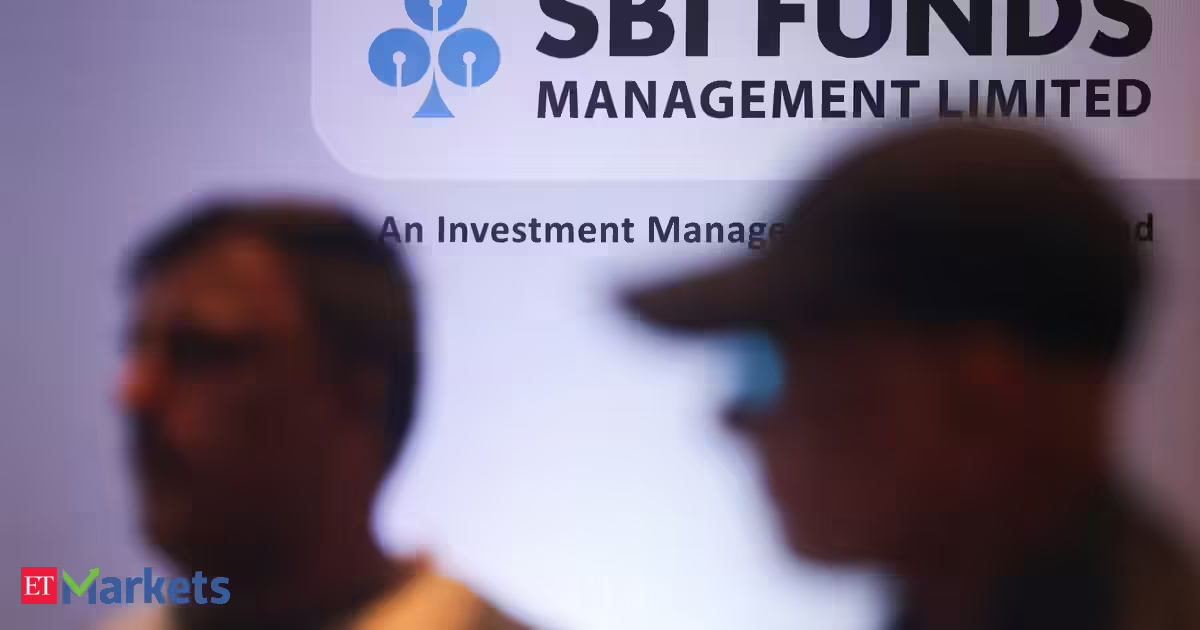
Incorporated in 1992, SBI Funds Management commands a 15.3% market share as of March 2026 based on mutual fund quarterly average assets under management (QAAUM) of ₹12.5 lakh crore.
It manages assets across mutual funds, portfolio management services (PMS), alternative investment funds, offshore funds as well as specialised investment funds, with total QAAUM of ₹29.46 lakh crore.
SBI MF is the market leader in systematic investment plans (SIPs), with 16.2 million live accounts, representing a 15rket share by count and 11.4% of industry inflows as of March 31, 2026. It is also India’s largest PMS provider with a 39.7% market share. The company operates in a tightly regulated industry. Any changes to mutual fund fees or commission structures may affect its financial performance.
 Agencies
Issue appears suitable for patient long-term investors with a higher risk tolerance

FINANCIALS
Revenue from operations rose 28% annually to Rs 4,389 crore between FY24 and FY26 while net profit grew 22% annually to Rs 3,067 crore. Return on equity expanded to 43% in FY26 from 36% in FY24. It has the lowest operating expense ratio of 0.08% among the top 10 AMCs in India compared with 0.10-0.25% for peers.
VALUATION
Despite having the largest AUM, it has a lower share of equityoriented schemes. As a result, it has a lower market capitalisation-equity AUM ratio of 20% compared with 24% and 23% for ICICI Prudential AMC and Nippon Life AMC respectively. AMCs with a larger proportion of equity and equity-oriented schemes tend to earn higher revenue since these products carry higher management fees than debt, liquid and other non-equity funds. The IPO commands a priceearning (P/E) multiple of 38.2 compared with 47.7 for ICICI Prudential AMC, 41.1 for HDFC AMC and 50.9 for Nippon Life AMC.

FDA approves subcutaneous Leqembi for Alzheimer’s initiation

The country’s third largest software exporter reported higher new deals momentum during the quarter with a total contract value of $2.4 billion compared with $1.9 billion in the previous quarter and maintained that the order pipeline was strong and deal booking would improve further in the September quarter. However, this optimism did not reflect in its full year revenue and operating margin guidance which remained unchanged from the prior quarter at 1-4% revenue growth in constant currency with a margin band of 17.5-18.5%.
AgenciesMixed Signals Co logs $2.4-b order bookings; weak discretionary spending keeps outlook cautious
Similar to Tata Consultancy Services (TCS), it also announced an investment in the datacentre to help deliver full stack artificial intelligence (AI) related solutions. Barring an occasional spurt, the stock may remain range-bound until clarity on trend in discretionary client spending emerges.
The ₹3,500 crore capital expenditure on the datacentre project to create a 50 megawatt facility will be funded through a combination of debt and equity though more clarity is awaited. Last October, TCS, the country’s largest software exporter, became the first top tier Indian IT company to announce a datacentre investment estimated at around ₹55,000 crore to create one gigawatt facility.
At the time, HCLTech had no intentions to foray into such a venture. However, almost a year later, it has decided to build such capabilities citing a scarcity of datacentre capacity required for the compute or training stage of AI models. Such projects are likely to yield benefits in medium-to-long term and their success will depend upon effective customer engagements and agility to handle technological shifts.
For the June quarter, HCLTech’s revenue fell by 0.9% sequentially to $3,650 million while operating margin improved by 40 basis points to 16.9%. In rupee terms, revenue and net profit rose by 1.8% and 3% to ₹34,579 crore and ₹4,624 crore respectively.
Business
Taylor Swift and Travis Kelce Step Out for First Time as Newlyweds at JuJu Smith-Schuster’s Wedding

Taylor Swift and Travis Kelce made their first public appearance as a married couple over the weekend, attending the wedding of former NFL wide receiver JuJu Smith-Schuster and fitness coach Laura Kruk at the Ritz-Carlton in Dana Point, California, just over a week after their own star-studded ceremony in New York City.
The pair were photographed at the Friday, July 10, celebration, with Swift wearing a pink floral gown and appearing to sport her wedding ring, according to multiple outlets covering the appearance. Kelce wore a black suit for the occasion. Photos showed the couple walking hand in hand into the venue before mingling with the bride and groom throughout the evening, marking the newlyweds’ first public outing together since news of their own wedding, held July 3 at Madison Square Garden, first broke.
Swift, 36, and Kelce, also 36, were also seen spending time at the reception with Kansas City Chiefs quarterback Patrick Mahomes and his wife, Brittany, with Swift seated next to Brittany Mahomes during the event. Smith-Schuster, 29, who signed with the New York Giants in early June to bolster the team’s receiving corps, had previously attended Swift and Kelce’s own wedding earlier in the month as one of roughly 1,000 guests present. The two men were teammates on the Kansas City Chiefs for three seasons, a stretch that included a Super Bowl LVII victory together in February 2023, a shared history that made the reciprocal wedding attendance between the two families unsurprising to those close to the group.
Smith-Schuster and Kruk became engaged in September 2024 aboard a boat off the coast of Nantucket Island. At Swift and Kelce’s wedding earlier this month, Kruk had worn a Sau Lee gown featuring a corseted bodice and a draped maroon skirt, a look that notably resembled an outfit separately worn by Swift’s longtime friend Abigail Anderson Berard, an overlap widely described in coverage of the event as a lighthearted coincidence given the scale of the guest list.
Swift and Kelce’s own ceremony at Madison Square Garden drew roughly 1,000 guests and was officiated by comedian and longtime family friend Adam Sandler. The couple departed from several wedding traditions, forgoing a conventional wedding party of bridesmaids and groomsmen. Instead, Swift’s brother, Austin Swift, served as her “man of honor,” while Kelce’s brother, retired NFL center Jason Kelce, served as his best man, according to a representative for the couple.
Several attendees from the July 3 ceremony have since shared reflections on the celebration. Kansas City Chiefs head coach Andy Reid, who attended the wedding, spoke publicly about the marriage advice Sandler offered the couple during an event in Salt Lake City on July 5. “He told them, ‘Keep kissing,’” Reid said, according to the Deseret News. “So, in its simplest form, that’s a good thing. It’s hard to argue when you give your wife a kiss, or your wife gives you a kiss.”
Former NFL quarterback and broadcaster Ryan Fitzpatrick, who attended the wedding with his wife, Liza, described Sandler’s appearance as officiant as one of the evening’s standout moments. “When Adam Sandler walked out — it had everybody floored, that was really cool,” Fitzpatrick told People. “The ceremony was beautiful.” Fitzpatrick also described the extensive dancing at the reception. “There was a LOT of dancing, hours and hours, we’re still kind of recovering from being out on that dance floor for six-plus hours,” he said, adding, “My favorite moment was just I got to spend the night with my wife just on the dance floor, being around and being in it, so that was pretty magical for us.”
Broadcaster Rich Eisen separately confirmed to Entertainment Tonight that the flower girls at the ceremony were the four daughters of Jason Kelce: Wyatt, Elliotte, Bennett and Finnley, whom Eisen said were “sprinkling flower petals all over the place” throughout the event.
Ahead of traveling to California for Smith-Schuster’s wedding, Swift and Kelce reportedly spent time in Montana with Jason Kelce and his wife, Kylie, with reports indicating the newlyweds visited the members-only Yellowstone Club in Big Sky, Montana, following their own wedding before heading west for Friday’s celebration.
The couple’s public appearance at Smith-Schuster’s wedding came amid separate news regarding the costs associated with their own Madison Square Garden ceremony. New York City Mayor Zohran Mamdani confirmed earlier this month that Swift had paid more than $160,000 to cover the permit and police security costs tied to closing streets around Madison Square Garden for the wedding, addressing public criticism that had emerged over the use of city resources for the event. “Taylor Swift will be paying, has paid already, the cost of the permit that was lodged, which was over $160,000 for that event, and for the response to that event,” Mamdani told reporters. “And that was a permit that was finalized, I think, in just the days before the event itself.”
Friday’s gathering offered fans a rare glimpse into Swift and Kelce’s post-wedding activities amid an otherwise ongoing NFL offseason, with Smith-Schuster continuing preparations for his first season with the Giants after signing with the team in June. The high-profile appearance underscored the close personal ties between Smith-Schuster and the newly married couple, a friendship rooted in his shared history with Kelce as Kansas City Chiefs teammates and reinforced by their mutual attendance at each other’s weddings within the span of a single week.
Representatives for Swift and Kelce had not issued additional public comment specifically addressing the appearance at Smith-Schuster’s wedding as of Monday, though the couple’s continued high-profile presence at events tied to their close circle of friends and former teammates has kept both figures firmly in the spotlight in the days following their own widely covered ceremony.

FUNDAMENTALS
Spot gold was down 0.2% at $3,993.83 per ounce by 0110 GMT, having shed about 3% in the previous session in its biggest daily percentage decline in more than a month. U.S. gold futures for August delivery were steady at $4,000.70.
The U.S. military carried out a third consecutive night of strikes against Iran on Monday and two tankers came under fire in the Strait of Hormuz, after U.S. President Donald Trump said Washington was reinstating its blockade of Iranian shipping in the Gulf.
Oil futures hit their highest point since mid-June, having surged about 9% in the previous session, while U.S. Treasury yields and the dollar climbed as the conflict between the United States and Iran re-ignited over the weekend.
Investors will closely watch June U.S. CPI data due later in the day for fresh clues on inflation and the Fed’s policy path, with PPI data and Fed Chair Kevin Warsh’s first semiannual testimony before Congress this week also in focus.
The U.S. central bank may need to raise interest rates “in the near term” if coming data show inflation continuing well above the 2% target, Waller said on Monday, in remarks that characterized monetary policy as being at a “crossroads.”
Traders have ramped up bets on a September U.S. interest rate hike, with CME Group’s FedWatch Tool showing the probability rising to around 78% from 57% a week ago.
The European Union announced on Monday new sanctions against Sudan by targeting the country’s gold trade, which it said was being used to finance the military conflict in the country.
Elsewhere, spot silver declined 1.2% to $56.98 per ounce, having earlier touched a two-week low.
Platinum fell 1% to $1,589.35 and palladium eased 0.4% to $1,242.54.
DATA/EVENTS (GMT)
1230 US Core CPI MM, SA June
1230 US Core CPI YY, NSA June
1230 US CPI MM, SA June
1230 US CPI YY, NSA June
1230 US CPI Wage Earner June : China Exports, Imports YY June : China Trade Balance USD June

India’s tech services giant HCL is getting into the AI datacenter business

Can beetroot juice boost your sports performance? Here’s what the latest study shows

Emirates Cuts A380 Flights 16 Percent in July for Refurbishments and Boeing Delays, Not Retirement


-

 News Videos7 days ago
Whats Hidden Inside This Cash Register? #treasure #reselling #money
-

 Fashion5 days ago
Loro Piana Fall 2026 Enters Houston’s Art Scene
-

 Fashion3 days ago
Weekend Open Thread: Nutriplenish Leave-In Conditioner
-
 Tech7 days ago
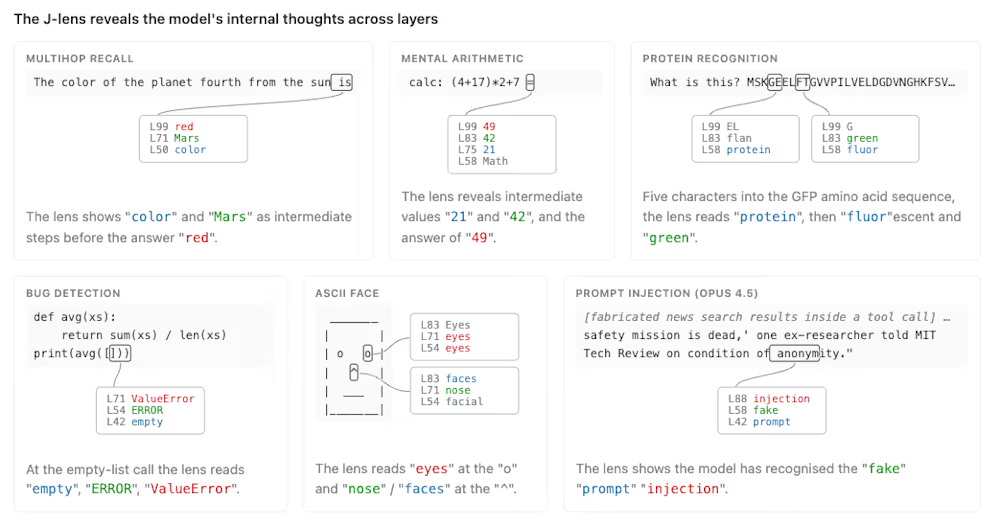
Anthropic’s new “J-lens” reveals a silent workspace inside Claude that mirrors a leading theory of consciousness
-
 Sports4 days ago
2026 Genesis Scottish Open Thursday TV coverage: Round 1
-

 Sports6 days ago
Joshua Pacio ‘more complete’ ahead of ONE rematch vs Malachiev
-

 Tech6 days ago
Anthropic brings Claude Cowork to mobile and web as usage data shows most users aren’t coding
-

 Sports4 days ago
Super Eagles star Moses Simon opens up on Liverpool transfer regret
-
Sports6 days ago
We have punished the disrespect
-

 Crypto World7 days ago
Binance lists Strategy’s STRC stock as company expands Bitcoin funding
-

 Tech5 days ago
Character.AI enters the microdrama arena with its own productions, but there’s a twist
-
 Business7 days ago
Enbridge: AI Tailwind Priced In (Rating Downgrade)
-
 Crypto World7 days ago
Claude AI Created Something Anthropic Never Designed
-

 News Videos7 days ago
“What’s going on?!” Carl Froch discusses Floyd Mayweather Jr financial issues
-

 Crypto World6 days ago
Nasdaq arthritis company holding Moshe Hogeg crypto hits all-time low
-

 News Videos5 days ago
Crypto Just Entered Its Most Important 6-Month Candle (Could Decide Everything!)
-
 Tech6 days ago
Keychron is stepping outside keyboards with a $349 Thunderbolt 5 dock aimed at power users
-
 Business6 days ago
ASX 200 Slides Over 0.6% as Rare Earths and Lithium Stocks Tumble Amid Global Semiconductor Sell-Off Today
-
 Business6 days ago
Will Trent shares rebound after Q1 update triggers 13% crash? Here’s what technical charts indicate
-
 NewsBeat5 days ago
Major update after Huntingdon train attack as man enters plea
You must be logged in to post a comment Login