



Almost 60pc of young children across Europe experienced emotional or psychosocial problems online, according to the European Commission.
The EU is considering banning social media for children under the age of 13 years old, as child safety on the internet takes political priority across the world.
The bloc has, over the years, targeted social media giants for their addictive designs, recommender system feeds and child safety measures with its landmark Digital Services Act (DSA) that carries a hefty penalty for offenders.
In 2025, it preliminarily found that Meta and TikTok breached its rules by failing to meet its standards for keeping minors safe online.
Last week, the bloc preliminarily found that Meta did not assess the risks stemming from its addictive design on the physical and mental wellbeing of its users, including minors.
And in April, it found that Instagram and Facebook did not take effective measures to keep minors under 13 from using its platforms, despite Meta’s own terms and conditions stating otherwise.
Social media platforms generally require their users to be at least 13. However, these restrictions can be and are easily circumvented.
Mounting pressure to effectively address wider concerns surrounding the harms caused by social media on children’s developmental growth has led the EU to consider a similar strategy as Australia, Canada and the UK – as well as several of its own member states.
France, Sweden and Greece are currently proposing a social media minimum age at 15 years, while Denmark is considering a limit at 16. Others, including Portugal, Spain, Germany and Poland, are also considering legislating on the topic.
The European Parliament, late last year, called for a harmonised EU digital minimum age at 16, and suggested parental consent for those between 13 and 16.
But in its latest recommendations, an EU special panel on child safety suggests restricting social media for those under 13 until platforms demonstrate that their services are safe by design.
The bloc said it wants to address this issue at the highest level to avoid further fragmentation of the single market and to standardise the level of access children enjoy across the region.
The topic is clearly important to EU citizens, with a recent reporting finding that 92pc of Europeans believe protecting children online should be a priority for its leaders.
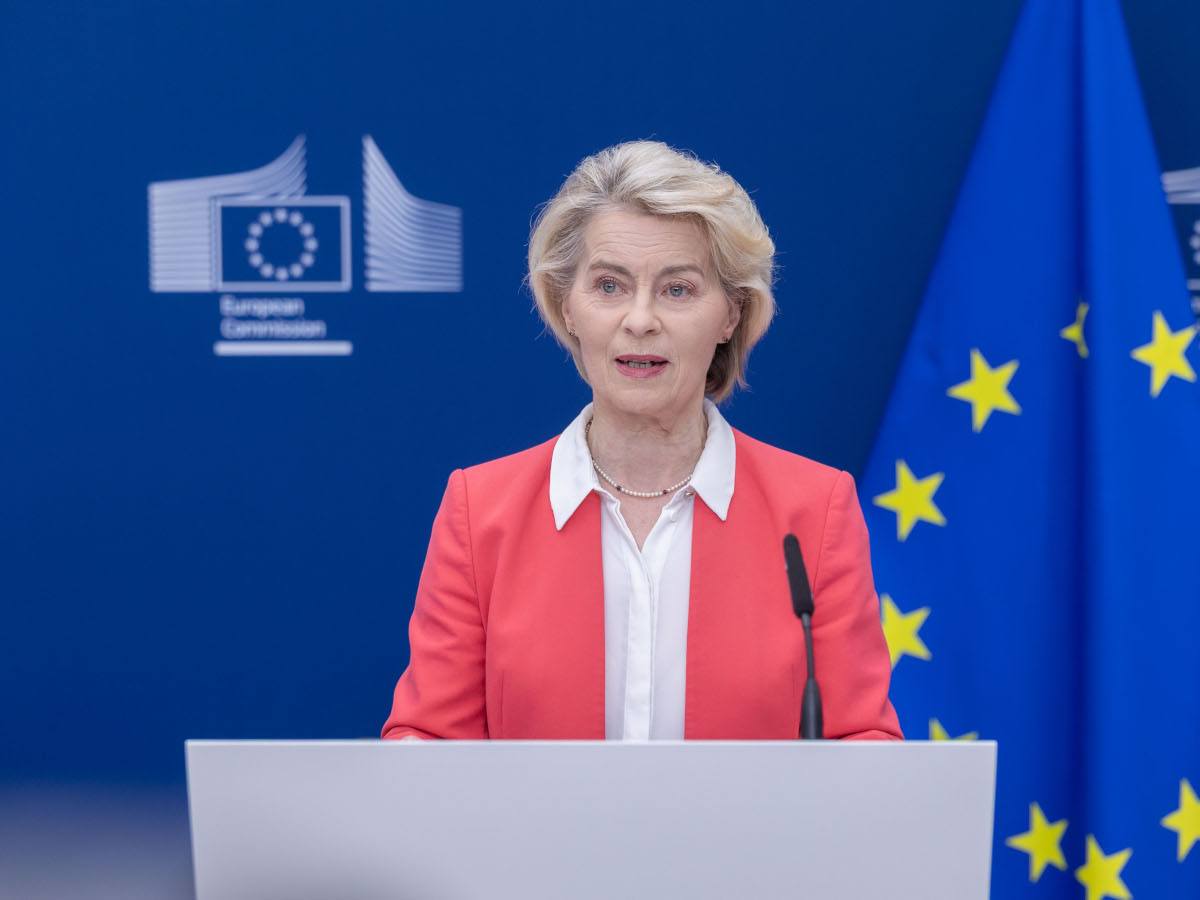
“The status quo, a world where we continue to allow Big Tech unrestricted access to our children, will only consign another generation to more mental harm, addiction and misery,” said Commission president Ursula von der Leyen today (13 July).
Her statements come as nearly 60pc of young children across Europe are believed to have experienced emotional or psychosocial problems online, according to the Commission.
Across Europe, leaders are taking a similar stance. Outgoing UK prime minister Keir Starmer said in June that tech giants “failed” to protect children online, while French president Emmanuel Macron told the media in January that “children’s brains are not for sale” after France adopted a bill banning social media for children under 15.
“The more we learn, and the more we see the impact on our children, the stronger the argument becomes for a social media start date,” the Commission president said, adding that the solution might not be foolproof and would take time.
The Commission is working on an “easy to use, privacy preserving, and open-source” age verification app to assist with its goals.
‘Age restrictions alone will not make digital spaces safe’
Commenting on the EU panel’s recommendations, South East Technological University’s Dr Dean McDonnell said: “Children’s digital media use is ecological, shaped by families, schools, peers, communities and the opportunities available offline.
“Any reduction in children’s access to digital spaces should always be matched by investment in safe public spaces, play, sport, arts, libraries, and youth services,” he told SiliconRepublic.com. “Removing one developmental environment without strengthening others can have significant consequences.”
McDonnell, a lecturer of psychology and a member of the Psychological Society of Ireland, stated that the most important thing that the report gets right is that “children are not a single group, and online safety is not a problem parents can solve alone”.
“A toddler, a primary-school child and a 17-year-old have very different developmental capacities, vulnerabilities and rights. The move from protection and supervision towards growing autonomy is sensible, although the broad 3-12 and 13-18 bands will need much finer guidance in practice.
“Its strongest recommendation is to shift responsibility towards the companies designing these environments,” he added. “Safety by default, age-appropriate settings and limits on attention-capturing features such as infinite scroll and recommender systems should not be optional.
“A common minimum age may provide a useful baseline, but age restrictions alone will not make digital spaces safe. Their value will depend on privacy-preserving age assurance, consistent enforcement and independent evaluation.”
Updated, 4.54pm, 13 July 2026: This article was amended to include a comment from South East Technological University’s Dr Dean McDonnell.
Don’t miss out on the knowledge you need to succeed. Sign up for the Daily Brief, Silicon Republic’s digest of need-to-know sci-tech news.































































You must be logged in to post a comment Login