

Business
Form 4 Ameriprise Financial Inc For: 13 July


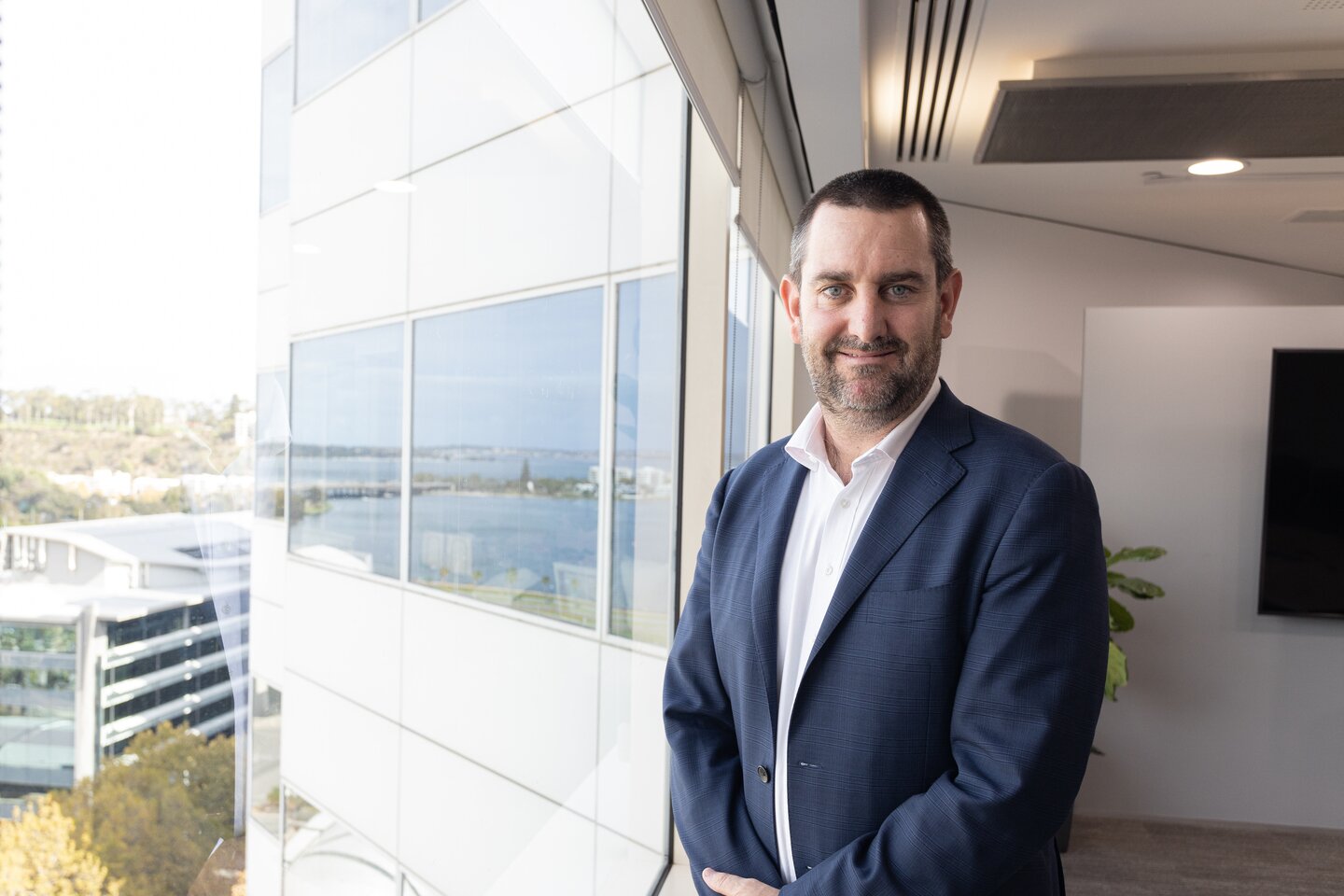
Genesis Minerals executive chairman Raleigh Finlayson says his company’s acquisition of Vault Minerals will make it a globally relevant goldminer.
Business
Trump Says US Will Become ‘Guardian’ of Vital Strait of Hormuz and Expects Payment Amid Iran Standoff

President Donald Trump said Monday that the United States would likely take over control of the Strait of Hormuz and expects to be compensated for guarding the vital oil shipping route, as Washington and Tehran continued to assert competing claims over the waterway following a fresh weekend exchange of strikes.
“We’re going to keep the strait, and we’ll probably run it,” Trump said in a phone interview on Fox News’ “Fox & Friends.” “We’ll become the guardian of the strait. Maybe we’ll call it the guardian angel of the strait. And we should be reimbursed for that.” Trump argued the arrangement would mark a departure from decades of unpaid U.S. involvement in securing the corridor. “We guarded the strait for 50 years, and we never got paid for it,” he said. “We guarded it for nothing.”
Trump indicated he expected other nations benefiting from secured passage through the strait to help cover the cost. “When we do that we’re going to be reimbursed because the other nations are very wealthy, they’re on our side, and we can’t be expected to do that for nothing unlike we had for many years,” he said, adding later in the interview, “We’re going to guard it. We’re going to get paid for guarding it — a lot of money.” Trump did not detail a specific reimbursement mechanism or figure during the interview, and the White House had not released formal policy details on how any such payment structure would work as of Monday.
The comments came amid a sharp escalation in fighting between the U.S. and Iran over the weekend that has thrown into serious doubt an interim agreement signed last month, under which the two sides had agreed to reopen the strait and pursue 60 days of further negotiations. Iran declared the strait closed Saturday following what it described as an unauthorized transit, and reiterated Sunday that passage through the waterway remained suspended. U.S. Central Command said it had launched a new wave of strikes against Iran over the weekend, striking what it described as dozens of targets across multiple locations using precision munitions aimed at degrading Iran’s ability to threaten shipping through the strait. “The Strait of Hormuz is a vital maritime corridor for global trade. Iran does not control it,” CENTCOM said in a statement. “U.S. forces are postured and prepared to ensure that freedom of navigation remains available to commercial shipping despite Iran’s continued unwarranted aggression, harassment, threats, and arbitrary declarations.”
Iran’s Islamic Revolutionary Guard Corps rejected that characterization directly. “The Strait of Hormuz is our territory, and we will not allow a rogue and child-killing army from the other side of the world to continue its illegal interference in it,” the Guard Corps said, according to The Associated Press. Iran’s top joint military command separately warned that any U.S. attempt to arrange transit through the strait outside routes designated by Tehran, without coordination with Iran’s armed forces, would be “strongly resisted.” Iran’s Revolutionary Guards said in a separate statement Monday that the only path back to normal shipping traffic through the strait was an end to U.S. military involvement in the waterway, warning that “continued interference could lead to greater incidents in the global oil and gas sector.”
Iran’s Foreign Ministry has said it is working to establish a joint traffic-management mechanism for the strait together with Oman, though spokesperson Esmaeil Baghaei said U.S. pressure on Oman had complicated those discussions. Iran has separately sought to establish its own permanent fee and permit system for vessels transiting the waterway, which before the current conflict carried roughly a fifth of the world’s oil and liquefied natural gas shipments.
Trump has said he now considers the ceasefire agreement effectively over, even as he left open the possibility of further negotiations. “We had a deal. It was a done deal, and then they broke it. They always break it. We’ve had 10 deals with these people, and so we’re just going to hit them very hard,” Trump said in a separate phone interview with Fox News. Iran’s top negotiator, Mohammad Baqer Qalibaf, struck a similarly defiant tone in a post on X, writing, “The era of one-sided deals is OVER.”
The renewed hostilities have marked a sharp escalation in both the pace and geographic scope of attacks compared with earlier phases of the conflict. Iran’s Revolutionary Guards said they had targeted U.S. military facilities in Bahrain and Kuwait, destroyed radar systems in Oman, and struck fuel tanks and ammunition depots at Prince Hassan Air Base in Jordan, in what Tehran described as retaliation for the latest U.S. strikes. The foreign ministers of Germany, France and Britain condemned Iran’s actions in a joint statement, saying, “We condemn Iran’s heinous attacks on merchant shipping in the Strait of Hormuz and on countries in the region, including Qatar, Kuwait, Oman and Jordan,” while calling for a restoration of the ceasefire and a resumption of negotiations.
The renewed conflict has pushed oil prices higher, with Brent crude trading up more than 2.6% to around $77.49 a barrel and West Texas Intermediate crude up nearly 3% to roughly $73.48 a barrel as of Monday, according to market data cited by Benzinga. Shipping-tracking data has shown a sharp slowdown in traffic through the strait, which has fallen to levels not seen in roughly two months as vessels navigate the uncertainty created by the competing claims of control.
Iran has not released an overall casualty count from the past week’s exchanges, though state media reports on individual strikes suggest roughly 20 people have been killed by renewed U.S. attacks, with Iranian news agencies reporting two additional deaths and three injuries from strikes near the city of Abadan on Monday. Higher energy prices stemming from the standoff carry particular political sensitivity for Trump ahead of congressional elections in November, given the direct effect rising gasoline costs tend to have on consumer sentiment domestically.
As of Monday, no formal reimbursement framework, payment structure or timeline for the proposed U.S. “guardian” role in the strait had been detailed by the administration, and it remained unclear whether such an arrangement would require congressional action, agreement from other nations benefiting from the arrangement, or further negotiation with Iran, which continues to reject any U.S. claim to authority over the waterway. This is a developing story.

Why is SK Hynix stock sliding today?
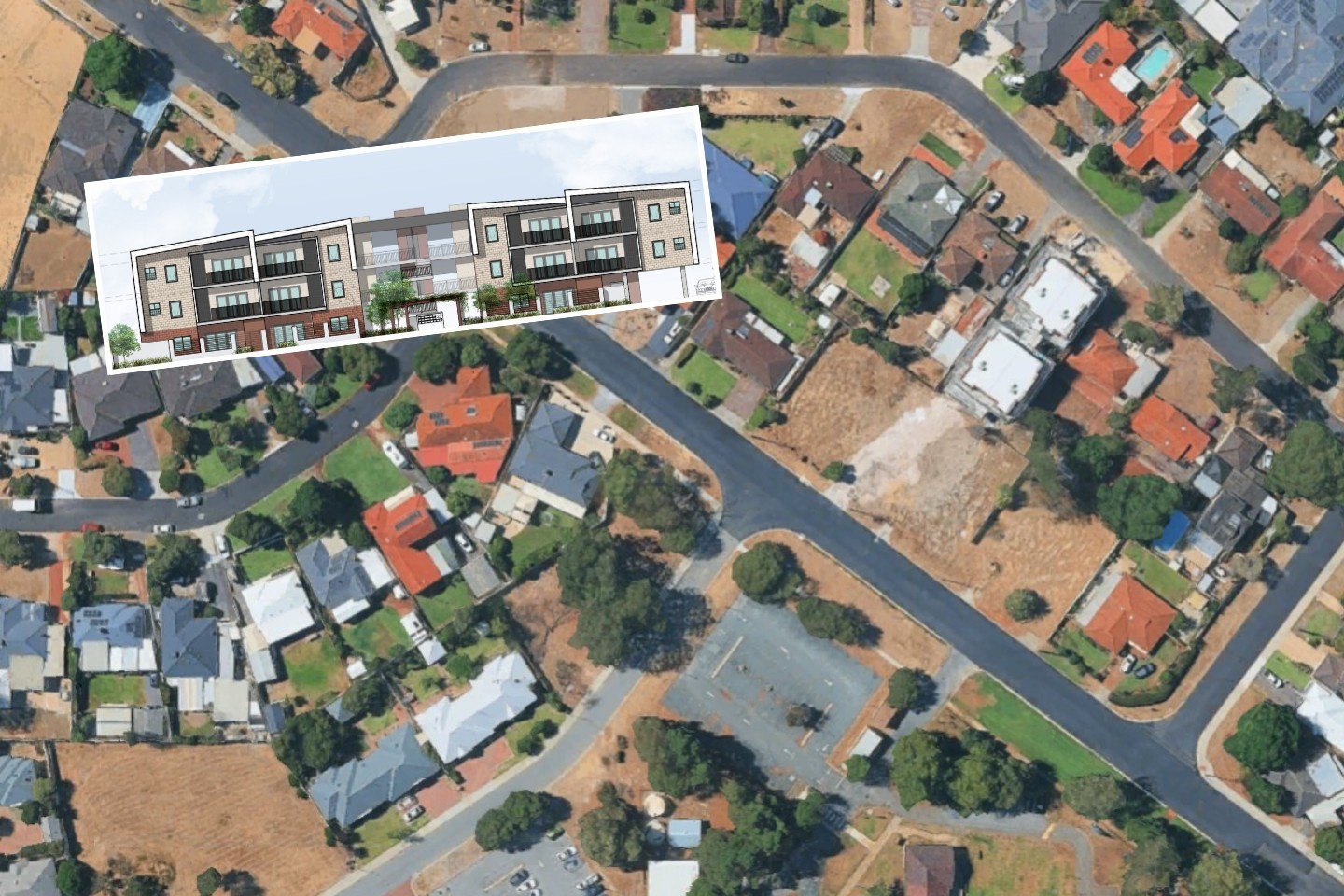
The state and federal governments have called in McCorkell Constructions to build an $11.5 million three-storey social housing project in Perth’s inner north.
Business
ETMarkets Smart Talk | Equity, mutual funds, bonds or property: Tax rules every NRI should know: Ritu Shaktawat

However, each asset class comes with its own tax implications, and recent changes to capital gains rules and mutual fund taxation have made tax planning more important than ever.
From understanding residential status and leveraging Double Taxation Avoidance Agreements (DTAAs) to navigating TDS provisions and property transactions, investors need to be aware of the rules that can significantly impact their post-tax returns.
In this edition of ETMarkets Smart Talk, Ritu Shaktawat, Partner, Khaitan & Co., breaks down the tax treatment of various investment avenues and shares practical insights to help NRIs invest in India with greater confidence while staying compliant with evolving regulations. Edited Excerpts –
Q) What are the key tax considerations NRIs should keep in mind before investing in India?
A) Before investing in India, NRIs should undertake a holistic review of the applicable tax and regulatory framework, including the following key considerations, to optimise their post-tax returns and ensure compliance with Indian laws.
1. Determining their residential status: Tax residential status of individuals is categorised into three categories: Non-resident (“NR”), Resident but not ordinarily resident (“RNOR”), and ordinarily resident (“ROR”) and it depends on physical presence in India on a year-on-year basis. The distinction is important as scope of income taxable in India differs for each category. Accordingly, NRIs investing in India or holding any India assets are advised to determine their residential status including for the years in which they expect returns from their India assets, as it forms the foundation for evaluating the taxability of their income and the overall tax implications of their investments in India.
2. Evaluating the applicable Double Taxation Avoidance Agreements (“DTAA”): NRIs who are non-residents of India for tax purposes should review the applicable DTAAs, between India and their country of residence. The applicable DTAA may provide beneficial tax treatment for certain income streams earned from India such as interest, dividends, capital gains, subject to meeting the prescribed eligibility and documentation requirements.

3. Understanding the tax implications of the chosen asset class: The tax treatment varies significantly across investments such as equity shares, mutual funds, debt instruments, fixed deposits, and immovable property. Investors should evaluate the applicable tax rates, valuation norms, holding period requirements, exemptions and withholding tax implications before making an investment.4. Consider repatriation and FEMA (foreign exchange) requirements: Apart from tax considerations, NRIs should ensure that investments are made through the appropriate banking channels and in compliance with the applicable FEMA and RBI regulations to facilitate smooth repatriation of income and sale proceeds.
5. Maintain adequate documentation: Investors should preserve records relating to the acquisition date and cost, valuation reports (where applicable), tax paid or deducted at source (“TDS”), and DTAA related documentation, including a valid Tax Residency Certificate (“TRC”), to facilitate tax compliance and claim DTAA benefits, foreign tax credits, and minimise potential disputes with the tax authorities.
6. Review and meet tax compliance requirements: NRIs should assess their annual tax compliance obligations, including filing income-tax returns in India, reporting India-sourced income, claiming credit for TDS where applicable, withholding tax compliances (as may be applicable) and disclosing such income and taxes paid in India as well as in their country of residence, wherever required.
Q) Has the tax treatment of NRI investments changed significantly over the past few years?
A) While the fundamental principles governing the taxation of NRI investments have largely remained unchanged, the past few years have witnessed several legislative amendments aimed at rationalising the tax regime, simplifying compliance and addressing practical challenges faced by investors. Some of the key developments are as follows:
1. Changes to capital gains taxation: The Finance (No. 2) Act, 2024 rationalized the capital gains tax regime by revising tax rates and holding periods across various asset classes. The taxation of listed securities, mutual funds and immovable property has undergone significant changes, requiring NRIs to reassess the post-tax returns on their investments.
2. Taxation of debt and hybrid mutual funds: The tax regime for debt-oriented and certain hybrid mutual funds has been substantially modified, with specified mutual funds acquired on or after 1 April 2023, no longer enjoy the traditional long-term capital gains benefits.
Q) How can NRIs avoid common tax mistakes while investing in Indian financial assets?
A) NRIs can avoid common tax mistakes while investing in Indian financial assets by adopting a proactive approach to tax and regulatory compliance and investment monitoring. Some practical considerations include:
1. Don’t treat TDS as the final tax: TDS is only a collection mechanism and may not represent the final tax liability of the taxpayer. NRIs should assess whether in the tax returns to be filed in India any refund of taxes withheld should be claimed, any additional income should be reported, any DTAA benefits should be claimed etc.
2. DTAA benefits: Where eligible, NRIs should furnish the prescribed documentation, including a valid TRC and Form 41 (erstwhile Form 10F), before the payment is due to ensure correct treaty withholding rate is applied and avoid unnecessary refund claims.
3. Plan the timing of exits: The timing of a transfer or redemption can significantly influence the tax liability, particularly where the applicable tax rate depends on the period of holding of the asset.
4. Mode of investment: Prior to investments in India, various investment modes should be evaluated in detail including tax costs of holding and disposing the investment.]
Q) How do Double Taxation Avoidance Agreements (DTAAs) help NRIs, and how should investors make the most of them?
A) DTAAs entered by India aim to eliminate double taxation of the same income through mechanisms such as foreign tax credit or exemptions. DTAAs also provide concessional withholding rates on certain income streams such as interest, rent, capital gains, dividends, and royalties. NRIs can rely on DTAA benefits for their India sourced income during the years they are non-residents of India.
To make the most of DTAAs, NRIs should evaluate the applicable DTAAs before structuring their investments, not only at the time of receiving income or making an exit. The tax treatment of dividends, capital gains on equity shares, mutual funds, and other income can differ significantly across different DTAAs which may materially affect the post tax returns.
To claim DTAA benefits, investors must obtain a TRC issued by the jurisdiction of tax residence, quote PAN, electronically file Form 41 relating to residency. If the applicable DTAA has any specific condition those should also be fulfilled.
Q) How are short-term and long-term capital gains taxed for NRIs investing in Indian equities and mutual funds?
A) As per the domestic tax laws, capital gains arising on the transfer of Indian securities are taxable in India, at the applicable tax rates depending on the nature of the asset and the period of holding as provided below:
 ETMarkets.com
Q) How are equity, debt, and hybrid mutual funds taxed for NRIs?
A) For an equity oriented mutual fund (i.e., funds having more than 65% of their investments in equity shares of domestic companies), see comments above.
For Specified mutual funds (i.e funds having more than 65% of their investments in debt and money market instruments) acquired after 1 April 2023, any gains arising on transfer, redemption or maturity are deemed be short term capital gains and are taxable in the hands of the investors as per the applicable slab rate.
For hybrid mutual funds, the taxation depends on the composition of their underlying portfolio, particularly the proportion of investments in equity and debt.
Hybrid funds with > 65% equity are treated as equity-oriented mutual funds whereas funds with less than 65% of equity exposure are treated as specified mutual funds and taxed accordingly.
NRIs residing in jursidictions such as (Oman, Qatar, Singapore etc.), may be eligible to claim DTAA benefits on capital gains arising from transfer or redemption of mutual fund units as such gains may fall within the residuary clause of “Capital Gains” article, which allocates taxing rights exclusively to the country of residence of the taxpayer.
Since these jurisdictions generally do not levy capital gains tax, such gains may effectively remain tax free, subject to satisfaction of the applicable treaty conditions.]
Q) How are interest income and capital gains from bonds taxed for NRIs?
A) Interest income: Interest earned by NRIs on bonds is generally taxable in India and is ordinarily subject TDS. The applicable TDS rate may vary from 10% to applicable slab rates depending on the nature of the bond, and would be subject to the applicable Double Taxation Avoidance Agreement (DTAA) benefits where eligible.
Capital gains: The tax treatment on transfer or redemption of bonds varies depending on the nature of the bond. Capital gains arising on the redemption of Sovereign Gold Bonds (“SGBs”) on maturity (i.e., after the 8-year tenure) are exempt from tax. Additionally, any transfer of tax-free bonds issued by the Government are exempt from capital gains tax.]
Q) What are the tax implications of buying and selling property in India as an NRI?
A) On Purchase of property in India by an NRI
Where an NRI purchases an immovable property in India from a resident seller, the NRI is required to deduct TDS at 1% of the sale consideration, provided the sale consideration or stamp duty value, whichever is higher exceeds INR 50 lakh.
Where an NRI purchases an immovable property from a non-resident seller, the buyer will be required to deduct the tax payable by the seller at source and should obtain necessary declarations from the seller in this regard.
On sale of property in India by an NRI
The tax implications for an NRI selling a property in India depends on whether the asset is classified as a short-term capital asset or a long-term capital asset. Any property sold within 24 months of acquisition is treated as a short-term capital asset and the gains are taxable as short term capital gains at the applicable slab rates.
For long-term capital gains, the applicable tax rates depend on the date of acquisition
• If acquired prior to 23 July 2024: Effective tax rate of 23.92% (including surcharge and cess) with indexation or an effective tax rate of 14.95% (including surcharge and cess) without indexation, whichever is more beneficial
• If acquired post 23 July 2024: Effective tax rate of 14.95% (including surcharge and cess) without indexation.
Immovable property transactions are subject to minimum valuation requirements which should be complied with to avoid taxes payable by the buyer and seller on a deeming basis.
(Disclaimer: Recommendations, suggestions, views, and opinions given by experts are their own. These do not represent the views of the Economic Times)
Business
UK Counter-Terror Police Take Over Murder Investigation of Pro-Life Ex-MP Ann Widdecombe After New Evidence

British counter-terrorism police have taken over the investigation into the suspected murder of former UK lawmaker Ann Widdecombe, officials announced Monday, after new information and evidence emerged in what had initially been treated as a standard homicide case with no apparent political motive.
UK Home Secretary Shabana Mahmood confirmed the shift in the investigation Monday, saying counter-terrorism police were now leading the case “following new information and evidence.” Police had previously said there was nothing to suggest Widdecombe’s killing was an act of terrorism or politically motivated. Laurence Taylor, head of National Counter Terrorism Policing, said the investigation remained in an active, developing phase. “We now have new information and evidence that means Counter Terrorism Policing is now leading the investigation,” Taylor said. “We are pursuing multiple lines of enquiry to establish the motivation for this attack. Our priority is progressing this investigation quickly, with all the capabilities we have available to us. If anyone has any information, please share it with the police.” Taylor added, “We would like to thank local communities, the wider public and the media for their ongoing support and patience, and would ask them to continue to support us in the next stage of the investigation.”
Widdecombe, 78, was found dead last Thursday at her isolated rural home in Haytor, a village in Devon in southwest England. Police believe she was attacked around 12:30 p.m. the previous day, Wednesday, with concerns first raised after she failed to appear for a scheduled television interview that afternoon. Her body was discovered the following morning.
The investigation initially moved through Devon and Cornwall Police’s Major Crime Investigation Team. An unnamed 26-year-old man was arrested Friday in connection with the killing but was later released and is no longer considered a suspect, according to a statement from Devon and Cornwall Police. On Saturday, police arrested a second suspect, a 28-year-old man from Rotherham, South Yorkshire, hundreds of miles from the crime scene, on suspicion of murder. According to a statement from Devon and Cornwall Police, the arrest was carried out on their behalf by Counter Terrorism Policing North East and South Yorkshire Police. At that stage, police said, “there is nothing to suggest that it was politically motivated.”
That assessment changed by Monday. Following the emergence of new information and evidence, Counter Terrorism Policing South East formally took over leadership of the investigation, with the man already in custody rearrested on suspicion of “commission, preparation or instigation of acts of terrorism.” In a statement, the counter-terrorism unit said it “will continue to work closely with colleagues from the Devon and Cornwall Police Major Crime Investigation Team and across the Counter Terrorism Policing network in an effort to establish the full circumstances of the incident which led to this murder investigation.” Police have not publicly disclosed the specific nature of the new evidence that prompted the shift, nor detailed a potential motive for the attack.
Widdecombe’s death and the subsequent investigation have sent shock waves through British politics, where she had remained a prominent and often outspoken public figure for decades. First elected to the House of Commons in 1987 representing Maidstone, Widdecombe served in Parliament until 2010, holding ministerial roles including prisons minister under Prime Minister John Major’s Conservative government during the 1990s. After leaving Parliament, she found renewed public fame as a contestant on British reality television programs including “Strictly Come Dancing” and “Celebrity Big Brother.”
Widdecombe later shifted her political affiliation, joining the Brexit Party and briefly serving as a member of the European Parliament from 2019 to 2020, ahead of the United Kingdom’s formal departure from the European Union. Most recently, she had aligned herself with Nigel Farage’s Reform UK party, serving as the party’s justice spokesperson since 2023 and appearing frequently in British media on the party’s behalf. Colleagues and friends described a contrast between her famously combative public political style and a warmer, more good-humored personal demeanor.
Throughout her decades in public life, Widdecombe was widely known for her pro-life advocacy and consistent voting record on abortion-related legislation. According to the advocacy group Right to Life UK, Widdecombe had “a strong and consistent pro-life voting record” and was “a leader in the public fight for protections for unborn babies at the beginning of life and the elderly and vulnerable towards the end of life.” The organization noted that as early as 1990, during a debate on the Abortion Act 1967, Widdecombe argued that abortion should not be treated as any other medical intervention and that existing legal protections for unborn babies should not be further eroded. In 2008, the group noted, she voted in favor of a series of amendments to the Human Fertilisation and Embryology Bill, including a measure that would have lowered the abortion limit for procedures performed under Section 1(1)(a) of the Abortion Act to 12 weeks.
Home Secretary Mahmood said she planned to brief lawmakers directly in the House of Commons on Monday afternoon regarding the change in the investigation’s leadership and the latest developments in the case. As of Monday, police had not released the identity of the man in custody publicly, nor confirmed additional details about the specific charges he may ultimately face beyond the current suspicion of involvement in acts of terrorism.
The investigation remains active, with Counter Terrorism Policing South East continuing to coordinate closely with Devon and Cornwall Police’s Major Crime Investigation Team and the broader national Counter Terrorism Policing network as authorities work to establish the full circumstances surrounding Widdecombe’s death. Police have continued to appeal to the public for any information relevant to the case as the investigation moves into what officials have described as its next stage.
Business
Emirates Cuts A380 Flights 16 Percent in July for Refurbishments and Boeing Delays, Not Retirement

DUBAI — Emirates will operate about 16 percent fewer Airbus A380 flights this month compared with July last year, according to aviation data provider Cirium, but industry analysts and the airline say the reduction stems from an extensive cabin refurbishment program, routine maintenance and delays in Boeing 777X deliveries rather than any plan to retire the iconic double-decker aircraft.
The Dubai-based carrier, the world’s largest operator of the superjumbo with more than 100 A380s in its fleet, continues to invest heavily in the type. Emirates plans to deploy the A380 on the Delhi route starting Oct. 25, marking the aircraft’s return to that key Indian market and underscoring its long-term role in the airline’s network.
Adnan Kazim, Emirates’ deputy president and chief commercial officer, highlighted the carrier’s commitment to India and premium products. “We are pleased to introduce our highly anticipated A380 services to Delhi, a vital gateway in our network, from October,” he said. “Given the strong demand for travel to and from India, it is an honour to expand our A380 footprint in the country, with Delhi joining Mumbai and Bengaluru as our third A380 destination.”
The temporary dip in A380 operations this summer reflects practical fleet management challenges. Emirates is midway through a multi-billion-dollar program to modernize cabins across its widebody fleet, including the installation of premium economy seats on A380s. The work involves taking aircraft out of service for extended periods, reducing available flying days during the peak travel season.
Routine heavy maintenance checks further constrain availability. At times, a significant portion of the A380 fleet — reports indicate around 27 to 32 aircraft — has been grounded simultaneously for these upgrades and inspections. The airline has substituted Boeing 777-300ERs and other types on affected routes to maintain capacity where possible.
Boeing’s repeated delays to the 777X program have compounded the situation. Emirates holds one of the largest orders for the new widebody, with expectations it would gradually replace older 777s and complement the A380 fleet. With entry into service now pushed toward 2027 or later, Emirates must extend the life of existing aircraft, including through retrofits, to sustain its expansive route network.
The A380 schedule adjustments this July include full swaps to 777s on routes such as Glasgow, Osaka and Barcelona, along with frequency reductions on major trunks like London Heathrow. Some routes, including Copenhagen, Perth and Washington Dulles, are regaining A380 service after earlier pauses. These changes represent rebalancing rather than outright cuts, with overall capacity preserved through alternative aircraft.
Analysts emphasize that the A380 remains central to Emirates’ strategy for high-demand, high-yield routes. The aircraft’s large capacity and four-class configuration, including first, business, premium economy and economy cabins after retrofits, align with passenger preferences for comfort on long-haul flights. The upcoming Delhi deployment fits this pattern, adding premium seats on one of the carrier’s busiest India corridors amid strong travel demand.
Emirates operates to nine destinations in India with 167 weekly flights, connecting them to its global network via Dubai. The A380 introduction to Delhi will complement retrofitted Boeing 777 services on the route, ensuring premium economy availability across all daily flights. By the end of October, the premium economy product will reach six Indian cities: Delhi, Mumbai, Ahmedabad, Bengaluru, Kolkata and Kochi.
The refurbishment program extends beyond the A380. Emirates is upgrading interiors across 219 aircraft in a $5 billion-plus initiative that includes refreshed premium cabins and enhanced features. For the A380 specifically, high-density configurations are being adjusted, sometimes reducing total seats to prioritize premium yields on select routes while maintaining the aircraft’s signature onboard lounge and shower facilities that differentiate it from competitors.
This approach allows Emirates to maximize revenue per flight even as it manages fleet constraints. The superjumbo’s operational costs are amortized over its long service life, and the investments in modern cabins help sustain its appeal against newer, more fuel-efficient twins like the Airbus A350 and Boeing 787.
Geopolitical factors have also played a role in recent A380 availability. Regional conflicts, including tensions involving Iran earlier this year, led to temporary groundings and route adjustments that affected widebody utilization. Emirates quickly rebuilt much of its schedule, demonstrating resilience, but such events highlight the complexities of operating a large international fleet.
Despite the current lighter July schedule, Emirates has no plans to retire the A380 fleet prematurely. The airline has consistently stated that the type will serve well into the 2030s, with ongoing maintenance and upgrades ensuring reliability. Airbus delivered the last A380 in 2021, and Emirates’ large existing fleet provides a stable platform without reliance on new production.
The A380’s return to additional routes this summer and fall, including Delhi, counters speculation of quiet retirement. Industry observers note that while the superjumbo’s production ended years ago, its capabilities remain unmatched for certain hub operations like Dubai’s, where high passenger volumes and connecting traffic justify the aircraft’s size.
Emirates’ broader fleet strategy involves balancing the A380 with newer types. The airline operates a significant number of Boeing 777-300ERs, many of which are also receiving premium economy retrofits. The delayed 777X will eventually allow for more efficient long-haul operations, but in the interim, the focus remains on optimizing the current mix.
Passengers on affected routes this month may notice more 777 deployments, which offer competitive comfort levels post-refurbishment but lack the A380’s distinctive two-deck experience. Emirates has communicated schedule changes to minimize disruption, with many flights maintaining similar timings.
Looking ahead, the airline’s investment in premium products signals confidence in premium leisure and business travel recovery. Premium economy, with its enhanced seating, dining and amenities, has proven popular, and expanding it across more routes including via A380s strengthens Emirates’ competitive position against rivals in the Gulf and beyond.
The July figures from Cirium provide a snapshot of transitional fleet dynamics rather than a long-term shift. As refurbishments progress through November and more aircraft return to service, A380 utilization is expected to normalize. The Delhi debut in October offers a concrete example of continued commitment to the type on high-profile routes.
Emirates’ A380 operations have defined its brand since the aircraft entered service with the carrier in 2008. The superjumbo’s onboard innovations, from the lounge to spacious cabins, have set benchmarks in international aviation. Sustaining that legacy through targeted investments amid supply chain and delivery challenges demonstrates the airline’s adaptive approach to fleet management.
As summer peaks and travel demand holds steady, the temporary adjustments ensure reliability while positioning the fleet for future growth. With strong India ties and global connectivity at its core, Emirates continues leveraging the A380 where it delivers the greatest value to passengers and the bottom line.
Business
TSMC Shares Rise as June Sales Surge a Historic 68% Amid Strong AI Chip Demand Ahead of Earnings

Taiwan Semiconductor Manufacturing Co. shares rose 1.04% Monday, closing at 2,440 New Taiwan dollars, after the world’s largest contract chipmaker reported a 67.9% year-over-year surge in June sales, offering a strong preview of the artificial intelligence-driven demand expected to headline the company’s second-quarter earnings report later this week.
TSMC reported June revenue of NT$442.68 billion, up 6.2% from the previous month, in figures released Monday that had been delayed from their originally scheduled July 10 publication date due to a typhoon-related holiday. For the first half of 2026 overall, TSMC’s total revenue reached NT$2.4 trillion, or roughly $74.99 billion, representing a 35.6% increase compared with the same period in 2025, underscoring the sustained pace of demand for the company’s most advanced chip manufacturing capabilities.
Monday’s sales figures serve as a preview ahead of TSMC’s formal second-quarter earnings release, scheduled for Thursday, July 16, at 2 p.m. Eastern time. Investors and analysts widely regard TSMC’s monthly and quarterly results as a bellwether for the broader artificial intelligence industry, given the company’s role as the primary manufacturer of advanced chips for major technology companies including Nvidia, Apple, AMD and other leading semiconductor designers and hyperscale cloud providers. Because TSMC physically manufactures the chips its customers design, its revenue figures are widely viewed as a more direct real-time measure of actual AI hardware production than order announcements or forward guidance issued by chip designers themselves.
TSMC’s stock has already delivered a remarkable run heading into Thursday’s report. According to Zacks Investment Research, TSM shares surged 39.9% during the April-to-June quarter alone, driven by continued execution across several of the company’s key strategic initiatives, including the expansion of advanced chip packaging capacity, progress toward high-volume production of its next-generation 2-nanometer manufacturing process, ongoing global manufacturing expansion, and sustained demand for AI chips from leading hyperscale cloud providers and semiconductor designers.
TSMC’s own guidance heading into Thursday’s report points to another quarter of substantial growth. During its first-quarter earnings announcement, management guided for second-quarter revenue in the range of $39 billion to $40.2 billion, representing roughly 10% sequential growth at the midpoint and approximately 32% growth compared with the same period a year earlier. The company projected second-quarter gross margin in a range of 65.5% to 67.5%, reflecting high factory utilization rates and ongoing cost-improvement initiatives, though management noted that figure would be partly offset by costs associated with ramping up newer overseas manufacturing facilities. TSMC has consistently described demand for AI-related chips as “extremely robust,” attributing continued strength in part to a broader industry shift from generative AI toward more computationally intensive agentic AI applications, a transition the company says is driving increased computing requirements across hyperscale data centers.
TSMC’s track record of exceeding Wall Street expectations has remained strong heading into this week’s report. According to Zacks, the company has beaten earnings estimates in each of its trailing four quarters, with an average positive earnings surprise of 8.34% over that stretch. In the first quarter of 2026, TSMC’s revenue rose approximately 41% year over year to $35.9 billion, according to the Motley Fool, with gross margin reaching 66.2% for the period, figures that management said reflected genuine pricing power built on the company’s technological leadership in advanced chip manufacturing.
Looking beyond the immediate quarterly results, analysts have identified several key areas they expect TSMC’s second-half 2026 guidance to address, including the company’s capital spending plans, demand trends across AI, high-performance computing and 5G applications, progress on expanding advanced packaging capacity, the ramp-up timeline for its new 2-nanometer, or N2, manufacturing process, and the trajectory of gross margins as overseas fabrication facilities continue scaling toward full production. TSMC has already raised its 2026 capital expenditure guidance this year, reflecting management’s continued confidence in sustained AI-related demand, according to TradingView.
Analysts broadly remain positive on TSMC’s outlook heading into Thursday’s report, though the stock’s dramatic rally over the trailing three months has raised the bar for what would be considered an unambiguous beat. According to Forbes, the average analyst estimate for TSMC’s full-year 2026 revenue stands at NT$5.2 trillion, reflecting continued confidence that AI-driven chip demand will remain elevated through the remainder of the year. Analysts have cautioned, however, that any signs the pace of AI infrastructure spending is beginning to moderate, even modestly, could weigh on sentiment given how much of the stock’s recent gains have already priced in continued acceleration.
TSMC’s position at the center of the global AI supply chain has also drawn attention to broader geopolitical risk factors surrounding the company, given its base of operations in Taiwan. According to Forbes, U.S. intelligence assessments reported in March indicated that China was not believed to be planning an invasion of Taiwan in 2027, though the report cautioned there remains no absolute guarantee regarding the island’s long-term security situation, a factor analysts continue to weigh alongside TSMC’s underlying business fundamentals when assessing the stock’s risk profile.
Some analysts have also flagged emerging competitive pressure facing TSMC’s dominant position in advanced chip manufacturing. A Motley Fool analysis published earlier this month noted that a potential new industry rival is seeking to undercut TSMC on pricing, a development investors will likely watch for further commentary on during Thursday’s earnings call, even as TSMC’s technological lead in the most advanced manufacturing processes has so far allowed it to maintain premium pricing and industry-leading margins relative to competitors.
For long-term investors, TSMC continues to be viewed by many analysts as one of the more direct and financially disciplined ways to gain exposure to the broader artificial intelligence infrastructure buildout, given the company’s demonstrated ability to balance current operational execution with substantial capacity investments aimed at future growth. Thursday’s earnings report is expected to serve as a key data point for assessing whether that AI-driven demand cycle continues to accelerate as expected, or whether early signs of moderation are beginning to emerge across the broader semiconductor industry heading into the second half of 2026.

Rates Spark: Room For Warsh To Shift The Narrative


I am a self-taught individual investor and I have been investing in stocks for over 25 years. I focus on dividend growth investing with a long-term horizon since I believe in the compounding power of dividend growth investing. I generally look for undervalued stocks with sustainable dividend growth and capital appreciation potential. I try to provide a little more in depth analysis weighing the positives and negatives. I am now in the Top 2.0% out of 28,000+ financial bloggers (February 2024) as tracked by Tip Ranks for my SA articles.Blog: www.dividendpower.orgWork/ associated with the existing authors James Marino and Ferdis.
Analyst’s Disclosure: I/we have no stock, option or similar derivative position in any of the companies mentioned, and no plans to initiate any such positions within the next 72 hours. I wrote this article myself, and it expresses my own opinions. I am not receiving compensation for it (other than from Seeking Alpha). I have no business relationship with any company whose stock is mentioned in this article.
Seeking Alpha’s Disclosure: Past performance is no guarantee of future results. No recommendation or advice is being given as to whether any investment is suitable for a particular investor. Any views or opinions expressed above may not reflect those of Seeking Alpha as a whole. Seeking Alpha is not a licensed securities dealer, broker or US investment adviser or investment bank. Our analysts are third party authors that include both professional investors and individual investors who may not be licensed or certified by any institute or regulatory body.

Madonna Grateful For The Success Of ‘Confessions II’

TFSA vs. RRSP? They Are Just Financial Tools

What watching people restock their cupboards tells us about aesthetics and authenticity on social media


-

 News Videos7 days ago
Whats Hidden Inside This Cash Register? #treasure #reselling #money
-

 Fashion5 days ago
Loro Piana Fall 2026 Enters Houston’s Art Scene
-

 Fashion3 days ago
Weekend Open Thread: Nutriplenish Leave-In Conditioner
-
 Tech7 days ago
Anthropic’s new “J-lens” reveals a silent workspace inside Claude that mirrors a leading theory of consciousness
-
 Sports4 days ago
2026 Genesis Scottish Open Thursday TV coverage: Round 1
-

 Sports6 days ago
Joshua Pacio ‘more complete’ ahead of ONE rematch vs Malachiev
-

 Tech6 days ago
Anthropic brings Claude Cowork to mobile and web as usage data shows most users aren’t coding
-

 Sports4 days ago
Super Eagles star Moses Simon opens up on Liverpool transfer regret
-
Sports7 days ago
We have punished the disrespect
-

 Tech5 days ago
Character.AI enters the microdrama arena with its own productions, but there’s a twist
-
 Crypto World7 days ago
Claude AI Created Something Anthropic Never Designed
-

 News Videos7 days ago
“What’s going on?!” Carl Froch discusses Floyd Mayweather Jr financial issues
-

 Crypto World6 days ago
Nasdaq arthritis company holding Moshe Hogeg crypto hits all-time low
-

 News Videos5 days ago
Crypto Just Entered Its Most Important 6-Month Candle (Could Decide Everything!)
-

 Tech6 days ago
Keychron is stepping outside keyboards with a $349 Thunderbolt 5 dock aimed at power users
-

 Business6 days ago
ASX 200 Slides Over 0.6% as Rare Earths and Lithium Stocks Tumble Amid Global Semiconductor Sell-Off Today
-
 Business6 days ago
Will Trent shares rebound after Q1 update triggers 13% crash? Here’s what technical charts indicate
-
 NewsBeat5 days ago
Major update after Huntingdon train attack as man enters plea
-
 Tech6 days ago
OpenAI teams with Work Louder to launch Codex-native keyboard, weeks after CEO of Apps told staff ‘not to be distracted by side quests’
-

 Business6 days ago
SpaceX Shares Slide Nearly 6% Amid Post-IPO Volatility and Starship Test Focus
You must be logged in to post a comment Login