

Crypto World
UK Tokenization Plan Could Boost Annual Output by $44B by 2035: Report

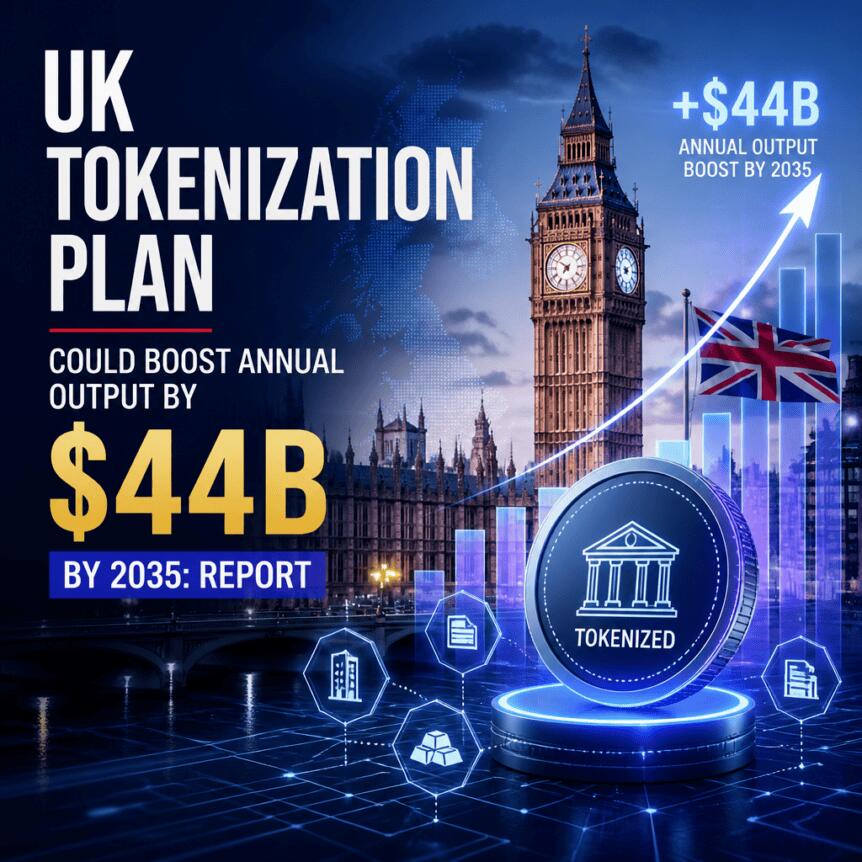
The UK is preparing to move tokenized financial markets from experimental pilots to scaled, live trading and settlement, according to a government-backed industry task force report published by Wholesale Digital Markets Champion Chris Woolard. The document estimates that, if the country becomes a leader in tokenized markets, the effort could add as much as £33 billion (about $44 billion) to annual economic output by 2035.
The report outlines a 12-month plan to test blockchain technology in a financial transaction that uses securities to borrow cash, and it calls for the UK to issue its first tokenized government bond—known as a gilt—by the first quarter of 2027. Woolard’s role is tied to HM Treasury’s digital markets strategy, with the task force assembled to connect traditional market infrastructure providers with digital-asset firms.
Key takeaways
- The task force aims to progress from isolated blockchain trials to “scale,” with real-market trading, settlement, and use of tokenized securities as collateral.
- Plans include a 12-month blockchain test focused on repo-like mechanics where securities are used to raise cash.
- The roadmap targets a first tokenized UK government bond issuance by the first quarter of 2027.
- The report urges the Bank of England to accept tokenized gilts as collateral, positioning collateral eligibility as a major adoption gate.
- Task force membership spans leading banks, market infrastructure firms, and crypto companies, underscoring a cross-industry approach.
From pilots to live tokenized securities markets
While tokenization has been discussed for years, the report’s emphasis is on practical market plumbing—moving beyond demonstrations toward arrangements that can support securities issuance, secondary-market activity, and settlement workflows. The task force describes its mission as shifting “from pilots to scale” and “from ambition to action,” reflecting a more implementation-focused posture than many earlier initiatives.
Central to that approach is the report’s view that tokenized assets have limited real-world value unless they can be traded and used to obtain cash. In the document’s framing, the ability to raise funding against tokenized securities—and to have those tokens participate in established collateral frameworks—determines whether tokenization can materially change market behavior.
To that end, the task force’s 12-month plan centers on testing blockchain in a financial transaction where securities are used to borrow cash. Although the report does not present additional implementation details in the provided text, the structure aligns with the market logic of repo transactions, where the speed and settlement efficiency of collateral exchanges can have meaningful operational and cost implications.
Tokenized gilts: a timeline and expanded end goals
Tokenized government bonds are not a brand-new idea in the UK. The government previously announced the Digital Gilt Instrument (digit) pilot in November 2024, using public documentation to describe the initiative.
Later updates pushed the concept further. A July 2025 update laid out intentions covering onchain settlement, over-the-counter trading, and secondary-market development. The government also appointed HSBC’s Orion platform to support the pilot on Feb. 12, signaling that at least part of the effort is geared toward real operational systems rather than purely theoretical trials.
The new task force report builds on that foundation by adding a clearer timetable and broadening how the tokenized gilt would be used. Beyond issuance, the roadmap seeks subsequent digital-gilt offerings, live secondary-market trading, and—importantly—eligibility for use as central bank collateral.
The collateral angle is where the report becomes more than a rollout plan. It explicitly argues that tokenized securities only become economically meaningful when they can be used to raise cash, and it calls on the Bank of England to accept digital gilts as collateral. For market participants, that would be a key step toward turning tokenized assets into a mainstream funding and settlement tool rather than a niche alternative.
Task force composition and industry buy-in
Woolard’s first report was developed with a task force described as bringing together more than 50 companies spanning traditional finance and crypto. The membership list in the text includes BlackRock, Goldman Sachs, JPMorgan, Morgan Stanley, HSBC, UBS, Coinbase, Circle, Ripple, Kraken, DTCC, and Euroclear.
Ripple, which appears among the industry members, publicly supported the initiative in a statement shared on Monday. The company said that onchain funds, bonds, and repo are not experiments, arguing that such instruments are already proving “cheaper, better and faster” than legacy equivalents.
For investors and builders, the breadth of the task force matters. A tokenization roadmap that includes both major securities market infrastructure players and crypto platforms suggests the UK is trying to align interfaces—custody, settlement, and compliance—rather than relying on a single ecosystem.
How UK payment infrastructure could connect the dots
The report’s tokenized-gilt ambition also intersects with existing UK efforts to improve settlement and payments. The text points to a blockchain-based wholesale payment infrastructure that could support tokenized-market settlement.
In December 2023, London-based Fnality launched a sterling-denominated payment system tied to central bank reserves. The network was designed to enable real-time repo, tokenized securities settlement, and cross-currency payments, potentially providing the infrastructure layer needed for tokenized collateral to move quickly and consistently across parties.
By pairing that sort of settlement/payment capability with a phased approach to tokenized gilts and secondary-market trading, the UK’s roadmap is effectively trying to solve two problems at once: how tokenized assets are issued and traded, and how the cash legs and settlement mechanics work end to end.
Still, the biggest practical uncertainty remains whether collateral eligibility—specifically Bank of England acceptance of digital gilts—can be achieved on a timeline that matches the planned issuance and market scaling. The report’s call for central bank collateral suggests that regulators and system operators will play a decisive role in determining how quickly tokenization can move into full-market usage.
Going forward, market participants should watch for updates on the 12-month blockchain test details, the operational requirements for secondary trading, and any announcements that clarify how the Bank of England and other oversight bodies plan to treat tokenized gilts as collateral. If those pieces align, the UK could shift tokenization from a series of pilots into a functioning market segment with real funding utility.

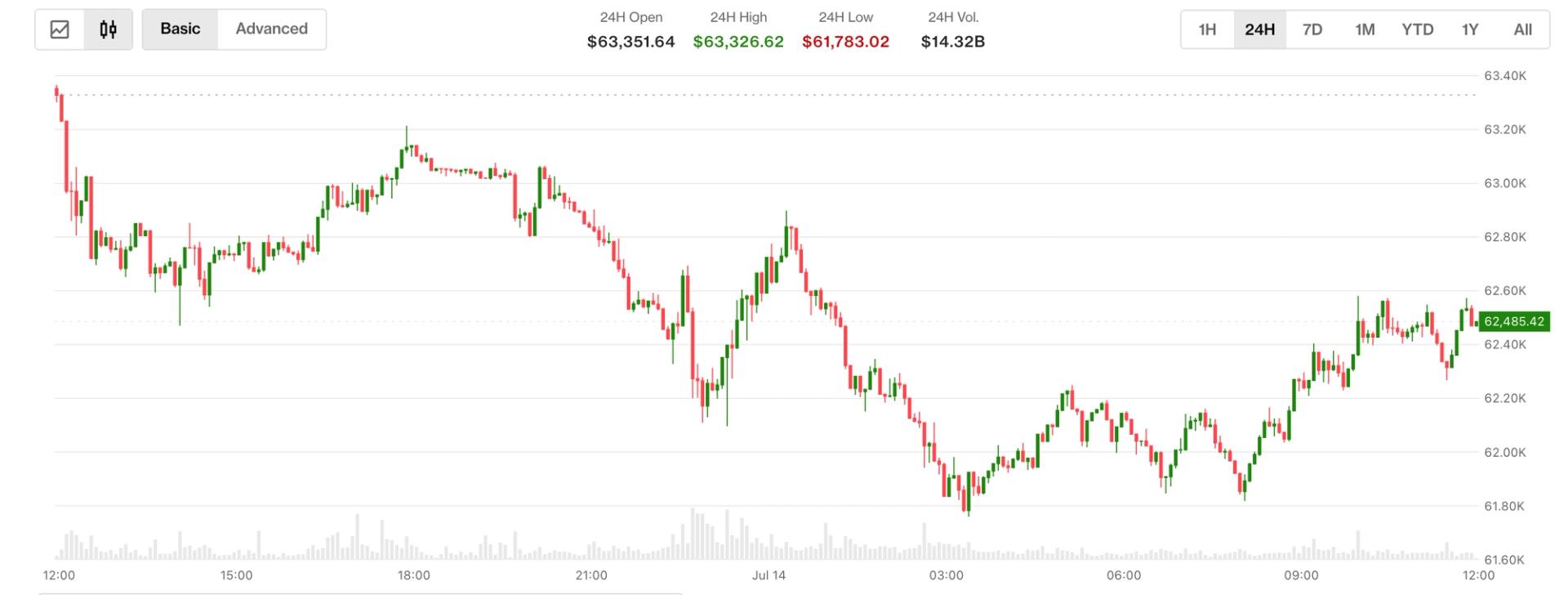
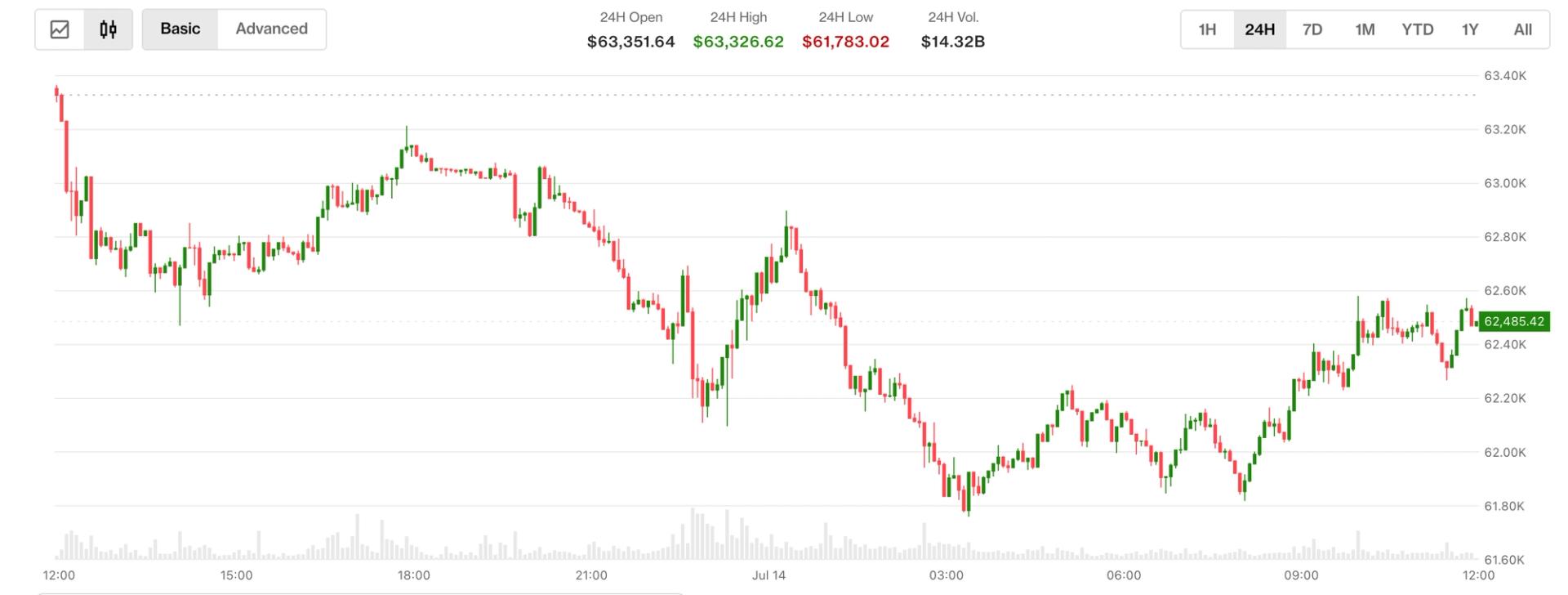
West Texas Intermediate crude futures have surged to nearly $80 a barrel from $67 at the start of the month, stoking fresh concerns about inflation.
Focus on CPI and Warsh testimony
Investors will receive a fresh read on price pressures Tuesday when the Labor Department releases the June consumer-price index at 8:30 a.m. ET.
Economists surveyed by Bloomberg forecast that headline CPI will fall below a 4% annual rate. The report is expected to show the first declines in both headline and core inflation since January, following May’s readings of 4.2% and 2.9%, respectively.
Even if the figures meet expectations, they risk being viewed as backward-looking in light of the recent oil price surge. Should inflation instead prove more persistent, the data could amplify concerns about the Fed’s path forward.
Attention will then turn to Mr. Warsh’s testimony on Capitol Hill. Given the Fed chair’s preference for limited forward guidance, investors will be watching closely for any signals on rates and inflation.
According to analysts at ING, he could “if he chooses, emphasize the tameness of inflation expectations.”
They added that Mr. Warsh “has enough ammunition here to ride the rate hike risk and instead hold pat. Even if he comes under pressure to hike, the richness attached to the 5yr part of the curve tells us that any hike (if delivered) is likely to be subsequently reversed, with the prospect still for bigger cuts than hikes.”
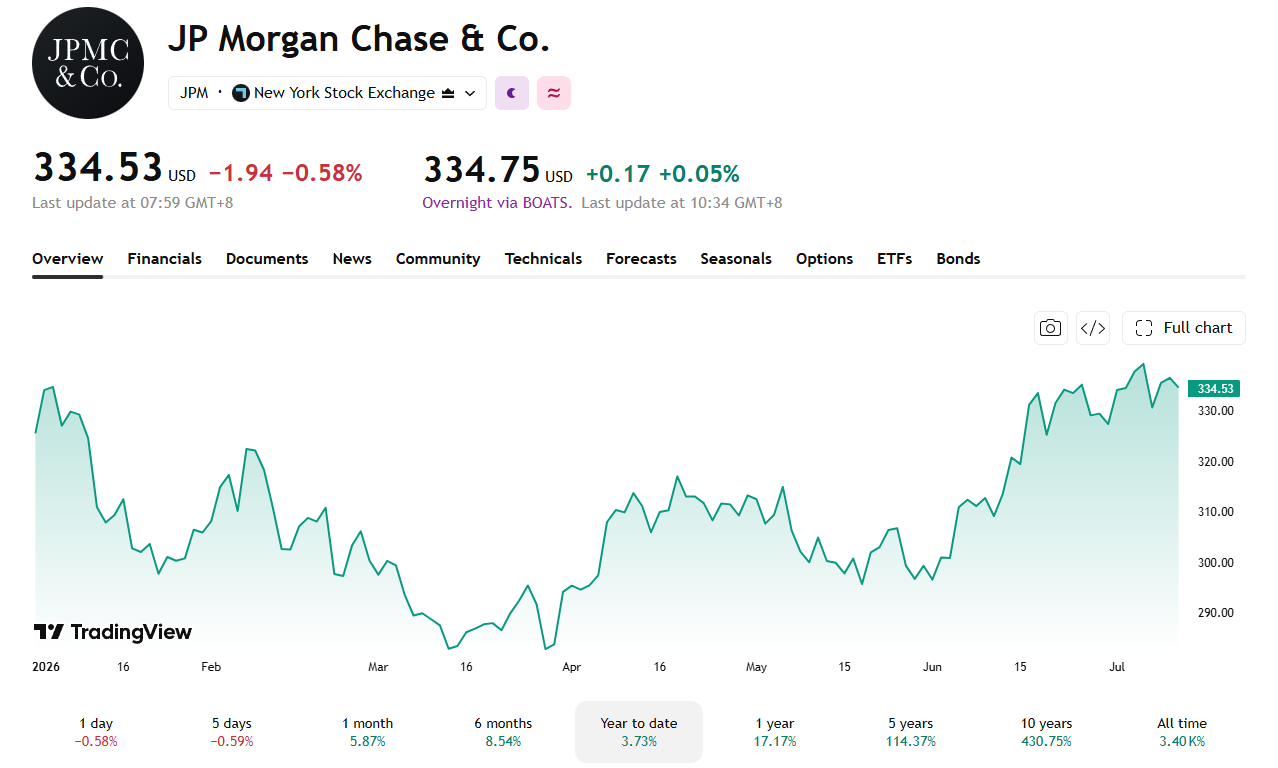
JPMorgan Chase, Bank of America, Wells Fargo, and Goldman Sachs report second quarter earnings Today, July 14. Analysts expect all four banks to post higher year over year revenue and profit, even as war in Iran and stubborn inflation weigh on markets.
The reports arrive as investors search for signs the US economy can absorb geopolitical shocks and elevated interest rates. Executives’ comments on lending, trading, and deal activity will shape sentiment for the rest of earnings season.
Why This Earnings Batch Matters
The four lenders report against a volatile backdrop; Renewed fighting in Iran has pushed oil prices higher, and inflation remains stickier than expected. However, the Federal Reserve has yet to cut interest rates this year, keeping borrowing costs elevated for consumers and businesses.
Fed Chair Kevin Warsh also testifies before Congress this week. That adds another variable for markets already digesting the bank results.
Jay Woods, chief market strategist at Freedom Capital Markets, said in an optimistic tone from bank executives could reshape how investors view the broader economy.
“If the banks paint an optimistic picture while credit quality remains strong, it could reinforce the narrative that the economy is proving far more resilient than many expected.”
What Analysts Expect From Each Bank
Analysts project Analysts expect JPMorgan to post the strongest growth of the four, with revenue up nearly 14% to $51.1 billion. Its wealth management business is driving most of that gain.

Goldman Sachs should see revenue climb 11% and profit jump 26%. Bank of America’s revenue should grow over 16%, while Wells Fargo, the weakest performer of the group this year, is expected to grow just 5%.
Strong bank earnings this week would send a reassuring signal to the wider market. Banks sit at the center of the economy, so healthy profits suggest consumers are still spending, businesses are still borrowing, and credit quality hasn’t cracked despite war in Iran and stubborn inflation.
For everyday investors, that could mean more confidence in stocks generally, since bank results often set the tone for the rest of earnings season.
But the picture isn’t all upside. Rising deposit costs and pressure on lending margins suggest banks may need to work harder for the same profits ahead, a dynamic that could eventually show up in loan rates or account fees for regular customers.
The Risk Beneath the Optimism
Morgan Stanley strategist Michael Wilson noted that banks are funding loan growth with costlier deposits. That dynamic could pressure profits further into 2027, prompting modest earnings estimate reductions across the sector.
Still, the industry’s balance sheet looks unusually strong. Tom Michaud, CEO of KBW, projects a tangible common equity ratio of 9.7% by the end of 2027 and that level would sit over 50% above where the industry stood entering the 2008 financial crisis. Banks could use that cushion to raise dividends, buy back stock, or pursue acquisitions.
Tuesday’s results will set the tone for a busy earnings week that also features major tech and consumer names. Whether banks can sustain growth while inflation and geopolitical risk persist remains the open question for markets.
The post Big Bank Earnings Today: Will Results Calm Economic Fears? appeared first on BeInCrypto.
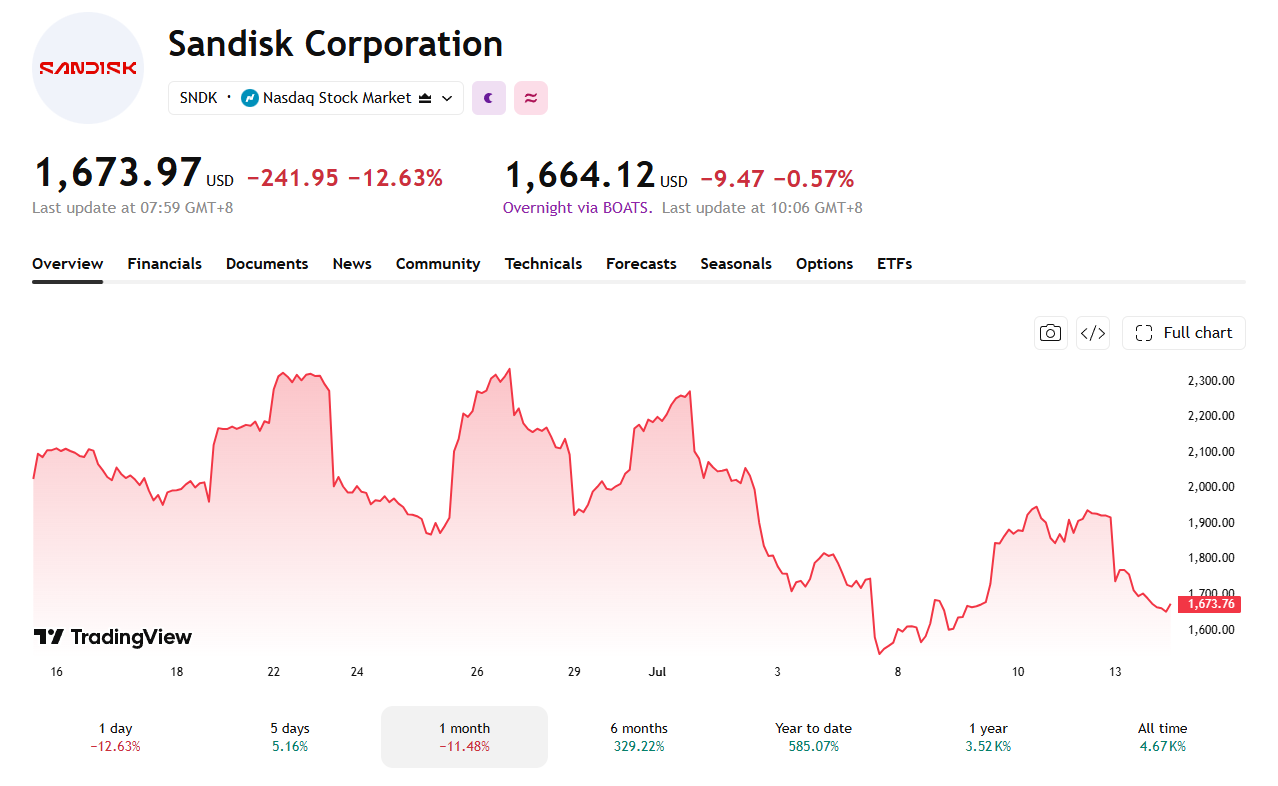
SanDisk (SNDK) stock fell 12.63% Monday, July 13, and slid further after hours, as a broad selloff hit memory and chip stocks. Several Wall Street analysts still raised or reaffirmed their price targets on the company despite the drop.
The moves show analysts trust SanDisk’s earnings outlook, even as memory sector volatility has rattled the wider group in recent weeks.
Analysts Defend Bullish Case Despite the Slide
Citigroup reiterated its $2,500 price target on SanDisk with senior analyst, Asiya Merchant, issuing a bullish note and maintaining a buy rating on SNDK. The price target implies roughly 30% upside from the most recent close.

Evercore ISI analyst Amit Daryanani went further, he raised his target to $3,100 from $1,400 and kept an “Outperform” rating. The new target implies nearly 62% upside from the last close. Daryanani argues investors underestimate the durability of SanDisk’s earnings and pricing power through 2027.
Bernstein analyst Mark Newman lifted his target to $3,000 from $1,700. He points to structural changes in how memory suppliers now write long-term supply agreements.
Wedbush analyst Matthew Bryson told MarketWatch the memory market remains “in a very good place.” He said Micron (MU) and SanDisk both benefit from AI-driven demand that chipmakers cannot quickly match, since new fabs take years to build.
Retail Sentiment Stays Extremely Bullish
Stocktwits data showed “extremely bullish” retail sentiment on SNDK, with high message volume. A related poll of nearly 1,800 respondents put Micron ahead for best returns, at 57%. SanDisk drew 19%, still reflecting continued capital flowing into memory stocks despite the pullback.
Data puts 18 of 22 analysts covering SanDisk at “Buy” or “Strong Buy,” with an average target of $2,112.32. Shares remain up nearly 600% year to date, a run that has also stirred renewed AI bubble concerns across the sector.
The next earnings cycle will show whether SanDisk can grow into targets north of $3,000.
The post SanDisk Stock Keeps Sinking, So Why is Wall Street More Bullish? appeared first on BeInCrypto.


The US government sent $297 million in Bitcoin (BTC) and Ether (ETH) to Coinbase Prime in two transfers on Monday. Blockchain intelligence firm Arkham tracked an initial $8.8 million deposit, then a second $288.33 million deposit three hours later.
The larger transfer combines forfeitures from three separate criminal cases. It includes assets tied to Brian Krewson, the defunct BTC-e exchange, and dark web drug dealer Ryan Farace.
A Pattern Tracked Before
This is not the first false alarm from a Coinbase Prime deposit. Forfeited funds moved the same way in January, sparking Samourai Bitcoin sale rumors. The government has repeated the move with other seized assets since then.
It sent seized FTX Chainlink tokens to Coinbase Prime in June and seized Alameda altcoins in May. Neither transfer turned into a confirmed sale.
Monday’s transfers follow the same script, but at a larger scale. Three unrelated forfeiture cases moved to Coinbase Prime within hours of each other, but the question stays open until Treasury or the Marshals Service comments directly on a sale.
Executive Order, Still Not Law
Trump’s March 2025 executive order created the Strategic Bitcoin Reserve partly aimed at baring the government from selling its Bitcoin holdings. But the rule exists only by executive decision, not statute.
Congress introduced the codify Bitcoin reserve bill in May to lock in a 20-year holding period. It has not advanced past committee with many seeing it as a strong indicator of this administrations belief in Bitcoin. However, as BTC continues to be sent to exchange wallets, people are speculating as to the intention behind these moves.
The US’s Dark Bitcoin
Much of the US government’s Bitcoin holdings trace back to criminal forfeitures. Monday’s deposit combines three of the highest-profile cases.
Krewson helped store and launder $54 million in crypto for two convicted drug traffickers, the Department of Justice said. BTC-e ran as an unlicensed exchange from 2011 to 2017. It processed more than $9 billion before its shutdown, according to DOJ court filings.
Farace generated over 9,138 Bitcoin from dark web drug sales. He received a 54-month sentence in 2023.
The post US Government Sends $297 Million in Seized Crypto to Coinbase in One Day appeared first on BeInCrypto.


Japanese convenience store operator Lawson will test payments with the yen-denominated JPYC stablecoin in early August.
Summary
- Lawson will connect JPYC payments directly to its POS system during a single-store Tokyo trial.
- Customers will scan mobile wallet barcodes, while HashPort updates balances using verified checkout transaction data.
- Japan’s megabanks are also preparing yen stablecoins, widening competition across regulated digital payment networks nationwide.
The company will run the trial at its Takanawa Gateway City store in Tokyo’s Minato Ward. HashPort, a digital asset wallet provider, will support the payment system and process balance changes linked to purchases.
Lawson described the project as Japan’s “first” stablecoin payment trial connected directly to a point-of-sale system. That claim comes from the company and the test has not yet started. Lawson has not announced a chainwide launch.
It will decide on wider use after checking system stability and transaction speed. The company will also review whether the process fits normal store operations without slowing customers or adding extra work for employees during busy periods.
How the POS-integrated payment will work
Customers will open a supported mobile wallet and display a barcode on their phones. A Lawson employee will scan the barcode with the store’s existing POS terminal. HashPort will then use the payment information to update the customer’s JPYC balance. The process keeps the checkout within Lawson’s current store system.
The POS link will also allow Lawson to manage purchase details, including product quantities and payment times, alongside its usual sales data. The trial will measure how reliably the systems connect and how long each payment takes.
Customers will use stablecoins at checkout, but staff will still handle the scan through the normal sales terminal. Lawson can compare the stablecoin flow with card and QR payments, including processing steps, error handling and the time needed to finish each sale.
JPYC moves into everyday retail
JPYC Inc. began issuing JPYC on October 27, 2025. The token tracks the Japanese yen and uses yen deposits and Japanese government bonds as reserve assets. As crypto.news reported, the stablecoin initially waived transaction fees and aimed to support payments and transfers under Japan’s regulated framework.
Lawson’s test follows smaller retail and service launches. Japanese okonomiyaki restaurant operator Chibo started accepting JPYC at selected stores in April, according to Financial News. Dental clinics in Tokyo and Chiba also plan to add JPYC payments with HashPort.
The Lawson trial differs because it links the stablecoin payment directly with a major retailer’s POS system. The report said stablecoins may offer merchants lower fees than cards or QR services, though Lawson has not released fee figures for this pilot.
Japan expands regulated stablecoin activity
Japan’s large banks are also preparing yen-based stablecoin services. MUFG Bank, Sumitomo Mitsui Banking Corporation and Mizuho Bank plan to begin live transactions during fiscal 2026, which ends in March 2027. As crypto.news reported, the banks formed a council to develop shared rules for issuance, governance, systems and future participation.
Moreover, the banking project follows an FSA-backed test involving corporate cross-border payments and Progmat’s blockchain infrastructure. Japan has also opened regulated access to foreign stablecoins. Ripple and SBI launched the dollar-backed RLUSD through SBI VC Trade in June 2026 after approval from the Financial Services Agency.


American Bitcoin shares have fallen more than 95% from their peak, according to Bloomberg, cutting over $600 million from the value of Eric Trump’s roughly 6% stake.
Summary
- American Bitcoin’s stock lost over 95% despite its treasury growing beyond 8,000 BTC this month.
- The reverse split lifted ABTC’s quoted price but left the company’s underlying market value unchanged.
- A $117.2 million Bitcoin charge drove Q1 losses while mining costs fell sharply per coin.
The Bitcoin miner and treasury company reached a record low on Wednesday after months of selling pressure. ABTC closed at $6.13 on July 10, the latest available market close.
The fall followed a 1-for-15 reverse stock split that took effect after trading on July 2. Split-adjusted trading began on July 6 under the same Nasdaq ticker. The company reduced its issued share count from about 1.09 billion to roughly 73 million. A reverse split raises the quoted share price but does not increase the business’s total value.
Reverse split fails to stop selling pressure
American Bitcoin used the reverse split to support compliance with Nasdaq’s minimum bid-price rule. Shareholders approved the move at the company’s annual meeting in June. Crypto.news reported the approval on June 25, when ABTC remained under pressure despite the planned change. The stock then fell after split-adjusted trading started.
The company has not said the split can reverse its market decline. Reverse splits can help a listed company meet exchange rules, but investors still price its earnings, assets, debt and outlook. Bloomberg’s calculation places the stock more than 95% below its peak. That decline reflects split-adjusted prices rather than a direct loss caused by the share consolidation.
Bitcoin reserve grows beyond 8,000 BTC
American Bitcoin continues to mine and accumulate Bitcoin while its share price falls. The company added 500 BTC in its latest update, taking its reserve above 8,000 BTC. As crypto.news reported on July 7, the treasury had more than tripled since the company’s Nasdaq debut. The firm also said its satoshis-per-share measure had nearly tripled.
Eric Trump promoted the treasury growth and described the company’s operating model as “virtually unmatched” during an earlier selloff. That statement represents his view, not an independent measure of performance. The company’s strategy combines large-scale Bitcoin mining with direct purchases. It keeps mined coins rather than selling them to cover routine costs, according to management.
Bitcoin charge weighs on first-quarter results
American Bitcoin reported a $118.2 million operating loss for the first quarter of 2026. The result included a $117.2 million non-cash charge tied to the lower market value of its Bitcoin holdings. The company reported an $81.8 million net loss and $62.1 million in mining revenue. Bitcoin fell about 22% during the quarter.
Management said the accounting charge masked stronger mining operations. Chief executive Mike Ho said the “underlying business was profitable” after excluding the mark-to-market adjustment, and said American Bitcoin did not sell any coins. The company mined 817 BTC during the quarter and cut its production cost per Bitcoin to $36,200, down from $46,900 in the prior quarter.
The balance sheet still links American Bitcoin stock closely to Bitcoin prices and mining economics. Lower Bitcoin prices reduce the market value of its reserve and can weaken revenue per mined coin. Higher power, equipment or hosting costs can also narrow margins. Hut 8 provides key infrastructure and remains central to the company’s mining setup.
American Bitcoin’s growing reserve gives shareholders Bitcoin exposure, but treasury growth has not supported its market price. The company must keep Nasdaq compliance while funding mining and purchases. Its next results will show whether lower production costs can offset Bitcoin prices and whether the 8,000-BTC reserve can support the business without pressure on shareholders.


While Washington’s attention fixes on whether the CLARITY Act can find seven Democratic votes before the August recess, the Securities and Exchange Commission has been quietly assembling the framework that governs American crypto if the bill dies, and much of it even if the bill passes.
Summary
- Regulation Crypto would create a four-year startup exemption for crypto projects raising up to 5 million dollars per year.
- A separate fundraising exemption would let more mature issuers raise up to 75 million dollars annually with lighter disclosure than full registration.
- The safe harbor would give tokens a defined path out of securities classification once issuer-led managerial efforts permanently end.
- The rule could operate alongside the CLARITY Act, but if the bill fails, it may become the main US crypto capital-formation framework.
- The biggest fights ahead are over dollar thresholds, decentralization standards, investor protections, and litigation risk.
On July 7, the agency confirmed plans to formally propose Regulation Crypto, its first major crypto-specific rulemaking under Chair Paul Atkins. The proposal, expected to run past 400 pages, sits under review at the White House Office of Information and Regulatory Affairs, the final gate before publication for public comment, and Atkins has said release is expected shortly after that review completes.
The package does three concrete things. It gives new crypto projects a startup exemption from full securities registration for up to four years while they build toward network maturity, raising up to 5 million dollars annually against whitepaper-style disclosures. It creates a fundraising exemption allowing more mature issuers to raise up to 75 million dollars in any 12-month period with audited financials and semiannual reporting, a burden far lighter than full registration. And it writes an investment contract safe harbor: a rules-based path for a token to exit securities classification entirely once its issuer has permanently ceased the essential managerial efforts that made it an investment contract in the first place.
Atkins has repeatedly described the framework as a bridge to the CLARITY Act. The description is honest and incomplete at the same time. A bridge implies something temporary that the statute replaces; in reality, Regulation Crypto answers questions the bill does not reach, will operate for years regardless of the Senate outcome, and, if the bill fails, becomes the entire de facto constitution of American crypto capital formation. This feature decodes what the rule actually does, where it came from, why Senate Democrats consider it an end-run, and what it means for the market that one of these two frameworks is arriving no matter what happens in the next three weeks.
The taxonomy underneath: five buckets instead of one question
Regulation Crypto did not appear from nothing. Its foundation is a joint SEC and Commodity Futures Trading Commission interpretive release from March 17, 2026, which replaced the enforcement era’s single endless question, is this token a security, with a working taxonomy of five categories: digital commodities, digital collectibles, digital tools, stablecoins, and digital securities. Under the interpretation, only digital securities, tokenized versions of traditional financial instruments, remain fully subject to the securities laws. The other categories may still trigger securities obligations if sold as part of an investment contract, which is where the Howey analysis survives, but the default presumption flipped: most tokens are not securities by nature, and the legal question becomes how they were sold, not what they are.
Atkins introduced the exemption framework the same day, in a speech at the DC Blockchain Summit titled Regulation Crypto Assets: A Token Safe Harbor, and the agency submitted the proposed rules to the White House within the week. The sequencing matters for understanding what kind of project this is. The interpretive release stated how the agency reads existing law; interpretations bind nobody and evaporate with the next chair. The proposed rule converts the reading into formal regulation, with notice, comment, and the full Administrative Procedure Act process, which makes it dramatically harder to unwind. The past year’s accommodations, staff guidance, no-action letters, dropped enforcement actions, carry no binding force at all; a future commission could reverse them by memo. A finalized Regulation Crypto could only be undone by a new rulemaking that survives its own comment period and litigation. Durability is the entire point, and durability is exactly what the industry has said it needs.
The chair’s broader agenda frames the rule as one panel of a triptych. Atkins has described crypto market structure, custody, and capital formation as the agency’s three crypto priorities, with the stated goal of making the United States the leading crypto capital. He has asked staff to evaluate letting non-security crypto assets that were sold under investment contracts trade on venues not registered with the Commission, to clear paths for state-licensed platforms to list such assets, and to let CFTC-regulated platforms offer them with margin. He also shut down the agency’s crypto innovation hub, arguing the Gensler-era version was so tainted that industry participants feared subpoenas after visiting, a symbolic demolition that tells its own story about how completely the agency’s posture has inverted.
The three exemptions, decoded
The startup exemption is the on-ramp. A new project receives up to four years of relief from full registration while it develops its network, during which it can raise up to 5 million dollars per year. The disclosure standard is principles-based and deliberately modeled on what serious projects already publish: whitepaper-style documentation of the technology, the token economics, and the team, plus required financial statements to investors. The four-year clock is the regulatory embodiment of an idea the industry has argued since 2018, that decentralization takes time, and that forcing registration at launch, when a network is inescapably centralized, guarantees either noncompliance or offshoring. The exemption’s wager is that a project given four lawful years will either mature into something the safe harbor releases or grow into something the fundraising tier can carry.
The fundraising exemption is the growth pathway, and its design is more conservative than the headline suggests. The 75 million dollar annual cap is borrowed directly from Regulation A+, the existing exemption for smaller public offerings by conventional issuers; Atkins adapted a tested framework instead of inventing one. The obligations scale accordingly: audited financial statements and ongoing semiannual reporting, meaningfully heavier than the startup tier’s whitepaper standard, meaningfully lighter than a full registration. For the mid-sized token issuer, the practical effect is a lawful domestic alternative to the offshore foundation structures that became the industry’s default architecture, with a compliance bill measured in hundreds of thousands of dollars instead of tens of millions.
The investment contract safe harbor is the philosophical core and the piece with no statutory parallel. It answers the question the Torres ruling in the Ripple case raised but could not settle: when does a token that was sold as a security stop being one? The safe harbor’s answer is a rule-based test keyed to managerial effort. Once an issuer has permanently ceased the essential managerial functions that investors relied on, the token exits securities classification, full stop. That converts decentralization from a rhetorical claim into a compliance milestone with legal consequences, and it gives every project in the startup tier a defined destination. It is also, not coincidentally, the provision that most directly generalizes the industry’s hardest-won litigation outcomes into standing law, the same conceptual territory Ripple spent 150 million dollars mapping, as the token-versus-sale distinction moved from courtroom argument to regulatory architecture.
The objection: an agency legislating around the legislature
Senate Democrats have noticed that the SEC is building, by rule, much of what Congress has not agreed to build by statute, and their objection deserves a full hearing because it is not frivolous.
Elizabeth Warren and Chris Van Hollen wrote to Atkins directly, charging that the agency plans to exempt most cryptocurrencies from the securities laws with significant potential harm to investors, and calling on Congress to close the loopholes as it considers market structure legislation. Financial industry commenters have warned that broad exemptive relief could import cybersecurity risks, illicit-finance exposure, and flash-crash volatility into markets stripped of their traditional guardrails. The constitutional-order version of the critique is sharper still: an agency whose chair previously advised crypto firms is using administrative discretion to deliver, in advance, the deregulatory half of a bill the elected branch has not passed, while the accountability provisions Democrats attached to that bill, the ethics rules aimed at the president’s 2.3 billion dollars in crypto exposure, have no administrative equivalent and can only exist in statute. Regulation Crypto, on this reading, is not a bridge to CLARITY. It is a mechanism for harvesting CLARITY’s benefits without paying CLARITY’s political price, and every week it advances reduces the industry’s urgency to compromise on the ethics language currently blocking the bill, a standoff crypto.news has followed into its decisive month.
The rebuttal has two layers. Legally, exemptive authority is not a loophole; Congress wrote it into the securities laws deliberately, and Regulation A+, Regulation D, and Regulation Crowdfunding are all products of the same power. An agency tailoring registration requirements to a novel asset class through notice-and-comment rulemaking is the administrative state working as designed, and the courts, not letters, will test whether this rule exceeds the statute. Practically, the alternative to Regulation Crypto is not the status quo Democrats prefer; it is the pre-2025 regime of regulation by enforcement that a federal judge partially repudiated and that nearly dissolved companies later vindicated. Between an imperfect rule with a comment period and an enforcement lottery with none, the rule is the more accountable instrument, whatever one thinks of its content.
What both sides quietly agree on is the stakes of reversibility. Democrats want the ethics and consumer provisions in statute because statutes bind future administrations; the industry wants the exemptions in a finalized rule for precisely the same reason. The entire fight, in Congress and at the agency simultaneously, is about who gets to make their preferences durable first.
How the agency got here: from Hinman speech to Howey off-ramp
The rule reads differently with a decade of institutional history attached, because every one of its provisions answers a specific wound.
The startup exemption answers the original sin of the ICO era. In 2017 and 2018, hundreds of projects raised capital from Americans with no disclosure standard at all, the agency responded with a wave of enforcement that treated every token sale as an unregistered offering, and the surviving industry drew the obvious lesson: incorporate in Zug, exclude Americans, and disclose nothing. The exemption’s whitepaper-based standard is a wager that a lawful middle existed all along, and that the agency’s refusal to build it, not the industry’s refusal to use it, drove a decade of capital formation offshore.
The safe harbor answers the Hinman problem. In 2018, a senior SEC official famously suggested in a speech that Ether, whatever its origins, had become sufficiently decentralized that its sales were no longer securities transactions. The industry spent years trying to hold the agency to that logic, the agency spent years insisting the speech was one man’s opinion, and the internal documents Coinbase later pried loose in litigation showed officials themselves could not agree on what the standard was. Commissioner Hester Peirce proposed a formal token safe harbor twice, in 2020 and 2021, and was ignored by her own agency both times. The current safe harbor is Peirce’s idea with Atkins’ signature, arriving seven years after the speech that made everyone realize the question had no answer.
And the fundraising tier answers the enforcement era’s quietest casualty: the mid-sized compliant issuer that never existed because there was no rule to comply with. Between the 5 million dollar seed rounds that Regulation D could awkwardly cover and the public listings that only exchanges and miners attempted, an entire capitalization band of the industry simply had no American on-ramp. Borrowing Regulation A+’s 75 million dollar ceiling is the agency conceding that the band was a regulatory artifact, not a market verdict.
The arc from Gensler to Atkins, from an agency that sued first and declined to write rules even under court order, to an agency proposing 400 pages of them, is the sharpest institutional reversal in modern financial regulation, and it happened without a single statute changing. That fact is the strongest argument for the rule and the strongest argument against relying on it, at the same time.
What can still change: the comment period is not a formality
Between OIRA clearance and a final rule stand months of process in which the package’s most important parameters remain genuinely contestable, and market participants pricing the framework as finished are early.
The dollar thresholds are the obvious pressure point. Consumer advocates and Senate Democrats will push the 75 million dollar ceiling down and load the startup tier with conditions; industry commenters will push for inflation indexing and aggregate-cap clarity, since the current design names annual limits without a publicly specified lifetime ceiling. The decentralization test inside the safe harbor is the subtle one. Permanently ceased essential managerial efforts is a phrase that will absorb tens of thousands of comment pages, because it decides whether the off-ramp is a real destination or a mirage: too strict, and no foundation-supported network ever qualifies; too loose, and every project theatrically dissolves its team on paper while running development through affiliates. The illicit-finance overlay is the political one. The same law enforcement coalition currently fighting the CLARITY Act’s developer protections, a split crypto.news dissected as the Senate vote approached, will demand that exempted issuers carry monitoring obligations the statute never imposed, and the agency’s answer will determine whether the exemptions are usable by actually decentralized projects or only by companies that look like broker-dealers with extra steps.
Litigation risk frames all of it. A finalized rule this consequential draws challenges from both flanks: investor-protection groups arguing the agency exceeded its exemptive authority by hollowing out registration, and, conceivably, industry plaintiffs attacking whatever conditions survive comment. Post-Chevron, courts owe the agency’s statutory reading no deference, and a single adverse circuit decision could stay the framework for years. This is the structural reason Atkins keeps calling the rule a bridge and pressing Congress to act anyway: he is building the most durable thing an agency can build while publicly acknowledging it is the second-most durable thing available.
Regulation Crypto versus the CLARITY Act: substitutes, complements, or race
Mapping the two frameworks against each other shows they overlap less than the political rhetoric implies, which is why the with-or-without framing in this feature’s title is literal.
The CLARITY Act’s center of gravity is market structure: which agency supervises trading, how exchanges and brokers register, how the CFTC gains spot authority over digital commodities, how developers escape money transmitter liability. Regulation Crypto’s center of gravity is capital formation: how tokens are launched, funded, and eventually released from securities status. The bill barely touches primary issuance mechanics; the rule barely touches secondary market supervision. A world with both is coherent: CLARITY sorts the assets and assigns the regulators, Regulation Crypto governs how new assets are born. Atkins’ bridge metaphor undersells his own product; the honest description is that the rule is the bill’s missing chapter, written by the agency because the legislature never drafted one.
The substitution effect appears only in the failure scenario, and there it is nearly total. If the Senate misses the August window and the 2030 warnings prove accurate, Regulation Crypto plus the March taxonomy plus the CFTC’s stretched existing authority become the entire American framework: token launches under the exemptions, classifications under the five buckets, trading under a patchwork the rule’s platform provisions try to rationalize. That regime would function, and its existence is precisely what Galaxy Research and others cite when they note that CLARITY’s failure would be a slow bleed rather than a catastrophe. But it would be a framework resting on one commission’s rulemaking, contestable in court, reversible by a hostile successor with patience, and silent on everything from illicit finance funding to the ethics questions that stalled the bill. The GENIUS Act fight already previewed what statute-versus-regulator arguments look like when real money is at stake, with state and federal authorities wrestling over stablecoin turf in a battle crypto.news covered throughout its Senate run, and the yield wars that followed passage show how much conflict survives even a signed law, a standoff crypto.news has tracked between banks and issuers over 6 trillion dollars in deposits.
There is also a timing race with the bill’s own politics. The rule’s OIRA review and comment period run on an administrative calendar indifferent to the Senate’s. If the merged CLARITY draft stalls on ethics while Regulation Crypto publishes for comment, the industry’s cost of legislative failure drops in real time, which weakens the coalition pressing moderate Democrats and strengthens the members arguing the bill can wait. Agency action meant as a bridge can function as an off-ramp. The three weeks in which both instruments reach their decisive stages, the merged bill text and the published rule, will reveal which metaphor the market believes.
What it means for issuers, and the European mirror
Before the issuer decision tree, the market implications deserve a paragraph of their own, because the rule reprices assets that already exist, not just launches that have not happened. Tokens whose largest discount is classification ambiguity, the mid-cap layer ones, the DeFi governance assets, the infrastructure tokens that trade below comparable revenue because American institutions cannot categorize them, gain a defined path to non-security status through the safe harbor even if the CLARITY Act never assigns them a commodity label. Exchange listing committees, which spent the enforcement era rationing US availability by litigation risk, get a compliance framework to point to. And the venture pipeline reopens domestically: funds that structured around offshore token warrants for a decade can underwrite American issuance with actual rules attached, which changes where the next cycle’s projects incorporate, hire, and pay taxes. None of this requires the rule to be generous. It requires the rule to exist, because the binding constraint was never severity. It was undefined risk, the one input no allocation committee can price.
For anyone actually launching a token, the practical decision tree changes shape the moment the rule publishes. A credible path now exists to raise seed capital domestically under the startup tier, scale through the 75 million dollar pathway with audit-grade disclosure, and target the safe harbor as the legal finish line where the token sheds its securities character by verifiable decentralization. The offshore foundation, the airdrop-to-avoid-sale contortions, and the deliberate exclusion of American buyers, the entire defensive architecture of the past eight years, become choices rather than necessities. The projects most affected are the serious middle: too big for a fair launch to fund, too small to carry registration costs, which describes most of the infrastructure layer the industry claims to want.
The comparison that will define the rule’s success is the one across the Atlantic. Europe’s MiCA regime just completed its transition, locking unlicensed firms out of a 30-country market and elevating the licensed few, a sorting crypto.news documented as the deadline hit. MiCA’s strength is comprehensiveness backed by statute; its weakness is rigidity, a stablecoin regime severe enough to expel the largest issuer on earth. Regulation Crypto inverts the trade: flexible, innovation-forward, and administratively fast, but resting on agency authority in a country where agencies change hands every four years. An American founder in 2026 chooses between a European rulebook that cannot easily be improved and an American one that cannot easily be trusted. The CLARITY Act is, among everything else, an attempt to give the American framework the one property it lacks, and the rule arriving with or without it is both the industry’s insurance policy and the bill’s quiet competitor.
The decode, compressed: Regulation Crypto is the most consequential piece of American crypto policy that almost nobody outside Washington is reading, precisely because it advances on the boring calendar of administrative law while the Senate supplies the drama. Four-year runways, 75 million dollar raises, and a legal exit from securities status are arriving through the Federal Register, on a timeline no filibuster can touch and no recess interrupts. The comment period will bend the parameters, the courts may test the boundaries, and a future commission could someday attempt the long unwind. What no plausible scenario now delivers is a return to the world where the only American rulebook was a lawsuit. The only question the Senate’s three weeks will answer is whether the new rulebook arrives as a chapter of a statute or as the whole book.
Disclosure: This article does not represent investment advice. The content and materials featured on this page are for educational purposes only.
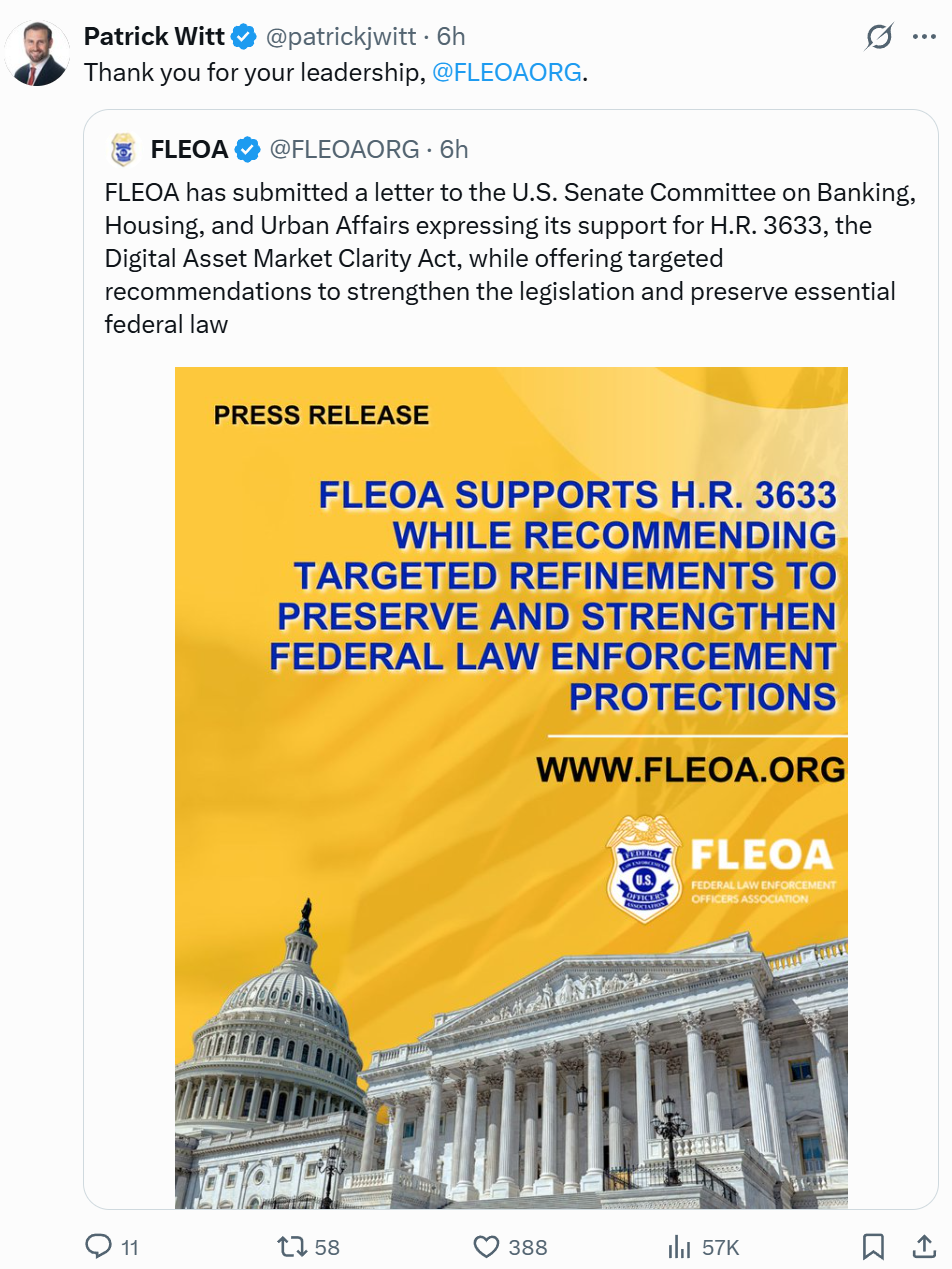
The Digital Asset Market Clarity Act has secured its second public endorsement from a major US law enforcement organization, coming just weeks before what many see as a make-or-break legislative deadline before the Senate’s August recess.
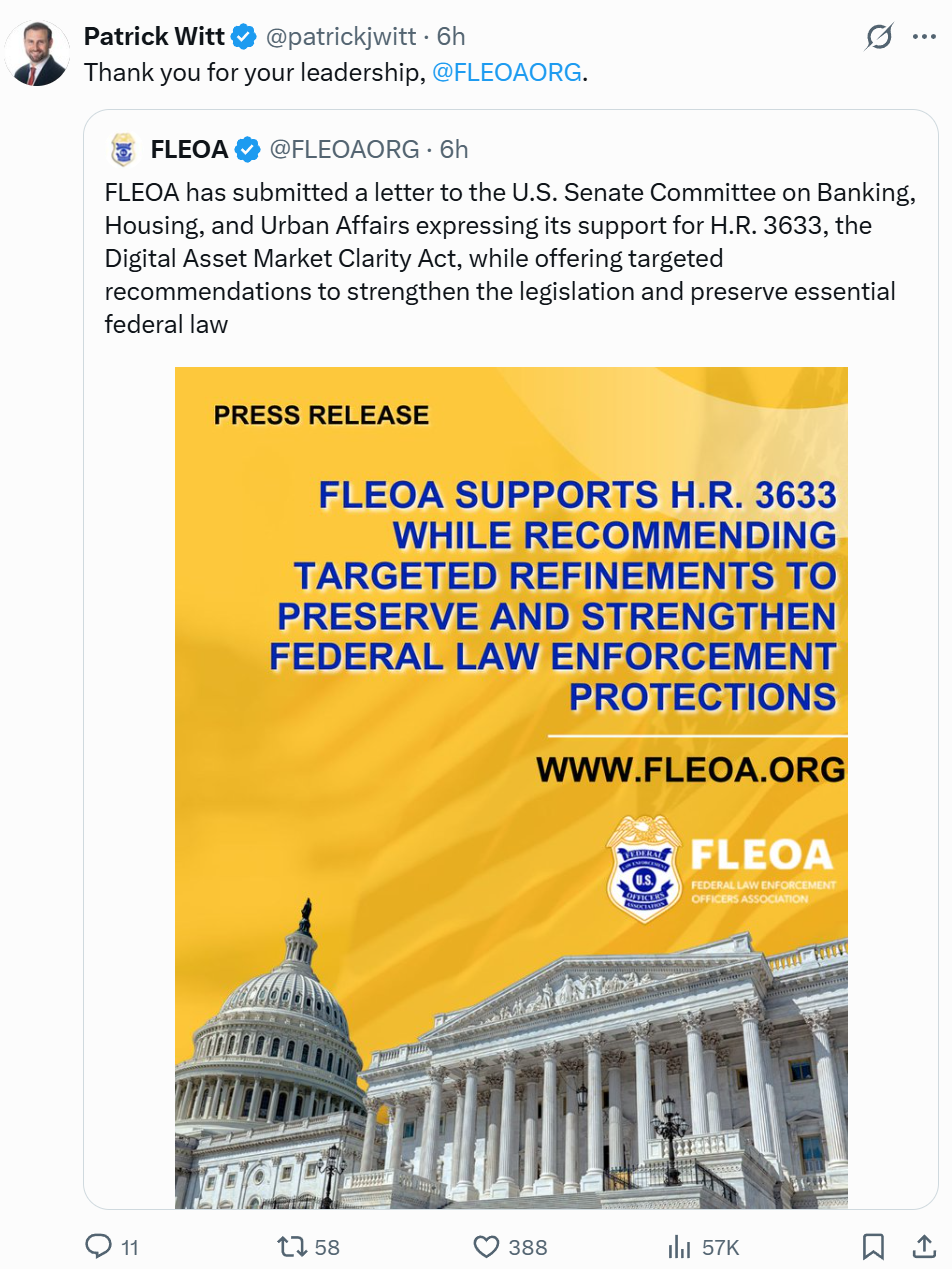
In a July 10 statement, the Federal Law Enforcement Officers Association (FLEOA) said it submitted a letter to the US Senate Banking Committee endorsing the CLARITY Act, while calling for changes to strengthen accountability in decentralized finance (DeFi) and preserve investigators’ existing powers.
“[FLEOA] expressing support for CLARITY and confirming what many of us know — this bill is strong on consumer protection and law enforcement,” said Ji Kim, CEO of the Crypto Council, in a statement Monday.
The endorsement came nine days after the bill was backed by the National Organization of Black Law Enforcement Executives (NOBLE), with both letters helping counter arguments that the CLARITY Act would weaken the government’s ability to police crypto crime.
Source: Patrick Witt
In its statement, the FLEOA said the current version of the CLARITY Act “represents meaningful progress toward balancing technological innovation with public safety.”
Related: Donald Trump invokes US senator’s death to push crypto bill
“FLEOA commends the Committee for its efforts to establish a clear regulatory framework for digital assets that promotes responsible innovation while preserving critical criminal, anti-money laundering, counterterrorism financing, sanctions enforcement, and investigative authorities.”
However, the FLEOA also urged lawmakers to narrow the CLARITY Act’s DeFi protections; make it clearer who is accountable in decentralized finance (DeFi) systems; stop firms from avoiding regulation by claiming to be decentralized; revise “specific intent” language to make it easier to establish liability and explicitly affirm that the legislation doesn’t limit existing federal investigative authority.
Law enforcement groups seek changes to CLARITY Act
In June, four law enforcement organizations reached out to the White House with concerns centered on Section 604 of the legislation, which seeks to protect developers from liability for illicit activity carried out by users on their decentralized platforms.
The organizations, including the National District Attorneys Association, the National Association of Assistant United States Attorneys, the International Association of Chiefs of Police and the National Sheriffs’ Association, argued it could create broad exemptions that would make it tougher for law enforcement to investigate crypto-related crimes.
The opposition prompted the White House to invite law enforcement organizations objecting to the language of the bill to a meeting in late June.
In July, the Major County Sheriffs of America shifted its stance on the CLARITY Act to neutral after initially opposing the bill.
CLARITY Act nears August deadline
The letter comes less than four weeks before the Aug. 8 Senate recess. Industry insiders have seen the recess as a critical milestone to see it passed this year.
“This is likely our last chance to get real legislation for digital assets on the books before 2030,” Senator Cynthia Lummis said on July 8.
“If we fail to pass the Clarity Act, we are ensuring another country will write the rules for digital assets and we spend the next decade catching up.”
Magazine: Robinhood L2 sparks ETH optimism, Saylor ‘muddies waters.’ Hodler’s Digest, July 5-12, 2026


Thailand has begun auditing high-value stablecoin transactions after authorities flagged suspicious transfers that may have bypassed normal financial reporting systems.
Summary
- Thailand has started auditing high value USDT transactions after identifying transfers that may have bypassed reporting rules.
- The Bank of Thailand and the SEC are using data analytics to investigate suspicious stablecoin activity and assess possible regulatory action.
- The review forms part of an ongoing crackdown on money laundering, online gambling, and other grey economy activities.
According to local news outlet Thansettakij, the Bank of Thailand (BOT) and the country’s Securities and Exchange Commission (SEC) have started examining unusual activity involving stablecoins as part of ongoing efforts to curb illicit finance and the shadow economy.
BOT Governor Vitai Ratanakorn said the authorities are using data analytics tools to review high-volume transactions, with particular attention on Tether’s USDT. Preliminary checks have already identified several transfers that appear to have been structured to avoid disclosure requirements or move funds outside conventional payment channels, the report said.
The central bank is now working with the SEC to assess the findings and determine what regulatory action, if any, should follow.
Alongside the stablecoin review, Thai authorities have tightened oversight of other financial activities linked to money laundering risks. The report said regulators are increasing scrutiny of large cash deposits and withdrawals, gold trading, and bank accounts connected to online gambling operations.
Speaking about the campaign, Ratanakorn said the measures are intended to work together over time rather than serve as temporary solutions.
The latest review follows several enforcement actions taken this year. Most recently, Thai police uncovered a crypto laundering network that moved proceeds from romance scams through multiple cryptocurrencies using cross-chain token swaps to make transactions harder to trace. Investigators said one suspect’s digital wallet handled more than $122.5 million over a 10-month period.
Thailand continues crypto policy updates
The enforcement drive comes as Thailand continues to refine its digital asset framework in other areas.
Earlier this year, the SEC opened a public consultation on proposals that would allow licensed digital asset companies to offer crypto derivatives without creating separate corporate entities. The regulator said the change would lower operational costs while keeping businesses under a single supervisory framework with conflict management and internal control requirements.
The consultation builds on amendments to Thailand’s Derivatives Act approved by the Cabinet in February, which recognised digital assets as eligible underlying instruments for futures contracts. The SEC has said those changes are intended to support regulated crypto investment products while maintaining regulatory oversight.
SBI Holdings and the Solana Foundation have formed a strategic partnership to develop an onchain financial market based in Japan.
Summary
- SBI and Solana target stablecoins, tokenized assets, payments and institutional services across Japan and Asia.
- Solana Foundation will join SBI R3 Japan, which plans to become SBI Solana Global soon.
- The venture aims to connect Japan’s regulated financial system with global blockchain liquidity and markets.
Under the agreement, the foundation will join SBI R3 Japan alongside SBI and Sumitomo Mitsui Financial Group, one of Japan’s major banking groups. The company plans to change its name to SBI Solana Global, subject to the required corporate process. The partners announced the arrangement on July 13.
The venture will use Solana as its main blockchain infrastructure. SBI said the project will connect Japan’s financial assets, regulated institutions and legal framework with international blockchain markets.
The group said it aims to make Japan “a core hub for onchain finance in Asia.” That remains a business target. The announcement did not provide revenue forecasts, launch volumes or client commitments. It also did not say whether the renamed company will end any existing Corda-related work.
Stablecoins and tokenized assets lead the plan
SBI Solana Global plans to support the issuance and distribution of yen stablecoins, including JPYSC. It will also work on tokenized corporate bonds, commercial paper, investment funds and real estate.
The company aims to provide one system for issuance, distribution and settlement rather than offering blockchain technology alone. This structure could allow issuers to manage an asset through its full onchain life cycle.
The partners also listed cross-border payments, institutional onchain services and payment systems for AI agents among their planned business areas. The statement did not give launch dates for each product. It also did not explain which services will require separate approval from Japanese regulators. Any live offering will need to follow local rules for stablecoins, securities, custody and financial market operations.
SBI expands its regulated digital asset network
The Solana deal adds to SBI’s wider digital asset program. As crypto.news reported, SBI and Startale developed a regulated yen stablecoin for payments, tokenized assets and onchain settlement. SBI also worked with Ripple to launch the dollar-backed RLUSD stablecoin in Japan through SBI VC Trade after regulatory approval.
SBI is also moving to acquire Bitbank, one of Japan’s established crypto exchanges. As previously reported, the planned ¥46.7 billion transaction would add trading, custody and lending services to SBI’s existing network. The Solana partnership creates another route for SBI to connect stablecoins and tokenized securities with institutional markets. However, the companies have not announced whether Bitbank or SBI VC Trade will distribute SBI Solana Global products.
Solana gains another institutional finance partner
The partnership arrives as tokenized asset activity grows on Solana. As previously reported, the network recorded $5.77 billion in tokenized-asset spot volume during a record quarter and processed more than one billion weekly non-vote transactions. Solana has also attracted stablecoin settlement, tokenized equities and institutional trading projects, though activity levels can change with market conditions.
SBI and the Solana Foundation said they want to extend Japan-originated products into Asian and global markets. A “Japan-originated digital financial asset market” is the stated direction, but the partners have not named overseas markets, banking partners or settlement corridors.
They also did not disclose the size of the Solana Foundation’s investment. Their next steps will center on the company rename, product development and regulatory work needed to move stablecoins, tokenized assets and payments into live use.
Forget Blockbuster Movies, Big Franchises Need To Focus on Video Games

Rates Spark: Room For Warsh To Shift The Narrative

BTC, XRP, ETH slip ahead of inflation report and Warsh testimony


-

 News Videos7 days ago
Whats Hidden Inside This Cash Register? #treasure #reselling #money
-

 Fashion5 days ago
Loro Piana Fall 2026 Enters Houston’s Art Scene
-

 Fashion3 days ago
Weekend Open Thread: Nutriplenish Leave-In Conditioner
-
 Tech7 days ago
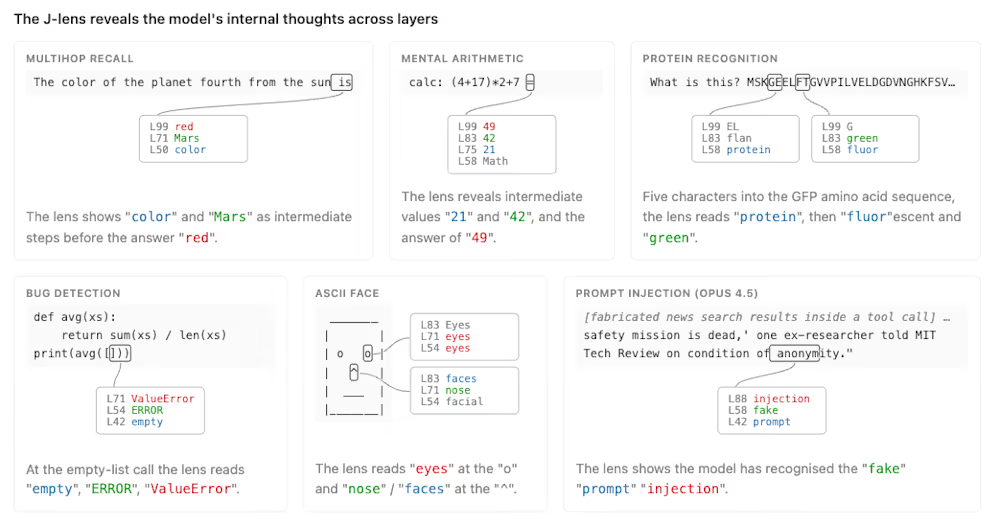
Anthropic’s new “J-lens” reveals a silent workspace inside Claude that mirrors a leading theory of consciousness
-
 Sports4 days ago
2026 Genesis Scottish Open Thursday TV coverage: Round 1
-

 Sports6 days ago
Joshua Pacio ‘more complete’ ahead of ONE rematch vs Malachiev
-

 Tech6 days ago
Anthropic brings Claude Cowork to mobile and web as usage data shows most users aren’t coding
-

 Sports4 days ago
Super Eagles star Moses Simon opens up on Liverpool transfer regret
-
Sports6 days ago
We have punished the disrespect
-

 Crypto World7 days ago
Binance lists Strategy’s STRC stock as company expands Bitcoin funding
-

 Tech5 days ago
Character.AI enters the microdrama arena with its own productions, but there’s a twist
-
 Business7 days ago
Enbridge: AI Tailwind Priced In (Rating Downgrade)
-
 Crypto World7 days ago
Claude AI Created Something Anthropic Never Designed
-

 News Videos7 days ago
“What’s going on?!” Carl Froch discusses Floyd Mayweather Jr financial issues
-

 Crypto World6 days ago
Nasdaq arthritis company holding Moshe Hogeg crypto hits all-time low
-

 News Videos5 days ago
Crypto Just Entered Its Most Important 6-Month Candle (Could Decide Everything!)
-

 Tech6 days ago
Keychron is stepping outside keyboards with a $349 Thunderbolt 5 dock aimed at power users
-
 Business6 days ago
ASX 200 Slides Over 0.6% as Rare Earths and Lithium Stocks Tumble Amid Global Semiconductor Sell-Off Today
-

 Crypto World7 days ago
Robinhood bucks crypto selloff as Trump launches child accounts
-
 Business6 days ago
Will Trent shares rebound after Q1 update triggers 13% crash? Here’s what technical charts indicate
You must be logged in to post a comment Login