A dozen states have sued to block Paramount Skydance’s takeover of Warner Bros. Discovery. The suit, led by California attorney general Rob Bonta, was filed in federal court in California’s Northern District, CNBC reports.
The timing is pointed. The Justice Department approved the roughly $110bn deal last month without conditions or divestitures, after an eight-month review.
The states are, in effect, doing what the federal government declined to do. It was flagged as a possibility last week, and now it has happened.
What the states are actually claiming
The complaint alleges a violation of the Clayton Act, which bars mergers likely to substantially lessen competition. It identifies three markets.
Advertisement
The 💜 of EU tech
The latest rumblings from the EU tech scene, a story from our wise ol’ founder Boris, and some questionable AI art. It’s free, every week, in your inbox. Sign up now!
Those are wide-release theatrical distribution, top-grossing or blockbuster theatrical distribution, and basic cable licensing. The states put the combined company at 27% of wide-release distribution, 30% of anticipated blockbusters, and 27% of the basic cable bundle.
Bonta framed the harm in consumer terms. The merger would mean higher prices, lower quality, and less content, he said, hurting cinemas, cable distributors, and audiences.
Advertisement
He also reached for a political register. America has no kings in government or in its economy, he said.
Paramount’s defence is not weak
The company called the suit fundamentally flawed and wrong on both the facts and the law. That is boilerplate, but the underlying argument is more serious than the rhetoric.
Paramount contends the market has been redrawn by Netflix, Amazon, and Apple, making a share of theatrical distribution a poor measure of power. On this reading, the states are litigating a business that is already dying.
There is precedent on its side, too. Disney absorbed most of Fox’s Hollywood assets in 2019 on much the same reasoning, and regulators let it.
Advertisement
The irony is that the challenger Paramount beat is the strongest exhibit for its case. Netflix had a deal for Warner’s studios and HBO Max, walked away rather than be outbid, and authorised a $25bn buyback instead.
Why this is a tech story
Strip away the studio lots and this is about the Ellisons. Paramount is chaired by David Ellison, but the bid was financed and guaranteed by his father Larry, the Oracle co-founder.
Larry Ellison is a Trump supporter and adviser who has sat on a White House board advising on artificial intelligence. Last year the administration granted him and Oracle a controlling stake in TikTok’s US operations.
Consider what that assembles. Oracle supplies infrastructure that a large share of American commerce and government runs on, and the same family would now control TikTok’s US arm, CBS News, CNN, two major streamers, and a wall of cable channels.
Advertisement
That concentration of distribution on top of infrastructure is the part that should interest anyone who covers technology. It is not a claim of wrongdoing, and Bonta’s complaint does not rest on it, but it is the reason this deal is bigger than Hollywood.
The process questions
The DOJ’s approval has itself become contested. The Wall Street Journal reported that senior officials fast-tracked clearance before career attorneys weighing a challenge could intervene, a characterisation the outgoing antitrust chief has denied.
Paramount’s chief legal officer is Makan Delrahim, who ran the DOJ’s antitrust division in Trump’s first term. He led the failed attempt to block AT&T’s takeover of Time Warner, the same assets now in play.
Trump has been publicly supportive of the Ellisons and has openly discussed CNN’s future. The president’s willingness to comment on a pending media transaction is a break with the convention that antitrust regulators operate at arm’s length.
Advertisement
The FCC has still not signed off, because Paramount holds licences for 28 local stations. Chairman Brendan Carr, a Trump appointee, has already called it a good deal that should get through quickly.
The money is on the clock
Delay is expensive, which is the point of suing. From October, Paramount owes Warner shareholders roughly $650m for every 90 days the deal slips.
Miss June next year and the bill is $7bn. The financing already involves $80bn of new debt and non-voting stakes from Saudi, Qatari, and Emirati sovereign funds, which makes the combined company a near-certain candidate for deep cuts.
All twelve attorneys general are Democrats, and Paramount will say so loudly. But the states cleared a federal review that imposed no conditions at all, and a court, not a press release, will now decide whether 27% of the blockbuster market is a problem.
Twenty-six anonymous Meta employees have sued the company in federal court in Oakland, California, alleging it used AI-powered software to disproportionately target workers with disabilities, medical leave histories, and pregnancies during mass layoffs.
The employees are seeking to halt the next round of layoffs, scheduled to begin on Jul 22, while they pursue arbitration.
The lawsuit, filed on July 13, said that this disadvantages people who missed work because of medical conditions or to care for family members, violating federal and state discrimination and retaliation laws.
Advertisement
However, Meta has refuted the claims, stating that they lack merit and that people, not AI, made the workforce decisions.
The lawsuit appears to be the first against a major company to challenge the alleged use of AI in conducting layoffs.
Read other articles we’ve written on Singapore’s job landscape here.
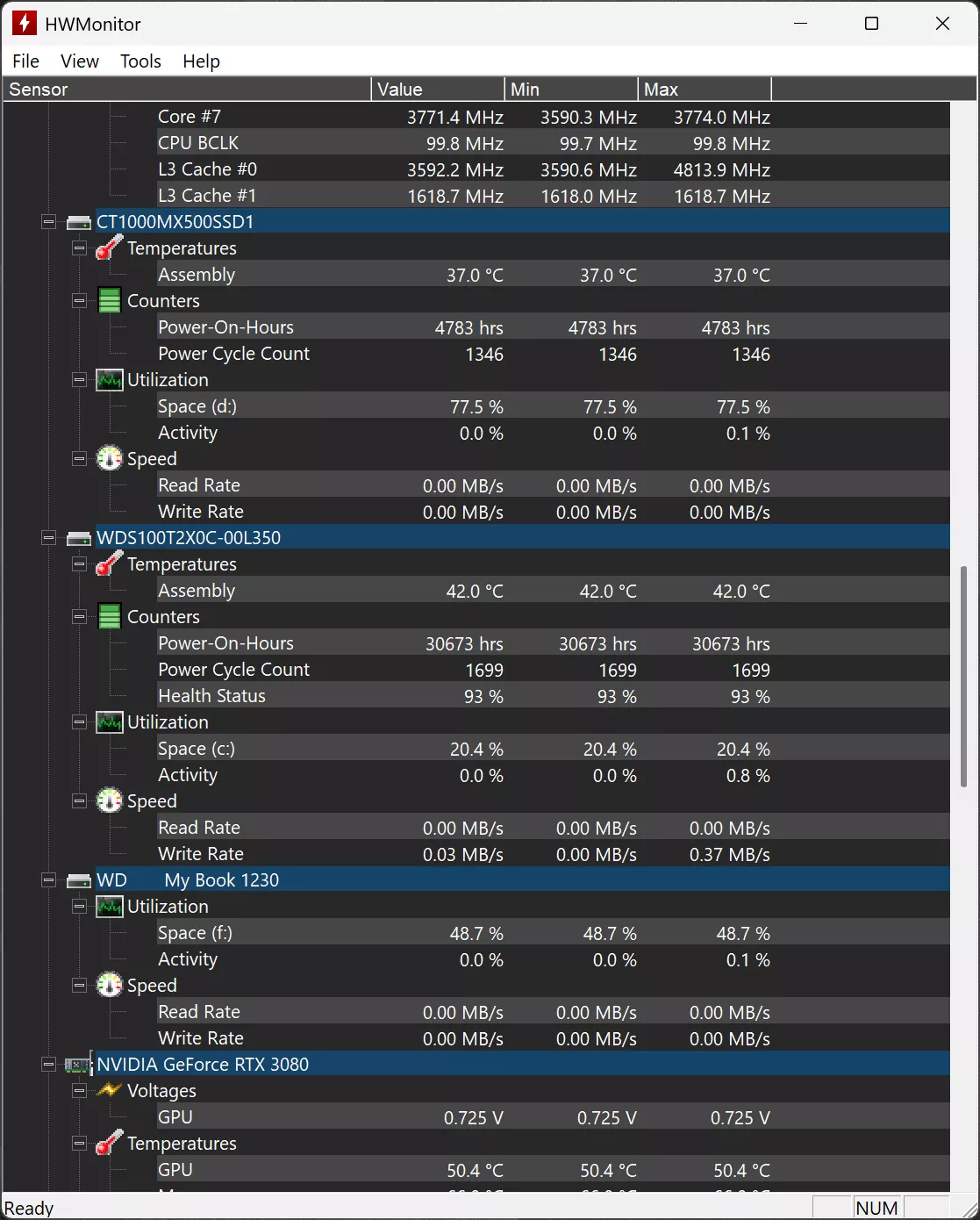
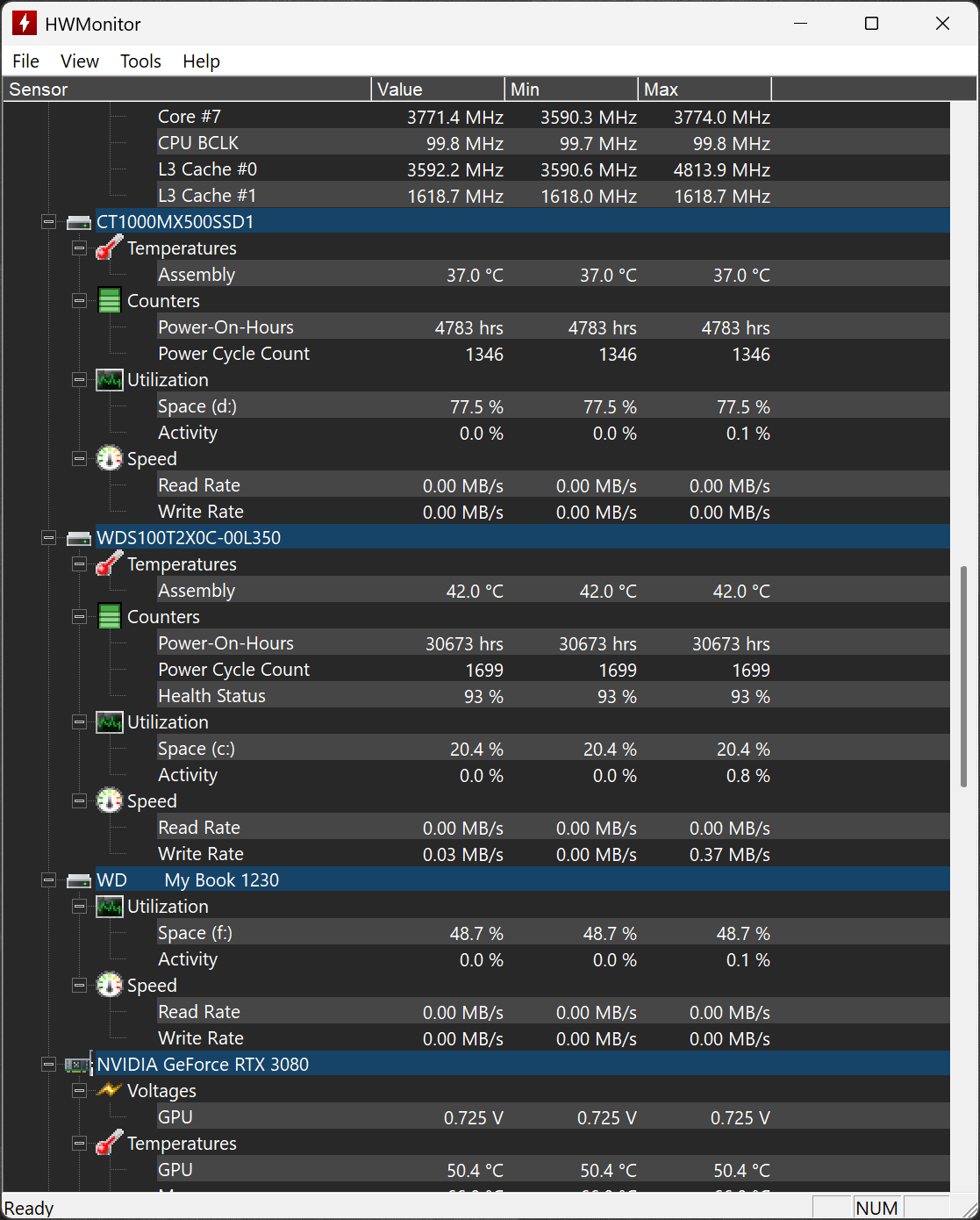
HWMonitor is a lightweight hardware monitoring program that reads your system’s main health sensors. It provides real-time data on voltages, temperatures, fan speeds, and power consumption for CPUs, GPUs, motherboards, storage devices, and more.
Whether you’re troubleshooting, stress testing, or just keeping an eye on system health, HWMonitor delivers clear and reliable metrics in a simple interface. Ideal for PC enthusiasts, overclockers, and tech professionals. The program handles the most common sensor chips, like ITE IT87 series, most Winbond ICs, and others. In addition, it can read modern CPUs on-die core thermal sensors, as well has hard drives temperature via S.M.A.R.T, and GPU temperature.
Why does HWMonitor show several different CPU temperatures?
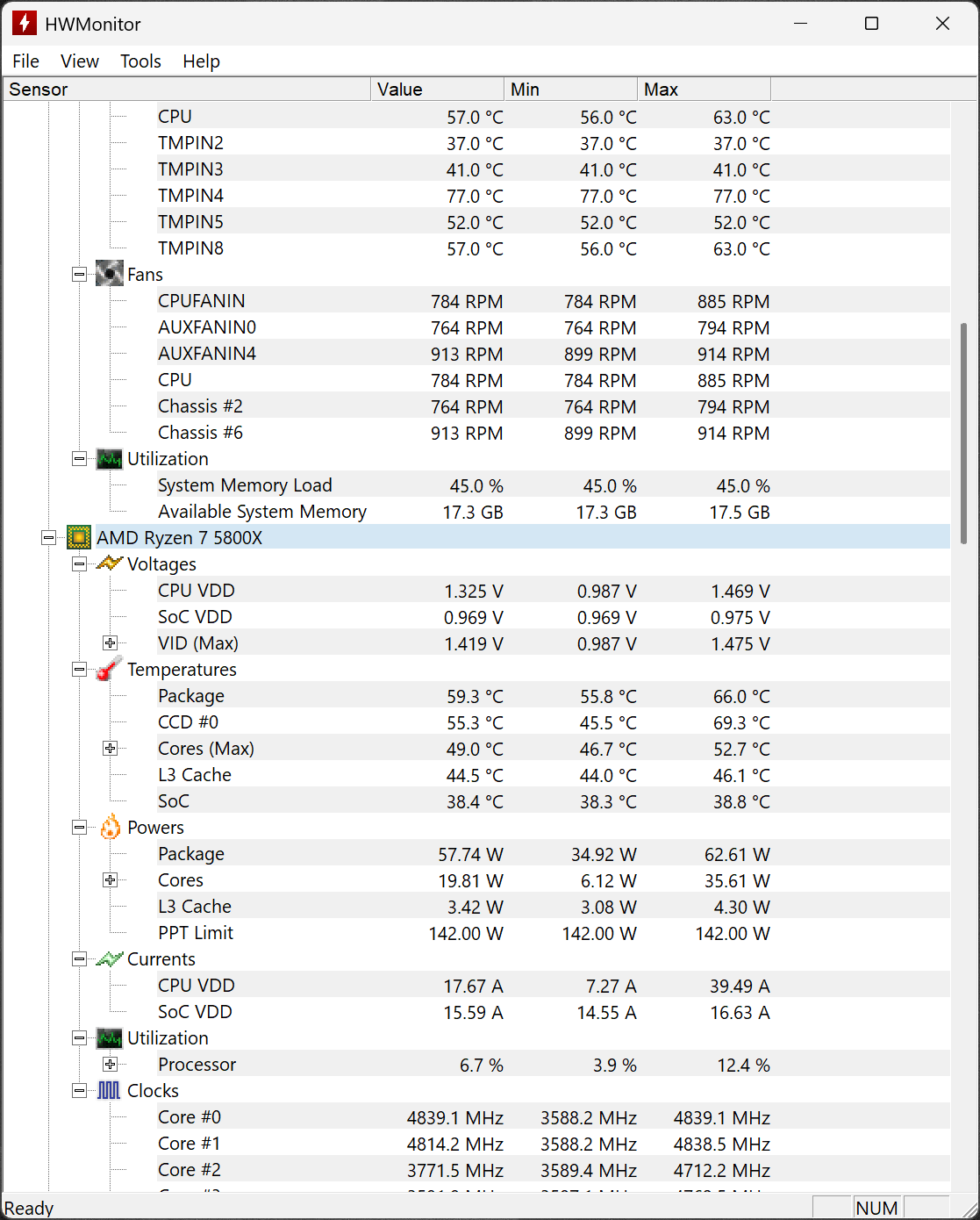
HWMonitor lists core temperatures individually (Core 0, Core 1, etc.) and also shows an overall CPU package temperature. The core readings are from thermal sensors inside each CPU core, while the package temperature represents the hottest part of the CPU die. When monitoring for thermal issues or stress testing, the highest of these values is the most important.
Is HWMonitor accurate for reporting GPU temperatures?
HWMonitor is generally accurate for GPU temperature readings, as it pulls data directly from the onboard sensors. However, some users report small differences when comparing with MSI Afterburner and other tools. If you need exact numbers for overclocking or thermal analysis, it’s worth comparing with a second tool.
Advertisement
Can HWMonitor show how much power my GPU is using?
Yes, HWMonitor can display GPU power usage if your graphics card supports it. It shows readings from the PCIe slot and the auxiliary power connectors (6-pin or 8-pin). By adding these values together, you can estimate the total power draw of your GPU. This can be helpful when deciding whether your power supply is sufficient or if you’re planning an upgrade.
What are TMPIN readings in HWMonitor?
TMPIN labels are temperature sensors on the motherboard, but their exact purpose can vary depending on the manufacturer. They might monitor the VRMs, CPU socket area, chipset, or other components. Because the naming isn’t standardized, the readings can be hard to interpret without checking your motherboard documentation.
Which CPU temperature should I focus on: package, cores, or motherboard?
The most important temperatures to monitor are the CPU package and the highest individual core temperatures. These reflect the real thermal state of your processor. Motherboard CPU readings are often lower and less precise. As long as your CPU stays below 90 – 95 °C under load, it’s within safe limits for most modern CPUs.
What’s New:
Hotspot temperature on NVIDIA RTX 50×0 GPUs.
Preliminary support of Lisuan 7G100 GPU.
Previous Release Notes:
Intel Arc G3 & G3 Extreme (Panther Lake).
Intel Core Ultra 5 250KF Plus (Arrow Lake Refresh).
AMD Ryzen 7 7700X3D (Raphael).
AMD Ryzen AI Max+ 495, 492, 488 (Gorgon Halo).
AMD Ryzen AI Max 490, 485 (Gorgon Halo).
AMD Ryzen AI Max PRO 495, 490, 485, 480 (Gorgon Halo).
AMD Ryzen 9 9950X3D2 (Granite Ridge).
AMD Ryzen 9 PRO 9965X3D, PRO 9945 (Granite Ridge).
1Password on Tuesday launched AI Spend and Consumption Management, a new capability embedded in its SaaS Manager platform that gives IT and finance teams a unified, real-time view of how their organizations consume and spend on AI services from vendors including Anthropic, Cursor, and OpenAI.
The move marks the latest strategic expansion for a company that built its reputation on password management for consumers and, over the past three years, has aggressively repositioned itself as a broader identity security and SaaS governance platform for enterprise buyers. With this release, 1Password is staking a claim in one of enterprise technology’s newest and most chaotic budget categories: the consumption-based cost of large language models.
“Executives want teams to build faster with AI, but that speed is creating a new kind of spending pressure,” Greg Henry, 1Password’s chief financial officer, said in an exclusive interview with VentureBeat. “Developers are consuming tokens at a pace that traditional budgets weren’t built to manage, and IT and finance teams are being asked to forecast and justify AI investments without a clear view of what’s actually driving costs.”
The product, now in public preview with broad availability planned for fall 2026, connects directly to vendor admin APIs to pull token-level consumption data daily. It normalizes that data across providers into a single dashboard and allows organizations to set vendor-level spend limits, configure threshold-based alerts via Slack and email, and break down usage by team, user, vendor, and model.
Advertisement
Why traditional software budgets can’t keep up with AI token pricing
The core challenge 1Password is targeting is structural. Traditional SaaS pricing operates on a per-seat, per-year model that is easy to budget and reconcile. AI pricing does not. Every API call to Claude, GPT-5.6, or a Cursor-powered coding assistant consumes tokens, and the cost of those tokens varies by model, by input versus output, and by the complexity of the task. A single engineering team running agentic workflows can burn through a prepaid token budget in weeks — and the finance team may not notice until the invoice arrives.
Henry drew a sharp analogy to a problem enterprises have already lived through once. “Consumption-based pricing isn’t new,” he said. “We saw it arrive with cloud infrastructure, and it took years to build the tools and disciplines to manage it. AI is the next version of that shift.”
That comparison resonates across the industry. When Amazon Web Services, Microsoft Azure, and Google Cloud popularized consumption-based pricing for compute and storage in the 2010s, enterprises initially lacked the tooling to monitor and optimize their cloud bills. That gap spawned an entire FinOps ecosystem — companies like CloudHealth, Spot.io, and Apptio built multi-billion-dollar businesses helping organizations understand what they were spending on cloud and why. Henry is explicitly betting that AI token spend will follow the same trajectory, and that organizations that fail to build visibility now will end up, as he put it, “paying far more than they needed to, for far longer than they should have.”
Advertisement
The scale of the coming wave lends credibility to that bet. Goldman Sachs has estimated that token consumption from AI agents alone will grow 24 times by 2030, a projection driven by the expectation that autonomous AI systems will increasingly execute multi-step workflows — booking travel, writing and deploying code, managing customer service interactions — that generate vastly more API calls than a human sitting at a chat interface.
How 1Password’s new dashboard tracks every token across Anthropic, Cursor, and OpenAI
The new capability extends 1Password SaaS Manager‘s existing foundation of application discovery, license management, and spend analytics. It is not a standalone product. Existing SaaS Manager customers can activate it by connecting their supported AI vendor API keys, at which point consumption data flows into a dedicated AI Consumption Management dashboard. Henry confirmed that there is no separate product or add-on fee: “AI Spend and Consumption Management is available to all 1Password SaaS Manager customers.”
The system provides four core functions. First, it aggregates token usage and spend across Anthropic, Cursor, and OpenAI into a single, normalized view — eliminating the need to toggle between three separate vendor dashboards with three different reporting formats. Second, it enables budget controls: organizations can set vendor-level spend limits, configure percentage-based thresholds, and receive automated alerts when prepaid balances approach depletion. Third, it disaggregates consumption by team, user, vendor, and model, allowing finance and IT to understand not just how much is being spent, but where and by whom. Fourth, it situates AI spend within the broader SaaS portfolio, helping organizations see how token costs relate to their total software investment.
Notably, the system captures consumption regardless of whether a human or an AI agent generated it. “Token consumption is captured at the API level regardless of whether a human or an agent is generating it,” Henry explained. “Organizations get the total consumption picture, including the spikes that agent loops can create, which can be some of the hardest usage to catch before it becomes a problem.”
Advertisement
That agent-level visibility matters because autonomous AI systems can generate runaway costs in ways that human users typically cannot. An agentic coding assistant stuck in a retry loop, for example, can consume thousands of dollars in tokens in minutes — with no human in the loop to notice. For now, the product alerts but does not enforce. When asked whether 1Password will eventually give organizations the ability to automatically cut off spending when a threshold is crossed, Henry said the company is “actively evaluating” automatic enforcement but emphasized that visibility must come first: “You can’t enforce what you can’t see.”
The choice of launch partners reveals where enterprise AI budgets are under the most pressure
The decision to start with Anthropic, Cursor, and OpenAI — rather than casting a wider net — reflects where enterprise AI adoption and budget strain are most concentrated right now. Henry said the choice was driven entirely by customer demand. “Anthropic, Cursor, and OpenAI are where we’re seeing the highest adoption, and where token consumption can move fast and get ahead of the teams responsible for managing it,” he said. The company plans to add additional vendors based on customer demand, API availability, and budget impact, though it has not committed to a specific timeline or vendor list.
The inclusion of Cursor alongside the two major foundation model providers is telling. Cursor, an AI-powered code editor that has rapidly gained traction among developers, represents a category of AI tool where consumption is particularly difficult to forecast. Unlike a chatbot interface where a user consciously types a prompt, Cursor integrates AI suggestions directly into the development workflow, generating token consumption continuously as developers write code. That ambient, always-on consumption pattern makes it especially prone to budget overruns.
Henry also addressed who inside an organization should actually own this problem — and acknowledged that the honest answer right now is no one. “When spend is fragmented across vendor dashboards and finance teams are reconciling it monthly, you’re always behind,” he said. “AI spend can’t be treated as a finance-only or IT-only problem.” He noted that the pricing differences between models have become significant enough that the choice of which AI model a team uses is now a meaningful financial decision, one that is pulling CFOs into conversations with IT, product, and engineering leaders “in ways they never had to before.”
Advertisement
Steve May, director of IT at ServiceTrade, a 1Password customer that has been using the capability, said it addressed a concrete planning gap. “Forecasting tools for AI consumption and spend was one of our biggest gaps in planning because we didn’t have a reliable way to track it,” May said. He added that the visibility has “prevented overages that would have cost far more to fix after the fact.”
Where 1Password fits in the fast-consolidating SaaS management market
1Password is not the only company racing to solve the AI cost management problem, but the competitive landscape is still fragmented and the category is far from mature.
Zylo, a SaaS management platform that Gartner has also recognized as a leader in the space, published its 2026 SaaS Management Index in January showing that AI-native application spend surged 393% year over year in organizations with more than 10,000 employees and 108% overall. Zylo’s data also revealed that ChatGPT has become the most expensed application in enterprise environments, highlighting how AI tools are entering organizations through employee credit cards and expense reports — outside formal procurement and governance workflows. Zylo has added its own token-level cost tracking for AI vendors including Anthropic, OpenAI, Cursor, and Perplexity.
Meanwhile, according to a comparison published by Coommit in May, Vendr — which focuses more on SaaS negotiation than discovery — tracks AI tools at the contract level but does not yet offer consumption-level visibility. And the FinOps Foundation reported in its 2026 State of FinOps survey that 98% of organizations now actively manage AI costs, up from just 31% in 2024. The broader SaaS management market is also consolidating rapidly. In May, Deel acquired Sastrify, a German SaaS management vendor, and began folding it into its HR platform — a signal that SaaS management capabilities are increasingly being absorbed into adjacent enterprise platforms rather than remaining standalone products.
Advertisement
1Password’s approach differs from pure-play SaaS management competitors in one important respect: it is building AI cost management on top of an identity security platform, not a FinOps or procurement tool. The company’s SaaS Manager product grew out of its 2025 acquisition of Trelica, a UK-based SaaS access management startup whose technology enabled the discovery of unsanctioned applications — so-called shadow IT. As BetaKit reported at the time of that deal, 1Password co-CEO Jeff Shiner described Trelica as “a pioneer in modern SaaS access management” and said the acquisition would accelerate 1Password’s Extended Access Management product roadmap by more than a year. CRN noted that Trelica brought more than 300 SaaS integrations to the platform. That identity-first lineage gives 1Password a natural advantage in connecting spend data to specific users and teams — a linkage that matters when the question shifts from “how much are we spending on AI?” to “who is spending it, and is it delivering value?”
From password manager to platform company: 1Password’s $6.8 billion bet on enterprise identity
The launch raises a question that Henry addressed head-on: whether a company that started as a consumer password manager can credibly compete in enterprise AI cost management.
“It doesn’t feel like a stretch to us. It feels like a natural progression,” he said. “For more than 20 years, 1Password has evolved alongside how our customers work. We started by protecting passwords. Then we helped organizations manage secrets, control access, and get visibility into the applications their teams rely on.”
The company’s evolution has been rapid. 1Password raised a $620 million Series C in January 2022 led by ICONIQ Growth, reaching a $6.8 billion valuation — at the time, the largest funding round ever raised by a Canadian company, according to Crunchbase. The round also attracted celebrity investors including Ryan Reynolds, Scarlett Johansson, and Robert Downey Jr. As of early 2025, BetaKit reported that 1Password had surpassed $250 million in annual recurring revenue, with B2B sales accounting for nearly three-quarters of total revenue and the company claiming to be cash-flow positive.
Advertisement
In May 2024, 1Password launched Extended Access Management, a platform designed to secure sign-ins across both managed and unmanaged applications and devices. That same year, it acquired Kolide for device trust and, in early 2025, Trelica for SaaS discovery. In June 2026, Gartner named 1Password a Leader in its Magic Quadrant for SaaS Management Platforms. According to 1Password’s own blog post on the recognition, its SaaS Manager now supports over 400 integrations and provides visibility into a library of more than 40,000 pre-populated application profiles. Each step has moved the company further from its consumer roots and deeper into enterprise infrastructure. The AI Spend and Consumption Management launch extends that trajectory into financial operations territory — a domain where 1Password will compete not only with SaaS management vendors but potentially with dedicated FinOps platforms and the AI vendors’ own billing dashboards.
Why high AI token consumption doesn’t always mean wasted money
Perhaps the most revealing part of Henry’s commentary concerns what organizations should actually do with the consumption data once they have it. He pushed back forcefully against the assumption that high token consumption automatically signals waste.
“A team burning through tokens may be building something genuinely valuable,” he said. “A lower-usage project might not be moving the business forward at all. What matters is whether that consumption is producing enough business value to justify the spend.”
Henry drew a distinction between personal productivity — “having a bot summarize your meeting or draft a quick email” — and genuine business outcomes. “What organizations need to see is where consumption is actually driving revenue, efficiency, or something that moves the needle.”
Advertisement
That framing positions AI Spend and Consumption Management not just as a cost-cutting tool but as a decision-support system for AI investment allocation. If a CFO can see that one engineering team’s heavy Claude usage is powering a product feature that drives revenue, while another team’s OpenAI spend is funding low-value internal automation, the organization can reallocate budget accordingly rather than imposing across-the-board cuts.
“When costs rise faster than expected, the instinct is to cut,” Henry said. “But most organizations can’t yet tell which teams, models, or tools are responsible for the increase, so they end up cutting across the board rather than directing investment toward the AI projects that are actually delivering business value. Blunt cuts on a technology you’re counting on for competitive advantage is not a management strategy, it’s a missed opportunity.”
The next enterprise budget crisis is already here — and it’s priced per token
The product’s current scope — three vendor integrations, alerting but not enforcement — is clearly a starting point. Henry signaled that automatic spend limits are on the roadmap and that additional vendor integrations will follow based on customer demand.
But the broader trajectory he described suggests 1Password sees this launch as a wedge into a much larger opportunity. “As traditional SaaS products add AI capabilities, their pricing models are going to follow,” he said. “Organizations that build visibility and management discipline around consumption now are going to be in a much better position when that happens across the rest of their software portfolio.”
Advertisement
If Henry is right, the chaos currently confined to AI token budgets is not a temporary growing pain but a preview of how all enterprise software will eventually be priced. A decade ago, companies scrambled to understand their cloud bills. Today, they are scrambling to understand their AI bills. The question is whether the organizations building the dashboards this time around can get ahead of the curve — or whether, as Henry warned, they will end up where so many companies ended up with cloud, realizing too late how much they were overpaying, and for how long.
AI Spend and Consumption Management is available now in public preview for 1Password SaaS Manager customers. Broad availability is planned for fall 2026.
Bit.Bio’s Dr Emma Pepperell discusses her career in the biotechnology sector, the advancements occurring around her and the importance of bringing a touch of humanity to an often clinical industry.
Interested in veterinary medicine and science from a young age, the now Dr Emma Pepperell focused on the subjects in her early education, before committing to a BSc in Pharmacology at Newcastle University, where she graduated with first class honours.
It was during her undergraduate degree that she undertook a placement at pharmaceutical GlaxoSmithKline, where for a year she spent her time working with organ models of the brain and gut, to better understand how one might impact the other.
Pepperell said, “Even then, 20 odd years ago, there was the idea that what’s going on in the brain could affect things like Crohn’s disease and conditions like this that we know affect a lot of people.
Advertisement
“So that sort of sparked my interest in drug development and the whole sort of pharmaceutical industry and the application of science and research products for health.”
Inspired to continue her education in this field, Pepperell enrolled in the University of Oxford, where she soon graduated with a DPhil in Clinical Laboratory Sciences. As so often happens, her Doctorate focused on an area of learning that would eventually form the basis of her career, which in this case was the application of stem cells to therapies.
She said, “I was looking at cells from umbilical cord blood to see if they could repopulate the bone marrow for childhood leukemia, so it was very translational. And then I went into the commercial side of life sciences.
“The opportunity to join Bit.Bio came up a couple of years ago and it seemed like a natural, sort of complete circle to go back to the stem cell field and really think about how could I apply everything I’d learned about life science research tools and drug development and to think about how we can really bring these human cell products to have an impact, help develop drugs and understand disease better.”
Advertisement
For others looking to move into the STEM space or even careers outside of it, she finds it crucial that no matter what decisions you make, that you show a genuine interest in what you are doing. If you have a natural curiosity about something, she finds you will always be far more motivated and invested in developing yourself to fit the dream.
“I would say for young students starting their career, try and try lots of work experience and find what works for you. I went to a veterinary practice, I went to a patent attorneys and learned about patenting screwdrivers. I tried all sorts of different things to see, okay, what is it that’s actually going to really interest me, so I can find something that’s going to be highly motivating.”
Keeping healthcare humane
Having contributed to the work at Bit.Bio for two years, Pepperell was recently named the organisation’s CEO.
She said, “Fundamentally, what we do is we make human cells. So you can take an adult skin cell or blood cell and reprogramme it back to what’s called a pluripotent state and that means it can become any cell in the body.
Advertisement
“So we can then put in codes that essentially direct the cell to become a neuron, a brain cell, a liver cell, a heart cell, any kind of cell you like and then you can use these cells to really start to understand how disease works.
“You can use them to identify new drug targets. You can use them to study what happens if a new drug that’s being developed is applied to them to see if that drug is toxic or what the metabolic profile is like. We make cells that essentially replicate human biology in quite a controlled way to really enable the study of health and disease and drug interactions.”
An element of her industry that greatly appeals to her is largely in how it manages the challenges that arise. Pepperell explained how, in drug development, animal testing is an unfortunate, albeit often necessary and even crucial component of the drug development process.
As more organisations and institutions look to methodologies that limit the use of animal models in creating results for human biology, Pepperell said, “You know we use animal models because it represents a system, but nobody really wants to use them where they can avoid it.
Advertisement
“So, there is a big challenge in the industry at the moment for building non-animal models that people can trust will deliver safe drugs to the market, whilst acknowledging that all of the knowledge and evidence that has been built up for almost the entirety of the pharmaceutical industry’s history has been in animal models.”
She noted her pride at being part of an organisation that works to support scientists in the adoption and development of new approaches, required by the FDA and other bodies, that may ultimately phase out the use of animals wherever possible in drug development.
Keeping such a clinical industry humane, is for Pepperell, particularly important, as her mission and that of Bit.Bio’s is to leave society better off than they found it. Knowledge sharing is one such way she believes STEM professionals can contribute to a fairer and more thoughtful world.
She said, “You are only as successful as the teams who are around you because no one can achieve anything on their own.”
Advertisement
An ideal example, she finds, is Bit.Bio’s recently organised Human Cell Forum, where the company brought together 200 scientists all working on human models designed for better drug development. She found that the community feel it created, particularly amongst professionals that are often under immense pressure to secure funding and resources, in some ways alleviated silos and lead to a positive outcome in the research space.
She said, “What we start to see in these events that we’ve put together is that scientists are really coming together to share how they’re solving problems. One example is ALS, which is a neurodegenerative disease.
“There were three or four companies who are all trying to develop a similar model and they all brought their learnings to this event and we’re very openly sharing with each other how they’ve optimised the model and that’s quite rare to see.”
Ultimately, she finds it often boils down to who you have in your corner, having faith in your own skills and striving each day to do better than you did the day before, not just for yourself, but for the colleagues, patients and test animals impacted by your work.
Advertisement
Don’t miss out on the knowledge you need to succeed. Sign up for the Daily Brief, Silicon Republic’s digest of need-to-know sci-tech news.
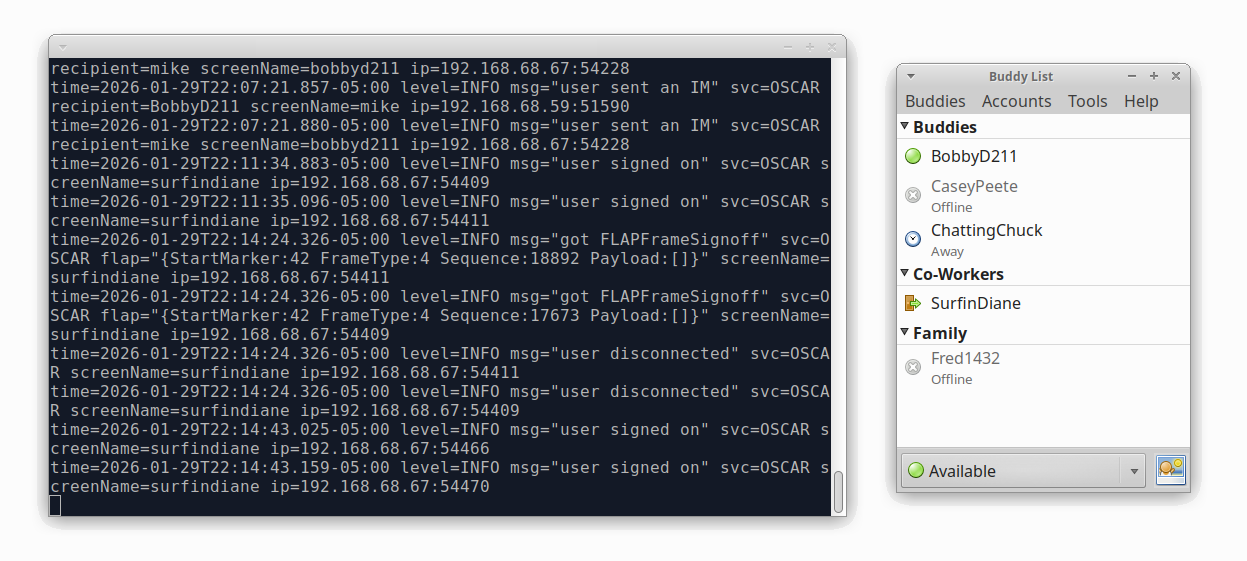
Do you remember AIM? It may suprize you to hear that AOL’s instant messanger was actually supported all the way up to 2017– two years after Discord launched. Unlike Discord, AIM is a protocol, not a platform. Everything on your favourite Discord server is at the mercy of the corporate masters of said server; you can’t just spool up your own. Not so for AIM, as [Veronica] explains, both on her blog and in a YouTube video that we’ve embedded below.
The key is the fact that the AIM protocol isn’t locked into AOL’s now-defunct servers; it was reverse engineered in its prime for open-source messengers like Pidgin. You can host your own server, too, using the OpenOscarServer by [mk6i]. Even better, it’s not just AIM, but ICQ! In the sort of irony you only get in real life, the OpenOscar community does all its support on a Discord server. But then, they couldn’t hardly do it over AIM or ICQ these days.
For those of you who were too old or too young to get sucked into the 90s instant messenger craze, these protocols don’t just create chat rooms, that would be the even older Internet Relay Chat protocol, but usually worked more like SMS text messages. You have a contact list, and you send messages to your contacts via a server that acts as a hub. Once upon a time, that server was AOL’s, but now thanks to the OpenOscar project, it can be anybody’s computer. Of course, like texting, you can rope all of your contacts into one big group chat, and the protocol does support images and VOIP. (Which is starting to sound a lot like Discord.)
If you’re tired of your friend-group being at the mercy of American tech companies, [Veronica]’s blog post serves as a good guide to get you started running OpenOscarServer on a Linux system; she used a virtual private server but figures a Raspberry Pi ought to have enough grunt if you don’t have a huge number of people signed up.
Advertisement
For completeness, we should mention that while AOL pulled the plug on AIM nearly a decade back, ICQ, the other protocol supported by OpenOscarServer, lasted straight through until 2024.
Thanks to Keith Olson for the tip! Our tipsline is based on decentralized “electronic mail” technology that anyone can access.
Even though its price has climbed steadily in the last decade, the Ford Mustang GT is still one of the more exciting performance cars on the market. There are lots of reasons buyers might be drawn to it, and its 5.0-liter V8 engine is surely one of the big ones. A naturally aspirated V8 once represented the backbone of the American performance car scene, and with Chevy axing the Camaro and Dodge’s V8 models all currently on hiatus, the Mustang has become the only (relatively) affordable game in town.
However, part of the reason V8s are otherwise so few and far between is that manufacturers have increasingly shifted to smaller-displacement engines, including turbocharged V6s. And in some cases, these V6s can actually outgun the 480-hp V8 Mustang GT in straight-line performance.
Advertisement
The Mustang’s acceleration will vary depending on which transmission it has, but the average figures for the GT show a 0-60 time in the low to mid four-second range and a quarter-mile run in the low to mid 12-second range. Those are stout numbers, and for many buyers, the Mustang GT’s V8 soundtrack is non-negotiable — but if you compare the Mustang to modern V6-powered performance cars, you’ll find several that can edge it out in straight-line acceleration.
Advertisement
Cadillac CT4-V Blackwing
With General Motors discontinuing the Chevrolet Camaro, those looking for a front-engine, rear-drive GM performance car now have to move up to Cadillac’s Blackwing-branded sport sedans. When it comes to V6-powered performance sedans, the Cadillac CT4-V Blackwing is one of the hottest around, with its twin-turbocharged 3.6-liter engine rated at 472 hp and 445 lb-ft of torque.
The CT4 has slightly less horsepower than the Mustang GT, but at the track it can hit 60 mph in four seconds flat and run the quarter mile in 12.4 seconds, with the automatic being slightly quicker than the manual version. While the acceleration battle between the two cars is close, the Mustang GT gets the win in the value department with its sub $50,000 starting MSRP coming in substantially cheaper than the CT4-V Blackwing’s mid $60,000s base price. This isn’t surprising given the Blackwing’s more luxurious persona and branding.
The Cadillac may not have the V8 engine that so many associate with American performance cars, but the numbers show the CT4-V Blackwing is more than capable of running with larger-displacement rivals. Better yet, our review of the manual transmission-equipped CT4-V Blackwing also showed the car to have an engagement and fun factor that goes beyond its performance figures.
Advertisement
Nissan Z Nismo
As a two-door rear-drive sports car from a mainstream brand with a starting price in the mid-$40,000s, the Nissan Z is actually one of the Mustang’s most direct competitors in this group. And unlike other cars, which have downsized their engines in the modern era, a V6 engine has been a key part of the Nissan Z formula going all the way back to the mid-1980s. Today, all versions of the Z are powered by 3.0-liter twin-turbocharged V6 engine, but it’s the high-performance Nismo variant that makes the most of that V6 powerplant.
In its Nismo trim, the Z makes 420 hp and 384 lb-ft of torque — and when mated to an automatic transmission, testing has shown that combo is good for a 0-60 run of 3.9 seconds and a quarter-mile time of 12.4 seconds. These are impressive figures given the Z’s horsepower figures are actually fairly modest by mid-2020s performance car standards.
Advertisement
While we had some mixed feelings about its price, our review of the Nissan Z Nismo, showed that this machine has a lot to offer for fans of modern Japanese sports cars. If the Nismo Z’s price seems too high, the cheaper, non-Nismo version isn’t far off performance-wise, with low four-second 0-60 times and high 12-second quarter-mile ETs that put it pretty close to the Mustang GT.
Advertisement
Audi S5 and RS5
Comparing the Mustang GT to the Audi S5 shows just how varied the modern performance car can be. The cars are of a comparable weight and size, but that’s about where their similarities end. The Mustang GT has a naturally aspirated V8 and rear-wheel drive, while the S5 has a twin-turbocharged V6 and all-wheel drive — and a price that starts in the mid $60,000s.
Rated at 362 hp, the S5’s 3.0-liter twin-turbocharged V6 engine is down by over 100 hp compared to the Mustang, but it claws back an acceleration advantage at the track thanks to that aforementioned all-wheel-drive system. Testing has shown the S5 to hit 60 mph in just 3.9 seconds, with the quarter-mile coming in 12.5 seconds.
Our review of the S5 Sportback showed the car to be a competent and quick luxury machine, but if that’s not enough for you, there’s always the new Audi RS5. The RS5 also has a twin-turbo V6 engine, but adds a plug-in hybrid electric boost for a total of 630 hp. This makes the car good for 0-60 times in the low three-second range and a quarter-mile time in the mid 11s. Just know that you can purchase two new Mustang GTs for the Audi’s $100,000-plus starting price.
Advertisement
Nissan GT-R R35
You could say the R35 Nissan GT-R is an unfair addition to this list. For starters, you can’t actually buy a new one anymore, as Nissan ended production of the GT-R in 2025. And, going back to its debut in the late 2000s, the GT-R always played in a completely different segment than the Mustang GT, with a much higher price, and its sights set on high-end European supercars.
However, as an enduring symbol of the V6 engine’s performance potential, the GT-R is more than deserving. Earlier iterations of the GT-R used the legendary RB26 inline-six, but the R35’s switch to a new 3.8-liter twin-turbocharged engine showed just how capable a V6 could be. The R35 GT-R was in production for a long time, with a lot of updates along the way — and the Nismo variants of the car were rated at an impressive 600 hp and 481 lb-ft of torque.
Advertisement
At the track, the GT-R was capable of hitting 60 mph in 2.9 seconds and running the quarter-mile in the low 11s. Price aside, those are incredible numbers for a V6-powered car that was originally developed back in the 2000s. By the time Nissan pulled the plug on the R35, the GT-R was showing its age in many ways, but its raw performance figures still hold up against today’s best, no matter how many cylinders they may be packing.
Advertisement
Porsche Macan GTS
Looking back through the Porsche brand’s long history of building performance cars, the V6 probably isn’t the first engine type that comes to mind, but it’s what powers — or powered – the higher-end versions of the brand’s popular Macan crossover SUV in recent years. With V6 power, the Macan is one of the more potent and practical performance machines on the market.
The high-performance Macan GTS variant gets its power from a 2.9-liter twin-turbo V6 that makes 434 hp and 405 lb-ft of torque, sending that power to all four wheels. In performance testing, the gasoline Macan GTS delivers, hitting 60 mph in 3.5 seconds and running the quarter-mile in just 12.1 seconds. On top of that, it also has handling that blurs the lines between crossover SUV and serious sports car.
In the real world, are there any buyers seriously cross-shopping any trim of the Porsche Macan against any trim of the Ford Mustang? Most likely not, but the fact that this V6-powered crossover SUV can show the V8 Mustang its taillights at the drag strip shows just how much the performance car has evolved in the modern era. Speaking of evolution, the gasoline-powered Macan is now on its way out, to be replaced by the new all-electric Porsche Macan, which has some big shoes to fill.
UN Secretary General calls for a global ban on autonomous “killer robots”
Guterres argues that delegating life-or-death decisions to machines is “morally repugnant”
Governments should take a stance now – not wait for something catastrophic to happen
UN Secretary General António Guterres has called for lethal autonomous weapons, which he describes as ‘killer robots’ to be prohibited under international law following recent discussions at the first Global Dialogue on Artificial Intelligence Governance in Geneva.
Guterres’ demand to ban these weapons focuses on those capable of identifying, selecting and attacking targets without human oversight, which leaves artificial intelligence and other computer systems in charge of a life-or-death decision.
He ultimately argued that certain decisions must remain exclusively human, and the decision to take a life is well into the boundary of requiring human oversight. Transferring the decision-making to killer robots would be “morally repugnant” and “politically unacceptable,” he argued.
Latest Videos From
AI requires global regulation as military AI poses major threats
Key to the Secretary General’s argument is that he urges governments to take action and ban such robots now, rather than waiting for an autonomous weapon to cause a major incident before rethinking their strategies.
Advertisement
“Let us not wait for atrocity to act,” Guterres said. “Some decisions must remain forever human – none more than taking a human life.”
The issue is becoming more urgent now that AI models and advanced chips are already being used within military intelligence, targeting and other battlefield systems.
More broadly, Guterres’ thoughts align with those of Anthropic, which recently had a dispute with the Pentagon after seeking guarantees that its models would not be used for autonomous weapons or surveillance.
Advertisement
Sign up to the TechRadar Pro newsletter to get all the top news, opinion, features and guidance your business needs to succeed!
While the Pentagon had rejected those limitations, arguing that it should be able to use Anthropic’s models for any lawful purpose, the case highlights how private companies are becoming increasingly intertwined with digital warfare.
Reporting by the Wall Street Journal cited a similar view by Pope Leo XIV, who warns that AI-controlled weapons could promote an “anti-human” view of warfare. He warned that the autonomy could reduce some dangers and distance political leaders from the human consequences of conflict.
Advertisement
There’s a need to balance the pros and cons of AI
However, artificial intelligence does promise several benefits to modern warfare, particularly in its ability to process huge amounts of information extremely quickly. With modern compute, militaries can respond to threats at lightning speed, improve their accuracy and precision, reduce soldier risk and potentially reduce civilian casualties, too.
Critics also question whether human oversight of AI systems is at all meaningful if the person in charge only has seconds to act on AI-generated information in the first place.
It’s also yet to be determined which party or group of parties should be held accountable for any incidents or mishaps – human operators, commanders, hardware manufacturers and software developers are just some of the parties up for judgment.
Advertisement
“We may be the last generation able to set the terms on which humanity and machines coexist,” Guterres warned separately in an X post, warning that AI must be governed, trusted and fair.
“It sounds like science fiction, but it’s a real possibility, and it could change the world in ways that we don’t understand yet, and it could change the power dynamics of our planet in ways that require our attention,” Independent International Scientific Panel on AI Co-Chair Yoshua Bengio added.
OpenAI’s second official statement concerning Apple’s trade secret lawsuit says nothing and is so generic that only an AI could have generated a statement so bland and empty.
Apple has alleged that OpenAI systematically recruited Apple employees that could help funnel secret information from within the company. Two individuals were specifically named , Tang Yew Tan, and Chang Liu.
On Tuesday, Bloomberg shared OpenAI’s latest statement on the matter. It’s a little more official versus the first that was provided by OpenAI’s spokesperson Drew Pusateri previously, but also much safer.
Originally, Pusateri shared that OpenAI has “no interest in other companies’ trade secrets.” The new statement goes like this:
Advertisement
“While we take these allegations seriously, we’re not aware of any evidence that this complaint has merit. We believe in fair competition and allowing people the freedom to work wherever they choose, and we’re focused on building innovative technology that empowers people everywhere.”
While legally less sound, the first statement actually had something to say on the matter. The new one feels like it was churned out by ChatGPT itself, with no regard for the actual accusations being made.
The start of a big lawsuit
This isn’t some tiny case regarding a rogue employee, it’s Apple’s attempt to curb OpenAI’s hardware development plans that were set to debut a product in 2027. Ultimately, OpenAI wanted to build an iPhone killer, whether or not that will be a smartphone remains in question.
iPhone is becoming an AI powerhouse with or without OpenAI
OpenAI has poached something like 400 employees from Apple over the years, mostly through exorbitant pay packages. While this kind of churn is normal in the tech industry, the alleged backdoor practices are not.
Advertisement
The lawsuit suggests that OpenAI’s new Chief Hardware Officer Tan had been gathering confidential information about Apple’s supply chain. He also allegedly told employees leaving Apple to take unreleased components with them to OpenAI interviews.
One such individual was Chang Liu, who failed to return Apple-issued hardware, which was used to access confidential information.
If this is true, it goes beyond trade theft. It could also be seen as a conspiracy to obtain information and talent from a competitor, which could create problems for OpenAI, its executives, and others at the company.
What is particularly odd about OpenAI’s latest statement is its insistence that there isn’t evidence. It could have claimed it has no knowledge of trade theft, or that Apple’s claims didn’t have merit, but his specific wording seems odd given Apple’s insistence that there is evidence.
Advertisement
The case has only just been brought forward, so the back and forth will likely take years. Reports suggest that OpenAI is confident that the accusations and lawsuit won’t stop them from pursuing their existing product release timeline.
At least, they better hope it doesn’t, as OpenAI is running out of time to find a massive cash influx. The company could run out of cash by 2028 if something drastic doesn’t happen.
Samsung’s new SSD 990 launched today, offering solid PCIe 4.0 performance, improved efficiency over the Evo lineup, and speeds exceeding 7 GB/s. Early reviews agree that the launch price leaves it in an awkward spot however, with the faster 990 Pro and and even some PCIe 5.0 SSDs often costing only slightly more.
PM frames sweeping new regulations as the equivalent of labour movement touchstones like winning a minimum wage
Australian Prime Minister Anthony Albanese has delivered a landmark speech outlining the nation’s AI policy, which will require datacenter builders to contribute more energy than they consume and mean AI companies must reach agreements with local artists and media before using their content.
“Let me make this crystal clear – not everything produced in Australia is up for grabs,” Albanese said, a reference to both content and the nation’s energy and water resources.
Advertisement
The PM said Australia will therefore legislate to require builders of large new datacenters to become net generators of energy, rather than consumers, by funding electricity generation projects to meet their needs and pay for associated work to bolster energy grids.
The policy also requires datacenter operators to pay for water infrastructure and make minimal environmental impacts.
The PM expects Australia’s states and territories to sign up to his plan so the nation can offer expedited approval processes for datacenter builds and consistent operating standards that apply across the country.
Nationwide laws, Albanese argued, will make Australia a more attractive destination for inbound investment by making it easier for AI companies to plan new datacenters – and perhaps offset other elements of the policy that are more onerous than laws in other countries.
Advertisement
“Australian writers, musicians, artists and journalists, must retain ownership and control of their work,” Albanese said. “Anything less is theft.”
He said Australia’s approach “will ensure Australian writers, artists and journalists retain ownership over their work, meaning no company should use Australian creative works to train AI without the artist’s control.”
The PM added his view that no country has given artists and rights-holders sufficient control of how AI companies use their works. Albanese didn’t say how he plans to enforce that control, but his speech framed the effort to do so as getting ahead of AI before big players get too much power.
Albanese asked his audience to imagine how much better off Australia would be if it had regulated social media a decade before the 2024 introduction of a ban on children aged under 16 accessing such services. He also compared the AI plan to past landmark reforms won by the global labor movement, such as winning a minimum wage and fixed working week.
Advertisement
The PM also said that without regulations of this sort, Australia will effectively outsource its security to big tech companies.
“If we are always dependent on someone else, somewhere else, we will be vulnerable,” he said. The AI policy aims to instead make Australia stronger.
Albanese argued that Australians should not see AI as a threat to jobs, but that strong policy can make the technology a means to create new ones – beyond employment created by a short-term datacenter construction boom.
The PM wrapped his speech by suggesting AI can stand for “Australia’s Interest” as well as “artificial intelligence.” ®




























































You must be logged in to post a comment Login