

Crypto World
BitMine Revenue Jumps 22x Even as It Posts $9 Billion Net Loss


BitMine Immersion Technologies posted revenue of $46.5 million in the three months ended May 31, a 22x jump from a year earlier, even as a $9.1 billion nine-month net loss dominated its latest filing.
The loss stems almost entirely from a non-cash markdown on the company’s Ethereum (ETH) holdings. Underneath it, BitMine’s staking business scaled from almost nothing into the firm’s dominant revenue source.
Staking Drives BitMine’s Revenue
According to BitMine’s filing, revenue from staking and validation reached $45.7 million, about 98% of the total. A year earlier, that line was zero. The rest came from small self-mining and consulting lines, together under $800,000.
Follow us on X to get the latest news as it happens

As of the latest data, BitMine has staked 4.9 million ETH, roughly 85% of its holdings, through its MAVAN validator platform. The company projects annualized staking revenue near $242 million.
“Annualized staking revenues are now projected at $242 million. And this 4.9 million ETH is 85% of the 5.77 million ETH held by Bitmine. Bitmine’s own staking operations generated a 7-day yield of 2.70% (annualized),” said Tom Lee.
That income rests on a large ETH position. As of July 12, BitMine holds 5.77 million ETH, worth roughly $10.5 billion and equal to 4.8% of supply. The stake makes it the largest corporate ETH treasury.
The trend extends well beyond BitMine. One recent study found that staking accounted for 60% of disclosed revenue across listed ETH treasury firms in 2025.
A $9 Billion Loss That Missed the Numbers
The headline loss looks alarming, but the timing matters. BitMine’s $9.1 billion nine-month net loss came almost entirely from a $9.04 billion unrealized markdown on its digital assets, according to its SEC filing.
That damage landed as the value of its ETH holdings fell. In the three months ended May 31, the net loss narrowed to $83.6 million.
The period’s operating loss was $11.9 million. The bigger hit came from a $92 million loss on derivative contracts.
The split screen defines BitMine’s model. Its reported earnings will swing with ETH’s price, while its staking operation generates a growing revenue stream. The coming months will test whether staking income can offset that volatility.
Subscribe to our YouTube channel to watch leaders and journalists provide expert insights
The post BitMine Revenue Jumps 22x Even as It Posts $9 Billion Net Loss appeared first on BeInCrypto.

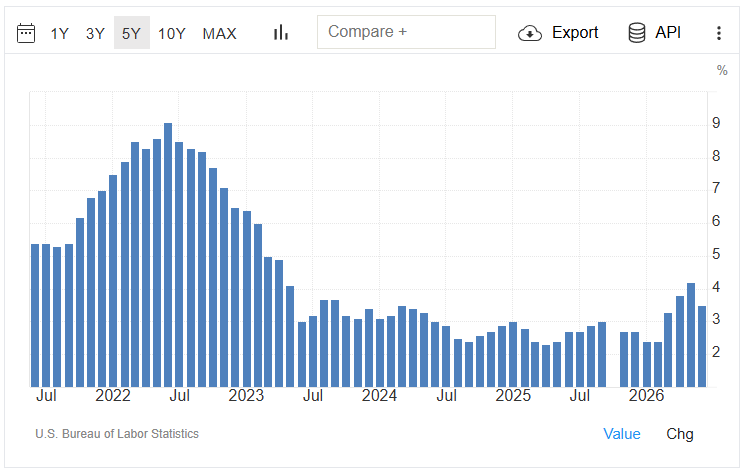
Federal Reserve Chair Kevin Warsh told Congress yesterday, July 14, that the central bank’s 2020 approach to managing inflation was a mistake, pledging a policy “regime change” as he prepares for a second day of testimony before the Senate.
Warsh added the Fed has no tolerance for persistently elevated inflation and vowed to restore the price stability mandate that the 2020 policy set aside.
What the 2020 Framework Actually Did
In 2020, under then-Chair Jerome Powell, the Fed adopted a policy called flexible average inflation targeting. Instead of treating 2% as a hard ceiling, the framework let inflation run moderately above that target for a stretch, as long as it had spent time running below target beforehand. The idea was to average price growth out over time rather than react to every short-term swing.

The framework had a second, less publicized goal. It also let the Fed tolerate a period of above-target inflation if doing so helped support employment, particularly for workers left behind in earlier recoveries. That employment-focused tradeoff is the piece of the policy Warsh singled out.
Why Warsh Calls It a Mistake
Warsh testified before the House Financial Services Committee that using inflation policy to manage employment outcomes falls outside what the Fed should be doing.
“That central bank wasn’t the first central bank to ask for a little more inflation and end up with a lot more. It was a mistake.”
Inflation has run above the Fed’s 2% mandate every year since 2021, and Warsh argues the 2020 framework gave the Fed cover to let it run hotter for longer than it should have. He noted the policy was already abandoned before he took over as chair two months ago, framing his job now as finishing the cleanup rather than starting it.
“The framework did not succeed in its objectives, and I am pleased that before my arrival, my predecessors took that and cast it aside.”
What Warsh Wants Instead
Warsh has not proposed a replacement framework in detail, but he has set up five internal task forces to rebuild how the Fed operates: its public communications, its technology, its balance sheet, the economic data it relies on, and the methodology it uses to measure inflation itself.
He described the effort as reform across five dimensions of monetary policy, with more detail expected as the task forces report back.
The message to Congress was that the Fed’s job is to bring inflation back to 2% without ambiguity or tradeoffs, not to manage it flexibly around other goals.
That stance follows his rate hike outlook preview published ahead of the hearing, and lands just as June inflation data came in cooler than expected, even as economists flagged AI-driven inflation risk tied to data center spending. That optimism comes alongside lower recession risk estimates that give the Fed more room to hold rates steady.
Warsh returns to Capitol Hill tomorrow, July 15, for bank earnings week testimony before the Senate Banking Committee, where lawmakers are likely to press him on how the task forces’ work will translate into an actual policy framework.
The post Kevin Warsh Calls Fed’s Flexible Inflation Framework a Mistake: What Happens Next? appeared first on BeInCrypto.
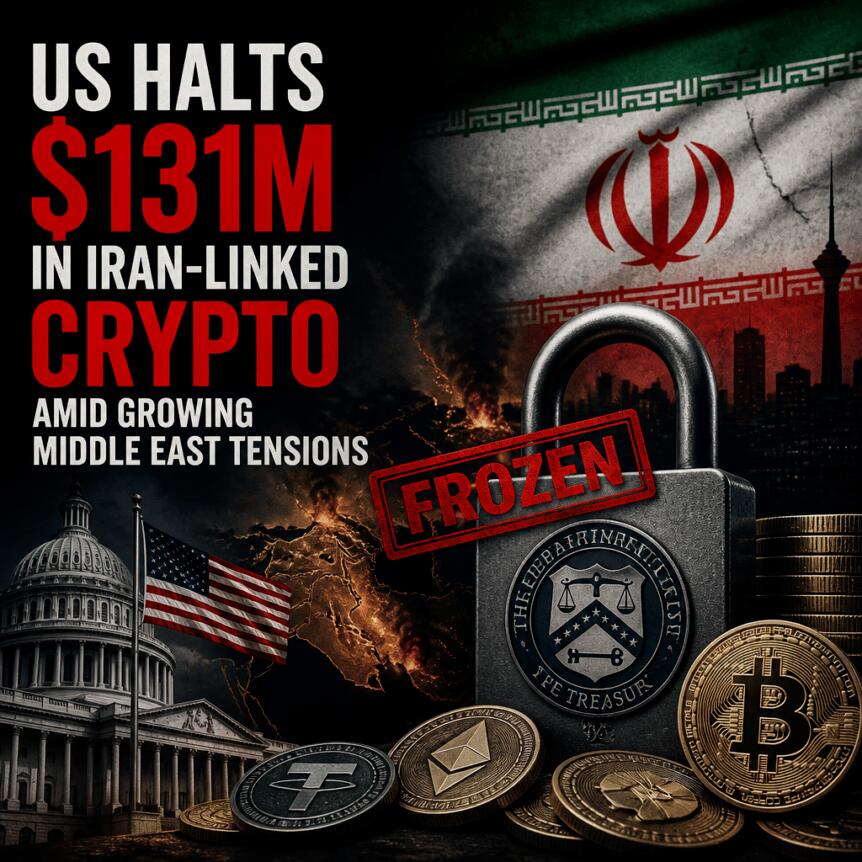
The U.S. Treasury has ordered the freezing of more than $130 million in cryptocurrency linked to Iran, as tensions between the two countries have escalated. On Tuesday, Treasury Secretary Scott Bessent confirmed the action is part of a broader effort to disrupt Iran’s access to proceeds from illicit activity, including through digital assets.
The development comes shortly after blockchain investigator Specter highlighted on-chain activity indicating that Tether had frozen four Tron wallets containing $131 million worth of USDt (USDT). Bessent said the wallets are tied to the Central Bank of Iran, naming the targeted addresses in an X post.
Key takeaways
- U.S. Treasury ordered the freezing of over $130 million in crypto held in wallets linked to Iran, according to Scott Bessent.
- On-chain investigator Specter connected the freeze to Tether’s action against four Tron wallets holding $131 million of USDT.
- Bessent linked the move to the wider U.S. push to restrict Iranian access to illicit financial flows during renewed hostilities.
- The freeze follows a prior action in April, when Tether reported freezing more than $344 million in USDT at the request of U.S. authorities.
Treasury confirms a new freeze linked to Iran
Bessent confirmed on Tuesday that the U.S. government directed the freezing of cryptocurrency held in wallets “tied to the Central Bank of Iran.” He framed the measure as part of an ongoing U.S. strategy to “disrupt and degrade Iran’s illicit financial activities” and to prevent the Iranian regime from accessing proceeds tied to illicit revenue streams.
He also emphasized that the Treasury will continue to “aggressively follow the money,” signaling that additional asset-targeting actions could follow if more wallets are identified through investigations.
Earlier coverage referenced on-chain signals from Specter, which pointed to the specific USDT freeze activity. Specter’s analysis indicated that four Tron wallets were frozen after holding roughly $131 million in USDT, aligning with the figure Bessent cited regarding the U.S. order.
Why stablecoin freezes matter during renewed tensions
The Treasury action underscores how stablecoins, despite being designed to track fiat value, can still sit at the center of sanctions enforcement. When authorities identify addresses connected to sanctioned institutions or networks, freezes can limit the ability to move funds quickly—even if the assets are technically “tokenized” rather than held directly in traditional bank accounts.
In this case, the freeze is tied to hostilities and intensifying U.S.-Iran tensions. The U.S. said it renewed its blockade of Iranian ports, while Central Command announced a new wave of strikes on Iran. Iran’s military, in turn, claimed it carried out drone strikes against U.S. military facilities at Jordan’s Al Azraq Air Base.
That geopolitical backdrop helps explain the urgency of targeting digital assets. For sanctions planners, stablecoins can function as high-speed rails in attempts to move value across borders—making them a logical focus during periods when financial pressure is meant to disrupt procurement networks and operational funding.
A pattern in April and beyond
This is not the first time Tether-related freezing activity has been linked to U.S. sanctions against Iran. In April, Tether confirmed it had frozen more than $344 million in USDT at the request of U.S. authorities, described as an earlier wave of actions consistent with the same enforcement theme: using token controls to prevent access by designated entities.
Separately, Bessent previously said in May that the U.S. has seized around $1 billion in Iranian crypto assets as part of a broader pressure campaign against Iran known as Operation Economic Fury, which launched in March 2025. In a statement in June, Bessent described the operation as targeting foreign procurement networks that support the Iranian military’s efforts to acquire weapons.
Taken together, Tuesday’s reported freeze fits an established trajectory: U.S. authorities identify wallets, impose restrictions through sanctions processes, and then coordinate with market participants capable of freezing stablecoins tied to those addresses.
What to watch next: identification, enforcement, and transparency
For investors, traders, and builders, the practical question is less about whether USDT will “hold its value” and more about how sanctions compliance and wallet targeting continue to affect where stablecoins can flow. These freezes can quickly reduce the ability of certain wallets to access funds, and they can also influence how analysts and market participants assess wallet-level risks associated with regulated enforcement.
Going forward, readers should watch for whether additional Iranian-linked wallets are identified through on-chain investigations and whether further freezes are publicly confirmed by U.S. officials and stablecoin issuers. The key uncertainty remains how widely the freeze net expands—both in terms of the number of wallets and the total value affected—as U.S.-Iran tensions continue to evolve.
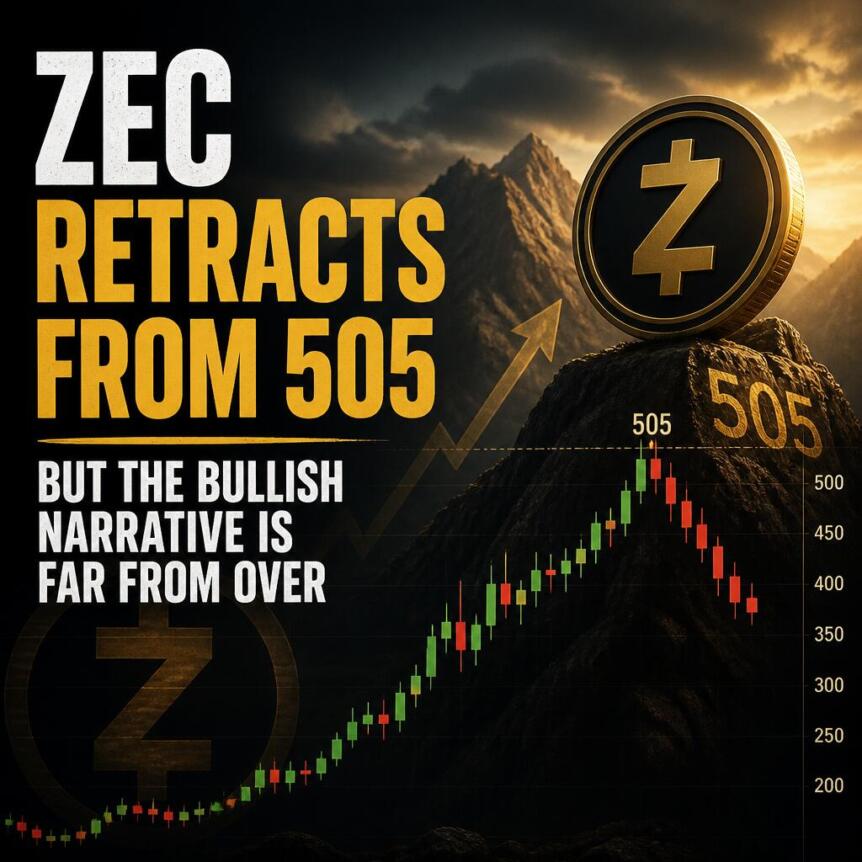
Zcash (ZEC) gained much popularity as it moved toward the $505 region but faced significant selling pressure. The move was met with a retreat as traders decided to take profits in one of the most critical psychological resistance regions on the charts.
The development caused controversy among traders regarding the cryptocurrency’s future. Some suggest that the rejection indicates reduced momentum after the fast-moving advance, while others say the retracement is natural after the gains.
However, despite the negative move, ZEC remains above the support levels and the overall recovery setup remains intact. In any case, the following trading sessions will define which side wins.
Zec Retreats Amid Major Resistance Rejection
After reaching around $505, ZEC moved down toward the $466 level due to an increase in profit taking. The high number of leveraged longs at the resistance level provided additional selling pressure when prices reversed course.
This drop in price triggered numerous liquidations and helped market makers take advantage and push prices down temporarily. Soon after, buyers emerged at the $440 support level to prevent the fall in prices beyond that.
This support level is crucial for the existing market structure, as a sustained breach would give an impetus to the bears to move further downward. On the other hand, a successful defense of this level means buying interest still exists.
Social Sentiment Falls While Confidence Rises
The market’s mood has changed significantly over the past few weeks as well. As per Santiment, there was an uptick in social activity around Zcash after it dipped below $362 amid the revelation of the vulnerability of the Orchard shielded pool. Daily social mentions exceeded 1,100 in those days as traders responded to the risk.
On the other hand, social sentiment fell dramatically as the price recovered by almost 29%. Low social activity does not necessarily indicate a bearish sentiment. In most scenarios, less chatter indicates a relatively calm market and fewer panic sales.
Ironwood Network Upgrade Improves Future Prospects
Among the major reasons to be optimistic about Zcash’s future is the scheduled Ironwood network upgrade.
According to developers, the Ironwood network upgrade will be implemented in several days, bringing enhanced mathematics-based proof of concept designed to protect against unnoticeable forgery in Zcash’s privacy pools.
The scheduled network upgrade comes after its emergency fix for the issue related to the vulnerability of the Orchard shielded pool.
Investors find the network upgrade important for Zcash’s future prospects, regardless of current price dynamics.
Technical Indicators Highlight The Most Critical Resistance Level
Technical analysis indicates that ZEC is set to face another crucial challenge.
The first resistance level lies in the range of $480 to $490. It incorporates past horizontal resistance, the upper Bollinger Band, and the 0.786 Fibonacci retracement level.
According to analyst Ardi, the potential to break past $480 on the daily chart can give bulls hope of reaching $500. A further breakdown below this level may provide an opportunity to target the next resistance level at $540.
CryptDollar, another analyst, has also pointed to this resistance level as the most critical one to watch before confirming the continuation of the latest recovery trend.
Momentum Indicators Still Favor Bulls
While there are no definitive signs yet, several signals support the current trend.
Chaikin Money Flow is still positive at 0.13, indicating capital inflows into the asset. In addition, the Aroon Up indicator remains above 92%, meaning the uptrend is still alive.
TradingView’s Moving Average still shows a Strong Buy signal despite several neutral momentum oscillators.
Liquidation charts can also be helpful for gauging future volatility. Large short positions are formed in the range of $480 to $500. As a result, a breakout of the range will likely bring more momentum to the next leg higher due to short liquidations.
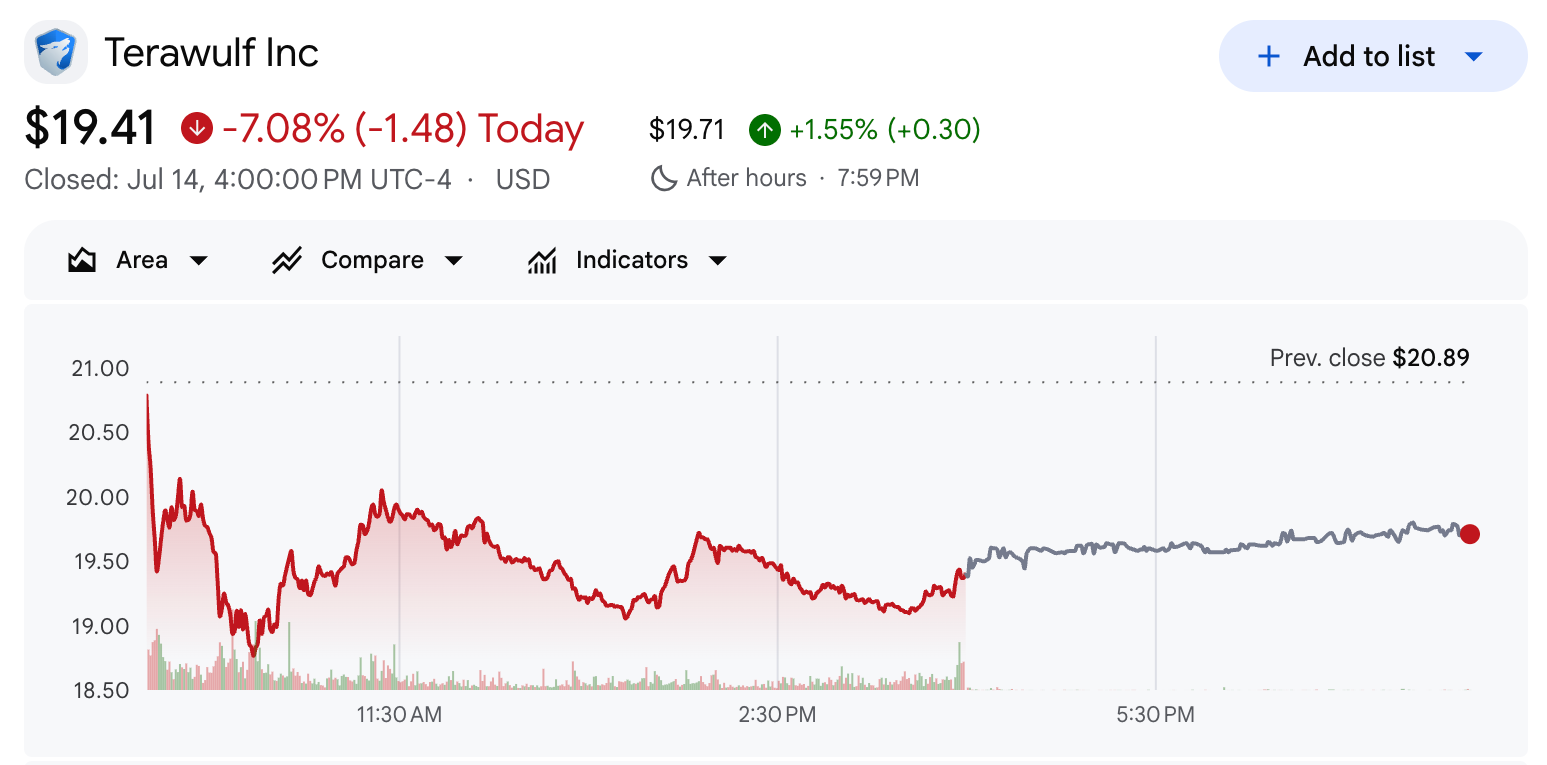
TeraWulf Chief Executive Paul Prager welcomed New York’s new data center moratorium as a win for the company. Investors disagreed, sending WULF shares down about 7% the same day.
The divide followed Governor Kathy Hochul’s executive order, which paused permits for large new data centers.
Why New York Paused Data Center Development
Hochul signed the order on July 14, creating the first statewide freeze on new hyperscale data centers. The state halted discretionary permits not already deemed complete.
During the pause, regulators will prepare a Generic Environmental Impact Statement (GEIS) to assess impacts on energy demand, water use, and air quality.
The order targets the industry’s heavy power and water needs. Hochul also plans to seek the repeal of sales tax exemptions for large data centers across the state.
“New York has always been at the forefront of innovation and change, but we’ve also always guaranteed that New Yorkers benefit. As data center development threatens to hike up utility bills, deplete our natural resources, and create uncertainty for New Yorkers, it’s my responsibility to take action and lead,” Governor Hochul stated.
Follow us on X to get the latest news as it happens
Why TeraWulf’s Stock and Its CEO Diverged
TeraWulf runs the Lake Mariner campus in New York and is developing a second site at Lake Hawkeye, per its sites page. The company is shifting from Bitcoin (BTC) mining toward artificial intelligence and high-performance computing (HPC), a pivot shared by other miners.
Prager argued that the order rewards permitted, power-secured projects over speculative ones. He noted that Lake Mariner is operational, and its Fluidstack and Google expansions are fully permitted.
“Lake Hawkeye is a multi-year development, and we’re also evaluating on-site power which aligns directly with the Governor’s priorities for new generation. A win-win for New York and WULF,” he said.
Despite that framing, WULF shares closed down 7.08% at $19.41 on July 14.

For now, Prager and investors read the same order differently. The full impact on TeraWulf’s New York pipeline will become clearer as the review progresses.
Subscribe to our YouTube channel to watch leaders and journalists provide expert insights
The post TeraWulf CEO Cheered New York’s Data Center Freeze, His Stock Fell 7%. appeared first on BeInCrypto.
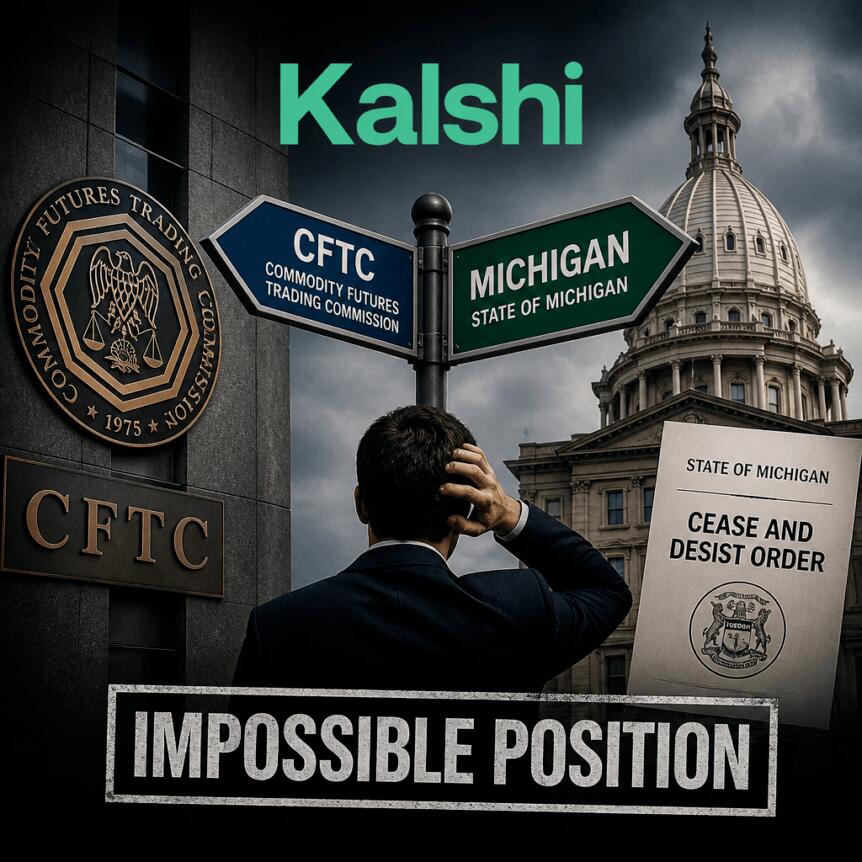
The U.S. commodities regulator has moved to prevent Kalshi, a registered prediction market platform, from reversing Michigan trades—sparking fresh legal friction between federal oversight and a state court order. The dispute centers on whether Kalshi must unwind already executed sports betting contracts for Michigan users while litigation over Michigan’s sports betting laws continues.
On Tuesday, the Commodity Futures Trading Commission (CFTC) ordered Kalshi not to comply with the Michigan order and instead continue operating. The clash follows an earlier ruling on June 29 by Ingham County Circuit Court Judge Rosemarie Aquilina, who directed Kalshi to stop offering sports betting contracts to Michigan users during the ongoing case.
Key takeaways
- The CFTC says canceling already executed prediction market trades would disrupt market certainty and create a cascading effect across derivatives markets.
- Kalshi argues the situation forces it to choose between conflicting obligations: comply with a state court directive or follow federal regulatory requirements.
- The controversy underscores an ongoing jurisdictional tension between the CFTC and multiple state regulators regarding prediction markets.
- CFTC Chair Michael Selig warned that the agency will continue legal action against states that attempt to impose penalties on CFTC-registered exchanges.
Michigan judge’s order vs. federal directive
Michigan’s court case began with a directive that targeted Kalshi’s ability to provide sports betting contracts to residents of the state. According to Cointelegraph reporting, Judge Aquilina ordered Kalshi to cease offering those contracts to Michigan users while the lawsuit proceeds over whether Kalshi’s offerings violate state sports betting laws. Earlier coverage from Cointelegraph described the scope of that order and the legal context surrounding it.
But on Tuesday, the CFTC intervened. In a press statement, the regulator ordered Kalshi not to comply with the Michigan directive and to continue operating despite the state order. The CFTC press release frames the issue as one of maintaining federal authority over registered entities and executed derivatives contracts.
Kalshi says it unwound trades—and now faces contradictions
Kalshi’s response highlights the practical dilemma regulators rarely address directly: companies caught between courts can end up violating one authority while trying to obey another.
In a statement posted on X, Robert DeNault, Kalshi’s head of enforcement and legal counsel, said the company is “disappointed” and described the federal action as placing Kalshi in an “impossible position.” DeNault’s statement on X argues that Kalshi already followed the Michigan court order by unwinding the trades, but the new CFTC directive appears to contradict that requirement.
DeNault’s wording underscores the core problem: Kalshi believes it is being pushed into a compliance conflict, where it may be required to reverse actions taken under state instructions while also meeting federal regulatory expectations.
Reuters reported that Kalshi is reviewing the CFTC’s order and considering its next steps. According to Reuters, the company is weighing how to respond given the opposing directives.
Why the regulator says “canceling” is a market-breaking precedent
The CFTC’s position is grounded in the mechanics of derivatives contracting. The regulator argues that canceling trades already executed is not just a procedural change—it threatens contract certainty across the marketplace.
In the same dispute framing, the CFTC characterized cancelation of executed trades as unprecedented and potentially destabilizing. The regulator’s message is that prediction markets operate through contractual certainty, and that undermining that certainty would ripple outward beyond any single platform.
The CFTC also emphasized that it will not allow states or state courts to pressure registered entities into violating the Commodity Exchange Act and CFTC regulations. That argument is aimed directly at the core tension at the center of the Michigan case: whether states can effectively override federal rules through injunctions and court orders applied to an exchange that is already registered with the CFTC.
Broader conflict: federal authority vs. state-by-state attempts
This is not presented by the CFTC as an isolated disagreement. The regulator has repeatedly argued that prediction markets fall within the federal scope when they are run through CFTC-registered structures.
As the dispute is framed, Michigan is described by the CFTC as the first state to attempt interference with executed derivatives transactions through a court order. That characterization matters because it suggests the CFTC views the issue as moving from “licensing and legality” arguments—traditionally handled at the state level—into the domain of how executed federal derivatives contracts must be honored.
During an appearance on Fox Business, CFTC Chair Michael Selig said it is “critical” that the regulator maintains its authority over prediction markets. Selig also stated that the agency has sued nine states and indicated it would continue to challenge states that attempt to impose criminal or civil fines against CFTC-registered exchanges. According to Selig’s remarks, the CFTC’s stance is that state actions cannot be allowed to erode the federal regulatory framework for these markets.
For investors and market participants, the practical implication is that prediction market compliance may remain a moving target. Even where a state court order appears clear, a federal regulator may step in to enforce a different standard. That dynamic increases uncertainty for platforms operating across state lines and could affect how traders evaluate jurisdictional risk when participating in events-based contracts.
What to watch next is how Kalshi navigates the contradiction between the Michigan directive and the CFTC’s order—and whether additional courts or appeals clarify which obligations control when state and federal requirements diverge for already executed derivatives contracts.
This is Part 4 in the technical article series about Bitcoin covenants by Cointelegraph Research. To read the previous article, click here.
The following opcodes do not independently implement full covenant functionality. Instead, they are building blocks for constructing covenants when combined with other opcodes or script elements.
OP_CHECKSIGFROMSTACK (OP_CSFS) and OP_CAT
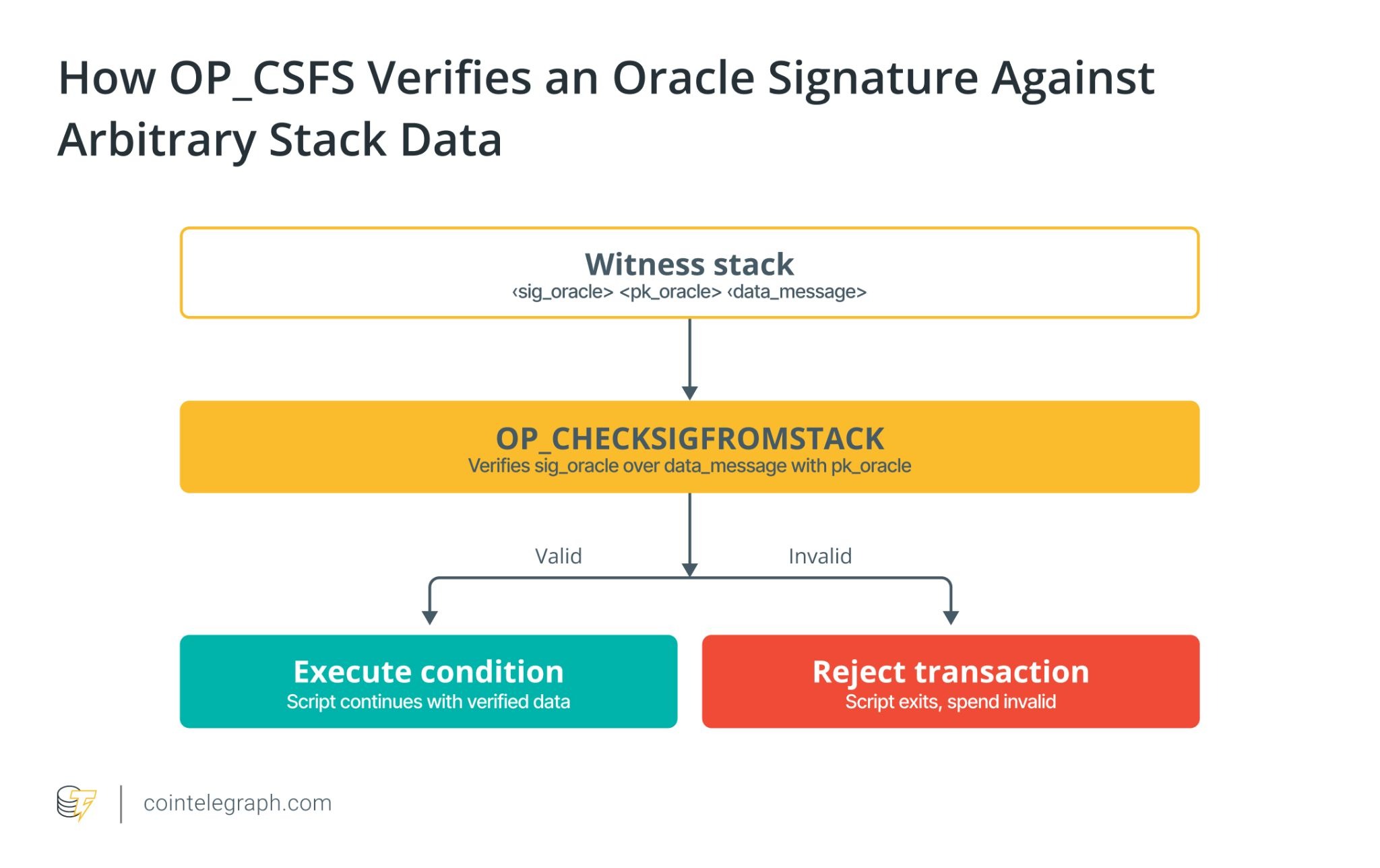
OP_CSFS is a proposed opcode that would allow Bitcoin script to verify signatures over arbitrary messages supplied on the stack. It is different from OP_CHECKSIG, which verifies signatures over the spending transaction according to the active SIGHASH mode. By enabling signature verification for data other than the serialized transaction details, OP_CSFS enables a broader class of constructions, including oracle-based scripts where an external party signs off-chain messages that represent real-world events. For example, a trusted oracle could publish Schnorr signatures over messages that encode external outcomes, and an OP_CSFS-based script could condition payments on the presence of a valid oracle signature.
On its own, OP_CSFS does not implement covenants. It can authenticate external data, but it does not bind that data to the structure of the spending transaction. That binding requires OP_CAT.
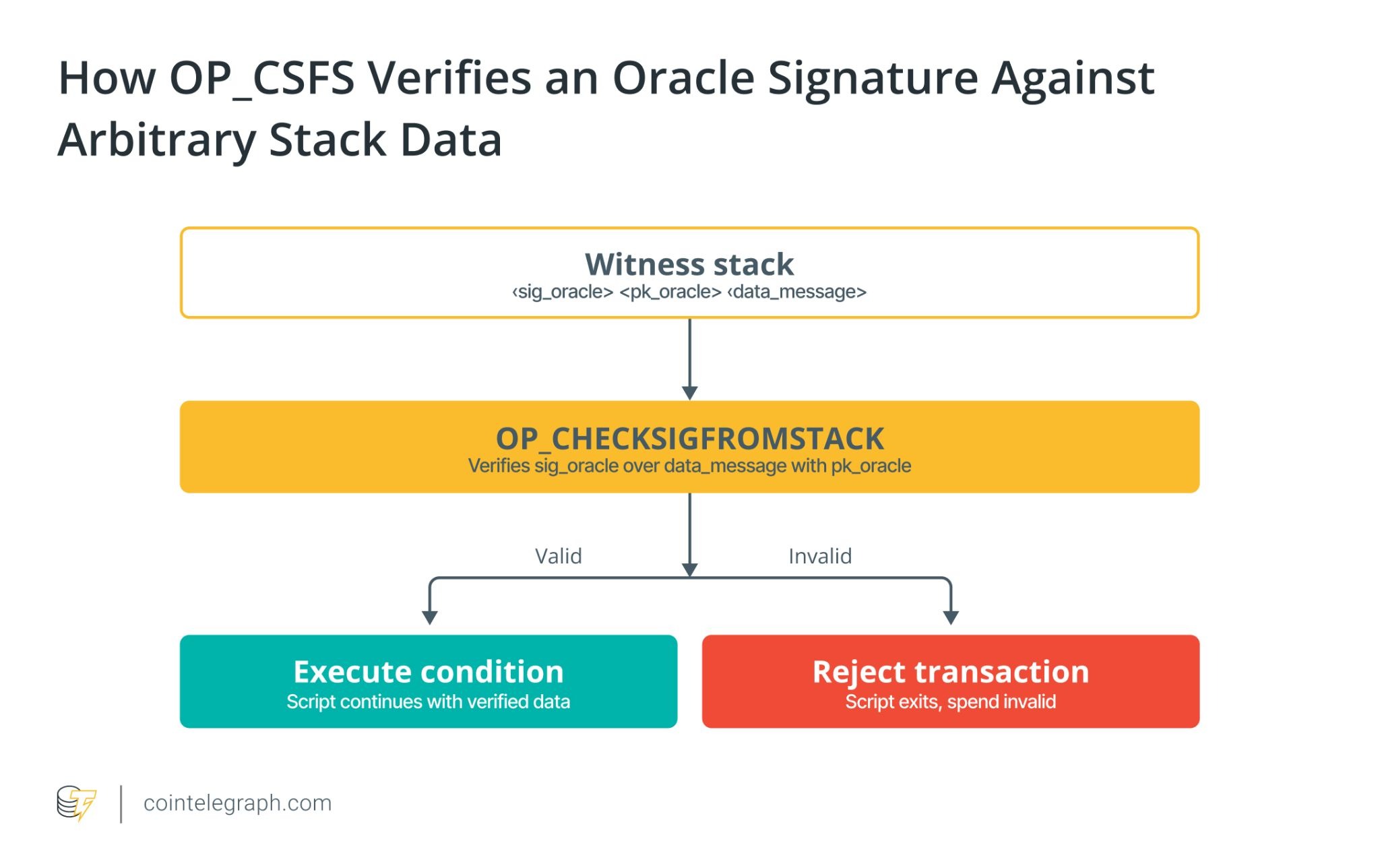
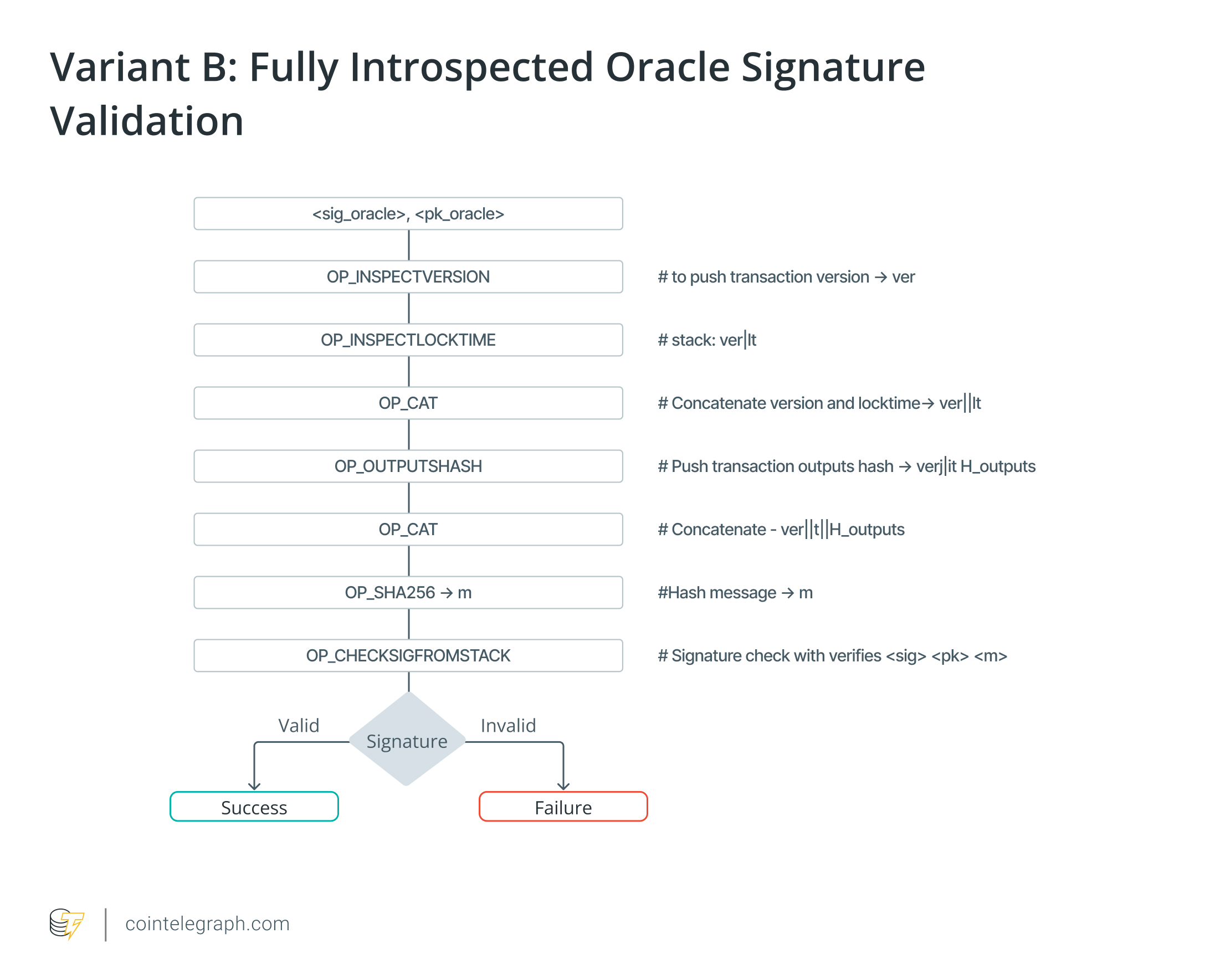
OP_CAT is a proposed opcode that enables the concatenation of two values on the script stack to form a single byte sequence instead of two distinct ones. When combined with OP_CSFS, it allows the script to assemble selected transaction fields into a canonical message and verify that a provided signature commits to that message.
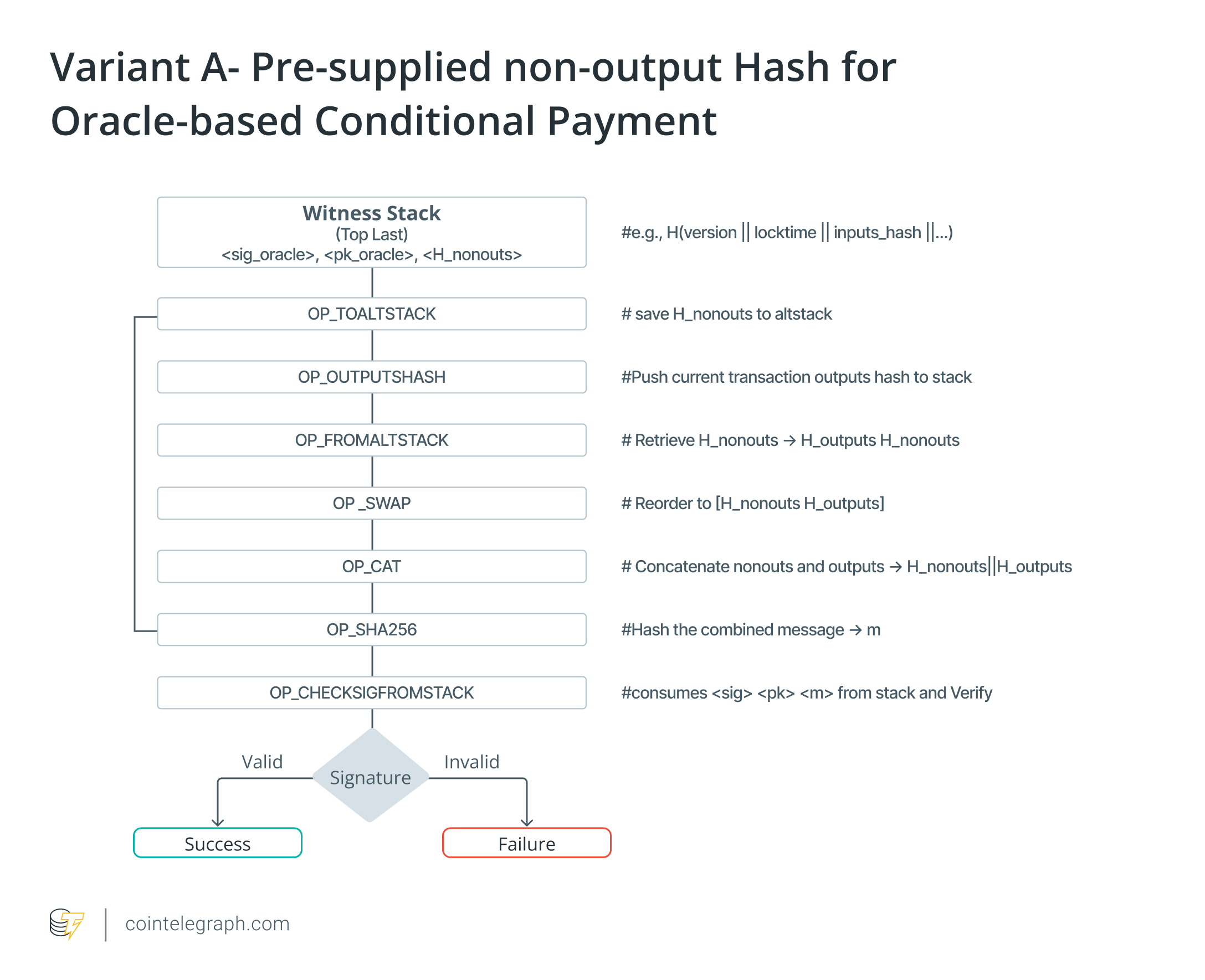
OP_CSFS and OP_CAT taken together can perform introspection by compelling the spender to provide transaction details on the witness stack. If both OP_CSFS and OP_CHECKSIG succeed for the same signature, it proves that the correct transaction details have been passed on to the witness stack and can be further reasoned about. By checking the transaction against a predefined template, a covenant construction, similar to OP_CTV, can be enforced. Two minimal assemblies show how this works:
OP_CAT + Schnorr Tricks
Using OP_CAT, covenant-like constructions can be enforced under Taproot without OP_CSFS by exploiting how Schnorr signatures interact with the Taproot sighash rules defined in BIP 341. The construction repurposes OP_CHECKSIG which is ordinarily used to authenticate ownership of a private key, to a transaction introspection tool.
A schnorr signature is a pair ⟨R, s⟩. Under normal circumstances, this schnorr signature is generated by selecting a secret nonce k, deriving the point R = kG, and computing the signature value s as a function of the message hash and the private key. The verifier then checks the signature pair ⟨R, s⟩ against a public key P and the message being signed. The randomness of k ensures that s is unpredictable and non-reproducible without knowledge of the private key.
The introspection trick works by eliminating randomness by fixing some of these variables in advance. Instead of choosing R randomly during signing, the script commits to a predetermined value of R and to a fixed public key P. Because Schnorr verification follows a deterministic equation, it becomes possible to construct these values so that the signature scalar s must equal a hash of specific transaction parameters.
The spender provides R and s on the witness stack. OP_CAT concatenates them into the signature pair ⟨R, s⟩ in the format OP_CHECKSIG expects. The script verifies this against the hardcoded public key P. Because R and P are fixed to the base point G, OP_CHECKSIG will only accept the pair if s equals the SHA256 hash of the actual transaction data computed by the protocol. The spender cannot fabricate an s that passes OP_CHECKSIG unless it genuinely reflects the real transaction data. The spender must grind the transaction data until its SHA256 hash ends in a specific byte, which takes roughly 256 attempts on average and adds negligible cost.
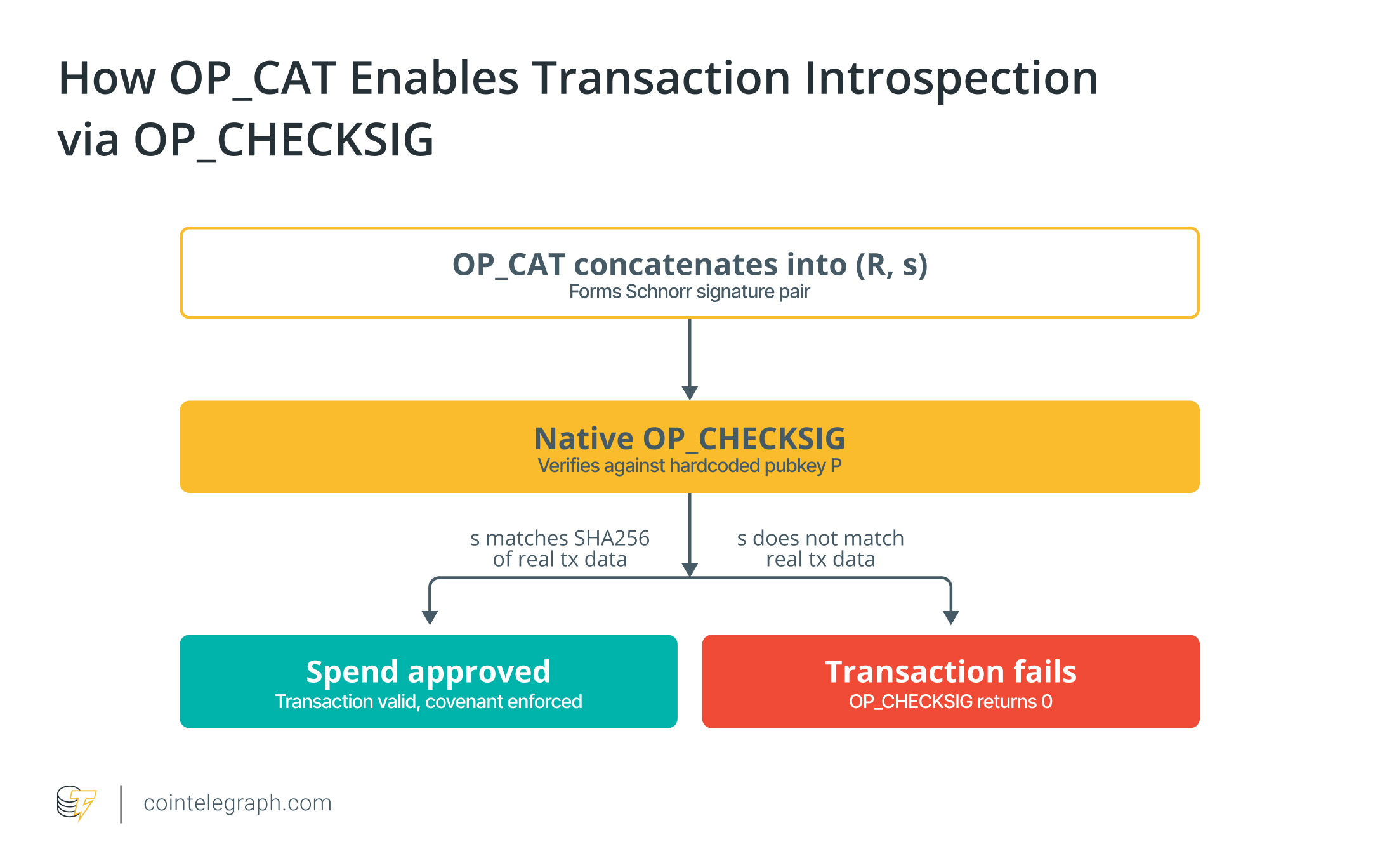
In this way, OP_CHECKSIG is no longer used to authenticate ownership of a secret private key but instead to enforce that the transaction matches a specific template. The expressiveness is broadly comparable to OP_CTV.
Because this approach depends on Schnorr signatures and the taproot sighash algorithm, it applies only to SegWit v1 outputs and does not extend to SegWit v0 outputs which uses the BIP-143 digest and ECDSA signatures.
In our next article we will commence our discussion of OP_CCV, which is even more capable than OP_CSFS and OP_CAT combined.
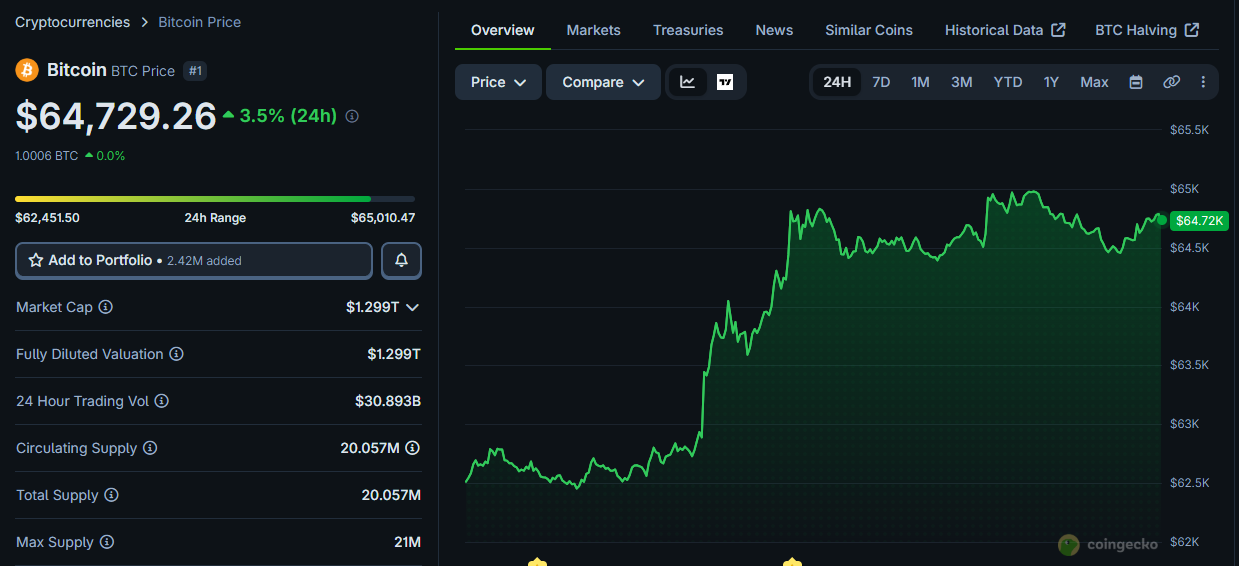
Bitcoin (BTC) tipped to $65,000 briefly, according to Coin Gecko, even as fresh US-Iran tensions flared. Meanwhile, Korean crypto trading volume skyrocketed as AI memory stocks struggle. Crypto traders, it seems, are shrugging these macro conditions off.
Bitcoin’s rally came as softer than expected US inflation data eased pressure on the Federal Reserve to keep rates higher for longer. That gave the coin room to push toward multi-week highs even as fresh US-Iran strikes continued.
Bitcoin Rally Signals Iran Fatigue
President Trump ordered airstrikes on Iran last weekend and threatened to reinstate a blockade on the Strait of Hormuz. That is the kind of headline that hammered crypto prices earlier this year.
This time the reaction was muted. Bitcoin recovered above $63,000 within days of the strikes. That marked a sharp contrast to past episodes, when similar headlines sent prices sharply lower.
The Bitcoin rally has held near that recovered range into this week before its recent spike on promising inflation data. Traders appear to be growing desensitized to the tit for tat in the Middle East rather than panicking every time tensions flare.

The pattern lines up with a broader rotation. The Altcoin Season Index has climbed to 58 while Bitcoin dominance has slipped toward key support as capital spreads into other tokens.
South Korea Adds Fuel to the Rotation
South Korea offers the clearest real-world evidence. The KOSPI is technically in a bear market, down more than 20% from its June record. Retail investors appear to be looking elsewhere for returns.
Much of that weakness traces back to just two stocks. Samsung and SK Hynix now account for roughly half the KOSPI’s total weight. eToro market analyst Zavier Wong said that a sharp swing in either name now drags the whole index with it.
At the same time this week, trading volume on Upbit, the country’s largest crypto exchange saw volume surge 1,318% in 24 hours to $4.2 billion as the stock rout deepened. XRP alone recorded more volume than Bitcoin.
Not all of it is conviction buying. Korea’s Financial Supervisory Service said 1.2 million leveraged accounts triggered margin calls this week. That’s a reminder that some of this is forced selling, not a clean bet on crypto.
SK Hynix’s Swings Point to a Brewing AI Bubble Debate
SK Hynix sits at the center of the KOSPI’s chip-driven volatility. Its own chart tells an AI bubble story in miniature. The stock climbed almost 233% from the start of 2026 to a June 25 record. It then retreated over 34% from that peak by July 13.

The swings intensified after SK Hynix listed American depositary receipts on Nasdaq on July 10. The $26.5 billion offering ranks among the largest foreign listings in US history. Investors are weighing surging demand for AI memory chips against how much of that demand is already priced in.
Iran tensions have not gone away, and neither has the AI bubble debate. But for now, crypto looks less like an asset caught in the crossfire. It looks more like the place traders go when headlines get tiring, whether from Tehran or Seoul’s chip floor.
The post Is Crypto Finally Shrugging Off Iran and AI Hype? Bitcoin and Altcoins Suggest Yes appeared first on BeInCrypto.
Bitcoin (BTC) should repeat history and put in a bear-market bottom when a classic indicator hits zero, a trader says.
Key points:
- Bitcoin classic two-month stochastic RSI signals are valid this bear market, Max Crypto said.
- The bear market will be over once the indicator reaches zero again.
- RSI divergences provided advance notice of the BTC price rebound beyond $64,000 this month.
Bitcoin stochastic RSI bottom signal “will happen again”
In an X post at the weekend, Max Crypto went on record to forecast the end of the 2026 bear market when the stochastic relative strength index (RSI) hits a new swing low.
“Stoch” RSI is a derivative of RSI, a popular leading indicator, with a greater bias on recent price moves.
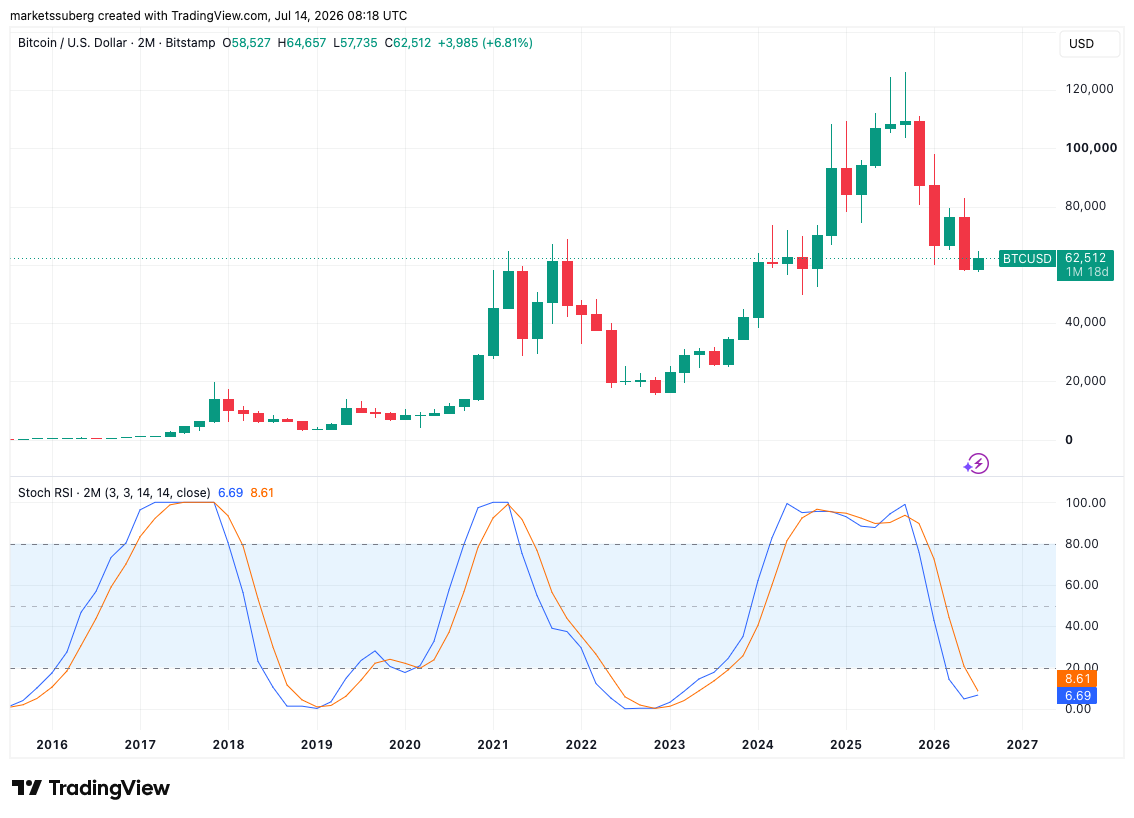
“Every time the 2M Stoch RSI had a bullish cross and dropped to 0, $BTC bottomed,” Max Crypto wrote in accompanying commentary.
“This happened in 2014, 2018, and 2022, and it will happen again.”
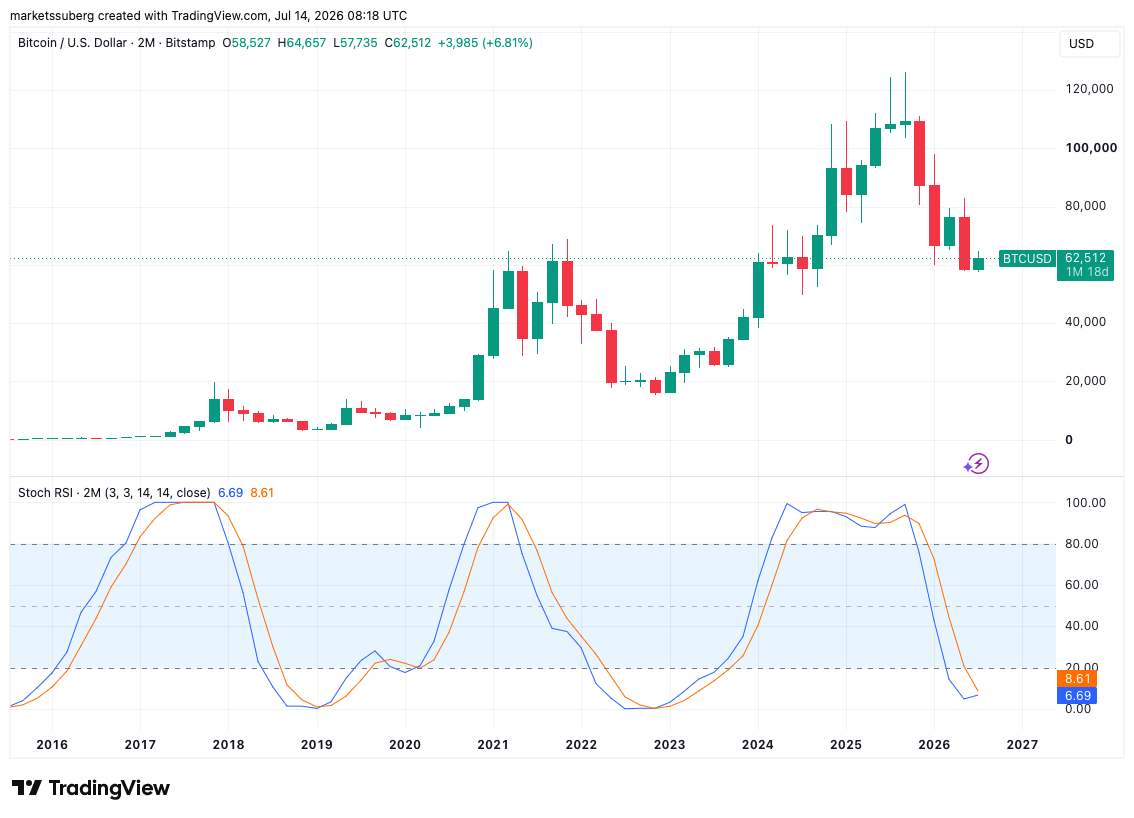
BTC/USD two-month chart with stochastic RSI data. Source: Cointelegraph/TradingView
Two-month stoch RSI measures 4.81, having dropped into its sub-30 “oversold” zone during March, data from TradingView confirms. Current levels were last observed just over three years ago.
Stoch RSI has already formed a focus for market participants this year, with daily moves previously drawing comparisons to the 2022 bear market.
In April, crypto trader Quantum Ascend described BTC price history as “playing out nearly perfectly.”
Bear-market RSI cues keep coming
Turning to traditional RSI data, traders continue to look for bullish cues as BTC/USD treads water above $60,000.
Related: BTC price bull market to begin in September? Five things to know in Bitcoin this week
On Sunday, trader and investor BitcoinHyper eyed a bullish divergence against the S&P 500.
At the start of June, daily RSI dropped to just 15, marking one out of just six of what trader Osemka later called “extremely powerful selling events.”
“There’s been one case where extreme $BTC RSI (1D at 15) failed to break the lows and only managed to sweep it. That was at the end of accumulation range in 2015,” he continued on Tuesday.
“I’m mentioning it now since we have also only swept the low on such powerful move down.”
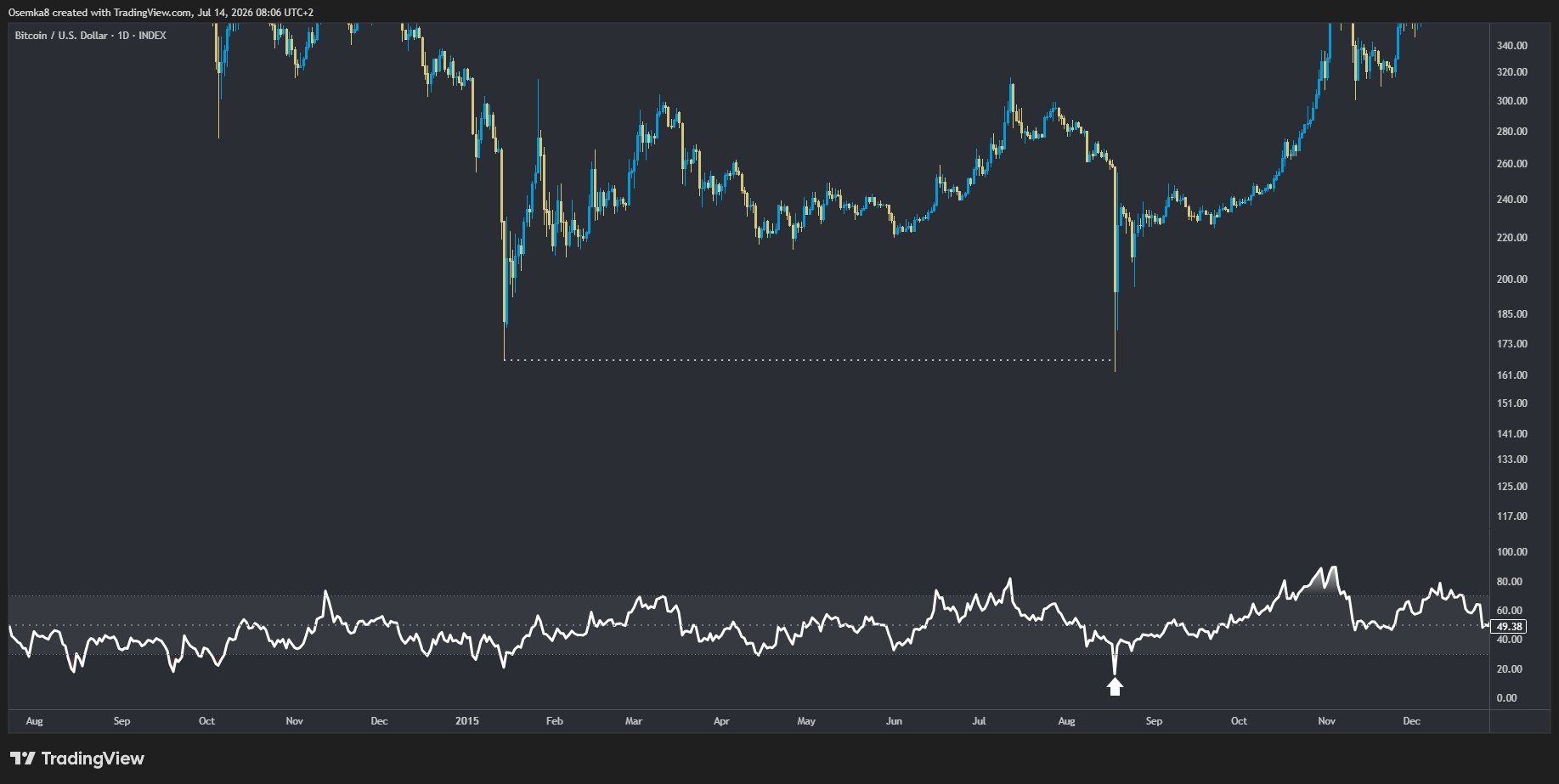
BTC/USD one-day chart with RSI data. Source: Osemka/X
Osemka implied that a deeper RSI retracement could still emerge, marking a price reversal in-line with previous bear markets.
Bitcoin’s return above $64,000 this month, meanwhile, came after bullish RSI divergences across multiple time frames.
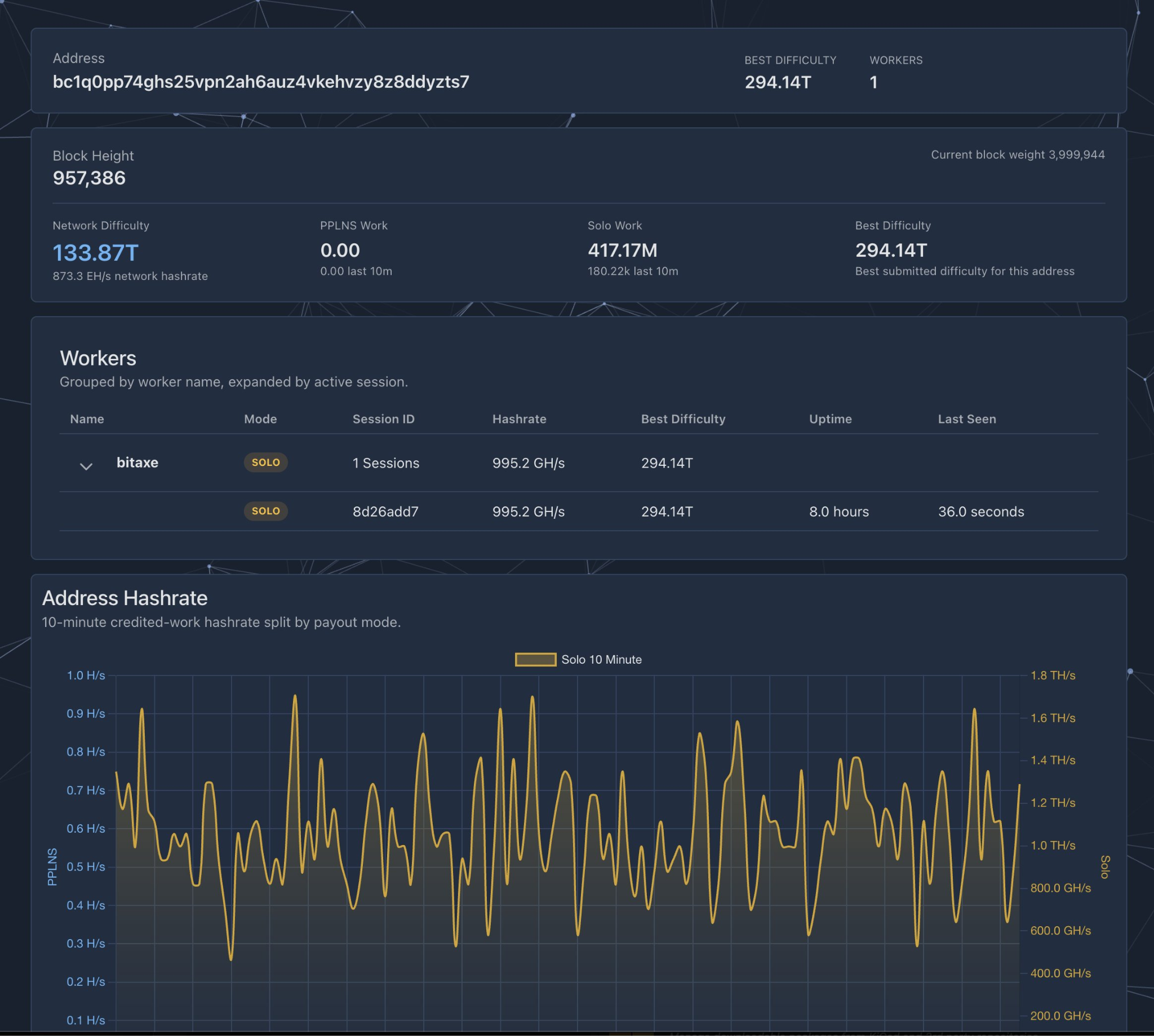
A solo Bitcoin miner hit the jackpot and validated a solo block with a single Bitaxe mining rig, marking a rare win that beat massive statistical odds.
The retail Bitcoin miner secured a 3.125 Bitcoin (BTC) block reward, currently worth about $200,000, on Friday at block number 957382, according to blockchain data from mempool.space.
The miner was using a single Bitaxe mining rig, according to the BTC mining pool Public Pool. The Bitaxe was a budget, lower-power Bitcoin miner that costs less than $200 and has a hashrate of about 1 terahash per second (TH/s), which is a tiny fraction of the global Bitcoin network.
The solo block reward shows that even a sub-$200 investment in a mining rig can lead to a statistically rare payday for retail miners.
Another solo Bitcoin miner validated a solo block in April, through CKPool’s solo mining service. Earlier in February, another retail miner validated a solo block using rented hashrate from a mining provider, meaning that he didn’t own the physical mining rig that solved the block.
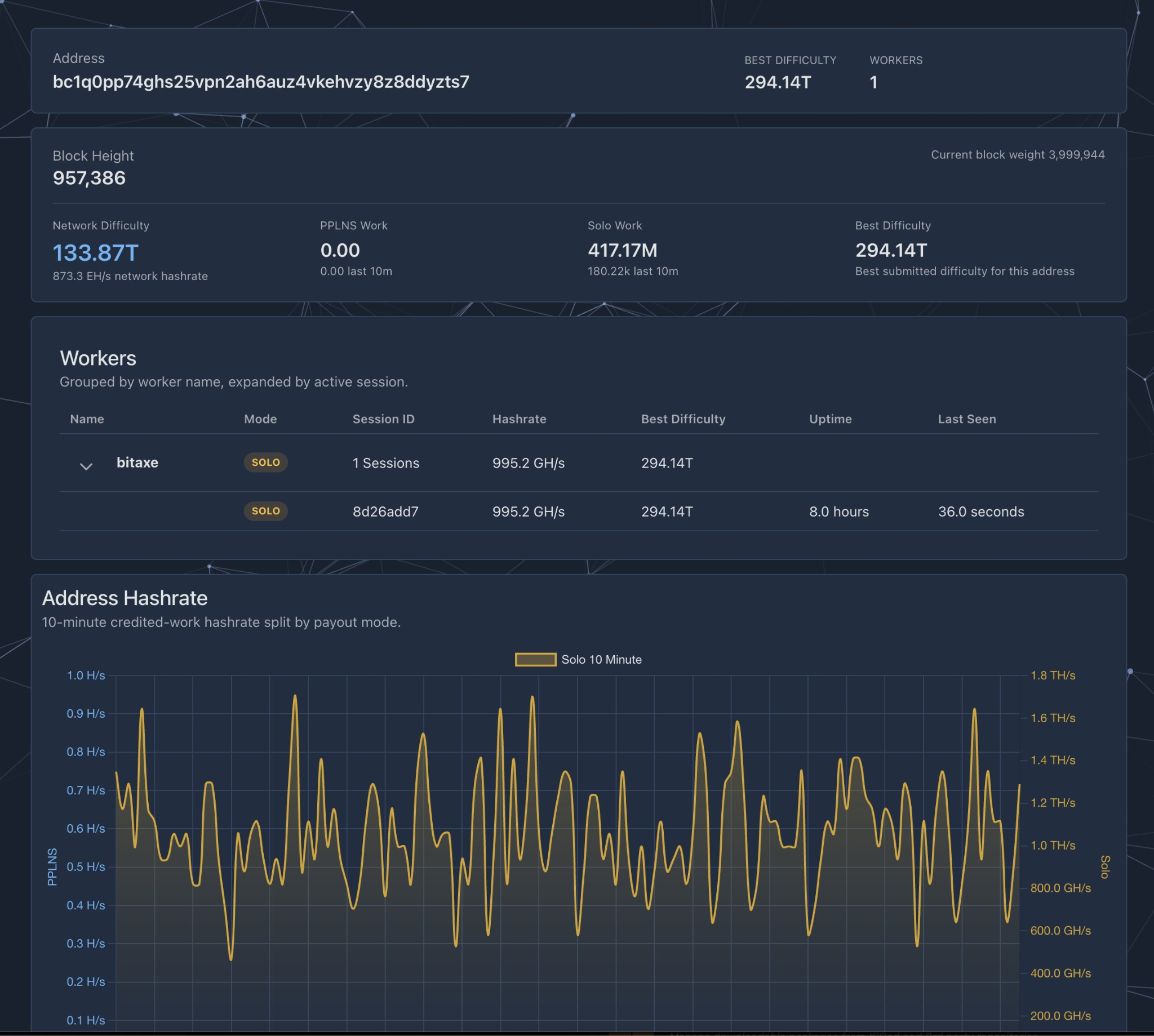
Source: Public Pool
Solo BTC miners bag $4.7 million during the past year
While mining a solo block is statistically rare, this marks the 12th Bitcoin block validated by a hobby-level miner so far in 2026, pushing the past 12 months’ total payouts to more than $4.7 million for retail miners.
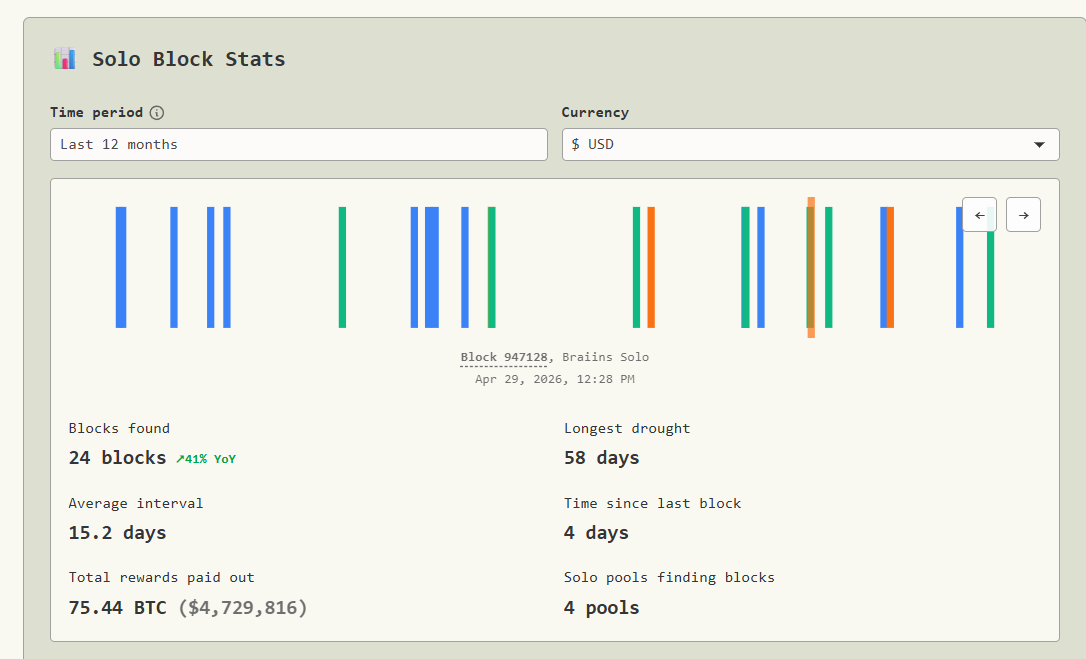
Solo block stats, one-year. Source: Bennet.org
Solo blocks mined increased by 41% year-on-year, as solo miners have validated a total of 24 blocks during the past year, according to solo miner data aggregator Bennet. This brings total rewards paid to solo miners to 75.4 Bitcoin, or $4.7 million, for the past year.
Related: Bitcoin whale moves $188M for first time in 7 years
The average interval for solo Bitcoin blocks stands at 15.2 days, while the longest drought without a successful solo block stands at 58 days.
Magazine: Bitcoin nearing late stages of bear market: Jamie Coutts, Real Vision
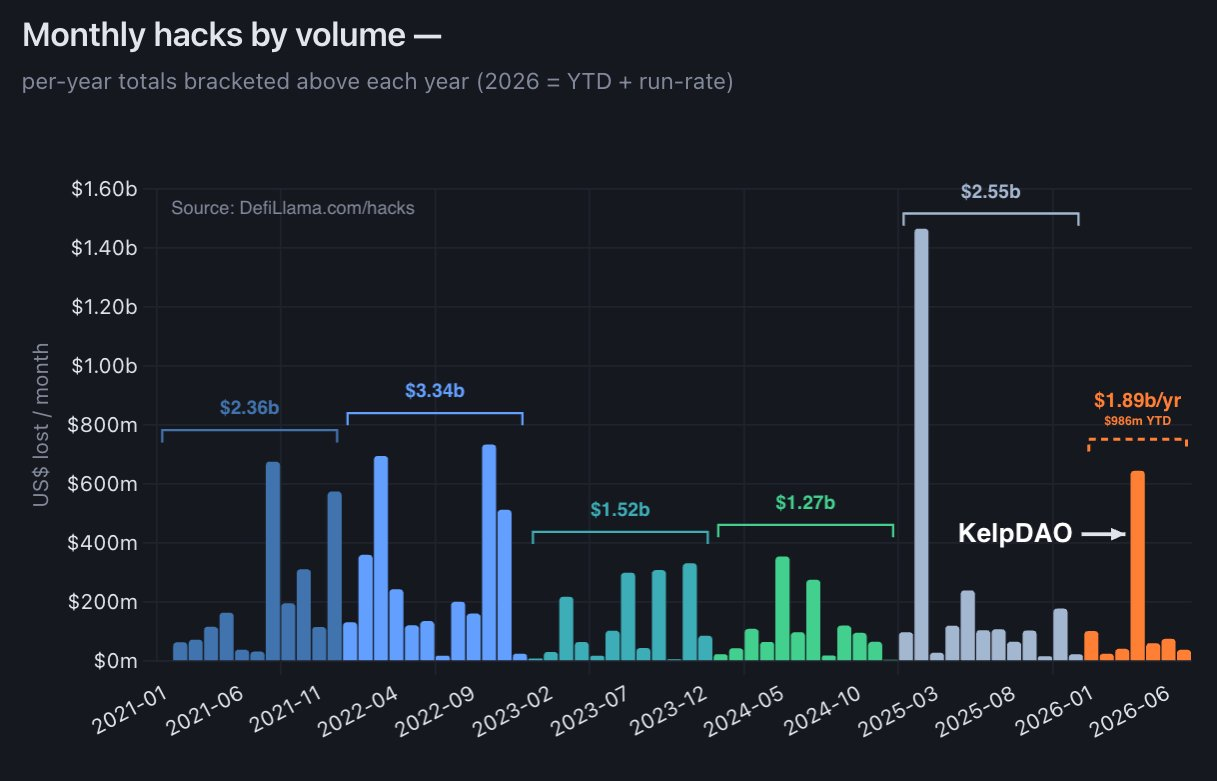
Fears that artificial intelligence would trigger a wave of catastrophic decentralized finance (DeFi) hacks in what was coined as a “hackpocalypse” have not materialized, according to Dragonfly managing partner Haseeb Qureshi.
While the incident count grew to a record high, the median size of hacks has dipped below $500,000 this year, down from over $2 million in 2025. Qureshi argued that this shows malicious actors using AI are targeting “small protocols and abandonware” while larger DeFi protocols have fortified themselves against AI’s threat.
Excluding outlier months with large incidents, such as the Bybit hack in February 2025 along with the Drift Protocol and KelpDAO exploits in April of this year, 2026 has still seen less value hacked per month than the previous year, said Qureshi.
The comments come in response to concerns shared by blockchain security platform OpenZeppelin’s founder, Manuel Aráoz, who said that he considers “all of DeFi unsafe,” citing the growing ability of AI coding agents to identify smart contract vulnerabilities.
Broader industry datasets, which include centralized platforms, wallet compromises and phishing, as well as DeFi exploits, offer a less reassuring picture. In April, crypto hacks surged, resulting in losses of around $644 million, marking an over one-year high last seen in February 2025 when the $1.4 billion Bybit hack pushed monthly losses to $1.46 billion, according to DefiLlama.
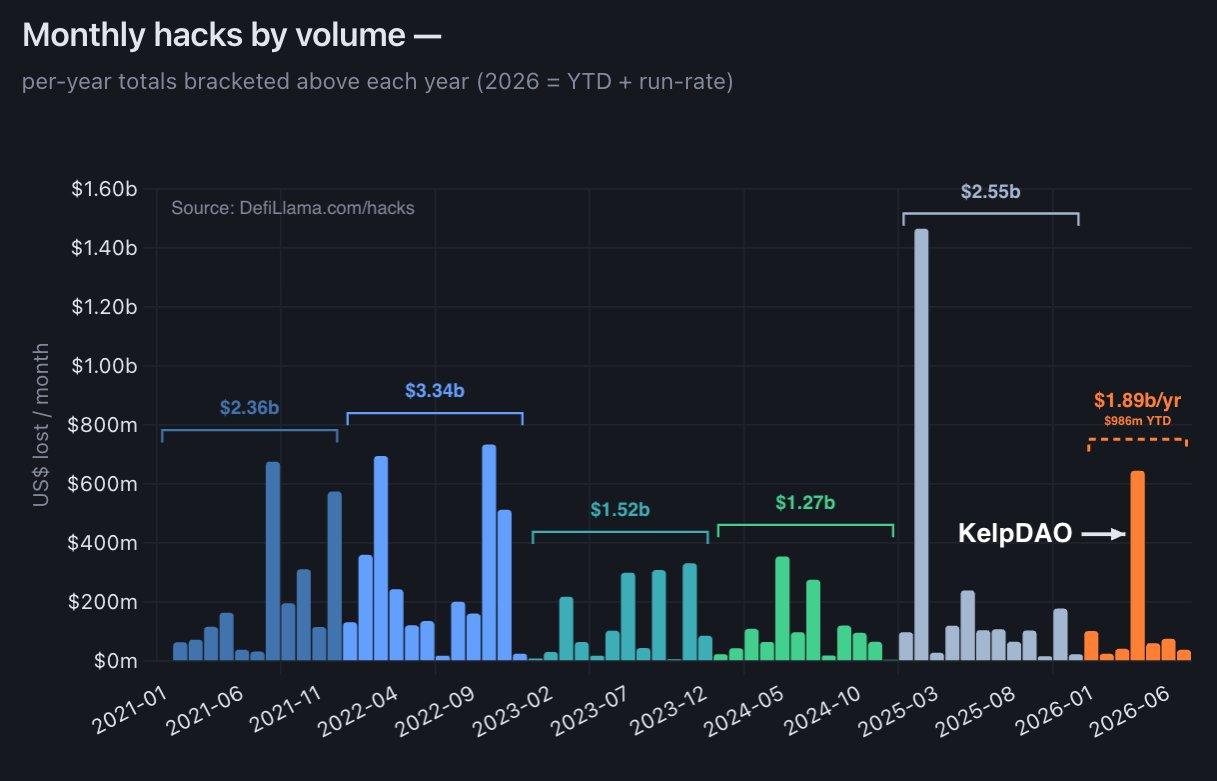
Source: Haseeb
Crypto hacks fall 47% in H1, but crypto industry not necessarily safer: CertiK
Losses to cryptocurrency hacks fell 46.8% year-on-year to $1.32 billion in the first half of 2026, but blockchain security company CertiK argued that the Web3 industry’s lower headline losses do not necessarily mean the industry is safer.
Related: Belgian police arrest suspected phishing gang leader tied to $572K theft
While it marks a significant drop in dollar value, last year’s figures were skewed by the $1.4 billion Bybit hack, the largest in crypto history, CertiK told Cointelegraph.
During the second quarter of 2026, over 70% of the losses stemmed from the KelpDAO and Drift Protocol exploits, which were largely attributed to North Korean state-sponsored hackers.
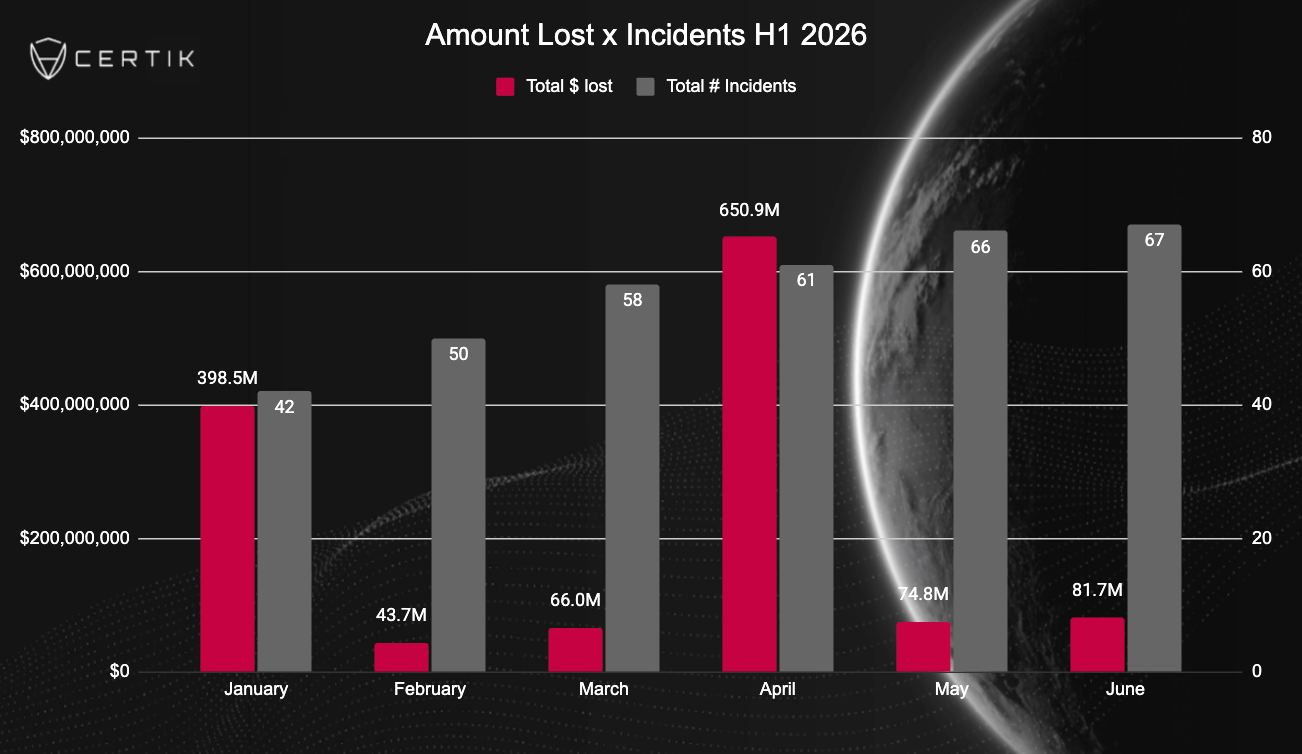
Monthly change in crypto exploit amounts and number of incidents across H1. Source: CertiK
The data underscores the continued threat that North Korean hackers pose to the crypto industry, having stolen more than $6 billion worth of crypto since 2017, TRM Labs estimated in April.
Magazine: Does Botanix’s failure prove Bitcoiners don’t care about DeFi?

Octomom Nadya Sulemen Talks ‘Challenging’ Life Season

I put my insomnia down to drinking and perimenopause. Then a scan revealed my LIVER could be to blame… and it affects more women than you think. Here’s how to find out if you have it too: GEORGINA FULLER

Tesla Stock Is Falling. Can Robots Arrive Soon Enough to Save It?


-

 Fashion6 days ago
Loro Piana Fall 2026 Enters Houston’s Art Scene
-

 Fashion4 days ago
Weekend Open Thread: Nutriplenish Leave-In Conditioner
-
 Sports6 days ago
2026 Genesis Scottish Open Thursday TV coverage: Round 1
-

 Sports5 days ago
Super Eagles star Moses Simon opens up on Liverpool transfer regret
-

 Tech6 days ago
Character.AI enters the microdrama arena with its own productions, but there’s a twist
-

 News Videos12 hours ago
XRP BOMBSHELL… XRP OMBOARDED FOR TRANSACTIONS!!!
-

 Tech1 day ago
Get Your ESP32 Sunny Side Up With This Solar Dev Board
-

 Tech11 hours ago
Dark Secrets Emerge When Jailbreaking LLMs
-

 News Videos6 days ago
Crypto Just Entered Its Most Important 6-Month Candle (Could Decide Everything!)
-
 NewsBeat6 days ago
Major update after Huntingdon train attack as man enters plea
-

 News Videos2 days ago
how to make coin bank box with cardboard #scienceproject #money #diy #shorts
-
 Sports7 days ago
39-year-old Djokovic wins five-hour thriller to enter Wimbledon semis | Other Sports News
-

 Tech6 days ago
Level Infinite Launches Gangstar Mirage City in India with Pre-Registrations
-
 Tech2 days ago
Cloudflare Precursor Watches Your Mouse and Keyboard To Decide If You Are Human
-

 Tech6 days ago
Entra passkey enrollment vishing targets Microsoft 365 users
-
 Crypto World6 days ago
DeFi Dashboard Zapper to Shut Down After 7 Years
-
 Crypto World6 days ago
Mark Cuban-Backed DeFi Dashboard Zapper Shuts Down After 7 Years
-

 Tech6 days ago
Claude’s New Reflect Dashboard Wants To Help You Log Off Of Claude
-
 Crypto World6 days ago
Fed minutes June 2026: officials split on rates
-

 Tech7 days ago
Former OpenAI exec Kevin Weil is now on the board of Stoke Space
You must be logged in to post a comment Login