
TL;DR
ASML is cutting EUV build cycle from 22 weeks to 15-16 weeks. Nearly sold out for 2027, substantial 2028 orders. Raised guidance to €43-45B. 30% capacity boost planned.




Try the new Siri AI and system-wide performance improvements.


The headliner of iOS 27 is the long-awaited Siri AI. The new version transforms from a basic voice-command system into a modern AI assistant. It can hold natural conversations, understand follow-ups, answer questions about the content on the screen and perform multi-step actions inside apps. On recent Apple devices, you can even customize the expressiveness of the assistant’s voice. There’s also a dedicated Siri app that stores your history.
Siri AI is available in the public beta for all Apple Intelligence-capable devices. In the early developer betas, there’s been a waitlist to access the new assistant. So, some patience may be required. The new Siri only works in English for now, and it won’t initially be available in the EU.
Not all Apple Intelligence features are Siri-related. Photos now has more robust editing tools, including Spatial Reframing, which adjusts composition after the photo is taken. The Extend feature outcrops images past their original boundaries. There’s also an improved Clean Up tool that’s better at removing unwanted objects. And Image Playground can now generate higher-quality images, including photorealistic styles.
Even if you don’t care about AI, here’s an iOS 27 update that might interest you: Apple is promising big performance improvements across the board. The company says apps launch up to 30 percent faster, newly captured pictures appear in the Photos app up to 70 percent faster, and AirDrop transfers can be up to 80 percent faster. (Although I can’t vouch for specific numbers, my devices felt noticeably zippier on the early iOS 27 developer betas.)
Elsewhere, Safari can declutter your workflow by automatically organizing your tabs into groups. It also has a new Notify Me feature that monitors webpages for price changes or restocks. The Passwords app can detect weak passwords and automatically update them. And in the Shortcuts app, you can create new automations by describing what you want in natural language.
iOS 27 (and its brethren) also addresses criticism of last year’s big design overhaul: Liquid Glass. The new version has readability improvements, and there’s a slider to customize the effect.
Once you’re on the iOS 27 beta, you can install a public beta for AirPods. The new software adds a custom equalizer, an adaptive audio slider and a new settings menu.

Siri AI will also be coming to the wrist, where it could be handy for answering questions mid-workout or while you’re otherwise on the move. watchOS 27 adds a new Dynamic App Grid that surfaces apps you’re most likely to need. The Apple Watch gets a new single-tap gesture that lets you select a widget in the Smart Stack to see more info. (You can still double-tap to scroll.) Menstrual tracking adds menopause and perimenopause support. And Workout Buddy gets some upgrades: new workout data insights, the ability to work without a nearby iPhone, and Spanish-language support.
Apple is positioning Siri AI as a productivity tool in macOS 27 Golden Gate. Like with other devices, you can summon the assistant directly from Spotlight, use it to analyze what’s on your screen or rely on it for writing help. There are also a few Mac-specific Liquid Glass and other design improvements, including uniform toolbars, edge-to-edge sidebars, and more refined window shapes and menu bar icons.
What about iPad owners? iPadOS 27 includes all the aforementioned iOS 27 features, but there isn’t much that’s unique to the tablet this year. Visual Intelligence, which can analyze anything on your display via screenshots, works with the Apple Pencil: just circle what you want to learn about. And external hard drive support gets a boost: Apple says file transfers between iPad and an SSD are now up to five times faster and “just as fast as Finder on Mac,” according to the company.
Keep in mind that these are early versions of the software. Bugs, battery drain and other issues will likely pop up. (Apple hopes you’ll use the Feedback app to help it optimize the software before the final release.) If you want a safer balance between cutting-edge features and stability, it couldn’t hurt to wait for at least the second or third public beta.
If you’ve never installed pre-release software before, you’ll need to enroll in the Apple Beta Software Program first. Once you’re in, you can download the beta software by navigating to Settings > General > Software Update. Under the Beta Updates section, choose the “27” public beta for your device.

Stripe and private equity firm Advent International have reportedly made a joint $60.50-per-share offer to buy PayPal, valuing the payments company at more than $53 billion. The bid is said to represent a 28% premium to PayPal’s latest closing price and is backed by roughly $50 billion in committed bank financing.

Apple is in early talks with PrismML, a startup that shrinks large AI models to run directly on a phone. The company’s on-device AI pitch could help Apple keep more of Siri’s work off the cloud.
PrismML chief executive Babak Hassibi told CNBC that Apple and other companies were evaluating its technology. He called the discussions very early and said it was unclear where they would lead, but that “things are progressing nicely.” Apple did not comment. The Information first reported Apple’s interest last week.
The startup is a Khosla Ventures-backed spinout from the California Institute of Technology. Caltech owns the underlying patents and licenses them exclusively to PrismML. The company raised a $16.25 million seed round in March.
On Tuesday, PrismML released Bonsai 27B. It is a compressed build of Alibaba’s open-source Qwen model, not a new one trained from scratch. The company shrank it from roughly 54GB to as little as 3.9GB.

The 💜 of EU tech
The latest rumblings from the EU tech scene, a story from our wise ol’ founder Boris, and some questionable AI art. It’s free, every week, in your inbox. Sign up now!
PrismML ships two versions under a free licence. A ternary build runs on a laptop. A smaller 1-bit build, about 3.9GB, is designed to fit within the memory budget of an iPhone 17 Pro. PrismML says it is the first model of that size to run on a phone.
The trick is how the model stores its internal values. PrismML reduces each one from 16 bits to just one or three possible values. It says this cuts memory use by 10 to 15 times, speeds up responses by six to eight times, and lowers energy use by three to six times.
There is a cost. Hassibi said the compressed models lose a few percentage points of performance. Factual recall weakens first, he said, before skills such as reasoning, maths, and coding. PrismML says its builds keep about 95% of full performance in the ternary version and 90% in the 1-bit one.
The timing is not an accident. PrismML released the model a day after Apple opened the public beta of iOS 27, which carries its long-delayed Siri overhaul. Apple is trying to make Siri competitive with assistants from OpenAI and Anthropic.
Running more AI on the device would help. Apple already sends complex requests to cloud models. Keeping more work local would cut delay, lower cloud costs, and support the company’s privacy pitch. Some features would also work offline.
There is a cost angle too. Morgan Stanley estimates Apple’s memory costs could climb sharply in its 2027 financial year. The bank expects the company to raise iPhone prices to protect margins. Smaller models help Apple fit capable AI into tight hardware without paying for more memory.
Analysts urged caution. Tarun Pathak of Counterpoint Research said the real test would be millions of queries across thousands of devices. Phil Solis of IDC said power use was the biggest open question, since a model that runs often could still drain a battery.
The release also feeds a debate over whether efficiency gains will cut demand for memory and data-centre chips. Gil Luria, an analyst at D.A. Davidson, said shrinking models would not remove the need for processors. It would simply move some of them from data centres onto phones, part of a broader shift toward edge AI.
Hassibi said Google’s open-source Gemma model is next in the pipeline, followed by larger frontier models. “It’s very important that the intelligence be local and that it can run fast,” he said.


ASML is cutting EUV build cycle from 22 weeks to 15-16 weeks. Nearly sold out for 2027, substantial 2028 orders. Raised guidance to €43-45B. 30% capacity boost planned.
ASML is working to cut the time it takes to build and test its extreme ultraviolet lithography machines by roughly a third, CFO Roger Dassen told reporters on Wednesday. The cycle time, the period between starting production in ASML’s clean rooms and shipping, was about 22 weeks a few quarters ago. “We’re now looking at bringing that down to 15 to 16 weeks,” Dassen said.
The Dutch company is “close to being fully booked” for EUV machines in 2027, with a “substantial number” of orders for 2028. Dassen called it “rare” to have orders that far in advance, a signal of how aggressively chipmakers are building capacity for AI. ASML raised its full-year sales guidance to between €43 billion and €45 billion ($49.2 billion) and plans to increase capacity by 30% for 2027, while “investigating” a further 30% boost for 2028.
The company outlined plans to produce about 65 units of its low-NA EUV machines this year. To hit higher numbers, ASML is reducing testing protocols while maintaining quality, reorganising clean room cabins to dedicate all space to output rather than R&D, and working with its supply chain to remove bottlenecks. “We see opportunities to reduce the testing protocol and still maintain quality,” Dassen said. “We can crank out more tools, and customers are open to that.” AI infrastructure demand is driving long-term supply commitments across every layer of the semiconductor stack, from memory to the machines that make the chips.
EUV machines take more than a year to deliver after an order is placed, and ASML is the only company in the world that makes them. Every advanced chip from TSMC, Samsung, and Intel requires ASML’s tools. The capacity constraints mean that the pace at which AI data centres can be built is ultimately gated by how fast ASML can ship lithography equipment. The AI memory shortage is already driving up consumer electronics prices, and ASML’s production bottleneck sits one step further upstream, at the machines that make the chips that go into everything.


Brinc Drones, the Seattle-based maker of 911 response drones, has raised $125 million in a new funding round led by Motorola Solutions, boosting its ambitions to put a drone on the roof of every police and fire station in America.
The company says it will use the money to expand manufacturing capacity, bring new products to market, and grow its workforce. Later this year, Brinc is set to move into a new headquarters and factory in Seattle’s Queen Anne neighborhood — a former fish cannery on the Lake Washington Ship Canal — with three times the production space of its current factory.
The investment and expansion come as new federal restrictions squeeze Chinese-made drones out of the U.S. market, giving domestic manufacturers a new opening.
Brinc’s drones and devices are used by police, fire, and other emergency responders to reach 911 calls before officers arrive, deliver medical supplies, and assist in hostage negotiations. Founded in 2019 by CEO Blake Resnick, now 26, Brinc moved from Las Vegas to Seattle in 2021.
Existing investors Index Ventures and Figma founder Dylan Field also participated in the latest round, the company said. Motorola Solutions became a Brinc investor in April 2025 as part of a $75 million round that formed a strategic alliance between the two companies.
Brinc didn’t disclose a specific valuation associated with the round but said it nearly doubled from $480 million a year ago, which means it hasn’t quite reached billion-dollar unicorn status. The new capital brings Brinc’s total funding to more than $280 million.
Other investors who’ve backed the company include OpenAI CEO Sam Altman, Scale AI founder Alexandr Wang, Palantir CTO Shyam Sankar, former LinkedIn CEO Jeff Weiner, former acting Defense Secretary Patrick Shanahan, and former FCC chairman Julius Genachowski.

The company has grown to 187 employees, up from 108 a year ago, and is actively hiring for 41 more. It expects to top 250 employees by the time the new factory opens.
All of its drones are built in the U.S., which is a growing selling point as federal regulators tighten restrictions on Chinese-made drones. The FCC in December 2025 blocked foreign-made drones from receiving U.S. equipment authorization, effectively barring new models — most notably from Chinese giant DJI — from the American market.
Some exemptions have since been granted for certain non-Chinese drones, and DJI is challenging the ruling in court, but Brinc says the shift has prompted more public safety agencies to look at American-made drones like its own.
Brinc’s drones integrate with Motorola’s public safety radios, 911 call systems, and dispatch software. An officer can launch a Brinc drone by pressing a button on a Motorola radio, or have one dispatched automatically when a 911 call comes in.
The company’s drone lineup includes the Lemur 2 for indoor use, the Responder 911 response drone, and Guardian, a larger Starlink-connected drone unveiled in March that the company says is built to replace police helicopters.
The company said it more than tripled revenue in 2025 and has signed nearly four times as many 911 response drone contracts so far this year as it did in the same period of 2025. Newer customers include the Los Angeles Fire Department and St. Louis Police Department.
More than 900 public safety agencies now use Brinc’s products, according to the company, including more than 20% of U.S. SWAT teams. That’s a fraction of the roughly 80,000 police and fire stations across the country that Brinc is targeting.

In late 2024 the Biden FTC under Lina Khan passed new “click to cancel” rules that made it easier to cancel subscriptions and services, promising to punish the worst offenders. It was a direct response to decades of sleazy behavior from companies (from AOL to the Wall Street Journal) that made cancelling services an overly complicated, gargantuan pain in the ass.
But we’re living in the golden age of corruption.
Before they could take effect, the rules were summarily executed by the 8th Circuit court of appeals, stocked with Trump appointees. The court sided with gym companies, marketing firms, and insurance companies who sued to stop the rule, part of a effort under Trumpism to declare U.S. regulators entirely toothless, decorative, and incapable of doing literally anything that upsets corporate power.
But the rules are now living on in New York City, where Lina Khan has advised new Mayor Zohran Mamdani. Mamdani’s office last week announced Executive Orders 9 and 10, which not only ban all hidden junk fees, but implement a “click to cancel” rule that guarantees consumers can cancel subscriptions as easily as they sign up for them:
“For years, companies have built their business model around making it harder for working people to hold onto their money,” said Mayor Mamdani. “Whether it’s hidden fees that suddenly appear at checkout or subscriptions that take one click to sign up for and a dozen steps to cancel, the result is the same: working people pay more while corporations profit. That ends now. If you can sign up with one click, you can cancel with one click.”
While promising, enforcement will matter. States and municipalities have a proud history of announcing something like this, then failing badly to engage in enforcement. Often because taking on deep-pocketed companies is costly and time consuming, and an uphill challenge for many states or municipalities with no limit of fires to put out in the Trump era (the whole reason you need a federal government).
You’ve probably seen this sort of thing on the “right to repair” front, where states will announce bold new “right to repair” laws that protect consumers from corporate efforts to monopolize repair, only to result in nobody bothering to enforce them. Or they’ll announce bold to efforts to ban stuff like junk fees, but exempt most of the problematic industries (like Illinois just did).
Still, it’s nice to see somebody care about an issue I’ve written about for the better part of two decades. It’s worth noting that other efforts from the Biden era to protect consumers from sleazy fees — like the FCC’s attempted broadband “nutrition label” — were also quickly demolished by the Trump administration and their corporate friends.
You’re going to be seeing a lot of this sort of thing as the federal government creaks and collapses under the weight of corruption and our extremist courts. The onus of consumer protection (and labor rights, public safety, environmental issues, etc.) is now falling entirely into the laps of municipalities and states, resulting in a patchwork of more localized and inconsistently enforced rules.
Corporations and self-proclaimed anti-regulation “free market” entrepreneurs will then whine incessantly about said patchwork of inconsistent oversight, hoping you’ll ignore that their corruption, lobbying, greed, and regulatory capture disemboweled federal governance and pissed off the voters in the first place, creating the very thing they’re angry about.
For example, a bunch of right wing and libertarian rich brats found it immeasurably insufferable that a woman (Lina Khan) was engaged in things like antitrust reform, banning noncompetes, and outlawing junk fees. So they embraced corrupt fascism. The problems caused by fascism is directly fueling support for democratic socialism, which the rich brats are now whining about incessantly, oblivious that their greedy disdain for even the most modest of federal corporate accountability was the catalyst for it all.
Filed Under: click to cancel, consumers, deregulation, fees, lina khan, nyc, regulatory capture, surcharges, zohran mamdani
DeepSeek is getting ready to go public. The Chinese AI lab has started laying the groundwork for an initial public offering, according to Bloomberg. It could file as soon as this year, with a debut targeted for 2027. First, though, it wants to raise more in private.
The Hangzhou lab closed its first-ever outside round only weeks ago. That raise took in about $7bn and valued it at roughly $50bn. Now it is talking to new backers about a fresh round. The pre-money valuation on the table is at least 480bn yuan, or about $71bn.
Bloomberg says DeepSeek is seeking at least 10bn yuan, around $1.5bn. The final figure could run several times higher, depending on how many investors sign on. The Financial Times first reported the new fundraising. The Information puts the target higher still, at a second round of roughly $7.4bn.
A $71bn tag would mark a jump of about 40% in six weeks. Zoom out and the climb is steeper. DeepSeek opened to external capital in April at around $10bn. Within days, Tencent and Alibaba entered talks that pushed the figure past $20bn. By May it was nearing $45bn. The round closed near $50bn in June.
That first raise was unusual by design. Only one investor, China’s National Artificial Intelligence Industry Investment Fund, received direct equity and voting rights. Every other backer’s money went into a limited partnership that founder Liang Wenfeng controls. They got no vote and a five-year lock-up. The structure would normally empty a room. Instead the round was reportedly oversubscribed.
DeepSeek is working with accounting and banking advisers to finish its financial statements by the end of December, one person told Bloomberg. That is a required step before any filing. A listing could come near the end of this year or early in 2027. The timing depends on when the numbers are ready.
No exchange has been confirmed. The market expects mainland China or Hong Kong, where domestic rivals Zhipu and MiniMax have already listed. Zhipu’s shares are up nearly 1,600% since its January debut. That precedent helps explain why DeepSeek is edging toward public markets. The timeline would also put it alongside OpenAI. That firm recently pushed its own IPO to 2027, holding out for a $1tn valuation.
DeepSeek is not repricing on hype alone. Its annualised revenue recently reached between $400m and $500m, drawn from cloud access to its models, The Information reported. In June, the lab accounted for nearly 23% of the enterprise AI gateway tokens processed by Vercel, per TechCrunch. Only Anthropic, on 32%, ranked higher.
It built that position on open-source reasoning models. They perform within striking distance of frontier US labs, despite export controls that limit China’s access to advanced Nvidia chips. DeepSeek’s cloud service runs on hardware from Huawei instead. It is one of the clearest signs yet that a competitive AI stack can run without American silicon.
The valuation has been personally transformative for Liang. His stake, still around 78%, is now worth about $36bn on paper, up from $16.7bn. That figure comes from the Bloomberg Billionaires Index. It makes him the wealthiest AI founder in the world, ahead of Anthropic’s Dario Amodei and OpenAI’s Greg Brockman.
Liang has told prospective investors that DeepSeek will prioritise long-term research over quick commercialisation. It will keep releasing open-source models on the road to artificial general intelligence. That is easier to promise when your backers cannot outvote you. Whether it holds once DeepSeek answers to public shareholders is the real question a DeepSeek IPO would test.


This post is brought to you in paid partnership with QuickBooks
Customers today expect businesses to accept payments however is most convenient, whether that’s tapping a card at a checkout counter, paying an invoice from a phone, or completing a purchase online. For small businesses, meeting those expectations is important, but managing multiple payment systems behind the scenes can quickly become complicated.
The easiest payment setup isn’t necessarily the one with the most options. It’s the one that matches how a business actually sells while keeping invoicing, payment collection, and accounting connected. For many businesses, that means offering a few reliable ways to accept payments instead of trying to support every possible payment method.
Platforms like QuickBooks Payments are built around that idea, allowing businesses to accept payments online and in person through a connected workflow that helps reduce manual work and provides better visibility into incoming revenue.
Every business accepts payments differently. A retailer may process hundreds of in-store transactions every day, while a consultant might never meet clients in person. Contractors often collect payments on-site, and online sellers depend entirely on digital checkouts.
Trying to offer every available payment option can create unnecessary complexity. Multiple payment providers often mean separate logins, different fee structures, and additional reconciliation at the end of the month.
A simpler approach is to choose payment methods based on how customers actually buy. Most small businesses only need a handful of reliable options that cover the majority of transactions while keeping the payment process straightforward for both customers and employees.
For businesses that meet customers face to face, speed and convenience matter. The easier it is to complete a transaction, the better the customer experience and the faster the business receives payment.
A mobile card reader remains one of the most flexible options for accepting payments away from a traditional checkout counter. Whether it’s a contractor collecting payment after completing a job or a vendor selling at a local market, portable card readers allow businesses to accept tap, dip, and swipe payments almost anywhere.
Tap to Pay on supported smartphones adds another layer of flexibility by allowing customers to pay directly using a contactless card or digital wallet without requiring separate card reader hardware. For businesses that frequently work on location, reducing the amount of equipment they need to carry can make everyday transactions even simpler.
Rather than treating these as separate payment systems, QuickBooks Payments connects in-person transactions with the same platform used for invoicing and accounting. Payments are recorded automatically, reducing the need for manual reconciliation later.
Online payments should be just as simple as in-person transactions. Customers are far more likely to complete a payment when they can do it immediately without navigating multiple websites or creating additional accounts.
One of the easiest approaches is to include a secure payment link directly within an invoice. Customers can open the invoice, choose their preferred payment method, and complete the transaction in just a few steps. That removes unnecessary friction while helping businesses shorten the time between sending an invoice and receiving payment.
Businesses selling through an ecommerce website also benefit from offering a seamless checkout experience. Allowing customers to complete purchases directly from the website reduces abandoned carts and creates a smoother buying journey.
Some businesses also continue to accept payments over the phone for repeat customers or custom orders. A virtual terminal makes it possible to process those payments securely without requiring the customer to be physically present.
With QuickBooks Payments, each of these payment methods feeds into the same connected workflow, making it easier to manage both online and in-person sales from a single platform.
Accepting payments is only one part of the process. Businesses also need to track invoices, monitor deposits, update accounting records, and understand how each payment affects cash flow.
When those tasks happen across multiple systems, every transaction creates additional work. Owners spend time exporting reports, reconciling accounts, and checking whether financial records match instead of focusing on customers or growing the business.
An integrated payment workflow simplifies that experience. Estimates become invoices, invoices become payments, and payment information flows directly into accounting records without requiring duplicate data entry.
That’s where QuickBooks Payments provides an advantage. Rather than managing separate solutions for card payments, online invoices, and bookkeeping, businesses can handle the entire payment journey within one connected ecosystem. The result is greater visibility into cash flow, fewer administrative tasks, and more time spent running the business.
The easiest way to accept payments isn’t the one with the longest list of supported payment methods. It’s the one that reflects how customers actually prefer to pay while keeping business operations simple behind the scenes.
For many small businesses, that means combining one or two reliable in-person payment options with a few flexible online payment methods instead of juggling multiple disconnected systems. A connected workflow helps reduce administrative work, improves visibility into incoming revenue, and creates a smoother experience for both customers and business owners.
As customer expectations continue to evolve, accepting payments wherever business happens has become increasingly important. Equally important is making sure every payment fits into a workflow that’s easy to manage, easy to track, and built to support long-term growth.
Yes. QuickBooks Payments is designed to support both. Businesses can accept in-person payments using a mobile card reader or Tap to Pay on supported devices, while also accepting online payments through invoice payment links, ecommerce checkouts, or a virtual terminal for phone orders. Because every payment flows through the same QuickBooks ecosystem, businesses don’t need separate platforms to manage different sales channels.
One of the biggest advantages of QuickBooks Payments is that it integrates directly with QuickBooks. Payments, deposits, and invoice statuses update automatically as customers pay, reducing manual data entry and making it easier to keep accounting records current without reconciling information across multiple systems.
QuickBooks Payments supports a variety of payment methods, including credit cards, debit cards, ACH bank payments, Apple Pay, Google Pay, PayPal, and Venmo. Offering multiple payment options makes it easier for customers to pay using the method they already prefer, helping businesses reduce payment friction and get paid sooner.
Not necessarily. Many businesses begin with different providers as they grow, but managing multiple systems often means separate reporting, duplicate reconciliation, and additional administrative work. QuickBooks Payments allows businesses to accept online and in-person payments through one connected platform, giving owners a single view of sales, payments, and cash flow.
That is indeed the case. The platform is designed to support a wide range of business types. Retailers can use in-person payment options such as mobile card readers or Tap to Pay, while contractors, consultants, and other service businesses can send digital invoices with built-in payment links, process payments on-site, or accept phone payments through a virtual terminal. Because every transaction feeds into QuickBooks, businesses have a consistent workflow regardless of how customers choose to pay.
This content is paid for by the brands indicated. Digital Trends works closely with advertisers to highlight their products and services to our readers. Although this article is informational and not opinionated, it reflects thorough fact-checking by our team to ensure accuracy. Our dedicated partnerships team, not external advertisers, crafts all branded content in-house. For more information on our approach to branded content, click here.

The House voted 308-117 to pass the Sunshine Protection Act, which would make daylight saving time permanent nationwide and end the twice-yearly clock change. The bill faces an uncertain future in the Senate, “where one G.O.P. leader said it was unclear whether it could move ahead and at least one Republican appears inclined to try to block it,” reports The New York Times. Some sleep experts oppose permanent daylight saving time, arguing that year-round standard time better aligns with circadian rhythms and winter morning safety. The New York Times reports: President Trump has championed the effort to save an extra hour of daylight before nightfall and make the time zone permanent, describing the ritual of moving clocks forward in the spring and back in the fall a “ridiculous, twice yearly production.” “We are going with the far more popular alternative, Saving Daylight, which gives you a longer, brighter Day,” Mr. Trump wrote in a social media post in May. “And who can be against that.”
A sizable bloc of Florida Republicans in Congress is leading the charge on legislation that would do just that, mandating daylight saving time nationwide for the entire year. Representative Vern Buchanan of the Tampa Bay area is backing the bill, and Representative Anna Paulina Luna, another Tampa Bay-area Republican, cosponsored it. House leaders agreed to allow a vote on the measure this week as a sweetener for Ms. Luna in their efforts to persuade her to lift a legislative blockade she had maintained as she sought to force Senate action on a voting restriction bill Mr. Trump has championed.
Disclaimer: Unless otherwise stated, any opinions expressed below belong solely to the author. Data sourced from Singapore Ministry of Manpower and Randstad.
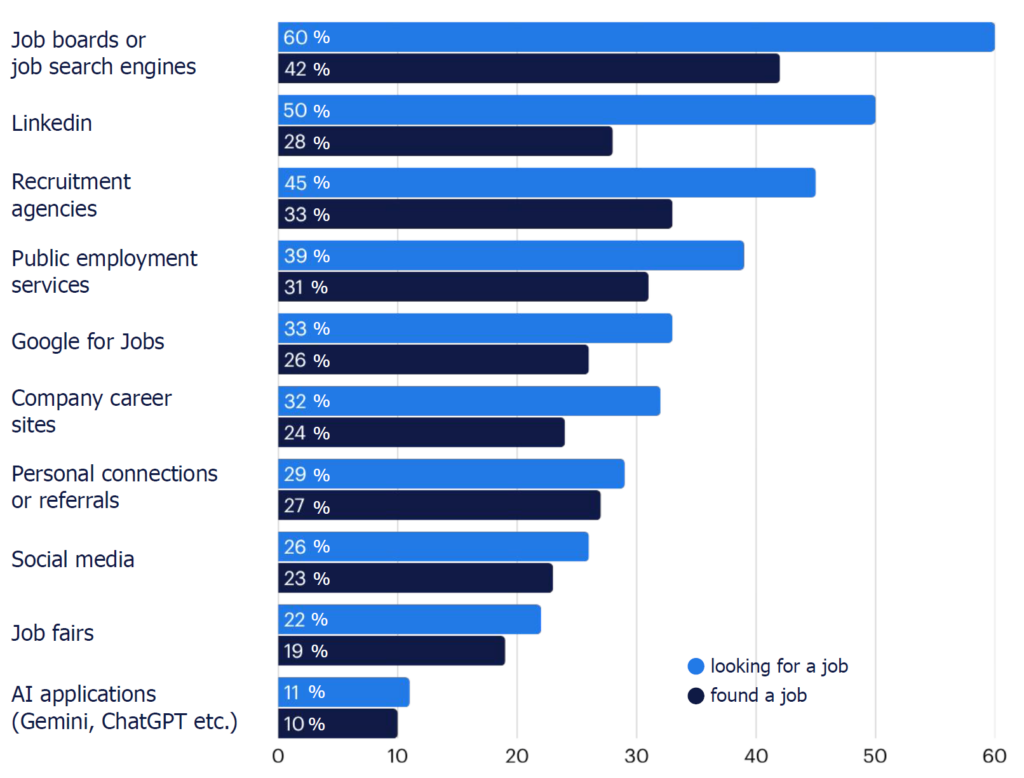
In the age of the Internet, most of us are used to looking for a job online, googling for offers on one of the numerous employment boards or LinkedIn. Data in Randstad’s recently published Employer Brand Research 2026 appears to confirm that this is the case.

Because of that, it might seem easy to forget that there are many direct ways to search for a new job. However, according to the data released by Singapore’s Ministry of Manpower in Jun, they have been growing in popularity in recent years.
In the past decade, the number of jobseekers looking for assistance at local career centres has very nearly tripled, from just over 25,000 in 2016 to over 73,000 in 2025.

Career centres are more than just a public recruitment agency.
They provide direct, individual, human assistance and coaching. They interview candidates, help prepare their resumes, advise them on potential upskilling and provide job matching services, connecting them to the right employers.
In the past, they may have been seen as a sort of “last resort” for desperate jobseekers (typically of lower educational attainment), who couldn’t land a job by applying directly. Today, they seem to have gone mainstream, attracting younger and more educated jobseekers as well.
Degree-holders have increased their share among candidates using CC services, from barely over one-fifth 10 years ago to nearly 40% last year, becoming the single largest educational group using this avenue of public job assistance.

More broadly, back in 2016, the split between secondary and lower-educated candidates and those with post-secondary education (including diplomas and degrees) was roughly 50:50.
Today, the share of those with tertiary education has risen to over 70%.

Sceptics may see this as a sign of a growing labour market crisis, where jobs are so difficult to secure that even the highly educated Singaporeans are forced to seek specialist help instead of simply applying and attending interviews.
That might seem so, but there are two pieces of data which suggest otherwise.
Firstly, the resident and citizen unemployment rates remain low, at around or slightly below 3%.
Secondly, the success rates for job placements through career centres have been going up, even as the number of candidates has grown significantly over the past 10 years.

Overall, two out of three candidates have managed to find a job through a CC last year, including 58% of degree-holders—in both cases, these are the highest numbers on record.
Educated candidates typically find it a bit harder than those looking for simpler jobs, since their specialisation is narrower and expectations regarding pay and working conditions are higher. Nevertheless, more than half of them were successfully helped in career centres, even as demand is surging.
As it turns out, even in the digital era, some good, old-fashioned career advice, coaching and human help still work very well.
Featured Image Credit: Careers Connect (Lifelong Learning Institute)/ Google Street View


Yard care can take more time than expected and if you find that you’re spending too much time mowing, it’s possible you don’t have the right sized lawn mower deck. But before you decide to buy a bigger one, beware that even if a new deck looks like it may fit, that does not mean it will. It all comes down to individual manufacturer design and how a deck is engineered to fit a specific model.
Each lawn mower manufacturer builds the frame, mounting points, and lift system around a fixed deck setup. This means that even decks with the same cutting width may not attach or operate correctly on another model. The mower’s PTO system also plays a major role, because both manual and electric PTO setups use different configurations that must match up precisely with the deck’s drive. The deck’s lift components are designed for very specific pivot points as well, which means that even small differences can prohibit a proper fit.
The key factor to remember is that because mower decks are designed to fit specific models, your best move is to verify part numbers before moving forward. Simply buying a deck from the same manufacturer as your mower isn’t enough, as similar setups may not be compatible with your exact model. If you’re browsing for a replacement deck from another manufacturer, be sure it’s compatible with your mower and always buy from a reputable retailer.

Lawn mower deck size is actually the cutting width of the mower, or the total reach of grass that’s cut in a single pass. For example, a 42-inch deck cuts a 42-inch path, while a 60-inch deck covers five feet at a time. Technically speaking, a larger deck does increase overall efficiency because you don’t need as many passes while mowing as you would with a smaller deck.
Replacing a deck isn’t the same as replacing the mower, but going with a bigger deck in order to save time does come with a price. That’s because a larger deck generally requires more engine power to operate. You’ll also need more space while mowing, which can be challenging when working in tight corners. This is why manufacturers match the deck size to the mower’s design, so the components will work together to deliver the expected performance.
Installing an Original Equipment Manufacturer (OEM) deck usually involves a process specific to the mower as well. Typically, the deck is lowered and disconnected from the mounting points and support rods. The drive belt is then removed from the engine pulley and the deck is slid out from under the mower. New deck installation follows the same steps in reverse. In many cases, this can be a complex process requiring precise connections that must be set correctly. Otherwise, the deck may not operate properly.




Loro Piana Fall 2026 Enters Houston’s Art Scene


Weekend Open Thread: Nutriplenish Leave-In Conditioner

2026 Genesis Scottish Open Thursday TV coverage: Round 1


Super Eagles star Moses Simon opens up on Liverpool transfer regret


Character.AI enters the microdrama arena with its own productions, but there’s a twist


Young campaigners urge incoming PM to act on outdoor junk food ads


XRP BOMBSHELL… XRP OMBOARDED FOR TRANSACTIONS!!!


Get Your ESP32 Sunny Side Up With This Solar Dev Board


Dark Secrets Emerge When Jailbreaking LLMs


Crypto Just Entered Its Most Important 6-Month Candle (Could Decide Everything!)


Level Infinite Launches Gangstar Mirage City in India with Pre-Registrations

Major update after Huntingdon train attack as man enters plea


how to make coin bank box with cardboard #scienceproject #money #diy #shorts

Cloudflare Precursor Watches Your Mouse and Keyboard To Decide If You Are Human


Entra passkey enrollment vishing targets Microsoft 365 users

DeFi Dashboard Zapper to Shut Down After 7 Years
Ripple, Coinbase, Circle Join Linux x402 Foundation to Help Shape AI Payments


Mark Cuban-Backed DeFi Dashboard Zapper Shuts Down After 7 Years
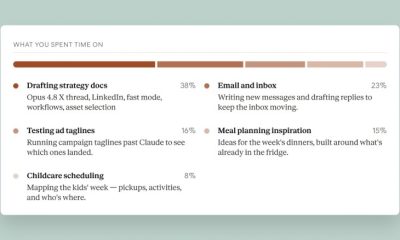

Claude’s New Reflect Dashboard Wants To Help You Log Off Of Claude


Fed minutes June 2026: officials split on rates


You must be logged in to post a comment Login