
Our solicitor has this afternoon written to the Deputy Chief Constable.

We’ll await his response with interest.






England will face Argentina in the World Cup 2026 semi-final in Atlanta, a meeting loaded with history, jeopardy and one last hurdle between Thomas Tuchel’s side and the final.
Opta’s model calls it almost a coin toss: England at 52.5% to progress versus 23.4% to win the whole thing.
This is where it can be won or lost: superstar collisions, width, set‑pieces, midfield control, defensive discipline and late‑game execution.
Jude Bellingham and Lionel Messi arrive as the defining forces of their respective campaigns. Sixteen years separate them, but both have carried enormous attacking responsibility.
Bellingham, operating as an advanced No. 10, has become England’s most explosive outlet. He has scored twice in successive games, taking his tournament tally to six, and his shot map shows a player willing to strike from anywhere in and around the box.
Messi, 39, has returned after seemingly bowing out as a world champion four years ago. He shares the Golden Boot lead with Kylian Mbappé and continues to shape Argentina’s entire attacking rhythm. His heat map shows the familiar drifting patterns: deep touches, right‑side overloads, and sudden accelerations into the final third.
Both sides know the game can tilt on a single moment from either man.
Tuchel’s England has leaned heavily on width throughout the tournament. The structure is designed to stretch opponents, create crossing lanes and isolate defenders in wide channels.
Against Argentina, that becomes even more important. Their defensive block is compact, and their full‑backs can be drawn into uncomfortable positions when forced to defend repeated wide deliveries.
England’s wingers, whether Noni Madueke, Marcus Rashford or Anthony Gordon, will be tasked with driving at the outside shoulder, forcing Argentina’s midfield to shuffle and opening pockets for Bellingham to attack.
The width that England has is one of the clearest paths to destabilising Argentina’s shape.
Set‑pieces have been a reliable source of control for England. Tuchel’s staff have drilled detailed routines, and England’s aerial profile gives them an edge.
Argentina defend set‑pieces aggressively but can be exposed by second‑phase movements. England’s centre‑backs, plus Bellingham’s timing, create multiple threats.
With a semi-final likely to be tight, dead‑ball situations could become decisive.
The midfield duel is central. England needs to dictate tempo, compress transitions and prevent Argentina from feeding Messi in comfortable zones.
Tuchel’s structure relies on disciplined spacing: the pivot screening Messi’s receiving lanes, Bellingham pressing forward triggers, and the wide players collapsing inside when possession is lost.
The dossier stresses that England must avoid chaotic exchanges. Argentina thrives when the game becomes stretched and stop-start.
If England can slow Argentina’s build-up and force them into predictable patterns, they tilt the match in their favour.
Stopping Messi is not a single assignment. The analysis makes clear England will not man‑mark him. Instead, they need a collective plan: controlling zones, anticipating his drifting, and preventing him from receiving between lines.
Messi’s defensive work is minimal, meaning England can exploit the spaces he leaves when Argentina defend with nine outfield players. England’s left‑back should not track Messi everywhere. Instead, England should use that freedom to progress possession.
The flip side remains. Messi has scored eight goals and added two assists this tournament. Any lapse, any loose touch, any broken structure can be punished instantly.
Argentina’s defensive vulnerabilities are clear. The team defends with intensity but can be exposed when opponents move the ball quickly across the pitch.
England’s best route is through rotations: full‑back overlaps, inside‑forward runs, and Bellingham arriving late. When England commits numbers-wide, Argentina’s midfield can be dragged out, leaving central channels open.
It is important to note that England should not only try to stop Messi but also exploit his defensive absence. When England has the ball, the team effectively plays against nine defenders. That numerical advantage must be used.
England has developed a habit of scoring late. The team’s fitness, squad depth and Tuchel’s in‑game adjustments have repeatedly shifted matches in the final 20 minutes. Any late goals could decide this semi-final.
England’s bench with Gordon, Madueke, Rashford — fresh midfield legs — gives Tuchel options to change tempo and stretch Argentina’s tiring block.
Argentina, meanwhile, has relied heavily on Messi for late-game inspiration. England must be prepared for the final 10 minutes becoming a duel of decisive moments.
The semi-final carries weight. England has not reached a World Cup final in 60 years. Argentina are defending champions, accustomed to high‑pressure knockout games.
Tuchel’s side must manage the emotional load: stay patient, avoid forcing transitions, and maintain structure even when the game tightens. The reality is that England’s discipline will be tested, not just their talent. This will determine whether they reach the final.
Argentina will be attempting every dark trick in the book to destabilise the England players.
England needs to deliver a complete, controlled performance. They must stretch Argentina wide, dominate set‑pieces, and manage the midfield battle with precision.
Players must restrict Messi’s influence without obsessing over him and they must exploit the spaces he leaves when England has the ball.
Tuchel’s side has the tools, including Bellingham in peak form, a wide structure built for big knockout games, and a bench capable of changing the match late.
The semi-final is delicately balanced, almost a coin toss. England has a clear tactical roadmap. If we execute it, we will reach the World Cup final.
Featured image via the Canary
By Faz Ali
The post The silencing of Great Britain appeared first on spiked.


“It’s a soccer match. Nothing more to it. Period.”
That’s how Argentina coach Lionel Scaloni described his team’s upcoming World Cup semifinal against England to journalists.
No one believes him, least of all Argentinians themselves.
For many in the South American nation, the match is more than a stepping stone toward the World Cup title. It is a long-awaited chance to restore their national pride, over four decades after the British established de facto control over a cluster of islands in the South Atlantic.
For Argentina’s President Javier Milei, the timing couldn’t be better. Unpopular at home over multiple corruption scandals and rampant inflation, yet buoyed by his close alliance with U.S. President Donald Trump, he has sought to rally Argentinians around the flag by breathing new life into the dispute which claimed 649 Argentine and 255 British lives.
“Argentina is a very polarized country, like so much of the Americas. But this is an issue that unites everyone,” said Rebecca Bill Chavez, who served as deputy assistant secretary of defense for western hemisphere affairs under former President Barack Obama.
“It doesn’t matter in Argentina: Left, right, center — you’re all for the Malvinas, as they call it,” Bill Chavez adds, referencing the name Argentinians use for the Falklands.
On Saturday, five days before the match, Argentina’s Foreign Minister Pablo Quirno came out swinging with a lengthy opinion piece in the conservative daily “La Nación.”
The Malvinas, he argued, were Argentinian “by history, by right, and by conviction” and the Brits guilty of an “illegal occupation.”
On the eve of the game, the country’s vice president, Victoria Villarruel, amped up the rhetoric in a post on X that referred to England as “invaders” and “usurping pirates.”
It is the latest in a series of jabs at Westminster, marking a notable shift for the government of Milei, who distinguished himself from his predecessors by taking a relatively moderate — and domestically sensitive — stance on the Falklands.
He has openly praised Margaret Thatcher, the British prime minister who sent troops to the islands in 1982. And he seemed to accept the results of a 2013 referendum in which 99.8 percent of the Falklands’ residents voted to remain under British rule (only three people voted against).
One day, Milei fantasized in a speech on Veterans Day in April just last year, the islanders might find Argentina so attractive that they’d “vote for us” voluntarily.
But that was then.
This April he announced on X that the Falklands “were, are and will always be Argentine.”
The jingoistic post came hours after Reuters reported that an internal Pentagon memo had suggested Washington could review its diplomatic support for the British position on the Falklands in retaliation for its foot-dragging on Iran.
Milei’s brashness, and the absence of a U.S. response, is evidence of his close relationship with the White House under Trump, notes Bill Chavez.
“In the past, if an Argentine government had made such a statement, I think it would have caused real tension in the U.S.-Argentine relationship,” she said.
But she cautions that neither the leaked memo nor American support for Argentina’s acquisition of F16s in 2025 under the Biden administration indicates an actual shift in U.S. policy on the Falklands.
For Milei, the Falklands issue is not straightforward either.
If the topic becomes too central, “Milei loses,” said Andrés Gilio of Opina Argentina, a pollster.
In a survey it conducted in April, an overwhelming majority of respondents, 79 percent, argued the country should pursue sovereignty over the islands “without concessions.”
“Either Milei ‘Malvinizes’ his discourse, aligning himself with public opinion but straining relations with the United States and blurring his ideological profile, or he remains faithful to his ideas, downplaying the sovereignty claim, at the risk of going against most of society’s wishes,” said Gilio.
So far, Milei has pressed the Falklands issue in international forums while refraining from a real confrontation.
The Argentinian Foreign Ministry declined to comment in time for this article’s publication.
Argentina has faced England five times at the World Cup, rarely without drama. Seared into Argentina’s national memory is the 1986 quarterfinal, just four years after the Falklands war, when Diego Maradona scored two historic goals.
“Although before the match we kept saying that football had nothing to do with the Falklands War,” Maradona would later write in his biography, “we knew that many young Argentine boys had died there, that they had been killed like little birds.”
This time around, Argentina’s players and fans have been anything but subtle, invoking the conflict long before they were drawn to face England. After winning against Egypt, the team’s players were filmed belting out a song calling for an Argentine World Cup victory, “for Malvinas,” in a video since gone viral.
Off-pitch, there have been skirmishes between British and Argentinian fans even as jubilant Argentine supporters have celebrated victories by singing “Whoever doesn’t jump is an Englishman.” As a precaution, FIFA has barred two of its English referees from officiating any Argentina matches.
Asked about the flaring tensions, a spokesperson for British Prime Minister Keir Starmer said this week that “The Falkland Islanders are British with the right to determine their own future.” Starmer, he said, was “solely focused on the semi-final and securing a spot in the final.”
But perhaps the strongest plea for restraint has come from Argentinian veterans.
“Sport is not war,” the April 2 veterans group wrote in a statement widely circulated by Argentinian media on Monday.
“The World Cup semifinal is a sporting event of global significance, not an armed act of revenge or historical compensation.”
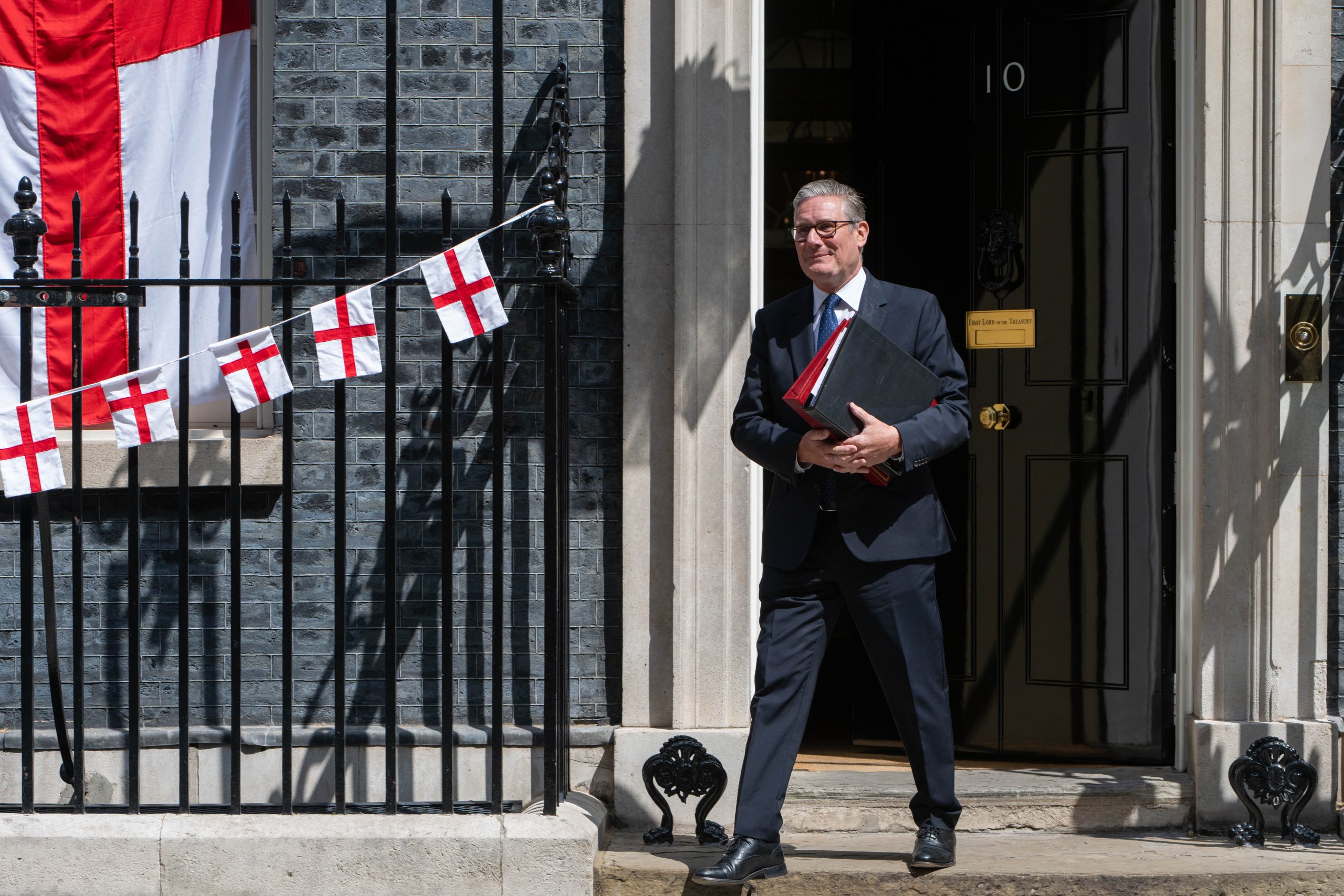

The House of Commons was exercised on Wednesday about the prospect of England beating Argentina in tonight’s World Cup semifinal.
Ahead of Keir Starmer’s last Prime Minister’s Questions as premier before he exits the top job, Commons Speaker Lindsay Hoyle — the normally impartial chair — said he hoped the PM will be “bringing home” World Cup victory to widespread cheers.
Starmer, a huge soccer fan who cheers for Arsenal in the Premier League, opened PMQs by stressing his “important appointment with the television” this evening to watch the match live.
Opposition Conservative MP Graham Stuart compared the prime minister to England superstar Jude Bellingham by “scoring the winning goal, leading our team to victory,” though Starmer had “now been handed a red card by the 400 dodgy referees behind him,” referring to the 2024 election win before a Labour rebellion that helped topple him.
The PM continued on the subject of red cards by saying “I can’t tell him how much incoming I had … to get the England red card adjusted,” after President Donald Trump’s intervention to help overturn the suspension of U.S. striker Folarin Balogun.
Starmer said he didn’t follow the U.S. president’s example, after Jarell Quansah was sent off against Mexico and suspended.
How about we start again and do it all like that? The party leaders had come in their most deceptive disguise – as amused, ironic, decent British civilians. With occasional flashes of feline tooth and claw, they conducted their business in a language we could all understand. We were included. We were part of a…
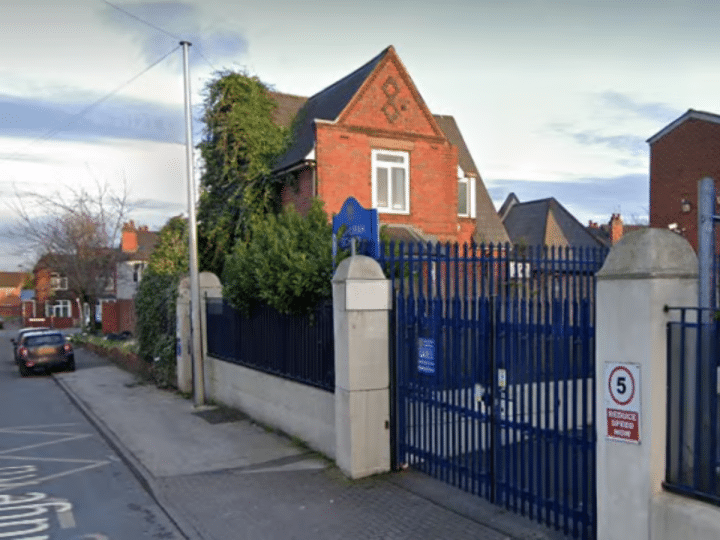
The silence of politicians and mainstream media on Islamophobic attacks continues with a secondary school in Birmingham.
After a string of attacks on mosques and family homes, Hamd House School in the Bordesley Green area of the city, had to be evacuated after a bomb threat on Tuesday.
But apart from an article in Birmingham Live, the frightening incident has been ignored by government and state-corporate media.
It was reported that 450 pupils had to flee the building while police with sniffer dogs swept it for explosives.
Israr Khan, boss of the independent school, rated ‘outstanding’ by Ofsted, said it has been repeatedly targeted.
He told Birmingham Live that the threat had come as children celebrated their last day before the summer holidays.
Khan said:
School was full and pupils were celebrating the last day before summer, we were giving out awards and having a day of celebration and fun on this special day, and this was hugely disrupting.
At this stage the matter remains an open police investigation. An unusual and bizarre quirk to this situation is that the threat was also sent to Ofsted. The police have logged this incident as harassment. We will continue to cooperate fully with the authorities and follow any advice they provide.
We appreciate that today’s events were upsetting and disappointing…our end of year celebrations, leaving activities and awards ceremonies had to be brought to an abrupt end.
Yet again, the UK media-political axis makes clear that it values the lives and safety of Muslims far less than those of others.
Featured image via Birmingham World
By Skwawkbox
Our solicitor has this afternoon written to the Deputy Chief Constable.
We’ll await his response with interest.
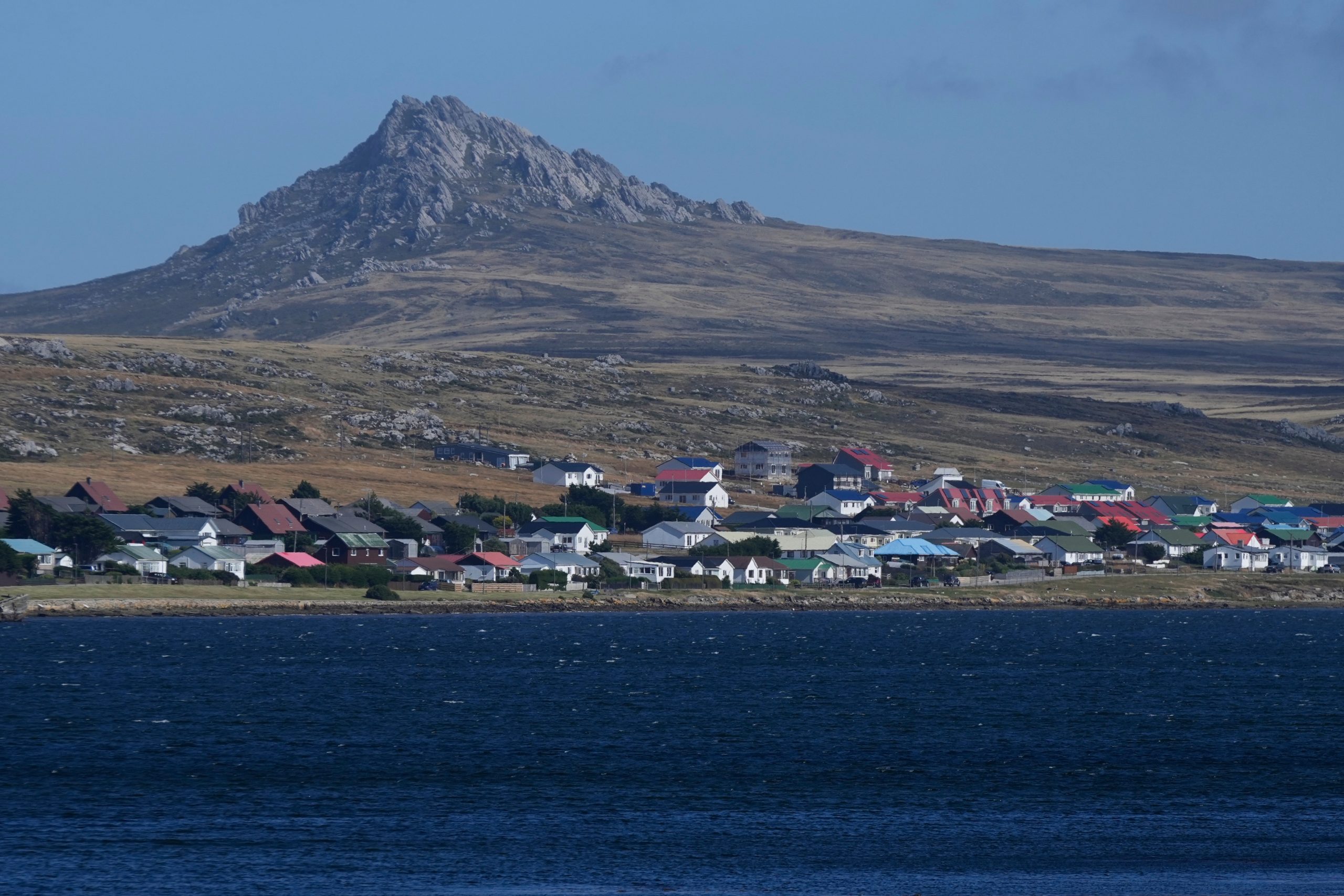

It’s win or bust for England and Argentina in Atlanta tonight.
But in one area of global affairs — in a part of the world very familiar to leaders in London and Buenos Aires — both are about to lose.
As first reported by the Financial Times, developers are prepping to drill the Sea Lion oil field north of the Falklands, the tiny archipelago and British Overseas Territory over which Argentina and Britain went to war in 1982.
Any windfall from an oil boom — and developers reckon revenues could run to hundreds of millions of pounds a year — would be directed to the Falklands government, much to the annoyance of Argentinian President Javier Milei, who insisted any resources “belong to Argentina.”
Not that Brits will look on particularly happily. Oil field cash flowing into Falklands’ coffers (and not to the British state) will be a reminder that the fossil fuel economy in the North Sea, once a powerhouse for jobs and Treasury income, is dwindling fast.
By 2034, according to Navitas Petroleum, co-owners of the Sea Lion field, its revenues could be worth £280 million to the island. By that point, the FT noted, its annual value to the Falklands would outstrip U.K. oil and gas revenues, which are set to dip to just £100 million by 2031.
The Falklands’ government is likely to use the money to rebuild knackered energy infrastructure. Meanwhile, lobby group Offshore Energies UK says, the decline of the North Sea is already costing a thousand jobs a month.
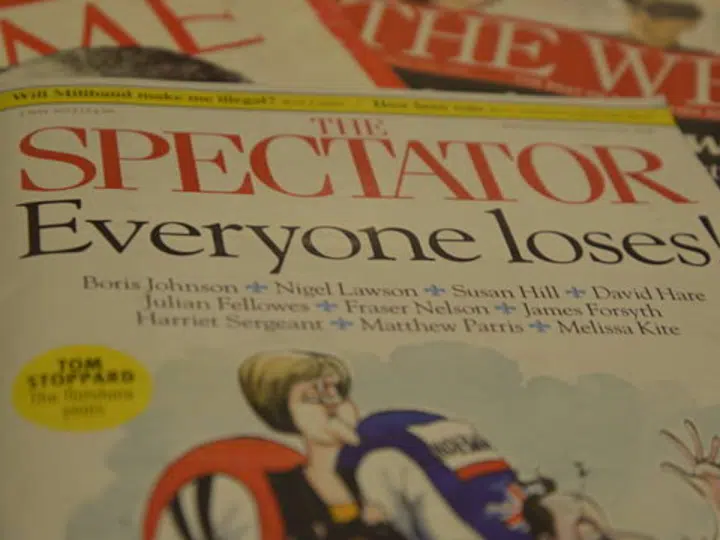
On 14 July, the Centre for Media Monitoring (CfMM) published a shocking – but sadly unsurprising – report into the stark Islamophobia on display at the Spectator, the UK’s oldest political magazine.
The CfMM is an independent non-profit organisation which monitors the representation of Islam in the mainstream media. For its latest report, entitled ‘No Mere Spectator’, it presented comprehensive qualitative and quantitative analysis:
of 3,733 articles published by The Spectator between January 2018 and December 2025 relating to Islam, Muslims, Muslim communities, Muslim-majority countries, or issues in which Muslims were a central subject of discussion.
From this analysis, it concluded that the magazine:
does not merely comment on Muslims and Islam but consistently constructs them as a problem, and that it does so while invoking the language of free speech to place that coverage beyond criticism.
The CfMM study found that just over 57% of the Spectator’s articles were either ‘biased’ or ‘very biased’ against Muslims. Meanwhile, it rated just 11.6% as ‘not biased’.
This effect was even more pronounced for articles which specifically centered on the subject of Islamophobia. A massive 72.8% were either biased or very biased, whereas just 2% were unbiased. In particular, the report stated that:
Rather than treating anti-Muslim prejudice as a form of discrimination requiring serious consideration, articles frequently characterise concerns about Islamophobia as attempts to suppress criticism, restrict free speech, obstruct counter-extremism efforts or shield Islam from scrutiny. The effect is to recast protections against discrimination as threats to liberal values.
This bias was notably visible in the magazine’s treatment of the topic of terrorism and political violence. The report observed a “persistent tendency” to conflate Islam, Islamism, and extremist movements. It also added that:
The Conflict and Terrorism coverage presents acts of “Islamist” violence not as the product of specific extremist ideologies but as expressions of Islam’s inherent character, while consistently minimising and relativising far-right terrorism. This includes its response to the Christchurch massacre, where the murder of 51 Muslims in their places of worship was used primarily as a vehicle to attack those who raised concerns about anti-Muslim rhetoric.
Meanwhile, the Spectator repeatedly framed Muslim political advocacy and campaigning as evidence of extremism or ‘disproportionate influence’. What for any other community would be perfectly ordinary participation in democracy instead became sinister, sectarian and “uniquely problematic” for Muslims.
The magazine also displayed a deeply alarming ideological complicity with the narratives of the far right. This included presenting ‘great replacement’ arguments alongside mainstream political commentary, and even framing Muslims’ participation in society as invasion.
The CfMM stated that this repeated pattern went far beyond “isolated editorial lapses”, and that its relationship to the far right was well past the mere “toleration of editorial opinion”. The report held that this relationship was:
cemented by the political affiliations of The Spectator’s new owner, hedge fund manager Sir Paul Marshall. Marshall bought the magazine for £100 million in September 2024 and is co-owner and founder of GB News as well as owner of UnHerd. Marshall’s media titles are highly influential vehicles for the circulation of right-wing and anti-Muslim content. According to the Media Reform Coalition, GB News and The Spectator have regularly been found in breach of broadcasting and editorial standards by Ofcom and the press regulator IPSO.
The CfMM’s work in general, and ‘No Mere Spectator’ in particular, is important precisely because it provides robust, evidence based backing for what Muslims in the UK have recognised for decades: this country’s mainstream media outlets emit a distinct and longstanding bias against Islam and its adherents.
Our attitudes as a society are shaped by the things we read about our communities and others. That’s why, as the Canary has previously reported, a handful of billionaires have pumped more than £170 million into the UK’s populist right-wing ecosystem over the last five years. Alex/Rose Cocker wrote that:
The £170 million was split between populist-right MPs and political parties, alongside their aligned media organisations and thinktanks. Of that, more than £130 million came from just four sources: crypto investor Chris Harborne, financier Jeremy Hosking, hedge fund manager Paul Marshall, and investment firm Legatum.
The UK’s media, and our society’s opinions along with it, are being bought wholesale by the ultra-rich right. They profit from our hatred and division, and use Islamophobia as a tool of distraction and influence – to the ongoing devastation of the Muslims in the UK and around the world.
Featured image via the Canary
By Grace
(Milos / Adobe Stock)
4 min read
Earlier this year, regulators approved the first-ever immunotherapy treatment for people with an aggressive form of stomach cancer, made by AstraZeneca.
Just two weeks ago, the world’s first-ever immunotherapy for type 1 diabetes was approved for use in the NHS. This could give people months or even years before they need treatment, by slowing down the disease before symptoms begin. A 15-year-old boy, Sam, in Birmingham Children’s Hospital, was the first person to receive the drug.
These life-changing innovations are all made possible by a thriving life sciences ecosystem in the UK. However, in recent years we have seen the sector struggle with slowing investment, new treatments tangled up in red tape, and a looming skills gap.
That is why we launched our Life Sciences Sector Plan a year ago. Supported by £2bn of government funding over the Spending Review, to bring in billions in investment, create thousands of new jobs and most importantly, to deliver innovative treatments to patients faster. And the plan is working.
We are making the UK a top destination to invest in life sciences, and businesses are taking notice. Over the past year, we have attracted more than £3bn of investment into the UK’s life sciences sector. In 2024, we raised the highest amount of equity finance in Europe and were behind only the US and China globally.
Through the Life Sciences Innovative Manufacturing Fund, our strategic grants have helped to secure £700m in public-private investment so far. This investment brings new labs and research facilities in the UK and makes sure they stay here.
Crucially, these investments are turning talent and expertise right across the country into new treatments for illnesses which touch all of our lives.
We are also putting the UK and the NHS in the best position to gain swift access to new medicines.
Through our UK/US pharmaceutical arrangement, we are ensuring we can continue to gain access to the latest pharmaceutical treatments for NHS patients, as well as securing a commitment to zero tariffs on our pharmaceutical exports to the US – the best any country has achieved.
Our changes to the NICE cost-effectiveness threshold – essentially the amount that we will pay for important new innovative medicines – are opening up access to new treatments for NHS patients, which were previously turned down on cost grounds alone.
This has already given NHS patients access to life-changing medicines, including a brain cancer drug for patients as young as 12, a treatment for muscular dystrophy in children, and a last-resort treatment for patients with a rare form of stomach cancer.
We are also getting new treatments to patients faster by cutting red tape to speed up clinical trials. The average set-up time for commercial clinical trials in the UK has been slashed from 169 to 122 days.
A thriving life sciences sector isn’t just good for patients, it drives the UK’s economic growth. Indeed, science and innovation are the building blocks for reindustrialising Britain.
Around 360,000 people in the UK work in life sciences, in every area of the country.
Success in life sciences here means thousands of skilled workers gaining good jobs and powering regional economies.
With our new Life Sciences Sector Jobs Plan, we are working with industry to lay the foundations for an additional 66,000 roles in priority professions in the sector by 2035.
This offers exciting prospects for young people to find careers as lab technicians, chemical scientists or software developers. Apprenticeships, T Levels and V Levels will offer a key path for young people to break into life sciences and help create new ways of detecting and preventing diseases, and treating them.
The UK has the research base, the talent, and, through this government, the right plan to ensure our Life Sciences sector can go from strength to strength.
We are putting science to work to transform the UK into a healthier and wealthier nation.
Lord Vallance is Minister for Science, Innovation, Research and Nuclear

Ellie Kamio is one of the ‘Filton 25’ group of anti-genocide activists targeted by the UK government for damaging an Israeli death factory.
In the sick farce of Keir Starmer’s war on UK, Kamio and three others were sentenced as terrorists despite being charged with no terror offence.
The judge, deeply connected to the ‘security services’, banned the jury from knowing they could acquit — and banned jurors from knowing about his sentencing plans until after they convicted. Even the press were banned from reporting on it.
But Kamio remains defiant and celebrates the ‘award’ of her ‘terror’ sentence.
View this post on Instagram
In an Instagram post, Kamio posted a mocked-up image of herself receiving a gold award, alongside images of Israel’s destruction of Gaza.
In a statement accompanying the images, she thanked her supporters and the Palestinian people, talked about the farce of the trial and the regime’s purposes in criminalising protest.
She defiantly refused to be crushed by the draconian sentences imposed on her and fellow protesters for resisting the UK’s collaboration with Israel. She also added that the victims of the trial will be appealing against the sentences.
Her post in full:
wow wtf who would have thought that the girl from swansea who grows veggies and likes to party would earn this title. i’m flattered that the state thinks i’m this annoying. this is a label that has been given to so many who have fought against apartheid and genocide throughout history. if opposing genocide makes me a terrorist then so be it. because it was an honour to dismantle 40 weapons that would commit war crimes.
i’d like to thank my mum and the rest of my family. to the people who raised me and the ones who shaped how i see and move through the world. but most importantly i need to thank palestinians because when i think of your liberation, it is worth it.
i’m grateful to everyone who has been here, physically and spiritually, who has written, prayed, cast spells and sends us love. you lot have given me strength for prison round 2

on the morning of the 12th of june it was clear from judge johnson’s giddiness that he had prewritten a wild sentence, that completely disregarded sentencing guidelines and quite frankly the law. no surprise there lol. now i know what the worst case scenario is. it sucks but i can do it.
the crown prosecution aptly named our case ‘operation recomply’. we were arrested under counter terror powers on the 7th august 2024. this was always their plan. to use our convictions to justify the proscription of palestine action. to intimidate britain into complying. to stay ignorant or lose hope. has it worked?
so long as there is a hole in my arse my spirit cannot be crushed. it is not the time to despair. it is the time to work together and channel our rage into something productive. because when the state moves as weird as it has been, it means that liberation is close.
celebrate moog’s hung jury! pull up for the next wave of filton 25 (major babes) who are currently on trial at the old bailey. they need you now so please show them the same love we received. meanwhile us four will be back at it again to appeal sentencing.
my final thank you goes to all the losers who have had a hand in my imprisonment. in trying to squash our spirits, the state has hammered us with everything they’ve got. in doing so, it has created the most resilient group of people who now know the inner workings of the legal and prison system. knowledge is power baby! they will continue to underestimate the people and i will watch the state’s flailing corruption burn to the ground from my cell hehe.
i believe in you all.
palestine will hear the birds

Starmer is packing his bags ready to slink out of No.10 in disgrace. But even as he slithers away, his regime continues its war on UK freedoms and rights to protect Israel.
His government finds the Terrorism Act so useful and easy to wield against peaceful resistance that it has extended the same provisions to any group it decides to ‘designate’.
The new National Security (State Threats) Act allows the government to prosecute anyone who even uses information from sources the UK regime decides oppose its interests. The first to be banned is Iran’s Revolutionary Guard (IRGC), making it a criminal offence to quote the IRGC on its military actions against the UK and Israel’s illegal war.
Sentences range to up to 14 years in prison, just as for the Terrorism Act.
There is no exemption for journalism.
To his everlasting shame, incoming prime minister, Andy Burnham — supposedly a change from Starmer — has supported the new legislation. Just as he has supported Starmer’s backdoor mandatory ID scam and other attacks on UK citizens’ freedoms.
Burnham shows no sign at all of rolling back any of his predecessor’s police-state measures. Indeed, he is already signalling that he will go further.
Featured image via PA
By Skwawkbox




Loro Piana Fall 2026 Enters Houston’s Art Scene


Weekend Open Thread: Nutriplenish Leave-In Conditioner

2026 Genesis Scottish Open Thursday TV coverage: Round 1


Super Eagles star Moses Simon opens up on Liverpool transfer regret


Character.AI enters the microdrama arena with its own productions, but there’s a twist


Young campaigners urge incoming PM to act on outdoor junk food ads


XRP BOMBSHELL… XRP OMBOARDED FOR TRANSACTIONS!!!


Get Your ESP32 Sunny Side Up With This Solar Dev Board


Dark Secrets Emerge When Jailbreaking LLMs


Crypto Just Entered Its Most Important 6-Month Candle (Could Decide Everything!)


Level Infinite Launches Gangstar Mirage City in India with Pre-Registrations

Major update after Huntingdon train attack as man enters plea


how to make coin bank box with cardboard #scienceproject #money #diy #shorts

Cloudflare Precursor Watches Your Mouse and Keyboard To Decide If You Are Human

Entra passkey enrollment vishing targets Microsoft 365 users

DeFi Dashboard Zapper to Shut Down After 7 Years
Ripple, Coinbase, Circle Join Linux x402 Foundation to Help Shape AI Payments

Mark Cuban-Backed DeFi Dashboard Zapper Shuts Down After 7 Years
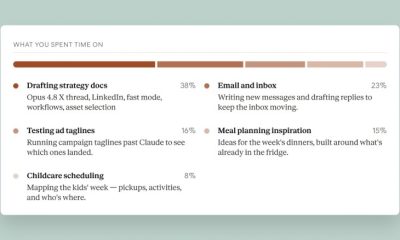

Claude’s New Reflect Dashboard Wants To Help You Log Off Of Claude


Fed minutes June 2026: officials split on rates
 ellie kamio
  (@elliekamio)


You must be logged in to post a comment Login