

Politics
The House | Inside Burnham’s ‘No 10 North’ Plans: “It’s Not Just About Creating A Second Westminster”

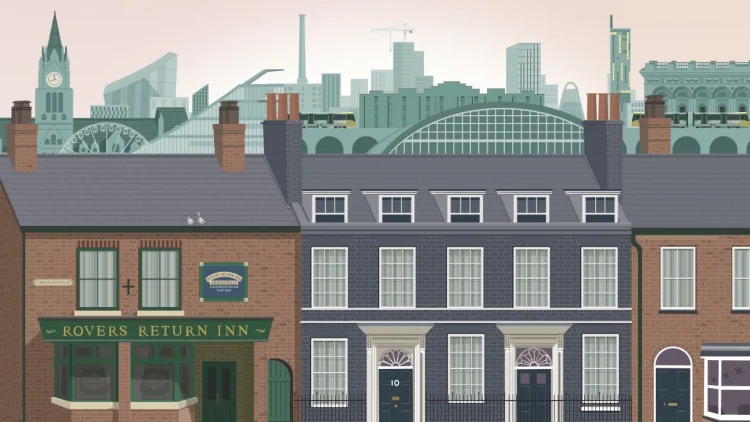

Illustration by Tracy Worrall

21 min read
Andy Burnham has pledged to create a ‘No 10 North’ in Manchester that would serve as the ‘nerve centre of a rewired Britain’. Will it work? How? Sienna Rodgers reports
Back in 2015, Andy Burnham was on his second attempt at winning the Labour leadership. Although ruthlessly mocked for overemphasising his outsider status as a Northerner, he was the frontrunner at first and Labour’s biggest donor, Unite, was ready to endorse him.
If you want our backing, the union said, you’ve got it – you just need to call us on Monday morning. But Burnham was reluctant to accept their funding. So, Monday came and went. Tuesday came and went, too. The “change candidate” released a statement to make clear he would refuse to be beholden to any one section of the movement. Unite turned to Jeremy Corbyn instead, and the course of history was forever changed.
On his third time trying, Burnham has no opponents – and he has not just stuck with his northern branding but put it at the centre of his forthcoming project as the sole Labour candidate to be our next prime minister.
The King of the North has not yet stepped over the threshold of 10 Downing Street, but already he is clear that fundamental to his government will be bringing power to – where else? – the North, made tangible with a second prime minister’s office in Manchester. “True to the motto of this city,” he declared there, in his first vision-setting speech as prime minister-in-waiting, “I am going to do things differently.”
While Burnham accepts the need to be in London when Parliament is sitting, his team say he wants to spend as little time as possible “closed off” behind that famous high-gloss black door. He hopes instead to show the country that decision-making does not only happen in Westminster – and he fully expects to be in the new ‘No 10 North’ at least one day a week.
The incoming prime minister has promised that this new office in Manchester will act as “the nerve-centre of a rewired Britain”. The plan is not to duplicate the work of London’s No 10 but to task No 10 North specifically with driving Burnham’s “devolution and growth agenda”.
Caroline Simpson, the Greater Manchester Combined Authority’s chief executive who is credited with helping him deliver fast growth in the region, will lead that work and be based there as his deputy chief of staff, while former Blairite minister James Purnell will run No 10 South.
Burnham would like to see No 10 North located at a government hub already under construction, the Manchester Digital Campus in Ancoats, but that is not due to be completed until 2032. Other sites in Greater Manchester fit the bill and interim arrangements are being made to get the new office up and running “as quickly as possible”, The House understands.
One Labour source says part of the thinking behind No 10 North is that, with lobby hacks based in Westminster, rooting part of the operation elsewhere could help limit leaks. Burnham’s team declines to address the claim specifically but stresses that unauthorised briefing and leaking is not an acceptable part of the culture – regardless of where staff might be based – and he is determined to stamp it out.
Some Labour MPs are freely criticising the No 10 North plan, of course. Hardcore Starmerites are particularly dismissive. “Yawn,” says one, who admits they are looking forward to life as a rebellious backbench MP under Burnham. “It sounds performative and seems like a gimmick.” Scottish MPs, meanwhile, like to point out that Burnham should try acknowledging “the real North”. (Plaid Cymru’s Rhun ap Iorwerth, First Minister of Wales, similarly said the proposal “means very little to the people of Wales”.)
Others are more welcoming. “Moving media to Manchester did make a difference for my constituents – the middle-class ones, anyway,” says a Labour MP with a northern seat, citing the BBC’s mass move to Salford as a positive example. “I’m interested to see how it would work in practice, but after years of the North being forgotten and left behind, I welcome anything that puts us firmly on the map and in the minds of No 10,” says another.
Many point out that it is at least evidence that Burnham has a story to tell the country about its future – something they argue Keir Starmer sorely lacked. There are concerns, however, about whether the move is purely symbolic. “What does it actually mean in practice? It will only be meaningful to my constituents if it leads to something real,” says a different northern backbencher.
“He will spend time out of London in a way that other prime ministers don’t, but this idea that it’s two days a week or whatever – it’s almost impossible to see how that will work”
Theo Bertram, director of the Social Market Foundation (SMF) think tank, reckons No 10 North’s symbolic value should not be understated. “That you could go and work in No 10, at the very top of government, without having to move to London, that is a positive symbol – even if that’s all it is,” he says. “The whole circus of Westminster will gear itself more to Manchester. To some degree, it already is.”
He adds: “What makes it not gimmicky is that this is pretty consistent with both his economic narrative and his political message, which are all about place.”
And while some have accused Burnham of unwisely moving a chunk of government to Manchester simply because that is where his family lives and is keen to stay, Bertram does not see this as a problem.
“We expect prime ministers to just up sticks, move their whole family – no matter what stage they’re at with their schooling – down to London and into this weird building that’s not really suitable to be a home, let alone the office of a head of state.
“Actually, if Andy Burnham can lead a more ‘normal life’ by still keeping some connection to where he feels at home, where his family might be able to stay, I think all of those things would be positive.”
Crucially, No 10 North – if done well – could allow the next prime minister to make clear his priorities in government and drive them through more effectively than he otherwise might have.
“If you go back to some of the things that Blair did with his policy unit,” explains Bertram, who advised both Tony Blair and Gordon Brown in No 10, “it was really clear that this wasn’t coming from a secretary of state – it was coming from the PM himself. The person who was working on it – say, Andrew Adonis, working on academy schools – what you knew is, this is the thing that the prime minister cares about and is driving.”
Whether No 10 North staff use email addresses ending in “no10.gov.uk” is one of those details that will be key to determining whether their work is taken seriously and prioritised, a Labour source argues.
Luke Sullivan, who was Starmer’s political director in opposition and previously worked as a spad to the chief whip towards the end of the New Labour government, makes a similar point.
“The most important words in Whitehall still are: ‘The prime minister wants’, or at least should be,” he says. He describes complaints frequently heard during the Starmer era about the obstructive nature of civil servants as “self-defeating” and “not reflective of what’s going on”.
“Where you’ve got really clear political leadership and ministerial direction,” Sullivan says, citing Ed Miliband in Desnz and Shabana Mahmood at the Home Office as examples, “those secretaries of state and those departments were seen to be delivering because they had clear guidance”.
Like Bertram, Sullivan thinks PMs being rooted in their seats is no bad thing. “Gordon and Tony spent significant chunks of time in their constituencies or in their constituency homes, and I think it made them better politicians for it,” he says.
“The geography is less important than the structures and clarity over people’s roles… I think that was probably one of those things under Keir where I’m not sure that was always clear – who had responsibility for what.”
Dave Penman, general secretary of the FDA trade union for civil servants, tells The House he appreciates the symbolic value of No 10 North and its contribution to Burnham’s vision, but raises concerns about the practicalities involved.
“Access to the prime minister – officials fight over it, politicians fight over it, because that’s really important to how you make government work. If you’re on a train or in the wrong location, or there’s some people there but not here, it’s just not going to work,” the union chief warns.
“Think of the amount of time you spend travelling, the demands on a prime minister, the need to be in the room with the prime minister… Him looking people in the eye is how things will actually happen.” Putting limits on this time “because that conversation is had with someone who’s supposed to be in Manchester when they’re in London, or London when they’re in Manchester”, he says, “will cause restrictions”.
“He will spend time out of London in a way that other prime ministers don’t, but this idea that it’s two days a week or whatever – it’s almost impossible to see how that will work, and it’s probably not what he means. I think he just means to demonstrate and show leadership.”
Penman is especially anxious about the impact on civil servants. “It’s a one-way ticket when you move out of London. It’s almost impossible to go back if you move permanently,” he explains, echoing a long-established principle based on the inaccessibility of the capital’s housing market.
“People have got to feel there’s a career for them – it’s not a one-move thing. There’s a potential for that around the M62 corridor, because you’ve got a lot of big conurbations… But it’s got to be thought through.”
He also flags that recruitment will need careful consideration: “If it’s 500 people [working in No 10 North], chances are there aren’t 500 people with the right experience already in and around Manchester.”
It has been suggested that Burnham could staff No 10 North with people already working in combined authorities around the country, who will be experienced in the relevant areas. “You can understand that’s an expertise you want,” says Penman reacting to the idea, but he asks: “Are they going to leave what they’re doing just now? Do they understand how you get government to work?”
Penman is keen not to be seen as too critical, saying: “You can get through all of this – it’s all doable.” But he cautions that Burnham must offer more clarity on the detail, adding: “He’s saying, ‘I want to do things differently.’ That doesn’t mean he’s worked any of that stuff out… You can’t just be on the vision stuff when you become prime minister. You’re a midterm prime minister as well – you’ve not got a lot of time here.”
Asked whether he is hopeful that Burnham will not talk negatively of the Civil Service, after Starmer declared in 2024 that “too many people in Whitehall are comfortable in the tepid bath of managed decline”, Penman warns Burnham: “You can’t have a situation where Whitehall becomes a term of abuse, and I think that’s the danger for him.”
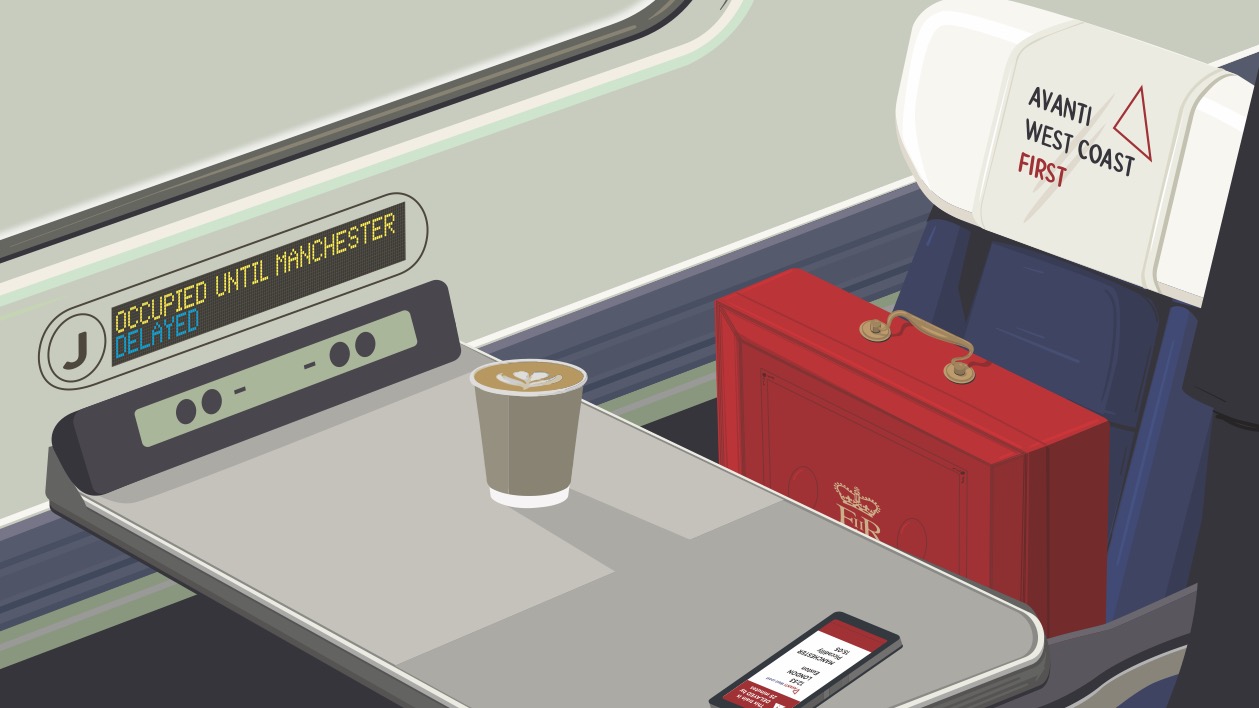
Burnham’s team will not comment on security concerns over the plan to have him working in No 10 North every week. While the train would offer the best optics, it is thought that taking it at such regular times would present a risk. “The prime minister can’t just get on the 3.05 from Euston,” as Penman puts it.
Bertram suggests they would use a variety of transport methods and points out, referencing Blair’s constituency journey, “You’d be surprised how fast you can get from Sedgefield to London if you’ve got a police convoy the whole way.” They tend to drive far over the speed limit, he explains, as that is a sure way of telling whether any other drivers around are hostile.
Then there is the question of whether, as some suggest, the devolution brief would have to be removed from the Ministry of Housing, Communities and Local Government (MHCLG) where it currently lies, to avoid duplication of work. There is no clarity from Burnham’s camp so far on this point.
The relationship between No 10 North and MHCLG will need to be figured out. Hannah Keenan, associate director at the Institute for Government (IfG), says the two could work well together.
“What you have is a bit of the centre that’s holding you to account as a department, but also that’s helping you as MHCLG, who are right behind this devolution agenda, to bash heads around Whitehall: ‘Actually, no DWP, you do have to get on board with this thing that is happening over here, or we’re going to find a way to manage this bit of tension in that relationship,’” she says.
“It is fine and good for No 10 to be big enough to actually support the prime minister’s interest in his top priority, which sounds like it’s devolution,” Keenan adds, comparing this definition to the Starmer era’s ‘mission-led government’, which became less distinct over time. “The clarity of purpose that might have existed at the start of the Starmer premiership dissipated over the course of it,” she says.
In agreement with most of Westminster, Keenan believes “No 10 isn’t working” at present. The IfG strongly advocates reform.
“There are lots of different things you could do to try and get No 10 to work,” she says. “Taking out a bit of it, away from the incredibly fast hustle and daily disruption in Whitehall, putting it in Manchester, for example, and saying, ‘This is exactly what I want you to deliver, and I’m giving you all of my political power to do this thing’, it might work.
“He has to be really clear about why he’s doing it and what those people are doing, and he has to avoid any sort of duplication between No 10 North and No 10 South.”
She explains: “The worst version of this is having special advisers or officials in No 10 North and in 10 Downing Street all claiming to speak for the prime minister and not talking to each other. That is a recipe for disaster.”
“It’s all changed so much since Brexit, and Andy and James are going to have to get their heads around that”
Emphasising the importance of the ‘No 10’ name, as others do, Keenan warns: “In government, if it ends up getting called anything other than ‘No 10’, bad things will happen. The number of times that you would say, ‘No 10 have asked for this’, and if the response to that is, ‘No 10 or No 10 North?’, I worry that starts to get into a slightly dangerous, ‘Who actually has authority in that system?’”
She believes that the risk of second campuses in other departments is that they become a backwater, but here the primary danger is that it has “overlapping power”.
That is not so much of a concern when applied to the Treasury, however, as she acknowledges: “At the moment, there’s a big vacuum in terms of strategic priority setting around the prime minister, and the Treasury comes in and fills that.” Labour MPs who would like to see Burnham abolish the Treasury altogether (along with the Office for Budget Responsibility) say they hope a No 10 North will at least disempower it.
The IfG supports breaking up the Cabinet Office and creating a ‘Department of the Prime Minister and Cabinet’.
“You can stop using No 10 the building as No 10 the office, because that doesn’t work,” Keenan argues, as do many others. “It has been horribly underpowered for too long. Now, this isn’t going to fix it… You need to do much more fundamental reforms to the centre of government.
“You still have an enormous Cabinet Office that is quite amorphous and too large and unfocused and doesn’t really support the prime minister properly – what are you doing with that? But it is fine and good to bolster the power of No 10.”
Reform will not be without its significant challenges. A former senior civil servant highlights that while Burnham may prove to be a “lucky general”, benefiting from tough policy decisions taken by his predecessor, he and his chief of staff will have to adapt quickly to a very different machine from the one they inhabited during their last period in government. “It’s all changed so much since Brexit, and Andy and James are going to have to get their heads around that.”
Notably, Purnell was a member of the expert advisory group that helped guide a paper on how a new Downing Street department would work, published by the Future Governance Forum (FGF) in November last year.
Its proposal for a streamlined ‘Executive Office for the Prime Minister’ would see No 10 configured around four functions: a politics and strategy group; a policy and delivery group; a diplomacy and security group; and a private office. A communications team and political office would also operate across all four.
An Honest Day, the paper by (now outgoing) Labour Growth Group director Mark McVitie earlier this year, similarly recommended the creation of a ‘Department of the Prime Minister’ that would absorb the “useful functions” of the Cabinet Office, leaving No 10 to behave “as a centre of power within the wider department, much like the West Wing within the White House”.
So, could Burnham and Purnell succeed where Dominic Cummings and Morgan McSweeney failed? At a minimum, No 10 North answers FGF’s calls for a greater clarity of purpose and perhaps also clarity of roles and responsibilities. The House understands the Burnham operation is likely to go further than that.
A well-placed source describes as “nailed on” that it will implement at least some of the FGF’s recommendations on a new structure for No 10. The politics and strategy group is the function seen as best-suited to being based out of No 10 North. “I think they want to move a lot of senior people there. It’s real,” the source says.
Those who are cynical about No 10 North – and worried about talent problems – point to the 2007 relocation of Office for National Statistics (ONS) headquarters to Newport, considered by many to be a disaster. An independent review following the move away from London concluded that it had made the recognised national statistical institute’s output worse, due to a significant loss of experienced staff. About 90 per cent of London-based ONS staff chose to leave rather than relocate.
Optimists say the merits of other government hubs offer a better clue to No 10 North’s potential.
The Treasury’s Darlington Economic Campus, the DEC, has benefited from the presence of second permanent secretary Beth Russell. It comprises seven different departments and has open-plan floors, allowing civil servants from all of them to work beside each other, breaking down silos.
The atmosphere is said to be a positive one. Staff are motivated and proud to work there, particularly as equivalent jobs with similar prestige are not easy to find in the area – unlike in London. Above all, it is a modern, functional building, complete with air conditioning. The DEC is also just a short walk from the train station, enabling it to pull in talent from across multiple regions.
Conservative MP James Wild recently highlighted that Chancellor Rachel Reeves has worked from the DEC only twice in the last year, and junior ministers just once each. But others point out that many meetings are held by video call anyway, as it’s more efficient and there aren’t enough big meeting spaces in London.
A former senior No 10 figure calls the No 10 North idea “deeply impractical” because, they say, “No 10 only works with the PM physically present”. The view is shared by others quoted in this piece. One source even says McSweeney’s tendency to work from home on Fridays sometimes slowed down No 10.
But there is also the perspective expressed by IfG’s Keenan: that assuming everyone must be in the same building represents “quite an archaic way of thinking”.
“In some ways, the prime minister not being in Manchester and allowing that bit of No 10 space every week to do some of the thinking and the work that isn’t sucked into the daily crisis comms machine that 10 Downing Street can be is no bad thing,” she says.
“We have a capital city, and our capital city is London, and our ministers and our Parliament exist here, and stuff is going to happen here. That doesn’t mean you can’t ship other bits outside of London, but it’s just being honest about what that looks like, and what the purpose of each bit is.”
No 10 North has given rise to bigger questions over Burnham’s agenda. Devolution has been celebrated across both Labour and the Conservatives for years, yet not all Labour MPs are convinced.
Labour MPs who do not represent constituencies that currently sit in a mayoralty, and especially those in areas with no obvious path to mayoralties, are concerned that their locals will be disadvantaged by Burnham’s plans.
The model of devolution also matters. In a piece for The House, Labour MP Alex Mayer urges Burnham to “look almost anywhere but Greater Manchester” for inspiration. Her area – Bedfordshire, Luton and Milton Keynes – is evenly divided between parties, making disagreement the norm and consensus difficult. The London model, she argues, would be preferable for the next stage of devolution.
There are also those who doubt that Burnham’s priorities of promoting devolution and addressing inequality are, in fact, symbiotic. One Labour MP with a northern seat says they wonder whether his push for devolution could actually entrench inequalities, by giving revenue-raising powers to areas where this capability will be naturally limited by existing deprivation.
Even some in favour of a growth-first approach believe that devolution will work as an incentive structure for places around the country to improve, but means there will be winners and losers. The argument for devolution works best, they say, when framed as a Brexit-style drive for sovereignty and power – not fixing inequality.
Mirte Boot, principal research fellow and interim head at IPPR North, which has offices in Manchester and is seen as close to Burnham, has a different take.
“Right now, if you’re a mayor and you invest in a business park, and that creates higher wages in your area, or higher business rate income, that nearly all goes back to the Treasury. So, you don’t necessarily have an incentive or a reward for investing in growth,” she says.
Boot goes on to acknowledge: “Fiscal devolution does benefit those areas able to create growth. To ensure no area is left behind, what you then need is some kind of mechanism, like an equalisation mechanism, where after you’ve given away tax powers, you do some redistribution.
“Every local area is able to make those investments for growth, then there is a redistribution after a couple of years to make sure that the areas that are left behind aren’t left behind too far. Thirty countries already do this, and we can take examples from Germany and Denmark for how it’s done.”
Like Burnham, she argues that centralisation is at “the core of a lot of our problems in this country”, and highlights that of every £1 we pay in tax, 96p goes straight to the Treasury.
“It’s not just about creating a second Westminster here,” Boot says of No 10 North. “This is about working really closely with local leaders all around the country, but especially here in the North, in a different way.
“I think it will change the way that politics is done, and it may be quite uncomfortable for those used to having everything so concentrated, but it could lead to different decisions and a different style of governing that is probably more connected with the rest of the country.”
As for the potential problems of overlap with other departments, she adds: “Every department is going to have to give up some power. That is the reality of it, with devolution. Not just MHCLG, but also DfE, DBT and others – all of them will have to think about how to make that work, and we will have to overcome resistance to that.”

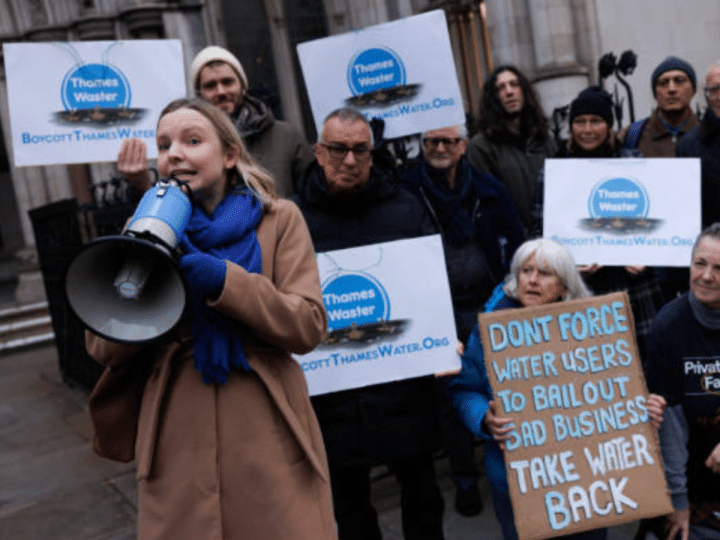
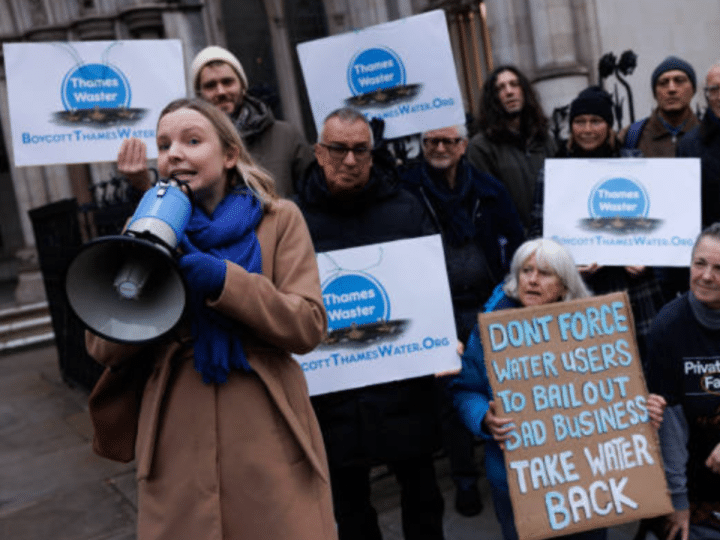
Thames Water’s shareholders are panicking as the prospect of public ownership threatens to bring their gravy train to an end.
The company is now sitting on £18.5 billion of debt, up from £16.8 billion a year ago. Instead of accepting responsibility for years of failure, the profiteers at the top are desperately trying to recapitalise the business to retain their cash cow.
Thames Water is the UK’s biggest water company, charging 16 million customers for access to water whilst failing to invest in crumbling infrastructure which has resulted in sewage leaks polluting rivers and waterways.
Signalling just how much money these greedy shareholders are reluctant to part with, the company increased its underlying profits by £191 million in a single year.
However, the company’s mountain of debt and years of underinvestment show exactly how badly British consumers have been short-changed. It only strengthens the case for nationalisation, and Thames Water is where that process should begin.
BREAKING: Thames Water is due to run out of money by the end of the year, as it remains in discussions with creditors, regulators and government to recapitalise the business.
Its annual results revealed it's £18.5bn in debt pic.twitter.com/pjq8J5No5E
— Sky News (@SkyNews) July 15, 2026
Thames Water and privatisation
The private ownership of the country’s water companies has meant higher bills for consumers, with profits going to shareholders rather than being reinvested into maintaining pipes and infrastructure to ensure people get good quality water.
Moreover, Thames Water’s flagrant breaches of sewage regulations have polluted our waterways, rivers and even oceans with sewage.
This has led to resounding calls to take it back into public ownership, with Thames Water being a prime example of how badly the privatised model has failed.
However, now it is getting closer to nationalisation being a sure thing, those who have been reaping the profits are doing whatever they can to keep their hands on the purse strings.
Windsor MP Jack Rankin says when companies fail, investors & creditors should lose their money.
That's what should happen with Thames Water. But Ofwat is still locked in negotiations with them.
Keep the pressure on. Write to Ofwat and tell them to reject the creditors:… pic.twitter.com/UIKGs0dQUE — We Own It (@We_OwnIt) July 15, 2026
For instance, it was only in recent weeks that Environment Secretary, Emma Reynolds, rejected a plea from 100 investors to Ofwat for a £10 billion bailout to rescue the failing company. Had it been granted, the bailout would once again have forced taxpayers and consumers — who are, in large part, the same people — to foot the bill.
You can’t polish a turd, as they say
Those who have been making pretty decent money despite its abysmal management insist that Thames Water’s performance is improving. They point to an 18% reduction in pollution compared to a year prior and a 17% improvement in meeting Ofwat’s common performance commitment targets.
However, the company still hits just 55% of the targets it should meet, proving these improvements remain nowhere near good enough.
The future where targets are finally met becomes far more achievable when an essential service serves the public, not shareholders chasing profits.
Bath MP Wera Hobhouse says Thames Water customers have been let down 'time and again' by the failing firm.
Its creditors want permission to pollute outside the rules until 2030. Ofwat's Board is still deciding whether or not to agree. Can you take 2 mins to email the Board,… pic.twitter.com/Tb5iSNbWPA
— We Own It (@We_OwnIt) July 14, 2026
Thames Water claims to be doing better
Thames Water’s chief executive, Chris Weston, has insisted that these improvements show the company is “turning around”.
He told the Guardian:
While we have a lot more to achieve, the progress we have made in turning the company around has meant we are now performing better and are in a strong position to accelerate the delivery of the biggest upgrade of our infrastructure in 150 years.
This upgrade will, over time, address asset resilience issues and translate into sustained improvements in the services we provide for our customers and impact on the environment.
But fixing problems of its own making doesn’t prove Thames Water has turned a corner. It is only starting to address a failure to meet even half of its responsibilities.
After all, it is hardly like there has been any public show of humility or public apology. Instead, the company treats these problems like they were inevitable. (But hey, look at how its leadership is making it better.)
Like they say, you cannot polish a turd. It remains, no matter what you do to make it look more appealing. The same is true for the privatisation of our water companies.
Privatisation has hurt ordinary people and reduced our access to clean water. These environmental and health issues will only grow worse with water-hungry AI data centers cropping up across the UK.
After his recent victory in Makerfield, Andy Burnham has talked about “greater public control”. But as long as private shareholders remain, the ultra-wealthy will continue to rip us off.
Years of chronic neglect and corporate mismanagement have already done enormous damage. The government should take the industry into public hands now, before things get even worse.
Set an example of Thames Water
Thames Water is not the only offending privatised water company. They are all guilty of failing in their responsibilities to consumers and in maintaining the critical infrastructure.
If the state brings Thames Water into public ownership, it will do more than hold the biggest player to account. It would send a message to every other water company: deliver value for money or risk losing your monopoly.
If they wish to continue being work-shy, then they lose out, which is fair enough, frankly. Shareholders do not have a permanent claim over these lucrative monopolies. The state can and should step in and take them back.
At least then, those astronomical profits could benefit everyone, rather than the handful of people who have had their hands in our pockets for far too long.
Featured image via the Canary
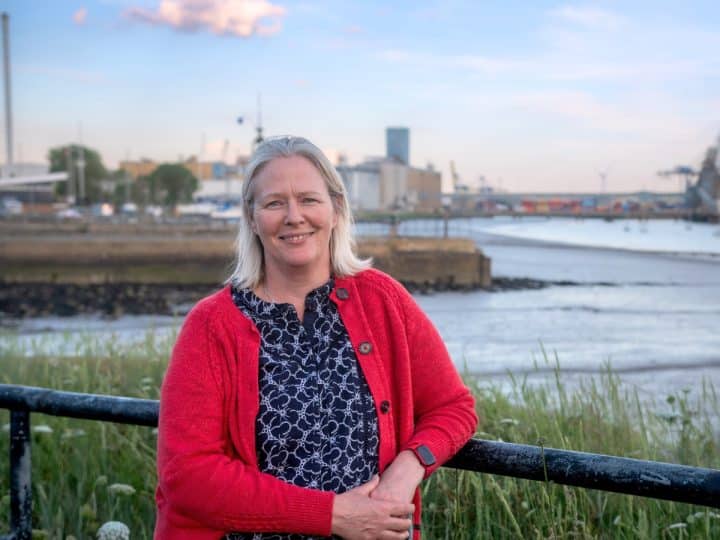
The Green Party candidate for the upcoming Grays Riverside by-election, Pauline Weir, has made her priority clear: securing a seat on the Corporate Oversight and Scrutiny Committee to hold the current administration accountable.
Weir stated:
If I am elected, I shall insist that this mandate from the Riverside electorate means I replace one of the Reform UK councillors on the Corporate Oversight and Scrutiny Committee.
When Reform UK took control of the council in May, it took the chair and control of all of Thurrock’s Oversight and Scrutiny committees. But as Weir points out, given the history of Thurrock, the one that concerns her most is the Corporate Scrutiny committee:
This committee has nine Reform UK councillors, and the only two Conservatives on the council. How is this scrutiny?
Since 2025, the Serious Fraud Office has been investigating a scheme by which the Conservative-led Thurrock Council invested millions into solar farms between 2016 and 2020. It used a bond scheme sold by the UK-based Rockfire Investment Finance Plc.
Says Weir:
The residents are still paying the price. The council voted to increase council tax by 9.99% in 2023, after the reckless gambling of the council with our residents’ money.
Council Tax has continued to rise since, with external auditors unwilling to sign off the council’s books.
The by-election in Grays Riverside on 23 July resulted from the resignation of a Reform Councillor elected in May this year. Weir says:
We got within 17 votes of taking a seat in Riverside in May. We are the only party that stands a realistic chance of providing at least some scrutiny for the residents of this ward.
Featured image via South West Essex Green Party
By The Canary
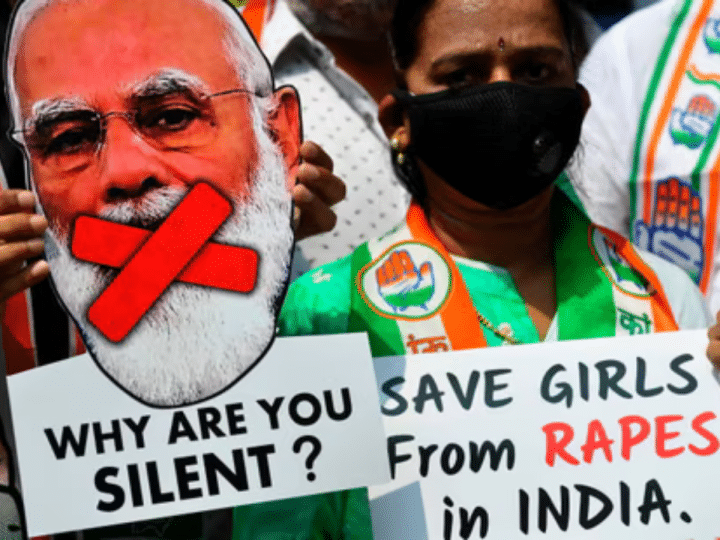
Since the Bharatiya Janata Party (BJP) of India’s Prime Minister Narendra Modi came to power in the state of West Bengal two months ago promising women’s safety, the state has witnessed at least eight serious incidents of violence against women and girls.
One of the latest was the horrific murder and gang rape in Baruipur. An 11-year-old Muslim girl was abducted while out buying a friend’s birthday present, and subjected to the most inhuman torture, including a group rape. While still alive, she was tied up in a sack and thrown into a pond to drown.
One of the suspects, who was also a key witness and had pointed to the role of a BJP leader in the crime, has already been killed in an ‘encounter’ (extra-judicial killing by the police).
Chief Minister Suvendu Adhikari, well known for his anti-Muslim hate speech, has shockingly likened protests in the aftermath of the crime to the “anti-CAA agitations”. These were in fact peaceful campaigns against an Islamophobic citizenship law but were criminalised and attacked by state-sponsored mobs, leading to the arrests and incarceration of Muslims.
India: Sexual violence sweeps the country
The South Asia Solidarity Group is outraged and deeply disturbed at the Indian government’s silence and inaction about sexual violence and attacks on women and girls across the country.
In the same week as the Baruipur gang rape, three dozen men in several hotels over several days sexually assaulted a 13-year-old girl in Sri Ganganagar, Rajasthan. These are only two cases which have been publicised in the news media or on social media. Many more go unreported.
At the same time, the internet is awash with AI-generated sexualised images of Muslim women, while rapists are praised and felicitated.
Hindu supremacy
The skyrocketing violence against women and girls, particularly those who are Muslim and oppressed caste, is a sign of the creeping imposition of the Manusmriti. This is an ancient Sanskrit legal text known for its misogyny and violence against women and oppressed castes, with which Hindu supremacists want to replace India’s Constitution.
Meanwhile, in a bitter irony, one can still read the BJP’s slogan popularised by Modi, Beti Bachao, Beti Padhao (Save Daughters, Educate Daughters) on the back of buses and trucks on India’s highways.
What we demand
We stand in solidarity with the survivors and the families of the girls and women who have been murdered, and demand accountability, transparency and justice. This can never be replaced by mob lynchings and ‘encounter’ killings.
In relation to the Baruipur murder and rape, we fully support the demands of feminist organisations in West Bengal, including:
- A time-bound, impartial investigation into the rape and murder of the minor girl from Baruipur
- An independent investigation into the state murder of a prime witness of the case and the circumstances surrounding it
- An investigation into the role of the police, which includes possible negligence and undue advantage given to the criminals
- An independent investigation into the role of all politically influential persons involved in this case
- Withdrawal of all cases against activists speaking out for justice in the case, and the protection of the right to protest democratically
- Security, legal aid and a speedy and transparent process of justice for the family of the victim
Our demands are cosigned by the following feminist and diaspora organisations in the UK, US and Canada:
- Million Women Rise
- Imkaan
- Sikh Women’s Aid
- Women from OWAAD (Organisation of Women of African and Asian Descent)
- பொழில்|Poḻil: Lankan Feminist Grove
- Birmingham Black Sisters
- Network of Eritrean Women
- Congolese Women of UK
- African Rainbow Family, Manchester
- Centre for Women’s Justice
- Healing Justice London
- Project Salama
- DEWA (Deaf Ethnic Women’s Association)
- Women Together
- Samba Sisters Collective
- Black and Brown Rainbow
- Biographies for Education
- Hindus for Human Rights UK
- South Asia AHEAD
- UK Indian Muslim Council
- South Asian Liberation Movement
- Periyar Ambedkar Study Circle
- Stop JCB Campaign
- SALAM (US)
- Canadian Forum for Human Rights and Democracy in India (CFHRDI)
- Canadians Against Oppression and Persecution (CAOP)
- CERAS (Centre sur l’asie du sud) (Canada)
Featured image via Indranil Mukherjee/ AFP/ Getty


Right-wing rags the Daily Mail and Metro have been forced to issue “full apologies” and pay “substantial damages” to actress Nadia Sawalha and her filmmaker husband, Mark Adderley.
The papers had smeared the couple with atrocious and completely false smears claiming they had made antisemitic statements.
The pair announced their court victory in a joint video statement this morning.
View this post on Instagram
Sawalha and Adderley ‘push back’
The couple said their victory showed that the smears had put them and their family in danger, but the win showed that it is possible and vital to “push back against a legacy media that will go to any lengths to try and destroy lives and reputations with false allegations”.
Their lawyer, Zillur Rahman, of Rahman Lowe law firm, said the pair had triumphed over “serious and damaging allegations”.
These were serious and damaging allegations which falsely suggested that our clients supported terrorism and promoted antisemitic conspiracy theories for simply calling out Israeli war crimes, and opposing Zionism.
Our clients have consistently opposed racism in all its forms. We are pleased that both publishers have now accepted the falsity of these claims, issued public apologies, and agreed to pay substantial damages.
Newspapers backtrack
The Daily Mail’s apology reads:
An article “Loose Women star Nadia Sawalha claims ‘dark forces’ are at work after husband suspended from the Green Party over ‘antisemitic’ YouTube rant” (30 April) said that Mark Adderley had shared videos celebrating the ‘courage’ of Hamas as well as conspiracy theories blaming Jews for the September 11 and Bondi Beach attacks.
While Mr Adderley does have strong views about Israel and Zionism, he did not make these statements suggesting support for terrorism or hatred of Jews.
The article also said that Mr Adderley and his wife, Ms Sawalha, run a YouTube channel, and that Ms Sawalha fully supported her husband, which may have suggested that she endorsed the statements and videos wrongly said to have been shared by him.
These allegations were false and we apologise to Mr Adderley and Ms Sawalha for the error and distress caused.
The Metro’s statement is essentially identical:
An article “Nadia Sawalha hits back at ‘lies’ after Loose Women axe claims” (8 May) said that Mark Adderley had shared videos celebrating the ‘courage’ of Hamas as well as conspiracy theories blaming Jews for the September 11 and Bondi Beach attacks.
While Mr Adderley does have strong views about Israel and Zionism, he did not make these statements suggesting support for terrorism or hatred of Jews.
The article also said that Mr Adderley and his wife, Ms Sawalha, run a YouTube channel, and that Ms Sawalha fully supported her husband, which may have suggested that she endorsed the statements and videos wrongly said to have been shared by him.
These allegations were false and we apologise to Mr Adderley and Ms Sawalha for the error and distress caused
This is not the end…
The win is reminiscent of the repeated wins by Labour party left-wingers over right-wing rags during Jeremy Corbyn’s leadership of the party. Those lies had the same aim — remove or silence those who speak out against Israel, its crimes and its land theft.
Adderley and Sawalha said that they have other cases still ongoing and issued a warning to lying hacks.
We have a number of other cases pending. If you lie about us we will NOT take it lying down.
Featured image via the Canary
By Skwawkbox
Politics
The House | The pardon for Ruth Ellis is welcome but domestic violence law needs further reform


3 min read
The family of Ruth Ellis, the last woman to be executed in Britain, has received a measure of justice from this government.
Members of her family petitioned Justice Secretary David Lammy to recognise that had she been tried now, rather than in 1955, she would not have been convicted of murder, let alone executed. Last week, on Lammy’s recommendation, she was granted a conditional pardon by the King. I was pleased to have played a small part in the process by asking about her case in the Commons.
Ruth’s pardon asks that we reflect on what has changed in the past 71 years – but also what hasn’t. Women still face an unequal situation in the courts, and the law on homicide is currently under review. Ruth’s case offers insight into what needs to change.
My interest in her case goes back to my previous career as a crime historian. My research demonstrated the unfairness of certain ostensibly neutral standards of legal defences. Men who killed women were more likely to be successful in arguing that they had been ‘provoked’ than women who had killed men.
There is no doubt that Ruth shot and killed David Blakely on 10 April 1955. Arrested immediately, her trial took place two months later and lasted just over a day. She was hanged within three weeks. Her trial did not hear the reasons why she killed Blakely nor about the circumstances leading up to that night.
Ruth was 28 and mother to two children. She had worked as a model and as a nightclub hostess. The media made much of her ‘scandalous’ past. Blakely, by contrast, was the public-school educated son of a doctor.
After the verdict, however, it became clear that Blakely had been violent towards Ruth. While pregnant, he punched her so hard that she miscarried. On another occasion, her brother said she was “hobbling on two sticks” after Blakely beat her up. She was, in short, a victim of domestic violence.
Since 1955, the law has changed for the better. Only two years after Ruth’s hanging, Parliament passed a law allowing the defence of ‘diminished responsibility’. In 2009, it was made easier for someone in a similar position to Ruth to claim the defence of ‘loss of control’. This allows a murder charge to be reduced to manslaughter when someone kills while in fear of serious violence. This informed Ruth’s conditional pardon and posthumous life sentence.
Ruth’s pardon matters for two reasons. Most immediately, it lifts a weight from her family’s shoulders. They now have affirmation that their grandmother was not a callous murderer but a woman pushed beyond her limits.
More widely, it sends a strong message about the need to better understand the causes and consequences of abuse. We know more about coercive and controlling behaviour and abusers are being prosecuted. However, there is still more to do.
In June, the Law Commission launched a consultation on possible changes to the homicide law. Evidence of the need for change comes from an independent review by Clare Wade KC, and recent academic research that examined 110 homicide cases heard between 2010 and 2024 involving ‘loss of control’ defences.
The research suggests that the need to prove an ‘explosive’ loss of control is at odds with the experiences of women suffering domestic violence and that men are better able to make use of the defence than women. There are parallels with the situation that Ruth faced in 1955. Ostensibly neutral guidelines have given greater advantages to men than to women. The Law Commission’s review addresses this.
I hope it will lead to greater fairness in the courts and better outcomes for today’s victims of domestic violence.
Pam Cox is Labour MP for Colchester and was co-author of ‘Victims and Criminal Justice: A History’
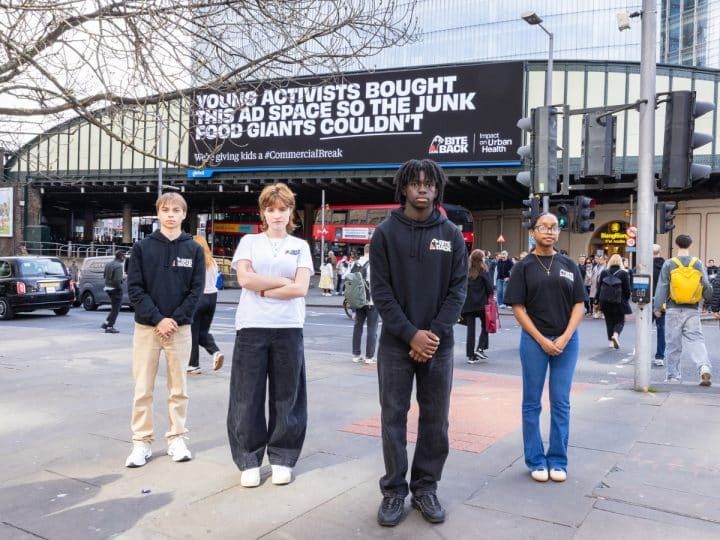
The Health and Social Care Committee has just delivered one of parliament’s strongest calls yet for action to protect children from junk food marketing. And Bite Back’s young campaigners are urging the incoming government to seize the moment.
After a year-long inquiry, MPs have concluded that children’s health has been undermined by unhealthy food environments and decades of industry influence. They’re recommending stronger protections including action on outdoor junk food advertising.
The report echoes the evidence given directly to the Committee by Bite Back campaigners Jayda and Alice. They told MPs how children and young people are surrounded by junk food marketing every day.
With a new prime minister taking office shortly, Bite Back says the Committee has handed the new government a ready-made roadmap for improving children’s health. The charity is calling on ministers to move quickly. And it wants them to begin with a national ban on junk food advertising in outdoor spaces.
Bite Back campaigner Jayda said:
Children and young people are surrounded by junk food marketing every single day. Whether it’s on billboards, at bus stops or on the journey to school or even online, it’s almost impossible to avoid.
In 2025 I had the opportunity to give evidence to this Committee, so I’m really pleased to see MPs recognising what young people are experiencing.
We also saw first-hand how coordinated the food and advertising industries can be when they pushed back against Bite Back’s Commercial Break campaign. The campaign simply called for children to get a break from junk food adverts. Young people are becoming increasingly aware of these commercial pressures and deserve better.
This report is an important step towards creating healthier environments for children and young people. Now the government must act quickly rather than delay. Children’s health should always come first, ahead of industry lobbying.
Bite Back campaigner Alice said:
The government needs to put children’s health ahead of industry lobbying, and a really important first step would be banning junk food advertising in outdoor spaces.
We need to make it easier for children and young people to grow up in places where healthier food is supported instead of unhealthy food being promoted everywhere.
In 2025 we had the opportunity to give evidence to this Committee, and it’s encouraging to see MPs recognising what young people shared with them. They listened. Now the new prime minister needs to listen too.
D’Arcy Williams, chief executive of Bite Back, said:
The Health and Social Care Committee has sent one of the clearest messages parliament has delivered in years: if we want healthier generations, we must create healthier environments for children and young people.
For too long, we’ve expected children to navigate a food environment stacked against them. Our young campaigners have shown how junk food advertising dominates bus stops, billboards and high streets, while our research has highlighted the concentration of unhealthy food marketing and fast-food outlets around schools.
That is not an accident, it is the result of a system that has consistently put commercial interests ahead of children’s health.
In 2025, through our award-winning Commercial Break campaign, young people reclaimed outdoor advertising space to show what our streets could look like without junk food adverts.
The response from the advertising industry demonstrated just how difficult it can be to challenge the status quo. That’s why government leadership matters.
The Committee has now laid out a clear roadmap – one that also urges the government to protect the policy process from further food industry interference tactics.
The incoming government has an opportunity to show real leadership by introducing a national ban on outdoor junk food advertising, strengthening protections for children in and around schools, and ensuring that every child grows up in an environment that supports their health rather than undermines it.
Young people have done their part. Parliament has listened. Now it’s time for the government to deliver.
Featured image via Bite Back / David Madden
By The Canary

Crewe (Alamy)
3 min read
In June, Andy Burnham set out his vision for the country. Bringing Manchesterism to Labour’s 2024 manifesto, he is putting “place before party” – building non-partisan consensus on local issues.
‘Place’ refers to the areas that make a community – where social ties are formed and strengthened.
Andy recognises that high streets should become “the new symbol of Britain’s renaissance”. Independent hospitality businesses are an essential part of that landscape.
They know their customer inside out, setting up shop to offer something new to their neighbours – without a financial model crunching the numbers, identifying your high street as the most lucrative option for the next branch.
Manchester has successfully supported a growing number of local bars and restaurants. The number of food and beverage spaces in the centre has doubled over the past 10 years.
Labour’s £20m Pride in Place strategy forms the building blocks for stronger communities. We’ve bolstered High Street Rental Auctions to give councils more powers to take over empty units. We’ve launched a £30m crackdown on rogue vendors taking advantage of deserted town centres, a dedicated High Street Organised Crime Unit and increased enforcement measures for trading standards.
These measures are welcome and necessary to turn our high streets around. However, as new sites become available, the government needs to support entrepreneurs to take them over and keep their doors open.
A quarter of pubs, bars and restaurants are losing money, according to new survey data. Without intervention, there will be fewer businesses left to revive the high streets at the centre of a place-based politics.
One of the levers available to provide immediate relief to the sector is VAT reform. The UK’s standard 20 per cent rate on food and beverages is the second highest in Europe – double that of Spain, France and Italy. There are growing calls from independent businesses to reduce VAT to 10 per cent.
There is a significant fiscal cost associated with this plan, which HMRC claim would create a deficit of £1bn. However, with 21 hospitality businesses closing each week, the Treasury must also consider the revenue losses happening in real time.
The industry is in a state of paralysis; businesses are unable to hire new staff or invest. Some have taken to limiting their opening hours just to stay afloat. They’re built up over decades but are closing down each week. That’s income tax, corporation tax and key youth employers lost to the Treasury.
Any intervention should also be ringfenced for independent hospitality. Currently, VAT applies equally to all businesses with an annual turnover of over £90,000. The scale of (and taxes levied against) many chains are fundamentally different to those set up by local people.
Beyond VAT, our business rates system disproportionately burdens bricks-and-mortar venues taxed on the rateable property value. Rateable values can be calculated using three different methods which have been known to generate different results. They often jump significantly between the three-year assessment periods and multipliers are set at a cliff-edge, meaning higher rates apply to the whole property once the threshold is reached.
The removal of Small Business Rate Relief and Retail Hospitality and Leisure Relief has left independents facing significantly higher charges than in previous years.
In our manifesto, we promised to replace business rates with something more progressive. We need a fairer system that allows small businesses to settle into our high streets and grows with them. Whether that means partial landlord liability or tapered rates similar to income tax, the case for reform is clear.
A place-based government means economic growth where it matters: in the areas which were decimated during austerity and for the people who care about their community. The unique struggles faced by independent hospitality businesses must be considered under this approach.
Connor Naismith is Labour MP for Crewe and Nantwich

Content warning: This article contains terms of misogynistic and racial abuse, alongside descriptions of sexual violence
The “protectors of women and children” are at it again, proving their credentials once more with a vile pro-rape message daubed on a wall in the loyalist Sandy Row area of Belfast.
The message reads:
Gisèle Pelicot
Salope
Free Dominique
‘Salope’ is a French misogynistic term of abuse that translates as ‘whore’ or ‘slut’.

The revolting vandalism targets Gisèle Pelicot, a French woman whose husband Dominique drugged and repeatedly raped her over a period of 10 years. He invited other men to the couple’s home, who also raped her while she was unconscious.
Gisèle bravely waived her right to anonymity as part of her husband’s trial. In December 2024, a French court sentenced Dominique Pelicot to 24 years in jail for his crimes.
Nearby, racist graffiti had also been sprayed. Without the asterixes, it read:
N*ggers out
P*kis fuck off
Alongside it there also appears to be a crudely drawn star and crescent with a stop sign drawn over it, indicating Islamophobic hate.
Belfast: French racists given VIP treatment in city
The racist and Islamophobic graffiti are sadly par for the course at this point, in a region where overt racism, bleeding into ethnic cleansing, is rapidly becoming the norm. In contrast, the attack on a heroic French feminist icon seems a little incongruous and inexplicable.
However, sources have told the Canary that a group of French racists have recently been given the VIP treatment by local loyalist bigots.
The Ainsworth Drive Facebook account are another group of frauds who tout their eagerness to “protect women and children”, merely as an excuse to vomit out racist, anti-migrant bile. On 9 July, they posted the following:
I have a group of French patriots/activists coming into the area over the 12th period, some are part of the Turning Point movement, the legacy Charlie Kirk left behind.
They wish to speak to local people/parents concerned about the mass enforced movement of immigration being forced into deprived working class areas like Ainsworth/Woodvale.
If anyone wishes to be interviewed, can be off camera and can academically speak well then please drop this page a private message, thank you.
The Canary has previously covered the US-based Turning Point’s intention to make inroads in the north of Ireland. That French racists are now also drawn to the region proves a point we’ve previously made. That is, the extreme chauvinism of loyalism, like that of Zionism, is a huge lure to reactionaries the world over.
The capacity of these two twin settler-colonial ideologies to deploy violence as a means of achieving their supremacist goals also has obvious attraction to would-be ethnic cleansers.
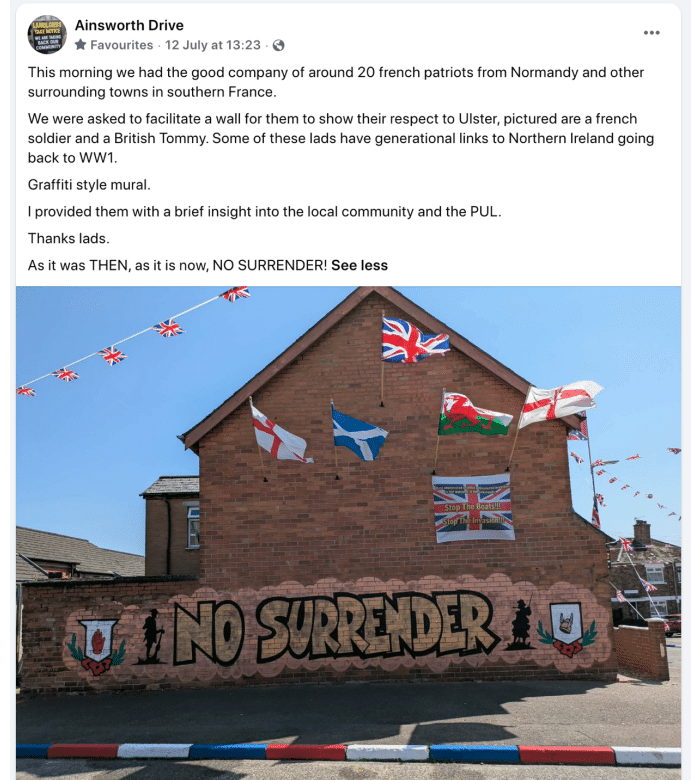
An Ainsworth Drive post on 12 July describes the:
…good company of around 20 french [sic] patriots from Normandy and other surrounding towns in southern France.
Leaving aside the geographic impossibility of the northern French region of Normandy having surrounding towns situated in southern France, the post goes on to boast of a joint mural effort between the groups.
The weird ideology of ‘The Normal Ones’
Activists monitoring the far right identified the French group as attending the Sandy Row bonfire marking the 12 July Battle of the Boyne commemoration. They are believed to be linked to an outfit called Les Normaux, translating as ‘The Normals’ or ‘The Normal Ones’.
According to StreetPress, a French investigative team that track the far right, Les Normaux are:
…a small far-right identitarian group based in Rouen, established in the spring of 2021.
The group fixate on Norman identity specifically and hold a March of the Normans event each year, despite authorities banning it. Far-right actors from across Europe are known to attend.
StreetPress also report Les Normaux are active within “traditionalist Catholic circles”, so it would be interesting to know what they made of the torrent of sectarianism loyalists produced over the 12 July hate carnival.
The French group has previous in terms of hatred directed at women, with StreetPress saying in June 2021 the group:
…disrupted a lecture by elected official Alice Coffin, directing misogynistic remarks at her.
The foolishness of identitarian politics
Many of the group members have taken down their social media accounts since news of the Sandy Row graffiti emerged. However, sources who spoke to the Canary got a look at some of them beforehand.
They told us many previously displayed an enthusiasm for Irish republicanism, presumably mistakenly believing it would embrace the prejudices often found in nationalist ideologies elsewhere. That is rarely the case in republican circles, so the racists seemingly switched to loyalism.
That absurd trajectory, of stumbling hopelessly around for some purist notion of identity, underscores the folly of identitarian politics more broadly.
All human culture, and the movement of peoples that form it, is a process of constant transition. Chauvinists insist on freezing time at an arbitrary point, around an arbitrary group of people, and rule that all who exist outside those bounds must be excluded.
To see the degeneracy that mode of thought produces, one need only look at what was scrawled on the walls of Sandy Row.
Featured image via the Canary


The pace of settlement advancement in the occupied West Bank is unprecedented. Bezalel Smotrich – finance minister and illegal settler – has long opposed the creation of a Palestinian state. He has now not only called for the complete conquest of the Gaza Strip, but is also promising a settlement “revolution”.

Expansion of settlements will further tighten the occupation’s control
The occupation is actively advancing major settlement and infrastructure projects across the occupied Palestinian territory. According to Peace Now, most of these new settlements are deep inside the West Bank, where there is very little or no Israeli occupation presence. This is how “Israel” tightens its grip on these areas, and how any chance of Palestinian development is prevented.
On 14 July 2026, Israeli occupation ministers celebrated a major new government investment, which they described as a “historic” moment for the settlement movement. It is aimed at accelerating the establishment and expansion of illegal “Israeli” settlements across the occupied West Bank.
The government announced the Security Cabinet had allocated 1.3 billion Shekels – approximately £324 million – in June to advance the establishment of 34 new settlements in the occupied West Bank. This had been approved during the previous three and a half years.
Smotrich and Settlements Minister Orit Strock described it as a landmark step for the settlement movement. In statements, Strock said:
There has never been a Zionist-settlement decision of this size in the whole history of Zionism since it was founded.
Smotrich declared:
We are strengthening the security of the State of Israel, killing the idea of establishing a terrorist state in the heart of the country, and strengthening our hold on the homeland in Judea and Samaria.
Killing the idea of establishing a Palestinian state
Nine of these 34 settlements are planned for the Northern West Bank, seven in the Central region, four in the Hebron area, seven in the Jordan Valley, one in the Jericho region, and six in the Gush Etzion area – a settlement bloc located just south of Jerusalem.
The announcement also mentioned additional funding of 1.075 billion shekels for infrastructure projects, especially roads to connect the settlements. This decision is another step toward permanent “Israeli” control over occupied territory. And it is intended to destroy what is left of a future Palestinian state. This brings the number of settlements in the occupied West Bank, initiated under Smotrich’s four-year period in office, to 103.
The “Israeli” government has also signed a deal worth around 8.5 billion Shekels, or £2 billion. This includes plans for around 12,000 new housing units, plus related infrastructure, in the northern West Bank. The agreement was signed between the “Israeli” government and the so-called “Samaria Regional Council.” It also requires additional legal challenges if a new government wishes to stop settlement construction.
According to Peace Now, this agreement will result in “unbridled construction in the settlements”. It will also:
shackle the next government to commitments that will make it difficult to roll back this terrible government’s reckless policy.
Changing the face of the region
The Israeli occupation says it is aimed at “changing the face of the region.”
Israel has approved a $2.3 billion plan to expand illegal settlements in the occupied West Bank, including 12,000 new housing units and major infrastructure projects pic.twitter.com/8ETmnT58D1
— TRT World (@trtworld) July 14, 2026
Earlier in July, the occupation’s Security Cabinet approved plans for 13 new settlements in the central West Bank.
The proposed locations for these settlements are along the vital Route 60 north-south main road, and will make up one of the largest settlement blocks in the territory. Palestinian officials warn they will sever East Jerusalem from the rest of the West Bank.
The Jerusalem governorate condemned the move, saying it marks “a dangerous escalation”, and aims to create “new geographical realities on the ground.”
Illegal settlement of Giv’at Ze’ev has become the fifth “Israeli” city in the occupied West Bank
Alongside the approval of these 13 settlements is a $350 million initiative that includes legalising and accelerating the development of dozens of previously unauthorized outposts. “Israeli “settler outposts now control nearly a fifth of the territory, and this is now set to increase even more.
In yet another move to strengthen and expand its illegal settlements, “Israel” has also just declared the Giv’at Ze’ev settlement a city. The settlement, which is northwest of Jerusalem, is home to more than 35,000 illegal settlers. It becomes the fifth recognised “Israeli” city inside the occupied West Bank.
The move follows an order signed by Israeli occupation forces (IOF) Central Command chief and war criminal Avi Bluth, whose actions in al-Mughayyir in August 2025 amounted to collective punishment.
The recent surge in illegal Israeli settlements in the occupied West Bank has been driven by a combination of factors. Since the return of Netanyahu’s government in late 2022, a coalition of pro-settler and religious-nationalist parties has expanded funding for settlements. It has also accelerated planning approvals, legalised previously unauthorized outposts, and invested heavily in roads and infrastructure linking settlements.
Historically, only the occupation’s military chain of command held authority over Area C. But now, Smotrich is the one in charge of the Settlement Administration and the Civil Administration. This structural shift transfers vast civilian, zoning, and construction oversight from the military to his direct ministerial control.
Settlement expansion will bring more violence and forcible displacement of Palestinians
Article 49 of the Fourth Geneva Convention prohibits an occupying power from transferring parts of its civilian population into occupied territory.
In July 2024, a landmark opinion by the International Court of Justice (ICJ) ruled that Israel’s occupation of Palestinian territories was illegal. It demanded the evacuation of all settlements and called on states not to support any situations that violate international law in occupied territory.
Expansion of settlements not only violates international law; it also reshapes the landscape, the politics, and the prospect of peace for generations of Palestinians.
Settlements entrench the occupation and fragment Palestinian territory. They also undermine the prospects of a future Palestinian state, with East Jerusalem as its capital.
A new illegal settlement for “Israeli” colonists requires not only roads, but electricity and water systems – and, of course, the occupation’s security and military. Over time, these settlements fragment Palestinian communities and entrench the occupation, while prospects of a future Palestinian state with East Jerusalem as its capital are undermined. In addition, an increase in the number of “Israeli” colonists also increases the systematic violence faced by Palestinians every single day in the West Bank and East Jerusalem.
Unprecedented levels of settler brutality
settler brutality has reached unprecedented levels.
In 2026:
both fatalities and injuries are outpacing figures from previous years.
The sole purpose of this brutality is to forcibly displace Palestinians from their land and ethnically cleanse the occupied Palestinian territory.
As of 10 July, ”Israel” has forcibly displaced over 3,200 Palestinians across the occupied West Bank so far in 2026. That is an average of 17 people per day – double the daily rate over the previous three years. Settler attacks have been responsible for about 75 percent of these displacements.
More than 750,000 Jewish settlers live in these illegal settlements across the occupied West Bank and East Jerusalem.
Featured image via the Canary
By Charlie Jaay

Graham Stuart CON Matt Turmaine LAB David Chadwick LIB Alistair Carmichael LIB Danny Kruger REF Alison Bennett LIB Jerome Mayhew CON Helen Morgan LIB Melanie Onn LAB Will Forster LIB Rachael Maskell LAB Julia Buckley LAB Lola McEvoy LAB Lloyd Hatton LAB Susan Murray LIB

3 vehicles crash on A1 in Yorkshire – resulting in delays

Aker BP ASA (AKRBY) Q2 2026 Earnings Call Transcript

Crypto Firms Warned of AML Compliance Risks After MiCA Migration, AMLA Chair Says


-

 Fashion6 days ago
Loro Piana Fall 2026 Enters Houston’s Art Scene
-

 Fashion5 days ago
Weekend Open Thread: Nutriplenish Leave-In Conditioner
-
 Sports6 days ago
2026 Genesis Scottish Open Thursday TV coverage: Round 1
-

 Sports5 days ago
Super Eagles star Moses Simon opens up on Liverpool transfer regret
-

 Tech6 days ago
Character.AI enters the microdrama arena with its own productions, but there’s a twist
-

 News Videos19 hours ago
XRP BOMBSHELL… XRP OMBOARDED FOR TRANSACTIONS!!!
-

 Politics2 hours ago
Young campaigners urge incoming PM to act on outdoor junk food ads
-

 Tech1 day ago
Get Your ESP32 Sunny Side Up With This Solar Dev Board
-

 Tech18 hours ago
Dark Secrets Emerge When Jailbreaking LLMs
-

 News Videos7 days ago
Crypto Just Entered Its Most Important 6-Month Candle (Could Decide Everything!)
-
 NewsBeat6 days ago
Major update after Huntingdon train attack as man enters plea
-

 Tech6 days ago
Level Infinite Launches Gangstar Mirage City in India with Pre-Registrations
-

 News Videos2 days ago
how to make coin bank box with cardboard #scienceproject #money #diy #shorts
-
 Sports7 days ago
39-year-old Djokovic wins five-hour thriller to enter Wimbledon semis | Other Sports News
-
 Tech2 days ago
Cloudflare Precursor Watches Your Mouse and Keyboard To Decide If You Are Human
-

 Tech7 days ago
Entra passkey enrollment vishing targets Microsoft 365 users
-

 Crypto World6 days ago
DeFi Dashboard Zapper to Shut Down After 7 Years
-

 Crypto World6 days ago
Mark Cuban-Backed DeFi Dashboard Zapper Shuts Down After 7 Years
-
 Tech6 days ago
Claude’s New Reflect Dashboard Wants To Help You Log Off Of Claude
-

 Crypto World7 days ago
Fed minutes June 2026: officials split on rates
You must be logged in to post a comment Login