

Politics
The House | Inside Burnham’s ‘No 10 North’ Plans: “It’s Not Just About Creating A Second Westminster”

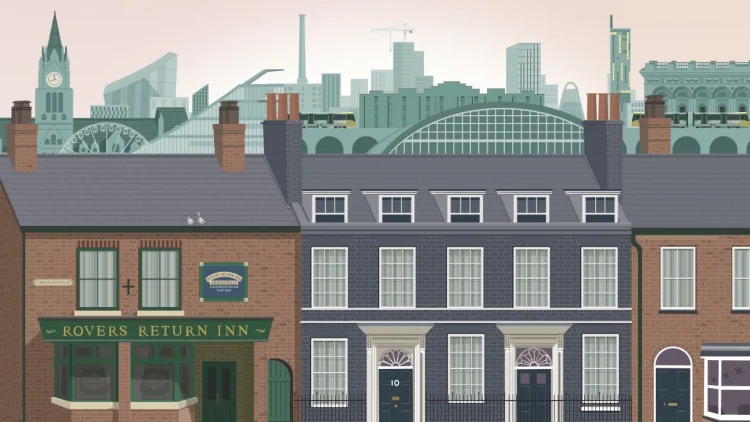

Illustration by Tracy Worrall

21 min read
Andy Burnham has pledged to create a ‘No 10 North’ in Manchester that would serve as the ‘nerve centre of a rewired Britain’. Will it work? How? Sienna Rodgers reports
Back in 2015, Andy Burnham was on his second attempt at winning the Labour leadership. Although ruthlessly mocked for overemphasising his outsider status as a Northerner, he was the frontrunner at first and Labour’s biggest donor, Unite, was ready to endorse him.
If you want our backing, the union said, you’ve got it – you just need to call us on Monday morning. But Burnham was reluctant to accept their funding. So, Monday came and went. Tuesday came and went, too. The “change candidate” released a statement to make clear he would refuse to be beholden to any one section of the movement. Unite turned to Jeremy Corbyn instead, and the course of history was forever changed.
On his third time trying, Burnham has no opponents – and he has not just stuck with his northern branding but put it at the centre of his forthcoming project as the sole Labour candidate to be our next prime minister.
The King of the North has not yet stepped over the threshold of 10 Downing Street, but already he is clear that fundamental to his government will be bringing power to – where else? – the North, made tangible with a second prime minister’s office in Manchester. “True to the motto of this city,” he declared there, in his first vision-setting speech as prime minister-in-waiting, “I am going to do things differently.”
While Burnham accepts the need to be in London when Parliament is sitting, his team say he wants to spend as little time as possible “closed off” behind that famous high-gloss black door. He hopes instead to show the country that decision-making does not only happen in Westminster – and he fully expects to be in the new ‘No 10 North’ at least one day a week.
The incoming prime minister has promised that this new office in Manchester will act as “the nerve-centre of a rewired Britain”. The plan is not to duplicate the work of London’s No 10 but to task No 10 North specifically with driving Burnham’s “devolution and growth agenda”.
Caroline Simpson, the Greater Manchester Combined Authority’s chief executive who is credited with helping him deliver fast growth in the region, will lead that work and be based there as his deputy chief of staff, while former Blairite minister James Purnell will run No 10 South.
Burnham would like to see No 10 North located at a government hub already under construction, the Manchester Digital Campus in Ancoats, but that is not due to be completed until 2032. Other sites in Greater Manchester fit the bill and interim arrangements are being made to get the new office up and running “as quickly as possible”, The House understands.
One Labour source says part of the thinking behind No 10 North is that, with lobby hacks based in Westminster, rooting part of the operation elsewhere could help limit leaks. Burnham’s team declines to address the claim specifically but stresses that unauthorised briefing and leaking is not an acceptable part of the culture – regardless of where staff might be based – and he is determined to stamp it out.
Some Labour MPs are freely criticising the No 10 North plan, of course. Hardcore Starmerites are particularly dismissive. “Yawn,” says one, who admits they are looking forward to life as a rebellious backbench MP under Burnham. “It sounds performative and seems like a gimmick.” Scottish MPs, meanwhile, like to point out that Burnham should try acknowledging “the real North”. (Plaid Cymru’s Rhun ap Iorwerth, First Minister of Wales, similarly said the proposal “means very little to the people of Wales”.)
Others are more welcoming. “Moving media to Manchester did make a difference for my constituents – the middle-class ones, anyway,” says a Labour MP with a northern seat, citing the BBC’s mass move to Salford as a positive example. “I’m interested to see how it would work in practice, but after years of the North being forgotten and left behind, I welcome anything that puts us firmly on the map and in the minds of No 10,” says another.
Many point out that it is at least evidence that Burnham has a story to tell the country about its future – something they argue Keir Starmer sorely lacked. There are concerns, however, about whether the move is purely symbolic. “What does it actually mean in practice? It will only be meaningful to my constituents if it leads to something real,” says a different northern backbencher.
“He will spend time out of London in a way that other prime ministers don’t, but this idea that it’s two days a week or whatever – it’s almost impossible to see how that will work”
Theo Bertram, director of the Social Market Foundation (SMF) think tank, reckons No 10 North’s symbolic value should not be understated. “That you could go and work in No 10, at the very top of government, without having to move to London, that is a positive symbol – even if that’s all it is,” he says. “The whole circus of Westminster will gear itself more to Manchester. To some degree, it already is.”
He adds: “What makes it not gimmicky is that this is pretty consistent with both his economic narrative and his political message, which are all about place.”
And while some have accused Burnham of unwisely moving a chunk of government to Manchester simply because that is where his family lives and is keen to stay, Bertram does not see this as a problem.
“We expect prime ministers to just up sticks, move their whole family – no matter what stage they’re at with their schooling – down to London and into this weird building that’s not really suitable to be a home, let alone the office of a head of state.
“Actually, if Andy Burnham can lead a more ‘normal life’ by still keeping some connection to where he feels at home, where his family might be able to stay, I think all of those things would be positive.”
Crucially, No 10 North – if done well – could allow the next prime minister to make clear his priorities in government and drive them through more effectively than he otherwise might have.
“If you go back to some of the things that Blair did with his policy unit,” explains Bertram, who advised both Tony Blair and Gordon Brown in No 10, “it was really clear that this wasn’t coming from a secretary of state – it was coming from the PM himself. The person who was working on it – say, Andrew Adonis, working on academy schools – what you knew is, this is the thing that the prime minister cares about and is driving.”
Whether No 10 North staff use email addresses ending in “no10.gov.uk” is one of those details that will be key to determining whether their work is taken seriously and prioritised, a Labour source argues.
Luke Sullivan, who was Starmer’s political director in opposition and previously worked as a spad to the chief whip towards the end of the New Labour government, makes a similar point.
“The most important words in Whitehall still are: ‘The prime minister wants’, or at least should be,” he says. He describes complaints frequently heard during the Starmer era about the obstructive nature of civil servants as “self-defeating” and “not reflective of what’s going on”.
“Where you’ve got really clear political leadership and ministerial direction,” Sullivan says, citing Ed Miliband in Desnz and Shabana Mahmood at the Home Office as examples, “those secretaries of state and those departments were seen to be delivering because they had clear guidance”.
Like Bertram, Sullivan thinks PMs being rooted in their seats is no bad thing. “Gordon and Tony spent significant chunks of time in their constituencies or in their constituency homes, and I think it made them better politicians for it,” he says.
“The geography is less important than the structures and clarity over people’s roles… I think that was probably one of those things under Keir where I’m not sure that was always clear – who had responsibility for what.”
Dave Penman, general secretary of the FDA trade union for civil servants, tells The House he appreciates the symbolic value of No 10 North and its contribution to Burnham’s vision, but raises concerns about the practicalities involved.
“Access to the prime minister – officials fight over it, politicians fight over it, because that’s really important to how you make government work. If you’re on a train or in the wrong location, or there’s some people there but not here, it’s just not going to work,” the union chief warns.
“Think of the amount of time you spend travelling, the demands on a prime minister, the need to be in the room with the prime minister… Him looking people in the eye is how things will actually happen.” Putting limits on this time “because that conversation is had with someone who’s supposed to be in Manchester when they’re in London, or London when they’re in Manchester”, he says, “will cause restrictions”.
“He will spend time out of London in a way that other prime ministers don’t, but this idea that it’s two days a week or whatever – it’s almost impossible to see how that will work, and it’s probably not what he means. I think he just means to demonstrate and show leadership.”
Penman is especially anxious about the impact on civil servants. “It’s a one-way ticket when you move out of London. It’s almost impossible to go back if you move permanently,” he explains, echoing a long-established principle based on the inaccessibility of the capital’s housing market.
“People have got to feel there’s a career for them – it’s not a one-move thing. There’s a potential for that around the M62 corridor, because you’ve got a lot of big conurbations… But it’s got to be thought through.”
He also flags that recruitment will need careful consideration: “If it’s 500 people [working in No 10 North], chances are there aren’t 500 people with the right experience already in and around Manchester.”
It has been suggested that Burnham could staff No 10 North with people already working in combined authorities around the country, who will be experienced in the relevant areas. “You can understand that’s an expertise you want,” says Penman reacting to the idea, but he asks: “Are they going to leave what they’re doing just now? Do they understand how you get government to work?”
Penman is keen not to be seen as too critical, saying: “You can get through all of this – it’s all doable.” But he cautions that Burnham must offer more clarity on the detail, adding: “He’s saying, ‘I want to do things differently.’ That doesn’t mean he’s worked any of that stuff out… You can’t just be on the vision stuff when you become prime minister. You’re a midterm prime minister as well – you’ve not got a lot of time here.”
Asked whether he is hopeful that Burnham will not talk negatively of the Civil Service, after Starmer declared in 2024 that “too many people in Whitehall are comfortable in the tepid bath of managed decline”, Penman warns Burnham: “You can’t have a situation where Whitehall becomes a term of abuse, and I think that’s the danger for him.”
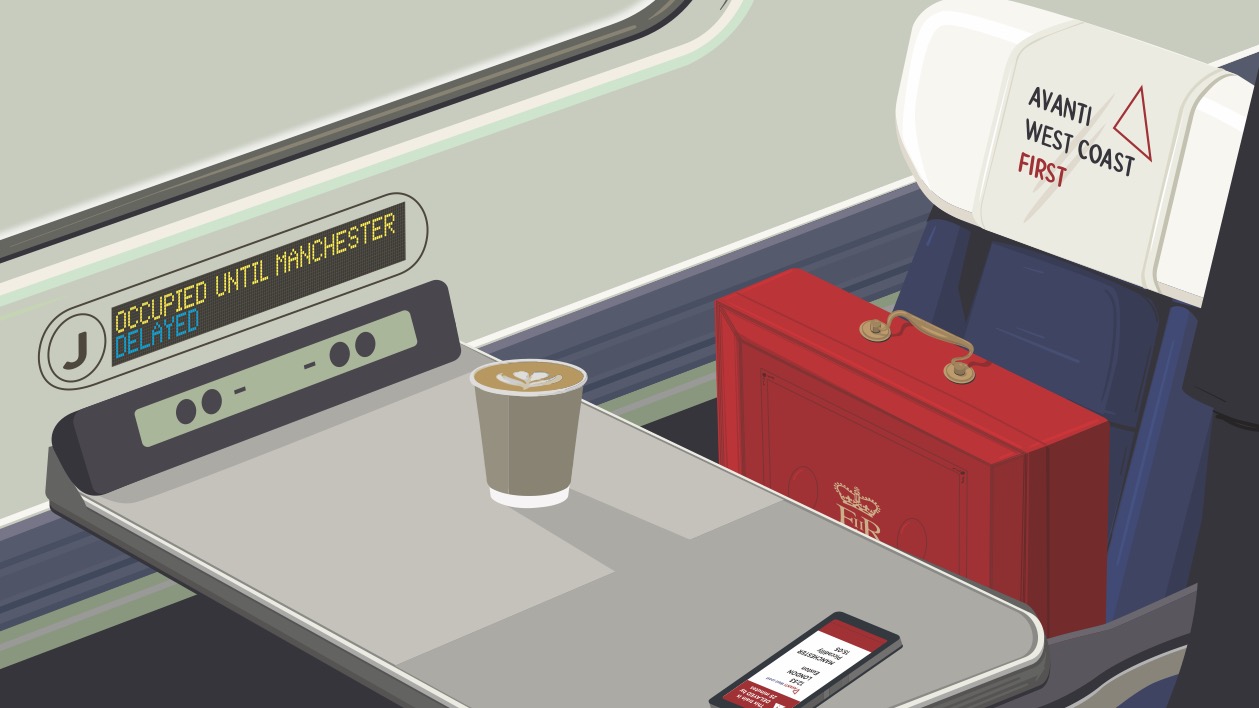
Burnham’s team will not comment on security concerns over the plan to have him working in No 10 North every week. While the train would offer the best optics, it is thought that taking it at such regular times would present a risk. “The prime minister can’t just get on the 3.05 from Euston,” as Penman puts it.
Bertram suggests they would use a variety of transport methods and points out, referencing Blair’s constituency journey, “You’d be surprised how fast you can get from Sedgefield to London if you’ve got a police convoy the whole way.” They tend to drive far over the speed limit, he explains, as that is a sure way of telling whether any other drivers around are hostile.
Then there is the question of whether, as some suggest, the devolution brief would have to be removed from the Ministry of Housing, Communities and Local Government (MHCLG) where it currently lies, to avoid duplication of work. There is no clarity from Burnham’s camp so far on this point.
The relationship between No 10 North and MHCLG will need to be figured out. Hannah Keenan, associate director at the Institute for Government (IfG), says the two could work well together.
“What you have is a bit of the centre that’s holding you to account as a department, but also that’s helping you as MHCLG, who are right behind this devolution agenda, to bash heads around Whitehall: ‘Actually, no DWP, you do have to get on board with this thing that is happening over here, or we’re going to find a way to manage this bit of tension in that relationship,’” she says.
“It is fine and good for No 10 to be big enough to actually support the prime minister’s interest in his top priority, which sounds like it’s devolution,” Keenan adds, comparing this definition to the Starmer era’s ‘mission-led government’, which became less distinct over time. “The clarity of purpose that might have existed at the start of the Starmer premiership dissipated over the course of it,” she says.
In agreement with most of Westminster, Keenan believes “No 10 isn’t working” at present. The IfG strongly advocates reform.
“There are lots of different things you could do to try and get No 10 to work,” she says. “Taking out a bit of it, away from the incredibly fast hustle and daily disruption in Whitehall, putting it in Manchester, for example, and saying, ‘This is exactly what I want you to deliver, and I’m giving you all of my political power to do this thing’, it might work.
“He has to be really clear about why he’s doing it and what those people are doing, and he has to avoid any sort of duplication between No 10 North and No 10 South.”
She explains: “The worst version of this is having special advisers or officials in No 10 North and in 10 Downing Street all claiming to speak for the prime minister and not talking to each other. That is a recipe for disaster.”
“It’s all changed so much since Brexit, and Andy and James are going to have to get their heads around that”
Emphasising the importance of the ‘No 10’ name, as others do, Keenan warns: “In government, if it ends up getting called anything other than ‘No 10’, bad things will happen. The number of times that you would say, ‘No 10 have asked for this’, and if the response to that is, ‘No 10 or No 10 North?’, I worry that starts to get into a slightly dangerous, ‘Who actually has authority in that system?’”
She believes that the risk of second campuses in other departments is that they become a backwater, but here the primary danger is that it has “overlapping power”.
That is not so much of a concern when applied to the Treasury, however, as she acknowledges: “At the moment, there’s a big vacuum in terms of strategic priority setting around the prime minister, and the Treasury comes in and fills that.” Labour MPs who would like to see Burnham abolish the Treasury altogether (along with the Office for Budget Responsibility) say they hope a No 10 North will at least disempower it.
The IfG supports breaking up the Cabinet Office and creating a ‘Department of the Prime Minister and Cabinet’.
“You can stop using No 10 the building as No 10 the office, because that doesn’t work,” Keenan argues, as do many others. “It has been horribly underpowered for too long. Now, this isn’t going to fix it… You need to do much more fundamental reforms to the centre of government.
“You still have an enormous Cabinet Office that is quite amorphous and too large and unfocused and doesn’t really support the prime minister properly – what are you doing with that? But it is fine and good to bolster the power of No 10.”
Reform will not be without its significant challenges. A former senior civil servant highlights that while Burnham may prove to be a “lucky general”, benefiting from tough policy decisions taken by his predecessor, he and his chief of staff will have to adapt quickly to a very different machine from the one they inhabited during their last period in government. “It’s all changed so much since Brexit, and Andy and James are going to have to get their heads around that.”
Notably, Purnell was a member of the expert advisory group that helped guide a paper on how a new Downing Street department would work, published by the Future Governance Forum (FGF) in November last year.
Its proposal for a streamlined ‘Executive Office for the Prime Minister’ would see No 10 configured around four functions: a politics and strategy group; a policy and delivery group; a diplomacy and security group; and a private office. A communications team and political office would also operate across all four.
An Honest Day, the paper by (now outgoing) Labour Growth Group director Mark McVitie earlier this year, similarly recommended the creation of a ‘Department of the Prime Minister’ that would absorb the “useful functions” of the Cabinet Office, leaving No 10 to behave “as a centre of power within the wider department, much like the West Wing within the White House”.
So, could Burnham and Purnell succeed where Dominic Cummings and Morgan McSweeney failed? At a minimum, No 10 North answers FGF’s calls for a greater clarity of purpose and perhaps also clarity of roles and responsibilities. The House understands the Burnham operation is likely to go further than that.
A well-placed source describes as “nailed on” that it will implement at least some of the FGF’s recommendations on a new structure for No 10. The politics and strategy group is the function seen as best-suited to being based out of No 10 North. “I think they want to move a lot of senior people there. It’s real,” the source says.
Those who are cynical about No 10 North – and worried about talent problems – point to the 2007 relocation of Office for National Statistics (ONS) headquarters to Newport, considered by many to be a disaster. An independent review following the move away from London concluded that it had made the recognised national statistical institute’s output worse, due to a significant loss of experienced staff. About 90 per cent of London-based ONS staff chose to leave rather than relocate.
Optimists say the merits of other government hubs offer a better clue to No 10 North’s potential.
The Treasury’s Darlington Economic Campus, the DEC, has benefited from the presence of second permanent secretary Beth Russell. It comprises seven different departments and has open-plan floors, allowing civil servants from all of them to work beside each other, breaking down silos.
The atmosphere is said to be a positive one. Staff are motivated and proud to work there, particularly as equivalent jobs with similar prestige are not easy to find in the area – unlike in London. Above all, it is a modern, functional building, complete with air conditioning. The DEC is also just a short walk from the train station, enabling it to pull in talent from across multiple regions.
Conservative MP James Wild recently highlighted that Chancellor Rachel Reeves has worked from the DEC only twice in the last year, and junior ministers just once each. But others point out that many meetings are held by video call anyway, as it’s more efficient and there aren’t enough big meeting spaces in London.
A former senior No 10 figure calls the No 10 North idea “deeply impractical” because, they say, “No 10 only works with the PM physically present”. The view is shared by others quoted in this piece. One source even says McSweeney’s tendency to work from home on Fridays sometimes slowed down No 10.
But there is also the perspective expressed by IfG’s Keenan: that assuming everyone must be in the same building represents “quite an archaic way of thinking”.
“In some ways, the prime minister not being in Manchester and allowing that bit of No 10 space every week to do some of the thinking and the work that isn’t sucked into the daily crisis comms machine that 10 Downing Street can be is no bad thing,” she says.
“We have a capital city, and our capital city is London, and our ministers and our Parliament exist here, and stuff is going to happen here. That doesn’t mean you can’t ship other bits outside of London, but it’s just being honest about what that looks like, and what the purpose of each bit is.”
No 10 North has given rise to bigger questions over Burnham’s agenda. Devolution has been celebrated across both Labour and the Conservatives for years, yet not all Labour MPs are convinced.
Labour MPs who do not represent constituencies that currently sit in a mayoralty, and especially those in areas with no obvious path to mayoralties, are concerned that their locals will be disadvantaged by Burnham’s plans.
The model of devolution also matters. In a piece for The House, Labour MP Alex Mayer urges Burnham to “look almost anywhere but Greater Manchester” for inspiration. Her area – Bedfordshire, Luton and Milton Keynes – is evenly divided between parties, making disagreement the norm and consensus difficult. The London model, she argues, would be preferable for the next stage of devolution.
There are also those who doubt that Burnham’s priorities of promoting devolution and addressing inequality are, in fact, symbiotic. One Labour MP with a northern seat says they wonder whether his push for devolution could actually entrench inequalities, by giving revenue-raising powers to areas where this capability will be naturally limited by existing deprivation.
Even some in favour of a growth-first approach believe that devolution will work as an incentive structure for places around the country to improve, but means there will be winners and losers. The argument for devolution works best, they say, when framed as a Brexit-style drive for sovereignty and power – not fixing inequality.
Mirte Boot, principal research fellow and interim head at IPPR North, which has offices in Manchester and is seen as close to Burnham, has a different take.
“Right now, if you’re a mayor and you invest in a business park, and that creates higher wages in your area, or higher business rate income, that nearly all goes back to the Treasury. So, you don’t necessarily have an incentive or a reward for investing in growth,” she says.
Boot goes on to acknowledge: “Fiscal devolution does benefit those areas able to create growth. To ensure no area is left behind, what you then need is some kind of mechanism, like an equalisation mechanism, where after you’ve given away tax powers, you do some redistribution.
“Every local area is able to make those investments for growth, then there is a redistribution after a couple of years to make sure that the areas that are left behind aren’t left behind too far. Thirty countries already do this, and we can take examples from Germany and Denmark for how it’s done.”
Like Burnham, she argues that centralisation is at “the core of a lot of our problems in this country”, and highlights that of every £1 we pay in tax, 96p goes straight to the Treasury.
“It’s not just about creating a second Westminster here,” Boot says of No 10 North. “This is about working really closely with local leaders all around the country, but especially here in the North, in a different way.
“I think it will change the way that politics is done, and it may be quite uncomfortable for those used to having everything so concentrated, but it could lead to different decisions and a different style of governing that is probably more connected with the rest of the country.”
As for the potential problems of overlap with other departments, she adds: “Every department is going to have to give up some power. That is the reality of it, with devolution. Not just MHCLG, but also DfE, DBT and others – all of them will have to think about how to make that work, and we will have to overcome resistance to that.”

You thought the Henry Nowak atrocity couldn’t get any worse. You thought you’d heard every horrifying thing about this barbarous incident, when the state manhandled a dying boy who’d been stabbed and falsely branded racist. You thought Henry’s hoarse, agonised cry of ‘I can’t breathe’ was as bad as it could get. Think again. Now we discover Henry said something else, too. In his last moments, as he gagged on his own blood, he made a pained plea. ‘I am not a racist’, he whimpered.
Those five words should haunt our collective conscience. For they confirm that this kid was forced to confront not only the physical horror of his own impending death, but also the psychological horror of being tarred as racist. He was made to beg for his moral reputation alongside his mortal existence. He faced two death sentences that night: the literal death sentence of Vickrum Digwa’s knife attack, and the social death sentence of being damned as a racist. A white lad using his last breaths to bat back a malicious slur of racism – what a grim monument to the tyranny of woke racialism.
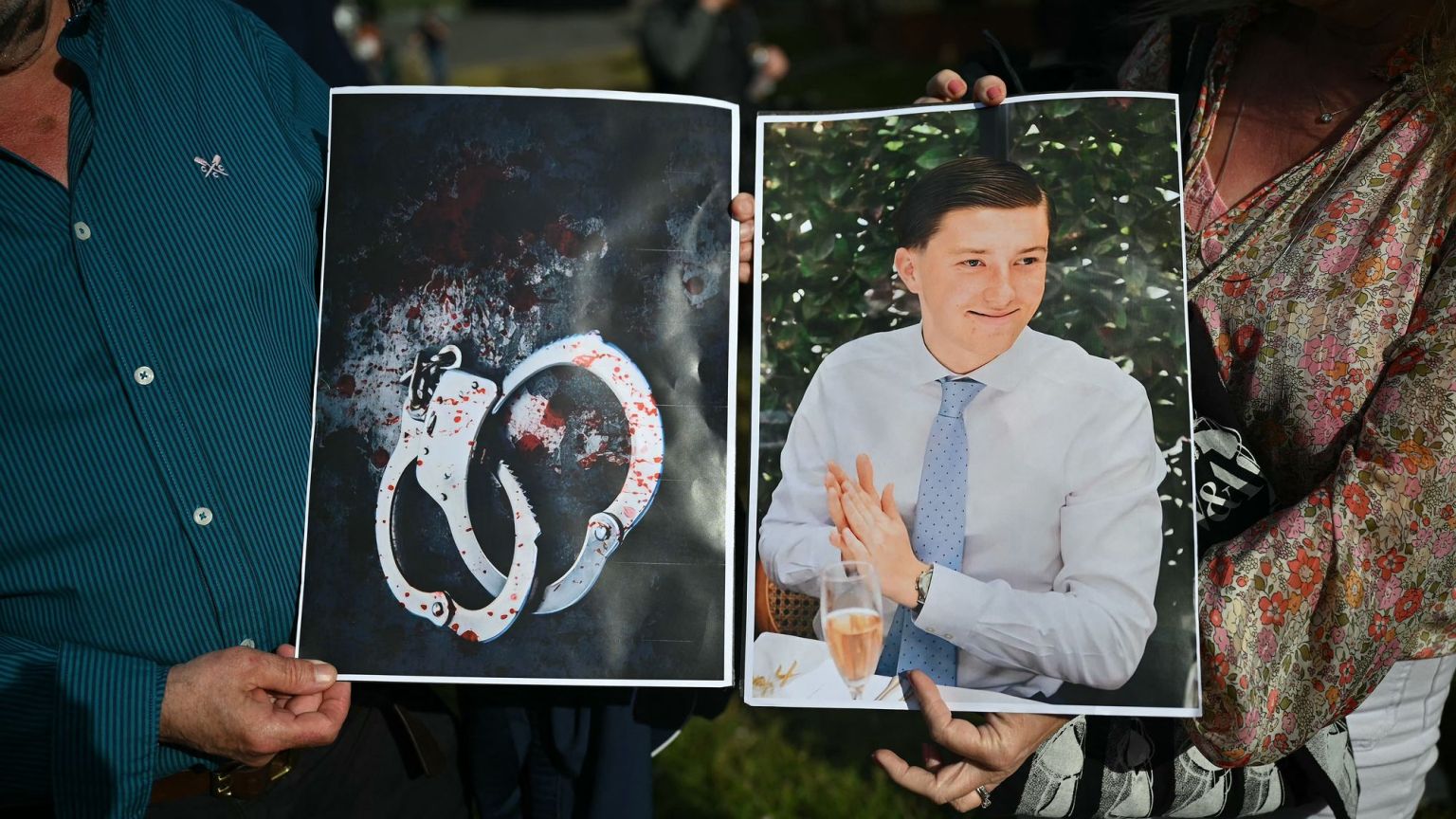
The new revelations came at the weekend, following the release of the full trial transcripts. The horror of Nowak’s death is well known. In Southampton, on the night of 3 December 2025, the 18-year-old student was stabbed four times by Digwa, a Sikh. Digwa then falsely accused Nowak of making racist jibes and attacking him. The cops arrived and took the word of the knifeman over the writhing, fatally injured teen. They cuffed Nowak. He told them he’d been stabbed. ‘I don’t think you have, mate’, came the staggeringly inhuman reply of one of the state’s brainwashed heavies.
Millions have watched the bodycam footage of Nowak’s pitiless arrest. We’ve witnessed the full savagery of state wokeness, as cops drag and cuff a teenager as he pleads ‘I can’t breathe’ (nine times) and ‘I’ve been stabbed’ (four times). What we didn’t hear, though, was what Henry cried shortly before the arrival of the police. A witness told the court he heard a young man in distress say: ‘I am not a racist.’ Picture the raw terror of the scene: Henry had been stabbed at this point – four times – yet he felt compelled to devote his flagging energy to convincing onlookers he was not racist scum.
In the trial transcripts, we see the prosecution lawyer say to the jury that, ‘even as Henry is dying’, he is saying ‘I’m not a racist’. He also told the jury about the 999 call made by Digwa’s brother, Gurpeet, who claimed: ‘He’s verbally attacked my brother racially.’ Faintly, in the background of the call, a voice can be heard. ‘No, I didn’t’, it says. That was Henry, a young lad who’d just enjoyed a night out with friends yet who now found himself fatally wounded by a knife and morally wounded by a libellous slur of racism.
What a chilling indictment of the DEI state – that a dying boy spent his final breaths defending his character against a fabricated slur rather than being comforted and cared for. That a boy was made to beg for both medical assistance and moral trust, and that he received neither until it was too late. Consider the existential weight of what Henry experienced. You’re 18 years old. Your life is slipping away. It’s the moment one’s thoughts turn to family, love, or to the terror of mortality. Yet in our cruel era of state-decreed racial suspicion, Henry’s last moments were spent litigating his moral innocence against a Kafkaesque lie.
The Nowak atrocity is a testament to the Stalinist bent of state ‘anti-racism’. It confirms that the accusation of racism is no longer a serious charge requiring rigorous proof of real bigotry, but a kind of magical spell. It has the neo-religious power to leave a man’s life in tatters. ‘Racist!’ is to the 21st-century West what ‘Witch!’ was to 17th-century Salem: a charge of heresy, of sinful thought, that might see you violently cast out from the society of the good. Like those ‘witches’ who pleaded their godliness prior to death, young Henry was made to cry ‘I’m not a racist!’ before he succumbed to his wounds.
Digwa clearly understood the spell-like power of the accusation of racism. He knew it would distract the state’s attention from his own barbarous behaviour and focus it on the alleged speechcrimes of the dying boy. And he was right. The police, wholly inculcated with the dogma of DEI, treated a white boy in the throes of death as a secular sinner to be dragged across the dirt, handcuffed, disbelieved and even mocked: ‘I don’t think you have, mate.’ Their minds fried by the authoritarian diktats of state ‘anti-racism’, they approached the bloody scene in Southampton less as cool-minded investigators of crime than as the enforcers of a cultish ideology. A brown man and a white boy? They knew instantly who was the guilty party, who was deserving of the ritualistic humiliation of a rough arrest. Henry.
We can now see the life-destroying power of the accusation of racism. We can now see that in a society riddled with identitarian anxiety, the mere whisper of that word acts as a kind of moral switch-off, blinding institutions to the evidence of their own eyes and subverting basic human empathy. To see how cruel the racial myopia of our elites can be, how divisive and dehumanising their ‘social justice’ has proven, just listen to a boy cry ‘I am not a racist’ as his precious life drains away.

Gareth Thomas MP argues that the Labour government should make an ‘ambitious new offer to the EU’, using the EU’s updated agreements with Switzerland as a precedent.
The ten-year anniversary of the EU referendum produced a wave of commentary refighting old battles – from Brexiteers’ excuses for wiping 4%-8% off our GDP, to musings about Labour’s chances at the next general election if we promise to rejoin.
Yet the debate in Westminster is lagging behind the public, who mostly see Brexit as a failure, but are not keen to re-run the divisions of Leave vs Remain. It is also disconnected from the real-world problems that we and our European neighbours face.
The reality of Brexit is that the EU is taking big decisions without the UK being in the room. Our car industry is being shut out of the EU’s ‘Made in Europe’ scheme for electric vehicles. Our steel industry, where 78% of exports go to Europe, now faces doubled EU tariffs. Our defence companies are not eligible to lead projects funded by the EU’s €150bn SAFE defence loan scheme.
This is not because the EU is trying to ‘punish’ us. This government has done the hard yards in restoring trust with our neighbours. Instead, it is the simple consequence of having left the single market, which the EU’s system is set up to protect. That’s why although the ‘reset’ has achieved some positive improvements, we need a fundamentally new deal with the EU that goes beyond incremental changes.
This ambitious partnership should have three main priorities: defending Europe in the face of Putin’s war in Ukraine and Trump’s disdain for NATO; responding to a disrupted global trading landscape dominated by the US and China; and planning for a future shaped by technologies, including AI, where Europe currently lags behind and where leading companies may not have our best interests at heart.
On security and technology, the UK has plenty to offer. We are a nuclear-weapons power with highly professional armed forces, top-tier intelligence services, and capabilities that Europe lacks. The UK attracts 39% of total venture capital in Europe, of which three quarters is in AI; we are a leader in biotech, accounting for 30% of the European VC market; and we are second globally for investment in fintech.
When it comes to trade, our position is unsustainable. Post-Brexit trade deals – worth only around 0.4% of GDP – cannot repair the damage caused by leaving the single market. Manufacturers in constituencies like Makerfield face what the OBR calls a ‘structural challenge’ from the paperwork and costs keeping us out of European supply chains. Our goods exports to the EU have fallen by 16%. In services, we no longer have mutual recognition of professional qualifications, and reduced business mobility throttles innovation.
We are close to agreeing important deals on agrifood and emissions trading. But these agreements, worth about 0.3% of GDP, are not game-changing for the economy as a whole. And the EU has made clear that our red lines on the single market, customs union and freedom of movement rule out substantially lowering trade barriers.
So what can be done? Our ambitious new offer to the EU should play to our strengths, while making a step-change in our integration with the single market. The precedent for this new trading relationship was set last year in the EU’s updated agreements with Switzerland, which is almost entirely inside the single market for goods, and partially aligns on services. In return, Switzerland pays into the EU’s regional levelling-up funds, and has an agreement on movement of people.
The UK is not Switzerland, and we could not simply copy and paste their deal. But this kind of arrangement could add up to 2% to GDP – boosting industries such as chemicals, pharmaceuticals, automotives and machinery – while giving the EU a partner with a clear stake in the single market’s success for the first time since 2016. It could preserve areas of divergence where an immediate return by the UK to the single market might be challenging, such as financial services or AI. And it would keep the UK’s ability to negotiate trade deals outside of the EU customs union.
On movement of people, this kind of deal would clearly be in UK interests. Total freedom of movement, with anyone from any EU country able to come to the UK whenever they want, whatever their circumstances, and settle here, is never going to be acceptable. But that doesn’t mean every restriction on movement between the UK and Europe should remain. It’s right that we’re negotiating an agreement to allow young people to live and work in each other’s countries for a limited period.
Scare stories about uncontrolled free movement show a complete misunderstanding of the controls that are applied to EU migration. For Switzerland – keen not to open up access to its generous benefits system – the EU deal was designed to apply only to the economically active.
EU citizens moving to Switzerland for more than three months need a residence permit and health insurance. To qualify, they must show either proof of employment, or evidence that they will not rely on benefits. The Swiss government can suspend free movement if it is shown to be causing “serious economic or social problems”.
A flexible labour force is good for UK businesses, and restoring the right to work in the EU would help Brits of all backgrounds. Lorry drivers would no longer face the 90-in-180 days limit that damages our logistics industry and leads to offshoring of jobs. Machinery manufacturers could more easily send staff for servicing and repair. Musicians in emerging British bands could tour in Europe, after years of being hammered by Brexit red tape.
The debate has moved on from 2016: polls consistently show that around three fifths of the British public would support free movement with the EU. And a referendum in Switzerland aimed at capping the population and bringing down the EU deal was voted down last month.
None of this will be easy to negotiate with our European partners, and a new Prime Minister will need to show courage in setting out renewed ambition. But staying on our current path is not an option. The Brexit referendum caused us to look inwards for a decade, as the world outside passed us by. To rise to the challenge of the decade to come, we need a new partnership with the EU – and the task of building it begins now.
By Gareth Thomas, Labour and Co-operative MP for Harrow West, and formerly Parliamentary Under-Secretary of State at the Department for Business and Trade.
I’m no fan of Wes Streeting. The wannabe UK prime minister, defeated before a Labour leadership contest was even declared, has been wrong on just about every issue going. But whatever you think of the former health secretary, we would surely all agree that there could be no justification for calls to harm him or his property.
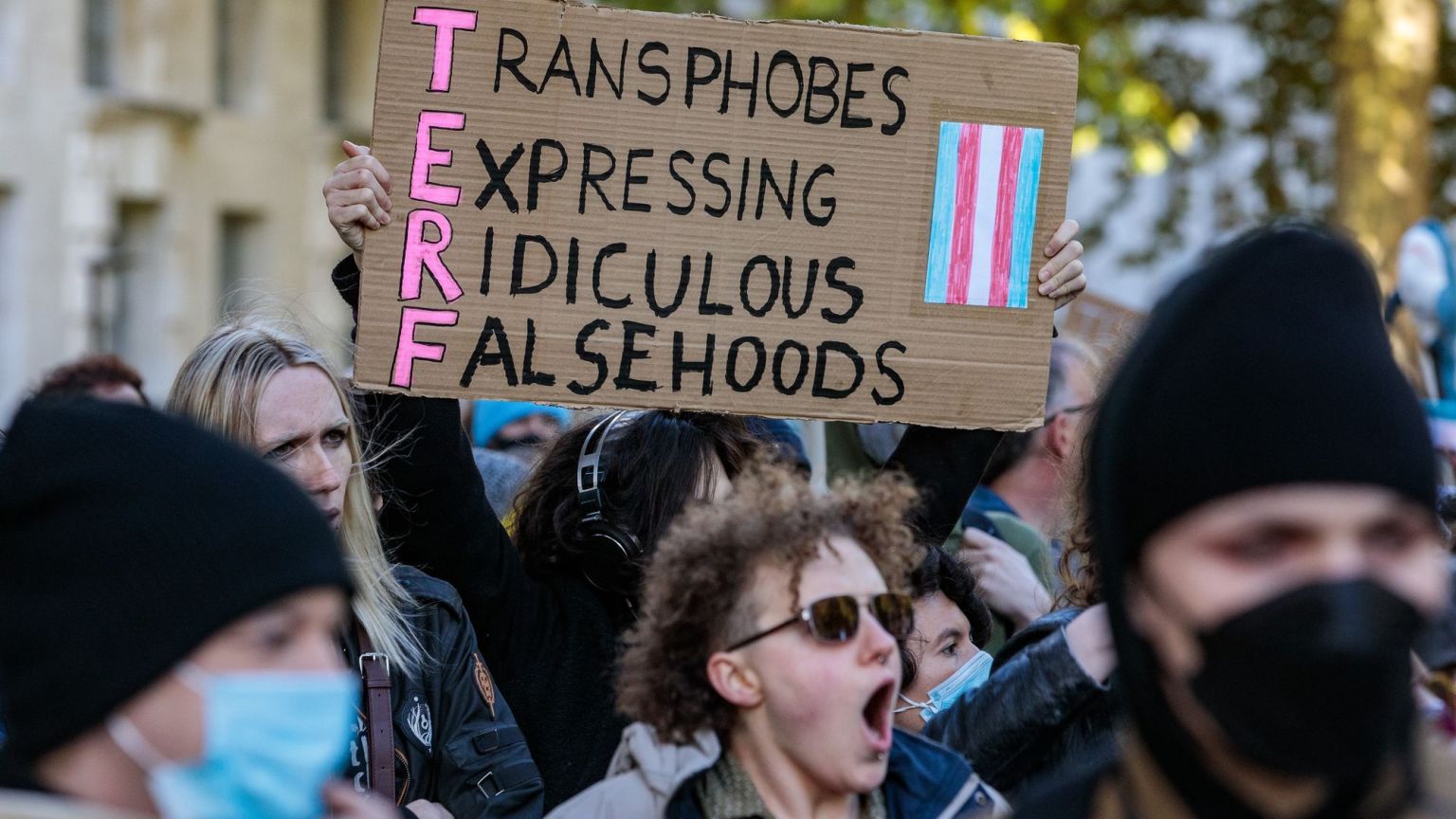
Not any more. Bash Back, a militant transgender rights group, has singled Streeting out in its campaign to ‘smash transphobia’ through ‘direct harm’. The group has produced an online guide urging supporters to identify ‘transphobic’ individuals and then ‘hit them repeatedly until they desist from their activities’. Suitable targets, the chilling booklet suggests, include the ‘offices of transphobic MPs’. This is illustrated, by way of example, with a photograph of Streeting’s constituency office.
Also on Bash Back’s hit list are organisations including Sex Matters, the Equality and Human Rights Commission and the Free Speech Union. Activists are advised to target party conferences and ‘the property of transphobic public intellectuals’. And if there were still any doubt as to what all this is meant to inspire, the leaflet urges people to ‘choose your weapon’ above icons of a hammer, a mask and a fire extinguisher.
If such a disturbing instruction manual had been produced by a right-wing group, there would be a national outcry. Instead, it barely registers as a news story. Yes, Bash Back might be a small group of violent nutters, but their threats are worth taking seriously. Not only do they highlight the risk to particular individuals – they also shine a light on the state of our political discourse. They show that for some activists, politics is no longer about attempting to win over your opponents or convince the public of your point of view. It is not even about taking part in rowdy or disruptive demonstrations. Instead, what passes for activism today is a potentially deadly temper tantrum: the promise of violent attacks, justified by hurt feelings.
The Bash Back guide contains one particularly revealing passage:
‘All of our targets have blood on their hands. We refuse to let them wash it off in peace. Welcome to a new era of trans rage.’
This reference to ‘blood’ sums up the activists’ view that words wound, and that hateful speech is an act of violence. This view first emerged with critical race theory, but it has been taken up by trans-rights organisations that consider any challenge to gender ideology to be eliminating ‘the very idea of a transgender person’ and a denial of their ‘right to exist’. Some have now convinced themselves that actual violence is a reasonable response.
Bash Back’s literal call to arms comes complete with tips on how best to avoid getting caught. It advises changing clothes after carrying out an attack and wiping down equipment with alcohol to remove DNA. Ironically, for a group in support of men who want to prance around as ladies, this ‘trans rage’ is very testosterone-fuelled. It’s Andrew Tate (‘Bang out the machete, boom in her face and grip her by the neck. Shut up bitch.’) in pastel-hued drag.
It used to be hot-headed Islamists who issued fatwas to anyone who blasphemed against their dodgy religious principles. They are still a threat, of course. But now they’ve been joined by radical left-wing activists who spew out death threats to Nigel Farage and JK Rowling, while urging everyone to ‘Be Kind’. Sadly, these are not all empty promises. Last year, Bash Back really did attack Streeting’s office. They sprayed red paint on the building and wrote ‘child killer’ on the windows. And they also disrupted a feminist conference in Brighton by smashing windows and spraying paint.
This turn to violence is not limited to trans-rights activists. In 2024, Samuel Corner was one of four Palestine Action activists who broke into the site of an Israeli-linked arms factory, causing £1.2million worth of damage. When their protest was disrupted, Corner hit a police officer with a sledgehammer, fracturing her spine. These activists’ crimes ought to have been roundly condemned, but instead Green Party leader Zack Polanski said it was ‘gut-wrenching’ to see them jailed. Labour’s John McDonnell described their subsequent prison sentences as ‘truly shocking’. Again, it is impossible to imagine a similar defence of far-right activists being given legitimacy by politicians.
In other cases of political violence, people have been killed. Police have now declared that the murder of Ann Widdecombe, a prominent member of Reform UK, is being treated as an act of terrorism, despite previously telling the public there was no evidence her killing was politically motivated. It is, of course, hard to see any other reason for a person to allegedly drive across the country with what’s been described as a ‘wooden pole’. Then there are the MPs, Jo Cox and David Amess, who were both murdered for their views. Meanwhile, across the Atlantic, a court has heard that Charlie Kirk was killed by alleged shooter Tyler Robinson in part over his views on gender.
We urgently need a reckoning with this outbreak of political violence. It should not have to be stated that words – no matter how offensive, hateful or upsetting – can never justify injuring other people or taking their lives. Solving disagreements with weapons rather than through debate takes us down a truly dangerous and disturbing path.
Joanna Williams is a spiked columnist and author of How Woke Won. Follow her on Substack: cieo.substack.com

Sitting back and relaxing, or sitting at your desk, are mindless movements, but how you sit (and how long you sit) can impact your health.
Many people tend to default to certain seated positions, and one popular posture is crossing one leg over the other (seen here) – not like a pretzel, but with one leg draped over the other knee.
The position is casual enough to be done at football games yet formal enough to be done at job interviews. It’s a posture many people find themselves in for much of the day.
Physical therapists said there is nothing wrong with sitting this way, and there is a reason it’s so appealing. But there are a few things you should keep in mind if you often find yourself sitting with your legs crossed. Here’s what to know:
There’s a reason a lot of people default to the cross-legged position
According to Valerie Rogers, a physical therapist at Mount Sinai Health System in New York City, this position “gives you a little bit of support.”
“So that when you go and lean forward, as you’re looking at a computer or something like that, you don’t have to use quite as many muscles to still keep you upright,” Rogers said.
This isn’t necessarily a bad thing, but it is a less active posture than simply just sitting up straight with your feet on the ground, she noted.
If you sit this way consistently and for long periods of time, it could “eventually make your postural muscles not quite as strong,” Rogers explained. “But you can still sit in those positions with an engaged posture, too. So, it kind of works both ways.”
If you do it all the time, you may notice some muscle imbalances
When you repeatedly sit cross-legged, you can create a bit of a pelvic imbalance, said Ethan Triplett, a physical therapist with Orlando Health in Florida.
“When you cross your legs, your body is naturally going to go into a little bit more of a slouched posture all the way up from the back, even up into the neck,” Triplett explained. “Putting one foot over top, you can obviously see how that’s going to push one pelvis side up compared to the other, and so that’s going to put a little bit of different pressure on your glutes.”
If you are constantly tilting to one side, your body has to compensate, he added.
“So, a lot of times, people will start to see that muscular discomfort, which is why we often tell people to change [their position] pretty frequently,” Triplett noted.

FreshSplash via Getty Images
This position can temporarily impact your blood pressure, but it’s not a concern overall
“There’s not a ton of robust research looking at this – what we do know is there is a temporary rise in blood pressure,” said Alex Hill, a pelvic health and oncology physical therapist and owner of OncoPelvic PT in Florida.
It happens in the moment when you have your legs crossed, which is why doctors and nurses have you put your feet flat on the floor when taking your blood pressure in healthcare settings, Hill added.
“But … it’s not that having your legs crossed every day is going to cause hypertension or cause a chronic blood pressure issue,” Hill said.
Sitting in a legs-crossed position for extended periods is particularly not recommended for those who have lymphedema.
“There are some considerations, also with crossing your legs that could increase the pressure on the lymphatic and the blood vessels, so it can temporarily reduce fluid drainage efficiency,” Hill said. “With lymphedema, it is recommended to avoid crossing the legs for extended periods of time because it does occlude those vessels for that temporary time period.”
In the end, staying in any one position for too long is damaging
“The phrase that I always tell my patients is, ‘your best posture is your next posture,’” Triplett said. Posture problems can be a big contributor for discomfort and pain.
“I don’t think sitting in any one position more than 30 minutes is good for the body,” said Ryan Galvin, a physical therapist with UofL Health in Kentucky.
Galvin recommends that folks set a timer for every 30 minutes or so to remind themselves to get up and move around.
“The reason you want to create variability in your positions and your postures is so your body doesn’t get accustomed to one position and mold into that one position,” Galvin noted.
This is how “tech neck,” a forward head posture, happens in people who look down at computers or phones a lot, he said.
“If you spend too much time in one position repetitively, your body ends up creating a new posture,” Galvin said.
It’s easy to forget to get up and move if you work a desk job or are tuned into a particularly good Netflix binge, but if you aren’t getting up to move, it can become problematic, no matter how you’re sitting.
“Those muscles can get weak, they can get tight, including those hip flexors, your hamstrings, your core stabilisers, and so over time that can lead to issues,” Hill said. “But sitting one day with your legs crossed isn’t the end of the world.”
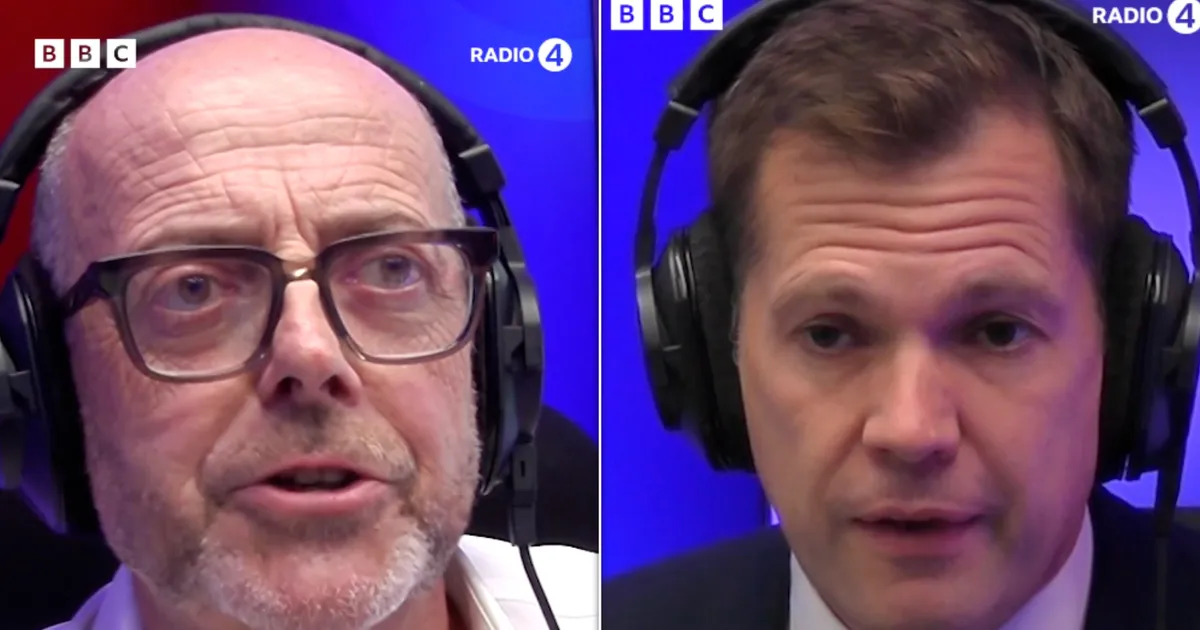
BBC presenter Nick Robinson clashed with Robert Jenrick over his claims that the government is failing to give Nigel Farage the protection he needs.
The pair went head-to-head after it emerged the Reform UK leader rejected the same taxpayer-funded protection package given to Tory leader Kemi Badenoch when he was offered it.
That would have seen him receive a bodyguard, a car and a trained driver at all times.
However, Farage insisted it was not enough to protect him from the threats he faces and turned it down.
He is now set to have a meeting with the Royal and VIP Executive Committee (RAVEC), an independent body which assesses the threat posed to high-profile people, to discuss his concerns.
The row has erupted in the wake of the alleged murder of Ann Widdecombe, the former Tory minister who became a Reform spokeswoman.
A 28-year-old man has been arrested and counter-terror police are now leading the investigation.
On Radio 4′s Today programme, Jenrick, Reform’s Treasury spokesman, accused the government of “downgrading” the protection given to Farage after he became an MP in 2024.
“He initially was given a comprehensive plan that was commensurate with the threat that he faced,” he said.
“Then that was downgraded. I don’t know why, maybe that will be explained to Nigel when he meets the committee. But that feels to me to have been very unwise, to say the least.”
He added: “Sadly this is a man who is under great threat and think the authorities are just very blase about that, as are parts of the media.
“Just the other day parts of the media were happy to publish photographs which made it very easy to know where his daughter lived [and] his homes.”
But Robinson told him: “Nigel Farage posed in front of his own homes for the cameras repeatedly.”
Jenrick insisted that Reform MPs face a greater threat than other politicians because they “raise issues that many mainstream politicians shy away from”.
He said: “If you talk about Islamist extremism, as I do and Nigel Farage has done for many years, you are likely to be in considerably more danger than those who don’t.”
Robinson hit back: “You can’t say that Mr Jenrick, there’s no evidence for that at all. There’s a threat from the far right in this country. Ask Diane Abbott, if she was in that seat, ask the family of Jo Cox. There are people on all sides of politics who have become a target.”
He went on: “In the last few minutes, you have attacked the media, you’ve attacked the police, you’ve attacked the government, you’ve attacked the [Commons] Speaker, you’ve attacked the establishment who apparently want someone dead in the Reform party.
“What do you say to those who say ’yes, this is a terrible tragedy what happened to Ann Widdecombe, we don’t actually know why she was murdered yet, we don’t even know if she was murdered because of her connection with Reform UK. It could be. None of this is clear until the police complete their investigation.
“But it does suit you and Nigel Farage to change the subject nationally from the fact that Mr Farage took a vast donation of £5 million from someone living abroad and he wishes to connect that with his security when in fact it has nothing to do with it at all, it’s about a breach of parliamentary rules.”
Jenrick then accused Robinson of reading off “a pre-scripted final question to me” – something the presenter angrily denied.
The Reform MP went on: “The point I am making is that the government chose not to give Nigel Farage the security he needed. They now have, as a result of Ann Widdecombe’s appalling murder, offered him a meeting.
“The home secretary could have offered him that meeting a year ago, two years ago, she chose not to. That is playing politics with the safety of politicians and I suspect that’s because they don’t like the views that Reform politicians take forward.”
Listen to Commons People, the podcast that makes politics easy. Every week, Kevin Schofield and Kate Nicholson unpack the week’s biggest stories to keep you informed. Join us for straightforward analysis of what’s going on at Westminster.
Politics
The House | To fund the investment in national security we need, Burnham should steal our defence bonds policy


HMS Prince of Wales departs Portsmouth en route to join in NATO exercises in 2024 (Mark Dillen/Alamy)

3 min read
The government has finally released its long-awaited Defence Investment Plan (DIP), after 14 months of delay. It was, as expected, too little and too late.
With Vladimir Putin waging war in Europe and an unreliable Donald Trump in the White House eroding the essential alliances that underpin our security, we must be upfront with the public about the threats facing Britain. The Prime Minister himself has warned that Russia could launch an attack against Nato by 2030. In light of these unprecedented threats, we urgently need to invest in our national security. We need to give confidence to our Nato allies and international partners that we are serious about our collective defence and national resilience.
The resignation of the former defence secretary John Healey – in frustration at the settlement on offer from the Treasury – shone a harsh spotlight on the government’s struggle to fund our armed forces, following years of cuts by the Conservatives.
Despite Dan Jarvis, his replacement as Defence Secretary, winning an additional £1.5bn from the Treasury, there is still an enormous funding gap that needs to be filled by the prime minister in waiting, Andy Burnham. Of the £15bn uplift secured in the DIP – itself only just over half of the £28bn black hole outlined by military chiefs – £4.7bn is currently entirely unfunded.
As a country, we need to be moving at pace urgently to inject finance into our national security, not dragging our feet. The Liberal Democrats have a clear plan to do this: by issuing ‘defence bonds’ to generate an additional £20bn over two years, hypothecated to spending on capital investment in our military. It’s an idea that Burnham is reportedly considering – and which I would encourage him to implement as a priority once over the threshold of No 10.
Our vision for defence bonds would see them back British industry, create jobs and foster innovation. They would also allow the public to have a genuine stake in our collective national security. This investment would supercharge our defence industry, all while sticking to the government’s fiscal rules, to which Burnham has committed. It would also allow us to support research and development to further stimulate our economy and generate growth.
There is strong evidence to support the value of defence bonds. Take ‘green gilts’, issued to raise money for capital investment with an environmental benefit in 2021. The very first sale raised £10bn.
The DIP has shown that the current government does not have a credible plan to fund defence
We need to be this ambitious for our defence industry. Critically, we see defence bonds as part of a funding mix for defence. That mix would also include working with our international allies to generate innovative collective financing models – including Liberal Democrat calls for a European Rearmament Bank – and negotiating access to the EU’s €150bn Security Action for Europe (Safe) programme.
We would also scrap the government’s self-defeating and anti-growth red lines on Europe – and open negotiations to join the EU’s single market to stimulate the growth we desperately need. Growing the economy is how we can generate the funding necessary for our defence needs.
The DIP has shown that the current government does not have a credible plan to fund defence. That sends all the wrong signals to industry – and to our allies and adversaries alike.
When Healey resigned, he said Keir Starmer was “unable” and the Treasury was “unwilling” to keep our country safe. This is unacceptable.
The Conservatives hollowed out our armed forces and Starmer failed to fund them. Burnham must now ensure any government’s first priority: to keep our country safe. Issuing defence bonds is an obvious first step towards funding our armed forces properly.
James MacCleary is Liberal Democrat MP for Lewes and defence spokesperson

Right now, there’s an “exceptional” risk of wildfires in parts of the UK (especially the sunnier South of England and the lower parts of the Midlands).
Hot, dry conditions, influenced by the back-to-back heatwaves we’ve experienced so far, are continuing into the longest period of unusually hot weather in years.
That means that something as simple as a glass bottle or embers that travelled on the wind risk setting spaces like your garden aflame, the London Fire Brigade (LFB) said on its site.
A National Fire Chiefs Council spokesperson told the BBC: “When the weather stays hot and dry, it only takes one spark to start a wildfire. What can begin as a small fire can spread incredibly quickly, putting people, homes, wildlife and our countryside at risk.”
One of the ways the LFB recommends reducing this risk is by getting rid of combustible materials (things that can easily catch fire) in your backyard.
This includes keeping your grass below a certain height.
Keep your grass below 7cm during periods of high wildfire risk
“By removing anything flammable, like dry grass or piles of rubbish, you’re removing fuel for any wildfires,” the LFB explained.
Keeping your grass below 7cm can help with that, as can removing dead leaves from areas like your gutters, positioning things like sheds and garden furniture away from your home, and cutting back trees and shrubs near your house.
Ensuring your garden is watered can help, too, but be aware that many parts of the UK are currently facing hosepipe bans.
“If a hosepipe ban is in place, consider using water butts or wastewater from your home to water your garden,” the LFB added.
Where possible, try creating “firebreaks” around your property
This involves clearing a 2-3cm space around every side of your home and garden to reduce the chances of fire spreading.
Anything else? Yes. Compost heaps can be a fire hazard in gardens, so it’s best to keep them away from buildings and structures like sheds.
Keep them moist and use a watering can if you’re worried it’s running dry.
A “good balance” of green (plants, kitchen scraps, natural fibres, and leafy garden waste) and brown (like cardboard and shredded woody prunings) materials helps too, as does turning the heap over often.
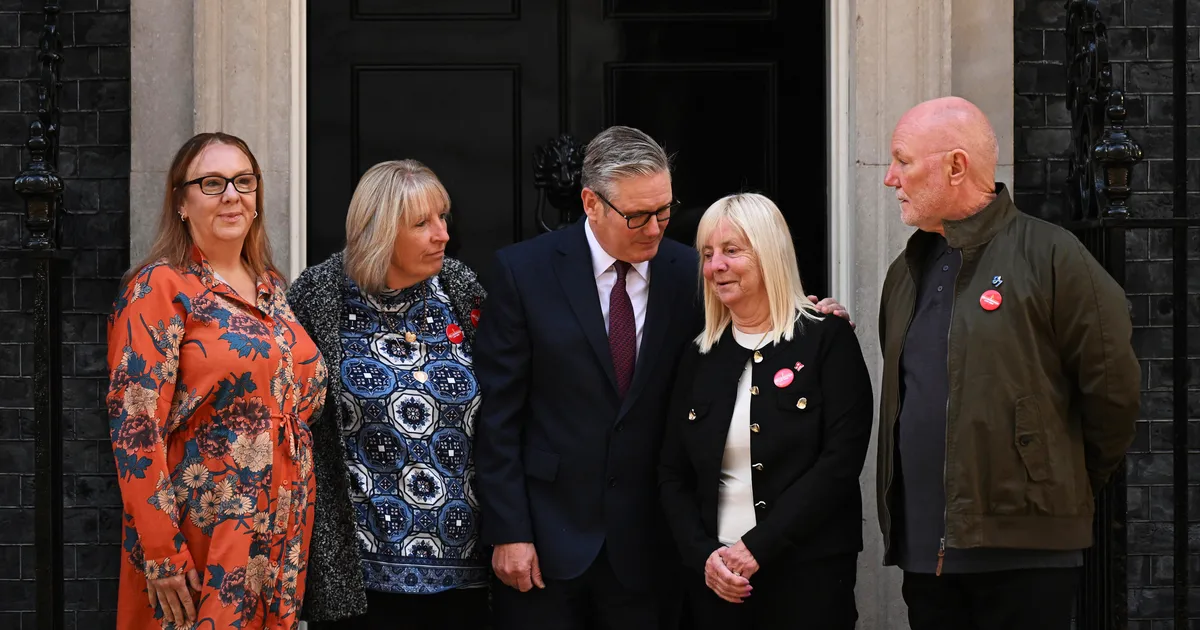
The bill for the Hillsborough Law is set to be approved by MPs in the Commons today more than three decades after the disaster.
The long-awaited legislation is expected to become law by the autumn, marking a major victory for campaigners including incoming prime minister Andy Burnham.
Here’s what you need to know about the law and why it’s so significant.
What Happened At Hillsborough?
Ninety-seven Liverpool fans died as a result of the tragedy at Hillsborough stadium on April 15, 1989, during the FA Cup semi-final between Liverpool and Nottingham Forest.
Hundreds more were injured as overcrowding caused a deadly crush in the Leppings Lane end of the ground.
It remains the UK’s worst sporting disaster in history.
Victims’ families fought for decades to uncover the truth about what caused the tragedy, after Liverpool fans were wrongly blamed for what happened.
However, their efforts were hampered by the police, who blamed the fans and held back evidence of their own failings.
What Is The Hillsborough Law?
Officially known as the Public Office (Accountability) Bill, the Hillsborough Law will make it a legal duty for public officials to tell the truth to inquiries and investigations.
Prime minister Keir Starmer has welcomed the “landmark law” as a tribute to campaigners who spent decades “fighting to get justice for their loved ones”.
“This will make sure nobody else has to suffer like they did. I am proud to bring back this Bill, delivering a law not just for the 97, but a law for everyone,” he said.
Why Has It Taken So Long?
The authorities spent decades unfairly blaming the fans for the incident.
It was 27 years before a court finally ruled in 2016 that those who died were unlawfully killed and that the fans caught in the crush were not responsible.
But campaigners wanted accountability, too.
So far, only one senior police officer in charge at Hillsborough, David Duckenfield, has been fined £6,500 for a health and safety offence.
Meanwhile, a police misconduct investigation run by the Independent Office for Police Conduct and operating since 2012 concluded last December – but ruled no one would be held accountable.
Some of the most prominent campaigners and officers involved have passed away in the 36 years since the disaster without ever seeing justice.
The Major Sticking Point
The original proposals in the Hillsborough Law gave intelligence agencies the right to decide whether to co-operate with public inquiries.
They could opt out of giving evidence if they thought it would pose a major national security risk, a caveat which infuriated campaigners.
Families bereaved by the 2017 Manchester Arena bombing wrote to Starmer in January saying MI5 should not be exempt.
A public inquiry found the intelligence agency had not offered an “accurate picture” about the information it held on the suicide bomber.
It’s thought ministers have now agreed not grant the intelligence services any exemptions in order to get the legislation through.
Why Is It Coming In Now?
Starmer originally promised to introduce the law by the anniversary of the Hillsborough disaster in April 2025.
But further disagreements over how far it would require intelligence services to comply with a proposed legal “duty of candour” on public bodies meant it was withdrawn.
To push it through in the last week of his premiership, Starmer helped to weaken the opt-outs for authorities.
Downing Street’s push to get the legislation over the line at the last minute of Starmer’s time in office will be seen as an effort to shore up his own legacy.
What Does Andy Burnham Think of The Law?
Burnham – who will become prime minister next Monday – will also make his first statement in the Commons since returning to parliament as the Makerfield MP on the legislation.
The incoming prime minister introduced a Hillsborough law in 2017, but it was not picked up by the then-Tory government.
The former Greater Manchester mayor has been an avid supporter of the victims, and joined them in criticising Starmer’s bill for not going far enough.
Burnham welcomed the incoming bill on Monday, writing in the Liverpool Echo: “If an entire city could be ignored for two decades while telling the truth about the deaths of its own people, what other communities have gone unheard? Which voices have been overlooked simply because they lacked power?
“For me, this has always been about changing that. It is why I believe we must continue to redistribute power, strengthen our towns and cities, and build a Britain where every community is treated with equal respect and where, in the face of injustice, nobody walks alone.”
Listen to Commons People, the podcast that makes politics easy. Every week, Kevin Schofield and Kate Nicholson unpack the week’s biggest stories to keep you informed. Join us for straightforward analysis of what’s going on at Westminster.

Tom Holland has admitted he had a bit of a “humbling experience” when he tried to get together with football icon Erling Haaland.
On Monday, the Bafta winner paid a visit to The Tonight Show, where, naturally, talk quickly turned to the World Cup.
“It’s a huge deal for us,” the British actor said, of England qualifying for the semi-finals. “And it really does feel like something is in the air right now. Sometimes in life I just get a feeling, and I have that feeling right now, Jimmy.”
During this year’s World Cup, Norway’s Erling Haaland has become one of the most talked-about players in the world, with host Jimmy Fallon putting Tom on the spot about whether rumours that the Spider-Man actor once slid into the footballer’s DMs were true.

“Yes,” Tom confessed. “And I tell you what, that is the exact type of humbling experience that is important for actors.
“Like, ‘I’ll text him, I’ll take him for dinner’. Not even a response. Not an excuse, not ‘I’m busy tonight, I’m playing football’. Nada.”
Explaining exactly what went down, he continued: “I was at Monaco, I was watching Lewis [Hamilton] race, and I saw [Erling Haaland] in a hospitality suite across from me.
“And I just thought I’d shoot my shot. [So, I] sent him a text. I never imagined I’d talk about it on live television, but here we are!”
When Jimmy asked Tom if the invitation was still open, he responded: “I don’t think he’d have dinner with me after the other day.”
“He’s incredible,” Tom concluded. “He’s an absolute legend.”
Erling previously shared his side of the story during an interview on the Norwegian series A-laget, Norway’s equivalent to The Assembly.
“This is a bit embarrassing, to be completely honest,” Erling said. “We were in Monaco at the Formula 1, and then I got a message. I don’t watch movies much, so I have no idea who people are. There was one asking if we could go out for dinner, but I’d never seen him, so I didn’t bother to answer. I didn’t want to answer an unknown person.”
The Marvel performer is currently gearing up for the release of his new movie The Odyssey, which also features his wife and Spider-Man co-star Zendaya.
Also in the star-studded cast are Anne Hathaway, Lupita Nyong’o, Charlize Theron, Robert Pattinson and Matt Damon, who takes the lead as Tom’s on-screen father, Odysseus.
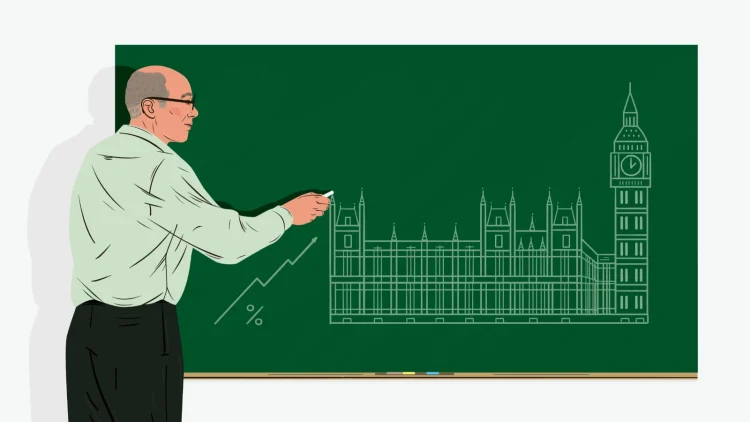
Illustration by Tracy Worrall
4 min read
Lessons in political science. This week: post
The letter the constituent received ended, as they often do, with some polite boilerplate. “Please feel free to contact me with other matters that are of importance to you. I am honored to serve as your representative in the US Congress”.
But then it continued, in a way these letters usually don’t: “I think you’re an asshole.”
Congresswoman Jo Ann Emerson was forced to apologise, saying that she didn’t know how that happened or who was responsible; if she ever found out, she never made it public. But it is a rare MP or staffer who has not wanted to add a similar parting shot occasionally.
It used to be letters: almost five million pieces of post arrived at Westminster in 2005; that had fallen to just over 1.2 million by 2019 and is now below the million mark every year. But email has grown to replace it, which I suspect does little to reduce the asshole coefficient.
Given how resource intensive it is, we know surprisingly little about MP-constituent post. There have been few efforts to follow in the footsteps of Frances Morrell’s 1977 study of postbags or Richard Rawlings’ detailed analysis of MPs’ casework from 1990 – although a fascinating article just published in the Historical Journal has examined some of the existing archival collections of MPs post.
One innovation is what are known as correspondence or audit studies, a very common way to check for bias. You send off a bunch of otherwise identical CVs or letters to companies and you see if those from John get more positive replies than those from Joan, or indeed those from Mohammed. When some academics tried something similar with MPs a few years ago, there was a big row; the Speaker got involved, claiming it might be a contempt of the House.
I had assumed that warning would be the end of such studies of Westminster. No one wants to end up in chokey, just to get an article in The British Journal of Political Science.
Hence my surprise to see a new study is forthcoming. Turns out this new one was carried out before the last row, with the fieldwork undertaken in 2018-19. Its publication in 2026 is a bit of an indictment on academic lead times but should at least stop them having their collars felt.
Even more of a defence is that this time no fakery was involved at all. In a clever methodological innovation, this study recruited students to send letters to MPs. These were real constituents, participating voluntarily, and the study ensured that the messages sent reflected their genuine views. The only difference is that the research study was able to track them.
Given how resource intensive it is, we know surprisingly little about MP-constituent post
The letters were on policy, covering a range of different issues: Brexit, student finance, immigration. The main findings are all null (of one result, the authors say the “estimated coefficient on the constituent-party congruence treatment is non-significant, wrongly signed, and close to zero”, which is a null result in its purest form). There was no difference between the rates of reply, or their content, depending on “constituent congruence”, that is whether the writer agreed with the MP or not. Lest you think this is obvious, US studies find the opposite.
There was similarly no difference between loyalists and rebels on particular issues. Marginality didn’t seem to matter either. This is all, in many ways, actually very positive: constituents are getting equal treatment, whatever their views.
The secondary finding is, to me, more interesting. Holding responses came from 63 per cent of MPs, but a substantive response came from just 46 per cent of those contacted. This was lower than I was expecting. Perhaps the policy-related nature of the questions lowered the extent to which MPs felt a response was required (would casework get a higher response?); perhaps the relatively short nature of the emails made some MPs treat them as campaign group generated? Having just been writing to MPs myself for something else, I’m at least confident the holding replies these days would be close to 100 per cent.
At least no one replied: I think you’re an asshole.
Further reading: K Kowol and R Toye, The Management of British MPs’ Postbags and Politician-Voter Relations in the Democratic Age, The Historical Journal (2026); D Bischof et al, When Legislators Do Not Differentiate: A Field Experiment on British MPs’ Responses to Constituency Policy Queries, British Journal of Political Science (2026)

Banks urge Senate to close stablecoin yield loopholes in CLARITY Act

Henry Nowak and the tyranny of state ‘anti-racism’
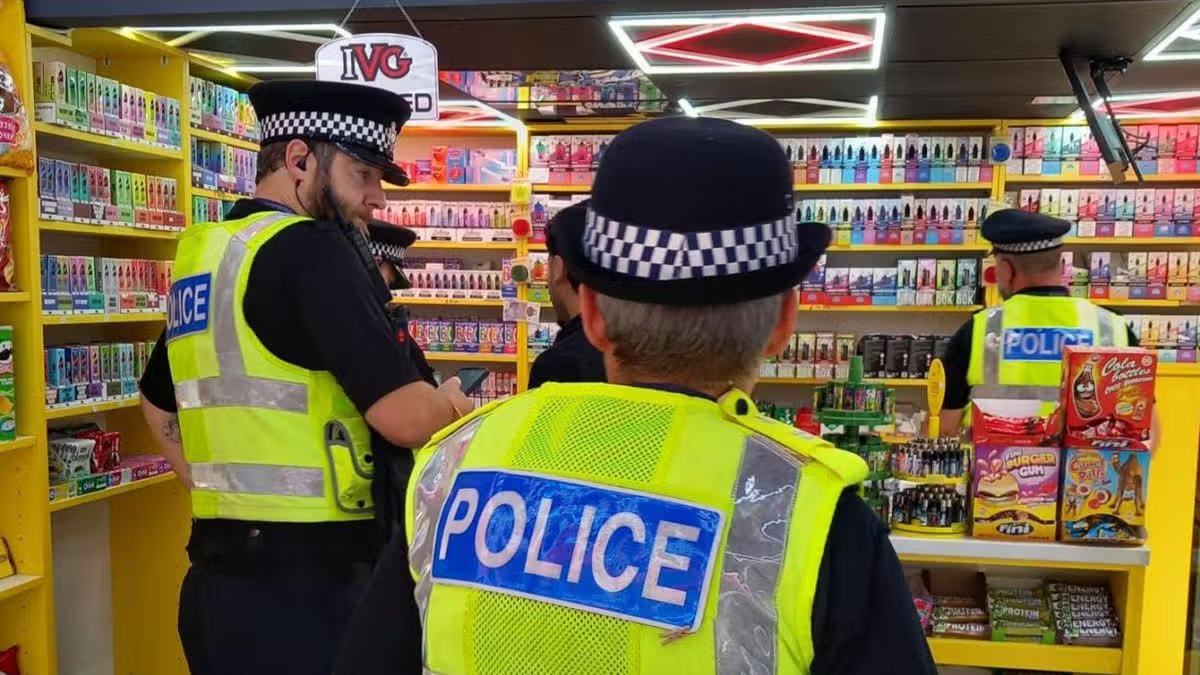
City Shop forced to shut after selling illegal products


-

 Fashion5 days ago
Loro Piana Fall 2026 Enters Houston’s Art Scene
-

 Fashion3 days ago
Weekend Open Thread: Nutriplenish Leave-In Conditioner
-
 Sports5 days ago
2026 Genesis Scottish Open Thursday TV coverage: Round 1
-

 Sports7 days ago
Joshua Pacio ‘more complete’ ahead of ONE rematch vs Malachiev
-

 Tech6 days ago
Anthropic brings Claude Cowork to mobile and web as usage data shows most users aren’t coding
-

 Sports4 days ago
Super Eagles star Moses Simon opens up on Liverpool transfer regret
-
Sports7 days ago
We have punished the disrespect
-

 Tech5 days ago
Character.AI enters the microdrama arena with its own productions, but there’s a twist
-
 Crypto World7 days ago
Claude AI Created Something Anthropic Never Designed
-

 Crypto World7 days ago
Nasdaq arthritis company holding Moshe Hogeg crypto hits all-time low
-

 Tech5 hours ago
Get Your ESP32 Sunny Side Up With This Solar Dev Board
-

 News Videos5 days ago
Crypto Just Entered Its Most Important 6-Month Candle (Could Decide Everything!)
-

 Tech6 days ago
Keychron is stepping outside keyboards with a $349 Thunderbolt 5 dock aimed at power users
-

 Business6 days ago
ASX 200 Slides Over 0.6% as Rare Earths and Lithium Stocks Tumble Amid Global Semiconductor Sell-Off Today
-
 NewsBeat5 days ago
Major update after Huntingdon train attack as man enters plea
-
 Business6 days ago
Will Trent shares rebound after Q1 update triggers 13% crash? Here’s what technical charts indicate
-
 Tech7 days ago
OpenAI teams with Work Louder to launch Codex-native keyboard, weeks after CEO of Apps told staff ‘not to be distracted by side quests’
-

 Business6 days ago
SpaceX Shares Slide Nearly 6% Amid Post-IPO Volatility and Starship Test Focus
-
 Crypto World7 days ago
TeraWulf’s $19B Anthropic Lease Turns Bitcoin Miner Into AI Landlord
-

 Sports6 days ago
39-year-old Djokovic wins five-hour thriller to enter Wimbledon semis | Other Sports News
You must be logged in to post a comment Login