

Politics
I Got Sober, My Husband Still Drinks. This Is What We Tell Our Kids


I quit drinking when I was 26, when my firstborn was 18 months old, but before I got pregnant with my second child.
I wasn’t drinking every day, but every time I started drinking, I couldn’t stop. Hangovers would leave me crushed with nausea and anxiety for days at a time, until the next failed attempt to moderate.
There was no rock bottom or arrest, no DUI or ruined relationship that signalled the need to quit. It was a personal choice I made, based on how my relationship with alcohol was affecting me and my mental health. Eventually, it became clear that alcohol no longer deserved a place in my life.
My kids have never seen me drunk or hungover. My oldest was too young to remember what it looked like for me to fail horribly at moderation, commit to sobriety and then fail again, then learn how to be sober. They only know me as their mother who doesn’t drink alcohol.
My husband is a “normal” drinker, which is to say that he is able to drink without it having an overwhelmingly negative effect on his mental health. He was supportive when I told him of my decision to quit.
Still, when I quit drinking, we had to navigate some changes in our relationship. First of all, if I wasn’t drinking anymore, what in the world were we supposed to do on date night? We met in college and drinking is, quite literally, what we did.
Did the beginning of my recovery signal the end of our marriage? Once we were able to confirm that it didn’t, we had honest conversations around what I needed from him as a partner to feel secure and respected in my sobriety.
I never expected my husband to quit with me, and I’m pretty sure he never even entertained the idea that he might. My husband continuing to drink was never triggering for me.
We set up a few boundaries regarding alcohol in the house (no signage on the walls, no glassware in the kitchen, move it to the garage) and got on the same page regarding how alcohol and sobriety would be discussed in our home, and with our kids, who are now 5 and 2.5.
Because my husband still drinks regularly, we acknowledge alcohol in our house without villainising it. My kids know they can always drink out of my water bottle or have a sip of my cran & seltzer at the pool, but their dad’s drink might not always be fair game.
“Daddy’s drink has alcohol in it,” I tell them. We also talk openly and honestly about why there isn’t alcohol in my drink. “Mommy doesn’t drink anymore because it’s not good for her.”
Over three years of trial and error, we’ve found these boundaries to be the most helpful for me and my sobriety, the most impactful in our family, and hopefully the most beneficial for our children.
First, we don’t advertise alcohol. The very first thing I did when I quit drinking was remove any beer, wine, whiskey or shot glasses from the kitchen cabinets and take down my wine-themed decor. All alcohol-themed decor or knick-knacks (magnets, cups, signage, etc.) were taken down. This quickly extended to clothing as well. (The “natural light” onesie we were gifted barely got halfway out the bag before my resolute “No.”) I also had my husband move all the alcohol out of the fridge in the kitchen and into the garage fridge.
One of the biggest “parenting turn-offs” for me is when I see parents posting pictures or videos of their kids involving alcohol. I’ve seen babies holding beer bottles, and I’ve seen tweens “practicing” beer pong.
Since removing myself from alcohol culture, I see this as problematic since, in my sober opinion, it normalises and glamorises drinking culture as aspirational. Beyond not taking pictures of the kids with alcohol in them, we also put down our own drinks (NA or not) when we take pictures without the kids.
Last summer we were at the lake with some family. It was the classic lake-day-with-kids setup – a semicircle of chairs, coolers stuffed with water, juice boxes, snacks, and drinks (both alcoholic and NA), and an explosion of sand toys in the middle. My husband asked his mother to get him a beer out of the cooler. She pulled out a can and asked my two-year-old to “hand this to your daddy, please”.
My husband held our family boundary on my behalf when he quickly said “No need to involve her,” and reached across the circle to take the beer can from his mom himself.

Photo Courtesy Of Sydney Allen
We are mindful of how we talk about drinking. For instance, beer is beer, not “daddy juice”. Last year, a neighbour referred to a High Noon as “juice” to my son. I shook my head, and said, “It’s beer.” (I know a High Noon is technically vodka, not beer. But to my five-year-old, any alcohol is “beer”. And it definitely isn’t juice.)
At dinner that night, I explained that some adults think it’s fun or silly to call beer “adult juice”. He couldn’t understand – and quite frankly, neither can I – why another mom would say something was juice (something he can have) if it was beer (something he can’t).
I was lucky to not be exposed to problematic drinking behaviour or obvious alcoholism growing up. But alcohol and drinking culture was the norm. Both my parents drank; there was always beer in the fridge for dad and wine in the cabinet for mom. My developing mind concluded that drinking alcohol is standard for adults.
It does the kids no good for us to ignore alcohol, but it would also do them no good – and it would be a disservice to my own sobriety – if we approached alcohol with the same nonchalant attitude that I witnessed when I was younger.
My husband and I try to be aware of how we (and others) talk about alcohol as a coping mechanism or a treat. “I need a drink” has turned into “I would like to have a drink.” Alcohol isn’t something “for adults,” but rather something you have to be an adult to do.
We don’t allow alcohol to affect our plans as a family. The whole family should not be waiting on my husband to finish a drink at a restaurant or pour a drink at home. Our children should not feel like they are waiting on adults to get settled with a drink before they can be tended to.
Hangovers, infrequent as they may be, also don’t affect our plans. My husband is well aware of the expectation that we have a full day, no matter what time he went to bed the night before. This seems to mostly be motivation enough not to drink himself into a hangover.
We are honest with our kids about the ways alcohol affects our bodies. When my kids ask why I don’t drink if daddy does, I often say, “I used to, but it made my heart hurt.” I didn’t identify as an alcoholic before I quit drinking, so I didn’t find it helpful to say I had an illness or that my body works differently.
In sobriety, I’ve begun to identify as an addict, which I will explain to my kids when they’re older. When it is age appropriate, I will explain that I had no “off-switch” with alcohol. This led me to experience an all-consuming anxiety and guilt each time I drank.
Beyond my body’s personal reaction to alcohol, we are open with our kids about the fact that alcohol is a drug. It is not healthy nor a “good” thing to do, but many adults still choose to drink it. It is, mostly, a personal choice.
My goal with this approach is not to convince my children that they should or should not drink alcohol. My goal is to give them the education, the self-confidence and the critical thinking skills to make the decision they know will be best for themselves.
Yes, alcohol is bad for you. But drinking alcohol doesn’t make you a bad person. Many people drink alcohol, but that doesn’t warrant the celebration it often gets in homes across the nation.
Growing up steeped in drinking culture – even the normalisation of alcohol – can make it difficult to see through the fog. I just want my kids to grow up and know there is another option, because their mom showed them.
Do you have a compelling personal story you’d like to see published on HuffPost? Find out what we’re looking for here and send us a pitch at pitch@huffpost.com.


It’s win or bust for England and Argentina in Atlanta tonight.
But in one area of global affairs — in a part of the world very familiar to leaders in London and Buenos Aires — both are about to lose.
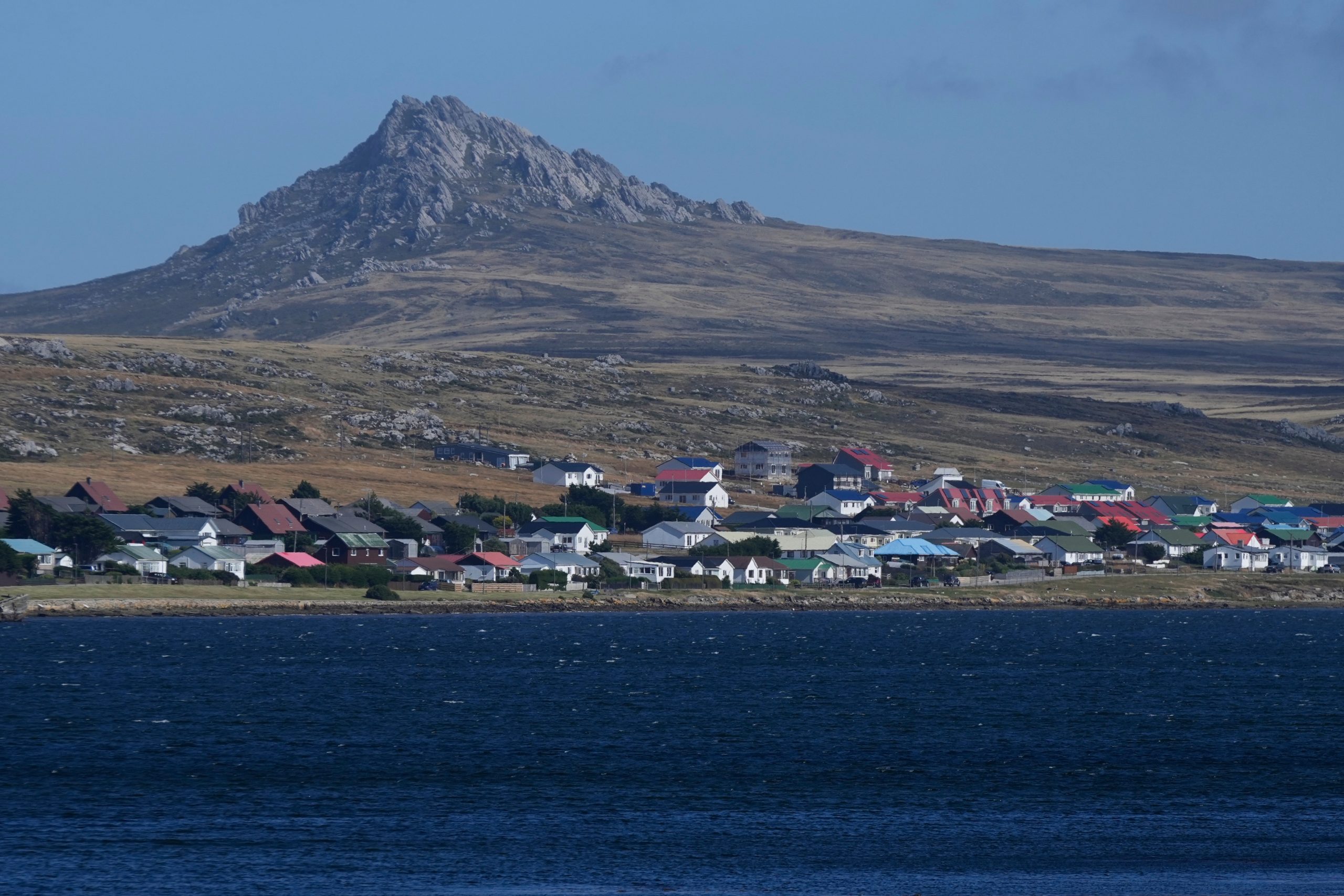
As first reported by the Financial Times, developers are prepping to drill the Sea Lion oil field north of the Falklands, the tiny archipelago and British Overseas Territory over which Argentina and Britain went to war in 1982.
Any windfall from an oil boom — and developers reckon revenues could run to hundreds of millions of pounds a year — would be directed to the Falklands government, much to the annoyance of Argentinian President Javier Milei, who insisted any resources “belong to Argentina.”
Not that Brits will look on particularly happily. Oil field cash flowing into Falklands’ coffers (and not to the British state) will be a reminder that the fossil fuel economy in the North Sea, once a powerhouse for jobs and Treasury income, is dwindling fast.
By 2034, according to Navitas Petroleum, co-owners of the Sea Lion field, its revenues could be worth £280 million to the island. By that point, the FT noted, its annual value to the Falklands would outstrip U.K. oil and gas revenues, which are set to dip to just £100 million by 2031.
The Falklands’ government is likely to use the money to rebuild knackered energy infrastructure. Meanwhile, lobby group Offshore Energies UK says, the decline of the North Sea is already costing a thousand jobs a month.


England will face Argentina in the World Cup 2026 semi-final in Atlanta, a meeting loaded with history, jeopardy and one last hurdle between Thomas Tuchel’s side and the final.
Opta’s model calls it almost a coin toss: England at 52.5% to progress versus 23.4% to win the whole thing.
This is where it can be won or lost: superstar collisions, width, set‑pieces, midfield control, defensive discipline and late‑game execution.
England’s Bellingham to collide with World Cup giant
Jude Bellingham and Lionel Messi arrive as the defining forces of their respective campaigns. Sixteen years separate them, but both have carried enormous attacking responsibility.
Bellingham, operating as an advanced No. 10, has become England’s most explosive outlet. He has scored twice in successive games, taking his tournament tally to six, and his shot map shows a player willing to strike from anywhere in and around the box.
Messi, 39, has returned after seemingly bowing out as a world champion four years ago. He shares the Golden Boot lead with Kylian Mbappé and continues to shape Argentina’s entire attacking rhythm. His heat map shows the familiar drifting patterns: deep touches, right‑side overloads, and sudden accelerations into the final third.
Both sides know the game can tilt on a single moment from either man.
England’s width
Tuchel’s England has leaned heavily on width throughout the tournament. The structure is designed to stretch opponents, create crossing lanes and isolate defenders in wide channels.
Against Argentina, that becomes even more important. Their defensive block is compact, and their full‑backs can be drawn into uncomfortable positions when forced to defend repeated wide deliveries.
England’s wingers, whether Noni Madueke, Marcus Rashford or Anthony Gordon, will be tasked with driving at the outside shoulder, forcing Argentina’s midfield to shuffle and opening pockets for Bellingham to attack.
The width that England has is one of the clearest paths to destabilising Argentina’s shape.
England’s quiet World Cup advantage
Set‑pieces have been a reliable source of control for England. Tuchel’s staff have drilled detailed routines, and England’s aerial profile gives them an edge.
Argentina defend set‑pieces aggressively but can be exposed by second‑phase movements. England’s centre‑backs, plus Bellingham’s timing, create multiple threats.
With a semi-final likely to be tight, dead‑ball situations could become decisive.
The battle that decides everything?
The midfield duel is central. England needs to dictate tempo, compress transitions and prevent Argentina from feeding Messi in comfortable zones.
Tuchel’s structure relies on disciplined spacing: the pivot screening Messi’s receiving lanes, Bellingham pressing forward triggers, and the wide players collapsing inside when possession is lost.
The dossier stresses that England must avoid chaotic exchanges. Argentina thrives when the game becomes stretched and stop-start.
If England can slow Argentina’s build-up and force them into predictable patterns, they tilt the match in their favour.
Defensive discipline
Stopping Messi is not a single assignment. The analysis makes clear England will not man‑mark him. Instead, they need a collective plan: controlling zones, anticipating his drifting, and preventing him from receiving between lines.
Messi’s defensive work is minimal, meaning England can exploit the spaces he leaves when Argentina defend with nine outfield players. England’s left‑back should not track Messi everywhere. Instead, England should use that freedom to progress possession.
The flip side remains. Messi has scored eight goals and added two assists this tournament. Any lapse, any loose touch, any broken structure can be punished instantly.
Exploiting Argentina’s defence
Argentina’s defensive vulnerabilities are clear. The team defends with intensity but can be exposed when opponents move the ball quickly across the pitch.
England’s best route is through rotations: full‑back overlaps, inside‑forward runs, and Bellingham arriving late. When England commits numbers-wide, Argentina’s midfield can be dragged out, leaving central channels open.
It is important to note that England should not only try to stop Messi but also exploit his defensive absence. When England has the ball, the team effectively plays against nine defenders. That numerical advantage must be used.
What is England’s pattern of play?
England has developed a habit of scoring late. The team’s fitness, squad depth and Tuchel’s in‑game adjustments have repeatedly shifted matches in the final 20 minutes. Any late goals could decide this semi-final.
England’s bench with Gordon, Madueke, Rashford — fresh midfield legs — gives Tuchel options to change tempo and stretch Argentina’s tiring block.
Argentina, meanwhile, has relied heavily on Messi for late-game inspiration. England must be prepared for the final 10 minutes becoming a duel of decisive moments.
The psychological layer
The semi-final carries weight. England has not reached a World Cup final in 60 years. Argentina are defending champions, accustomed to high‑pressure knockout games.
Tuchel’s side must manage the emotional load: stay patient, avoid forcing transitions, and maintain structure even when the game tightens. The reality is that England’s discipline will be tested, not just their talent. This will determine whether they reach the final.
Argentina will be attempting every dark trick in the book to destabilise the England players.
Key tactical pillars
- Width: Stretch Argentina’s block, create crossing lanes, isolate full‑backs.
- Set‑pieces: England’s aerial strength and rehearsed routines offer a clear advantage.
- Midfield control: Prevent transitions, deny Messi comfortable zones.
- Defensive discipline: Collective responsibility, zonal control, no chaotic exchanges.
- Exploiting Messi’s defensive gaps: Use the extra space when Argentina defend with nine.
- Late-game execution: England’s bench and fitness give them a closing edge.
What England must do to reach the final
England needs to deliver a complete, controlled performance. They must stretch Argentina wide, dominate set‑pieces, and manage the midfield battle with precision.
Players must restrict Messi’s influence without obsessing over him and they must exploit the spaces he leaves when England has the ball.
Tuchel’s side has the tools, including Bellingham in peak form, a wide structure built for big knockout games, and a bench capable of changing the match late.
The semi-final is delicately balanced, almost a coin toss. England has a clear tactical roadmap. If we execute it, we will reach the World Cup final.
Featured image via the Canary
By Faz Ali
Politics
New report details the Spectator’s ‘systematic, sustained, & measurable problem with Muslims’

On 14 July, the Centre for Media Monitoring (CfMM) published a shocking – but sadly unsurprising – report into the stark Islamophobia on display at the Spectator, the UK’s oldest political magazine.
The CfMM is an independent non-profit organisation which monitors the representation of Islam in the mainstream media. For its latest report, entitled ‘No Mere Spectator’, it presented comprehensive qualitative and quantitative analysis:
of 3,733 articles published by The Spectator between January 2018 and December 2025 relating to Islam, Muslims, Muslim communities, Muslim-majority countries, or issues in which Muslims were a central subject of discussion.
From this analysis, it concluded that the magazine:
does not merely comment on Muslims and Islam but consistently constructs them as a problem, and that it does so while invoking the language of free speech to place that coverage beyond criticism.
Spectator dismissing and perpetuating Islamophobia
The CfMM study found that just over 57% of the Spectator’s articles were either ‘biased’ or ‘very biased’ against Muslims. Meanwhile, it rated just 11.6% as ‘not biased’.
This effect was even more pronounced for articles which specifically centered on the subject of Islamophobia. A massive 72.8% were either biased or very biased, whereas just 2% were unbiased. In particular, the report stated that:
Rather than treating anti-Muslim prejudice as a form of discrimination requiring serious consideration, articles frequently characterise concerns about Islamophobia as attempts to suppress criticism, restrict free speech, obstruct counter-extremism efforts or shield Islam from scrutiny. The effect is to recast protections against discrimination as threats to liberal values.
This bias was notably visible in the magazine’s treatment of the topic of terrorism and political violence. The report observed a “persistent tendency” to conflate Islam, Islamism, and extremist movements. It also added that:
The Conflict and Terrorism coverage presents acts of “Islamist” violence not as the product of specific extremist ideologies but as expressions of Islam’s inherent character, while consistently minimising and relativising far-right terrorism. This includes its response to the Christchurch massacre, where the murder of 51 Muslims in their places of worship was used primarily as a vehicle to attack those who raised concerns about anti-Muslim rhetoric.
Complicity with the far right
Meanwhile, the Spectator repeatedly framed Muslim political advocacy and campaigning as evidence of extremism or ‘disproportionate influence’. What for any other community would be perfectly ordinary participation in democracy instead became sinister, sectarian and “uniquely problematic” for Muslims.
The magazine also displayed a deeply alarming ideological complicity with the narratives of the far right. This included presenting ‘great replacement’ arguments alongside mainstream political commentary, and even framing Muslims’ participation in society as invasion.
The CfMM stated that this repeated pattern went far beyond “isolated editorial lapses”, and that its relationship to the far right was well past the mere “toleration of editorial opinion”. The report held that this relationship was:
cemented by the political affiliations of The Spectator’s new owner, hedge fund manager Sir Paul Marshall. Marshall bought the magazine for £100 million in September 2024 and is co-owner and founder of GB News as well as owner of UnHerd. Marshall’s media titles are highly influential vehicles for the circulation of right-wing and anti-Muslim content. According to the Media Reform Coalition, GB News and The Spectator have regularly been found in breach of broadcasting and editorial standards by Ofcom and the press regulator IPSO.
In the pockets of billionaires
The CfMM’s work in general, and ‘No Mere Spectator’ in particular, is important precisely because it provides robust, evidence based backing for what Muslims in the UK have recognised for decades: this country’s mainstream media outlets emit a distinct and longstanding bias against Islam and its adherents.
Our attitudes as a society are shaped by the things we read about our communities and others. That’s why, as the Canary has previously reported, a handful of billionaires have pumped more than £170 million into the UK’s populist right-wing ecosystem over the last five years. Alex/Rose Cocker wrote that:
The £170 million was split between populist-right MPs and political parties, alongside their aligned media organisations and thinktanks. Of that, more than £130 million came from just four sources: crypto investor Chris Harborne, financier Jeremy Hosking, hedge fund manager Paul Marshall, and investment firm Legatum.
The UK’s media, and our society’s opinions along with it, are being bought wholesale by the ultra-rich right. They profit from our hatred and division, and use Islamophobia as a tool of distraction and influence – to the ongoing devastation of the Muslims in the UK and around the world.
Featured image via the Canary
By Grace
Politics
The House | Our life sciences plan is transforming Britain into a healthier, wealthier nation


(Milos / Adobe Stock)
4 min read
Earlier this year, regulators approved the first-ever immunotherapy treatment for people with an aggressive form of stomach cancer, made by AstraZeneca.
Just two weeks ago, the world’s first-ever immunotherapy for type 1 diabetes was approved for use in the NHS. This could give people months or even years before they need treatment, by slowing down the disease before symptoms begin. A 15-year-old boy, Sam, in Birmingham Children’s Hospital, was the first person to receive the drug.
These life-changing innovations are all made possible by a thriving life sciences ecosystem in the UK. However, in recent years we have seen the sector struggle with slowing investment, new treatments tangled up in red tape, and a looming skills gap.
That is why we launched our Life Sciences Sector Plan a year ago. Supported by £2bn of government funding over the Spending Review, to bring in billions in investment, create thousands of new jobs and most importantly, to deliver innovative treatments to patients faster. And the plan is working.
We are making the UK a top destination to invest in life sciences, and businesses are taking notice. Over the past year, we have attracted more than £3bn of investment into the UK’s life sciences sector. In 2024, we raised the highest amount of equity finance in Europe and were behind only the US and China globally.
Through the Life Sciences Innovative Manufacturing Fund, our strategic grants have helped to secure £700m in public-private investment so far. This investment brings new labs and research facilities in the UK and makes sure they stay here.
Crucially, these investments are turning talent and expertise right across the country into new treatments for illnesses which touch all of our lives.
We are also putting the UK and the NHS in the best position to gain swift access to new medicines.
Through our UK/US pharmaceutical arrangement, we are ensuring we can continue to gain access to the latest pharmaceutical treatments for NHS patients, as well as securing a commitment to zero tariffs on our pharmaceutical exports to the US – the best any country has achieved.
Our changes to the NICE cost-effectiveness threshold – essentially the amount that we will pay for important new innovative medicines – are opening up access to new treatments for NHS patients, which were previously turned down on cost grounds alone.
This has already given NHS patients access to life-changing medicines, including a brain cancer drug for patients as young as 12, a treatment for muscular dystrophy in children, and a last-resort treatment for patients with a rare form of stomach cancer.
We are also getting new treatments to patients faster by cutting red tape to speed up clinical trials. The average set-up time for commercial clinical trials in the UK has been slashed from 169 to 122 days.
A thriving life sciences sector isn’t just good for patients, it drives the UK’s economic growth. Indeed, science and innovation are the building blocks for reindustrialising Britain.
Around 360,000 people in the UK work in life sciences, in every area of the country.
Success in life sciences here means thousands of skilled workers gaining good jobs and powering regional economies.
With our new Life Sciences Sector Jobs Plan, we are working with industry to lay the foundations for an additional 66,000 roles in priority professions in the sector by 2035.
This offers exciting prospects for young people to find careers as lab technicians, chemical scientists or software developers. Apprenticeships, T Levels and V Levels will offer a key path for young people to break into life sciences and help create new ways of detecting and preventing diseases, and treating them.
The UK has the research base, the talent, and, through this government, the right plan to ensure our Life Sciences sector can go from strength to strength.
We are putting science to work to transform the UK into a healthier and wealthier nation.
Lord Vallance is Minister for Science, Innovation, Research and Nuclear

Ellie Kamio is one of the ‘Filton 25’ group of anti-genocide activists targeted by the UK government for damaging an Israeli death factory.
In the sick farce of Keir Starmer’s war on UK, Kamio and three others were sentenced as terrorists despite being charged with no terror offence.
The judge, deeply connected to the ‘security services’, banned the jury from knowing they could acquit — and banned jurors from knowing about his sentencing plans until after they convicted. Even the press were banned from reporting on it.
But Kamio remains defiant and celebrates the ‘award’ of her ‘terror’ sentence.
View this post on Instagram
 ellie kamio
  (@elliekamio)
Filton 25 activist shares powerful social media post
In an Instagram post, Kamio posted a mocked-up image of herself receiving a gold award, alongside images of Israel’s destruction of Gaza.
In a statement accompanying the images, she thanked her supporters and the Palestinian people, talked about the farce of the trial and the regime’s purposes in criminalising protest.
She defiantly refused to be crushed by the draconian sentences imposed on her and fellow protesters for resisting the UK’s collaboration with Israel. She also added that the victims of the trial will be appealing against the sentences.
Her post in full:
wow wtf who would have thought that the girl from swansea who grows veggies and likes to party would earn this title. i’m flattered that the state thinks i’m this annoying. this is a label that has been given to so many who have fought against apartheid and genocide throughout history. if opposing genocide makes me a terrorist then so be it. because it was an honour to dismantle 40 weapons that would commit war crimes.
i’d like to thank my mum and the rest of my family. to the people who raised me and the ones who shaped how i see and move through the world. but most importantly i need to thank palestinians because when i think of your liberation, it is worth it.
i’m grateful to everyone who has been here, physically and spiritually, who has written, prayed, cast spells and sends us love. you lot have given me strength for prison round 2

on the morning of the 12th of june it was clear from judge johnson’s giddiness that he had prewritten a wild sentence, that completely disregarded sentencing guidelines and quite frankly the law. no surprise there lol. now i know what the worst case scenario is. it sucks but i can do it.
the crown prosecution aptly named our case ‘operation recomply’. we were arrested under counter terror powers on the 7th august 2024. this was always their plan. to use our convictions to justify the proscription of palestine action. to intimidate britain into complying. to stay ignorant or lose hope. has it worked?
so long as there is a hole in my arse my spirit cannot be crushed. it is not the time to despair. it is the time to work together and channel our rage into something productive. because when the state moves as weird as it has been, it means that liberation is close.
celebrate moog’s hung jury! pull up for the next wave of filton 25 (major babes) who are currently on trial at the old bailey. they need you now so please show them the same love we received. meanwhile us four will be back at it again to appeal sentencing.
my final thank you goes to all the losers who have had a hand in my imprisonment. in trying to squash our spirits, the state has hammered us with everything they’ve got. in doing so, it has created the most resilient group of people who now know the inner workings of the legal and prison system. knowledge is power baby! they will continue to underestimate the people and i will watch the state’s flailing corruption burn to the ground from my cell hehe.
i believe in you all.
palestine will hear the birds

Ongoing war on freedom
Starmer is packing his bags ready to slink out of No.10 in disgrace. But even as he slithers away, his regime continues its war on UK freedoms and rights to protect Israel.
His government finds the Terrorism Act so useful and easy to wield against peaceful resistance that it has extended the same provisions to any group it decides to ‘designate’.
The new National Security (State Threats) Act allows the government to prosecute anyone who even uses information from sources the UK regime decides oppose its interests. The first to be banned is Iran’s Revolutionary Guard (IRGC), making it a criminal offence to quote the IRGC on its military actions against the UK and Israel’s illegal war.
Sentences range to up to 14 years in prison, just as for the Terrorism Act.
There is no exemption for journalism.
To his everlasting shame, incoming prime minister, Andy Burnham — supposedly a change from Starmer — has supported the new legislation. Just as he has supported Starmer’s backdoor mandatory ID scam and other attacks on UK citizens’ freedoms.
Burnham shows no sign at all of rolling back any of his predecessor’s police-state measures. Indeed, he is already signalling that he will go further.
Featured image via PA
By Skwawkbox

A noisy protest erupted outside the Biodiversity + Business Live conference at the Royal College of Physicians in Edinburgh. Campaigners were challenging NatureScot over its role in licensing the controversial guga hunt.
From 8am on 15 July, protesters gathered with placards and megaphones outside the conference, which NatureScot is co-hosting. They accused Scotland’s nature agency of undermining its own biodiversity commitments by licensing the annual killing of gannet chicks.
Delegates arriving for the conference, including Scottish government ministers and UK business leaders, faced protesters chanting:
NatureScot, shame, shame! Gannets killed in your name!
Protect the Wild, one of the groups involved, said the vast majority of delegates responded positively to the demonstration. Many smiled, gave a thumbs-up or expressed support as they entered the conference. However, at least one attendee reacted angrily, confronting protesters as they demonstrated outside the venue.
NatureScot holds future of guga hunt in its hands
The guga hunt involves hunters travelling to the remote island of Sula Sgeir, around 40 miles north of the Isle of Lewis. There they take young gannets from their nests and kill them for a traditional delicacy.
This year, 2026, the guga hunters have requested to kill up to 2,000 gannet chicks. It has become the most controversial licence application in the hunt’s history. Following mounting scientific evidence, animal welfare concerns and unprecedented public opposition, NatureScot’s Board will decide on 3 August whether to grant the 2026 licence. This is the first time the decision has escalated to NatureScot’s senior leadership.
Today’s protest comes just weeks before that decision, with campaigners urging NatureScot to refuse the licence. Protect the Wild said the Board’s decision on 3 August will be a defining test of whether NatureScot’s commitment to protecting Scotland’s biodiversity is meaningful, or merely “words on paper.”
Speaking at the protest, Devon Docherty, Scottish campaigns manager at Protect the Wild, said:
It’s hard to imagine a more striking contradiction than a nature agency co-hosting a biodiversity conference while facilitating the mass-slaughter of protected native seabirds.
NatureScot’s job is to protect nature and wildlife, not outdated cultural traditions that harm them. It’s baffling that we’re even having to be here reminding them of that.
On 3 August, NatureScot has a choice: keep defending a cruel hunt that robs Gannets of their only chick, or show that their commitment to biodiversity is more than just words on paper.
Protect the Wild argues that the licensing landscape has fundamentally changed. It cites the “devastating” impacts of avian influenza on gannet populations, disturbance of other nesting seabirds, and recent evidence that the killing is inhumane.
The Scottish Animal Welfare Commission is the Scottish government’s official advisor on animal welfare. It recently concluded there is no feasible way to carry out the guga hunt humanely. Its report found that the hunt risks causing unnecessary suffering to gannet chicks, which are taken from their nests using noose-ended poles before being killed by repeated blows to the head with a wooden club.
Protect the Wild says the Commission’s findings should be “the nail in the coffin” for the guga hunt.
Featured image via Protect the Wild
By The Canary

Pat McFadden, the leader of the Department for Work and Pensions (DWP) is already working to set the media agenda ahead of the full publication of two flagship reports in the autumn. Inevitably, he’s bleating about ‘supporting’ people with health conditions to get into work.
In a 15 July interview with the Guardian, McFadden stated that his department had already begun its work in advance of the final reports:
Even before they’ve reported, I’m already speaking to the Department for Education [and] the Department for Health. We’re going to have to respond to this as a government.
It’s my job to put together a plan, a proposal, [that] changes the question of the welfare state from simply asking, ‘what benefits are you entitled to?’, to asking, ‘how can we help you live the fullest life?’
Well that’s just lovely, isn’t it? The problem, of course, is that we live in a capitalist society, and frequently ‘having money’ is a necessary component of being alive.
The Milburn and Timms Reviews
First, a note on the findings of those two major reports so far. The Milburn Review on youth unemployment published its interim report back in May. The preliminary findings mentioned increasing levels of disability, a lack of support in schools, and growing up in poverty.
However, the interjection of review leader MP Alan Milburn’s hostility to mental health conditions and neurodivergence. Meanwhile, back in reality, DWP benefits are often harder for neurodivergent individuals – like those with ADHD – to obtain.
Likewise, in July, social security minister Stephen Timms published his interim report on the state of the Personal Independence Payment (PIP) system. He found that the payments were vitally necessary for disabled recipients. However, the system was “not fit for purpose”, and assessments were often “degrading” and “dehumanising”.
The problem with DWP ‘support’
So, what has McFadden’s take-away from the interim reports been so far? The DWP boss said:
I don’t believe government fulfils its responsibilities simply by writing a cheque. I think we owe people more than that.
Of course, for people who can never work, the system must always be there for them, and it always should be. But for those who could work, or could change their situation, then we’ve got to help them do that.
That’s a lot of words for not much at all, isn’t it?
Of course, there’s no problem with trying to provide extra support for people who are trying to get into work. As the interim Timms report acknowledged, the vast majority of people on health and disability benefits are open to the idea of work. However, they’re often constrained by their health or a lack of support in work.
However, there’s a distinct undercurrent to what McFadden is saying: it looks an awful lot like he’s suggesting ‘support’ instead of vital benefits, rather than as well as benefits. Or, at the very least, he’s failing to rule that out.
In fact, McFadden has previously acknowledged that the Timms Review is forbidden from stating that more money needs to put into the system. However, it’s of course permitted to recommend cuts.
Those strictures are at odds with the actual findings of the interim report, which acknowledges the benefit as necessary but frequently monetarily inadequate.
The welfare ‘reform’ agenda
With the now seemingly-inevitable takeover of Andy Burnham and the next PM, welfare reform is once again at the top of the agenda. Inevitably, the compliant mainsteam media is trotting out the narrative that benefits spending is ‘out of control’ right on cue.
In reality, however, benefits spending from the DWP has actually fallen as a percentage of GDP compared to 2012-13 levels. This is significant because 2013 represents the peak of welfare spending following the global financial crisis. However, even compared to the pre-crisis figures of 2007-8, it’s only risen by 0.8%.
However, the UK government has ever been a follower of the dominant narrative, rather than fact. As such, McFadden has been scrabbling to find room for welfare cuts.
In the recent Guardian interview, regarding potential avenues for welfare reform, he stated that:
You have to invest in the support. In the past, people have been signed off [on benefits] and written off. That has – as we’ve heard from this morning’s group – often led to people feeling isolated, depressed, their condition becoming worse, not better.
McFadden had met with work coaches and the disabled individuals they worked with at a job centre in Kennington. The Guardian reported that the pensions secretary saw such work-support schemes as showing how Labour needs to approach welfare reform.
Again, and for emphasis, supporting people as they get into work is a good thing. However, the DWP has demonstrated time and time again that it can’t be trusted to determine who can and cannot work.
Likewise, as Timms has already found, benefits like PIP are already too low to achieve their stated purpose. Any additional support for work must work alongside benefits rather than replacing them. Burnham’s government, whether or not it features McFadden, must not use ‘reform’ as a byword for gutting welfare even further.
Featured image via the Canary
By Grace


Toy Story 5 PIXAR/Alamy
4 min read
When Pixar want to frighten us, they do not reach for monsters. In the new Toy Story 5, the villain is something familiar to many a family: a frog-shaped tablet called Lilypad, given to eight-year-old Bonnie by well-meaning parents who hope it will help her make friends.
It does the opposite. Bonnie becomes hooked. Her toys are abandoned in a drawer. The ‘friends’ the tablet introduces turn on her in a group chat. The film’s director, Andrew Stanton, put it bluntly: ‘When tech comes in, it wins. It happens to adults and kids. It just wins.’
Any parent watching will feel the recognition land like a stone. Government has seen this too – the impact of screens on mental health, sleep, and school achievement – and it has acted. Our Australian style ban on under-16s accessing social media is expected to reach Parliament before Christmas and it will have my full support.
A vast majority of parents support it too, and as a dad with two young boys, I understand why. It is a wild-west online with inappropriate and often dangerous content rife across the platforms children spend hours on each day. Since being elected, I have received well over a thousand emails from parents on these issues. Their desire for action is unanimous, and I am pleased the Government has listened.
But there are no quick fixes here, and we do families a disservice if we expect a ban to work on its own. Children are ingenious, workarounds are everywhere, and a child will one day turn sixteen and step onto these platforms with no more preparation than the day the ban came in. A ban does not build the one thing that actually protects children in the long run: a confident parent who knows how to have difficult conversations about content, models their own relationship with their phone, and provides boundaries and rules that stick. Restriction without guidance simply moves the problem to another day.
A social media ban won’t save childhood. A parenting programme for every parent might.
The solution to this can also be modelled on Australia too – where a digital programme providing advice, strategies and tips has been available for the last four years. Thankfully, we have pledged to roll out a similar digital programme for every parent – yet the rollout has been paused at a vital time. This would make guidance available to parents at their fingertips, at the moment they need it, wherever they live. That commitment is written into the Best Start for Life strategy in black and white – and I hope the value of this support programme for parents won’t be lost at a moment of political transition.
Finishing the job on the online parenting programme will cost a fraction of the effort that a ban will take, and the benefits will be vast. We know this because in Australia, the Triple P parenting programme has reached almost 700,000 families. Deloitte assessed the initiative to deliver up to $20 in benefits for every $1 invested over 20 years. Few policies in government offer that.
Australia did not choose between regulating platforms and equipping parents. They did both. Too often, parents who admit they are struggling are met with judgment rather than an outstretched hand. Modern problems require modern solutions, and the solution here is not to shame parents into fighting the tide alone, nor to imagine that a ban will do the parenting for them.
So, sure, banning access to the apps is an important part of this solution. But the new PM will also need to give parents a tool to work through this major change to family life. In the film, Bonnie eventually found a way to build friendships, re-discover joy, and allow herself to be ‘childish’ and play. We can, and should, do this for young people in real life, too.
Connor Rand, is Labour MP for Altrincham and Sale West.

Andreas Kirsch is a research scientist at Google’s AI DeepMind project. Well, he is right now, anyway. When his bosses read what he’s been saying, they might be having a conversation:
I work at Google DeepMind. This won't make me popular. But it's all public reporting:
2014: DeepMind reportedly sold to Google on conditions: no military use, independent oversight
2026: a Pentagon contract for "any lawful government purpose" Not one safeguard survived intact pic.twitter.com/bdPBqbGvu6
— Andreas Kirsch
 (@BlackHC) July 14, 2026
Google: intimate relationship with the Pentagon
Kirsch has taken issue with a new contract between Google and the Pentagon. He says that 600 of his colleagues:
signed an open letter asking Sundar Pichai not to put our AI models on classified networks.
The deal was signed anyway. I learned about it from the press.
Large Language Model (LLM) research company DeepMind was originally independent before Google bought it. Kirsch showed the timeline of how DeepMind got to where it is today:
None of this is new. DeepMind’s governance record:
2014: independent ethics board — reportedly a condition of the sale
2015: one informal meeting; then effectively abandoned
2018: AI Principles exclude weapons & surveillance
2025: exclusions dropped
2026: Pentagon contract pic.twitter.com/ZBaZrUG8Ls— Andreas Kirsch
As Kirsch highlighted, some of the wording in the contract is designed to give the impression that safety protocols exist. The reality is the US military will be able to use AI as it likes.
Weapons of war
To be clear: I’m not categorically against military AI. I wrote in 2018 that autonomous weapons are inevitable, and I haven’t changed my mind. Ukraine has reinforced that.
The US and its allies can’t afford a capability asymmetry with adversaries eager to militarize AI.
Whether you agree with this or not, it is the case that people have always objected to new weapons of war; whether they were talking about the musket, the machine gun, or the autonomous drone. It’s a stronger position to oppose war full stop than it is to oppose the means of war, because once you accept war is needed, it obviously follows that you should use the most advanced technology at your disposal.
This isn’t to say it’s always wrong to oppose the use of certain weapons, obviously, but it can be a distraction from the underlying problem.
Explaining his opposition, Kirsch said:
today’s LLMs are not robust enough to make life-and-death decisions on their own. They hallucinate. They fail in surprising, banal ways. They should not be used for targeting decisions or as part of autonomous weapons.
And the bigger problem isn’t military use at all.
The reported contract does not exclude mass surveillance, and it keeps paths open that could extend to autonomous policing.
These don’t defend us against foreign adversaries. They shift power from citizens toward the state, in ways that are very hard to reverse.
Agentic frontier models are a step change for surveillance. They can fuse data streams, track individuals, and reason about people’s motivations to predict their behavior. Autonomously, and at scale.
And governments rarely surrender new capabilities once they have them.
The fact that this tech is prone to mistakes makes it even more terrifying. Especially as we’ve already seen what this looks like in action, as the BBC reported in March:
A police force has paused the use of live facial recognition (LFR) cameras after a study found it was statistically more likely to identify black people than other ethnic groups.
Essex Police has used the technology since summer 2024, but the study identified “a potential bias in the positive identification rate” of black people over white people on its watchlist.
The force said that following updates to its algorithm and software, it was confident that LFR cameras could be deployed again.
But campaign group Big Brother Watch said the technology was “authoritarian, inaccurate and ineffective in equal measure”.
Solutions
Speaking on what he wants from Google, Kirsch said:
What should happen now?
Google should publish the terms, or enough of them to show whether enforceable safeguards exist and what visibility remains in classified deployments. And it should tell employees what was signed.
We need laws, not policy memos.
It’s predictable that a monopoly like Google would bend to the whims of the US government. Google relies on state support to maintain its monopoly just as America relies on Google to give it the tech infrastructure needed to maintain the surveillance state.
This is just one more reason why no company should be as big or powerful as Google is today.
Featured image via the Canary
By Willem Moore

Former senior UN human rights chief, Craig Mokhiber, has written a fierce opinion piece in Mondoweiss denying Israel’s right to exist.
In the essay, he calls for the dismantling of the Israeli regime, which is on trial for genocide at the ICJ, charges that the court has found plausible enough to issue a series of preliminary orders — all of which the regime has ignored.
Mokhiber calls for Israel to be replaced by a free Palestine with equal rights for all, which is not only a legal requirement but an “existential imperative for all of humanity”.
My latest: No, Israel does not have ‘a right to exist.’ Quite the contrary, actually. https://t.co/AeqS7e9YGp
— Craig Mokhiber (@CraigMokhiber) July 14, 2026
In the article, Mokhiber deploys both decolonial theory and international jurisprudence to argue that Israel, like the apartheid and colonial regimes of the past, possesses no legitimate “right to exist” and indeed should be dismantled.
He writes:
Clearly, no one would today argue that Nazi Germany, or Apartheid South Africa, or Vichy France, or Khmer Rouge Kampuchea had a “right to exist.” Nor would we entertain claims for eternal colonial regimes in Algeria, India, Namibia, or Kenya. For the same reasons, no legal (or moral) argument could justify a right to exist for Zionist Israel.
There is no “right to exist” for states under international law. Thus, Israel cannot claim such a right.
Craig Mokhiber highlights Namibia and Rhodesia
Mokhiber draws particular attention to the legal precedents set by the international community’s treatment of apartheid Namibia and white-minority-ruled Rhodesia. Cases that he argues establish binding obligations for how the world must respond to Israel today.
He says:
To the contrary, international law requires that, where breaches of peremptory norms of international law are integral to the creation, expansion, and sustaining of a state (as was the case in apartheid Namibia and Rhodesia), such entities should not be recognized or accepted as legitimate states and should in no way be assisted.
Mokhiber noted that, like the two, Israel was founded on the breach of two peremptory (jus cogens) norms of international law.
Israel’s record is clear. It was founded on the breach of two peremptory (jus cogens) norms: the right to self-determination of the people of the land, and the rule on the non-acquisition of territory by force, as well as on the two highest crimes in international law: genocide and aggression.
Israel: A rogue regime
Scathingly, he lists Israel’s crimes:
- The Israeli regime has held the distinction of being in breach of the highest number of UN resolutions and ICJ decisions of any country on the planet.
- The regime is unlawfully occupying Palestine, Lebanon, and Syria, attacking Lebanon, Syria, Iran, Yemen, and beyond, and perpetrating genocide in Palestine.
- The regime has carried out assassinations across the region and has admitted to (indeed, bragged about) transnational terrorist attacks with booby-trapped pagers in Lebanon.
- The regime has declared policies mandating the mass murder of civilians (the Dahiya Doctrine), the killing of its own citizens (the Hannibal Directive), and the potential nuclear destruction of the world (the Samson Option).
- The regime has spies active in countries around the globe, and its proxies are actively engaged in corrupting governments and institutions across the West.
For Mokhiber, the question is not whether Israel has a right to exist, a concept he calls “nonsense, unrooted as it is in either law or fact”.
Rather, it is whether the international community dares to apply the same legal and moral standards to Israel that it applied to the colonial and apartheid regimes of the past.
Featured image via Democracy Now
By The Canary

Important/model Questions & Answers-Financial Management| Second Sem BBA FYUGP ||Exam Special-3 mark

Trump defends traffic stops as ICE pauses them in the wake of two deadly shootings

Scott Bessent confirms Fort Knox full of gold despite Musk’s claims

No Jackpot Winner as $257 Million Prize Rolls Over to $269 Million Monday Draw

Renter of Home in Anne Heche Crash Denies Settlement With Son

Weekend Open Thread: Staud – Corporette.com
Important/model Questions & Answers-Financial Management| Second Sem BBA FYUGP ||Exam Special-3 mark

Michael Saylor – “Bitcoin Is About to SHOCK Everyone Again!”

The secret sauce to financial success. #savemoney #money #tips #cash #finacialfreedom
-

 Fashion6 days ago
Loro Piana Fall 2026 Enters Houston’s Art Scene
-

 Fashion5 days ago
Weekend Open Thread: Nutriplenish Leave-In Conditioner
-
 Sports6 days ago
2026 Genesis Scottish Open Thursday TV coverage: Round 1
-

 Sports5 days ago
Super Eagles star Moses Simon opens up on Liverpool transfer regret
-

 Tech6 days ago
Character.AI enters the microdrama arena with its own productions, but there’s a twist
-

 Politics4 hours ago
Young campaigners urge incoming PM to act on outdoor junk food ads
-

 News Videos20 hours ago
XRP BOMBSHELL… XRP OMBOARDED FOR TRANSACTIONS!!!
-

 Tech1 day ago
Get Your ESP32 Sunny Side Up With This Solar Dev Board
-

 Tech20 hours ago
Dark Secrets Emerge When Jailbreaking LLMs
-

 News Videos7 days ago
Crypto Just Entered Its Most Important 6-Month Candle (Could Decide Everything!)
-

 Tech6 days ago
Level Infinite Launches Gangstar Mirage City in India with Pre-Registrations
-
 NewsBeat6 days ago
Major update after Huntingdon train attack as man enters plea
-

 News Videos2 days ago
how to make coin bank box with cardboard #scienceproject #money #diy #shorts
-
 Tech2 days ago
Cloudflare Precursor Watches Your Mouse and Keyboard To Decide If You Are Human
-

 Tech7 days ago
Entra passkey enrollment vishing targets Microsoft 365 users
-
 Crypto World7 days ago
DeFi Dashboard Zapper to Shut Down After 7 Years
-

 Crypto World7 days ago
Mark Cuban-Backed DeFi Dashboard Zapper Shuts Down After 7 Years
-
 Tech6 days ago
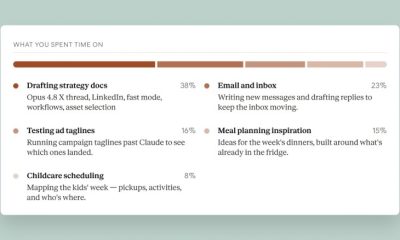
Claude’s New Reflect Dashboard Wants To Help You Log Off Of Claude
-

 Crypto World7 days ago
Fed minutes June 2026: officials split on rates
-
 Tech6 days ago
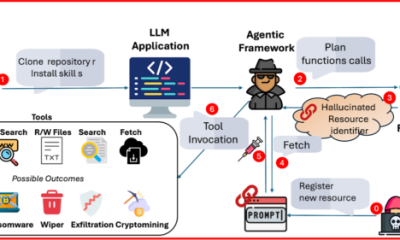
Hackers can use 9 of the most popular AI tools to assemble massive botnets
You must be logged in to post a comment Login