







Connect with us
DAPA Banner
DAPA Coin
DAPA
COIN PAYMENT ASSET
PRIVACY · BLOCKDAG · HOMOMORPHIC ENCRYPTION · RUST
ElGamal Encrypted MINE DAPA
🚫 GENESIS SOLD OUT
DAPAPAY COMING

Business

US inflation rate eases to 3.5% as gasoline prices fall

Published

on

Woman wearing a grey shirt fills up her car at a gas station

Inflation in the US eased last month as the cost of filling up at the pumps fell, official figures show.

Prices rose 3.5% in the year to June, according to the Bureau of Labor Statistics (BLS), down from 4.2% recorded in May.

Gasoline prices decreased 9.7% last month, but are still much more expensive than a year ago. On Tuesday, the national average had risen to $3.86 a gallon from $3.79 a week ago, according to motorist advocacy group AAA.

However, while the rate of inflation has fallen, the easing of price rises could be short-lived due to the renewed conflict in the Middle East sending global oil prices up again.

Advertisement

The price of a barrel of Brent crude, which is the global benchmark for oil, hit $87 on Tuesday, an increase of almost $10 in the space of 24 hours.

The spike in the price of the commodity came after the fresh military strikes on Iran by the US this week, with President Donald Trump declaring a new naval blockade in the Strait of Hormuz and a 20% charge on all cargo being shipped through the key waterway used for global trade.

The escalation has already led analysts to predict that inflation will rise in the coming months and that interest rate cuts are unlikely anytime soon.

“Gasoline prices are already back above June levels, meaning the next inflation report will heat up again,” said Ipek Ozkardeskaya, senior analyst at Swissquote Bank.

Advertisement

Ahead of his first address to the US Congress later, newly appointed Federal Reserve chairman Kevin Warsh said his committee had “no tolerance to persistently elevated inflation”.

“We share a resolute commitment to restoring price stability,” he said in prepared comments.

The Fed held US interest rates between 3.5% and 3.75% at Warsh’s first meeting in June and some analysts suggest rates could be raised in the coming months.

President Trump pushed Warsh’s predecessor, Jerome Powell, to cut interest rates, and has made it clear he expects Warsh to fulfil his demand for reductions in borrowing costs for Americans.

Advertisement

But Lindsay James, investment strategist at wealth management firm Quilter, said despite Warsh having got his “feet under the table, it does not mean rate cuts are looming in order to appease President Trump”.

“Instead, we are likely to see a conservative outlook from the Federal Reserve when it meets in a fortnight,” she added.

Continue Reading
Click to comment

You must be logged in to post a comment Login

Leave a Reply

Business

Woman’s Hour – ADHD and hormones, When co-habiting couples separate, God of War

Published

on

Woman's Hour - SEND reforms: A Woman's Hour and SEND in the Spotlight special

Available for over a year

What impact do hormones have on women with ADHD? A first of its kind study by Kings College and Queen Mary University in London is putting the link to the test, by asking 50 women who have ADHD and are taking medication for it to track their menstrual cycle. They will log the impact it has on their ADHD symptoms, and daily life more broadly. Report academic Dr Jessica Agnew-Blais and Laura Mears-Reynolds from the charity ADHDAF+ join presenter Nuala McGovern to discuss.

We hear about the current government consultation aiming to give added financial security to more than 3.5 million unmarried couples when they separate. It’s hoped the overdue reforms will help protect women and better meet the needs of modern relationships. Nuala discusses this with Mandip Ghai, a lawyer from the legal charity Rights of Women, who have campaigned for new laws, and Jenny Allen who is feeling the long-term impact of her separation on her finances now she is semi-retired.

Parents of school-age children will know that this is the time of year when thoughts turns to a present for their teacher. But collections can be divisive when so many families are feeling financial pressure. The question of how much to give, who should be included or whether to contribute at all can be fraught. Author and comedian Helen Thorne from the Scummy Mummies comedy duo shares her thoughts on the hot topic dominating many school whatsapp groups.

Advertisement

Video game God of War will have a female protagonist for the first time in the form of Laufey, both a powerful woman and a mother. Nuala is joined by player and journalist Vicky Jessop and The Guardian’s games editor Keza Macdonald to discuss the significance and online backlash.

Presented by: Nuala McGovern
Produced by: Sarah Jane Griffiths

Programme Website

Continue Reading

Business

Court: Schwebel Baking in talks with ‘potential buyer’

Published

on

Schwebel Baking set to shut down

Lawsuit put on hold as company in talks to sell business.

Continue Reading

Business

Destec, Steve Wyatt admit contempt of court in MinRes IP stoush

Published

on

Destec, Steve Wyatt admit contempt of court in MinRes IP stoush

Steve Wyatt and his company Destec will be penalised for contempt of court over videos published online, as part of an ongoing spat with Mineral Resources.

Continue Reading

Business

De Beers halts diamond production at flagship South African mine for two years

Published

on

A woman with dark hair pulled back from her face points to a plaster on her arm

Workers’ unions have previously warned against job losses in South Africa’s mining sector, which employs almost half a million people, external and accounts for more than 4% of national GDP, external.

De Beers is majority-owned by Anglo American, which is reportedly trying to sell it and shift focus to the growing copper market, external fuelled by the recent AI boom.

At the Venetia mine, De Beers has pledged to use those two years of downtime to make infrastructure more “efficient” with increased “capacity”, external, ready to reopen production once market conditions improve.

Times remain tough across the industry, which has seen the International Diamond Consultants’ rough diamond price index almost halve since 2022.

Advertisement

Lab-grown diamonds have gained in popularity in recent years, as consumers voice ethical concerns about miners’ pay and working conditions as well as environmental damage.

Yet De Beers and other established firms have cashed in on those industry changes too, producing their own lab-grown versions at a snip of the price one would pay for natural diamonds.

De Beers is not the first large producer to scale down operations in recent years, but it does occupy a particular place in the public imagination owing to its long history dating back to 1871.

Its founder was Cecil Rhodes, the English colonist whose forces dispossessed indigenous Africans of their land and denied them basic rights

Advertisement

He became a millionaire in the process and justified their disenfranchisement and racial segregation, external to Cape Town’s Parliament several years later, saying “the natives are children… they are just emerging from barbarism, external“.

His legacy in southern Africa has become a lightning rod for discussions about “decolonising” institutions which continue to bear his name.

This includes those that have statues of him and scholarships founded on his enormous wealth – like the UK’s University of Oxford, whose past Rhodes Scholars, external include ex-US President Bill Clinton and former Australian Prime Minister Malcolm Turnbull.

Advertisement
Continue Reading

Business

what Turn It Up means for SMEs and venues

Published

on

what Turn It Up means for SMEs and venues

The small businesses behind Britain’s live music industry have been handed a rare piece of good news, as the government’s first long-term music strategy promises a £45 million growth fund, lighter-touch festival licensing and a two-year freeze on business rates bills for venues.

Turn It Up: Our Plan for Music, launched by Culture Secretary Lisa Nandy on Monday, sets out how ministers intend to grow a sector worth at least £8 billion to the economy. Crucially for the independent operators who make up most of it, the plan reaches beyond stadium headliners to the promoters, labels, managers and venues that develop talent.

The Music Growth Package, now boosted to £45 million after a £15 million injection from Arts Council England, will support more than 2,000 projects and at least 40,000 artists and music professionals over three years. For the first time, the funding will also be open to mid-career artists, band managers, labels and publishers, many of them small firms and freelancers.

For festival and event organisers, the licensing reforms may prove the most practical win. Temporary Event Notices will rise from 15 to 20 per year, with total event days up from 21 to 26, while festivals will be offered longer licences, a minimum of three years for new events and five years for existing ones. A 15 per cent business rates relief for live music venues has also been confirmed, with bills frozen for the next two years.

The Night Time Industries Association, which represents clubs, bars and late-night operators across the UK, worked alongside government and UK Music in shaping the plan and says many of the sector’s priorities are reflected in it.

Advertisement

Michael Kill, chief executive of the NTIA, said: “It is extremely encouraging to see the Government deliver a long term strategy that recognises music as one of the UK’s greatest cultural and economic assets. We have been proud to work alongside colleagues from across the industry to help shape this plan and it is positive to see that collaboration translate into meaningful action.”

“The success of UK music depends on every part of the ecosystem working together. That means supporting not only artists and venues, but also festivals, promoters, clubs, DJs, producers, electronic music and the independent businesses that develop talent and create opportunities across the country. These are all vital parts of our music landscape and deserve recognition and support.”

The warm words mark a change of tone from an association that only weeks ago branded the Chancellor’s summer VAT cut a ‘superficial fix’ that sidelined clubs and festivals. The underlying pressures have not gone away. Industry research has warned that the late-night economy could lose 10,000 businesses and 150,000 jobs by 2028 without intervention, even as music tourism delivers a record £11.2 billion for UK towns and cities.

Kill acknowledged as much. “The commitments to invest in grassroots music, reform festival licensing and support future talent are positive steps. There is still work ahead to secure the long term sustainability of venues, clubs and independent operators, but this plan provides a strong foundation and we look forward to continuing to work with government and industry partners to help deliver it.”

Advertisement

For the SMEs that keep Britain’s stages lit, the plan is a foundation rather than a fix. But after years of asking Whitehall to listen, the industry will settle for a government finally singing from the same song sheet.


Amy Ingham

Amy is a newly qualified journalist specialising in business journalism at Business Matters with responsibility for news content for what is now the UK’s largest print and online source of current business news.

Advertisement
Continue Reading

Business

Nationals hopeful of unity for in push to mandate regional rail lighting

Published

on

Nationals hopeful of unity for in push to mandate regional rail lighting

The WA Nationals are optimistic a long-awaited bill to mandate better lighting on freight rail in regional WA will gain bipartisan support.

Continue Reading

Business

Grosvenor casino owner Rank Group cuts jobs amid gambling tax rise

Published

on

Business Live

Company continues to deal with the fallout of Rachel Reeves’ decision to raise online gambling tax

Grosvenor Casino in  Plymouth

The Grosvenor Casino in Plymouth(Image: Google)

Rank Group, the owner of Grosvenor casino, has cut its workforce in an effort to rein in costs, as the firm continues to grapple with the effects of Rachel Reeves’ online gambling tax increase.

The Chancellor’s move to raise the Remote Gaming Duty (RGD) rate from 21 per cent to 40 per cent in last autumn’s Budget left the group scrambling to absorb the blow and safeguard revenue after it took effect in April.

The firm chose to slash marketing expenditure and supplier costs, alongside making “headcount reductions”, to offset spending and “the impact of the RGD increase”.

It elected to preserve targeted digital advertising and customer incentives, such as bonuses and loyalty rewards, to retain players on its digital gambling platforms despite the heightened levy.

Advertisement

However, chief executive Richard Harris, who was confirmed as the permanent head of the casino group earlier this week, acknowledged that the increase had triggered “significant cost and taxation headwinds”, as reported by City AM.

Shares rose 8.3 per cent in early trading to 102.3p, with the stock up 5.2 per cent since January.

The Maidenhead-headquartered group also confirmed that it had submitted a regulatory settlement proposal to the Gambling Commission, in a bid to avoid incurring a financial penalty.

The FTSE 250 firm offered to pay the gambling watchdog £5m, following an investigation into the Grosvenor casino licence that uncovered evidence of rule breaches. The regulator confirmed it was “minded to accept the settlement proposal” and is awaiting the formal documentation to proceed.

Advertisement

The payment is expected to be recorded as a separately disclosed item in a bid to avoid any distortion to reported profits.

The decision to retain targeted advertisements drove like-for-like digital net gaming revenue (NGR) up 12 per cent in the final quarter to £63.9m.

Grosvenor venues also posted a three per cent increase in NGR to £98.3m, despite the “disruption to international travel” triggered by the conflict in the Middle East, underpinned by strong gaming machine performance.

Mecca Bingo halls saw NGR reach £35.4m, while its Enracha venues reported NGR of £11.3m.

Advertisement
Continue Reading

Business

Space launch costs to fall 90% by 2040, Cambridge study

Published

on

Space launch costs to fall 90% by 2040, Cambridge study

Sending cargo into orbit is getting cheaper faster than shipping freight did during the steamship revolution of the 1800s, and the cost could fall by more than 90 per cent again by 2040, according to Cambridge-led research that suggests space is fast becoming a marketplace rather than a moonshot.

The study, published in PNAS Nexus by the University of Cambridge’s Bennett School of Public Policy and the Politecnico Institute of Turin, analysed more than 4,400 launches between 1960 and 2025, the largest global dataset of rocket launches yet assembled.

The average cost of putting a kilogram into orbit has already dropped from $87,023 in 1960 to $3,868 in 2025, a fall of more than 95 per cent. Every time the world’s total volume of space cargo has doubled, the cost per kilogram has fallen by 21.2 per cent, outpacing the 15.5 per cent decline recorded for transatlantic wheat and cotton freight after the SS Savannah’s pioneering steam crossing in 1819. It is also falling faster than the cost of solar panels, long the textbook example of a technology getting cheap at speed.

“The cost of space launch technology is now falling faster than during one of history’s greatest transport revolutions,” said Alessio Terzi, the assistant professor who led the research.

“Steamships cut costs through explosive growth in global trade. Space technology, by contrast, has achieved even steeper declines at a far smaller scale. This suggests there is plenty of scope for further cost reductions and the industry may now be on the cusp of a comparable economic boom,” he said.

Advertisement

If the trend holds, the researchers project a kilogram to low-Earth orbit will cost $1,600 by 2030 and just $300 by 2040. SpaceX’s Starship rocket could bring costs down to about $1,000 a kilogram, making larger orbital projects far more viable.

For UK entrepreneurs, this is not an abstract race between billionaires. Britain’s space industry is dominated by small firms, with roughly 90 per cent of its businesses turning over less than £5 million, building the components, satellites and services that cheaper launches make commercially sensible. New business models are already emerging: London startup BioOrbit is exploring pharmaceutical production in low-Earth orbit, Space Solar is developing space-based solar power, and NATO’s innovation fund has backed a British startup building space factories.

“Rapidly falling launch costs could open the way to space colonisation and commercial activity far beyond low-Earth orbit. Ever cheaper launch costs could open up possibilities around solar power production in orbit, asteroid mining and a self-sustaining economy producing fuel, food and infrastructure in orbit or on the moon,” Terzi said.

The market has accelerated sharply since 2020, with payload launched into orbit growing by about 31 per cent a year, against 4 per cent annual growth between 2000 and 2019.

Advertisement

There is, however, a catch familiar to any small business dealing with a dominant supplier. SpaceX accounts for roughly 75 per cent of total payload sent to orbit, a grip on the market that Terzi has previously estimated exceeds the East India Company’s hold over shipping to the East Indies in the 19th century.

“Economic theory suggests that a profit-maximising quasi-monopolist will have a strong incentive to charge higher prices to potential clients, and some evidence already points in this direction,” the researchers said, warning that pricing power, along with geopolitical tension, could slow the decline.

The history of commercial spaceflight is also littered with expensive failures, as investors in Virgin Orbit’s bankruptcy can attest.

Still, the direction of travel is clear. “As launch costs fall and commercial activity expands, we are entering an era where spacefaring is like any other economy, driven by incentives, trade and investment, and economists should be paying more attention,” Terzi said. Business owners might reasonably conclude the same.

Advertisement

Jamie Young

Jamie Young

Jamie Young is Senior Reporter at Business Matters, covering SME finance, employment law and Westminster policy since 2016. He has reported on every Budget and Autumn Statement since 2018, helped make sense of the ‘covid era’ and the bounce-back loan scheme from launch through the fraud investigations, and broke the magazine’s coverage of the 2024 late-payment reforms. He joined Business Matters straight from completing his BA in Administration from Exeter University and is NCTJ-qualified. Reach him at jyoung@cbmeg.co.uk

Advertisement
Continue Reading

Business

Swans aim to extend long-term sustainable growth

Published

on

Swans aim to extend long-term sustainable growth

Swan Districts Football Club chief executive Jarrad Wright says several key off-field variables are equally important as on-field success.

Continue Reading

Business

IBM posts earnings miss, shares slide in premarket trading

Published

on

IBM posts earnings miss, shares slide in premarket trading

Shares of IBM were down more than 23% when the market opened on Tuesday, raising fresh questions about whether companies are seeing enough near-term returns from artificial intelligence spending.

It is shaping up to be the worst day for IBM in decades, as its second-quarter earnings results showed profit and revenue missed analysts’ forecasts.

Advertisement

In a letter to investors on Tuesday, CEO Arvind Krishna said IBM’s Z mainframe business — its large enterprise computing systems boasting advanced AI capabilities — lagged behind the company’s outlook. The flagship product is the z17, described as a “transaction processing powerhouse.”

“Given this was the strongest start to a mainframe program in our history, we expected Infrastructure revenue to decline low-single digits for the year, beginning this quarter,” Krishna wrote. “What played out was worse than our expectations, driven by a shortfall in our Z performance and the associated software stack, primarily in Transaction Processing.”

IBM CEO WARNS WASHINGTON MUST FIND ‘GOLDILOCKS’ MIDDLE GROUND ON AI REGULATIONS

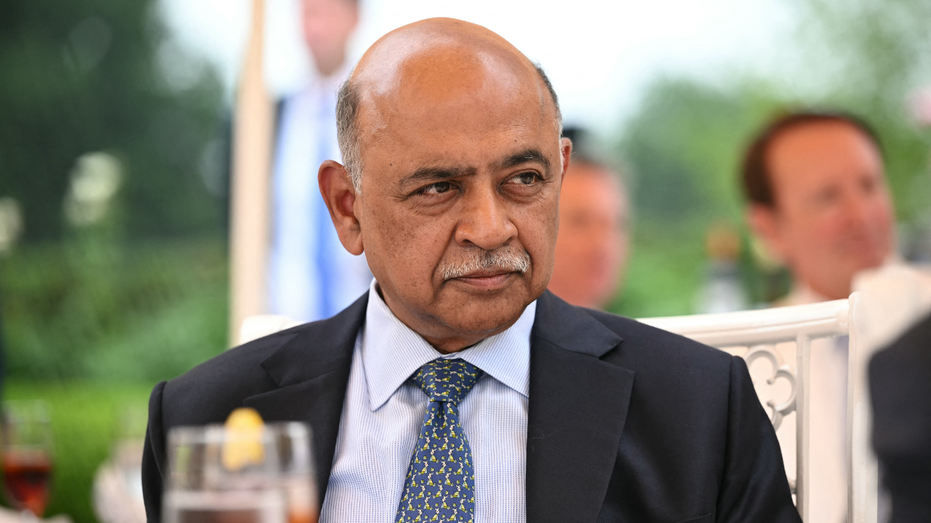
Arvind Krishna

IBM CEO Arvind Krishna attends an event in the Rose Garden of the White House in Washington, D.C., on July 6, 2026. (Mandel Ngan/AFP via Getty Images)

The IBM z17 is a mainframe that has been pitched as something that can instantly detect fraud when a customer swipes their credit card.

Advertisement

“Every time you swipe your credit card, check your bank balance, make a stock transaction or use an ATM, that transaction is likely running through an IBM Z. With AI embedded directly on the platform, IBM’s new z17… enables clients to detect fraud in real time without moving their data,” according to IBM’s website.

Krishna said IBM’s shortfall was largely caused by weakness in this software and infrastructure business as clients prioritized spending on hardware to insulate themselves from further price jumps.

IBM building

The IBM Watson IoT Center is located in the Highlight Towers in Munich, Germany, on May 22, 2026. (Michael Nguyen/NurPhoto via Getty Images)

IBM’S NEW AI TOOL LETS MASTERS FANS SEARCH OVER 50 YEARS OF TOURNAMENT HISTORY

“In the last few weeks of June, we saw clients shift their quarterly capex spend toward servers, storage, and memory purchases to secure supply-constrained infrastructure ahead of expected price increases,” Krishna wrote. 

Advertisement

“This dynamic impacted client buying patterns. While we anticipated some supply chain related impact in our expectations, we did not anticipate the magnitude of the capex reprioritization,” he continued.

IBM posted adjusted earnings of $2.93 per share on $17.2 billion in revenue, missing Wall Street estimates of $3.01 per share and $17.86 billion in revenue, according to CNBC.

IBM stock photo

In this photo illustration, the IBM logo is seen displayed on a smartphone.  (Mateusz Slodkowski/SOPA Images/LightRocket via Getty Images)

CLICK HERE TO DOWNLOAD THE FOX NEWS APP

Maria Bartiromo, host of FOX Business’ “Mornings with Maria,” pointed out on Tuesday that IBM’s slide is having a ripple effect on the tech sector.

Advertisement

“The biggest drag on the Dow Industrials this morning is IBM. This is the worst day so far that we’ve ever seen for IBM,” Bartiromo said. “This unexpected warning this morning sent a shock wave through the tech sector, causing software names to sell off; ServiceNow, Salesforce, Microsoft, all down.”

Continue Reading

Trending

Copyright © 2025