The case for indexing is well established, supported by academic and empirical research. But while there’s a strong case for passive investing within an asset class, in our view the argument weakens—if not breaks
Sebi on Tuesday exempted Mehta Family Trust, held by Bollywood actor Juhi Chawla and industrialist Jay Mehta, from making an open offer for the proposed indirect acquisition of shares and voting rights in Saurashtra Cement Ltd.
The proposed transaction involves Jay Mahendra Mehta transferring his 49.99 per cent stake in Galaxy Technologies Pvt Ltd to the trust. Juhi Chawla Mehta will also transfer her 50.04 per cent profit sharing/voting rights in Omna Enterprises LLP to the trust.
Galaxy and Omna, a part of the promoter and promoter group of Saurashtra Cement Ltd, together hold a 24.04 per cent stake in the company.
The Mehta Family Trust, registered in 2019, has Juhi Chawla and her husband, industrialist Jay Mehta, as trustees.
Advertisement
Sebi noted that the proposed indirect acquisition would ordinarily trigger an open offer under the Takeover norms.
Live Events
The capital markets watchdog granted an exemption after observing that the transaction is part of an internal reorganisation of the promoter family aimed at streamlining succession planning and consolidating family holdings. “I… hereby grant exemption to the proposed acquirer, viz. , Mehta Family Trust, from complying with the requirements of SAST Regulations, 2011 with respect to the proposed indirect acquisition in the target company, viz. , Saurashtra Cement Ltd, by way of proposed transaction,” Sebi’s Whole Time Member Kamlesh Chandra Varshney said in the order.Sebi noted that the acquisition is non-commercial in nature and would not prejudice the interests of public shareholders.
According to the order, there will be no change in control of Saurashtra Cement Ltd pursuant to the proposed acquisition.
The company’s promoter group will continue to hold 66.62 per cent while public shareholding will remain at 33.38 per cent, Sebi said.
Sebi also noted that the trust comprises only promoters, their immediate relatives and lineal descendants, making it a mirror image of the existing promoter holding structure.
Advertisement
The regulator said the exemption is subject to conditions, including the filing of a report within 21 days from the date of acquisition.
Markets regulator Sebi also clarified that the exemption is limited to open offer requirements and does not waive other compliance obligations under applicable regulations.
The exemption from open offer obligations is valid for one year from the date of the order, within which the proposed acquirers must complete the acquisition; failing which it will lapse and cease to exist, it added.
S&P 500 and the Nasdaq advanced on Tuesday as solid big bank results and a cooler-than-expected inflation report boosted risk appetite amid rising Middle East tensions.
A rebound in chip shares put the Nasdaq out front, while the Dow’s gains were more subdued. The Labor Department’s Consumer Price Index showed inflation cooled more than analysts expected in June, largely due to abating energy price pressures amid last month’s signs of progress in U.S.-Iran peace negotiations. U.S. Federal Reserve Chair Kevin Warsh sat for his first congressional testimony since his confirmation, in part to lay out the central bank’s plan to contain upward price pressures. Warsh’s testimony occurred while the battle for control over the Strait of Hormuz has led to ramped-up airstrikes between the United States and Iran and boosted crude oil prices, reviving fears of upward price pressures.
Still, following the CPI report, financial markets were pricing in an 83.4% likelihood that the Fed will let its key interest rate stand at the conclusion of its July policy meeting, up from 58.3% on Monday. Markets expect at least one 25-basis-point rate hike before year-end, according to CME’s FedWatch tool.
“The inflation report seems to have weakened the argument that the Fed is going to raise rates,” said Chuck Carlson, chief executive at Horizon Investment Services in Hammond, Indiana. “It gives the Fed cover, for now.”
Advertisement
“(Warsh) is saying we can bring down inflation, and that’s what the people he was speaking to want to hear,” Carlson added. “And maybe inflation is going to come down without having to raise rates.”
Live Events
EARNINGS SEASON KICKS OFF Second-quarter earnings season began with five big U.S. banks reporting solid results, buoyed by trading strength and dealmaking. Goldman Sachs surged after it surpassed second-quarter profit expectations, as dealmaking picked up pace and geopolitical uncertainties boosted its trading business. JPMorgan Chase and Bank of America both advanced after delivering consensus-beating profits. But Citigroup slid as worries over expenses overshadowed its profit beat. Wells Fargo also declined. “It’s a big earnings week, so we finally get to hear from corporate America,” said Tom Hainlin, national investment strategist at U.S. Bank Asset Management in Minneapolis. “What we continue to look for from the banks is what are they seeing in terms of consumer health? So far, good news on that front.” IBM shares tumbled after the company warned second-quarter revenue would fall below estimates.
According to preliminary data, the S&P 500 gained 28.69 points, or 0.38%, to end at 7,544.03 points, while the Nasdaq Composite gained 236.48 points, or 0.91%, to 26,109.65. The Dow Jones Industrial Average rose 28.92 points, or 0.05%, to 52,527.56.
At six o’clock on Sunday morning I was standing on what used to be my lawn, decanting a washing-up bowl of grey water onto a hydrangea like a man disposing of evidence. The hosepipe has just been banned. The water butt gave up in May. The lawn itself is now the colour and texture of a digestive biscuit.
Everyone of a certain age says the same thing: this is 1976 again. Standpipes in the street, ladybirds in biblical quantities, and a government so rattled it appointed an actual Minister for Drought, whereupon it promptly rained for a month. We got through it because it was a freak. It has stopped being a freak.
The Met Office spent June marking fifty years since the legendary summer of 1976, still the hottest and sunniest on record, its peak temperature now beaten on six days in the past decade. Meanwhile the Environment Agency’s latest bulletin reads like the opening chapter of a disaster novel: five water companies imposing hosepipe bans, reservoirs below average, and 729 separate restrictions on farmers’ abstraction licences while winter storage reservoirs drain and East Anglian livestock men run out of forage in July.
My lawn will recover. The people who grow your dinner may not.
Consider Jeremy Clarkson, Britain’s most heavily televised farmer. He says last year’s scorched summer gave him the second worst harvest in living memory, with yields down as much as 40 per cent, and he has admitted that Diddly Squat will not make money on wheat and barley. Read that again. A man with an Amazon contract, a farm shop, a pub and several million viewers cannot make the actual farming bit of his farm pay. Now picture the farm three miles down the road with the same weather, the same costs and no camera crew.
Advertisement
And what is the Government’s grand plan for these people? There is no drought fund, no irrigation strategy worth the name, no serious word about food security from a Treasury that can always find a few billion down the sofa for something shinier. Increasingly, the plan is to pay them to stop.
It is as if Rolls-Royce had hit a rough patch and its biggest customer, rather than ordering engines, offered a stipend to let wildflowers grow through the assembly line. Not as a sideline. As the business. The lathes fall silent, the apprentices retrain as meadow wardens, the annual report is retitled A Celebration of Grasses. Everyone applauds the biodiversity, right up until the day the country needs an engine.
That is not a wild caricature of rural policy. Under the sustainable farming schemes, the state pays handsomely per hectare for flower-rich margins, herbal leys and freshly planted trees, while the market pays a wheat price that frequently fails to cover the cost of growing wheat. The Government’s own food security analysis concedes that if every land-use and climate policy were enacted in full, almost a quarter of our farmland could come out of food production.
Business readers will recognise the disease instantly, because it is not really about farming at all. It is about price signals. When the subsidy for not producing exceeds the margin for producing, any rational operator stops producing. You do not need a conspiracy; a spreadsheet will do. Farmers are not sowing wildflower meadows because they have gone soft. They are sowing them because they are the only crop in Britain with a guaranteed buyer.
Advertisement
Which brings us, inevitably, to Rachel Reeves. Farming’s income statement was already wrecked by the weather. The Chancellor then went after the balance sheet, with her 20 per cent inheritance levy on farms worth over £1 million, unmoved by the tractors on Whitehall and by analysis suggesting the raid could end up costing the Treasury £2 billion. Drought is nature’s nail in the coffin of the family farm. The tractor tax is the man-made one, and it was hammered in deliberately.
The bill lands with the rest of us. Retailers report that hot weather is already pushing food prices up as domestic yields shrivel, and peers have warned that taps could run dry by mid-century without serious investment. Food security is infrastructure, every bit as much as runways and reservoirs. We would never pay Heathrow to grow moss on its runways and then act surprised when nothing lands.
In 1976 we scraped through because the rain came back and farming was still stubborn, solvent and everywhere. In 2026 the rain will come back eventually. The farmers, once gone, will not.
Meanwhile I shall be out at dawn with my washing-up bowl, keeping one hydrangea alive in a dead brown garden. It is ornamental, it produces nothing, and it survives entirely on handouts. I have decided to call it British agricultural policy.
Advertisement
Richard Alvin
Richard Alvin is a serial entrepreneur, a former advisor to the UK Government about small business and an Honorary Teaching Fellow on Business at Lancaster University.
A winner of the London Chamber of Commerce Business Person of the year and Freeman of the City of London for his services to business and charity. Richard is also Group MD of Capital Business Media and SME business research company Trends Research, regarded as one of the UK’s leading experts in the SME sector and an active angel investor and advisor to new start companies.
Richard is also the host of Save Our Business the U.S. based business advice television show.
‘The Big Money Show’ panelists unpack New York Gov. Kathy Hochul’s concerns about the impact of data centers.
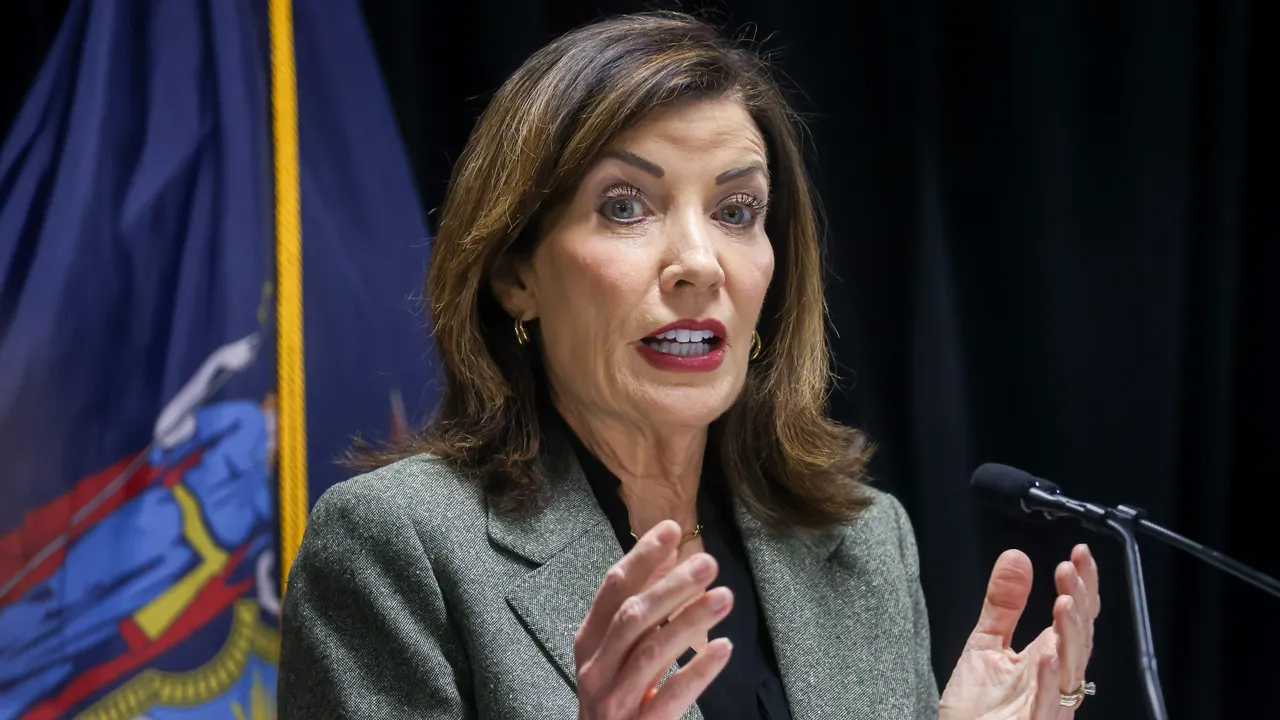
New York Gov. Kathy Hochul on Tuesday issued the nation’s first statewide temporary ban on new AI data centers in a sweeping move critics have long warned could drive tech investment and jobs out of New York.
The moratorium, which the Democrat signed as an executive order, will remain in effect for up to one year as demand for massive hyperscale data centers has surged across the state.
Advertisement
Hochul said the initiative would require large data centers to shoulder more of the infrastructure costs they create and is intended to protect New Yorkers from rising utility bills and other financial risks associated with the industry’s rapid expansion.
“As data center development threatens to hike up utility bills, deplete our natural resources, and create uncertainty for New Yorkers, it’s my responsibility to take action and lead,” Hochul said during Tuesday’s signing and news conference announcing the moratorium.
Gov. Kathy Hochul issued the first statewide moratorium on new hyperscale data centers in New York. (Michael Nagle/Bloomberg via Getty Images, File / Getty Images)
Critics have long warned the move could divert billions in AI infrastructure investment to competing states, depriving New York communities of construction jobs, tax revenue and the type of land deals that have recently generated windfalls for rural landowners in places like Pennsylvania.
Advertisement
“Gov. Hochul’s statewide moratorium on data centers will ensure that those investments, jobs, and economic activity flow elsewhere rather than to New York,” Dan Diorio, executive vice president of state policy and government affairs for the Data Center Coalition, said in a statement to Data Center Knowledge.
Under Hochul’s plan, future data center developers would be required to either generate their own electricity or pay higher rates to avoid shifting the cost of major grid upgrades onto residents.
The state is also proposing a fund that would require developers to help finance upgrades to New York’s aging electric grid, invest in clean energy projects or contribute to an insurance pool intended to protect consumers.
In addition, Hochul is pursuing legislation to repeal sales tax exemptions for large data centers.
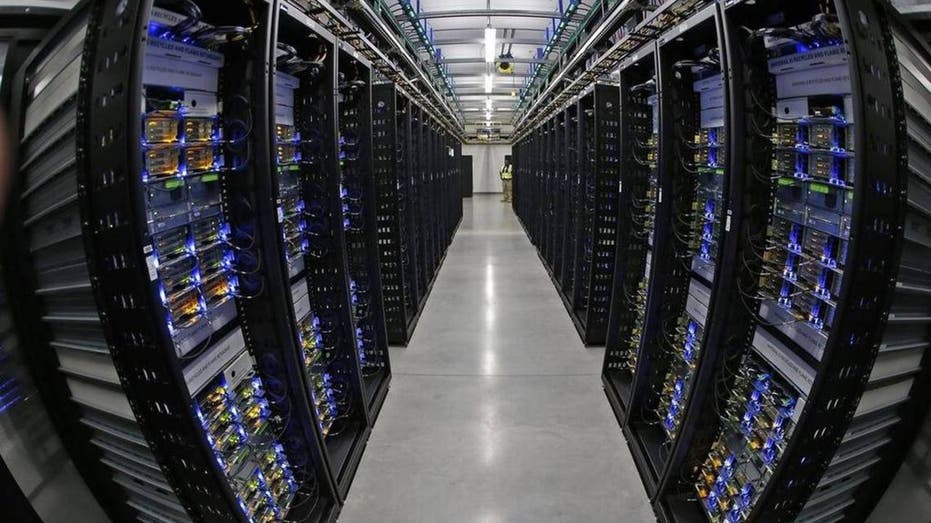
Rows of servers fill a massive data center in Texas. (Paul Moseley/Fort Worth Star-Telegram/Tribune News Service, File / Getty Images)
Local governments will also receive a state-developed playbook designed to help communities negotiate with technology companies seeking to build nearby.
However, the announcement comes as some communities have reportedly profited from the AI infrastructure boom.
According to the Wall Street Journal, 96 Pennsylvania households collectively received more than $500 million after selling roughly 17,000 acres of rural land to QTS, a data center developer owned by Blackstone. The families sold their land for an average of about $330,000 per acre, receiving roughly $5.5 million each on average.
Advertisement
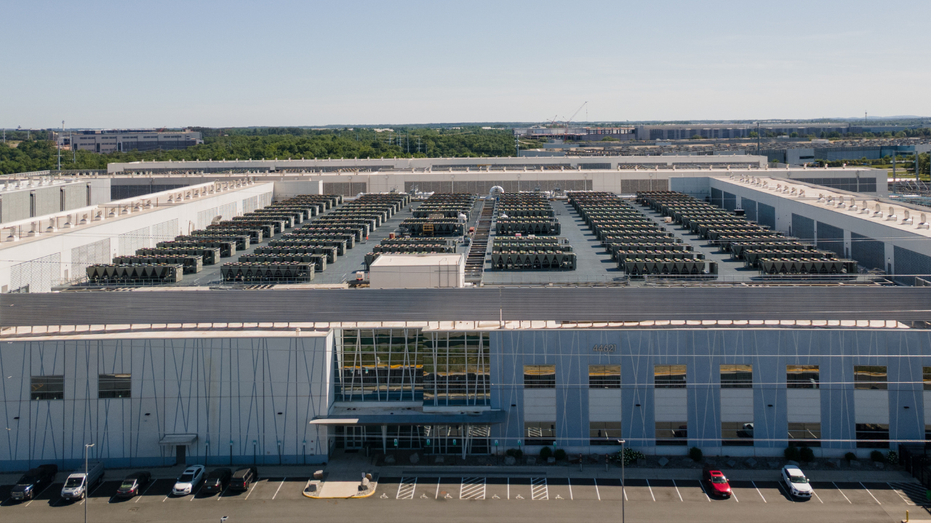
A data center is seen in Ashburn, Va. (Lexi Critchett/Bloomberg, File / Getty Images)
During the one-year moratorium, New York will prepare a Generic Environmental Impact Statement (GEIS) to establish statewide standards for future AI data center development.
The study will examine issues including electricity demand, impacts on the power grid, water use and quality, air quality, and other potential environmental impacts of the construction.
Kate Middleton closed out a highly visible two-week stretch at Wimbledon this past weekend, presenting championship trophies to both the men’s and women’s singles winners while making multiple appearances alongside her husband, Prince William, and their children, marking one of her most active public runs in recent months.
The Princess of Wales attended the Wimbledon men’s singles final Sunday alongside Prince William, Prince George and Princess Charlotte, watching Italy’s Jannik Sinner defeat Germany’s Alexander Zverev to capture his second consecutive Wimbledon title. The family received a standing ovation as they entered the Royal Box at Centre Court, according to People. Prince Louis, the couple’s youngest child, did not attend. Kate, who has served as patron of the All England Lawn Tennis and Croquet Club since 2016, went on to present the Gentlemen’s Singles Trophy to Sinner following the match.
The men’s final appearance came one day after Kate attended the women’s singles final on Saturday, where she presented the Venus Rosewater Dish to champion Linda Noskova. Unlike Sunday’s outing, Kate attended the women’s final solo, without William or the couple’s children. Royal commentator Emily Ferguson had confirmed the solo appearance in advance, writing on X, “The Princess of Wales, Patron of the All England Lawn Tennis and Croquet Club, will attend the Ladies’ Singles Final at Wimbledon this afternoon,” adding that “she will attend the championships solo, and she will not be joined by her husband or her children.” For the women’s final, Kate wore a belted crimson Roland Mouret dress featuring a V-cut neckline and fit-and-flare skirt, paired with dainty jewelry and nude heels. She was accompanied at the tournament by her mother, Carole Middleton. Following the match, Kate shared a message on the Wales family’s official Instagram account: “An unforgettable Women’s Final at @wimbledon. Two outstanding performances. Congratulations Linda Nosková on a remarkable Wimbledon Championship!”
Sunday’s men’s final drew an especially star-studded Royal Box, with the Wales family joined by actors Dustin Hoffman, Nicole Kidman and Ben Stiller among the guests watching the match. Kensington Palace marked the conclusion of the tournament Monday with a post on the couple’s official Instagram account featuring several photos of Kate, William and their children from the weekend. “A weekend at Wimbledon. Congratulations to all the players and staff who took part in a remarkable fortnight of tennis,” the caption read.
Advertisement
Kate’s presence at this year’s tournament extended beyond the two finals. She also made a surprise appearance at Wimbledon on July 2, handing out tickets to enthusiastic fans outside the grounds, an outing for which she wore a bright blue pantsuit with a white top underneath, brown heels and a statement ponytail. She additionally attended a second-round match earlier in the tournament. Kate has attended Wimbledon nearly every year since marrying Prince William in 2011, continuing her long-standing association with the tournament through her royal patronage role.
Prince George and Princess Charlotte have similarly become familiar faces at the tournament in recent years. George made his own Wimbledon debut at the men’s singles final in 2022, just before his ninth birthday, while Charlotte first attended in 2023, joining her parents and older brother in Centre Court to watch Carlos Alcaraz claim that year’s men’s title.
Kate’s Wimbledon appearances followed a period of heightened public activity for the princess more broadly. In late June, she took part in the UK’s National Three Peaks Challenge, a demanding trek across the highest peaks of England, Scotland and Wales, sharing reflections on the personal significance of the effort in an Instagram video posted June 28. “Lots of people have asked me why I’m doing this challenge and partly it’s personal,” Kate said in the video. “I’m so grateful to be here, to be strong enough to walk these hills. But more importantly it’s to give something back.”
Kate’s Wimbledon schedule also unfolded against a broader backdrop of royal family news. Her Saturday appearance at the women’s final came just one day after King Charles hosted Prince Harry and met with Meghan Markle and their children, Archie and Lilibet, for the first time in years, a private family gathering that drew significant public attention in its own right. Kensington Palace’s announcement confirming Kate would attend the women’s final solo followed closely on the heels of that news, though royal commentators have not indicated any direct connection between the timing of the two events.
Advertisement
Kate’s sister, Pippa Middleton, also made a rare public appearance at Wimbledon this year, attending a July 6 match in a floral print sundress and oversized sunglasses. Kate’s brother, James Middleton, separately shared on Instagram that he and his wife, Alizée, would attend the women’s singles final as well, posting a photo captioned, “Matchy matchy for @wimbledon.”
Kate, 44, has continued to gradually increase her public engagements over the past year following her 2024 cancer treatment and subsequent announcement that she had entered remission. Her extensive presence at this year’s Wimbledon, spanning a ticket-distribution appearance, a second-round match, both championship finals and the National Three Peaks Challenge within the span of a few weeks, has been noted by royal watchers as reflecting a fuller and more consistent public schedule than she has maintained in recent years.
As of this week, Kensington Palace had not announced Kate’s next public engagement following the conclusion of Wimbledon, though her continued patronage of the All England Lawn Tennis and Croquet Club is expected to bring her back to the tournament for its 2027 edition. For now, the princess’s back-to-back trophy presentations and family outings at Centre Court stand as one of the more prominent public moments of her summer schedule, capping a fortnight that saw the Wales family firmly back in the spotlight at one of Britain’s most closely watched annual sporting events.
Zelniker Dorfman Private Wealth Senior Vice President Ryan Lynch joins ‘Mornings with Maria’ to discuss AI-driven market gains, Q2 earnings, inflation and what could influence the Federal Reserve’s next interest rate move.
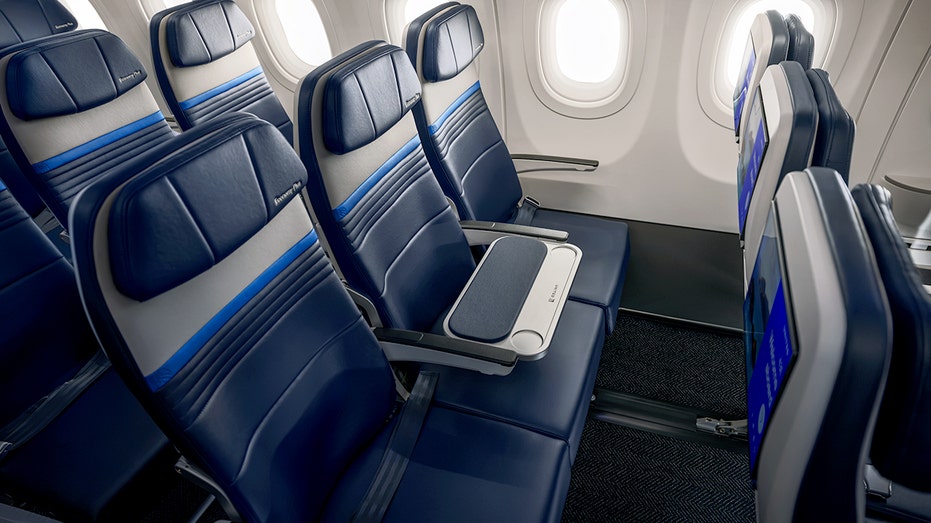
United Airlines on Tuesday unveiled a new economy offering on its new Airbus A321XLR aircraft that will give passengers some extra elbow room access to a shared table across an open middle seat.
United said the new Economy Plus offering will be available for bookings starting later this year, with the feature expected to be included on all 50 of the A321XLR jets it ordered from Airbus. It added that it’s exploring ways to offer seats like these on other aircraft in its fleet in the future.
Advertisement
The company said in its announcement that it expects it will be the only airline offering this seating option, which builds off the recent announcement of the United Relax Row that will debut in early 2027 and feature multiple rows of seats on the Boeing 787 and 777 wide-body aircraft that convert into a couch.
The new middle seat configuration on a United Airlines A321XLR jet. (United Airlines / Fox News)
“We’re investing nose-to-tail across our fleet and giving customers choice and value in every cabin,” said Andrew Nocella, United’s chief commercial officer.
“The XLR is our newest aircraft and not only offers all-aisle access lie-flat seats in United Polaris but now also includes seats in Economy Plus with extra leg and elbow room.”
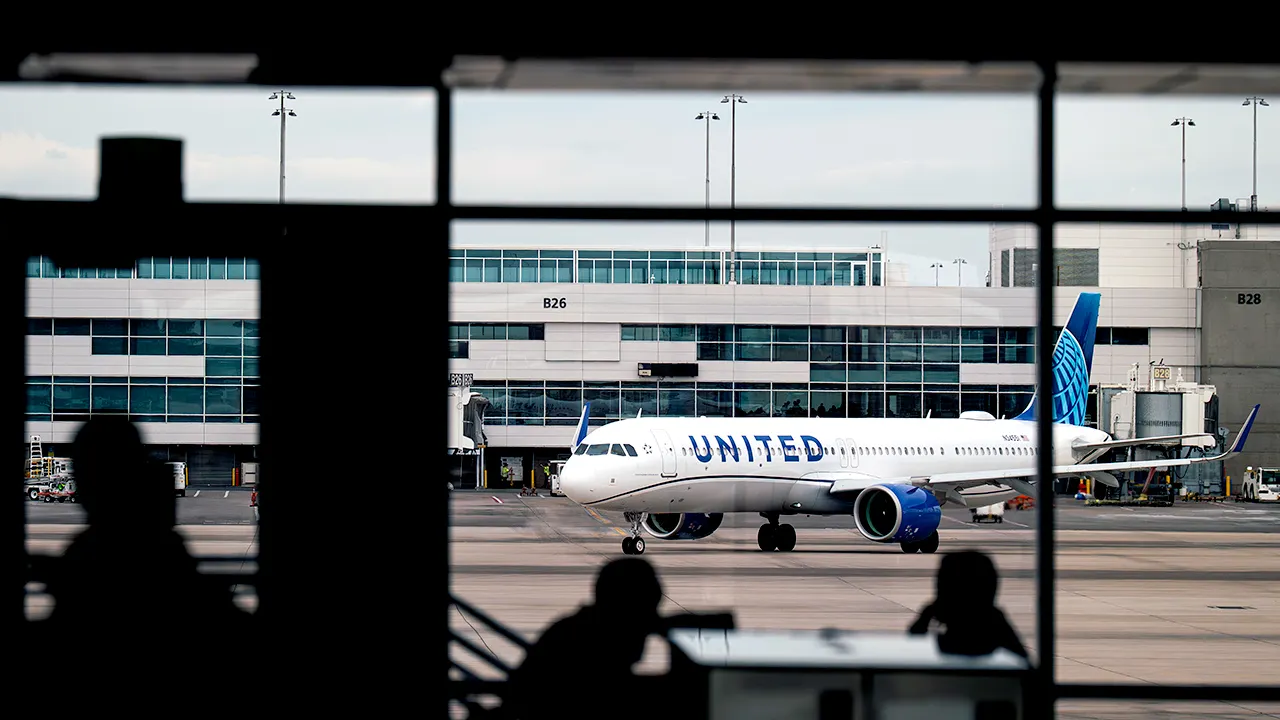
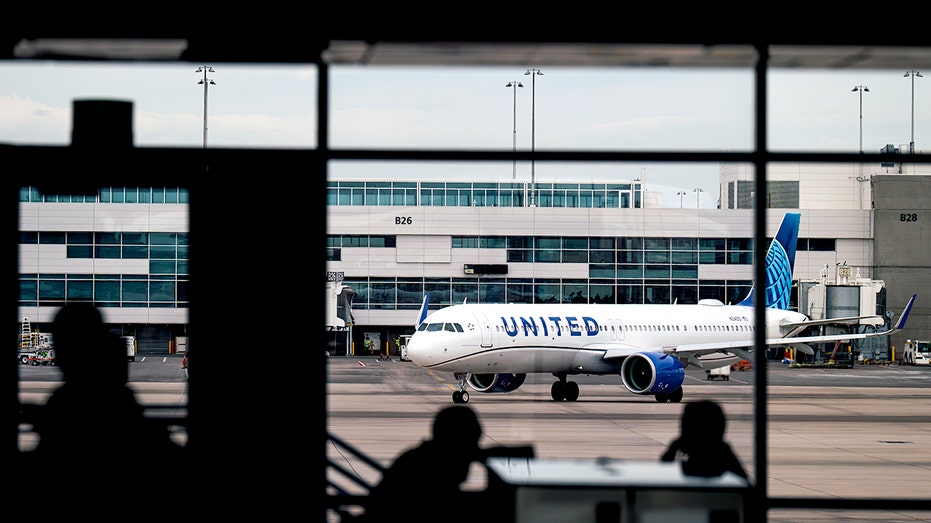
A United Airlines Airbus A321 jet departs a gate at Denver International Airport March 23, 2026, in Denver, Colo. (Al Drago/Getty Images)
Each United XLR will have large, custom-designed tables that stretch from armrest to armrest over the vacant middle seats, giving the passengers seated in the window and aisle seats more space to stretch out.
The table is permanently fixed and will have a soft leather-like cover and two indentations for cups. The extra space with the vacant middle seat is in addition to the three additional inches of legroom offered in Economy Plus seats on the aircraft.
United plans to start using the A321XLR on domestic flights this fall and for international short- to medium-haul routes starting by early 2027.
The Airbus A321XLR has 32 premium seats — 16 more than the Boeing 757s it will be replacing in the United fleet — including the new United Polaris suite that has all-aisle access.
All seats have a large 4K OLED screen with Bluetooth connectivity, with screen sizes ranging from 19 inches in the Polaris suites to 16 inches in United Premium Plus and 13 inches in United Economy.
Additionally, all passengers have access to larger overhead bins that have space for roll aboard bags and a snack bar in the rear of the economy cabin. It will also operate with five flight attendants on most transatlantic flights as the 757 did.
Wells Fargo & Company (WFC) Q2 2026 Earnings Call July 14, 2026 10:00 AM EDT
Company Participants
John Campbell – Director of Investor Relations Charles Scharf – CEO & Chairman Michael Santomassimo – Senior EVP & CFO
Advertisement
Conference Call Participants
Kenneth Usdin – Bernstein Autonomous LLP John McDonald – Truist Securities, Inc., Research Division L. Erika Penala – UBS Investment Bank, Research Division Ebrahim Poonawala – BofA Securities, Research Division Manan Gosalia – Morgan Stanley, Research Division Matthew O’Connor – Deutsche Bank AG, Research Division John Pancari – Evercore ISI Institutional Equities, Research Division Christopher McGratty – Keefe, Bruyette, & Woods, Inc., Research Division David Chiaverini – Jefferies LLC, Research Division Vivek Juneja – JPMorgan Chase & Co, Research Division Gerard Cassidy – RBC Capital Markets, Research Division
Presentation
Advertisement
Operator
Welcome, and thank you for joining the Wells Fargo Second Quarter 2026 Earnings Conference Call. [Operator Instructions] Please note that today’s call is being recorded. I would now like to turn the call over to John Campbell, Director of Investor Relations. Sir, you may begin the conference.
John Campbell Director of Investor Relations
Advertisement
Good morning, everyone. Thanks for joining our call today where our CEO, Charlie Scharf; and our CFO, Mike Santomassimo, will discuss second quarter results and answer your questions. This call is being recorded. Before we get started, I would like to remind you that our second quarter earnings materials, including the release, financial supplement and presentation deck are available on our website at wellsfargo.com. I’d also like to caution you that we may make forward-looking statements during today’s call that are subject to risks and uncertainties. Factors that may cause actual results to differ materially from expectations are detailed in our SEC filings including the Form 8-K filed today containing our earnings materials. Information about any non-GAAP financial measures referenced, including a reconciliation of those measures to GAAP measures, can also be found in our SEC filings and the earnings materials available on
The Babcock-built weapon system will join the military’s operational fleet
11:07, 14 Jul 2026Updated 11:13, 14 Jul 2026
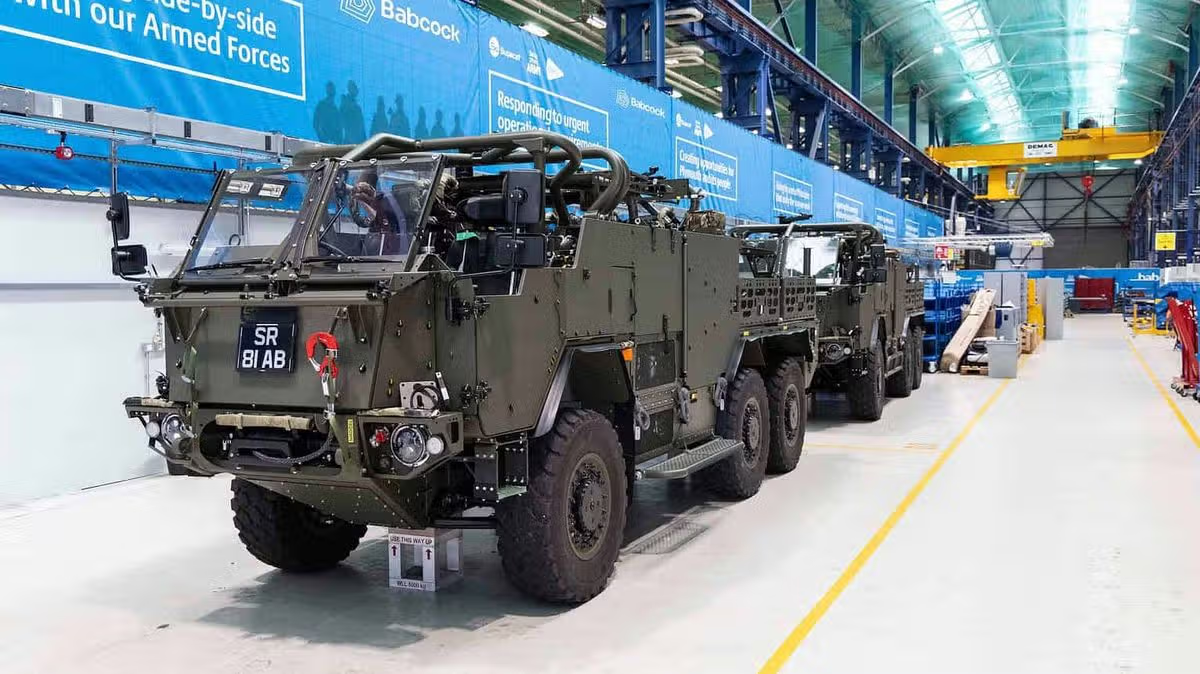
The final Jackal 3 vehicles have rolled off the production line in Devonport, Plymouth(Image: Babcock)
The final British Army Jackal 3 vehicle has rolled off the production line at Devonport Dockyard. Defence giant Babcock said it had completed the delivery of the weapon system, hailing the end of the programme as a “landmark moment”.
The company has built and delivered 123 Jackal 3 and Jackal 3 Extenda (E) vehicles, which were designed by Honiton-based engineering firm Supacat.
Advertisement
The last vehicle to roll off the line was a six-wheeled Extenda variant, which will undergo testing before joining the British Army’s operational fleet.
Defence minister Lord Coaker said the Plymouth-built vehicles would give the UK military “one of the most capable” platforms available.
“The Defence Investment Plan reconfirms the vital role that land vehicles play in our armed forces’ capability – ensuring land forces can seize or defend ground in all environments and conditions,” he said.
“It is exactly this kind of collaboration between British industry and our armed forces that helps support local industry and demonstrates that defence is an engine for growth.”
Advertisement
Louise Atkinson, chief executive, land and mission systems, said the programme demonstrated Babcock’s “commitment and expertise” to delivering high-quality military vehicles to the armed forces.
“This critical programme required a large amount of collaboration, and I’d like to thank everyone for their tireless work in making it a success,” she said.
The first Jackal 3 E vehicles for came off the production line at Devonport in December last year. The variant has an extra axle that will allow it to carry a heavier load even while off road.
The completion of the programme builds on the delivery of the initial 70 Jackal 3 vehicles to the British Army.
Advertisement
“This achievement is testament to the strength of our enduring partnership with Babcock and Supacat,” said Major General Lizzie Faithfull-Davies CB CBE, director land environment, national armaments – material.
“Their responsiveness, engineering expertise and collaborative approach has been central to delivering a platform that meets operational needs while maintaining pace and quality. We look forward to continuing this close relationship as we develop and sustain capability into the future.”
The news comes less than a month after Babcock reported a rise in revenues for the full year and announced another £200m share buyback scheme.
The group posted revenues of £5.1bn – up eight per cent on a year earlier – driven by its nuclear and aviation divisions.





















































You must be logged in to post a comment Login