









Connect with us

Business

The Hidden Flaw in Passive Investing

Published

on

The Hidden Flaw in Passive Investing

Wooden blocks with

Seiya Tabuchi/iStock via Getty Images

By James Picerno

The case for indexing is well established, supported by academic and empirical research. But while there’s a strong case for passive investing within an asset class, in our view the argument weakens—if not breaks

Advertisement
Continue Reading
Click to comment

You must be logged in to post a comment Login

Leave a Reply

Business

Half price rail travel extended to 18-year-olds

Published

on

A teenage girl sitting on a train listening to headphones

Eighteen-year-olds will be able to buy half price train tickets for most services when railcard rules are changed later this month, the Department for Transport (DfT) has announced.

It’s an extension of the 16-17 Saver railcard which currently expires when the holder turns 18. From 17 August, they will be valid for a full year from the date of purchase.

It means 17-year-olds will be able to buy the railcard up until the day before they turn 18, making it valid until the day before they turn 19.

The existing rule meant more than 70,000 students each year were an average of £175 worse off than those in the same academic year who hadn’t yet had their 18th birthday, the DfT said.

Advertisement

The 16-17 Saver Railcard costs £35 per year and entitles the holder to 50% off most train fares.

Rail minister Lord Hendy claimed this “common sense change” is “exactly what passengers should expect from the railway”.

He said the change would “lower the cost of travel at a critical time for teenagers, whether they’re pursuing further education, vocational pathways or getting their footing in the jobs market”.

Jacqueline Starr, chief executive of industry body the Rail Delivery Group, said the change demonstrates the sector’s commitment to “offering better value fares and delivering a more joined-up railway”.

Advertisement

Kaynat Ahmad, vice president for further education at the National Union of Students, described the railcard as “essential for young people reliant on trains to get to college, work or training”.

Eighteen-year-olds were already entitled to a 16-25 Railcard, but that only entitles them to a third off the cost of travel.

The announcement comes after the government said the cap on most single bus fares in England will be cut from £3 to £2 next year.

Advertisement
Continue Reading

Business

Zillow report shows luxury home sales surging as starter inventory rises

Published

on

Zillow report shows luxury home sales surging as starter inventory rises

The U.S. housing market is trending in two different directions as a new report from Zillow finds that while demand for luxury homes is surging, starter home sales are softening with growing inventory.

Zillow’s data defines starter homes as those in the 5th to 35th percentile of home values in a given region, whereas luxury homes are in the top 5% of a region’s home values. Around the country, the typical starter home is worth about $202,000, an increase of 2.3% from a year ago, while the typical luxury home is worth about $1.9 million, up 3.1% from last year.

Advertisement

Inventory for starter homes is up 4.5% year over year in June, while it fell 5.2% for luxury homes. Price cuts were also more common for starter homes, of which 25% had price cuts in June, while 20.6% of luxury home listings had price cuts.

“The best time to buy a home is when nobody else wants to,” said Kara Ng, senior economist at Zillow. “Starter home buyers today have more options, more negotiating power, and sellers who are more willing to deal.”

MORTGAGE RATES HIT HIGHEST LEVEL IN NEARLY A YEAR

home for sale

The rise in inventory of starter homes is creating an opportunity for buyers if they’re willing and able to put down an offer, Zillow noted. (David Ryder/Bloomberg via Getty Images)

Would-be buyers of starter homes are facing a difficult economic environment, with elevated inflation squeezing household budgets, low levels of consumer sentiment and the job market slowing.

Advertisement

All of those factors tend to cause households to delay major financial commitments, like purchasing a new home, despite the opportunity available to buyers, Zillow’s report noted.

“The challenge is that the same financial pressures making it harder to save for a down payment are also making it harder to take advantage of that opportunity,” Ng said.

THESE AMERICAN CITIES ARE TRENDING TOWARD A BUYER’S MARKET

A home for sale in California.

Starter homes are seeing more price cuts than luxury listings, Zillow found. (Paul Bersebach/MediaNews Group/Orange County Register via Getty Images)

The situation is very different for higher-income households, as gains in the stock market have bolstered their purchasing power and helped stoke demand for luxury homes.

Advertisement

The divergence between the two ends of the market is the most significant in San Francisco, which saw luxury home sales surge 21.6% year over year in May, with inventory falling sharply and fewer listings cutting prices.

STARTER HOME AFFORDABILITY IS CRAWLING BACK. THESE REGIONS ARE BEST FOR FIRST-TIME BUYERS

A San Francisco neighborhood with the Golden Gate Bridge in the background

San Francisco’s housing market shows the divergence between luxury and starter home sales. (Tayfun Coskun/Anadolu via Getty Images)

By contrast, starter home sales in the San Francisco metro area declined 1.2% year over year in May, while more than twice as many price cuts were recorded – with 22.2% of starter home listings cutting prices in June compared with 9.4% of luxury homes.

Markets which saw the largest year-over-year increases in starter homes sold as of May were Louisville (19.3%); New Orleans (12.9%); San Jose, California, (10.5%); and Miami (8.2%).

Advertisement

The hottest markets for luxury homes sold year over year as of May were Memphis (42.4%); Nashville (40.8%); Cincinnati (32.6%); Austin (27.7%); and Birmingham, Alabama (25%).

GET FOX BUSINESS ON THE GO BY CLICKING HERE

Continue Reading

Business

(VIDEO) Petro and Vinnie Advance to MasterChef Australia 2026 Grand Finale After Aaron’s Heartbreaking Exit

Published

on

Dubai International Airport

SYDNEY — Petro Papathomas and Vinnie Gibaldi will face off in the MasterChef Australia 2026 Grand Finale after a tense semi-final service challenge eliminated Aaron Kher on Monday night.

The pair emerged from a three-way battle that required each remaining contestant to deliver a two-course fine dining experience for the judges and 20 diners. With three hours on the clock, the cooks prepared 23 plates of each course under the guidance of returning judge Andy Allen, who rejoined the kitchen after parental leave.

The decision between Aaron and Vinnie proved one of the most difficult of the season. Aaron’s main course featured an Asian-French fusion of pork loin chop roasted on the bone with charred Treviso and three sauces — pork and veal jus, XO glaze and red miso mustard. His dessert of basil and white pepper ice cream with tomato, strawberry and white balsamic granita, finished with a fried basil leaf and hazelnut crumb, left the judges impressed. However, the bold flavors in his sauces were judged to clash, costing him a place in the final.

Advertisement

Petro and Vinnie advanced to the Grand Finale, scheduled for Sunday, August 9, at 7 p.m. on Channel 10. The all-Victorian showdown marks the culmination of a season that began with 24 home cooks and narrowed through months of pressure tests, mystery boxes, immunity challenges and eliminations.

Papathomas, a 30-year-old chartered accountant of Greek-Cypriot heritage, has drawn consistent praise for his inventive approach and Mediterranean influences. He secured an early path to the semi-finals by winning immunity with a celeriac dessert that impressed guest judge Meghan Markle. His long-term goal is to open a Cypriot restaurant, and he has spent years refining a signature halloumi recipe.

“I love risk,” Papathomas has said of his cooking style. “I took her advice on board and just trusted my gut. Trusting your gut is the most important thing you can do in this competition I believe.” Reflecting on earlier challenges, he added that he learned he could “lean into uncertainty and out of my comfort zone, and with the right belief and approach pull off something I never expected I would be able to in this competition.”

Gibaldi, a 25-year-old registered nurse from Victoria, grew up in a large Italian family where food formed the center of celebrations and connection. He has been noted for his composure under pressure and steady improvement throughout the competition. In earlier comments ahead of the later stages, he emphasized the value of constructive feedback after the contestants briefly judged the mentors themselves.

Advertisement

Kher, 32, also from Victoria and drawing on Malaysian-Chinese heritage inspired by his grandmother’s cooking, had expressed a clear aim for the semi-final. “Going into the semi-final, I just wanted to cook dishes that truly represented me and my journey on MasterChef,” he said. “I wanted my food to reflect how much I’d grown throughout the competition, and I wanted to walk away knowing I’d left everything on the floor, with no regrets.”

The Grand Finale will consist of two challenges. It opens with a 75-minute Mystery Box using ingredients that pay tribute to special guest judges who appeared during the season. The second and decisive challenge is a pressure test set by internationally acclaimed pastry chef Cherish Finden. The finalists must recreate her Chinese Afternoon Tea, comprising three intricate desserts and a total of nine petit gateaux, in five hours.

Finden, who previously served as executive pastry chef at London’s Langham Hotel and has more than 25 years of international experience, brings one of the most technically demanding finales in recent seasons. The winner will claim the MasterChef Australia 2026 title and $250,000 in prize money.

The season has been marked by strong performances under judges Poh Ling Yeow, Sofia Levin, Jean-Christophe Novelli and Allen. Guest appearances, including Markle and others, added high-profile moments, while emotional challenges such as the “Letters from Home” elimination brought personal stories into the kitchen. Casper Kenworthy was the last contestant eliminated before the top three, after a challenge involving ingredients chosen by family members.

Advertisement

Both finalists have spoken of the intensity of the competition and the personal growth it demanded. Papathomas entered the semi-final determined simply “to try and keep calm and enjoy the experience.” Gibaldi has highlighted the respect gained from seeing the judges under pressure themselves during the traditional “Fun One” episode that preceded the semi-final.

With the Grand Finale days away, attention turns to how the two remaining cooks will handle the combination of creative freedom in the Mystery Box and the precision required by Finden’s multi-element dessert. The service challenge demonstrated their ability to execute under the demands of volume and timing. The final will test consistency, creativity and nerves on an even larger stage.

Viewers will see the culmination of a competition that rewarded both technical skill and personal expression. Papathomas’ risk-taking and Mediterranean roots contrast with Gibaldi’s steady development and Italian family influences, setting up a distinctive final pairing.

The outcome remains undecided until the plates are judged on August 9. One of the two will emerge as MasterChef Australia champion for 2026, ending a season defined by high-stakes cooking, emotional eliminations and the steady narrowing of a diverse field of home cooks.

Advertisement
Continue Reading

Business

Palantir Q2: Patience Is A Virtue

Published

on

Palantir Q2: Patience Is A Virtue

Palantir Q2: Patience Is A Virtue

Continue Reading

Business

Gallagher PREM rugby club Bristol Bears strikes new sporting deal with tech firm

Published

on

Business Live

The South West side has reached an agreement with a Birmingham-headquartered IT business

Left to right: Daisie Mayes (Bears Women), Charlie Blakemore (Intercity), Tom Tainton (Bristol Bears) and Oliver Hayward (Intercity)

Left to right: Daisie Mayes (Bears Women), Charlie Blakemore (Intercity), Tom Tainton (Bristol Bears) and Oliver Hayward (Intercity)(Image: PR handout)

A Birmingham-headquartered technology company has agreed a new sporting deal with Bristol Bears Rugby Club in a move it has described as a “major milestone”.

Under the terms of the agreement, Intercity will become an official club partner of the Gallagher PREM side ahead of the 2026-27 season, providing IT managed services, cloud, cybersecurity and communications for the men’s and women’s teams.

The one-year deal – the details of which have not been disclosed – will also see Intercity become the official lower back-of-shirt partner for Bristol Bears Women, which recently made the high-profile signing of England Red Roses player Ellie Kildunne.

Oliver Hayward, chief revenue officer at Intercity, said: “This is a major milestone for our business, giving us a new presence in the South West, whilst also extending our footprint in the sporting world – where we already have similar agreements with Birmingham City Football Club and Edgbaston.

Advertisement

“Bristol Bears and Bristol Bears Women are very ambitious and share our values of developing talent and delivering a major positive impact to the communities we both operate in.”

Mr Hayward said the company wanted to equip both teams with the “robust IT foundations and technology innovations” needed to make the most of performance analytics and the matchday experience.

“The sponsorship element of the deal will also raise awareness of the Intercity name in a relatively untapped area for us, with stadium branding, digital engagement and, the icing on the cake, our logo on the lower backs of the Bristol Bears Women’s shirts,” he added.

Daisie Mayes, Bears Women general manager, said: “We’re delighted to welcome Intercity to Bristol Bears. Its commitment to developing female talent and creating opportunities for women in technology really resonates with what we’re building within our women’s programme.

Advertisement

“Having its support as our lower back-of-shirt partner is a fantastic endorsement of our ambitions, and we’re excited to work together as we continue to grow the team and inspire the next generation.”

The news comes just days after Bristol Bears’ captain – Fitz Harding – warned his side that “every point matters” as it looks to try to improve on its sixth-place finish last year.

Pat Lam’s team will kick off their next campaign with an away game against Sale Sharks on Saturday, September 26, which will be followed by a match with Northampton Saints at Ashton Gate the weekend after.

Bristol Bears chief executive Tom Tainton added: “As we continue to invest in high-performance environments across our men’s and women’s programmes, we’re excited to work alongside Intercity, a partner that truly understands the vital role technology plays in enabling success both on and off the field.”

Advertisement
Continue Reading

Business

Nebius Group Shares Surge Nearly 12% on $1 Billion AI Cloud Deal and New Nvidia Infrastructure Launch

Published

on

VIZIO

Nebius Group N.V. shares climbed nearly 12% in morning trading Monday, extending a rebound for the AI cloud infrastructure provider as investors digested a multiyear computing contract and the activation of next-generation Nvidia hardware.

The stock traded near $213.16, up $22.75, after the company announced a multiyear agreement to supply more than $1 billion in GPU-based cloud services through 2029 to Reflection AI. Nebius also reported that its Vera Rubin compute rack is now operational at its data center in Finland, expanding capacity for advanced AI workloads.

The moves add to a series of large-scale customer commitments that have positioned Nebius as a significant player in the neocloud sector, which supplies specialized computing power for artificial intelligence model training and inference. The company already counts multiyear agreements with major technology firms, including a capacity deal with Meta Platforms valued at up to $27 billion over five years and substantial business with Microsoft.

Nebius, based in Amsterdam, has pursued aggressive expansion of its data center footprint and GPU inventory to meet demand that management has described as consistently outstripping available supply. In the first quarter of 2026, group revenue rose 684% year over year to $399 million, while the core Nebius AI cloud business delivered $390 million, up 841% from the prior-year period. Annualized run-rate revenue for the AI segment reached $1.9 billion at the end of March.

Advertisement

Adjusted EBITDA for the group turned positive at $130 million in the first quarter, with a 32% margin, while the AI cloud business posted a 45% adjusted EBITDA margin. The company reiterated full-year 2026 guidance calling for annualized run-rate revenue of $7 billion to $9 billion, group revenue of $3 billion to $3.4 billion and an adjusted EBITDA margin around 40%.

Capital expenditures remain elevated as Nebius builds capacity. Management raised its 2026 CapEx outlook to $20 billion to $25 billion to support power and infrastructure targets exceeding 4 gigawatts of contracted capacity by year-end. A new site in Pennsylvania is designed to support up to 1.2 gigawatts once fully operational. Funding has come from a mix of customer prepayments, equity investment, convertible notes and, more recently, a senior secured debt facility.

Nvidia holds a notable stake in Nebius and has deepened technical collaboration, including recognition of Nebius infrastructure for advanced GPU generations. The partnership has been cited by analysts as a strategic advantage in securing hardware supply and co-developing capabilities for training and inference workloads.

The Reflection AI contract provides additional multiyear revenue visibility at a time when AI infrastructure providers face high upfront costs before utilization ramps. Industry demand continues to be supported by heavy capital spending from hyperscalers and enterprise customers racing to expand model training capacity and deploy generative AI applications.

Advertisement

Nebius is scheduled to report second-quarter results on August 12. Analysts expect continued strong top-line growth, with consensus revenue estimates near $577 million, representing several hundred percent year-over-year expansion, though adjusted losses are still anticipated as the company invests ahead of capacity coming online.

The stock has experienced significant volatility throughout 2026, reflecting both enthusiasm for AI infrastructure pure-plays and concerns about capital intensity, customer concentration and the pace of capacity deployment relative to contracted demand. Shares have risen sharply over the past year on the back of major contract announcements and improving operating metrics.

Market participants will watch closely for updates on utilization rates, additional customer wins, power acquisition progress and any revisions to the ambitious full-year targets. The combination of a new multiyear contract and operational milestones with Nvidia hardware has reinforced the narrative that Nebius is converting AI demand into tangible capacity and contracted revenue.

As the company scales its platform across existing and new sites, the focus remains on delivering the contracted power and converting backlog into recognized revenue while managing the substantial capital requirements of the build-out. The latest announcements have provided near-term catalysts for the shares amid broader positive sentiment toward AI infrastructure names.

Advertisement
Continue Reading

Business

LARRY KUDLOW: Iran or not, the Dow just broke another record

Published

on

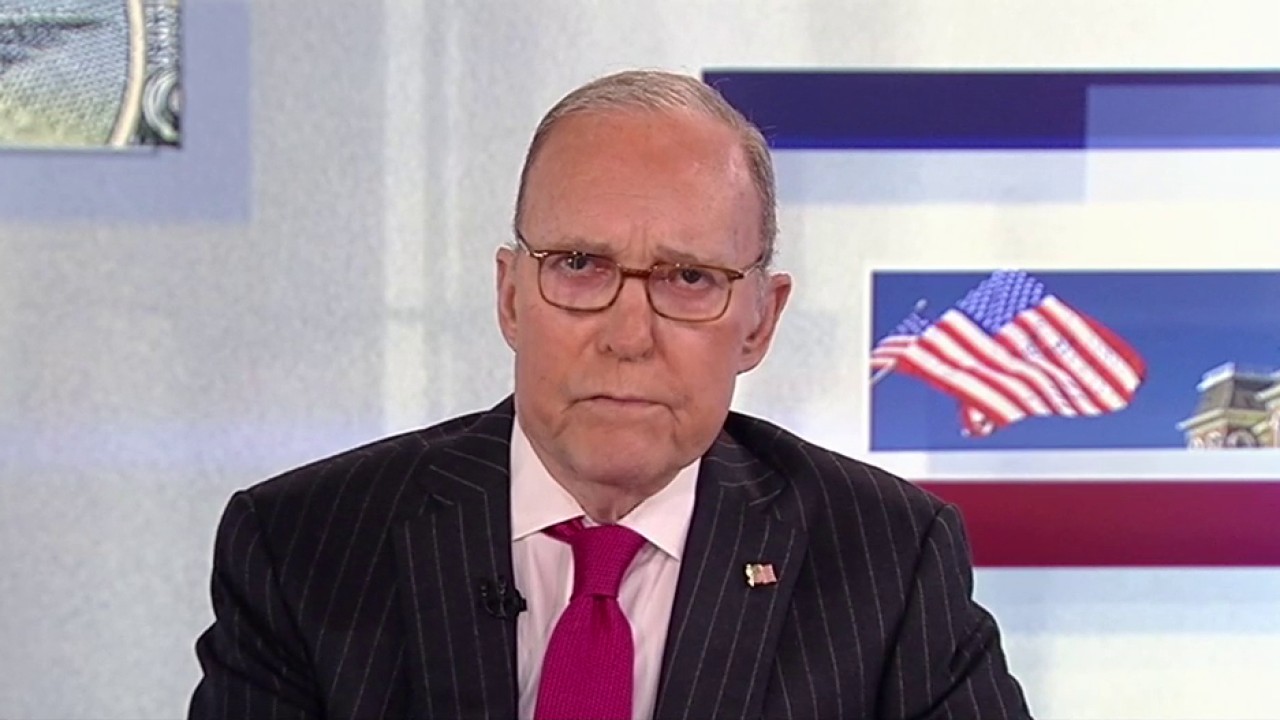
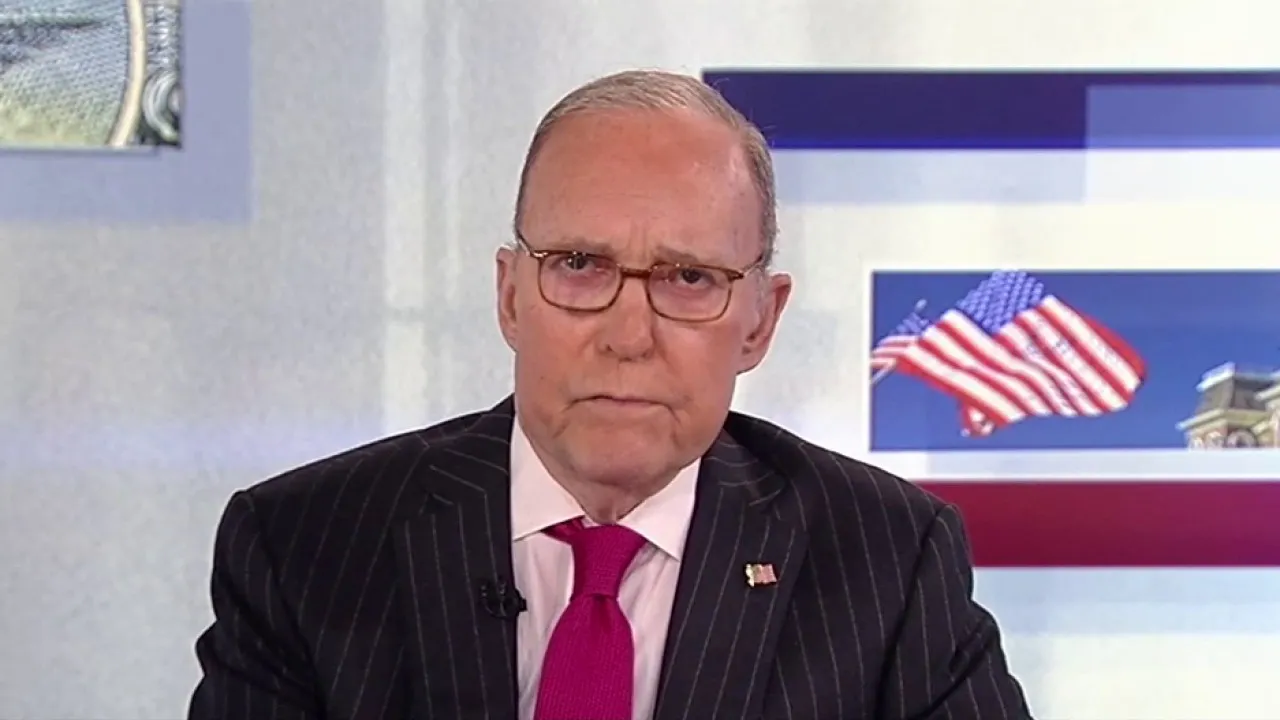
LARRY KUDLOW: Do not listen to the Schumer open border crowd

Putting Iran aside for a moment, I want to point out, besides Iranian news, just how strong the American economy is — war or not. By the way, the Dow Jones index just hit a new record high of 53,178.  

Today’s Institute for Supply Management manufacturing index came in far higher than consensus estimates, and scored its seventh straight monthly gain. We haven’t seen anything like this in years. And if you run your finger down the survey category — whether its new orders, or production, or employment, or even order backlogs, it’s a power-packed report. Seven straight months.

From a policy standpoint, two big issues: first, the One Big Beautiful Republican Bill, and its immediate 100 percent expensing of business investments, including the whole semiconductor connectivity, power networking boom, is driving this manufacturing renaissance. 

Advertisement

And, second, although mainstream economists may not like it, tariffs have refocused businesses domestic production away from offshoring. Hat-tip to our pal John Carney on this one.

This manufacturing report comes after a badly misunderstood GDP report — where the topline was only 1.5 percent growth, but the guts of the economy, which is consumer spending and business investment, actually grew at 3.9 percent. And here too, business equipment is up more than 15 percent, all at an annual rate.

Unemployment claims are at record lows. Nobody’s getting fired. The AI doomsters are wrong. Jobs are rising, not falling. The American dollar is strong. Hopefully exerting lower inflation pressures.  And the aforementioned manufacturing AI productivity boom is leading to soaring profits, lower economy-wide costs, and guess what? A record breaking Dow. 53,178 at the close. How about those apples?

Advertisement
Continue Reading

Business

Sportradar Shares Plunge Nearly 16% After Q2 Loss and Updated Guidance Despite Revenue Growth

Published

on

Sportradar Shares Plunge Nearly 16% After Q2 Loss and Updated

Sportradar Group AG shares fell nearly 16% in morning trading Monday after the sports technology company reported a second-quarter net loss and issued full-year guidance that reflected tempered growth expectations, even as revenue and adjusted earnings rose.

The stock traded sharply lower following the release of results for the period ended June 30. Revenue increased 19% year over year to €378 million, driven by stronger demand for betting technology and content. Adjusted EBITDA also rose 19% to €76 million, with the margin expanding to 20.2%. However, the company posted a loss of €4 million, or about 0.9% of revenue, compared with a profit in the year-earlier period.

Management attributed the swing to a loss primarily to unrealized foreign currency losses of €9 million linked to U.S. dollar-denominated sports rights, along with severance costs from efficiency initiatives. Operating cash flow and free cash flow both improved, rising 20% and 14% respectively.

“Sportradar’s second-quarter financial growth, along with the progress we delivered across a variety of key strategic initiatives, reflects our mission-critical role at the center of the global sports ecosystem,” Chief Executive Officer Carsten Koerl said. “Strong demand for our premium content, data and technology solutions, including increased monetization of our IMG ARENA rights portfolio, drove double-digit growth while deepening our relationships across our unparalleled global distribution network. We also further expanded our addressable market, entering into strategic partnerships with key prediction market participants that will enable us to capitalize on this fast-growing ecosystem.”

Advertisement

Betting Technology & Solutions, the company’s largest segment, grew 21% to €314 million. Within that, Betting & Gaming Content rose 27% to €254 million, helped by the integration of IMG Arena rights and new customer wins. Sports Content, Technology & Services increased 9%. U.S. revenue climbed 16% to €102 million, while the rest of the world grew 20%.

The company updated its full-year 2026 outlook to revenue growth of 19% to 21% on a constant-currency basis, translating to a range of €1,518 million to €1,533 million at current exchange rates. Adjusted EBITDA is projected to grow 24% to 27% on a constant-currency basis to €360 million to €368 million, with modest margin expansion. Free cash flow conversion is expected to exceed the 2025 level, excluding certain litigation costs.

Sportradar continued returning capital to shareholders, repurchasing $140 million of shares in the quarter. Since the inception of its repurchase program, the company has bought back $422 million of stock, including $311 million in 2026. It also upsized its revolving credit facility to €250 million, extending the maturity to 2031 and improving terms. Total liquidity stood at €501 million at quarter-end, with no debt outstanding.

Strategic developments included partnerships with prediction market platforms Kalshi and Polymarket, aimed at expanding Sportradar’s role in data, odds, integrity services and related solutions for that emerging sector. The company also extended its exclusive global data and audiovisual betting rights deal for Wimbledon with the All England Club and continued building its Playradar iGaming offering.

Advertisement

The results come against a backdrop of earlier pressure on the shares. The stock has declined substantially year to date amid concerns over growth rates in certain markets, foreign exchange impacts and previous short-seller reports that questioned aspects of the company’s client base. Those reports prompted regulatory reviews and class-action activity, though management has maintained that the vast majority of its business operates in regulated environments.

Investors appeared focused on the reported loss, the currency headwind and the updated guidance ranges, which some viewed as more conservative relative to prior expectations. The market reaction overshadowed the underlying double-digit growth in core operations and continued cash generation.

Sportradar, based in St. Gallen, Switzerland, provides sports data, content, technology and integrity services to sportsbooks, leagues, media companies and other partners worldwide. Its portfolio spans live data feeds, audiovisual content, betting solutions, fan engagement tools and integrity monitoring.

Looking ahead, the company highlighted ongoing innovation in its product suite, further monetization of acquired rights and opportunities in prediction markets and iGaming as sources of additional growth. Management reiterated a focus on operational efficiency and shareholder returns alongside investment in technology and content.

Advertisement

The sharp decline in the shares left them trading near multi-month lows. Trading volume was elevated as the market digested the quarterly figures and outlook. Analysts and investors will next assess whether the second-half performance can accelerate toward the higher end of the guided ranges and whether currency effects moderate.

While the top-line and adjusted profitability metrics showed continued expansion, the combination of a net loss and revised full-year figures proved sufficient to drive a significant sell-off. The coming months will test Sportradar’s ability to convert its expanding content rights, technology capabilities and new market partnerships into sustained acceleration that rebuilds investor confidence.

Continue Reading

Business

GameStop Stock Plunges Nearly 12% on Debt-for-Equity Swap as eBay Takeover Pursuit Continues

Published

on

GameStop shares are buzzing anew on Wall Street

GameStop Corp. shares fell sharply Monday after the video game and collectibles retailer announced a private exchange of approximately $1.4 billion in convertible senior notes for common stock, a move that reduces long-term debt without using cash but increases the number of shares outstanding.

The stock traded down more than 11% in morning action, reflecting investor concerns over dilution even as the company continues its high-profile pursuit of eBay Inc. The exchange involves about $400 million of 0.00% notes due 2030 and $1.0 billion of notes due 2032. Noteholders will receive newly issued Class A common shares based in part on the stock’s average volume-weighted average price over a 35-trading-day period that began Monday, subject to a per-share floor. The transaction is expected to close around September 23, subject to customary conditions.

GameStop will not receive cash proceeds from the issuance. Upon completion, the exchanged notes will be canceled, cutting outstanding long-term debt by roughly $1.4 billion and leaving approximately $1.1 billion of the 2030 notes and $1.7 billion of the 2032 notes outstanding. The company described the deal as retiring debt without the use of cash.

The announcement comes amid GameStop’s ongoing campaign to acquire eBay. In early May, the company delivered a non-binding proposal to buy all outstanding eBay shares it does not already own at $125 per share in a mix of cash and GameStop stock, valuing the e-commerce platform at roughly $55 billion to $56 billion. eBay’s board rejected the offer, calling it neither credible nor attractive and citing questions about financing, management of a combined company and other terms.

Advertisement

GameStop has since substantially increased its ownership. It now holds approximately 43.4 million eBay shares, or about 9.8% of the company, after converting derivative positions and making open-market purchases. Chief Executive Ryan Cohen has repeatedly signaled determination to press forward. In comments following the stake increase, Cohen said, “we’re coming for eBay one way or another.”

Shareholders earlier approved an increase in authorized Class A common shares to 2.5 billion, providing additional flexibility for potential stock-financed transactions. Cohen also withdrew a previously approved CEO performance award, with the company stating it was focusing on the eBay opportunity. GameStop has pointed to its cash position, a non-binding commitment letter for up to $20 billion in debt financing from TD Securities contingent on investment-grade ratings for a combined entity, and its retail network as elements that could support a deal.

In late June, GameStop provided a fiscal 2026 outlook expecting adjusted EBITDA in excess of $600 million, up from $345.4 million in fiscal 2025. Management has framed the eBay pursuit as a strategic expansion that would combine GameStop’s physical retail footprint and growing collectibles business with eBay’s global marketplace platform, authentication capabilities and seller network.

The debt-for-equity exchange improves the balance sheet by lowering leverage at a time when the company is positioning itself for a potentially transformative acquisition. However, the issuance of new shares dilutes existing holders, a dynamic that typically pressures the stock in the near term. Market reaction Monday underscored that tension: while the reduction in debt is viewed as positive for credit metrics and future financing capacity, the increase in share count raised questions about ownership stakes and potential further equity issuance if a deal advances.

Advertisement

GameStop has been transforming its business model in recent years. Physical video game software sales have declined as digital distribution grows, but collectibles, trading cards and other categories have expanded to represent a larger share of revenue. The company has also explored partnerships, including delivery services, and maintained a significant cash reserve that has supported both share repurchases and the accumulation of the eBay stake.

eBay, for its part, has emphasized its own turnaround efforts and independent strategy. The marketplace operator has focused on improving its platform, expanding categories and returning capital to shareholders. Any potential combination would face regulatory review, financing hurdles and integration challenges given the scale difference between the two companies.

Analysts and investors will watch several developments in the coming weeks. These include the final share count issued in the notes exchange, any further updates on the eBay proposal or negotiations, quarterly operating results, and broader market conditions for meme-associated and retail stocks. GameStop’s ability to convert its eBay stake and financing commitments into a completed transaction remains uncertain, particularly after the initial rejection.

The sharp decline in GameStop shares on the exchange news highlights the market’s sensitivity to dilution even when paired with balance-sheet strengthening. At the same time, the company’s continued accumulation of eBay shares and public comments from leadership indicate the acquisition effort is far from abandoned. Whether the debt reduction ultimately bolsters credibility for a larger deal or simply reflects prudent capital management will depend on subsequent steps by both companies.

Advertisement

As trading continued Monday, the focus remained on how GameStop balances near-term shareholder dilution against longer-term strategic ambitions in a rapidly evolving retail and e-commerce landscape. The outcome of the eBay pursuit, if it advances, would rank among the most significant corporate moves in the company’s recent history.

Continue Reading

Business

Singapore’s Grab lifts annual revenue forecast

Published

on


Singapore’s Grab lifts annual revenue forecast

Continue Reading

Trending

Copyright © 2025