

Crypto World
TxFlow L1 Introduces Probly as Its Second Channel, Marking the Next Stage of Its Multi-Application Ecosystem with Prediction Markets

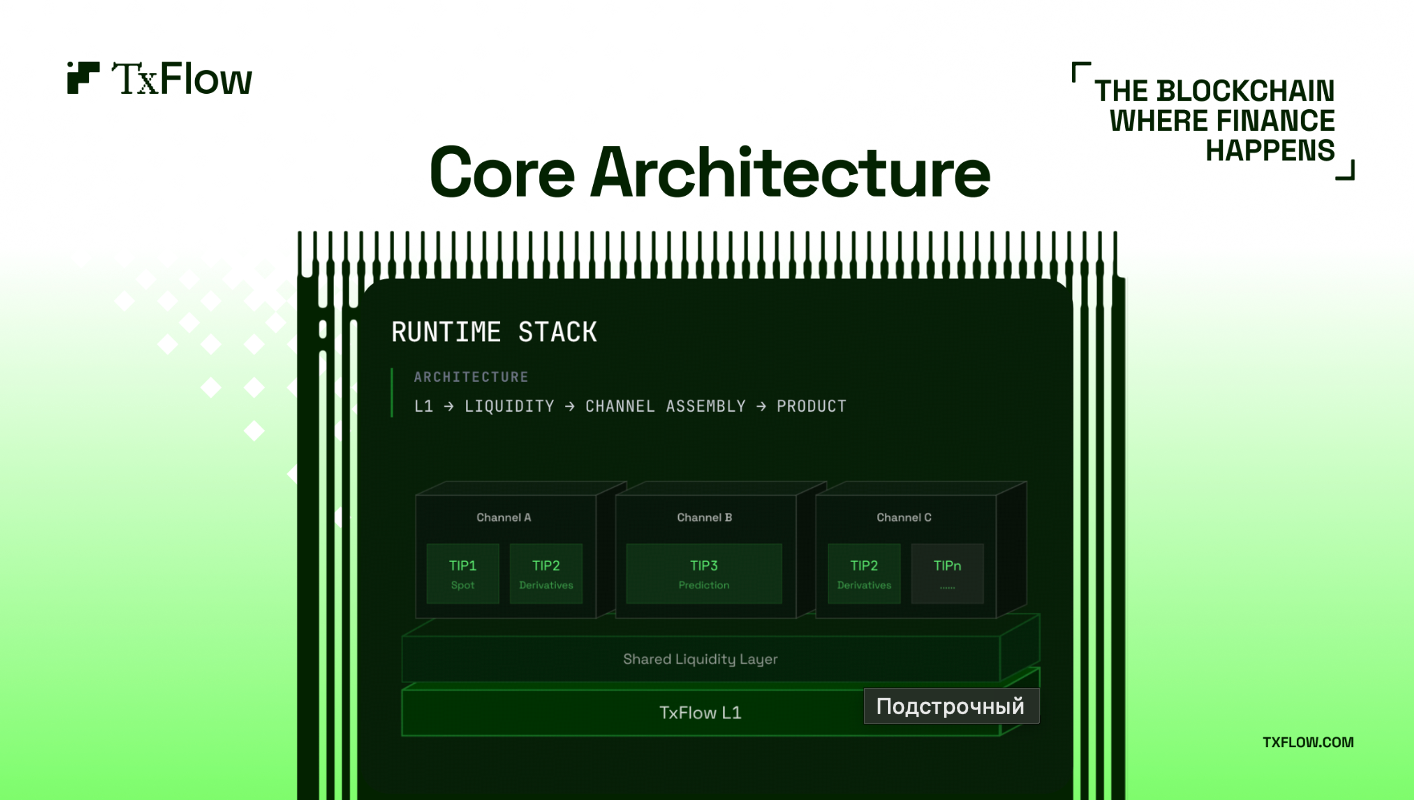
TxFlow L1, the Layer 1 blockchain powering a multi-application onchain financial ecosystem built around its TIP Liquidity Standards, today announced its second Channel: Probly, the first prediction-market application built on TxFlow Improvement Protocol 3 (TIP3).
Following TxFlow DEX—the blockchain’s first application and a central limit order book (CLOB) decentralized exchange for perpetual trading, Probly expands the TxFlow L1 ecosystem into real-time prediction markets. At launch, the platform offers 172 live markets covering more than 7,000 events, including continuously rolling markets with durations as short as five minutes, backed by fully onchain settlement and TxFlow L1’s shared financial infrastructure. The launch marks the next stage in TxFlow L1’s expansion from a network anchored by a flagship onchain exchange into a multi-application financial ecosystem.
TxFlow L1 was designed around a different structure. Through its TxFlow Improvement Protocol standards and Channel architecture, financial applications can operate on the same purpose-built network while connecting to shared execution and settlement infrastructure. Probly extends the ecosystem into prediction markets as the second.
TIP3(TxFlow Improvement Protocol 3) Makes Prediction Markets Native to TxFlow L1
TxFlow Improvement Protocol, or TIP, is the standards framework that defines how financial products are built and connected on TxFlow L1.
Within the framework, TIP1 supports spot markets, TIP2 supports derivatives and TIP3 establishes the standard for prediction-market Channels. TIPn remains open for future products, including real-world assets, structured products and financial instruments that have not yet been developed onchain.

TIP3 defines how prediction-market applications connect to TxFlow L1’s execution, settlement and Shared Liquidity Layer. Rather than operating through an independent infrastructure stack, a TIP3 Channel can build on the same financial foundation supporting the wider TxFlow L1 ecosystem. Its architecture uses DAG-based parallel execution and a multi-threaded processing pipeline, enabling non-conflicting transactions to be processed simultaneously. Market activity and settlement records are executed onchain, providing an open and verifiable system. Probly therefore settles directly on TxFlow L1 instead of relying on a shared general-purpose network or a centralized offchain ledger.
Markets are resolved through designated oracle sources. Automatically resolved price-source markets can settle immediately, while manually adjudicated markets are expected to settle within 24 to 72 hours. Following resolution, eligible settlement amounts are credited automatically in USDC without a separate claim step.
This creates a direct infrastructure advantage for Probly: fully onchain settlement and native connectivity to the broader TxFlow L1 ecosystem.
Probly Brings Real-Time Probability Signals to TxFlow TIP3

Probly comes from “probably”, the word we use when the future is still open. Inspired by P(A), the notation for the probability of an event, Probly turns individual perspectives into a live collective signal: before it happens. At launch, Probly features 172 live event pages across 15 categories, including politics, sports, crypto, finance, geopolitical events. Discovery tools help users explore trending, highly active, fast-moving and soon-to-conclude events, while lightweight polls offer a simple way to engage with topics attracting attention.

Probly also introduces continuously refreshed five-minute, 15-minute, one-hour and four-hour experiences covering BTC, ETH, SOL and XRP price movements. Each page includes live data, a real-time countdown and automatically refreshed rounds, helping users follow changing expectations as events unfold. The platform combines fully onchain infrastructure with a clear, accessible interface designed for both new and experienced users. Probly presents real-time information, probability changes and event timelines in one streamlined experience. Users can access Probly through an email-based embedded wallet without managing a seed phrase, or connect compatible wallets including MetaMask, Coinbase Wallet, Phantom and Uniswap Wallet.
A consolidated account interface provides a clear view of activity, history and ongoing event engagement. Combined with TxFlow L1’s transparent onchain infrastructure and automated resolution process, these features reduce friction from access through completion.
A Different Infrastructure Approach to Prediction Markets
Probly enters a prediction-market category shaped by platforms such as Polymarket and Kalshi, but is built on a different infrastructure model. Probly operates and settles directly on TxFlow L1, a Layer 1 designed for onchain financial applications, bringing real-time probability signals, verifiable onchain records and automatic USDC settlement into one financial stack. Probly extends the same architecture into prediction markets through TIP3.
About Probly
Probly is a prediction market built on TxFlow L1 through TxFlow Improvement Protocol 3 (TIP3). It turns views about future events into continuously updated market signals across sports, crypto, economics, news, culture, weather and other real-world categories.
Probly combines real-time markets, broad event coverage, fully onchain settlement and self-custodied USDC infrastructure. Its mission is to make collective expectations more immediate, transparent and useful by converting uncertainty into a price.
Before It Happens.
About TxFlow L1
TxFlow L1 is a high-performance blockchain built for on-chain financial infrastructure, organized around TIP Liquidity Standards that define how financial products are built, composed, and settled on-chain. TxFlow DEX is the first Channel on TxFlow L1, a CLOB orderbook DEX for perpetual trading, processing over 250,000 TPS with one-block finality. Through its TxFlow Improvement Protocol standards and Channel architecture, TxFlow enables spot markets, derivatives, prediction markets and future financial products to operate on the same chain while connecting to shared execution and settlement infrastructure where all finance happens.
TxFlow L1 is building an open, composable and community-owned financial ecosystem in which each new application can strengthen the infrastructure available to those that follow.
Important Notice
This press release is provided for informational purposes only and does not constitute an offer, solicitation, recommendation or invitation to access or participate in any financial, event-based or prediction-market product.
Probly is available only to eligible users in jurisdictions where access is permitted under applicable law. Product availability, market coverage and functionality may vary by jurisdiction and are subject to applicable terms, eligibility requirements and geographic restrictions.
Participation in prediction markets involves risk, including the possible loss of funds. Market prices reflect participant expectations at a particular time and do not guarantee any outcome. Nothing in this release constitutes financial, investment, trading, legal, tax or any other advice.
The post TxFlow L1 Introduces Probly as Its Second Channel, Marking the Next Stage of Its Multi-Application Ecosystem with Prediction Markets appeared first on BeInCrypto.

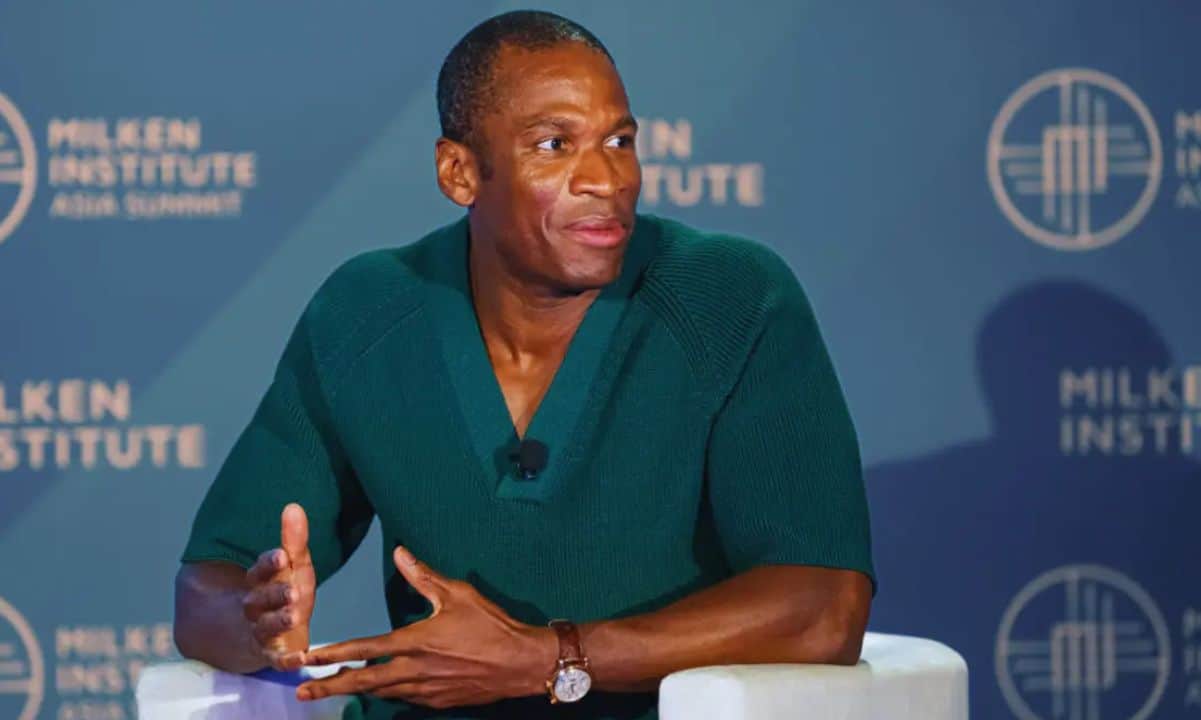
Ethereum (ETH) has stolen the show in the past few days, posting impressive gains and outperforming the market leader and many of the larger-cap alts.
One of the reasons behind this notable rally that drove it to a multi-week peak could be ongoing accumulation by major players, including BitMEX’s co-founder, Arthur Hayes.
Hayes Buys ETH High
On-chain data provided by Lookonchain indicated that the popular crypto personality spent roughly $2.5 million to acquire 1,293 ETH. Consequently, he continues to display a somewhat controversial approach to Ethereum given his most recent moves.
CryptoPotato reported back in mid-June that Hayes had accumulated a total of 5,900 ETH for $10.58 million in the span of just a few days. However, he disposed of his entire stash (and some more) just a day later for around $10 million, registering a loss of more than $600,000 in hours.
What’s interesting in this situation is that he seems to be buying high and selling low. His most recent accumulation came at prices of well over $1,900, where ETH has stood for the past day. In contrast, the aforementioned offload took place when the asset dipped below $1,700.
Hayes has also exhibited controversial behavior toward other crypto assets. He received substantial backlash over his overpromotion of tokens like HYPE, ZEC, and WLD, as he disposed of his positions weeks after praising them and long before they reached his massive price targets.
Whales, Abraxas Buy Too
With speculation running rampant about ETH’s future following its notable surge past $1,900, the broader Ethereum ecosystem shows that other participants are joining through large acquisitions. Additional data from Lookonchain suggested that three newly created wallets withdrew nearly $58 million in ETH from Coinbase Prime earlier today. The analysts concluded that “whales continue accumulating ETH.”
Moreover, wallets linked to Abraxas Capital deposited $40 million worth of bitcoin into the veteran US exchange Kraken earlier this week. Lookonchain noted that they used a large portion of the capital they gathered to rotate into ETH after withdrawing 8,153 tokens from the platform.
Abraxas Capital is selling $BTC and buying $ETH!
Over the past 3 hours, Abraxas Capital withdrew 8,153 $ETH($15.3M) from #Binance and #Bybit, while depositing 618 $BTC($39.99M) into #Kraken.https://t.co/qwAXChjYvp pic.twitter.com/EdWBYF36Lf
— Lookonchain (@lookonchain) July 15, 2026
The post Arthur Hayes Buys ETH Above $1,900 Weeks After Selling at $1,700 appeared first on CryptoPotato.

U.S. President Donald Trump is scheduled to meet with several senators at the White House on Thursday to hear updates on the federal crypto market structure bill currently under negotiation in Washington. The discussion is expected to focus on progress toward passing the legislation, known as the CLARITY Act.
According to Politico, Senator Bernie Moreno said a group of senators will brief the president on the bill and outline “its path to success.” Senator Cynthia Lummis is also expected to attend, based on a Senate Republican aide’s account. Moreno said Trump has been closely engaged with the effort, framing the president as a key driver of legislative momentum.
Key takeaways
- Trump will meet with senators on Thursday to receive an update on the CLARITY Act and its prospects for passage.
- Lawmakers are aiming to advance the bill before the Senate’s August recess, with some calling the window a final realistic chance before midterm elections.
- Senator Thom Tillis told Politico that he is seeking agreement by the end of the week on unresolved parts of the bill.
- Prediction markets show relatively high odds of a Senate vote before the August recess, but lower odds that the bill becomes law in the same timeframe.
White House meeting signals push to move the CLARITY Act
The Thursday meeting comes as lawmakers race to finalize the CLARITY Act ahead of the Senate’s August recess. Politico reports that many legislators view the current legislative stretch as the last realistic opportunity to pass the measure before the midterm election cycle.
Moreno said senators will discuss the “entirety of the bill,” adding that Trump has been actively involved in the initiative. The remarks underscore how the effort is being framed not just as a committee process, but as a broader, top-level political priority meant to reach a decisive procedural outcome in the Senate.
Senator Thom Tillis, who has been working on specific “unresolved provisions” tied to the CLARITY Act, told Politico he hopes lawmakers can reach agreement by the end of this week. He emphasized the urgency of moving the legislation “across the floor” before the August recess.
What lawmakers are waiting for: a revised draft
Lawmakers are currently awaiting a revised version of the CLARITY Act. In an interview with Fox Business on Wednesday, Lummis said a new draft would be introduced within days and that she expects it to be placed on the Senate floor next week.
The timing matters because the CLARITY Act is still contingent on resolving outstanding elements. With the Senate calendar approaching recess, the revised draft functions as a gating factor: without language that can clear remaining objections, the bill may stall procedurally even if broad support exists among key legislators.
Cointelegraph reached out to Senator Lummis for comment, but the meeting and the drafting schedule suggest lawmakers are working toward a near-term floor push rather than a prolonged revision cycle.
Prediction market odds diverge between “vote” and “become law”
Market-based odds tracked by traders indicate a split between the likelihood of a Senate vote and the likelihood of the bill ultimately becoming law.
On Kalshi, traders assigned a 79% chance to the proposition that the Senate will vote on the CLARITY Act before the August recess. That figure is reportedly up from 68.8% the previous day. The shift suggests that traders see improving odds of procedural progress, likely tied to expectations around the revised draft arriving soon and a potential floor schedule.
However, traders were less confident about the bill’s path to enactment within the current year. According to the Kalshi market data cited in the report, a $3 million prediction market gave the CLARITY Act a 36% chance of becoming law in 2026, and a 62% chance of doing so before the end of 2027.
Polymarket traders were similarly cautious about timing: the cited Polymarket figure put the chance that the CLARITY Act is signed into law this year at 39%. The difference between “vote” odds and “signed into law” odds reflects a common dynamic in legislative forecasting—procedural movement can occur faster than the final legislative, executive, and implementation steps needed for a bill to become law.
Why the next few days could be decisive
The immediate pressure point is not only whether senators can agree on remaining provisions, but whether that agreement can be translated into a revised draft capable of reaching the Senate floor in time for votes before the August recess. Tillis’s comments to Politico indicate that negotiations over unresolved terms are actively ongoing, and Lummis’s timeline for introducing a new draft within days points to a short, high-stakes window for consolidation.
For market participants, the key distinction is between near-term legislative scheduling and longer-term enactment probabilities. Kalshi’s relatively high odds for a Senate vote contrast with lower odds for the bill becoming law in 2026 and with Polymarket’s comparatively modest estimate for signing in the current year. Traders appear to be pricing in the possibility of floor action, while still discounting hurdles beyond the Senate’s vote.
As lawmakers await the revised draft and push toward next week’s potential floor timetable, readers will likely want to watch two things closely: whether unresolved provisions get settled quickly enough to maintain vote momentum, and how quickly prediction market odds shift for “signed into law” once the revised text is officially introduced.
Base creator Jesse Pollak admitted his bet on onchain social apps and creator coins failed, handing the Base app back to Coinbase and refocusing the network on trading, stablecoin payments, and artificial intelligence (AI) agents.
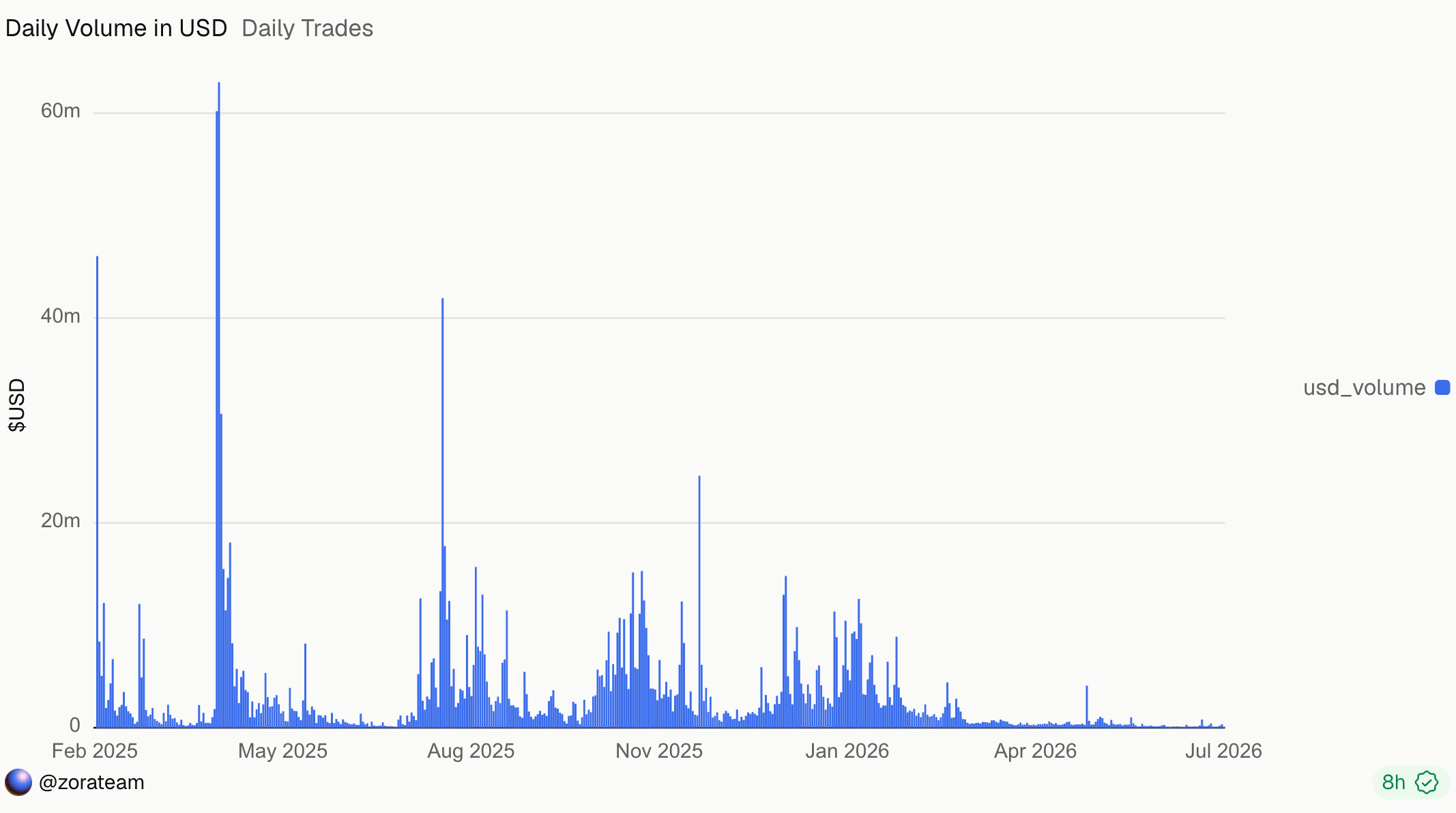
He described the first quarter of 2026 as a “punch in the face,” citing declines in Farcaster, Zora, and creator coins. Data from Zora shows why: trading and creation activity are down almost entirely.
Zora Data Reveals the Scale of the Decline
In a long reflection, Pollak said builders drove real adoption through stablecoins, prediction markets, and perpetuals. Social, he conceded, did not.
“In fact, the entire social side of the market that many of us had been building towards – farcaster, zora, miniapps, and yes, creator coins – disintegrated completely. I was wrong – whether it was timing wrong (is $ansem a creator coin?) or fully wrong, only time will tell, but regardless, i was definitively wrong,” he said. “I’m also not going to just let $jesse fade away – when I launch something, I’m in it for the long term.”
Zora was the flagship platform for the creator-coin model, which turned posts and profiles into tradable tokens. He now groups that model into the bets he called a mistake.
His post landed as the numbers hit bottom. According to Zora’s public dashboard, daily trading volume fell to $112,170 on July 15. That marked a 99.8% drop from a $63 million peak in April 2025.
Follow us on X to get the latest news as it happens

Coin creation followed the same path. Creators minted 852 coins on Zora on July 15, down from a January 2026 peak of 118,069. Content coins drove the boom and the bust.
They made up 117,537 of the 118,069 coins minted at the January peak. By July 15, that figure had dropped to 638. Creator coins tell a similar story. They fell from 532 daily creations in January to 177 by July.
The user base thinned just as fast. Daily creators fell from 32,286 on February 13 to 512 by July 15. Daily traders dropped from 20,540 to 1,429 over the same period.
Pollak Resets Base Around Money, Not Social
Pollak said he stepped back from leading the Base app. Jordan Fish, known as Cobie, will now run its development inside Coinbase.
“I’ve handed the base app back to the coinbase mothership, where my now good friend @cobie will be taking it from here to make it the best damn app for onchain you’ve ever seen…” he added.
Pollak said his focus is on building Base into the blockchain for global finance. Base will pursue three priorities. Pollak named tokenized asset trading, global stablecoin payments, and AI agents as its focus.
The reset arrives as rivals expand into these sectors as well. However, the open question is whether better money alone can pull the next wave of users onchain.
Subscribe to our YouTube channel to watch leaders and journalists provide expert insights
The post Jesse Pollak Admits His Onchain Social Bet Failed, Hands Base App to Coinbase appeared first on BeInCrypto.
After several weeks of little to no updates from the Core Team regarding the status of the upcoming version 25, they finally announced the completion deadline.
The question now is whether the next major upgrade can provide some relief for the underlying asset, which has been the most volatile token in the past few days – mostly in the wrong direction, though.
Next Update Date
Pi Network’s team has been trying to improve the overall ecosystem for months. The protocol updates began in mid-Q1 with the introduction of version 19.6. Several others followed suit, with v20.2 perhaps being the most important since it laid out the foundation for smart contract capabilities.
The speed at which the new upgrades were deployed slowed down in Q2, but the team still migrated to v22 and v23 in May. The last and current version 24 was implemented in early June, but it came with a slight delay.
It has been six weeks since then, and there was no major clarification on when version 25 will be deployed. However, the team changed that hours ago by outlining that it should be completed by July 22. They noted that the new update will focus mostly on “improving network stability and reliability.” It will also support new capabilities for “more efficient, privacy-preserving smart contracts.”
On July 22, Pi is scheduled to upgrade to Protocol v25, which primarily focuses on improving network stability and reliability, and supports new capabilities for more efficient, privacy-preserving smart contracts.
Go to the Pi mining app to learn more! pic.twitter.com/Btg8aEFAFh
— Pi Network (@PiCoreTeam) July 15, 2026
PI Craters Again
The project’s native token has been on nothing short of a painful rollercoaster ride in the past several days. It broke down below the key $0.10 support, and the bears managed to control almost all moves, which included setting consecutive all-time lows. The latest came two days ago at just over $0.07.
That level managed to act as a strong support at first and provided a major rebound yesterday. As reported, PI rocketed by over 15% at one point and jumped past $0.085. However, another rejection followed suit, and the token nosedived again. It’s down by 8% in the past 24 hours and struggles below $0.074.
PI continues to trade more than 97% away from its all-time high from February last year. Moreover, it’s down by over 35% in the past two weeks alone.
The post Pi Network Team Reveals New Update Deadline Amid PI Price Turmoil appeared first on CryptoPotato.

ETH tapped a six-week high of $1,940 in late trading on Wednesday and has held on to those gains into Thursday morning, where it remained above $1,900.
CryptoQuant analyst ‘Darkfost’ said on Thursday that the move was driven by positive inflation reports in the US, with CPI and PPI figures that came in well below expectations. ETH has posted nearly 10% gains over the past two consecutive days, he said.
“Since a low of around $1,500 in June, ETH appears to have entered a genuine shift in momentum, now showing a performance of over 25% for the period.”
Ether Short Squeeze Pumps Prices
The analyst added that the recent surge isn’t solely down to the strong macro data. “It also owes a great deal to the wave of short position liquidations that had been building up on Binance throughout the move.”
It was one of the largest “short squeezes” ETH has experienced on the exchange since June, with almost $30 million in futures wiped out in an hour or so. The largest single liquidation order over the past 24 hours happened on Binance with ETH/USDT valued at $11.9 million, according to Coinglass.
$30M in Shorts Liquidated in an Hour as ETH Breaks $1,900.
Driven by excellent CPI figures yesterday, followed today by a Producer Price Index (PPI) print that came in well below expectations (-0.3%), ETH has posted a performance of nearly 10% over these two consecutive days.… pic.twitter.com/HzGbUwc5RM
— Darkfost (@Darkfost_Coc) July 15, 2026
Arden House founder Alaoui Capital posted a heatmap showing that $2,000 is the level ETH “wants to test before anything else.” Meanwhile, analyst ‘Satoshi Flipper’ said that ETH has now broken out from its downtrend against Bitcoin, which is also bullish for altcoins.
“ETH just woke up,” said former BlackRock vice president and MilkRoad host John Gillen.
He added that bulls need to keep an eye on the $1,950 level at the 100-day exponential moving average, then $2,000. “Crack that and $2,200 comes into play, and then it could be off to the races,” he said.
“This summer just got interesting. Price may finally be reacting to strengthening fundamentals in Ethereum and in ETH the asset.”
Elsewhere on Crypto Markets
Total capitalization has remained flat on the day at $2.3 trillion as ETH is the only mover, up 3.2%
Bitcoin was cooling after its venture above $65,000, and most of the altcoins were flat. There were minor gains for XRP, Zcash, and Stellar, but it is Ethereum stealing the show at the moment.
The post Ethereum Tops $1,900 in a Six-Week High, Where to Next For ETH? appeared first on CryptoPotato.
Ethereum whales kept buying this week. A selection of newly created wallets pulled roughly 50,000 ETH off exchanges in under 48 hours.
The move comes as the ETH/BTC ratio jumped 6% in a week, adding fresh weight to the case that altcoin season may be building. ETH traded at $1,917, up 2.22% on the day. Bitcoin sat at $64,554, slightly down on the day, according to BeInCrypto data.
Whales And BitMine Keep Accumulating
On-chain tracker Lookonchain flagged a few large buys this week. One address, from a newly created wallet, 0xf31d, withdrew 8,239 ETH worth $14.5 million from several exchanges. A separate wallet, 0x363A, accumulated 11,843 ETH worth $20.8 million in just three hours.
A few days later, three newly created wallets withdrew a combined 30,000 ETH, worth $57.66 million, from Coinbase Prime.
Institutional buying continued alongside the independent wallets. Tom Lee’s BitMine bought another 6,000 ETH, worth $11.18 million, from FalconX on July 15. The purchase extends Bitmine’s aggressive buying streak toward its long-standing goal of holding 5% of Ethereum’s total supply.
Altcoin Season Index Drops as Ratio Breaks Higher
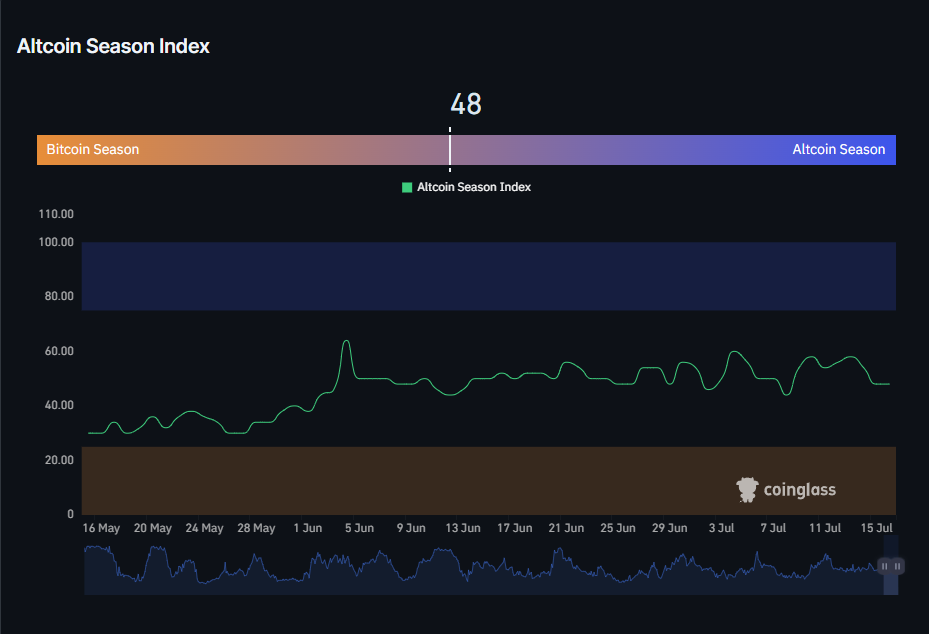
The renewed accumulation actually lands as the Altcoin Season Index drops. CoinGlass’s version of the index has fallen to 48, down from 58 earlier this week. This sees it fall further below the 75 threshold that would confirm a genuine altcoin season, but bubbling interesting in Ethereum could point towards a move away from BTC.

The ETH/BTC ratio is showing promising growth. The pair traded at 0.02971 on Binance, up 6.14% over the past week and 9.75% over the past month, according to TradingView data. That marks a sharp reversal from the 0.0275 low Wintermute flagged in May.
Ethereum is now gaining ground against Bitcoin on a relative basis. That shift is one of the clearer signals that capital is rotating down the risk curve instead of parking in Bitcoin.

This week’s combination of whale buying and a strengthening ETH/BTC ratio could mark the start of a durable altcoin rotation, or another head fake.
Much depends on the Bitcoin dominance and which direction it heads through the rest of July. It also depends on whether the ETH price can keep pace with the ratio’s gains against Bitcoin.
The post Fresh Ethereum Wallets Buy 50,000 ETH as ETH/BTC Ratio Jumps 6% appeared first on BeInCrypto.


A bitcoin address that had not spent a coin in eight years moved 5,908 BTC worth about $383 million on Thursday, data shows.
The wallet took in the coins when bitcoin traded at around $16,000, a level the market saw in December 2017 and early January 2018, within weeks of a cycle peak near $20,000.
The stack cost roughly $100 million then and is worth about $383 million now, a gain of about 284%. It was worth $726 million at bitcoin’s lifetime in October 2025.
The entry date is what makes the holding unusual. Bitcoin fell about 80% through 2018 to near $3,200. It recovered to $69,000 in 2021, then collapsed to about $15,500 in November 2022, which briefly put this position underwater five years after it was built.
The wallet stayed shut then, and again last year when bitcoin cleared $122,000, roughly seven times the entry price. It is opening now, with bitcoin near $64,800 and about half the 2025 high behind it.


Bitcoin’s funds are still lurching, however. U.S. spot bitcoin ETFs shed $424 million on July 13, then took back $181 million the next day. Money leaving and returning inside 48 hours is not indicative of an allocator building a position.
As such, the ether bid is narrower. Of the $53.8 million that came in on Wednesday, BlackRock’s ETHA absorbed $45.3 million and its smaller ETHB fund took $4 million, leaving the other eight products to split less than $5 million between them.
Grayscale’s original ether trust, which charges 2.5% against BlackRock’s 0.25%, has now bled $5.3 billion since launch.
Ether also picked up a demand source that did not exist three weeks ago. Robinhood Chain, the layer-2 network the brokerage switched on July 1, pays gas in ether and settles to Ethereum, and it has been clearing more than $800 million in daily decentralized exchange volume, most of it memecoin trading.
Bitcoin is steadier than its ETF flows suggest, however. Nansen data shows exchange outflows holding through the escalation in the Middle East, with no meaningful rotation into stablecoins, the move that usually marks wallets stepping back.
Funding rates are near zero, which is suggestive of the overleveraged longs that fuelled June’s liquidation cascades have already been cleared out. Bitcoin dominance is 58.3%.

U.S. President Donald Trump is scheduled to meet with multiple senators at the White House this Thursday to discuss the status of the crypto market structure bill—commonly referred to as the CLARITY Act—and how momentum for the legislation can be sustained.
According to Politico, Senator Bernie Moreno said a group of senators will brief the president on the bill and “its path to success,” with Senator Cynthia Lummis also expected to attend, according to a Senate Republican aide. The meeting arrives as lawmakers try to finalize a revised version of the bill before the Senate’s August recess.
Key takeaways
- Trump is set to meet with senators Thursday on progress toward passing the CLARITY Act.
- Lawmakers are racing to agree on unresolved provisions and move toward a Senate vote before the August recess.
- Senator Cynthia Lummis says a new draft will be introduced in the coming days and could reach the Senate floor next week.
- Prediction market pricing currently implies a higher likelihood of a pre-recess Senate vote than of the bill becoming law this year.
White House meeting signals push for urgency
The White House discussion is framed as part of a broader push to keep the CLARITY Act moving through the legislative process. Moreno, speaking to Politico, said senators would review “the entirety of the bill” with the president, adding that Trump has been closely engaged with the effort.
Moreno’s remarks underscore how the initiative is being treated as a political and regulatory priority rather than a routine bill. For investors and builders, the potential stakes are straightforward: a clearer federal market-structure framework could affect how crypto-related products and services are regulated, what compliance pathways look like, and how market participants prepare for enforcement risk.
The meeting also points to how timing has become central. The push is being designed around the Senate calendar, with lawmakers seeking what they describe as the last realistic chance to pass the bill before midterm elections.
Lawmakers seek agreement before the August recess
According to Politico, senators are aiming to reach agreement by the end of this week. Senator Thom Tillis—identified by Politico as one of the lawmakers working through “unresolved provisions”—said he is hoping negotiators can come to terms before the August recess window closes.
“I think it’s critical if we’re going to try and get this across the floor before August recess.”
That statement highlights the bill’s current status: while the legislative push is moving forward, negotiators still appear to be addressing remaining sticking points that could determine whether the bill can secure enough support to advance.
Lawmakers are reportedly awaiting a revised draft of the legislation, which is expected to clarify or adjust the provisions that have slowed progress. The existence of an updated draft matters because it can change what senators consider “vote-ready,” and because revisions often influence how stakeholders—such as financial intermediaries, exchanges, and compliance teams—assess operational readiness.
Senator Lummis: revised bill soon, Senate vote likely next week
In an interview on Fox Business on Wednesday, Senator Lummis said a new draft version of the CLARITY Act will be introduced in the next few days and that she expects it to be on the Senate floor next week.
The prospect of a refreshed text entering the floor schedule suggests that negotiations are nearing a stage where the remaining questions are either narrowed or resolved enough to allow a formal vote process to begin. For market participants, the practical implication is that uncertainty may be compressed quickly—though the exact policy content of the revised draft is what ultimately determines whether support broadens or fractures.
Cointelegraph attempted to reach Lummis for further comment.
Prediction markets: pre-recess vote seems more likely than passage into law
While lawmakers try to close the gap on legislative details, traders are also publishing their expectations through prediction markets. On Kalshi, traders have assigned a 79% chance that the Senate will vote on the CLARITY Act before the August recess, up from 68.8% the previous day, according to the current market view on the platform.
At the same time, those markets still reflect skepticism about the bill becoming law within the same calendar year. A $3 million Kalshi market gives the legislation a 36% chance of becoming law in 2026, and a 62% chance of doing so before the end of 2027.
Polymarket traders similarly place the chance lower for near-term enactment, pricing a 39% probability that the CLARITY Act will be signed into law this year.
Together, these two sets of odds point to a common pattern in Washington timelines: a vote can be scheduled well before final enactment, but turning that vote into signed legislation can require additional steps, bargaining, or reconciliation of competing priorities.
What to watch next
The next key developments are the arrival of the revised CLARITY Act draft and whether it secures enough support to get scheduled for a Senate floor vote—especially given the compressed timeline ahead of the August recess. Traders and lawmakers will likely treat the updated text as the moment when remaining unresolved issues move from negotiation to decisional politics, with follow-through into final passage still far from guaranteed.


Some observers remain skeptical of the sustainability of this inflation-led bounce, arguing that the collapse in oil prices mainly drove the slower growth in the cost of living in June and that the recent bounce in oil makes that data obsolete.
“The 3.5% [CPI] number was driven by a 10% drop in gasoline through June, and that move had already reversed before the report was published, with Brent at a one-month high as the Hormuz situation escalates,” Ryan Lee, chief analyst at crypto exchange Bitget, said in an email.
“Markets are rallying on a June photograph, while July develops differently, and the July print will be the first to carry the war premium,” Lee added.
Jasper De Maere, OTC trader at lading market maker Wintermute, also called for caution, while acknowledging inflation-led bounce and profit-taking near $65,000.
“While the inflation data is genuinely constructive and while positive headlines are very refreshing, it’s worth noting the backdrop hasn’t cleared with U.S. strikes on Iran are into a fourth consecutive day, and the Fear & Greed Index only moved from 22 to 25, still Extreme Fear. One soft CPI print against an active military escalation is not the same as a durable regime shift in risk appetite,” he said in an email.

Manchester Airport to Blackpool North train cancellations
Arthur Hayes Buys ETH Above $1,900 Weeks After Selling at $1,700

How Madonna Turned Personal Tragedy Into Professional Triumph


-

 Fashion7 days ago
Loro Piana Fall 2026 Enters Houston’s Art Scene
-

 Fashion5 days ago
Weekend Open Thread: Nutriplenish Leave-In Conditioner
-
 Sports7 days ago
2026 Genesis Scottish Open Thursday TV coverage: Round 1
-

 Sports6 days ago
Super Eagles star Moses Simon opens up on Liverpool transfer regret
-

 Tech7 days ago
Character.AI enters the microdrama arena with its own productions, but there’s a twist
-

 Politics18 hours ago
Young campaigners urge incoming PM to act on outdoor junk food ads
-

 News Videos1 day ago
XRP BOMBSHELL… XRP OMBOARDED FOR TRANSACTIONS!!!
-

 Tech2 days ago
Get Your ESP32 Sunny Side Up With This Solar Dev Board
-

 Tech1 day ago
Dark Secrets Emerge When Jailbreaking LLMs
-
 Sports9 hours ago
New Cornerback Enters Vikings Trade Rumor Mill
-
 Entertainment13 hours ago
Disney’s Most Ambitious Failed Star Wars Attraction Is Coming to SDCC
-

 Tech7 days ago
Level Infinite Launches Gangstar Mirage City in India with Pre-Registrations
-
 NewsBeat7 days ago
Major update after Huntingdon train attack as man enters plea
-

 News Videos3 days ago
how to make coin bank box with cardboard #scienceproject #money #diy #shorts
-
 Tech2 days ago
Cloudflare Precursor Watches Your Mouse and Keyboard To Decide If You Are Human
-
 Entertainment12 hours ago
Vicki Gunvalson Defends Discussing Heather Dubrow’s Money
-

 NewsBeat9 hours ago
Watch: Is Donald Trump facing a popular backlash on immigration?
-
Crypto World2 days ago
Ripple, Coinbase, Circle Join Linux x402 Foundation to Help Shape AI Payments
-

 Sports6 hours ago
Michigan officials not expected to discuss AD Warde Manuel at Thursday meeting
-
 NewsBeat8 hours ago
Firefighters issue update on Dovestone moorland blaze as fire enters fourth day
You must be logged in to post a comment Login