

Sports
Spain dismantle France in semis to reach first World Cup final since 2010 | FIFA World Cup 2026

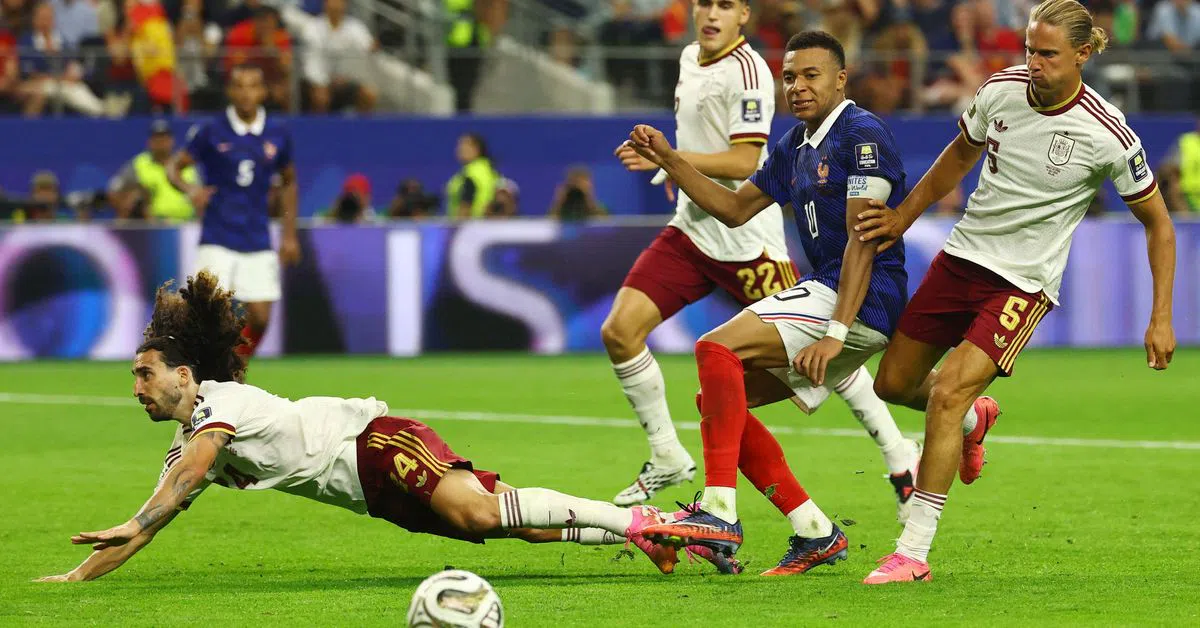
Spain arrived at the Fifa World Cup 2026 semifinal with fewer goals and less noise surrounding them than France. They left Texas looking like the tournament’s most complete team.
A 2-0 victory over Didier Deschamps’ side sent La Roja into their first World Cup final since their title-winning campaign in 2010 and moved the European champions within one match of holding football’s two biggest international trophies simultaneously.
Mikel Oyarzabal converted a first-half penalty after Lamine Yamal drew a foul from Lucas Digne, before Pedro Porro completed a sharp combination with Dani Olmo early in the second half.
The scoreline, however, captured only part of Spain’s superiority.
Les Blues entered the semifinal with the competition’s most feared attack and Kylian Mbappe leading the Golden Boot race. Yet they did not record a shot on target until the 81st minute and finished with only two as Spain denied their forwards possession, space and momentum.
Spain will face either England or Argentina in Sunday’s final at MetLife Stadium in New Jersey. France will meet the loser of that semifinal in the third-place match in Miami on Saturday.
Spain turn possession into a defensive weapon
Spain’s victory was built not merely on keeping the ball, but on controlling where France could receive it.
Their midfield circulated possession patiently, shifted the French block from side to side and accelerated whenever a passing lane appeared. When Spain lost the ball, their counter-press prevented France from releasing Mbappe, Bradley Barcola or Ousmane Dembele into open space.
France’s attackers thrive when matches become stretched. Spain refused to allow that.
Spain’s Pedro Porro celebrates after the match as they advance to the World Cup final. Photo: Reuters
Spain frequently resembled a club side rather than a national team assembled for a short tournament. The positioning was coordinated, the passing options appeared almost automatic and players knew where to move before receiving the ball.
France, by contrast, spent long periods reacting rather than dictating.
The gap became especially pronounced in midfield. Rodri, Fabian Ruiz and Olmo repeatedly created passing triangles around France’s central players, drawing them forward and opening space behind them.
How Spain forced the opening goal
The first decisive moment came in the 22nd minute.
Marc Cucurella delivered a deep cross into the France penalty area. Digne controlled the ball on his chest but, as he attempted to clear it, Yamal moved across him and absorbed the left-back’s follow-through.
Referee Ivan Barton immediately awarded the penalty.
Replays raised a question over whether the ball had struck Yamal’s arm shortly before the foul. However, the contact appeared close to the shoulder line, while the winger’s arm remained tucked within his natural body shape. The penalty decision was therefore allowed to stand.
Oyarzabal struck firmly beyond Mike Maignan for his fifth goal of the tournament.
France had not trailed previously at this World Cup. The goal confronted them with a situation their free-scoring run had largely allowed them to avoid: breaking down an organised opponent while chasing the match.
France’s attacking stars disappear from the contest
France briefly threatened through Barcola in the opening stages when he escaped Porro and advanced towards the Spanish penalty area. His cross was blocked, and the move proved to be France’s only meaningful attack during the first hour.
Thereafter, almost every promising French move broke down before reaching Mbappe.
Michael Olise had an early opportunity to release the captain but failed to execute the pass. That became a recurring problem. Olise, Barcola and Dembele often recognised the right option but overhit, delayed or misplaced the final ball.
Mbappe was increasingly isolated and repeatedly caught offside. With Spain keeping their defensive distances compact, he received few opportunities to turn and accelerate towards goal.
Spain’s Marc Cucurella in action with France’s Michael Olise. Photo: Reuters
Dembele changed positions without influencing the game, while Barcola was replaced by Desire Doue before the hour. Rayan Cherki later came on for Olise, but by then Spain had doubled their advantage.
France’s first effort on target arrived only in the 81st minute. Unai Simon raced from his goal to challenge Mbappe, and the loose ball fell to Doue. His attempted finish lacked power and was comfortably saved.
The chance reflected France’s performance: hurried, imprecise and well below the attacking standard they had established earlier in the tournament.
Deschamps accepted that Spain had been technically superior.
“The players are devastated, but we have to be clear-headed: technically, we were second best,” he said after the match.
Saliba injury deepens France’s problems
France’s difficult first half became worse when William Saliba was forced off with an injury.
The Arsenal defender had acknowledged earlier in the tournament that he had been managing physical discomfort for several months. He had continued playing through minor problems during Arsenal’s domestic and European campaigns before joining the national squad.
His departure disrupted France’s most established central-defensive partnership.
Maxence Lacroix replaced him and earned only his sixth international appearance in one of the biggest matches of his career. Although France avoided an immediate collapse, they lost some of Saliba’s composure, anticipation and ability to progress the ball under pressure.
William Saliba with teammates after sustaining an injury. Photo: Reuters
France fail to act on Spain’s warning
Spain had already come close to a second goal before half-time when Dayot Upamecano denied Ruiz with a last-ditch intervention.
The warning signs became clearer after the interval.
Olmo’s positioning was central to Spain’s control. He repeatedly drifted into pockets behind France’s midfield, forcing defenders to decide whether to step forward and leave space or remain deep and allow him to turn.
The second goal followed the same pattern.
Porro moved inside from the right and exchanged passes with Olmo before finishing past Maignan. The sequence was simple in appearance but was made possible by Spain’s movement and France’s inability to close the central spaces.
At 2-0, Spain no longer needed to chase another goal. They could control possession, manage the tempo and wait for France to take increasingly desperate risks.
France never found a route back.
Rodri controls another major match
At the centre of Spain’s performance was Rodri.
The Spain captain has endured an injury-disrupted period since helping his country win Euro 2024, but his display against France suggested he has returned close to his Ballon d’Or-winning level.
Rodri controlled Spain’s possession through short combinations and longer switches of play. More importantly, he repeatedly anticipated where France intended to attack.
Late in the first half, he stepped across Dembele to regain possession before the forward could advance. Soon afterwards, he moved towards the left to block a Digne cross.
Rodri also dominated the physical contests in midfield, allowing Ruiz and Olmo to operate higher up the pitch.
France’s nearest player, usually Olise, spent much of the match trying to close him down without succeeding. Each failed press created additional space for another Spanish midfielder.
The performance reinforced an enduring truth about knockout football: star forwards often decide isolated moments, but elite midfielders determine the conditions in which those moments can occur.
Rodri ensured France’s forwards rarely received such an opportunity.
Yamal finds his defining World Cup performance
Yamal had entered the World Cup carrying a hamstring problem that restricted his involvement during the opening phase of the tournament.
Spain coach Luis de la Fuente had predicted before the semifinal that the winger’s defining performance was still to come.
Against France, Yamal looked sharper, more aggressive and more willing to attack defenders directly. His run across Digne created the penalty, while his movement repeatedly pushed the French left-back towards his own goal.
Yamal did not score or register the final pass for either goal, but his influence changed how France defended. Digne could not advance freely, and additional cover was often required whenever the teenager received possession.
Spain’s progression without relying entirely on Yamal may prove equally significant.
Spain’s Lamine Yamal in action. Photo: Reuters
Were Spain underestimated?
Spain’s route to the semifinal had attracted less attention than France’s.
Their opening draw against Cape Verde was viewed as a disappointment. Subsequent group victories over Saudi Arabia and Uruguay were not regarded as conclusive evidence that Spain could dominate the tournament’s strongest teams.
Yamal’s injury also removed some of the spectacle expected from one of football’s most marketable young players.
Yet Spain arrived against France having avoided defeat in regulation or extra time since March 2023. A penalty-shootout loss to Portugal in the Nations League final was their only setback during that period.
Their semifinal display brought their qualities together in one match: defensive organisation, midfield control, positional discipline, patient possession and the ability to press immediately after losing the ball.
France had scored freely throughout the tournament. Spain reduced them to hopeful passes, isolated runs and late frustration.
Mbappe’s booking for a challenge on Simon towards the end reflected how completely the contest had moved away from France.
Golden Boot race remains open
France’s elimination from the title race does not end Mbappe’s pursuit of the Golden Boot because he could still play in the third-place match.
The fixture is often regarded as an unwanted obligation, but it can influence individual scoring awards. Just Fontaine scored four times in the 1958 third-place match to finish that tournament with a record 13 goals.
Mbappe and Messi currently lead the 2026 race with eight goals each.
|
Fifa World Cup 2026 Golden Boot standings |
||
|
Player |
Team |
Goals |
|
Kylian Mbappe |
France |
8 |
|
Lionel Messi |
Argentina |
8 |
|
Erling Haaland |
Norway |
7 |
|
Jude Bellingham |
England |
6 |
|
Harry Kane |
England |
6 |
|
Ousmane Dembele |
France |
5 |
|
Mikel Oyarzabal |
Spain |
5 |
Mbappe’s prospects may depend on whether he starts in Miami and how seriously France approach the match. Messi or Kane, meanwhile, could be involved in Sunday’s final, where chances are likely to be harder to create.
Oyarzabal’s penalty moved him alongside Dembele on five goals and added another attacking option to a Spain team whose success has not depended on one scorer.
A minor refereeing oddity
Barton delivered a largely controlled performance, including the immediate penalty decision in the first half.
His most unusual moment came when he attempted to organise a free kick and realised he had entered the field without his vanishing spray. Play was briefly delayed while he collected a spare can from the fourth official.
Referee Ivan Barton is handed his spray bottle before a free-kick. Photo: Reuters
Spain now stand one victory from another golden era
Spain’s 2010 World Cup triumph came at the height of an era defined by Xavi, Andres Iniesta, Sergio Busquets and a style of possession football that changed the international game.
The current side is different. It moves the ball with similar confidence but plays with greater vertical speed and presses more aggressively after losing possession.
Rodri provides the central authority. Olmo and Ruiz find space around him. Porro and Cucurella offer width and energy. Yamal gives Spain unpredictability, while Oyarzabal supplies composure in decisive moments.
Together, they have created a team that can dominate without becoming passive.
France possessed the more celebrated attack and the tournament’s leading scorer. Spain dictated almost every other element of the semifinal.
One side arrived with the competition’s most feared forwards. The other ensured they barely touched the ball in dangerous areas.
That distinction carried Spain back to the World Cup final after a 16-year wait.

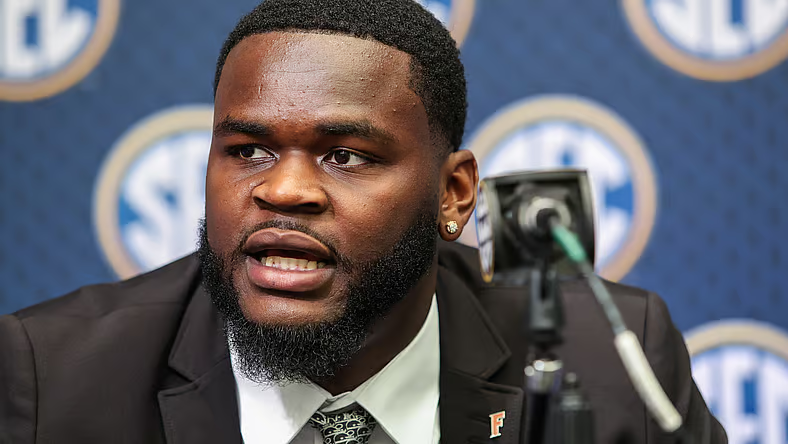
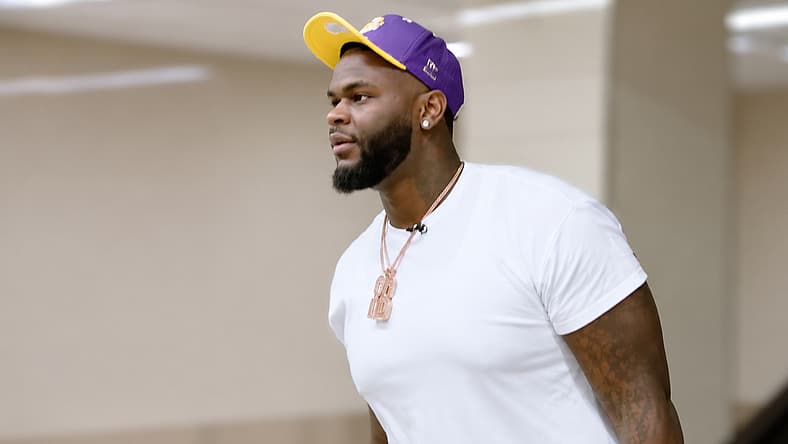
Minnesota Vikings rookie defensive tackle Caleb Banks has yet to take an NFL snap, and he’s already on bust watch. That’s the verdict, according to Bleacher Report, which predicted one bust from each team this week.
Banks is on track to be ready for training camp after a foot injury at the NFL Combine, but that apparently doesn’t matter to Moe Moton.
Vikings’ Recent Draft History Makes the Label Sting More
BR on Banks as a Bust
It was Banks as a bust per Moton’s determination, and he explained, “According to The Athletic‘s Dane Brugler, Caleb Banks broke his foot at the NFL Scouting Combine and was expected to be out until June.”
“ESPN’s Pete Thamel reported that teams received a letter with confirmation of that recovery timeline. The Minnesota Vikings selected Banks with the No. 18 overall pick in the draft, and he’s yet to participate in practice.”
The Vikings announced right after the draft that Banks would heal and be ready for training camp, so it is not surprising that he hasn’t practiced yet. He wasn’t supposed to.
Moton added, “Head coach Kevin O’Connell expects the 6’6″, 327-pound defensive tackle to be ready for training camp (h/t ESPN’s Kevin Seifert). Even if Banks is on the practice field in a couple of weeks, the Vikings probably won’t ramp him up to full speed right away.”
“After missing spring practices, the rookie first-rounder may see limited reps, which may delay his start to the season and push for a prominent role on the defensive line.”
Vikings Fans’ Worst Fear
Banks as a bust — in 2026 or beyond — would be an absolute nightmare. There’s a reason general managers shied away from him during the lead-up to the draft: injuries. A bust season would make the Vikings’ decision-makers look downright silly, as the draft community would utter a collective “I told you so.”
Minnesota’s roster is dying for youthful replenishment, and another bust of any kind would feel like a curse. Teams with a string of poor draft classes — the Vikings — cannot win Super Bowls or even make modest playoff runs because the talent pool is too dry. Free agency and trades can only go so far.
The Los Angeles Rams didn’t win the Super Bowl in 2021 by trading for Matthew Stafford alone; it has consistently drafted well for years. The Vikings must follow suit.
Play Early and Start a Positive Trajectory
Of course, Banks doesn’t have to set the world on fire. That’s not the ask in 2026. He must merely stay healthy, play, and generally look like he belongs on a football field. He will get grace to mature and develop; Banks doesn’t need to reach the Pro Bowl in 2026.
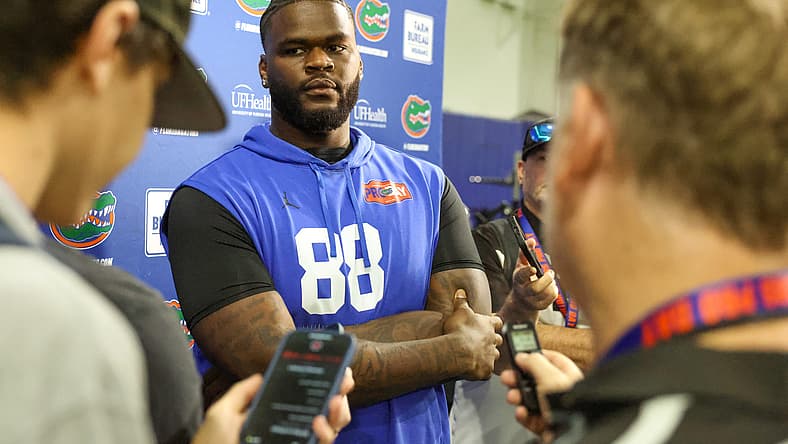
Thankfully, Banks is on track to debut at training camp, which is less than two weeks away. Head coach Kevin O’Connell said about his 1st-Rounder at minicamp in May: “Caleb is doing great. Got some more positive information here as he reported to Eagan in the last couple days, and very much looking forward to him establishing a great plan with our medical staff and the coaching staff.”
“On the coaching staff side, how can we push Caleb from an above-the-neck standpoint to be that much more comfortable when he does get healthy? He gets a great chance this spring and summer to get strong and build himself up.”
There is no evidence to suggest that Banks will be held out of training camp.
“With Caleb, he doesn’t necessarily have to worry about the physical side of it right now, other than just getting healthy. So we can hopefully challenge him to learn multiple spots that coincide with his versatility to align in different impactful spots along the D-line,” O’Connell continued.
“I just think we’re happy with where he’s at, all things considered. We want to have our eyes on that end-of-July date so he can hopefully have a seamless transition into training camp.”
Too Many Draft Gaffes as of Late
Need examples why Banks can’t flop? Minnesota is mitigating these draft misses — players from Round 3 or higher who did not stick around beyond their rookie contracts in the last five years:
- Kellen Mond | QB (2021, R3)
- Chazz Surratt | LB (2021, R3)
- Wyatt Davis | G (2021, R3)
- Lewis Cine | S (2022, R1)
- Andrew Booth | CB (2022, R2)
- Ed Ingram | G (2022, R2)
- Brian Asamoah | LB (2022, R3)
- Mekhi Blackmon | CB (2023, R3)
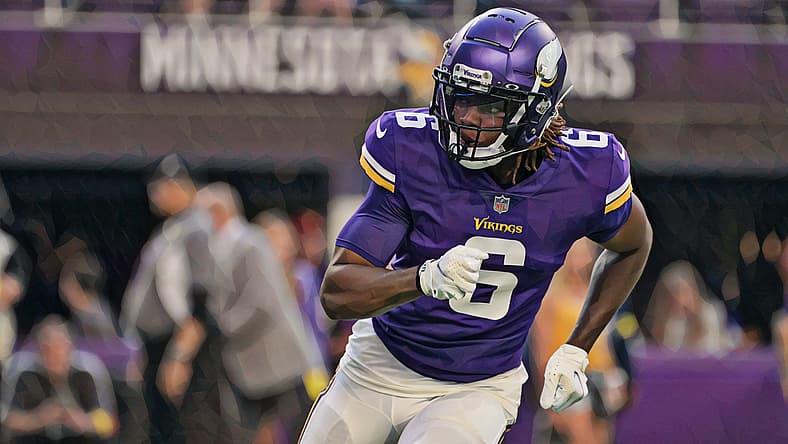
Meanwhile, the verdict is still out on players like J.J. McCarthy and Tai Felton.
The Vikings need a draft win, and Banks is the most recent trial.

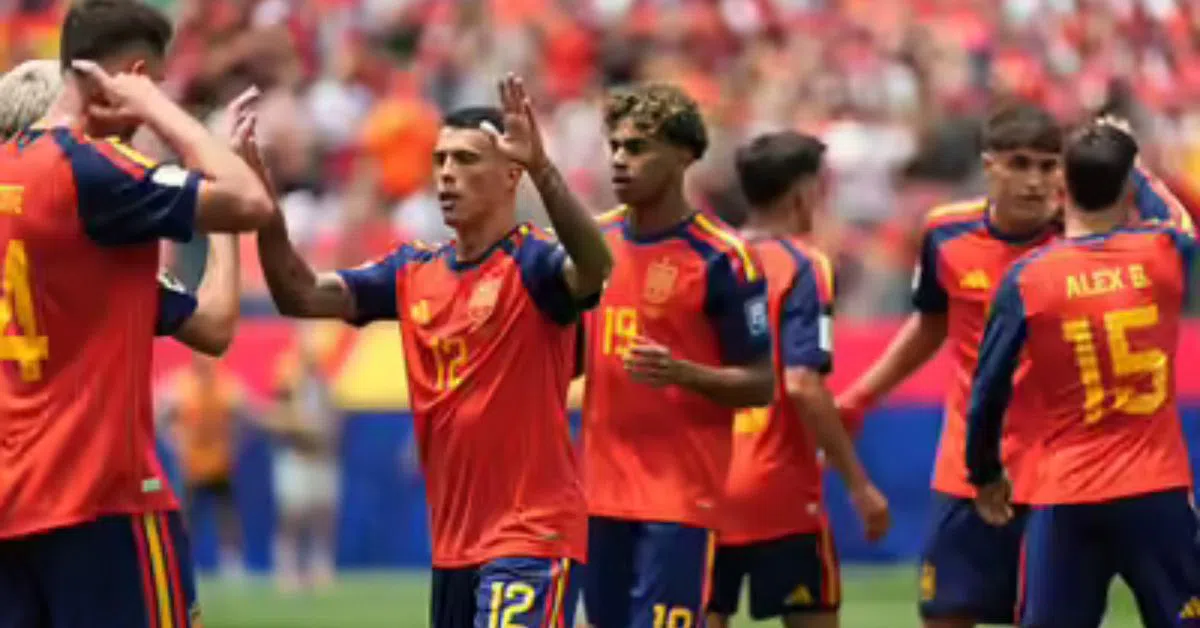
Spain’s quest to add a second FIFA World Cup title to its trophy cabinet is gathering momentum. After an underwhelming start to the tournament, the reigning European champions have rediscovered their rhythm and now stand just one victory away from the World Cup final.
Luis de la Fuente’s side has grown stronger with every match in North America, combining defensive solidity with timely attacking contributions from across the squad. Having overcome Austria, Portugal and Belgium in the knockout stages, Spain now faces fellow European powerhouse France in a blockbuster semifinal.
Here’s a look at La Roja’s journey to the FIFA World Cup 2026 semifinals.
Slow start but strong finish in Group H
Spain opened its World Cup campaign with an unexpected 0-0 draw against Cape Verde despite dominating possession and creating several opportunities.
The stalemate, however, proved to be nothing more than an early setback. La Roja bounced back emphatically by thrashing Saudi Arabia 4-0 before edging Uruguay 1-0 in a tightly contested encounter.
Those victories ensured Spain finished top of Group H without conceding a single goal, setting up a favourable knockout path.
Group Stage Results
-
Spain 0-0 Cape Verde -
Spain 4-0 Saudi Arabia -
Spain 1-0 Uruguay
Austria swept aside in Round of 32
Spain announced itself as a genuine title contender with one of the most dominant performances of the knockout stage against Austria.
Playing with trademark fluidity, De la Fuente’s men controlled possession from the outset and dismantled the Austrian defence in a comprehensive 3-0 victory. The midfield dictated the tempo while Spain’s high pressing prevented Austria from establishing any rhythm.
The comfortable win sent La Roja into the Round of 16 brimming with confidence.
Merino the hero against Portugal
The Round of 16 produced an emotional Iberian derby as Spain faced neighbouring Portugal.
It proved to be one of the tournament’s tightest contests, with chances at a premium throughout the 90 minutes. Just as extra time appeared inevitable, substitute Mikel Merino delivered once again, scoring deep into stoppage time to secure a dramatic 1-0 victory.
Belgium pushed Spain all the way
Spain’s toughest examination came in the quarterfinals against Belgium.
After keeping clean sheets throughout the tournament, La Roja conceded for the first time but refused to lose control of the contest. Belgium repeatedly threatened on the counter, forcing Spain to show another side of their game.
Once again, Merino emerged as the match-winner. Coming off the bench, the Arsenal midfielder netted the decisive goal to seal a 2-1 victory and book Spain’s place in the semifinals.
The result extended Spain’s unbeaten run at the tournament while underlining the squad’s depth and resilience.
Defensive solidity meets attacking flair
Although Spain has dazzled with its possession-based football, its defensive record has been equally impressive.
La Roja kept clean sheets in each of its first five matches before finally conceding against Belgium in the quarterfinals. Rodri, Pedri and Fabián Ruiz have controlled midfield battles, while youngsters Pau Cubarsí and Lamine Yamal have continued to shine on the biggest stage.
Merino’s knack for scoring decisive goals has also become one of Spain’s defining stories of the tournament.
Semifinal showdown against France
Spain’s reward is a heavyweight semifinal clash with France in Arlington.
Didier Deschamps’ side has looked among the favourites throughout the competition, powered by the goals of Kylian Mbappé and Ousmane Dembélé. France booked its semifinal place after eliminating Morocco, setting up another mouthwatering European showdown.
Spain will hope its possession game and defensive discipline can neutralise France’s devastating pace on the counter-attack in what promises to be one of the biggest matches of the tournament.
One win from another World Cup final
Victory over France would send Spain into its first World Cup final since lifting the trophy in South Africa in 2010.
Awaiting in the championship match would be either defending champions Argentina or England, who meet in the other semifinal.
With momentum firmly on their side and confidence growing after every round, La Roja is now just two victories away from reclaiming football’s biggest prize on the world stage.
Sports
Upset Over Team India’s Unfulfilled ‘Promise’, Coach Ryan Ten Doeschate Planning To Quit: Report
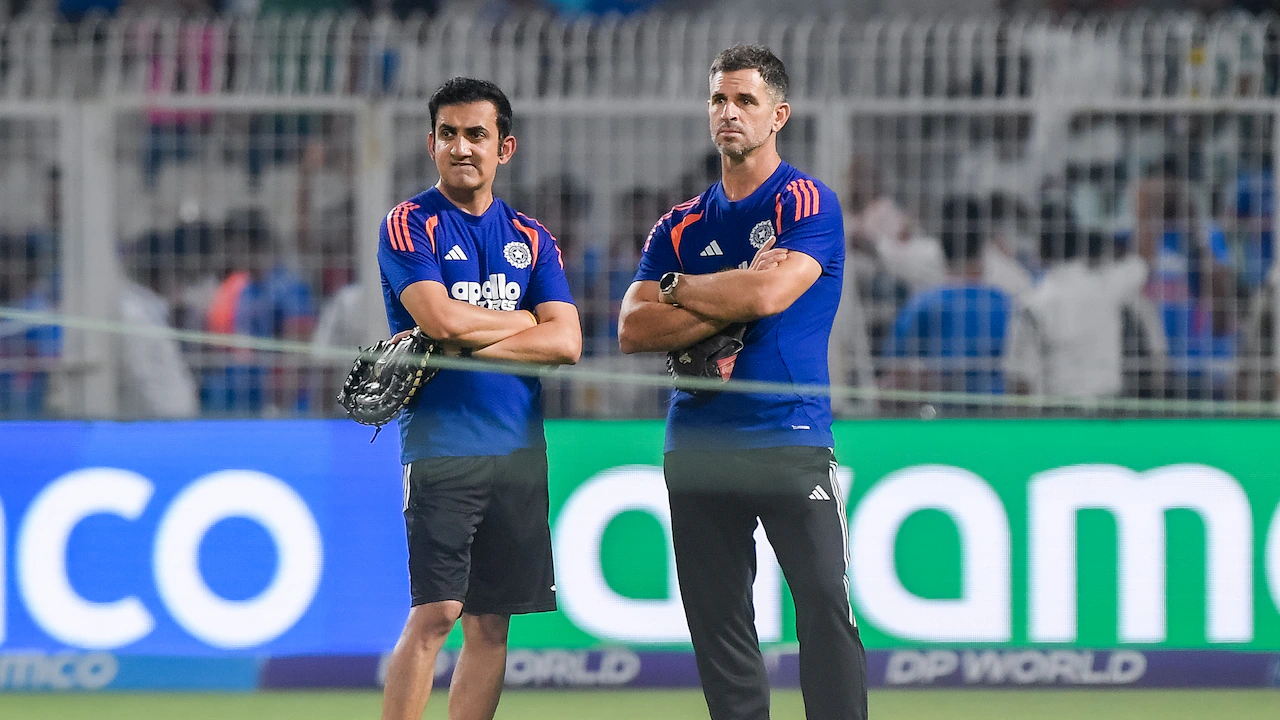
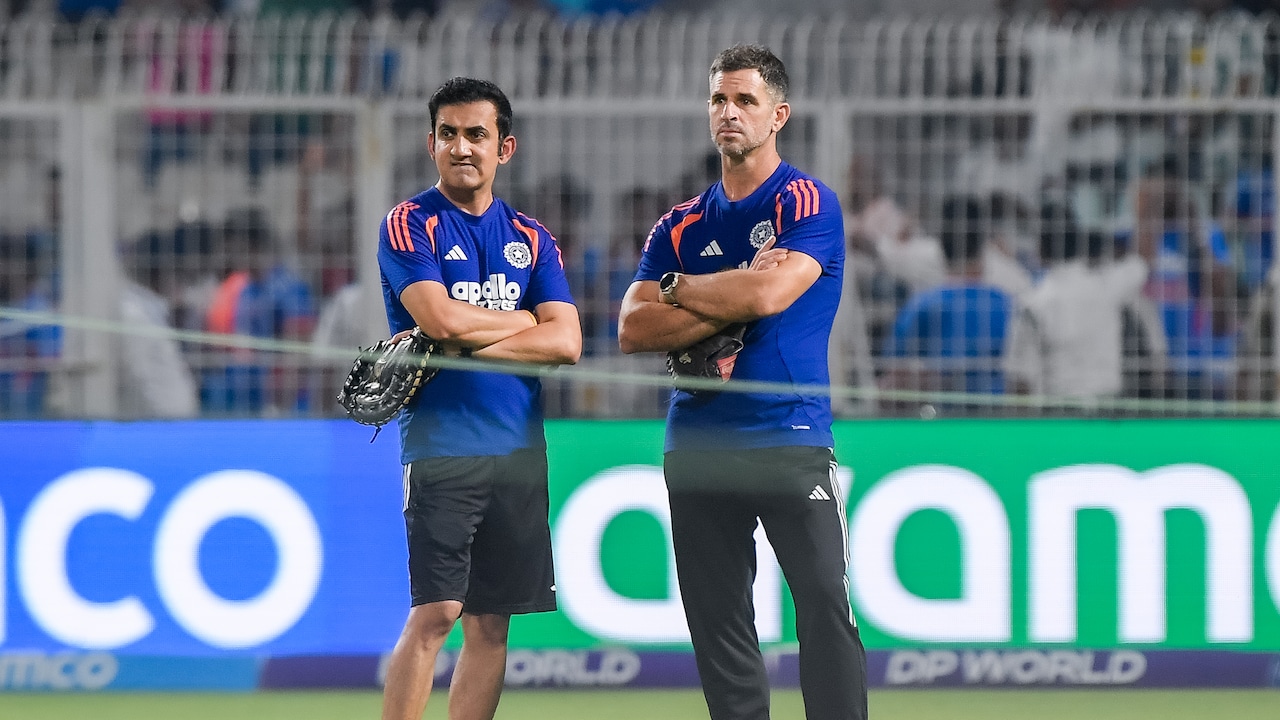
A coaching crisis is expected to emerge in the Indian men’s national cricket team, with reports suggesting that assistant coach Ryan ten Doeschate has informed the management of his decision to leave. Although the Board of Control for Cricket in India (BCCI) is yet to decide whether to allow the Dutchman to leave before the end of his contract, a report has explained how an unfulfilled promise by the Gautam Gambhir-led management led to Ten Doeschate taking this step.
According to a report by PTI, Ten Doeschate came on board as India’s assistant coach after being promised that he would also be given the role of the team’s fielding coach. However, T Dilip, who first became a part of India’s coaching setup under former head coach Rahul Dravid, retained the role even after Gambhir’s appointment to the top position.
Two years since his arrival, Ten Doeschate is still waiting for that promise to be fulfilled. The fact that Dilip was once set to be let go, only to be reinstated as the team’s fielding coach, has further added to the former Netherlands batter’s disappointment.
“You have Sitanshu Kotak as the batting coach, and there’s Gauti (Gambhir) himself to look after the batters. Morne (Morkel) is in charge of the pacers, and Sairaj (Bahutule) looks after the spinners. When Tendo (his nickname) was brought on board, he was promised the fielding coach’s job,” a senior BCCI source told PTI on the condition of anonymity.
“Dilip was supposed to be removed along with Abhishek Nayar (assistant coach), Soham Desai (S&C coach), and Arun Kanade (masseur) after the 2025 Champions Trophy. However, a strong recommendation for Dilip came from a senior player, earning him a one-year extension. As a result, Tendo did not actually have a specific domain role. He is a fantastic coach who hasn’t been utilised properly because Dilip is there,” the source added.
It has also been reported that Dilip was originally supposed to leave the support staff after the 2025 Champions Trophy. The board had decided to part ways with him, as well as assistant coach Abhishek Nayar, strength and conditioning coach Soham Desai, and masseur Arun Kanade. However, Dilip reportedly signed a one-year extension after a senior member of the Indian squad advocated for him.
“He is an outstanding coach, but his expertise hasn’t been fully utilised because the fielding coach’s position remains occupied,” the source further said regarding Ten Doeschate.
At present, it appears that only one of Dilip and Ten Doeschate can continue to remain a part of Gambhir’s coaching staff due to the conflict over the fielding coach’s role.
Featured Video Of The Day
FIFA World Cup 2026 | Argentina Fans Sing & Dance After Dramatic Comeback Against Egypt
Topics mentioned in this article
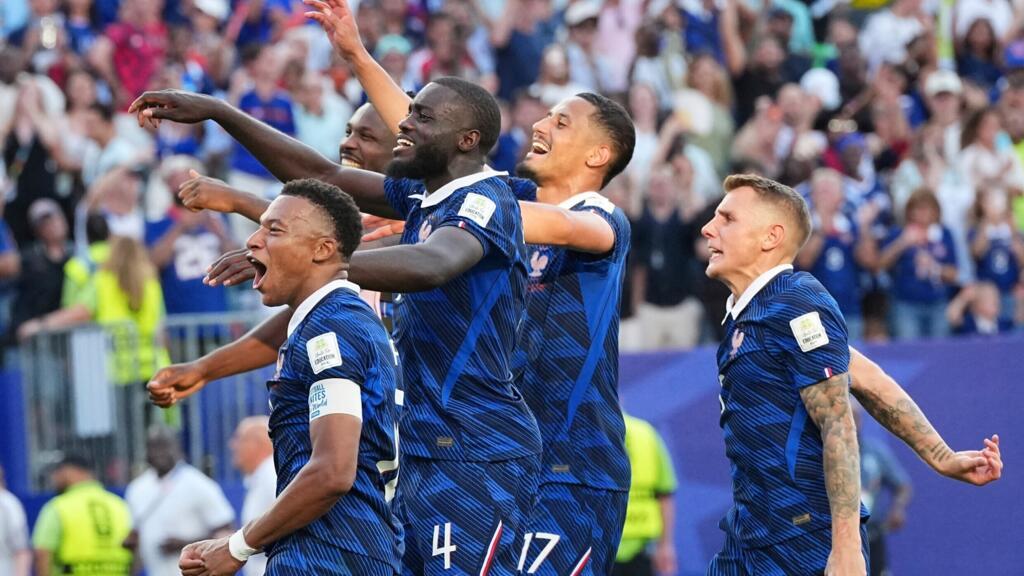

The French team were defeated by Spain (2–0) in the World Cup semi-final. France’s dream of reaching a third consecutive final – a feat achieved by only two other nations before them – has come to an end.
Argentina face England in the second semi-final. On the transfer front, Manchester United are busy with two new signings. Mason Greenwood is no longer a Manchester United player. Tadej Pogacar has once again demonstrated his dominance in the Tour de France.
Sports
Argentina vs England: Why FBI labelled this FIFA World Cup semi-final the ‘highest-risk’ match | Football News
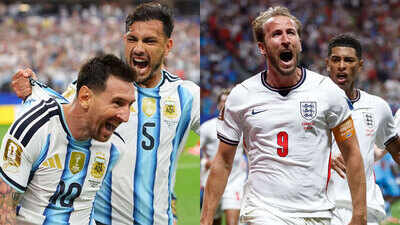
England’s FIFA World Cup semifinal against Argentina has been designated the highest-risk fixture of the tournament, with the FBI, FIFA and local law enforcement rolling out extraordinary security measures as one of football’s fiercest rivalries takes centre stage in Atlanta.As per reports, officials from the FBI, FIFA and the Atlanta Police Department met earlier this week to assess potential threats surrounding Wednesday night’s blockbuster clash at the Mercedes-Benz Stadium. The concern extends beyond football, with decades of political tensions and historic flashpoints raising fears that emotions could spill over among supporters.To minimise the risk of confrontations, England and Argentina fans will enter the stadium through separate gates. However, organisers have confirmed there will be no segregation once inside the venue, where supporters will be seated together due to the widespread use of ticket resale platforms.Atlanta Police have also deployed additional personnel around the stadium, team hotels and entertainment districts.“As Atlanta prepares to host an upcoming FIFA World Cup semi-final match… additional personnel and resources are already deployed… to help ensure a safe and enjoyable experience for everyone,” the department said in a statement.ALSO READ: Falklands at the epicentre of football’s bitter rivalry
A rivalry forged by war and football
The rivalry between England and Argentina stretches far beyond the pitch and remains deeply intertwined with the 1982 Falklands War, which claimed 907 lives after Argentina invaded the islands before Britain regained control.Political tensions resurfaced this week when Argentina’s foreign minister reiterated the country’s claim over the Falkland Islands, a move swiftly rejected by British Prime Minister Sir Keir Starmer’s government.The conflict has also found its way into football culture during the tournament. Argentina’s players have repeatedly celebrated victories by singing songs referencing the Falklands, known in Argentina as Las Malvinas.However, Argentina coach Lionel Scaloni attempted to cool the rhetoric ahead of the semifinal.“The message to the Argentine people is that this is a soccer match. We’re going to face a great team with a great coach, but it is just a soccer match, nothing more than that,” Scaloni said.
From the ‘Hand of God’ to Beckham’s red card
Few football rivalries carry as much baggage as England versus Argentina.Their most iconic meeting came at the 1986 World Cup, when Diego Maradona scored the infamous “Hand of God” goal before producing the stunning solo effort widely regarded as the greatest goal in World Cup history.Maradona later admitted using his hand and described the incident as “some sort of symbolic revenge against the English” for the Falklands War.The hostility predates 1982. During the 1966 World Cup quarterfinal, England manager Alf Ramsey famously labelled Argentina’s players “animals” after a fiery encounter that saw captain Antonio Rattin sent off and escorted from the field by police.The rivalry flared again at France 1998 when David Beckham‘s red card against Diego Simeone contributed to England’s penalty shootout defeat.With history, politics and football colliding once again, authorities are taking no chances. For the FBI and tournament organisers, England versus Argentina is not just another World Cup semifinal — it is the most sensitive fixture of the competition, demanding an unprecedented level of security to ensure that one of football’s greatest rivalries remains confined to the pitch.
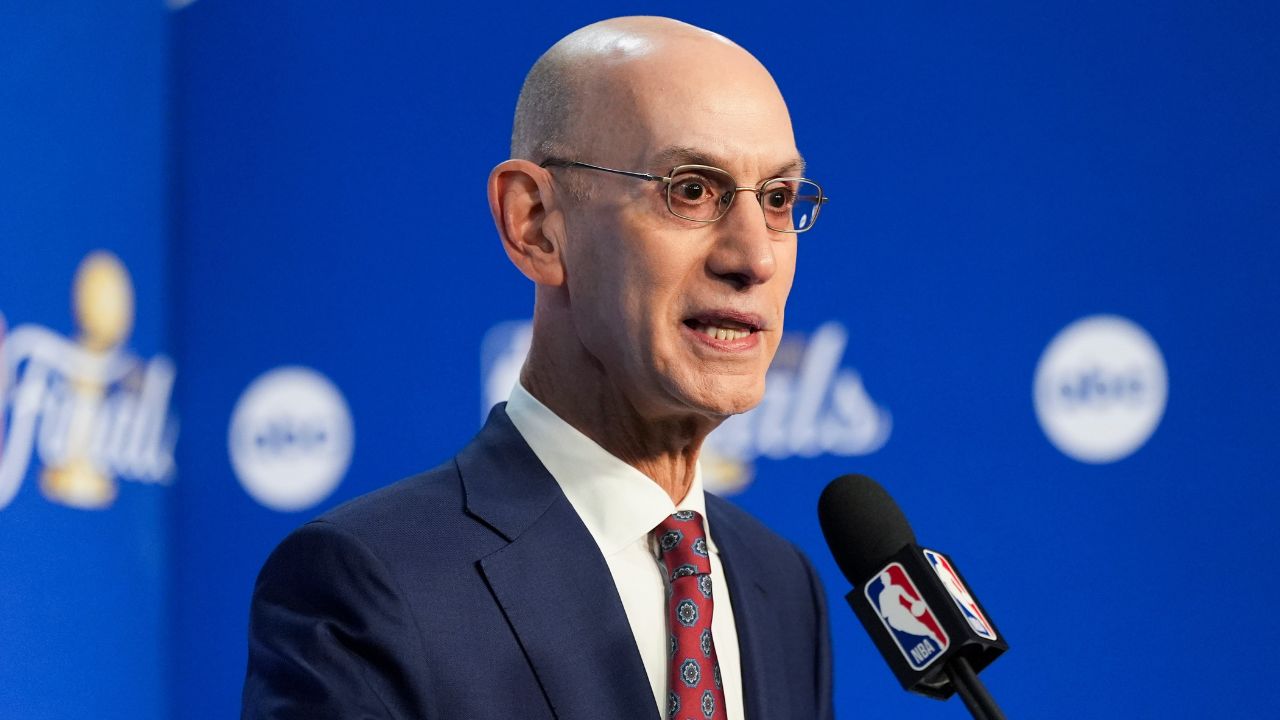
The words everyone was hoping to hear and NBA commissioner Adam Silver is doubtless eager to say remain unspoken.
“My timeline remains this summer,” said Silver when asked if and when he was expecting a resolution to the question of whether the Clippers engaged in salary-cap circumvention when signing Leonard to a new contract extension in 2023 and to what degree Leonard was complicit if any did take place.
“We all have an interest in wrapping this up and I’m hopeful this will wrap up this summer.”
So sometime before training camp starts in late September, then?
There had been some faint hope that the league’s meetings, which provided Silver his first scheduled public forum since he last discussed the issue at the NBA Finals back on June 3, would act as natural deadline to resolve the now 10-month investigation. It was launched after podcaster Pablo Torre did a series of episodes reporting that the Clippers allegedly had directed $28 million to companies affiliated with Leonard over and above the three-year, $149.5-million deal he signed in 2024 via a fake sponsorship agreement.
As it has dragged on, frustration on all sides is beginning to mount.
“My understanding is (the law firm hired by the league to do the investigation) is now in the process of going through the information they’ve gathered and drawing conclusions from it,” said Silver.
“At the end of the day I’m the commissioner of this league, I’m the one who engaged them, so sure, I could tell them to stop (the investigation) … it’s going on longer than I would have hoped, there’s no question about that … (but) it’s a long process and it is complex. I understand why people who haven’t lived in these kinds of investigations are frustrated … but we want to respect everyone’s rights here.”
In the meantime, league business remains stalled.
Specifically, the previously agreed upon trade, where the Raptors hope to send Brandon Ingram, Gradey Dick and multiple draft assets to the Clippers in return for Leonard, remains on hold.
There is still optimism the deal will be completed in its original form. However when it was made clear that if any punishment from the investigation was assigned to Leonard — a lengthy suspension, for example — it would be a risk the Raptors would have to accept, Toronto then hit pause on the trade.
Silver emphasized that it wasn’t the league that paused the trade. He also stressed that the idea that Leonard would have to face potential consequences whether he was traded or not was not a secret.
“All I’ll say is the issues were well-known to the teams,” said Silver. “Even if you weren’t a sophisticated NBA team, the notion that … somehow all those issues would go away by virtue of him being traded, I just don’t find that credible … questions were asked and answered quickly by the league office.”
An interesting wrinkle emerged Tuesday when The Athletic reported that the investigation has been expanded to look at another potentially fraudulent endorsement deal as well as some improper expenses paid to Leonard by the Clippers.
There has been a lot of speculation that something must have changed between when the Raptors and Clippers began sharing the details of the trade with the league in late June — at which time the Raptors, per sources, were comfortable with the risk they were taking based on the due diligence they had done — and the team’s decision to pause the trade eight to 10 days later.
But according to a source close to the situation, the Raptors — having engaged with the league multiple times in the leadup to the trade — were comfortable going ahead with the deal until the NBA made clear on the trade call to finalize it that the risk of something happening to Leonard would have to be borne by the Raptors.
It was a more emphatic message than had been delivered during the more preliminary discussions that had taken place and the Raptors felt like there was no need to rush the deal until the full facts on the investigation were available. So they decided to wait, confident that they could finalize the trade at a later date. Training camp, after all, doesn’t open until Sept. 28.
All parties, meanwhile, seem to be going about their business. Leonard — who is now represented by a new agent and whose uncle, Dennis Robertson, hasn’t been as front and centre in his business dealings, per sources — was in Las Vegas to take in the Raptors’ Summer league game from a courtside seat Monday night, exchanging greetings with Raptors GM Bobby Webster and former Raptors part-owner Larry Tanenbaum and his wife Judy.
Similarly, Ingram and Dick have been in Vegas and around the Clippers. Per a source, the players involved in the trade have been advised to look for places to live and otherwise move ahead as if it were going to be completed.
Could the news that the investigation had been expanded — as reported by The Athletic — have been a factor in the league being more explicit about the risks facing the Raptors if they agreed to the trade?
It’s a possibility, but what is perhaps more likely is that when the trade for Leonard had shifted from a proposal to an agreement, the league felt the need to make it clear that the NBA would not be responsible for solving any issues between the Raptors and the Clippers once the deal was finalized
Some insiders speculated that what the league office was really trying to avoid was a situation similar to what happened when the Miami Heat acquired Terry Rozier from the Charlotte Hornets for a first-round pick along with Kyle Lowry at the trade deadline in 2024. Rozier was later arrested and indicted on gambling charges related to NBA games, and didn’t play for the Heat last season. There were questions about what the Hornets or the NBA knew about Rozier being under investigation when the trade happened. The Heat eventually had a second-round pick returned to them as compensation.
The thinking is the league went the extra mile to make sure all parties knew in this instance that trading for Leonard meant inheriting some risk.
How big a risk remains the question.
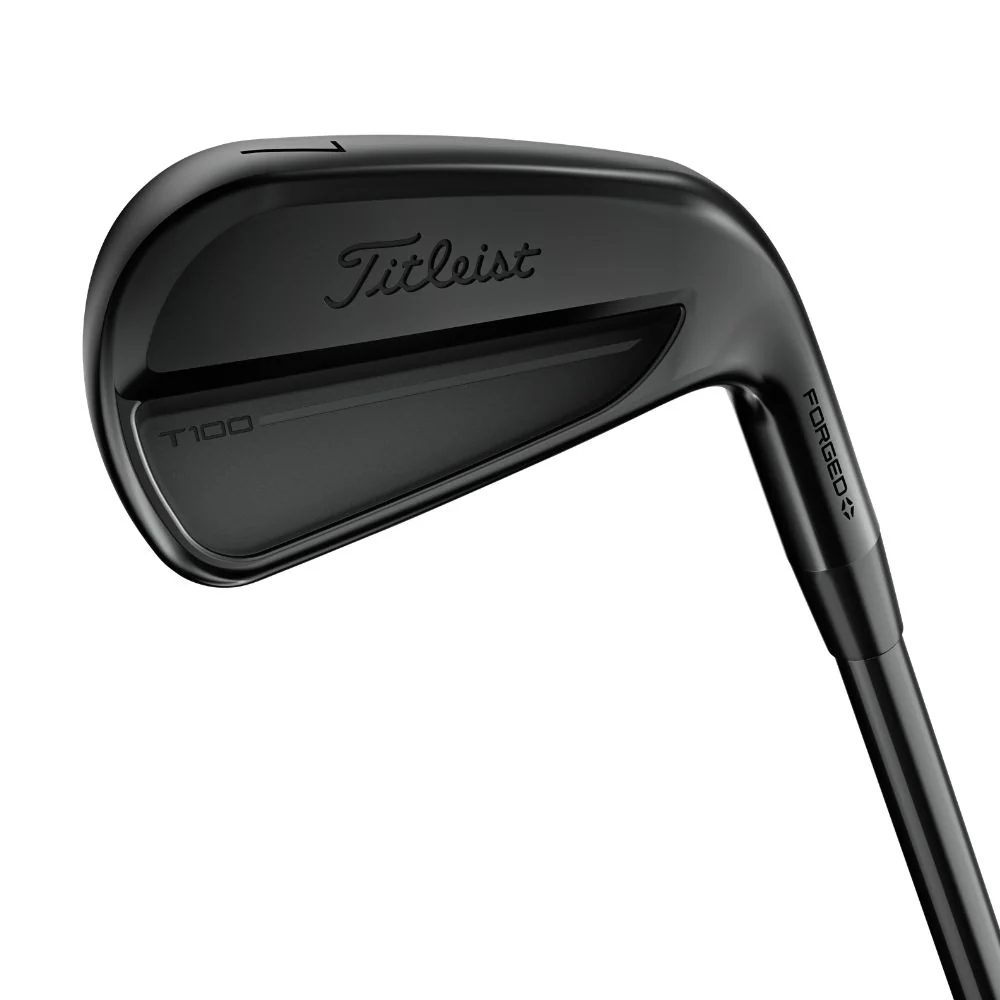
Few things can turn heads on the first tee like an all-black finish, and if that sounds like your kind of vibe, you’re going to love the latest drop from Titleist.
The popular T100, T150, T250 and T350 Titleist irons are now available for pre-order in a gorgeous Black Vapor finish. The deeper, darker look is achieved via a vapor-deposition process that bonds a uniform coating to every clubhead and is specially engineered to last.
The all-black look is complemented by True Temper AMT Tour White Onyx shafts, finished with a matching onyx powder coat, and paired with Golf Pride Tour Velvet Blackout grips.
Unsure about which T-Series iron model would best suit your game? Here’s a quick description of each option:
T100: A fully forged modern Tour iron with a compact shape. This model emphasizes precision and feel.
T150: A faster player’s iron, this model offers a bit more speed and launch than the T100, along with a slightly larger yet still compact profile.
T250: Speed, launch and forgiveness in an all-steel package, with a thicker topline and wider sole than the T100 and T150.
T350: This game-improvement model offers maximum distance, forgiveness and speed.
One of the most appealing aspects of Titleist’s T-Series irons is the fact that the models are specifically designed for seamless blending — a strategy employed by many of the manufacturer’s Tour staffers. Which mix would work best for your game? Find out by scheduling a fitting at your local True Spec.
To browse each iron’s specifications — and place your pre-order! — click on the links below.
Pre-order your limited-edition Titleist T-Series Black Vapor irons

View Product

View Product

T-Series irons, now available in an Oil Can Finish for the first time ever. Made popular by Vokey Design, this rich copper finish uses a PVD treatment for lasting durability—delivering a strikingly pure look that stands apart in your bag.
View Product

T-Series irons, now available in an Oil Can Finish for the first time ever. Made popular by Vokey Design, this rich copper finish uses a PVD treatment for lasting durability—delivering a strikingly pure look that stands apart in your bag.
View Product
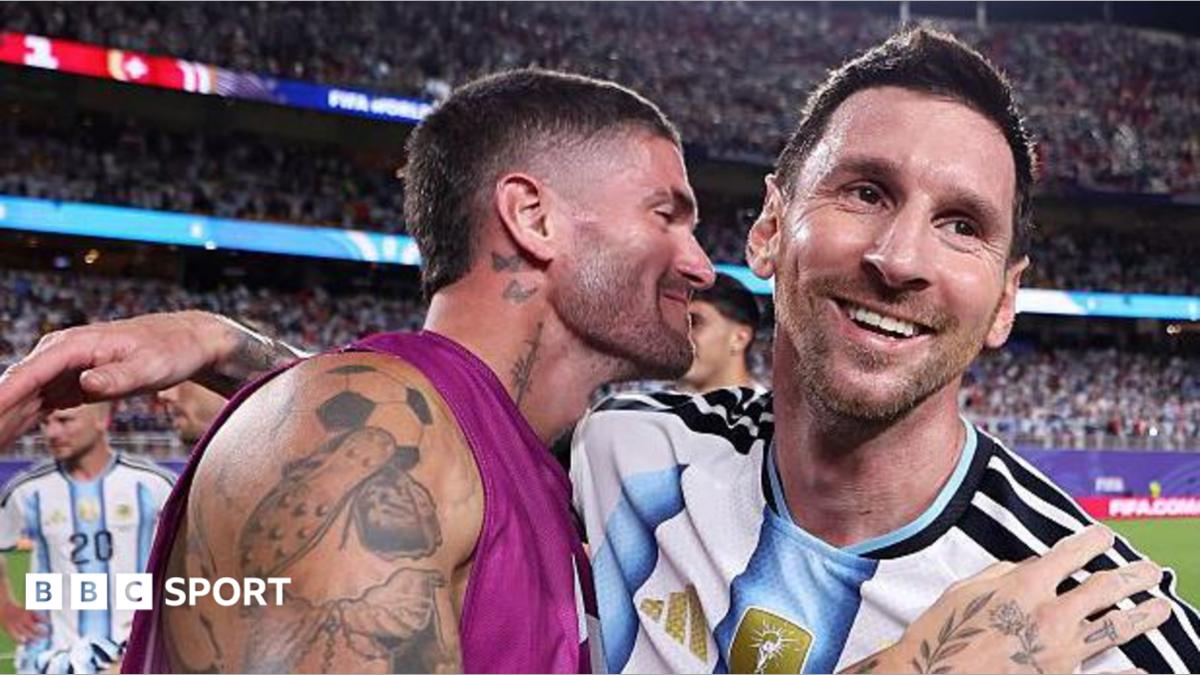
Rodrigo de Paul has become, in this Argentina squad, what Jose Manuel Pinto once was at Barcelona, or Luis Suarez later became: the team-mate with whom Messi instantly feels at home.
Their bond was forged on international duty. Until then, the midfielder’s only connection to Messi had been asking for a photo after a Valencia–Barcelona match, which he proudly posted on social media.
One afternoon, he noticed Messi leave training alone, looking subdued. Concerned, De Paul waited about 40 minutes before knocking on his door.
“Fancy a mate and a game of truco?”
A friendship began, with its own strict etiquette. Mate, the drink, together every morning in De Paul’s room. In order of arrival, Leo first, then other members of the squad. If they got up too early, they have to wait for the moment to get to De Paul’s room, nobody can jump the routine.
De Paul sometimes calls Messi ‘El Pequeno’ (the little one), even though he is the oldest in the room.
He needles him, treats him like a normal guy rather than a monument, because that is what Messi actually more often than not wants: to be Leo, not Messi. De Paul knows him well enough to sense when to leave him alone, too.
Walking out to the pitch, Messi leads, De Paul at his side, the rest of the squad fanning out behind almost in a wedge – like a street gang protecting its leader.
For many of this group Messi was never simply a team-mate first, he was the childhood idol on television, the reason some of them picked up a ball at all.
The whole squad wears the same boots, the Adidas Adistar Messi. For his birthday in June, the players wore a T-shirt printed with a photo of themselves alongside Leo from some point across his years with the national team.
Sports
England vs Argentina: Falklands at the epicentre of football’s bitter rivalry | Football News
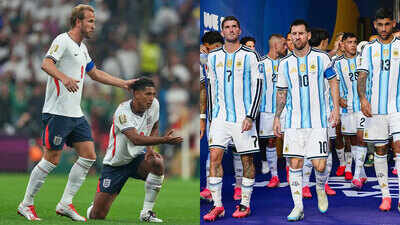
LONDON: The FBI has labelled England’s semifinal with Argentina in Atlanta on Wednesday night as the highest risk match due to the fierce and enduring rivalry between the two sides.Forty years ago when Argentina beat England 2-1 in the Mexico’86 quarterfinal at the Azteca Stadium, the English were incensed. “He cheated,” England goalkeeper Peter Shilton said. “He didn’t show any remorse.”Argentina’s first goal, scored by Diego Maradona, came when he punched the ball past Shilton into the net with his fist. Despite England’s protestations, the referee claimed he didn’t see it and allowed it. Minutes later, Maradona scored the greatest World Cup goal of all time. Argentina would later go on to lift the World Cup, and Maradona would describe his first England goal as “ the hand of God”.Maradona later admitted in his autobiography that he indeed used his hand and said it was “some sort of symbolic revenge against the English” for the 1982 Falklands War, in which 649 Argentinians and 255 British troops died. Of the Argentinians killed, 323 were onboard the ARA Belgrano, the Argentine naval ship, when the then UK PM Margaret Thatcher authorised its sinking.“All I wanted to do was honour the memory of the dead,” Maradona said. “To wipe England off the world map – the world football map, that is.”On Wednesday, Maradona’s son, Diego Sinagara, urged fans to remember those who died, telling Spanish newspaper Marca: “For all Argentinians and Maradona fans, it will be a different kind of match, one that brings to mind everything about the Malvinas (Falklands War) and all our brothers who died there…”Last week the Argentina national football team released a video showing players celebrating in their dressing room with Argentina’s World Cup fan anthem La Cuarta Estrella, which includes the lyrics: “I am Argentine from cradle to grave, for the Malvinas, for Diego.”“Las Malvinas” is the Argentine name for the Falkland Islands. This week Argentina’s foreign minister Pablo Quirrno called Falklands Islanders an “artificially implanted” population in an essay in Argentinian newspaper La Nacion, demanding Britain enter talks to hand over the territory. He claimed the 2013 referendum was illegitimate.The UK Prime Minister’s official spokesman retorted: “The Falkland islanders are British with a right to determine their own future. The UK’s position is clear. The islanders have repeatedly expressed their wish to remain a British overseas territory.”This bitter rivalry, however, extends to even before the Falklands War. In 1966, when the two sides met in the World Cup quarterfinal at Wembley, Argentinian players used violent tackles, spitting, hair-pulling, and severe intimidation tactics. England manager Alf Ramsey famously branded them “animals” and Argentina captain Antonio Rattin, who died at the weekend, was sent off for dissent for arguing with the referee. The police had to be called to remove him from the pitch.The two sides met at France ’98 when David Beckham was given a red card kicking Argentina midfielder Diego Simeone. Simeone later admitted he had done everything possible to provoke the England midfielder. England lost on penalties. “English players are more naive. We look for ways to destroy him,” Roberto Perfumo, former Argentine captain, told the Guardian in 2002.Whilst Argentinian football culture appears to be all about whipping up anti-English sentiment, football was ironically introduced to Argentina in 1867 by the Hogg brothers who were Englishmen from Skelton, Yorkshire.Pubs across Britain are getting decked out for the biggest night of the year with flags ready. England fans are confident England can win. They also see the match as revenge for Maradona’s ‘Hand of God.’
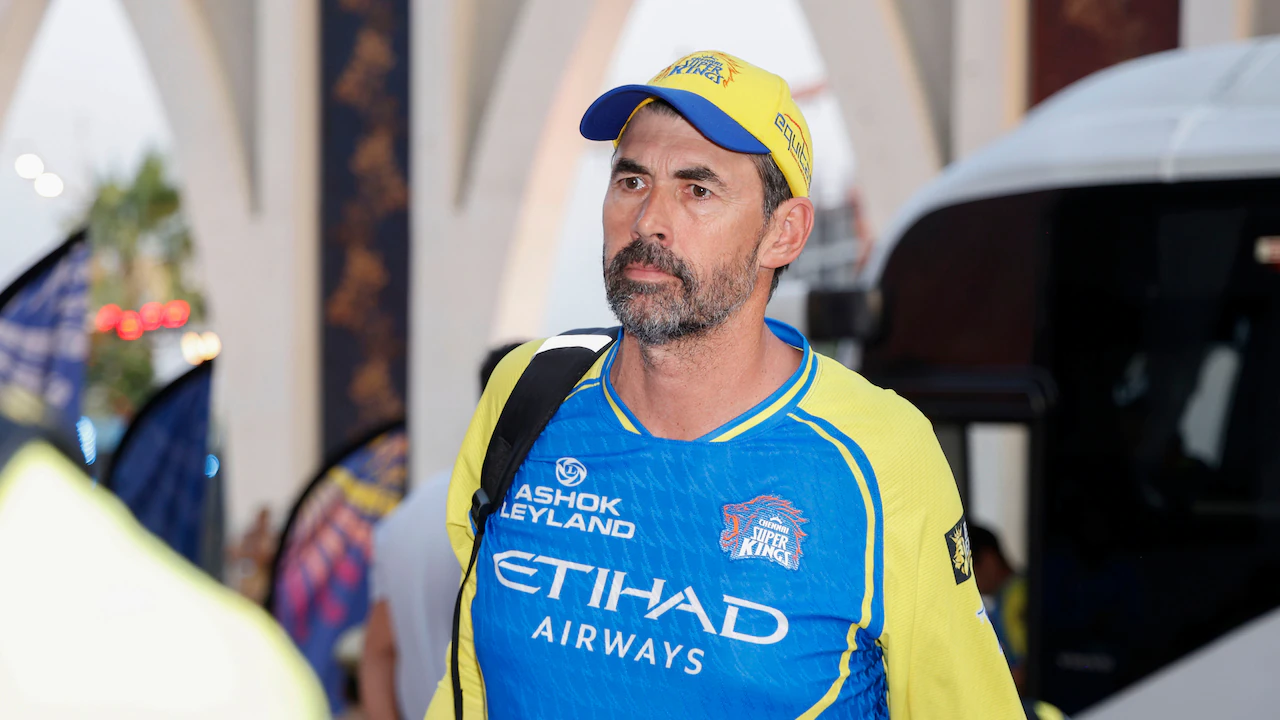
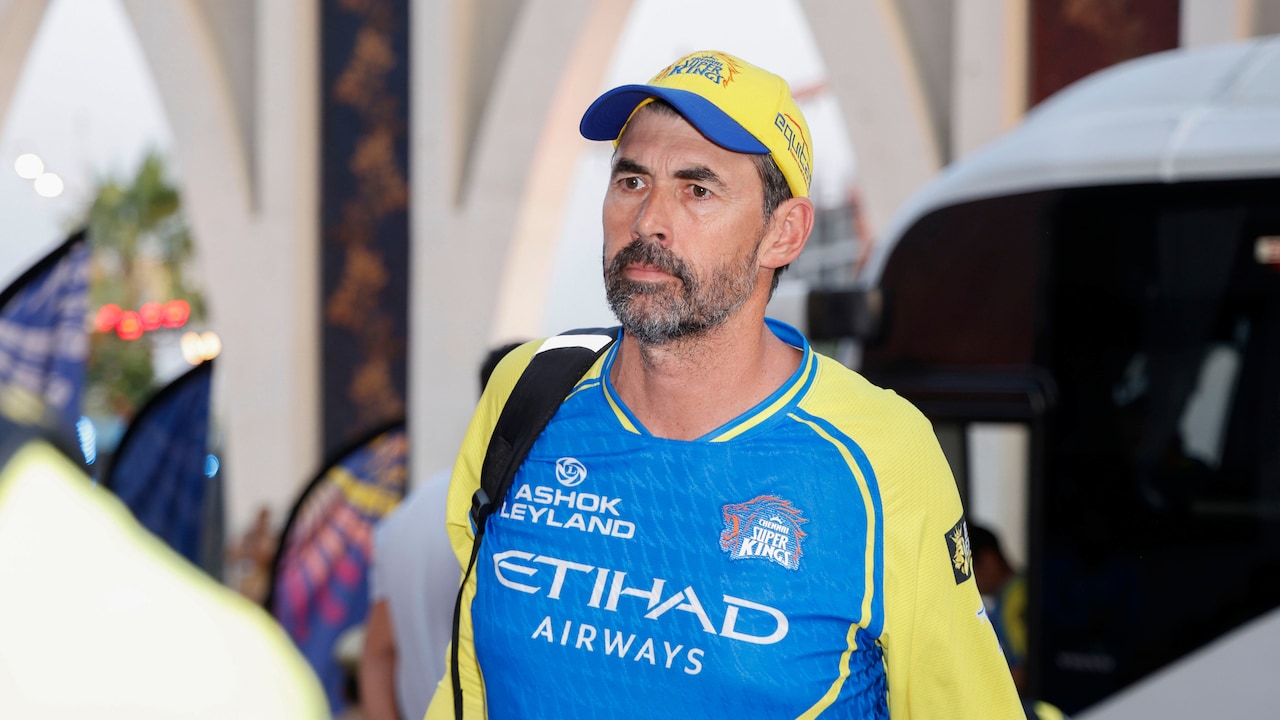
Chennai Super Kings have decided to part ways with head coach Stephen Fleming, but he may not be the only change in the team management ahead of IPL 2027, according to a report by Cricbuzz. The report claimed that bowling coach Eric Simons could also lose his job after CSK finished eighth with just 6 wins in IPL 2026. While there was no update on batting coach Mike Hussey’s situation, the report added that the franchise seems to be headed for a major shake-up. Even the decision over Fleming came as a slight surprise after reports that the former New Zealand captain may end up staying as head coach.
However, it all reportedly changed after Texas Super Kings finished at the bottom of the Major League Cricket (MLC) points table with 7 defeats in 10 matches. Fleming was the head coach of the MLC team as well, and the report claimed that while tensions had been rising over time in CSK, the poor show in the US proved to be the last straw for Fleming.
Announcing the decision, CSK owner Rupa Gurunath paid tribute to Fleming’s contribution to the franchise over nearly two decades. “Stephen Fleming has been the heartbeat of our coaching unit for almost the entire journey of this franchise. For nearly two decades, he has helped shape our identity, vision, and pursuit of excellence. On behalf of everyone at the Super Kings franchise, we extend our deepest gratitude for his unwavering commitment, passion, and leadership. While our journey together on the field comes to a close, he will always remain an integral part of the team’s legacy,” she said.
CSK Managing Director Kasi Viswanathan said Fleming’s influence extended well beyond on-field results, crediting him with establishing the culture that became synonymous with the franchise.
“From the earliest days of this journey, Fleming helped define not just how we played, but what we wanted to be as a franchise. He built a culture rooted in consistency, humility, and putting the team first. His ability to understand people and bring out the best from individuals across the team has been one of his greatest strengths. His influence extends far beyond the boundary, and we are proud to have shared this remarkable journey together,” Kasi stated.
Reflecting on his departure, Fleming described his time with CSK as the defining chapter of his coaching career and thanked the franchise for nearly two decades of shared success.
“Eighteen years is a lifetime in sport, and I leave with nothing but gratitude. My time with Chennai Super Kings has been the privilege of my coaching career. I am proud of everything we have achieved. Together, we celebrated unforgettable victories, overcame difficult moments, and built memories that will stay with me forever. CSK will always be close to my heart, and I will be cheering the team on for years to come,” Fleming said.
(With IANS inputs)
Featured Video Of The Day
UK & Norway PM Sport Football Jerseys Ahead Of England, Norway Quarterfinal Clash
Topics mentioned in this article

Solo Bitcoin Miner Bags $200k Solo Block with Budget Bitaxe Rig
Caleb Banks Lands a Brutal Bust Prediction

Meta used AI to target staff with medical conditions & pregnancies for layoffs, lawsuit alleges


-

 Fashion6 days ago
Loro Piana Fall 2026 Enters Houston’s Art Scene
-

 Fashion4 days ago
Weekend Open Thread: Nutriplenish Leave-In Conditioner
-
 Sports6 days ago
2026 Genesis Scottish Open Thursday TV coverage: Round 1
-

 Sports5 days ago
Super Eagles star Moses Simon opens up on Liverpool transfer regret
-

 Tech6 days ago
Character.AI enters the microdrama arena with its own productions, but there’s a twist
-

 News Videos11 hours ago
XRP BOMBSHELL… XRP OMBOARDED FOR TRANSACTIONS!!!
-

 Tech1 day ago
Get Your ESP32 Sunny Side Up With This Solar Dev Board
-

 Tech10 hours ago
Dark Secrets Emerge When Jailbreaking LLMs
-

 News Videos6 days ago
Crypto Just Entered Its Most Important 6-Month Candle (Could Decide Everything!)
-
 NewsBeat6 days ago
Major update after Huntingdon train attack as man enters plea
-

 News Videos2 days ago
how to make coin bank box with cardboard #scienceproject #money #diy #shorts
-
 Sports7 days ago
39-year-old Djokovic wins five-hour thriller to enter Wimbledon semis | Other Sports News
-

 Tech6 days ago
Level Infinite Launches Gangstar Mirage City in India with Pre-Registrations
-
 Tech1 day ago
Cloudflare Precursor Watches Your Mouse and Keyboard To Decide If You Are Human
-

 Tech6 days ago
Entra passkey enrollment vishing targets Microsoft 365 users
-
 Crypto World6 days ago
DeFi Dashboard Zapper to Shut Down After 7 Years
-
 Crypto World6 days ago
Mark Cuban-Backed DeFi Dashboard Zapper Shuts Down After 7 Years
-

 Tech6 days ago
Claude’s New Reflect Dashboard Wants To Help You Log Off Of Claude
-

 Crypto World7 days ago
Microsoft Cuts AI Bill by Replacing OpenAI and Anthropic in Software Products
-

 Crypto World6 days ago
Fed minutes June 2026: officials split on rates
You must be logged in to post a comment Login