The new flagship headphones blend Bose audio and big bass.
James Trew for Engadget
RATING : 7.8 / 10
Pros
Solid ANC
Well-balanced sound
Unique bass experience
Cons
Dated design
Heavy for prolonged use
Skullcandy has spent years carving out its own niche in the headphone market. While brands like Sony, Bose and Sennheiser were fighting over which had the best sound quality and noise cancellation, Skullcandy leaned into its reputation on one thing above all else: bass. The Crusher line, with its signature haptic bass system, has always been unapologetically over the top and front and center for the brand.
Advertisement
But times change, and there are hints that the company wants to grow out of that niche. The new flagship Crusher 1080 headphones come with audio credentials borrowed from Bose. Specifically, they carry Bose’s QuietControl active noise cancellation (ANC), TrueSpatial directional audio and WaveForm tuning. This isn’t the first Skullcandy headphone to be part of the Bose Sound program, but it’s the first with such deep integration.
At around $270, though, Skullcandy is entering a fiercely competitive segment where Sony, Bose and Sennheiser already have pricier, well-established favorites. That means the Crusher 1080 has to be more than just fun — it has to be genuinely good. Thankfully, for the most part, it is.
Advertisement
Hardware and features
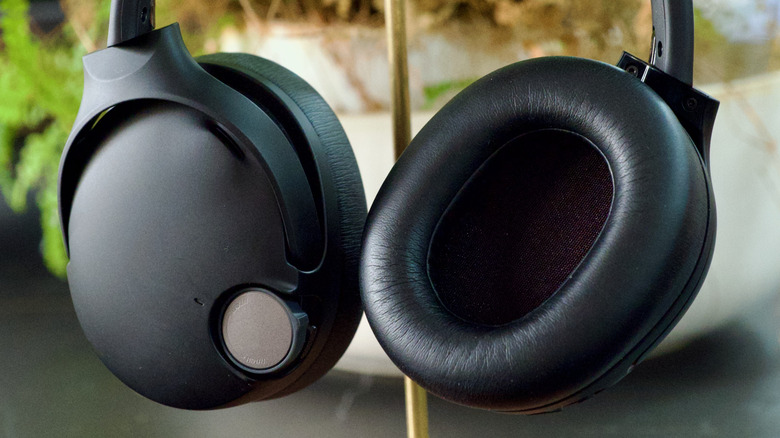
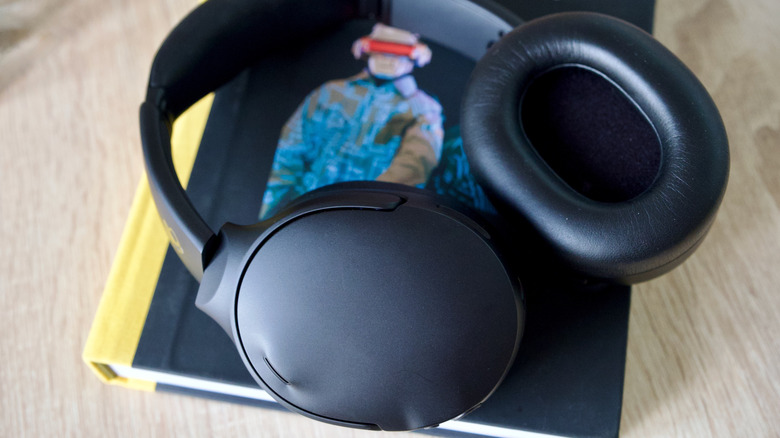
On paper, the Crusher 1080 checks just about every flagship box. There’s the aforementioned ANC along with wear detection, a claimed 60 hours of battery life, fast charging, multipoint Bluetooth, Auracast and an EQ with customizable controls via an app. The over-ear design is reminiscent of older Crusher models, with a reassuring, but hefty build and an understated aesthetic that feels a bit 2010’s in a non-intentional way. There are some nice metal accents in the headband which make it feel premium, but overall it’s a larger, more robust headset compared to the sculpted lines of current Sony or Bose models.
James Trew for Engadget
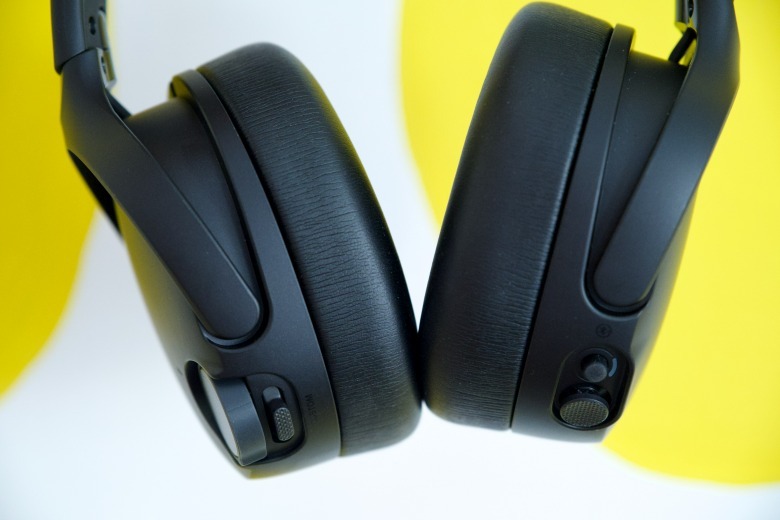
Skullcandy hasn’t really ventured into the realm of gesture and touch controls, and they remain absent here. The physical buttons are all quite large which generally makes them easy to locate. The biggest is the dedicated haptic bass dial, which is so large it’s part of the aesthetic. Nestled beside that is a switch for toggling between ANC and transparency mode. This pressable switch also cycles through listening presets (Music, Podcast, Movie and Custom). These two controls are close enough to each other that I often accidentally deactivate ANC when I want to adjust the haptic bass. The right-hand side has a mini joystick style control for volume and media, plus a button for power/pairing. The Crusher 1080 also supports regular 3.5mm and USB-C wired connections.
With 50 hours of battery with ANC active or 60 without, the Crusher 1080 is already pretty longevous. I still appreciate the fast-charging feature as quick top-ups can provide enough juice for a long commute or cafe work session on the occasions you forgot to plug them in.
Advertisement
Who’s the Bose?
The standout feature on the Crusher 1080 is no longer the haptic bass, although that, too, has been given a makeover. This focus here is on the Bose-powered audio. Skullcandy already dabbled with Bose Sound on the Method wireless buds, but that was more of a general tuning. With the Crusher 1080, Bose’s fingerprints are all over the audio, from the main WaveForm audio engine to the TrueSpatial dimensional feature and, of course, the Bose-powered ANC.
The result is a clear sonic upgrade. I use a pair of Crusher 540’s as my gym headphones, so I’m familiar with the Skullcandy sound. The Crusher 1080’s are quite a departure, with a much more well-rounded, open/balanced sound stage. The 540’s feel dense and flat by comparison, even with the beefy bass.
I spent an unreasonable amount of time swapping between the Crusher 1080’s and the Sennheiser HDB 630’s, listening to The Streets’ Original Pirate Material hoping that the combinations of sharp snares and gritty basslines would expose the differences between the two headphones. And differences there are, but not nearly as much as I was expecting. In general, the HDB 630 remains more spacious and neutral. The Crusher’s sound feels elevated in the upper mid-ranges.
Without the haptic feature enabled, the low-end on the 1080 almost feels modest — present but controlled. The overall sound is still higher energy than the pricier Sennheiser HDB 630, but it feels much closer to what you’d expect from a premium pair of wireless headphones.
Advertisement
While I would say the Sennheiser still has the superior sound over all, the Bose-tuned Skullcandy two characteristics I prefer. One is the presence of those upper mids: Percussion, hi-hats and other sounds in this range are more forward on the Crusher’s tuning. The other advantage is just that the Skullcandy headphones offer more volume, making them better suited for older music that isn’t mastered so loud.
Noise cancellation
James Trew for Engadget
Perhaps the biggest improvement over previous Skullcandy headphones is the Active Noise Cancellation. This is leagues ahead of earlier Skullcandy efforts and, in my own testing, even outperformed the Sennheiser HDB 630 and Soundcore Space One Pro — two headphones that sit either side of the Crusher in price. Constant background noise is handled impressively well, making commuting or working in busy environments much more pleasant.
It’s still not quite at the level of Bose’s class-leading ANC on its own headphones, and Sony remains one of the benchmarks in the category, but the gap is now much smaller than I expected. For the first time, Skullcandy deserves to be taken seriously in this area. Transparency mode is similarly solid, sounding natural enough for quick conversations without needing to remove the headphones.
Advertisement
Crushing it
What would a pair of Skullcandy headphones be, though, without Crusher Bass? This feature is as iconic as it is divisive. Personally, I enjoy it at the right moments. There’s a reason why I wear Crushers in the gym, and sometimes bangers just slap a little bit more when you can feel them. But older Crusher models got comically over the top when the haptic effect was dialed up too much.
On the 1080, the effect has been rebooted, and it’s for the better. It’s still the same haptic bass, but when used in moderation it genuinely feels like the movement is part of the bass, rather than a mechanical trick. Sure, if you drive it all the way up, things will get rumbly, but it’s still a lot of fun, and you don’t ever have to use it if you don’t want to.
Advertisement
The competition
This is where things become more complicated. At $270, the Crusher 1080 is in an awkward spot. Skullcandy has priced them around $100 cheaper than the likes of Sony’s WH-1000XM6, Bose’s own QuietComfort lineup and the Sennheiser Momentum 5. But if you are okay with a Momentum 4, or an XM5, suddenly the Crushers look more expensive. Even Anker’s Soundcore Space One Pro — a similarly-specc’d mid-range favorite — are coppable for $100 less than the Crusher’s asking price if you don’t want the bass feature and ANC is less important.
The question might really be, are these a more affordable entry point to Bose-level audio? Bose still has the edge in ANC and a stronger all-round audio experience in a more premium package. But the Crusher 1080 occupies a category almost entirely by itself: a capable sound, strong ANC and, of course, that unique approach to bass. This makes it far easier to recommend than previous generations.
Advertisement
Wrap-up
James Trew
The Crusher 1080 is the most complete and mature pair of Skullcandy headphones I’ve used. Rather than relying solely on its bass credentials, it finally delivers the fundamentals expected from a premium wireless headphone: enjoyable sound, capable ANC, good battery life and a feature set that feels relevant in 2026.
It’s not perfect. The design still lacks some of the polish of its biggest rivals, the controls could be better laid out and the weight becomes noticeable during longer listening sessions. But if you’ve ever been curious about the Crusher concept and dismissed previous models as novelty headphones, this is the one that changes all of that.
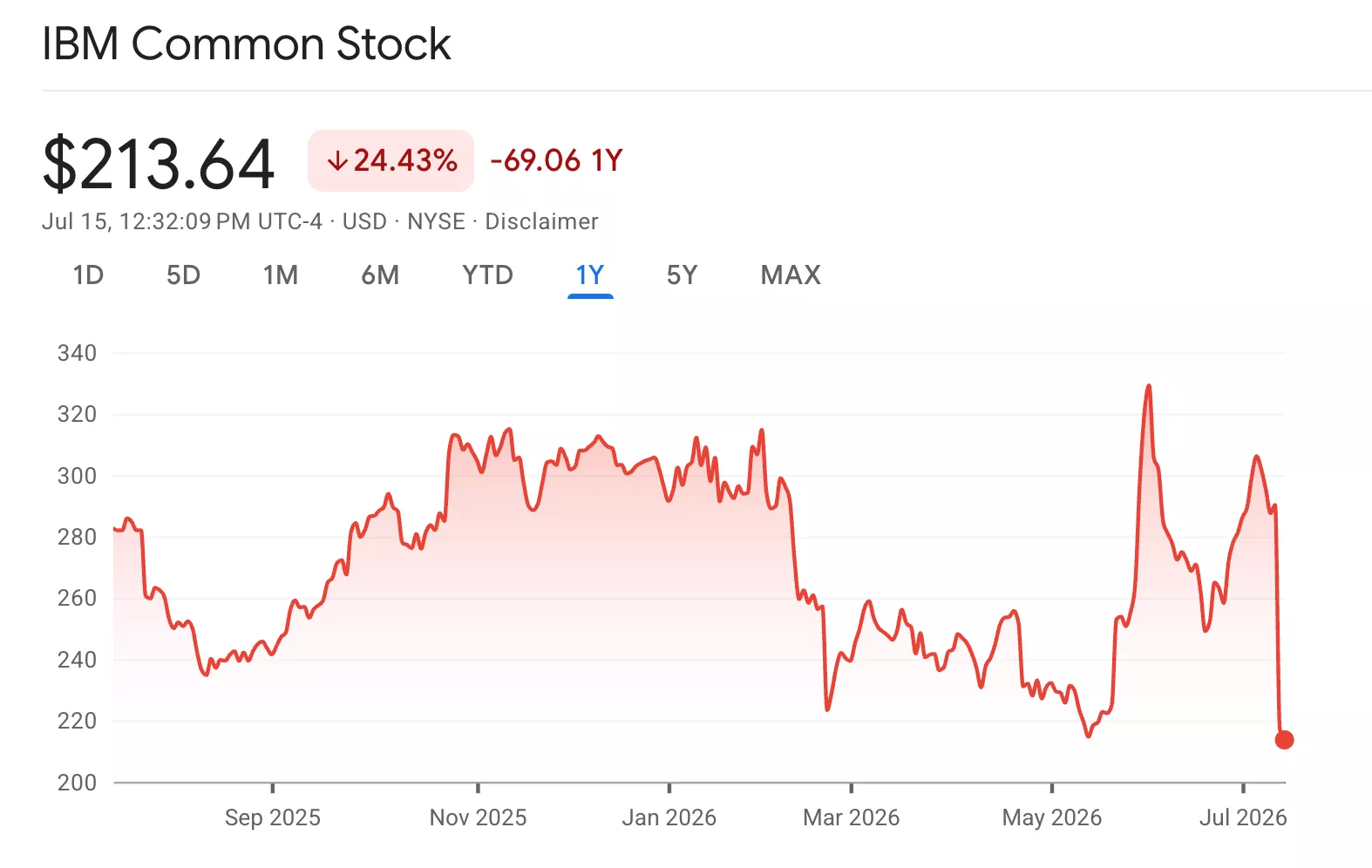
Always AI’s Fault: IBM took the unusual step of warning shareholders ahead of its financial results for the second quarter of 2026. Revenue is still growing slightly, but the industry’s AI-driven FOMO is expected to significantly affect the company’s prospects across some of its most important product lines.
In a recent letter to investors, IBM CEO Arvind Krishna explained that the company experienced some unexpected shortfalls in its latest financial performance. The former pioneer of the personal computer industry now primarily sells software, cloud services, and mainframe systems, but potential customers have recently scaled back major mainframe investments because the AI boom is pushing companies to prioritize spending on memory chips, storage drives, and GPUs instead.
According to the preliminary figures shared in Krishna’s letter, IBM remains in solid shape. The company’s revenue is expected to grow by 1% in the second quarter of 2026, reaching $17.2 billion. Software revenue is projected to increase by 5%, while Infrastructure revenue is expected to decline by 7%.
IBM recently prepared the launch of its new Z17 mainframe, and the company had already expected Infrastructure revenue to decline by a “low-singlet” digit percentage in the second quarter and throughout the year. However, according to Krishna, clients decided in the final weeks of June to shift corporate spending away from IBM mainframes and toward servers, storage, and memory products.
Advertisement
Customers were apparently pushed to secure additional hardware components before Big Tech companies and AI firms could acquire every memory chip and hard disk drive available. As SoftBank CEO Masayoshi Son recently said, the AI industry is expected to continue investing trillions of dollars in new and unprecedented data center projects, despite growing signs that the AI bubble could eventually begin to unravel.
This AI-driven shift had a significant impact on IBM’s client spending patterns, Krishna said. The US company had already anticipated some supply chain-related disruptions but did not expect the scale of the change in customers’ capital expenditure priorities. Other factors affecting Big Blue’s mainframe (Infrastructure) business include cybersecurity concerns and the company’s inability to quickly adapt to rapidly changing market conditions.
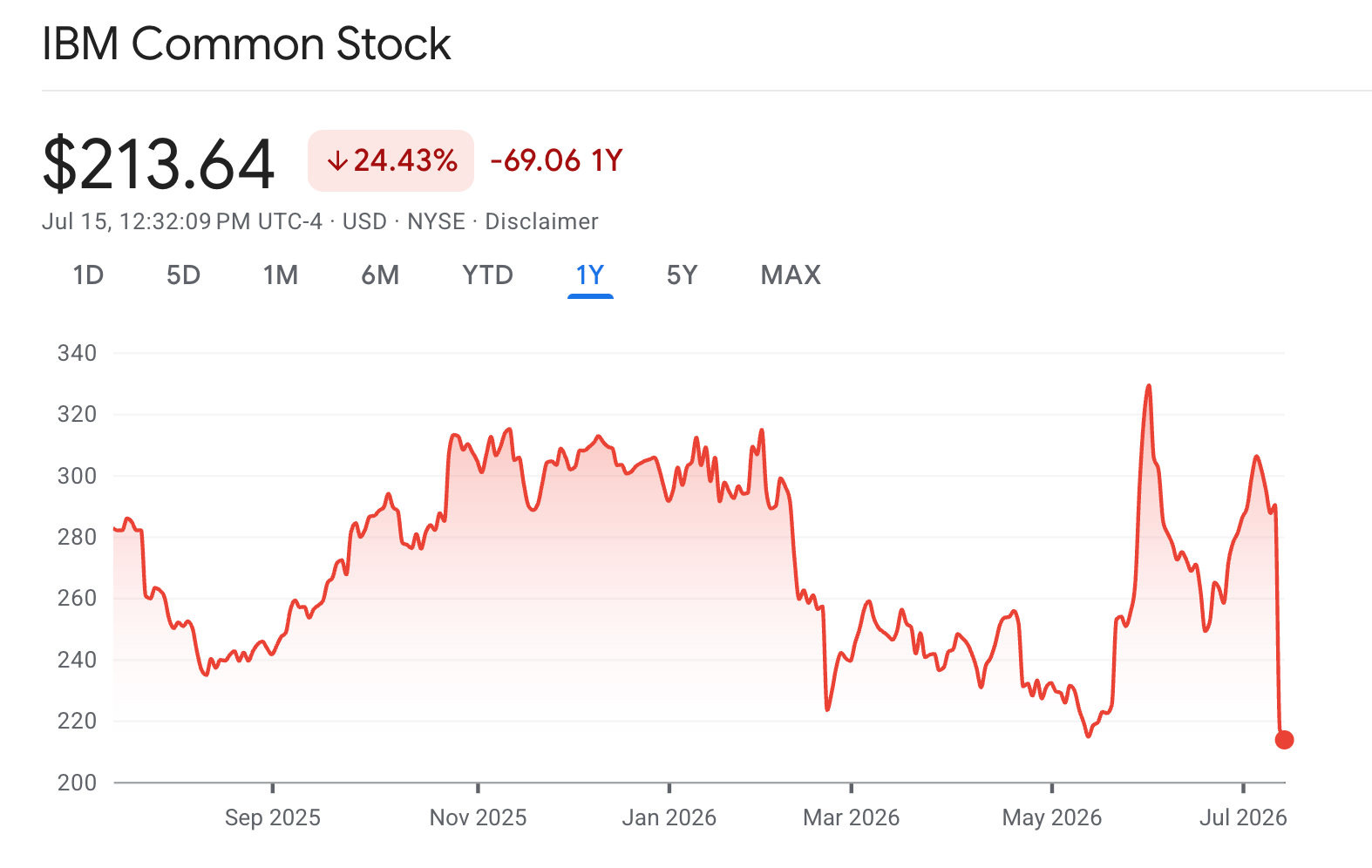
Following Krishna’s letter, IBM’s stock suffered a 25% decline, marking the company’s worst single-day performance in history. Preliminary revenue figures came in below analysts’ expectations, with analysts forecasting that the quarter would close at $17.86 billion.
At any rate, IBM is still highlighting some positive aspects of its financial results despite the overall disappointing quarter.
Advertisement
Big Blue’s strongest-performing products include Red Hat, which is expected to grow by 11% compared with the previous quarter. The company is also launching Lightwell, a service designed to leverage Anthropic’s Mythos AI frontier technology to improve open-source security. Customers will need to pay a subscription fee to access it.
Apple sued OpenAI last week over alleged hardware trade secrets theft.
OpenAI is pitting its AI capabilities against the likes of Amazon and Google with its very first consumer gadget, a “mobile, screen-free smart speaker”, according to a Bloomberg report.
The publication’s sources said the new device is designed to be a next-generation, ChatGPT-powered home computer, and meant to be a physical embodiment of the AI chatbot.
Sources told journalist Mark Gurman that the device is meant to be a “human-like AI companion” that stays at home and controls smart-home appliances, responds to queries and plays media – tapping into OpenAI’s chart-leading ChatGPT models for these capabilities.
Advertisement
Similar devices, such as Amazon Alexa, Apple Home and Google Home, are already widely available on the market, but OpenAI is seemingly attempting to make upgrades to existing model standards. According to Bloomberg’s report, OpenAI is hinging on its ability to connect with users on a “human-like level”.
The new smart speaker is expected to become “increasingly personalised” over time as it continues to gather data on its users, including via reading emails.
“The speaker incorporates mechanical elements that can move on their own, creating a sense that it is alive and not just an object responding to commands,” read the report.
Though described as a speaker, the device, which is still under development, will include a camera along with other sensors to help it better understand context, sources said. It will also come with a rechargeable battery.
Advertisement
The speaker will communicate via the new ChatGPT voice model GPT-Live that was rolled out earlier this month. According to the AI giant, the model is capable of speaking with a cadence similar to humans, and can listen and speak at the same time.
GPT-Live “make[s] talking with AI feel much more like having a real conversation”, OpenAI said at the time of its launch.
Unlike its biggest direct competitor, Anthropic, which has a narrowed focus on the enterprise AI market, OpenAI is expanding its scope into the heavily populated consumer gadgets market.
The company spent $6.5bn last summer to acquire Io, a hardware start-up co-founded by Apple design veteran Jony Ive and OpenAI’s current chief hardware officer Tang Yew Tan. And by November, it had finished developing its first device prototypes.
Its hardware division is currently developing five different products, but hopes to one day create a mobile AI device capable of replacing the smartphone.
The news comes as Apple, in a fresh lawsuit last week, accused OpenAI and its hardware division of stealing trade secrets.
The iPhone maker named Tan, its former VP of product design for iPhone and Apple Watches, in the suit, and accused OpenAI of taking part in a “coordinated pattern of misconduct” to gain access to confidential information about its unreleased products.
Advertisement
Don’t miss out on the knowledge you need to succeed. Sign up for the Daily Brief, Silicon Republic’s digest of need-to-know sci-tech news.
Google’s new Home Speaker was already more interesting than the average $99 smart speaker because it was the company’s first audio product designed specifically around Gemini for Home. It can now do something far more useful than answer questions, control the lights, or quietly confirm that Orwell lacked imagination about consumer electronics.
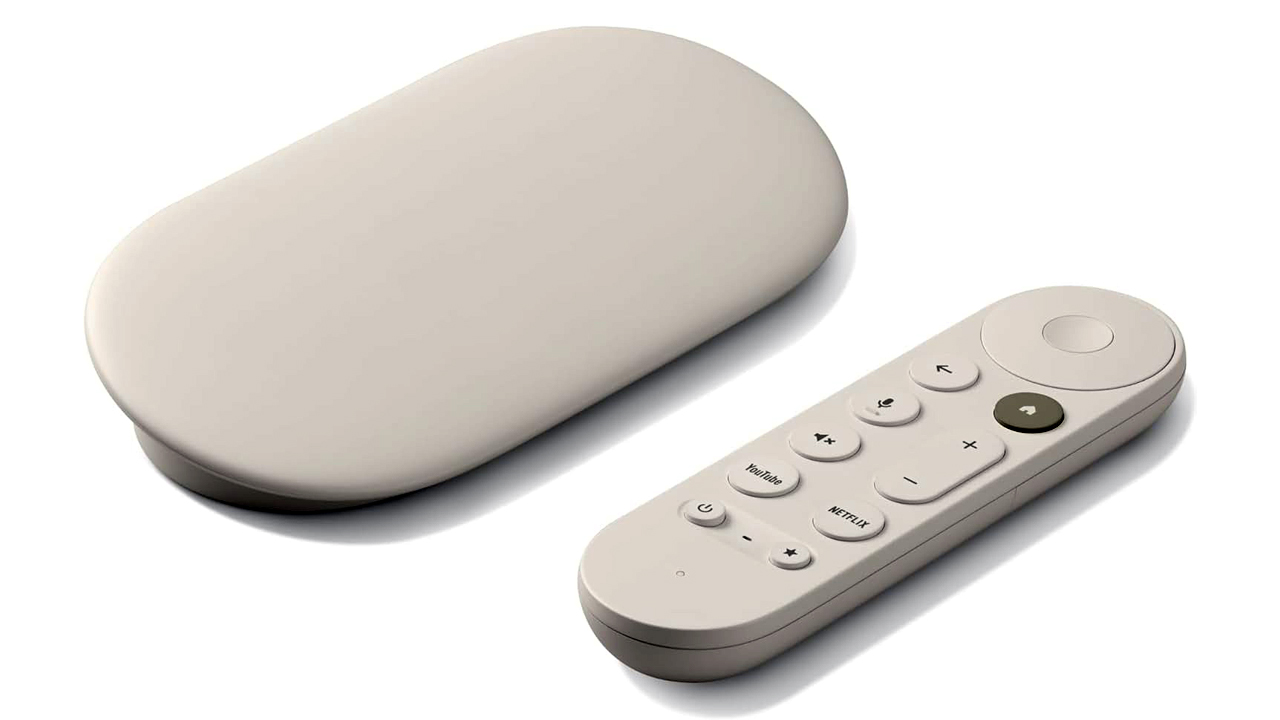
One or two Google Home Speakers can connect wirelessly to the Google TV Streamer and become its primary audio system. A single speaker replaces the television’s built-in sound, while two speakers can operate as a stereo pair and enable Google’s new Spatial Audio processing.
The complete two-speaker setup costs $299.97 before tax: $99.99 for the Google TV Streamer and $99.99 for each Home Speaker. Existing Google TV Streamer owners can add the stereo pair for $199.98. That puts the system below most premium soundbars and makes it potentially useful for bedrooms, apartments, offices, and smaller living rooms where an AVR, subwoofer, and several loudspeakers would be excessive.
Related Reviews:
Google Finally Connects Its Speakers to the Television
Google has had smart speakers, streaming hardware, multiroom audio, and voice control for years, but it never combined them into a particularly convincing television sound system.
Advertisement
Google TV Streamer
The 2026 Google Home Speaker begins to close that gap. Each compact speaker uses a single 58mm full-range driver designed for omnidirectional playback. It also supports Wi-Fi 6, Bluetooth 5.4, Thread 1.3, Matter, and Google Cast speaker groups, while Gemini for Home handles voice commands and smart-home control.
Setup is handled through either the Google TV interface or Google Home app. Users can select up to two speakers, place them beside the television, assign the left channel, and activate Spatial Audio. The setup process asks for the approximate viewing distance and the distance between the speakers so Google can adjust its processing to the room.
Google says the two-speaker system simulates surround sound and creates the sensation that audio is arriving from multiple directions rather than only from the conventional left and right channels. It requires spatial-audio-encoded content from a supported streaming service.
That should provide wider imaging and greater immersion than most television speakers, which are forced into increasingly thin cabinets and often struggle with basic dialogue intelligibility. Two physically separated speakers also have an inherent advantage over a compact soundbar trying to create stereo width from beneath the screen.
Advertisement
Google Home Speakers
Does It Support Dolby Atmos?
This is where the reporting has become muddled.
The Google TV Streamer unquestionably supports Dolby Atmos. Google lists Dolby Atmos among its supported audio formats and promotes the device as capable of delivering immersive 3D sound when connected to compatible audio equipment.
Google also says two Home Speakers can create immersive Spatial Audio.
Advertisement. Scroll to continue reading.
Advertisement
What Google does not currently say is that the Home Speaker pair constitutes an officially supported Dolby Atmos playback system.
Google’s setup documentation repeatedly uses the terms “Spatial Audio,” “spatial surround sound,” and “simulates surround sound.” It does not state that the speakers decode Dolby Atmos, identify them as a Dolby Atmos system, or describe how an Atmos soundtrack is rendered through the pair.
Some reports have combined the Google TV Streamer’s confirmed Atmos support with the speakers’ confirmed Spatial Audio feature and concluded that the complete pairing supports Dolby Atmos. That conclusion may eventually prove correct. The streamer could decode an Atmos soundtrack and render it through Google’s virtual spatial processing.
But Google has not documented that signal path clearly enough to present it as being true.
Advertisement
The accurate description is that the Google TV Streamer supports Dolby Atmos, while two paired Google Home Speakers reproduce compatible spatial content through Google’s Spatial Audio processing. Until Google explicitly confirms Dolby Atmos rendering through the speakers, calling the combination a Dolby Atmos system goes beyond the available documentation.
A logo on one box and spatial processing in two others do not automatically produce a certified Atmos system, regardless of how enthusiastically the dots are connected.
How Apple Handles the Same Question
Apple HomePod
Apple is considerably more explicit.
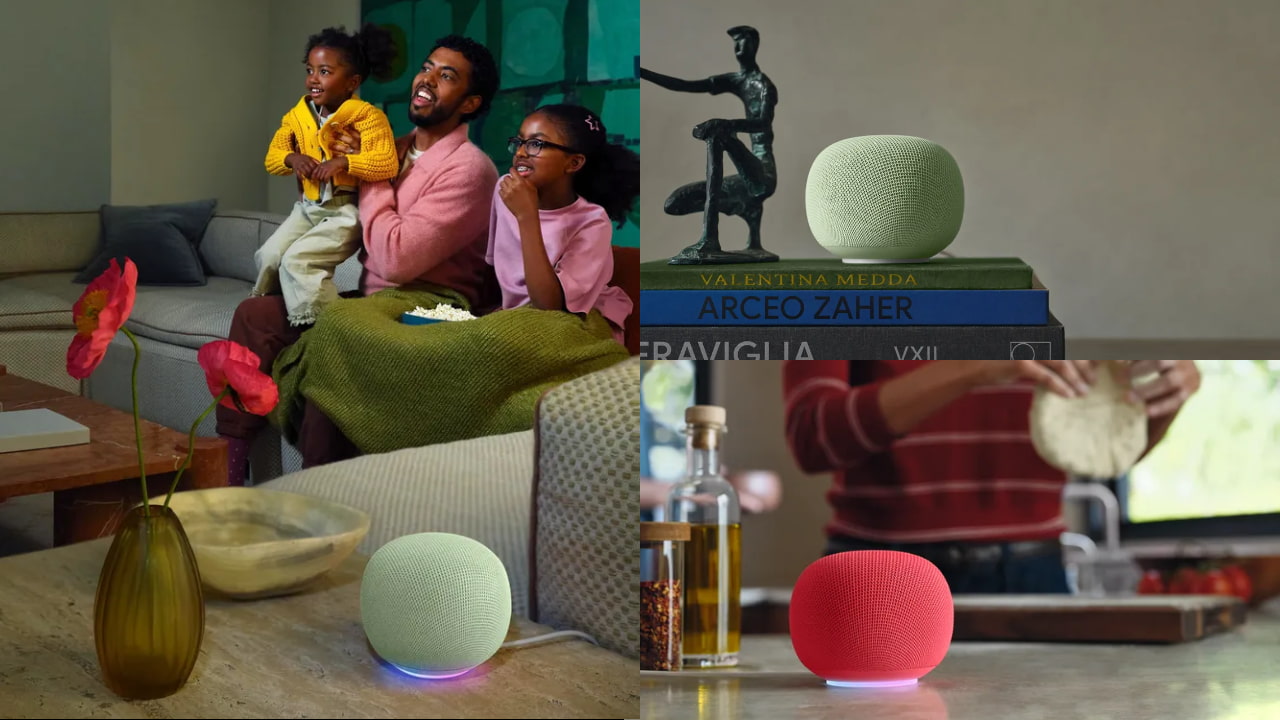
Apple states that one full-size HomePod or a stereo pair connected to an Apple TV 4K can automatically reproduce Dolby Atmos, Dolby Digital 7.1, and Dolby Digital 5.1 soundtracks. The full-size HomePod’s specifications also list Spatial Audio with Dolby Atmos for music and video.
HomePod mini can still be used alone or as a stereo pair for Apple TV audio, but it does not reproduce Dolby Atmos or Dolby surround formats. Those soundtracks are rendered through the smaller speakers in mono or stereo.
Advertisement
Apple also supports HDMI ARC and eARC through Apple TV 4K models from the second generation onward. That allows compatible televisions to send audio from game consoles, disc players, cable boxes, and internal TV apps through the Apple TV and onward to the HomePod system.
Google has not documented an equivalent television-audio return feature for its Home Speaker pairing. The confirmed Google configuration handles audio from the Google TV Streamer. There is currently no official indication that a PlayStation, Blu-ray player, or television tuner can route its sound through the speakers.
That is an important practical difference.
Advertisement. Scroll to continue reading.
Advertisement
Did tvOS 26 Expand Apple’s Atmos Support?
Not significantly.
tvOS 26 allows any AirPlay-enabled speaker to be selected as the Apple TV’s default audio output. However, that does not turn every AirPlay speaker into a Dolby Atmos home-theater system. When third-party AirPlay speakers are selected, Apple notes that system alerts and game sounds continue to play through the television rather than the wireless speakers.
Apple’s full Dolby Atmos home-theater implementation remains limited to one or two full-size HomePods.
tvOS 18.5 previously added Wireless Audio Sync calibration for Dolby Atmos playback over AirPlay or Bluetooth. That feature corrects timing between picture and wireless audio; it does not add Atmos reproduction to speakers that lack it.
Advertisement
As of July 15, 2026, tvOS 26.5 is the latest public release. Apple describes it as a performance and stability update, while tvOS 26.4 corrected an audio issue when moving between Atmos and stereo programming. Neither update added rear HomePods, four-speaker configurations, Atmos support for HomePod mini, or Dolby Atmos playback through generic AirPlay speakers.
Better Than a Soundbar?
Google’s system has several appealing qualities. It is inexpensive, wireless, compact, and provides genuine stereo separation. The speakers also remain useful as Gemini assistants, Matter hubs, Thread devices, and components in a Google Cast multiroom system.
The limitations are equally obvious.
There is no dedicated center channel, subwoofer, rear channel, or height driver. Google has not published amplifier output, frequency response, or maximum volume specifications. Each speaker relies on one small full-range driver, and the surround presentation is created through processing rather than discrete speakers around the room.
Advertisement
A system such as the Klipsch The Sevens II costs considerably more but offers larger drivers, deeper bass, HDMI eARC, multiple physical inputs, a subwoofer output, and more convincing performance with both music and movies. A Dolby Atmos soundbar can also provide dedicated height processing and broader television connectivity.
Google’s system is not designed to replace either of those options. It is an affordable alternative to weak television speakers for people already invested in Google TV and Google Home.
That is still a worthwhile improvement when you consider the price.
Advertisement
The Bottom Line
Pairing two Google Home Speakers with Google TV Streamer gives Google something it should have delivered years ago: a simple and relatively inexpensive wireless television-audio system that connects its streaming, smart-home, and voice-assistant platforms.
Advertisement. Scroll to continue reading.
The system should create a wider and more immersive presentation than most built-in television speakers, and $300 for the streamer and stereo pair is not unreasonable.
It should not yet be described as a confirmed Dolby Atmos speaker system.
Advertisement
Apple clearly states that the full-size HomePod and Apple TV 4K combination reproduces Dolby Atmos. Google currently says its two-speaker pairing provides Spatial Audio that simulates surround sound. Those statements are not interchangeable.
Google has finally found its way into the living room. It still needs to explain exactly what kind of soundtrack followed it through the door.
Forward-looking: Thirty years after Sega partnered with Nvidia to bring its arcade fighting game Virtua Fighter to PCs running on the Nvidia NV1 multimedia card, the two companies have once again teamed up to launch the franchise’s next title, Virtua Fighter Crossroads, on laptops and desktops powered by the Arm-based Nvidia RTX Spark. The collaboration will also extend to other upcoming Sega titles, the companies confirmed.
According to Nvidia’s press release, the new Sega games will support its latest upscaling and rendering technologies, including ray tracing and DLSS. The company added that its latest AI tools will also be supported by the upcoming titles, hinting at integration with its AI-powered neural rendering technologies, such as Reflex and G-Assist.
– VIRTUA FIGHTER CROSSROADS (@VFCROSSROADS) July 15, 2026
Neither Nvidia nor Sega revealed the names of the other games coming to RTX Spark, but online speculation suggests that several upcoming Sega titles, including Creative Assembly’s Alien: Isolation 2 and Total War: Warhammer 40,000, as well as the next installments in the Yakuza and Persona franchises, could receive support.
The announcements were made earlier today by Nvidia CEO Jensen Huang at an event in Tokyo celebrating the 30-year partnership between Sega and Nvidia. The gathering featured a reunion between Huang and former Sega president Shoichiro Irimajiri and was attended by Sega’s current CEO Haruki Satomi, COO Shuji Utsumi, and game designer Yu Suzuki.
Advertisement
Speaking at the event, Huang reminisced about how Irimajiri helped save Nvidia from bankruptcy in the 1990s by providing a $5 million cash infusion just as the company was running out of funding. Huang later admitted that Sega’s timely investment was the only thing that kept Nvidia afloat and that Irimajiri’s “understanding and generosity” saved the company from insolvency.
Sega had previously tapped Nvidia to develop a custom GPU for its Dreamcast console, but eventually canceled the order and used NEC’s PowerVR GPU instead, citing Nvidia’s outdated technology. Irimajiri still paid Nvidia the $5 million contract fee, but structured the payment as an equity investment, allowing Nvidia to develop the commercially successful Riva 128 and GeForce 256 gaming GPUs.
When Nvidia went public in 1999, Sega sold its shares for $15 million, tripling its original $5 million investment. While that may have seemed like a reasonable decision at the time, Nvidia’s market capitalization now sits at around $5 trillion, meaning Sega’s stake would have been worth hundreds of billions of dollars had the company held onto its shares.
Apple has now announced who can advertise on Apple Maps, barring entire business categories while still giving itself the right to final say over any advertisements on the platform.
On Tuesday, Apple updated its advertising guidelines. This was particularly noteworthy as it outlines the policies that advertisers will be expected to follow when advertising on Apple Maps.
Perhaps not surprisingly, Apple’s policies are generally more restrictive than Google’s across some key categories. This has typically been the case for content moderation between the two services.
For instance, Apple Maps has placed strict prohibitions on certain advertising categories outright. Banned categories include bail bonding services and cryptocurrency ATMs.
Advertisement
It also prohibits any home services. This would include plumbers, electricians, HVAC, roofing, and more; Apple does not explain the rationale for excluding these categories.
Google generally allows these categories to advertise, subject to local law and other advertising policies.
And while Apple hasn’t outright banned medical services, it does note that any such ad “will be evaluated on a case-by-case basis.” Google will generally allow medical ads, assuming they are compliant with local laws.
Apple has also fully banned political advertising, though this is not exclusive to Apple Maps. Google allows political advertising on Google Maps and other categories.
Advertisement
Apple Maps ads will be expected to comply with the whole of Apple advertising policy. This means that ads must be presented clearly and advertisers cannot send users to unrelated pages or use misleading claims.
Generally, Apple reserves broader discretion to reject ads, even if they’re not directly in violation of a rule. Google, on the other hand, tends to allow most things that don’t violate any of its listed criteria.
Coming to a Maps app near you
Apple Maps ads are only now beginning to roll out after years of speculation. Initially, it was believed that the tech giant was weighing the pros and cons of integrated ads in 2022.
Reports later suggested the advertisements would surface in 2023. However, the feature failed to materialize in 2023, 2024, or 2025.
Advertisement
Speculation resumed in late 2025, with reports once again hinting to a 2026 launch. Apple officially confirmed those plans in March 2026 with the launch of Apple Business, announcing that advertising would begin rolling out to Apple Maps during Summer 2026.
We may receive a commission on purchases made from links.
Milwaukee is one of the most popular brands for professionals and DIYers alike, but it’s not without fault. One of the biggest criticisms is that its premium-grade products are pretty expensive, especially compared to similar tools from other brands. If you’re on a tight budget, a steep price tag can be a total dealbreaker, even if it’s for something you need or would really like to add to your toolkit.
Advertisement
That’s why it’s worth taking notice anytime there’s a sale on Milwaukee hardware — especially when it’s a big sale. And sales don’t come much bigger than Home Depot’s current summer sale, which is offering discounts on many Milwaukee products, including some at more than half off – allowing those who normally can’t afford the brand to stock up on Milwaukee equipment.
There are so many Milwaukee tools on sale at Home Depot that it may even be tricky to keep track of them all, which is why we’ve put together a list of some of the more notable deals. Some of these sale prices come and go, and don’t be surprised if certain products are out of stock once word gets out that they’re currently on sale.
Advertisement
M18 Fuel Oscillating Multi-Tool
A discount on Milwaukee’s M18 Fuel Oscillating Multi-Tool is especially nice given how you can use it for all kinds of applications with the right attachments — hence the name. If you’re renovating, for example, you can whip out a multi-tool for removing carpets or grout, plunge-cutting into drywall, and even sanding awkward spots like tight corners. You’ll often find uses for an oscillating multi-tool you never even thought of, like trimming the bottom of a door casing to fit a door jamb.
In addition to different attachments, Milwaukee’s multi-tool has a 10-setting dial and variable-speed trigger, improving precision. An auto-load feature also allows a slower startup to avoid errors. Powered by a brushless motor, the M18 Fuel Oscillating Multi-Tool delivers between 10,000 and 20,000 oscillations per minute at a 4.2-degree angle and allegedly delivers faster cuts than the competition. It doesn’t compromise on handling, though, with dampening technology to reduce vibration and make it easier to use. The tool also sports an LED worklight that spans 180 degrees.
Milwaukee sells attachments, such as wood-cutting blades, separately, though you can also use cheaper brands provided they’re Starlock-compatible. Blade swaps will be easy, as it has a tool-free design, ensuring quick changes that won’t disrupt your work. Home Depot’s 20% discount on the Milwaukee M18 Fuel Oscillating Multi-Tool (model 2836-20) means it’s available for $199.
Advertisement
M18 6-Tool Cordless Combo Kit
One of the absolute biggest deals Home Depot is currently offering on Milwaukee hardware is for the M18 6-Tool Cordless Combo Kit, which is more than half off. Home Depot had a similar deal for a Milwaukee 8-Tool Combo Kit last month, which proved so popular that the bundle is now out of stock. However, this Six-Tool Combo Kit is still available at the time of writing and is arguably just as good a deal.
Advertisement
The bundle includes some of the best-rated M18 tools you can buy. You get Milwaukee’s M18 Compact ½-inch Drill/Driver, M18 ¼-inch Hex Impact Driver, M18 6-½-inch Circular Saw, M18 Brushless 4-½/5-inch Cut-Off Grinder, and M18 Oscillating Multi-Tool. You also get the M18 Work Light for nighttime or low-light jobs, even away from power outlets. Not only does the price include these six beefy power tools, but the kit also comes with two M18 XC4.0 Ah batteries, a dual M12/M18 Multi-Voltage Charger, and a contractor bag.
If you were to buy each included item individually, it would cost nearly $1,200, a difference of over $700 from the current sale price. A downside to buying combo kits is that they often include devices you don’t need or already own — but with such a big discount, you may still find the M18 6-Tool Cordless Combo Kit worth acquiring. The Milwaukee M18 6-Tool Cordless Combo Kit is currently 55% off at Home Depot and available for just $449.
Advertisement
M18 Cordless Inflator Kit
A great tool to keep in your car in case of an emergency is the M18 Cordless Inflator Kit. It’s also useful for general maintenance and keeping your tires at optimal pressure year-round. The fact that Milwaukee’s cordless inflator is nearly half off for Home Depot’s summer sale is appropriate, though, because you can also use the tool to inflate pool floats and sports balls for more leisurely activities.
Rated to work with tires over 100 psi, the inflator can generate up to 150 psi and thus can be used for passenger, light truck, and medium-duty tires, and can top off a 33-inch light-truck tire in less than 60 seconds. Anti-vibration feet keep it in place, while auto-pressure check and auto-shut-off mean you don’t need to babysit it while it’s running.
The inflator is digital, which lets you store up to four psi targets in memory, saving you a lot of time if you expect to use it to inflate the same objects regularly. The discounted kit also comes with two beefy M18 6.0Ah batteries and a charger. Also included are a 36-inch hose with an inflation needle, an inflator nozzle, and a presta chuck, which can be stored in the device. The Milwaukee M18 Cordless Inflator Kit (model 2848-20) is currently $299 at Home Depot, a 45% discount.
Advertisement
M18 Compact ¼-inch Hex Impact Driver Kit
The M12 Fuel Hammer Drill and Impact Driver Combo Kit was one of the many Milwaukee tools available at a discount in June 2026. This month, Home Depot has slashed the price of an M18 impact driver, which may be more your speed if you’re invested in the M18 power system or don’t need a hammer drill (or both). More specifically, Home Depot is offering $70 off the M18 Compact ¼-inch Hex Impact Driver Kit.
Advertisement
Not only is it more powerful than the 12V impact driver, but its compact design means it still offers some of the same benefits as Milwaukee’s more portable M12 system. It weighs 1.7 pounds and is just 4.4 inches long and 2.1 inches wide, making it easy to use in especially tight areas. Combined with the fact that Milwaukee is one of the very best major impact driver brands on the market, this makes the M18 Compact ¼-inch Hex Impact Driver a solid tool to include in your kit.
Like its M12 Fuel counterpart, the tool has a brushless motor. This enables it to deliver up to 1,700 in-lbs of torque and up to 3,600 rpm. It can also run more slowly if you need it to, as it’s equipped with a variable-speed trigger, so you don’t have to worry about damaging fasteners or material. Along with the impact driver, the kit also includes an M18 2 Ah battery, charger, and tool bag. The Milwaukee M18 Compact ¼-inch Hex Impact Driver Kit (model 3650-20) is currently 35% off at Home Depot and available for $129.
Advertisement
M18 High-Output Starter Kit
Of course, to use any of these Milwaukee tools, you’re going to need the M18 batteries they run on. Even if you already own some, you may want to consider Milwaukee’s High-Output models, which it claims deliver 50% more power and run 50% cooler than standard M18 RedLithium batteries.
Admittedly, the current $50 discount Home Depot is offering for the Milwaukee M18 High-Output Starter Kit (model 48-11-1862) isn’t as jaw-dropping as some of its other deals. What makes buying the M18 High-Output Starter Kit a particularly great deal, though, is that Home Depot will throw in a Milwaukee power tool with your purchase for free. What makes it even better is that you can choose the tool. That adds hundreds of dollars of value to the discounted price for the M18 High-Output Starter Kit, which comes with two M18 High-Output XC6.0 batteries and a dual M18/M12 charger. When you add the kit to your cart, you can select the tool you’d like included at no additional cost.
Eligible M18 tools include Milwaukee’s leaf blower, jig saw, reciprocating saw, wet/dry vacuum, angle grinder, and more. If you don’t need a new tool, you can opt for the highly rated M18 Cordless Rocket Dual Power Tower Light instead, which is one of the best Milwaukee lighting options for working at night. Normally $249, you can get the light for absolutely nothing if you buy the M18 High-Output Starter Kit from Home Depot.
President Donald Trump restarted the Iran conflict with days of missile strikes, and US intelligence officials now estimate the total military cost of the war for the Pentagon could exceed $100 billion, according to two people directly familiar with the matter.
The officials were tracking the total cost of Operation Epic Fury to be in the $50 to $100 billion range at the end of May, dovetailing with confidential congressional estimates putting the costs to date at around $80 billion.
The Trump administration has not disclosed its cost estimates for the Iran war. In June the White House made a request for $88 billion to cover some of the costs of the war, but even that is an undercounting, the people say.
Part of the reason why a final cost is not available is that the Pentagon is still deciding whether to replace all the aircraft destroyed or damaged beyond repair during the conflict, the people say.
Advertisement
If the Pentagon decides not to replace certain aircraft, defense officials have told lawmakers, they will not request money for it—and therefore not factor that into the total cost of the war, the people say.
Presented with a detailed breakdown of this reporting, a War Department official told Inner Loop: “We have nothing further to announce at the moment.”
The nonpartisan Congressional Research Service said in a report on May 20 compiled using only publicly available reporting that the US had lost at least 17 manned aircraft and 25 drones since the start of the conflict.
The CRS report also showed the US had been losing an increasing number of drones, which are not cheap to replace. Among the 25 drones lost was an MQ-4C Triton, a high-altitude Navy surveillance aircraft that costs more than $600 million per airframe.
Advertisement
The cost of repairing US bases in the region, some of which sustained heavy damage from Iran firing retaliatory missiles and one-way attack drones in response to US strikes, will also be high.
Defense officials have told lawmakers behind closed doors they have not accounted for the costs of repair—and may never do so—if the US ultimately decides to shutter those bases because they are too vulnerable to Iranian attacks, the officials say.
Iran has been able to repeatedly hit several key bases in the Middle East in retaliatory strikes, including the headquarters of the US Navy’s Fifth Fleet at Naval Support Activity, Bahrain, which the Pentagon has not publicly acknowledged.
The only actual cost provided publicly by a top defense official has been from then acting Pentagon comptroller Jay Hurst, who testified in an oversight hearing in May that the cost of the war had risen to roughly $29 billion.
Advertisement
On Tuesday, at his nomination hearing to permanently become comptroller, Hurst declined to provide an updated figure but said the $29 billion was mainly munitions and the costs like fuel associated with having two US aircraft carriers steaming around the Middle East.
Operation “Gold Eagle” Has Arrived
The Trump administration on Tuesday launched a clearinghouse that will try to identify and patch any software vulnerabilities before malicious actors can hack them with the most powerful AI models.
An administration official told Inner Loop the clearinghouse, named “Gold Eagle,” will be run by the Cybersecurity and Infrastructure Security Agency, which will itself use AI models that are not publicly available, to identify vulnerabilities.
It marks the first major implementation of Trump’s June 2 executive order that aims to create a framework to oversee the rapidly growing threat of advanced AI models.
An anonymous reader quotes a report from Electrek: A Reddit post making the rounds this week claims the U.S. has experienced at least one major power outage every month of 2026 — but is it true? I dug into several outages, the extreme weather behind them, and what we can do to help keep the lights on. […] The claim that hundreds of thousands of Americans were without power over extended periods at least once per month, every month of 2026 surprised be in two ways. First, because I had no idea if it was true — and, second, because it felt true. We try to do better than writing about things that feel true around here, however, so I did a bit of research (translation: I Googled power outages by month) and came up with the following examples in about sixty seconds
… and that list is far from comprehensive, and how you feel about it might depend on what you consider a “major” outage, of course — but consider that there are tens of thousands of Americans without power right now, and that’s not making the news. […] The lesson here is that weather-related grid outages — whether they’re caused by wildfires, mudslides, derechos, tornadoes, ice storms, hurricanes, heat waves, or some other disaster I’m lucky enough to have forgotten about — read like statistics when they’re happening over there, but get personal real quick when they’re happening to you.
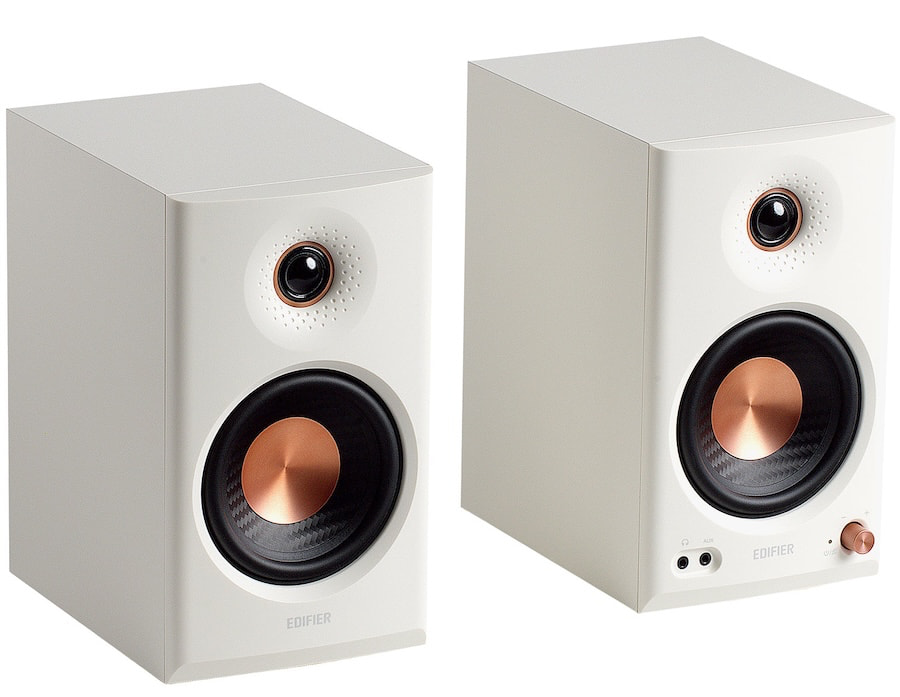
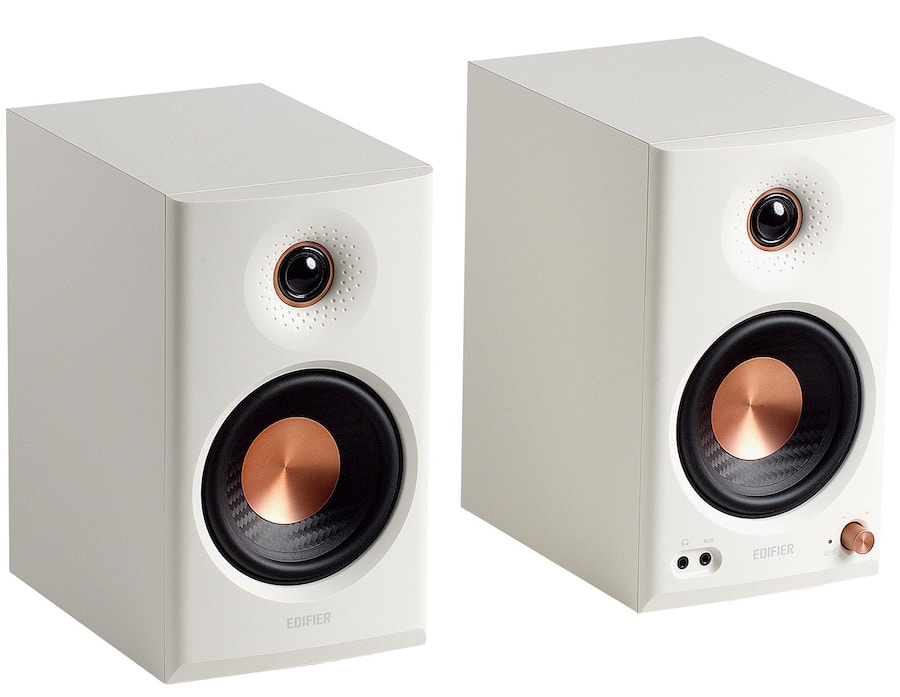
Edifier has expanded its MR Studio Monitor Series for 2026 with the new MR4.5, a near-field active loudspeaker designed for content creators, musicians, producers, and desktop listeners who want greater flexibility without moving into the larger and more expensive MR5.
Positioned between the MR4 and flagship MR5, the Edifier MR4.5 combines studio-focused sound reproduction with wireless connectivity, customizable tuning, and a compact design suitable for home studios, editing suites, gaming systems, and desktop audio setups.
The new model joins the MR3, MR4, and MR5 to complete Edifier’s current studio monitor lineup, offering buyers another option in a category where accuracy increasingly has to share desk space with convenience.
Related Reviews:
Features and Connectivity
Two Speakers: The Edifier MR4.5 includes two speakers. The active speaker serves as the system hub, handling connectivity, amplification, and signal distribution for both channels. No external amplifier, stereo receiver, or home theater receiver is required. The passive speaker connects to the active speaker using the supplied cable, which carries both power and audio signals.
Adaptable Setup: The MR4.5 includes acoustic tuning and desktop compensation controls that allow users to adjust its performance for different rooms, speaker positions, and listening distances. These controls can be useful when the speakers are placed on a desk, close to a wall, or in a small home studio where placement options may be limited.
Advertisement
Wired and Wireless Connectivity: The MR4.5 supports both wired connections and wireless streaming. Bluetooth 6.0 includes LDAC support for higher-resolution wireless audio, while multipoint connectivity allows the speakers to remain connected to more than one compatible device. This makes it easier to switch between a computer, smartphone, tablet, or other source without repeatedly disconnecting and pairing devices.
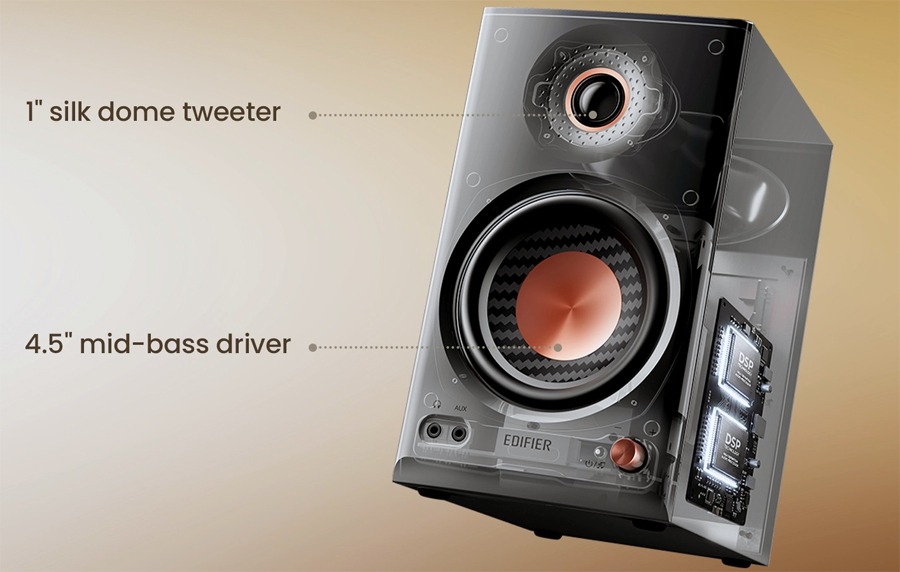
Bi-Amplified Speaker Design: The MR4.5 uses a bi-amplified design with an active crossover that divides the audio signal between the mid-bass driver and tweeter. Edifier designed the system to provide a balanced transition between the drivers and accurate sound reproduction for music production, video editing, gaming, and everyday desktop listening.
Extended Frequency Response: The MR4.5 has a specified frequency response of 50 Hz to 40 kHz. Edifier has tuned the system for a neutral, transparent presentation intended to reproduce recordings without excessive tonal coloration.
Dimpled Tweeter Waveguide: The MR4.5 uses a dimpled tweeter waveguide designed to improve high-frequency extension and clarity while creating a wider listening area. This should provide more consistent performance when the listener moves away from the central listening position.
80 Watts of Total Output: The MR4.5 delivers 80 watts RMS of total system output and a maximum sound pressure level of 98 dB at one meter. Although primarily intended for near-field listening, it should also provide sufficient output for some mid-field setups and medium-sized rooms.
Advertisement
Hi-Res Audio Support: The MR4.5 uses an analog front end and Class D amplifiers and supports digital audio signals up to 24-bit/96 kHz. Wireless playback is available through Bluetooth with LDAC support. Under compatible conditions, LDAC can transmit audio at up to 990 kbps and support signals up to 24-bit/96 kHz.
Advertisement. Scroll to continue reading.
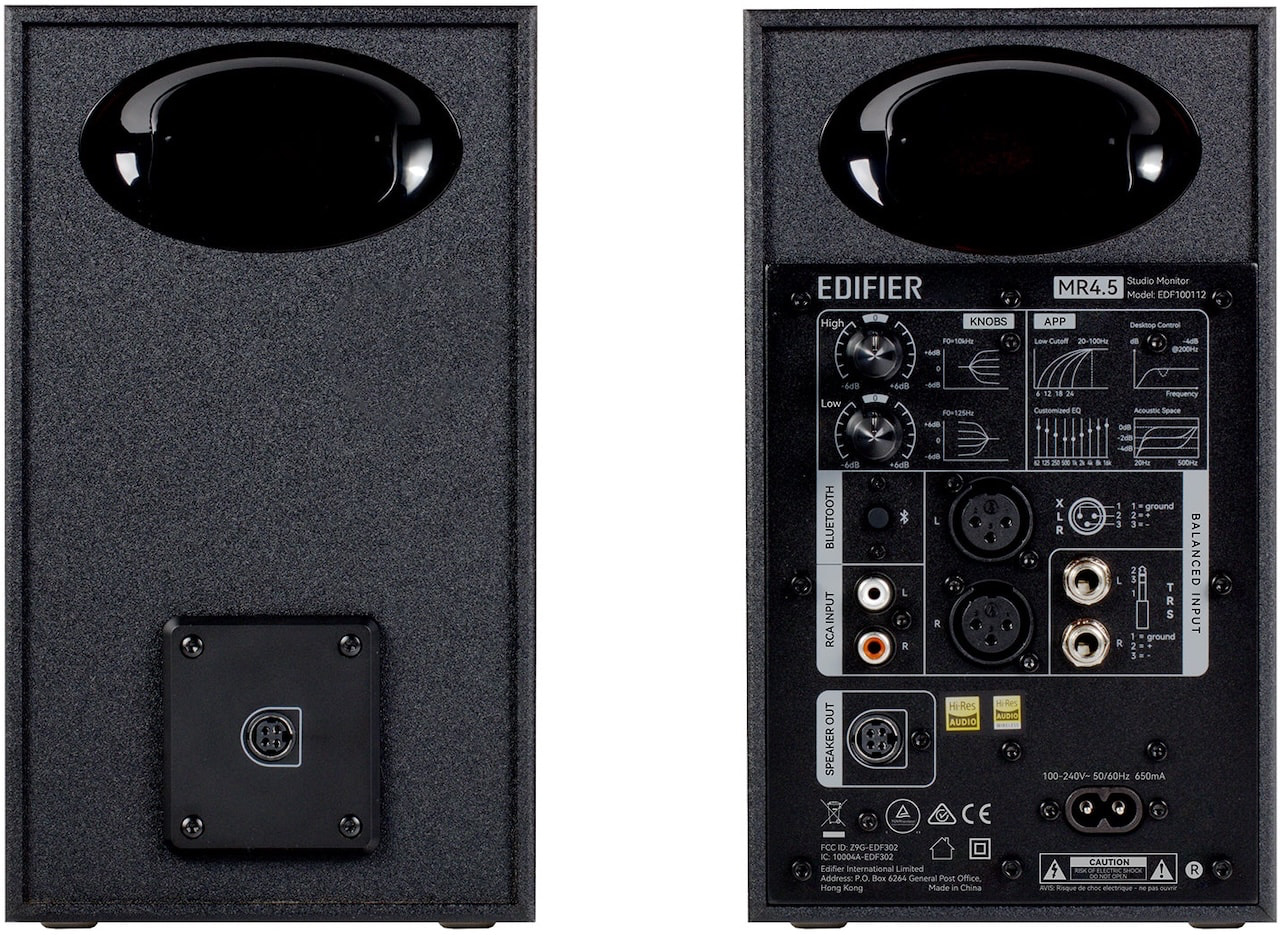
Wired Connection Options: Balanced XLR and TRS inputs allow the MR4.5 to connect to professional audio interfaces, mixers, and other studio equipment. RCA and 3.5 mm auxiliary inputs accommodate common consumer audio sources, while a headphone output supports private listening.
Bluetooth Multipoint: Bluetooth 6.0 provides a stable wireless connection, while Bluetooth Multipoint allows two devices to remain connected simultaneously. Users can switch between sources without disconnecting and re-pairing each time.
Room Acoustic Compensation: Rear knobs and the EDIFIER ConneX app provide multiple settings for room acoustic compensation, allowing you to adapt to different room modes and achieve the optimal listening experience.
1″ silk dome tweeters 3.75″ mid drivers 5″ woofers
1″ silk dome tweeters 4.5″ mid-bass drivers
1” tweeters 4” woofers
1″ silk dome tweeters 3.5″ mid-low drivers
Frequency Response
46Hz – 40kHz
50Hz – 40kHz
60Hz-20KHz
52Hz-40kHz
Signal-to-Noise Ratio (SNR)
≥ 85dB (A)
≥ 89dB (A) in monitor mode
≥ 85dBA
> 85 dB (A)
Audio Inputs
Balanced XLR
Balanced ¼-inch TRS
Unbalanced RCA
Advertisement
⅛-inch stereo (3.5mm AUX)
Bluetooth
Balanced XLR
Balanced ¼-inch TRS
Advertisement
Unbalanced RCA
⅛-inch stereo (3.5mm AUX)
Bluetooth
TRS balanced input
Advertisement
RCA unbalanced input
AUX unbalanced input
Balanced 1/4-inch TRS
Unbalanced RCA
Advertisement
3.5mm AUX
Bluetooth
Input Sensitivity
XLR: 1228 ± 50mV
TRS: 1228 ± 50mV
Advertisement
RCA: 700 ± 50mV
AUX: 600 ± 50mV
Bluetooth: 600 ± 50mFFS
XLR: 1228 ± 100mV
Advertisement
TRS: 1228 ± 100mV
RCA: 500 ± 50mV
AUX: 400 ± 50mV
Bluetooth: 500 ± 50 mVFS
Advertisement
TRS balanced input: +4dBu
AUX/RCA unbalanced input: -10dBV
TRS: 1228 ± 100mV (+4dBu)
RCA: 775 ± 50mV
Advertisement
AUX: 775 ± 50mV
Bluetooth: 800 ± 50mFFS
Bluetooth Version
V6.0
V6.0
N/A
V5.4
Bluetooth Codecs
LDAC, SBC
LDAC, SBC
N/A
SBC
Crossover
Bass/Mid 155 Hz
Mid/Treble 2600 Hz
Advertisement
2800 Hz
2800 Hz
Not Indicated
Sound Pressure Level (Max.)
101dB (@1 meter)
98dB (@1 meter)
86dB @1 meter
92.5dB @1 meter
Headphone Output
1/8-inch stereo
1/8-inch stereo
1/8-inch stereo
1/8-inch stereo
Dimensions (WHD)
159 x 264 x 280mm (Active speaker)
159 x 264 x 257mm (Passive speaker)
140 × 244 × 229mm (Active speaker)
140 × 244 × 208mm (Passive speaker)
Advertisement
140 x 228 x 197.5 mm (Active Speaker)
140 x 228 x 184 mm (Passive Speaker)
125.5 x 220 x 185mm (Active speaker)
125.5 x 220 x 176mm (Passive speaker)
Advertisement
Net Weight
10.38kg
6.63kg
4.5Kg
3.85kg
In The Box
MR5 Set
Power Cable
Speaker Connecting Cable
3.5mm to RCA Audio Cable
Advertisement
3.5mm-to-3.5mm Audio Cable
Quick Start Guide
Important Safety Instructions
MR4.5 Set
Advertisement
Power Cable
Speaker Connecting Cable
3.5mm to RCA Audio Cable
3.5mm to 3.5mm
Quick Start Guide
Advertisement
Important Safety Instructions
MR4 Set
Power Cable
Speaker Connecting Cable
Advertisement
3.5mm to RCA Audio Cable
3.5mm-to-3.5mm Audio Cable
Quick Start Guide
Important Safety Instructions
Advertisement
MR4 Set
Power cable
Speaker connecting cable
3.5mm to RCA audio cable
Advertisement
3.5mm-to-3.5mm audio cable
Quick start guide
Important safety instructions
The Bottom Line
Although Edifier has enjoyed success with its MR Studio Monitor Series, a substantial gap remained between the MR4 and MR5 in both price and features. The MR4.5 fills that space by adding Bluetooth, LDAC, balanced XLR connectivity, room compensation, app-based adjustments, and an active bi-amplified crossover—features not offered by the more basic MR4.
The MR4.5 also provides a logical step down from the MR5, which uses a larger three-way driver configuration, a tri-amplified active crossover, and 110 watts of total output. Those additional capabilities may make the MR5 better suited to larger rooms and more demanding studio applications, but they may be unnecessary for desktop users and smaller production spaces.
Advertisement
The MR4.5 does not include HDMI ARC or eARC, USB audio, optical connectivity, or a phono input. Buyers who require HDMI eARC, USB-C, and optical inputs should consider Edifier’s M90 active speakers. The Onkyo Creator Series GX-30ARC goes further by combining HDMI ARC, USB-C, optical, and a line/phono input for direct connection to a turntable with a moving-magnet cartridge.
For years, musicians have said AI song generators fed on their work without asking. A hacker just opened the black box and showed them exactly how.
Leaked source code from Suno, one of the biggest AI music tools, tells the story. It trained its model by scraping millions of songs and lyrics from across the internet. 404 Media got the data from a hacker who breached the company.
The haul is enormous. One file, labelled “youtube_music,” had logged more than 2 million clips. Others list tens of thousands of hours pulled from Deezer, Genius, and the stock library Pond5. In all, it adds up to decades of recorded music.
Ripping the vocals
The code is specific about what it wanted. To capture clean voices, it hunted for a cappella versions of songs on YouTube. To slip past YouTube’s defences, Suno routed its scraping through a proxy firm called Bright Data. It also trawled 420,000 podcasts, chasing roughly a million hours of speech.
Advertisement
The 💜 of EU tech
The latest rumblings from the EU tech scene, a story from our wise ol’ founder Boris, and some questionable AI art. It’s free, every week, in your inbox. Sign up now!
None of this is entirely new. In court, Suno has already admitted training on “essentially all music files of reasonable quality” on the open web. But the leak shows the machinery behind that line.
The record labels have long alleged as much. Suing Suno, the RIAA said the company copied “decades worth of the world’s most popular sound recordings,” and did it by “stream ripping” from YouTube, dodging the platform’s copy protections.
Advertisement
‘Fair use,’ Suno says
Suno’s defence, like most AI firms, is fair use. It says it trains on “publicly available music files” and builds its models for “original creation.” It even leaves artist names out of its training data, to discourage copycats.
On the breach, the company played it down. It called the November 2025 incident “limited” and “quickly contained,” said the exposed code was outdated, and insisted no sensitive data leaked. It does not hold customers’ full card numbers, it added, and it decided it did not need to tell users at all.
The hacker, who goes by ellie.191, tells a different story. They said they got in through the Shai-Hulud worm, grabbed an employee’s credentials, and pulled customer emails, phone numbers, and Stripe records. Suno never warned those users, some of them told 404 Media. The motive? “I like to hack anything and everything.”
The bigger fight
The timing matters. Some labels have already made peace, striking licensing deals with AI firms rather than fighting on. Sony is still in court, with a pivotal fair-use ruling due this summer.
Advertisement
Meanwhile artists keep saying the deals do little for them. Suno’s chief executive, Mikey Shulman, once said most people “don’t enjoy the majority of the time they spend making music.” The people whose music trained his model might disagree.

























































You must be logged in to post a comment Login