

Business
Thailand to Host 2026 IMF and World Bank Annual Meetings in Bangkok


The Ministry of Finance and the Bank of Thailand jointly proclaimed Thailand’s readiness to host the “2026 Annual Meetings of the International Monetary Fund and the World Bank Group”.
This premier global economic and financial forum—often referred to as the “Olympics of Finance” —will take place on 12–18 October 2026 at the Queen Sirikit National Convention Center (QSNCC) in Bangkok. Over 15,000 delegates from 191 countries, including global policymakers, economists, government representatives, private sector executives, and members of the media, will gather to discuss the future of the global economy. This marks a historic return after Thailand set a milestone with its successful and prestigious debut as host in 1991.
Mr. Ekniti Nitithanprapas, Deputy Prime Minister and Minister of Finance, stated that hosting this summit is a major opportunity to deliver tangible benefits to Thailand and its citizens. It will stimulate the economy, elevate Thailand’s global credibility, and internationally showcase local community capabilities under the concept of “Empowering Community: From Local to Global.
As host, Thailand has introduced the core theme: “Thailand’s New Horizons: Empowering People, Building Resilience.” This theme aligns with the Sufficiency Economy Philosophy (SEP), a paradigm which promotes a balanced, sustainable, resilient, and people-centric development framework.
In driving policy on the global stage, the Thai government has linked its vision and fiscal policies to address today’s challenges, building economic strength and readiness to cope with changes across all dimensions. This is achieved through four pillars that represent key strategic issues currently being addressed by countries worldwide, comprising:
- Digital and AI Transformation for Inclusive and Resilient Growth: Thailand stands ready to serve as a model for other nations in developing Digital Public Infrastructure (DPI), highlighting success stories like PromptPay and Cross-Border QR payments, as well as the integration of data and AI to optimize public services and healthcare policies with precision.
- Building Resilience in a Fragmented World: Showcasing Thailand’s potentials as a “Trusted Hub” for trade, finance, and investment in Asia, while promoting highly resilient supply chains and innovative forms of international cooperation.
- Building a New Financial Architecture for Climate Adaptation: Championing the reform of global financial structures to support equitable energy transitions and climate adaptation.
- Demographic Change and the Longevity Economy: Turning the challenges of an aging society into economic opportunities and robust financial preparedness.
Source : https://www.bot.or.th/en/news-and-media/news/news-20260714.html
Other People are Reading

Business
Niagen Bioscience, Inc. (NAGE) Discusses Strategic Expansion Into Pharmaceutical Development and NB4168 Drug Program – Slideshow (NASDAQ:NAGE) 2026-07-16


Seeking Alpha’s transcripts team is responsible for the development of all of our transcript-related projects. We currently publish thousands of quarterly earnings calls per quarter on our site and are continuing to grow and expand our coverage. The purpose of this profile is to allow us to share with our readers new transcript-related developments. Thanks, SA Transcripts Team

Celebrus CFO purchases 60,000 shares at average 96.5p

Analysis-Iran war leaves crisis-weary European airlines ready for a shakeout
Business
Mrs Bectors Food soars 11% after Sunil Singhania’s Abakkus acquires 29.4 lakh shares via block deal

According to exchange data, Abakkus Investment Managers Pvt. Ltd. purchased 29,39,588 shares of Mrs Bectors Food on July 15, representing around 0.96% equity in the company. The shares were acquired at an average price of Rs 168.97 apiece, marginally below the previous day’s BSE closing price of Rs 169.45.
The bulk purchase sparked fresh buying interest in the stock, which has been under pressure in recent months. Over the past three months, Mrs Bectors Food shares have declined around 15%, while the stock has fallen nearly 42% over the last year, significantly underperforming the broader market.
At the current market price, the company commands a market capitalisation of Rs 5,202 crore. The stock has touched a 52-week high of Rs 318.18 and a 52-week low of Rs 164.95, indicating a sharp correction from its peak.
From a valuation standpoint, Mrs Bectors Food trades at a price-to-earnings (P/E) ratio of 36.45, a price-to-sales (P/S) ratio of 2.69, and a price-to-book (P/B) ratio of 4.04.

Technical indicators continue to suggest caution. The stock’s 14-day Relative Strength Index (RSI) stands at 39, indicating that it is approaching the oversold zone, though it remains above the 30-mark typically considered oversold. Additionally, the stock is trading below all eight of its key simple moving averages (SMAs), reflecting a prevailing bearish trend.
Despite the recent weakness, analysts remain optimistic about the company’s prospects. According to Trendlyne data, the consensus target price implies an upside potential of around 35% from current levels. The stock also enjoys a ‘Strong Buy’ consensus recommendation from 11 analysts, highlighting expectations of a potential recovery in the coming months.
Earnings Watch
Mrs Bectors Food Specialities is yet to announce its June 2026 quarter results. In the March 2026 quarter, the company reported an 8.4% year-on-year rise in consolidated revenue to Rs 496 crore, while consolidated net profit increased 3.3% YoY to Rs 35 crore, indicating steady business growth despite relatively modest earnings expansion.(Disclaimer: Recommendations, suggestions, views and opinions given by the experts are their own. These do not represent the views of Economic Times)

Analysis-SpaceX’s slide below IPO price risks turning blockbuster IPO into confidence test
Coles will challenge the competition watchdog before a tribunal in a test of Australia’s tough new merger laws, after the commission torpedoed its plan for a second store in Kalgoorlie.
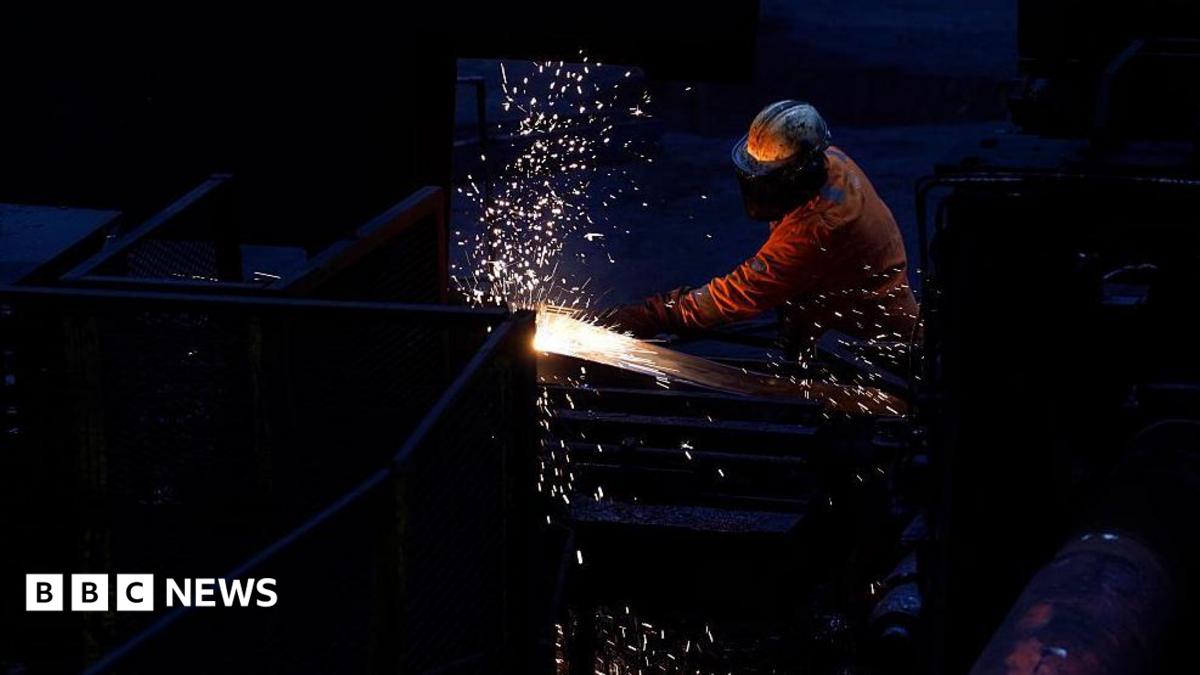
British Steel has come under public ownership after the government moved to “protect UK steelmaking”.
The future of the steelworks, which employs roughly 2,700 people in Scunthorpe and supports many other industries in north Lincolnshire, has been dogged by uncertainty over recent years.
“Today’s decision secures the future of steelmaking in the UK, protects skilled jobs and safeguards a vital national capability,” Prime Minister Sir Keir Starmer said.
The UK government took control of British Steel operations in Scunthorpe last year, though it has since remained under the ownership of the Chinese firm Jingye Group.
Jingye has said it has begun the process of seeking compensation for nationalisation, having previously said the business was losing £700,000 a day. However, the UK government has said it could limit or refuse compensation.
Starmer added: “British Steel is part of the fabric of our nation and a cornerstone of Britain’s industrial strength.
“This government will always act in the national interest to support British industry, strengthen our economy and ensure the industries we rely on can thrive long into the future.”
The government had previously sought private investors to take control of the steel manufacturer, initially stopping short of full nationalisation.
“British Steel now belongs to the British people, and our focus is on the future: stabilising the business, backing the communities that rely on it and building a sustainable, competitive and decarbonised steel sector for the years ahead,” Business Secretary Peter Kyle said.
On Wednesday, Parliament passed legislation allowing the government to bring the steel industry into public ownership under circumstances where it met a public interest test.
A spokesperson for the Department for Business and Trade had confirmed on Wednesday the government was “strongly minded” to use the new powers in the case of British Steel.
“The Steel Act gives us powers to nationalise steel companies where it’s necessary in the public interest, to protect a foundation industry that supports our critical national infrastructure, economy and defence,” the department said in a statement.
In March, the National Audit Office released a report noting that the Scunthorpe steelworks was costing the government about £1.3m a day.


I’ve been contributing to Seeking Alpha and other investment websites since 2011, with a general (though far from rigid) focus on value over growth. I got my Series 7 and 63 back in 1999, and watched the dot-com bubble peak and then burst in real time at a small, tech-focused retail brokerage in NYC. Now co-host of The Atlantic Current podcast, with twice-weekly cross-border conversations on politics, finance, and culture.
Analyst’s Disclosure: I/we have no stock, option or similar derivative position in any of the companies mentioned, and no plans to initiate any such positions within the next 72 hours. I wrote this article myself, and it expresses my own opinions. I am not receiving compensation for it (other than from Seeking Alpha). I have no business relationship with any company whose stock is mentioned in this article.
Seeking Alpha’s Disclosure: Past performance is no guarantee of future results. No recommendation or advice is being given as to whether any investment is suitable for a particular investor. Any views or opinions expressed above may not reflect those of Seeking Alpha as a whole. Seeking Alpha is not a licensed securities dealer, broker or US investment adviser or investment bank. Our analysts are third party authors that include both professional investors and individual investors who may not be licensed or certified by any institute or regulatory body.
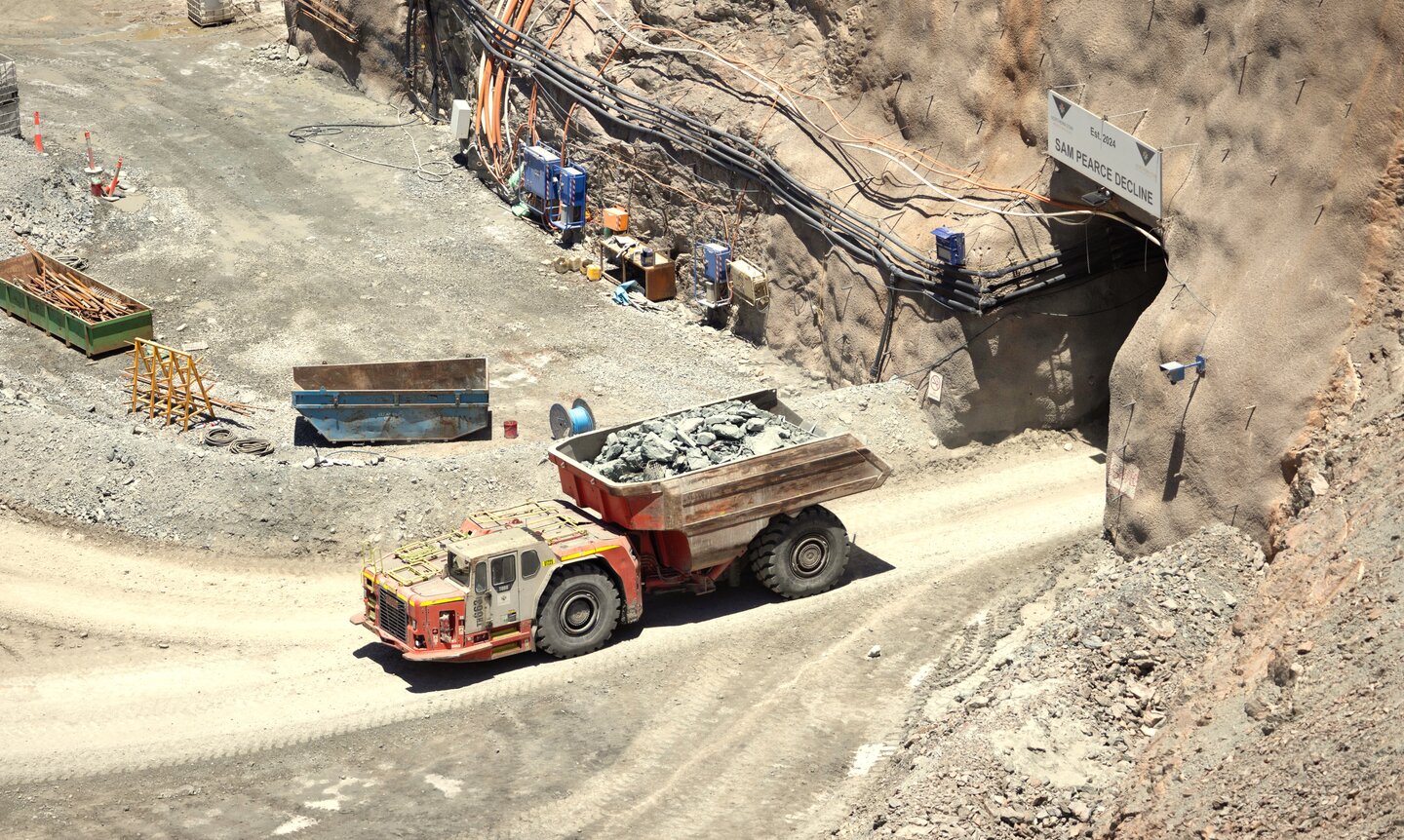
Stalled efforts to supply energy into the local grid highlight the changing relationship between miners and the power they need.
Power supplied to Northern Star Resources’ Kalgoorlie Consolidated Gold Mines will soon come from a renewable resource adjacent to the town from which it takes its name.
By the middle of 2027, commissioning will start on a new source of energy to fuel the region’s most prolific mine for decades to come.
Zenith Energy is in the throes of planning a renewably fed power facility that will revolutionise the supply into Northern Star’s KCGM operation, moving it away from the South West Interconnected System (SWIS) and the ageing, dual-fuel Parkeston power station of which it is a part-owner alongside TransAlta.
Once complete, Zenith’s Eastern Goldfields Power project will comprise 256 megawatts of wind generation, 138MW megawatts of solar generation and 138MW/300MW hours of battery energy storage.
Zenith’s new project will sit just 10 kilometres outside of Kalgoorlie, feature some of the largest wind turbines in Australia – 150 metres high with a rotor diameter of 182 metres – and will be supported by a back-up thermal generation plant.
Northern Star will buy energy from the renewable project under a powerpurchase agreement for 25 years, while taking a stake as a joint venture partner in the thermal project.
The development is likely to garner plenty of interest in a city where awareness of the need for energy supply and security have reached new heights in recent years.
“The KCGM project provides a blueprint for what modern mining energy systems should look like: cost-effective, clean, scalable, reliable and delivery of real benefits to local and regional communities,” Zenith managing director Hamish Moffatt said following the announcement late last year.
The project will clearly deliver in terms of local jobs and supply chain engagement.
But the desire to bring electricity benefit beyond the mine gate has come to little so far.
SWIS support
The SWIS is the main source of power for the town of Kalgoorlie, KCGM, and a number of other prolific mining and processing projects in the Goldfields.
It connects Kalgoorlie to the state’s South West through to Dongara, via a single 655km transmission line that has stood since 1984.
The reliability of that line is a source of frustration for some industrial operators, most vocally Lynas Rare Earths, which blamed the network for production downgrades in November last year.
It also powers residential homes and businesses in Kalgoorlie and surrounds, and its fragility was highlighted when it was knocked out by a freak storm in January 2024.
The state government is planning to build a $150 million vanadium redox flow battery in Kalgoorlie and is considering construction partners ahead of an operational target of 2029.
The state insists the battery will be built with Western Australian vanadium, a material not currently mined in the state.
ASX-listed Australian Vanadium appears to be the likely feed source for vanadium material as it progresses its namesake project north of Cue, despite having yet to take a final investment decision there.
At time of writing, stage-two tenders for the battery project were open, with AVL among the bidders pitching to build the battery as well as supply the material.
The government also has plans for a Goldfields regional network: a common-use transmission project it says will link renewable energy resources in the region to industrial centres and local communities.
Early studies into the network have assumed the regional network will not be operational until 2033.
In the meantime, concerns linger over the state of Kalgoorlie’s power network; an issue Northern Star sought to address when planning its new power solution.
In January, documents submitted to the Environmental Protection Authority revealed Northern Star had hoped to plug its new thermal plant back into the SWIS as a source of electricity supply to support the network.
That proposal has been knocked back.
Under current plans, the thermal power station would be built on tenure granted under the Mining Act, leaving its proponents – Northern Star and Zenith – subject to a different set of rules than if they were to build the plant outside a mining project.
“[The Department of Mines, Petroleum and Exploration] has expressed the view that Mining Act tenure should be used exclusively for mining purpose and not for the export of electricity to the grid,” Northern Star wrote in its EPA submission.
“While the proposed power station and associated assets are proposed on Mining Act tenure, the facility will not export electricity to the South West Interconnected System until the state formally endorses a tenure and approvals pathway that expressly permits such exports.”
Projects built under the Mining Act have lower cost and regulatory burdens compared with those built under the Land Administration Act, which the government prefers as a pathway to energy development.
It is a similar regulatory hurdle to that faced by Fortescue in the Pilbara, where the Andrew Forrest-led miner hopes to supply excess energy from its growing renewable energy network – built on Mining Act tenure to power mines – to data centres.
While the new energy system will keep Northern Star from drawing as heavily on the constrained Kalgoorlie SWIS network, it will also prevent the goldminer from giving back to it.
In June, WA opposition energy spokesperson Steve Thomas told Business News the state had not fully shut the door on miners feeding excess power into common-user grids, but voiced concern over the precedent that would be set if they were allowed to.
“The issue is simply that renewable energy development is not mining,” Mr Thomas said.
“You start to establish precedents [whereby] renewable energy is coming under the Mining Act, but it’s not mining, so what else might ultimately come under the Mining Act that is not mining?”
The legality of feeding non-mining infrastructure with energy projects on Mining Act tenure is a grey area.
As the nature of mining power supply changes, particularly in areas where grid supply is constrained, like the Goldfields, it is a question that will continue to be asked.
Renewables boom
The mix of sun, wind, vast expanses and isolation from major energy networks beyond the fringes of the SWIS make the Goldfields particularly suited to renewable projects.
Zenith’s plans on the outskirts of Kalgoorlie are the headline act in a suite of renewable energy activations across the Goldfields in recent years.
Among the proponents to go the renewables path in the region are Gold Fields and Lynas Rare Earths, while newer market entrants such as Liontown Resources and Bellevue Gold have had the benefit of building out lower carbon energy from scratch.
Bellevue and Lynas are both run on energy produced by Zenith.
And while Gina Rinehart-backed Lynas floated the potential of leaning more on diesel generators as a standby source of energy when its SWIS connection doesn’t hold up, the company has also benefited strongly from the 65MW hybrid renewable power station at Mt Weld.
Between the March quarter of 2025, when it was relying on a diesel plant, and the same quarter this year with the new facility in place, Lynas used 870,000 fewer litres of diesel at Mt Weld.
As geopolitical ruptures in the Middle East drove the price of diesel to record highs, that was a significant boost.
The rare earths producer’s power station, also built, owned and operated by Zenith under a 15-year power purchase agreement, comprises 24MW of wind, 7MW of solar and 12MW of battery storage, along with a 17MW gas-fired station and 5MW of diesel on standby.
As recently as last year, Lynas leadership vented over the challenges of accessing reliable and affordable power when competing in a market dominated by China.
As a participant in Western Power’s Eastern Goldfields Load Permissive Scheme, it is autonomously supplied grid power when available and turned down when demand is high elsewhere.
The rollout of renewables appears to have boosted Lynas’s power position greatly.
South African goldminer Gold Fields was one of the earliest movers on renewables at its mine sites in the region.
Gold Fields’ Granny Smith mine is powered by a hybrid solar and battery microgrid, delivered in 2020 by Aggreko and expanded with an increase in renewables starting in 2025.
The Granny Smith renewables system supplies about 21 per cent of the mine’s power needs.
Gold Fields’ Agnew mine has been fuelled by a hybrid renewable microgrid built by EDL since 2020, which was the first project in the country to fuel a mine site with large-scale wind generation.
Its St Ives project will be the beneficiary of a $296 million renewables project from this year, currently being built by Pacific Energy.
The project will draw energy from a 35MW solar farm and 42MW of wind power and is expected to supply more than 70 per cent of St Ives’ power once commissioned.
Gold Fields expects it to slash the mine’s carbon emissions by 50 per cent once commercial operation starts in the second half of this year.
The miner has not closed the door on further renewables expansion across its suite of projects in the area, according to Granny Smith general manager Mark Glazebrook late last year.
“Goldfields and Granny Smith are always looking at opportunities to expand our renewables,” he said on a site visit in November.
“Obviously, we have to look at it from both a sustainability context as well as a cost context.
“There are definitely opportunities for further expansion of the renewables in terms of solar farm and potentially wind turbines into the future.”
Queensland-based remote energy specialist EDL built the system supporting Gold Fields’ Agnew mine as a first mover in the space.
Speaking with Business News last year, chief executive James Harman said there was a global shift by companies operating on grid fringes nationally in finding their own power solutions, including those that had historically drawn from the SWIS at Kalgoorlie.
“There’s a common thread, and that is that a lot of industry is concerned about reliability, and so are we,” he said.
“We are looking at lots of fringe-of-grid opportunities, where we are able to design wind, solar, battery solutions for a customer and then firm it from the grid.
“That is something we’re working on here in WA. We’ve got a project that we’re very advanced with as well, in Far North Queensland.
“I think we’ll see a lot more of that, instead of industry relying on the grid to supply largely renewable power.
“We can build microgrids that connect to the grid, as fringe of grid for that backup if needed, but we’re able to design the wind-solar-battery component as a microgrid and provide fraction renewables.”
- From the recent Business News Goldfields-Esperance publication released in June.

Country Risk: Drivers, Measures And Investment Implications – The 2026 Edition

Micah Richards learns of dad’s unexpected death just before BBC World Cup broadcast

Niagen Bioscience, Inc. (NAGE) Discusses Strategic Expansion Into Pharmaceutical Development and NB4168 Drug Program – Slideshow (NASDAQ:NAGE) 2026-07-16

California duo accused of laundering crypto from fentanyl and meth sales


-

 Fashion7 days ago
Loro Piana Fall 2026 Enters Houston’s Art Scene
-

 Fashion5 days ago
Weekend Open Thread: Nutriplenish Leave-In Conditioner
-
 Sports7 days ago
2026 Genesis Scottish Open Thursday TV coverage: Round 1
-

 Sports6 days ago
Super Eagles star Moses Simon opens up on Liverpool transfer regret
-

 Tech7 days ago
Character.AI enters the microdrama arena with its own productions, but there’s a twist
-

 Politics19 hours ago
Young campaigners urge incoming PM to act on outdoor junk food ads
-

 News Videos1 day ago
XRP BOMBSHELL… XRP OMBOARDED FOR TRANSACTIONS!!!
-

 Tech2 days ago
Get Your ESP32 Sunny Side Up With This Solar Dev Board
-

 Tech1 day ago
Dark Secrets Emerge When Jailbreaking LLMs
-
 Sports9 hours ago
New Cornerback Enters Vikings Trade Rumor Mill
-
 Entertainment14 hours ago
Disney’s Most Ambitious Failed Star Wars Attraction Is Coming to SDCC
-

 Tech7 days ago
Level Infinite Launches Gangstar Mirage City in India with Pre-Registrations
-
 NewsBeat7 days ago
Major update after Huntingdon train attack as man enters plea
-

 News Videos3 days ago
how to make coin bank box with cardboard #scienceproject #money #diy #shorts
-
 Tech2 days ago
Cloudflare Precursor Watches Your Mouse and Keyboard To Decide If You Are Human
-
 Entertainment12 hours ago
Vicki Gunvalson Defends Discussing Heather Dubrow’s Money
-

 NewsBeat9 hours ago
Watch: Is Donald Trump facing a popular backlash on immigration?
-
Crypto World2 days ago
Ripple, Coinbase, Circle Join Linux x402 Foundation to Help Shape AI Payments
-

 Sports7 hours ago
Michigan officials not expected to discuss AD Warde Manuel at Thursday meeting
-
 NewsBeat9 hours ago
Firefighters issue update on Dovestone moorland blaze as fire enters fourth day
You must be logged in to post a comment Login