Connect with us
DAPA Banner
DAPA Coin
DAPA
COIN PAYMENT ASSET
PRIVACY · BLOCKDAG · HOMOMORPHIC ENCRYPTION · RUST
ElGamal Encrypted MINE DAPA
🚫 GENESIS SOLD OUT
DAPAPAY COMING

NewsBeat

‘The World Cup might not be ours but the Falklands are’: No10 demands FIFA probe into Argentina’s ‘Malvinas’ banner after England defeat

Published

on

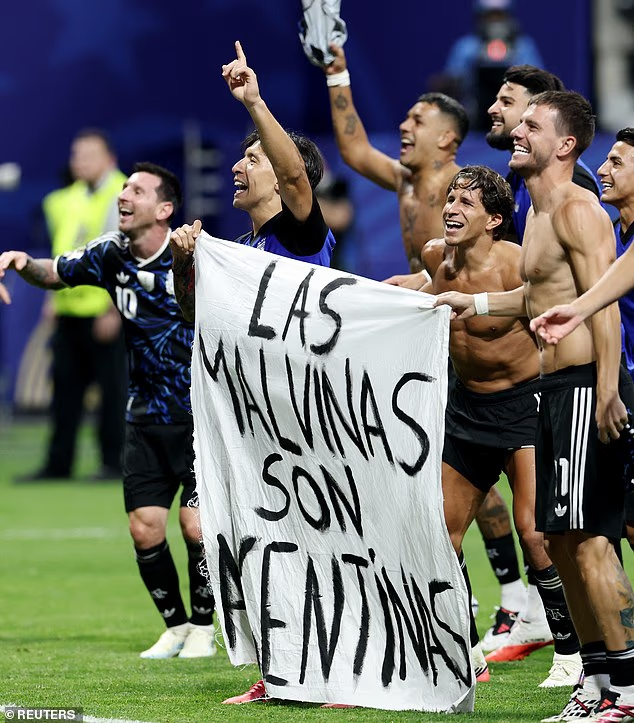
Lisandro Martinez and Giovani Lo Celso, who have played for clubs in the Premier League, celebrate with a banner claiming the Falkland Islands. Messi was also next to it celebrating

Downing Street has demanded a FIFA probe into Argentina players wielding a ‘Malvinas’ banner after England’s defeat last night.

No10 backed calls for an inquiry into the politicising of the match, swiping: ‘The World Cup might not be ours, but the Falkland Islands definitely are.’ 

A furious row has erupted after England’s heartbreaking 2-1 loss in Atlanta last night. 

Argentina’s classless players were accused of ‘warmongering’ after they carried a banner claiming the Falkland Islands belonged to them. 

Advertisement

Britain has had sovereignty for almost 200 years having first landed on the uninhabited islands in 1690. In 2013, 99.8 per cent of residents voted to remain a British Overseas Territory. 

The ‘Las Malvinas son Argentinas’ banner was held by several star players and captain Lionel Messi danced alongside it – despite FIFA’s ban on political symbols.

That has sparked calls for the players to receive one-match bans, similar to those UEFA handed out to Spain players who chanted ‘Gibraltar is Spanish’ after beating England at the 2024 Euros final.    

Advertisement

Lisandro Martinez and Giovani Lo Celso, who have played for clubs in the Premier League, celebrate with a banner claiming the Falkland Islands 

Members of the Argentina team shush the crowd as they raise the flag, flouting FIFA's rules on political statements in football

Members of the Argentina team shush the crowd as they raise the flag, flouting FIFA’s rules on political statements in football

Giovani Lo Celso lays the banner on the pitch after Argentina's victory, right below the TV spider cam

Giovani Lo Celso lays the banner on the pitch after Argentina’s victory, right below the TV spider cam

Buenos Aires accused HMS Medway of making an 'unconsulted and illegal' passage through Argentine territorial waters

Buenos Aires accused HMS Medway of making an ‘unconsulted and illegal’ passage through Argentine territorial waters

Advertisement

The animosity dates back principally to a ten-week war in 1982, when an Argentinian invasion of the Falklands was seen off by the British – at the cost of 907 lives.

Advertisement

It spilled over into football four years later when Maradona scored his infamous ‘hand of God’ goal in the 1986 World Cup quarter-final clash.

He used his fist to put the opening goal past England, allowing Argentina to win 2-1 and go on to claim the World Cup trophy.

Quirno earlier claimed the people living on the islands had been ‘artificially implanted’ – and that a referendum on British sovereignty was illegitimate.   

Tottenham captain Cristian Romero, Manchester United defender Lisandro Martinez and ex-Spurs midfielder Giovani Lo Celso celebrated with the controversial banner after the final whistle.

Advertisement

Business Secretary Peter Kyle said today it was ‘entirely inappropriate’ to wave the banner, praising England for acting with dignity in ‘real contrast with what we saw with the Argentina team‘.

The No10 spokeswoman said any potential action is a ‘matter for Fifa’, but asked whether the PM agrees with his Cabinet minister that there should be an investigation, they replied: ‘I would echo that position.’

Tory shadow minister Andrew Griffith said: ‘Labour’s Chagos surrender has made us look weak, and British territory up for grabs. The Falklands are British. Whoever won the football. This idiotic display from the Argies was clearly against FIFA rules. They should be punished.’

He added: ‘FIFA fined our players for wearing poppies in 2016. They banned Spanish players in 2024. The Argentinian players’ display yesterday was disgusting and an insult to the Falkland Islanders. Why shouldn’t FIFA ban the Argie players from the final?’

Advertisement

Shocking footage taken from the stands showed the Argentinian team holding their fingers to their lips before raising the Falklands banner aloft. 

Lo Celso later carefully laid the banner on the pitch as the team taunted the English fans.

Scottish Tory MSP Murdo Fraser said: ‘One thing needs to be made very clear this morning. The Falklands have never belonged to Argentina. And never will.’ 

As the flag was raised, the team went wild, waving shirts over their heads

As the flag was raised, the team went wild, waving shirts over their heads

Advertisement

Lisandro Martinez and Giovani Lo Celso, who have played for clubs in the Premier League, celebrate with a banner claiming the Falkland Islands. Messi was also next to it celebrating

Thomas Tuchel's performance last night has been called a 'coaching catastrophe'

Thomas Tuchel’s performance last night has been called a ‘coaching catastrophe’

FIFA has yet to comment, but the governing body is under huge pressure to punish Argentina for flouting its rules with an incendiary banner backing the country’s claim to the Falkland Islands. Manchester United and Spurs are being urged to punish Romero and Martinez.

Twelve years ago, the team carried the same banner at an international friendly and was fined just £20,000.

Advertisement

But there are growing calls for the players who carried the banner at a match of such magnitude – watched by an estimated 950 million people worldwide – to face tougher sanctions.

In a fresh diplomatic row, Argentina has protested about actions by HMS Medway, a patrol vessel based in the Falklands.

The foreign ministry has accused the Royal Navy of making an ‘unconsulted and illegal’ passage through Argentine territorial waters.

Foreign Minister Pablo Quirno said HMS Medway had breached agreements between the two countries in a diplomatic note of protest submitted to the British Embassy in Buenos Aires.

Advertisement

‘In diplomacy, work is not shouted about like goals, but we are driven by the same conviction: the pride of being Argentine and the constant defence of our interests,’ Quirno wrote on X.

A formal complaint released by the foreign ministry claimed the incident occurred shortly before last night’s grudge match.

Britain rejected the accusation, insisting HMS Medway’s passage was conducted as ‘innocent passage’ in accordance with international law and that Argentina had been notified in advance. 

The Ministry of Defence said the transit took place on July 8 as the vessel returned to the Falklands after supporting scientific operations in Antarctica.

Advertisement

Tory leader Kemi Badenoch has said: ‘The Falkland Islands are British. The Conservatives will always defend them.’

Reform UK leader Nigel Farage said today: ‘Whilst I am disgusted at the behaviour of some Argentinian players last night, the most important thing to do is build up the Royal Navy quickly.’

HMS Medway is a Batch 2 River-class patrol vessel permanently stationed in the Falkland Islands. It became the Royal Navy’s permanent guard ship in the region in January, replacing HMS Forth.

The vessel is tasked with maritime patrols and fisheries protection duties.

Advertisement

An MOD spokesman said: ‘HMS Medway undertook a routine logistics visit to Punta Arenas on 5-8 July supporting British Antarctic Survey (BAS) operations, delivering essential stores and supplies to sustain scientific research in Antarctica.

‘The transit from the Falkland Islands to Chile and back was carried out via the most direct practicable route, considering operational safety and weather factors to ensure timely delivery.

‘This planned logistics activity reflected the UK’s ongoing commitment to world-leading polar science and maintaining the infrastructure that supports BAS operations.’

A total of 255 British servicemen were among the 907 people who died in the 1982 Falklands War, which saw UK armed forces retake the islands after an Argentine invasion.

Advertisement

Britain first landed on the uninhabited islands in 1690 and claimed them for the Crown in 1765. It has maintained a permanent presence there since 1833 – 47 years before Argentina became a fully unified state following its declaration of independence from Spain in 1816.

The last official referendum of Falkland Islanders was held in 2013, when 99.8 per cent of voters chose to remain a British Overseas Territory.

The offensive banner made a terrible night even worse for England. The team were leading 1-0 with just five minutes remaining.

Thomas Tuchel is facing calls to be sacked over his tactical decisions and defensive substitutions as England stood on the verge of reaching their first World Cup final since 1966.

Advertisement

The German manager insisted after the game that he had ‘no regrets’, but pundits and fans have turned on him after his team surrendered the lead when he took off speedy goalscorer Anthony Gordon and replaced the winger with defender Ezri Konsa.

Tuchel then took off Declan Rice for Nico O’Reilly and Reece James for Dan Burn in a further retreat 10 minutes later. Enzo Fernandez equalised with five minutes left and Lautaro Martinez won it for Argentina in stoppage time.

‘There are a million coaches after the game who know what to do better. If it doesn’t end up well, it’s easy to say that my decisions were wrong,’ said Tuchel. 

Some claimed he blamed the players as he added: ‘After the goal, we dropped back and waited too much, and the crosses and chances kept coming. I tried to help the team.

Advertisement

‘It doesn’t help if we don’t have the ball. We couldn’t get out, of course we wanted to go for the second goal.’

Giovani Lo Celso and teammate Nicolas Otamendi celebrated on the pitch with the sign after the final whistle blew

Giovani Lo Celso and teammate Nicolas Otamendi celebrated on the pitch with the sign after the final whistle blew 

The banner, which used the Argentinians name for the Falklands - Las Malvinas - was also passed around the team's jubilant crowd of supporters

The banner, which used the Argentinians name for the Falklands – Las Malvinas – was also passed around the team’s jubilant crowd of supporters

Argentina fans hold a banner with the words "The Malvinas are Argentinian", referring to the Falkland Islands

Argentina fans hold a banner with the words ‘The Malvinas are Argentinian’, referring to the Falkland Islands

Advertisement

FIFA had banned flags referencing the Falklands from the stadium due to their political significance and the incident is likely to be reported to footballing authorities. 

On X, there were calls for Romero to be stripped of the Spurs captaincy and for Manchester United to sell Martinez for their part in the stunt.

Others called for the players to be suspended from the final, while acknowledging how unlikely that was in light of repeated accusations that FIFA and referees have been biased towards the Argentine team during the competition.

Previous financial sanctions have also done little to deter Argentine players from displaying slogans about the Falkland Islands in the past. 

Advertisement

In 2014, the Argentine Football Association was fined just £20,000 after its team displayed an almost identical ‘Las Malvinas Son Argentinas’ banner before a friendly against Slovenia.

Authorities are said to be treating this case more seriously as it is on the World Cup stage – in front of England and their fans. Plus, FIFA had banned such banners and threatened disciplinary action to those who broke the rules.

Tensions over the ownership of the Falklands, which are located 300 miles off the coast of Argentina but owned by Britain, had been a major talking point in the build-up to England’s semi-final. 

Argentina’s players were captured singing a chant in which they claimed the Falkland Islands were theirs in the aftermath of their last-16 victory over Egypt.

Advertisement

The country’s Foreign Minister, Pablo Quirno, also claimed the people living on the islands had been ‘artificially implanted’ – and that a referendum on British sovereignty was illegitimate.

And after Argentina’s victory, vice-president Victoria Villarruel posted on X that ‘it wasn’t just another match’ alongside a video of what appeared to be Argentine soldiers.

‘The Falklands are Argentine,’ she wrote.

‘They banned bringing them to the stadium and forgot that we carry them in our blood and our hearts.’

Advertisement

In the build-up to the game, Villarruel also branded England as ‘usurping pirates’. 

She wrote: ‘Tomorrow we play against the usurping pirates. This isn’t just another match. 

‘I’m not going to be politically correct or cold-hearted; against the English, it’s always something more.’

Falklanders were asked in a 2013 ballot whether they wanted the islands to remain under British rule, with 99.8 per cent voting yes.

Advertisement
Captain Harry Kane comforts goal scorer Anthony Gordon after the final whistle following their 2-1 defeat to Argentina with a disconsolate Jude Bellingham behind them

Captain Harry Kane comforts goal scorer Anthony Gordon after the final whistle following their 2-1 defeat to Argentina with a disconsolate Jude Bellingham behind them 

Kane looks to the skies as Argentina celebrate on the final whistle in Atlanta, Georgia

Kane looks to the skies as Argentina celebrate on the final whistle in Atlanta, Georgia

Goalkeeper Jordan Pickford sobs at the final whistle after England came within minutes of progressing to the World Cup final

Goalkeeper Jordan Pickford sobs at the final whistle after England came within minutes of progressing to the World Cup final

Prime Minister Keir Starmer and Foreign Secretary Yvette Cooper rejected the referendum attack and tried to cool tensions.

Advertisement
History of the Falklands

Fascist military leaders in Argentina invaded the British Falkland Islands on April 2, 1982. 

At a time of economic crisis, Argentine leaders believed recapturing the Falklands would restore support for the ruling party.

The UK had ruled the islands for 150 years at the time of the invasion, which the junta justified by saying they had inherited the land from Spain in the 1800s, citing the Falklands’ proximity to South America as a further reason.

Advertisement

But Prime Minister Margaret Thatcher deployed a task force to fight on behalf of the traditionally British residents of the Falklands.

In the short war that followed, 649 Argentinians died, along with 255 British servicemen and three islanders.

Following a tough sea battle, British forces made landing to the north of Stanley, before fighting their way in to the capital. The Argentinians surrendered on 14 June

<!- – ad: https://mads.dailymail.co.uk/v8/de/news/none/article/other/mpu_factbox.html?id=mpu_factbox_1 – ->

Advertisement

The animosity dates back principally to a ten-week war in 1982, when an Argentinian invasion of the Falklands was seen off by the British – at the cost of 907 lives.

It spilled over into football four years later when Maradona scored his infamous ‘hand of God’ goal in the 1986 World Cup quarter-final clash.

He used his fist to put the opening goal past England, allowing Argentina to win 2-1 and go on to claim the World Cup trophy.

Advertisement

During last night’s match, an impressive performance from the Three Lions at the start of the second half saw Antony Gordon put the side in front. 

But disastrous substitutions to send England into a defensive set-up would heartbreakingly backfire.

England were just less than six minutes away from their first World Cup final for 60 years when Enzo Fernandez scored the equaliser that denied them.

This was followed two minutes into injury time by a header from Lautaro Martinez, who secured Argentina’s place in Sunday night’s final against Spain in New York.

Advertisement

England fans complained about the conduct of the Argentinian fans after the game.

One supporter told the Daily Mail: ‘Obviously [we] were upset about the game, walking out the stadium, minding our own business.

‘Some guy, Argentina fan, comes up waving his flag, shoves it in our face, winding us up. 

‘You know obviously someone’s going to retaliate, right? But luckily we didn’t retaliate but there’s a lot of animosity.

Advertisement

‘When Argentina scored, an Argentinian guy next to me took his shirt off, waving it, slapping it in my face, absolutely disgusting.

‘Disgusting behaviour from the Argentinian fans, absolutely disgusting.

‘Tonight there’s not enough cops to police all of this. I’m telling you right now it’s going to kick off later in bars and stuff for sure, 100 per cent.’

It was England’s fourth-ever appearance in the final four of a World Cup, making this the most high-stakes match since 1966.

Advertisement

But in a story familiar to long-suffering fans, they just couldn’t keep ahead at the final whistle.

The royals were among those quick to congratulate the team for their impressive run to the semis, with King Charles III taking to social media and writing: ‘Commiserations to Harry and the team.

‘While you Three Lions may be licking your wounds today, you remain the pride of a nation – and will rise again.’

And outgoing Prime Minister Sir Keir Starmer paid tribute to England’s ‘passion’ and ‘energy’.

Advertisement

Writing on X, he said: ‘Gutted. Tonight wasn’t the result we all hoped for, but this England team has given it their all.

‘The passion and energy they’ve shown representing the badge has made us all proud.’

Source link

Advertisement
Continue Reading
Click to comment

You must be logged in to post a comment Login

Leave a Reply

NewsBeat

Claire Sweeney makes Coronation Street exit admission as she’s seen enjoying new role

Published

on

Manchester Evening News

Actress Claire Sweeney, who plays Cassie Plummer in the ITV soap, has been seen enjoying the role she left to take on

Claire Sweeney has made an admission about her Coronation Street exit as she has been seen enjoying the role she left the long-running show to take on.

Advertisement

The actress made her debut in the ITV soap back in 2023 when she arrived as drug user Cassie Plummer, and was revealed to be the long-lost mum of Alan’s character, Tyrone Dobbs, and the estranged daughter of Evelyn.

After eventually getting herself straight, Cassie was seen settling into Weatherfield alongside her family and even got herself a love interest in Steve McDonald, much to the dismay of her sparring partner, Tracy Barlow.

Click here to sign up for more Coronation Street updates in our newsletter

However, it was confirmed earlier in the summer that Claire would be departing Weatherfield, with her exit coming as she prepares to take on the role of Miss Hannigan in a tour of the musical, Annie.

Advertisement

While she continues to appear on-screen as Cassie’s exit plays out, Claire has long finished filming, and last week, the TV and theatre star was seen officially taking on the role of Miss Hannigan from Strictly Come Dancing star La Voix, who made her debut when the new tour got underway in Wimbledon on May 23.

Taking to Instagram ahead of her first performance, Claire posted a video to her Instagram Story as she practised one of her numbers in her hotel room. She later posted a picture of herself transformed into the iconic character and wrote on her Instagram page: “Miss Hannigan @anniemusicaluk first night.”

But back to Claire’s Corrie exit, and in her latest social media post, the soap star has shared a look at her interview about her departure and new role, which was headlined: “It feels like I’ve broken up with a boyfriend I’m still in love with!”

Advertisement

And fans were quick to respond. @instakilminsta said: “Really hope we’ll get to see Cassie back on Corrie again someday @claire.sweeney.” @andrewgtran commented: “I’ll miss your character. I love your rivalry with Tracy.” @alfielucy wrote: “Hopefully the doors been left open for Cassie’s to return.”

@chrisfossey5546 posted: “You’ve been terrific in Corrie. Sad to see you leave, but hopefully we will see you return at some point.” @elenarichards3499_ added: “Cassie has to come back to Corrie…. She’s a great character.”

Source link

Advertisement
Continue Reading

NewsBeat

People urged to buy 36p Asda product to banish rats this summer

Published

on

Wales Online

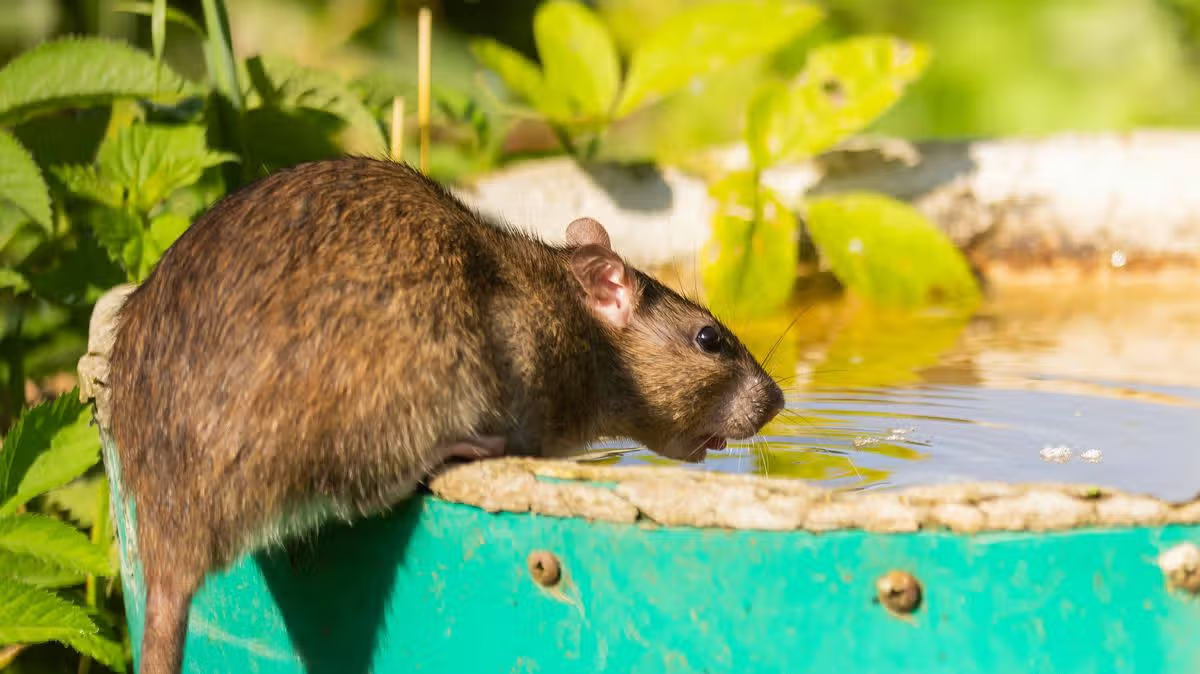
As the UK continues to experience extreme heat this summer, the chance of seeing rats in your garden may be greater – but experts say a 36p product from Asda could help keep them away

Asda shoppers have been told to snap up a 36p product which could prove vital in stopping rats from entering their homes. Following record-breaking temperatures throughout the UK and with heatwaves continuing to define the summer, the likelihood of spotting rats in your garden may be higher.

This is because the severe heat has depleted many of their natural water sources, forcing them to abandon the security of drains, sewers, and other subterranean habitats to seek out new areas in their search for hydration and relief from the soaring temperatures. Our gardens are particularly attractive to rats during the summer months, due to readily available water sources and the possible access to food waste from barbecues and other outdoor dining.

The UK is home to two species of the animal – the brown rat, also called the common rat or the sewer rat, and the rarer black rat, occasionally known as the ship rat. Rat populations fluctuate considerably, but are thought to number anywhere from 10 million to over 100 million.

Advertisement

They’re highly adaptable creatures, and anyone averse to them may be disturbed to discover rats can fit through openings around the size of a £1 coin, or 20mm, enabling them to gain access to homes, sheds, and beyond.

Saif Derzi, founder of cash house buyers Property Buyers Today, said: “Homeowners should check for gaps around pipes and cables, damaged air bricks, cracks in walls and foundations, and broken drains or drainage systems. The biggest mistake people make is assuming rats need a large opening to get inside.”

Saif continued: “People tend to associate rat problems with autumn and winter, but summer is often when populations expand, and infestations begin. The first step is identifying and sealing potential entry points before rats can get inside.

“Small gaps around pipes and cables can often be sealed using wire wool, and a pack of three at Asda costs only £1.08, which comes out to 36p per piece.

Advertisement

“Cement or specialist expanding foam can also work, while damaged air bricks should be fitted with metal mesh covers that maintain ventilation while preventing access.”

Offering further guidance, Saif added: “Homeowners should also ensure bins are securely closed, remove potential food sources where possible, and avoid leaving pet food outside overnight. If you spot signs of rats, it’s important to act quickly.

“Common warning signs include droppings, scratching noises, gnaw marks, and damage to insulation, wiring and pipework.

“While preventative measures can help, homeowners dealing with an active infestation should seek professional pest control advice as soon as possible.

Advertisement

“DIY solutions often fail to tackle the root cause of the problem.”

The specialist emphasised the need to tackle a rat infestation promptly rather than ignoring it, as the animals can cause considerable structural damage “from chewed electrical wiring and damaged insulation, to compromised pipework.”

Saif warned: “In severe cases, infestations can also impact a property’s saleability. Mortgage lenders may require evidence that an infestation has been professionally treated before approving a loan, which can delay or complicate a sale.”

Source link

Advertisement
Continue Reading

NewsBeat

a visceral story about the collapse of a ‘perfect’ life and the imagining of a new one

Published

on

a visceral story about the collapse of a ‘perfect’ life and the imagining of a new one

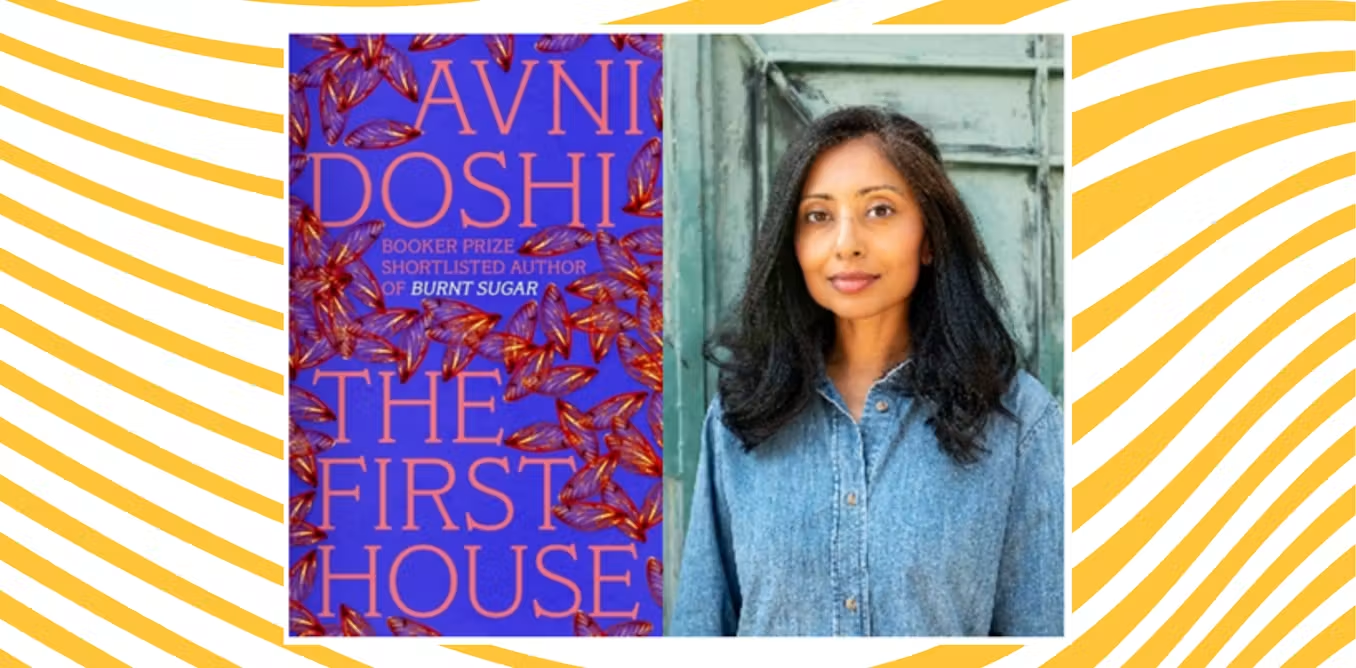
Set in a suburban America, Avni Doshi’s new novel centres around an unnamed protagonist who thinks her world and her sense of self are stable. She knows herself and all that is to come in her life. She’s followed the pre-determined path of being a wife and a mother. She believes she has a marriage that is forever and a house that is safe. Hers is an identity that has already been carved in stone – or so she thinks.

However, First House starts with the ending of her marriage, something she did not see coming despite clear issues. This ending also marks the beginning of something the protagonist could never have imagined: her unravelling.

In astrology, the first house is the sign of self, the centre of one’s identity. This is where we begin the journey to finding our place in the world, where we belong, and who we really are. It is in the first house that we meet Doshi’s unnamed protagonist, herself a practising astrologist.

When her husband decides to leave her, suddenly she must start all over again and carve a new life. With this comes the discovery of a new identity and persona. But she has to fall apart first to find who she really can be.

Advertisement

The second part of the novel is a reckoning with who she was, and what she has become. She is folded back into her Indian parent’s lives once again, and back into the family home. Here she realises that this first house, the house where she was born and grew up, shaped her immeasurably.

What really is a marriage? This is a question that haunts her. Is it the marriage of her parents? Is it her father’s indifference to her mother, and her mother’s insecurities and feelings of emptiness?

There is a familiarity in her descriptions of the way marriages become an obligation in certain cultures, where secrets roam silent in the chasm between a couple, where people stay together forever because they are expected to, and where love does not exist in the ravines of loneliness.

In such marriages so many children, much like Doshi’s protagonist, grow up with a vision of married life where love does not matter, believing they do not need to love in order to stay married. These children grow up not even understanding love.

Advertisement

Here “marriage is a solution” and intimacy is merely “living alongside another body”. When home lives do not offer safety, these children grow up looking to be rescued, seeking safety at any cost, and “in exchange for any sacrifice”.

Carving a new life

And, finally in part three of the book, we see the embryo of a new identity emerging.

There are many books about divorce, about the liberation and freedom of separation, about marriage as an anti-feminist establishment. But there are very few good books about the unravelling of a marriage and the disintegration of a mind; this is one of them.


Penguin

First House is about a woman who believed it was forever, who was given this “dream” and held fast to it. This is a woman who did not learn how to trust her own instincts or know her own desires. And even when she did, she pushed them away, buried them somewhere where they wouldn’t prod her or remind her of their existence.

Advertisement

She is a mother who loves her children, but did not want to have children. A wife who wants to stay married but is increasingly irritated by her husband, and imagines him dead or absent so she can be alone. But despite this, she chooses to stay married, and to have children, to continue the pretences of the roles she so despises.

These are the paradoxes that make this novel so potent: a fever-dream interspersed with myths and legends, with stories of cicadas who mate and die, of the way we somehow manage to decimate the very core of our own identity. There is a suffocation in the words, enveloping the reader like the putrid fragrance of a summer evening, when the heat becomes unbearable and the skin too clammy to touch.

Doshi’s writing is visceral and haunting, with a paradoxical weightiness in message and lightness in delivery. This is a story of finding love, desire and connection with our own selves. It is also the story of a woman who has to go mad and retreat into a yellow wallpapered room to discover that she is most comfortable with the burdens of her own body and mind – even when she was forced to dismiss and abandon the cry of her own longing for herself. This short book is intense but makes for engrossing reading.

This article features references to books that have been included for editorial reasons, and may contain links to bookshop.org. If you click on one of the links and go on to buy something, The Conversation UK may earn a commission.

Advertisement

Source link

Continue Reading

NewsBeat

King Charles says it’s ‘a good day to drown a few sorrows’ as he gets behind bar

Published

on

Daily Mirror

During a visit today to a brewery in Dorset, the monarch spoke candidly about the nation’s heartbreak over last night’s World Cup defeat

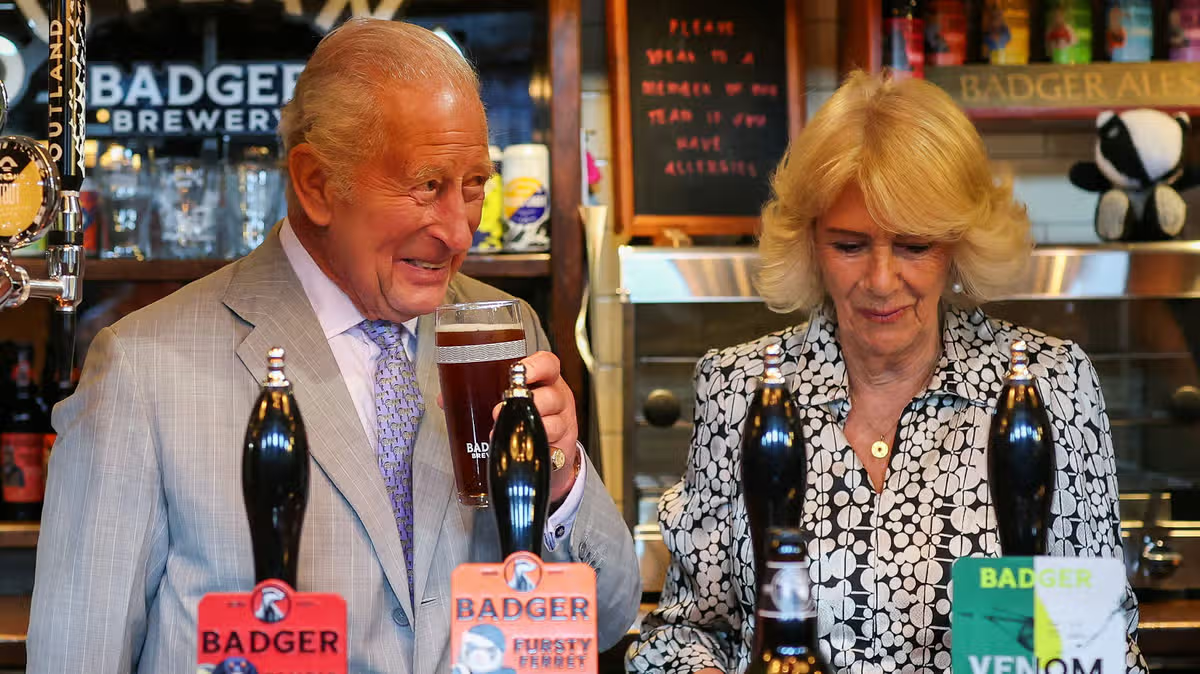
The King spoke for the nation saying it was “a good day to drown a few sorrows” as he pulled a pint of beer following England’s heartbreaking defeat to Argentina. On a visit to a Dorset brewery today, Charles received an applause and cheers as the Queen helped him behind the bar at the Hall and Woodhouse brewery near Blandford Forum.

Advertisement

After being shown how to pull a pint by Toby Heasman, 50, the company’s head brewer, Charles was told to do it “a bit quicker”. As Camilla helped her husband, the King said: “We’ll have to do it again.”

Noticing the pint still wasn’t full he laughed and said, “and again”. The Queen said “No, you’re going to spill it!” After finishing the task of pulling a pint of 3.4% ‘Fursty Ferret’, the King received applause and cheers from the staff.

Lifting the nearly-full glass, the King smiled and said: “Maybe it’s a good day to drown a few sorrows.” His quip received a round of applause and a few laughs.

Advertisement

Earlier, the King and Queen unveiled a plaque to mark the family brewery’s 250th anniversary. Charles heard how the Hall and Woodhouse brewery, whose pubs include the Duchess of Cornwall Inn, which was opened by Camilla in 2016, is run by a family now in its 9th generation.

Meeting Anthony Woodhouse, 61, and his son Matt, 34 – seventh and eighth generation family members respectively – Charles said that it was “remarkable” that the brewery had stayed in the family.

Upon arrival, Charles and Camilla met representatives from Teddy Rocks, a music festival sponsored by the Hall and Woodhouse Badger Brewery which raises money for children’s cancer charities.

Advertisement

Tom Newton, 37, told the Queen that he founded the three-day music festival after the death of his younger brother, Ted, who died aged 10 in 2010 of a rare form of bone cancer: Ewing sarcoma.

The annual festival, held in May at a venue two miles from the brewery, began in 2011 when it raised £400. Now it has grown to a festival that welcomes 6,000 people a day across three days. This year it raised £185,000 with a total of more than £1million to date for five charities.

In the Maltings Room, Toby Heasman, the head brewer who has been with the company for 20 years, presented Charles with a bottle from a fresh batch of their 7% Coronation Ale, which was created for the 2023 Coronation.

The Queen met Jill Meyerhoff, head of recruitment and apprenticeships and some apprentice chefs to hear about the company’s chef apprentice scheme.

Looking at the chicken dishes and pastries created by the chefs on the eight-month apprenticeship programme run by the brewery, Camilla said that it made her want to “tuck in”.

Charles and Camilla unveiled a 250th anniversary plaque and pulled a pint at the brewery which was founded in 1977 by Charles Hall, a Dorset farmer.

The Queen was given a posy of flowers as she left when she met some of the 9th generation of the family: Bowie Waterhouse-Clarke, 5, and his brothers River, 3, and 11-month-old Rudi.

Advertisement

Later, the King and Queen visited the historic Corn Exchange in Blandford Forum, a Georgian riverside market town on the banks of the River Stour.

The Grade I Listed building has recently undergone a significant renovation project including a newly-restored George II royal Coat of Arms, which was originally gifted to Blandford Forum Town Council in 1893 by Frank Blanchard.

In the Main Hall, the King and Queen were shown stalls showcasing the work of charities from across Dorset, including veteran and prison services, community and domestic abuse support, volunteers and faith, arts and education groups in the area.

Source link

Advertisement
Continue Reading

NewsBeat

Antrim Road LIVE updates as four taken to hospital following multi-vehicle crash

Published

on

Belfast Live

A Northern Ireland Ambulance Service spokesperson said: “The Northern Ireland Ambulance Service received a 999 call at 12:55 on Thursday, 16th July, following reports of an RTC on the Antrim Road area, Belfast.

“NIAS tasked four Emergency Ambulances and four Paramedics to the incident.

“Following assessment and initial treatment at the scene, four patients were brought to Royal Victoria Hospital, Belfast by Ambulance.”

Advertisement

Source link

Continue Reading

NewsBeat

Overwhelmed by all the longevity chat? Here’s what actually works

Published

on

Overwhelmed by all the longevity chat? Here's what actually works

None of us can predict how long we’ll live for, but we all want our time on this planet to be as active and joyful as possible.

It took the birth of my son a couple of years ago for me to truly grasp the importance of vitality. From the minute his little voice calls out ‘mama’ (usually at 5:30am — help!) to our bedtime cuddles at the end of the day, I want to have the energy to not only take care of him, but to play with him, make him giggle, and be present enough to enjoy his magic too.

These days, I’m bombarded with information about longevity. It’s both a perk and peril of my job, and sometimes it can be overwhelming. Supplements, AI-powered gadgets and complicated diagnostic tests — does any of it truly work?

The good news is that the basic tenets of longevity are simple and here I want to share with you what I do in my attempts to feel younger for longer.

Advertisement

Getting some serious shut-eye is key for tissue repair among many other things

Getty Images

Good sleep is a non-negotiable

Firstly, and most importantly, the key to living a good life is sleep. Basic, glorious sleep. “Sleep is the most underrated longevity intervention we have,” says longevity and integrative medicine expert Dr Tamsin Lewis. “And the one most systematically sacrificed in modern life.” It is also pleasingly free.

Advertisement

“During sleep, the glymphatic system clears metabolic waste from the brain,” Dr Lewis tells me. “Growth hormone is secreted in pulses that drive tissue repair. Inflammatory markers reset. Cortisol regulation, which touches everything from immune function to skin barrier integrity, is consolidated.”

As someone who has suffered from insomnia, I understand the hell of sleepless nights and subsequent sleep deprivation. These days I prioritise sleep by having black-out blinds and earplugs. I get into bed at least 30 minutes before I intend to shut my eyes, read a book for at least 15 minutes and hide the phone away. I take magnesium glycinate religiously and have noticed a marked difference in my sleep.

Eat your greens — and plenty of extra virgin olive oil

Salad on a plate

Nutrition plays an essential part in feeling younger for longer, so it’s time say goodbye to UPFs

Getty Images

Advertisement

The supplements market is crowded, and often overcomplicated. Of course, everyone’s needs are different, but I’ve been told by many experts that a multivitamin is non-negotiable. So start with that. It’s important to look for food-grown formulations. I also take omega-3 daily to help strengthen and repair my skin barrier.

One thing all the experts agree on, though is that no supplement can replace nutrition. I avoid UPFs as much as I can. Things I eat plenty of: leafy greens (dense in key micronutrients), oily fish like mackerel (even my two-year-old loves it) and we get through gallons of extra virgin olive oil (EVOO) in my house.

My Spanish husband imports huge bottles of his favourite brand from Andalusia. In Blue Zones (regions in the world where people have exceptional longevity), EVOO is a regular part of the diet. Thanks to its high polyphenol content, it acts as an antioxidant and an anti-inflammatory. I drizzle it on everything.

Supercharge your skincare routine

Advertisement
Lancome Longevity Absolue MD

Lancôme Absolue MD Intercept serum and moisturiser is The Standard beauty editor’s go-to

Getty Images and Lancome

In terms of skincare, I’ve been using the Lancôme Absolue MD Intercept serum and moisturiser, which is aimed at my age range (35-55). It’s formulated with Mitopure, which is a micronised form of Urolithin A, a molecule known in the longevity space for promoting the skin’s youthful properties.

Dr Lewis, a longevity physician, tells me it works “by targeting the cellular machinery rather than the cosmetic consequence”, adding that “interception, in the longevity science frame, means acting in the biological cascade before damage becomes structurally established and visible”.

Not only is it an exciting breakthrough in skincare — over 15 years of research has gone into it — but it smells gorgeous and it’s become a self-care treat at the end of each day. Sometimes it’s worth the splurge.

Advertisement

Other things in my longevity tool kit include an LED face mask, which I use three to four times per week. I have a lymphatic drainage massage as often as I can to help flush out cellular waste, practice yoga as well as running. I walk well over 10,000 steps per day and drink plenty of water.

Get the most out of your social life

Two women talking and laughing

Don’t forget the importance of quality time with friends, as community is a vital piece in the longevity jigsaw puzzle

Getty

Lastly, I also take socialising seriously. The older I get, the harder I have to work at scheduling it in, especially with the logistics of childcare added to the mix, but I have come up with fun ways to stay connected to friends.

Advertisement

For example, I am in a burger club. We meet once a month to try out a different burger joint in London. The burgers are delicious (and probably not adding to my healthspan) but the boost I get from being silly with my pals is invaluable.

I’m also doing a massage evening course, which is not only teaching me a new skill but exposing me to different types of people. Community is as important to our longevity as diet, sleep and exercise, helping with everything from inflammation, hormones, immunity, mental health [and] even dementia.

Dr Lewis believes the fundamental reason Blue Zone residents live so long is because of their “social structures, daily movement rhythms, diets built around whole foods, and communities that provide purpose and belonging as a matter of course”. Loneliness is so much more than a feeling — it causes our bodies to enter into a state of threat, which can adversely affect our heart, immune systems, cellular ageing and brain.

There it is: sleep, good diet, movement, socialising, a little self care and some well-informed skin care. Longevity really needn’t be too complicated.

Advertisement

In pictures: The exclusive Lancôme Longevity Clinic pop-up at Selfridges

Source link

Continue Reading

NewsBeat

Revealed: The moment that enraged Jude Bellingham so much he slapped Argentina star after World Cup loss

Published

on

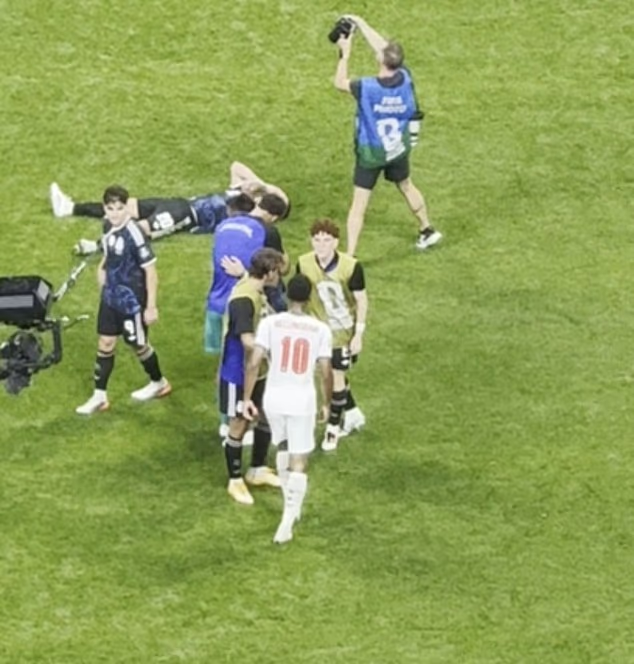
Jude Bellingham clashed with Argentina substitute Valentina Barco after the semi-final

The Argentina star on the receiving end of a slap from Jude Bellingham had goaded England‘s stars throughout their fiercely-contested World Cup semi-final clash. 

Valentin Barco, an unused substitute during Argentina’s dramatic 2-1 victory, was seen sprinting on to the field of play and taunting the Three Lions after Enzo Fernandez drew the reigning champions level in Atlanta.

Footage showed John Stones pushing Barco away in apparent frustration as England’s players waited for the lengthy celebrations to subside.

It has been reported that the Chelsea-bound star had been winding up the England bench for the entirety of the 90 minutes.

Advertisement

And the ill-feeling resurfaced at full-time. In the moments before the confrontation, Tottenham captain Cristian Romero was seen appearing to goad Bellingham after the final whistle.

Then, the England midfielder appeared to slap the back of Barco’s head after the Argentinian appeared to aim a comment in his direction.

Barco went to hug a team-mate when he turned and appeared to say something, although it was unclear who his comment was directed towards or what was said. Moments later, Bellingham seemed to lose his composure, with the exchange culminating in him aiming a slap at the back of Barco’s head.

Advertisement

Jude Bellingham clashed with Argentina substitute Valentina Barco after the semi-final

He was also at loggerheads with defender Nicolas Otamendi as other players tried to stop them

He was also at loggerheads with defender Nicolas Otamendi as other players tried to stop them

Bellingham appeared to slap Barco on the back of the head

Bellingham appeared to slap Barco on the back of the head 

The full-back then turned around and pushed Bellingham with tempers flaring. Nicolas Otamendi also came over and gave the England man a shove.

Advertisement

Several Argentinian players attempted to act as peacemakers, but it looked as if Bellingham and Otamendi wanted more head-to-head action – even when they were separated.

Later, once Bellingham’s tempers had cooled, he was seen being comforted by family and friends.

Footage showed the Real Madrid star embracing his father, Mark Bellingham, and mother, Denise Bellingham, while wiping away tears. His close friend and England team-mate Morgan Rogers was also seen hugging his parents.

The 23-year-old was also spotted sitting alongside his girlfriend, Ashlyn Castro, 28, appearing visibly downcast by the afternoon’s events.

Advertisement

Meanwhile, there have been calls for Argentina to face disciplinary action from FIFA, after the players held aloft a banner after the match that read ‘Las Malvinas son Argentinas’ or ‘the Falklands are Argentine’.

Despite FIFA’s ban on political flags, Tottenham captain Romero, Manchester United defender Lisandro Martinez and ex-Spurs midfielder Giovani Lo Celso celebrated with the controversial sign after the final whistle.

Captain and star player Lionel Messi was also seen dancing alongside the banner.

Footage showed the Real Madrid star embracing his father, Mark Bellingham, while wiping away tears

Footage showed the Real Madrid star embracing his father, Mark Bellingham, while wiping away tears

Advertisement
Bellingham was spotted sitting alongside his girlfriend, Ashlyn Castro, 28, appearing visibly downcast by the afternoon's events

Bellingham was spotted sitting alongside his girlfriend, Ashlyn Castro, 28, appearing visibly downcast by the afternoon’s events

FIFA has yet to comment, but the governing body is under huge pressure to punish Argentina for flouting its rules. Manchester United and Spurs are being urged to punish Romero and Martinez.

Twelve years ago, the team carried the same banner at an international friendly and was fined just £20,000.

But there are growing calls for the players who carried the banner at a match of such magnitude – watched by an estimated 950million people worldwide – to face tougher sanctions.

Advertisement

A total of 255 British servicemen were among the 907 people who died in the 1982 Falklands War, which saw UK armed forces retake the islands after an Argentine invasion.

Britain first landed on the uninhabited islands in 1690 and claimed them for the Crown in 1765. It has maintained a permanent presence there since 1833 – 47 years before Argentina became a fully unified state following its declaration of independence from Spain in 1816.

The last official referendum of Falkland Islanders was held in 2013, when 99.8 per cent of voters chose to remain a British Overseas Territory.

The offensive banner made a terrible night even worse for England. The team were leading 1-0 with just five minutes remaining before Messi’s men fought back to win.

Advertisement

Thomas Tuchel is facing calls to be sacked over his tactical decisions and defensive substitutions as England stood on the verge of reaching their first World Cup final since 1966.

The German manager insisted after the game that he had ‘no regrets’, but pundits and fans have turned on him after his team surrendered the lead when he took off speedy goalscorer Anthony Gordon and replaced the winger with defender Ezri Konsa.

Tuchel then took off Declan Rice for Nico O’Reilly and Reece James for Dan Burn in a further retreat ten minutes later. Enzo Fernandez equalised with five minutes left and Lautaro Martinez won it for Argentina in stoppage time.

There have been calls for Argentina to face disciplinary action from FIFA, after the players held aloft a banner that read 'Las Malvinas son Argentinas' or 'the Falklands are Argentine'

There have been calls for Argentina to face disciplinary action from FIFA, after the players held aloft a banner that read ‘Las Malvinas son Argentinas’ or ‘the Falklands are Argentine’

Advertisement

Bellingham, who enjoyed a brilliant tournament, appeared pained at that. In seeming frustration at Jordan Pickford, who produced a number of impressive saves, he looked to the sky, stretched out his arms, and appeared to say: ‘It’s in the middle of the goal.’

Tuchel concluded to BBC Sport: ‘We’re disappointed, we were so close but we got too passive after we scored and conceded a lot of chances.

‘We could not turn the ball possession around and then conceded so many crosses, chances and shots. We were close but couldn’t keep the level up after we scored.

‘Of course we wanted to go for the second goal but I did not have the feeling that offensive substitutions would help. We stayed in our 4-4-2 but we became passive, more and more passive.

Advertisement

‘We couldn’t win any balls, we couldn’t keep the ball so I think it was not a structural problem, we changed nothing. But the match changed completely.’

Harry Kane said: ‘I’m gutted for the boys, the team, the staff, the fans. We played a good game for the vast majority of it. Once we went 1-0 up, we seemed to try and hold on. At this level that’s not enough. Just gutted as we worked so hard to be here and the boys gave every last bit of sweat, blood, and tears.

‘We struggled to get pressure on the ball. First half, start of second half, we pressed well and put them under pressure. After the goal, whether it was them putting more men forward or us not being able to match them man-for-man, it was wave after wave. Lads were putting blocks in but it wasn’t enough.

‘The boys are ready for any moment. When we went ahead, the messaging was to go again and get another goal. Once they scored their two goals, it was to try and find something but we couldn’t get the momentum.

Advertisement

‘We had a lot of good moments in this tournament, a lot of good games. We’re close, we just need to find that missing piece in the final stage of the tournament. These tournaments take it out of you, so much effort and pressure and mentality. We’re missing that final piece.’

Dan Burn added: ‘Absolutely gutted. I thought we had the gameplan pretty well for the majority of it. But obviously, when we scored, we went a bit passive and dropped off and were ultimately punished for it.

‘We probably conceded too many chances and if you do that, they are going to get goals. Disappointing from us. We have defended games better and seen them out. When you get that close to the World Cup final, that hurts.’

How much is David Beckham set to pocket from his World Cup brand deals? Take on our quiz in our newsletter HERE.

Advertisement

Source link

Continue Reading

NewsBeat

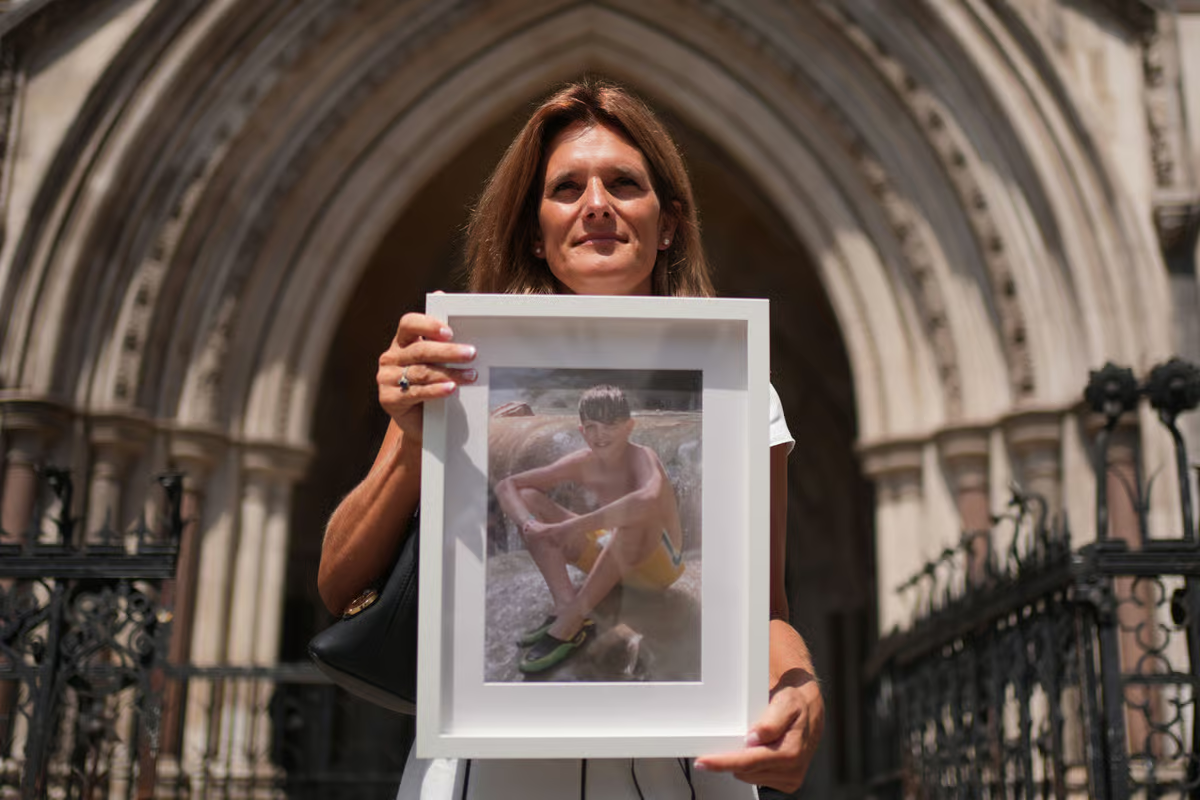
Mother of Jools Sweeney hopes new inquest into son’s death is a ‘turning point’

Published

on

Mother of Jools Sweeney hopes new inquest into son’s death is a ‘turning point’

“The protocols and the powers of all state bodies involved in the death of a child must be thoroughly reviewed, updated, and critically, harmonised across all agencies so that every single piece of evidence, in particular, relevant social media data, is preserved and available to the coroner from the earliest opportunity.”

Source link

Continue Reading

NewsBeat

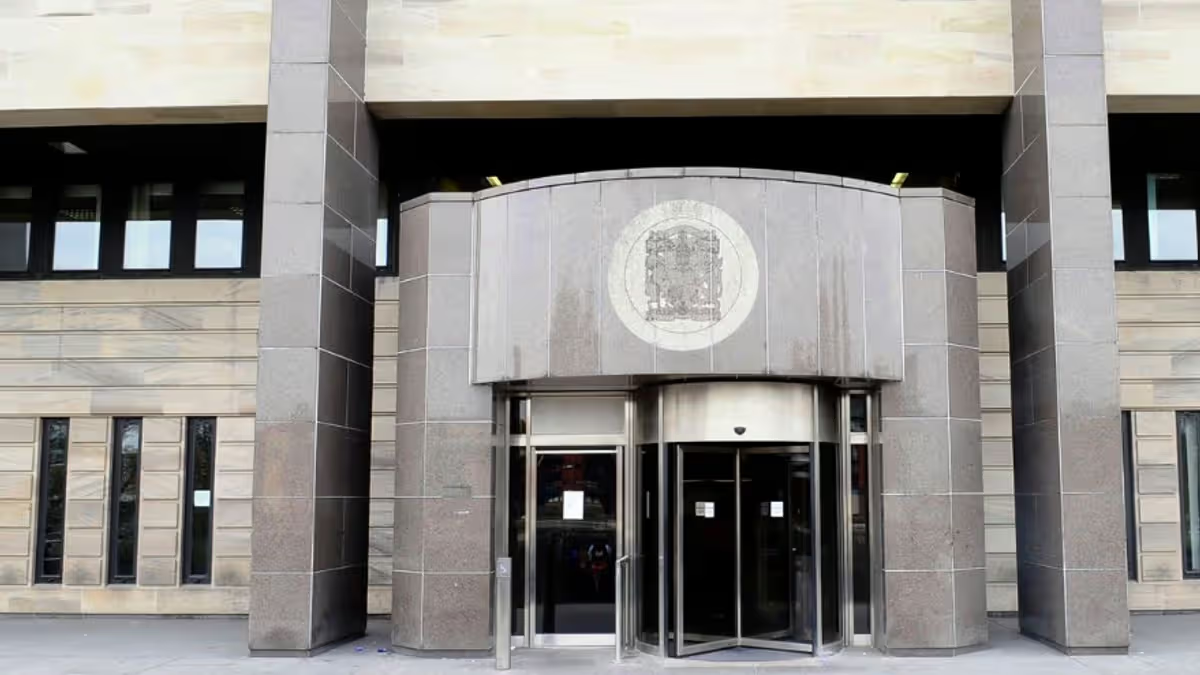
Glasgow police officer accused of forging document in attempted divorce fraud

Published

on

Daily Record

Michelle McFadden, 46, is alleged to have doctored paperwork to claim that a Scottish Police Credit Union account was empty at the time of her separation.

A police officer is to face court accused of a £4,600 attempted fraud by forging a document to be used in divorce proceedings.

Advertisement

Michelle McFadden, 46, is alleged to have pretended to her former partner, Mark McLennan, and two solicitors involved in the case at Paisley Sheriff Court, that a Scottish Police Credit Union account was empty at the time of their separation.

The charge states that McFadden knew that the actual sum in he account, which would have been deemed a joint matrimonial asset, was £4,600.

She is further accused of submitting a “forged copy” of the account to her solicitor, showing zero funds.

Court papers allege she pretend to have transferred the money to relatives and to a credit card account in November 2022, in a bid to conceal the true sum and attempt to induce solicitors Tony Caplan and David Forbes and her ex partner to accept that her “entitlement to a financial provision on divorce was more than it ought to have been”.

Advertisement

McFadden faces a single charge of attempted fraud, aggravated by the alleged abuse of her former partner.

She is alleged to have committed the offence between March 7 and May 1 2024.

McFadden’s address was listed in court papers as Police Scotland’s professional standards department in Dalmarnock.

Advertisement

The case called for a first hearing at Glasgow Sheriff Court on Thursday.

The police officer was not required to attend court and her solicitor did not lodge a plea on her behalf.

Sheriff Paul Reid continued the case to a further hearing next month.

Get more Daily Record exclusives by signing up for free to Google’s preferred sources. Click HERE.

Advertisement

Source link

Continue Reading

NewsBeat

The 2026 World Cup has been a tournament where alcohol brands hoped to win influence through sponsorship

Published

on

The 2026 World Cup has been a tournament where alcohol brands hoped to win influence through sponsorship

The 2026 men’s football World Cup has provided great goals, shock results and plenty of entertainment. It has also been extremely lucrative, earning Fifa billions of dollars in broadcasting rights, ticket sales and commercial sponsorship.

Those commercial partnerships include alcohol producers, whose brands have appeared across television broadcasts, digital platforms, social media and stadiums.

For example, Fifa has a long-standing sponsorship arrangement with the world’s biggest beer company. AB InBev owns Budweiser, which is the tournament’s official beer, and Michelob Ultra, the sponsor of the player of the match awards.

AB InBev and Fifa are delighted with the strength of their long-standing partnership and the World Cup’s ability to connect brands with millions of fans worldwide. From a business perspective, it is one of sport’s most successful sponsorship arrangements.

Advertisement

But from a public health perspective, what does it mean for the millions of children and young people who have been watching the tournament? For alcohol sponsorship has become an increasingly prominent feature of elite sport.

In the 1990s and early 2000s, branding was largely confined to adverts on TV or pitch-side boards, or some tournament sponsorship, such as the Carling Cup (now known as the Carabo Cup after the Thai energy drink brand that sponsors it).

But in 2026, marketing is far more sophisticated. Alcohol brands are heavily integrated into the fan experience, appearing in digital content, interactive promotions, fan zones and social media feeds that extend far beyond the 90 minutes on the pitch.

This evolution reflects broader changes in sports marketing, where sponsors have moved beyond being simply advertisers. Now they have become partners in creating the emotional experience surrounding major events.

Advertisement

But research consistently shows that greater exposure to alcohol marketing is associated with earlier drinking among adolescents, and increased alcohol consumption among those who already drink.

Marketing also increases positive attitudes towards alcohol, strengthens brand recognition and reinforces the perception that drinking is a normal part of sport and celebration.

Normalisation

Yet recent research my colleagues and I conducted suggests that some young people have quite a sophisticated understanding of alcohol sponsorship.

Many recognise that companies sponsor football and rugby because they attract huge audiences and create positive emotional associations with brands. As one participant put it: “People see [the product] – they want to get it.”

Advertisement

Lots of our research participants described how commonplace alcohol branding had become, saying they encountered it every time they watched football or rugby, at the stadium, on television and social media.

And many of the 44 young people aged 11 to 17 in Scotland we spoke to questioned why alcohol was linked to sport at all. They described the relationship as “confusing” and “ironic”, struggling to reconcile elite athletes and healthy lifestyles with unhealthy products that can increase the risk of cancer and liver disease.

At the same time, though, they understood why companies invest so heavily in sport.

Football is one of the few global events watched by entire families, meaning children are exposed to alcohol branding from an early age simply by watching matches with parents and siblings. As one young person observed: “If you’ve got it shown to you from a young age, it’s going to be more hardwired into your brain.”

Advertisement
A bar in Boston thanks Scottish football fans for their support.
Chasing Shadows Scot/Shutterstock

This reflects decades of evidence showing that marketing works through repeated exposure rather than any single advertisement. Sponsorship links brands with excitement, belonging, celebration and national pride, making those associations part of people’s memories of the event itself.

The challenge is becoming even more complex as alcohol companies increasingly promote zero-alcohol products and use “alibi” marketing that relies on familiar colours, logos and slogans rather than explicit references to alcohol. Although these sponsorship campaigns are often presented as more responsible, our research suggests many young people do not distinguish them from advertising for alcoholic drinks.

As one participant explained: “I just saw the alcohol brand, I never really thought of the zeros.” Others viewed these campaigns as a way of working around advertising restrictions while continuing to promote core alcohol brands.

None of this means that every child who watches football will go on to drink alcohol. Young people’s behaviour is shaped by families, peers, culture and many other influences. But alcohol marketing is one of those influences, and unlike many others, it is something governments can regulate.

Advertisement

Our research shows that young people themselves recognise the disconnect between promoting healthy sport while surrounding it with alcohol branding. If they can see that contradiction, perhaps the people who run international football should too.

Source link

Advertisement
Continue Reading

Trending

Copyright © 2025