

Politics
Liz Truss addresses half-empty hall at UK CPAC debacle

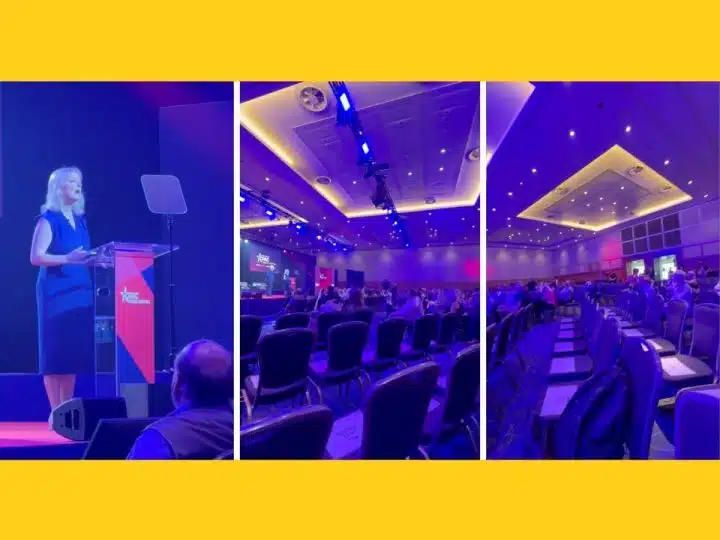
This week, the UK is hosting its very first Conservative Political Action Conference (CPAC). And if the early signs are anything to go by, there’s every chance it could also be the last:
Liz Truss opens CPAC GB. In fairness it’s quite early. pic.twitter.com/sTaGyQNLxL
— Mikey Smith (@mikeysmith) July 16, 2026
Conservative Political Action Conference (CPAC)
CPAC has been a mainstay of the American right for decades. In recent years, it’s begun to expand beyond the Americas too, with the UK its latest target market.
Reporting on the UK CPAC in June, we referred to it as a “Yank hand-me-down event“. We also noted:
The Conservative Political Action Conference (CPAC) is a US event at which American Conservatives gather to revel in their own evil. Or it was, anyway. The most recent event was significantly diminished from the conference’s heyday.
The problem America’s right-wing speakers have is that their guys are in power right now. These reactionary speakers do a lot better when they’re reacting to a hostile establishment; not when they’re carrying water for the most corrupt and incompetent government of their lifetimes.
We speculated that the British CPAC could outperform the Yank one, because our homegrown right wingers are out of power right now. Looking at the Liz Truss clip, however, we admit we were wrong – dead f*cking wrong.
It looks like she’s delivering a timeshare presentation to a mid-sized budget hotel.
Or perhaps a booze-free Margaret Thatcher memorial.
Bleak
If you’re interested, this is what Truss said in the clip above:
Cultural and spiritual nihilism.
Always an uplifting start.
She continued:
Open borders and rising unrest.
This week, we will have yet another Prime Minister installed in Downing Street. Andy Burnham. The seventh within ten years.
This is a bizarre thing for Truss to say given that she was the shortest-lived PM among this cavalcade of clowns.
Truss later asked the audience:
What do you all think of Andy Burnham?
The response sounded like what you’d hear in a big Greggs that had just announced the sausage rolls were all gone.
Truss finished:
I’ve been there. I know that nothing will change.
Inspiring stuff.
Truss wasn’t the only one speaking either:
He’s been drinking?
— DENISE ONEILL
 TheNHS (@DENISEONEILL6) July 16, 2026
Half expecting a really long walking stick to creep on from the side of the stage, hook IDS round the neck and yank him away from the podium.
— Mikey Smith (@mikeysmith) July 16, 2026
Suspect Jack Posobiec is accustomed to bigger crowds than he found before him at CPAC GB pic.twitter.com/L4ziSQGZ3Z
— Mikey Smith (@mikeysmith) July 16, 2026
Shock jock turner YouTuber Mike Graham is currently arguing the UK government is terrified over the sheer size of his audience. pic.twitter.com/fjmMTOObwE
— Mikey Smith (@mikeysmith) July 16, 2026
To be fair, this moment was pretty funny:
CPAC chairman Matt Schlapp currently slagging off the Tory party, arguing they shouldn’t be allowed to be called conservatives any more.
Liz Truss is, as far as we know, still a member of the Conservative Party
— Mikey Smith (@mikeysmith) July 16, 2026
Yank slop
The UK now has a steady stream of politicians trying to push Yank-slop politics on us. Recent examples include:
- Farage has taken over £80,000 from the US anti-abortion lobby.
- 8 out of 13 speakers at London anti-abortion march were from notorious US hate group.
- Activist urges UK ‘de-Yankification’ to escape Trump’s influence.
We also just saw this:
Hard-right MP Rupert Lowe has sparked fury after dismissing the Dunblane massacre as 'one murder' during a pro-gun rant on the US-based Joe Rogan podcast — The National (@ScotNational) July 9, 2026
 pic.twitter.com/3sdjgDdMDK
And this:
The Hateful Eight. pic.twitter.com/bvK3BP0jfd
— t/a Underscores Rn’t Us (@AndyPlumb4) July 15, 2026
There’s an obvious reason why British right wingers are pushing American right-wing politics, and it’s MONEY – the same reason why they do anything. Money can’t buy interest, however, and clearly there’s no audience for this guff; not unless they also start paying people to watch.
Featured image via the Canary
By Willem Moore

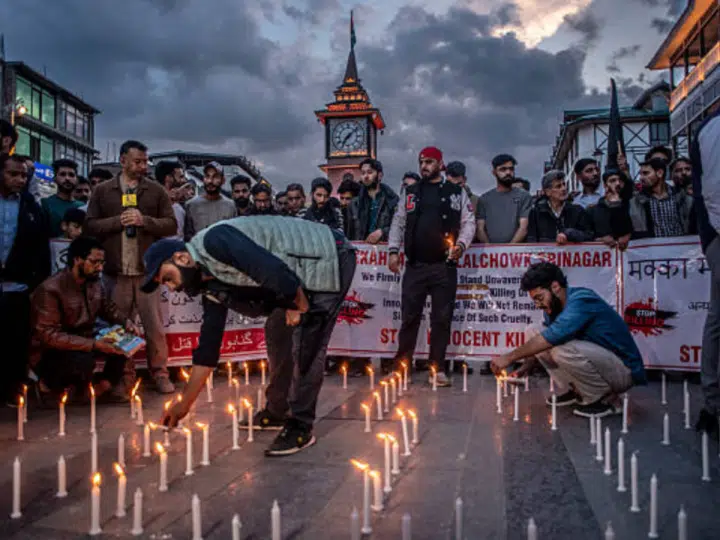
Abdul Rashid Wani, a timber trader from Kashmir, vanished from Indian military custody in 1997. While a certificate of his death has finally been granted after 29 years, his family is still searching for answers about what happened to him.
His son Junaid Rashid, who was five at the time of his father’s disappearance and is now 34, told Agence France-Presse (AFP):
The government has now, after 29 years, acknowledged in court that such an atrocity was done. If this had happened earlier, I think Kashmir would look different. Our lives would look different, and my mother’s health would be something else.
He still has haunting memories from the tragedy:
I remember my grandmother telling a colonel at our home, ‘Just give me my son back.’
Kashmir: enforced disappearances
Abdul Rashid Wani’s case is not an isolated tragedy. According to rights groups between 8,000 and 10,000 people have been “enforced disappeared” in Kashmir since the late 1980s.
The People’s Union for Democratic Rights, said in April following the issuance of Wani’s death certificate that his case “encapsulates the human rights story of the past 36 years in Jammu and Kashmir.”
They continued:
This case is just one of thousands in Jammu and Kashmir where not only has the disappearance been confirmed, but the State forces responsible have been identified and indicted by judicial enquiries, State Human Rights Commission findings and police investigations. Yet, the reality is that no one has been prosecuted till date for any of these crimes and the Central Government maintains a 100% record in rejecting any sanction for prosecution when approached.
The PUDR noted that the judicial inquiry confirmed the abduction and “stated that the agency involved was 2/8 Gorkha Rifles led by an officer named Yadav,” while the magistrate’s ruling later named Major V.P. Yadav as the officer who ordered Wani’s detention.
Half widows
In Kashmir, the wives of the missing men are known as “half-widows” – unable to mourn fully until they know their husbands are dead, AFP said.
They also interviewed Jana Begum. Her husband and their four children were awoken by soldiers hammering on their door at a midnight in 2002. They detained Manzoor Ahmed Dar and she has not seen or heard from her husband since. She said:
It felt like a bird of prey snatched him from us.
The family performed symbolic funeral rites in 2016 after police officers told them privately that Dar had died “during interrogation”, his daughter Bilkees Manzoor said.
Debate in UK Parliament
On July 7, 2026, MPs gathered in Westminster Hall for a debate on “Human rights in Kashmir,” led by Imran Hussain, Labour MP for Bradford East and chair of the all-party parliamentary group on Kashmir.
While the discussion was focused on the communications blackout currently in Pakistan-administered Kashmir, MPs also reminded the House that such abuses occur on the Indian side too.
Nadia Whittome, Labour MP for Nottingham East, said:
I have been contacted in recent weeks by many constituents who are desperately worried for their loved ones in Kashmir, and who are struggling to reach them because of the communications blockade. Does the Minister agree that such communication shutdowns, which have also been used by Indian-occupied Kashmir, are often an attempt by authorities to hide and cover up the crimes and human rights abuses they are committing?
Jeremy Corbyn reminded MPs of Britain’s colonial legacy in the region:
The way Kashmir was treated at the time of Indian independence is an overhanging colonial responsibility for Britain that has never been resolved.
The families of Abdul Rashid Wani and Manzoor Ahmed Dar continue to live with wounds that time has not healed. Theses are wounds inflicted not just by the soldiers who knocked on their doors, but by a colonial legacy that partitioned a land and left its people to bear the consequences.
Featured image via the Canary
By The Canary

The Royal College of Paediatrics and Child Health (RCPCH) has updated its landmark State of Child Health report, which looks at the health of children across 12 indicators.
Nearly a decade after its first publication, this latest analysis has found that children’s health in the UK across all areas is either in decline or has stalled completely.
Ranging from infant mortality and mental health to obesity, immunisation, and asthma, the report concludes that widening inequalities, gaps in data and chronic underinvestment are putting the health of a generation at risk.
The report found in England:
- Only 84% of children receive two doses of the MMR vaccine by age five, well below the WHO 95% target.
- More than one in three (36%) children aged 10–11 is overweight or severely overweight.
- One in five children aged 8–16 has a probable mental health disorder.
- Children in the most deprived areas are four times more likely to die from asthma.
- Infant mortality in the most deprived communities is more than double that seen in the least deprived areas.
Health of children not improving
Alongside its wider analysis, a recent YouGov poll commissioned by RCPCH found that only 12% of parents believe child health has improved over the last ten years, suggesting that progress has not been felt by families and that much more remains to be done.
RCPCH is calling on the UK government to make child health a national priority, not an afterthought.
The State of Child Health sets out a clear plan to improve children’s health and reduce inequalities:
- Invest fairly and consistently in children’s health services and the workforce.
- Improve the collection and sharing of child health data across the UK.
- Introduce binding national targets to improve child health outcomes and narrow the gap between the most and least deprived.
With a new prime minister soon taking office, RCPCH calls on the government to act before another generation of children gets let down.
RCPCH officer for health improvement, Dr Helen Stewart, said:
The UK’s record on children’s health should be a national embarrassment. Across Western Europe, many other countries are achieving better outcomes for children, yet too many children here are being left behind.
The State of Child Health report shows that we are categorically failing children in the UK, but especially those from ethnic minorities and poorer backgrounds.
When the Darzi Review was published in 2024, it laid bare the scale of children’s worsening health in England and was meant to mark a turning point. Instead, despite the warnings, little has changed.
Without action, more children will grow up in poor health, entering adulthood at a disadvantage and putting even greater pressure on families and public services.
In their first 100 days, the new prime minister should set out how they will make children’s health a priority through sustained investment, better use of data and clear national targets. Paediatricians have provided the blueprint, now policymakers must listen.
Rachel de Souza, children’s commissioner for England, said:
Children all over the country want to grow up healthy, happy, and able to fulfil their potential – yet too many children are being held back by circumstances beyond their control, and too many families are experiencing tragedy.
Factors such as where children live and family finances shouldn’t determine whether they can have a healthy start in life. But some of our poorest children are facing the greatest barriers to good health.
This important report shows that the country is not only overseeing a decline in children’s health but also failing to uphold their rights.
Improving children’s health and wellbeing must be at the heart of government decision making. We must ensure every child who can be is vaccinated, every mother and baby gets dedicated care, and that every area is held to account for doing so.
We have to tackle problems before they escalate and make sure every child can access the support they need, regardless of where they live.
Sebastian Rees, head of health at the Institute for Public Policy Research (IPPR), said:
IPPR has long argued that the UK has become the sick man of Europe on health. This report from RCPCH shows that this starts at a very early age. For a government committed to giving every child the best start in life, that should be of huge concern and deserves far more attention than it currently receives.
Poor health in childhood doesn’t just have a huge impact on young people and their families in the here and now – it also casts a long shadow. IPPR’s own research shows that poor health in childhood carries through the entire life course, shaping people’s health and opportunities decades later.
This is a complex, multifaceted problem that requires action right across government, but a Children’s Health Investment Standard that protects spending on vital early years services would be a great place to start.
Dr Sunil Bhopal, director of child health research at Born in Bradford, said:
This solutions-focused report shows that many of the challenges facing children’s health are not inevitable.
By tracking the lives of thousands of children and families for over 20 years, our work at Born in Bradford shows that these challenges are often the product of inequalities and circumstances that policy has the power to change.
‘State of Child Health 2026’ combines robust data with the experiences of children, young people and clinicians.
It puts the evidence in front of the people with the power to act on it.
Featured image via the Canary
By The Canary
Correction: Thomas Tuchel really is the Andy Burnham of football after all. Overhyped as the harbinger of ‘change’, he has turned out to be as bad as his predecessor – and arguably even worse.
Long ago and far away (ie, last week), in that moment of hopeless hope for England in the World Cup, I wrote that, while dullard, safety-first-and-last England coach Gareth Southgate had been ‘the Keir Starmer of football’, his successor Tuchel was different.
Unlike Southgate, Tuchel appeared prepared to go for the kill and go down fighting; as he told the players before they went on the attack against Croatia in the first group game, if England lose, then ‘we lose playing our way’. Hence, I and others accepted that the German was something more than a Burnham-style cosmetic replacement.
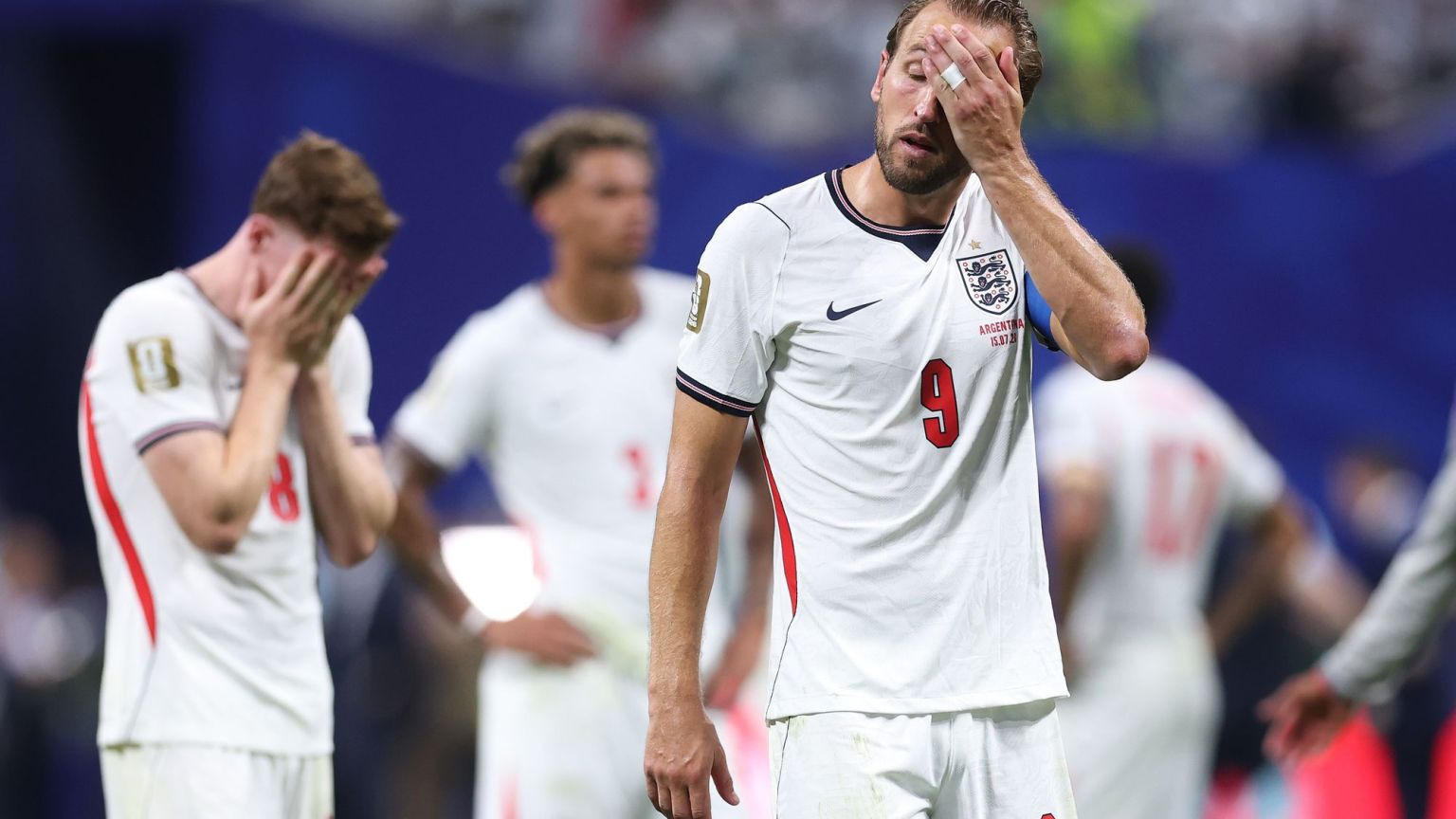
A week is a long time in football, and we now know how wrong and naive we were. England did indeed lose the semi-final against Argentina ‘playing our way’. The problem is it was the same spineless, soul-crushing way that Southgate’s England lost the 2018 World Cup semi-final to Croatia, and the Euro 2020 final against Italy.
We go a goal up – and then just give up the ball to the opposition and hope we can hang on. Which we can’t. If the definition of insanity really is doing the same thing over and over again and expecting a different result, then England football coaches must all be stark, raving mad.
When the bilingual Tuchel responded to Anthony Gordon’s 55th-minute goal by taking off attacking players – including the goalscorer – sending on defenders, and camping on the edge of our own penalty area, the writing was on the wall in whichever language you like.
Lionel Messi may not be the player he was; at 39 he seems to be playing the elderly gents’ game ‘walking football’ much of the time. But the little Argentinian maestro is still quite capable of unlocking a static defence, as if he was practising crossing over a line of training ground dummies. Tuchel sent on the big, lummox-like England defenders to deal with the crosses; Argentina scored the winner with a free header. Adios, Ingleses.
Professional pundits and fan TikTokers alike were understandably shocked and furious with Tuchel’s tactics. Yet in hindsight it all seems so predictable. As the brilliant Martin Samuel wrote in The Times: ‘The disease remains and is as contagious as ever. Different group, fancy new boss, same dispiriting outcome. When it matters, for all the character, for all the chemistry, there is still a lack of conviction.’ And experience teaches us that it is an English disease, not an alien German infection of the body football.
Yes the Argentinians were a bit dirty, though hardly in the league of their predecessors, whom Alf Ramsey dubbed ‘animals’ after the 1966 World Cup quarter final. (By coincidence, the Argie captain on that day, the talented but thuggish Antonio Rattín, who was sent off but famously refused to leave the pitch until a translator was brought on to explain, an incident which led to the introduction of red and yellow cards, died this week.)
Yet for all the Argentine fouls and insults, for all Messi’s residual magic tricks, the conviction remains that England could and probably should have won. But like Southgate before him, Tuchel bottled it and blew his historic opportunity.
This may well have been England’s best chance to get to and maybe even win a World Cup final. Instead the unspectacular Argentina will be there on Sunday; though Spain, excellent conquerors of France, must be favourites to spoil FIFA’s long-term wish to hand Messi the trophy as if it were a retirement gold clock.
The Argentina players caused more controversy at the end by parading a makeshift ‘Las Malvinas son Argentinas’ (‘The Falklands are Argentine’) banner on the pitch. Surely even the invertebrate Burnham wouldn’t swallow the global humiliation of surrendering sovereignty over the Falkland Islands, as Starmer did with the Chagos Islands sell-out. But then again, who knows? After all, their football equivalents have done their best to surrender any English claim to be a power in world football.
Mick Hume is a spiked columnist.

(Peter Byrne / PA Images / Alamy)

6 min read
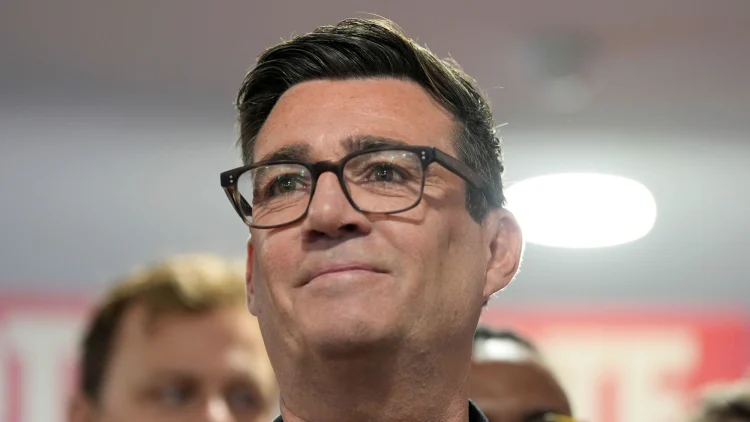
Britain’s next Prime Minister, Andy Burnham, has put domestic issues at the heart of his agenda – but as his soon-to-be predecessor Keir Starmer has found, the world stage is always calling.
In his seemingly constant flights from summit to summit, Starmer was branded ‘never here Keir’ by critics who accused him of spending too much time abroad. His allies insisted he was restoring the UK’s standing internationally by forging closer relationships across the globe.
Olivia O’Sullivan, director of the UK in the World Programme at Chatham House, told PoliticsHome that foreign trips have become essential for heads of government in an increasingly unstable world.
“There’s sometimes a bit of an idea that Starmer made foreign policy a priority, because he was away a lot. If you look at it, he didn’t travel loads more than a lot of other prime ministers, and it wasn’t exactly a choice as such,” she said.
“We are just in an era when international issues are really pressing. There are multiple conflicts. [US President Donald] Trump himself is very volatile and tends to favour leader-to-leader encounters and relationships.”
On taking office and after appointing his cabinet on Monday, Burnham is expected to make the traditional series of phone calls to world leaders. This will likely include his first exchange with Trump, who last month told reporters that all he knew of Burnham was that he was the “mayor of a town” and that he is “extremely liberal”.
On his first day alone, Starmer called Trump’s predecessor Joe Biden, Ukraine’s Volodymyr Zelenskyy, the EU’s Ursula von der Leyen, Ireland’s Simon Harris, Italy’s Giorgia Meloni, Poland’s Donald Tusk and Canada’s Justin Trudeau. Calls with France’s Emmanuel Macron and Germany’s Olaf Scholz were only made on his second day, along with India’s Narendra Modi, Japan’s Fumio Mishida and Australia’s Anthony Albanese.
Starmer went on to meet many of them only a few days later at a Nato summit in Washington DC, but Burnham arrives in Downing Street too late for this year’s summit.
As such, his first major international conference is likely to instead be at the United Nations General Assembly in late September. If he attends as expected, this will mark his first in-person encounter with several of the UK’s most important allies.
“It may be an opportunity to meet Zelenskyy if they haven’t found an opportunity before, and I expect Burnham will want to continue underlining the UK’s support for Ukraine,” O’Sullivan said, adding that it may also be his first meeting with Trump.
“There are some obvious questions around the tariff pacts and investment agreements [with the US] that Starmer was able to secure during his time as Prime Minister.
“Some aspects of those have been suspended or put on ice – it’s difficult to maintain long-term agreements with the Trump administration. So it’s possible Burnham will want to talk about that, but an awful lot is just being eclipsed by the US-Iran conflict.”
A UK-EU summit scheduled for 22 July 2026 was postponed following the news of Starmer’s departure, with a new date yet to be set. PoliticsHome understands however that it will take place in the early autumn.
“That will tell us a lot about how the Burnham government wants to take forward that relationship,” O’Sullivan said. “They [the EU] will be really keen to see the UK bring some clarity about where it wants to go…
“Not just [on] individual programmes and initiatives, but ‘Where are we going together on a joint approach to defence? What do you want from the trade and mobility initiatives that we’ve been discussing for more than a year now?’”
Discussions over how the UK can work more closely with Europe on defence comes after the EU last year established its Security Action for Europe (Safe) loan guarantee scheme.
“We’ve wanted to join it, a lot of European countries have wanted us to join it as well,” said Thomas Nurcombe, research manager at the Coalition for Global Prosperity.
“The barrier has been the level of financial commitment that Britain puts in – with one particular country setting quite a high bar for us to achieve, when other European countries want it to be lower, because they want us to be involved.”
Talks over whether the UK would join Safe collapsed last year after France pushed the EU Commission to demand more than €6bn in entry fees from the UK. The price tag was later slashed to €2bn, but no agreement was reached.
A proposed EU-UK youth mobility deal, which would allow 18 to 30-year-olds to live and work in each other’s countries, will also be up for discussion. The UK’s attempts to cap entrants from the EU at 50,000 per year have been derided as a “non-starter” by EU diplomats and will be a key issue for Burnham to unpick.
1-4 November will then mark the Commonwealth Heads of Government Meeting (CHOGM) in Antigua and Barbuda. Thankfully for Burnham, the Caribbean nation is rather easier to reach than the last CHOGM summit in Samoa, which required Starmer to take a 27 hour flight via Canada, California and Hawaii – accompanied by journalists.
Later in November, the Cop31 UN Climate Change Conference beckons at Antalya in Turkey. Burnham will face a level of expectation to attend, as British PMs have gone every year since the UK hosted the Cop26 summit in Glasgow in 2021.
“It will be really interesting to see if he goes to Cop,” said O’Sullivan. “I expect he will, and I expect he will continue to make climate a priority, but he might slightly reframe the way in which he does that.
“We know he cares a lot about industrial strategy, regional investment – it may be that he weaves in those themes and priorities around his approach to climate.”
If Burnham does attend Cop, he may have to fly directly to or from the European Political Community summit in Ireland, which takes place right in the middle of Cop on 12 November.
As Christmas nears, Burnham will finally go to Miami for the G20 conference on 14-15 December. O’Sullivan said that having Trump as the event’s host may make for a “slimmed-down” and “unusual” meeting, given his administration’s scepticism towards multi-lateral summits.
The conference will set some of the context for 2027’s G20 meeting, which will be hosted by Burnham in the UK.
“It will be interesting to see if there are any themes and approaches from how the US does it that the UK wants to pick up,” O’Sullivan said, “or if the UK chooses to be a bit more focused on getting back on track after a Trump-hosted G20. A lot depends how things unfold in Miami.”
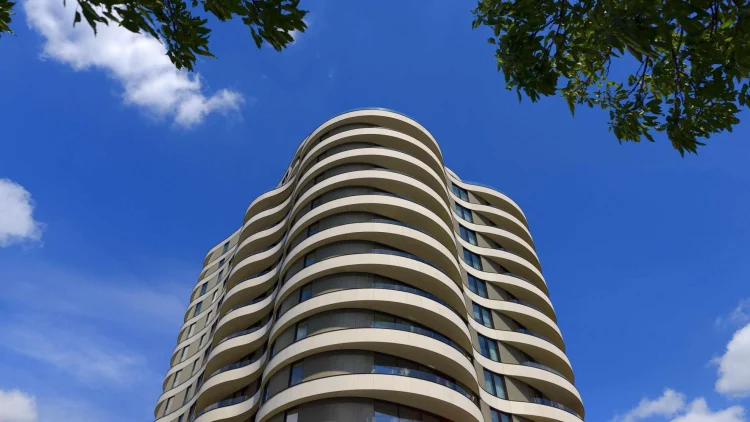

London: Riverwalk apartment building, Millbank | Image by: PjrTravel / Alamy

4 min read
Patrick Radden Keefe’s powerful investigation into the death of a teenage boy is also a thoughtful examination of organised crime, dirty money and tax avoidance in contemporary London
It takes less than 20 minutes to walk the 0.8 miles from Parliament to the Riverwalk development by Vauxhall Bridge, where 19-year-old Zac Brettler died after jumping off a balcony from one of the luxury flats in late 2019 into the Thames.
London Falling tells Zac’s story through the prism of a shadowy underworld of serious organised crime, dirty money and the international networks brought to fame in the McMafia television series. Successive governments have committed to addressing London’s role as the “dirty money capital of the world”, and London Falling provides a powerful reminder that the victims are not faceless.
Patrick Radden Keefe reconstructs Zac’s life with remarkable care. Beginning with his family’s history, as the grandchild of two Holocaust survivors, he traces the years, months and final hours leading to Zac’s death. This culminates in a fifth-floor apartment apparently owned by Verinder Sharma – better known as “Indian Dave”, a convicted gangster. Sharma was introduced to Zac by Akbar Shamji – an elusive businessman whose interests span property, cryptocurrency and carefully cultivated self-promotion – who claimed he had no idea who Zac really was.
Keefe’s portrait of Zac himself, and his parents Rachelle and Matthew, is compelling and sensitive. He reinvented himself as “Zac Ismailov”, the son of a Russian oligarch destined to inherit vast wealth. Keefe resists treating these fabrications simply as personal deception. Instead, he also presents them as an exaggerated response to a culture that prizes status, money and proximity to power. Educated alongside the children of oligarchs and immersed in an online world promising extraordinary wealth through foreign investment, cryptocurrency and entrepreneurial ambition, Zac is less an isolated fantasist than a product of values surrounding him.
Keefe resists treating these fabrications simply as personal deception
Property is at the heart of the story. Zac pretends to live in One Hyde Park, the Candy brothers development that is underpinned by an extensive network of shell companies. These corporate structures have helped ensure the individual owners remain anonymous, and sparked extensive Private Eye coverage on the brothers’ tax arrangements. Nick Candy famously once described London as the “best tax haven in the world”. He is now the treasurer of Reform UK.
Following the full-scale invasion of Ukraine, the previous government introduced a Register of Overseas Entities, requiring foreign legal entities owning or buying UK property to declare their beneficial owners to Companies House. However, they left a huge loophole by exempting property owned in secretive trusts. A consultation on requiring trust transparency closed in February 2024, and should be high on the in-tray of any minister seeking to ensure we have basic information about who owns and controls property in this country.
As Tom Burgis in Kleptopia and Oliver Bullough in Butler to the World have brilliantly argued, the policy response must go far beyond transparency of property. The UK anti-corruption champion Margaret Hodge is currently conducting a review into asset ownership in Britain. At the height of the Londongrad years our private schools, art, sports clubs, universities, cultural institutions and much more, were far too easily brought up with risky overseas cash
 Baroness Hodge will no doubt have far-reaching recommendations that any government should take seriously. Politics is not immune, and the Representation of the People Bill currently moving through Parliament is an essential tool to tighten up the rules and enforcement to prevent dirty money corrupting our democratic system further.
The book ultimately asks a larger question than how Zac Brettler died. Keefe is less interested in resolving the mystery than in explaining how a city could produce the circumstances that led to Zac’s death. In doing so, he offers not only a compelling true-crime investigation but also a thoughtful examination of contemporary London and the human cost of allowing serious organised crime, dirty money and corruption to flourish.
Joe Powell is Labour MP for Kensington and Bayswater
London Falling: A Mysterious Death in a Gilded City and a Family’s Search for Truth
By: Patrick Radden Keefe
Publisher: Picador

The Durham Miners’ Gala – ‘the big meeting’, as locals still call it – took place last week. Once, every coalfield had its gala. Now Durham’s is the last great survivor. But survival is not the same as relevance.
In recent years, the question hanging over the ‘big meeting’ has become harder to avoid: what is it for, and who does it now belong to? That question became sharper still after County Durham, long impregnable Labour country, turned into something much closer to a Reform UK stronghold in last year’s local elections.
The gala itself remains organised around a politics that belongs to another century. It is caught between three worlds: the culture of the old industrial working class, the socialist politics of the 20th century and the activist liberalism of the contemporary left. Add to that the visible support for Reform among the families and descendants of Durham colliers, and the contradiction becomes impossible to ignore. The big meeting can no longer pretend that these tensions are merely background noise.
Over the past few years, the Gala has become less a living expression of working-class politics and more a stage for the narrow concerns of the Corbynista activist class. A clip from this year’s event made the point brutally. The ‘Palestine Bloc’ – around 30 (mostly white) activists carrying Palestine flags and wearing the keffiyeh uniform of the modern protester – moved through Durham behind a few dancers in traditional Palestinian dress. They shouted ‘free, free Palestine’. Some in the crowd clapped. Others booed. John Cleese posted a video of it on X, with the observation that it would not be out of place in a Monty Python sketch. He’s right.
This wasn’t the first time the gala has embarrassed itself. The flashpoint last year was the invitation to Husam Zomlot, the Palestinian ambassador to the UK. It seems that every year the gala is dragged into another controversy because the activist left insists on making it speak the language of identity politics and middle-class luxury beliefs. As a result, the working class has been turned into a costume, a backdrop, a set of banners and brass bands to lend moral weight to causes that often have little to do with the people whose history is being borrowed.
I know what these galas meant because I grew up with them. As a child, I went with my family to the local gala at Berry Hill in Mansfield. It was a great occasion, not a seminar in radical theory. Families from across the Nottinghamshire coalfields met, talked, drank, listened to brass bands and watched the banners pass. It was social, cultural and political all at once.
Yes, there were speeches from trade-union leaders and Labour MPs. But coalfield Labour was not the same thing as metropolitan leftism. Mining communities were often Labour by loyalty and history, but conservative in instinct: rooted in family, place, work, respectability and belonging. The banners could be radical, with muscular miners, Keir Hardie, sometimes Marx and Lenin, and slogans such as ‘Unity is Strength’ and ‘Our Future We Build From the Past’. But the life around them was ordinary, local and deeply communal. There were Coal Queens, baking competitions and vegetable competitions, with miners spending the year cultivating giant onions and leeks.
That was not an embarrassment. It was part of the texture of working-class life. The politics were housing, healthcare, education, jobs, wages, family and the cost of living. They were not abstract performances staged for the approval of graduate activists.
That is why this year’s gala felt less like a celebration than a warning. The British left still wants the imagery of the industrial working class, but it no longer knows how to speak to the people who inherited it. Their politics are too awkward: patriotic, communal, anti-authoritarian, loyal to family and place, suspicious of elites, and often far less liberal than the people who claim to champion them.
The ‘neu-left’, as I call them, want the banners, the brass bands, the flat caps and the moral inheritance, but not the actual working class, with all its complications. If one image captures the absurdity of the contemporary left, it is this: Palestine activists marching through Durham, and Angela Rayner looking down from a balcony like visiting royalty, the crowd clapping loudly enough to try to drown out the boos, and Reform sitting in the council offices.
Lisa McKenzie is a working-class academic.

In an absolutely wild clip, an individual has recorded the US Blue Angels performing a recklessly low fly by over a beach full of people. And when we say low, we mean low. When we say ‘reckless’, we mean the subsequent air currents caused chaos:
There's a reason the FAA banned jets from flying over crowds at airshows.
Pete Hegseth's tiny dick is going to get someone killed. pic.twitter.com/3haZj5oXWW
— Cuckturd (@CattardSlim) July 15, 2026
Blue Angels: Sonic BOOM
In the clip above, a fighter jet is seen passing over the sea in the distance. Moments later, a second jet shoots over head, passing mere metres away from a nearby hut. Seconds after, the wind currents catch up, and people begin to cover their ears — dust blowing everywhere as beach furniture gets knocked down and blown away.
Watching the clip, it’s easy to imagine an older or disabled person being seriously injured. Unsurprisingly, then, the Blue Angels (equivalent to the UK Red Arrows) are reviewing what happened, stating:
During an arrival maneuver, an aircraft flew lower than standard profiles, resulting in a disturbance on the beach that affected civilian chairs and umbrellas
The US Navy group added:
The safety of our hometown community, spectators, and our pilots is our highest priority. Team leadership is reviewing the circumstances surrounding the maneuver and conducting a thorough safety review to ensure all operations adhere to strict Navy and FAA safety standards.
Confirming this pass was out of the ordinary, one of the beach goers said:
I’ve been coming for 10 years and I’ve never seen a pass like that in my life
High T
As the commenter at the top noted, this could be linked to the tendencies of US war secretary Pete Hegseth. Giving you an idea of how insecure the guy is, Maddison Wheeldon reported the following on Hegseth in March this year:
US Defence Secretary Pete Hegseth announced in an address to US citizens that “dumb, politically correct wars of the past” are the “opposite” of the intentions of the US administration.
That’s right; the guy thinks the invasion of Iraq was ‘woke’. And he presumably he thinks this to excuse the years of failures the US suffered as a result of its foolish and illegal decision to overthrow a sovereign government.
In a further sign of his insecurity, Hegseth is currently urging his soldiers to pump themselves full of testosterone. Apparently, you’re not a real man unless the hormone is literally dripping from your knuckles:
Once you realize people like Hegseth are losers who only dream of warmongering and abject cruelty, everything they do makes sense. Everything being done is to just maximize how of a perceived threat we can be, even though America is the biggest threat already to the entire world https://t.co/fPkTbPMN7l
— song (@song0fmidnight) July 15, 2026
Hegseth struggling with a low weight for a man his size, but he has some pecs when he's shirtless to boast his NSDAP tats.
Does he just have cosmetic pec implants for gender affirmation?
And wtf @ the uncontrolled leg spasm–damage from gym cocktails interacting with liquor? — S.A. Barton (@Tao23) July 15, 2026
 https://t.co/rGHR0o67Jr
This won’t come as a surprise, but Mr Testerone has a horrible record when it comes to his interactions with women, with his own mother writing the following to him:
You are an abuser of women – that is the ugly truth and I have no respect for any man that belittles, lies, cheats, sleeps around, and uses women for his own power and ego
She also said:
You are that man (and have been for years) and as your mother, it pains me and embarrasses me to say that, but it is the sad, sad truth
Blown away
Hegseth is someone who constantly needs to prove his masculinity. And now, his macho, anti-woke nonsense is spreading.
Expect things to get even more embarrassing from here on out.
Featured image via the Canary
By Willem Moore
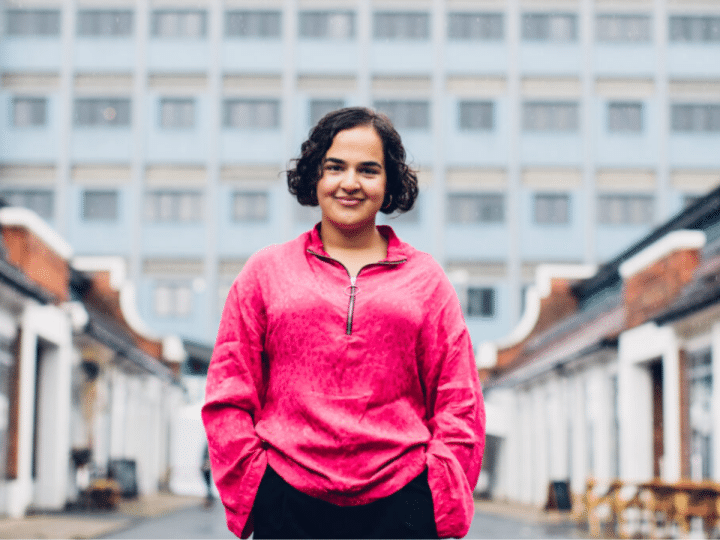
On 15 July, Labour MP Nadia Whittome posted an impassioned plea to social media, urging the UK government to establish safe, legal routes for Eritrean and Sudanese asylum seekers to come to the UK. Currently, and in contrast to similarly war-torn Ukraine, no specific refugee initiatives target those fleeing the two countries.
Whittome accompanied the post with a video of herself speaking during the second reading of Labour’s Immigration and Asylum Bill. Voting against the racist policy, she argued that the bill would “punish those seeking sanctuary” and “weaken vital protections” for people fleeing persecution.
‘Safe and legal routes’?
On 15 July, Whittome posted to social media:
When 94% of Eritrean and 99% of Sudanese asylum seekers are ultimately granted refugee status, the government should establish safe and legal routes for these countries, or at the very least, fast-track their asylum applications.
These high rates of asylum acceptance are unsurprising, given the turmoil that grips the two African states.
Sudan is currently locked in a viscous civil war with a genocidal UAE-backed Sudanese militia, the Rapid Support Forces (RSF). The Northeast African country recently convicted the head of the RSF, Mohamed Hamdan Dagalo (aka Hemedti) guilty of war crimes, crimes against humanity and genocide.
Meanwhile, Eritrea teeters on the brink of war with neighbouring Ethiopia. The UK’s Foreign Office currently advises against all travel to Eritrea, or even within 25km of its land borders.
Whittome continued on to state that:
Student refugee visas and community-support/business-support schemes cannot be the only safe routes for refugees. We should not be offering asylum protection based on qualifications, but on the level of need for sanctuary. A person fleeing war is not more deserving of safety because they can “contribute” more.
Asylum-seeking and small boats
Of course, the generic global resettlement scheme and the (recently diminished) family reunion route are also available to all refugees. In fact, the government acknowledges Sudan as one of the primary beneficiaries of the former, along with Eritrea for the latter.
However, the resettlement scheme involves long periods of dangerous waiting in one’s own country or nearby. Likewise, whilst asylum seekers with family in the UK can seek reunion, this doesn’t solve the problem of getting to the UK in the first place.
As such, asylum seekers frequently have to brave the deadly crossing to the UK via small boat. These small boats have dominated recent debate on immigration — being mentioned no less than 36 times in the 13 July Immigration Bill reading alone.
Ukraine and Sudan — contrasting reactions
Speaking during that debate, Labour’s Catherine West mentioned the Homes for Ukraine scheme, which home secretary Shabana Mahmood seized on as an example of a ‘safe and legal’ route for asylum seekers. However, as Whittome pointed out:
The reason we do not see Ukrainians crossing the channel on small boats is because, rightly, we have a safe and legal route. Why not expand those safe and legal routes to places like Sudan and Eritrea, because obviously if an asylum claim comes from those countries, at the very least they should be fast-tracked? That would help to clear up the backlog, so would she support that?
Today, 16 July, happens to mark Keir Starmer’s final visit to Ukraine as the departing PM. Back in 2022, then-PM Boris Johnson announced the creation of a Ukraine-specific refugee scheme within one month of the outbreak of Russia’s war on the Eastern European country.
Whilst this reaction from the UK is right in itself, it’s hard not to notice the difference in the treatment of Ukraine and Sudan. Likewise, we can’t ignore the fact that Sudan’s population is made up predominantly of Black Muslims, rather than the white-European Christians of Ukraine.
The war in Sudan broke out in 2023. In February 2026, the UN declared that the RSF’s actions bore the “hallmarks of genocide”. However, to date, the UK has created no scheme targeting asylum seekers from Sudan.
‘Needlessly cruel’
Ultimately, Whittome voted against Labour’s Immigration and Asylum Bill. She explained that it was:
needlessly cruel and will divert resources into an unfair, unsafe and unworkable system. Not only will the government’s proposals punish people for seeking sanctuary and lock out many refugees from obtaining settled status by charging them for the support they receive, but they will also weaken vital protections for those who have fled war, torture and persecution. We need an immigration and asylum system rooted in compassion and human rights.
Increasingly, Labour’s immigration policies have resembled a watered-down version of far-right Reform UK. Whittome has long been a voice of reason and fairness within her party — but, gradually, she’s looking more and more lonely in that regard.
Featured image via the Canary
By Grace
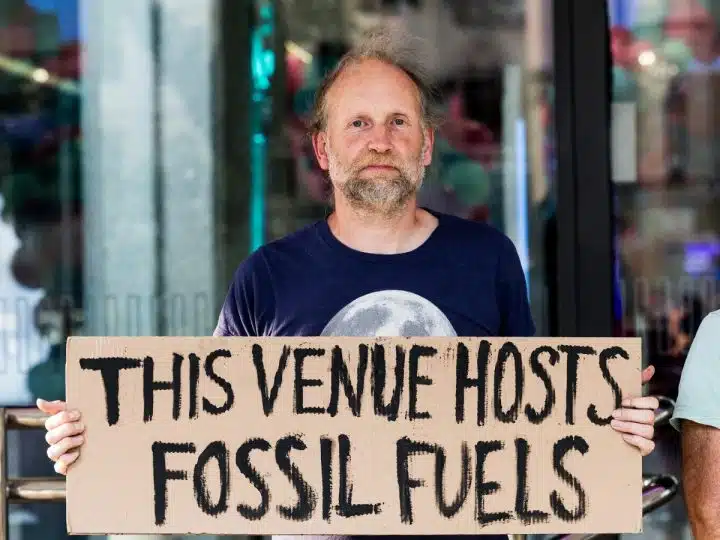
Amidst the third heat storm of this year, campaigners demanded an end to London venues hosting events for fossil fuel companies.
Fossil Free London campaigners disrupted inside the QEII Centre in Westminster while the venue hosted its annual Summer Showcase. This is an invitation-only event marketed to the events industry where companies can find suitable locations for their corporate events.
In protest over London venues hosting oil and gas events, five campaigners entered the 40th birthday party event at the QEII Centre and disrupted the event. They requested to give a birthday speech within the DJ booth when they said:
Did you know the QEII Centre is one of the biggest hosts of the fossil fuel companies in London? They line the pockets of the oil and gas industry. They have blood on their hands and their pockets are lined with oily money.
This is a climate crisis. people are dying. They host Shell, Exxon, as well as the weapons manufacturing companies. Their pockets are lined with oily money. Shame on them… Shame on you!
They were dragged out by security while chanting:
London’s calling, London’s burning! Don’t host oil!
The QEII Centre hosts a variety of fossil fuel events. In February 2026, it hosted International Energy Week, a three-day oil and gas conference organised by the Energy Institute and attended by companies including Shell, BP, Equinor and TotalEnergies.
London consistently brings together oil majors, national oil companies, commodity traders, financiers, consultancies, law firms, diplomats, regulators and policymakers at global conferences. These include Energy Intelligence Forum, World Energy Capital Assembly and Africa Energies Summit.
And the capital’s role in these conference circles is growing: the Middle East Petroleum & Gas Conference relocated from Dubai to London in June.
Campaign highlights fossil fuel – far right link
The protest comes as the start of a new campaign by the climate justice group, that demands London venues stop hosting ‘oil and hate’. The group intends to draw attention to the city’s enabling of the fossil fuel industry and the far right. And it will disrupt venues that host the fossil fuel industry event including when the venue is not currently hosting an oil or gas event.
In June, Kensington Olympia in London hosted the Alliance for Responsible Citizenship conference. This brought together climate deniers, far-right figures including Nigel Farage and Big Oil executives. Between 2019 and 2024, Reform UK received more than £2.3m from fossil fuel interests, polluters and climate deniers. That made up 92% of the party’s donations in that period.
The campaign emerges as a growing number of venues have already refused to host such events. In February 2025, the London venue OMEARA cancelled an unofficial afterparty for the Alliance for Responsible Citizenship (ARC) conference following a Fossil Free London campaign.
In July 2026, the Powerscourt Hotel in County Wicklow, Ireland, cancelled a conference by Dialog, an invitation-only group co-founded by tech billionaire Peter Thiel, after a public campaign.
Robin Wells, director for Fossil Free London, said:
London is cooking and this is London calling, and we’re calling time on the venues that host oil and hate.
Every day in our city, Big Oil meets and colludes behind closed doors in air conditioned rooms, to cause fossil-fuelled heat storms like this one, the third of this year.
They meet in hidden conferences, private ballrooms and exclusive drinks receptions, plotting to set fire to our safety and security and collude with the politicians, thinktanks and far-right forces to strip back our rights.
Venues hand fossil fuel actors the space and the secrecy to burn our house down, while lining their own pockets. And the screams of those who live in that burning house are only getting louder right now.
From North London, where we personally know four people who died in a fire in the last heat storm, to China and Taiwan, as millions face a super typhoon tearing through their windows and tearing up their lives.
The people are sweating: in this fossil-fuelled extreme heat, and in fear of the avalanche of racism and climate denial currently being perpetuated inside our city’s private venues. It’s time for these city’s spaces need to make the moral choice. Venues have already kicked out far-right actors, proving it can be done.
This city belongs to all of us. We are resolving to make it impossible for destruction and violence on a mass scale to continue to thrive here in London. No room for oil. No room for hate.
Featured image via Fossil Free London
By The Canary
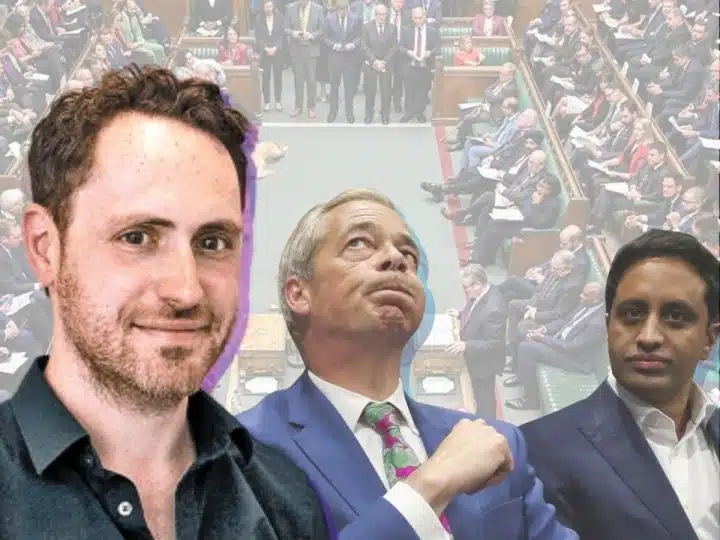
As we’ve reported, several establishment outlets have put an enhanced focus on Reform UK and Nigel Farage. Perhaps most notably, this has seen the investigations team at Rupert Murdoch’s Times newspaper revealing all sorts of financial scandals. It’s not just the investigative reporters who are diving in two feet first, though; the columnists are also at it:
Reform can’t have it both ways on ‘hurty words’ https://t.co/nR0dR8tiHE
— Times Politics (@timespolitics) July 15, 2026
Security
Because his father was a minister in the governments of Margaret Thatcher and John Major, Rifkind has some experience of the security politicians receive. This is relevant right now, because Reform politicians have made some wild and false claims about the security they receive from parliament.
In his piece, Rifkind notes:
Yesterday, Reform’s party chairman, Zia Yusuf, demanded round-the-clock protection for all 650 MPs. Aside from the expense, the obvious flaw here is that this wouldn’t have helped Widdecombe, who wasn’t one, any more than it would Yusuf himself, who isn’t either. It also only deals with a symptom of the real problem.
Elsewhere, Rifkind described Yusuf as “increasingly wild”. It’s a fair thing to note, especially because Yusuf keeps making false claims, and making costly and unworkable proposals which won’t fix the problems he’s identifying. This is also why people are accusing Reform of using this event and others (especially the Clacton by-election) to distract from Farage’s ongoing financial scandals:
As I said yesterday. Reform’s supporters are moving from trying to suppress any scrutiny of Nigel Farage’s £5m donation to trying to suppress any scrutiny or criticism of Reform at all. https://t.co/C39dbG4z5N
— (((Dan Hodges))) (@DPJHodges) July 16, 2026
Reform are now piling in on Kemi Badenoch because they say it was bad taste for her to make a quip about Count Binface whilst the party are in mourning. But apparently the death of a dear colleague wasn’t enough to cancel your summer party 48 hours later?
The usual selective… pic.twitter.com/tXL9CaJPeS — Sam (@SamCKx) July 16, 2026
Political blowback for Reform
The key argument Rifkind makes is that Reform is being hypocritical in how it expects others to treat them. It’s a point others have made too:
https://t.co/DvdMy4HL5Z pic.twitter.com/Q5Xfbishcm
— NJ (@NoJusticeMTG) July 15, 2026
Here, though, Reform is on tricky ground. Yesterday Yusuf also hit out at rival politicians for “equating us to murderous regimes that butchered tens of millions of people”, on the basis that it might incite violence. I agree with him. I’m not sure he agrees with himself.
Reform, remember, is also the party that put Lucy Connolly on stage, introducing her as “Britain’s favourite political prisoner” after she called for asylum hotels to be firebombed. For two years they led, with sneers, the argument that mere “hurty words” hurt nobody. Meanwhile, Farage has accused Richard Hermer, the attorney-general, of “hating our history and our country” and accused plenty more of plenty more. This very week, Yusuf himself, who seems to be growing increasingly wild, hit back at the former Tory MP Harvey Proctor — who mildly chided Farage for politicising Widdecombe’s death — by publicly denouncing him as “depraved” for a historic gay sex offence that today wouldn’t be illegal. He is also still telling his followers that the Tories “destroyed Britain” and that Andy Burnham is about to destroy it even more. And on, and on.
As Rifkind notes, Reform UK politicians are relentlessly inflammatory in their rhetoric. At the same time, they’re incredibly comfortable with bad things happening to other politicians:
Given Reform's Press Conference today about MP safety, worth revisiting this clip of sitting Reform MP Sarah Pochin, and Reform supporter Jeremy Kyle laughing on TV at the firebombing of the Prime Minister's house… https://t.co/9Fi3PbWehH
— andy twelves (@andytwelves) July 15, 2026
All so very predictable, Reform…
In closing, Rifkind noted that Reform would have called him a “snowflake” in the past for suggesting political rhetoric can have consequences. He also said:
Either this matters, or it doesn’t. Either maniacs are inspired by incendiary language or they are not. Personally, I think the link is diffuse, but I also think it pretty damn obvious that the more violent and condemnatory our discourse, the more likely it becomes that various maniacs will find focus for their mania.
We made similar points on 13 July, writing:
If you’re going to label people ‘traitors’ — as Zia Yusuf has — then people are going to get angry. If you’re going to claim successive governments have overseen an ‘invasion’ — as he has — then tensions are going to rise.
Politicians who stoke fear and division think they can ride the wave, but hatred is more like a fire than a sea. And people who play with fire get burned.
Scrutiny
The alleged murder of Ann Widdecombe is a grave event that needs to be taken seriously. It’s questionable if Reform politicians are treating it seriously, though, because they’re using it to argue we should treat them with kids gloves while donning knuckle dusters themselves.
Voters see through this sort of stuff. And Reform politicians aren’t going to make themselves popular by constantly attacking everyone for sometimes attacking them.
Featured image via the Canary
By Willem Moore

America Has A Financial Ticking Timebomb
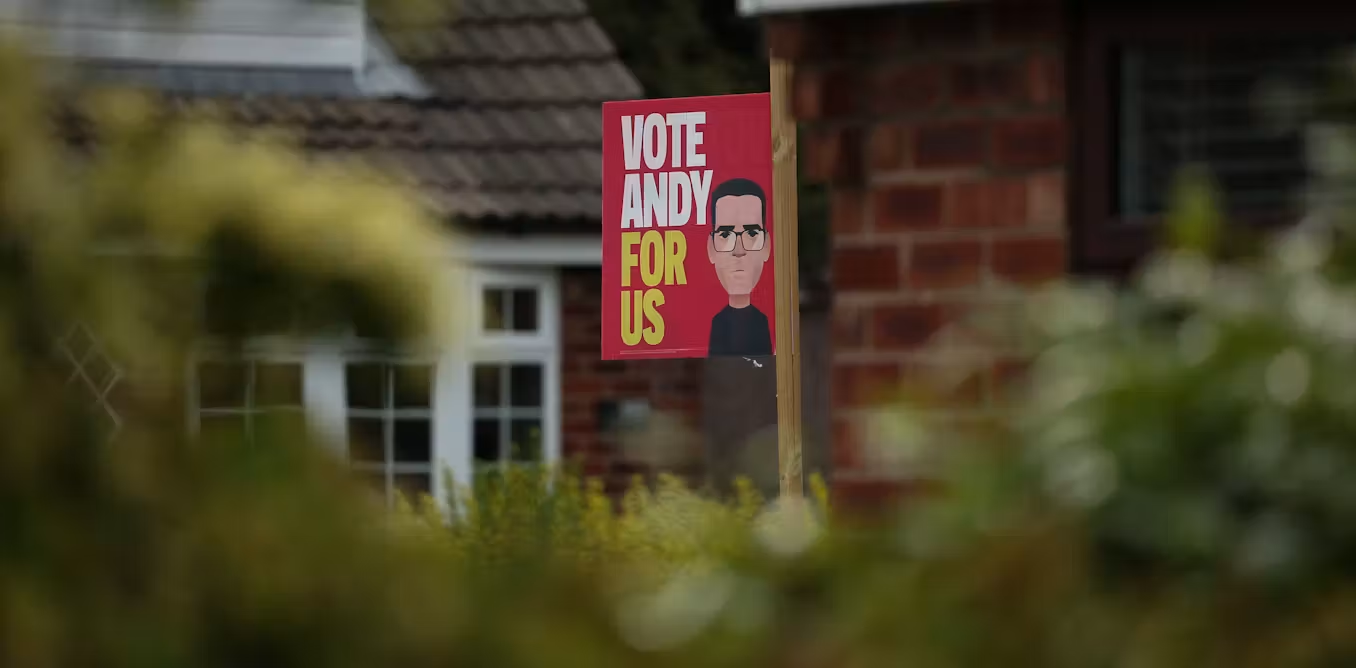
Andy Burnham promised to change Greater Manchester. Almost ten years on, how did he do?

Stonegate investigation: watchdog probes tenant treatment


-

 Fashion6 days ago
Weekend Open Thread: Nutriplenish Leave-In Conditioner
-
 Sports7 days ago
2026 Genesis Scottish Open Thursday TV coverage: Round 1
-

 Sports6 days ago
Super Eagles star Moses Simon opens up on Liverpool transfer regret
-

 Politics1 day ago
Young campaigners urge incoming PM to act on outdoor junk food ads
-

 News Videos2 days ago
XRP BOMBSHELL… XRP OMBOARDED FOR TRANSACTIONS!!!
-

 Tech2 days ago
Get Your ESP32 Sunny Side Up With This Solar Dev Board
-

 Tech2 days ago
Dark Secrets Emerge When Jailbreaking LLMs
-
 Entertainment23 hours ago
Disney’s Most Ambitious Failed Star Wars Attraction Is Coming to SDCC
-
 Sports18 hours ago
New Cornerback Enters Vikings Trade Rumor Mill
-

 Crypto World15 hours ago
CFTC blocks Kalshi from unwinding Michigan trades after court order
-

 News Videos3 days ago
how to make coin bank box with cardboard #scienceproject #money #diy #shorts
-
 Tech3 days ago
Cloudflare Precursor Watches Your Mouse and Keyboard To Decide If You Are Human
-
 Entertainment21 hours ago
Vicki Gunvalson Defends Discussing Heather Dubrow’s Money
-
Crypto World2 days ago
Ripple, Coinbase, Circle Join Linux x402 Foundation to Help Shape AI Payments
-
 NewsBeat18 hours ago
Watch: Is Donald Trump facing a popular backlash on immigration?
-

 Sports16 hours ago
Michigan officials not expected to discuss AD Warde Manuel at Thursday meeting
-
 Business2 days ago
ACCC warns AI could lift insurance costs in risk-prone areas
-
 NewsBeat18 hours ago
Firefighters issue update on Dovestone moorland blaze as fire enters fourth day
-

 Business13 hours ago
Nvidia Stock Slips After Big Tuesday Rally as Huang Confirms Vera Rubin Chip Is Now in Production Today
-

 Entertainment4 days ago
Hollywood’s Biggest Director Just Called Out AI, And It’s Glorious
You must be logged in to post a comment Login