

Crypto World
Ethereum Price Prediction: BlackRock Drives ETH Ahead of BTC in ETF Inflows

Ethereum price is pulling away from the pack, as it trades around $1,900, gaining 8% across seven days with a bullish prediction. This rally feels increasingly institutional. The buying is not coming from a macro wave. Instead, it looks focused, deliberate, and hard to ignore.
U.S. spot Ethereum ETFs attracted $96 million during the first three trading days this week, already beating last week’s $84 million total. Wednesday alone brought $53.8 million in net inflows. BlackRock’s ETHA accounted for $45.3 million, while ETHB added another $4 million. The remaining funds barely shared the leftovers. That is not a crowd rushing in. It is one heavyweight quietly filling the cart.

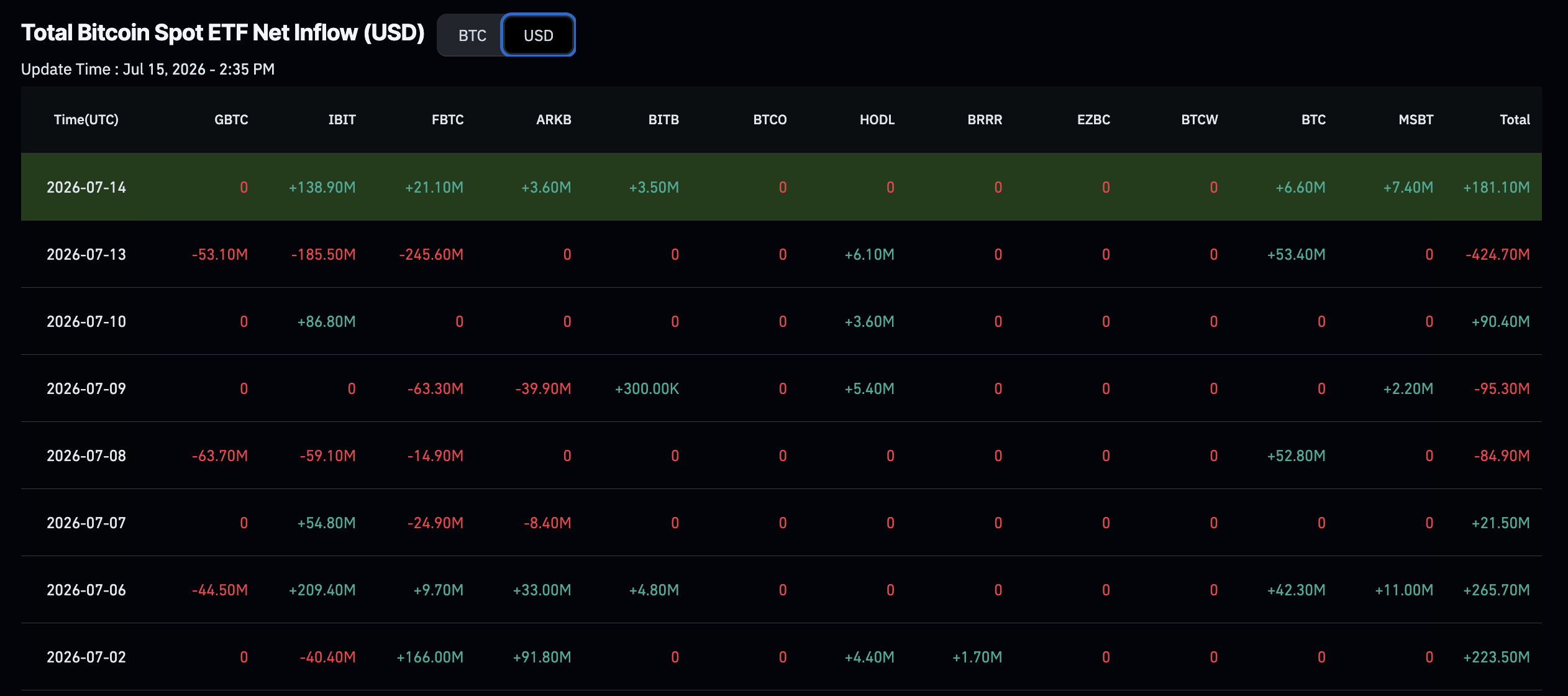
Bitcoin tells a different story. Spot Bitcoin ETFs recorded a $424 million net outflow before recovering with $181 million in inflows the next session. That looks more like money changing seats than fresh capital arriving. Ethereum, meanwhile, has enjoyed steadier demand, which helps explain why it has taken the lead.
Trade Ethereum, and Don’t Miss Out on Our $1,000 USDT Airdrop on ByBit
Ethereum Price Prediction: Can ETH Reclaim $2,000 This Week?
ETH’s upper end is still acting as the first hurdle. Daily trading volume remains healthy, suggesting buyers are showing up with conviction rather than chasing a fleeting rally. After gaining about 8% over the past week, Ethereum has climbed back to levels last seen in early June.
The $1,925 area is now the level to beat. A convincing daily close above it could put the $2,000 psychological mark back in play. That barrier has shrugged off several advances already, so it may not wave a white flag easily.

The bull case stays simple. If ETHA inflows remain strong, Robinhood Chain activity holds up, and macro conditions stay supportive after softer inflation data, ETH could reclaim $2,000. From there, the next upside zone sits around $2,150 to $2,200, provided buyers keep their foot on the gas.
The base case looks less dramatic. If institutional demand cools slightly, Ethereum could spend several sessions between $1,850 and $1,950. That would not be a setback. Markets often catch their breath before making another run.
The bearish case hinges on Bitcoin losing momentum and ETF demand fading again. In that scenario, ETH could revisit the $1,750 area. Meanwhile, Grayscale’s legacy ETHE trust, with its higher 2.5% fee versus ETHA’s 0.25%, has shed billions since launch. That drag has weighed on Ethereum for months, and whether it has finally run its course remains the question hanging over this breakout.
Discover: The Best Token Presales
LiquidChain Targets Early Mover Upside as Ethereum Tests Key Levels
ETH at $1,900 with a dominant institutional buyer sounds like a clean long, until the math catches up. A return to $2,200 from here is roughly 15%. That is a solid trade if execution is tight. But for investors who want asymmetric exposure to the same Ethereum-centric infrastructure thesis, the sizing math changes considerably at an earlier entry point.
LiquidChain ($LIQUID) is an L3 infrastructure project built around a single premise: BTC, ETH, and SOL liquidity should not require three separate deployments to access. Its Unified Liquidity Layer fuses all three ecosystems into one execution environment, with single-step cross-chain execution, verifiable settlement, and a deploy-once architecture for developers.
The Order builds. — LiquidChain (@getliquidchain) July 15, 2026
Brick by brick. Layer by layer.  ⟁https://t.co/vqvBcdSQYC pic.twitter.com/tcfMNP4lNq
The presale is currently priced at $0.0148, with $900K raised to date, early enough that the raise has not yet attracted the late-cycle noise that compresses margins for retail entrants.
The infrastructure bet here is that ETH’s resurgence creates demand for L3 tooling that reduces cross-chain friction. If that thesis tracks, early-stage entry at current prices carries a different risk-reward profile than chasing spot ETH above $1,900.
Research LiquidChain before the next pricing tier moves.
Discover: The Best Crypto to Diversify Your Portfolio
The post Ethereum Price Prediction: BlackRock Drives ETH Ahead of BTC in ETF Inflows appeared first on Cryptonews.



Former Fidelity fund manager George Noble has warned that an AI bubble crash could cause 17 times more damage than the dot-com collapse, which erased about $5 trillion from the Nasdaq.
Summary
- George Noble warns an AI crash could cause 17 times more damage than the dot-com collapse.
- Polymarket traders have raised the odds of an AI bubble bursting in 2026 above 17%.
- Dalio and the U.S. Treasury identify liquidity and economic links as key risks.
According to Polymarket, the probability of an AI bubble bursting in 2026 has climbed above 17% after recently falling from 30% to 14%. Contracts using different resolution criteria placed the likelihood between 16% and 24% as traders weighed falling technology shares, revenue concerns, and weakness across global markets.
Noble tied his forecast to the large sums flowing into AI infrastructure, arguing that the financial fallout could extend far beyond technology companies if expected returns fail to arrive.
“The fallout from this could really be much more significant,” Noble said while discussing the rise in AI capital spending.
AI bubble odds have rebounded above 17%
Fresh pressure on semiconductor and technology shares has added to those concerns. The Wall Street Journal reported that U.S. stock futures fell on Thursday as AI-related anxiety spread from Asian markets, where SK Hynix and Samsung Electronics dropped almost 9%.
Both South Korean chipmakers plan to spend billions of dollars on semiconductor plants and AI capacity. Their declines came as investors questioned whether the revenue generated by AI services would justify the industry’s expanding infrastructure bill, according to the report.
IBM has added to the unease after its shares suffered their steepest daily fall since 1968, dropping almost 25% earlier this week. Market data cited in the report showed IBM closing another 2.7% lower at $211.20 on Wednesday, taking its decline over several sessions past 26%.
In its warning, IBM said spending on AI infrastructure was pulling corporate budgets away from software, contributing to weaker-than-expected revenue growth. The selloff erased tens of billions of dollars from IBM’s market value and weighed on other software and information technology stocks, according to the report.
A draft U.S. Treasury Department report has also examined how an AI downturn could move through the economy. Drawing on research from the University of Texas at Austin cited by NOTUS, the report found that AI companies have become more closely linked to the U.S. economy than internet companies were during the dot-com period.
Under the report’s downside scenario, disappointing productivity or profits could hurt private credit, chipmakers, cloud providers, electric utilities, and companies financing data centers. The Treasury did not predict an imminent crash, but it listed electricity shortages, financing limits, supply chain disruptions, and geopolitical tensions among the risks facing the sector.
Cash demands could expose inflated AI valuations
Ray Dalio has separately argued that liquidity, rather than weak technology, could break the AI boom. During a television interview reported by Bloomberg, the Bridgewater Associates founder explained that investors often mistake rising asset values for money they can readily spend.
Dalio used private companies to illustrate the risk: a business can receive a billion-dollar valuation after raising far less in actual capital, but shareholders cannot use that paper wealth without selling. In his assessment, stress would emerge if many investors attempted to turn those valuations into cash at the same time.
Bernstein and Cummings have pointed to another pressure building beneath the boom. In a recent Substack post, the economists wrote that the AI bubble was “still inflating,” while technology investment had reached nearly 5% of U.S. GDP, above levels recorded during the dot-com era.
Their analysis also found that large technology companies were committing enough capital to AI projects to reduce their cash reserves. Combined with Noble’s warning and Dalio’s liquidity concerns, those figures leave investors focused on whether AI earnings can catch up with the money already committed to the sector.

Lorie Logan, president and chief executive officer of the Federal Reserve Bank of Dallas, during a research conference at the Federal Reserve Bank of Dallas in Dallas, Texas, US, on Friday, Oct. 31, 2025.
Desiree Rios | Bloomberg | Getty Images
Dallas Federal Reserve President Lorie Logan, asserting that this week’s good inflation news wasn’t good enough, called Thursday for “modestly” higher interest rates to win a battle the central bank has been losing for the past five years.
A voting member this year on the rate-setting Federal Open Market Committee, Logan insisted that inflation is still a major problem for U.S. households that demands action from policymakers. While other Fed officials have expressed a preference for higher rates if inflation metrics don’t improve, Logan’s is the most specific call for a hike.
“I currently believe modestly higher interest rates would better balance the outlook and risks for the FOMC’s dual mandate goals,” Logan said in prepared remarks for a speech in Houston. “Every month of above-target inflation has compounded the strain on Americans’ budgets.”
Earlier in the week, the Bureau of Labor Statistics reported some progress on that front: Consumer prices for June dropped 0.4%, the biggest monthly decline since April 2020, while wholesale prices slipped 0.3%. Both gauges benefited from slumping oil prices, though costs in several other key categories, most notably housing, also softened.
Still, Logan said there’s more work to do for the Fed to meet its 2% inflation goal. Despite the monthly decline, consumer prices rose 3.5% from a year ago, while wholesale costs increased 5.5%. Inflation has been above the central bank’s target since early 2021.
“One month of relief is not enough. It is time to finish the job of restoring price stability,” she said. “In monetary policy as in hockey, you have to skate where the puck is going. Unfortunately, inflation does not appear to be headed sustainably back all the way to 2 percent.”
Markets already expect the FOMC to raise its key overnight borrowing rate by a quarter percentage point later this year — possibly as soon as September, but more likely October, according to the CME Group’s FedWatch tracker of fed funds futures pricing.
The committee next meets July 28-29, with traders pricing in just 12.3% odds of a hike.
Logan pointed to a number of widely cited gauges as well as alternative measures such as core prices less housing to show that inflation is mired well ahead of the Fed’s target even with the recent slide in energy prices and waning tariff impacts.
“If inflation is not heading all the way to 2 percent on its own, then at least some policy restriction is needed to help get it there,” she said. “If higher inflation becomes entrenched, we’d need sharper rate increases to bring it back to target, with a larger cost for the labor market. Better modest restriction now than severe restriction later.”
Logan did not specifically state that she would push for an increase at this month’s meeting or quantify how much higher she thinks rates need to go.


Binance co-founder Changpeng Zhao has challenged Wall Street’s projected $700 billion AI spending wave by arguing that Bitcoin offers protection against inflation that artificial intelligence cannot provide.
Summary
- CZ argues Bitcoin offers inflation protection that artificial intelligence cannot provide investors.
- Jamie Dimon expects AI spending to reach $725 billion as investment continues to surge.
- George Noble warns an AI bubble crash could be 17 times worse than the dot-com collapse.
On X, Zhao presented the difference between the two investment themes in a single line: “AI is great, but it does not protect you against inflation. Bitcoin does.”
CZ’s comment comes as investors weigh Bitcoin’s fixed supply against the rapid flow of capital into AI infrastructure. JPMorgan CEO Jamie Dimon expects AI investment to reach $725 billion this year, while BlackRock executives see rising government debt and currency concerns strengthening Bitcoin’s long-term case.
Bitcoin’s case rests on fiscal pressure
According to BlackRock digital assets chief Robert Mitchnick, investors have recently paid less attention to Bitcoin as spot Bitcoin exchange-traded funds recorded heavy outflows. Mitchnick believes that trend could reverse if concerns about U.S. borrowing and currency debasement intensify.
“And the more fear there is over the borrowing level and the risk of money printing, that is ultimately the most important, I think fundamental driver ahead.”
Bitcoin recently traded near $65,000 after recovering from an earlier decline. However, the cryptocurrency remained well below its October 2025 record of more than $126,000, which was reached during a period of strong inflows into BlackRock’s spot Bitcoin ETF.
CZ’s inflation argument follows the same monetary case outlined by Mitchnick. While AI companies depend on future revenue from heavy capital spending, Bitcoin supporters view the asset’s limited supply as protection against the loss of purchasing power caused by monetary expansion.
Former Fidelity fund manager George Noble has raised a separate concern about the amount of money entering AI infrastructure. As reported by crypto.news, Noble warned that an AI crash could cause 17 times more damage than the dot-com collapse, which erased about $5 trillion from the Nasdaq.
“The fallout from this could really be much more significant,” Noble said while discussing the rise in AI capital spending.
AI spending keeps Wall Street divided
Despite those warnings, Dimon remains optimistic about AI because of the large investments moving through the industry and the strength of the U.S. economy. The JPMorgan chief described the spending cycle as difficult to stop while comparing it to a wave gathering force.
“We’re in a bull market. It’s like a little tsunami. When that kind of thing happens, it’s very hard to stop.”
Dimon has repeatedly criticized Bitcoin in previous years, although he has recently expressed concern about government borrowing and geopolitical risks over the next several years.
Polymarket traders have also assigned a meaningful chance to an AI downturn. According to the prediction market, one contract placed the probability of an AI bubble bursting in 2026 above 17% after the odds previously dropped from 30% to 14%. Other contracts using different settlement rules showed probabilities ranging from 16% to 24%.
Former White House economists Jared Bernstein and Ryan Cummings have added to the caution around AI valuations. Writing on their respective Substacks, they described the bubble as “still inflating” and argued that corporate AI spending is reducing cash reserves while technology investment consumes a larger share of U.S. gross domestic product than during the dot-com era.
Within BlackRock, Rick Rieder has indicated that the asset manager plans to reduce exposure to companies directly spending on AI while increasing holdings in businesses positioned to profit from AI demand. Bitcoin miner TeraWulf fits that second category after signing a 20-year agreement to host AI data-center infrastructure for Anthropic.
Base creator Jesse Pollak said he is stepping back from leading the app after taking responsibility for one of the biggest mistakes in the network’s history.
He admitted that his bet on on-chain social economy had failed to drive crypto adoption like he thought it would.
Base’s Failed Bet on Social Networking
After months of reflection and a week of listening to community feedback, Pollak shared his thoughts on Base’s tough 2026. He described the first quarter as a “punch in the face,” noting that he had spent 2024 and 2025 betting on two ideas that he believed would push the app forward.
Base’s long-term strategy was made on the assumption that builders would unlock the next wave of crypto adoption and that this, in turn, would come through on-chain social experiences such as creator platforms, messaging and content.
Looking back, Pollak now says only half of his theory was right. According to him, builders did drive the next adoption phase, which was seen in how stablecoins, prediction markets, perp trading and tokenization gained momentum. But social platforms didn’t experience the same level of success, with projects like Farcaster, Zora, mini apps and creator coins failing to achieve widespread adoption.
“The entire social side of the market that many of us had been building towards disintegrated completely…I was wrong” he wrote.
The crypto firm launched the Base App in 2025 as a rebrand from its Coinbase Wallet into an “everything app” that combines social networking, trading, messaging, AI tools and creator monetization.
However, Pollak admits that the focus on social products left the network struggling to catch up with its competitors. People also lost confidence in the platform, he said, while critics were quick to remind him of every mistake.
Pollak Steps Back From Leadership Role
The Base founder said that he is handing back the app’s leadership to Coinbase so he can focus on the blockchain itself. Jordan Fish, popularly known as Cobie, will now take over his position and lead the product’s next chapter.
“We’re going to build Base into the Blockchain for global finance and do everything we can to be the place that the world’s money settles over the next century,”he said.
Pollak added that his new mission was to make Base a blockchain that powers global finance, which he says is where crypto’s biggest opportunity now lies. The network’s priorities for the rest of the year will focus on three main areas, including trading, payments and AI agents.
The statement ended with him saying that Base isn’t expecting an easy road ahead, with growing competition from companies like Robinhood and Stripe heating up. But instead of expecting users loyalty by default, he said that it wants to earn their trust back.
The post Jesse Pollak Leaves Base Leadership After Failed Social Strategy appeared first on CryptoPotato.

Crypto trader Axel Bitblaze has laid out a fresh market thesis built on a video from analyst Taiki Maeda, arguing that assets like Hyperliquid (HYPE), Lighter (LIT), and Zcash (ZEC) are already trading like winners of the next cycle while most investors are waiting for a fourth-quarter bottom.
He says that markets tend to move before the crowd agrees a bottom has formed, so the better window to position could be mid-to-late Q3 and not whenever things look safe.
The Case for HYPE, LIT, and ZEC
On July 15, Maeda shared a video on his X account in which he said that crypto was bottoming and that he would be longing HYPE, LIT, and ZEC.
His take was expanded on by Bitblaze in a July 16 post, who noted that Hyperliquid has bought back about 3.4% of the circulating HYPE supply this year, allowing the token to perform well even as sector mainstays such as Bitcoin (BTC) struggled.
“If BTC volatility causes another $HYPE dip without changing its fundamentals… that could be an accumulation opportunity,” wrote the analyst.
Lighter’s LIT token was presented as a higher-risk alternative, with Bitblaze crediting its reported partnership with Robinhood for giving the decentralized perpetual exchange access to a much wider audience. He also noted that buybacks have removed more than 6% of LIT’s circulating supply, helping to push it to an all-time high on the second-to-last day of 2025, when many altcoins were losing ground.
Meanwhile, ZEC carries the most caution. In his market update video, Maeda said he sold the privacy coin after the discovery of a vulnerability in its Orchard shielded pool that could have allowed bad actors to create unlimited amounts of fake ZEC, triggering a 60% collapse. He did, however, buy most of the ZEC back after reassessing the project’s outlook, with the Ironwood upgrade set for July 28 expected to introduce stronger quantum resistance and use formal verification to reduce the risk of hidden bugs.
That update, according to Bitblaze, could help push up the asset’s price. Recall that last week, Zcash founder Zooko Wilcox said that they were close to producing a mathematical proof that Ironwood’s new shielded pools have no undetectable counterfeiting bugs, taking ZEC’s price past $500.
The token is trading at about 0.8% of Bitcoin’s market cap, and per Maeda’s model, it could go anywhere between $650 and $700 if that ratio climbs back to 1%.
Traders Urged Not to Wait for Bitcoin
Bitblaze said that crypto has been in a bear market since the euphoria experienced in mid-2025 when ETH was closing in on $5,000. Now, people are waiting for the bottom, which, according to him, has been penciled in for Q4 2026.
But he believes the market has a tendency to “front-run what everyone expects,” meaning it is better for traders to start positioning themselves between August and September “before the recovery becomes obvious.”
“Don’t wait for Bitcoin and the entire market to look perfect,” the analyst advised. “The next winner usually starts separating from the market before everyone accepts that the bottom is forming.”
The post Forget Bitcoin Bottom: Analyst Says These Altcoins Could Move First appeared first on CryptoPotato.


The Dutch Authority for the Financial Markets approved BitPay’s application as a crypto-asset service provider under the Markets in Crypto-Assets requirements.
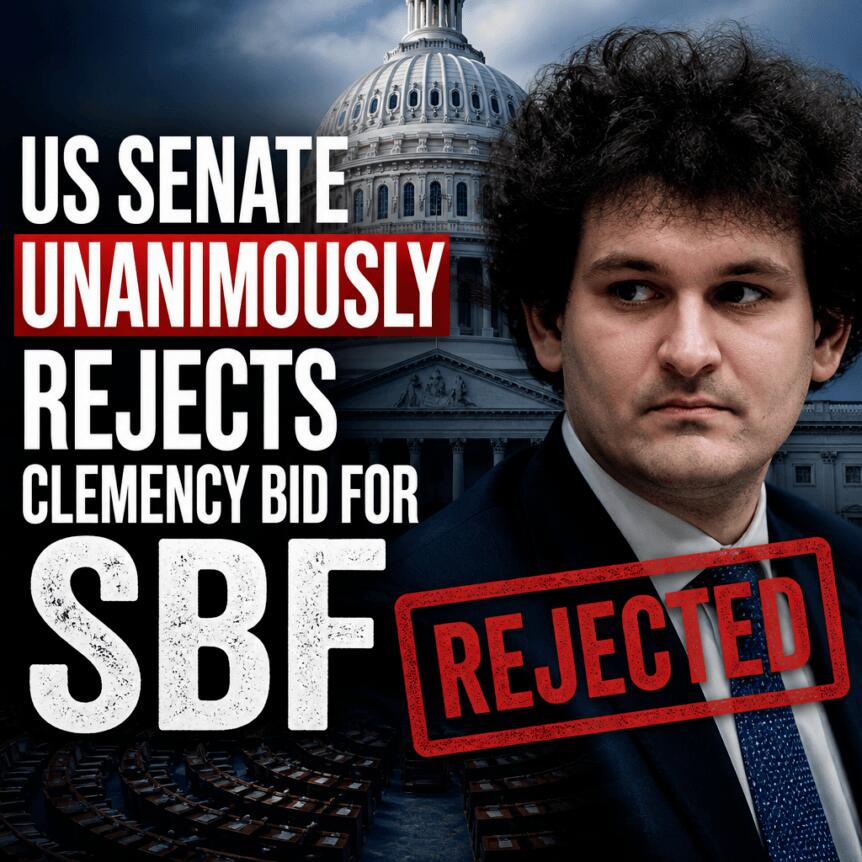
The U.S. Senate has adopted a resolution opposing executive clemency for former FTX CEO Sam Bankman-Fried, underscoring bipartisan political pressure after his fraud conviction connected to the collapse of the crypto exchange.
In a unanimous-consent vote, senators approved a simple, nonbinding measure—S. Res. 772—stating that Bankman-Fried should not receive executive clemency, according to a Wednesday post by the Senate Press Gallery on X.
Key takeaways
- The Senate passed S. Res. 772 by unanimous consent to oppose any federal clemency for Sam Bankman-Fried.
- The resolution is nonbinding and cannot stop a presidential pardon or other executive action.
- The measure follows Bankman-Fried’s request for clemency from President Donald Trump.
- Bipartisan support expanded as additional senators joined as cosponsors, including Bernie Moreno.
- Prediction markets currently price a pardon at less than 1%, despite attracting meaningful trading activity.
Senate resolution signals bipartisan opposition
S. Res. 772 was introduced on June 17 by Senator Ruben Gallego, with Senator Cynthia Lummis listed as a cosponsor. The resolution explicitly opposes any form of federal clemency for Bankman-Fried, including a presidential pardon or a commutation of sentence.
As a simple Senate resolution, it does not require approval from the House or the president and does not carry the force of law. The Senate’s own “Types of Legislation” guide explains that this kind of measure is distinct from legislation and therefore cannot compel or block executive action.
At the time of publication, Congress.gov had not yet reflected the latest floor action for the resolution. However, the Senate Press Gallery’s post indicates that the Senate has now agreed to the measure.
Support for the resolution is also bipartisan. Senator Bernie Moreno of Ohio joined as a cosponsor on Tuesday, adding additional Republican backing to a proposal initially led by a mix of senators from different parties.
Why the Senate’s move matters—and what it can’t do
While S. Res. 772 cannot prevent the president from granting clemency, it functions as a public signal of political resistance inside the legislative branch. The Senate resolution affirms lawmakers’ commitment to “the rule of law” and the integrity of the U.S. financial system in the wake of Bankman-Fried’s conviction.
Bankman-Fried was convicted on fraud and conspiracy charges tied to the 2022 collapse of FTX. He was sentenced to 25 years in federal prison in March 2024.
In June 2026, speculation about a possible pardon intensified after Bankman-Fried sought clemency from President Donald Trump, according to earlier reporting from Cointelegraph on his application. The Department of Justice’s pardon and clemency case-status records also list the clemency request as pending, using the case number shown in the DOJ interface.
For investors and participants in crypto markets, political outcomes like clemency don’t directly change blockchain technology or protocol rules. But they can influence broader regulatory and enforcement expectations—especially in high-profile cases that have become benchmarks for how U.S. authorities treat major exchange failures.
Market pricing suggests a pardon is unlikely
Even as the Senate moved to oppose clemency, prediction markets have largely discounted the probability that Bankman-Fried will receive a pardon. On Polymarket, traders have assigned less than a 1% chance that President Trump will pardon Bankman-Fried by July 31, according to the market listing referenced in the original reporting.
Despite the low odds, the market has pulled in more than $734,000 in trading volume, indicating that while most traders appear skeptical, there is still substantial interest in the possibility of an executive decision.
That split—very low probability on price, but meaningful volume in activity—often points to traders using the market to express scenarios they consider possible but not likely. What remains uncertain is whether clemency processes will advance to a decision and, if so, whether any final action will align with the Senate’s stated position.
What to watch next
Readers should watch the Department of Justice’s clemency case status for any updates and monitor further legislative developments, since S. Res. 772 cannot block a presidential pardon but may affect political pressure around any eventual executive decision.


Robinhood’s newsroom called its new blockchain, Robinhood Chain, “AI-native and purpose-built for real-world assets.” By the end of week one, those assets — mostly memecoins — totaled roughly $13 million. But those memecoins keep dying.
By midday Thursday, a memecoin called MIZUKARA had gone to zero on Robinhood Chain, on roughly $67 million of trading volume.
It was one of dozens of MIZUKARA pools deployed in under a day. Each fresh incarnation stepped over the corpse of the last.
None of this was in the pitch. Robinhood launched the chain at a London event on July 1, pitching it for tokenized stocks for customers in more than 120 countries.
The next morning, CEO Vlad Tenev told CNBC, “If an asset is not tied to an underlying utility, it’s not a productive asset. What’s the benefit of making a million different memecoins?”
The market then spent a few days actually using it. On July 7, Tenev posted his revision: “While we’re building robinhood chain to be the best chain for RWA … it works great for memes too.”
Memecoin promoters showed up, and he couldn’t stop them.
Two days later he declared, “Robinhood Summer is here,” boosting a colleague’s tally of 17 million transactions and more than $1 billion in DEX volume.
Robinhood Summer lasted two days
The boom in Robinhood Chain memecoins ran through NOXA, a launchpad responsible for some 60,000 tokens, more than three-quarters of everything deployed on the chain.
NOXA collected more than $12 million in fees in two weeks.
Yet that same Saturday morning, NOXA complained that bots were “spamming and copying new tokens every hour” and switched off its own token deployer.
Two days later, its website went dark; NOXA blamed a Cloudflare issue. It also burned 40% of its own token supply.
By July 14 it had resurfaced as a bare-bones page, announcing, “People loved the cat, it has been liberated,” and handed 100% of ongoing trading fees to token creators.
Some traders called the exit a soft rug, crypto slang for a team that walks away without formally stealing anything. A Binance Square message board user posted a post-mortem, finding no direct evidence of the revenue-split dispute rumored to be behind it.
NOXA’s own explanation reads, “DeFi summer is still happening.” It probably isn’t.
Read more: OpenAI to Robinhood: That’s not our stock, bro
Robinhood Chain launchpad pauses
Vlad.fun, a launchpad that borrowed the Robinhood CEO’s first name, soon arrived and then, just as quickly, pulled the plug. On Wednesday, it announced, “We’re pausing VladFun” after discovering what it described as “a serious internal integrity issue at launch involving members of our team.”
In plain English, the launchpad is investigating its own people, and its legal team is involved.
Pons, a rival launchpad two days old, spent the same afternoon batting away reports of a front-end token-approval bug.
The team insisted the damage was tiny, saying, “As of right now, 0.60 NOXA tokens were impacted worth roughly $0.66 USD.”
Its proprietary token price fell by about a third over the following day anyway.
Hacked accounts and poisoned tickers
Robinhood Chain token casualties are stacking up faster than most people can catalog.
When hackers hijacked SpaceX-affiliated X accounts to shill a token called SCATMAN, it spiked to a roughly $2 million market cap before the creators pulled the liquidity.
Another token simply named 1 ran from $800,000 to about $15 million on a rumor that a wallet linked to Tenev was buying.
It collapsed 93% when traders worked out that the wallet was a long-compromised demo address. A livestream had exposed most of its seed phrase a year earlier.
Even CASHCAT, the chain’s flagship memecoin and NOXA’s liberated cat, has lost more than half its value since July 11.
Protos has already documented memecoins making up more than three-quarters of two days’ trading on the chain, a CASHCAT holder losing $56,000 to a hacked smart contract, and a scam coin that emptied $600 from one buyer in seconds.
A spokesman previously told Protos, “Robinhood Chain is permissionless. This is a common issue across permissionless chains.”
Which is a longer way of saying that graveyards join new neighborhoods.
To be fair, the chain itself is thriving by the numbers Robinhood prefers to publish. Total value locked has climbed steadily to nearly $200 million, and daily DEX volume peaked near $880 million last Saturday.
Still, the RWA infrastructure this chain was purpose-built for are still worth a meager $13 million, nowhere close to the tens of billions of dollars on competing blockchains.
NOXA collected nearly that much in memecoin fees in two weeks, and even NOXA quit to focus elsewhere.
Got a tip? Send us an email securely via Protos Leaks. For more informed news and investigations, follow us on X, Bluesky, and Google News, or subscribe to our YouTube channel.
Crypto World
$1.9 trillion asset manager T. Rowe Price bets on active management with first multi-token crypto ETF


T. Rowe Price has brought what it said is the industry’s first actively managed multi-token spot crypto exchange-traded fund (ETF) to the market.
The T. Rowe Price Active Crypto ETF (TKNZ) began trading on Thursday, giving investors exposure to a portfolio of crypto assets rather than a single token. The launch marks a milestone for the Baltimore-based asset manager, which oversees $1.9 trillion in assets, as it expands its product lineup into digital assets.
Unlike the spot bitcoin and ether (ETH) exchange-traded funds that have dominated the market over the past two years, TKNZ is designed to hold a diversified basket of cryptocurrencies, including bitcoin, ether, BNB, XRP, solana (SOL) and Hyperliquid (HYPE), among other digital assets.
The fund also differs from most crypto investment products because it is actively managed. Instead of tracking a fixed index, portfolio managers can adjust allocations based on market conditions, research and risk assessments. T. Rowe Price said the strategy is intended to capture changes in market leadership and momentum as capital rotates among different cryptocurrencies.

Bitcoin’s bounce lost momentum on Thursday as weakness spread through US tech stocks, muting broader risk-asset enthusiasm. The move followed a market-wide reaction to cooler inflation data earlier in the week, which had helped push equities and BTC higher before traders began trimming positions.
According to TradingView, BTC/USD was trading around $64,500, about 1.5% lower than its three-week highs from the prior day. While crypto initially benefited from the inflation-driven optimism, Thursday’s selloff in high-growth stocks helped cool the appetite for additional upside.
Key takeaways
- BTC/USD hovered near $64,500 after failing to extend gains from the previous day’s three-week highs.
- Lower US inflation expectations supported early risk-on moves, but tech stocks turned into a drag on Thursday.
- Market commentary points to “rejection” behavior near key technical areas, including a major moving average zone.
- Analysts highlighted potential upside limits tied to anchored volume metrics and prior peak areas.
Inflation relief fades as US tech stocks pull back
The latest dip in Bitcoin’s momentum came alongside broader equity rotation. Earlier, both the Consumer Price Index (CPI) and Producer Price Index (PPI) had shown weaker-than-expected readings in June, according to the reporting referenced from Cointelegraph’s prior market coverage about inflation coming in cooler. Those data points helped lift both equities and crypto at first.
However, Thursday brought a reversal in tech leadership. Trading resource The Kobeissi Letter highlighted the extent of the drawdown in Micron Technologies, noting the stock was down more than 30% from its June 22 record high after falling sharply on the day, an observation it attributed to market action tracked via TradingView.
Kobeissi further pointed to retail investors taking profits after a strong tech run. In an X post, it cited sales activity around major single stocks—specifically naming Tesla and Apple—and said retail turnover in single stocks had risen to a record $370 billion, up from $220 billion earlier in 2026. The underlying takeaway for crypto traders is straightforward: when speculative equity flows cool, Bitcoin often feels it through correlation and sentiment.
Earlier Cointelegraph coverage had also framed the backdrop as Bitcoin speculators locking in gains after local highs, reinforcing the idea that Thursday’s hesitation wasn’t happening in isolation. When investors are already booking profits in both crypto and tech, breakouts tend to require more sustained confirmation.
BTC price action: traders focus on “rejection” near overhead resistance
With momentum easing, attention shifted from “breakout” narratives to whether BTC could hold above meaningful technical levels. Commentator Exitpump referenced an anchored volume-weighted average price (AVWAP) level tied to Bitcoin’s advance toward $82,000 in early May, arguing that a retest of that area could cap the rebound and increase the odds of further selling pressure.
Exitpump’s thesis was that price would likely revisit the AVWAP from the 82K top that preceded a strong local downtrend. In their words to X followers, such a retest “should cap the upside and give stronger rejection.” The practical implication for traders is that the market may be transitioning from trend-following to range-bound behavior, with participants watching specific supply zones where prior demand gave way.
Separately, trader and analyst Rekt Capital said BTC/USD was showing early signs of rejection from the 50-month exponential moving average (EMA) around $65,900. The emphasis on that level matters because long-term moving averages often act as “decision points” where trend narratives either resume or fail—especially when liquidity thins or risk appetite wobbles.
Rekt Capital also linked the current market rhythm to an earlier bear-market pattern observed in 2022. According to the same commentary, the timing of the next macro bottom would not arrive until later in the year, suggesting that near-term weakness may not automatically signal the end of the broader cycle—just a pause or retracement within it.
What to watch next: whether BTC can reclaim key technical levels
For now, the market’s immediate question is whether Bitcoin can reclaim and hold above the technical areas being cited—particularly the 50-month EMA region near $65,900 and the AVWAP-related zone tied to the $82,000 peak. If selling persists while equities remain volatile, BTC’s rebound could stay capped; if tech stabilizes and risk appetite returns, the “rejection” talk may fade quickly.
Abbott Labs shares jump 12% as Q2 sales rise, profit outlook raised

George Noble warns AI bubble crash could be 17x worse than dot-com

Naoya Inoue targeted for title fight to become a five-weight world champion

No Jackpot Winner as $257 Million Prize Rolls Over to $269 Million Monday Draw

Renter of Home in Anne Heche Crash Denies Settlement With Son

Weekend Open Thread: Staud – Corporette.com

Teaching My Friend Liquidity! #trading #propfirmtrading #crypto #tradesetup #forex

Money Heist Run Away From The Camera For 10s | Part 4 |#shorts #moneyheist #parkour #moneyheistkorea

Crypto Live Trading| 08 july #vinbullindia #livetrading #vinbulllive #live #trading #cryptotrading
-

 Fashion6 days ago
Weekend Open Thread: Nutriplenish Leave-In Conditioner
-
 NewsBeat4 hours ago
London Mayor Sadiq Khan handed a peerage by Keir Starmer alongside 15 other Labour figures… just days before the PM leaves No10
-

 Sports6 days ago
Super Eagles star Moses Simon opens up on Liverpool transfer regret
-

 Business17 hours ago
Nvidia Stock Slips After Big Tuesday Rally as Huang Confirms Vera Rubin Chip Is Now in Production Today
-

 Crypto World19 hours ago
CFTC blocks Kalshi from unwinding Michigan trades after court order
-

 Politics1 day ago
Young campaigners urge incoming PM to act on outdoor junk food ads
-

 News Videos2 days ago
XRP BOMBSHELL… XRP OMBOARDED FOR TRANSACTIONS!!!
-

 Tech3 days ago
Get Your ESP32 Sunny Side Up With This Solar Dev Board
-
 Entertainment1 day ago
Disney’s Most Ambitious Failed Star Wars Attraction Is Coming to SDCC
-

 Tech2 days ago
Dark Secrets Emerge When Jailbreaking LLMs
-
 Sports22 hours ago
New Cornerback Enters Vikings Trade Rumor Mill
-
 Tech3 days ago
Cloudflare Precursor Watches Your Mouse and Keyboard To Decide If You Are Human
-

 News Videos3 days ago
how to make coin bank box with cardboard #scienceproject #money #diy #shorts
-
 Entertainment1 day ago
Vicki Gunvalson Defends Discussing Heather Dubrow’s Money
-
Crypto World2 days ago
Ripple, Coinbase, Circle Join Linux x402 Foundation to Help Shape AI Payments
-

 NewsBeat22 hours ago
Watch: Is Donald Trump facing a popular backlash on immigration?
-

 Business2 days ago
ACCC warns AI could lift insurance costs in risk-prone areas
-

 Sports20 hours ago
Michigan officials not expected to discuss AD Warde Manuel at Thursday meeting
-
 NewsBeat22 hours ago
Firefighters issue update on Dovestone moorland blaze as fire enters fourth day
-

 Business2 days ago
Subaru recalls 541,000 vehicles over federal safety sticker mistake: NHTSA
You must be logged in to post a comment Login