

Connect with us
DAPA Banner
DAPA Coin
DAPA
COIN PAYMENT ASSET
PRIVACY · BLOCKDAG · HOMOMORPHIC ENCRYPTION · RUST
ElGamal Encrypted MINE DAPA
🚫 GENESIS SOLD OUT
DAPAPAY COMING

Business

Hal Williams, Beloved ‘Sanford and Son’ and ‘227’ Television Actor, Dies at 91 in Rancho Mirage Home

Published

on

Hal Williams

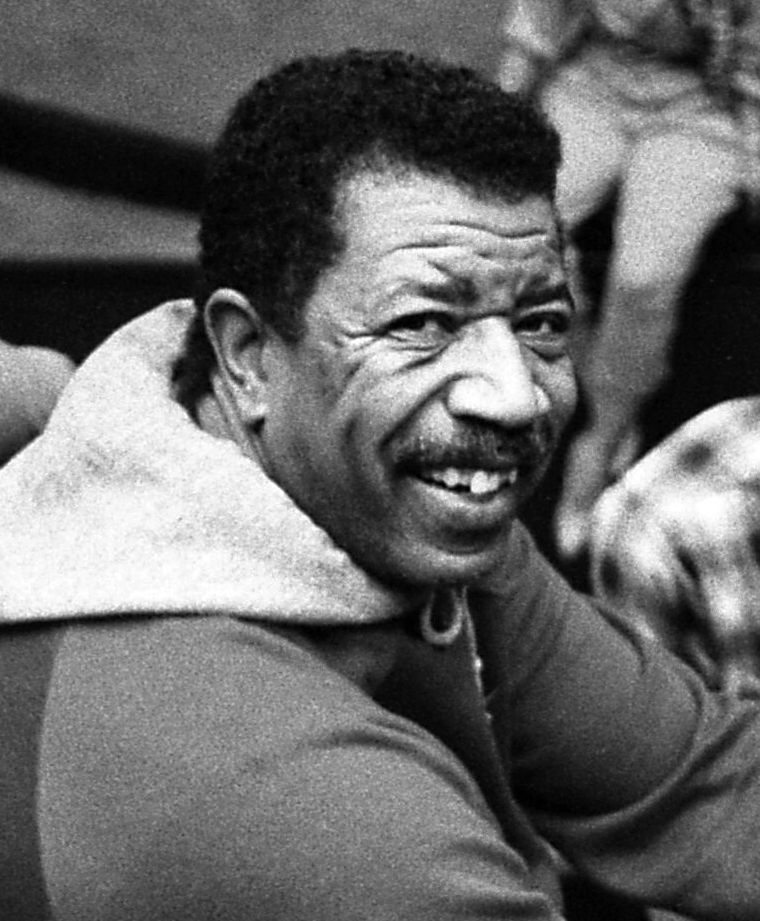
Hal Williams, the veteran actor best remembered for playing Officer “Smitty” Smith on the classic sitcom “Sanford and Son” and Lester Jenkins on NBC’s “227,” has died. He was 91.

Williams died Wednesday morning, July 15, at his home in Rancho Mirage, California, according to his manager, Zna Portlock Houston. Houston told TMZ that Williams died of natural causes and had been dealing with some recent health issues. She said Williams had felt tired upon returning just two days earlier from a trip to Ohio, where he had attended a reunion celebrating “Sanford and Son” alongside former castmate Howard Platt, who played Officer “Hoppy” Hopkins opposite Williams on the show.

Born Halroy Candis Williams in Columbus, Ohio, Williams did not pursue acting until his 30s, according to People magazine. His breakthrough came in 1972, when he was cast as Officer Smith on “Sanford and Son,” the hit NBC sitcom starring Redd Foxx and Demond Wilson as a father-and-son team running a junk business in Los Angeles’ Watts neighborhood. Williams appeared in 22 episodes of the series over its run. On the show, Officer Smith walked the beat with Officer “Swanny” Swanhauser, played by Noam Pitlik, for six episodes before being paired for the remainder of the series with Platt’s Officer “Hoppy” Hopkins, forming a comedic duo that became a signature element of the show.

The pair developed a recurring bit in which Hopkins would open a scene by laying out a case using dense, official police jargon, only for Smitty to step in and translate the explanation into plain English for Fred and Lamont Sanford. The routine became so associated with the characters that longtime viewers came to anticipate it whenever the two officers appeared on screen. Williams later recalled to WKYC how the bit originated almost by accident during rehearsal. “We did it one time in rehearsal and the producers thought it was funny,” Williams said, describing how the exchange became a fixture of the show. After “Sanford and Son” concluded its six-season run in 1977, Williams went on to revive the Smitty character for the short-lived NBC spinoff series “Sanford.”

Advertisement

Williams found another signature role nearly a decade later, starring opposite Marla Gibbs in NBC’s “227,” which aired from 1985 to 1990. Williams played Lester Jenkins, husband to Gibbs’ character Mary Jenkins and father to Brenda Jenkins, played by a young Regina King. The series, set among a group of neighbors living in a Washington, D.C., apartment building, ran for 116 episodes across five seasons and also featured Helen Martin, Alaina Reed-Hall and Jackée Harry, who won an Emmy Award for best supporting actress for her role on the show in 1987. The series itself earned two Emmy nominations during its run.

Williams’ career extended well beyond his two best-known roles. In 1980, he appeared as Goldie Hawn’s tough but sympathetic drill sergeant in the box office hit film “Private Benjamin,” a role he reprised for three seasons on the CBS sitcom adaptation of the same name that aired from 1981 to 1983, starring Lorna Patterson. Williams also had a recurring role on “The Waltons,” playing Harley Foster, a lumber mill worker whose backstory involved escaping prison after being wrongly convicted of killing a man in self-defense. He appeared in the CBS drama across several episodes during its run from 1972 to 1981.

Other television credits over his more than five-decade career included “The Dick Van Dyke Show,” “The Dukes of Hazzard,” “Magnum, P.I.,” “Night Court,” “L.A. Law,” “Moesha” and “Parks and Recreation.” He also played Sinbad’s father, Rudy, on the 1993-94 Fox comedy “The Sinbad Show.” Williams’ most recent television role came as a guest appearance on the Kathy Bates-led CBS reboot of “Matlock.” On the film side, his credits included “Hardcore,” “The Rookie,” “Percy & Thunder,” “Guess Who” and “Flight.”

Beyond his acting work, Williams was known for his philanthropic efforts. He established the Mark K.A. Williams Memorial Scholarship Foundation, which provides funding to students of color pursuing college degrees in television or communications. The foundation is named in memory of Williams’ son, Mark, a broadcasting major who died during a camping trip in the Angeles National Forest at age 20. Williams was predeceased by his son.

Advertisement

Williams is survived by two children, three grandchildren and three great-grandchildren.

Williams’ death drew tributes from fans and fellow entertainment industry figures who remembered him as both a gifted comedic performer and a warm presence on set. Tributes circulating following the news of his death recalled his ability to hold his own alongside some of the biggest comedic stars of his era, with many singling out his work on “Sanford and Son” as a defining piece of 1970s television comedy.

Williams’ career reflected the broader arc of Black representation on American television during the second half of the twentieth century, spanning early appearances in ensemble sitcoms through leading roles in some of the era’s most enduring shows. His work on “227” alongside Gibbs and a young Regina King, in particular, remains a touchstone of 1980s network comedy, while his role as Smitty on “Sanford and Son” helped cement one of the most recognizable comedic double acts of the decade.

Funeral and memorial arrangements had not been announced as of Thursday. Williams’ family and representatives asked for privacy as they process his death, while acknowledging the outpouring of support from fans who grew up watching his decades of work across television and film.

Advertisement
Continue Reading
Click to comment

You must be logged in to post a comment Login

Leave a Reply

Business

British Steel taken into public ownership

Published

on

Business Live

Former Chinese owner Jingye is seeking compensation, though the Business Secretary says that will be independently assessed

The Community union has put forward a plan for the British Steel Scunthorpe site.

The British Steel Scunthorpe site(Image: Getty Images)

The Government has taken British Steel into public ownership in a bid to protect steelmaking at Scunthorpe and mills on Teesside.

The Department for Business and Trade said the move was necessary to keep steel production at the Scunthorpe site, which hosts the last two remaining blast furnaces in the country. Former Chinese owners Jingye had threatened to shut down the furnaces last year but special measures legislation was enacted to save them.

Advertisement

A new leadership team of non-executive directors has been appointed to focus on stabilising the business and turning it into a “commercially sustainable, low-carbon enterprise”, the Government said. Its priorities are said to be stabilising operations on the site, managing health and safety effectively, maintaining production and working with management, trade unions and staff to make the company commercially sustainable.

Jingye has said it will seek compensation for the move, though the Business Secretary Peter Kyle told media that is yet to be decided. Mr Kyle told Times Radio: “The legislation that went through Parliament, which I saw through Parliament, has a mechanism by which an independent assessor will now judge if or if not any compensation is due.”

Prime Minister Keir Starmer said: “British Steel is part of the fabric of our nation and a cornerstone of Britain’s industrial strength. Today’s decision secures the future of steelmaking in the UK, protects skilled jobs and safeguards a vital national capability.

“This Government will always act in the national interest to support British industry, strengthen our economy and ensure the industries we rely on can thrive long into the future.”

Advertisement

The Business Secretary said: “British Steel is one of the nation’s biggest steel producers, and I’ve made the decision to nationalise the business to secure steelmaking capability and maintain production in the national interest. British Steel now belongs to the British people, and our focus is on the future: stabilising the business, backing the communities that rely on it and building a sustainable, competitive and decarbonised steel sector for the years ahead.

“The Government stepped in at British Steel in April 2025 to keep the blast furnaces running and prevent a disorderly closure that would have put steel production, supply chains and thousands of jobs at risk. Since then, Ministers and officials have worked intensively to find a long-term solution for the business.”

Community Union General Secretary Roy Rickhuss said: “We at Community offer our thanks to this Government for passing this important piece of legislation, which will help to secure the long-term future of the UK’s steel sector. Steel is the lifeblood of so many communities in the UK and this new law will help to safeguard thousands of jobs, ensuring greater stability in an industry which has had to weather many storms in recent years.”

Advertisement
Continue Reading

Business

US stocks today: Nasdaq ends lower as chip weakness offsets solid earnings, economic data

Published

on

US stocks today: Nasdaq ends lower as chip weakness offsets solid earnings, economic data
Chip stocks pulled ​the Nasdaq and the S&P 500 lower on Thursday as they continued to lead broader market moves despite generally upbeat U.S. economic data and a strong start to second-quarter earnings season.

Among the 11 major sectors in the S&P 500, technology was one of the biggest percentage losers, with semiconductor ‌stocks weighing heavily ⁠on the ⁠broader market.

Daily moves in chips have increasingly dictated the overall movement of the major U.S. stock indexes, particularly the tech-heavy Nasdaq.

“It comes strictly down to the ​weight of the chips in the S&P 500,” said Paul Nolte, senior wealth advisor & market strategist at Murphy & Sylvest in Elmhurst, Illinois. “Three or four ​years ago, it was 8%, and now it’s over 20%. If you look at the rest of the market, it’s doing fine.”

Advertisement

The weakness in chips, even after chip demand bellwether TSMC posted a 77% jump in quarterly profit, demonstrated ​the lofty expectations for a sector that has soared by nearly 70% so far ⁠this year. ‌U.S.-listed shares of the chipmaker lost ground on the day.


Memory-chip makers were among the biggest laggards, ​with SanDisk, Western Digital, ​Seagate Technology , and Intel among the largest percentage losers.
“This extreme volatility is very disconcerting ⁠for the average investor when they see these huge swings in their portfolio value,” ​said Tim Ghriskey, senior portfolio strategist at Ingalls & Snyder in New York. “(But) a number ​of the non-tech sectors are doing well, so it’s a real mix here.”According to preliminary data, the S&P 500 lost 37.78 points, or 0.50%, to end at 7,534.62 points, while the Nasdaq Composite lost 383.76 points, or 1.47%, to 25,885.47. The Dow Jones Industrial Average fell 109.13 points, or 0.21%, to 52,549.51.

The Dow’s losses were cushioned in part by UnitedHealth Group’s advance after the company beat Wall Street earnings estimates and hiked its 2026 forecast.

United Airlines fell as surging oil prices weighed on ‌its forward guidance.

GE Aerospace slid even after the company lifted its 2026 profit forecast.

Advertisement

Analysts have set a high bar for second-quarter earnings season. S&P 500 companies, in aggregate, are expected to post year-on-year ​earnings growth of ​24.8%. Technology earnings alone are seen jumping ⁠65.5% from the year-ago quarter, according to the latest available data from LSEG.

SOLID RETAIL SALES, LOW JOBLESS CLAIMS, WEAK HOUSING DATA

A spate of U.S.economic indicators released on Thursday showed solid core retail sales, a drop in jobless claims and surging ​manufacturing activity in the Northeast.

Less positive data came from the housing sector, with a bigger than expected drop in pending home sales and souring homebuilder sentiment reflecting high borrowing costs and strained affordability for would-be homebuyers.

Advertisement

The U.S. and Iran extended their barrage of airstrikes, prolonging a week-long escalation that has all but voided last month’s truce. But Iran’s release of a U.S. citizen suggested a path remains for the two sides to avert the resumption of all-out war.

Continue Reading

Business

Rare ‘intensive’ revision in Bihar four months before polls

Published

on

Rare 'intensive' revision in Bihar four months before polls
New Delhi: The Election Commission’s ‘Special Intensive Revision’ of Bihar’s electoral rolls has sparked a major political debate. However, this is not the first time that the poll panel has ordered an ‘intensive’ revision of electoral rolls — at least nine such revisions were held from 1952 to 2004, several of which came with similar house-to-house verification and even a ‘de novo’ electoral roll in some cases. However, the EC has seldom ordered a full state intensive revision in a state 4-6 months ahead of assembly elections, as is the case with Bihar.

Factor the last such instances: In June 2004, ECI ordered ‘Intensive Revision of Electoral Rolls‘ in seven northeastern states and J&K.

Alongside, it ordered a ‘special summary revision‘ in Andhra Pradesh, Bihar, Chhattisgarh, Goa, Gujarat, Haryana, Himachal Pradesh, Jharkhand, Karnataka, Kerala, Madhya Pradesh, Maharashtra, Orissa, Punjab, Rajasthan, Sikkim, Tamil Nadu, Uttar Pradesh, Uttaranchal, West Bengal, and Union Territories of Andaman & Nicobar Islands, Chandigarh, Daman & Diu, Dadra & Nagar Haveli, NCT of Delhi, Lakshadweep and Pondicherry.Prior to that, ‘intensive revision’ of the electoral rolls was conducted in 20 other states/UTs, including Bihar, in two phases during 2002 and 2003, except the northeastern states and J&K.

BIHAR 2025- A unique case
The 2025 SIR in Bihar is different on several counts. While an ‘intensive’ revision mostly involves a ‘de novo’ exercise, drawing up a fresh electoral roll from the scratch, the Bihar SIR is using the 2002-03 electoral roll as a base to build upon. At the same time, it involves a new pre-printed enumeration form included in the usual house-to-house verification format and document submission, associated with an ‘intensive’ revision. It is, also, very different from previous intensive revision exercises in terms of timing.

EC has seldom ordered a full state and full-scale intensive revision in a state 4-6 months ahead of scheduled assembly elections, as is the case with Bihar. Bihar saw its last intensive revision in 2002, a good three years away from the assembly polls held in October 2005.
Similarly, when the EC, on June 29, 2004 announced an intensive roll revision in eight states, it chose to leave out two states which were pending a similar intensive roll revision. These were Arunachal Pradesh & Maharashtra where assembly polls were due in October 2004.
“In Arunachal Pradesh and Maharashtra, general elections to the assemblies are to be held in the latter half of 2004. Therefore, the programme in these two states will be announced after the completion of the elections,” the EC press note on 29.06.2004 read.
Instead, a ‘special summary revision of rolls’ was announced for Maharashtra ahead of the October 2024 assembly polls with house-to-house enumeration, as per the September-December 2004 EC newsletter.

The EC has, in fact, often conducted ‘intensive’ revision in certain areas of a state. In Tamil Nadu- after inquiry reports indicated ‘shortcomings in the conduct of different levels of election officers at the time of intensive revision of electoral rolls in 2002’- the poll panel on October 19, 2004 ordered a ‘special revision of intensive nature with house-to-house enumeration’ in six municipal corporation areas across 33 constituencies, spanning parts of Chennai, Salem, Coimbatore, Tiruchirappalli, Madurai, and Tirunelveli.

Advertisement

In the aftermath of Gujarat riots, the ECI on August 16,2002, announced a repeat of the 2002 ‘special revision of intensive nature’.

Types Of Electoral Roll Revisions

Intensive Revision: It’s usually a de-novo process without reference to earlier existing roll; involves at least 2 household verification visits by booth-level officer

Summary Revision
: Roll is simply updated; no house-to-house enumeration but objections are addressed before final roll publication

Special Summary Revision: EC can order so if it finds inaccuracies or poor coverage of any area. EC can adopt changes in existing procedure

Partly Intensive and Partly Summary Revision: Existing electoral rolls are published in draft and checked through household verification and put through claims/objection process

Advertisement

Roll revision chronology

1950
Originally Section 23 of Representation of the People Act, 1950 provided for annual revision with March 1 as qualifying date

1952
After first gen election in 1952, EC directed that from 1952 to 1956, annual revision of electoral rolls should cover 1/5th of entire state area so that every locality might have its electoral roll intensively revised at least once before 2nd gen polls

1956
EC directed intensive revision of rolls every year in some areas where electoral rolls were likely to become inaccurate: (i) Urban Areas (ii) Areas with floating labour population (iii) Areas where fairly large movements of population had taken place

1957
Post 1957: Lok Sabha polls: EC directed that during each of the three following years, the electoral rolls of 1/3rd of the entire state area be revised intensively, while during 1961 the revision would be intensive only in urban areas, areas with floating, migratory population and service voters

Advertisement

1960
Following amendments to RP Act, 1950, EC ordered annual revision of rolls between January 1 and Jan 31 of the year

1962
Post 1962 LS Polls: EC directed ‘summary revision’ adequate for 1963 and 1964. In 1965 intensive revision conducted again in 40% of the country; the rest 60% was done in 1966

1966
Post 1966: District Election Officer appointed in each district and summary roll revision conducted in 1969-70 and 1975

1976
Emergency: no Lok Sabha polls in 1976; EC held summary roll revision

Advertisement

1983
1983 on: Staggered intensive revision of all rural constituencies ahead of 1985 LS polls

1987-88
All constituencies revised intensively; special revision in 1989

1992
Summary revision ordered followed by intensive revision in 1993 along with introduction of EPIC card

1995
Intensive Revision comes in

Advertisement

1999-2000
Amid computerisation electoral rolls, no intensive revision in 1999, 2000

2002
Special intensive revision in 20 states; intensive revision in 7 states in 2003-04

Continue Reading

Business

Morgan Stanley Profit Rises 58% on Trading, Dealmaking Strength

Published

on

Alphabet Is Selling 100-Year Debt as Part of a Big Bond Sale

Morgan Stanley Profit Rises 58% on Trading, Dealmaking Strength

Continue Reading

Business

I Was Wrong About Johnson & Johnson: Upgrading To Hold (Rating Upgrade)

Published

on

I Was Wrong About Johnson & Johnson: Upgrading To Hold (Rating Upgrade)

I Was Wrong About Johnson & Johnson: Upgrading To Hold (Rating Upgrade)

Continue Reading

Business

Danone’s $1.2 Billion Huel Deal Faces U.K. Competition Probe

Published

on

Danone’s $1.2 Billion Huel Deal Faces U.K. Competition Probe

The U.K. antitrust watchdog launched an initial merger probe into the proposed $1.2 billion acquisition of Huel by Danone BN to examine whether the deal would lessen competition in the country.

Danone, the French food company behind Activia yogurt and Evian water, agreed to buy the British supplier of plant-based food powders and meal-replacement drinks earlier this year.

Copyright ©2026 Dow Jones & Company, Inc. All Rights Reserved. 87990cbe856818d5eddac44c7b1cdeb8

Continue Reading

Business

Abbott Labs shares jump 12% as Q2 sales rise, profit outlook raised

Published

on

Abbott Labs shares jump 12% as Q2 sales rise, profit outlook raised
US listed Abbott Laboratories shares jumped 12% after the healthcare company reported stronger second-quarter sales and raised its full-year earnings outlook. The company said second-quarter sales rose 13% on a reported basis and 4.8% on a comparable basis.

Abbott reported GAAP diluted earnings per share of $0.53, while adjusted diluted earnings per share came in at $1.31, excluding specified items. The company also raised its full-year 2026 adjusted diluted EPS guidance to a range of $5.45 to $5.60. The company had earlier guided for adjusted EPS of $5.38 to $5.58. It reaffirmed its full-year comparable sales growth guidance of 6.5% to 7.5%.

“Our second-quarter results reflect the momentum we are building,” said Robert B. Ford, chairman and chief executive officer of Abbott. “We expect this momentum to continue and drive accelerating sales and earnings growth in the second half of the year.”

Sales momentum lifts sentiment

Advertisement

The rise in Abbott shares suggests investors were encouraged by the company’s sales growth and the higher profit forecast. The company’s comparable sales growth measure includes the prior and current year sales of Exact Sciences, the cancer diagnostics company Abbott acquired on March 23, 2026.

Also Read: ‘We faltered, did not move quickly:’ How IBM CEO Arvind Krishna’s statement led to $70 billion wipeoutComparable sales growth excludes foreign exchange impact and certain revenue linked to compensation payments received by Abbott’s Structural Heart business under a multi-year agreement with a competitor. The final payment under that agreement was recognised in the first quarter of 2026.
Product pipeline remains active
Abbott also highlighted progress across its medical device and diagnostics pipeline.

In April, the company completed enrolment in its TECTONIC US pivotal trial. The trial is evaluating Abbott’s investigational Coronary Intravascular Lithotripsy system, which is designed to treat severe calcium build-up in coronary arteries before stent implantation.

At the Heart Rhythm Society conference in April, Abbott presented late-breaking data from four clinical trials. The data showed strong clinical outcomes across its pulsed field ablation and conduction system pacing portfolios.

In May, Abbott secured CE Mark approval for Libre Duo, which it described as the world’s first dual glucose-ketone biowearable sensor. The device gives real-time visibility into glucose and ketone levels. This can help people with diabetes detect rising ketone levels, which may lead to diabetic ketoacidosis, a serious condition.

Advertisement

Abbott also completed its submission to the US Food and Drug Administration seeking approval for its Amulet 360 left atrial appendage device.

Continue Reading

Business

7-Eleven parent company outlines plans to reduce store footprint

Published

on

7-Eleven to close 645 North America stores

The parent company of 7-Eleven convenience stores shed more light on its plan to close hundreds of stores in the U.S. this year.

Parent company Seven & i Holdings indicated in a filing earlier this year that it planned to close 645 7-Eleven stores in the company’s fiscal year 2026.

Advertisement

Seven & i Holdings’ latest quarterly earnings report included a presentation about the company’s various initiatives, including the restructuring of its store network amid the closure plans as well as conversion, remodels and new openings.

It said that it plans to close 200 unprofitable 7-Eleven stores in fiscal year 2026, with 45 stores closed to date.

POPULAR CONVENIENCE STORE CHAIN TO CLOSE HUNDREDS OF STORES

7-Eleven store

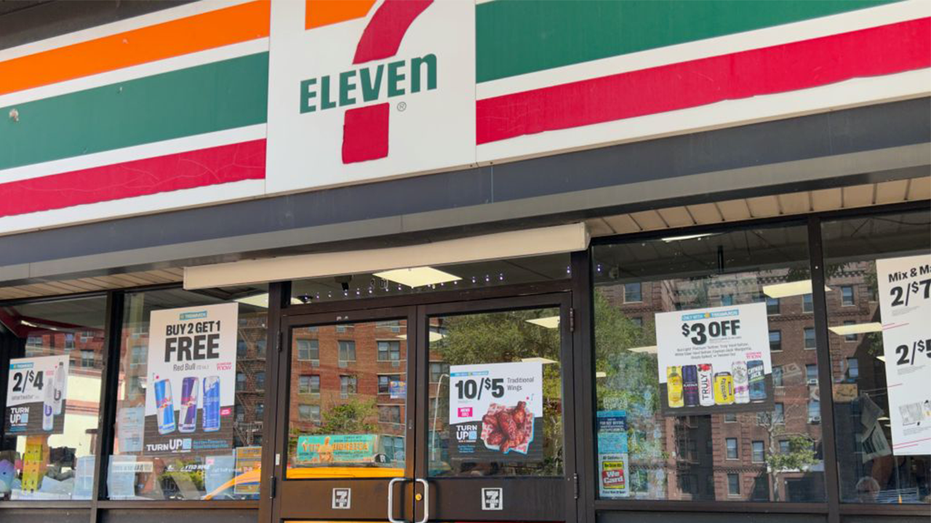
7-Eleven’s parent company is reducing its footprint of stores in the U.S. while converting many convenience stores to wholesale fuel sites. (Getty Images)

The company also said that it plans to convert 350 of its convenience stores to wholesale fuel sites in the fiscal year, with 72 stores having been converted as of the first quarter.

Advertisement

Seven & i Holdings is planning to convert 390 stores to franchises this fiscal year and has done 43 to date.

Despite the company’s pullback, it’s also pursuing selective expansion and is planning to open 205 stores this year. The presentation noted it had opened 30 to date in the first quarter.

CONSUMER INFLATION COOLED MORE THAN EXPECTED IN JUNE AS GAS PRICES FELL

7-Eleven convenience store, Miami, Florida

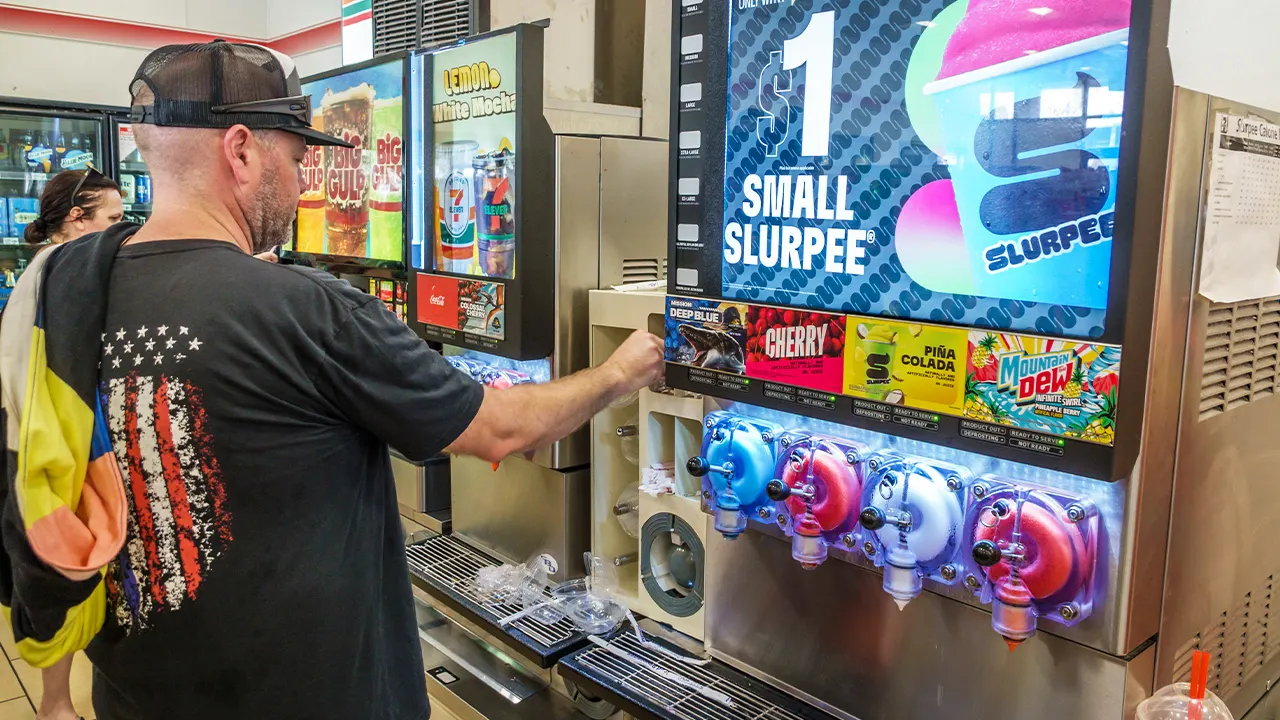
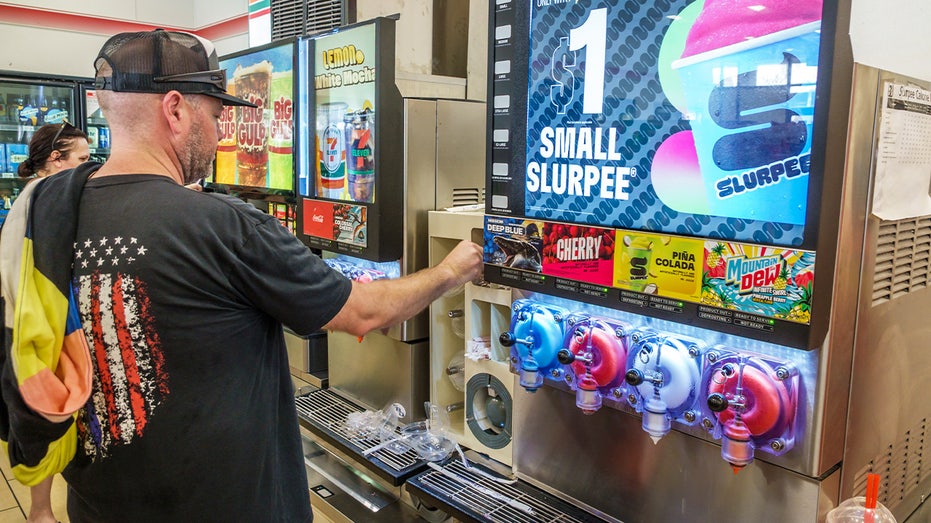
7-Eleven has seen decreased traffic in recent years. (Jeffrey Greenberg/Universal Images Group via Getty Images)

Seven & i Holdings’ plans to remodel 200 stores this fiscal year are expected to get underway in the second half of the fiscal year.

Advertisement

Overall, the plans outlined by the company earlier this year show the total number of 7-Eleven stores in the U.S. declining from 12,712 as of February to 12,272 at the end of the year, for a net decrease of 440 stores.

In late 2024, the company reported having 13,145 7-Eleven locations.

WHITE HOUSE, GAS STATIONS POINT FINGERS OVER STUBBORN PRICES WHILE LOCATIONS THAT SLASHED PRICES SEE BOOM

Seven & i holdings sign

Seven & i Holdings is the parent company of the 7-Eleven stores located in North America. (Soichiro Koriyama/Bloomberg via Getty Images)

The company’s North American business has faced softer performance amid declines in customer traffic, according to company data.

Advertisement

The planned closures come as Seven & i Holdings looks to streamline operations and optimize its store portfolio. The company didn’t disclose which specific locations will be affected by the closures.

GET FOX BUSINESS ON THE GO BY CLICKING HERE

FOX Business’ Bradford Betz contributed to this report.

Advertisement
Continue Reading

Business

Form 144 Schrodinger For: 16 July

Published

on


Form 144 Schrodinger For: 16 July

Continue Reading

Business

General Mills recalls 735,000 Pillsbury bread rolls over glass concerns

Published

on

General Mills recalls 735,000 Pillsbury bread rolls over glass concerns

General Mills is pulling more than 735,000 Pillsbury bread rolls from shelves due to concerns the products may contain glass.

The recall affects certain frozen Pillsbury bread rolls, including “Hard Roll Dough” and “Kaiser Roll Dough” products, according to a recall report shared by the Food and Drug Administration (FDA).

Advertisement

The FDA classified the recall as Class II on July 13. A Class II recall means that using the product could cause “temporary or medically reversible” health consequences.

BMW RECALLS NEARLY 30K VEHICLES OVER ENGINE STARTER DEFECT THAT COULD CAUSE FIRE

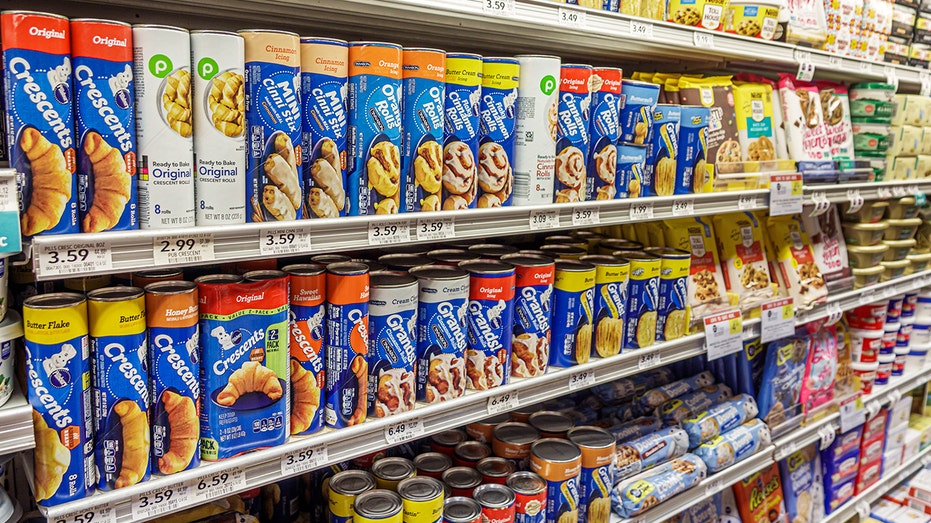
Pillsbury crescent rolls cinnamon rolls cookie dough, baking dough products in cylindrical cans

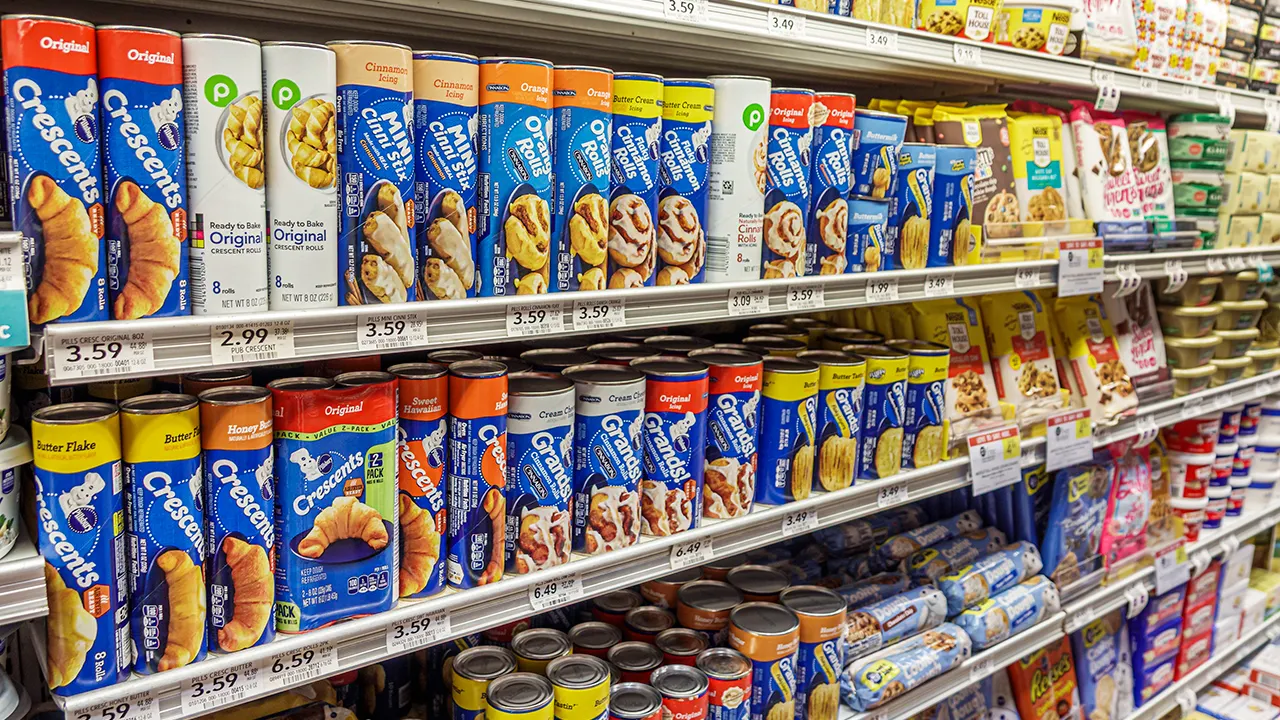
Pillsbury refrigerated dough products are displayed at a Publix Super Market in Miami’s Brickell Financial District. (Jeffrey Greenberg/Universal Images Group via Getty Images)

The affected units include 3,080 cases of Pillsbury “Hard Roll Dough” products, with 180 units per case. They have “Better if Used by” dates of Oct. 12, 2026, and Oct. 13, 2026, with lot numbers 11JUN6JL and 12JUN6JL.

The recall also includes 1,260 cases of Pillsbury “Kaiser Roll Dough” products, with 144 units per case. Those products have a “Better if Used by” date of Oct. 13, 2026, and lot number 12JUN6JL, as noted in the report.

Advertisement

CUISINART STAINLESS STEEL PROPANE GRILL SOLD AT LOWE’S AND WALMART RECALLED OVER SHATTERING GLASS RISK

General Mills World Headquarters

General Mills’ world headquarters in Golden Valley, Minn. (Michael Siluk/UCG/Universal Images Group via Getty Images)

The recalled cases amount to roughly 735,840 rolls.

The products were distributed in Arkansas, California, Florida, Georgia, Indiana, Louisiana, Maine, Missouri, New Mexico, New York, Ohio, Oklahoma, Pennsylvania, South Carolina, Tennessee, Texas, Virginia, Washington and Wyoming, the FDA said.

Ticker Security Last Change Change %
GIS GENERAL MILLS INC. 38.74 +1.52 +4.10%

MORE THAN 1.7M GRILL BRUSHES RECALLED OVER BRISTLE HAZARD, RISK OF ‘SERIOUS INTERNAL INJURIES’

Advertisement

The recall comes amid several other recent food safety alerts.

The FDA also recently upgraded a recall of certain Utz Quality Foods potato chips to its highest risk classification, warning that the products could cause serious health consequences or death if contaminated with salmonella.

Zapp's 1.5-oz. Bayou Blackened Ranch Potato Chips.

The FDA also recently upgraded a recall of certain Utz Quality Foods potato chips to its highest risk classification. (FDA)

FOX Business reached out to General Mills for comment.

FOX Business’ Brittany Miller contributed to this report.

Advertisement
Continue Reading

Trending

Copyright © 2025