Connect with us
DAPA Banner
DAPA Coin
DAPA
COIN PAYMENT ASSET
PRIVACY · BLOCKDAG · HOMOMORPHIC ENCRYPTION · RUST
ElGamal Encrypted MINE DAPA
🚫 GENESIS SOLD OUT
DAPAPAY COMING

Business

Abbott Labs shares jump 12% as Q2 sales rise, profit outlook raised

Published

on

Abbott Labs shares jump 12% as Q2 sales rise, profit outlook raised
US listed Abbott Laboratories shares jumped 12% after the healthcare company reported stronger second-quarter sales and raised its full-year earnings outlook. The company said second-quarter sales rose 13% on a reported basis and 4.8% on a comparable basis.

Abbott reported GAAP diluted earnings per share of $0.53, while adjusted diluted earnings per share came in at $1.31, excluding specified items. The company also raised its full-year 2026 adjusted diluted EPS guidance to a range of $5.45 to $5.60. The company had earlier guided for adjusted EPS of $5.38 to $5.58. It reaffirmed its full-year comparable sales growth guidance of 6.5% to 7.5%.

“Our second-quarter results reflect the momentum we are building,” said Robert B. Ford, chairman and chief executive officer of Abbott. “We expect this momentum to continue and drive accelerating sales and earnings growth in the second half of the year.”

Sales momentum lifts sentiment

Advertisement

The rise in Abbott shares suggests investors were encouraged by the company’s sales growth and the higher profit forecast. The company’s comparable sales growth measure includes the prior and current year sales of Exact Sciences, the cancer diagnostics company Abbott acquired on March 23, 2026.

Also Read: ‘We faltered, did not move quickly:’ How IBM CEO Arvind Krishna’s statement led to $70 billion wipeoutComparable sales growth excludes foreign exchange impact and certain revenue linked to compensation payments received by Abbott’s Structural Heart business under a multi-year agreement with a competitor. The final payment under that agreement was recognised in the first quarter of 2026.
Product pipeline remains active
Abbott also highlighted progress across its medical device and diagnostics pipeline.

In April, the company completed enrolment in its TECTONIC US pivotal trial. The trial is evaluating Abbott’s investigational Coronary Intravascular Lithotripsy system, which is designed to treat severe calcium build-up in coronary arteries before stent implantation.

At the Heart Rhythm Society conference in April, Abbott presented late-breaking data from four clinical trials. The data showed strong clinical outcomes across its pulsed field ablation and conduction system pacing portfolios.

In May, Abbott secured CE Mark approval for Libre Duo, which it described as the world’s first dual glucose-ketone biowearable sensor. The device gives real-time visibility into glucose and ketone levels. This can help people with diabetes detect rising ketone levels, which may lead to diabetic ketoacidosis, a serious condition.

Advertisement

Abbott also completed its submission to the US Food and Drug Administration seeking approval for its Amulet 360 left atrial appendage device.

Continue Reading
Click to comment

You must be logged in to post a comment Login

Leave a Reply

Business

Form 4 Clover Health Investments Corp For: 16 July

Published

on


Form 4 Clover Health Investments Corp For: 16 July

Continue Reading

Business

(VIDEO) Canadian Wildfire Smoke Darkens Skies Again Across US and Canada as Air Quality Hits Hazardous Levels

Published

on

Earth Day

A dense band of wildfire smoke stretching from the Upper Midwest and Canada across the Great Lakes and into New England darkened skies across large parts of North America again Thursday, pushing air quality readings to dangerous levels in cities including Chicago, Cleveland, Detroit, Minneapolis and Toronto.

Satellite imagery showed the smoke plume extending from active wildfires burning in Minnesota, Wisconsin and Ontario, sweeping southeast through southern Ontario and New England before reaching New York City, with portions of the plume even drifting out over the Atlantic Ocean and curling back toward Canada’s far eastern coastline. Forecasters said Thursday was expected to unfold much like the day before, with the densest smoke moving south throughout the day and potentially reaching as far as Maryland.

The worst air quality Thursday morning was concentrated in Minnesota, Wisconsin and Ontario, where the wildfires were actively burning. Among U.S. cities, Minneapolis, St. Paul, Chicago, Milwaukee, Detroit and Cleveland recorded the most severe readings. But forecasters warned that unhealthy air quality was likely to extend as far east as Toronto and New York throughout the day, with the worst conditions around New York City expected in the afternoon and evening hours.

Advertisement

Toronto has borne the brunt of the smoke’s impact for a second consecutive day. On Thursday morning, the city’s Air Quality Index reading approached 400, placing conditions well within the “hazardous” category, with forecasters projecting the air would not return to healthier levels until around 7 p.m. That followed an even more severe stretch Wednesday, when Toronto’s air quality index briefly ranked among the worst of any major city in the world. By Wednesday evening, every U.S. state stretching from Minnesota to Connecticut had at least one location where the index had climbed into unhealthy territory. At 10 p.m. Wednesday, as some of the thickest smoke plumes pushed south of the international border, Minneapolis recorded a reading of 287, Detroit registered 196, New York City reached 192, and Scranton, Pennsylvania, hit 157, according to data from AirNow, the monitoring network run by the Environmental Protection Agency.

The EPA’s Air Quality Index scale runs from 0 to 500 and measures the concentration of five pollutants: ground-level ozone, particulates, carbon monoxide, nitrogen dioxide and sulfur dioxide. Readings of 100 or higher serve as a warning for people with respiratory conditions to take precautions. Once the index climbs above 150, air is considered unhealthy even for people outside sensitive groups; above 200, conditions are classified as “very unhealthy”; and above 300, the air is deemed “hazardous.” Several locations in northeastern Minnesota, closest to the active fires, recorded readings well into the hazardous range on Wednesday.

Meteorologists said the unusually widespread reach of the smoke this week stems from the same atmospheric conditions responsible for the brutal heat gripping the Midwest and Northeast. A heat dome parked over the region has trapped the smoke close to the ground rather than allowing it to disperse at higher altitudes, compounding both the heat and the pollution simultaneously. Forecasters expect conditions to begin easing in the Northeast by the weekend, as another weather system moves in and pushes the hottest air out of the region. However, areas closer to the fires themselves, including much of the Upper Midwest and Ontario, are likely to see the smoke linger longer even as conditions improve further east.

The Environmental Protection Agency estimated that many locations affected by smoke on Wednesday would experience similar or even slightly worse conditions on Thursday, underscoring the persistence of the smoke event across the region.

Advertisement

Health officials and researchers have pointed to a broader pattern behind weeks like this one. As climate change continues to push global temperatures to record levels, the frequency of days that combine extreme heat with heavy air pollution has been increasing, a dynamic that compounds health risks for vulnerable populations during already dangerous heat events. Wildfire smoke in particular can travel enormous distances from its source, meaning cities far removed from any active fire can still experience unhealthy or even hazardous air quality, as this week’s smoke plume reaching from Minnesota and Ontario down to New York and Maryland has demonstrated.

Public health guidance for smoky conditions generally centers on limiting outdoor exposure, particularly for children, older adults and people with existing heart or lung conditions. Officials recommend keeping windows closed, running air conditioning or air purifiers on recirculating settings where possible, and monitoring for symptoms such as coughing, difficulty breathing or eye and throat irritation. Athletes and others who exercise outdoors are advised to pay especially close attention to real-time air quality readings before heading out, since exertion during smoky conditions increases the amount of polluted air the body takes in and can heighten health risks even for otherwise healthy individuals.

The current smoke event follows a familiar pattern seen in recent years, as Canadian wildfires have increasingly sent smoke drifting deep into the United States during summer months, disrupting outdoor activities and prompting air quality alerts across a wide swath of the country far from where the fires themselves are burning. With active fires continuing to burn in Minnesota, Wisconsin and Ontario, forecasters said they would continue monitoring the smoke’s movement and updating air quality projections as conditions evolve through the rest of the week, particularly as the heat dome responsible for trapping the smoke near the ground begins to break down heading into the weekend.

Advertisement
Continue Reading

Business

Morgan Stanley raises Duolingo stock price target on user growth

Published

on


Morgan Stanley raises Duolingo stock price target on user growth

Continue Reading

Business

British Steel nationalisation: government takes control in bid to protect thousands of jobs

Published

on

Business Live

The business department says it will secure the future of one of the UK’s last virgin steel plants

British Steel had been owned by Jingye, a Chinese company

British Steel had been owned by Jingye, a Chinese company

British Steel has been brought under state ownership after the steelmaker’s nationalisation passed a public interest test. The Prime Minister declared the move “secured the future of British steelmaking”, following the introduction of new legislation that made it simpler for ministers to forcibly nationalise steel companies.

The Scunthorpe-based steelmaker has appointed a revamped leadership team tasked with “stabilising the business and developing a commercially sustainable” future, the business department confirmed on Thursday.

Advertisement

It added that bringing the plant into public ownership would safeguard thousands of jobs both at the steelmaker and throughout its supply chain, as well as preserving one of the UK’s last remaining virgin steel plants.

“British Steel is one of the nation’s biggest steel producers, and I’ve made the decision to nationalise the business to secure steelmaking capability and maintain production in the national interest,” said Business Secretary Peter Kyle, as reported by City AM.

The move comes after a turbulent year for the UK’s largest steel producer. Negotiations over a funding package between ministers and former owner Jingye collapsed last year, prompting the Chinese firm to effectively abandon the plant.

In an extraordinary Saturday sitting, MPs voted to bring the plant into public control, a move they argued would prevent the closure of Britain’s last two arc furnaces while helping to protect thousands of livelihoods.

Advertisement

The government said that despite “extensive discussions” during the intervening period, no agreement had been reached with Jingye regarding the plant’s future, enabling it to utilise its new powers to bring the facility under state control unilaterally.

Under the fresh legislation, ministers have the authority to nationalise a steelworks deemed essential to the nation’s future, provided it satisfies a public interest test. The business department confirmed on Thursday that this test had been satisfied, and that an independent valuer would now be appointed to assess whether Jingye is entitled to any compensation.

British Steel interim chief executive Allan Bell described the firm’s nationalisation as a “momentous day” for the company.

“Much more than that, it is an historic day for Britain and UK manufacturing,” he added, “one which safeguards our future and strengthens the national security and infrastructure.”

Advertisement

Jingye has been approached for comment.

Continue Reading

Business

UK economy returns to growth as services sector offsets Iran conflict impact

Published

on

Business Live

It has largely met market forecasts

Rachel Reeves has overseen low growth in the UK economy over recent months.

The UK economy expanded modestly in May after solid performance across parts of the services sector helped cushion the blow from the Iran conflict and narrowly averted a downturn.

New data from the Office for National Statistics (ONS) has shown the economy grew 0.1 per cent in May, largely meeting market forecasts.

Advertisement

The services sector – which accounts for more than 80 per cent of total economic output – expanded 0.3 per cent despite sharp declines elsewhere in the economy.

Manufacturing fell 0.8 per cent and production dropped 0.5 per cent.

“While all three main sectors grew over the three months (to May), the slight growth in GDP in May was driven by services alone, with production and construction both falling back,” Liz McKeown, director of economic statistics at the ONS, said,

She added the activity in services came from computer programming and advertising, while the “often-volatile pharmaceutical industry also performed well.”

Advertisement

Science and technology activity rose 1.8 per cent, largely propelled by a 5.1 per cent surge in research and development on the back of medical sciences. The ONS said this sector alone contributed 0.06 percentage points to real GDP growth, as reported by City AM.

Scott Gardner, investment strategist at JP Morgan Personal Investing, said while the latest figures were encouraging, the “broader picture still points to a fragile economy” as elevated energy costs take their toll.

“The services sector continues to do most of the heavy lifting, helping to keep the economy steady,” he added.

“With momentum still proving difficult to sustain and the situation in Iran remaining uncertain, this reading highlights the economic challenge facing the next Prime Minister. They will inherit a difficult hand as inflation remains above-target and the Iran conflict continues to dampen growth.”

Advertisement

The figures follow the economy recording a 0.1 per cent slip in April, which came after a robust first quarter comprising growth of 0.3 per cent in March and 0.4 per cent in February.

However, the eruption of hostilities in Iran at the end of February sent shockwaves through global economies and stoked inflationary pressures, as oil prices rocketed to highs of $120 per barrel.

Chancellor Rachel Reeves has said that it was “not a war we wanted or joined, but one that will have an impact at home”.

The latest data will rank among the final entries on Reeves’ scorecard before she is expected to be moved on from the Treasury as Andy Burnham takes the keys to No. 10.

Advertisement

The Chancellor used her Mansion House address this week as a last-stitch effort to defend her record on growth and the UK’s public finances.

She issued a stark warning to her successor that “radical governments without credibility have ultimately failed to win the trust necessary to deliver their agenda”.

Energy Secretary Ed Miliband had been widely regarded as the leading contender to replace Reeves, however briefings from his detractors suggest he has slipped down the pecking order.

Home Secretary Shabana Mahmood has since emerged as the preferred candidate for No. 11.

Advertisement

Whoever takes the reins at the Treasury will face an enormous strain on the public finances, after the OECD forecast this week that economic growth would stagnate at 0.9 per cent for the year.

The leading independent economics body also cautioned that government debt is projected to exceed 105.4 per cent of GDP by 2027 — a figure that could balloon to 200 per cent by 2050 in the “absence of policy changes and considering ageing costs and climate damage”.

Economists put forward a package of reforms which, if successfully enacted, the OECD said could boost GDP by as much as four per cent within a decade.

Central to these recommendations is the “essential” consolidation of taxes, which the organisation noted were sitting at “historically high levels”.

Advertisement
Continue Reading

Business

Here’s why the housing market is hurting so much this summer

Published

on

Here's why the housing market is hurting so much this summer
Pending home sales plunge in June

Two different reads on the housing market released Thursday point to the same problem, one that appears to be getting worse. Housing is just too expensive — to own and to build.

Pending home sales in June, a measure of signed contracts on existing homes, fell 5.4% from May, according to the National Association of Realtors. Sales were down 0.3% from June 2025 and were well below analysts’ expectations.

This read is based on people out shopping for homes in June and making the decision to sign a deal, so it is the most timely measure on the state of the market.

“The highest mortgage rates in nearly a year and the record-high national median home price together are contributing to a tepid housing market that is especially difficult for first-time homebuyers,” NAR Chief Economist Lawrence Yun said in a release.

Advertisement

Mortgage rates in June bounced around a narrow but higher range, with the average rate on the popular 30-year fixed mortgage starting the month at 6.6% and ending at the exact same rate, according to Mortgage News Daily. It had been as low as 5.99% at the end of February, the day before the Iran war started.

Mortgage demand from homebuyers has been weakening in the past month. Last week, applications for a mortgage to buy a home were 2% lower than they were the same week the year before, even though mortgage rates were slightly higher last year.

Meanwhile, sentiment among the nation’s single-family builders fell in July, according to another report released Thursday from the National Association of Home Builders. It dropped to 34, down from an upwardly revised reading of 36 in June. Sentiment has stayed below 40 for 15 consecutive months, the longest such stretch since 2012. Anything below 50 is considered negative sentiment.

“Affordability remains the home building industry’s primary challenge, as elevated mortgage rates, costly land, rising material prices, and persistent skilled labor shortages continue to affect the market,” Robert Dietz, NAHB’s chief economist, said in a release.

Advertisement

Get Property Play directly to your inbox

CNBC’s Property Play with Diana Olick covers new and evolving opportunities for the real estate investor, delivered weekly to your inbox.

Subscribe here to get access today.

A rising share of builders, 37%, cut prices in July, up from 35% in June and 32% in May. The use of sales incentives was 63% in July, up slightly from 62% in June and marking the 16th consecutive month that share has reached 60% or higher, according to the NAHB.

Dietz said the newly enacted housing legislation from Congress, which attempts to cut red tape and help localities speed up permitting for housing, “is a positive step that will help expand housing supply and lower overall housing costs, although more policy change is needed at the state and local level.”

Advertisement

Prices for existing homes continue to rise, with the median hitting a new record in June, according to the NAR. While there are local pockets of weakness, low supply of housing in general is keeping upward pressure on prices.

“Bottom line, housing remains the downer in the US economy and according to the NAHB makes up about 15-18% of the US economy all in,” wrote Peter Boockvar, chief investment officer of OnePoint BFG Wealth.

Choose CNBC as your preferred source on Google and never miss a moment from the most trusted name in business news.
Continue Reading

Business

Red Robin Closes More Restaurants as Burger Chain Presses Ahead With Its First Choice Turnaround Plan

Published

on

Coles Launches New Flybuys Pay With Points Option, Letting Shoppers

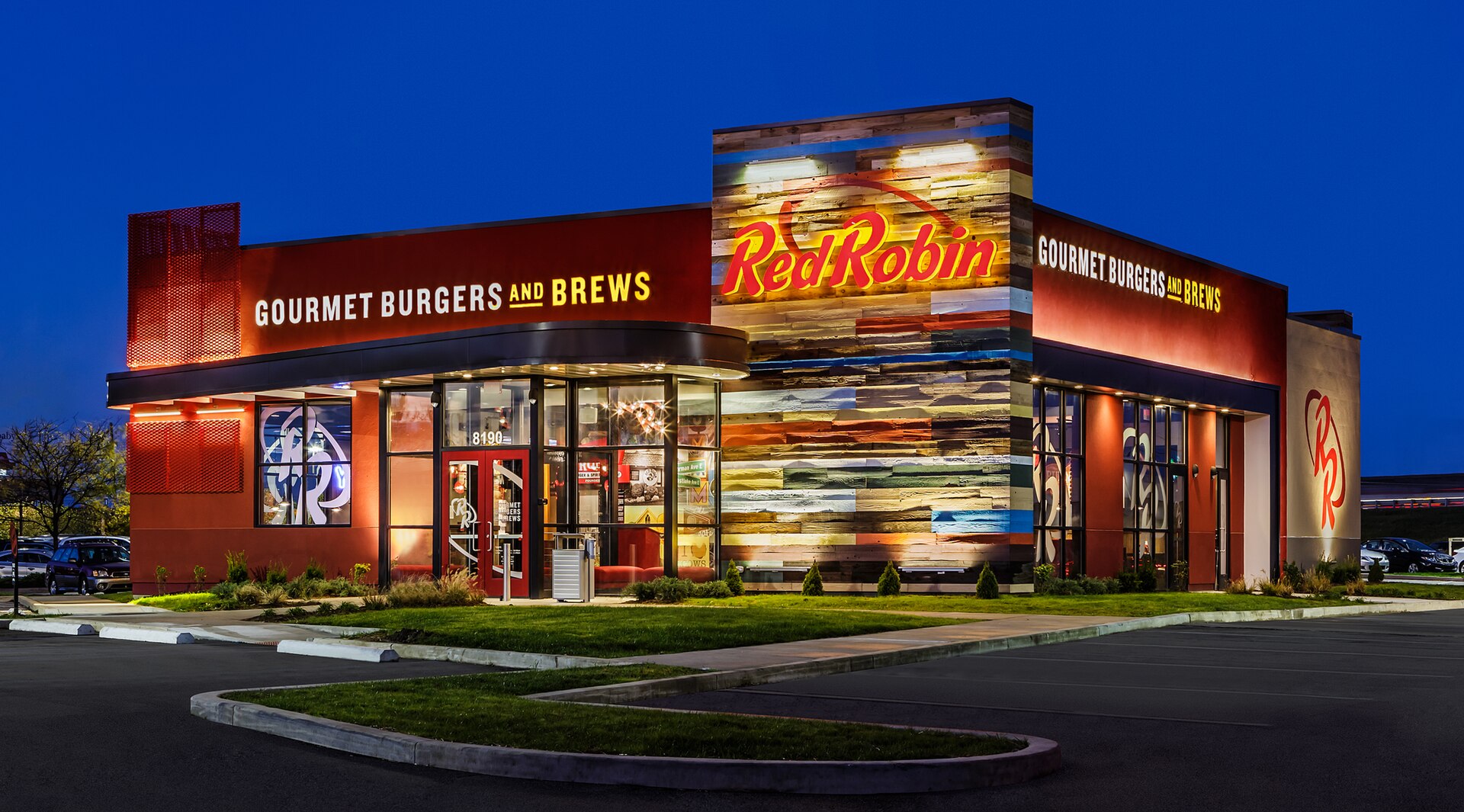
Red Robin Gourmet Burgers has closed another restaurant as part of its broader push to shutter up to 70 underperforming locations and restructure its business, continuing a restructuring effort now in its second year.

The 57-year-old casual dining chain is closing its restaurant at Crossroads in Cary, North Carolina, in the coming weeks after agreeing to sell the property to Birmingham, Alabama-based commercial developer Capital Growth Buchalter for $3.3 million, according to a report from the Triangle Business Journal. Red Robin did not immediately respond to a request for comment on the closure.

The Cary closure is the latest step in Red Robin’s First Choice Plan, a restructuring initiative the company launched in July 2025 aimed at refranchising stores, cutting expenses and reducing debt. Red Robin first signaled its intention to close a significant number of locations in its fourth-quarter 2024 earnings report, released in February 2025, when it said it expected to shutter up to 70 restaurants as part of the effort.

Since then, the chain has made steady progress on multiple fronts. Red Robin closed 23 locations in 2025 as store leases expired, and it repaid $20.3 million in debt by the middle of the year. Those efforts have translated into improved financial performance, with the company’s earnings before interest, taxes, depreciation and amortization rising 53% to $69.7 million in 2025, according to data reported by Restaurant Business.

Advertisement

The turnaround has proven successful enough that Red Robin has been able to pull some previously targeted restaurants off its closure list. After originally identifying 70 locations for potential closure, the company’s restructuring efforts allowed it to remove 20 of those restaurants from consideration, according to Restaurant Business. However, the chain said it now expects to close an additional 20 locations in 2026 as more store leases expire, effectively bringing the total number of closures back up to 70 once those new closures are factored in. Red Robin has also indicated it plans to close as many as 27 more locations over the next several years, though the company has not released a specific list of which restaurants will be affected.

Red Robin Chief Executive Dave Pace addressed the shifting closure list during the company’s fourth-quarter 2025 earnings call, framing the removals as a sign of operational improvement rather than a change in overall strategy. “Going back a ways, we found we’ve made improvements on about 20 restaurants that we had previously identified as potential problems for us or potential closures,” Pace said. “We’ve moved them off the closure list to where we think we can operate them and are hopeful that we can get them back to a performance level that equals the rest of the system.”

Beyond outright closures, Red Robin has also been actively selling restaurant locations to franchise partners as part of its broader refranchising strategy. In a June 15 statement, the company announced it had sold 69 units across eight states to OP Burgers LLC for $62.5 million, along with 17 units in Oregon and Washington to Kuber Oregon LLC and Kuber Washington LLC for a combined $10 million. Separately, Red Robin sold 30 restaurants located in Washington and Western Idaho to multi-unit restaurant operator and franchisee Evergreen Dining LLC for $23.5 million, according to a May 28 company statement. All of the restaurants sold in these transactions will continue operating under the Red Robin brand rather than closing outright.

Evergreen Dining, which has operated more than 100 restaurants across several national brands over nearly three decades, was described by Pace as a strong fit for the chain’s broader turnaround goals. “Since launching our First Choice Plan last year, we have been focused on finding franchise partners who share our values and commitment to delighting guests,” Pace said in the May statement. “We are confident Evergreen Dining is the right partner to accelerate growth at these locations while also helping us strengthen our balance sheet, improve our capital structure, and enhance our financial flexibility as we evaluate potential refinancing partners.”

Advertisement

Founded in 1969, Red Robin currently operates roughly 475 restaurant locations across the United States and Canada, with about 81% of those restaurants company-owned and the remaining 19% operated by franchisees, according to the company’s website. The combination of store closures, property sales and franchise transitions reflects a broader effort by the chain to shrink its company-owned footprint while shoring up its balance sheet and reducing overall debt levels.

Red Robin’s restructuring stands in contrast to more severe outcomes faced by other casual dining chains this year. FAT Brands Inc., which filed for Chapter 11 bankruptcy protection on January 26, 2026, closed 15 underperforming Smokey Bones locations and converted 19 additional units into Twin Peaks restaurants, with all remaining Smokey Bones locations shut down by the end of April, according to a report from WSYX-TV. Separately, OTB Hospitality, the operating company behind On The Border Mexican Grill & Cantina, filed for Chapter 7 liquidation on June 19 after closing all of its company-owned locations earlier that same month, the company said in a June 19 press release. Franchise locations in South Dakota, Florida, Nevada, California and South Korea were not included in that liquidation filing and continue operating independently.

Red Robin’s approach, by comparison, has emphasized preserving its brand presence through franchise ownership even as it trims its company-operated footprint, a strategy the company has credited with improving its underlying financial performance over the past year even as store count reductions continue. With additional lease expirations expected to bring further closures in 2026 and potentially beyond, the chain’s restructuring effort appears set to continue reshaping its footprint across the U.S. and Canada in the coming years.

Advertisement
Continue Reading

Business

British Steel taken into public ownership

Published

on

Business Live

Former Chinese owner Jingye is seeking compensation, though the Business Secretary says that will be independently assessed

The Community union has put forward a plan for the British Steel Scunthorpe site.

The British Steel Scunthorpe site(Image: Getty Images)

The Government has taken British Steel into public ownership in a bid to protect steelmaking at Scunthorpe and mills on Teesside.

The Department for Business and Trade said the move was necessary to keep steel production at the Scunthorpe site, which hosts the last two remaining blast furnaces in the country. Former Chinese owners Jingye had threatened to shut down the furnaces last year but special measures legislation was enacted to save them.

Advertisement

A new leadership team of non-executive directors has been appointed to focus on stabilising the business and turning it into a “commercially sustainable, low-carbon enterprise”, the Government said. Its priorities are said to be stabilising operations on the site, managing health and safety effectively, maintaining production and working with management, trade unions and staff to make the company commercially sustainable.

Jingye has said it will seek compensation for the move, though the Business Secretary Peter Kyle told media that is yet to be decided. Mr Kyle told Times Radio: “The legislation that went through Parliament, which I saw through Parliament, has a mechanism by which an independent assessor will now judge if or if not any compensation is due.”

Prime Minister Keir Starmer said: “British Steel is part of the fabric of our nation and a cornerstone of Britain’s industrial strength. Today’s decision secures the future of steelmaking in the UK, protects skilled jobs and safeguards a vital national capability.

“This Government will always act in the national interest to support British industry, strengthen our economy and ensure the industries we rely on can thrive long into the future.”

Advertisement

The Business Secretary said: “British Steel is one of the nation’s biggest steel producers, and I’ve made the decision to nationalise the business to secure steelmaking capability and maintain production in the national interest. British Steel now belongs to the British people, and our focus is on the future: stabilising the business, backing the communities that rely on it and building a sustainable, competitive and decarbonised steel sector for the years ahead.

“The Government stepped in at British Steel in April 2025 to keep the blast furnaces running and prevent a disorderly closure that would have put steel production, supply chains and thousands of jobs at risk. Since then, Ministers and officials have worked intensively to find a long-term solution for the business.”

Community Union General Secretary Roy Rickhuss said: “We at Community offer our thanks to this Government for passing this important piece of legislation, which will help to secure the long-term future of the UK’s steel sector. Steel is the lifeblood of so many communities in the UK and this new law will help to safeguard thousands of jobs, ensuring greater stability in an industry which has had to weather many storms in recent years.”

Advertisement
Continue Reading

Business

US stocks today: Nasdaq ends lower as chip weakness offsets solid earnings, economic data

Published

on

US stocks today: Nasdaq ends lower as chip weakness offsets solid earnings, economic data
Chip stocks pulled ​the Nasdaq and the S&P 500 lower on Thursday as they continued to lead broader market moves despite generally upbeat U.S. economic data and a strong start to second-quarter earnings season.

Among the 11 major sectors in the S&P 500, technology was one of the biggest percentage losers, with semiconductor ‌stocks weighing heavily ⁠on the ⁠broader market.

Daily moves in chips have increasingly dictated the overall movement of the major U.S. stock indexes, particularly the tech-heavy Nasdaq.

“It comes strictly down to the ​weight of the chips in the S&P 500,” said Paul Nolte, senior wealth advisor & market strategist at Murphy & Sylvest in Elmhurst, Illinois. “Three or four ​years ago, it was 8%, and now it’s over 20%. If you look at the rest of the market, it’s doing fine.”

Advertisement

The weakness in chips, even after chip demand bellwether TSMC posted a 77% jump in quarterly profit, demonstrated ​the lofty expectations for a sector that has soared by nearly 70% so far ⁠this year. ‌U.S.-listed shares of the chipmaker lost ground on the day.


Memory-chip makers were among the biggest laggards, ​with SanDisk, Western Digital, ​Seagate Technology , and Intel among the largest percentage losers.
“This extreme volatility is very disconcerting ⁠for the average investor when they see these huge swings in their portfolio value,” ​said Tim Ghriskey, senior portfolio strategist at Ingalls & Snyder in New York. “(But) a number ​of the non-tech sectors are doing well, so it’s a real mix here.”According to preliminary data, the S&P 500 lost 37.78 points, or 0.50%, to end at 7,534.62 points, while the Nasdaq Composite lost 383.76 points, or 1.47%, to 25,885.47. The Dow Jones Industrial Average fell 109.13 points, or 0.21%, to 52,549.51.

The Dow’s losses were cushioned in part by UnitedHealth Group’s advance after the company beat Wall Street earnings estimates and hiked its 2026 forecast.

United Airlines fell as surging oil prices weighed on ‌its forward guidance.

GE Aerospace slid even after the company lifted its 2026 profit forecast.

Advertisement

Analysts have set a high bar for second-quarter earnings season. S&P 500 companies, in aggregate, are expected to post year-on-year ​earnings growth of ​24.8%. Technology earnings alone are seen jumping ⁠65.5% from the year-ago quarter, according to the latest available data from LSEG.

SOLID RETAIL SALES, LOW JOBLESS CLAIMS, WEAK HOUSING DATA

A spate of U.S.economic indicators released on Thursday showed solid core retail sales, a drop in jobless claims and surging ​manufacturing activity in the Northeast.

Less positive data came from the housing sector, with a bigger than expected drop in pending home sales and souring homebuilder sentiment reflecting high borrowing costs and strained affordability for would-be homebuyers.

Advertisement

The U.S. and Iran extended their barrage of airstrikes, prolonging a week-long escalation that has all but voided last month’s truce. But Iran’s release of a U.S. citizen suggested a path remains for the two sides to avert the resumption of all-out war.

Continue Reading

Business

Rare ‘intensive’ revision in Bihar four months before polls

Published

on

Rare 'intensive' revision in Bihar four months before polls
New Delhi: The Election Commission’s ‘Special Intensive Revision’ of Bihar’s electoral rolls has sparked a major political debate. However, this is not the first time that the poll panel has ordered an ‘intensive’ revision of electoral rolls — at least nine such revisions were held from 1952 to 2004, several of which came with similar house-to-house verification and even a ‘de novo’ electoral roll in some cases. However, the EC has seldom ordered a full state intensive revision in a state 4-6 months ahead of assembly elections, as is the case with Bihar.

Factor the last such instances: In June 2004, ECI ordered ‘Intensive Revision of Electoral Rolls‘ in seven northeastern states and J&K.

Alongside, it ordered a ‘special summary revision‘ in Andhra Pradesh, Bihar, Chhattisgarh, Goa, Gujarat, Haryana, Himachal Pradesh, Jharkhand, Karnataka, Kerala, Madhya Pradesh, Maharashtra, Orissa, Punjab, Rajasthan, Sikkim, Tamil Nadu, Uttar Pradesh, Uttaranchal, West Bengal, and Union Territories of Andaman & Nicobar Islands, Chandigarh, Daman & Diu, Dadra & Nagar Haveli, NCT of Delhi, Lakshadweep and Pondicherry.Prior to that, ‘intensive revision’ of the electoral rolls was conducted in 20 other states/UTs, including Bihar, in two phases during 2002 and 2003, except the northeastern states and J&K.

BIHAR 2025- A unique case
The 2025 SIR in Bihar is different on several counts. While an ‘intensive’ revision mostly involves a ‘de novo’ exercise, drawing up a fresh electoral roll from the scratch, the Bihar SIR is using the 2002-03 electoral roll as a base to build upon. At the same time, it involves a new pre-printed enumeration form included in the usual house-to-house verification format and document submission, associated with an ‘intensive’ revision. It is, also, very different from previous intensive revision exercises in terms of timing.

EC has seldom ordered a full state and full-scale intensive revision in a state 4-6 months ahead of scheduled assembly elections, as is the case with Bihar. Bihar saw its last intensive revision in 2002, a good three years away from the assembly polls held in October 2005.
Similarly, when the EC, on June 29, 2004 announced an intensive roll revision in eight states, it chose to leave out two states which were pending a similar intensive roll revision. These were Arunachal Pradesh & Maharashtra where assembly polls were due in October 2004.
“In Arunachal Pradesh and Maharashtra, general elections to the assemblies are to be held in the latter half of 2004. Therefore, the programme in these two states will be announced after the completion of the elections,” the EC press note on 29.06.2004 read.
Instead, a ‘special summary revision of rolls’ was announced for Maharashtra ahead of the October 2024 assembly polls with house-to-house enumeration, as per the September-December 2004 EC newsletter.

The EC has, in fact, often conducted ‘intensive’ revision in certain areas of a state. In Tamil Nadu- after inquiry reports indicated ‘shortcomings in the conduct of different levels of election officers at the time of intensive revision of electoral rolls in 2002’- the poll panel on October 19, 2004 ordered a ‘special revision of intensive nature with house-to-house enumeration’ in six municipal corporation areas across 33 constituencies, spanning parts of Chennai, Salem, Coimbatore, Tiruchirappalli, Madurai, and Tirunelveli.

Advertisement

In the aftermath of Gujarat riots, the ECI on August 16,2002, announced a repeat of the 2002 ‘special revision of intensive nature’.

Types Of Electoral Roll Revisions

Intensive Revision: It’s usually a de-novo process without reference to earlier existing roll; involves at least 2 household verification visits by booth-level officer

Summary Revision
: Roll is simply updated; no house-to-house enumeration but objections are addressed before final roll publication

Special Summary Revision: EC can order so if it finds inaccuracies or poor coverage of any area. EC can adopt changes in existing procedure

Partly Intensive and Partly Summary Revision: Existing electoral rolls are published in draft and checked through household verification and put through claims/objection process

Advertisement

Roll revision chronology

1950
Originally Section 23 of Representation of the People Act, 1950 provided for annual revision with March 1 as qualifying date

1952
After first gen election in 1952, EC directed that from 1952 to 1956, annual revision of electoral rolls should cover 1/5th of entire state area so that every locality might have its electoral roll intensively revised at least once before 2nd gen polls

1956
EC directed intensive revision of rolls every year in some areas where electoral rolls were likely to become inaccurate: (i) Urban Areas (ii) Areas with floating labour population (iii) Areas where fairly large movements of population had taken place

1957
Post 1957: Lok Sabha polls: EC directed that during each of the three following years, the electoral rolls of 1/3rd of the entire state area be revised intensively, while during 1961 the revision would be intensive only in urban areas, areas with floating, migratory population and service voters

Advertisement

1960
Following amendments to RP Act, 1950, EC ordered annual revision of rolls between January 1 and Jan 31 of the year

1962
Post 1962 LS Polls: EC directed ‘summary revision’ adequate for 1963 and 1964. In 1965 intensive revision conducted again in 40% of the country; the rest 60% was done in 1966

1966
Post 1966: District Election Officer appointed in each district and summary roll revision conducted in 1969-70 and 1975

1976
Emergency: no Lok Sabha polls in 1976; EC held summary roll revision

Advertisement

1983
1983 on: Staggered intensive revision of all rural constituencies ahead of 1985 LS polls

1987-88
All constituencies revised intensively; special revision in 1989

1992
Summary revision ordered followed by intensive revision in 1993 along with introduction of EPIC card

1995
Intensive Revision comes in

Advertisement

1999-2000
Amid computerisation electoral rolls, no intensive revision in 1999, 2000

2002
Special intensive revision in 20 states; intensive revision in 7 states in 2003-04

Continue Reading

Trending

Copyright © 2025