Connect with us
DAPA Banner
DAPA Coin
DAPA
COIN PAYMENT ASSET
PRIVACY · BLOCKDAG · HOMOMORPHIC ENCRYPTION · RUST
ElGamal Encrypted MINE DAPA
🚫 GENESIS SOLD OUT
DAPAPAY COMING

Business

Treasury Yields Decline on Lower-Than-Expected U.S. Wholesale Inflation

Published

on

Stocks Little Changed After Fed Decision

Fresh signs of cooling U.S. inflation revive demand for Treasuries, pushing yields down.

June producer price index falls 0.3%. Ex-food and energy, PPI rises 0.2%. Both measures come below WSJ consensus forecast. The data follow yesterday’s softer-than-expected consumer price index.

Yields had been rising as U.S.-Iran tensions escalate and oil prices rise above $80 a barrel, but the soft inflation drags them below yesterday’s settle. Markets reprice the outlook for monetary policy, reducing odds of a Fed hike this year.

Continue Reading
Click to comment

You must be logged in to post a comment Login

Leave a Reply

Business

July 16, 2026 Solution and Hints for NYT Puzzle Number 1,853 Are Finally Revealed

Published

on

Nancy Guthrie

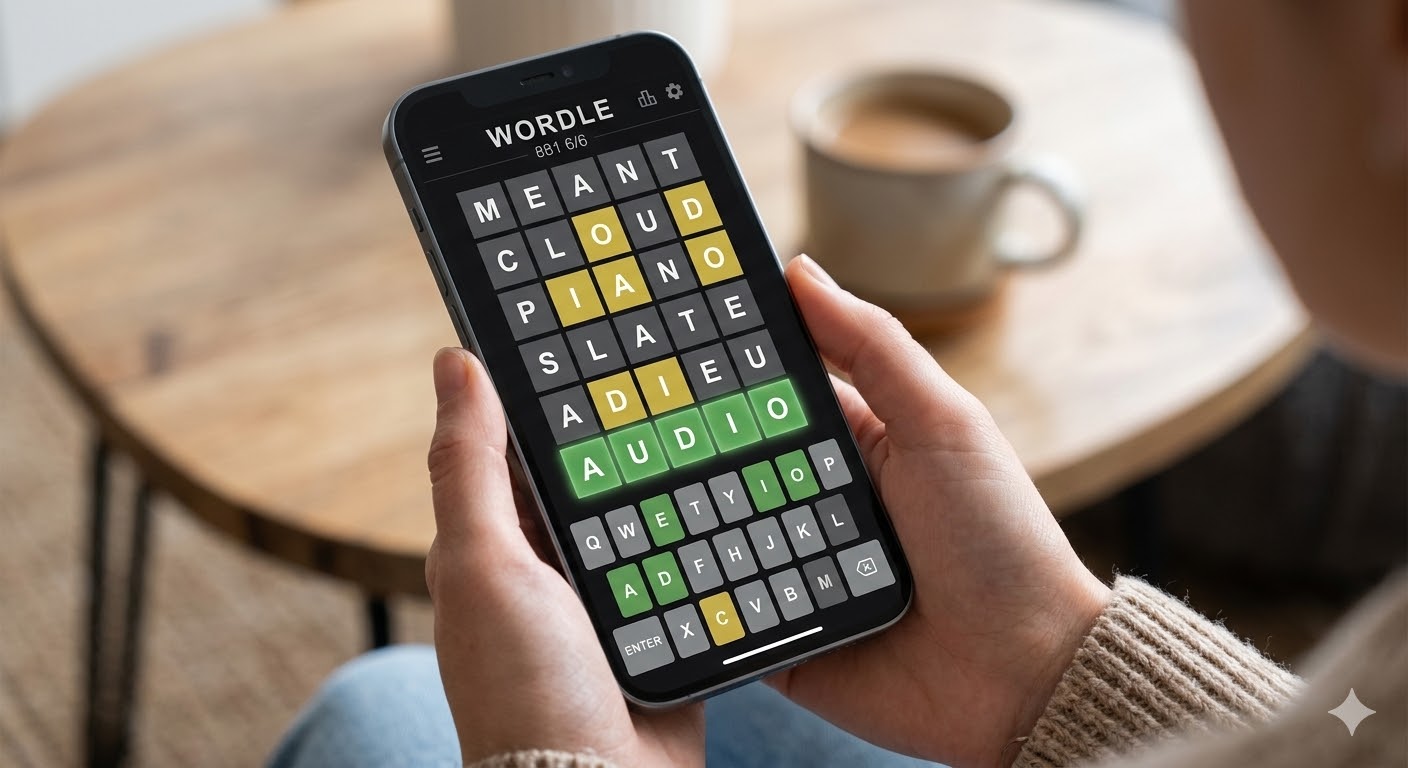
Wordle players faced a puzzle Thursday that sent many first-time guessers down the wrong path, with the day’s answer pulling from a category of words tied to landforms rather than the everyday vocabulary that tends to dominate the game. The solution to Wordle #1,853 for July 16, 2026, is BUTTE.

The word refers to an isolated hill with steep, near-vertical sides and a small, relatively flat top, a landform most commonly associated with arid regions and the American Southwest. Puzzle trackers noted that the word rhymes with “beaut,” “mute” and “flute,” a detail offered as a phonetic hint for players who had narrowed down the word’s sound but not its spelling.

According to the New York Times’ WordleBot, which analyzes daily performance data, the average player needed 4.1 guesses to solve Thursday’s puzzle in both regular and hard mode, a pace that places it toward the more difficult end of the spectrum for the month. Several outlets covering the game’s daily puzzle noted that BUTTE tripped up players who initially leaned toward more common landform words, including MESA, a similar geological feature distinguished by its larger overall footprint compared with a butte’s narrower profile.

Puzzle hint sites offered players a series of escalating clues throughout the day for those who wanted help without seeing the answer outright. The word was described as referring to a type of landform found in dry regions, known for having steep sides and a flat top, and associated with deserts and the American Southwest. A final hint noted the word was smaller than a similar-looking geological formation with a larger footprint, a reference distinguishing a butte from a mesa.

Advertisement

For players who solve the puzzle by tracking their guess patterns, Thursday’s session illustrated how quickly a well-chosen middle guess can narrow the field. One columnist covering the puzzle described starting with SPARE, a word that yielded limited new information, before switching to GUILT, which sharply cut down the list of remaining possibilities to just two words: QUOTE and BUTTE. Faced with that fork, the columnist opted against QUOTE due to its repeated letter and relative rarity as a five-letter opener, ultimately landing on BUTTE as the correct solution.

Wordle, the daily word-guessing game that challenges players to identify a five-letter word in six tries or fewer, has become a fixture of many people’s morning routines since its original release. The game was first developed as a private prototype in 2013 by software engineer Josh Wardle before he refined it into the public version that launched in 2021. Its simple format — a fresh puzzle released once daily, no downloads required, and a built-in mechanic for sharing results without spoiling the answer for others — helped fuel its rapid rise in popularity by the end of 2021. The New York Times acquired the game in early 2022 and has continued to run it as a daily feature ever since.

Thursday’s puzzle was numbered 1,853 in the game’s ongoing sequence, continuing a run that has produced a wide range of answers in the preceding stretch of puzzles. The 10 words that appeared in Wordle immediately before Thursday’s, according to puzzle trackers, were PSHAW, STEAK, STOUT, CLACK, AVIAN, CANAL, AMEND, DEMON, SLING and TODDY.

Wordle’s format has evolved slightly since the Times took over the game. Beginning on February 2, 2026, the newspaper began reintroducing older, previously used words back into the daily rotation rather than relying exclusively on words that had never appeared before. The first recycled word to reappear was CIGAR, notable as both the very first solution ever used in Wordle and the first answer selected after the Times assumed control of the puzzle. Despite the reintroduction of past answers, puzzle trackers noted that none of the most recent 10 solutions were likely to repeat again anytime soon, given how the Times has managed the rotation to avoid clustering repeated words too closely together.

Advertisement

For players looking to improve their odds on future puzzles, hint sites recommended several general strategies that apply beyond Thursday’s specific word. Common advice includes opening with a word that covers frequently used vowels and consonants to maximize the information gained from the first guess, testing different vowel placements early to identify structural patterns, and paying close attention to the color-coded feedback — gray, yellow and green tiles — to logically eliminate remaining possibilities rather than guessing at random. Puzzle trackers also encouraged players not to fixate on a single theory if their early guesses stall out, noting that the correct word is often simpler than players initially assume once they step back and reconsider the available letters.

Word-ending patterns can also offer useful clues in a pinch. Common suffixes such as “-ED,” “-ER” and “-Y” appear frequently enough in Wordle solutions that keeping them in mind during the middle guesses can help players close in on an answer more efficiently, particularly once several letters have already been confirmed in the correct or partially correct positions.

Thursday’s puzzle capped what several trackers described as a stretch of unusually challenging entries in the days leading up to it, with recent puzzles drawing comments from frustrated players whose winning streaks were put at risk by less common vocabulary. Puzzle number 1,854 is scheduled to go live at midnight local time for players around the world, continuing Wordle’s daily rhythm of a single shared puzzle experienced individually by millions of people in their own time zones each day.

Advertisement
Continue Reading

Business

July 16, 2026 Puzzle Number 1,131 Solutions, Hints and Categories Explained

Published

on

Nancy Guthrie

Thursday’s edition of The New York Times’ Connections puzzle sent players hunting through skincare routines, shades of black, precision-related terms and a cluster of tricky two-word phrases before the full board came together. Puzzle number 1,131, edited by Wyna Liu, followed the game’s usual color-coded structure, moving from its most straightforward grouping to its most deceptive.

Connections challenges players to sort 16 words or phrases into four hidden groups of four, with each group tied to a shared theme. The categories are ranked by difficulty and color-coded accordingly: yellow for the most straightforward, green for moderately tricky, blue for more abstract connections, and purple for the hardest group, which frequently leans on wordplay or double meanings. Players are allowed four mistakes before the puzzle ends, and the game, launched by the Times in June 2023, has grown into one of the publication’s most popular daily offerings, trailing only Wordle in reach.

Thursday’s yellow group, the easiest of the day, centered on skincare products: CLAY MASK, EYE CREAM, PEEL and TONER. Each item plays a distinct role in a typical skincare regimen. According to dermatologist Dr. Jeannette Graf, speaking to Byrdie, clay masks offer a range of benefits for the skin, including helping to brighten complexion, absorb excess oil, and support overall skin balance. Eye cream is generally used to brighten and moisturize the delicate skin beneath the eyes while helping to reduce the appearance of dark circles, and a peel is typically used to smooth skin texture and address blemishes. Toner, meanwhile, is commonly applied after cleansing to help balance the skin’s pH level and prepare it to better absorb other products like moisturizer.

The green group asked players to identify four shades of black: CHARCOAL, INK, JET and PITCH. Each word functions as a near-synonym for the color, drawing on different visual and cultural associations — charcoal evoking a softer, grayish black; ink suggesting a deep, saturated tone; jet referencing the polished black stone historically used in jewelry and mourning attire; and pitch calling to mind the tar-like substance long used as a descriptor for total darkness, as in the phrase “pitch black.”

Advertisement

Moving into the blue category, the puzzle’s third-hardest, Thursday’s theme centered on words associated with precision: BULLSEYE, CLOCKWORK, LASER and NEEDLE. A bullseye refers to the center of a target, such as one used in archery or darts, and by extension has become shorthand for hitting an exact mark. Clockwork evokes the finely tuned, reliably accurate mechanisms found inside traditional timepieces, often used to describe something running with flawless regularity. Laser and needle both carry associations with narrow, exact focus — a laser for its concentrated beam of light and precise targeting in fields ranging from surgery to manufacturing, and needle for the fine, exact point used in sewing, medicine and navigation.

The purple group, traditionally the day’s most difficult and prone to misdirection, asked players to spot a shared structural trick rather than a straightforward theme: DOT MATRIX, PERIOD PIECE, POINT BREAK and SPOT REMOVER. Each phrase begins with a word referring to a small mark or spot — dot, period, point and spot — a pattern that required players to look past the literal meaning of the full phrases and instead focus on their opening words. Puzzle commentators noted that the category was designed to reward careful observation over direct definition, since the phrases themselves span wildly different contexts, from printing technology to filmmaking to laundry care, with little in common beyond their first word.

Puzzle trackers following Thursday’s board flagged several red herrings built into the grid to steer solvers toward incorrect groupings. Words evoking printers or tattoos, for instance, appeared to gesture toward other possible categories before ultimately fitting into the “tiny marks” purple group instead. Commentators covering the puzzle also noted the deliberate overlap between categories as one of the signature traits of Connections under Liu’s editorship, with the game frequently constructed so that a word could plausibly belong to more than one group at first glance.

For players working through the puzzle without hints, common strategy advice from the Times’ own guidance includes starting with the most obvious, tightly bound sets — categories built around colors, numbers, or clearly related objects — before moving to groups that require thinking about alternate meanings or wordplay. Players are also encouraged to watch for shared prefixes or suffixes among the remaining words once the easier categories have been solved, since Connections puzzles often bury patterns in word structure rather than surface-level meaning. Staying flexible and expecting misdirection, particularly in the purple category, is widely cited as the most effective way to preserve a daily streak.

Advertisement

Thursday’s puzzle continued a run of varied themes throughout the week, following patterns in Wednesday’s board that similarly leaned on layered wordplay categories. Connections has built a loyal following in the two years since its 2023 launch by combining relatively simple mechanics with puzzles that reward lateral thinking, drawing comparisons to Wordle in terms of daily engagement even as it demands a different kind of reasoning from players.

The full set of answers for Thursday, July 16, puzzle number 1,131, are as follows: the yellow group for skincare products includes CLAY MASK, EYE CREAM, PEEL and TONER; the green group for shades of black includes CHARCOAL, INK, JET and PITCH; the blue group tied to precision includes BULLSEYE, CLOCKWORK, LASER and NEEDLE; and the purple group built around words beginning with tiny marks includes DOT MATRIX, PERIOD PIECE, POINT BREAK and SPOT REMOVER.

Connections is available daily alongside the Times’ other puzzle offerings, including Wordle, Strands, the Crossword, Letter Boxed and Sudoku, with a new Connections board set to go live at midnight local time for players looking to keep their streaks alive heading into Friday.

Advertisement
Continue Reading

Business

The financial winners and losers from the World Cup

Published

on

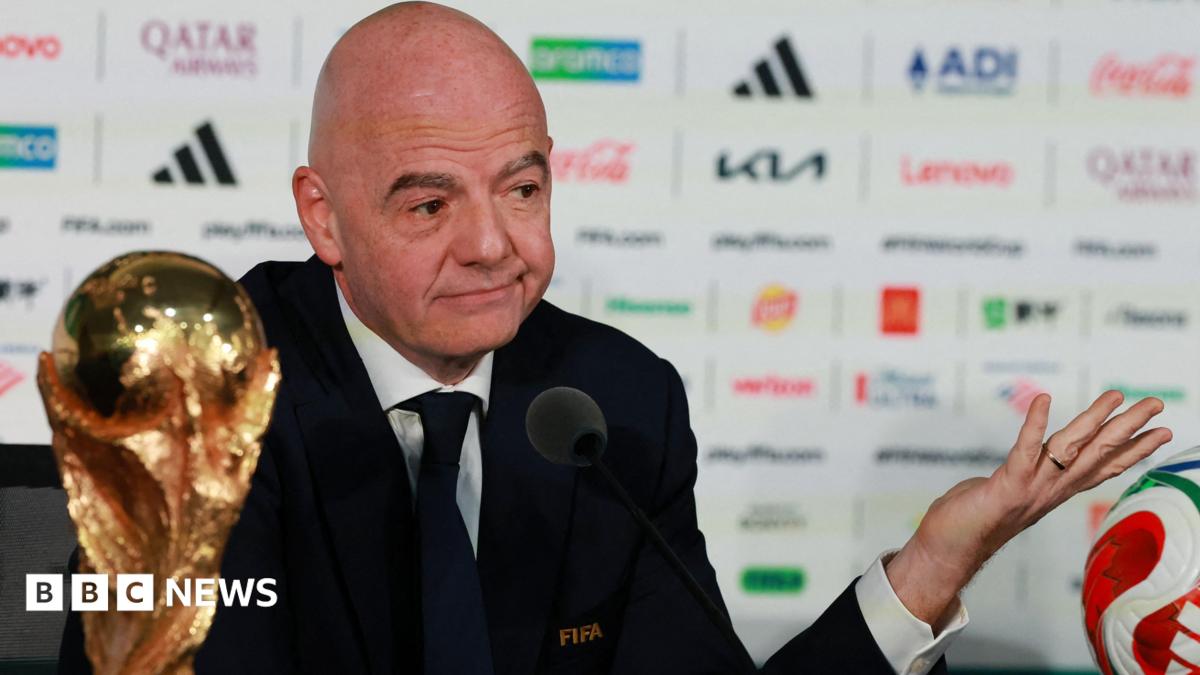
Fifa President Gianni Infantino speaking at a press conference

The 16 host cities across the US, Canada and Mexico have been welcoming an influx of fans and tourists boosting hospitality, hotels and local businesses.

But while the Scots drank Boston dry and have won the heart of the city and its people, experts say the long-term economic benefits are minimal.

Fifa estimated some $41bn would be added to the global economy, of which $17bn would boost the US economy alone, with 185,000 jobs created, mostly in hospitality and accommodation.

But Alexander Budzier, a fellow in management practice at Oxford University and chief executive of project management company Oxford Global Projects, says the long-term economic benefits of hosting such a big sporting event just do not materialise.

Advertisement

Host cities actually typically see a big drop in visitors, he says, as many seek to avoid the tournament chaos.

And while there may be a spike in hiring, he argues it is typically only for lower-paid jobs in hospitality. “It creates jobs, but it does not create wealth,” he says.

Official figures show that hiring in US pubs, bars and restaurants ramped up ahead of the tournament in May, but the boom was short-lived.

The only “worthwhile” economic benefit, Budzier argues, is the regeneration projects that can be done, such as the redevelopment and housing built in Stratford in London following the 2012 Olympic Games.

Advertisement

But due to much of this World Cup using existing stadia, hotels, training complexes and travel infrastructure, “there won’t be any economic benefits from development”.

Continue Reading

Business

Diploma PLC (DPMAY) Q3 2026 Sales/Trading Call Transcript

Published

on

OneWater Marine Inc. (ONEW) Q1 2026 Earnings Call Transcript

Jonathan Thomson
CEO & Director

Good morning, everyone. Thanks for joining us. I’m here, as usual, with our CFO, Wilson Ng. I’ll say a few words on quarter 3, and then we’ll move as usual to Q&A. It’s been another great quarter for us, 15% organic growth, continuing the momentum from the first half of the year. The sector trends are broadly the same as they were in the first half. Controls, very strong broad-based growth, IS Group, Clarendon, Peerless, Windy still growing double digits, taking good market share in fast-growing end markets. Life Sciences, conversely, markets are tougher. We’re going through a little bit of product cycle — product life cycle refresh. I’m really, really pleased with what we’re doing in Life Sciences, what the team are doing, but we will expect low single-digit growth for the year.

Seals, we’ve seen some acceleration in quarter 3, and we’re expecting a good quarter 4, too, not celebrating. International is a bit better, but patchy and North American Seals is still doing very well. So look, overall, we’re really happy with the quality, with the performance of the portfolio. Peerless continues to perform fantastically, taking share in really good market conditions. Growth is moderating in the second half as we expected against very big comps. And that will continue to moderate into next year until we return to the track record of high

Advertisement
Continue Reading

Business

Dow Jones Rises to 52,747 as Investors Rotate Into Blue-Chip Stocks While Tech and Chip Shares Slide

Published

on

FTSE 100 Surges 0.8% Today as Oil Eases and Markets

The Dow Jones Industrial Average edged higher Thursday, climbing 88.62 points, or 0.17%, to 52,747.26, as investors continued rotating into industrial and blue-chip names even as technology and semiconductor stocks struggled to build on recent momentum.

The modest gain extended a two-day winning streak for the 30-stock index, which closed Wednesday up 150.37 points, or 0.29%, at 52,658.64. That session saw the S&P 500 and Nasdaq Composite both post stronger gains, rising 0.38% and 0.62%, respectively, as investors digested a softer-than-expected wholesale inflation reading and a bullish outlook from Dutch chip equipment maker ASML.

Thursday’s session unfolded with more caution across broader markets, even as the Dow pushed modestly higher. S&P 500 futures slipped 0.2% and Nasdaq 100 contracts dropped 0.8% ahead of the opening bell, as traders weighed whether recent earnings results justified further gains in artificial intelligence-related stocks. A strong earnings beat and raised sales outlook from Taiwan Semiconductor Manufacturing failed to translate into fresh gains for the broader chip sector, a dynamic that has fueled much of this year’s stock market advance. Europe’s Stoxx 600 index was down 0.6% in early trading, while Asia’s technology-heavy indexes had another volatile overnight session.

The divergence between the Dow’s modest advance and weakness in more tech-heavy benchmarks reflects a broader rotation that has played out across markets in recent sessions, with investors shifting money away from semiconductor stocks that have led this year’s rally and into other sectors, including industrials and select technology names less exposed to chip supply chains.

Advertisement

Corporate earnings have played a significant role in shaping sentiment this week. IBM shares tumbled more than 22% Tuesday after the company said it expected second-quarter earnings per share of $2.93 on revenue of $17.2 billion, both below Wall Street’s consensus estimates. The company attributed the shortfall to weaker-than-expected growth in its software and infrastructure businesses, saying customers had shifted spending toward memory chips instead. IBM’s stumble weighed on the Dow and rippled into the broader software sector, with Workday, Salesforce and Adobe shares falling 9%, 6% and 5%, respectively, as investors grew concerned about softening demand across enterprise software.

Chip stocks, meanwhile, showed signs of stabilizing after a rough stretch earlier in the week. South Korean memory chip maker SK Hynix rose nearly 7% ahead of Tuesday’s opening bell, reversing part of a double-digit decline from the prior session, as investors returned to some of the sector’s most beaten-down names.

Inflation data released this week offered some reassurance to markets. June’s Consumer Price Index came in better than expected, falling 0.4% on a monthly basis, while core CPI, which excludes food and energy, was flat. Major indexes climbed on the data initially, though the reading came with a caveat: the decline reflected falling oil prices from earlier in the year that have since risen sharply again. Crude oil topped $80 a barrel this week after Iran and the United States traded attacks and the Trump administration reinstated a blockade on Iranian shipping through the Strait of Hormuz, a move President Trump described in a social media post as intended to secure the strait while allowing the U.S. to collect a 20% fee on cargo shipped through the region. Crude prices have risen 16% from a recent low, a shift that could eventually pressure consumer and transportation-related stocks if sustained.

Federal Reserve Chairman Kevin Warsh’s remarks to Congress this week have also factored into market sentiment, with investors watching closely for any signals about the central bank’s next moves on interest rates amid the mixed inflation and growth data.

Advertisement

Thursday’s trading session carried a heavy earnings and economic data calendar. Wall Street was watching for results from Taiwan Semiconductor Manufacturing, GE Aerospace, UnitedHealth Group, Abbott Laboratories, US Bancorp, Netflix and Intuitive Surgical, alongside June retail sales figures and the weekly initial jobless claims report, both of which were expected to offer fresh insight into the health of the U.S. consumer and labor market.

Big Tech names that led Wednesday’s rally showed a mixed picture heading into Thursday. Apple shares closed at a record high Wednesday after a report indicated the company had received approval to launch its generative artificial intelligence features in China, sending the stock up more than 4%. Alphabet shares rose nearly 3% the same session, while Amazon and Microsoft each gained close to 3%. Whether those gains would hold on Thursday remained uncertain given the more cautious tone in premarket trading, with technology shares broadly turning negative even as the Dow’s more industrial and financial-heavy composition helped it post a modest gain.

Financial sector earnings have generally come in strong this reporting season. BlackRock shares jumped more than 5% earlier this week after the asset management giant posted second-quarter results that beat expectations, with the company reporting earnings of $13.91 per share on revenue of $7.08 billion. Morgan Stanley shares rose more than 1% in premarket trading after the bank reported record quarterly revenue and profit, posting $3.46 in earnings per share on revenue of $21.35 billion.

Market strategists have cautioned that expectations for this earnings season remain elevated. According to CFRA Research chief investment strategist Sam Stovall, second-quarter earnings per share for S&P 500 companies are projected to rise 20.9% year-over-year, well above the average quarterly increase of 11.6% seen since 2009. Full-year S&P 500 earnings are projected to climb 22.9% in 2026 and 18.2% in 2027, according to Stovall, even as the index’s forward price-to-earnings ratio sits at a premium to its 10-year average, raising the bar for companies to justify current valuations with their results.

Advertisement

Billionaire investor Warren Buffett offered a note of caution on the broader market environment this week, telling CNBC’s Becky Quick that today’s market has become increasingly shaped by speculative trading rather than long-term investing, a dynamic he said has made it harder to find good value.

With crude oil prices elevated on Middle East tensions, corporate earnings delivering a mixed bag of results, and investors continuing to reassess the AI trade that has powered much of this year’s rally, Thursday’s modest gain for the Dow reflected a market still searching for consistent direction as the second-quarter earnings season moves into full swing.

Continue Reading

Business

Wise Group plc (WSE) Q1 2027 Sales/Trading Call Transcript

Published

on

OneWater Marine Inc. (ONEW) Q1 2026 Earnings Call Transcript