

Politics
In pictures: London Irish embassy protest vs Ireland-Israel football matches

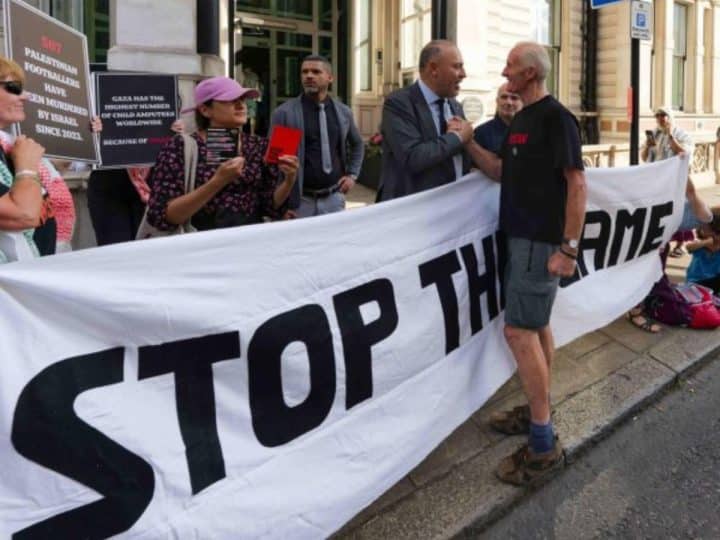
Yesterday, 15 July 2026, the London Irish Brigade held a protest outside Ireland’s embassy against the planned Ireland-Israel matches in the UEFA Nations League. The October 2026 fixtures will be held, after the Irish FA voted this month in favour of proceeding, in Hungary and, behind closed doors, in Serbia.
Irish football fans, outraged at the idea of playing sport against a genocidal apartheid colony, have been protesting against the fixtures for months. And last night, Irish people living in London took the ‘Stop the Game’ protest loudly to their own embassy:
Organiser Frank Glynn explained some of the background:
The protesters were congratulated by Palestinian ambassador Husam Zomlot:
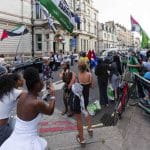
The raucous but peaceful demonstration waved Palestinian flags and a “Stop the Game” banner, while activists handed out flyers to those who went past:
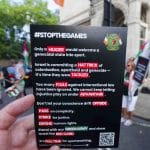








Protesters reminded passersby of the huge numbers of children and other innocent victims murdered or maimed by Israel:





Israel should be as isolated, in sport and in every other way, as apartheid South Africa ever was. Shame on the cowardly officials and bodies who are refusing to do it.
Featured image via author
By Skwawkbox


A Moroccan intelligence insider has helped expose the scale and reach of the country’s use of Pegasus spyware. The advanced Israeli-made technology hacks into smartphones allowing spies to eavesdrop on and manipulate the devices.
The former agent said Pegasus was used to spy on journalists, activists and foreign officials from Spain and France.
As the Guardian has it:
Pegasus, which is manufactured by the Israel-based NSO Group, allows its operator to access everything on a target’s mobile phone, including emails, text messages and photographs.
It can also activate the phone’s recorder and camera, turning it into a listening device.
Morocco claims it uses the technology, arguing:
that reporters who have investigated NSO Group were “incapable of proving [the country had] any relationship” with the company.
Inside the secret world of Pegasus
The whistleblower, known as Safir, has offered key insights into the work of the Direction Générale de la Surveillance du Territoire (DGST), Morocco’s internal security agency. Safir, who spent a decade in the agency, claims:
the country’s internal security services began using Pegasus in 2017 and went on to deploy it against domestic and foreign targets over the course of four years.
The result is a multi-year investigation across several news outlets as well as Amnesty International’s Security Lab. Le Monde, Haaretz, El Confidencial, Die Zeit and the Guardian all worked on the investigation.
The project’s coordinator, media NGO Forbidden Stories:
analysed material detailing Morocco’s surveillance practices, from leaked emails to targeting records relating to Pegasus and other spyware, and from victims’ testimony to internal training material.
The Guardian reported:
Two other former Moroccan intelligence agents also provided information and corroborated facts. Safir’s testimony is corroborated by leaked material, including the Pegasus project dataset, which has been forensically analysed by Amnesty International’s Security Lab.
Spying on dissenters and officials with Israeli tech
The investigation found DGST officials met figures from the Israeli tech firm in a swanky Morrocan villa in 2017. NSO officials demonstrated the spyware. Morocco later adopted it.
The spyware was used to target Spanish police officials and Moroccan and French human rights advocates.
Investigators say further evidence of Morocco’s use of Pegasus emerged when WhatsApp sued NSO in 2025:
Further evidence that Morocco used Pegasus emerged last year after WhatsApp’s parent company, Meta, took NSO Group to court in the US for exploiting its messaging platform to target people.
Israel allegedly barred exports of Pegasus to Morocco after a 2021 ban. The Biden administration imposed the ban on NSO for acting:
contrary to the foreign policy and national security interests of the US.
Authoritarianism is on the rise globally. Pegasus spyware is a terrifying threat. The Morocco leaks hint the scale and scope of danger this powerful Israeli hacking software poses to states and citizens alike.
Featured image via EuroMed
By Joe Glenton
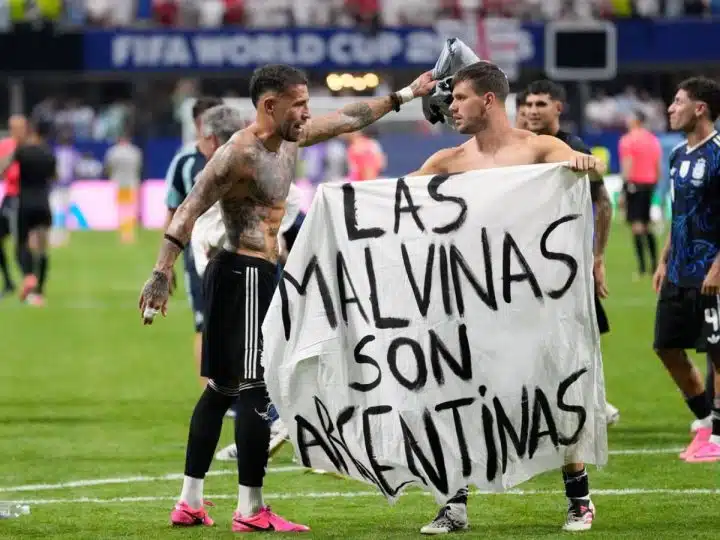
Argentina’s players have been criticised after displaying a banner referencing the Falkland Islands in the aftermath of their 2-1 World Cup semifinal win over England. The banner, held aloft on Wednesday night, translated as: “The Falkland Islands are Argentinian,” prompting immediate political reaction and renewed scrutiny over FIFA’s rules on political messaging.
The Falkland Islands remain a UK overseas territory, with islanders voting overwhelmingly in 2013 to retain that status. The islands have long been a point of tension between the two nations, most notably during the 1982 conflict, when Argentinian forces invaded before being forced to surrender two months later.
Argentina have previously been sanctioned for similar displays. FIFA fined the federation after players held up a banner with the same slogan following a 2014 friendly against Slovenia. Under Article 34.3 of the tournament regulations, political messages or slogans are prohibited before, during or after matches.
Business Secretary Peter Kyle told BBC Breakfast that the gesture crossed a clear line. “My reaction is that it was entirely inappropriate,” he said:
Politics needs to be separate from football. In fact, the World Cup has one of its central tenets that politics is separate from football. That is now a matter for FIFA. I expect FIFA to do its investigation thoroughly.
Kyle added that an investigation was inevitable given the nature of the breach:
We expect FIFA to undertake an investigation into this. I think it was certain to happen because it was such an egregious violation of the rules of not having political activity as part of the football.
The political reaction drew comparisons with a recent UEFA case. Spain players Rodri and Álvaro Morata were banned for one match each after singing about Spain’s claim to Gibraltar following their Euro 2024 triumph. Citing those sanctions, Liberal Democrat leader Ed Davey called for the Argentina players involved in Wednesday’s banner display to be suspended for Sunday’s final against Spain.
England’s exit sets backdrop for controversy
The banner emerged in the immediate aftermath of England’s elimination. Anthony Gordon had given England a first‑half lead, but Argentina overturned the deficit with two late goals from Enzo Fernández and Lautaro Martínez, both created by Lionel Messi, who once again shaped the decisive moments of a major tournament.
England’s performance was statistically stark, with five shots, 12% possession, and long spells spent chasing Argentina’s movement and tempo. Messi’s influence, as ever, proved pivotal, threading passes that unlocked England’s defensive structure and swung the semifinal decisively.
Argentina’s victory booked their place in Sunday’s final against Spain, who beat France in the other semifinal. The win also extended Messi’s remarkable run of decisive contributions deep into major tournaments, with his creativity again proving the difference.
Argentina — FIFA expected to review incident
FIFA has yet to comment publicly, though the governing body is expected to review the incident under its regulations on political messaging. The organisation has historically taken a strict stance on such matters, and the precedent from 2014, when Argentina was fined for the same slogan, adds weight to expectations of formal action.
The banner’s appearance also revived long‑standing sensitivities around the Falklands, a subject that has periodically surfaced in football contexts despite FIFA’s attempts to keep political issues separate from the sport. The governing body’s rules are designed to prevent precisely these moments, where geopolitical disputes spill into the global spotlight of a major tournament.
Wider context
The incident sits within a broader pattern of political expressions in football being met with disciplinary measures. UEFA’s sanctions against Rodri and Morata last year underscored the governing bodies’ insistence on neutrality, particularly during major competitions where global attention is heightened.
Football’s reach often makes it a stage for political symbolism, intentional or otherwise. Governing bodies have repeatedly emphasised that the sport’s global appeal depends on maintaining separation from political disputes, even when players or fans feel compelled to express national sentiment.
In this case, the banner’s message touched on a decades‑long territorial dispute that remains deeply sensitive. The Falklands conflict, though more than 40 years old, continues to shape political identity and national narratives in both countries. The World Cup’s scale ensured that the gesture would draw immediate and widespread reaction.
England left to reflect on familiar shortcomings
Away from the political fallout, England’s exit prompted renewed scrutiny of their tournament shortcomings. The semifinal defeat followed a pattern familiar to recent campaigns. There was early promise, moments of control, but ultimately undone by lapses and the brilliance of elite opponents.
Anthony Gordon’s opener had given England a foothold, but Argentina’s late surge driven by Messi’s vision and the clinical finishing of Fernández and Martínez, clearly exposed England’s vulnerabilities. The Three Lions struggled to retain possession, failed to impose their rhythm, and were repeatedly forced into reactive defending.
Player ratings reflected the gulf in influence. Messi earned a 9/10 for his decisive contributions, while England’s key figures were unable to match Argentina’s tempo or creativity. The defeat extended England’s wait for a major tournament final and added another chapter to their catalogue of near‑misses.
Argentina moves on, England head home
Argentina now prepare for a final against Spain, a matchup shaped by contrasting styles and the presence of generational talents on both sides. Spain’s controlled possession game and Argentina’s incisive transitions promise a compelling contest, with Messi once again central to Argentina’s hopes.
England, meanwhile, depart with frustration and familiar questions. Their semifinal exit, combined with the controversy surrounding Argentina’s banner, ensured a dramatic and politically charged end to their campaign.
Nothing will come of FIFA’s investigation, which is expected to unfold in the coming days, but for now, Argentina’s focus shifts to Sunday, and the chance to lift another World Cup trophy.
Featured image via the Canary
By Faz Ali
Politics
Oppressed Sahrawi filmmakers call for boycott of The Odyssey as Nolan chose to film in occupied territory
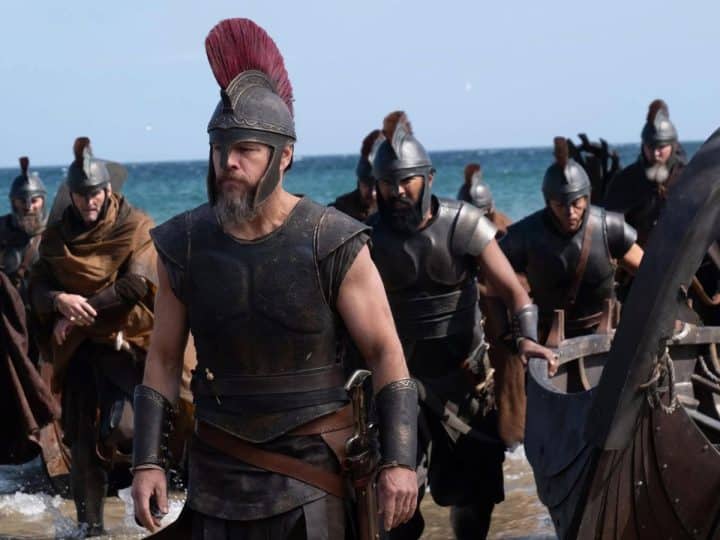
Boycott calls are growing as Sahrawis slam Christopher Nolan’s decision to film The Odyssey in occupied territory. All while doing nothing to acknowledge the occupation or the Sahrawis who continue to resist Morocco’s ethnic cleansing campaign to force them from their land.
Nolan chose Dakhla as the location for the film, set for release on Friday 17 July, despite the fact that the land has been occupied by Morocco for 50 years. In turn, critics have pointed out that this can only work to normalise the oppression and forced displacement of Sahrawis.
Sahrawi filmmakers and journalists have condemned this deplorable lack of empathy for the people of Western Sahara and a failure to uphold any sense of “ethical responsibility”. As a result, they now argue that boycotting the film is essential to push back against military occupation, dispossession and injustice.
One of those making this call is Sahrawi journalist and filmmaker Mamine Hachimi who powerfully stated to Middle East Eye:
It is deeply disturbing that while Sahrawi journalists are imprisoned for exposing abuses, an international film production can use our homeland as a cinematic backdrop without addressing the reality of the occupation.
Sahrawi campaigners and filmmakers are calling for a boycott of The Odyssey by Christopher Nolan over his decision to shoot the film in Morocco-occupied Western Saharahttps://t.co/yA77f8mpV3
— Middle East Eye (@MiddleEastEye) July 15, 2026
Imprisoned for life after documenting human rights violations
Imagine a major Hollywood production choosing to film in the occupied West Bank while ignoring Zionist Israel’s occupation and its settler-colonial violence, terrorism and crimes against humanity. The Odyssey was filmed on occupied and dispossessed land.
Like in Palestine, resistance is a crime in itself for people in Western Sahara. Those who dare to document the crimes of the Moroccan oppressor face arbitrary punishments, Some have been imprisoned for life simply for documenting ongoing violations against the human rights of Sahrawis.
Hachimi co-directed a short documentary, ‘Three Stolen Cameras.’ The film spotlights the challenges facing Sahrawi media organisation Equipe Media as it tries to capture evidence of the crimes perpetrated by Morocco against the people of Western Sahara. However, its premiere in Beirut back in 2017 was shut down as a result of undue pressure by the Moroccan government. One of the many attempts by Morocco to make the film disappear.
Those working within the media organisation have faced arrest and harassment from the occupying authorities. This reminds us of Israel — one of only 2 countries, along with the US, that recognise Moroccan sovereignty over Western Sahara — and the way in which it is murdering journalists en masse in Palestine and Lebanon. Moreover, the lawfare used by Zionists and pro-Israel groups across the West to shut down the ability of the wider public to learn the truth about Palestinians also mirrors the struggle of those brave journalists and filmmakers like Hachimi.
Speaking to Middle East Eye, Hachimi added:
This is not a campaign against cinema or artistic freedom – it is a call for ethical responsibility.
Two of my colleagues, Abdallah Lhafaouni, who is serving a life sentence, and Bachir Khadda, who is serving a 20-year sentence, are political prisoners simply because they documented human rights violations in occupied Western Sahara.
The Odyssey — No solidarity
The fact that Nolan has refused to comment on this choice and carried on filming — despite seeing visible protests in Dakhla making clear the anger and frustrations of local people — exposes a complete lack of solidarity between Western filmmakers and filmmakers from the Global South.
The same silence echoes across much of the Western mainstream media. Journalists have shown little urgency — let alone outrage — over the relentless targeting of journalists in Palestine and Lebanon.
The contrast couldn’t be more jarring. Nolan travelled to occupied territory to film his next blockbuster, while other filmmakers risk punishment, sanctions and even criminalisation simply for documenting what life under occupation actually looks like.
This only serves to benefit the Moroccan government, whose minister of culture — Mohamed Mehdi Bensaid — took selfies with Nolan, saying that the film would:
give visibility to Dakhla as a film location and not just a tourist destination.
This becomes all the more offensive to those who have suffered under this oppressive occupation when we learn that Nolan made use of security services provided by the same military that is hurting, injuring and silencing Sahrawis resisting Morocco just a mere few kilometres away.
Sahrawi campaigners say The Odyssey serves to whitewash the long-running and ongoing exploitation of their own territory by Morocco. In turn, this normalises occupation by powerful states, which only leaves ordinary civilians vulnerable to these acts of dominance and aggression.
Colonialist abuses in the global south have long been ignored — receiving nowhere near enough criticism or scrutiny — an issue this film could have avoided:
View this post on Instagram
Missed opportunity to challenge today’s oppressors
The Odyssey looks set to dominate the summer box office. With a reported $250 million budget, it’s one of the year’s biggest releases, and audiences around the world are counting down to Friday. Packed with mythology, epic battles, gods and sorcery, it’s also poised to make its creators and investors a fortune.
But in chasing an ancient story, the film missed the chance — whether by choice or not — to shine a light on a very real struggle unfolding today, and on the remarkable resistance that has endured through five decades of Moroccan occupation.
Sahrawi filmmaker Abidin Mohamed Hamudi argues that, instead of standing with those fighting for freedom, human rights and self-determination, the team behind The Odyssey has made itself “complicit” in the abuses taking place in Western Sahara.
Speaking to MEE, Hamudi argued that Hollywood’s silence reflects the priorities of capitalism and the corrosive logic of Western economic interests. He concluded:
Shame on them – history will put everyone in the place they deserve, and they will be in the dustbin of history, remembered as nothing but cultural parasites.
With #TheOdyssey about to be released, it's more important than ever to know the truth behind #ChristopherNolan's film and to hear directly from its victims. Thank you, @MiddleEastEye, for giving a voice to those silenced by #Morocco and its accomplices — FiSahara (@FiSahara) July 16, 2026
 https://t.co/bKfcKv2iCD pic.twitter.com/GqCMADpxxH
Nolan’s past comments regarding criticisms were that “they’re always irrelevant”, giving little hope he will right his wrong in this instance:
Christopher Nolan says the online backlash to ‘THE ODYSSEY’ comes with the territory.
“These conversations that happen before people see the film – they’re always irrelevant. Because no one having them knows what the film actually is yet.”
(Source: https://t.co/J378r5GWMy) pic.twitter.com/fUfthbUeyV
— DiscussingFilm (@DiscussingFilm) July 10, 2026
The Odyssey — More backlash but for all the wrong reasons
Nevertheless, Nolan may be in for some financial woes. Alongside the boycott calls from activists, the film is also facing backlash from far-right bigots targeting its casting of a Black woman as Helen of Troy and trans man actor Elliot Page as Sinon.
That double-sided controversy could end up hitting The Odyssey where it hurts most: at the box office.
BOYCOTT THE ODYSSEY MOVIE pic.twitter.com/lmSo4gFZEV
— GORGO (@GORGO4547) July 11, 2026
Elites failing ordinary people, yet again
Therefore, it seems that an opportunity was there for successful Western filmmakers to use their celebrity status and their privilege to help those made voiceless — which would be a true act of a genuine filmmaker.
Others, including Javier Bardem, Greta Thunberg, and Pedro Almodóvar, have urged Christopher Nolan to cut any scenes his team filmed in the occupied lands of Dakhla. So far, Nolan, his production company Syncopy Inc., and Universal Pictures have stayed silent.
That silence risks turning Nolan’s latest film into yet another reminder of Western indifference to — and complicity in — the crimes against humanity and historical breaches of international law still taking place today.
Featured image via IMDb
British broadcasting is struggling. Competing against mammoth American streamers and producing outdated linear television, our traditional media companies are shedding viewers who are increasingly switching to newer, personalised alternatives online.
Although the chips may be down, those with friends in government – namely, our public-service broadcasters (PSB) – can still enjoy unfair protections from the shifting sands of the media market. Recently, the UK government announced plans to give greater ‘prominence’ to what it claims are ‘trusted’ media organisations in an attempt to combat ‘fake news’. Under the recommendations of the ‘Watch This Space’ green paper, published by culture secretary Lisa Nandy, social-media companies and video platforms such as YouTube would be required to boost the visibility of many government-owned broadcasters. In effect, the government wants more control over what you read, watch and listen to.
Our public-service media – the BBC, ITV / STV, Channel 4, Channel 5 and S4C – are already handed a host of perks. New boxes and smart TVs are obliged to not only offer but also prominently display their channels – a privilege not afforded to their non-PSB counterparts. And soon, because they fall into the category of ‘trusted’ news media, their content will be artificially boosted on social-media platforms to increase engagement.
But trusted by whom? Survey after survey has consistently shown that public trust in mainstream media has plummeted to an all-time low.
The BBC regularly comes under fire for its left-wing bias. It is currently being sued by US president Donald Trump after allegedly doctoring a speech to suggest that he had directly encouraged his supporters to storm the US Capitol in January 2021. In 2025, it was forced to pull a documentary about the war in Gaza after it was revealed that it had been narrated by the son of a senior Hamas official. In December, an internal memo exposed deep bias in its coverage of the Middle East and gender politics.
As it stands, the PSB framework has become a permanent subsidy for the mainstream media. The government has picked winners and defended them to the hilt. While there might be a case for state-funded public-service broadcasting (the likes of the BBC’s Shipping Forecast would likely never be produced by a commercial broadcaster), these institutions’ status as trusted channels should not be above scrutiny.
Time and time again, the state seems to reward failure. Consider Channel 4, which commands just 5.9 per cent of UK viewers – a small fish in today’s sea of streaming giants. It is facing a sharp decline in advertising revenue, cutting around 200 jobs and selling its London headquarters. Yet it has just reached an agreement with Whitehall to double its borrowing capacity in the shape of a £150million debt facility.
This is another reason why the new green paper is so troubling. Rather than asking platforms to reward truthful reporting or great journalism directly (or through the marketplace of ideas), it promotes a selective list of institutions decided in advance by the same state that funds and licenses many of them. Independent journalists, new digital outlets and well-established providers alike will not receive a similar leg-up. They will have to fight to win reduced consumer attention when the top of people’s feeds is dominated by the government’s ‘trusted’ providers.
Of course, artificially boosting so-called reliable content veers dangerously close to censorship. Since when is the state better equipped than the average consumer to decide what constitutes the truth?
This all sheds new light on the Sky-ITV merger plans, which will create the UK’s biggest commercial broadcaster, placing their TV channels and on-demand services at the top of our TV screens. ITV wins because it avoids the peril of being a small broadcaster in a world of giants. Sky wins because it will gain the coveted public-service-status protections that ITV currently enjoys for the next eight years.
If Ofcom approves the continuation of this licence, it will prove that it continues to pick winners. Broadcasters should be able to stand on their own commercially because viewers vote with their eyes and the ad revenue follows. Continuing PSB privileges props up select broadcasters to sustain an Ofcom-determined editorial worldview, one that is increasingly divergent from public opinion. And it’s the commercial broadcasters that people actually like who are footing that bill.
Altogether, these recent events paint an alarming picture of the British media landscape. The state is slowly building a system where a shrinking set of institutions has financial backstops, guaranteed audience reach and regulatory privileges. All the while, viewers are increasingly seeking out newer, more modern forms of content.
As so often is the case with media regulations, these policies are framed as a way to take on the so-called Silicon Valley tech giants. In reality, all they do is entrench the privileges of a select few broadcasters, taking powers out of the hands of viewers and into the hands of Whitehall’s bureaucrats.
Sebastian Charleton is head of programmes and partnerships at the Adam Smith Institute.

The 2026 Community Barometer report is the first major report into the health of the high street that focuses on putting place first. The Association of Convenience Stores launched the report, which highlights the use of the ‘Makerfield Test’ as a means to deliver good growth on high streets.
The ‘Makerfield Test’ is the idea that a policy must work for somewhere like Makerfield or the government ditches it.
There is a stark contrast in the report between the high streets that people feel are getting better and those that are getting worse. Across the UK, only Greater London emerged as a net positive when it comes to high streets. Every other part of the country feels as though high streets are getting worse than before.
The worst affected areas are Scotland, the East of England, and the South West. Although outside of London, all parts of the country clearly need more targeted support to create high streets that people can be proud of.
The Community Barometer report seeks to identify the reasons why these places feel left behind. The top five reasons why people believe their high street is getting worse are:
- Too many empty shop units.
- Poor range of shops and services.
- Fewer shoppers due to the cost of living.
- Stronger competition from online shopping.
- Prevalence of dodgy shops.
The report asks about the services that people want more and less of. And it finds a clear need for a diverse range of services like:
- Specialist shops.
- Bank branches.
- Pubs.
- Bars.
- Restaurants.
- Sports facilities.
However, the businesses that people don’t like appearing on their local high street are:
- Vape shops.
- Pawnbrokers.
- Barber shops.
Respondents suggest these kind of shops seem to pop up when a high street is losing its vitality.
What do people want in their high street?
This sentiment shows in the ranking of local services and their impact on the community. Pharmacies, post offices and convenience stores rank as the top three services that people regard as essential and having a positive impact on an area. Convenience stores rank as the number one service for supporting local growth.
Association of Convenience Stores chief executive Ed Woodall said:
Access to local services that make people feel good about where they live should not be a nice-to-have. The Community Barometer sets out a blueprint for the changes that are needed to give the whole of the UK reason to be proud of their high streets.
Thriving local shops, diverse places to eat and drink, and core services like post offices and pharmacies are all part of the makeup of a successful high street. But too often these businesses are failed by rising costs, slow planning decisions, and lawlessness that goes unpunished.
If the next prime minister is serious about effecting change and delivering good growth, high streets need to feel safer, business rates need be reduced and planning decisions need to speed up.
The Community Barometer sets out three priority areas for the government to consider as it forms its new High Streets Strategy. These three priority areas are consistent with the recommendations of 15 reports on high streets delivered over the last decade that successive Westminster governments have failed to implement. They are:
- Making safety on the high street a priority, with better and faster use of closure orders and criminal behaviour orders. These can address the problems of retail crime and the presence of dodgy shops locally.
- Reducing the cost of operating by leveraging business rate reliefs, making it more appealing to take on empty properties. This addresses the number one reason why people feel their high streets are in decline.
- A town centre first planning system that moves at the pace of the businesses it serves. It would direct new retail sites onto high streets, concentrating footfall and investment activity where it’s most needed.
The Association of Convenience Stores has written to Andy Burnham ahead of his appointment as prime minister, setting out the change needed on high streets.
You can download the full Community Barometer report here.
Featured image via the Canary
By The Canary
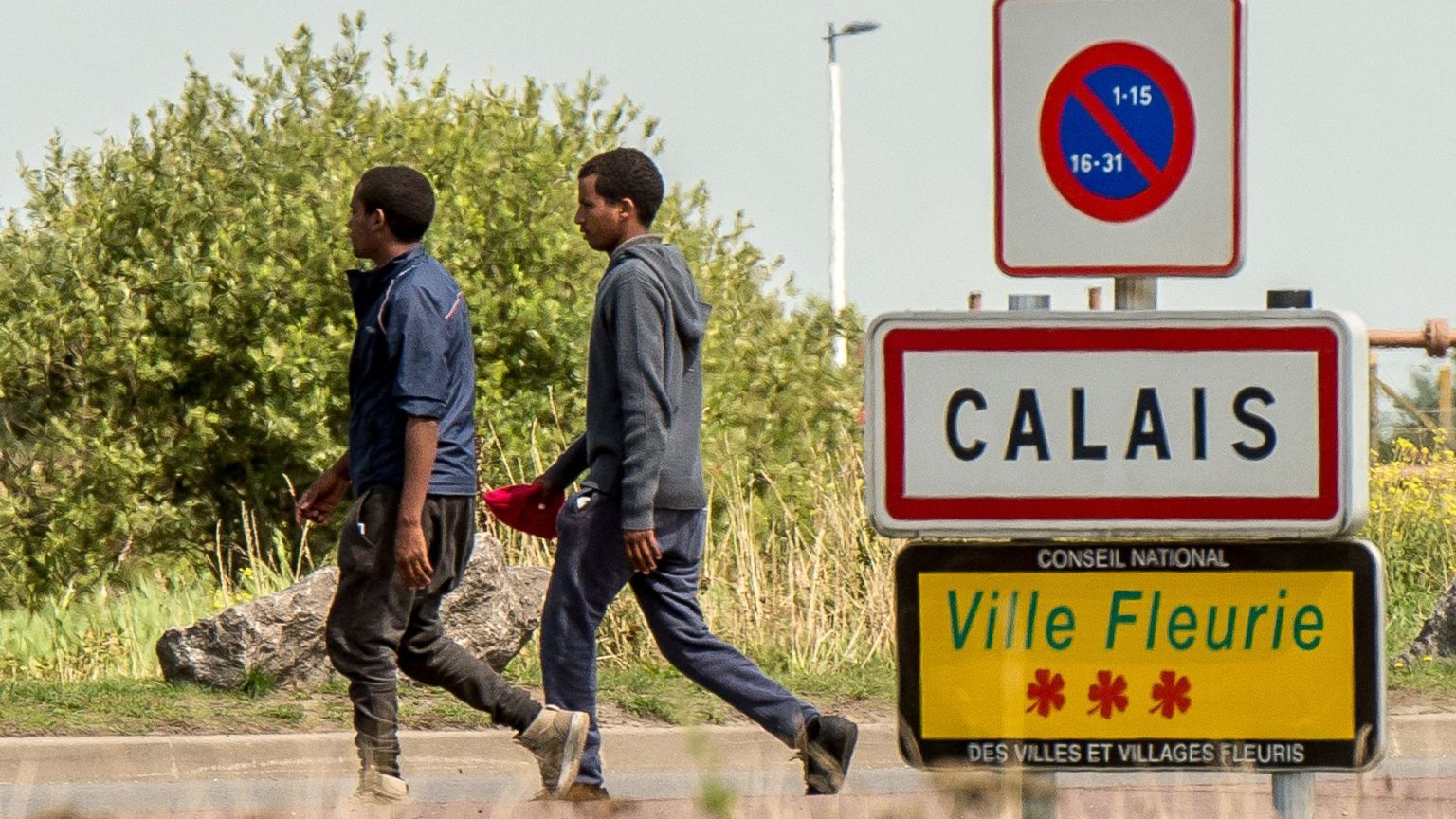
Under the deal, the UK can send certain people arriving illegally on small boats back to France. In return, the UK has to accept an equivalent number of migrants who apply for asylum in the UK lawfully.
The legal challenge was brought by five small-boat asylum seekers – four from Eritrea and one from Sudan – selected for a return to France. Their lawyers objected to several elements of the ‘one in, one out’ scheme as it affected their clients. The court ruled all the elements lawful, bar one – namely home secretary Shabana Mahmood’s decision to remove a particular protection relating to human trafficking.
The protection in question is known as the national referral mechanism for modern slavery. It means that those asylum seekers the authorities have decided have not been trafficked have the right to ask for the decision to be reconsidered. This provides a means for an illegal migrant to remain in the UK during the reconsideration period.
The Home Office’s reasons for removing this protection were powerful. In a witness statement given to the court, a Home Office representative said: ‘It is not, and to my knowledge has never been, the intention of the Home Office for a reconsideration window to act as a barrier to removal.’ If the national referral mechanism became a barrier to removal, he said, it ‘could provide an opportunity for [it] to be misused by individuals raising false modern-slavery claims in order to delay removal and seek release from immigration detention’. He then noted that ‘40 per cent of individuals notified of the intent to return them to France under the Treaty have been referred into the [national referral mechanism]’.
This 40 per cent figure hints at the major problem posed by this decision. Many of the asylum seekers arriving on small boats may meet the definition of trafficking because of experiences they have had during their journeys to the UK. The definition covers anyone who has been subject to a broad range of actions, including the ‘transportation, transfer, harbouring or receipt of persons’, using force, coercion or deception, for the purpose of exploitation. Transportation by people smugglers does not, by itself, amount to trafficking: there must also be the necessary element of exploitation. Such exploitation can include, for example, forced conscription into a foreign army.
We should be sympathetic to genuine victims of the above. But as the high proportion of illegal migrants using this mechanism shows, it is clearly now serving as yet another way to prevent individuals’ removal to a safe country.
Furthermore, those claiming to be victims of modern slavery can rarely provide any evidence of this aside from their own personal account. This was demonstrated in this particular High Court case. One account of being trafficked was described as being ‘poor on details’; others seemed to turn largely on whether a psychologist or psychiatrist decided that the claimant showed signs of trauma or PTSD.
It’s worth noting something else, too. These people are not necessarily claiming to be at risk of exploitation if they are returned to France. And they are not claiming to be victims of modern slavery in the UK either. These cases turn on whether people have been victims at some point in the past. The right to stay in Britain should surely not be a reward for surviving terrible things.
This decision shows why the national referral mechanism and the raft of international and domestic laws limiting the state’s ability to control our borders need urgent reform. We cannot hope to have a secure border while such important decisions are being delegated to psychologists, lawyers and judges. They are applying a framework which gives insufficient weight to the public interest in swift and effective removal of illegal arrivals.
A nation that cannot control its borders is barely a nation at all.
Luke Gittos is a spiked columnist and author. His most recent book is Human Rights – Illusory Freedom: Why We Should Repeal the Human Rights Act, which is published by Zero Books. Order it here.
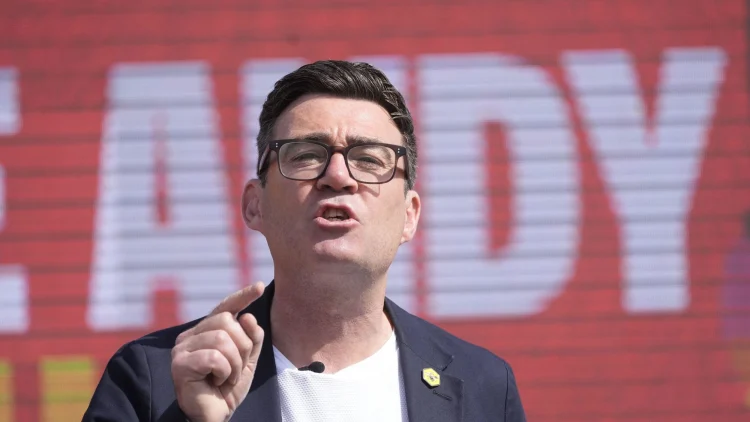

Andy Burnham, July 2026 (Alamy)

3 min read
Exclusive: Andy Burnham is building out his No 10 with new hires, including Alison Phillips, former editor of The Mirror and head of Starmer-supporting think tank ThinkLabour.
PoliticsHome can reveal that Alison Phillips has been serving as transition director for Andy Burnham’s campaign and will continue planning and delivering the transition into No 10, “to establish a high-performing organisation”.
A source said: “Her priority will be to establish No 10 as an effective team that can deliver Andy’s ambition to give Britain breathing space in the cost of living, deliver growth in every postcode and return power to communities.
“She has led large and complex organisations, delivering results and overseeing cultural change.”
Phillips was editor of The Daily Mirror from 2018 to 2024, before replacing ex-MP Jonathan Ashworth in 2025 as chief executive of the Labour Together think tank, which recently rebranded as ThinkLabour.
Sarah Brown, previously London mayor Sadiq Khan’s director of communications and strategy, also worked on the Burnham campaign and has been confirmed as his director of strategic communications in No 10.
Matthew McGregor, CEO of political activism organisation 38 Degrees and formerly director of campaigns and communications for Hope Not Hate, is being hired as the head of political strategy.
He has worked on elections in the UK and overseas, including Barack Obama’s 2012 campaign, and is widely liked in Labour circles.
“In a political culture that has all too often rewarded the worst behaviours, the appointment of Matthew is a signal that things will change under Andy,” one Labour source outside of Burnham’s team told PoliticsHome. “But perhaps most importantly I think he will help Labour’s chances at the next election.”
The source added: “He is analytical but in a very human way. Lots of international political knowledge not just UK and US. He has strong values and ethics without every being pious. They drive him. He is kind and decent and very hard-working. And funny.”
Burnham has also chosen Graeme Cooke, a close ally of his new chief of staff James Purnell, to be director of the No 10 policy unit. Cooke has been working as a policy adviser in Keir Starmer’s Downing Street.
Harvey Redgrave, the current head of the policy unit, will stay on the team in a new role as home affairs and justice special adviser, according to the New Statesman.
Josh Simons, the former Makerfield MP who stood down to allow Burnham a run in a parliamentary seat and who had been expected to be appointed to head up policy, is said to be taking a “breather” instead.
Simons was director of Labour Together before entering Parliament. He served as a minister until he resigned from government following reported that he had been responsible for commissioning a report that investigated journalists who had reported unfavourably on the think tank he ran.
The MP said he had “never sought to smear” the journalists and apologised. Starmer’s ethics adviser Sir Laurie Magnus found that Simons had not broken any rules.
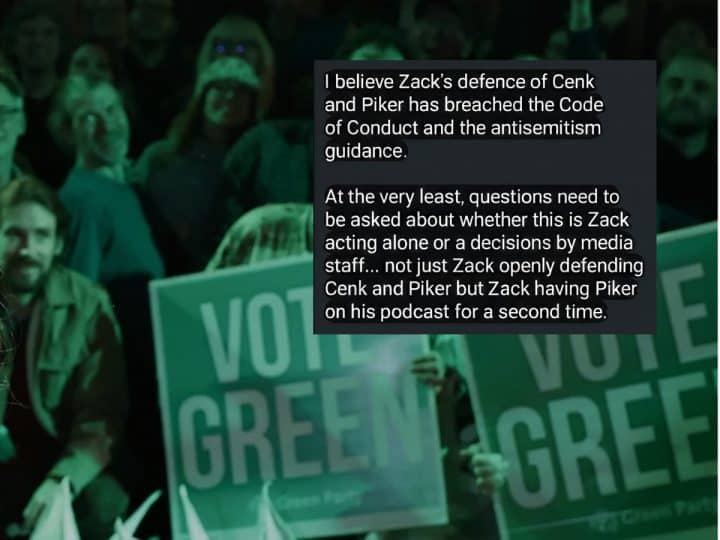
The Canary can reveal further leaked WhatsApp messages from a secretive, Zionist Green Party group called ‘Greens Against Antisemitism’. The group appears to be orchestrating a campaign to brand opponents as antisemitic while plotting to sink a historic anti‑racist motion: Zionism Is Racism.
More leaked Green Party WhatsApps
At a time when the Green Party of England and Wales faced a watershed vote on whether to declare itself an anti‑Zionist party, internal messages obtained by the Canary lift the lid on a coordinated effort by a Zionist faction to manipulate the democratic process and drive out members who support Palestinian liberation.
Following our investigation into Disciplinary Committee member Rachel Collinson – which potentially exposed her apparent bias and potential abuses of power – a fresh cache of leaked WhatsApp messages from the same group, Greens Against Antisemitism (GAA), now reveals yet more wild accusations and conspiratorial organising behind the scenes of the Green Party.
At its centre is long‑standing party figure Elise Benjamin, whose messages lay bare a strategy of procedural sabotage, smear‑by‑accusation, cynical weaponisation of antisemitism, an apparent closeness to UK Lawyers For Israel and even genocide denial:
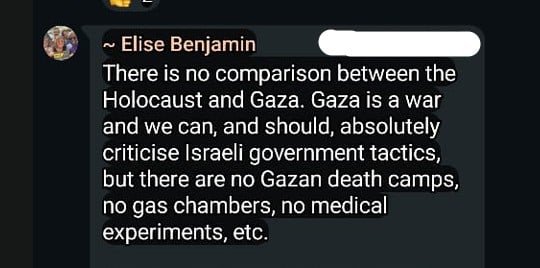
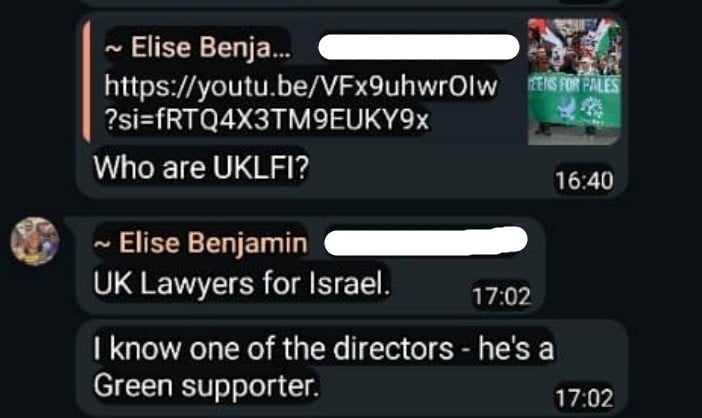
The messages, which date from the months leading up to Spring Conference, show Benjamin – with help from her husband Craig – actively plotting to derail the motion Zionism Is Racism, a motion that would formally commit the Green Party to an anti‑Zionist position:
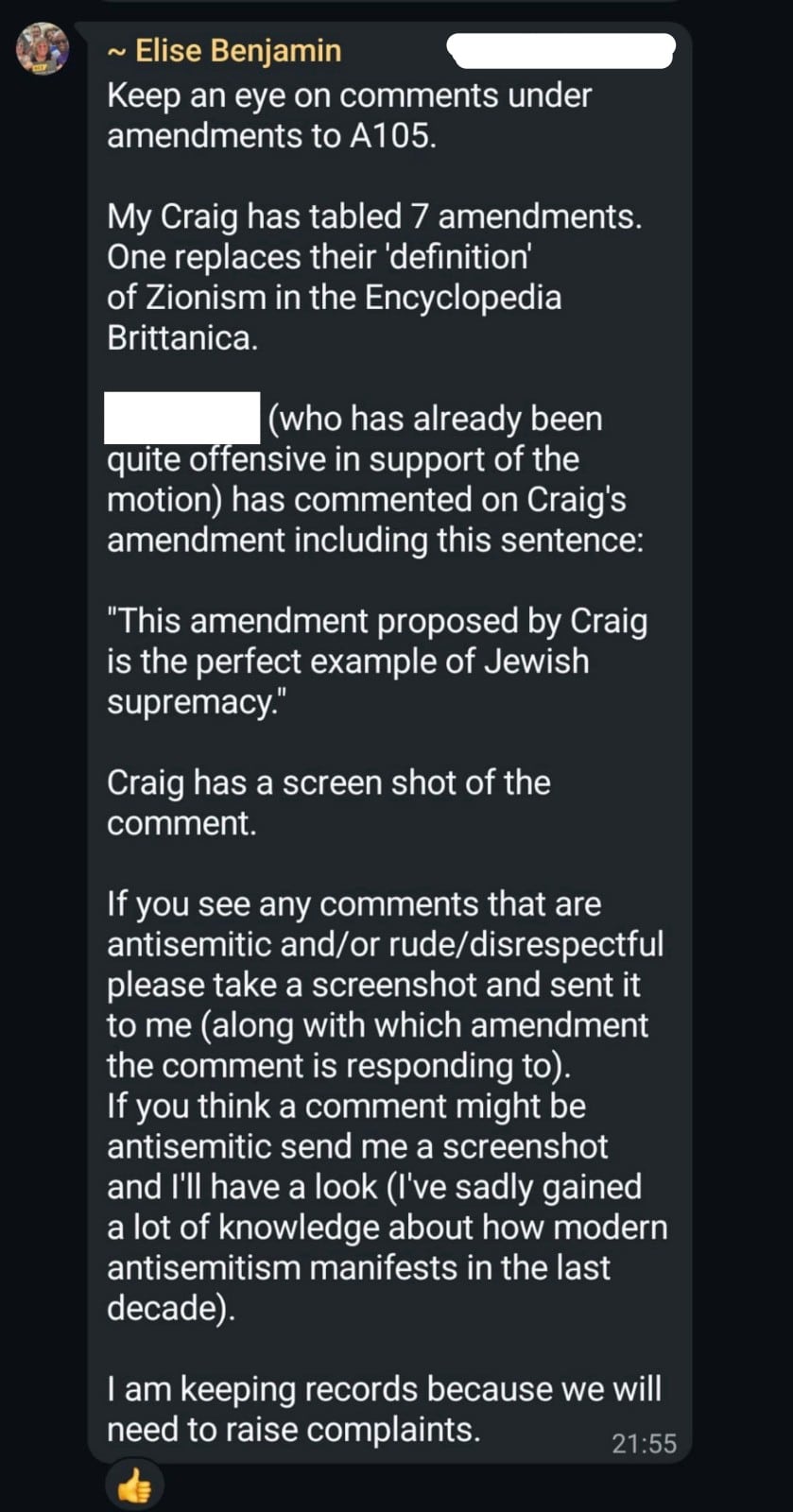
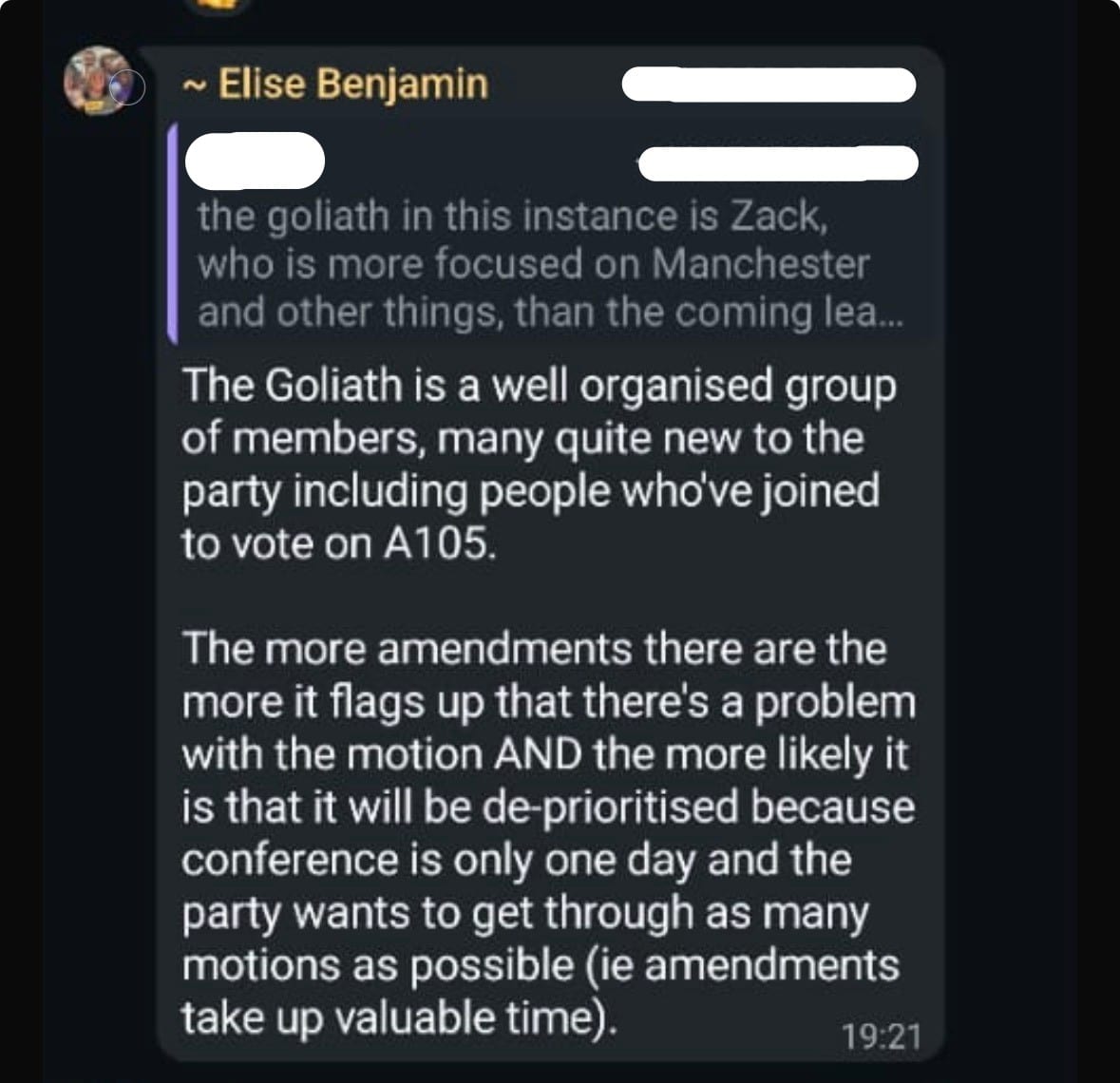
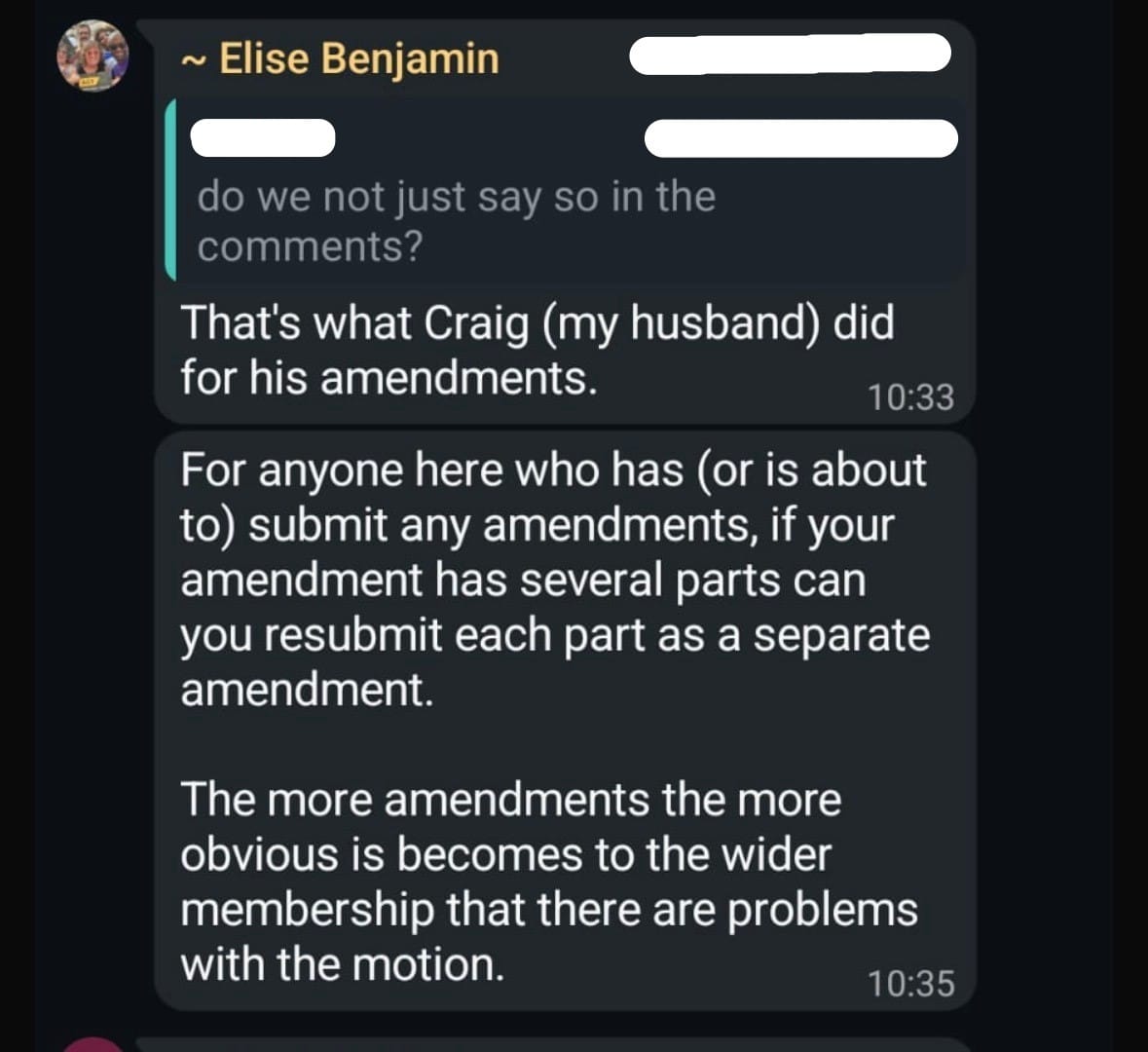
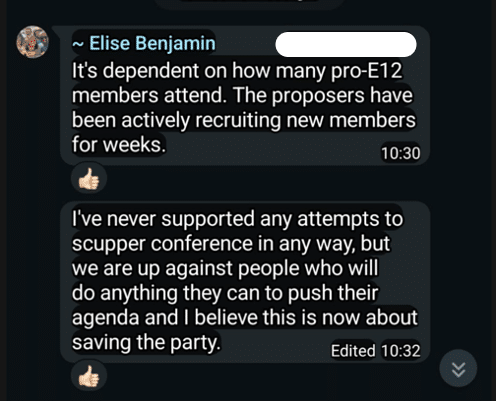
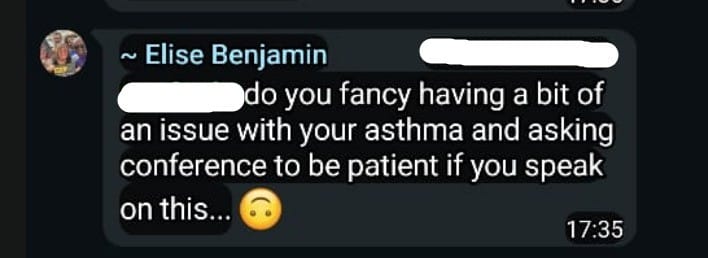
The effect of such a blizzard of amendments is obvious: at a packed conference, contentious motions can be squeezed out of the timetable or diluted into meaninglessness. This stifles a democratic vote and could work to paint one of the most popular grassroots campaigns in the party as procedurally toxic.
Even Zack Polanski is now an antisemite
The leaked conversations also show Benjamin reaching for the label ‘antisemite’ with a promiscuity that makes a mockery of genuine anti‑racist work. The list of her targets, named directly in the chat, includes:
- The Canary.
- Jewish anti‑Zionist campaigner Tony Greenstein.
- Green Party councillor and YouTuber Kernow Damo.
- Anti‑racist social media account Bladeofthesun.
- American streamers Hasan Piker and Cenk Uyghur.
- The Palestine Solidarity Campaign and its former director Ben Jamal.
- Rapper and activist Lowkey.
- And even the party’s own Jewish deputy leader, Zack Polanski.
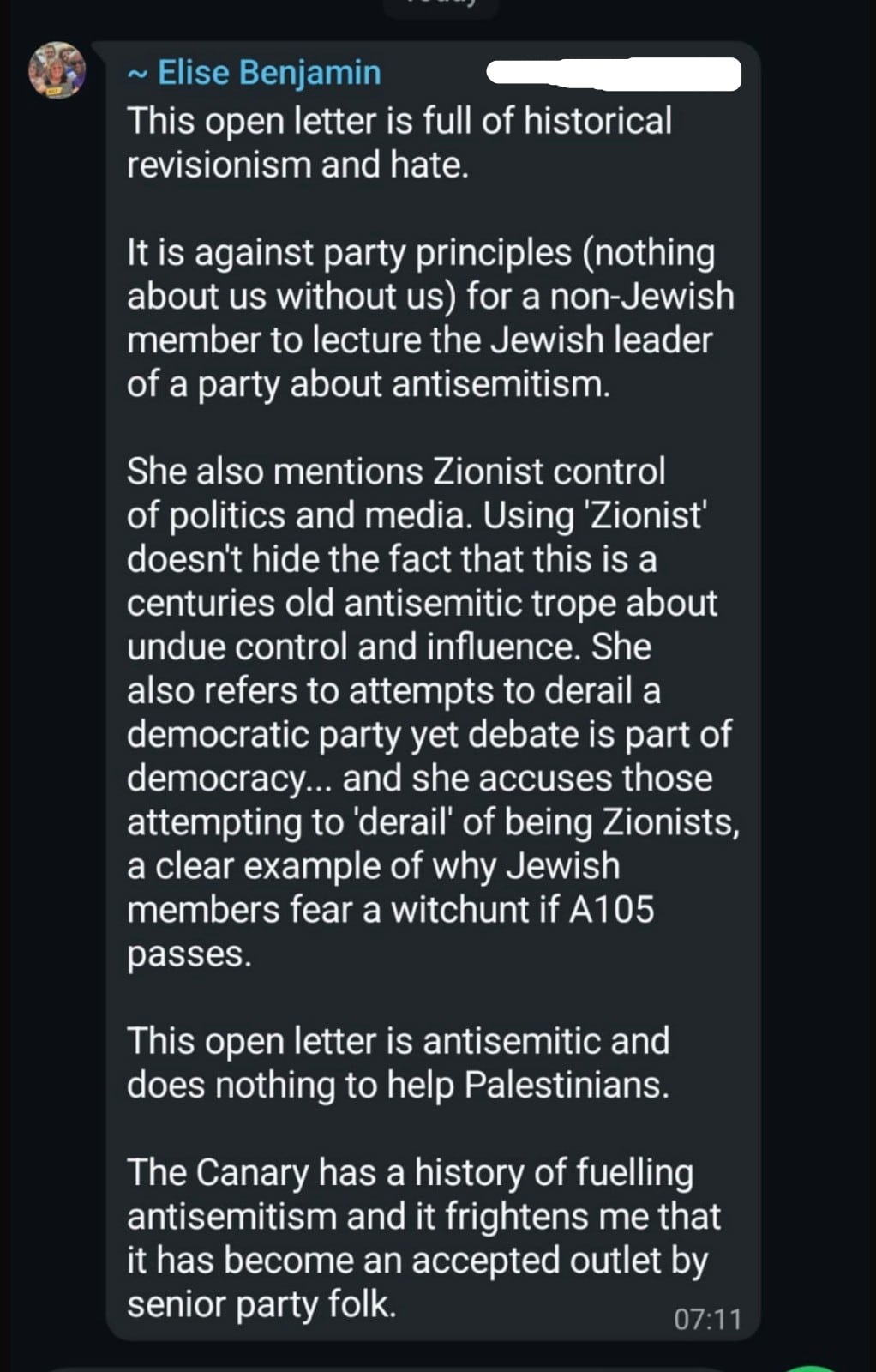
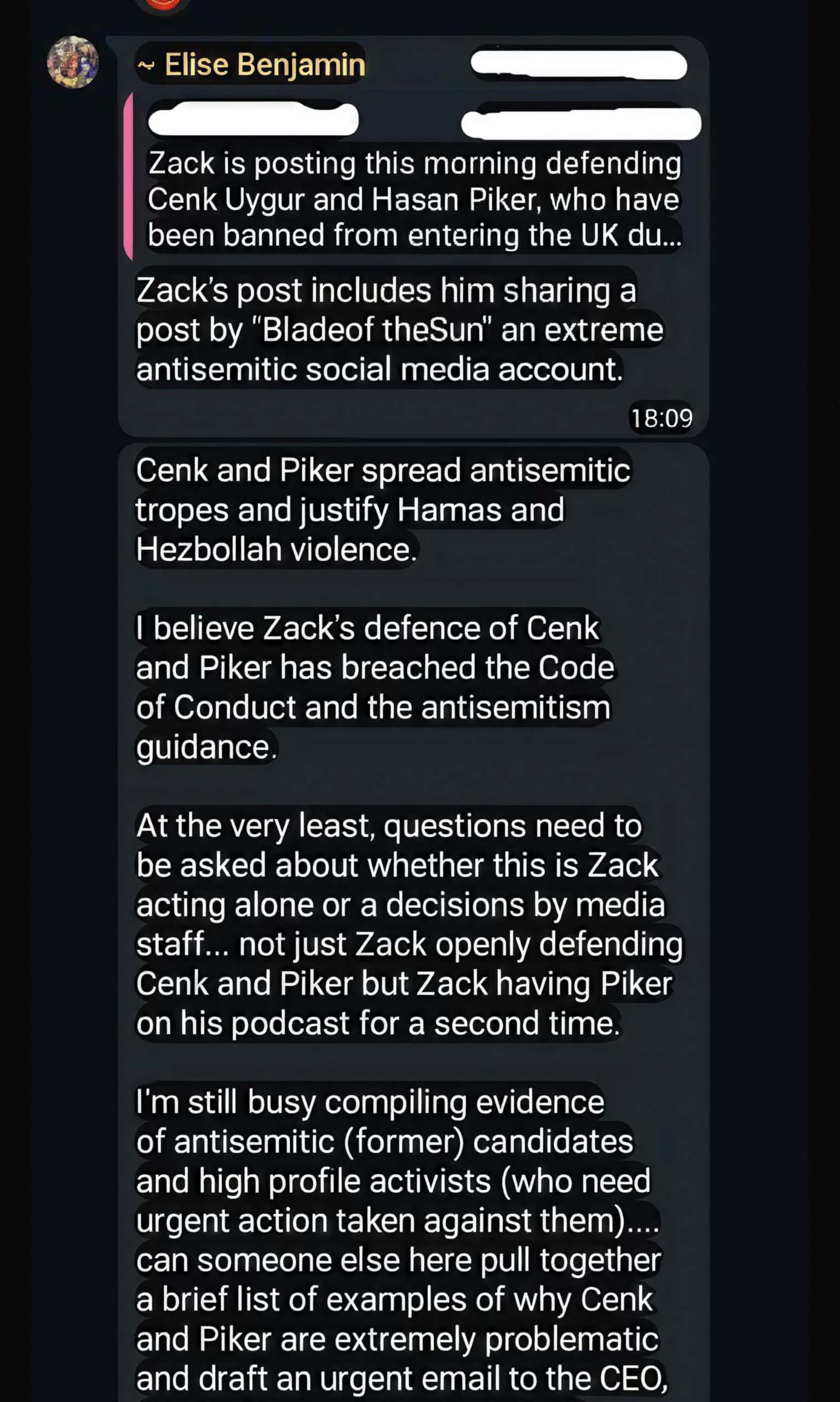
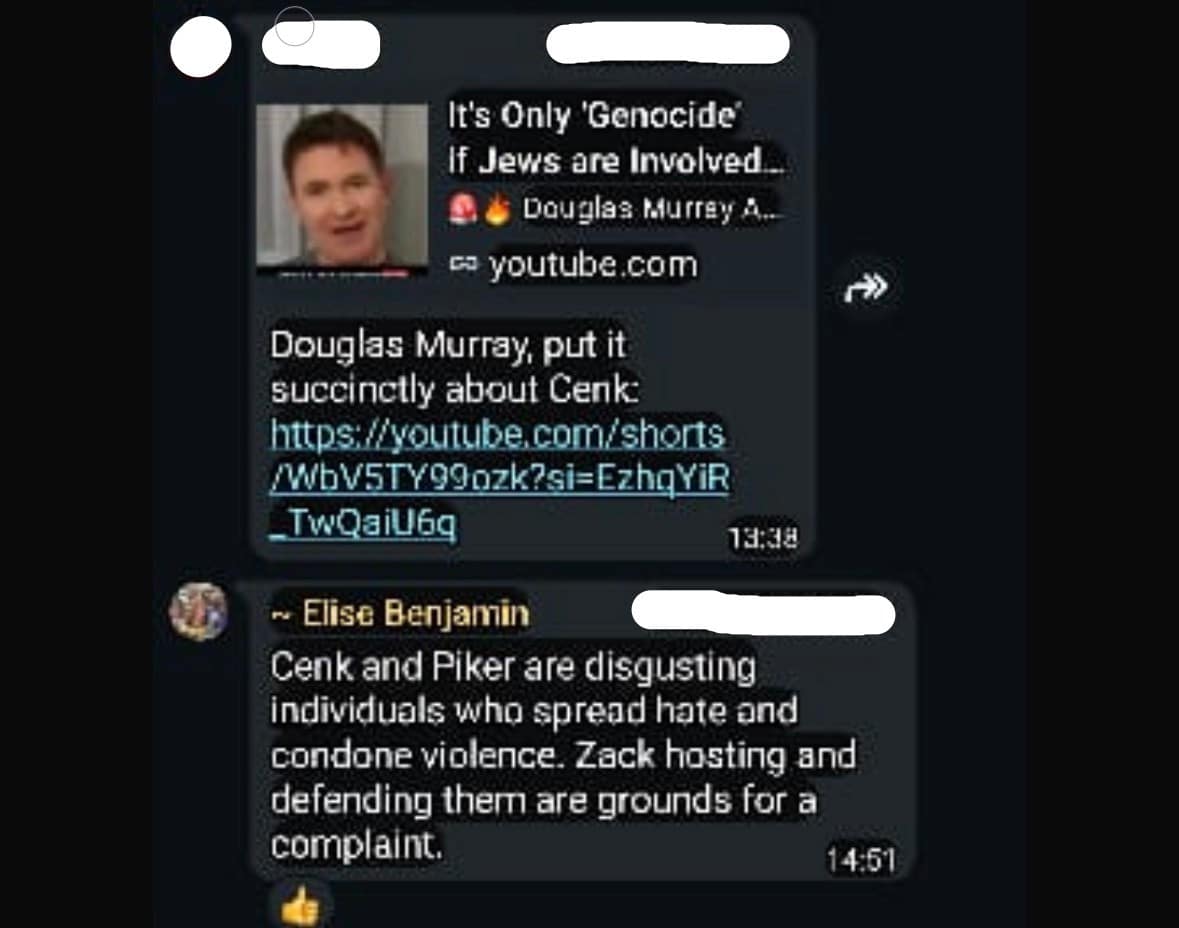
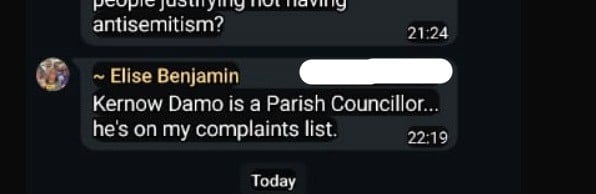
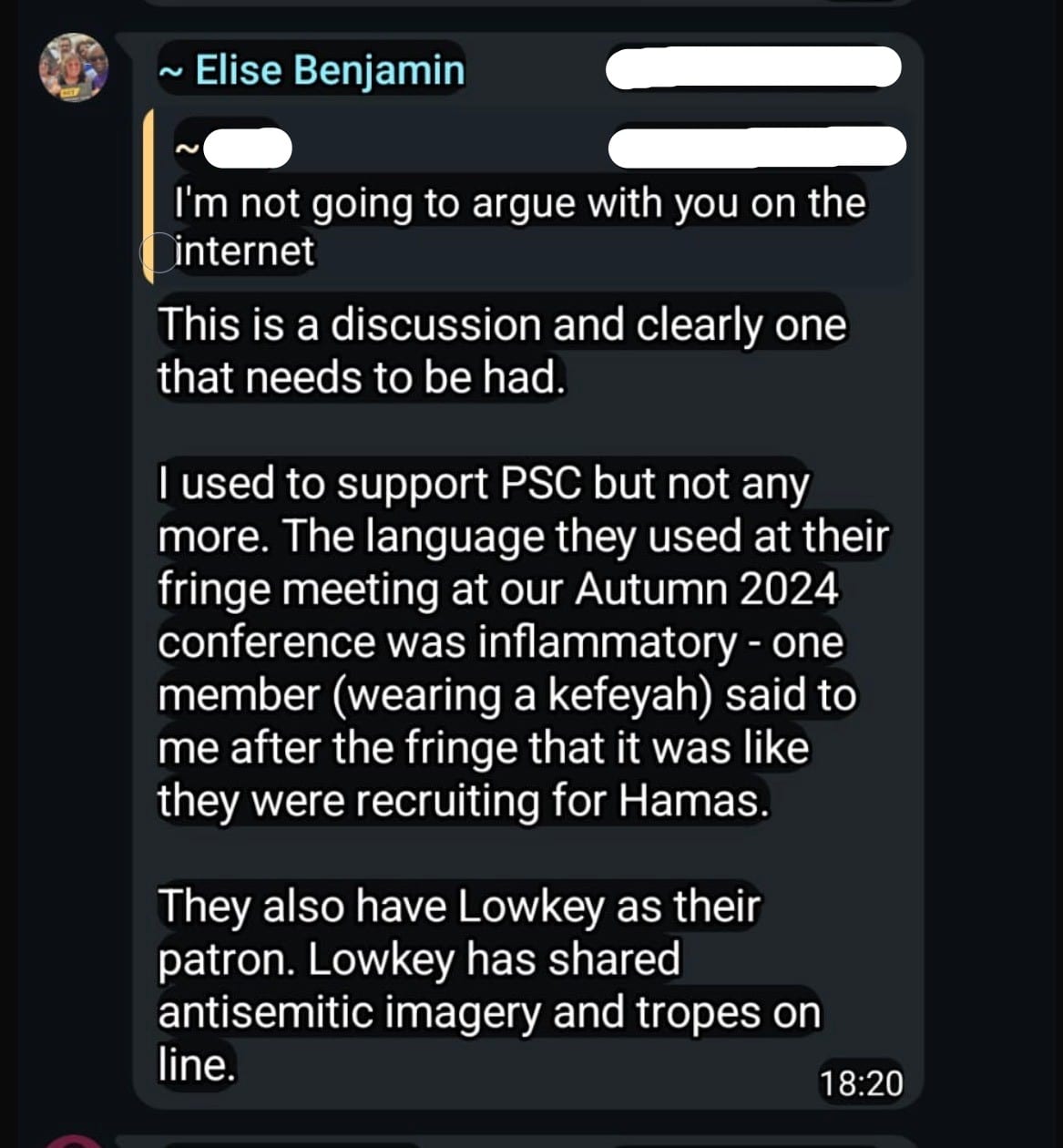
Most disturbingly, Benjamin floats an extraordinary conspiracy theory concerning PSC and Ben Jamal:

To suggest that the UK’s foremost Palestinian solidarity organisation – and its Palestinian‑led leadership – were somehow complicit in the events of 7 October 2023 is a grotesque smear that trades on the darkest Orientalist tropes.
But there is one form of antisemitism that Benjamin apparently cannot see.
When a member of the GAA chat raised the Times’ widely condemned caricatures of Green Party leader Zack Polanski – images that evoked the most hateful Nazi‑era stereotypes – Benjamin’s response was telling:

By contrast, Benjamin rushes to defend openly far-right Zionist group Our Fight when its use of Union Jack imagery is questioned:
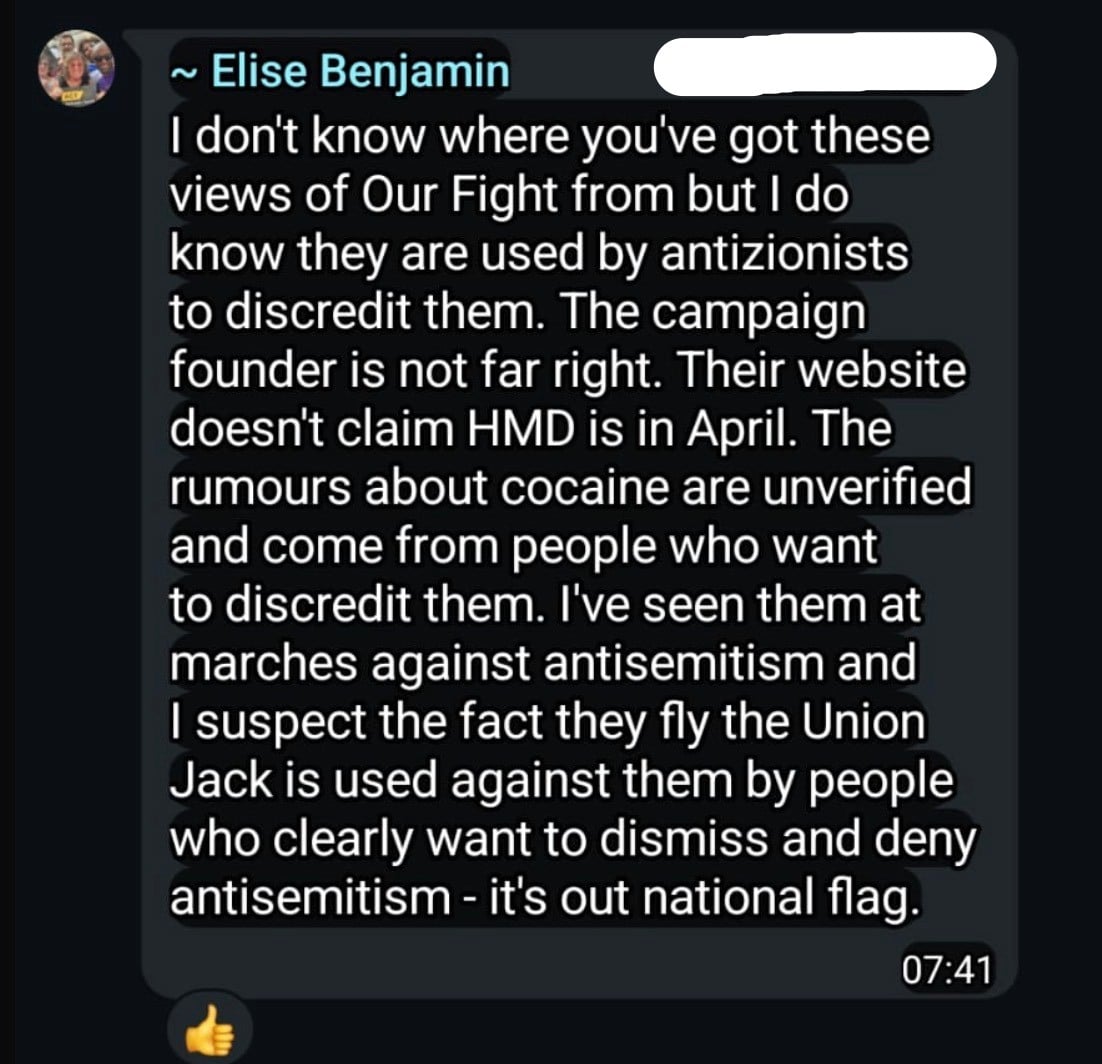
Our Fight is a hardline organisation directed by former Spiked columnist Mark Birbeck. It deploys militaristic, British‑fascist aesthetics redolent of Britain First and the EDL, as well as organising delegations of non‑Jewish supporters to travel to the Zionist entity in occupied Palestine.
Hollowing out democracy
These messages, coupled with the previous leaks regarding Disciplinary Committee member Rachel Collinson, show a worrying pattern of seeing everyone this group disagrees with as antisemitic and organising – on those grounds – to have people that align with anti-Zionist views extradited from the party.
The Green Party leadership now faces a clear choice: side with the members who want to confront apartheid and racism in all its forms or allow a small cabal to hollow out the party’s internal democracy, one bad‑faith accusation at a time.
The Canary will continue to follow this story.
We tried to reach out to Elise Benjamin for comment via multiple platforms, but did not receive a response at the time of publication.
Featured image via the Canary
By The Canary
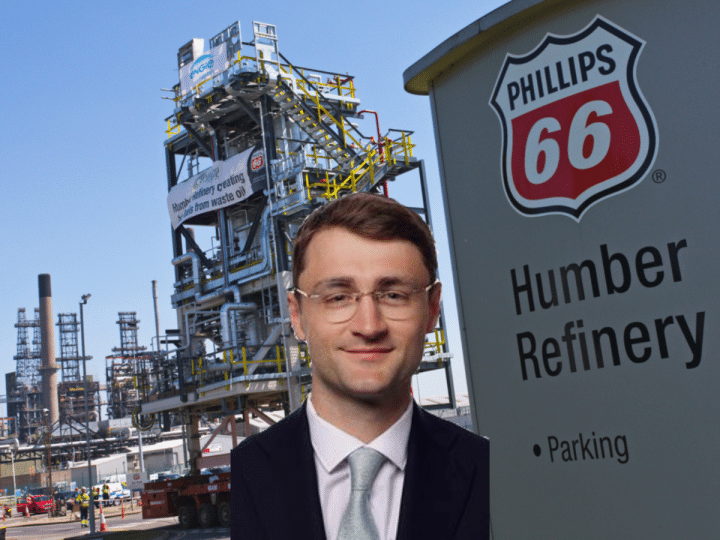
Welsh Reform UK politician Cai Parry-Jones MS has been caught out lying about his fossil fuel interests.
Another anti-Net Zero campaigner in Reform, Parry-Jones strongly denied the claim that his share holdings benefit from climate deregulation. He was quickly shown up for it.
To make matters worse, this all took place as Wales and the UK grappled with another intense heatwave. Some 2,700 people already died across the UK from extreme heat exposure. In summer 2024, in just five days, at least 557 Welsh people died of extreme heat. This is our climate-changed future.
Here’s yet another story of right-wing climate-reality denialism, corporate greenwashing and destructive political lobbying. All that, plus Reform once again being called out on their bullshit. About time.
Hi Cai,
Great to hear from you. You said a lot of stuff there so I thought I’d breakdown my reply:
1. An elected politician owns shares (worth at least 50% of their salary) in a company where roughly 90% of the profits are from fossil fuels.
At the same time the politician is… https://t.co/DAjP2K2xJK
— Will Hayward (@WillHayCardiff) July 13, 2026
Caught with oily hands
Parry-Jones MS is Reform’s shadow minister for ‘Finance and Government Efficiency’ (read: Crypto and Austerity). He was called out for his five-figure holdings in fossil firm Phillips 66. His register of interests as a Senedd Member (MS) publicly lists some £38,000 in the company.
This was first highlighted by Welsh journalist Will Hayward and his team, who approached Parry-Jones for comment. He didn’t. Hayward explained Parry-Jones’ public policy positioning online:
He derided people “crying” about global warming. … He called on any climate roles inside the Welsh government to be scrapped. Among the roles that he called to be scrapped include things that actually help mitigate climate change, which will help with things like coastal erosion, or helping us combat heatwaves, or help farmers adjusting to the new reality of climate change.
Hayward rightly points out that the evidence is “overwhelming” that: a) climate change is really happening; and b) it is caused foremost by the combustion of fossil fuels. Yet Parry-Jones has direct, material interests in the continuation of that apocalyptic fossil fuel production and consumption.
Even more astutely, Hayward points out that Reform have the largest support base among poorer Welsh people. Yet the poorest in society, and those from the “most deprived backgrounds”, are those most at risk from climate change-related disasters. Hayward asks:
Why are Reform seemingly lobbying against the interests of the people that voted for them?
The company Parry-Jones holds £38k of shares in, Phillips 66, is an US-based oil company. It:
- Owns 13 refineries, which can produce 2.2m barrels of oil per day; and
- Owns over 15,000 miles of pipelines.
Hayward mentions DeSmog’s reporting that two-thirds of Reform UK’s political donor base are fossil fuel companies or those linked to them. Hayward asked Parry-Jones whether these interests were linked.
Climate change missing from most UK media reports on June heatwave
Reform — Here comes the slippery denial
He declined Hayward’s request for comment. Yet Parry-Jones nonetheless took to X and other platforms to denounce Hayward’s reporting:
Will Hayward suggests that because I hold shares in Phillips 66, I have a financial interest in scrapping Net Zero. Ten minutes of real research tells a different story.
He claims that, since the UK’s Net Zero targets were announced in 2019, his shares actually rose by 14%. Therefore, by Parry-Jones’ adept analysis, he couldn’t be anti-Net Zero on account of his shares. He adds:
Furthermore, the company has invested in developing the UK’s Humber Zero project, one of the world’s largest planned carbon capture schemes, part-funded by government decarbonisation money and needing more of it to go ahead. On Will’s own logic, my shares would do better if Net Zero stayed.
And yet I want it gone. I will always call for this economy-destroying target to be scrapped. It is killing British industry and loading some of the most expensive energy prices in the world onto hard-working families. If people want to scrutinise my interests, good. But start with doing proper research.
What Parry-Jones has tried to do here is paint himself as self-sacrificing, entirely uninterested in his shares. (Despite the fact that these are literally called his registered interests.) He’s also tried to greenwash the Phillips 66’s activities, stating — not untruthfully — that they’re building “carbon capture“.
On the surface, ‘carbon capture’ is an environmentalist initiative. It claims to extract CO2 and other harmful greenhouse gases from the Earth’s atmosphere. But, as reporting has shown, carbon capture is pushed by fossil fuel companies themselves — so that they can continue pumping harmful emissions into the air.
Worse still, it’s a terribly underdeveloped technology, especially compared with renewable energy sources which can already replace fossil fuels. ‘Carbon capture’ is essentially pie in the sky — an oily distraction.
Hottest June day ever provokes climate denial from right-wing cranks
Hayward hits back hard
Here’s the thing that “ten minutes of research“, as prescribed by Parry-Jones, can tell you. Like many harmful such fossil fuel companies, Phillips 66 wants to publicly cover its back. No surprises there.
The carbon capture psy-op, like the “carbon footprint” scam before it, is pushed by the profiteering companies who control our energy. Not so that they can actually solve the climate poly-crisis, but so they can continue making unimaginable profits for shareholders. Hayward points this out:
An elected politician owns shares (worth at least 50% of their salary) in a company where roughly 90% of the profits are from fossil fuels. At the same time the politician is deriding and undermining efforts to tackle a climate crisis. A crisis which is driven overwhelmingly by fossil fuels. If you can’t work out why that’s a story – I can’t help you.
So Phillips 66 is still overwhelmingly — 90% by Hayward’s reporting — invested in fossil fuels. Therefore, the company is predominantly invested in the environmental destruction that harmful fossil fuels cause globally. And, by extension, so too is Parry-Jones: via his shares and his position in oily Reform PLC.
As we’ve seen for decades globally, Parry-Jones is yet another fossil-backed politician working against any regulation that would curb emissions. Reform PLC is just the newest, shinier front for oil in the UK.
And Hayward picks up on Parry-Jones’ actual lack of research, too:
I don’t want to preach to a seasoned investor but clearly UK net zero policy isn’t the only determinant on the share price of a Houston based oil company. The UK market is less than 10% of their revenue (did you not read your shareholders report?).
Hayward also skewers the MS and his party’s refusal to engage, before throwing an online tantrum:
You can’t whine about a lack of research while refusing to engage. …
You talk about wanting scrutiny, but your party is the only one which relentlessly declines interviews and questions. I have literally written books about the failings of Labour, Plaid and the Tories, and they still grant interviews. By contrast your party, who say they advocated debate and free speech, relentlessly hide and dodge questions. If you actually welcome scrutiny, why not do an interview with me?
Second heatwave in 3 weeks highlights urgent need for stronger, faster climate action
Featured image via author
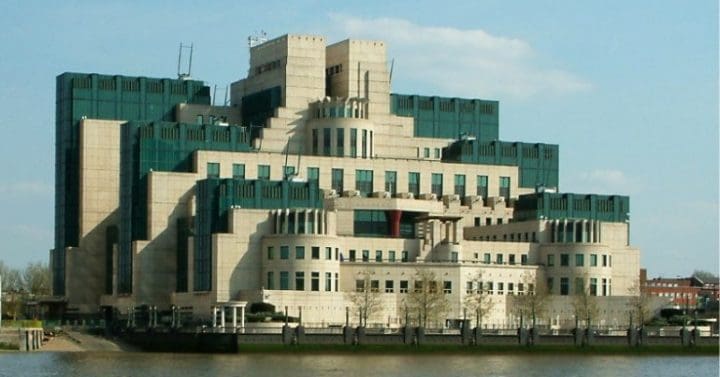
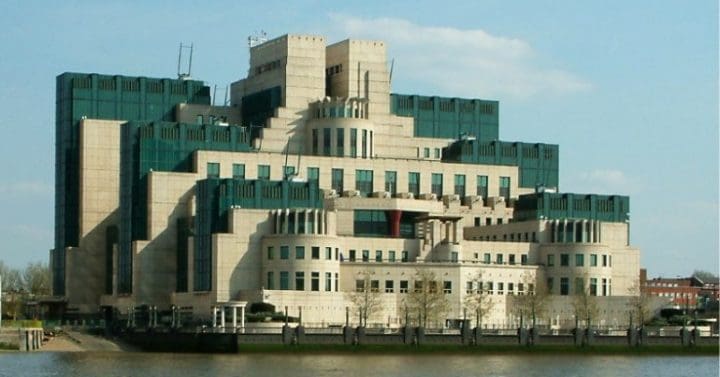
Senior figures at Britain’s internal security agency MI5 lied repeatedly in court over the case of an abusive neo-Nazi agent. Deputy investigatory powers commissioner Sir John Goldring has slammed a number of senior figures at MI5 over their behaviour.
As the Canary reported on 17 March 2026, the spy agency has been ordered to pay compensation to a woman:
coercively controlled, abused, and attacked with a machete by a neo-Nazi agent it employed.
The fascist agent also:
had fantasies about eating children.
Goldring’s new report is scathing, confirming BBC revelations that:
MI5 lied to the courts, something the security service vehemently denied.
Goldring, who was ordered to investigate allegations MI5 had lied in its testimony in the High Court, said:
MI5 recognises without hesitation the seriousness of our failings in these proceedings […]
I repeat my previous apologies to both courts for the incorrect evidence that was provided, and for our slowness in recognising what had happened.
The details beggar belief. The BBC said:
The investigation examined how MI5 gave false evidence to three courts about having kept to its core secrecy policy – known as ‘neither confirm nor deny’ (NCND) – about the agent status of the violent neo-Nazi informant.
MI5 claimed it had maintained NCND and, consequently, the courts allowed it to keep information secret from a woman who was abused by the informant.
The report found MI5’s claims to be untrue.
Senior figures at MI5 lied
The report found numerous senior figures deceived the courts. One senior MI5 officer, known as Officer 2 had:
repeatedly told “lies” and these “formed the foundation of MI5’s false account” to the three courts. He “put forward a wholly fictitious account” in which he denied ever telling me that X [the neo-Nazi agent] was an MI5 agent.
Another senior officer, known as Officer 3 had:
“misled” his own colleagues and did not act in good faith. The report concludes that he “bears considerable responsibility for the continuation of MI5’s falsehood” because he “misrepresented” what Officer 2 had said to him. He was not “truthful” about warnings he received from colleagues.
The spy agency’s lies could have had a serious negative effect on the case brought by the woman, named Beth, abused by their agent:
The courts accepted MI5’s arguments. This meant Beth and everyone else was banned from ever officially being told X was an agent and denied access to the key evidence. She was left at a serious disadvantage and may have lost the case.
The BBC reported:
A panel of senior high court judges, including the Lady Chief Justice, will now have to decide whether to initiate contempt of court proceedings against any MI5 officers or MI5 itself.
They added that:
Given the find that lies were told, there is also the potential for a criminal inquiry.
As the Canary has pointed out in regard to this case, MI5’s website claims its mission is:
to keep the country safe, both now and in the future.
How recruiting and retaining a far-right neo-Nazi sympathiser with a known fetish for violence squares with these aims is unclear. But it is clear that it is long past time the security services were subject to proper democratic scrutiny.
Featured image via the Canary
By Joe Glenton

Bitcoin Holders: I CAN’T BELIEVE THIS JUST HAPPENED!

Edinburgh driver crashes into lamppost after police pursuit as ‘two flee on foot’

Progressive Is The P&C Insurer To Hold, After Policies Grow In Q2


-

 Fashion6 days ago
Weekend Open Thread: Nutriplenish Leave-In Conditioner
-
 NewsBeat7 hours ago
London Mayor Sadiq Khan handed a peerage by Keir Starmer alongside 15 other Labour figures… just days before the PM leaves No10
-

 Sports7 days ago
Super Eagles star Moses Simon opens up on Liverpool transfer regret
-

 Business20 hours ago
Nvidia Stock Slips After Big Tuesday Rally as Huang Confirms Vera Rubin Chip Is Now in Production Today
-

 Crypto World22 hours ago
CFTC blocks Kalshi from unwinding Michigan trades after court order
-

 Politics1 day ago
Young campaigners urge incoming PM to act on outdoor junk food ads
-

 News Videos2 days ago
XRP BOMBSHELL… XRP OMBOARDED FOR TRANSACTIONS!!!
-

 Tech3 days ago
Get Your ESP32 Sunny Side Up With This Solar Dev Board
-
 Entertainment1 day ago
Disney’s Most Ambitious Failed Star Wars Attraction Is Coming to SDCC
-

 Tech2 days ago
Dark Secrets Emerge When Jailbreaking LLMs
-
 Sports1 day ago
New Cornerback Enters Vikings Trade Rumor Mill
-

 Crypto World2 hours ago
Injective Submits SEC Transfer-Agent Registration to Onchain Ownership Records
-
 Tech3 days ago
Cloudflare Precursor Watches Your Mouse and Keyboard To Decide If You Are Human
-

 News Videos3 days ago
how to make coin bank box with cardboard #scienceproject #money #diy #shorts
-
 Entertainment1 day ago
Vicki Gunvalson Defends Discussing Heather Dubrow’s Money
-
Crypto World2 days ago
Ripple, Coinbase, Circle Join Linux x402 Foundation to Help Shape AI Payments
-
 Business2 days ago
ACCC warns AI could lift insurance costs in risk-prone areas
-

 NewsBeat1 day ago
Watch: Is Donald Trump facing a popular backlash on immigration?
-

 Sports23 hours ago
Michigan officials not expected to discuss AD Warde Manuel at Thursday meeting
-

 Business2 days ago
Subaru recalls 541,000 vehicles over federal safety sticker mistake: NHTSA
You must be logged in to post a comment Login