

Crypto World
What is open interest in crypto trading?

Open interest counts how many derivative positions are alive right now, not how many changed hands. It is the closest thing crypto has to a leverage gauge, and reading it alongside price tells you whether a move is built on new conviction or on people being forced out.
Summary
- Open interest is the total number of derivative contracts currently open and unsettled. It measures live positions, not activity, which is what separates it from volume.
- A trade only increases open interest when both sides are opening new positions. If either side is closing, the number stays flat or falls.
- Read alongside price, open interest tells you what kind of move you are watching: rising price with rising open interest means new money, while rising price with falling open interest usually means shorts being squeezed out.
- Open interest matters more in crypto than in traditional markets because perpetual futures dominate trading here, and the aggregate figure functions as a rough gauge of how much leverage sits in the system.
- The number has real limits. It is venue-specific, dollar-denominated figures move with price even when positions do not, and a high reading tells you leverage exists without telling you which direction it will break.
Every derivatives trader eventually runs into a number that sounds like it should be obvious and is not. Volume is easy: it counts how much traded. Price is easy: it is what people paid. Open interest is the third figure on every dashboard, quoted constantly in market commentary, and routinely misunderstood, because it measures something neither of the other two does. It counts what is still alive. Not what traded today, not what it cost, but how many bets remain open right now, waiting to be closed or liquidated. In a market where perpetual futures are the most heavily traded instrument in existence, that number is the closest thing available to a measure of how much risk is loaded into the system at any moment. This guide explains what open interest counts, how a single trade moves it, what the four price-and-open-interest combinations mean, and where the signal breaks down.
What open interest actually counts
Open interest is the total number of derivative contracts that have been opened and not yet closed, settled, or liquidated. Each contract represents an agreement between two parties, one long and one short, and it stays in the count until one of them exits. If a thousand Bitcoin perpetual contracts are open across a venue, that means a thousand live agreements are sitting there, each with someone on both sides who has money at stake.
The critical word is outstanding. Open interest is a snapshot of positions that exist at this instant, which makes it a stock measure instead of a flow measure. Your account balance is a stock. Your monthly spending is a flow. Volume is a flow: it counts trades over a period and resets. Open interest is a stock: it carries forward, rising and falling as positions are opened and closed, and it does not reset at the end of the day.
This has a consequence people miss. Open interest is not cumulative. It does not grow forever the way total historical volume does. It can rise for weeks as traders pile into a trend and then collapse in an hour when a price move liquidates thousands of positions at once. Watching it fall by a third in a single session tells you something important happened, and that something is almost always forced.
Open interest gets quoted two ways, and the difference matters. Some venues report it in contracts, meaning a raw count of units. Others report it in notional dollars, meaning the count multiplied by the current price of the underlying asset. The second version is more intuitive and more misleading, for reasons covered later.
Open interest versus volume
The cleanest way to separate the two is to notice that they answer different questions.
Volume asks how busy the market was. Open interest asks how much of that activity left something behind.
Picture a market where two traders spend all day passing the same contract back and forth. Each transfer adds to volume. By the close, volume looks enormous. But no new positions were created, because each trade had one party opening and one party closing. Open interest never moved. Enormous volume, unchanged open interest, and nothing about the market’s underlying risk changed at all.
Now picture the opposite. Ten new traders open long positions and ten new traders take the other side. That is a modest amount of volume and a direct increase in open interest of ten contracts. Small activity, real change in exposure.
Real markets mix both constantly, which is why the two figures move independently and why reading them together is more informative than reading either alone. High volume with flat open interest describes churn: the same positions rotating between hands, common during choppy sideways action. High volume with sharply rising open interest describes new participation: fresh capital committing to a view. High volume with sharply falling open interest describes an exit: people closing, willingly or otherwise, and that last case is what a liquidation cascade looks like on a chart.
How one trade moves the number
The mechanics reward a worked example, because the rule is not intuitive until you see it.
Every derivatives trade has a buyer and a seller. Each of them is doing one of two things: opening a new position, or closing one they already had. That gives four combinations, and the combination determines what happens to open interest.
Start with a market where open interest is 100 contracts.
Case one: both sides open. Alice wants to go long and has no position. Bob wants to go short and has no position. They trade one contract with each other. A new agreement now exists that did not exist before. Open interest rises to 101. Volume for the session records one contract.
Case two: both sides close. Alice already holds a long and wants out. Bob already holds a short and wants out. They trade with each other, and both positions are extinguished at once. The agreement is gone. Open interest falls to 99. Volume still records one contract.
Case three: one opens, one closes. Alice holds a long and wants out. Carol has no position and wants to go long. Carol takes Alice’s position over. The contract still exists; only the name on one side changed. Open interest stays at 100. Volume records one contract.
Case four: the mirror of case three. A short holder exits and a new short takes their place. Same result. Open interest unchanged at 100.
Notice that volume recorded one contract in every case while open interest did three different things. That is the whole distinction in a single table. Volume counts the transaction; open interest counts whether the transaction created or destroyed a live position. And notice that open interest only ever rises when both parties are new to the trade, which means an increase always signals fresh capital entering, never rotation.
One more detail that trips people up: open interest counts contracts, not participants, and it counts each contract once, not twice. A single agreement between one long and one short is one unit of open interest, not two. The long side and the short side of the market are always exactly equal in size, because every contract has both. Anyone claiming that open interest shows more longs than shorts has misunderstood the instrument. What they mean is that positioning or funding leans one way, which is a different measurement entirely.
Reading price and open interest together
On its own, open interest is close to meaningless. A reading of $20 billion tells you nothing without knowing whether it was $10 billion or $30 billion yesterday, and what price did in the meantime. Paired with price direction, it produces four readings that traders use constantly.
Price up, open interest up. New money is opening positions into strength. Fresh longs are entering and someone is willing to take the short side. This is the combination most often read as a healthy trend, because the move is supported by new commitment instead of by people unwinding. It also means leverage is accumulating, which is the setup for a violent reversal later.
Price up, open interest down. Positions are closing while price rises. The usual explanation is short covering: traders who were short are buying to exit, which pushes price up while destroying open interest. The move is real, but it is powered by people leaving instead of by people arriving, and it tends to exhaust when the shorts are done. Rallies with falling open interest have a reputation for disappointing.
Price down, open interest up. New positions are opening into weakness, typically new shorts. Fresh bearish conviction is entering the market. Like the first case, this builds leverage, and a crowded short book is exactly what a squeeze needs.
Price down, open interest down. Positions are closing as price falls. This is the signature of long liquidation: leveraged longs being forced or choosing out, which removes both the position and the price support. In its extreme form it is capitulation, and it is why the sharpest drops often come with the largest single-session collapses in open interest.
Treat these as vocabulary instead of as prophecy. They describe what has already happened in a way price alone cannot. They do not predict the next move, and every one of the four has failed plenty of times.
Why the number matters more in crypto
Open interest exists in every derivatives market. Wheat futures have open interest. It matters differently in crypto for structural reasons.
The first is dominance. In equities, derivatives sit alongside a far larger spot market. In crypto, perpetual futures are the single most heavily traded product in the entire asset class, and perp volume reached roughly $61.8 trillion in 2025 according to CryptoQuant data, up about 29% year on year. Offshore perpetual volume alone grew from around $28 trillion in 2023 to more than $90 trillion in 2025. When the derivative dwarfs the underlying, the derivative’s positioning drives the spot price instead of reflecting it, and open interest is the measure of that positioning.
The second is leverage. Perps offer leverage multiples that traditional venues do not permit, and because they never expire, positions can accumulate indefinitely. There is no quarterly settlement forcing a reset. Open interest can therefore build for months, which means the aggregate figure functions as a rough gauge of how much borrowed exposure is stacked in the system waiting for a catalyst.
The third is the liquidation engine. Because positions are leveraged and margined, a price move against a crowded book does not produce a gentle unwind. It produces automatic, forced closure, which pushes price further, which forces more closure. The October 10, 2025 event, in which roughly $19 billion of positions were liquidated across the market in a single episode, is the reference case. Elevated open interest is the fuel for that. It does not tell you when the match gets struck, but it tells you how much is stacked.
The fourth is that crypto has finally started measuring it onshore. Perps have moved from offshore venues into regulated American markets, with Coinbase cleared for perpetual futures and the CME suing the CFTC over whether a perp is legally a swap. As the product comes onshore, open interest data becomes more reliable and more consequential, because regulated venues report it consistently.
Where to find it and how it is measured
Every derivatives venue publishes its own open interest. Aggregators such as CoinGlass combine figures across exchanges to produce a market-wide number, which is the version quoted in most commentary.
Three practical measurement issues are worth carrying with you.
Aggregation is imperfect. Venues report differently, some in contracts and some in notional, some including inverse contracts and some not. Adding them produces an estimate, not a census. Different aggregators publish different totals for the same moment, and the discrepancy is normal.
Dollar-denominated open interest moves with price. This is the most common misreading in circulation. If open interest is quoted in notional dollars and the price of the asset rises 10% while every position stays exactly as it was, the dollar figure rises 10%. Nothing changed. No new positions opened. The number went up because the multiplier went up. Anyone pointing at rising dollar open interest during a rally as proof of new participation may be describing arithmetic. Contract-denominated open interest, or the ratio of open interest to market capitalization, avoids the trap.
The ratio is often more useful than the level. Open interest divided by market capitalization gives a crude but real sense of how leveraged an asset is relative to its size. A token with open interest approaching a large fraction of its market cap is carrying leverage that a token with a tiny ratio is not, and the first will move far more violently on the same news.
A worked reading of a real cascade
Abstract rules are easier to hold when attached to a sequence, so walk through the shape of a leverage unwind as open interest describes it.
Phase one is the build. Price grinds higher over several weeks. Open interest climbs steadily alongside it, in contract terms and not merely in dollars, which tells you positions are actually being added instead of the multiplier rising. Funding turns positive and stays there, meaning longs are paying shorts to hold the trade, which is the market charging rent for a crowded direction. Nothing is wrong yet. This is what a trend looks like. But each new contract is a position with a liquidation price attached, and those prices cluster, because leverage settings and entry points cluster. The book is getting heavier and the heaviness is concentrated in bands.
Phase two is the stall. Price stops advancing but open interest does not fall. This is the tell worth learning. Traders who entered late are underwater on funding and unwilling to close, so exposure stays on the books while the reason for holding it weakens. Open interest at a high level with price going sideways describes a market where a lot of people are waiting to be proven right, and the longer it persists the more of them are paying to wait.
Phase three is the trigger, and it is usually mundane. A macro print, an exchange outage, a large spot sale. Price drops into the first cluster of liquidation levels. Those positions close automatically, and automatic closure means market sell orders hitting a book that has just widened. That pushes price into the next cluster.
Phase four is the cascade, and this is where open interest earns its reputation. The number does not drift down. It falls off a cliff, because thousands of positions are being extinguished in minutes. Volume spikes to extraordinary levels at the same moment. High volume plus collapsing open interest plus falling price is the unambiguous signature of forced exit, and it is the one combination that admits almost no alternative reading. The October 10, 2025 episode, roughly $19 billion liquidated, is the canonical version.
Phase five is the aftermath, and it is the most useful part for anyone still holding. Open interest is now far lower than it was. The leverage that fueled the drop has been removed from the system, which is why sharp liquidation events are frequently followed by calmer trading: the fuel burned. A market with low open interest after a cascade is structurally different from the same price level reached with high open interest intact, because the second one still has a loaded book underneath it and the first does not. Same price, completely different risk.
Notice what open interest did and did not do across those five phases. It described the build accurately. It flagged the stall, which price alone did not. It confirmed the cascade in real time. It told you afterward that the leverage was gone. What it never did, at any point, was tell you when phase three would arrive or which direction it would run. That is the honest scorecard: a superb descriptive instrument and a poor predictive one, which is worth far more than the reverse if you know which you are holding.
The limits of the signal
Open interest deserves the attention it gets and considerably less certainty than it receives. Its limits are structural, and knowing them separates using the number from being used by it.
It is directionless. High open interest tells you leverage is present. It does not tell you which way that leverage breaks. A crowded book can unwind up or down, and the same reading precedes both. Commentary that treats elevated open interest as inherently bearish, or as inherently a sign of a healthy trend, is adding a conclusion the data does not contain.
It says nothing about position size distribution. Ten thousand contracts might be one enormous institutional hedge or ten thousand retail gamblers at maximum leverage. Those two books behave completely differently under stress: the hedge sits still, the gamblers cascade. Open interest cannot distinguish them.
It ignores what the positions are for. A short is not necessarily a bearish bet. Market makers run shorts as inventory hedges. Basis traders hold spot and short the perp to harvest the spread, with no directional view whatsoever. Miners hedge forward production. A meaningful share of any open interest figure is not speculation at all, and treating the whole number as a sentiment gauge misreads it.
It is venue-fragmented. Open interest on one exchange can rise while it falls on another as positioning migrates, which looks like a signal and is a transfer. Only the aggregate captures the system, and the aggregate is an estimate.
And it lags the thing you actually want. By the time open interest confirms a trend, the trend has been running. By the time it collapses, the liquidation already happened. Open interest is excellent at describing what occurred and poor at telling you what comes next, which is true of most indicators and rarely admitted about this one.
Used properly, it is a context tool. It answers a specific question well: is this price move backed by people arriving or by people leaving? That question is worth answering, and no other single number answers it. Just do not ask it to do more.
Disclaimer: This article is for information and educational purposes only and does not constitute financial, investment, or trading advice. Derivatives carry substantial risk of loss, and leveraged positions can be liquidated rapidly, in some cases exceeding the margin posted. Nothing here is a recommendation to trade any instrument. Always do your own research. Figures are accurate as of July 16, 2026.
Frequently Asked Questions
What is open interest in crypto?
Open interest is the total number of derivative contracts, most often perpetual futures, that are currently open and have not been closed, settled, or liquidated. It measures live positions at a point in time instead of trading activity over a period. Each contract counts once and always has a long and a short on opposite sides, so the two sides of the market are always equal in size.
What is the difference between open interest and volume?
Volume counts how many contracts traded during a period and resets each session. Open interest counts how many positions are still alive and carries forward. A market can post huge volume with no change in open interest if traders are simply passing existing positions between each other. Volume measures activity; open interest measures accumulated exposure.
Does rising open interest mean price will go up?
No. Open interest is directionless. It tells you that new positions are being opened, not which way they will resolve. Rising open interest alongside rising price suggests new money entering a trend. Rising open interest alongside falling price suggests new shorts. The same reading precedes both rallies and crashes, and treating it as a directional forecast misreads what it measures.
What does falling open interest mean?
Positions are being closed, either voluntarily or through liquidation. Falling open interest with falling price is the signature of long liquidation and, in extreme form, capitulation. Falling open interest with rising price usually indicates short covering, where traders buy to exit shorts. Either way, the move is powered by participants leaving instead of arriving, which tends to limit how far it runs.
Why does open interest matter more in crypto?
Because perpetual futures dominate crypto trading to a degree unmatched in other asset classes, with perp volume around $61.8 trillion in 2025, and because perps never expire, so leveraged positions accumulate indefinitely with no settlement date forcing a reset. The aggregate figure therefore works as a rough gauge of how much leverage sits in the system, which is the fuel for liquidation cascades.
Can open interest be higher than the spot market?
Yes, and in crypto it frequently is for individual assets. Derivatives positioning can exceed the size of the underlying market, which is one reason perps often lead spot price instead of following it. The ratio of open interest to market capitalization is a useful gauge here: a high ratio indicates an asset carrying leverage disproportionate to its size, which typically means more violent moves.
Where can I check crypto open interest?
Individual exchanges publish their own figures, and aggregators such as CoinGlass combine them into market-wide estimates. Treat aggregates as approximations, since venues report on different conventions and different aggregators disagree. Check whether the figure is quoted in contracts or in notional dollars, and check the timestamp, because open interest can change dramatically within hours.
Why does dollar open interest rise when price rises?
Because notional open interest is the contract count multiplied by the current price. If price rises 10% and not a single new position opens, the dollar figure still rises roughly 10%. This is arithmetic, not participation, and it is the most common misreading of the metric. To see whether positions are actually being added, look at contract-denominated open interest or the open-interest-to-market-cap ratio.



Trump Media, the company that operates the Truth Social network, said Thursday it was launching a new paid-for API that gives Wall Street firms “the fastest” access to posts from the most influential Truth Social accounts, including US President Donald Trump.
The API is targeted to be available to institutional customers from Aug. 1, 2026, and is aimed at high-frequency and algorithmic trading firms that require a low-latency, machine-readable feed, said the company on Thursday.
“Markets already move on Truth Social posts,” said Kevin McGurn, interim CEO of TMTG in a statement. “Truth API delivers a direct, licensed, real-time feed of the platform’s most market-moving Truths while advancing our strategy to monetize proprietary assets through a high-margin, recurring revenue stream.”
Posts from Trump’s Truth Social account have moved markets, with the most recent examples being his posts relating to the ongoing conflict between Iran and the US. Other major accounts on Truth Social include Donald Trump Jr, Eric Trump and FBI Director Kash Patel.
“Companies have previously tried to scrape data from Truth Social, which is in violation of its terms of service,” McGurn said, according to CNN.
“We’re going to create a lot of friction for those folks that aren’t coming to us directly,” he added.
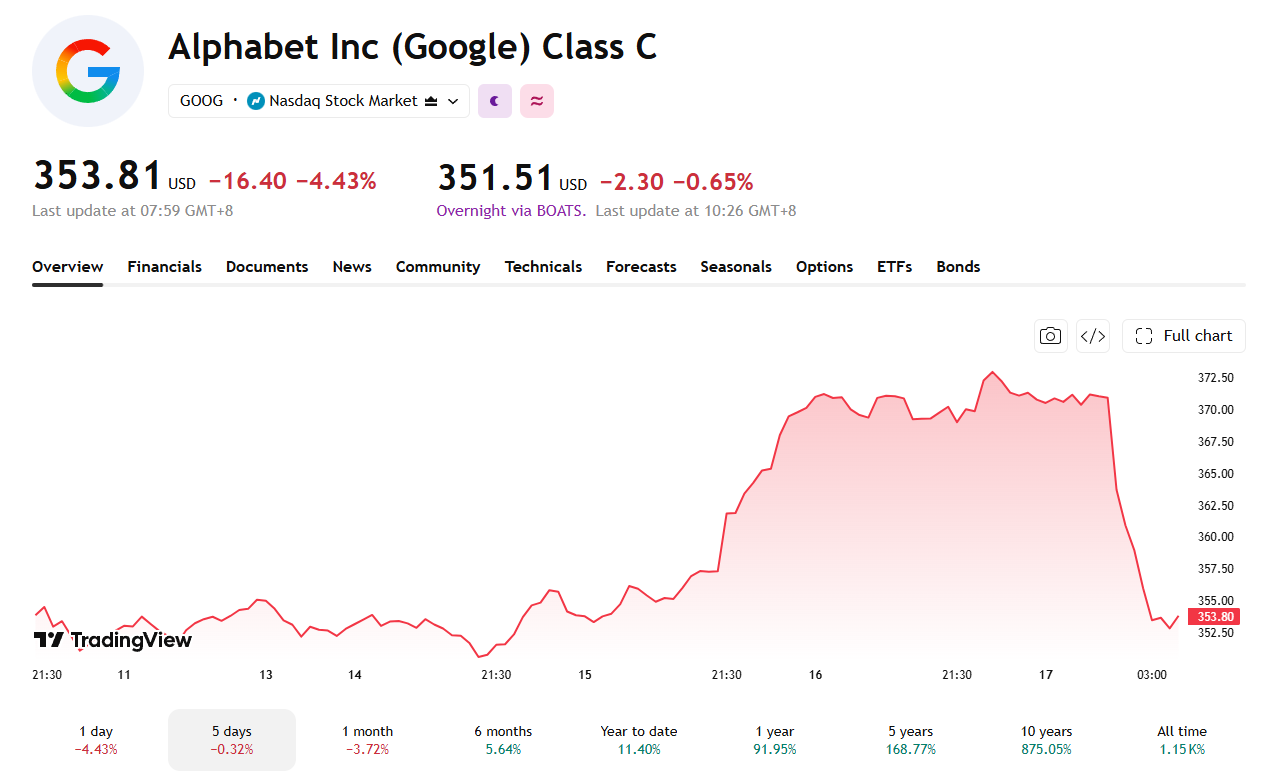
Alphabet stock fell over 4% after the European Union ordered Google to open Search and Android data to rivals. The order adds to concerns over a delayed Gemini 3.5 Pro launch.
The pullback erased most of a rally sparked days earlier by Warren Buffett’s public endorsement of the stock. Shares changed hands near $353 on Thursday, down from above push toward $370 days earlier, per TradingView data.
Gemini Delay Meets a Costly AI Buildout
Alphabet is reportedly facing delays in launching Gemini 3.5 Pro, its next flagship AI model. CEO Sundar Pichai had signaled a June release. Engineers are said to still be working on coding performance and now, some researchers reportedly worry rival models now outperform Gemini on enterprise benchmarks.

The delay lands as Alphabet guides to $180 billion to $190 billion in capital spending this year alone. That buildout already forced the company into reversing its buyback strategy. It also drove an $80 billion equity raise that Berkshire helped anchor.
Wall Street expects Alphabet to post second-quarter earnings per share near $2.86, up nearly 24% year over year when it announces on July 22. Google Cloud grew 63% last quarter to nearly $20 billion. That figure is what investors will watch most closely for evidence AI spending is converting into revenue, after Alphabet’s stronger earnings reaction than rivals last quarter.
Regulators Add to the Pressure
The European Commission ordered Google on Thursday, July 16 to open 11 Android features to rival AI assistants. It also ordered Google to share anonymized Search data with competitors, including OpenAI, under the Digital Markets Act. The Android changes take effect with the next major Android version in July 2027. Search data sharing begins in January 2027.
Google objected to the order in a statement.
“Europeans’ private searches would be exposed to unfamiliar companies, without adequate anonymization of the data and without user knowledge or consent. This would weaken citizens’ privacy, risk business trade secrets, and endanger national security,” he said in a statement.
Separately, The EU could issue Google a fine next week in a related Digital Markets Act investigation. That would mark a second, distinct regulatory action within days. US antitrust litigation over Google’s search dominance is also drawing fresh institutional attention.
Buffett’s Vote of Confidence
Against this backdrop, Buffett’s endorsement stands out. Speaking with CNBC’s Becky Quick, the Berkshire Hathaway chairman confirmed he built the position. Successor Greg Abel did not initiate the trade, he said.
Berkshire’s stake now tops $31 billion, ranking behind only Apple and American Express among its holdings. Buffett tempered the praise, though. He said Alphabet is not among his four or five favorite Berkshire-owned businesses.
He also flagged the same capital intensity worrying the broader market. Buffett called the AI spending race “real money.” His comments in his CNBC interview echoed the same caution about chasing near-term results over real returns.
The post Alphabet Stock Slips on Gemini Delay and EU Order Despite Buffett Bet appeared first on BeInCrypto.

Trump Media & Technology Group has launched a paid data feed called Truth API. It gives banks and trading firms faster access to Donald Trump’s market-moving Truth Social posts.
The service goes live August 1 and already has signed customers, the company said.
Why Speed On Trump’s Posts Matters
Trump’s Truth Social posts have repeatedly jolted global markets. Recent examples include his “Liberation Day” tariff announcements and trade threats against China.
On April 9, 2025, Trump said he would pause many new tariffs for 90 days. US stocks turned sharply higher within minutes of the post.
Truth API will cover the 10 most influential Truth Social accounts and archive posts back to 2022. The platform’s most-followed users include Trump himself, his sons Donald Trump Jr. and Eric Trump, and allies like Dan Bongino and Sean Hannity.
TMTG’s interim CEO, Kevin McGurn, said the feed targets firms with the most to lose from delayed information.
“We’re going to create a lot of friction for those folks that aren’t coming to us directly.”
— Kevin McGurn, Reuters
Conflict Of Interest Questions
The Donald J. Trump Revocable Trust holds roughly 41% of TMTG stock. Trump’s children oversee that trust, which manages his investments. The presidents close ties to the company, and his immense influence, puts him in a position of power to move markets with his social account.
Senator Ron Wyden, the top Democrat on the Senate Finance Committee, criticized the launch. He has also previously criticized the ‘Trump Family Greed‘ in relation to crypto profit disclosures. Wyden said of the new API that it would enrich the Trump family and “make Wall Street traders rich.”
Despite the criticism, and the apprent conflict of interest, Dynamis law firm partner Robert Frenchman said tiering access does not break federal securities law. However, he noted the practice still creates uneven odds for smaller traders.
“It certainly does not seem fair, but yes, a tech platform can tier its distribution of information without violating federal securities laws,” Frenchman said.
TMTG has accused unnamed firms of scraping Truth Social data for months. It calls that a breach of its terms of service. The company has previously batted down other Truth Social monetization rumors, including talk of a meme coin.
The launch adds to a pattern of Trump-linked market moves drawing scrutiny over who profits from information timing. Regulators have not said whether tiered access to a president’s posts raises new disclosure concerns.
The post Trump’s Truth Social Posts Will Hit Wall Street First, Giving a Financial Edge appeared first on BeInCrypto.
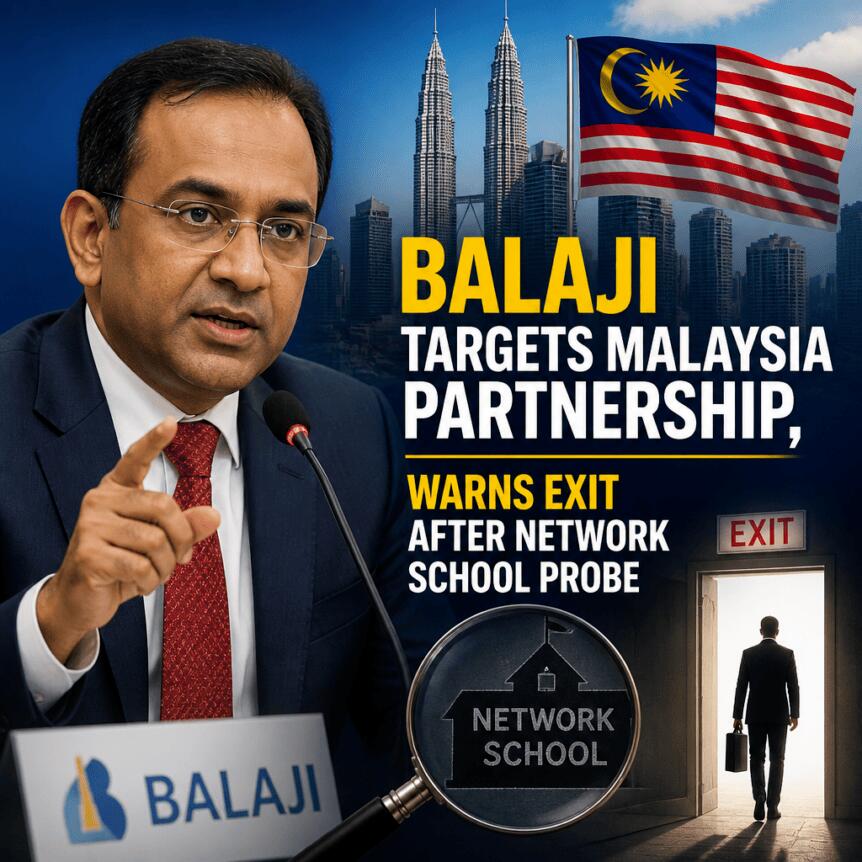
Network School founder Balaji Srinivasan says he is seeking a memorandum of understanding with Malaysia after Malaysian authorities probed his Forest City tech community over allegations that it may have hosted Israeli citizens using second passports. Malaysia’s Home Affairs Ministry said it is investigating the start-up community in Johor following claims that Israelis were present in violation of immigration rules.
The situation underscores a challenge for crypto-adjacent “digital utopia” projects: even when communities aim to build their own institutions and economies, they still rely on conventional nation-states for legal certainty. Srinivasan has linked the next phase of his Malaysia expansion plans to getting that assurance.
Key takeaways
- Malaysia’s Home Affairs Ministry is investigating Network School in Johor after allegations of Israeli nationals using second passports.
- Authorities’ initial checks reportedly found that 266 foreign residents held valid documents.
- Srinivasan is asking Malaysia for written assurances—possibly a memorandum of understanding or changes tied to a special economic zone.
- He says further investment in Malaysia, including a $122 million expansion plan, is on hold pending “sufficient assurance” that issues won’t repeat.
Malaysia investigation follows immigration-related claims
Malaysia’s Home Affairs Ministry said Tuesday that it is investigating Network School’s operations in Johor after claims surfaced alleging that the community included Israelis who may have breached immigration laws. In an early review, the ministry said it found no immediate documentary irregularities—reportedly confirming that 266 foreigners under the initiative had valid documents.
According to the ministry’s statement, the probe is tied to specific allegations rather than a blanket rejection of the project. Still, the inquiry puts Network School’s continued ability to attract and house foreign participants under closer scrutiny.
Srinivasan pushes for written legal certainty
Srinivasan said the reason for pursuing an agreement with Malaysia is to provide Network School with “legal certainty” that would allow it to continue investing and operating in the country. Without such a document, he suggested, the community could redirect its capital elsewhere.
In a video addressed to Malaysian Prime Minister Anwar Ibrahim, Srinivasan said he wants more than general statements welcoming tech; he wants personal, written confirmation that Network School will be considered welcome. He also indicated he is open to different legal mechanisms, including a memorandum of understanding or modifications tied to a special economic zone provision.
While Srinivasan did not lay out specific terms publicly, his messaging focused on predictability: investors and community operators need clarity about the legal status of participants, not just broad political signals.
He also said he is pausing any further investment in Malaysia, including a planned $122 million expansion, until he receives “sufficient assurance” that the immigration issues raised during this episode do not recur.
How the allegations surfaced
Claims that Network School was harboring Israeli citizens were traced back to an Instagram post from “Malaysian Protest 4 Palestine,” an activist group that accused the school of becoming a “gathering place for Israeli entrepreneurs.” In its course of action, the post helped spur immigration scrutiny that then moved to the Malaysian Home Affairs Ministry.
Malaysian policy on entry for Israeli passport holders is central to the dispute. The article notes that Israeli passport holders are forbidden from entering Malaysia, a Muslim-majority country, without written permission from the Malaysian Ministry of Home Affairs—reflecting Malaysia’s lack of diplomatic relations with Israel and its stated position of not recognizing Israel.
Importantly, while the investigation is ongoing, the ministry’s initial checks reportedly did not find immediate evidence—at least at the documentation level—that foreign residents lacked valid paperwork. That creates a key uncertainty going forward: authorities may still need to determine whether the allegations relate to residency status, identity verification, the use of alternate travel documents, or other aspects not covered by “valid documents” alone.
Why this matters for crypto-linked community models
Beyond the specifics of one tech community, the episode reflects a recurring tension for crypto-leaning projects that describe themselves as building new social and economic systems. Such initiatives often emphasize borderless or community-driven norms, but they still require host governments to provide stable, enforceable rules—especially when the project involves foreign nationals and long-term operations.
For investors and participants, the difference between informal tolerance and formal assurance can determine where capital goes next. Srinivasan’s decision to pause a large expansion plan suggests Network School is treating immigration uncertainty as a material risk to its business continuity, not a temporary public-relations issue.
If Malaysia provides the kind of written clarity Srinivasan is requesting, the project could regain confidence for future fundraising and staffing. If not, the story hints at a broader pattern: even when “build-first” communities develop successfully, compliance and policy certainty may become the bottleneck.
Readers should watch for what Malaysia’s Home Affairs Ministry concludes in the investigation, and whether any formal agreement—such as a memorandum of understanding or changes tied to existing special economic zone rules—emerges that addresses the specific compliance concerns raised in this case.


Network School founder Balaji Srinivasan is seeking a memorandum of understanding with Malaysia after authorities probed his Forest City tech community over allegations it was hosting Israeli citizens using second passports.
Malaysia’s Home Affairs Ministry said Tuesday it was investigating Srinivasan’s start-up community in Johor following claims it included Israelis in violation of immigration laws. Initial checks found all 266 foreigners held valid documents.
Srinivasan said the agreement would give Network School legal certainty to continue investing in Malaysia. Without it, he said, the community could take its capital to countries that are more welcoming.
“I’d like to have a document which says not just abstractly that tech is welcome … but rather that we’re personally welcome,” Srinivasan said in a video directed at Malaysian Prime Minister Anwar Ibrahim on Thursday.
The episode highlights a tension faced by many crypto utopias, which aspire to build digital-native communities with their own institutions and economies, but still depend on conventional states for legal certainty.
Balaji, the former chief technology officer of Coinbase, launched his Network School in August 2024 in Johor’s Forest City, which is located about an hour from Singapore. It is marketed as a physical community of tech builders, creators and founders.
Srinivasan did not give the specifics of what a deal with Malaysia could include, but suggested it could be a memorandum of understanding or a modification of a special economic zone provision.
Related: Balaji calls for more ‘crypto tools’ for refugees amid Middle East tensions
“If not, then we will readily go somewhere else because I don’t want to be where we’re not welcome,” he said.
Srinivasan also announced that he is putting any further investment in Malaysia, including a $122 million plan to expand its community, on hold until it gets “sufficient assurance” that such issues don’t recur.
Instagram post led to immigration probe
Claims that the Network School was harboring Israeli citizens have been traced back to a social media post on Friday from activist group “Malaysian Protest 4 Palestine,” which accused the school of becoming a “gathering place for Israeli entrepreneurs.”
Israeli passport holders are forbidden from entering Malaysia, a Muslim-majority country, without written permission from the Malaysian Ministry of Home Affairs, as Malaysia does not recognize Israel and does not have any diplomatic relations with the country.
Magazine: Gambling on random Pokémon cards: Onchain gagcha hits record high as crypto sinks


South Korea has raised interest rates for the first time since January 2023, shifting monetary policy toward tighter conditions in one of the world’s most active retail crypto markets.
Summary
- South Korea raised rates to 2.75%, marking its first monetary policy increase since January 2023.
- Tighter borrowing conditions could cool speculative crypto demand as local trading activity has already weakened.
- Strong growth, persistent inflation and won weakness may keep additional Bank of Korea hikes possible.
The Bank of Korea raised its benchmark rate by 25 basis points from 2.50% to 2.75% on July 16. All seven members of the Monetary Policy Board supported the decision. The central bank also said further increases may be needed depending on inflation, growth and financial stability conditions.
Bank of Korea shifts toward tighter monetary policy
The rate increase was widely expected. A Reuters poll found that 36 of 37 economists expected the central bank to raise its policy rate to 2.75%.
The Bank of Korea cited stronger exports and investment, persistent inflation and risks to financial stability. June consumer inflation reached 3.2%, while the central bank expects economic growth to exceed its previous 2.6% forecast by a wide margin.
Governor Hyun Song Shin said developments in growth, inflation and financial stability all supported a rate increase. The bank also said monetary policy may need to remain on a tightening path, with future decisions depending on economic data.
Higher interest rates generally raise borrowing costs and can reduce demand for speculative assets. For crypto markets, the direct effect may depend on whether tighter local financial conditions reduce the amount of won available for trading.
South Korea remains a major retail crypto market
South Korea continues to play an important role in global cryptocurrency trading. Local exchanges such as Upbit and Bithumb regularly generate large volumes in won-denominated markets, especially for altcoins.
As previously reported by crypto.news, XRP briefly became the most traded asset on Upbit in May, recording about $110.9 million in daily volume compared with $88.6 million for Bitcoin and $67 million for Ethereum. That trading pattern showed the continued influence of Korean retail traders on individual crypto markets.
Recent listings also show that crypto exchanges continue to target Korean traders. As reported by crypto.news, Upbit added Derive’s DRV token to its KRW, BTC and USDT markets on July 14, while Bithumb also introduced a won trading pair.
Crypto demand had already weakened before the rate hike
The rate increase comes after local crypto activity had already fallen from earlier peaks. However, cryptocurrency holdings among South Korean investors dropped from about $83.3 billion in January 2025 to $41.4 billion by February 2026.
Daily trading volume across five major domestic exchanges also declined from about $11.6 billion in December 2024 to roughly $3 billion in February. Won deposits held at exchanges fell from 10.7 trillion won to 7.8 trillion won, pointing to weaker cash demand for crypto trading.
Higher rates could add another restraint on speculative activity if households choose deposits, bonds or other yield-bearing assets over cryptocurrencies. However, crypto prices also depend heavily on global monetary policy, institutional flows and broader market conditions.
Further rate hikes could keep liquidity under pressure
The Bank of Korea has left the door open to additional tightening. Reuters reported that many economists expect at least one more increase this year, potentially taking the benchmark rate to 3.00%.
For South Korea’s crypto market, the policy shift comes as local retail participation has already cooled from previous highs. Further increases could keep domestic liquidity tighter, while stronger global institutional demand may become more important in supporting broader crypto risk appetite.


Cantor and Securitize have formed a partnership to bring blockchain infrastructure directly into initial public offerings and follow-on stock sales, creating a pathway for companies to raise capital and issue securities onchain.
Summary
- Cantor and Securitize will combine capital markets expertise with regulated infrastructure for blockchain-based public offerings.
- The partnership targets IPOs and follow-on offerings while keeping issuers within existing capital market frameworks.
- Securitize previously tokenized its own NYSE shares, providing an early model for issuer-sponsored digital securities.
Under the agreement announced on July 15, Cantor will provide its equity capital markets and trading capabilities. Securitize will handle the infrastructure used to issue, distribute and service the tokenized securities. Its SEC-registered broker-dealer affiliate, Securitize Markets, will also participate in the offering and settlement process.
Partnership takes tokenization into primary markets
The collaboration differs from many existing tokenized stock products because it brings blockchain technology into the original issuance process. Companies could conduct IPOs or later share offerings using onchain infrastructure while remaining within the established framework for regulated public offerings.
The companies said the approach could modernize ownership records, distribution and settlement. Carlos Domingo, co-founder and CEO of Securitize, said “public companies shouldn’t have to choose” between traditional capital markets and blockchain infrastructure. The partnership does not yet name a company planning to use the new model or provide a date for its first offering.
Securitize builds on its own tokenized public shares
The agreement follows Securitize’s own move into public markets. The company listed on the New York Stock Exchange under the SECZ ticker on July 2 and simultaneously issued tokenized versions of its common shares on Solana and Avalanche.
Those blockchain-based shares represent the same SECZ common stock rather than a separate share class or synthetic product. Securitize had entered public markets through a business combination with Cantor Equity Partners II, a deal expected to deliver about $400 million in gross proceeds before expenses.
Wall Street expands its tokenization efforts
The Cantor partnership arrives as large financial institutions move more traditional securities onto blockchain networks. As reported by crypto.news, DTCC recently launched a tokenization initiative involving BlackRock, JPMorgan, Goldman Sachs, Vanguard and other major financial firms.
The New York Stock Exchange has also taken steps toward blockchain-based securities. As previously reported, the exchange proposed allowing eligible tokenized shares to trade alongside traditional securities while retaining the same rights, ticker and other ownership features. Securitize has separately worked with the NYSE on its planned tokenized securities platform.
Issuer-sponsored model keeps the actual security onchain
The Cantor-Securitize model centers on issuer-sponsored tokenization. Under the structure described by the companies, the blockchain token would represent the actual security rather than a wrapper, special-purpose vehicle or synthetic exposure linked to a stock.
Cantor Co-CEO and Global Head of Equities Pascal Bandelier said “tokenization is becoming part of mainstream capital markets.” The partnership now aims to apply that technology directly to capital raising rather than limiting it to funds or secondary-market trading.
Securitize has already expanded across institutional tokenization, including work with major asset managers and more than 650 funds, according to earlier crypto.news coverage. The new Cantor partnership extends that strategy into IPOs and follow-on offerings, although the companies have not yet announced the first issuer that will use the platform.
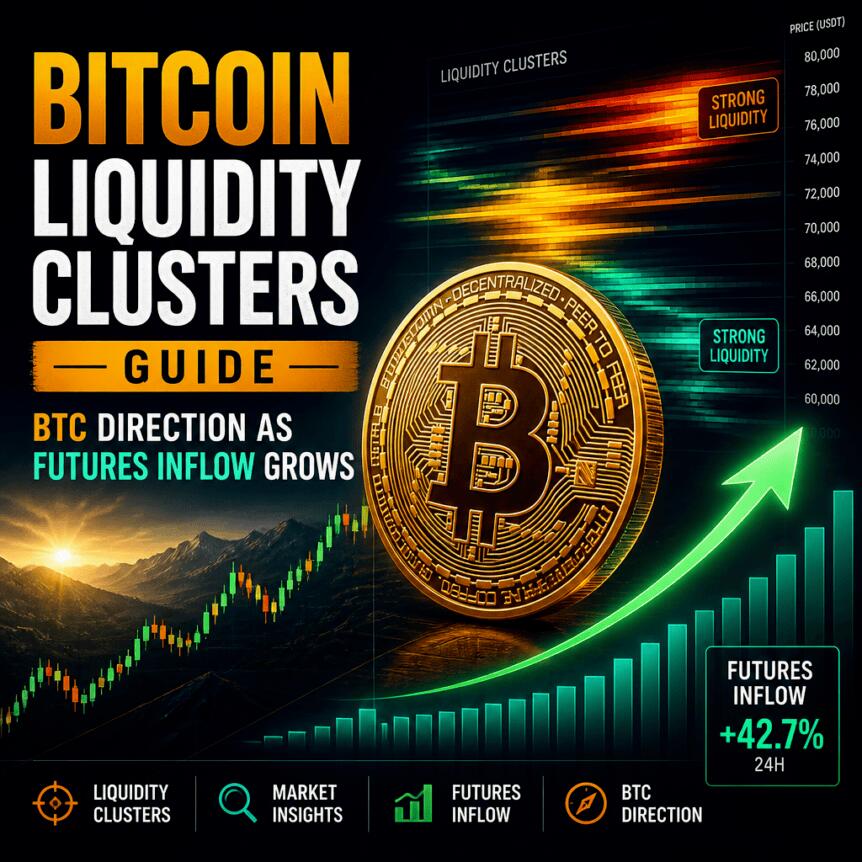
Bitcoin’s near-term direction appears increasingly tied to where leverage is concentrated in the futures market, according to liquidation heatmap readings. As BTC tests the area around the low-$60,000s—holding above $64,000 at the time of writing—price action is gravitating toward liquidity “magnets” where traders have the most to lose if the market moves.
Hyblock’s liquidation heatmap points to a key cluster of short positions between $65,500 and $66,000, positioned about 3% away from current pricing. If BTC pushes through roughly $65,600, that pocket of liquidity could be triggered, potentially helping fuel a move toward the next notable ceiling around $67,000.
Key takeaways
- A dense short-position cluster sits between $65,500 and $66,000, roughly 3% above current price, making $65,600 a potential inflection point.
- Support is layered below with a notable long-side liquidity band around $63,500 to $63,750, about 1% under current pricing.
- Deeper liquidity pools are visible at $63,000 to $63,250 and $62,500 to $62,750, which may matter if the market slips lower.
- Across the tracked window, long-side liquidity outweighs short-side liquidity by nearly 2-to-1, hinting that leverage built over the past month may not be fully unwound.
- A bearish outlier liquidation band near $55,000 stands out, suggesting that a breakdown—especially below $62,500 to $63,750—could accelerate downside.
Where liquidation clusters could pull price
Liquidation heatmaps illustrate how concentrated leverage is at specific price levels. When markets move toward those levels, forced position closings can compound the move, creating short-term momentum in either direction.
In this case, the most prominent overhead liquidity comes from shorts stacked between $65,500 and $66,000. This area sits close enough to current trading to plausibly act as a near-term target if BTC continues to grind higher. Hyblock’s data suggests that a push beyond $65,600 could put the cluster “in play,” increasing the odds of a faster run toward $67,000.
On the downside, Hyblock shows multiple long-side support zones. The closest concentration lies between $63,500 and $63,750, roughly 1% below current pricing. Additional liquidity pockets appear at $63,000 to $63,250 (about 1.5% lower) and $62,500 to $62,750 (about 2.3% lower). Together, these levels form a tiered map of where liquidations could either cushion dips—or, if breached, remove support quickly.
Importantly, the balance of liquidity is not symmetrical. Hyblock’s tracked window shows long-side liquidity outweighing short-side liquidity by nearly two to one. While that does not guarantee upside, it implies that—based on where leverage appears to sit—the market may be more prone to short-term upward pressure if BTC reaches the upper liquidity shelves first.
Rangebound trade structure backed by open interest and funding
The liquidation picture is only part of the story. The article notes that recent price behavior has leaned toward a $60,000 to $67,000 range, and that derivatives positioning metrics broadly align with a market that is not fully trending.
Two signals in particular are cited: aggregate open interest (OI) and the funding rate. Open interest had been elevated earlier, but it has since eased. Specifically, the data referenced shows OI has come down by more than 3% from a Tuesday peak, yet BTC’s price has barely moved in the same span.
At the same time, funding is described as having cooled toward neutral. Funding neutrality often corresponds with reduced directional conviction in perpetual markets; it can also mean traders are less aggressively paying for long or short exposure at that moment, even if liquidation levels remain influential.
The piece further states that spot and futures flows have been skewed toward the buy side over the past week, with spot activity and cumulative volume flows—also sourced from Hyblock—supporting the idea that dip-buying has not fully disappeared.
The $55,000 liquidation band: a risk scenario to monitor
Beyond the near-term clusters around $65,500–$66,000 and the layered support below $63,500, Hyblock’s month-long liquidation heatmap highlights a much larger bearish outlier.
A wide liquidation band near $55,000 is described as standing out more than almost anything else on the chart when using a full month lookback. The logic is straightforward: if price action weakens enough to break through key supports—particularly the $62,500 to $63,750 zone—then the market could become exposed to lower-price leverage unwinds that have been building over longer horizons.
In other words, while the most “actionable” levels may currently be close to the prevailing price, the existence of a substantial liquidity magnet farther down adds asymmetry to the downside risk. It suggests that a deeper move would not just be a continuation of the existing range—it would likely involve a regime shift where forced selling dynamics become more pronounced.
What traders should watch next
For the next decision point, focus on whether BTC can move cleanly toward $65,600 and test the short-heavy shelf between $65,500 and $66,000; doing so would be consistent with the liquidation-driven upside path toward $67,000. If instead BTC loses the nearest support bands around $63,500–$63,750 and then $62,500–$63,750, the heatmap implies that downside could accelerate toward deeper liquidity pockets, including the prominent band near $55,000.


With three weeks left on the Senate calendar, the President stopped selling crypto’s biggest bill on its merits and started selling it as a race against Beijing. The pitch is a tell, and it reveals exactly which argument Washington has already lost.
Summary
- On July 13, Trump urged the Senate to pass the CLARITY Act and framed it as a contest with China over both crypto and artificial intelligence, warning that Beijing wants total control of the sector.
- The framing arrived at a moment of maximum weakness for the bill: no floor vote scheduled, roughly three weeks of Senate calendar left, and prediction markets pricing 2026 passage far below where it sat earlier in the year.
- The bull case is that regulatory certainty is a genuine competitiveness asset, and that the CFTC chairman, a 200-company coalition, and the White House all agree the cost of delay is measured in offshore migration.
- The bear case is that the China frame is a lobbying device aimed at Democrats who are blocking the bill over ethics, not over geopolitics, and that Beijing is not competing for the market CLARITY would regulate.
- The frame cannot route around the actual obstacle: the merged draft released July 14 omits any ethics provision, and three Democratic senators immediately declared their opposition.
For most of its life, the Digital Asset Market Clarity Act has been sold on plumbing. It would decide which American regulator supervises which digital asset, split jurisdiction between the Securities and Exchange Commission and the Commodity Futures Trading Commission, and replace a decade of enforcement-by-lawsuit with written rules. That is a technocratic argument, and it is the argument that carried the bill through the House and out of the Senate Banking Committee. For readers new to the market-structure fight, crypto.news has also explained how the bill splits SEC and CFTC jurisdiction. On July 13, with the bill stalled and the calendar closing, the President changed the pitch. In a Truth Social post, Trump said the Senate should pass the CLARITY Act, warned that China and other countries would like to take complete and total control of this major financial moment as well as artificial intelligence, and closed by telling lawmakers not to let China win on either front. The plumbing argument had not worked. The new one is about national power, and the switch itself is the most informative thing that has happened to this bill in weeks.
The post that reframed the bill
The specifics of the moment matter, because the timing was not accidental. Trump opened the post by invoking Senator Lindsey Graham, the South Carolina Republican who died on July 11 at 71 following a sudden illness, and who advocacy groups had counted as a reliable supporter of the industry, including his vote for the stablecoin law CLARITY builds on in 2025. Framing passage as a tribute to a dead colleague is a legislative pressure tactic as old as Congress. Attaching it to a warning about Beijing is newer, and it tells you which audience the White House thinks it still has to move.
The administration amplified the message in unison. Patrick Witt, the White House digital-assets adviser, called the days ahead a critical week and pointed to the one-year anniversary of the GENIUS Act on July 18 as proof of what coordinated action can produce. Federal regulators joined in: CFTC Chairman Mike Selig urged lawmakers to write clear statutory standards, arguing that continued reliance on enforcement actions and statutes drafted before blockchain markets existed threatens American leadership across crypto, artificial intelligence, and financial technology. A coalition of more than 200 companies pressed Senate leadership to bring the bill to the floor. The House Financial Services digital-assets subcommittee scheduled a field hearing at Federal Hall in New York for July 17, titled around the idea that CLARITY enables innovation.
That is a full-court campaign, and campaigns of that intensity are not run from positions of strength. The bill missed the July 4 signing ceremony the White House had informally targeted. It has sat since June 1 at Calendar No. 423 on the Senate Legislative Calendar, eligible for a floor vote nobody has scheduled, with no cloture motion filed. The Senate returned July 13 with roughly three working weeks before the August recess, after which the midterm campaign consumes the political oxygen. The China frame is what a bill sounds like when its sponsors have run out of runway and are reaching for the one argument that has historically moved reluctant senators of both parties.
What Washington is actually selling against
The comparison Trump is drawing deserves scrutiny, because the two systems are not competing to do the same thing. Mainland China has banned the private crypto activities that CLARITY would regulate, including trading and mining. What Beijing has built instead is the e-CNY, a central bank digital currency issued and supervised by the People’s Bank of China, a state-run digital money that gives the central bank direct visibility into transactions. That is not a rival crypto market. It is the philosophical opposite of one.
The American model, as the administration frames it, puts privately issued dollar stablecoins at the center and keeps the state out of retail digital money entirely. This is where the CLARITY Act contains a detail that complicates the China pitch in an interesting way: the House version of the bill carries anti-CBDC provisions, barring Federal Reserve banks from offering certain products directly to individuals and prohibiting the use of a central bank digital currency for monetary policy. In other words, the bill Trump is selling as the answer to China is partly built to prevent America from ever fielding China’s actual product. The competition is not two countries racing to build the same thing faster. It is two countries betting on incompatible architectures, one state-issued and surveilled, one private and regulated.
There is a third model that goes unmentioned in the framing, and its absence is telling. Europe already passed comprehensive crypto market rules under MiCA, which means the honest competitive comparison for the United States is not with Beijing but with Brussels, a jurisdiction that did the boring legislative work first and now has the regulatory certainty American firms say they want. Naming Europe would make the argument about American legislative dysfunction. Naming China makes it about a foreign threat. The second frame is more useful politically, which is precisely why it was chosen.
The case that clarity is a competitiveness asset
Strip away the rhetoric, and there is a serious argument underneath, one that does not depend on Beijing at all. American crypto regulation has been conducted for years primarily through enforcement, with agencies applying securities statutes written in the 1930s and 1940s to assets that did not exist when those laws were drafted. Firms have responded rationally by domiciling offshore, which means the activity continues, the jurisdiction changes, and American regulators lose visibility over the very conduct they wanted to police. Selig’s point stands on its own merits: a country cannot supervise what it has pushed out of its borders.
The competitiveness case has a concrete shape. American leadership in digital finance rests on capital markets, legal certainty, developer talent, banking access, and exchange liquidity. Delayed rules weaken each of those, even while demand for the assets themselves stays strong. A framework that tells firms which regulator governs them, what disclosures they owe, and what registration path exists would let institutional capital participate at a scale that legal ambiguity currently prevents. That argument explains why more than 200 companies signed on and why the industry treats this as its top policy priority, and none of it requires believing that China is about to seize the crypto market.
The geopolitical version of the argument, at its strongest, is about the dollar. The GENIUS Act created a framework for payment stablecoins, the overwhelming majority of which are dollar-denominated, and dollar stablecoins have become an unexpectedly effective instrument of American monetary reach, putting dollar exposure in the hands of people who cannot easily access dollar banking. If digital money is where cross-border payments eventually migrate, then the country whose currency dominates that layer inherits a meaningful advantage. In that reading, the CLARITY Act is not about beating China at crypto. It is about extending the dollar’s incumbency into the next rail, which is a real strategic interest even if the invocation of Beijing is theatrical.
The case that China is a lobbying device
The skeptical reading is simpler: the frame is aimed at a domestic audience, not a foreign adversary, and it is designed to make a stalled negotiation feel like a national emergency. Nothing about China’s posture changed in July. The e-CNY has been in development for years, the trading ban is old news, and no Chinese policy shift prompted the post. What changed was the Senate calendar and the vote count. When the substance of a bill cannot close the deal, urgency becomes the substitute, and few things generate urgency in Washington faster than the suggestion that Beijing is winning.
The framing also collides with an inconvenient fact about the electorate. A survey commissioned by CoinDesk found that just 1 percent of registered voters ranked crypto as a top priority heading into the 2026 election. Senator Elizabeth Warren has made that number a centerpiece of her opposition, arguing the Senate is spending its scarce floor time on legislation written by the crypto industry for the crypto industry while voters are preoccupied with the cost of groceries, utilities, and health care. Whatever one makes of her policy views, the political arithmetic is hard to dispute: there is no constituency pressure driving this bill, which is exactly why its advocates need an external threat to manufacture stakes.
There is a further problem with the competitiveness claim as applied. If the concern is that activity migrates offshore without rules, the natural rejoinder is that America already has a stablecoin law and a functioning, if messy, enforcement regime, while the specific provisions holding CLARITY up are not the ones foreign competitors care about. Nobody in Beijing has a view on whether Coinbase may pass through yield on USDC balances, or on the precise wording of a developer liability shield. Those are domestic fights among American banks, American law enforcement, and American politicians. Wrapping them in a flag does not resolve any of them, and the senators blocking the bill are unlikely to be persuaded that their objections are unpatriotic.
The obstacle the frame cannot route around
Here is where the China pitch runs into the wall it was built to avoid. The reason CLARITY has no floor vote is not insufficient urgency about foreign competition. It is that Democrats have conditioned their support on an ethics provision restricting government officials from profiting from the industry they regulate, and the President is the reason such a provision exists. Trump’s most recent financial disclosure showed roughly $1.4 billion in crypto-related income, with about $636 million from the memecoin bearing his name and more than $500 million tied to World Liberty Financial, the DeFi venture his family co-founded. Crypto was his single largest income stream in the preceding year.
The merged Senate Banking and Agriculture draft, released on July 14, omits any ethics provision. Senators Chris Murphy, Chris Van Hollen, and Jeff Merkley responded with a press conference declaring their opposition, with Murphy arguing that there is no point building a new regulatory system for crypto if it fails to stop what he characterizes as the President’s corruption. Senator Kirsten Gillibrand has pushed to make it illegal for presidents to issue or sponsor digital assets, citing the memecoin figure directly. Warren has demanded hearings on the national-security implications of the President’s holdings before any floor vote. The White House position, articulated by Witt, is that it will accept ethics language applying across the board, from the president to the intern, but nothing aimed specifically at the President’s holdings. A proposal to let state attorneys general enforce the rules was rejected as structurally insufficient.
This is the structural bind, and it is worth stating plainly because the China frame is designed to obscure it. Democrats argue it is incoherent to build a federal framework classifying digital assets while the sitting President earns his largest income from those assets with no enforceable restriction. The White House argues it will not accept a bill that singles out the President. Both positions are internally consistent, and together they are irreconcilable without someone conceding. A Truth Social post about Beijing does not move that stalemate one inch, and the two committee Democrats who voted the bill out of Banking, Ruben Gallego and Angela Alsobrooks, have both warned their committee votes do not extend to the floor absent a deal.
The math
The vote count is where sentiment meets arithmetic, and the arithmetic is unforgiving. The bill needs 60 votes for cloture in the Senate, which requires a significant bloc of Democrats. It cleared Senate Banking 15-9, with only Gallego and Alsobrooks crossing over, and both have since qualified their support. The House passed its version 294-134 in July 2025 with dozens of Democrats, which is the precedent supporters cite, and the GENIUS Act cleared the Senate 68-30 the same year, which is the precedent they cite more often. But the Republican margin has narrowed. Graham’s death and Mitch McConnell’s continued absence leave the conference with almost no room for error.
The calendar compounds the problem. The House leaves for recess on July 23, the Senate on August 7, and Senate Majority Leader John Thune wants a floor vote before the work period ends. Advocates hoped the bill could reach the floor the week of July 20, but the procedural sequence, filing cloture, burning floor time for debate, reconciling with the House version, consumes days the bill does not have. And CLARITY is competing for that floor time against the National Defense Authorization Act, a farm bill, a housing bill, and a war-powers debate. Every hour spent elsewhere reduces the odds. Even if the Senate passes something, the House would need to approve the Senate’s version before it reached the President’s desk.
The market has noticed. Traders on Polymarket priced 2026 passage in the mid-20s to upper-30s percent range in mid-July, down from above 70 percent earlier in the year, showing how traders are pricing the bill’s odds. Galaxy Digital’s head of research cut his firm’s odds to roughly 50 percent, citing the shrinking calendar and competition for floor time. Optimists remain: the Solana Policy Institute’s president has said momentum is building and a pre-recess vote is achievable, and CFTC leadership has called the bill close. The fallback everyone whispers about is the lame-duck session after the November elections, a crowded and unpredictable window that has buried better-positioned bills than this one.
Whether the frame lands
So does the China argument work? On the merits, it is the weakest version of a strong case. The genuine argument for CLARITY is domestic and unglamorous: regulation by enforcement is a bad way to run a market, offshore migration costs American oversight, and firms deserve to know which agency governs them. That case does not need Beijing, and dressing it in geopolitics arguably cheapens it, because it invites the obvious rebuttal that China banned the thing America is trying to regulate and therefore is not racing anyone.
On the politics, the calculation is more defensible than it first appears. The frame is not aimed at Murphy or Warren, who were never going to be moved by it. It is aimed at the marginal Democrat who wants a reason to vote yes that is not about crypto, and for whom competitiveness with China offers cover that industry lobbying cannot. That is a real, if narrow, use. The problem is that the marginal Democrat’s stated price is an ethics provision, and the merged draft did not pay it. No amount of framing substitutes for the thing the votes are actually for sale for.
The most honest read is that the China pitch is a symptom rather than a strategy. It tells you the White House has exhausted the arguments it prefers and is now reaching for the one that generates urgency without requiring concession. Whether crypto gets its rulebook this year will be settled by whether someone blinks on ethics in the next three weeks, not by whether senators fear Beijing. If the bill dies, the industry will spend the fall arguing that America ceded ground to foreign competitors. The more accurate autopsy will be that the most consequential crypto bill in American history failed over a fight about one man’s memecoin income, and that no external adversary was required to stop it.
Frequently asked questions
What is the CLARITY Act?
The Digital Asset Market Clarity Act would create a federal regulatory framework for digital assets in the United States, dividing oversight between the Securities and Exchange Commission and the Commodity Futures Trading Commission. It would grant the CFTC authority over digital commodity spot markets while the SEC retains jurisdiction over investment contract assets, and it builds on the stablecoin framework created by the GENIUS Act in 2025.
What did Trump actually say about China?
In a July 13 Truth Social post, he urged the Senate to pass the bill in honor of the late Senator Lindsey Graham, warned that China and other countries want total control of the digital asset sector as well as artificial intelligence, claimed America currently leads while China competes hard, and closed by telling lawmakers not to let China win on either front.
Is China really competing with the United States on crypto?
Not in the market CLARITY would regulate. Mainland China has banned private crypto trading and mining, and has instead built the e-CNY, a state-issued central bank digital currency supervised by the People’s Bank of China. The two systems are architecturally opposed. The CLARITY Act itself contains anti-CBDC provisions, meaning the bill partly exists to prevent America from building China’s actual product.
Why is the bill stalled?
Primarily over ethics. Democrats have conditioned support on provisions restricting officials from profiting from the crypto industry, prompted by Trump’s disclosure of roughly $1.4 billion in crypto income. The merged draft released July 14 omitted any ethics language, and Senators Murphy, Van Hollen, and Merkley immediately announced opposition. Disputes over a DeFi developer shield and stablecoin yield also remain unresolved
How many votes does it need
Sixty, to clear cloture in the Senate, which requires meaningful Democratic support. The bill cleared the Senate Banking Committee 15-9 with only two Democrats crossing over, and both have said their committee votes do not guarantee floor support. Graham’s death and McConnell’s absence have narrowed the Republican margin, making Democratic buy-in more decisive than at any earlier point.
What is the deadline?
The Senate leaves for its August recess on August 7, and the House on July 23, after which the midterm campaign dominates. Advocates view the remaining weeks as the bill’s last realistic chance in 2026. A lame-duck session after the November elections is the theoretical fallback, but that window is crowded and unpredictable.
What do prediction markets say about passage
Traders have grown sharply more pessimistic. Polymarket priced 2026 passage in roughly the mid-20s to upper-30s percent range in mid-July, down from above 70 percent earlier in the year. Galaxy Digital’s research head cut his estimate to about 50 percent, citing calendar pressure. Those figures move quickly and should be checked against current markets.
What happens to crypto if the bill fails?
The status quo persists: regulation through enforcement, unresolved SEC and CFTC jurisdiction, and continued legal ambiguity that firms cite when domiciling offshore. That does not halt the industry, since demand is unaffected by legislative failure, but it delays institutional participation that depends on legal certainty and pushes the next serious attempt into a new Congress with a potentially different composition.
Disclaimer: This article is for information and educational purposes only and does not constitute financial, investment, or legal advice. It describes pending legislation and the political debate surrounding it, and legislative outcomes are inherently uncertain. Nothing here is a recommendation to buy or sell any asset. Always do your own research. Information is accurate as of July 16, 2026, and this situation is developing quickly.
South Korean retail investors have reportedly lost about 2.15 trillion won, or roughly $1.45 billion, from leveraged trading over the past month as sharp market swings triggered widespread margin calls.
Summary
- South Korean retail investors reportedly lost $1.45 billion as leveraged positions unraveled during market volatility.
- Traders in their 20s and 30s represented 62% of accounts facing forced liquidation, reports estimate.
- Korea’s stock leverage unwind follows a retail shift from crypto into equities during the rally.
According to market reports, more than 1.2 million retail leverage accounts had reached margin-call thresholds by July 13. Estimates placed the number of accounts fully liquidated by brokerages between 320,000 and 460,000, although the broader account figures have not been independently confirmed by regulators.
Young investors bear the largest share of liquidations
Investors in their 20s and 30s reportedly accounted for 62% of accounts hit by full forced liquidations. Many retail traders had built leveraged positions during South Korea’s strong equity rally, increasing their exposure to losses when prices reversed.
The losses followed months of heavy borrowing by retail investors. Reuters reported in June that borrowed investment in South Korean equities had reached a record 60 trillion won by the end of May. Regulators were already reviewing safeguards around leveraged exchange-traded funds after acknowledging concerns about their rapid growth.
Forced sales accelerate during volatile market swings
The Korea Financial Investment Association has recorded a sharp increase in forced stock sales linked to unpaid brokerage balances. Market reports put actual forced sales from unsettled trades at 451.9 billion won between July 1 and July 13.
The pressure had already been building before July. According to Seoul Economic Daily, forced sales reached 1.12 trillion won in June, the highest monthly total of 2026. The figure rose from 707.6 billion won in May as sharp KOSPI swings repeatedly caught leveraged investors on the wrong side of the market.
When investors use short-term brokerage credit, they must provide additional funds if their positions fall below required levels. Brokers can sell the shares when clients fail to cover the shortfall, locking in losses during periods of falling prices.
Retail money had shifted from crypto into stocks
The leverage rout follows a major change in how South Korean retail investors allocated their money. As previously reported by crypto.news, crypto holdings on the country’s major exchanges fell from $83.3 billion in January 2025 to $41.4 billion by February 2026 as investors increasingly moved toward equities.
Crypto trading activity also weakened as the stock market gained momentum. A later crypto.news report found that won-based crypto trading volume fell 71% between August 2025 and May 2026, while KOSPI trading volume rose 243%.
The current equity-market losses therefore affect a retail investor base that had already moved substantial capital away from digital assets and into stocks.
Tighter financial conditions add another pressure point
The deleveraging comes as South Korea also shifts toward tighter monetary policy. The Bank of Korea raised its benchmark interest rate by 25 basis points to 2.75% on July 16, its first increase since January 2023.
Higher borrowing costs could place additional pressure on leveraged trading while making investors more cautious toward risk assets. The effect may extend beyond equities because South Korea remains an active crypto market where retail trading can influence global volumes, particularly for altcoins such as XRP. As previously reported, Korean trading activity remains an important source of liquidity for several major digital assets.

Gold set for biggest weekly fall in six as Iran war fans inflation worries

“It’s very easy to find yourself in a dark place” – Camogie star opens up on seeking counselling after injury nightmare

FIFA respond after Man United defender Lisandro Martinez holds controversial Argentina banner

Renter of Home in Anne Heche Crash Denies Settlement With Son

No Jackpot Winner as $257 Million Prize Rolls Over to $269 Million Monday Draw

Weekend Open Thread: Staud – Corporette.com

Crypto Live Trading| 16 july #vinbullindia #livetrading #vinbulllive #live #trading #cryptotrading

What is Financial Literacy? || Define Financial Literacy.||

8 Habits to Practice Daily That Lead to God’s Financial Blessing
-

 Fashion6 days ago
Weekend Open Thread: Nutriplenish Leave-In Conditioner
-
 NewsBeat11 hours ago
London Mayor Sadiq Khan handed a peerage by Keir Starmer alongside 15 other Labour figures… just days before the PM leaves No10
-

 Crypto World1 day ago
CFTC blocks Kalshi from unwinding Michigan trades after court order
-

 Sports7 days ago
Super Eagles star Moses Simon opens up on Liverpool transfer regret
-

 Business24 hours ago
Nvidia Stock Slips After Big Tuesday Rally as Huang Confirms Vera Rubin Chip Is Now in Production Today
-

 Politics2 days ago
Young campaigners urge incoming PM to act on outdoor junk food ads
-

 News Videos2 days ago
XRP BOMBSHELL… XRP OMBOARDED FOR TRANSACTIONS!!!
-

 Tech3 days ago
Get Your ESP32 Sunny Side Up With This Solar Dev Board
-
 Entertainment1 day ago
Disney’s Most Ambitious Failed Star Wars Attraction Is Coming to SDCC
-

 Tech2 days ago
Dark Secrets Emerge When Jailbreaking LLMs
-

 Crypto World6 hours ago
Injective Submits SEC Transfer-Agent Registration to Onchain Ownership Records
-
 Sports1 day ago
New Cornerback Enters Vikings Trade Rumor Mill
-
 Tech3 days ago
Cloudflare Precursor Watches Your Mouse and Keyboard To Decide If You Are Human
-

 News Videos3 days ago
how to make coin bank box with cardboard #scienceproject #money #diy #shorts
-

 Business1 hour ago
Banco Bilbao Vizcaya Argentaria, S.A. (BBVA) Discusses Global Macro Environment and Economic Outlook for Core Markets Transcript
-
Crypto World3 days ago
Ripple, Coinbase, Circle Join Linux x402 Foundation to Help Shape AI Payments
-
 Entertainment1 day ago
Vicki Gunvalson Defends Discussing Heather Dubrow’s Money
-
Business2 hours ago
Nephros, Inc. (NEPH) Discusses Evolving Water Safety Strategies and Expansion Beyond Filtration Transcript
-

 Crypto World5 hours ago
Claude Fable 5 Slips to Second in AI Coding Leaderboard
-

 Business2 days ago
ACCC warns AI could lift insurance costs in risk-prone areas
You must be logged in to post a comment Login