Connect with us
DAPA Banner
DAPA Coin
DAPA
COIN PAYMENT ASSET
PRIVACY · BLOCKDAG · HOMOMORPHIC ENCRYPTION · RUST
ElGamal Encrypted MINE DAPA
🚫 GENESIS SOLD OUT
DAPAPAY COMING

NewsBeat

The little-known government body – whose only shareholder is Net Zero fanatic Ed Miliband – that now stands accused of covering up how close Britain came to a catastrophic heatwave blackout: ROSS CLARK

Published

on

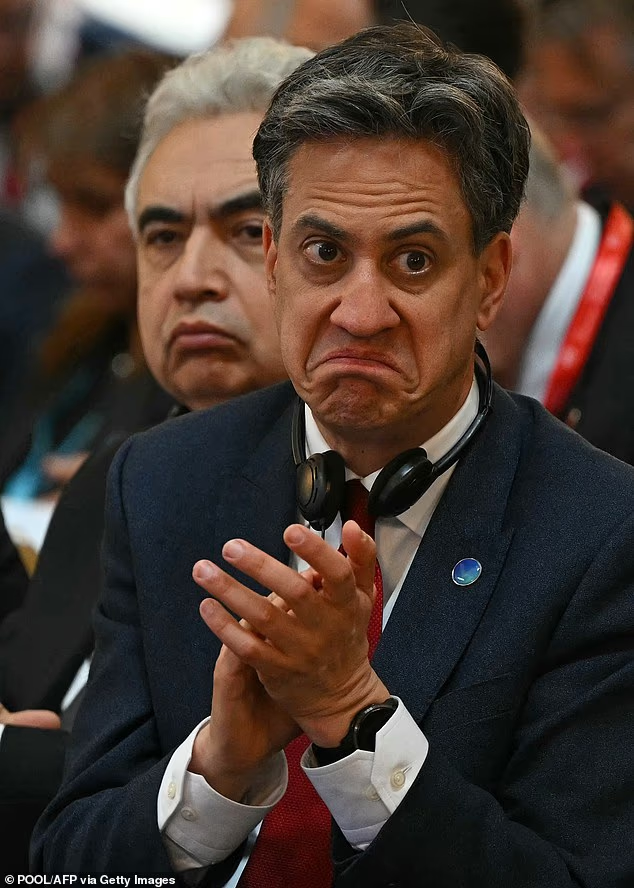
The National Energy System Operator (Neso) is a company with a single shareholder: the Secretary of State for Energy Security and Net Zero, currently Ed Miliband

On the afternoon of June 23, many were enjoying the start of a heatwave that would take temperatures up to 37C, surpassing the June record set in the scorching summer of 1976.

As we sweated, most of the country was blissfully unaware that a potentially catastrophic energy crisis was unfolding.

It emerged this week that on that baking Tuesday, we came close to suffering an event as dramatic as the blackout that occurred in Spain and Portugal in 2025 when trains stopped, industry and commerce were suspended, and hospitals were forced to switch to emergency backup supplies to prevent patients from dying.

Control room engineers at the National Energy System Operator (Neso) the little-known government body responsible for balancing Britain’s electricity supply and demand, were panicking. The grid’s frequency had destabilised and dropped below Neso’s strict operating limit, threatening widespread blackouts.

Advertisement

Yet it was alleged this week that bosses were less concerned by the system failures and more by the reputational impact of the public discovering that the grid was not being run securely. This allegedly involved ordering staff not to keep records of operational decisions to ensure there was no paper trail, in case they might have to be revealed in a Freedom of Information request.

Meanwhile, members of Neso’s corporate affairs team, who manage media and government relations, are said to have interfered in the control room, telling operators what to do to protect the body’s reputation.

This unbelievable tale was revealed by Shadow Energy Secretary Claire Coutinho, after she was approached by several whistleblowers. ‘They are coming to me because they are worried that the grid is becoming unmanageable and they do not have faith that their concerns are being taken seriously’, she said.

Coutinho further revealed that at a meeting on Monday, the Chief Executive, Fintan Slye, told staff that allegations that grid security standards were breached were false. What’s worse, the whistleblowers were openly criticised by senior management for letting the company down. The Government now confirms there is an independent inquiry into what happened on June 23.

Advertisement

The National Energy System Operator (Neso) is a company with a single shareholder: the Secretary of State for Energy Security and Net Zero, currently Ed Miliband

The UK came close to suffering an event as dramatic as the blackout that occurred in Spain and Portugal in 2025 when trains stopped and hospitals were forced to switch to backup supplies

The UK came close to suffering an event as dramatic as the blackout that occurred in Spain and Portugal in 2025 when trains stopped and hospitals were forced to switch to backup supplies

Before this week’s events, few had heard of Neso. Fewer still appreciated how finely balanced Britain’s electricity system is, or how difficult it has become to keep supply and demand in equilibrium as Ed Miliband pushes towards his target of a carbon-free electricity grid by 2030.

Advertisement

Neso was created under the previous Conservative government’s Energy Act 2023, taking over many of the functions previously carried out by the private company, National Grid ESO, with two principal objectives: to ensure the lights stay on and to prepare the national grid for the transition to Net Zero.

Based in an unassuming office block in Warwick, Neso employs around 2,200 people. According to its own calculations, it costs the average household £6.46 a year through energy bills. Yet its 2024/25 annual report also recorded a loss of £409 million, which will have had to be covered by taxpayers. While Neso manages our energy system, it owns little of it. The pylons, substations and infrastructure remain in private hands. Nor does it own the country’s power stations, wind farms or solar farms, all of which are also owned and operated privately. Instead, Neso acts as a glue holding together this patchwork of private assets, coordinating them into what is supposed to function as a single, seamless network.

Although often described as ‘independent’ of government, Neso is a company with a single shareholder: the Secretary of State for Energy Security and Net Zero, currently Ed Miliband.

In other words, it is a public sector body, although the pay packages of its senior staff might not suggest it. In 2024/25, chief executive Slye received a basic salary of £288,167 – more than £100,000 higher than the Prime Minister’s. Once pension contributions and performance-related payments were included, his total remuneration reached £773,650. Chief operating officer Kayte O’Neill received £564,311, while chief financial officer Charlie Pate was paid £317,451.

Advertisement

If you’re wondering what Neso’s 2,200 staff do all day, look no further than the interactive game on its website, which invites visitors to ‘run the national grid yourself’. Even this simplified version conveys the extraordinary complexity of the task. At every moment, electricity supply has to be matched almost perfectly with demand. In front of you is a dial showing the frequency at which the grid is operating. Britain’s mains electricity uses alternating current, meaning the flow of electrons through the wires continually reverses direction. The number of times this happens each second is measured in hertz (Hz).

The grid must be kept as close as possible to 50Hz. In real life, the acceptable operating range is even tighter: within a range of 0.4 per cent either side.

If too much electricity is generated relative to demand, the frequency rises above 50Hz. If too little, it falls below. Either scenario risks damaging equipment and, in the worst case, triggering widespread power outages.

Neso’s game gives players a range of tools to keep the system in balance. You can buy more electricity from gas-fired, nuclear or biomass power stations (the latter controversially fuelled by imported wood pellets). You can import or export electricity through subsea cables or charge and discharge batteries and hydroelectric plants.

Advertisement

What you cannot do – and this illustrates why running the grid is becoming harder – is simply manipulate renewable generation at will. ‘You can’t control renewables’, the game explains (in real life you can turn them off but not up if there’s no sun or wind). ‘But keep an eye on the weather forecast so you can adjust the other energy sources accordingly.’

Therein lies the problem. As Britain moves towards a carbon-free electricity system, around 80 per cent of generation is expected to come from wind and solar. The greater the share supplied by weather-dependent sources, the smaller the proportion of the system that grid operators can directly control when balancing supply and demand.

Britain's grid was designed around coal power stations in the Midlands and South Yorkshire ¿ and even Ed Miliband has downgraded his ambition for a carbon-free grid by 2030

Britain’s grid was designed around coal power stations in the Midlands and South Yorkshire – and even Ed Miliband has downgraded his ambition for a carbon-free grid by 2030

With a heatwave anticipated, Neso had expected a surge in demand for electricity-guzzling air con units while the excessive heat would also cause problems for solar farms

With a heatwave anticipated, Neso had expected a surge in demand for electricity-guzzling air con units while the excessive heat would also cause problems for solar farms

Advertisement

The first time I played Neso’s game, I crashed the grid within a couple of minutes. On the second, I managed to keep the lights on until the end of my shift, but only just. The biggest hiccup came when I was suddenly informed that a heatwave had led to all solar farms having to be switched off to prevent the heat from damaging them. This, coincidentally, is close to what seems to have happened on June 23.

According to Kathryn Porter, who runs independent energy consultancy Watt-Logic, on several occasions that day, the frequency of the grid dropped dangerously below 50Hz, suggesting that not enough power was being supplied. This was despite Neso issuing a ‘margin call’ in advance: a request for help put out to electricity generators when there is a predicted imbalance between supply and demand.

With a heatwave anticipated, Neso expected a surge in demand for electricity-guzzling air con units. At the same time, the excessive heat was expected to cause problems for solar farms.

To absorb sudden changes in frequency and voltage, our energy grid relies on buffers in the form of heavy spinning turbines. But these turbines mostly operate in traditional power plants (such as coal, gas, or nuclear).

Advertisement

So when solar generation dominates, as it did on the day the Spanish grid failed, there are too few of these ‘buffering’ turbines working to cushion the system against sudden disturbances.

At the time of Spain’s blackout, solar was supplying around 58 per cent of its electricity. We’ll have to wait to see what Neso’s independent inquiry turns up about last month’s events. But if it really is struggling to balance the grid now, what happens when the system is even more heavily dependent on wind and solar?

The trouble is we have a grid which was designed around a clutch of coal-fired power stations in the Midlands and South Yorkshire. It is far less suited to a system powered by dispersed, weather-dependent renewables.

Ed Miliband has already quietly downgraded his ambition for a carbon-free grid by 2030 to one which is 95 per cent carbon-free. In 2024, Neso declared that this slightly watered-down target was possible to reach, estimating the required grid upgrades would cost £58 billion. Yet, by June this year, that estimate had risen to £89 billion – more than £1,000 for every man, woman and child in Britain. And that is only the cost of upgrading the grid, not building large-scale wind and solar farms, nor the cost imposed on housebuilders, whom Miliband has ordered to install solar panels on new homes, even where roofs may be heavily shaded. A lot of the cost is down to Miliband’s rush to transition to renewables. The previous Conservative government had already set a target of decarbonising the electricity system by 2035, but Miliband judged that too slow.

Advertisement

‘If a target is set to do the practically impossible in around 60 months, then the logical consequence is that it will cost whatever it costs,’ according to Sir Dieter Helm, Professor of Economic Policy at the University of Oxford. Others argue that a Net Zero electricity system by 2030 is unattainable at any price. According to Gary Smith, general secretary of the GMB union – not usually a critic of the Labour government – there simply isn’t enough specialist equipment in the world to build the offshore wind farms needed to meet the target.

There is another nasty contained within Neso’s plans.

To achieve a 95 per cent carbon-free electricity system by 2030, it says Britain will require between 10 and 12 gigawatts of ‘consumer-led flexibility‘.

That means encouraging – or forcing – people to reduce their energy use at peak times, perhaps through surges in the electricity price when the supply is struggling to keep up with demand.

Advertisement

One way or another – through blackouts or price gouging – Neso will make sure it is customers paying the price of the transition to a carbon-free grid.

Source link

Continue Reading
Click to comment

You must be logged in to post a comment Login

Leave a Reply

NewsBeat

Death agony triggered as Emmerdale’s Cain takes a violent plunge | Soaps

Published

on

Death agony triggered as Emmerdale’s Cain takes a violent plunge | Soaps
Cain Dingle is trapped (Picture: ITV)

Emmerdale’s Cain Dingle (Jeff Hordley) might have cancer but it could be his pig-headedness that gets him killed.

You can’t blame the guy for being in a bit of a funk given that he’s facing a very serious health battle.

But being unable to manage his own emotions is driving a wedge between him and his kids. His new obsession with trying to save the Dingle dog Monty will only make the chasm bigger – until it nearly kills him.

Monty was caught in the shed fire Kyle (Huey Quinn) started during his pyromaniac phase.

Advertisement

In a weird way it was a bit fortuitous he was in there – the smoke inhalation led to the discovered Monty is riddled with cancer. Without that discovery, he might have died suddenly without any goodbyes, which would have been mighty painful for a family who’ve been ripped apart by cancer.

To view this video please enable JavaScript, and consider upgrading to a web
browser that
supports HTML5
video

Advertisement
Graham watches Cain argue with Kyle in Emmerdale
Kyle invites Graham to the camping (Picture: ITV)

Ask Metro


Use AI to go deeper into the stories you care about – powered by Metro and trusted publications.

But after Paddy (Dominic Brunt) revealed to the family how poorly Monty is they were left with a decision – prolong his life or let him slip away.

It gave Cain pause for thought having initially refused treatment for his own cancer. Wanting to save the dog, he opted for treatment, making him rethink his own.

Advertisement

But it also leads Cain down a bit of a dark path – he becomes obsessed with the idea he can save Monty’s life.

Cain is gutted at the thought of losing Monty and takes him for a second opinion, believing that if radiotherapy can save him, it can save the pooch. He is so wrapped up in the survival of his furry pal that he again starts to pull away from his son Kyle, who is desperate for his dad’s attention.

Kyle tries to talk about his worries about Cadets, but Cain waves him away like a nuisance.

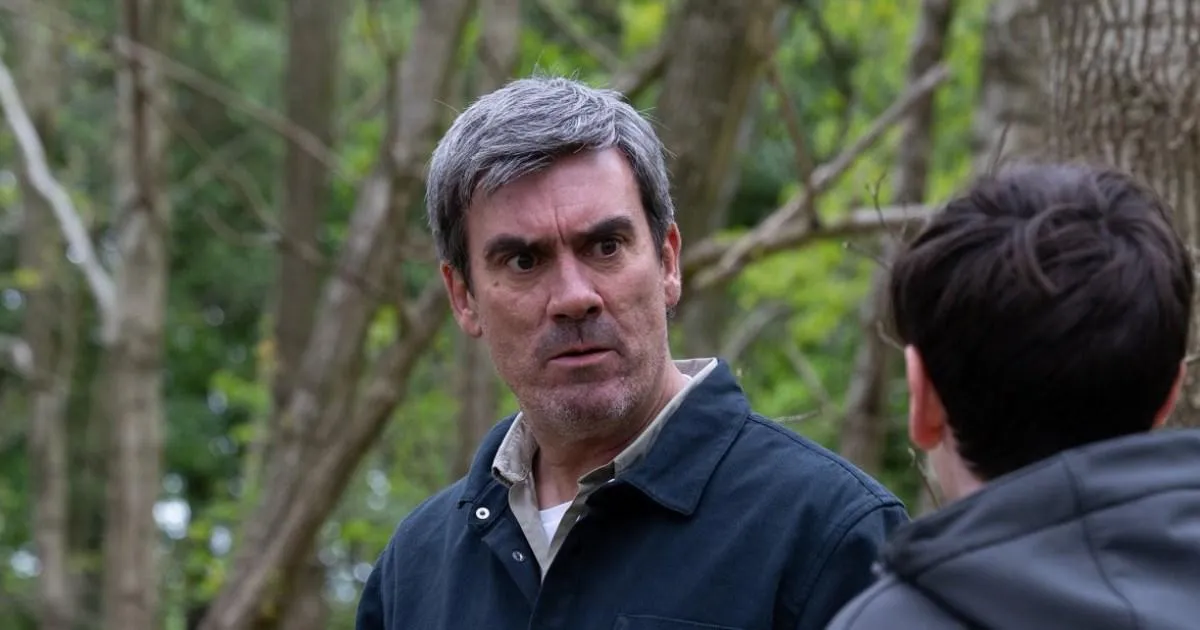
Cain argues with Kyle in the woods in Emmerdale
Cain storms off after an argument with Kyle (Picture: ITV)

Moira tries the softly, softly approach with Cain, clocking that his expectations of saving the dog’s life are way off. But Cain listens to no one until an expert tells him Monty’s tumours are inoperable.

This is crushing news for Cain who can’t process it. In a bid to shake off his own thoughts, he takes Kyle camping as a distraction. But Kyle doesn’t want to be alone with his dad and invites an unwanted guest along – Graham (Andrew Scarborough).

Advertisement

Cain, unable to contain his own ego, loses his temper and storms off, and thus begins a series of unfortunate, nay, life-threatening, events.

As it gets dark, moody Cain loses his footing and suddenly plunges down a hill where he becomes trapped by his leg. Now it’s not just the cancer that might kill him. Will he be found alive?

Advertisement

Source link

Continue Reading

NewsBeat

Readers reaction as England knocked out of FIFA World Cup

Published

on

Readers reaction as England knocked out of FIFA World Cup

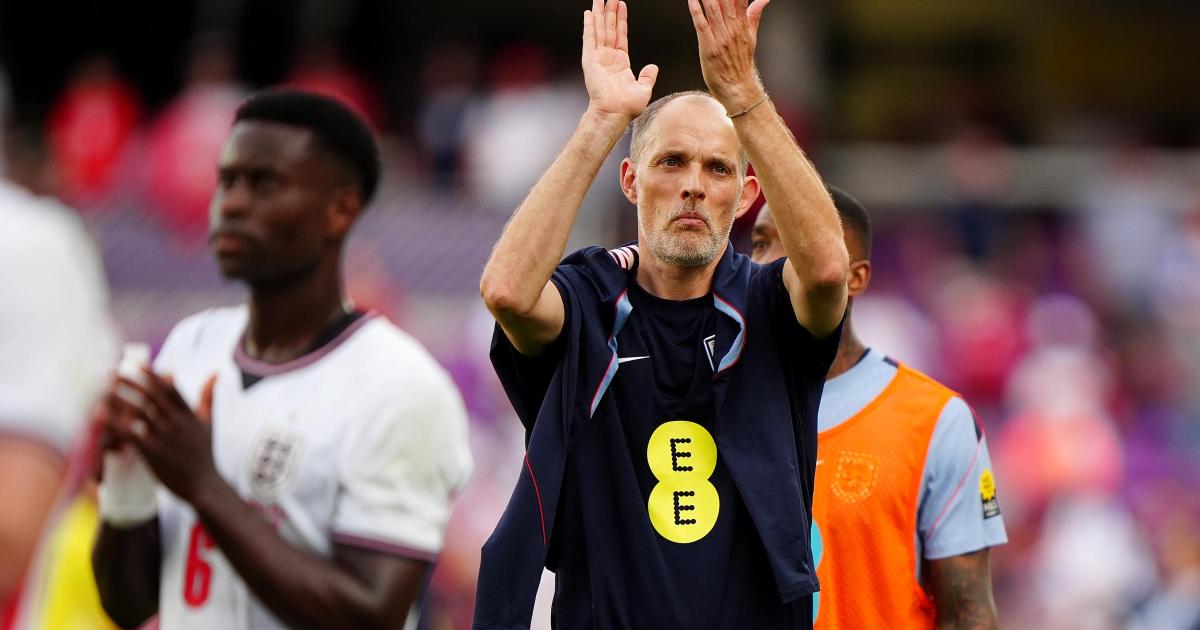
Thomas Tuchel’s side appeared to be on course for a place in Sunday’s final when Anthony Gordon gave England the lead midway through the second half.

But Argentina mounted a late comeback, with Enzo Fernandez levelling five minutes from time before Lautaro Martinez headed home the winner in stoppage time from a Lionel Messi assist.

The result means Argentina will face Spain in the World Cup final, while England must now prepare for a third-place play-off against France.

Advertisement

After a fiercely contested first half, England looked to have gained the upper hand when Gordon converted from close range following good work down the right wing.

However, rather than building on their advantage, England gradually retreated deeper into their own half as Argentina increased the pressure.

Fernandez’s stunning strike brought Argentina level before Martinez completed the turnaround in injury time, leaving England devastated.

The manner of the defeat drew strong reactions from Bolton News readers, many of whom blamed England’s tactical approach after taking the lead.

Advertisement

One reader was particularly critical of the team’s decision to sit back and allow Argentina back into the contest.

“Bowed out with a whimper,” he wrote.

“Got ourselves ahead, then sat deep, giving Messi half a pitch to do whatever he wanted.

“The goals were inevitable.

Advertisement

“All on the manager.”

Another supporter felt the performance followed a familiar pattern for England.

“England played well against Mexico.

“Really, that was the only time they were really good,” he commented.

Advertisement

“Usual tonight – score, and defend the goal rather than killing the game.”

Several readers highlighted what they saw as negative tactics once England moved in front.

“Park the bus and pay the price,” one fan wrote.

“Needed fresh wide men on after our goal.

Advertisement

“You can’t play like that against Messi, it’s not rocket science.”

Another felt the match changed when England began replacing attacking players with defenders.

“We gave the game away,” he said.

“We were competing well until we swapped attacking players for defenders.

Advertisement

“Messi was kept under control until we sat back and he started to run the game.

“His two assists says it all.

“Tuchel must hold his hands up for this one.”

Criticism of England’s style of play also featured heavily among the comments.

Advertisement

One reader simply wrote: “Same old, same old, this obsession with passing back to the goalie!”

Football analysts have similarly pointed to England’s increasingly defensive approach in the closing stages, with Argentina taking control of possession and territory as they searched for an equaliser.

Although many supporters were disappointed with the result, not all the reaction was critical.

One reader praised the team’s efforts throughout the tournament despite the painful ending.

Advertisement

“Well, the team gave it their all, and it’s heartbreaking to see them bow out,” he wrote.

“They had a great run and showed incredible spirit.”

Another chose to focus on England’s conduct during a fiercely competitive encounter.

“At least England played fair, that’s all I’m going to say,” she commented.

Advertisement

Despite leading with only minutes remaining, England were unable to withstand Argentina’s late surge, with Messi once again proving the difference as he created both goals.

For many supporters, the defeat will be especially difficult to take given how close England came to reaching the final.

The reaction from Bolton News readers suggests there is admiration for the players’ efforts over the course of the tournament, but significant frustration at the tactical decisions made after Gordon’s goal.

England still have the chance to end their campaign with a victory over France in the third-place play-off, but their World Cup dream has slipped away once again.

Advertisement

For fans, the debate over whether England were too cautious when it mattered most is likely to continue long after the final whistle in Atlanta.

Source link

Advertisement
Continue Reading

NewsBeat

Wheldrake Parish Council anger over road safety measure plan

Published

on

Wheldrake Parish Council anger over road safety measure plan

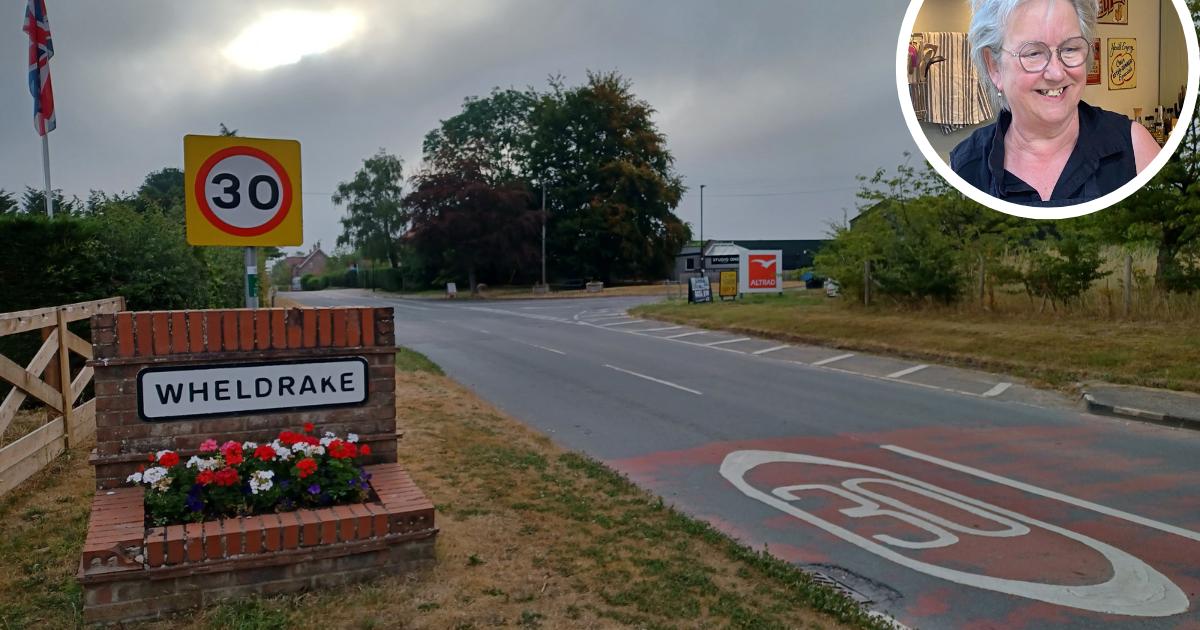
Wheldrake Parish Council said it has spent more than 18 months waiting for vehicle-activated speed (VAS) road signs to be installed at the village’s entrances, after an agreement in principle was reached with City of York Council over where they could be put.

The Parish Council claimed the delays are at odds with parishes in neighbouring North Yorkshire Council, saying that once siting of signs is approved – usually withing three to four months – the local parish council can obtain the signs from manufacturers directly and get them installed.


Recommended reading:


The news comes at the same time as the two-year anniversary of a Community Speed Watch (CSW) programme in the village, which Wheldrake Parish Council said was operated under the guidance of North Yorkshire Police.

Advertisement

A City of York Council spokesperson said no additional highways measures were recommended at the time of the launch of the CSW and funding has been secured for two signs to be installed in this financial year.

The parish council said since July 2024, there have been 55 CSW sessions monitoring 4,915 vehicles, with 125 drivers logged as speeding.

The road entrance to the village of Wheldrake outside YorkThe parish council chair said it had an agreement in principle with City of York Council to site the VAR road signs at either end of Wheldrake (Image: Kevin Glenton)

Eight CSW sites are approved in the village, with Church Lane—approaching from Thorganby—recording the most speeding vehicles.

Sue Nelson, chair of Wheldrake Parish Council, said: “The lack of progress is infuriating, especially as 139 new homes are being built in the village, a scheme we supported as part of the parish’s contribution to the City of York’s need for more housing stock.

Advertisement

“This is obviously increasing the amount of traffic using the village, which is a busy route at the best of times.”

The parish councillors have offered to fund the signs in a bid to speed up the process but said City of York Council insists on handling procurement and installation itself.

Garry Taylor, director of city development at the city council, said: “We work closely with North Yorkshire Police to investigate concerns about speeding and identify the most appropriate response.

“Following concerns raised by Wheldrake Parish Council, North Yorkshire Police assessed the issue and supported the introduction of Community Speed Watch.

Advertisement

“No additional highway measures were recommended at that time.”

The parish council has requested alternative measures including angled gates and chicanes, but both were declined.

Ms Nelson said: “We’ve been told the only speed reduction tool we can have is the VAS signs, but after nearly two years of waiting where are they?

“We’re sick and tired of being fobbed off, especially as we’ve been trying hard to do our bit to reduce speed in the village.”

Advertisement

Mr Taylor said: “We can confirm that funding from the York and North Yorkshire Combined Authority’s Mayoral Transport Fund has been secured to install two signs in Wheldrake as part of a wider programme across the city during 2026/27.

“As the highway authority, we are responsible for procuring, installing, and maintaining traffic signs and equipment.

“This ensures installations are safe, meet required standards and are managed consistently across the city.”

Advertisement

Source link

Continue Reading

NewsBeat

Rory McIlroy rues ‘stupid mistakes’ at The Open but sees reason for optimism

Published

on

Belfast Live

Northern Ireland’s Rory McIlroy was left frustrated after ‘stupid mistakes’ and a poor putting display left him seven shots off the pace

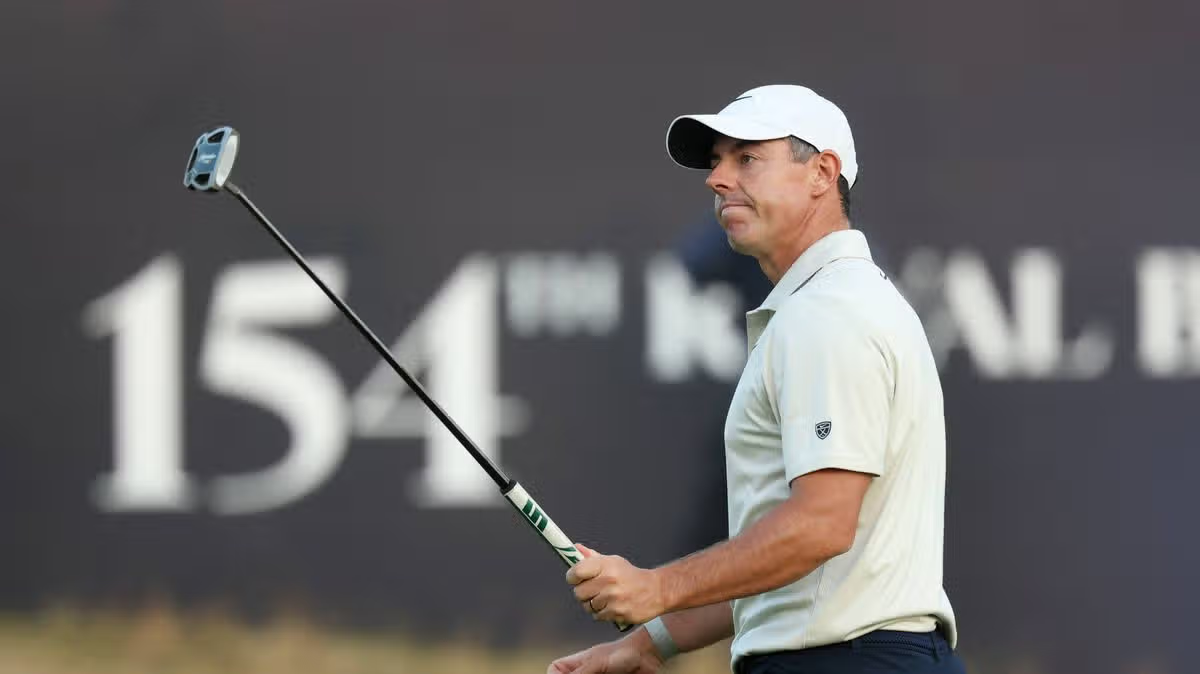
Rory McIlroy remains optimistic about mounting a challenge at the Open Championship despite opening his campaign at Royal Birkdale with a disappointing two-over-par 72.

The Masters champion struggled with his putter on the Southport links, squandering multiple chances and recording six bogeys throughout his round.

He salvaged some ground with four birdies, including one at the 18th, and having battled the toughest conditions of the opening day before completing his round at 8.43pm, is convinced he can recover.

Advertisement

The world number two, who sits seven shots behind surprise leader Jackson Suber, said: “There were just too many stupid mistakes – but every time I made a stupid mistake, thankfully I made a birdie to sort of keep myself in it.

“I’m not too far away. If you look at the discrepancy between the scoring this morning and the scoring this afternoon, it looks like that’s going to be flipped tomorrow with the conditions again.

“Hopefully I can take advantage of the more benign conditions in the morning and shoot one under par and get back in it.”

McIlroy’s putting woes saw him miss three attempts from inside four feet, leaving him languishing in 104th place in the putting statistics.

Advertisement

His struggles reached a low point at the par-five 17th, where after hooking his approach into the gallery and then flying the green into a bunker, he twisted his body awkwardly to splash out to eight feet – only to miss the putt for a bogey.

At least he ended on an upbeat note with a superb approach from 198 yards to five feet, finally converting a short birdie putt. He said: “I left one from pretty much tap-in range on nine to make a birdie. I missed three four-footers in the space of four holes and that’s tough.

“But I’m not going to go back to the house and analyse it too much. I’ll focus on the positives, which were I took it on off the tee and drove the ball very, very well, hit some really good shots, played the hard holes well.”

McIlroy faces a significant challenge to overturn recent historical trends and capture a second Open crown and seventh major championship in total, which would officially make him the most successful European golfer of all time.

Advertisement

While he did mount a remarkable comeback to win last year’s Masters from seven shots back, each of the previous 26 Open champions have been positioned within five shots of the lead following the opening round. The last competitor to overcome a larger deficit was Mark O’Meara in 1998, notably at Birkdale.

McIlroy stood at two over through seven holes, having failed to get up and down at the par-three fourth and two-putted from inside four feet at the short but tricky seventh.

He squandered a three-footer at the following hole – on this occasion for birdie – but eventually registered one after driving the green at the downwind 415-yard ninth, making the turn at one over.

Consecutive bogeys at the beginning of his inward nine stalled any progress before a 24-footer dropped at the 13th for his second birdie of the round.

Advertisement

He struggled badly on both par-fives – despite holing a 12ft birdie at the 206-yard 15th – but managed to salvage something towards the finish.

Sign up to our free sports newsletter to get the latest headlines to your inbox

Source link

Advertisement
Continue Reading

NewsBeat

Enzo Fernandez brutally mocks England with cheeky social media post after Argentina inflicted World Cup semi-final heartbreak on Three Lions

Published

on

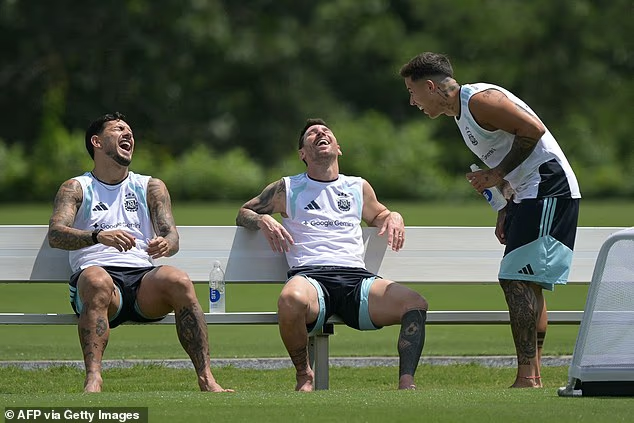
Enzo Fernandez shared a post featuring this picture on Instagram, accompanied by the Oasis song Wonderwall

Advertisement

Enzo Fernandez has risked further upsetting England fans after appearing to troll the Three Lions following Argentina’s victory in the semi-finals of the World Cup.

The Chelsea midfielder could be in for a hostile reception from opposition supporters next season – should he remain at Stamford Bridge – for his antics after the world champions took a step closer to retaining their title with a 2-1 win in Atlanta on Wednesday.

And Fernandez on Thursday shared a post on Instagram which featured a picture of him alongside Lionel Messi and Leandro Paredes.

It will not be lost on England fans that the post was accompanied by the Oasis hit Wonderwall, which became the soundtrack to the Three Lions’ World Cup campaign.

Advertisement

Harry Kane and Co gathered on the pitch to sing the iconic song in front of England fans throughout the tournament in north America.

Fernandez later reshared the post without any mention of Wonderwall.

Enzo Fernandez shared a post featuring this picture on Instagram, accompanied by the Oasis song Wonderwall

Advertisement
The hit had become the soundtrack of England's World Cup campaign in north America

The hit had become the soundtrack of England’s World Cup campaign in north America

The 25-year-old fired Argentina level after 85 minutes on Wednesday night, and immediately raced over to stand in front of England fans, cupped his hands behind his ears and stuck out his tongue, then blew a kiss.

Chelsea were later forced to delete a post on X which celebrated wantaway star Fernandez’s equaliser amid fan fury.

The Blues’ social media account shared a photo of Fernandez’s celebration after his equaliser, with the caption ‘Enzo Fernandez’ and an explosion emoji. 

Advertisement

The Premier League side received an instant backlash from England supporters over the post.

‘Seriously. We’re an English football club. Poor from my club. Poor,’ one fan wrote.

‘Why the f*** are you posting this as an English club when he scored against England,’ another said.

‘The absolute cheek of an English football club to tweet this. Grim,’ a third said.

Advertisement

‘Once again just proving how very out of touch you lot are these days….. Sure your club captain will enjoy seeing this post,’ wrote another.

One fan referenced how Fernandez has flirted with a move away from Chelsea in their criticism of the club’s post.

‘Read the room, disgusting. Especially when that player would spit at us at any opportunity,’ the fan wrote.

Chelsea, following a wave of comments from furious supporters, ultimately deleted the post.

Advertisement

Fernandez’s club future has been the subject of speculation, after he revealed his desire to live in Spain one day, amid links to Real Madrid.

The midfielder’s comments led to him being given an internal two-match ban by Chelsea back in April.

New Chelsea boss Xabi Alonso stated this week that he wants the vice-captain to remain at the club next season after Real Madrid made a remarkable statement insisting they were not interested in the player.

How much is David Beckham set to pocket from his World Cup brand deals? Take on our quiz in our newsletter HERE. 

Advertisement

Advertisement

Source link

Continue Reading

NewsBeat

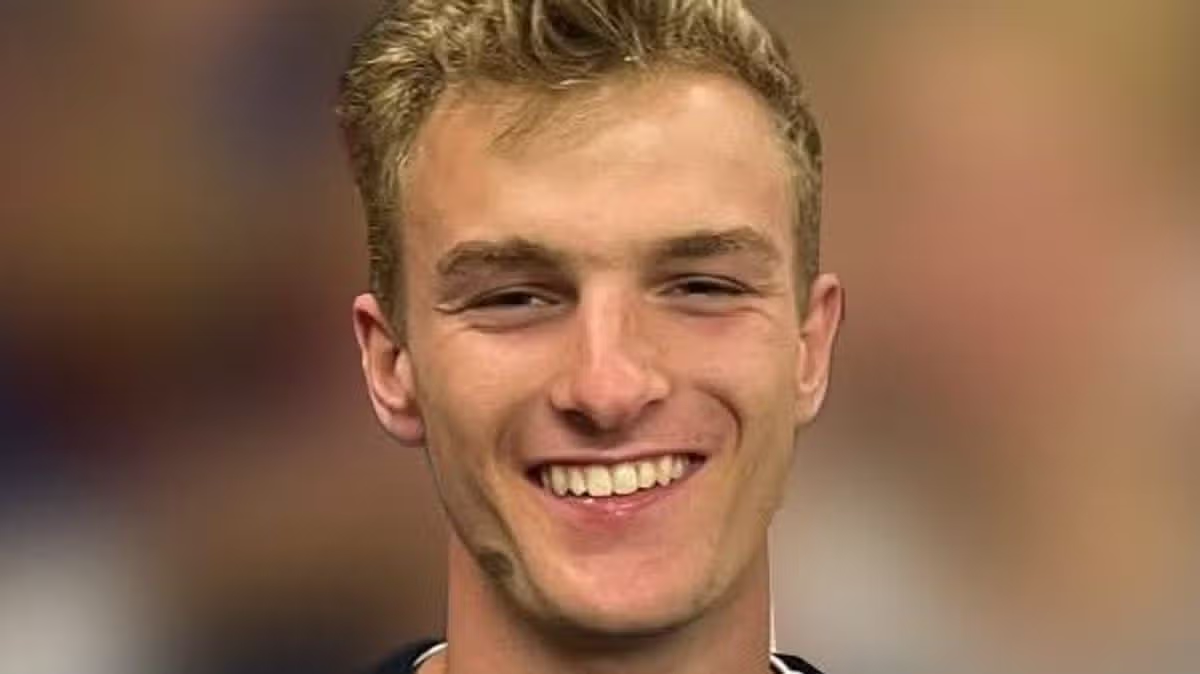
Tributes paid to ‘much-loved kayaker’ presumed dead after capsize

Published

on

Cambridgeshire Live

Another man was rescued by the Coastguard after he managed to make his way to a buoy

The heartbroken family of a 19-year-old kayaker who is missing presumed dead have paid tribute to the “much-loved son, brother, grandson, nephew, team-mate and friend”.

Michael Henry, from Rothbury in Northumberland, was one of two men who were on a kayak near Boulmer when it capsized on the evening of July 7, Northumbria Police said. The other man managed to make it to a buoy and was rescued by the coastguard.

Advertisement

Extensive searches for Michael were conducted in the sea following the capize. But Northumbria Police confirmed on Wednesday that they had concluded their operation, believing the teenager has died.

In a statement, Michael’s family said: “We would like to thank everyone for all their love, kindness and support now and throughout Michael’s life; it was that love and kindness that made him the marvellous person he was.

“Michael was a much-loved son, brother, grandson, nephew, team-mate and friend; a keen sportsman who loved the outdoors. Michael was preparing to go travelling this summer and hoping to start university next academic year.

“Michael will be forever in our thoughts, and we will miss him. Our thanks go to the emergency services and everyone who is helping to search for Michael.”

Advertisement

Chief Inspector Jon Caisley says officer combed both the sea and coastline before deciding that Michael most likely died at sea. He said: “This is a tragic update to share, and I would like to extend our deepest sympathies to Michael’s family and friends.

“Despite extensive searches at sea and on the coast, we have been unable to find Michael and he is sadly believed to have died at sea. We know the impact this news will have upon his loved ones and the wider community.”

Mr Caisley added: “I would also like to thank all of our officers and partners for their assistance in the search efforts to find Michael. “We would continue to ask that people respect the family’s privacy at this time.”

Source link

Advertisement
Continue Reading

NewsBeat

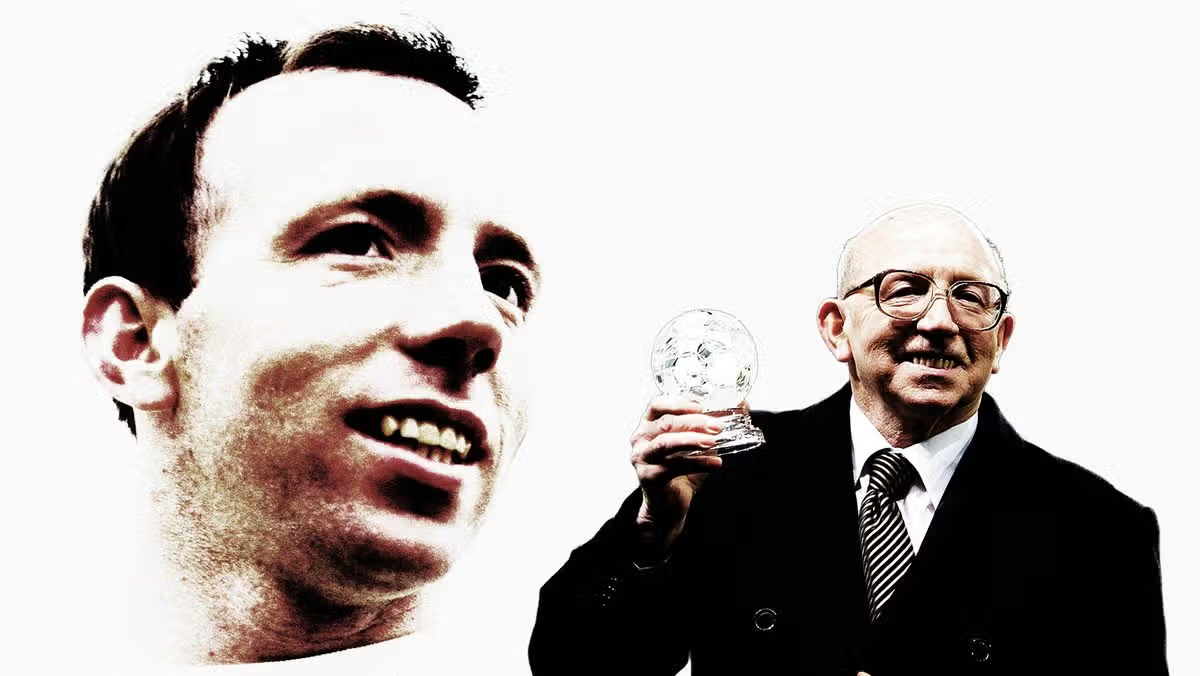
He was a 1966 World Cup hero, then the game Nobby Stiles loved ‘abandoned’ him

Published

on

Manchester Evening News

He was an integral part of English football’s finest hour.

A humble-lad from Collyhurst, he played every minute of the Three Lions 1966 World Cup-winning campaign, with his celebratory jig on the Wembley turf following the final against West Germany becoming the stuff of legend.

The boyhood Manchester United fan also helped his beloved Reds win the European Cup two years later, during more than a decade of dedicated service to the club, joining just a small and elite group of English players to win both trophies.

Click here to get the biggest stories straight to your inbox in our Daily Newsletter

Advertisement

Yet as Nobby Stiles’ health began to deteriorate and he began to lose his faculties, his family claim he was ‘abandoned’ by the game he so dearly loved, despite it ‘rolling in cash.’

That was even more heartbreaking for his loved ones who always suspected that his dementia was at least in part the result of his career and how often he was required to head the ball.

Yesterday (July 16), a brain expert and a coroner both vindicated that view. Following an inquest into Nobby’s death, where she received evidence from a renowned neuropathologist, Senior coroner Alison Mutch said that as well as Alzheimer’s disease, the former footballer had a degenerative brain condition called chronic traumatic encephalopathy (CTE) which is caused by repeated impacts to the head.

Ms Mutch concluded the CTE had ‘significantly contributed’ to his death and that she was ‘entirely satisfied’ that the reason he developed the condition was ‘repeated heading of the ball.’

Nobby’s son John Stiles told the hearing that his dad even a ‘very conservative’ estimate his dad would have headed a ball 40 times a day, five days a week, each ten month season across a 17-year career, which meant he could have headed the ball more than 136,000 times.

He said his father was in his 50s when the family first started noticing he was ‘forgetting things’ and that things got gradually ‘worse and worse’ He said there was a ‘feeling of doom’ in the family and that in 2010 Nobby decided to sell his medals as he ‘didn’t know what was coming but knew something was coming’ and wanted a pot to pay for his care.

His World Cup winning medal was bought by Manchester United’s club museum for £160,000. His 1968 European Cup winners’ medal sold for £49,402, with a total of 45 items of memorabilia selling for £424,438.

Nobby, who lived in Stretford, eventually moved into a care home in nearby Urmston, where tragically died on October 30, 2020.

The inquest heard that at the time of his death he was ‘severely disabled through dementia’ including being ‘bed bound, immobile and mute.’

Advertisement

Ms Mutch said: “For a man who graced the pitches of some of the world’s greatest football grounds, it is difficult to imagine a sadder way to end their life.”

John Stiles alerted the coroner after examination of Nobby’s brain by renowned brain expert Dr Willie Stewart identified the presence of CTE. The coroner instructed another examination by esteemed neuropathologist Dr Daniel Du Plessis.

He told the inquest: “”I’m quite convinced his heading the football that many times has caused his CTE.”

Advertisement

Adding: “This is a very complicated issue and it is important to use such a death to highlight – that we do now know repeated head injuries have an impact on the brain.”

Speaking afterwards, John Stiles said he predicted an ‘epidemic’ of similar cases as he said thousands of players such as his dad, had been ‘abandoned.’

Mr Stiles is now head of the Football Families for Justice (FFJ) group which is calling on the football authorities to do more for ex-players. He is among dozens of former footballers and their families suing the Football Association, the Football Association of Wales and the English Football League over claims they were “negligent and in breach of their duty of care” to the former players.

Lawyers for the former players and their families have previously said football bodies knew or should have known that repeatedly heading a ball in training and during matches was likely to cause brain injuries, and that the risks were known for decades.

In March this year lawyers for the FA told the High Court it has ‘not been established by science’ that heading a ball or ‘occasional’ concussion can lead to permanent brain damage.

In January an inquest into the death of Gordon McQueen, 70, an ex-Scotland, Manchester United and Leeds United defender, found that heading the ball was ‘likely’ to have contributed to a brain injury which was a factor in his death.

McQueen was also diagnosed with CTE. McQueen’s TV presenter daughter Hayley McQueen said England’s 1966 World Cup-winning team had now been “pretty much wiped out” by neurodegenerative disease.

Advertisement

And following his father’s inquest, John Stiles said more needed to be done to help those affected by the issue.

“I think this will among the first few of thousands of such inquests of players who have incurred brain disease” he said. “The football industry refused to provide help to these players and their families and the government refuses to intervene.

“Tragically the brain injuries epidemic will grow more and more as so many more girls play football. Women’s brains are even more suspectable to damage from heading. The industry and government have failed to implement a strategy of prevention. Today’s players incur the same, fatal brain injuries.

Advertisement

‘It is a shame and a scandal that the industry and government have failed to support these vulnerable people’

“As we rightly celebrate the football heroes of today, 60 years after the heroics of 1966, it is right to remember people like dad, and the thousands of others, abandoned by a industry ‘rolling in cash.’

“It is a shame and a scandal that the industry and the government have failed to support these vulnerable people.”

He said the Professional Footballers’ Association (PFA), the trade union which ‘was supposed to be protect the players and which they paid their subs to’ had been ‘nowhere to be seen.’

He dubbed the £1 million fund the PFA launched with the Premier League in 2023 to ‘assist former players, and their families, who have been impacted by dementia and other neurodegenerative conditions’ as being ‘pathetic.’

Advertisement

“It is not adequate” he said. “It’s a PR stunt. We desperately need a proper fund that will take care of players, in particular when they need care home costs.”

He also said there needed to be better education for players on the risks. “Everyone needs to be aware of CTE” he said. ”We have got an epidemic here. If you head the ball thousands of times, you will get CTE more likely than not. This disease is everywhere but there is still massive ignorance about.”

“We have to do something about it, drastically,” he continued. “We don’t want to stop people heading the ball. But youngsters now are not informed about the risks. If someone is informed, then they can make a proper decision. But football has not addressed this.”

Advertisement

Mr Stiles, himself a former footballer who played for Leeds United, Doncaster Rovers and Rochdale amongst other clubs, said his enjoyment of the game had ‘soured a long time ago’ “Every week I talk to families who are going through the same thing my family went through” he said as he said the coroner’s findings had given him ‘some comfort.’

Ms Mutch said she planned to write to the FA and also to the Department of Education about heading in school PE lessons.

The FA co-funded with the Professional Footballers’ Association a 2019 study that found footballers were three-and-a-half times more likely to die of neurodegenerative disease than age-matched members of the general population. The governing body is phasing out all heading in youth football up to under-11s by 2026.

Advertisement

An FA spokesperson told the Manchester Evening News: “Nobby Stiles was one of English football’s most influential players and he was a key member of our 1966 World Cup-winning team.

“His contribution to both our national and domestic game helped to shape one of the most significant eras in English football history, and we were deeply saddened by his passing in 2020.

“While the link between heading in football and long-term brain health remains the subject of ongoing scientific and medical research, we have consistently been at the forefront of efforts to help improve the safety of our game.

We have led the way in this area to proactively review and strengthen player welfare across every level of English football, working closely with our domestic and international stakeholders.

Advertisement

“We were the first governing body to introduce comprehensive heading guidelines across both professional and grassroots football, and we continue to review and enhance our game-wide concussion protocols in line with worldwide best practice.

“We have also invested in and actively supported multiple independent research projects, often resulting in groundbreaking and valuable insight, in order to gain a greater understanding of this complex area through objective, robust and thorough analysis.”

Source link

Advertisement
Continue Reading

NewsBeat

Trump demands TV networks lose licenses after refusing to air speech | News

Published

on

Video Player Placeholder

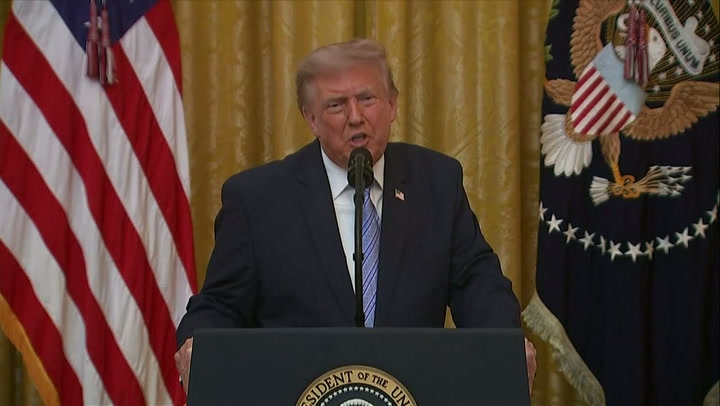
President Donald Trump said American television networks that didn’t air a speech he gave on 16 July night should lose their licences.

Speaking during his address to the nation, which focused on election security, Trump also said that TV networks that did not air his speech were engaged in a “plot”.

“They and others in the media are part of a plot. They want to continue this fraud for whatever reason,” he said. “Fraud like this should mean a revocation of their licences”.

Two of the three major US television networks, NBC and ABC, as well as CNN did not broadcast the primetime address by Trump on their primary platforms, risking the ire of the administration.

Advertisement

Networks enjoy broad First Amendment rights to decide what to broadcast, experts say. Historically, though, broadcasters carried most such speeches on the grounds that they provided information of public importance.

Source link

Continue Reading

NewsBeat

Police confirm security alert and evacuations underway in North Belfast

Published

on

Belfast Live

Related closures will cause significant traffic disruption to the Cliftonville Road area moving into the morning, the PSNI has warned

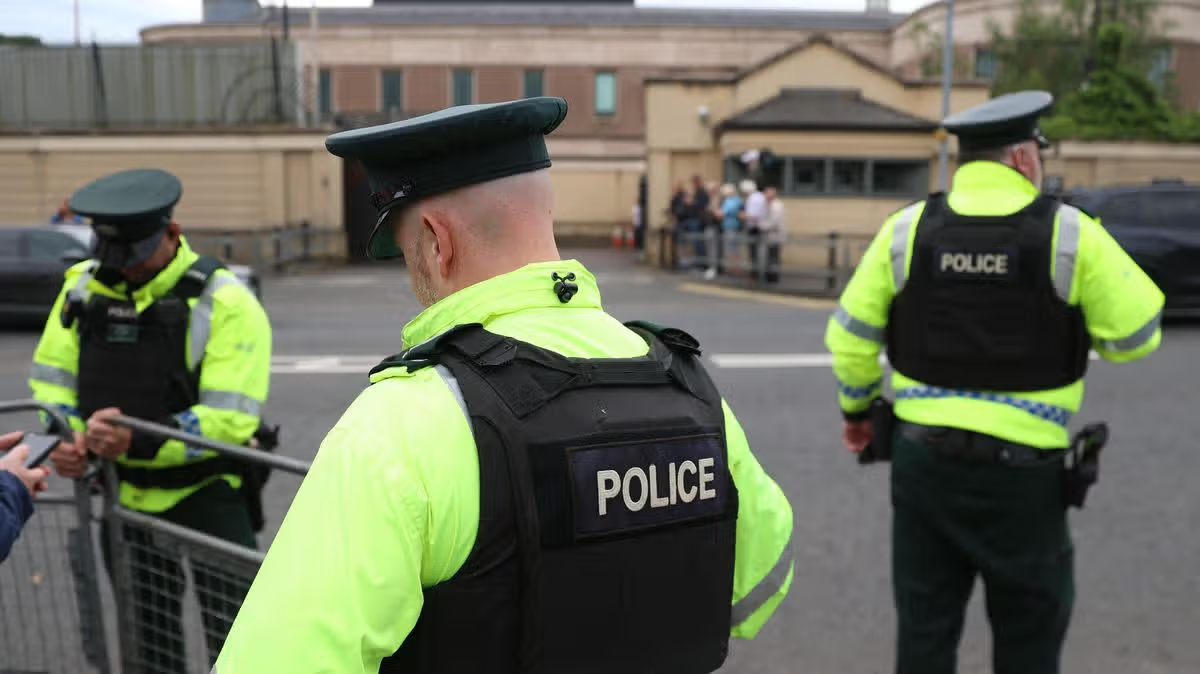
Police are at the scene of a security alert in North Belfast, following the search of a property during the early hours of Friday (July 17) morning, the PSNI has confirmed. Properties located in Rosapenna Parade and the surrounding areas are in the midst of being evacuated, with the Ardoyne Community Centre opened for local residents as a rest shelter as this situation continues to unfold. A PSNI spokesperson said: “Cordons are also in place, and we would ask that the public avoid the Rosapenna Street and Cliftonville Road areas at this time, as officers remain at the scene, with enquiries set to continue for some time. “In particular, it is anticipated that there will be significant traffic disruption to the Cliftonville Road area as we move into the morning, so we would ask that you please seek an alternative route for your journey.” The PSNI spokesperson said whilst police understand the disruption closures such as this can cause, “public safety is always our priority”.

Source link

Advertisement
Continue Reading

NewsBeat

Horoscope today: Your daily guide for Friday, July 17, 2026

Published

on

Horoscope today: Your daily guide for Sunday, April 5, 2026

Aries 0904 470 1141 (65p per minute)*

Taurus 0904 470 1142 (65p per minute)*

Gemini 0904 470 1143 (65p per minute)*

Advertisement

Cancer 0904 470 1144 (65p per minute)*

Leo 0904 470 1145 (65p per minute)*

Virgo 0904 470 1146 (65p per minute)*

Libra 0904 470 1147 (65p per minute)*

Advertisement

Scorpio 0904 470 1148 (65p per minute)*

Sagittarius 0904 470 1149 (65p per minute)*

Capricorn 0904 470 1150 (65p per minute)*

Aquarius 0904 470 1151 (65p per minute)*

Advertisement

Pisces 0904 470 1152 (65p per minute)*

*Astro line horoscopes are updated every Thursday. Calls cost 65p per minute plus your telephone company’s network access charge and will last approximately five minutes. You must be over 18 and have the bill payer’s permission. Service provided by Spoke. Customer service: 0333 202 3390

Source link

Advertisement
Continue Reading

Trending

Copyright © 2025