Shares of Polycab India fell 4% to an intraday low of Rs 8,888 on the BSE on Friday, despite the company reporting its highest-ever first-quarter performance. The stock declined from its previous close of Rs 9,216, even as net profit surged 33% year-on-year (YoY) to Rs 797 crore.
On Thursday, the company reported a 39% YoY rise in consolidated revenue to Rs 8,210 crore for the quarter ended June 30, 2026. The strong performance was driven by robust growth in its Wires & Cables (W&C) business and continued momentum in the Fast-Moving Electrical Goods (FMEG) segment.
EBITDA rose 32% YoY to Rs 1,136 crore, driven by improved operational efficiency and a favourable business mix. The EBITDA margin stood at 13.8%, while the net profit margin came in at 9.7%.
Advertisement
The FMEG business posted 71% YoY revenue growth across all product categories, with solar products remaining the largest segment and more than doubling from a year ago. Segment EBIT margin expanded to 8%, aided by operating leverage and a richer product mix, in line with the company’s Project Spring target of 8-10% EBITDA margins by FY30.
Live Events
The Wires & Cables (W&C) business, Polycab’s largest segment, reported 39% YoY revenue growth, led by a 43% rise in domestic sales on the back of healthy demand and strong execution under Project Spring. While the wires business outpaced cables, international revenue declined 13% YoY. The company, however, said its diversified global footprint and healthy order book provide strong growth visibility. The EPC business saw revenue decline 11% YoY due to project execution timing but maintained an 11% EBIT margin, supported by a healthy order backlog and strong execution pipeline.”We have entered FY27 with strong momentum, achieving our highest-ever first-quarter revenue and profit performance,” Chairman and Managing Director Inder T. Jaisinghani said, adding that government infrastructure spending, capacity expansion, innovation, and distribution network growth will support long-term growth.
In the past six months, the stock has gained 25.12%, while it is up 16.29% so far in the current calendar year. Over the last three and five years, it has delivered returns of 128% and 361%, respectively.
(Disclaimer: Recommendations, suggestions, views and opinions given by the experts are their own. These do not represent the views of The Economic Times)
Andy Burnham has been warned to rule out a wealth tax before he even reaches Downing Street, with one of the world’s largest independent financial advisory firms claiming that speculation alone is already driving capital, and the entrepreneurs who deploy it, out of Britain.
The warning from Nigel Green, chief executive of deVere Group, follows an interview in which Burnham, who replaces Sir Keir Starmer as Prime Minister on Monday, declined to rule out a levy on the assets of Britain’s wealthiest citizens. Speaking to Gary Lineker’s podcast, the incoming PM suggested people may eventually be asked for “a little more” and said fairness demanded difficult decisions ahead.
For business owners, the concern is less the tax itself than the uncertainty. “A wealth tax that has not been proposed is already doing damage,” Green said. “Money does not sit around waiting for legislation. It moves the moment a government signals it is willing to go there, and Mr Burnham just signalled it.
“He needs to put this to rest today, not let it hang over Britain for months while capital quietly heads for the door.”
The timing is awkward for a new administration promising stability. The UK lost an estimated 16,500 millionaires in 2025, one of the largest single-year outflows recorded anywhere in the world, and industry forecasts suggest that figure could double again in 2026 as the effects of the abolition of the non-dom regime continue to ripple through. Analysts had already warned that Britain faced the largest exodus of millionaires globally before the leadership change, and more recent research suggests the non-dom exodus is running far worse than forecast, putting billions in expected tax receipts at risk.
Advertisement
The competition is not standing still. The UAE, Switzerland and Italy have all positioned themselves as beneficiaries of Britain’s loss, actively courting the capital and talent that London once took for granted.
Green argues the precedents are not encouraging. “History has run this experiment more than once, and the result never changes,” he said. “France tried it and watched tens of thousands of its wealthiest residents leave before scrapping the policy. Sweden tried it and lost entrepreneurs and headquarters it never got back.
“Wealth is mobile in a way wages are not, and every government that has taxed it hard has ended up chasing capital that has already gone.”
The economic maths, he contends, rarely works as proponents assume. “A wealth tax reads well on a policy paper and collapses on contact with reality. Tax accumulated assets and the people holding them start planning their exit immediately. What follows is not new revenue for the Treasury. It’s a shrinking base of investment, jobs and philanthropy, all disproportionately reliant on the very people this tax would target.”
Advertisement
For the SME community, the second-order effects may matter most. Departing wealth takes with it the angel investment, family office backing and consumer spending that smaller firms depend on, and Green says the damage is already underway.
“Family offices are having relocation conversations this week that would not have happened a year ago. Entrepreneurs are asking advisers whether Britain is still worth building in. None of that needs a wealth tax to pass. It only needs the idea to stay alive.”
His conclusion is blunt: “Andy Burnham has a choice in his very first weeks as Prime Minister. Rule out a wealth tax now, or watch Britain’s record wealth exodus become his opening legacy.
“There’s no version of this where keeping the door open on a wealth tax helps Britain compete for capital. Every day it stays open, more of that capital walks through it.”
Advertisement
Jamie Young
Jamie Young is Senior Reporter at Business Matters, covering SME finance, employment law and Westminster policy since 2016. He has reported on every Budget and Autumn Statement since 2018, helped make sense of the ‘covid era’ and the bounce-back loan scheme from launch through the fraud investigations, and broke the magazine’s coverage of the 2024 late-payment reforms. He joined Business Matters straight from completing his BA in Administration from Exeter University and is NCTJ-qualified. Reach him at jyoung@cbmeg.co.uk
Yorkshire and North East sites are among those that have closed
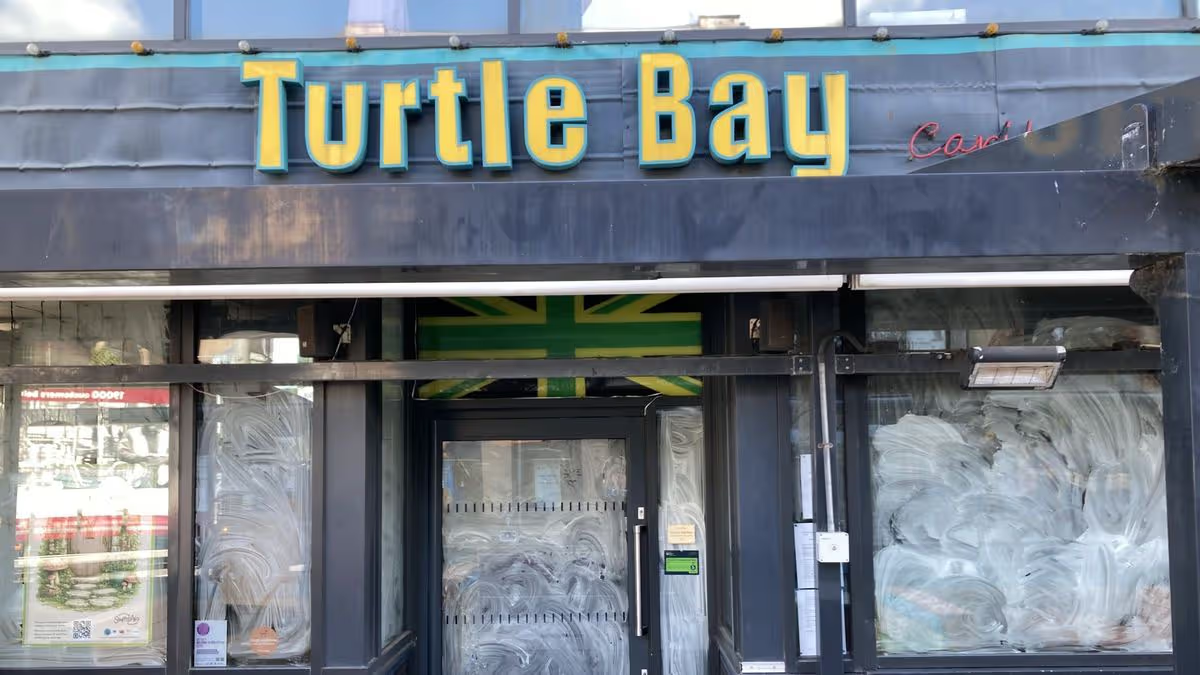
Turtle Bay in Middlesbrough which has now closed(Image: Teesside Live)
Caribbean restaurant chain Turtle Bay has closed four sites and shed 76 jobs amid a restructuring.
Locations in Yorkshire and the North East are among those impacted following creditor approval for a Company Voluntary Agreement in the face of “significant economic headwinds”. Turnaround consultants at Interpath have been advising the Bristol-based company as it grappled with challenges seen across the hospitality market including rising costs, reduced consumer spending, and changing footfall patterns.
The majority of the chain’s 48 restaurants are unaffected though sites in York, Middlesbrough, Solihull and Walthamstow have already closed. The CVA has altered terms at 15 Turtle Bay sites which continue to trade as normal.
Ajith Jayawickrema, founder and CEO of Turtle Bay, said: “Securing approval for our CVA proposals provides us with a stable platform for the long-term future of Turtle Bay as we protect the majority of jobs and sites, address challenges in the business, and continue investing in our restaurants. I’d like to thank our landlords and creditors for their support throughout this process, our dedicated teams who have and continue to bring warmth, energy and Caribbean soul to our service and, of course, our loyal customers.
Advertisement
“While we have had to make difficult decisions along the way, we believe that we now have a sustainable business at its core and can look forward with confidence.”
Last year, Mr Jayawickrema bought back a stake in Turtle Bay from private equity firm Piper. Most recent accounts to the end of March 2025 show headwinds had caused sales to fall 10% to more than £84m but with Mr Jayawichrema saying they were higher than pre-pandemic.
Interpath said the CVA was intended to secure the long-term future of the business and maximise returns for stakeholders, including landlords. The proposals were approved by about 92% of voting creditors.
Gareth Slater, managing director at Interpath Advisory and joint nominee of the CVA, said: “The hospitality industry continues to face significant challenges and so this agreement reflects the support for Turtle Bay’s offering and the impact of the leadership team’s engagement with stakeholders to find a sustainable solution to its challenges. The CVA proposals have struck a fair comprise for creditors, helping the business right-size its debt obligations, while also providing a firm foundation for Turtle Bay to stabilise and move forward with the vast majority of its sites.”
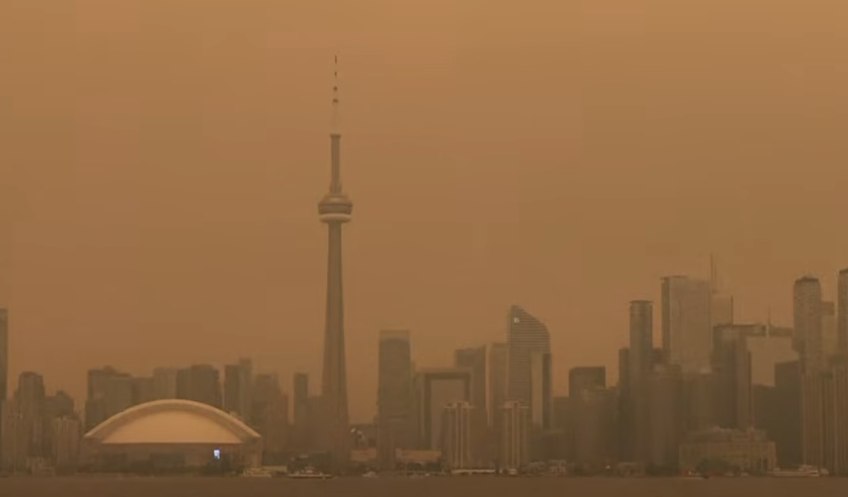
Smoke from hundreds of wildfires burning across Canada and Minnesota is expected to darken skies again Friday, prolonging a stretch of dangerous air quality across the Upper Midwest, Great Lakes and Northeast that has now spilled into a diplomatic dispute between the United States and Canada.
Air quality readings reached extreme levels in parts of the Midwest on Thursday. Toledo, Ohio, recorded an Air Quality Index reading that soared above 800 around 5:30 p.m., far exceeding the standard 0-to-500 scale typically used to measure pollution and well past the threshold of 300 that officially classifies air as hazardous. Milwaukee and Detroit also registered AQI levels above 500 on Thursday, according to AirNow, the government-run monitoring service. By Friday morning, conditions had eased somewhat in several cities but remained severe: Chicago, Detroit and Milwaukee all posted hazardous readings above 300 as of 6:30 a.m., while New York City registered an unhealthy reading of 185, and Philadelphia and Cleveland recorded very unhealthy readings around 260.
Forecasters said an advancing weather system was expected to help clear some of the smoke and stifling heat from parts of the Northeast later Friday. But cities closer to the fires, including Toledo, Detroit and Milwaukee, are likely to continue contending with the acrid smell of smoke and sky-tinting plumes through the weekend, with conditions across the Great Lakes potentially remaining heavy at times, particularly Saturday.
Advertisement
The persistent smoke has ignited a political confrontation between American lawmakers and the Canadian government. Four Republican members of Congress from Michigan sent a letter Wednesday to Canadian Prime Minister Mark Carney, criticizing the country’s management of its forests and warning that the United States would act on its own if Canada did not take additional steps to address the fires. Ohio Republican Sen. Bernie Moreno said he plans to introduce legislation next week aimed at penalizing Canada, describing the situation as “this atrocity.” Michigan state lawmaker Aric Nesbitt escalated the rhetoric further on social media Thursday, invoking annexation language previously used by President Trump and telling Canada to “learn to manage your forests” unless it wanted to “become the 51st state.”
Carney responded to the criticism Thursday, telling reporters in French that fighting climate change is the responsibility of every country, including the United States. He did not directly address the congressional letter, and it remained unclear as of late Thursday whether he had formally received it. Separately, Carney acknowledged the toll the fires have taken domestically, telling reporters during a visit to an armored vehicle factory in London, Ontario, that thousands of Canadians’ lives had been upended by wildfires burning across the country. He noted that Canada’s federal government has limited authority over the wildfire response, since forest management falls primarily under provincial jurisdiction, with Ottawa’s role largely confined to fires on national parks and military land. Carney said the federal government was providing search-and-rescue aircraft through the Royal Canadian Air Force and had deployed helicopters through an intergovernmental firefighting agency, adding that his government stood ready to provide further assistance as needed.
The dispute has drawn attention to the shared, cross-border nature of North American wildfire smoke. U.S. Ambassador to Canada Pete Hoekstra, a Michigan native, struck a more conciliatory tone in a social media post Wednesday, saying the wildfire challenge “knows no borders” and that the U.S. would continue coordinating closely with Canada as it has for more than four decades of shared wildfire emergencies. Notably, the flow of smoke across the border has not run in only one direction. In September 2020, wildfires in California, Oregon and Washington state burned more than 5 million acres and sent thick smoke drifting north into Canada, eroding air quality in cities including Vancouver for weeks. The U.S. National Interagency Fire Center reported Thursday that more than 150 new fires had been reported nationwide the previous day, including six new large fires, with firefighters working to contain more than four dozen large fires burning across the country. A Canadian helicopter pilot, Nicholas Dale, 56, died Sunday in a crash while assisting with wildfire suppression efforts in Colorado, prompting Gov. Jared Polis to call him “a heroic firefighting pilot.”
Much of the current wave of smoke originates from fires burning in northwestern Ontario near Thunder Bay, a city roughly an hour’s drive north of Minnesota, with additional fires burning around Fort Frances, Dryden, Nipigon and Sioux Lookout. Ontario has struggled for years to stay within its wildfire-fighting budget. The province budgeted 135 million Canadian dollars for emergency firefighting in 2025 but ultimately spent more than double that amount, 271 million Canadian dollars, by year’s end. This year’s budget was increased to 150 million Canadian dollars, an amount critics say still falls short of recent actual spending. Ontario Premier Doug Ford defended his government’s firefighting funding Thursday, telling reporters in Windsor that his administration would “not spare an expense, not one single penny” and that firefighting funding had more than doubled since he took office in 2018. Marit Stiles, leader of Ontario’s opposition New Democratic Party, pushed back on that characterization in a video posted to social media, accusing Ford of allowing the province’s wildland firefighting force to shrink over successive years despite warnings from firefighters.
Advertisement
Ontario’s emergency preparedness minister, Jill Dunlop, said Thursday morning that the province had formally asked the federal government to help evacuate 15 remote communities under threat from the fires, including the potential deployment of Canadian soldiers. Provinces have also been leaning on each other for support, with Alberta currently providing 94 firefighters and support workers to assist in Ontario, reversing a similar arrangement from last year when large numbers of Ontario firefighters traveled west to help fight fires in Alberta.
Health officials have urged residents across the affected region to take precautions as the smoke lingers. The Centers for Disease Control and Prevention has said children, pregnant women and people with respiratory conditions such as asthma face the greatest risk, advising these groups to stay indoors, keep windows closed and run air filtration systems where available. Officials have also recommended wearing a mask, ideally an N95 rather than a cloth or surgical mask, when the Air Quality Index climbs above 200, and have urged pet owners to limit their animals’ time outdoors and wipe them down after exposure to reduce lingering pollutants on their fur.
The Thai Cabinet approved updated visa measures for 65 countries, aligning entry facilitation with conditions. Changes include categories for visa exemptions and Visa on Arrival, impacting screening and international relations.
Visa Update Announcement
On 16 July 2026, the Tourism Authority of Thailand (TAT) informed visitors that the Thai Cabinet has approved new visa exemption and Visa on Arrival guidelines. These updates are pending publication in the Royal Gazette and will be effective 15 days post-publication. This move aims to streamline entry processes, enhance screening, reduce overlapping entry categories, and ensure visa privileges meet their intended purposes, replacing the 60-day visa exemption introduced in July 2024.
Entry Category Strategy
The updated approach follows the principle of “one country or territory, one entry category,” with eligibility based on economic factors, security, international relations, and reciprocity. The categories include 30-day visa exemption, 15-day visa exemption, or Visa on Arrival. Sixty-five countries and territories are affected, with 59, including India, becoming eligible for a 30-day visa exemption. This aligns visa treatment across all EU members and supports discussions on Schengen visa exemption for Thai nationals.
Implementation and Monitoring
While the new measures await implementation, existing entry conditions remain. Foreign nationals entering before the changes retain their current stay permissions. Bilateral agreements continue, providing visa exemptions of varying durations. Security agencies will enhance the Thailand Digital Arrival Card (TDAC) system for better screening and verification. Visitors should monitor official updates from the Ministry of Foreign Affairs and embassies for the latest requirements applicable to their nationality. TAT will announce further details once officially published.
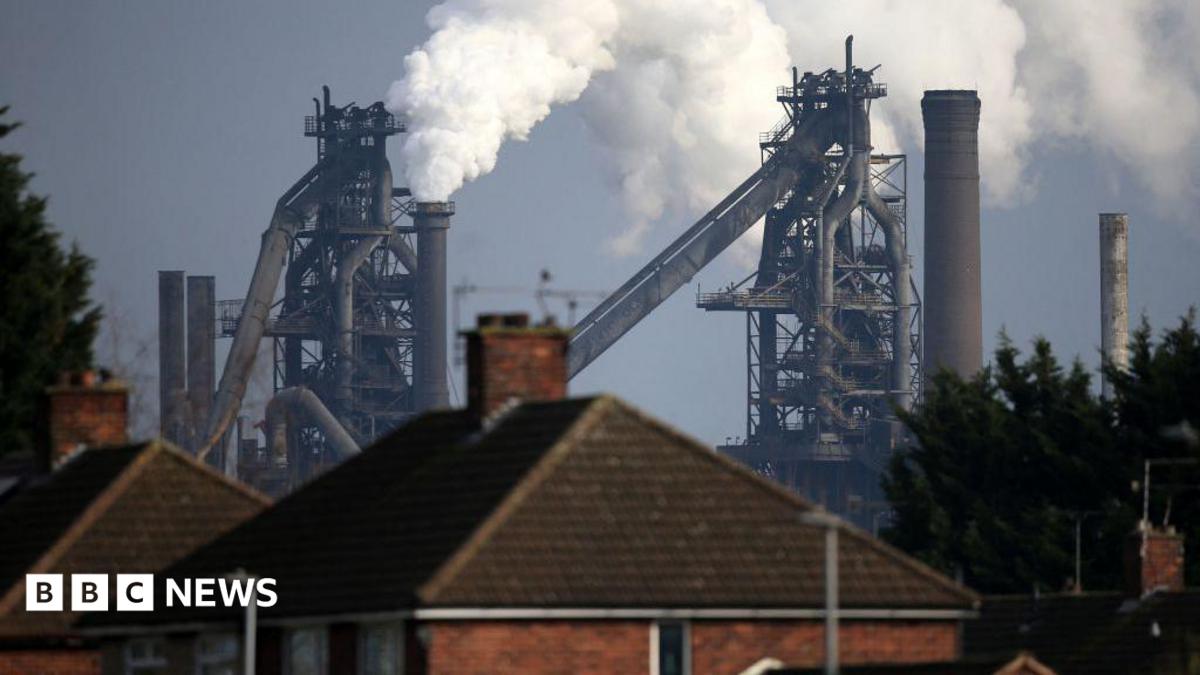
Tata Steel at Port Talbot in Wales was once the UK’s largest virgin steel producer but it turned off its blast furnace in September 2024, saying it was losing £1.7m a day.
An agreement with the UK government was reached which saw it commit £500m to help the company move to greener forms of steelmaking.
Other steelmakers in the UK include Liberty Steel, Celsa, Marcegaglia and Outokumpu.
Advertisement
Liberty Steel also has a plant in Scunthorpe that is facing closure. The government took control of its Speciality Steels UK (SSUK) division in August last year, and agreed to cover the ongoing wages and costs of the plant while a buyer is sought.
In 2024 the UK steel industry contributed £1.7bn to the UK economy – equivalent to 0.1% of total UK economic output and 0.8% of manufacturing output.
The latest figures for 2023 show the UK produced 5.6 million tonnes of crude steel, or 0.3% of the world’s total. In comparison, China produced more than 1,000 million tonnes, 54% of global production.
The EU produced 126 million tonnes of steel in 2023, about 7% of the world’s total. Compared with EU countries, the UK ranked as the eighth largest steel producer, after Germany, Italy, Spain, France, Austria, Poland and Belgium.
Shares of Billionbrains Garage Ventures, the parent company of Groww, rebounded 4% to Rs 213.50 on Friday after tumbling 5% in the previous session. The stock remained in focus this week after the company reported a 94.44% year-on-year jump in Q1FY27 net profit to Rs 735 crore, compared with Rs 378 crore in the corresponding quarter last year.
Groww’s revenue from operations also witnessed a sharp uptick, rising 66% to Rs 1,504 crore from Rs 904 crore in the corresponding quarter of the previous financial year. On a sequential basis, Groww’s revenue remained. Net profit for the quarter grew by 7% to Rs 735 crore from Rs 686 crore last year.
EBITDA for the quarter under review came in at Rs 971 crore, up 101% from Rs 483 crore in the year ago period. Sequentially, the increase was relatively modest, up 3% from Rs 939 crore, Groww’s investor presentation showed.
Groww shares: Buy, sell or hold after Q1 results
Jefferies maintained its positive stance on Groww with a target price of Rs 250, implying 21.3% upside. The brokerage believes the company is well positioned to benefit from the ongoing shift in household savings from traditional yield-based products to equity-linked investments. It also highlighted Groww’s product-agnostic platform, saying the addition of new products and services should help increase wallet share. Jefferies raised its FY27-FY29 EPS estimates by 1-6%, while the increase in the target price is largely due to the roll-forward of its valuation to September 2028. It noted that the stock is currently trading at 45x FY27E EPS, with an expected three-year EPS CAGR of 30%.
Advertisement
Live Events
JM Financial has upgraded Groww to ‘Buy’ from ‘Sell’ and raised its target price to Rs 250 from Rs 170, citing stronger growth visibility and improving operating leverage. The brokerage said its confidence in the company’s growth outlook has strengthened after Groww delivered a resilient performance despite a moderation in retail trading activity from the Q4FY26 peak. Also read:Groww responds to Nithin Kamath tweet: Direct mutual funds remain free for DIY investors It also highlighted expanding yields and better operating efficiency, with the cost-to-income ratio declining 3 percentage points quarter-on-quarter to 36%. Reflecting sustained market share gains and disciplined cost control, JM Financial has raised its FY27, FY28 and FY29 EPS estimates by 4%, 6% and 11%, respectively. It now values Groww at a 50% premium to Angel One, up from 20% earlier, supported by stronger earnings growth, higher margins and significantly larger client assets that improve customer stickiness. Motilal Oswal reiterated its Buy rating on Groww with a revised target price of Rs 250. The brokerage expects the overall number of orders in the broking business to grow by more than 20% over FY27 and FY28, led by continued market share gains and improving revenue per order. It also believes that the MTF business, Loan Against Securities (LAS) and wealth management will provide an additional boost to the company’s revenue growth.
Motilal raised its earnings estimates by 1% for FY27 and 3% for FY28, factoring in improved operating efficiency. The revised target price of Rs 250 is based on 38x FY28 estimated earnings per share (EPS).
Groww Q1 highlights
The company said it strengthened its market leadership across key segments during the June quarter by adding 115,000 net clients, supported by higher customer retention and improved product quality despite an industry-wide slowdown.
In mutual funds, it retained its position as India’s largest distribution platform for direct mutual funds, with Rs. 1.9 lakh crore in direct mutual fund assets under management (AUM). SIP inflows grew 32% year-on-year, outpacing the industry’s 16% growth.
In the stock broking business, the company said risk control measures led to its retail ADTO market share easing sequentially to 15.1%, although it remained 3.3 percentage points higher year-on-year. In commodity derivatives, it expanded its retail market share to 28.6% in notional ADTO across MCX and NSE.
(Disclaimer: Recommendations, suggestions, views and opinions given by the experts are their own. These do not represent the views of The Economic Times)
The Peebles Corporation founder, Chairman and CEO Don Peebles joins Mornings with Maria to discuss signs of a slowdown in New Yorks luxury real estate market and why he says higher taxes are pushing wealth, businesses and investment to other state
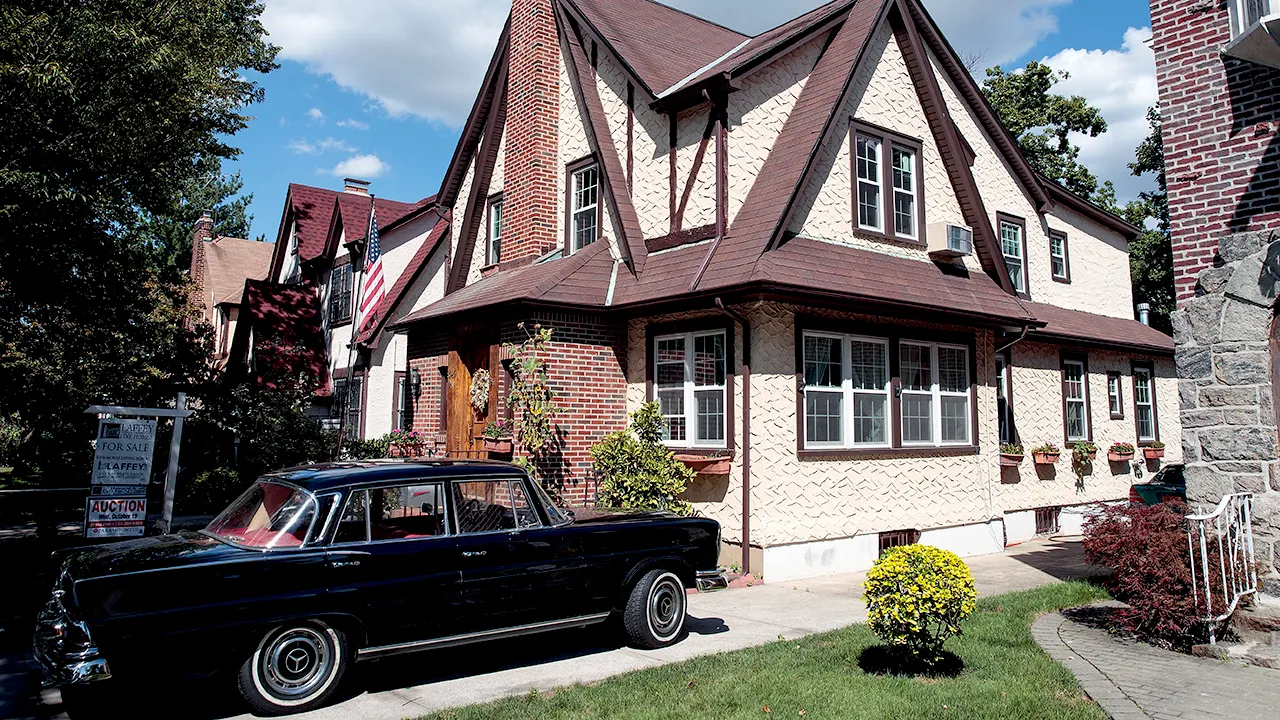
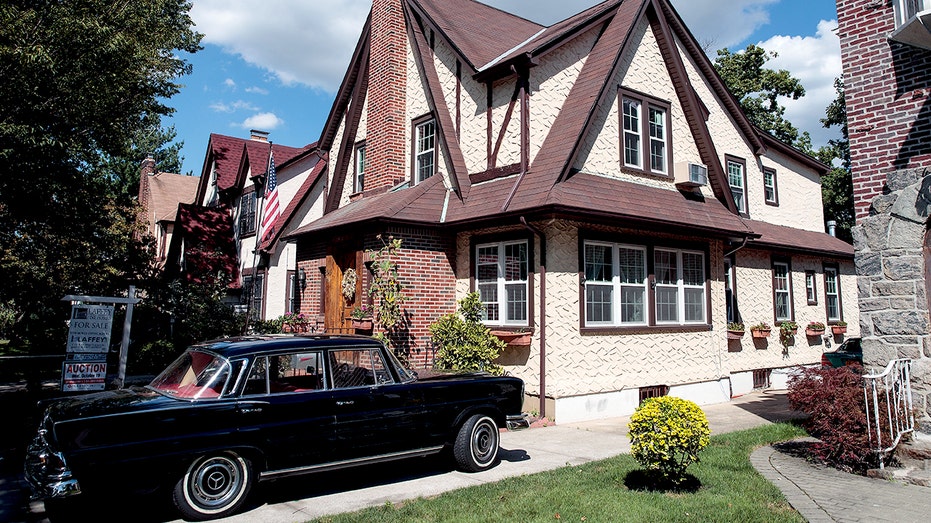
The childhood home of President Donald Trump in New York found a buyer after it was renovated by a real estate developer over the last year.
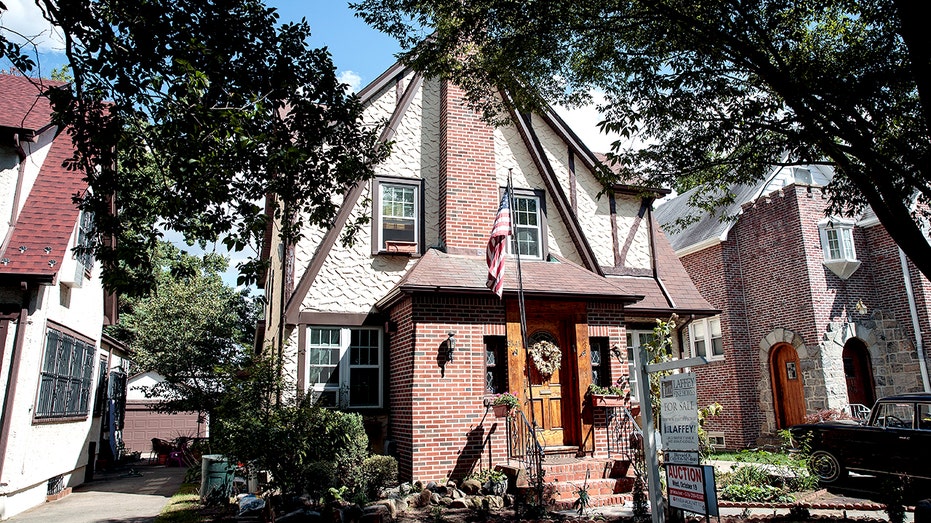
Located in the Queens borough of New York City, the Tudor-style home was built by the president’s father, real estate developer Fred Trump, in the affluent neighborhood known as Jamaica Estates in 1940.
Advertisement
The president lived at the home until the age of 4, when the family moved to a larger home in the neighborhood in 1950, Realtor.com reported.
The home was purchased a little more than a year ago by real estate developer Tommy Lin, who bought it for $835,000 in March 2025, according to PropertyShark records.
Trump lived in the Jamaica Estates home until the age of 4, when the family moved to a larger house in the neighborhood. (Drew Angerer/Getty Images)
Lin previously told Mansion Global that while his work typically focuses on condos in Brooklyn, the “only reason I took on this project was because it’s Trump’s childhood house,” adding that ordinarily it would be “a little too small for me to do.”
Advertisement
At the time of Lin’s purchase, the house was in need of upkeep, with issues including a leaking roof, an overgrown yard and feral cats.
After it was purchased last year, the home was in need of repairs and upkeep. (Drew Angerer/Getty Images)
Lin worked on the renovation with Jevon Gratineau of Brown Harris Stevens, and they started the renovation with fixes to the interior caused by leaks, along with replacing the roof and windows and adding full insulation. He also redid the home’s facade, though it retains its Tudor-style appearance.
The two largely kept the layout of the 3,400 square foot, five-bedroom home intact from its original design – though they did remove a wall to open the kitchen and living room area.
Advertisement
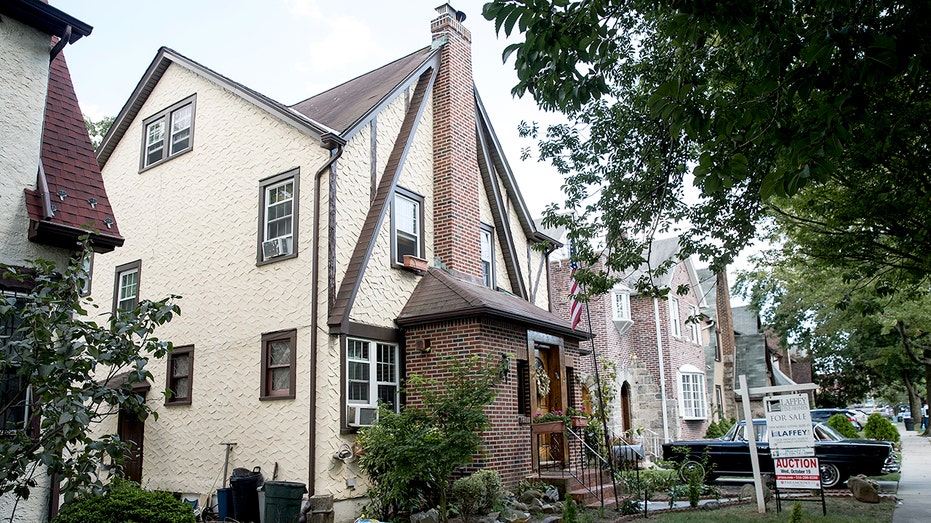
Lin and Gratineau told Mansion Global that the renovation cost about $500,000. (Drew Angerer/Getty Images)
They also fully finished the interior of the home after originally planning to just make it livable, with Lin telling the outlet he put “double or triple the time and effort” into this project compared to what he would normally work on.
The two told Mansion Global that the total renovation cost was a little over $500,000 – which included higher than expected spending on a new HVAC system as well as the property’s gardening.
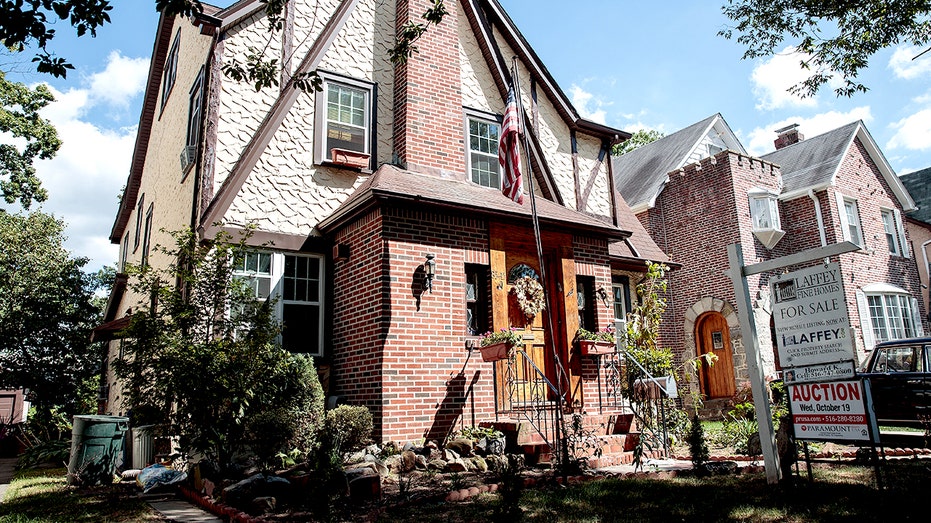
The renovated home was most recently listed at a little below $2 million before the sale was pending. (Drew Angerer/Getty Images)
The former Trump family home went back on the market late last year when it was listed in November for $2.3 million.
Advertisement
It was delisted by the end of January and relisted briefly in March for $2.2 million. The was relisted in May with a new agent, Joe Zhu of Re/Max Edge, with the most recent asking price just below $2 million.
The home was pending sale as of Tuesday, according to Realtor.com.
















































You must be logged in to post a comment Login