Connect with us
DAPA Banner
DAPA Coin
DAPA
COIN PAYMENT ASSET
PRIVACY · BLOCKDAG · HOMOMORPHIC ENCRYPTION · RUST
ElGamal Encrypted MINE DAPA
🚫 GENESIS SOLD OUT
DAPAPAY COMING

Business

We need a productivity investment loan fund for Wales

Published

on

Business Live

The fund should come out of a review of the Development Bank of Wales’ funding remit

One of the most interesting economic announcements from the Welsh Government in recent weeks was not a new strategy or another consultation exercise, but a small loan scheme for farmers.

On the face of it, the Sustainable Agriculture Loan Scheme is a modest £5m pilot, delivered through the Development Bank of Wales, offering fixed-rate loans to farms seeking to invest in renewable energy, energy efficiency, storage, waste and nutrient management, equipment, processing and infrastructure.

It is long overdue, as Welsh farming is undergoing a difficult transition and many farms will need capital to modernise, reduce costs and adapt to the demands placed on them. A long-term loan at an affordable rate is more disciplined than simply handing out grants, and if an investment saves money, raises output or strengthens the business, finance should be repaid over time.

Advertisement

But the more important question is why this approach should apply only to agricultural businesses? If a farm can access patient, affordable financing to invest in solar panels, new equipment, or improved processing capacity, why should a manufacturer, food producer, hotel, engineering firm, or logistics business not be able to do the same?

The underlying economic problem is not unique to agriculture, as too many Welsh firms lack the capital, confidence, or incentive to invest in the technology, equipment, and systems that would make them more productive. That matters because productivity is now supposed to be the North Star of Welsh economic policy, which is not surprising given that GVA per hour worked in Wales was just 84.9 per cent of the UK average in 2023, the lowest of the twelve UK nations and English regions.

Yet if productivity is the objective, the machinery of economic development has to change, and all the institutions of Welsh economic policy need to be directed squarely at the problem and that must start with the Development Bank of Wales,

However, there is a major problem here, as its annual business loan interest rates currently range from 6.25% to 13%. As the bank’s senior management has argued many times, those rates reflect risk, security, and each applicant’s financial position, and that is how commercial lending works.

Advertisement

But compare that with the new farm scheme, which offers a fixed rate of 3%, loans from £25,000 to £1m, repayment terms of up to 15 years, and a six-month repayment holiday. That is not a small difference but a completely different proposition, and a Welsh business borrowing at the development bank’s average rate of 8.56% over five years faces a very different investment calculation from that of a farm borrowing under this scheme.

Certainly, if the Welsh Government believes that patient capital with lower interest rates over an extended repayment period can help farms invest to become more productive, resilient, and sustainable, then why is the same principle not being applied to investment across the wider Welsh economy, as some of us have been proposing for years?

Given this, should the development bank now make productivity-enhancing investment its primary strategic purpose and reorganise the bank’s public mission around a clearer test: i.e., will this investment raise output, reduce costs, improve margins, increase wages, expand capacity, strengthen exports, or reduce carbon intensity? If the answer is yes, then that business should be eligible for patient, affordable finance

So why not introduce a Welsh productivity investment loan as the development bank’s flagship product?

Advertisement

It could support smaller firms with microloans for digital systems, software, energy efficiency, equipment and process improvements. It could back established SMEs with larger loans for machinery, automation, robotics, storage, production systems, AI adoption and low-carbon technology. It could fund long-term strategic projects in manufacturing, food and drink, tourism, life sciences, engineering and advanced services where the investment case is clear.

The key is that the test should be the investment, not the sector, and a farm investing in new storage capacity or a food manufacturer investing in refrigeration and automation may be solving different operational problems, but economically they are both trying to do the same thing, which is to produce more value from the same or fewer inputs.

This is where public finance can make a real difference, as commercial lenders are often cautious about long-term productivity investments, especially for smaller firms without strong asset backing. Many businesses know they need to invest but hesitate because payback periods are uncertain, interest rates are high, or day-to-day pressures consume management attention. Indeed, that was one of the primary reasons for creating the Development Bank of Wales 12 years ago.

Of course, this should not become cheap debt for weak firms with no future as Wales does not need a subsidised survival fund for businesses that are not prepared to change. This would also change how we measure success, as too often, economic development in Wales has been judged by how much money is lent, how many businesses are supported, or how many jobs are claimed and not by productivity outcomes such as turnover per employee, margin improvement, wage growth, energy efficiency, export growth, capacity increases, and private investment leveraged.

Advertisement

The farm loan scheme should therefore be seen not as an exception, but as a pilot for the rest of the Welsh economy. If long-term, affordable finance can help farms invest to become more resilient and productive, then the same principle should apply across the Welsh business base.

The new Welsh Government has promised to review the activities of the development bank so what better time to shift its strategic focus from general business finance to a national productivity mission?

Because if Wales is serious about closing the gap with the rest of the UK, then the question every publicly backed business loan should ask is simple: will this make a Welsh firm more productive and if the answer is yes, then give those firms the affordable patient capital to make it happen.

Advertisement
Continue Reading
Click to comment

You must be logged in to post a comment Login

Leave a Reply

Business

Trump childhood home in Queens finds buyer after $500K renovation

Published

on

Trump childhood home in Queens finds buyer after $500K renovation

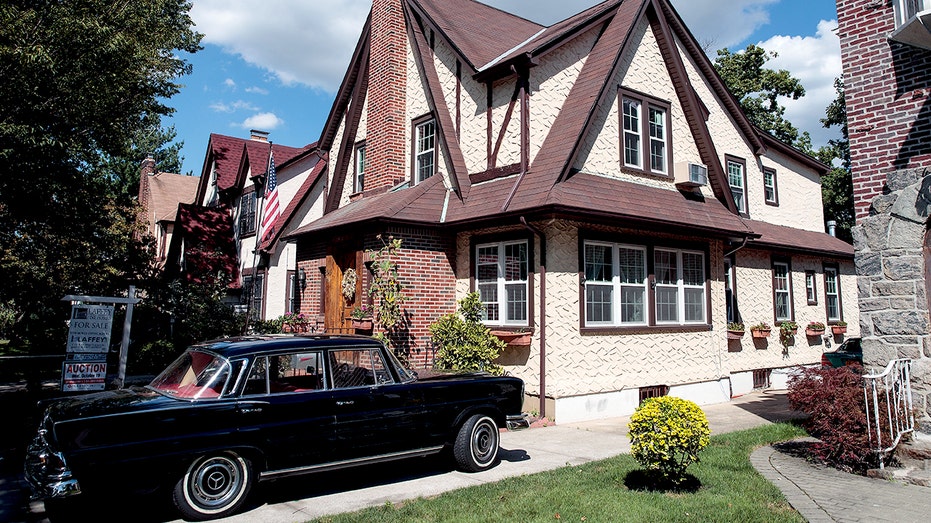
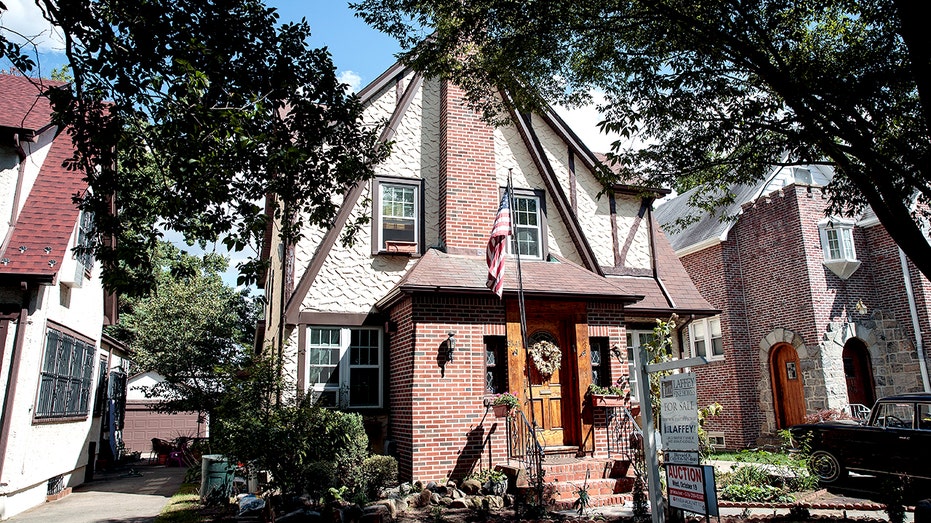
The childhood home of President Donald Trump in New York found a buyer after it was renovated by a real estate developer over the last year.

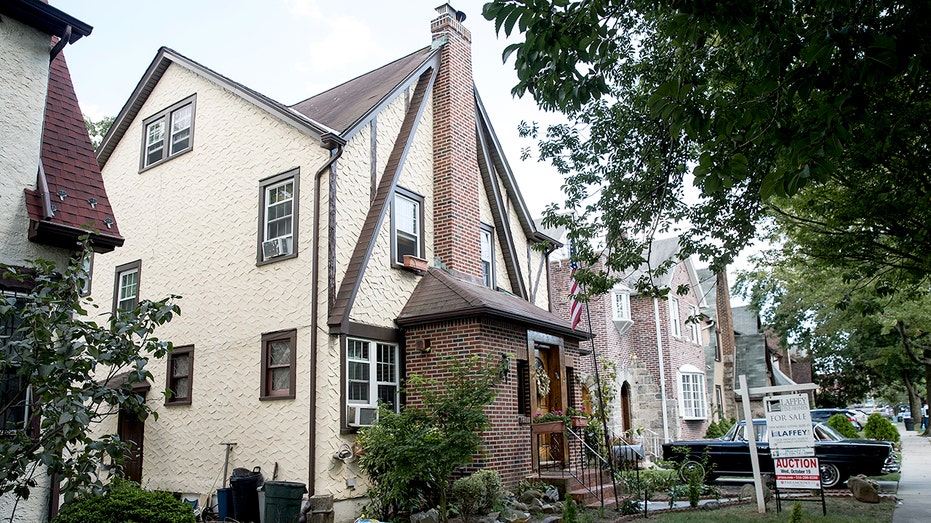
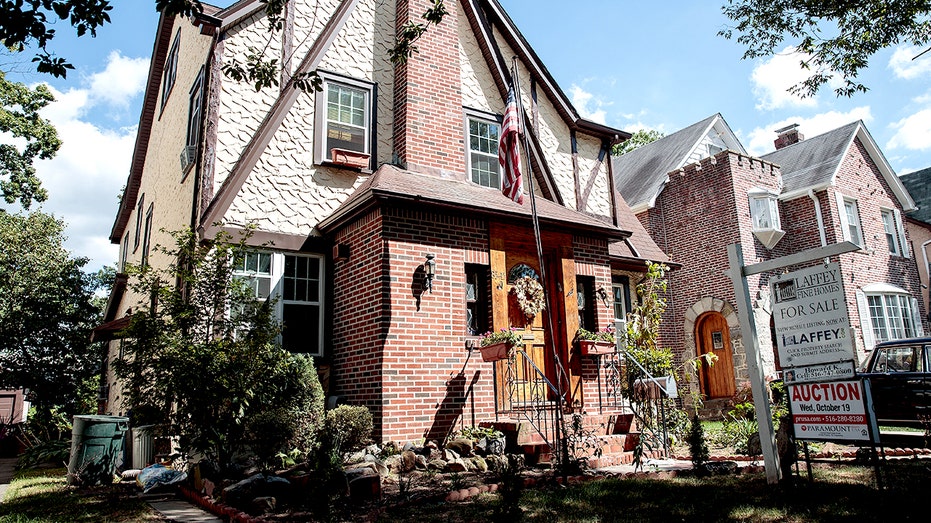
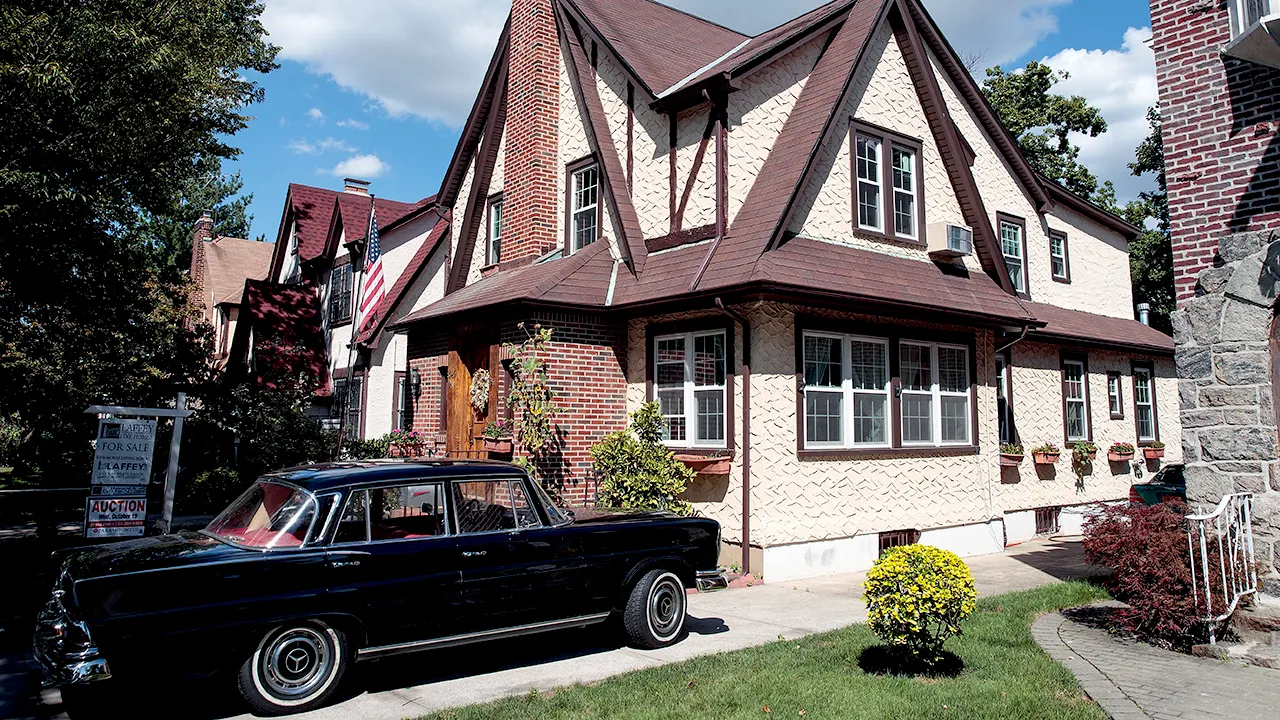
Located in the Queens borough of New York City, the Tudor-style home was built by the president’s father, real estate developer Fred Trump, in the affluent neighborhood known as Jamaica Estates in 1940.

Advertisement

The president lived at the home until the age of 4, when the family moved to a larger home in the neighborhood in 1950, Realtor.com reported.

The home was purchased a little more than a year ago by real estate developer Tommy Lin, who bought it for $835,000 in March 2025, according to PropertyShark records.

WHY AMERICANS ARE FLOCKING TO THIS FLORIDA RETIREMENT HOT SPOT

Exterior view of President Donald Trump's childhood home.

Trump lived in the Jamaica Estates home until the age of 4, when the family moved to a larger house in the neighborhood. (Drew Angerer/Getty Images)

Lin previously told Mansion Global that while his work typically focuses on condos in Brooklyn, the “only reason I took on this project was because it’s Trump’s childhood house,” adding that ordinarily it would be “a little too small for me to do.”

Advertisement

At the time of Lin’s purchase, the house was in need of upkeep, with issues including a leaking roof, an overgrown yard and feral cats.

Exterior view of President Donald Trump's childhood home.

After it was purchased last year, the home was in need of repairs and upkeep. (Drew Angerer/Getty Images)

Lin worked on the renovation with Jevon Gratineau of Brown Harris Stevens, and they started the renovation with fixes to the interior caused by leaks, along with replacing the roof and windows and adding full insulation. He also redid the home’s facade, though it retains its Tudor-style appearance.

SOME BAY AREA HOMES ARE SELLING $1M ABOVE ASKING AMID AI BOOM

The two largely kept the layout of the 3,400 square foot, five-bedroom home intact from its original design – though they did remove a wall to open the kitchen and living room area.

Advertisement
Exterior view of President Donald Trump's childhood home.

Lin and Gratineau told Mansion Global that the renovation cost about $500,000. (Drew Angerer/Getty Images)

They also fully finished the interior of the home after originally planning to just make it livable, with Lin telling the outlet he put “double or triple the time and effort” into this project compared to what he would normally work on.

The two told Mansion Global that the total renovation cost was a little over $500,000 – which included higher than expected spending on a new HVAC system as well as the property’s gardening.

RARE VIRGINIA OCTAGON MANSION WITH ‘HAUNTED’ REPUTATION HITS THE MARKET

Exterior of President Donald Trump's childhood home.

The renovated home was most recently listed at a little below $2 million before the sale was pending. (Drew Angerer/Getty Images)

The former Trump family home went back on the market late last year when it was listed in November for $2.3 million.

Advertisement

It was delisted by the end of January and relisted briefly in March for $2.2 million. The was relisted in May with a new agent, Joe Zhu of Re/Max Edge, with the most recent asking price just below $2 million.

The home was pending sale as of Tuesday, according to Realtor.com.

GET FOX BUSINESS ON THE GO BY CLICKING HERE

Advertisement
Continue Reading

Business

Home Affordability: Better Than Headlines Suggest

Published

on

Home Affordability: Better Than Headlines Suggest

Home Affordability: Better Than Headlines Suggest

Continue Reading

Business

Earnings call transcript: Instalco lifts sales and margins in q2 2026

Published

on


Earnings call transcript: Instalco lifts sales and margins in q2 2026

Continue Reading

Business

Unions claim Hedland strike success despite low numbers

Published

on

Unions claim Hedland strike success despite low numbers

The Electrical Trades Union has declared the first strike action at BHP’s Port Hedland operations a success, while the Chamber of Minerals and Energy says it proves the union is “out of step” with its members.

Continue Reading

Business

Why SK Hynix Stock Drops Today After a 27% Surge

Published

on

Why SK Hynix Stock Drops Today After a 27% Surge

Why SK Hynix Stock Drops Today After a 27% Surge

Continue Reading

Business

Business Daily – Taking Stock: A slower China and a durian glut

Published

on

Business Daily - Taking Stock: A slower China and a durian glut

Available for over a year

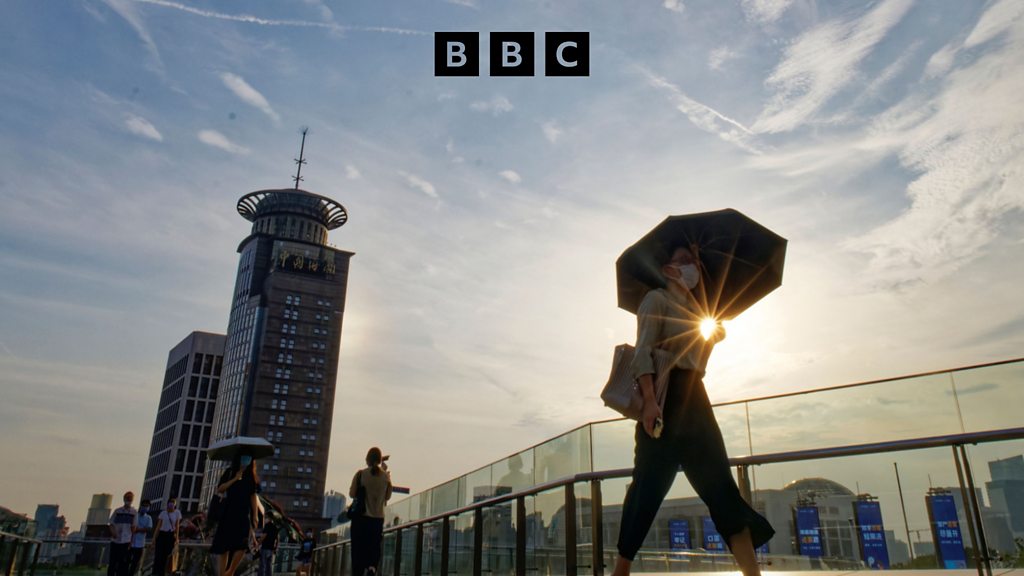
Connecting the timezones this week are Will Bain in London, David Kuo in Singapore and Emily Peck in New York to unpack the week’s biggest business stories. China’s economy has recorded one of its weakest quarterly growth rates on record, raising fresh questions about the country’s outlook and the impact on the global economy. Plus, why prices for durian, the ‘king of fruits’, are tumbling across Asia. And New York’s move to target AI data centres.

Presenter: Will Bain
Producer: David Cann

You can email the team: businessdaily@bbc.co.uk

Advertisement

(Picture: People walk in the Lujiazui financial district, in Shanghai, China, 14 July 2022. Credit: ALEX PLAVEVSKI/EPA-EFE/REX/Shutterstock)

Programme Website

Continue Reading

Business

World Cup pub sales up 145% for England v Argentina semi

Published

on

World Cup pub sales up 145% for England v Argentina semi

England’s World Cup semi-final against Argentina delivered the biggest single night of trading that Britain’s pubs and bars have seen all tournament, with transactions up 145 per cent on the day and late-night trade between 10pm and 2am up 97 per cent, according to new figures from payments company Square.

For a sector that entered the summer counting closures rather than customers, Wednesday’s numbers are the clearest evidence yet that the tournament’s forecast multibillion-pound windfall is landing in tills rather than staying in spreadsheets.

The scale of the semi-final effect becomes obvious when set against the rest of England’s run. The quarter-final against Norway on 11 July lifted pub and bar transactions by 40 per cent, a strong night by any normal measure, yet barely a third of Wednesday’s uplift.

Venues did not even need England on the pitch to feel the benefit. The Spain v France semi-final on 14 July, a fixture with no home interest whatsoever, still gave pubs a 26 per cent lift.

The late-night figure will be particularly welcome. The government’s contingent relaxation of licensing hours allowed licensed premises in England and Wales to keep serving until 1am for the semi-final, and the near-doubling of trade after 10pm suggests operators made every one of those extra minutes count.

Advertisement

Outside London, the biggest winners were in the Midlands and the North. Birmingham topped Square’s table of major English cities, with transactions at pubs, bars and restaurants up 121 per cent on the day of the Argentina match. Southampton followed on 115 per cent, with Manchester close behind on 112 per cent, Bristol on 93 per cent and Sheffield on 76 per cent.

John O’Beirne, CEO of Square International, said the tournament had been a landmark for the industry. “The World Cup has been an important moment for British hospitality. Football fans have turned out to support their country game after game, and England’s match against Argentina drew the largest crowds yet to pubs and bars. Even though England won’t be in the final, we can still expect bars and pubs to see strong trading as people tune into the final weekend of the tournament.”

There is one wrinkle for operators eyeing Sunday’s final. The automatic licensing extension applied only to matches involving a home nation, so with England out, venues wanting to trade beyond their normal hours will need a Temporary Event Notice rather than a free pass.

For SME owners, the numbers carry two lessons beyond the tournament. The first is that big-event demand is now predictable enough to plan for, which is why insurers have been urging operators to prepare for event-driven demand spikes months in advance, from staffing to stock to licensing.

Advertisement

The second is resilience. A 145 per cent surge in card transactions is only good news if the card machines stay up, and June’s Worldpay outage during England’s group game against Ghana showed how quickly a bumper night can turn into a cash-only scramble.

England may not have made the final, but for the nation’s publicans the tournament has already paid out. The question now is whether Sunday’s crowds turn up for the football alone, or simply because going to the pub for the big match has become a habit again.


Amy Ingham

Amy Ingham

Amy Ingham is a reporter at Business Matters, covering UK business news with a focus on breaking news, business policy, late payments and insolvency. She joined the magazine in 2026 after completing the NCTJ Diploma in Journalism at Harlow College’s journalism school. Her recent reporting includes British Steel’s nationalisation and its impact on SME suppliers, the decline in late payments by large firms, and Insolvency Service director disqualifications. Reach her at aingham@cbmeg.co.uk.

Advertisement

Continue Reading

Business

Good News on the Memory Shortage Is Bad News for Chip Stocks

Published

on

Good News on the Memory Shortage Is Bad News for Chip Stocks

Good News on the Memory Shortage Is Bad News for Chip Stocks

Continue Reading

Business

Health Care Roundup: Market Talk

Published

on

Health Care Roundup: Market Talk

The latest Market Talks covering the Health Care sector. Published exclusively on Dow Jones Newswires at 4:20 ET, 12:20 ET and 16:50 ET.

1304 ET – Johnson & Johnson’s latest quarterly results offer a positive signal for medical device end markets, even though the company reported lower-than-expected growth in its medical device division, Baird analysts say in a note. J&J’s medical technology miss was largely due to company-specific issues in its cardiovascular unit, masking reasonably solid performances from surgical, vision and orthopedics, they say. The analysts say the report offers positive read throughs for companies like Zimmer Biomet Holdings and Stryker in orthopedics, and for Medtronic and Abbott Laboratories in cardio and electrophysiology, among others. (kelly.cloonan@wsj.com)

Copyright ©2026 Dow Jones & Company, Inc. All Rights Reserved. 87990cbe856818d5eddac44c7b1cdeb8

Continue Reading

Business

Wildfire Smoke Blankets American Midwest to East Coast as Milwaukee Records Worst Air Quality in History

Published

on

Earth Day

Heavy, pungent wildfire smoke darkened skies across a wide stretch of the United States on Thursday, from the Great Lakes to parts of the East Coast, reducing visibility in major cities and prompting warnings that breathing the outside air could pose a serious health risk to millions of people.

The smoke, drifting south from hundreds of active wildfires burning across Canada, triggered air quality alerts in at least 18 states stretching from Minnesota to New Hampshire and as far south as Virginia. According to the Canadian Wildland Fire Information System, roughly 858 wildfires were burning across Canada as of Thursday, the majority concentrated in the province of Ontario, where 113 fires remained classified as out of control. Some of that smoke traveled more than a thousand miles to reach cities in the United States, including New York City, despite Toronto itself sitting more than 1,100 miles from where many of the largest fires were burning in sparsely populated parts of Ontario.

Wildfire Smoke Blankets American Midwest to East Coast as Milwaukee
Wildfire Smoke Blankets American Midwest to East Coast as Milwaukee Records Worst Air Quality in History

Milwaukee bore some of the worst conditions recorded anywhere in the country. City officials said the Wisconsin city recorded its worst air quality on record Thursday, with an Air Quality Index reading of 644, more than double the city’s previous record of 300, which had stood since 1987. Readings at that level fall far outside the standard 0-to-500 scale typically used to describe air pollution, reflecting just how severe the smoke concentration became in parts of the Upper Midwest.

Milwaukee was far from alone. According to rankings compiled by the air-quality monitoring service IQAir, Chicago, Cleveland, Detroit, Minneapolis, New York, Philadelphia, Pittsburgh and Washington, D.C., were among the cities most heavily affected by the smoke, with several registering conditions officially classified as hazardous, the most severe category on the U.S. Air Quality Index. Parts of New York City recorded AQI readings exceeding 200 Thursday evening, a level considered “very unhealthy,” while officials in several cities warned that readings above 150 posed a danger to the general public, not just to individuals in traditionally sensitive groups such as children, older adults or people with existing respiratory conditions.

All of New York State, including New York City, along with parts of New Jersey, was placed under an air quality advisory Thursday because of the smoke. Images from around the city showed the sun shrouded behind a thick haze as it set behind Manhattan’s Hudson Yards development, while in Chicago, residents sought relief along the Lake Michigan shoreline even as smoke settled over the lakefront. In Minneapolis, Mayor Jacob Frey urged residents to monitor the latest health guidance from the city as conditions continued to shift, saying officials would continue tracking the situation and sharing updates as needed.

Advertisement

Forecasters said the smoke was expected to remain a significant problem through the end of the week and into the weekend. According to meteorologists, the latest wave of smoke settled unusually close to the ground because of a shift in the region’s weather pattern, in contrast to an earlier smoke plume earlier in the week that largely remained higher in the atmosphere and caused comparatively less severe surface-level pollution. As a result, air quality deteriorated sharply across the Northeast, Great Lakes and Midwest, with forecasters warning that poor conditions were likely to persist through Saturday as additional plumes of smoke continued arriving from the north.

Health officials have said the extreme smoke was expected to linger through Thursday evening across the Upper Midwest, including northern Wisconsin and northern Michigan, before continuing to affect the New York City area and other parts of the Northeast. Broader estimates from meteorologists tracking the smoke’s reach suggested that unhealthy air quality was affecting more than 120 million people across the Midwest and Northeast as of Thursday, underscoring the scale of the event compared with more localized smoke episodes in past summers.

Wildfire smoke of this kind carries fine particulate pollution known as PM2.5, tiny airborne particles capable of traveling deep into the lungs and, in some cases, entering the bloodstream when inhaled. Exposure to elevated PM2.5 levels has been linked to a range of health effects, including irritated eyes and airways, coughing, difficulty breathing, and worsened symptoms for people with asthma or other chronic respiratory or cardiovascular conditions. Health officials have urged residents in affected areas to limit time spent outdoors, avoid strenuous physical activity outside, keep windows closed, and run air conditioning or air purification systems on recirculating settings where possible to reduce the amount of smoke-laden outside air entering homes.

This week’s smoke event adds to what has already been a difficult wildfire season across parts of North America. Wildfires within the United States, mostly concentrated across the western half of the country, have burned more than 3.6 million acres so far this year, contributing to smoke and air quality concerns that had already affected parts of the West, the Plains and the Midwest earlier in the summer, independent of the thicker Canadian smoke now moving over the Great Lakes and Northeast.

Advertisement

Photographs and video captured across affected cities Thursday showed the extent of the smoke’s visual impact, including images of the Statue of Liberty in New York Harbor photographed from the Staten Island Ferry against a hazy, smoke-filled sky, and children continuing outdoor activities such as playing football in New York parks despite the deteriorating air quality around them. Similar scenes played out in Toronto, where a plane was photographed landing at Billy Bishop Toronto City Airport amid smoke that had settled over the city a day earlier.

With hundreds of wildfires continuing to burn across Ontario and other parts of Canada, and forecasters warning that additional smoke plumes remained likely to drift south in the coming days, officials across the affected U.S. states said they would continue monitoring air quality conditions closely and issuing updated guidance as the smoke’s movement and intensity continued to shift through the remainder of the week and into the weekend.

Continue Reading

Trending

Copyright © 2025