

Politics
Trump Attacks US Elections With Old Intel

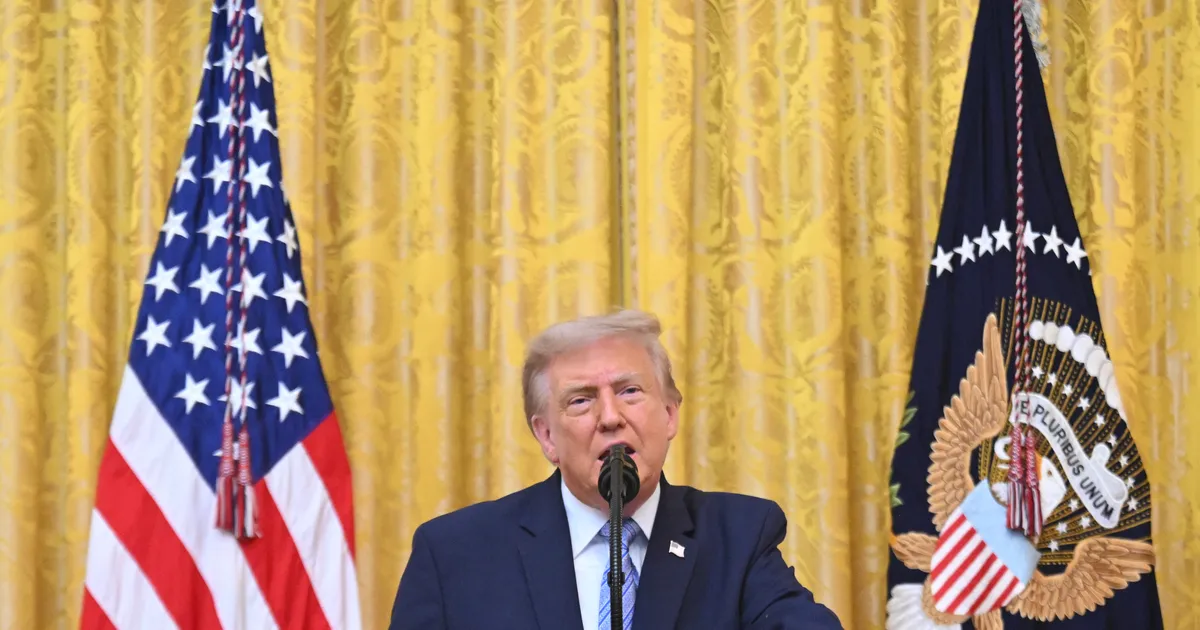
WASHINGTON – President Donald Trump, who lies that the 2020 election was stolen from him on a near-daily basis, claimed in a much-hyped White House speech on Thursday that US elections are vulnerable to hacking and worse than those in third-world countries as he renewed assertions that a “deep state” withheld information from him.
“Members of the deep state, very, very famous group of people, many cases, in our intelligence agency, worked to actively suppress and downplay information about the extent of China’s sinister election meddling, covering it up from both the president and the American people like nobody thought was possible,” Trump said during 25 minutes of disjointed, often difficult-to-follow remarks from the East Room.
Trump’s many claims, though, are rebutted by a declassified intelligence report released in March 2021, after the classified version was given to him on Jan. 7, 2021 — the day after his failed coup attempt to remain in power despite having lost his 2020 reelection bid. That report was written or approved by Trump’s own first-term political appointees.
That report found that while China obtained publicly available voter registration information, it did not attempt to interfere in the actual election process. A minority view in that report states that China preferred that Trump lose the election to Democrat Joe Biden. The report also said Russia again worked to help Trump win, although not to the extent that it had four years earlier.
If the speech had a stated purpose, it was to encourage Republicans to pass the SAVE Act, legislation endlessly hyped by conservatives as necessary to crack down on mostly non-existent voter fraud. But Senate Republicans have repeatedly made clear to Trump the legislation has no chance of passage.
“Congress must pass the SAVE America Act,” Trump said. “How easy is that to do, unless you want to cheat? The only reason you wouldn’t do it is you want to cheat.”
That left many Democrats warning the speech had a different, darker purpose: To create a justification for Trump to dispute the results of the midterm elections.
“Trump and Republicans continue to lay the groundwork for interfering with the midterm elections in an attempt to cling to power,” Democratic National Committee Chair Ken Martin said in a statement after the speech. “There’s one simple reason for this brazen power grab: Republicans know they’re going to lose the midterms. Americans are outraged over Trump and Republicans’ agenda of chaos, corruption, and skyrocketing costs and are going to reject it at the ballot box in November.”
Indeed, the speech united Democrats in opposition ― all 24 of the party’s governors signed on to a joint statement condemning the address ― while generating comparatively little excitement among congressional Republicans, many of whom want Trump to focus more on voters’ economic concerns, which he briefly touched on at the start of the speech.
Trump said he ordered the release of previously classified material that he claims backs up his contentions, though at least some of the documents appear to contradict or complicate his claims.
In his speech, Trump also attacked vote tabulating machines as vulnerable to hacking — while neglecting to mention that most US jurisdictions use paper ballots that can be hand-counted in election disputes. Georgia’s 2020 election — which Trump tried to steal by coercing state officials into “finding” him sufficient votes – was hand-counted, and Biden remained the winner.
Trump nevertheless disparaged US elections and focused on the SAVE Act, which would mandate voter ID and sharply limit mail voting, which Trump called “inherently corrupt.” Democrats oppose the legislation, arguing it would amount to voter suppression.
“This is worse than any third-world country. There’s no third-world country that has elections like we have,” Trump claimed. “We have very important elections coming up. We want those elections to be honest.”
Trump solicited and then knowingly and willingly accepted Russian help to win the 2016 election — but has ever since then loudly claimed that investigations into that collusion were a “hoax.” He has also tried to claim that other candidates took foreign assistance. Indeed, his obsession with the conspiracy theory that Ukraine helped Democrat Hillary Clinton that year ultimately led to his impeachment for trying in 2019 to extort that country’s president into publicly launching an investigation into Trump’s 2020 opponent, Biden.
Trump did not in his Thursday night speech explicitly claim the 2020 election was stolen from him, although he did hint at it: “We can never watch a stolen election again.”
That false claim has been central to his political identity since the night of his Nov. 3, 2020 defeat.
As states continued counting votes into the morning — as his own staff had told him would happen — Trump went to the media in the pre-dawn hours of Nov. 4 and declared that he had won the election and demanded that election officials stop counting ballots. Later that afternoon, Trump posted a tweet “claiming” the electoral votes in four states, as if he were in a schoolyard calling dibs on playground equipment.
“We hereby claim the State of Michigan,” he wrote.
Even after enough states had posted sufficient results for news outlets to declare Biden the winner, Trump continued his lying, as he did even after the Electoral College had voted, although he soon after began demanding that Congress overturn that result when it met for the ceremonial ratification of the election on Jan. 6.
It was that effort, combined with inflammatory language that Americans “wouldn’t have a country anymore” if they did not “fight like hell” to prevent the election certification, that led thousands of his followers to attack the Capitol that afternoon, where they injured 140 police officers and led to the deaths of five people.
Trump managed to remain silent about the election for some weeks, but by the summer of 2021 was back to publicly lying about it again.
Even after returning to office in January 2025, Trump has made his 2020 election lie a feature of the vast majority of his public remarks and question-and-answer sessions with reporters.
He has also ordered investigations into the 2020 elections by his various intelligence and law enforcement agencies, but so far nothing has come of those efforts.
Listen to Commons People, the podcast that makes politics easy. Every week, Kevin Schofield and Kate Nicholson unpack the week’s biggest stories to keep you informed. Join us for straightforward analysis of what’s going on at Westminster.

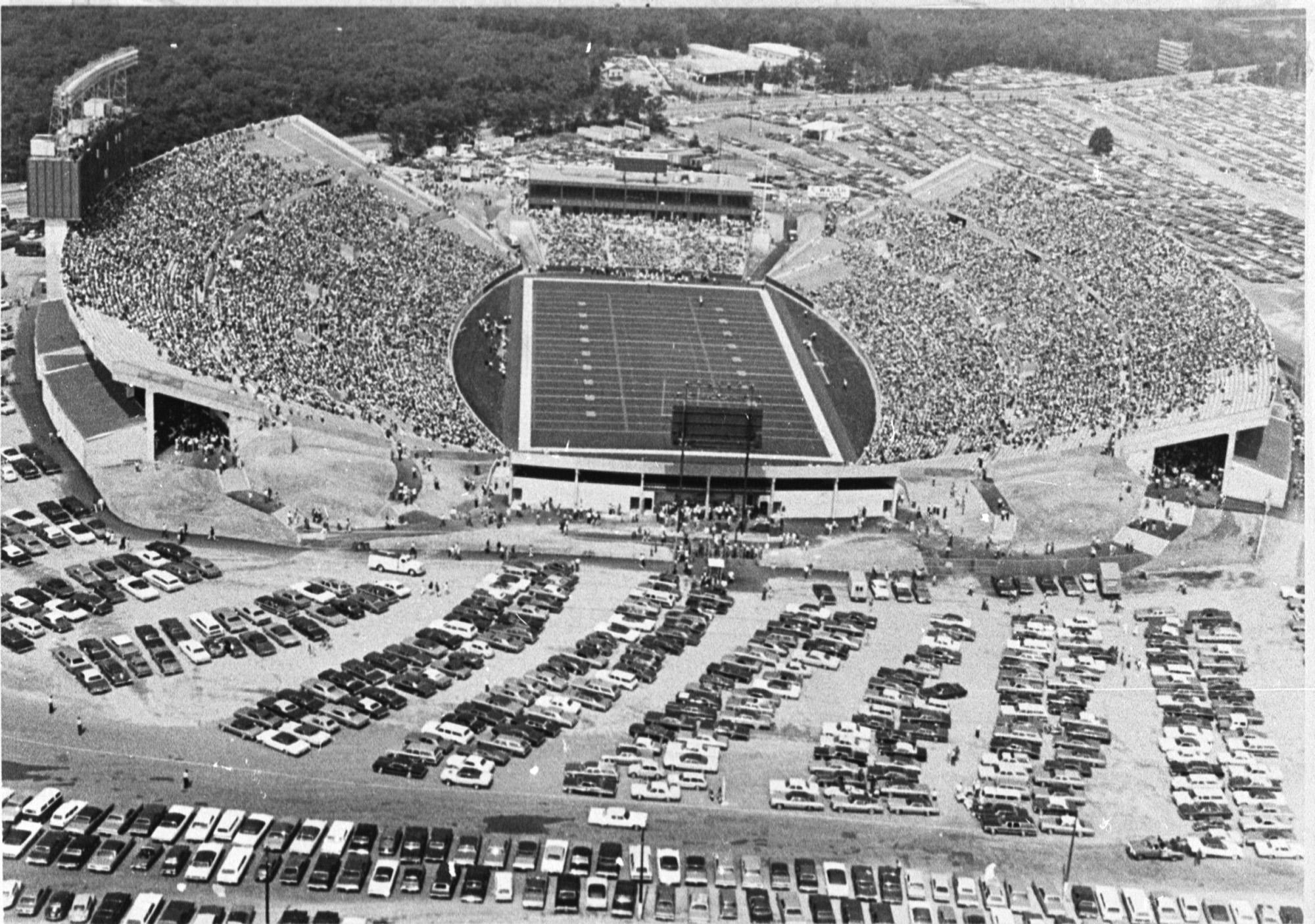
From the moment the United States launched its bid to co-host the 2026 World Cup, the games were pitched as a way to elevate and promote North America’s most distinctive and glamorous cities.
There was Miami, with its fabulous beachfront hotels, described in the so-called bid book as the United States’ “gateway to the world.” San Francisco put forth a vision of fans flooding Mission Dolores Park, reveling in the city’s “iconic skyline” and its mythical bridge on the edge of the continent. Boston, one of America’s “most historic” cities, would greet the World Cup with an “elegant simplicity with distinctive New England flair.”
The members of soccer governing body FIFA bought it, and in 2018 chose the United States, Mexico and Canada. But the tournament itself was never intended to be played in many of the cities lovingly described by the bid book. Instead, in a quirk of political geography distinctive to the United States, matches would often land instead in much smaller, less wealthy outlying municipalities known to sports fans and illegible to everyone else.
“When I tell people I’m the mayor of East Rutherford, they’re like, where’s that?” said Jeffrey Lahullier, the elected leader of a New Jersey town of 10,000 hosting this weekend’s final match. “I say, do you know where the World Cup’s being played?”
It’s an inversion of American political power laid bare by the World Cup, where global events are often staged in municipalities with sometimes only a few thousand residents, forcing local officials to negotiate with billion-dollar franchises, international governing bodies and visiting heads of state.
For decades, such suburban stadium cities — often considered little more than a landing pad for enormous, polygonal sports spaceships — have existed in a strange political limbo. They find themselves alternatingly privileged and bullied from the athletic behemoths in their backyards, which come with promising financial impact but deliver it only inconsistently. With the World Cup, what was often a source of local friction between local politicians and their most famous corporate citizens moved onto the global stage.
Santa Clara, California, Mayor Lisa Gillmor welcomed Jordan’s King Abdullah II upon his arrival at the nearby airport, and Arlington, Texas, Mayor Jim Ross greeted Japan’s Princess Takamado. In Foxborough, Massachusetts, the five part-time members of a town’s select board found themselves in a staredown with what might be the world’s most famous nonprofit. In Inglewood, abutting Los Angeles, Mayor James Butts saw a labor fight with a stadium-workers union become intertwined with federal immigration debates after workers said they were fearful of being “kidnapped by ICE” agents assigned to games.
As presidents, prime ministers and kings from across at least three continents meet in East Rutherford, Lahullier’s mind will be focused less on the World Cup final taking place than on how to find room in a $34 million municipal budget to cover a $100,000-plus police overtime bill.
“It was described to me like I’m hosting eight Super Bowls,” Lahullier said of the challenges posed by the World Cup. “But it’s not a money-maker — you’re laying out money you hope you’re going to recoup.”
Long before they were massive monuments to American sports culture, the sites of suburban stadiums were racetracks, swamps, low-income neighborhoods and sandy expanses of land where locals took weekend dirtbike joyrides and came to dump their trash.
Through much of the 20th century, sports were synonymous with the hub and thrum of the city itself. Fans would walk from workplaces and homes to arenas that were centers of civic pride, their cheers and roars knit into the urban soundscape, players and coaches an extension of a city’s character.
That started to change in the 1960s, and teams began to move away from the places and names they bore on the front of their jerseys. Although the rise of the automobile and a population shift into the suburbs guided their destinations, departure was usually precipitated by conflict with local political leadership. In 1971, the Boston Patriots left their hometown after struggling to find space for a permanent stadium that could house the National Football League franchise. They found the land about an hour’s drive away along Route 1, in a small town that would not fund the stadium, but welcomed the project. In recognition of their new Foxborough home — much closer to Rhode Island than Boston’s city hall — the team renamed itself the New England Patriots.

Wellington Mara, the owner of the New York Giants, announced that same year that he would move his team from Yankee Stadium to a swampy New Jersey tideland after growing discontented with the city’s unwillingness to build them their own stadium. (“Every family dreams of moving into its own house and to get away from its in‐laws,” Mara said at the time.) After the announcement, then-New York Mayor John Lindsay called Mara “selfish, callous and ungrateful,” threatening to sue in an effort to force the team to drop New York from its name.
The Miami Dolphins decided to leave the Orange Bowl, in the city’s Little Havana neighborhood, in 1984 after Miami demanded a rent increase. Team owner Joe Robbie signed a 99-year lease with Dade County for a site in a low-income, rural, and then-unincorporated patch of land about 15 miles northwest of downtown Miami.
At the time, the populace of what was then called Lake Lucerne was little enthused about making room for a $100 million professional sports stadium. Local homeowners, many of them Black, mounted lawsuits on both land-use and civil-rights grounds to block development, but found themselves thwarted by maneuvering from the county and state agencies. Even the discovery of a Native American burial ground on the site was not enough to stop Joe Robbie Stadium from opening to the public in 1987.
Similar scenes played out across the country in the decades that followed. The Dallas Cowboys left downtown Dallas for Irving in 1971, then moved deeper into the suburbs to Arlington in 2009, having failed to convince either of its previous two homes to build a taxpayer-funded stadium. The 49ers left San Francisco’s Candlestick Point in 2013 for the warmer, less windy and more financially welcoming city of Santa Clara 40 miles down the San Francisco Bay Peninsula. In Southern California, Inglewood won out over competing sites as the home for the Rams when the football team returned to the city in 2020.
Each transformed a small municipality into a development and entertainment destination whose population could balloon by more than 800 percent on game days or concert nights. That offered an appealing new tax base along with vexing new public-safety and transportation challenges, and tricky politics surrounding it all.
As Foxborough transformed from isolated farm town into a regional destination surrounded by malls, the city wrangled with the Patriots over fan behavior, traffic concerns and their understaffed local police. In Inglewood, the arrival of a stadium led to luxury mixed-use housing developments and new hotels with yoga decks, but also significant displacement of an overwhelmingly non-white community.
Rutherford, New Jersey, is a charming borough whose compact, “20th century quaint” walkable center Forbes once described as fit for a Norman Rockwell painting. The town to its east, however, is little more than a farrago of parking lots surrounding MetLife Stadium (home to football’s Jets and Giants), Meadowlands Racetrack (thoroughbreds, harness horses) and the American Dream mega-mall (Abercrombie & Fitch, Cinnabon). It has since become the smallest city ever to host a Super Bowl.
Leaving San Francisco, the 49ers in 2010 asked voters in Santa Clara — a quiet Silicon valley suburb then best known as the home of Intel and Nvidia — to contribute to $937 million in total spending on a new stadium. Under the terms of the arrangement, a public authority would own the building and the 49ers would act as the manager of day-to-day operations, sharing revenue from non-NFL events with the city.
“The economy wasn’t great, the team was losing, there was a lot of distrust in politics at the time,” said Lisa Gillmor, a former city council member who helped run the pro-stadium ballot campaign. “We worked really hard and convinced our community that it wasn’t going to cost the city any money to build the stadium.”

By the time Gillmor returned to city government in 2016, she said Santa Clara’s relationship with the team had begun to deteriorate. A nearby youth soccer park became a flashpoint as the 49ers considered turning into parking lots, and a popular multi-use trail was diverted on game days. (A 49ers spokesperson said that the field was untouched and that the franchise now provides funding for youth teams that use it.) Most significantly, Gillmor said that money that the city was expected to receive from stadium concert revenues soon fell to near-zero, as the team claimed its security costs had increased, although the team maintains that total revenue from the general fund has outpaced initial projects.
Things turned adversarial enough that Gillmor and the city voted to remove the 49ers as managers of the stadium in 2019, prompting a lawsuit from the team. The 49ers later launched a campaign to unseat her, and in 2022, a team-backed challenger came just 700 votes short of doing so. (The city and the team later settled their lawsuit, leaving the 49ers with management of the stadium.)
Ellie Caple, the 49ers vice president of corporate communications and public affairs, said that the World Cup has been a “tremendous success with no financial risk to the city” and that the 49ers remain committed to investing in the community. Gillmor, for her part, has gone from ally of a San Francisco-based team to a leading antagonist of Santa Clara’s most famous resident.
“They were very hospitable during the election,” said Gillmor. “Then after the votes, things changed, they rolled back up the red carpet.”
A global mega-event like the World Cup is always framed in the bright terms of shared humanity and common purpose, a chance to “embrace the concept of global unity” and “the power of football to meaningfully impact the world,” as the United States’ pitch deck once put it. Still, the relationship between a host city and FIFA is also decidedly transactional in nature.
FIFA, soccer’s governing body, requires locales to sign a hosting agreement requiring cities to cover significant operational costs of matches like security and expanded transportation services, which can run to up to$150 million per city. In return, the host city is promised publicity and an economic infusion from the games, plus reimbursements from state host committees. In the United States, many cities recoiled at those terms, including Chicago, Minneapolis and Detroit, which removed themselves from host consideration in the run-up to the World Cup, citing FIFA’s demands and financial expectations.
“The big problem I had was, they wanted to treat taxpayers as dumb money at the table, and I was not gonna let that happen,” former Chicago Mayor Rahm Emanuel said in an interview with POLITICO in June, looking back on Chicago’s decision not to host World Cup matches. “I know a bad deal when I see one.”
For the cities that did end up with the games, the welcome wasn’t particularly warm. New York and New Jersey politicians have engaged in a bruising, very public argument with FIFA over its unwillingness to help pay for fan transportation, which World Cup host countries have been on the hook for in the past. New York City Mayor Zohran Mamdani, meanwhile, successfully negotiated with FIFA for $50 tickets and free transportation for 1,000 New Yorkers, and pushed the soccer giant to retreat from a ban on spectators bringing water bottles into stadiums. (FIFA President Gianni Infantino also arranged a call between Mamdani and Arsène Wenger, the legendary manager of Mamdani’s beloved club Arsenal, in an effort to build goodwill.)

Outrage from New Jersey Gov. Mikie Sherrill over FIFA’s plans to sell stadium grass as a collectible drove the organization to reverse itself and agree to return some proceeds to local organizers. (FIFA did not respond to a request for comment.)
But small-town mayors were not always able to capture the same public attention when pushing back against the Zurich-based nonprofit, and were forced to seek leverage elsewhere. The select board of 19,000-person Foxborough withheld a basic event permit for the seven World Cup matches scheduled for Gillette Stadium to extract reimbursement for an estimated $7.8 million in security costs. Less than three months before the World Cup was scheduled to begin, Patriots owner Robert Kraft delivered the money.
“The concessions are small and meaningless, they can say they’ve extracted this, but it doesn’t really matter,” said J.C. Bradbury, a sports business professor at Kennesaw State University and the author of a forthcoming book about how stadiums transformed into “billion-dollar play-palaces for the rich-built increasingly on the backs of taxpayers.”
The settlement between Foxborough and Kraft’s companies allowed the World Cup to proceed in Massachusetts even as the two entities moved their battle to court. In mid-June, Kraft Sports & Entertainment sued the town for “repeatedly misusing its state-granted licensing authority unlawfully to extract funds.” In early July, even before the final match was played there, Foxborough filed a counterclaim that asked a judge to dismiss Kraft’s suit.
“While the plaintiffs, a collection of multibillion-dollar corporations, would prefer to have Foxborough taxpayers bear these expenses, they are contractually bound to pay for the public safety services that are necessary to ensure safe and efficient events at their private venue,” the town wrote in a brief.
Kraft’s New England Revolution professional soccer franchise plays its next match in Foxborough on Thursday.
When the summer Olympics concluded in August 2024, it was Los Angeles Mayor Karen Bass who inherited the games’ flame, which she passed to a motorcycling Tom Cruise for an action hero’s escape to California. But the bulk of the ceremony that opens the Olympics in July 2028 will not take place within the city that Bass governs.
Instead it will occur at Inglewood’s SoFi Stadium, which had not been built when the World Cup and Olympic bids were formulated but is now regarded as one of the world’s preeminent sporting arenas and will be converted into a swimming venue in 2028.
Mayor James Butts credits his city’s dramatic change in financial fortunes over the last few decades to the arrival of sports teams and stadiums, along with related businesses like the National Football League, which set its West Coast headquarters and media center there. Once the home of the Los Angeles Lakers, the city’s team bucked the suburban trend by leaving Inglewood’s Great Western Forum for a stadium in downtown Los Angeles in 1999. In the decade that followed, the city struggled with crime, high unemployment rates and a $17 million budget deficit. But its fortunes began to change when the Forum reopened and sports investor Stan Kroenke bought the city’s old racetrack, which later became the site of SoFi stadium and the home of the Rams.
Butts estimates that his city now hosts 400 events a year and welcomes a half-million people, requiring “very robust” traffic management and safety resources, insisting that the city-stadium dynamic is “very healthy.”

But that relationship has also been tested by numerous disputes, including a long running legal dispute between the city and Kroenke, who owns both SoFi and the Rams. Inglewood receives millions each year from an admission tax on ticket events, amounting to nearly 10 percent of the city’s general fund revenues.
“We went from BBB- bond ratings to AA+. Median value for a home was $225,000 when I took office, it’s $850,000 now,” said Butts. “Right now we have more in reserves than any city in the county.”
Butts is not alone among local politicians to believe that having one’s city defined by a stadium is worth the hassle and financial burden, and that being too easily confused with its much bigger neighbor can bring its own benefits. In a promotional video for the World Cup, Mayor Rodney Harris of Miami Gardens — where today’s third-place match between France and England will be played — said that the tournament gives “an opportunity to sell our story” in a way that could help lure future businesses.
Ultimately, for these mayors, the moments of pageantry are few and far between. Lahullier attended the tournament’s first match at MetLife, between Morocco and Brazil, in a luxury-box row of government officials. “I wish I could tell you that I follow soccer, but I do not,” he said.
But when broadcasters grabbed shots of local politicians, it was always Mamdani — the camera cutting out the actual mayor sitting to his right. Even when the world is looking on, a small-city mayor can recede into the backdrop.
“I’ve been mayor now for seven years,” Lahullier said. “If I twisted arms I could probably get a signed football or a signed jersey.”
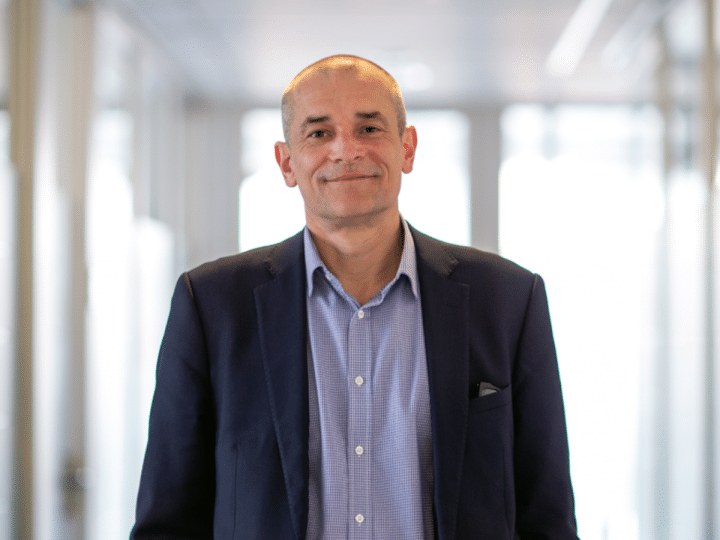
Sharon Graham’s former Unite election campaign organiser Matt Smith now supports her opponent, Simon Dubbins.
Having seen Graham in action as general secretary, Smith believes that another five years of Graham would be “an utter disaster for our union”.
But he didn’t only play an extensive role in her 2021 general secretary election campaign. According to senior union insiders, he “wrote her manifesto”.
Unite endured five misused years under Graham
Smith said that Graham has increased corruption at Unite rather than reduce it. He claimed that she had appointed useless cronies to senior positions and even made up a “ghost job” to buy off a potential rival.
Smith said:
[Graham had] shown all the signs of being insecure, paranoid, and suffering from imposter syndrome from the very start of her term.
Rather than progress Unite, Graham “wasted five years that should have been used to turn this union around”, Smith added.
As the person who wrote her manifesto, who could be better placed to know that she squandered the time instead of implementing her promises?
Smith also left out a lot of Graham’s appalling, anti-union record. For more detail on that, read this.
Featured image via Nurith Wagner-Strauss
By Skwawkbox
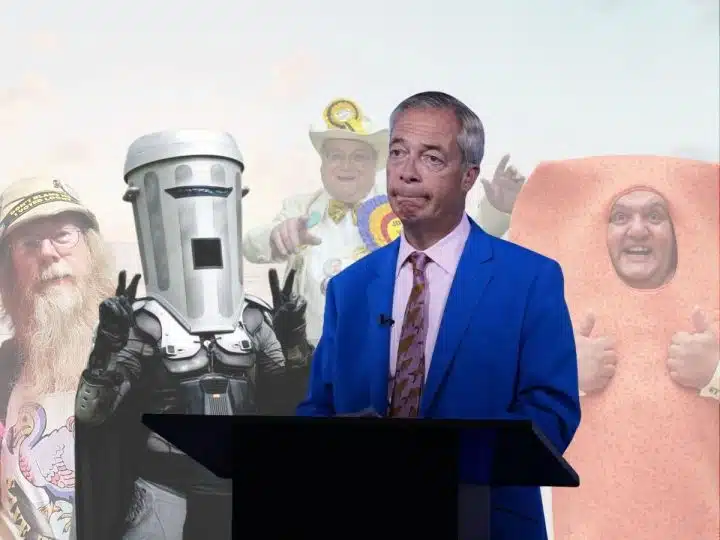
Friday 17 July was the deadline for candidates to nominate themselves for the Clacton by-election. As it turns out, a lot of people made that deadline, with Politics UK listing the following:
IN FULL: The 34 Clacton by-election candidates – the highest number ever recorded in a UK Parliamentary election
Nigel Farage
Count Binface
Laurence Fox
Kai Stephens
Adham Alkhatip
Joseph 77
Clacton residents must consider Mr Fish Finger?!
The main contender in this race is Count Binface, but we shouldn’t forget that Nigel Farage is also running. Farage was the Clacton MP already, but he stepped down to initiate this farce. The suspicion is he did so to distract from his many ongoing scandals, but no one can prove that — not least of all because he seems to have drawn more attention to himself if anything.
Besides Binface, Farage’s opponents include ridiculous characters like ‘Nick The Incredible Flying Brick’, ‘Baron Von Thunderclap’, and ‘Laurence Fox‘. There’s also this guy:
One of the candidates is "Mr Fish Finger" — James Harvey (@JamesHarvey2503) July 17, 2026
 https://t.co/qg45QQXTUP pic.twitter.com/ebMObcC7Ow
None of the major political parties are running against Farage because they decided to let this farce speak for itself. We said it would have been in the Greens’ favour to run against Farage and to drive the news cycle for six weeks, but the party decided not accept all that national attention. This won’t do them any favours in the long run, but it has at least allowed us to laugh at Farage.
In the video above, Binface says:
Hi, Count Binface here, and I’m ready to go for the Clacton by-election. And my goodness me, there’s no less than 34 candidates for this electoral feast. Going to be epic. In fact, it’s going to be like Comic-Con up on that stage. But then, I didn’t let the genie out of the bottle. I haven’t called this election. Somebody else has.
Now, here’s a little factoid for you. This is my eighth election on planet Earth, and I understand there is a tradition for Clacton candidates – eighth time lucky. So, how about it?
Here’s to a positive campaign showing the very best of democracy. May the best life form win, and make your vote count.
Binface has also made five pledges — four of which are highlighting Farage’s faults as an MP.
My Binface pledge card for Clacton – exploiting his opponent’s main local weaknesses pic.twitter.com/3RmonGwihj
— ALASTAIR CAMPBELL (@campbellclaret) July 16, 2026
Full steam ahead
Given his many ongoing controversies, there was some speculation that Nigel Farage would pull out before the deadline. Given how embarrassing this all is, him running could suggest he was indeed secretly paid £5 million to return as an MP in 2024, as people are now speculating. We can’t confirm that, of course, but we can say we wouldn’t subject ourselves to all this for free.
Read more about the candidates and by-election here.
Featured image via the Canary
By Willem Moore
Politics
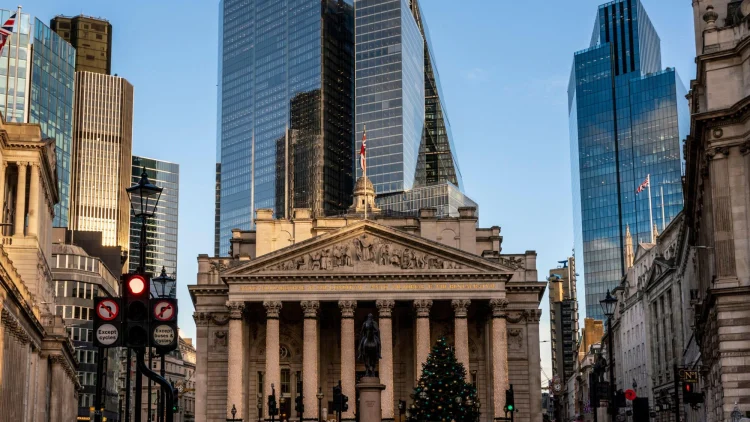
The House | The City of London can help the new chancellor deliver growth in every postcode
3 min read
It fits well that the outgoing chancellor was warmly received at the Financial and Professional Services Dinner at Mansion House earlier this week.
As speculation runs this weekend about cabinet appointments, including at the Treasury, I am keen to outline how the City can help the new government deliver its ambition of good growth in every postcode.
Put simply, only a true partnership between business and government can generate the growth needed to support sustainable public services. May’s GDP update – putting growth at 0.1 per cent – illustrates the scale of the challenge facing the incoming inhabitants of 10 and 11 Downing Street.
As stewards of London’s Square Mile, we’ve been balancing risk with opportunity for more than a thousand years. In doing so, we have helped foster a business environment where financial and professional services thrive, creating more than 2.5m jobs across the UK – with two-thirds of them outside London.
This is due to the brilliance and dynamism of those who work in the City. It’s due to the relationship between government and business, working together to advance shared interests.
And it’s because, unlike other financial centres, the City is protected by its own police force, working with the Square Mile to keep businesses and workers safe. We know how much firms value the City Police for their wider expertise across cyber, fraud and economic crime, developed over many years. And a safe and secure environment encourages much-needed inward investment.
Indeed, the UK economy needs growth both in the City of London and across all our nations and regions to succeed. At the City Corporation, we’re already taking steps to turn this ambition into action with the launch of a new AI-enabled, digital-led platform InvestConnect.
It will present curated infrastructure and property investments to global and domestic professional investors, with values typically exceeding £100m. Already, investors representing more than $3 trillion (USD) of assets under management from across Europe, North America, the Gulf, Asia and Australia have agreed to participate, with more expected to join.
For years, professional investors have been telling us they want to invest in the UK because of our time zone, language, world-renowned rule of law and respected regulation. They seek high-quality, long-term investment opportunities, and every part of the UK has ambitious projects with the potential to drive growth, create jobs and strengthen local communities.
This is where InvestConnect can be game-changing. The City provides the finance, the regions provide innovation, expertise and industrial capability, and together they create the conditions for good growth across the whole country.
From Land’s End to John O’Groats, we are working to make this a reality. Cornwall Council, the Scottish Government and Liverpool City Region Combined Authority are already signed up.
This initiative is just the latest example of the City of London Corporation acting as a strategic partner to successive governments to generate growth.
We continue to work with the government to ensure delivery of the Mansion House Accord, to build a more dynamic, competitive investment ecosystem allowing smaller firms to scale while delivering improved returns to savers.
To compete globally, UK firms rely on a business environment that encourages investment, and yes, that means a competitive tax landscape.
Whoever is appointed chancellor in the coming days, I would like to extend the very same offer of partnership, so the Square Mile can continue making its substantial contribution to growth far beyond the City of London; to all regions and nations of the UK.
With growth scarce, there’s not a moment to lose.
Chris Hayward is Policy Chairman at the City of London Corporation
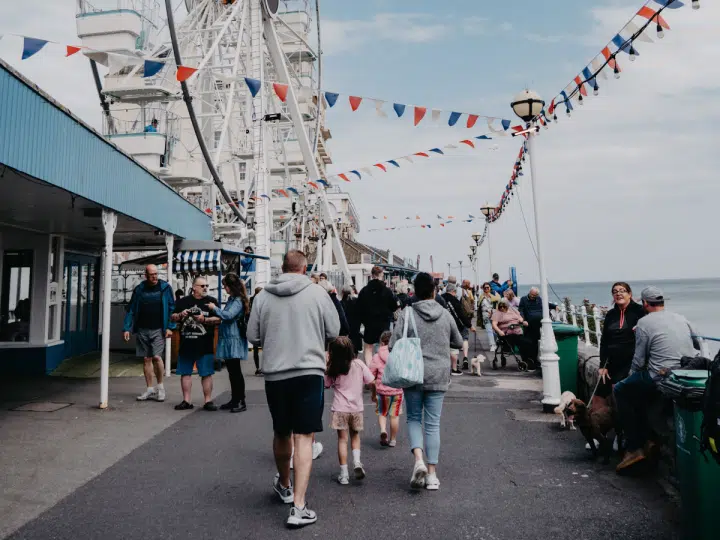
The vast majority of parents in Britain and the north of Ireland feel “financial and emotional pressure” during the summer, according to research carried out by Save the Children.
The charity polled 2,000 parents and found 88% are struggling with money worries during the long days, triggered by factors like added childcare costs and the pressure to take their children on holidays abroad.
Labour has made some minor inroads into tackling poverty, but many of its measures have been inadequate given the scale of the crisis.
Save the Children‘s executive director for UK impact, Dan Paskins, said:
No parent should be facing a summer of stress and worry, and no child should dread holidays. But sadly, our survey has shown cost of living pressures are whittling down family budgets and aspirations, even for high earners. And for those on the very lowest incomes, it is clear there is no summer break from poverty.
Money: Mother ‘dreads summer’
Alarming numbers of respondents reported they expect to struggle affording even the basics during the summer holiday. A total of 22% reckon they’ll find it hard to buy food and groceries, while 24% aren’t sure where they’ll get money to pay for transport.
Life shouldn’t be about grinding along with the bare minimum. In a wealthy society, people should be able to afford to enjoy themselves too. One of socialism’s most powerful cries has always been some variant of “not just bread, but roses too“.
Sadly, while Britain is a wealthy society, most of that money ends up in just a few hands. As a result, 47% of people feel they’ll struggle to afford a trip away and even family days out are a stretch, with 42% questioning whether they can find the cash for those.
In a sign of the regression four decades of neoliberalism has triggered, 35% feel like they can’t give their children the summer break they enjoyed when they were young.
Save the Children spoke to Thea, a mother-of-three from London. She said:
I dread summer. I work five days a week and I do struggle with the extra costs. Sunscreen, replacing outgrown shorts and sandals for three growing children is expensive. I have no budget left for an after-school club for my 11-year-old, and if I’m honest, he’s probably going to end up with more screen time than I am comfortable with.
Rebecca from Norfolk, a mother-of-one, said she finds the cost of public transport “crippling” and that “everything is prohibitively expensive”.
It doesn’t have to be this way. Other countries offer free public transport, but people in Britain suffer under a privatised model designed to enrich bosses and shareholders.
Scale of poverty requires drastic action
On childcare costs, 22% of respondents said they expect to spend £50-£100 per day. Over a two-month (60-day) school break period, in the worst case scenario that could mean racking up a staggering bill of £6,000.
The money worries don’t end when the school holidays do either, with nearly half of parents (47%) worrying about the cost of school uniforms.
Parents reported having to suffer themselves as a result of back to school costs, with 34% saying they go without things for themselves, 25% working extra hours to cope, and 20% borrowing or using credit to cope.
There’s no question that nearly a decade and a half of murderous Tory austerity did extraordinary damage to working and middle class people in Britain. The Joseph Rowntree Foundation has reported that even after Labour reluctantly scrapped the two child benefit cap, it estimates that “four million children will still be in poverty by the next general election”.
Labour’s enthusiastic support for barbaric wars that drive up the cost of living doesn’t help matters, however. Nor their efforts to push vulnerable groups like migrants and disabled people into penury.
Andy Burnham is thus far indicating continuity Starmerism on economic matters. That’s a disaster if summer is to once again be something parents and children enjoy, rather than a looming financial crisis to be endured.
Featured image via Lisa/ Pexels
The chilling murder of Ann Widdecombe has stunned the country. The longtime Conservative MP and Reform immigration spokeswoman was found at her remote home in Dartmoor, Devon, with severe head injuries last Thursday. The suspected attack is believed to have taken place on Wednesday.
Naturally, Widdecombe’s death has raised questions about the safety of current and former MPs. In the past decade, Labour MP Jo Cox and Conservative MP Sir David Amess have been murdered. There was also an attack on Labour MP Stephen Timms, thankfully not fatal, in 2010.
Threats against politicians have increased significantly in recent years, owing to the unholy alliance of technology and political polarisation. A review of MPs’ security is plainly necessary. Reform UK, in particular, has criticised the lack of support for its MPs. Yet the distress caused by Widdecombe’s murder has been heightened by a lack of clear information from officials – most notably the police – and a shifting account of Widdecombe’s death.
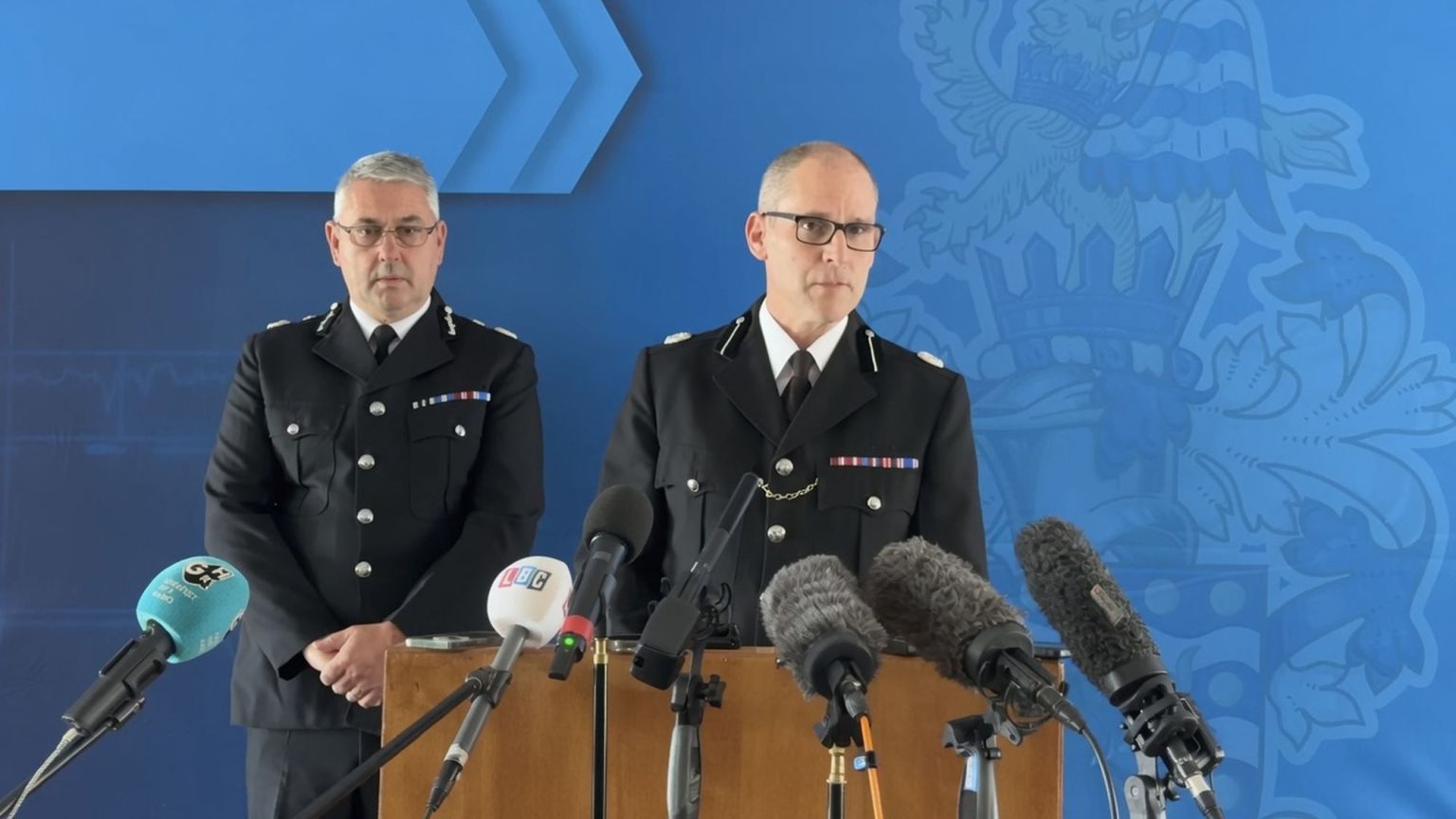
When, on the morning of 10 July, the public woke to the news that Widdecombe was dead, there was no suggestion of foul play. By Friday afternoon, however, reports began to circulate that she had been murdered. Then came a press conference from Devon and Cornwall police – delayed by over an hour into Friday evening – in which an officer stated that a 26-year-old man had been arrested and that there was no evidence her killing was ‘politically motivated’.
All of that has since turned out to be wrong. A day later, the ‘suspect’ was released without charge. Since then, a 28-year-old man has been arrested. He was reported to have driven nearly 300 miles from his home in Rotherham to Widdecombe’s Dartmoor home on the day of her death. Counter-terror police have taken over the investigation.
Once again, the behaviour of the police has been both unprofessional and dishonest. No sooner had her death been confirmed than the public were told not to ‘speculate’ – as if they had no right to wonder why a well-known conservative public figure had been found with fatal head injuries in her own home.
If the police didn’t know what happened or why, they should have plainly said so. This would have been no admission of failure – they could have said that they were investigating potential motives and would update the public in due course. To find out what happened and why is precisely what detectives are for.
Instead, there seems to have been an urge to keep the ill-informed masses at bay, lest they take to the streets. Clearly, the police had at the back of their minds the riots provoked by the 2024 Southport murders – which, incidentally, were fuelled by the vacuum of information left by the authorities. It was proof that caution can, and does, become self-defeating. The public, naturally, feel as though they are not getting the full picture.
But making premature assertions about a case is no better. The government’s independent reviewer of terrorism legislation, Jonathan Hall KC, said Devon and Cornwall Police appeared to have broken a ‘golden rule’ by commenting too firmly on a live investigation before any facts were settled. He is quite right.
This pattern of police behaviour will have profound consequences. Once public trust is squandered, every subsequent police statement becomes harder to believe, every appeal for calm less persuasive and every online rumour more potent. In trying to prevent disorder by withholding information, the police have risked producing the very conditions in which disorder thrives – suspicion, grievance and the belief that the public is being managed rather than informed. That distrust is already visible in the reaction to Widdecombe’s death.
In many circles, even previously ‘polite’ ones, there is now open suspicion of the police, and more than a degree of hostility. It is an institution seen as the paramilitary wing of the progressive intelligentsia. This should come as no surprise when shadowy units within the Home Office are ready to pump us full of ‘Don’t Look Back in Anger’-style propaganda. Information is being withheld and the investigatory waters muddied because of the authorities’ contemptuous view of the general public.
This needs to be addressed as a matter of urgency, before trust – and, thereby, law and order itself – breaks down completely.
Paul Birch is a former police officer and counter-terrorism specialist. You can read his Substack here.
The chilling murder of Ann Widdecombe has stunned the country. The longtime Conservative MP and Reform immigration spokeswoman was found at her remote home in Dartmoor, Devon, with severe head injuries last Thursday. The suspected attack is believed to have taken place on Wednesday.
Naturally, Widdecombe’s death has raised questions about the safety of current and former MPs. In the past decade, Labour MP Jo Cox and Conservative MP Sir David Amess have been murdered. There was also an attack on Labour MP Stephen Timms, thankfully not fatal, in 2010.
Threats against politicians have increased significantly in recent years, owing to the unholy alliance of technology and political polarisation. A review of MPs’ security is plainly necessary. Reform UK, in particular, has criticised the lack of support for its MPs. Yet the distress caused by Widdecombe’s murder has been heightened by a lack of clear information from officials – most notably the police – and a shifting account of Widdecombe’s death.
When, on the morning of 10 July, the public woke to the news that Widdecombe was dead, there was no suggestion of foul play. By Friday afternoon, however, reports began to circulate that she had been murdered. Then came a press conference from Devon and Cornwall police – delayed by over an hour into Friday evening – in which an officer stated that a 26-year-old man had been arrested and that there was no evidence her killing was ‘politically motivated’.
All of that has since turned out to be wrong. A day later, the ‘suspect’ was released without charge. Since then, a 28-year-old man has been arrested. He was reported to have driven nearly 300 miles from his home in Rotherham to Widdecombe’s Dartmoor home on the day of her death. Counter-terror police have taken over the investigation.
Once again, the behaviour of the police has been both unprofessional and dishonest. No sooner had her death been confirmed than the public were told not to ‘speculate’ – as if they had no right to wonder why a well-known conservative public figure had been found with fatal head injuries in her own home.
If the police didn’t know what happened or why, they should have plainly said so. This would have been no admission of failure – they could have said that they were investigating potential motives and would update the public in due course. To find out what happened and why is precisely what detectives are for.
Instead, there seems to have been an urge to keep the ill-informed masses at bay, lest they take to the streets. Clearly, the police had at the back of their minds the riots provoked by the 2024 Southport murders – which, incidentally, were fuelled by the vacuum of information left by the authorities. It was proof that caution can, and does, become self-defeating. The public, naturally, feel as though they are not getting the full picture.
But making premature assertions about a case is no better. The government’s independent reviewer of terrorism legislation, Jonathan Hall KC, said Devon and Cornwall Police appeared to have broken a ‘golden rule’ by commenting too firmly on a live investigation before any facts were settled. He is quite right.
This pattern of police behaviour will have profound consequences. Once public trust is squandered, every subsequent police statement becomes harder to believe, every appeal for calm less persuasive and every online rumour more potent. In trying to prevent disorder by withholding information, the police have risked producing the very conditions in which disorder thrives – suspicion, grievance and the belief that the public is being managed rather than informed. That distrust is already visible in the reaction to Widdecombe’s death.
In many circles, even previously ‘polite’ ones, there is now open suspicion of the police, and more than a degree of hostility. It is an institution seen as the paramilitary wing of the progressive intelligentsia. This should come as no surprise when shadowy units within the Home Office are ready to pump us full of ‘Don’t Look Back in Anger’-style propaganda. Information is being withheld and the investigatory waters muddied because of the authorities’ contemptuous view of the general public.
This needs to be addressed as a matter of urgency, before trust – and, thereby, law and order itself – breaks down completely.
Paul Birch is a former police officer and counter-terrorism specialist. You can read his Substack here.

Andy Burnham’s coronation as Labour leader and therefore prime minister is confirmed. The leadership crisis that engulfed Labour between May and July 2026 has reached a resolution.
Burnham’s succession, backed by 379 MPs out of a total 403, would point to an outbreak of harmony in the ranks of the parliamentary Labour Party (PLP). Rebel MP Neil Coyle’s decision to nominate Catherine West, whose chaotic intervention in May 2026 probably helped expedite proceedings, amounted to no more than a lonely protest. The direction of travel has been set for weeks now, at least.
The precise moment at which Burnham’s elevation became inevitable will be debated among political analysts in the years ahead. But it is worth pausing to consider the remarkable path that carried him to the summit of British politics.
The former Labour MP and two-time leadership candidate stood down as mayor of Greater Manchester mere weeks ago to run as a candidate in a by-election, triggered by a Starmerite former minister who resigned under the cloud of scandal, for the sole purpose of securing his return to parliament and therefore his right to depose the prime minister.

MDU warns Chancellor clinical negligence system ‘not fit for purpose’

Northern Ireland RE curriculum is ‘indoctrination’ – Supreme Court
Burnham’s coup was completed in the June 2026 Makerfield by-election.
This Makerfield contest stands as the source of Burnham’s political authority and, indeed, his claim to the premiership itself. The popular validation of his project by a Reform-facing constituency converted his candidacy into an irresistible political proposition. The bonds of loyalty and procedural safeguards that secured Keir Starmer in Downing Street simply melted away.
In his victory speech on Friday afternoon, Burnham reiterated the story of Makerfield. A total of 379 MPs, he said, had “heard the call from the people of Makerfield, on behalf of forgotten places everywhere up and down this country, for a return of the Labour they once knew.”
One consequence of Burnham’s coronation is that Labour has avoided the drawn-out infighting and self-destruction that leadership contests so often produce. The PLP has deposed a prime minister with only limited chaos – notwithstanding West’s best efforts. Labour MPs have avoided a damaging repeat of the July-September 2022 Conservative leadership contest, which delivered Liz Truss as prime minister, and skipped straight to the coronation phase.
But the Labour Party still has difficult questions to confront. A carefully managed coronation may avoid the visible chaos of a contest, but it cannot extinguish the deeper questions surrounding the failure of Keir Starmer’s tenure as prime minister, or the forces that brought about his downfall.
Burnham’s elevation was uncontested. But the settlement that follows – the style, priorities and ideological direction of the incoming government – will not be.
The risk is that divisions left unaired this summer will continue to rumble beneath the surface. Since leaving office, Rishi Sunak has argued that the circumstances of his coronation and the parliamentary gerrymandering of the 1922 committee damaged his authority by leaving underlying arguments unresolved.
A similar dynamic now hangs over Labour. Even as MPs bask in the regal glow of Burnham’s coronation, there are already signs that the questions suppressed by the absence of a succession struggle are beginning to resurface.
The debate over the direction of Burnham’s government has been channelled into speculation over who will run the Treasury. This choice already carries a level of importance and symbolic weight not attached to the selection of a chancellor for decades.
The intrigue has intensified in recent days as the field of candidates has narrowed to Ed Miliband, the energy secretary, and Shabana Mahmood, the home secretary. The significance of this choice lies in what the two candidates represent within Burnham’s political coalition.
Mahmood is the most prominent government figure associated with the Blue Labour tradition. As home secretary, she has sought to translate elements of its political philosophy into policy. In the case of her proposed reforms to indefinite leave to remain (ILR), Mahmood’s politics has placed her at the sharp end of progressive criticism of the Starmer government.
Ed Miliband is probably the figurehead of Labour’s “soft left” elements. The soft left has the strongest claim on the Burnham settlement; its organised elements, represented by the relaunched Tribune group, played a leading role in Starmer’s downfall, and it is the political tradition with which Burnham has historically been most closely identified. Louise Haigh, a key Burnham lieutenant, led the relaunch of the Tribune group; she is likely to assume the post of chancellor of the Duchy of Lancaster.
The case for Miliband is that his political and intellectual clout could drive radical economic reform in the face of institutional resistance. Miliband has an identifiable political economy that Mahmood, at least during her time in government as home secretary and justice secretary, has not articulated with the same clarity.
Starmer maintained Miliband, in the face of incessant and hostile briefing, but never fully embraced him. Burnham appointing his longstanding ally as chancellor would represent a statement of intent therefore, and a symbolic pivot against economic orthodoxy. Mainstream, the soft left group that has backed Burnham since its launch, called this week for the appointment of a “progressive chancellor with vision, values and a record of delivering structural change; someone who understands the threat that climate breakdown poses to people and planet and who has the courage to rebuild our state’s productive capacity.”
But there remains considerable antipathy towards Miliband among parts of the Labour Party, who still associate him with the 2015 general election defeat. The risk is that his appointment would disrupt the soft-blue unity that carried Burnham from Makerfield to Downing Street.
Burnham’s soft-blue politics
The end of Keir Starmer came when the criticisms of the Blue Labour and soft left schools converged.
Intriguingly, Burnham embraced a soft-blue analysis in his victory speech. He referred to a “generation of politicians” who had failed to challenge “an economic model that simply doesn’t work well enough for ordinary people.”
In his broadside blasting four decades of failure, Burnham offered no carve-out for Keir Starmer.
The incoming prime minister declared: “Four decades of the neoliberalism that began in the 1980s have not been kind to the places that built our party, nor to the communities across the UK in rural and coastal areas. So we pledge today to them to be better.”
He added: “Political power was centralised and economic power was privatised. The country surrendered control of the essentials – housing, water, energy, transport – and left people exposed to higher costs.
“That, in turn, led to the concentration of more wealth and power in the hands of fewer people and fewer places. Large parts of Britain were deindustrialised without the power to set new ambitions for themselves.”
In the speech’s most effective passage, Burnham proclaimed: “The right used the phrase ‘take back control’ – but they are the ones who gave it away in the first place.
“If we want an economy and a country that works for all people and places – which to me should always be at the very core of Labourism – then it requires a new path to the one we’ve been on for the last 40 years.”
Burnham’s economic radicalism represents a tune that the PLP can sing in relative unison. Starmer neglected the importance of articulating a political analysis as prime minister, and of playing to the crowd.
The formation of the new Reindustrialisation Research Group (ReRG) of Labour MPs will provide Burnham’s analysis with stronger institutional grounding in the PLP. The group similarly symbolises the unity between the “blue” and “soft” wings of the Labour Party that has characterised Burnham’s campaign. The caucus counts Yuan Yang, who relaunched the Tribune group alongside Haigh, and Jonathan Hinder, arguably this parliament’s most prominent Blue Labour MP, among its members.
The ReRG has endorsed the “Makerfield test” posed by Burnham in his first speech as a Labour MP – a pledge to “ensure the places Westminster has neglected will now get fairness”. What this test will mean in practice remains unclear. As a guiding principle, however, it could provide a framework for Burnham’s coalition to rally around.
Burnham’s first steps as Labour leader indicate his intention to preserve the soft-blue alliance that delivered Starmer’s downfall and brought him to power. That would point towards the appointment of Mahmood as chancellor, establishing a soft-blue axis at the centre of government. This is consistent with the current state of reporting.
Burnham begins
The early months of a Burnham government will probably not be defined by sweeping policy changes – the sort of issues that risk reopening wounds in the Labour Party. Rather, the incoming prime minister’s immediate focus will be geared toward earning a public hearing. Burnham inherits a Labour Party whose credibility has been damaged by successive U-turns and a public that simply stopped listening to Starmer. The former mayor will undertake a form of political penance on behalf of his party (for decisions he did not make), thus building distance between his leadership and the Starmer government.
But Burnham’s analysis of the failures of successive governments will soon need to be channelled into a positive policy programme. It will be up to him to define what it means to be “boldly, confidently, authentically” Labour. And it is in these grey areas that the competition for the soul of the Burnham government will be fought. The incoming prime minister’s greatest challenges will come when events or policy test the unity of his coalition, including on Europe and immigration.
But pitching to this set of Labour MPs, at this moment, Burnham’s rhetoric is right.
The question that will determine Burnham’s success in the immediate term is whether his decisions, including his choice of chancellor, can match his rhetoric and sustain the coalition that carried him to power.
Josh Self is editor of Politics.co.uk, follow him on Bluesky here and X here.

If you’ve ever done a personality quiz, you’ve probably heard of the Myers-Briggs personality types.
These are assigned based on tests that measure people’s levels of extroversion (E), introversion (I), sensing (S), intuition (N), thinking (T), feeling (F), judging (J) and perceiving (P). Our balance of these factors is meant to reflect how we receive and give energy (E or I), take in information (S and N), reach conclusions (T and F) and relate to the outside world (J and P).
In total, there 16 Myers-Briggs personality types, made up of different combinations of these four traits.
And the rarest kind seems to be INFJ, which describes around just 1.5% of the population.
We spoke to psychologist and CEO of Male Allies UK, Lee Chambers, about what INFJ personality types usually experience, and how they’re often “misunderstood”…
What does an INFJ personality type mean?
INFJs score highly on introversion, intuition, feeling and judging.
They may “seek meaning and connection in ideas, relationships, and material possessions”, Myers-Briggs’ site reads.
Chambers explained that INFJs will often “look calm on the outside while processing a lot on the inside”.
“They tend to be intense, while also being quiet, enjoying time with a small, close-knit group, going deep in conversation, [and] actively listening, before stepping away to recharge alone,” he continued. “They are likely to enjoy routine, space to reflect, and doing things that have meaning.”
He added: “They tend to be well attuned to the energy of rooms of people, often care deeply about the feelings of others, and prefer harmony, while having low tolerance for bravado, small talk, and things they perceive as shallow.”
How do INFJs connect with others?
The psychologist said this personality type tends to enjoy meaningful activities with people who share a passion for what matters to them.
“But they also find joy in space to reflect, expression through creativity and feeling in alignment,” he noted.
“A slower, deeper type of connection, with just a few people, tends to create the trust that this personality type values. And many have a personal mission they are on, that they get happiness from bringing to the world.”
How are INFJs perceived?
Chambers added that INFJs are “easily misunderstood, their quietness mistaken for being cold and secretive”.
Their empathy can make them seem like a “soft touch” to some, while others might think their deep caring tendencies mean they’re constantly emotionally available.
In reality, though, the expert said INFJs need “solitude to recharge”.
Meanwhile, their capacity for deep thought might sometimes make them appear overly serious.
“While every INFJ is an individual, they are likely to listen more than they speak, always look like they have it together (even when they don’t), are good at picking up emotional undercurrents, and remember the thing others miss,” he ended.
An Aberdeen University staff member has been charged with an offence after posting insensitive comments online about Ann Widdecombe‘s death.
Web developer Heather Herbert called the 78-year-old politician’s death “good news” on Bluesky. She also posted that she hoped Widdecombe had died a “painful death” before it emerged her death was being treated as murder.
The late former Tory MP and Reform UK spokesperson was found dead in her home on 9 July. A 28-year-old man was arrested and re-arrested in Yorkshire in connection with her death, which is now being investigated as terrorism-related.
Reform UK scramble to make themselves main victim in alleged Widdicombe murder
Ann Widdecombe: Herbert arrested for mean speech?
Widdecombe attracted widespread public loathing for her perceived homophobia, conservatism and general bigotry.
She held what many would consider backwards views on abortion rights, gay marriage and other elements of social progress. The Spectator put it with undue decorum:
On questions of life and family, she didn’t hedge or apologise. Her candour and unapologetic style had appeal beyond Britain.
***
She never softened her positions to make them more acceptable. She opposed abortion and assisted dying on principle. She treated politics as a place where moral convictions were allowed to matter, even when holding them came at a cost.
That cost, however, is counted in the lives of discriminated queer people and those struggling to access abortion care. In other words, she was bigoted and unremorsefully so. (It’s worth noting here that the Spectator was, unsurprisingly, proven institutionally anti-Muslim and Islamophobic — fitting really.)
As 1990s prisons minister, Widdecombe notoriously voted against laws which would’ve relaxed handcuff guidance for pregnant people on antenatal leave to hospital. On Widdecombe’s say-so, the policy of chaining pregnant convicted women to hospital beds was continued, to much public outrage.
Referencing Widdecombe’s comments from her time as prisons minister, Herbert wrote:
I hope she was handcuffed to the bed as she screamed in agony.
In connection with the posts, Herbert was arrested and charged which raises serious questions about Police Scotland’s approach to protecting free speech. The details of the charge will be revealed at Herbert’s first court appearance.
A Police Scotland spokesperson stated:
We received reports on Saturday 11 July 2026 relating to a post made online. Following further assessment, a 50-year-old has been arrested and charged in connection. A report will be submitted to the Procurator Fiscal.
Herbert told the National she felt the response to her posts had been “hugely overblown”.
looking forward to all the free speech warriors calling out this clear and chilling overreach https://t.co/k0cmH6Mg87
— Ben Smoke (@bencsmoke) July 16, 2026
What would the politician have wanted?
The oddity about Herbert’s arrest and charge over some admittedly grim online posts is that it directly challenges something Widdecombe’s admirers loved her for.
In the Spectator, Lee Cohen wrote:
In her tribute to Ann’s life, my friend, the marvellous journalist Allison Pearson, recalled how Widdecombe once told students at the Oxford Union:
‘Nobody has the right to live their lives being protected from offence or hurt feelings. It is an occupational hazard of living in society, she said. If you really can’t take it, become a hermit.’
She believed in free speech not as an abstract slogan but as something worth defending even when it costs something. When people in positions of influence spend years telling the public that certain views are not just wrong but monstrous, they help create the conditions in which violence against those who hold them starts to seem less shocking.
This is, by all accounts, a fairly standard liberal account of — or rather, defence for — free speech.
Interestingly then, Widdecombe — who was by all accounts a free speech absolutist — would probably denounce Herbert’s arrest. This point is even clearer given that it’s very unclear who exactly is “being protected from offence or hurt feelings” in this case.
Is it Widdecombe herself, posthumously? Her colleagues or peers? Or the public at large?
It has been a big week for such behaviour on both sides of the pond, when cartoonishly evil US senator, Lindsey Graham, died shortly after Widdecombe. The internet quickly welcomed his death too.
Graham notoriously wished death and destruction — invoking Hiroshima — on innocent Palestinian families in Gaza.
Ann Widdecombe: ghouls gloss over bigotry to praise “fun, feisty” politician as suspect arrested
The paradox of Widdecombe’s wishes
No doubt right-wingers and the Scotland-critical crowd would say that this is not the first “online hate-related incident” to lead to an arrest. Many racists and others, surely, have been arrested for online hate. But most of them have been targeted at individuals, or more often groups, who are alive and can be hurt.
Whatever you make of Widdecombe’s killing, whether it’s terrorism, or whether we should socially condemn “speaking ill of the dead”, this clearly is a free speech problem. The police has also yet to clarify under what law Herbert has been charged.
Remember the cottage industry in Western liberal media, who penned many joyful inches celebrating the bombing of Ayatollah Ali Khamenei and his murdered family? Or those gleeful over the execution of Palestinian journalists? I don’t remember any issue with “speaking ill of the dead” then.
Whatever you think of the double standards, it’s clear that Ann Widdecombe would take issue with the policing of speech in either direction. The best way to honour her, for anyone willing to step over her bigotry, would be to remember that.
Featured image via the Canary

Gold Prices Are Falling Below $4,000/Oz, But I Keep Buying Because Of This Rationale!
Analyst Says Long-Term Bullish Setup Could Take Ethereum to $22K

The #1 Investment That Will Make You RICH In 2026! | The Money Guys


-
 NewsBeat2 days ago
London Mayor Sadiq Khan handed a peerage by Keir Starmer alongside 15 other Labour figures… just days before the PM leaves No10
-

 Fashion21 hours ago
Weekend Open Thread – Corporette.com
-

 Politics4 hours ago
The House | The City of London can help the new chancellor deliver growth in every postcode
-

 Crypto World3 days ago
CFTC blocks Kalshi from unwinding Michigan trades after court order
-

 Politics3 days ago
Young campaigners urge incoming PM to act on outdoor junk food ads
-

 Business2 days ago
Nvidia Stock Slips After Big Tuesday Rally as Huang Confirms Vera Rubin Chip Is Now in Production Today
-

 Crypto World4 hours ago
Ripple Payments Joins MiCA With 14 Firms, Does It Mean Anything For XRP?
-
 Entertainment3 days ago
Disney’s Most Ambitious Failed Star Wars Attraction Is Coming to SDCC
-

 Crypto World16 hours ago
Ripple wins EU-wide access as ESMA adds it to MiCA register
-

 Tech4 days ago
Get Your ESP32 Sunny Side Up With This Solar Dev Board
-

 News Videos4 days ago
XRP BOMBSHELL… XRP OMBOARDED FOR TRANSACTIONS!!!
-

 Crypto World2 days ago
Injective Submits SEC Transfer-Agent Registration to Onchain Ownership Records
-

 Business2 days ago
Palantir Shares Rise After Expanded Nvidia Partnership and Fresh Analyst Upgrades Ahead of Earnings Day
-

 NewsBeat1 day ago
Registration is now open for March for Men with Kev 2026
-

 Tech4 days ago
Dark Secrets Emerge When Jailbreaking LLMs
-
 Sports3 days ago
New Cornerback Enters Vikings Trade Rumor Mill
-

 News Videos1 day ago
Money | Class 12 Economics | CBSE Board Exam 2026-27
-

 Business2 days ago
Banco Bilbao Vizcaya Argentaria, S.A. (BBVA) Discusses Global Macro Environment and Economic Outlook for Core Markets Transcript
-

 NewsBeat10 hours ago
Durham County Council to send out electoral registration emails
-
 Tech5 days ago
Cloudflare Precursor Watches Your Mouse and Keyboard To Decide If You Are Human
You must be logged in to post a comment Login