

Politics
After The Office, comedy could never be the same again

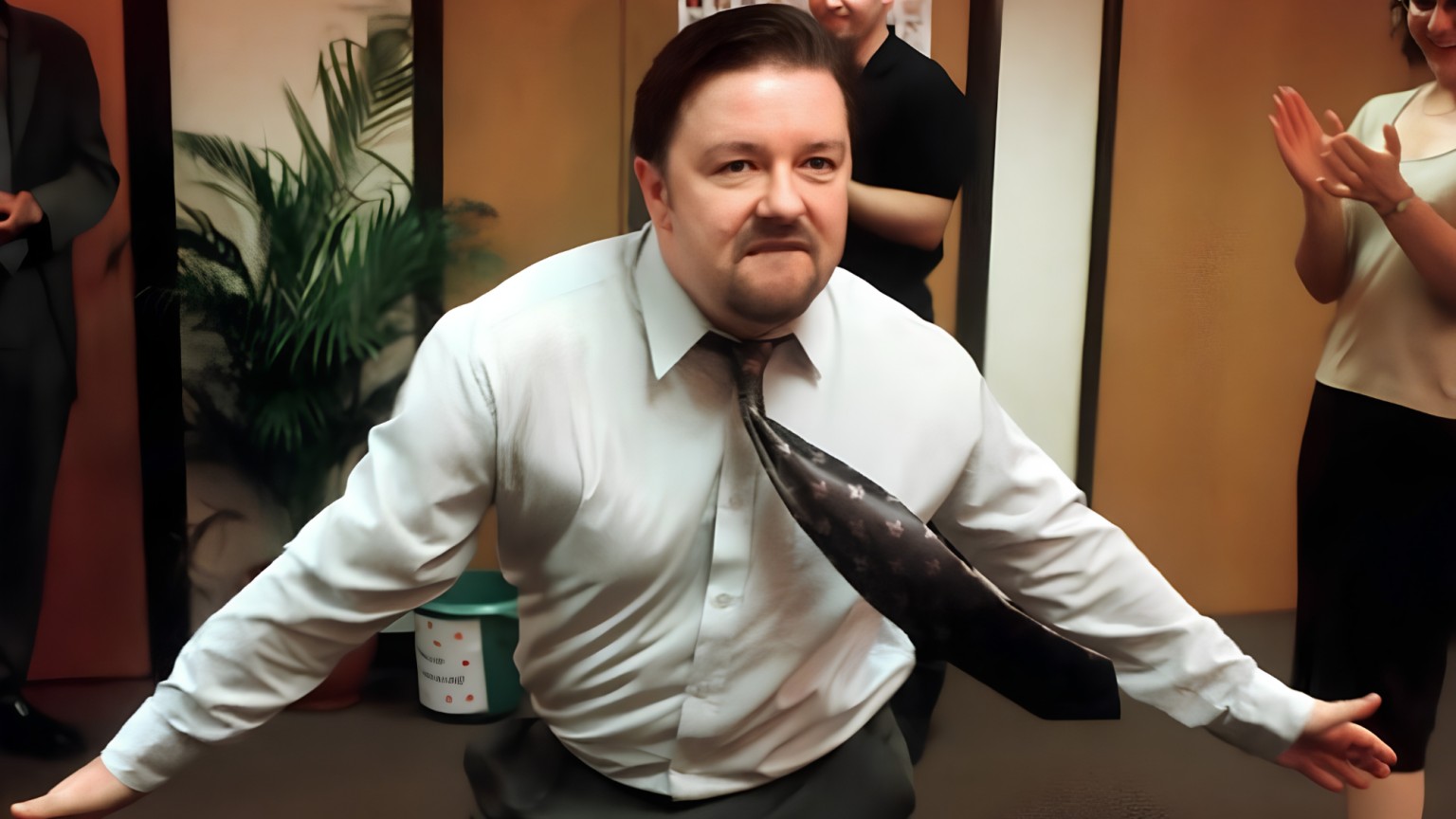
This week marked 25 years since The Office, co-created by Ricky Gervais and Stephen Merchant, was first broadcast. It has been celebrated by the BBC with a charming little interview on iPlayer between MacKenzie Crook (Gareth) and Martin Freeman (Tim), arguably the two actors – both relatively unknown at the time – whose careers were given the greatest boost by the series. This is peppered with short clips from classic scenes to whet viewers’ appetites for the whole 14 episodes – which are also back on iPlayer to be watched in their entirety.
Famously released to muted applause at first, The Office left many nonplussed viewers unsure whether the thing was meant to be a comedy at all. The opening titles featured a mournful, bittersweet piano ballad played over scenes of the drab urban brutalism of a Slough that had unaccountably escaped Betjeman’s friendly bombs. It all seemed to suggest a fly-on-the-wall documentary. This impression was reinforced by the establishing shots of an open-plan office – used by ‘Wernham Hogg Paper Company’ – that looked almost provocatively mundane.
Tim, Gareth and the other regulars all seemed highly plausible if somewhat heart-breaking figures, trapped like Gareth’s stapler in the merciless jelly of British white-collar life. Only gradually did it dawn on viewers that the grotesque, impossibly unself-aware David Brent, the manager of the paper company’s Slough branch, was a creation at all, let alone the creation of genius that he is now widely understood to be. When that clicked, however, everything fell into place.
Word of The Office’s brilliance began to spread. The show quickly became appointment viewing for initiates. I remember clearly the excitement of sharing one’s appreciation of it, as if it was a hipster band or new recreational high. It was for a few breathless weeks almost forbidden knowledge, like Adult Swim or something on the dark web, rather than a BBC2 sitcom.
Audience figures grew, and it was soon repeated, to greater and greater viewing figures and acclaim. It is now often neck and neck with Fawlty Towers in polls for the greatest British sitcom of all time.
Like Fawlty Towers, The Office benefits from a significant degree of rationing. It consists of just two near-perfect, six-episode series, and an extended two-part Christmas Special that emphatically resolved many of the narrative threads and made it clear that That Was It.
David Brent’s masochistic relationship with the boorish, boisterous sales-rep, Chris ‘Finchy’ Finch, who never failed to put David down, was a highlight. His humiliation at Finchy’s hands was terminated in the final episode with the immortal line: ‘Chris, why don’t you fuck off?’ I swear you could hear people cheering up and down the street as if England had scored in time added on. The realisation that we were suddenly rooting for Brent was astounding. This was then topped when the adorable Dawn and the stoic-but-hapless Tim’s long-smothered romantic yearning was finally fulfilled, just as we’d all lost hope.
Their kiss at the end of The Office Christmas Party was the sitcom equivalent of the final ‘Liebestod’ aria in Richard Wagner’s Tristan und Isolde, that resolves a tension that has been simmering since the discordant Tristan chord in the very opening bars of the piece over three hours earlier.
Understandably, the 25th anniversary of this crown jewel in the BBC’s 21st-century comedy output is a chance for it to bathe in some self-congratulation. An opportunity for the Beeb to earn a bit of well-deserved credit for having the nerve to trust in such a relatively unknown team and radical approach to scripted comedy.
But it is hard, too, to avoid the sense that The Office, far from heralding a brave new comedy world, represented something else – the end to the BBC-led era of the sitcom as a viable vehicle for mass entertainment.
The switch to the deadpan acting and the single-camera, ‘mockumentary’-style comedy – already established by shows like The Royle Family and People Like Us, and Christopher Guest movies like This is Spinal Tap – reached its apotheosis with The Office. It was perfectly suited to an audience that was much more comfortable with the cynical, media-savvy shared joke about the ‘format’, than it was with traditional sitcoms like Only Fools and Horses and Porridge.
The comedy that arose from watching David Brent fail to read the room, or Gareth realise that he is being ridiculed for his territorial-army skills, rather than admired, is often described as ‘cringe’. But it remains much less cringe for the double-screen generation than anything that looks as if it is ‘trying’ too hard to make you laugh, with a cast of ‘funny’ characters and their ‘funny’ catchphrases and quips. This was the traditional sitcom mode that Gervais himself explicitly mocked in the fictional show, ‘When the Whistle Blows’, which features in his post-Office show, Extras.
Extras was itself a great sequel to The Office. It accepted the new rules and worked to constantly challenge and undermine expectations of what a sitcom is. As with postmodern literature, the focus is now less on the story and the characters and more on the delivery system. Then there’s Peep Show and, more recently, Fleabag, which were arguably even more radical deconstructions. A few brave campaigners like Not Going Out and Mrs Brown’s Boys have continued to fight for the continuation of the traditional studio format, but even those shows with more traditional sitcom set-ups, like The Inbetweeners and Friday Night Dinner, avoided the laughter track for fear of sounding dated. Meanwhile in the US, the likes of Modern Family were helped to feel, well, modern, by filming and straight-to-camera monologues that were clearly borrowed from the mockumentary approach of The Office. This despite there being no plausible suggestion that a documentary was really being made.
I loved the old sitcoms, and have written on here before about their golden age. They peopled the national imagination with archetypes that fed our souls and our understanding of who we were for decades. But there is no escaping the fact that creative destruction is both desirable and inevitable in any such field. We were at least lucky that when the old sitcom walls were finally razed to the ground, it was at the hands of the utterly brilliant, unanswerable and endlessly repeatable, The Office. Twenty-five years on, we are surely due another.
Simon Evans is a spiked columnist and stand-up comedian. Tickets for his tour, Staring at the Sun, are on sale here.

The chilling murder of Ann Widdecombe has stunned the country. The longtime Conservative MP and Reform immigration spokeswoman was found at her remote home in Dartmoor, Devon, with severe head injuries last Thursday. The suspected attack is believed to have taken place on Wednesday.
Naturally, Widdecombe’s death has raised questions about the safety of current and former MPs. In the past decade, Labour MP Jo Cox and Conservative MP Sir David Amess have been murdered. There was also an attack on Labour MP Stephen Timms, thankfully not fatal, in 2010.
Threats against politicians have increased significantly in recent years, owing to the unholy alliance of technology and political polarisation. A review of MPs’ security is plainly necessary. Reform UK, in particular, has criticised the lack of support for its MPs. Yet the distress caused by Widdecombe’s murder has been heightened by a lack of clear information from officials – most notably the police – and a shifting account of Widdecombe’s death.
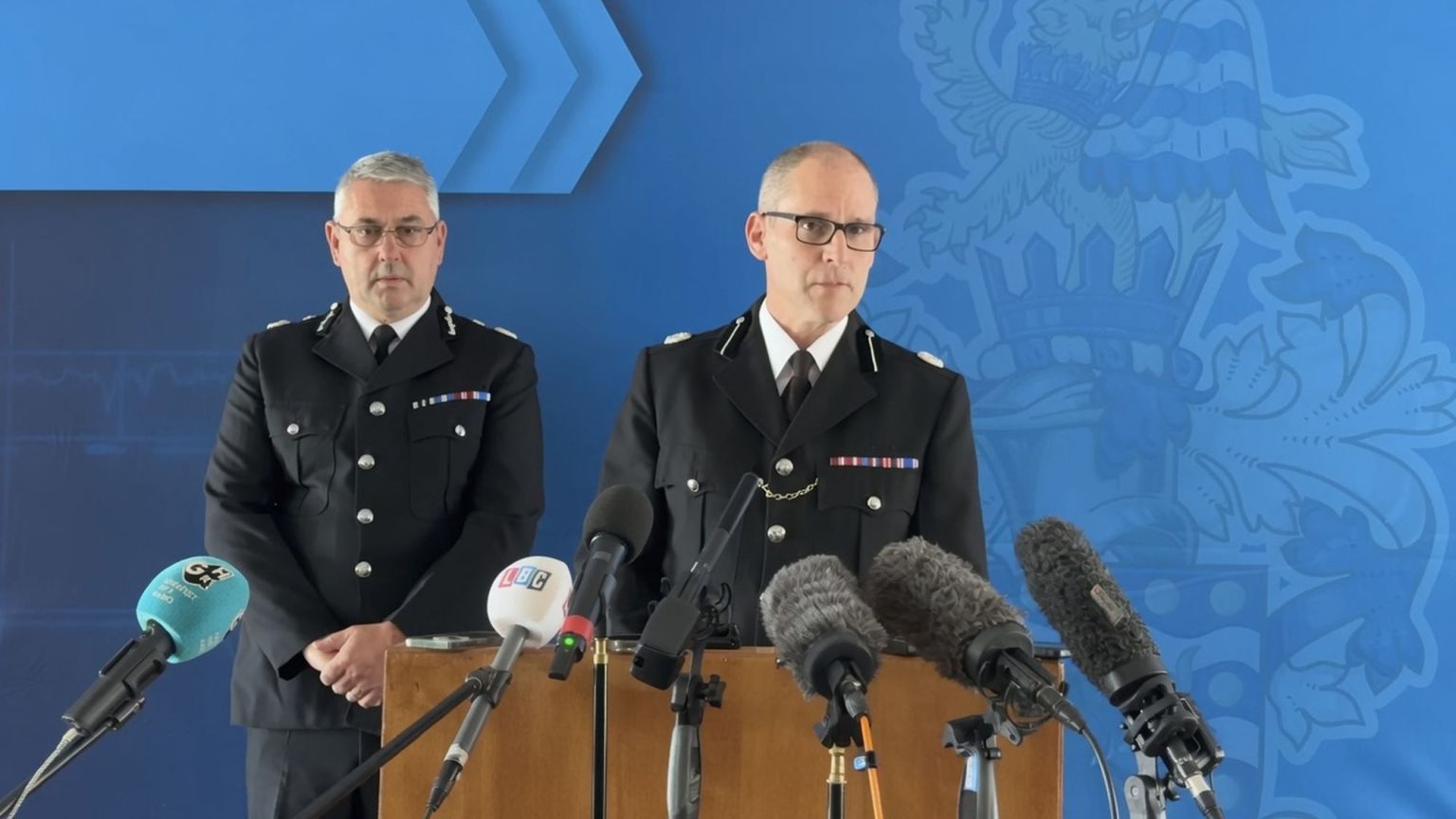
When, on the morning of 10 July, the public woke to the news that Widdecombe was dead, there was no suggestion of foul play. By Friday afternoon, however, reports began to circulate that she had been murdered. Then came a press conference from Devon and Cornwall police – delayed by over an hour into Friday evening – in which an officer stated that a 26-year-old man had been arrested and that there was no evidence her killing was ‘politically motivated’.
All of that has since turned out to be wrong. A day later, the ‘suspect’ was released without charge. Since then, a 28-year-old man has been arrested. He was reported to have driven nearly 300 miles from his home in Rotherham to Widdecombe’s Dartmoor home on the day of her death. Counter-terror police have taken over the investigation.
Once again, the behaviour of the police has been both unprofessional and dishonest. No sooner had her death been confirmed than the public were told not to ‘speculate’ – as if they had no right to wonder why a well-known conservative public figure had been found with fatal head injuries in her own home.
If the police didn’t know what happened or why, they should have plainly said so. This would have been no admission of failure – they could have said that they were investigating potential motives and would update the public in due course. To find out what happened and why is precisely what detectives are for.
Instead, there seems to have been an urge to keep the ill-informed masses at bay, lest they take to the streets. Clearly, the police had at the back of their minds the riots provoked by the 2024 Southport murders – which, incidentally, were fuelled by the vacuum of information left by the authorities. It was proof that caution can, and does, become self-defeating. The public, naturally, feel as though they are not getting the full picture.
But making premature assertions about a case is no better. The government’s independent reviewer of terrorism legislation, Jonathan Hall KC, said Devon and Cornwall Police appeared to have broken a ‘golden rule’ by commenting too firmly on a live investigation before any facts were settled. He is quite right.
This pattern of police behaviour will have profound consequences. Once public trust is squandered, every subsequent police statement becomes harder to believe, every appeal for calm less persuasive and every online rumour more potent. In trying to prevent disorder by withholding information, the police have risked producing the very conditions in which disorder thrives – suspicion, grievance and the belief that the public is being managed rather than informed. That distrust is already visible in the reaction to Widdecombe’s death.
In many circles, even previously ‘polite’ ones, there is now open suspicion of the police, and more than a degree of hostility. It is an institution seen as the paramilitary wing of the progressive intelligentsia. This should come as no surprise when shadowy units within the Home Office are ready to pump us full of ‘Don’t Look Back in Anger’-style propaganda. Information is being withheld and the investigatory waters muddied because of the authorities’ contemptuous view of the general public.
This needs to be addressed as a matter of urgency, before trust – and, thereby, law and order itself – breaks down completely.
Paul Birch is a former police officer and counter-terrorism specialist. You can read his Substack here.
The chilling murder of Ann Widdecombe has stunned the country. The longtime Conservative MP and Reform immigration spokeswoman was found at her remote home in Dartmoor, Devon, with severe head injuries last Thursday. The suspected attack is believed to have taken place on Wednesday.
Naturally, Widdecombe’s death has raised questions about the safety of current and former MPs. In the past decade, Labour MP Jo Cox and Conservative MP Sir David Amess have been murdered. There was also an attack on Labour MP Stephen Timms, thankfully not fatal, in 2010.
Threats against politicians have increased significantly in recent years, owing to the unholy alliance of technology and political polarisation. A review of MPs’ security is plainly necessary. Reform UK, in particular, has criticised the lack of support for its MPs. Yet the distress caused by Widdecombe’s murder has been heightened by a lack of clear information from officials – most notably the police – and a shifting account of Widdecombe’s death.
When, on the morning of 10 July, the public woke to the news that Widdecombe was dead, there was no suggestion of foul play. By Friday afternoon, however, reports began to circulate that she had been murdered. Then came a press conference from Devon and Cornwall police – delayed by over an hour into Friday evening – in which an officer stated that a 26-year-old man had been arrested and that there was no evidence her killing was ‘politically motivated’.
All of that has since turned out to be wrong. A day later, the ‘suspect’ was released without charge. Since then, a 28-year-old man has been arrested. He was reported to have driven nearly 300 miles from his home in Rotherham to Widdecombe’s Dartmoor home on the day of her death. Counter-terror police have taken over the investigation.
Once again, the behaviour of the police has been both unprofessional and dishonest. No sooner had her death been confirmed than the public were told not to ‘speculate’ – as if they had no right to wonder why a well-known conservative public figure had been found with fatal head injuries in her own home.
If the police didn’t know what happened or why, they should have plainly said so. This would have been no admission of failure – they could have said that they were investigating potential motives and would update the public in due course. To find out what happened and why is precisely what detectives are for.
Instead, there seems to have been an urge to keep the ill-informed masses at bay, lest they take to the streets. Clearly, the police had at the back of their minds the riots provoked by the 2024 Southport murders – which, incidentally, were fuelled by the vacuum of information left by the authorities. It was proof that caution can, and does, become self-defeating. The public, naturally, feel as though they are not getting the full picture.
But making premature assertions about a case is no better. The government’s independent reviewer of terrorism legislation, Jonathan Hall KC, said Devon and Cornwall Police appeared to have broken a ‘golden rule’ by commenting too firmly on a live investigation before any facts were settled. He is quite right.
This pattern of police behaviour will have profound consequences. Once public trust is squandered, every subsequent police statement becomes harder to believe, every appeal for calm less persuasive and every online rumour more potent. In trying to prevent disorder by withholding information, the police have risked producing the very conditions in which disorder thrives – suspicion, grievance and the belief that the public is being managed rather than informed. That distrust is already visible in the reaction to Widdecombe’s death.
In many circles, even previously ‘polite’ ones, there is now open suspicion of the police, and more than a degree of hostility. It is an institution seen as the paramilitary wing of the progressive intelligentsia. This should come as no surprise when shadowy units within the Home Office are ready to pump us full of ‘Don’t Look Back in Anger’-style propaganda. Information is being withheld and the investigatory waters muddied because of the authorities’ contemptuous view of the general public.
This needs to be addressed as a matter of urgency, before trust – and, thereby, law and order itself – breaks down completely.
Paul Birch is a former police officer and counter-terrorism specialist. You can read his Substack here.

Andy Burnham’s coronation as Labour leader and therefore prime minister is confirmed. The leadership crisis that engulfed Labour between May and July 2026 has reached a resolution.
Burnham’s succession, backed by 379 MPs out of a total 403, would point to an outbreak of harmony in the ranks of the parliamentary Labour Party (PLP). Rebel MP Neil Coyle’s decision to nominate Catherine West, whose chaotic intervention in May 2026 probably helped expedite proceedings, amounted to no more than a lonely protest. The direction of travel has been set for weeks now, at least.
The precise moment at which Burnham’s elevation became inevitable will be debated among political analysts in the years ahead. But it is worth pausing to consider the remarkable path that carried him to the summit of British politics.
The former Labour MP and two-time leadership candidate stood down as mayor of Greater Manchester mere weeks ago to run as a candidate in a by-election, triggered by a Starmerite former minister who resigned under the cloud of scandal, for the sole purpose of securing his return to parliament and therefore his right to depose the prime minister.

MDU warns Chancellor clinical negligence system ‘not fit for purpose’

Northern Ireland RE curriculum is ‘indoctrination’ – Supreme Court
Burnham’s coup was completed in the June 2026 Makerfield by-election.
This Makerfield contest stands as the source of Burnham’s political authority and, indeed, his claim to the premiership itself. The popular validation of his project by a Reform-facing constituency converted his candidacy into an irresistible political proposition. The bonds of loyalty and procedural safeguards that secured Keir Starmer in Downing Street simply melted away.
In his victory speech on Friday afternoon, Burnham reiterated the story of Makerfield. A total of 379 MPs, he said, had “heard the call from the people of Makerfield, on behalf of forgotten places everywhere up and down this country, for a return of the Labour they once knew.”
One consequence of Burnham’s coronation is that Labour has avoided the drawn-out infighting and self-destruction that leadership contests so often produce. The PLP has deposed a prime minister with only limited chaos – notwithstanding West’s best efforts. Labour MPs have avoided a damaging repeat of the July-September 2022 Conservative leadership contest, which delivered Liz Truss as prime minister, and skipped straight to the coronation phase.
But the Labour Party still has difficult questions to confront. A carefully managed coronation may avoid the visible chaos of a contest, but it cannot extinguish the deeper questions surrounding the failure of Keir Starmer’s tenure as prime minister, or the forces that brought about his downfall.
Burnham’s elevation was uncontested. But the settlement that follows – the style, priorities and ideological direction of the incoming government – will not be.
The risk is that divisions left unaired this summer will continue to rumble beneath the surface. Since leaving office, Rishi Sunak has argued that the circumstances of his coronation and the parliamentary gerrymandering of the 1922 committee damaged his authority by leaving underlying arguments unresolved.
A similar dynamic now hangs over Labour. Even as MPs bask in the regal glow of Burnham’s coronation, there are already signs that the questions suppressed by the absence of a succession struggle are beginning to resurface.
The debate over the direction of Burnham’s government has been channelled into speculation over who will run the Treasury. This choice already carries a level of importance and symbolic weight not attached to the selection of a chancellor for decades.
The intrigue has intensified in recent days as the field of candidates has narrowed to Ed Miliband, the energy secretary, and Shabana Mahmood, the home secretary. The significance of this choice lies in what the two candidates represent within Burnham’s political coalition.
Mahmood is the most prominent government figure associated with the Blue Labour tradition. As home secretary, she has sought to translate elements of its political philosophy into policy. In the case of her proposed reforms to indefinite leave to remain (ILR), Mahmood’s politics has placed her at the sharp end of progressive criticism of the Starmer government.
Ed Miliband is probably the figurehead of Labour’s “soft left” elements. The soft left has the strongest claim on the Burnham settlement; its organised elements, represented by the relaunched Tribune group, played a leading role in Starmer’s downfall, and it is the political tradition with which Burnham has historically been most closely identified. Louise Haigh, a key Burnham lieutenant, led the relaunch of the Tribune group; she is likely to assume the post of chancellor of the Duchy of Lancaster.
The case for Miliband is that his political and intellectual clout could drive radical economic reform in the face of institutional resistance. Miliband has an identifiable political economy that Mahmood, at least during her time in government as home secretary and justice secretary, has not articulated with the same clarity.
Starmer maintained Miliband, in the face of incessant and hostile briefing, but never fully embraced him. Burnham appointing his longstanding ally as chancellor would represent a statement of intent therefore, and a symbolic pivot against economic orthodoxy. Mainstream, the soft left group that has backed Burnham since its launch, called this week for the appointment of a “progressive chancellor with vision, values and a record of delivering structural change; someone who understands the threat that climate breakdown poses to people and planet and who has the courage to rebuild our state’s productive capacity.”
But there remains considerable antipathy towards Miliband among parts of the Labour Party, who still associate him with the 2015 general election defeat. The risk is that his appointment would disrupt the soft-blue unity that carried Burnham from Makerfield to Downing Street.
Burnham’s soft-blue politics
The end of Keir Starmer came when the criticisms of the Blue Labour and soft left schools converged.
Intriguingly, Burnham embraced a soft-blue analysis in his victory speech. He referred to a “generation of politicians” who had failed to challenge “an economic model that simply doesn’t work well enough for ordinary people.”
In his broadside blasting four decades of failure, Burnham offered no carve-out for Keir Starmer.
The incoming prime minister declared: “Four decades of the neoliberalism that began in the 1980s have not been kind to the places that built our party, nor to the communities across the UK in rural and coastal areas. So we pledge today to them to be better.”
He added: “Political power was centralised and economic power was privatised. The country surrendered control of the essentials – housing, water, energy, transport – and left people exposed to higher costs.
“That, in turn, led to the concentration of more wealth and power in the hands of fewer people and fewer places. Large parts of Britain were deindustrialised without the power to set new ambitions for themselves.”
In the speech’s most effective passage, Burnham proclaimed: “The right used the phrase ‘take back control’ – but they are the ones who gave it away in the first place.
“If we want an economy and a country that works for all people and places – which to me should always be at the very core of Labourism – then it requires a new path to the one we’ve been on for the last 40 years.”
Burnham’s economic radicalism represents a tune that the PLP can sing in relative unison. Starmer neglected the importance of articulating a political analysis as prime minister, and of playing to the crowd.
The formation of the new Reindustrialisation Research Group (ReRG) of Labour MPs will provide Burnham’s analysis with stronger institutional grounding in the PLP. The group similarly symbolises the unity between the “blue” and “soft” wings of the Labour Party that has characterised Burnham’s campaign. The caucus counts Yuan Yang, who relaunched the Tribune group alongside Haigh, and Jonathan Hinder, arguably this parliament’s most prominent Blue Labour MP, among its members.
The ReRG has endorsed the “Makerfield test” posed by Burnham in his first speech as a Labour MP – a pledge to “ensure the places Westminster has neglected will now get fairness”. What this test will mean in practice remains unclear. As a guiding principle, however, it could provide a framework for Burnham’s coalition to rally around.
Burnham’s first steps as Labour leader indicate his intention to preserve the soft-blue alliance that delivered Starmer’s downfall and brought him to power. That would point towards the appointment of Mahmood as chancellor, establishing a soft-blue axis at the centre of government. This is consistent with the current state of reporting.
Burnham begins
The early months of a Burnham government will probably not be defined by sweeping policy changes – the sort of issues that risk reopening wounds in the Labour Party. Rather, the incoming prime minister’s immediate focus will be geared toward earning a public hearing. Burnham inherits a Labour Party whose credibility has been damaged by successive U-turns and a public that simply stopped listening to Starmer. The former mayor will undertake a form of political penance on behalf of his party (for decisions he did not make), thus building distance between his leadership and the Starmer government.
But Burnham’s analysis of the failures of successive governments will soon need to be channelled into a positive policy programme. It will be up to him to define what it means to be “boldly, confidently, authentically” Labour. And it is in these grey areas that the competition for the soul of the Burnham government will be fought. The incoming prime minister’s greatest challenges will come when events or policy test the unity of his coalition, including on Europe and immigration.
But pitching to this set of Labour MPs, at this moment, Burnham’s rhetoric is right.
The question that will determine Burnham’s success in the immediate term is whether his decisions, including his choice of chancellor, can match his rhetoric and sustain the coalition that carried him to power.
Josh Self is editor of Politics.co.uk, follow him on Bluesky here and X here.
If you’ve ever done a personality quiz, you’ve probably heard of the Myers-Briggs personality types.
These are assigned based on tests that measure people’s levels of extroversion (E), introversion (I), sensing (S), intuition (N), thinking (T), feeling (F), judging (J) and perceiving (P). Our balance of these factors is meant to reflect how we receive and give energy (E or I), take in information (S and N), reach conclusions (T and F) and relate to the outside world (J and P).
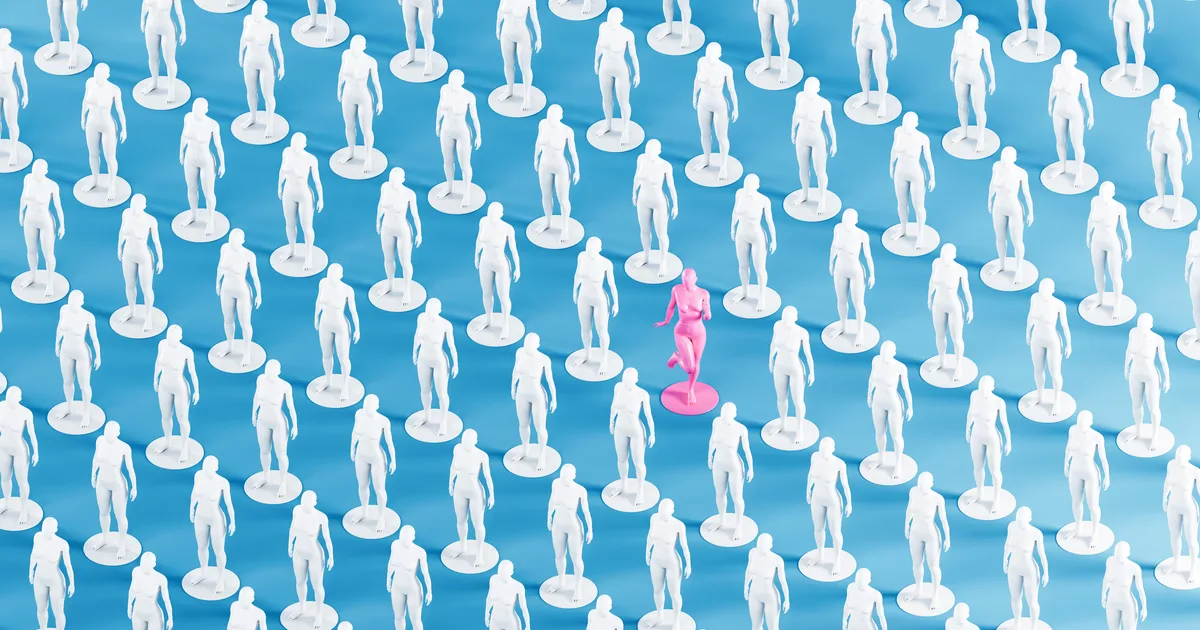
In total, there 16 Myers-Briggs personality types, made up of different combinations of these four traits.
And the rarest kind seems to be INFJ, which describes around just 1.5% of the population.
We spoke to psychologist and CEO of Male Allies UK, Lee Chambers, about what INFJ personality types usually experience, and how they’re often “misunderstood”…
What does an INFJ personality type mean?
INFJs score highly on introversion, intuition, feeling and judging.
They may “seek meaning and connection in ideas, relationships, and material possessions”, Myers-Briggs’ site reads.
Chambers explained that INFJs will often “look calm on the outside while processing a lot on the inside”.
“They tend to be intense, while also being quiet, enjoying time with a small, close-knit group, going deep in conversation, [and] actively listening, before stepping away to recharge alone,” he continued. “They are likely to enjoy routine, space to reflect, and doing things that have meaning.”
He added: “They tend to be well attuned to the energy of rooms of people, often care deeply about the feelings of others, and prefer harmony, while having low tolerance for bravado, small talk, and things they perceive as shallow.”
How do INFJs connect with others?
The psychologist said this personality type tends to enjoy meaningful activities with people who share a passion for what matters to them.
“But they also find joy in space to reflect, expression through creativity and feeling in alignment,” he noted.
“A slower, deeper type of connection, with just a few people, tends to create the trust that this personality type values. And many have a personal mission they are on, that they get happiness from bringing to the world.”
How are INFJs perceived?
Chambers added that INFJs are “easily misunderstood, their quietness mistaken for being cold and secretive”.
Their empathy can make them seem like a “soft touch” to some, while others might think their deep caring tendencies mean they’re constantly emotionally available.
In reality, though, the expert said INFJs need “solitude to recharge”.
Meanwhile, their capacity for deep thought might sometimes make them appear overly serious.
“While every INFJ is an individual, they are likely to listen more than they speak, always look like they have it together (even when they don’t), are good at picking up emotional undercurrents, and remember the thing others miss,” he ended.
An Aberdeen University staff member has been charged with an offence after posting insensitive comments online about Ann Widdecombe‘s death.
Web developer Heather Herbert called the 78-year-old politician’s death “good news” on Bluesky. She also posted that she hoped Widdecombe had died a “painful death” before it emerged her death was being treated as murder.
The late former Tory MP and Reform UK spokesperson was found dead in her home on 9 July. A 28-year-old man was arrested and re-arrested in Yorkshire in connection with her death, which is now being investigated as terrorism-related.
Reform UK scramble to make themselves main victim in alleged Widdicombe murder
Ann Widdecombe: Herbert arrested for mean speech?
Widdecombe attracted widespread public loathing for her perceived homophobia, conservatism and general bigotry.
She held what many would consider backwards views on abortion rights, gay marriage and other elements of social progress. The Spectator put it with undue decorum:
On questions of life and family, she didn’t hedge or apologise. Her candour and unapologetic style had appeal beyond Britain.
***
She never softened her positions to make them more acceptable. She opposed abortion and assisted dying on principle. She treated politics as a place where moral convictions were allowed to matter, even when holding them came at a cost.
That cost, however, is counted in the lives of discriminated queer people and those struggling to access abortion care. In other words, she was bigoted and unremorsefully so. (It’s worth noting here that the Spectator was, unsurprisingly, proven institutionally anti-Muslim and Islamophobic — fitting really.)
As 1990s prisons minister, Widdecombe notoriously voted against laws which would’ve relaxed handcuff guidance for pregnant people on antenatal leave to hospital. On Widdecombe’s say-so, the policy of chaining pregnant convicted women to hospital beds was continued, to much public outrage.
Referencing Widdecombe’s comments from her time as prisons minister, Herbert wrote:
I hope she was handcuffed to the bed as she screamed in agony.
In connection with the posts, Herbert was arrested and charged which raises serious questions about Police Scotland’s approach to protecting free speech. The details of the charge will be revealed at Herbert’s first court appearance.
A Police Scotland spokesperson stated:
We received reports on Saturday 11 July 2026 relating to a post made online. Following further assessment, a 50-year-old has been arrested and charged in connection. A report will be submitted to the Procurator Fiscal.
Herbert told the National she felt the response to her posts had been “hugely overblown”.
looking forward to all the free speech warriors calling out this clear and chilling overreach https://t.co/k0cmH6Mg87
— Ben Smoke (@bencsmoke) July 16, 2026
What would the politician have wanted?
The oddity about Herbert’s arrest and charge over some admittedly grim online posts is that it directly challenges something Widdecombe’s admirers loved her for.
In the Spectator, Lee Cohen wrote:
In her tribute to Ann’s life, my friend, the marvellous journalist Allison Pearson, recalled how Widdecombe once told students at the Oxford Union:
‘Nobody has the right to live their lives being protected from offence or hurt feelings. It is an occupational hazard of living in society, she said. If you really can’t take it, become a hermit.’
She believed in free speech not as an abstract slogan but as something worth defending even when it costs something. When people in positions of influence spend years telling the public that certain views are not just wrong but monstrous, they help create the conditions in which violence against those who hold them starts to seem less shocking.
This is, by all accounts, a fairly standard liberal account of — or rather, defence for — free speech.
Interestingly then, Widdecombe — who was by all accounts a free speech absolutist — would probably denounce Herbert’s arrest. This point is even clearer given that it’s very unclear who exactly is “being protected from offence or hurt feelings” in this case.
Is it Widdecombe herself, posthumously? Her colleagues or peers? Or the public at large?
It has been a big week for such behaviour on both sides of the pond, when cartoonishly evil US senator, Lindsey Graham, died shortly after Widdecombe. The internet quickly welcomed his death too.
Graham notoriously wished death and destruction — invoking Hiroshima — on innocent Palestinian families in Gaza.
Ann Widdecombe: ghouls gloss over bigotry to praise “fun, feisty” politician as suspect arrested
The paradox of Widdecombe’s wishes
No doubt right-wingers and the Scotland-critical crowd would say that this is not the first “online hate-related incident” to lead to an arrest. Many racists and others, surely, have been arrested for online hate. But most of them have been targeted at individuals, or more often groups, who are alive and can be hurt.
Whatever you make of Widdecombe’s killing, whether it’s terrorism, or whether we should socially condemn “speaking ill of the dead”, this clearly is a free speech problem. The police has also yet to clarify under what law Herbert has been charged.
Remember the cottage industry in Western liberal media, who penned many joyful inches celebrating the bombing of Ayatollah Ali Khamenei and his murdered family? Or those gleeful over the execution of Palestinian journalists? I don’t remember any issue with “speaking ill of the dead” then.
Whatever you think of the double standards, it’s clear that Ann Widdecombe would take issue with the policing of speech in either direction. The best way to honour her, for anyone willing to step over her bigotry, would be to remember that.
Featured image via the Canary

There are many perspectives the general public holds about death that mediums personally feel are untrue.
A medium’s main job is to help people connect with loved ones who have died; they see themselves as middlemen who communicate messages and bridge the gap between the physical and non-physical world, according to medium Alexis Williams. What’s more, some serve as a guiding light to navigate death, which is something so many people struggle to understand.
“The medium essentially becomes the antenna between worlds. What mediums train themselves to do to effectively receive messages is move or shift their own thoughts and awareness to the side and be completely open and receptive to the impressions that come to them from the consciousness they are connecting with,” Williams told HuffPost.
Mediums believe they have a unique and personal connection to death that many people do not – from what happens to our souls after we die to what the transition to the afterlife looks like. They navigate various religions, beliefs and fears people have about dying.
Here’s what they want you to know about their experiences with death.
1. Death is not a “door closing,” but a chance for a continued relationship
While we may no longer be able to talk to those who have died the way we did when they were alive, Williams said the biggest misconception she feels people have about death is that it’s a complete ending.
“Most people think of death as a door closing, when what I experience over and over is that it’s a frequency shift,” she said.
The communication may look different, but you don’t need a medium to tell your loved ones what you want to say. “They are always around and hear you,” medium Emilee Koch told HuffPost. This continues your relationship in a new way, one that allows you to remain connected with them until you’re reunited again.
“I wish people understood that dying does not mean you are no longer existing,” medium Naomi Attar said. “There are pieces of you that continue, just not in physical form. Our loved ones visit us frequently and try to speak to us. Everyone can listen to their loved ones in spirit; the issue is that most don’t listen.”
“Our consciousness lives on, our memories live on, the love we have for others lives on, and we’re not finished learning even on the other side,” Attar added.
Also, mediums believe our loved ones send us signs when they die. “We just have to pay attention. They would never abandon you, and they send signs so you know how much you still mean to them,” Attar said.
This could look like them appearing in dreams, songs that come on in the right moment, conversations with other people and other physical signs. It’s a new, unique way to stay connected with you.
2. A fear of death is normal, but limiting
Death can be scary for so many people, and that fear may impact how you view what happens after someone dies. It may also affect your belief in what happens to us after dying.
“When the body is in fear, it narrows what we’re able to take in, physically and energetically, and the possibilities we believe are available,” Williams said.
The perception of death can vary from person to person. Some believe in heaven and hell, others believe there is no afterlife, and so many of us simply aren’t sure what happens after you die. But no matter what you believe in, dying can be a scary thing to think about, and it’s normal to fear it.
“We fear what we don’t understand. It can be difficult to understand something we have not experienced. Some need to be proven differently but will still find ways to excuse it,” Attar said.
“I also find people can be fearful of the opposite – what if there is no afterlife? They want to believe it so badly that the thought of it not being true is fearful itself. But what is fascinating to me is that no matter the cause or reason for fear, they are hyper-focused on the dying itself rather than living their life to the fullest knowing the dying is inevitable.”
3. Death is an opportunity to let go of pain
The dying process differs for everyone, but mediums believe that death presents an opportunity to let go of pain. “Once our soul finally lets go, we are no longer filled with pain, whether emotion or physical,” Koch says.
Others believe that experiences from past lives carry into the next.
“I don’t believe there is one set of rules for [dying or an afterlife], and it is something that no one truly knows with full certainty. Maybe that’s part of the mystery and something we aren’t meant to know until the time comes for each of us,” Attar said.
“What I do know, though, is that we have many lifetimes and carry experiences from other lives into our current one. Some repeat relationships and people across multiple lifetimes. It’s this never-ending journey, and I think that’s beautiful.”
She continues: “Everyone has their own views of what death is like, but what I will say is that when spirit is speaking about their process, they often speak of who was there with them, how they felt, and how much love they had around them. They have told me many times that they are going ‘home,’ but no one really knows what ‘home’ means.”
4. The dead aren’t alone and haven’t left you
Losing a loved one and worrying about them in the afterlife – or wherever – is completely normal. But mediums want you to know that they aren’t alone when their souls let go and cross over. And you aren’t alone either.
“We are greeted with more love than you can imagine while here on earth. A lot of times, people are worried that the person who passed is by themselves, sad or disappointed about something that happened here. They never, ever are,” Koch said.
When someone dies, whether it be a parent, grandparent, friend or spouse, your daily life may completely shift. You aren’t doing the things you used to do with them because they are no longer in this world with us in the way they once were. But our relationship with the deceased still exists – just in a new form.
“I wish more people understood that death isn’t the end of the road for us, or the end of our relationship with our loved ones,” Koch said. “It never makes the grieving process easier, but it does give us hope and comfort knowing our loved ones are still with us.”
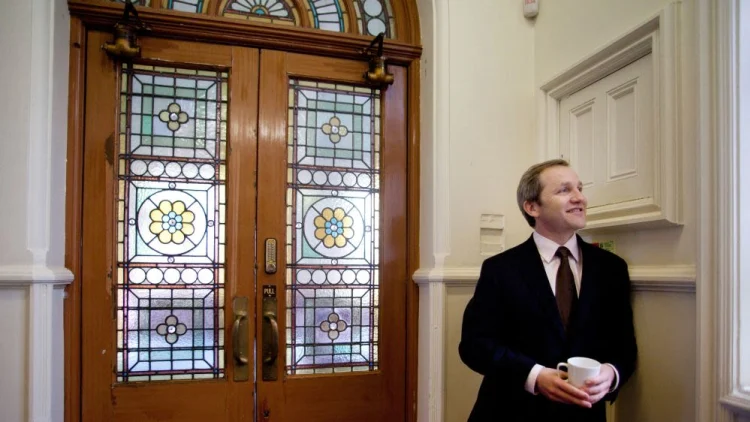

James Purnell was VC at UAL for four years (Alamy)
6 min read
A Labour government under Andy Burnham could scrap the student loan system and replace it with a graduate tax or stepped repayment system.
James Purnell, who has been picked as Burnham’s chief of staff and was vice chancellor (VC) at the University of the Arts London for four years, has previously been outspoken about reforming the student loan system.
Just two years ago, while Purnell was still VC, UAL commissioned London Economics to model several alternatives to the student loan repayment system, including scrapping the student loan system and replacing it with “a real graduate tax”. Purnell resigned from his role later in 2024 following months-long student protests against the university’s stance on the war in Gaza.
Nick Hillman, former government adviser and now director of Higher Education Policy Institute (HEPI), told PoliticsHome that Purnell was “the most active vice chancellor on the issue of student finance and graduate repayments” while heading up UAL.
The current student loan system was created under the Conservative government, but the issue exploded onto the headlines earlier this year after Chancellor Rachel Reeves insisted that her decision at the November Budget to freeze the threshold at which ‘Plan Two’ graduates start to pay back their loans was “fair and reasonable”.
In a blog for the HEPI think tank in 2024 titled Fixing higher education funding should start with student loans, Purnell argued that “the whole [higher education] system desperately needs reform to ensure the sector’s long-term sustainability”.
As Purnell wrote in his essay, one option is to “scrap the student loan system entirely and replace it with a real graduate tax”.
“A tax tied to income, which no wealthy graduate would be able to pay their way out of, would be genuinely progressive,” Purnell said.
During his campaign for Labour leader in 2015, Burnham pledged to replace tuition fees with a “graduate tax” if he was elected.
Another option mooted by Purnell that, in his words, “would not require such a major overhaul of the system” is the introduction of a stepped repayment system.
Under the changes, higher earners would make repayments for more of the maximum repayment period, thereby subsidising a shortfall in repayments from low and middle-earning graduates. This would effectively mean that higher-earning graduates would pay back more money for longer.
Both of these methods would, Purnell argued at the time, allow for the reintroduction of maintenance grants, a move the Labour government later committed to in 2025.
Hillman told PoliticsHome: “On paper, the stepped repayment model is very progressive: the better you do from your education, the more you repay.”
“But it’s making the student loan system much more like a tax because it’s much less related to how much we borrow. It’s almost based on the idea of how much money can we squeeze out of the best-paid graduates? And it’s breaking that link with their actual borrowings.”
However, Hillman said that the context now has completely changed from when Purnell was doing this work two years ago.
“All those people who were complaining about the current student loan system earlier this year – and of course there was a Treasury Select Committee report on this just last week – they’re all arguing the loan system should become more like a loan and less like a tax.”
Hillman added: “The stepped repayment model is very similar to graduate tax, but the first six months of this year, the argument was all the opposite. It was ‘we hate the high interest rates. We hate the fact that we’re never going to pay off our loans’.”
Purnell also argued in 2024 that “uprating maintenance loans in line with inflation is something that can and should be done immediately”.
Speaking on a panel in the same year, he said that when he speaks to students, their “biggest” worry is “money now, it is not actually what they’re going to repay in the future”.
“The fact that maintenance support hasn’t kept pace with the cost of living is something that has to be fixed and I am amazed that it hasn’t.”
“In the report, there’s an option which looks at bringing in the living wage for students effectively… so there is an option there.”
In 2025, the government confirmed that maintenance loans for students would rise with inflation from the 2026-27 academic year, but MoneySavingExpert.com founder Martin Lewis warned the move was “still not enough”.
Speaking on a Times Higher Education (THE) podcast in 2024, Purnell insisted: “We need to help students while they are studying. The cost of living has become a really damaging barrier for too many students, particularly in London, and the amount of money that students get has not kept up with the cost of living crisis in the way that other areas of public spending have.”

VC of Manchester Metropolitan University Malcolm Press told PoliticsHome that incoming Prime Minister Burnham “is a very very well-known character in all sectors across Greater Manchester” and on campus “frequently”.
Press added that Burnham has “been very interested in student housing and also in student transport”. Press has also worked with Purnell in the past, and told PoliticsHome he believes Burnham’s incoming chief of staff Purnell is “in probably a unique position of having served as both vice chancellor of the university and a government minister”.
“So he’s well placed to understand the sector and well placed to understand the pressures that government ministers are under.”
Purnell’s influence on the higher education system in England stretches back to the last Labour government. In 1999, he co-authored a paper while in the No 10 policy unit for prime minister Tony Blair, recommending an increase in the number attending England’s universities, a recommendation that would later be adopted as government policy with the 50 per cent target.
In 2024, Purnell said that the country had “met the aspiration for a very large number of people to go to university”, but he feared “that that is now at risk partly because some politicians are going off the consequences of those decisions that they were a part of making in the first place when they are faced with the reality of what it means.” He also raised concerns about affordability and the knock-on impact on quality of teaching and class sizes.
Purnell has also previously called for increased investment in the teaching grant, with a more proportionate balance between money coming from the teaching grant and fees.

There’s nothing quite like spending time by the pool. Cool water. Time with loved ones. A delicious snack. What could be better?
But before you grab your towel and jump in the water, pay attention to a few common poolside habits that doctors wish more swimmers and parents would think twice about.
We spoke to some clinicians about the behaviours they’d personally avoid in and around the pool this summer. Here’s what they had to say:
1. They’d never skip rinsing off before getting in the pool
It might feel pointless, especially if you’re planning to shower afterwards, but a pre-swim rinse matters more than you may realise.
Sweat, sunscreen, body lotions, hair products and natural skin oils all react with chlorine when they hit the water, which reduces chlorine’s ability to kill germs and creates irritating byproducts that can sting eyes and aggravate skin.
That’s why the Centers for Disease Control and Prevention recommends a quick pre-swim rinse, at least a minute under the shower, to wash off bacteria and other microbes you might unknowingly be carrying in.
This is especially key if “someone is dirty or has sand on them, as to not contaminate the water or clog up filtration systems,” said Dr Chris Bunick, a Yale Medicine dermatologist and associate professor at Yale School of Medicine.
2. They’d never bring glass anywhere near the pool
It’s easy for glass to end up around the pool in the summer, whether from an open bar, poolside cocktails or carrying bottled beverages near the water. However, it can be a risk for both swimmers and people on the deck.
“Broken glass is not a visible hazard. Whether on the pool deck or in the water, it can be nearly invisible,” said Dr Steven Valassis, chair of the emergency department at Hartford HealthCare St. Vincent’s Medical Center.
“When combined with the fact that people are typically barefoot, this can lead to significant lacerations. Nearly 5% of these lacerations are deep enough that they require hospital admission and surgical repair,” he added.
Additionally, glass that ends up in a pool can be especially problematic because even tiny pieces are difficult to detect and remove, sometimes necessitating a full drain as well as professional cleaning, Dr Valassis explained.
The good news is you don’t have to ditch your poolside drink, just the glassware. Try plastic cups or aluminum cans instead.

Maryna Terletska via Getty Images
3. They’d never leave a child unattended, not even for a minute
The biggest misconception parents get about drowning is that they think they’d hear if their child got into trouble in the water. But the reality is far scarier.
“Drowning is fast, often silent, and can happen to any child. A survey found that 48% of parents mistakenly believe they would hear splashing or crying if a child was in trouble. Sadly, this is often not the case,” Valassis said.
Although swim lessons can help improve water safety skills, the American Academy of Pediatrics emphasises that swim lessons alone do not eliminate a child’s risk of drowning.
Drowning can happen in seconds, according to the CDC, so constant, focused supervision is non-negotiable, no matter how well your child swims.
4. They’d never swim while sick
Even if you’ve been looking forward to a day at the pool, it’s best to sit this one out if you’re feeling under the weather – especially if you’re dealing with a stomach bug.
“Swimming in the pool while sick is generally not a good idea, because further swimming and activity may precipitate nausea, vomiting and add risk for dehydration, all which may make a person more ill,” Dr Bunick said.
There’s also the issue of getting others sick through close contact. “Illnesses can be transmitted through pool water because the chlorine or other chemicals do not necessarily work instantly to stop infectious agents, thus allowing a window of time for infectious agents to pass to other people,” Dr Bunick added.

Bob Thomas via Getty Images
5, They’d never swim with an open wound
If you have a fresh scrape, deep cut or surgical incision, it’s best to keep it dry.
“It is best to not swim in the pool with an open wound, especially with a deep scrape or gash,” Dr Bunick said.
“First, the chlorine or other chemicals used to treat the water can further damage tissue in the wound, adding to skin breakdown and inflammation. Second, there is risk of infection of the wound with continued exposure to water, and this risk is increased more if swimming in lake, river or ocean water.”
If you have a minor cut or paper cut, you likely don’t need to skip the pool altogether. Dr Bunick recommended covering the wound with a healing ointment and a waterproof bandage before swimming in chlorinated water.
Just keep an eye on the area afterward, as redness, swelling or drainage could signal an infection that needs further medical attention, he explained.
6. They’d never dive into shallow water
While it may seem unlikely, this scenario is more common than many people realise, especially for children, who can get into trouble without ever reaching the deep end of the water.
“If a child dives into a shallow pool and hits their head on the bottom, the initial impact can cause a head/brain injury. The force is then transmitted from the head to the neck and cervical spine, where the spinal cord can be injured. This can potentially lead to paralysis and, in severe cases, the inability to breathe independently,” Dr Valassis said.
Most of these injuries don’t happen at public pools with lifeguards; they happen at home, Dr Valassis explained. The American Red Cross recommends going feet first into unfamiliar water.
The good news, Dr Valassis emphasised, is that most pool injuries are preventable with basic precautions and awareness. So this summer, swim smart and enjoy the splash.
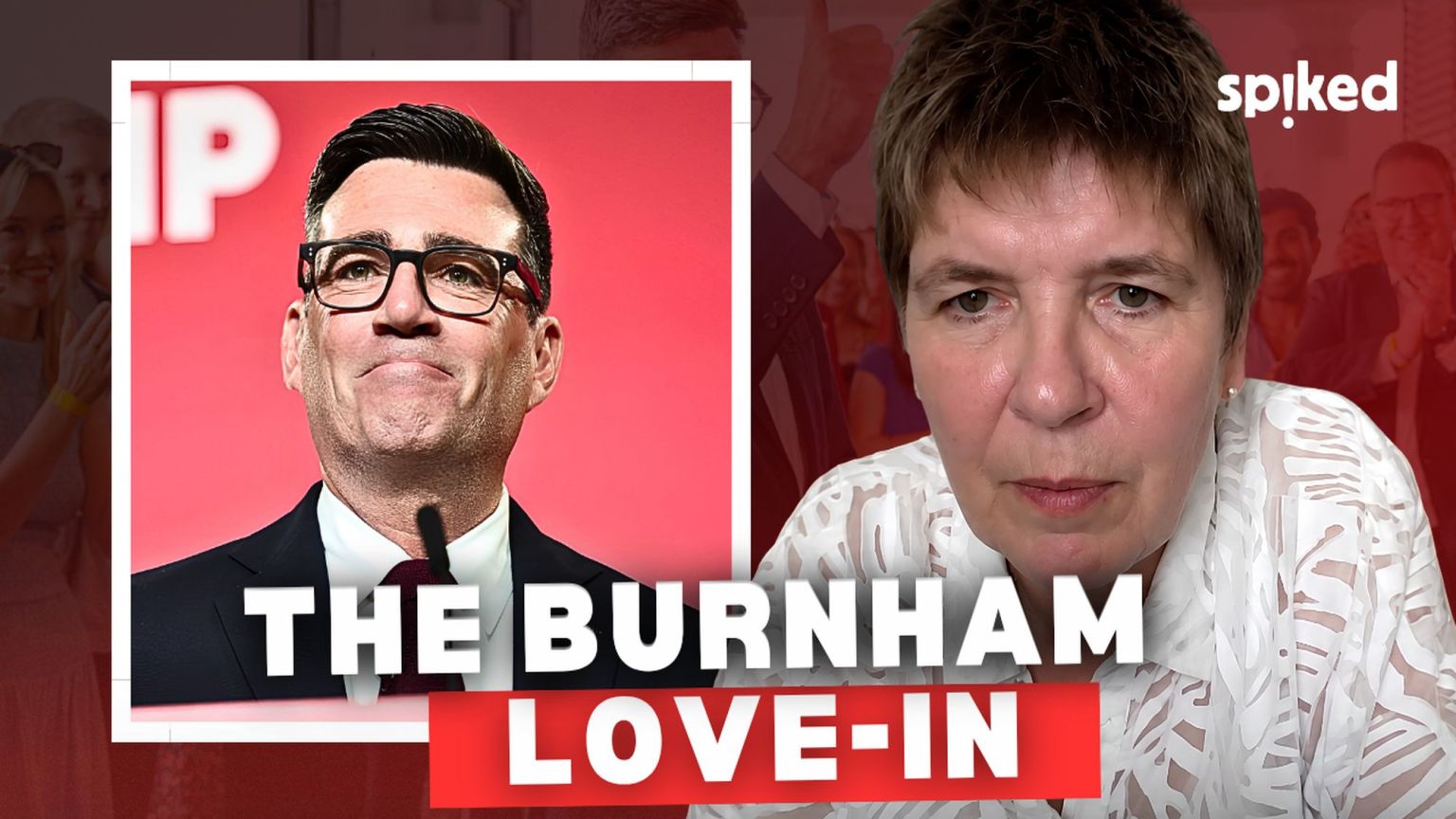
The post Andy Burnham’s empire of cringe appeared first on spiked.

I thought I wouldn’t mind turning 60 one little bit. After all, my 50s had been my best decade ever. Yes, my face was saggier, my memory iffier and my body didn’t bounce back from late nights or lengthy walks like it used to.
However, I felt more confident and content than I’d ever felt in my 20s, 30s or 40s. I was finally happy with who I was and where all the pieces of my life had landed. I had more zest for life than ever! So turning 60 wouldn’t make any difference. It really was just a number.
My 60th birthday landed with an unexpected thud. Almost overnight, I felt older and uglier, stiffer in my movements and foggier in my mind.
It turned out I wasn’t even imagining it. According to an article I stumbled across online, new research showed that there really is a sudden “burst” of ageing at 60 – a fast-forwarding of the disintegration process. But that wasn’t what was bothering me the most.
What really bothered me was that now that I’d tipped over into my 60s, people were starting to respond to me differently. I had to work a lot harder at parties to get people younger than me to engage in conversation – or even notice me in the first place. And teens and 20-somethings often brushed against me in the street now as if I literally wasn’t there.
I was becoming invisible.
My confidence started to shrivel. Before I knew it, I was caught in a negative feedback loop. The less readily people noticed or engaged with me, the less readily I did anything to make them notice or engage with me. I could feel myself turning into a meeker, milder, mediocre version of myself.
Was this the beginning of the end? Was I just meant to let myself shrink into my 60s? I wasn’t ready for that.
An idea started to form. Let’s make 60 count, I thought. Let’s take that number and play with it. Turn it into something positive and meaningful, fun and fulfilling, something that would let me reclaim my confidence and connection with people – whoever they were, whatever their age.
I decided to invite 60 random people to sit down and have a cup of tea with me. Some would be total strangers. Some would be people I’d noticed and was curious about from a distance. Others would be people I knew a tiny bit and wanted to know more. And I’d also include friends and family I knew well – or thought I did!
Because I wasn’t just looking for small talk, there needed to be a bit more to it, though. I decided I’d ask each person the same set of tea-themed questions – yes, tea! – that I hoped would gently springboard us into meaningful conversation and connection.
After all, I was an English person living in England, a country steeped in the tradition of “a nice cup of tea”. The drink is intertwined with our rituals, families, relationships and memories.
My own deep enjoyment of tea, I’m sure, has very little to do with the taste of it, and everything to do with the fact that the only consistent act of love my dad showed me as a child was to bring me a cup of it in bed – with milk, two sugars, and two biscuits – every single morning.
Still, my new, shyer, 60-year-old self wavered. Would people even say yes to my invites, or just think I was a batty old lady? Would I really dare to ask strangers? Would the questions actually work?
Before I could change my mind, Cup of Tea No.1 fell into my hands.
“I hear you’ve had a big birthday!” said a guy I bumped into in the street. He was a friend of a friend of a friend, and before I knew it, I was babbling out my 60-Cups-of-Tea idea, testing how it sounded when I said it out loud. He pounced immediately.
“I’ll be your guinea pig!” he said, and just a few days later, I was sitting in his garden in the sunshine, sharing a pot of fresh mint tea with homemade honey and semolina cake. We chatted for almost two whole hours.
“You know,” he confessed as I got up to leave, “Before you arrived, I told myself I’d hold my cards close to my chest… but I’ve told you everything – and really enjoyed it!”
At that moment, I knew I was on to a winning formula. I walked home feeling uplifted already.
From there, it just got better and better. I bounced from cup of tea to cup of tea, getting braver and braver about who I asked.
A Buddhist nun at a Buddhist temple.
The boss who fired me in my 20s.
A truck driver at a truck stop.
My hairdresser. We’ve only shared the tiniest of talk in the salon up until now.
Two street performers I encountered in the city centre.
By Cup of Tea No. 6, I was getting invites. Word was out.
“Would you have a cup of tea with me on the beach in front of my house?” messaged a woman I barely knew. She lived on a tiny, isolated peninsula cut off by the tide for hours every day. Absolutely, I would!
Part of the fun of this was mixing up where or how I had these cups of tea: I drank it up in a tree, wearing tutus, cruising on a houseboat up the canal, sitting in comfortable velvet armchairs on the edge of a cliff.

Courtesy of Claire Potter
And suddenly I’m exploding with the possibilities of who I could ask.
I wonder who the artist of that painting I love on my living room wall is? Let’s track them down!
How about that man I see out my window every day in his thobe on his way to prayer at the local mosque?
Why not ask my 96-year-old father-in-law? I’ve never had a proper one-to-one chat with him – quite bizarre when you consider that he produced 50% of my husband and I produced 50% of his grandchildren.
Didn’t that man I was introduced to the other day say he worked at the mortuary at the hospital? Let’s stare death in the eye with him. After all, that’s almost certainly where I’m going to end up.
Cup of Tea No.15 was with an ex-boyfriend I hadn’t seen for over 30 years – and he told me that he was coming dressed as a woman. He and I were together for three years at university in the ’80s. His cross-dressing, which had been secret back then (I’d only discovered it when I came home unexpectedly early from a lecture and caught him in my clothes and make-up) was, without doubt, a catalyst in our break-up.
I’m so pleased that he can now openly present as a woman when he wants to, but I find the thought of meeting him as a female mind-boggling and nerve-wracking nonetheless.
This person who sat down opposite me was unrecognisable. Then I caught that familiar, super-cheeky grin, and we relaxed into sharing memories – memories that belong only to us.
I’ve often thought how sad it is that we often never again get the chance to see someone from our past we loved intensely, someone we chose to share a precious chunk of our life with. I’m so happy we’ve had this opportunity to reminisce and reconnect. I think I’ve made a new girlfriend.

Courtesy of Claire Potter
And the cups of tea just kept coming.
An old friend I haven’t seen for years who is now sober.
An anti-female genital mutilation activist.
They were such big characters in my childhood, yet as adults, we’d only really seen each other at funerals. We recaptured the sleepovers we had as kids by having our cup of tea in pyjamas on the bed!
When I went on holiday to Thailand to reunite with my 18-year-old daughter, who had just finished three months of voluntary work there, I had a cup of tea with her at a tea plantation.
Over the best green tea we’d ever tasted, she started to reflect on the experience she’d just had, but was soon opening up to me about her childhood, her romantic relationships and her dreams. I realised how rarely we’d have such an honest conversation, because so rarely do I listen without a part of me wanting to pounce in with parental advice or opinion.
I realised how many times I must have stifled her with that you’ll-understand-when-you’re-older undertone.
“Ask me more questions!” she said at the end. A similar thing happened when I had a cup of tea with my 25-year-old son. The conversation cut through the mother-son dynamic we’d been stuck in since he left home at 18.
And I realised how much I’d “fossilised” him – automatically assuming I knew and understood him just because he was my son. I’m so glad I had that chance to tune into how he’s changed and catch up with who he has become.
Without exception, every single cup of tea was wonderful – and the people I invited seemed to enjoy it as much as me.
“Thank you. That really made me have a good think about things,” said one person.
“That felt like therapy!” said someone else.
“Such small prompts to such big conversations!” another told me.
Indeed, the tea-themed questions unlocked more than I could have imagined. The stories poured out – sometimes heart-warming, sometimes heart-breaking.
Climbing into bed with their mum and dad on a Saturday morning and feeling special because they were allowed tiny sips of their tea.
Always dreaming of treating their mum to a posh afternoon tea in London when they grew up but never getting to. She died before they grew up.
Having to keep their Sunday afternoon cups of tea at a department store with their grandad secret because he always brought along his mistress.
Sitting up a tree with their friends drinking tea and watching the sun rise at the end of university, so full of joy and optimism for the future.
Marrying a woman because the morning after the first night they slept together, they discovered she was the only person to ever make them a cup of tea exactly as they liked it.
Feeling soothed and touched by the flask of tea that a hotel receptionist in China brought to their room when they were anxious and exhausted with their newly adopted baby.
Writing the words of their wife’s obituary after she died by suicide: “I will forever love you. Rest in peace and we’ll meet again. Have a cup of tea waiting for me.”
Tea, it seems, really is tangled up with our lives.

Courtesy of Claire Potter
On a weekend trip to Zagreb, I was excited to sit down and share a cup of tea with the creator of the Museum of Broken Relationships, somewhere I’d wanted to go for a very long time.
As we parted, she told me she’d been thinking about having a slogan printed on the takeaway cups in the museum cafe, something jokey like HOW ABOUT CAKE? However, after our chat, she wondered if an open invitation like WOULD YOU LIKE TO SHARE A CUP OF TEA WITH ME? might be better – something to nudge people to take the risk of reaching out to someone new.
“An unexpected encounter between two humans, sharing something intimate – that’s when magic happens,” she told me.
My 57 cups of tea (only three to go!) have worked their spell on me for sure. I’m full to bursting with the warmth and joy of human-to-human connection, and my confidence has bounced right back.
I’ve learned that it’s never too late to make new friends, reignite old ones and strengthen – or adjust – the relationships you already have. And I now know that even if I can’t stop my age from making me less visible, I don’t need to let that stop me from being brave, curious and playful.
I’m going into my 60s full blast after all.
Claire Potter is an author of parenting books and children’s picture books. Her online program, Tiny Bites, leads parents through a three-step process to turn their child from a picky to an unpicky eater. You can see all the cups of tea she’s done at Sixty Cups of Tea.
Do you have a compelling personal story you’d like to see published on HuffPost? Find out what we’re looking for here and send us a pitch at pitch@huffpost.com.

Arizona Sheriff Leading Nancy Guthrie Search Wins Dismissal of $1.35 Million Lawsuit From Jail Inmate

ChatGPT AI Predicts This Exact Bitcoin Price by the End of 2026, and It’s Insane

The Anne Widdecombe investigation has been embarrassing for the police


-
 NewsBeat2 days ago
London Mayor Sadiq Khan handed a peerage by Keir Starmer alongside 15 other Labour figures… just days before the PM leaves No10
-

 Fashion16 hours ago
Weekend Open Thread – Corporette.com
-

 Crypto World2 days ago
CFTC blocks Kalshi from unwinding Michigan trades after court order
-

 Politics3 days ago
Young campaigners urge incoming PM to act on outdoor junk food ads
-

 Business2 days ago
Nvidia Stock Slips After Big Tuesday Rally as Huang Confirms Vera Rubin Chip Is Now in Production Today
-
 Entertainment3 days ago
Disney’s Most Ambitious Failed Star Wars Attraction Is Coming to SDCC
-

 Crypto World12 hours ago
Ripple wins EU-wide access as ESMA adds it to MiCA register
-

 Crypto World2 days ago
Injective Submits SEC Transfer-Agent Registration to Onchain Ownership Records
-

 Tech4 days ago
Get Your ESP32 Sunny Side Up With This Solar Dev Board
-

 News Videos4 days ago
XRP BOMBSHELL… XRP OMBOARDED FOR TRANSACTIONS!!!
-

 Business2 days ago
Palantir Shares Rise After Expanded Nvidia Partnership and Fresh Analyst Upgrades Ahead of Earnings Day
-

 NewsBeat22 hours ago
Registration is now open for March for Men with Kev 2026
-

 Tech4 days ago
Dark Secrets Emerge When Jailbreaking LLMs
-
 Sports3 days ago
New Cornerback Enters Vikings Trade Rumor Mill
-

 News Videos1 day ago
Money | Class 12 Economics | CBSE Board Exam 2026-27
-

 Business1 day ago
Banco Bilbao Vizcaya Argentaria, S.A. (BBVA) Discusses Global Macro Environment and Economic Outlook for Core Markets Transcript
-

 NewsBeat5 hours ago
Durham County Council to send out electoral registration emails
-
 Tech5 days ago
Cloudflare Precursor Watches Your Mouse and Keyboard To Decide If You Are Human
-

 Crypto World1 day ago
Claude Fable 5 Slips to Second in AI Coding Leaderboard
-

 Business15 hours ago
Airlines warn Sunshine Protection Act could disrupt flight scheduling
You must be logged in to post a comment Login