The U.S. House passed the Sunshine Protection Act to make Daylight Saving Time permanent. Fox Businesss Grady Trimble reports on the bill, which now heads to the Senate.
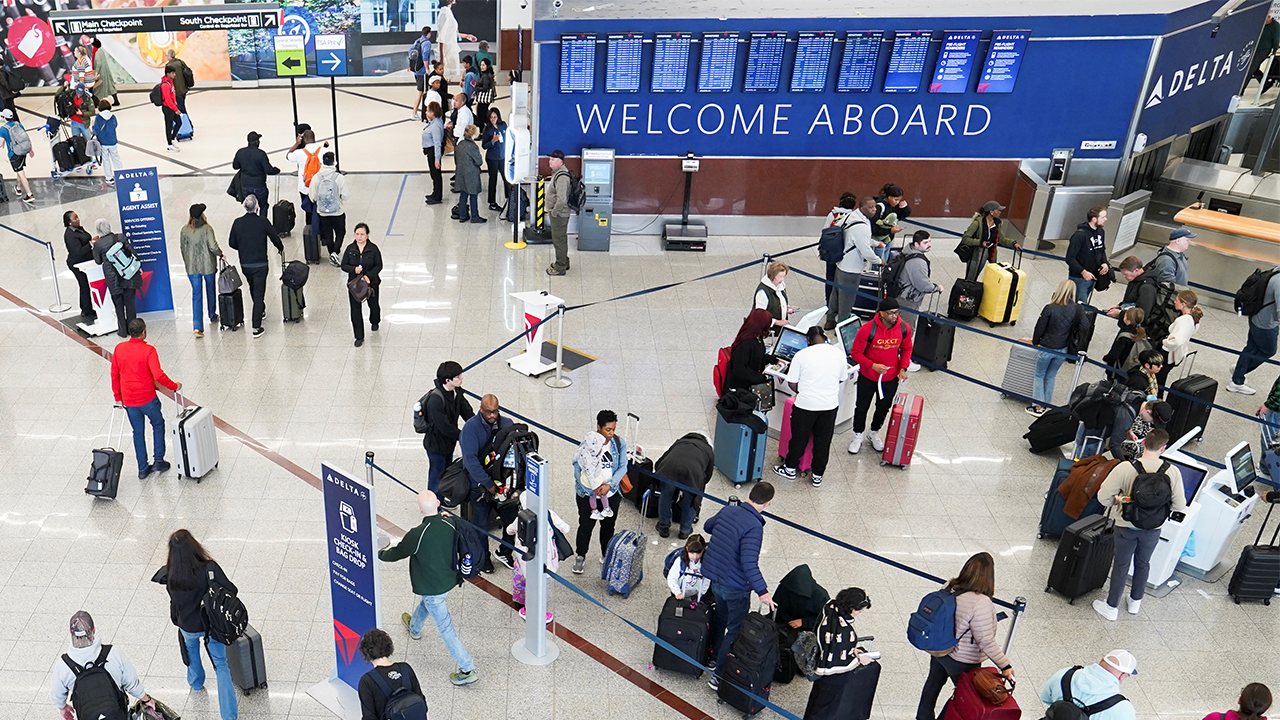
Airlines are warning that changes to existing practices around Daylight Saving Time (DST) would have a major impact on the industry and that changes would need to be implemented over time to account for challenges it would create for scheduling.
Airlines for America (A4A), a trade group that represents leading air carriers in the U.S., released a statement this week which warned that changes to DST “would have considerable implications for aviation, including passenger disruption, crew and aircraft positioning, and domestic and international connectivity issues.”
Advertisement
“Airlines operate expansive interconnected domestic and global networks that are reliant on stability and predictability. Any changes would need an implementation timeline that reflects these global complications,” the group said.
The warning came as the House on Tuesday advanced the Sunshine Protection Act, which would allow states to voluntarily observe DST throughout the year and end the twice-annual clock changes, on a bipartisan 308-117 vote that sent the legislation to the Senate.
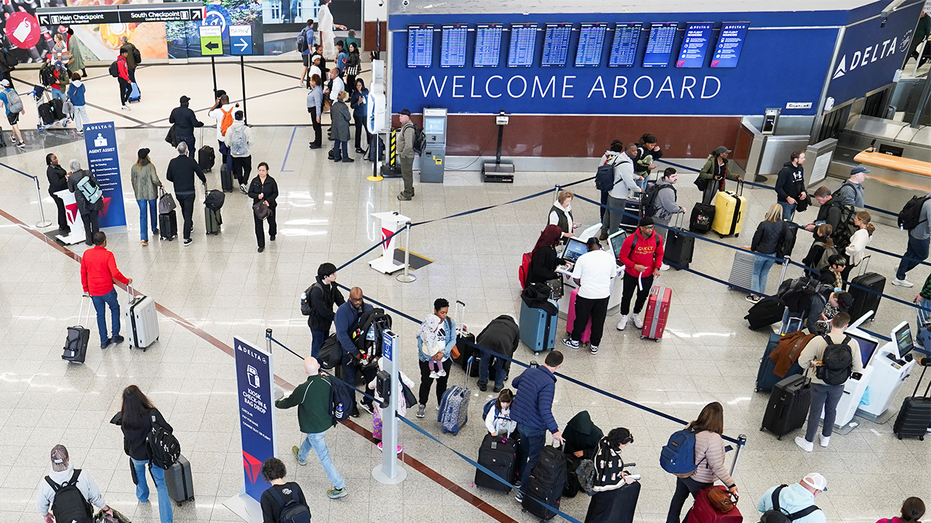
Airlines warned that reforming current practices around daylight saving time would create challenges that need an implementation timeline for the industry to address. (Reuters)
The bill faces uncertainty in the Senate, though President Donald Trump is expected to sign the bill into law if it reaches his desk, as the White House has urged lawmakers to support the legislation.
Advertisement
Most states currently follow the practice of “springing forward” in March by moving the clock forward an hour into Daylight Time, and then “falling back” by an hour in November into Standard Time.
Arizona and Hawaii are the only two states who don’t participate in that practice, while 20 states have approved legislation that would see them remain on DST permanently if authorized to do so by Congress.
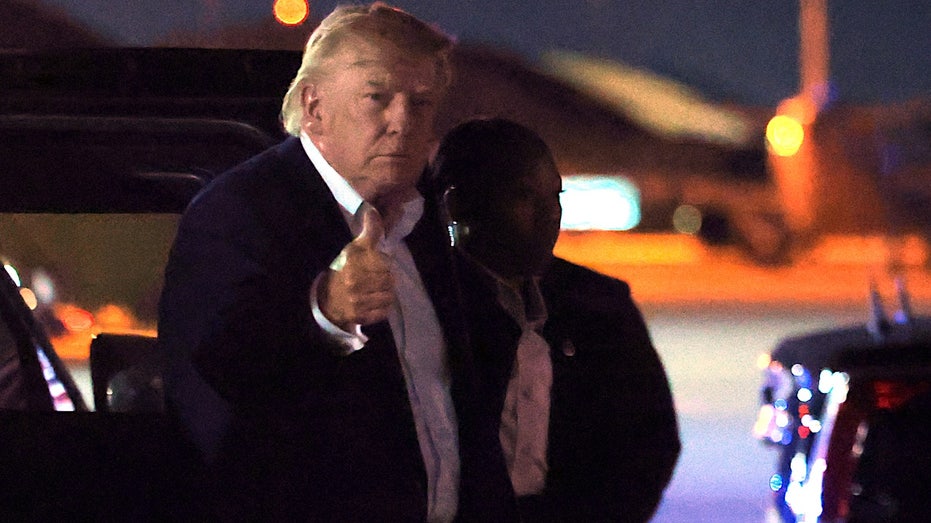
President Donald Trump has backed the bill to give states the option of permanent daylight saving time. (Anna Moneymaker / Getty Images)
Proponents of permanent daylight saving time argue it would eliminate the disruptions caused by switching clocks twice per year and boost tourism and outdoor activities with more sunlight in winter evenings.
Advertisement
Critics have argued that the earlier sunrises and sunsets of permanent standard time would better align with circadian rhythms, and would prevent situations when the sun may rise after 9 a.m. in the winter.
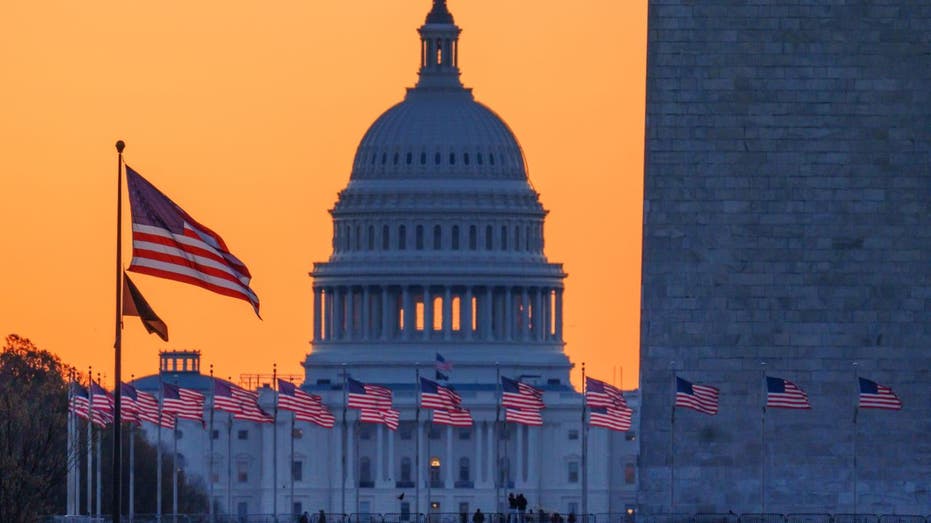
A House-passed bill to give states the option of permanent daylight savings time is under consideration in the Senate. (J. David Ake/Getty Images)
The American public remains broadly opposed to the current practice of changing the clock twice a year, as an AP-NORC survey released in December found just 12% of respondents were in favor of the current system, while nearly half were opposed. The remaining 40% had no opinion.
The survey also asked about possible reforms and found that 56% of Americans would prefer to make daylight saving time permanent with more light in the evenings and less in the morning, while about 4 in 10 would rather make standard time permanent to have more light in the morning and less in the evening.
Mark Mahaney from Evercore ISI discusses Netflixs stock decline after reporting slower growth for the second consecutive quarter. He notes market concerns that the streaming giants rapid growth days are behind it.
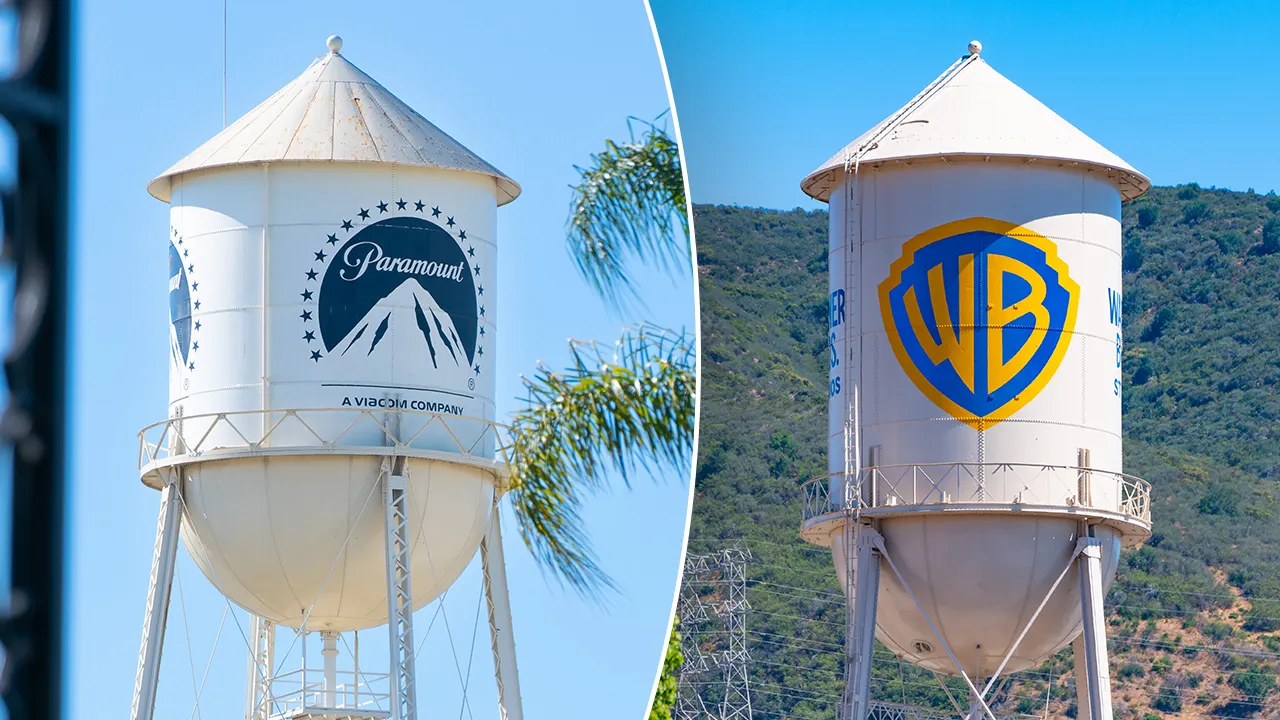
A judge on Friday declined to issue a ruling from the bench regarding California’s request for a temporary restraining order freezing Paramount’s planned takeover of Warner Bros. Discovery (WBD)
Paramount CEO David Ellison is seeking to acquire WBD in a $111 billion deal that was expected to close during the third quarter of this year, but California Attorney General Rob Bonta is leading a group of 12 state attorneys general who filed a lawsuit challenging the merger. The lawsuit claims the megadeal would “lead to higher prices, lower quality, and less content for film and television, harming movie theaters, basic cable distributors, and ultimately, audiences on every sofa and movie theater seat in the U.S.”
Advertisement
The lawsuit, filed in the U.S. District for the Northern District of California, claims that the merger violates Section 7 of the Clayton Act, which holds that mergers that may substantially lessen competition or tend to create a monopoly are illegal.
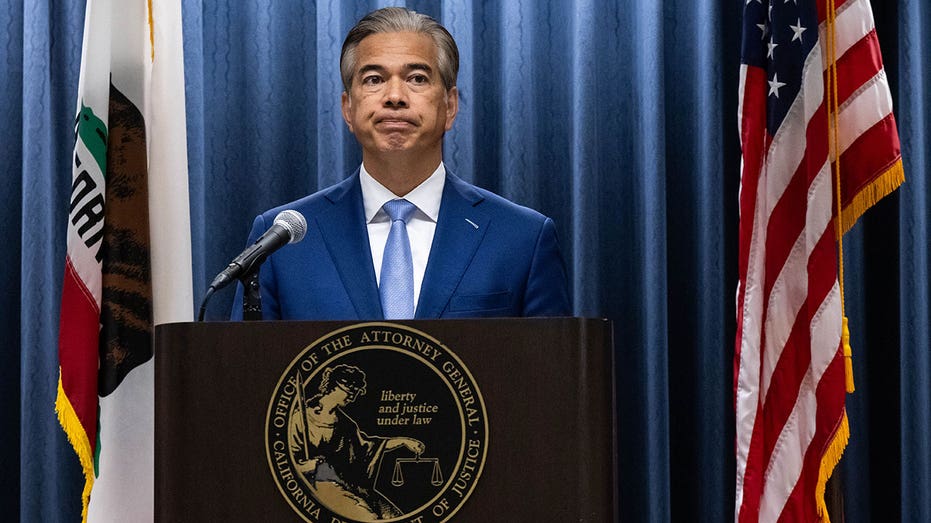
California Attorney General Rob Bonta believes Paramount’s planned takeover of Warner Bros. Discovery is “an illegal merger.” (AaronP/Bauer-Griffin/GC Images / Getty Images)
A TRO hearing on Friday got deep into antitrust law, with Paramount arguing the merger would actually increase competition while the state insists that combining two major Hollywood studios would hurt the industry while giving too much power to the company.
District Judge Araceli Martínez-Olguín promised to issue a ruling by July 22.
Advertisement
Paramount is seeking to move forward as soon as possible to avoid exorbitant ticking fees, a term for charges that accrue as the merger is delayed. Reporters were prohibited from taking photos or video of the hearing.
California Attorney General Rob Bonta. (Sarah Reingewirtz/MediaNews Group/Los Angeles Daily News via Getty Images / Getty Images)
The Justice Department (DOJ) announced last week it has closed its antitrust investigation into Paramount Skydance’s proposed acquisition of WBD, concluding the transaction is not likely to harm competition or American consumers.
The Antitrust Division said its eight-month review examined more than two million documents and found the deal could strengthen competition across the media and entertainment industry, including in streaming video, traditional television and theatrical film distribution. However, state attorneys general retain independent authority under antitrust laws.
Advertisement
Ellison, the son of billionaire Oracle co-founder Larry Ellison, took control of Paramount last year when Skydance Media and Paramount Global completed an $8 billion merger. Adding WBD to his portfolio would make the younger Ellison one of Hollywood’s most powerful people.
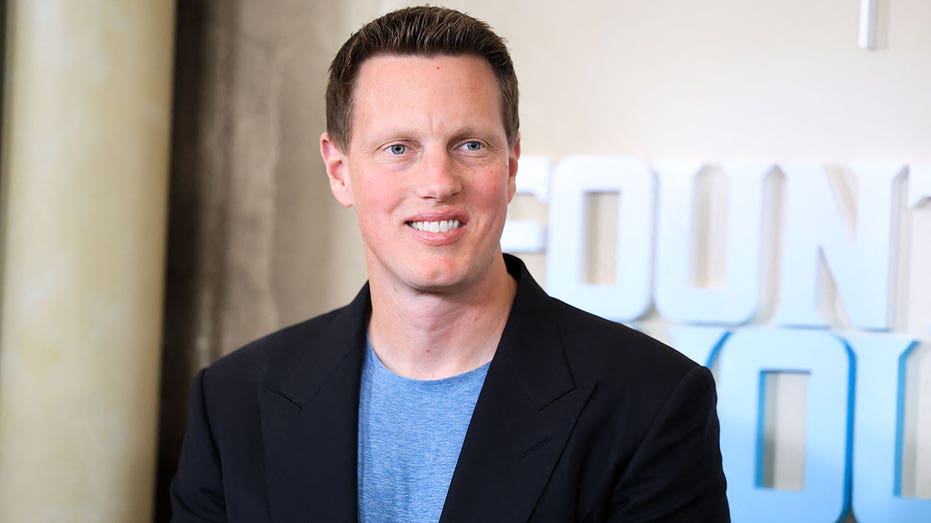
Paramount CEO David Ellison. (Charly Triballeau/AFP via Getty Images / Getty Images)
Paramount fired back Monday shortly after the complaint was filed, saying the lawsuit “reflects a fundamentally flawed application of the antitrust laws and is wrong on both the facts and the law.”
“We will vigorously defend the transaction and demonstrate that this challenge is inconsistent with sound competition policy and the competitive realities of the media marketplace. Delaying this transaction will only harm entertainment workers who have already suffered over recent years as technology has disrupted their livelihood and cost California tens of thousands of entertainment jobs,” a Paramount spokesperson said in a statement to Fox News Digital.
Advertisement
“The combination of Paramount and WBD will create a stronger, well-capitalized, creative-first media company that is better positioned to compete with companies like Netflix that have come to dominate the industry for audiences, premium content, and creative talent,” the spokesperson continued. “Put simply, any attempt to block this transaction undermines the very principles antitrust law is designed to promote: more competition, more choice for consumers, and more opportunities for creators and workers.”
Sandvik AB (publ) (SDVKY) Q2 2026 Earnings Call July 17, 2026 7:00 AM EDT
Company Participants
Louise Tjeder – Head of Investor Relations & VP Stefan Widing – President, CEO & Director Cecilia Felton – Executive VP & CFO
Advertisement
Conference Call Participants
Chitrita Sinha – JPMorgan Chase & Co, Research Division Alexander Jones – BofA Securities, Research Division John-B Kim – Deutsche Bank AG, Research Division Daniela Costa – Goldman Sachs Group, Inc., Research Division Sebastian Kuenne – RBC Capital Markets, Research Division Max Yates – Morgan Stanley, Research Division James Moore – Rothschild & Co Redburn, Research Division Vladimir Sergievskiy – Barclays Bank PLC, Research Division
Presentation
Advertisement
Louise Tjeder Head of Investor Relations & VP
A warm welcome to Sandvik’s presentation of the second quarter results 2026. My name is Louise Tjeder, Head of Investor Relations here at Sandvik. And beside me, I have our CEO, Stefan Widing; and CFO, Cecilia Felton. We will, as usual, start with the presentation. Stefan and Cecilia will take you through the highlights of the quarter. And after that, we go on to the Q&A session. So without further ado, over to you, Stefan.
Stefan Widing President, CEO & Director
Advertisement
Thank you, Louise, and welcome also from my side to the second quarter report presentation. To summarize the quarter, it was a very strong quarter with record revenues and profits. We see strong momentum across key regions and segments as well as also good price realization, which is, of course, very important in the current environment. Total order intake grew by 17% and organically, we grew by 17% as well. Total revenues increased by 24%, but organically 23%. Adjusted EBITDA came in at SEK 8.3 billion, up from SEK 5.6 billion in the prior year period. This corresponds to a margin of 22.6%, up from 19% and rolling 12-month EBITDA margin is now 20.4%. Adjusted profit for the period, SEK 5.8 billion, up from SEK 3.7 billion, and the free operating cash flow came
FOX Business’ Max Gorden joins ‘Varney & Co.’ to break down how the end of federal EV tax credits is shaking up sales and how Hyundai is betting big on electric and hybrid models.
Hyundai is recalling more than 47,000 Kona SUVs in the U.S. after discovering a defect with the rear center seat belt buckle that could increase the risk of injury in a crash.
The recall covers 47,749 vehicles, including certain 2025 Hyundai Kona Electric and 2026 Hyundai Kona models, according to documents posted by the National Highway Traffic Safety Administration (NHTSA).
Advertisement
The rear center seat belt buckle may fail to properly restrain an occupant during a crash, the automaker said.
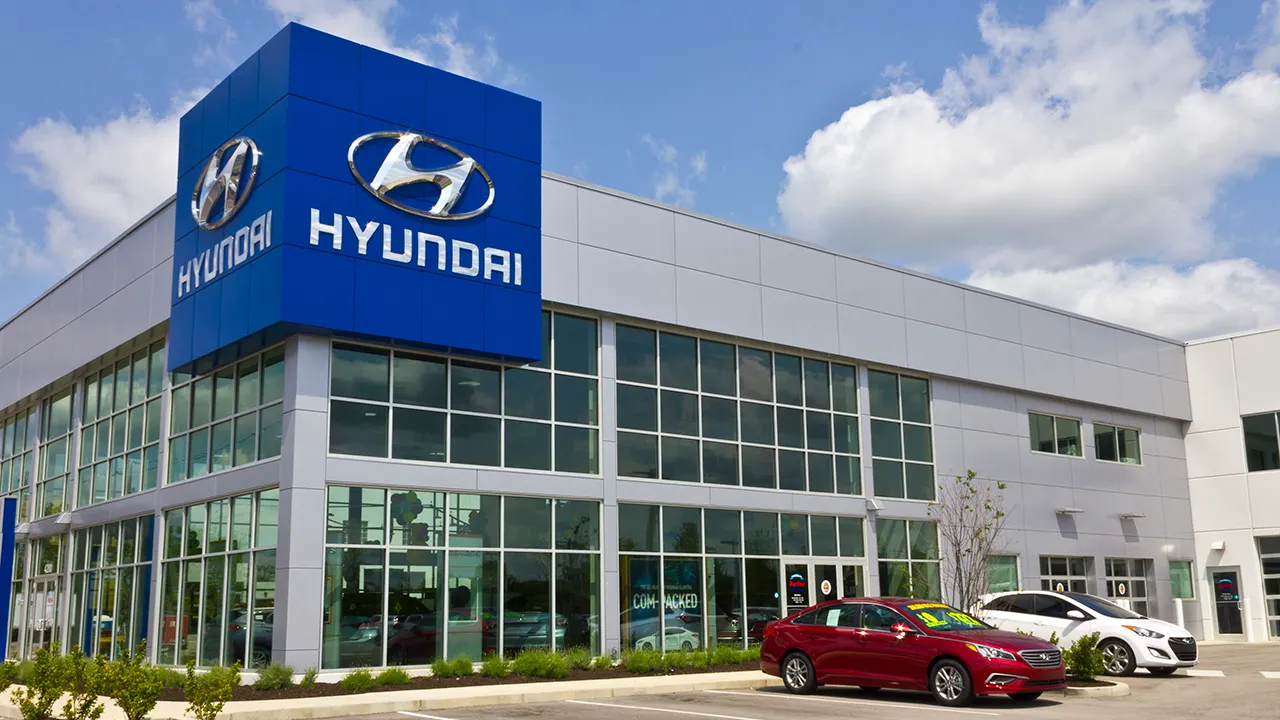
A Hyundai dealership in Indianapolis on May 15, 2016. Hyundai is a South Korean automaker. (iStock / iStock)
According to recall documents, Hyundai’s supplier, Joyson Safety Systems, notified the automaker in February that testing identified a potential problem with the rear center seat belt buckle used in the Kona.
Joyson determined the issue may have resulted from inadequate inspection controls that allowed metal stamping dies used to manufacture the buckles to remain in service beyond their intended lifespan, leading to excessive wear.
Advertisement
Although there have been no confirmed crashes, injuries, fires or other incidents related to the issue, Hyundai said it decided to conduct the recall “out of an abundance of caution.”
Dealers will replace the rear center seat belt buckle assembly free of charge. Hyundai also said it will reimburse owners who previously paid out of pocket to repair the issue.
Owner notification letters are expected to be mailed Sept. 11. Owners with questions can contact Hyundai customer service at 1-855-371-9460 and reference recall number 306. The NHTSA recall number is 26V452000. Vehicle identification numbers became searchable on NHTSA.gov beginning July 15.
Advertisement
A representative for Hyundai did not immediately respond to FOX Business’ request for comment.
Earlier this week, bosses at Tilray stressed that the brand was not for sale and planned to reject Watt’s takeover efforts.
A spokesman added: “Tilray Brands did not acquire Equity for Punk shareholder data as part of its acquisition of the BrewDog brand and assets; that records system remains under the control of BrewDog plc (in administration).
“Tilray acquired only a customer CRM database comprising individuals who explicitly opted in to BrewDog communications.
“For the avoidance of doubt, Tilray Brands (trading as BrewDog) and its current management team have no involvement in, affiliation with, or responsibility for James Watt’s business activities, including Second Best.”
Advertisement
The spokesman added that Tilray Brands did not “authorise, facilitate, or participate in the communications reportedly sent to former Equity for Punks investors and did not authorise the use of any acquired data for such purposes”.
“We take data privacy with the utmost seriousness and can categorically confirm that no data held by Tilray Brands has been shared with external entities or former directors,” he said.
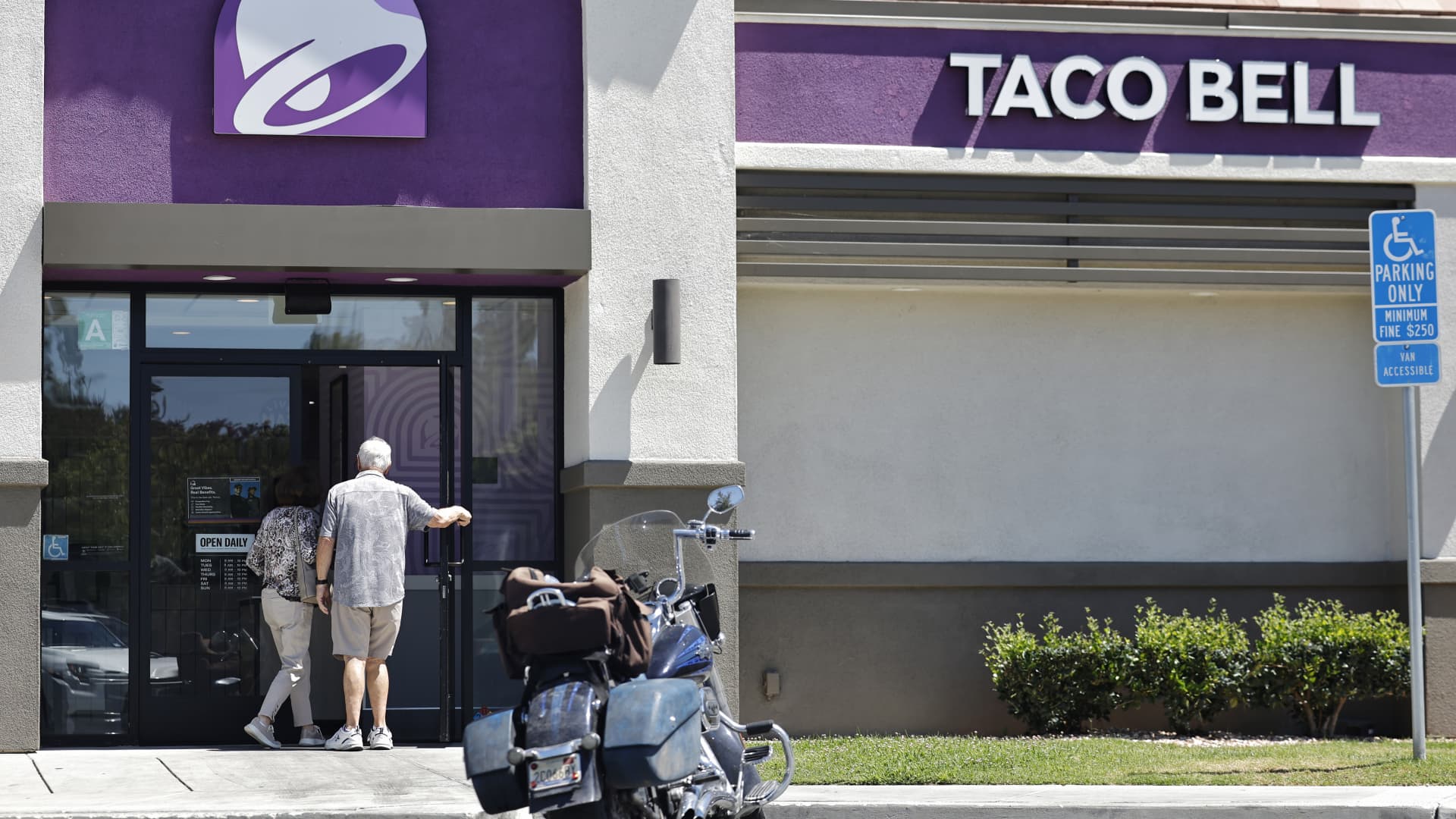
Customers enter a Taco Bell restaurant on July 14, 2026 in La Cañada Flintridge, California.
Mario Tama | Getty Images
The cyclosporiasis outbreak linked to lettuce at some Taco Bell locationsmay not have a significant long-term impact on the chain and other restaurant companies, according to analysts.
Advertisement
The outbreak has currently affected more than 1,600 people across five states, according to the Centers for Disease Control and Prevention. The infection resembles a serious stomach bug and often begins showing up two to three weeks after people become infected by the parasite, according to the CDC. No deaths have been reported.
On Thursday, the agency said its investigation into the source linked the outbreak to shredded iceberg lettuce served at Taco Bell locations in Indiana, Kentucky, Michigan, Ohio and West Virginia. The U.S. Food and Drug Administration is working with the supplier to determine if the lettuce was sent elsewhere, as well.
Taco Bell’s parent company, Yum Brands, saw its stock sink nearly 7% over the past five days as the company grappled with the health scare. Other food companies that sell fresh lettuce also saw their shares drop, like salad chain Sweetgreen, which plunged nearly 13% this week, and fast casual chain Cava, which sank more than 3%. Shares of Sweetgreen and Cava rose more than 17% and about 2% on Friday, respectively, due to apparent relief that the CDC did not identify their ingredients as potential sources of cyclosporiasis.
While Taco Bell or other restaurant chains may take a temporary sales hit as headlines about the outbreak swirl, particularly in the states most affected by it, analysts said any dips in revenue or stock prices likely will not be prolonged. Even so, it remains to be seen whether the CDC identifies any other restaurant chains as possible sources of the outbreak.
Advertisement
According to reports, the affected lettuce at Taco Bell may be traced back to supplier Taylor Farms, which distributes the product to many restaurant chains and sells directly in most grocery stores. Other media reports noted the company was preparing to issue a recall of ingredients on Friday.
Taylor Farms, the same company linked to the McDonald’s E. Coli outbreak in 2024, said in a Friday statement that it has removed all iceberg lettuce sourced from central Mexico. The company added that none of its branded salads or kits are associated with the outbreak.
“While the FDA traceback is indicating a specific independent farm, which represents less than 1% of the U.S.’s iceberg lettuce supply, as the potential source of the outbreak, we have removed all iceberg lettuce from the region indefinitely,” the company said.
Taco Bell said in a Thursday statement that the fast food chain is actively working to “voluntarily remove potentially impacted lettuce from a supplier in select states.”
Advertisement
“The affected ingredient from our supplier is being indefinitely removed from our supply chain nationwide and will be replaced within 24 hours in select states,” the company said.
Sweetgreen and other restaurant companies issued statements this week saying that they did not believe their ingredients were affected. The salad chain said it does not use iceberg lettuce on its menu.
“From the outset of the investigation, we have been in close contact with our suppliers to determine whether any ingredients in our supply chain have been identified as part of the investigation. To date, none have been,” the company said.
Chipotle, which did not see as much stock movement this week, said in a Friday statement that shredded iceberg lettuce is not served at its locations, and it does not believe its ingredients are associated with the outbreak.
Advertisement
The sales and stock effects
Yum Brands stock
Analysts say the outbreak likely won’t have a major effect on Yum Brands’ stock, especially based on how restaurants have fared during past health scares.
That’s not to say it won’t have a temporary effect. Recent data from Placer.ai found that chains serving fresh lettuce saw declining foot traffic over the past week, with Taco Bell’s down nearly 6% and Panera Bread down more than 7%.
Advertisement
TD Cowen analyst Andrew Charles told CNBC he believes the impact of the cyclosporiasis outbreak will be contained to a one-quarter risk for the company and culminate in a quick recovery. He said he expects that arc to look similar to how quickly both McDonald’s and Wendy’s recovered from separate E. Coli outbreaks in 2024 and 2022, respectively.
“Social media just leads to a lot more short-term memory loss,” Charles said. “We saw both times a quarter or less of an impact. Here, it’s a similar setup too.”
He added that the outbreak is also limited to toppings at Taco Bell rather than the meat itself, which is a core offering and would likely have a larger impact on consumer behavior. The Covid-19 pandemic has also lessened the impact of food safety concerns on the broader industry over the past few years, he added.
“We’ll have to wait and see from here,” Charles said.
Advertisement
Analysts at Evercore ISI wrote in a Friday note that they believe the outbreak will transform from a vendor issue to a supplier issue as the spotlight moves away from Taco Bell to Taylor Farms instead.
“Our guess is that over the coming weeks this food safety issue fades from the headlines and, to the extent it lingers, attaches more to the supplier than to Taco Bell specifically,” the analysts wrote.
While lower demand in the impacted Midwest states will likely last longer than in other areas of the U.S., the Evercore analysts said Taco Bell could return to positive same-store sales growth in a matter of weeks, just as McDonald’s did within roughly six weeks in 2024. That’s especially as the company has recently been “firing on all cylinders” with strong sales numbers, they added.
“The historical playbook for food-safety scares that carry no confirmed brand-level link and no fatalities, points to a one-to-two-quarter demand air-pocket and a stock that tends to recover within two quarters,” the analysts wrote.
Advertisement
It’s a lesson in marketing and brand loyalty for Taco Bell and other restaurants, too, according to Gerry Chiaro, an associate professor of marketing at Northwestern University. The company will need to regain customers’ trust, just as other restaurants like McDonald’s, Wendy’s and Chipotle have had to in the past after health scares.
“They have to be accountable for it. They can’t blame anybody, even though in a way, they’re the victim of the policies and processes and the food safety measures of their supplier,” Chiaro told CNBC. “But you can’t put the blame on it because the customer sees Taco Bell as the brand, and Taco Bell’s the one they engage with.”
Because health scares like the cyclosporiasis outbreak happen often and are par for the course for any restaurant serving fresh food, Chiaro said the playbook is becoming more common. And because Taco Bell has already issued a statement and pulled its infected ingredients, Chiaro said it’s likely to follow the recovery trend of other companies
“A very clear, accountable, transparent communication, a recommitment to our health safety and our food safety processes – it can make them better,” he said.
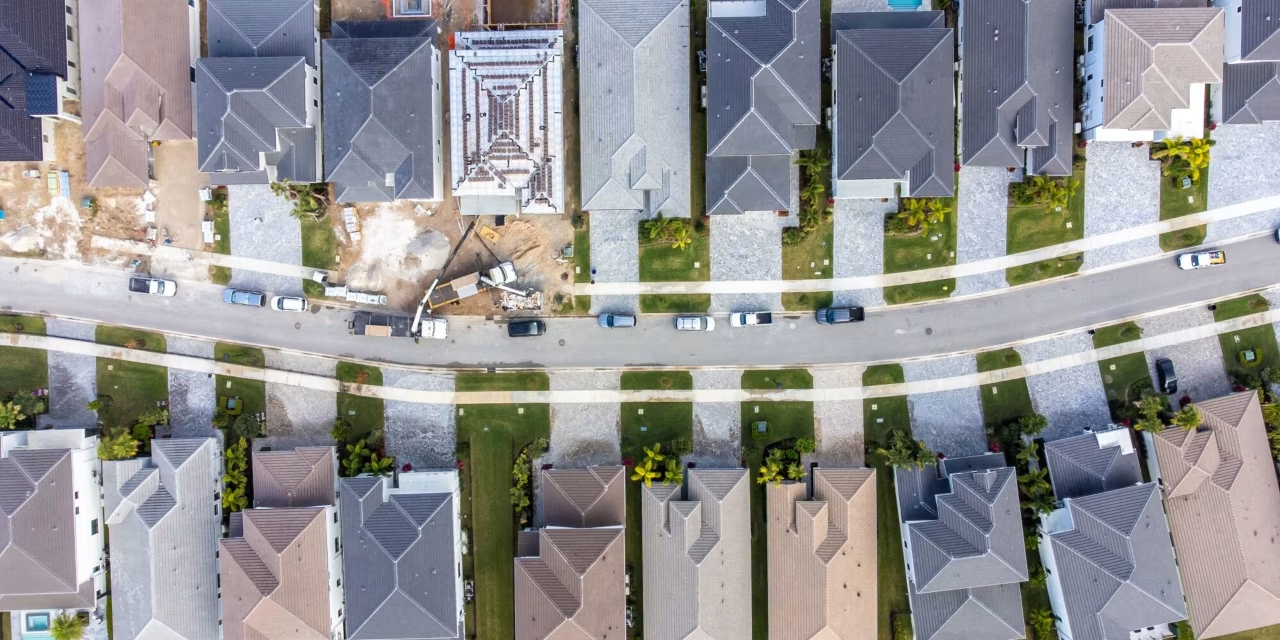
A new law aims to make Wall Street investors feel unwelcome in the market for existing homes, while at the same time urging them to build more supply. It is a tricky balancing act, and failure would push up rents.
Under the 21st Century ROAD to Housing Act, which passed into law last week despite President Trump’s refusal to sign it, investors who already own more than 350 family homes can’t buy any more from the existing housing stock. There are a couple of exceptions, however. One is to buy homes that need so much renovation that regular buyers don’t want them. Another is when the tenant is offered a right to eventually own the house.
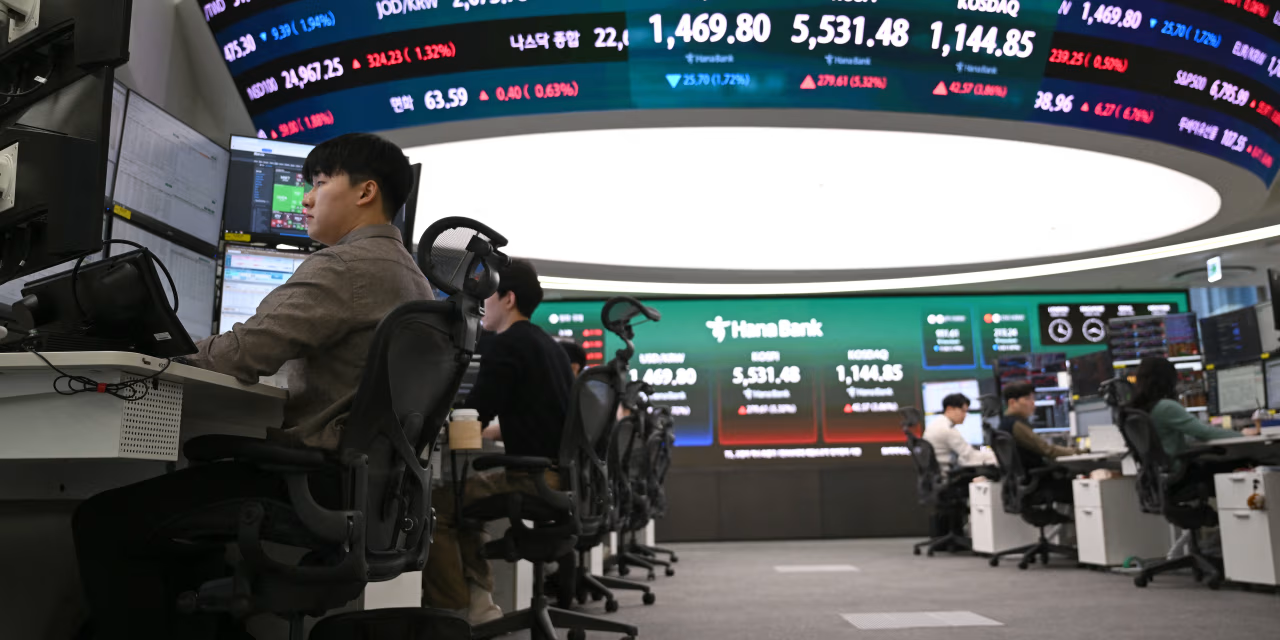
South Korea’s top financial regulator unveiled measures to curb risks from single-stock leveraged exchange-traded funds, seeking to stabilize a local stock market that has seen wild swings, as individual investors use debt to chase profits amid artificial-intelligence-related jitters.
The Financial Services Commission said Thursday that it would suspend new listings of single-stock leveraged ETFs, ban securities firms and asset managers from advertising or marketing such products, and triple the minimum cash deposit for new investments to 30 million won, equivalent to around $20,000.
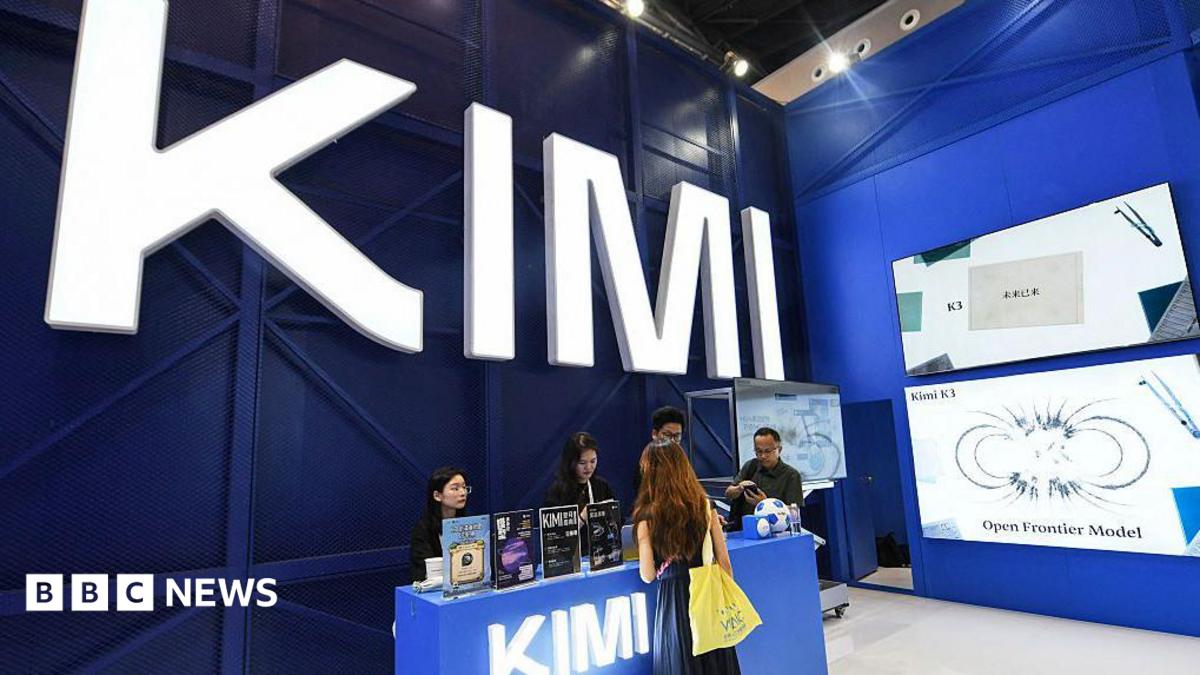
Chinese AI start-up Moonshot has unveiled a massive new artificial intelligence model it says can rival top American firms.
The company launched Kimi K3, containing 2.8 trillion parameters, which serves as a measure of an AI’s scale and processing power.
Kimi K3’s full capabilities – coding, knowledge work, and reasoning – will be known when it is released as an open-source model on 27 July.
The sudden breakthrough suggests that China’s tech prowess is rapidly narrowing the capabilities gap, upending long-held assumptions in the West that Chinese developers trail their American peers.
Advertisement
Its arrival later this month will make it the world’s first open-source model in the three-trillion-parameter class that can be freely downloaded, run and customised by outside developers.
The release comes at a highly sensitive moment for the global technology sector, just weeks after the US government abruptly forced American developer Anthropic to temporarily withdraw its flagship Fable and Mythos models due to severe cybersecurity concerns.
While Washington has since lifted those restrictions, the initial move highlights how the US government now views advanced AI software as critical national infrastructure, labelling frontier models as vital national security assets subject to strict export controls.
However, the rapid arrival of Kimi K3 suggests Chinese firms are successfully bypassing these regulatory barriers and advancing independently despite US restrictions on hardware sales.
Advertisement
Heavily backed by domestic tech giants Alibaba and Tencent, Moonshot has quickly risen to the forefront of China’s generative AI ecosystem.
In a statement the company said that K3 stands as Moonshot AI’s “most capable flagship model to date”.
Unlike closed, proprietary American systems from OpenAI or Anthropic, Kimi K3’s open nature allows global users to modify the system for advanced reasoning and complex software development.
Moonshot AI noted that the system is uniquely built to operate with “minimal human supervision” to sustain tasks such as engineering and coding.
Advertisement
Third-party evaluations from Artificial Analysis and Arena.ai show the model performing on a par with leading models in the US, such as OpenAI’s GPT and Anthropic’s Claude.
While the system’s massive size means running it locally requires significant computing equipment, making it open-source could heavily disrupt Silicon Valley’s commercial models.
The announcement had an immediate impact on shares in Moonshot’s domestic competitors Zhipu and MiniMax, which tumbled sharply in Hong Kong by about 27% and 16% respectively.
For all Londoners gripe about the city’s rainy weather, we learnt last week that the alternative is far worse. In a city famously averse to air conditioning, sustained temperatures above 35°C are tough to endure.
And so, speculation that Thames Water is considering a hosepipe ban is particularly unwelcome. Faced with “exceptionally high demand”, the supplier is already cautioning the capital’s residents to use water “wisely”.
The summer’s heatwave raises a thorny question that has been left unaddressed for far too long: what to do with Thames Water, London’s ageing water infrastructure, and the nearly £20 billion debt burden the company finds itself under?
The deceptively easy answer is nationalisation, and it’s one that’s attracted support from figures across the political spectrum. But advocates have not accounted for the astronomical cost nationalisation would impose on the British taxpayer.
For starters, even temporary nationalisation under a Special Administrative Regime, in which the government appoints an administrator to take control, will cost at least £4 billion, a figure likely to balloon significantly higher.
Advertisement
And that’s not to mention the enormous investment the company needs, amounting to at least £20 billion over the next five years just for critical infrastructure upgrades.
Add to this the multibillion-pound cost of compensating Thames Water’s creditors should full nationalisation go ahead, and the government is looking at an 11-figure black hole that will pull funds away from other vital public services, such as healthcare and defence.
These funds also need to be found quickly. Between treatment works, pumping stations and trunk mains, London’s water infrastructure is reliant on single points of failure. Without immediate investment, it is only a matter of time until large parts of the capital are faced with severe disruption to water supplies. In this heat, the government could find itself with a severe public health crisis on its hands.
Anyone questioning whether the government can find the sums needed to invest in Thames Water should look to the seven-year Hammersmith Bridge saga for the answer. Just last week, Hammersmith and Fulham Council confirmed that plans to reopen the bridge to motor traffic have been indefinitely stalled since there is “no financial option available that would allow its full restoration“.
Advertisement
Hammersmith Bridge’s restoration is estimated to cost £300 million – small fry compared to the £20 billion-plus Thames Water needs. The idea the government can source the funds required to fix London’s water system is, quite simply, fantastical.
And then there’s the question of the environment. For a city of London’s stature, it’s an outrage that raw sewage continues to be dumped into our waterways. The Oxford and Cambridge boat race two years ago, nearly derailed due to E. coli exposure which left several crew members vomiting, was a visceral reminder of the appalling state Britain’s waterways have been left in.
But a nationalised Thames Water would fare no better. The same ageing infrastructure, the same overflows; the only difference, the government would now be liable for the hefty environmental fines. It would, of course, be political suicide to levy these funds from the customer or the taxpayer, and so the result would likely be even laxer standards under government control.
Advertisement
The answer is abundantly clear: Thames Water needs investment the government cannot afford. The only feasible solution currently is London & Valley Water’s proposal, tabled by a group of creditors that has spent more than a year in discussions with regulators and the government.
The consortium has offered a substantial restructuring package that would write off approximately £9.4 billion of Thames Water’s debt, inject £3.35 billion in new equity, and provide a further £6.55 billion in financing. It has committed not to pay dividends until 2035, allowing investment to be prioritised over shareholder returns.
L&VW has also pledged to pay all Ofwat and Environmental Agency fines for non-compliance in full, protecting the public from any costs associated with fines or poor performance.
Nationalisation offers the promise of a quick fix which is impossible to deliver. It’s easy, therefore, to see why the issue is so seductive to politicians across the political spectrum.
Advertisement
But London doesn’t need more ideologically driven decision-making, and it most certainly does not want its water bills raised even higher – a likely result of the government shouldering Thames Water’s significant debt obligations and investment requirements.
The government must stop entertaining the nationalisation fantasy and start being honest with Londoners. A private sector solution is the only way to secure the urgent investment London needs to fix our water infrastructure.










































You must be logged in to post a comment Login