Connect with us
DAPA Banner
DAPA Coin
DAPA
COIN PAYMENT ASSET
PRIVACY · BLOCKDAG · HOMOMORPHIC ENCRYPTION · RUST
ElGamal Encrypted MINE DAPA
🚫 GENESIS SOLD OUT
DAPAPAY COMING

NewsBeat

Do patients who suffer heart attack have more micro and nanoplastic in their blood? New study assessed

Published

on

Do patients who suffer heart attack have more micro and nanoplastic in their blood? New study assessed

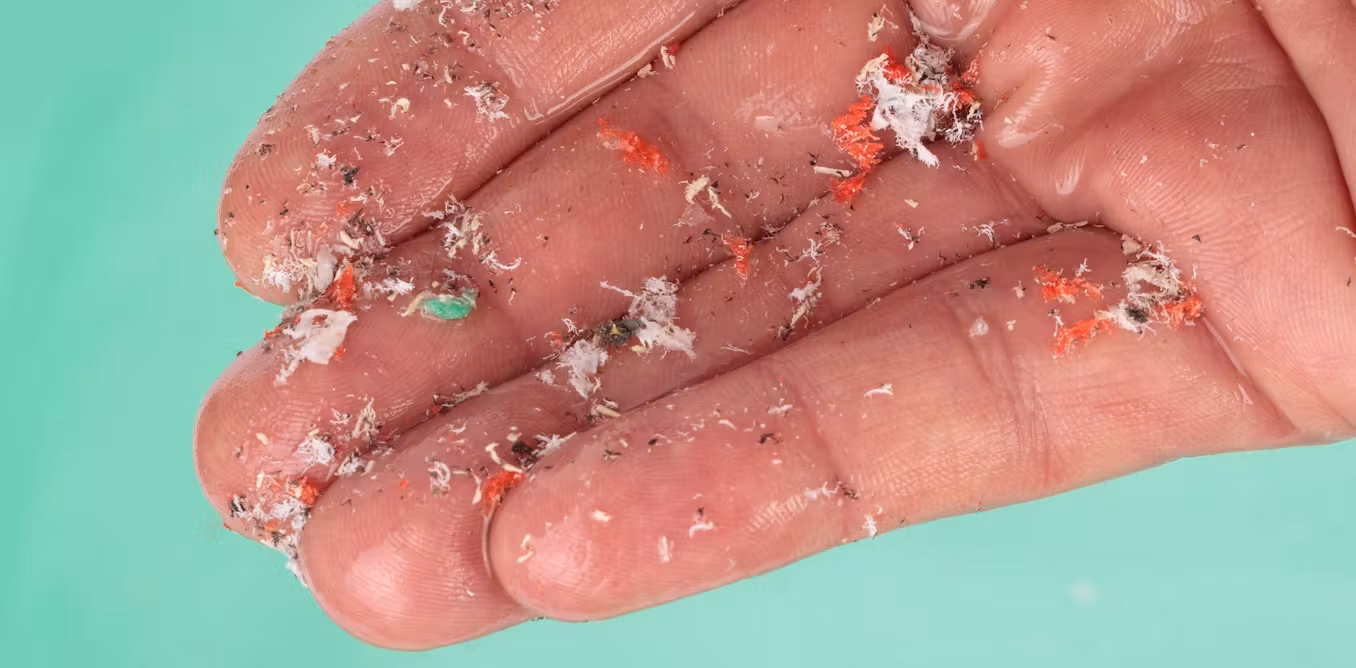
Microplastics are a big environmental issue. They’ve been found in oceans, drinking water, seafood, the air we breathe, and increasingly throughout the human body, from the placenta to the brain.

A new study by researchers in Italy, published in the European Heart Journal, adds another organ to that growing list: the heart’s own blood supply. But while the discovery of microplastics in coronary blood is concerning, the most intriguing finding may not be the plastics themselves. It is how they may be getting there.

Researchers found that people who smoke were six times more likely to have detectable micro- and nanoplastics in the blood supplying their hearts than non-smokers. Even more notable, every smoker who was also exposed to higher levels of air pollution had plastics detected in their blood, compared with just 12.5% of people who neither smoked nor experienced high pollution exposure. That is a remarkable difference, even in a small population.

Rather than simply confirming another harmful consequence of smoking, these findings raise an intriguing possibility: cigarettes may also act as an efficient delivery system for microscopic plastic particles. For decades we’ve understood why smoking damages the heart and blood vessels. Tobacco smoke contains thousands of chemicals that trigger inflammation, damage blood vessels, promote clotting and accelerate the build-up of fat inside arteries.

Advertisement
Smoking could be an efficient delivery system for micro- and nanoplastics.
Sophon Nawit/Shutterstock.com

The new research suggests another mechanism could be operating alongside these well-established risks. Cigarette smoke contains enormous quantities of fine particles that penetrate deep into the lungs. The researchers propose that inhaled micro- and nanoplastics may hitch a ride with these particles, crossing the delicate air sacs of the lung, called alveoli, and entering the bloodstream far more readily than previously thought. Air pollution may facilitate a similar process.

This doesn’t necessarily mean the detected particles originated from the cigarette itself, although most cigarette filters are made from the plastic cellulose acetate and may contribute. Rather, smokers inhale air that already contains microscopic plastic particles from synthetic clothing fibres, tyre wear, degraded packaging and countless other environmental sources. Smoking may simply make it easier for these particles to cross from the lungs into the circulation.

The researchers studied 61 patients undergoing a heart test called coronary angiography. They compared three groups: people who had experienced a heart attack, patients with stable coronary artery disease and people with normal coronary arteries.

Micro- and nanoplastics were detected in 84% of patients who had suffered a heart attack compared with 40% of those with chronic coronary disease and 32% of those with normal coronary arteries. Heart attack patients also carried a greater variety of plastic polymers, with polyethylene, commonly used in packaging, being the most frequently detected.

Advertisement

Importantly, the researchers also observed higher levels of inflammatory markers in patients with detectable plastics. Since inflammation plays a central role in destabilising fatty blockages in the heart and triggering heart attacks, this biological link deserves further investigation.

Why this isn’t proof yet

This study, however, does not prove that microplastics cause heart attacks. The study was based on a small number of participants and was observational. That means researchers identified associations but cannot determine whether one factor caused another.

People who smoke often experience greater exposure to environmental pollution and may differ in many other lifestyle factors that influence cardiovascular risk. Patients treated for acute heart attacks receive intravenous fluids and medical devices that themselves may introduce tiny plastic particles into blood samples.

That caution matters. Microplastics have become a topic that attracts considerable public attention, and it is tempting to assume every new discovery represents proof of harm. Science rarely works that way. Instead, each study contributes another piece to a much larger puzzle.

Advertisement

Whether or not microplastics ultimately prove to play a direct role in heart disease, this study reinforces a broader message that has become increasingly difficult to ignore. Our heart health is shaped not only by our genes and personal lifestyle choices but also by the environments we live in.

Air pollution is already recognised as a major contributor to cardiovascular disease worldwide. Smoking remains one of the largest preventable causes of premature death. If both exposures also increase the movement of environmental plastics into the bloodstream, they may represent overlapping rather than separate risks.

This idea fits with a growing understanding of the exposome; the sum of environmental exposures we accumulate throughout life. Rather than considering tobacco smoke, air pollution and plastic pollution independently, researchers are beginning to examine how these exposures interact.

The findings should not distract from the established reasons to stop smoking. Cigarette smoking already dramatically increases the risk of heart attack, stroke, cancer and chronic lung disease.

Advertisement

But if future research confirms that smoking also acts as a gateway through which microscopic plastics enter the bloodstream, it would add yet another mechanism by which tobacco harms health.

The statistic likely to resonate most with readers is also the simplest: in this study, every participant who both smoked and had high air pollution exposure had detectable plastics in their blood, compared with only one in eight people exposed to neither.

This small study doesn’t prove plastics caused heart disease, but it does remind us that smoking is more than a source of toxic chemicals. It may also be helping transport another modern pollutant to places in the body we never expected to find it.

Advertisement

Source link

Continue Reading
Click to comment

You must be logged in to post a comment Login

Leave a Reply

NewsBeat

what happens to marine life during heatwaves

Published

on

what happens to marine life during heatwaves

A dip in the sea can provide welcome relief after long stretches of hot weather – especially when the water is an inviting 20°C or more, as it has been recently across southern parts of the UK. But such sea temperatures are unusually warm, with UK waters being hit by the third major marine heatwave in four years.

Aside from obvious negative consequences for people, such as more drownings in open water, marine heatwaves can affect sea life of all sizes, from microscopic plankton to huge whales.

Around the world, such instances of unusually warm sea temperatures for five days or more have caused die-back of key species such as kelp, seagrass and corals.

Marine heatwaves have also caused death or changes to the life cycles of marine mammals and shellfish, as well as other species that depend on them, such as seabirds. They have caused species to migrate or shift their geographic range. These changes all disrupt ecosystems, with disastrous ramifications for oceanic food webs.

Advertisement

The UK’s first major marine heatwave, in June 2023, has been followed by another in May 2025 and the current heatwave in July 2026. Evidence of the impacts of these marine heatwaves is still quite limited, because some consequences can be subtle or take years to detect.

Extreme heat has been linked to harmful algal blooms around the UK. A surge in growth of microscopic algae develops when nutrients, warm temperatures, abundant sunlight and calm water combine to create ideal growing conditions.

Algal blooms can produce harmful toxins that accumulate in filter-feeding shellfish, causing severe illness or death in people who eat them. For that reason, the UK government works with food safety authorities to actively monitor marine biotoxins.

Warmer waters may have caused the influxes of octopus to the south coasts of Devon and Cornwall. Their predation on crab and lobster from pots has altered local fishery dynamics, with some fisheries now focusing on catching octopus.

Advertisement

A surge in jellyfish sightings has been suggested as another possible consequence of the latest marine heatwave. But early evidence suggests this may be due to more people at the beach reporting their observations.

Seabirds such as razorbills rely on fish as a food source – but marine heatwaves can destabilise the ocean’s food web.
AndreAnita/Shutterstock

Anecdotally, fishers have reported cold-water species such as cod shifting northward. Aside from affecting catch, such shifts may also affect seabird breeding and survival.

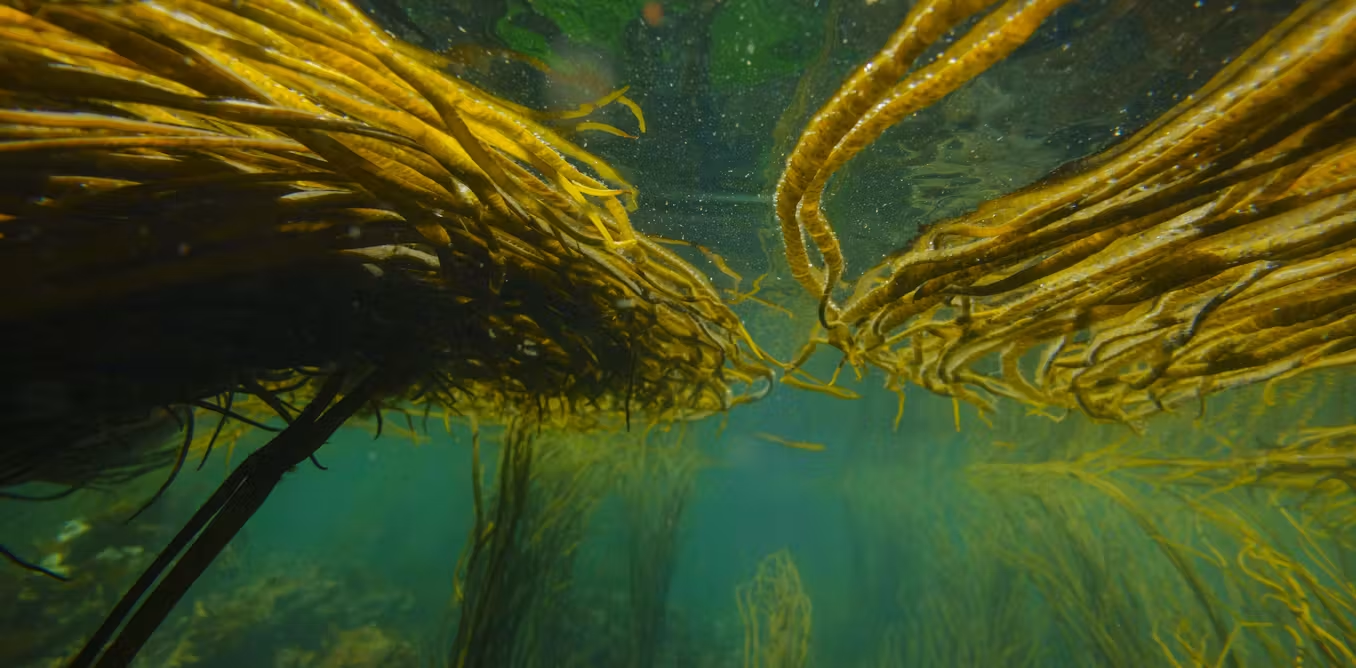
Seagrass beds and kelp forests have their own microclimates which can provide sanctuary from extreme heat. But they are also under threat from marine heatwaves, as warmer waters hinder their ability to provide refuge for marine species.

Advertisement

Because of changes to fisheries and ocean health, marine heatwaves have huge social and economic consequences.

In Western Australia, the consistently warm seas led to the coining of the term “marine heatwave” in 2011. This caused decimation of seagrass meadows, along with die-back of kelp, corals, fish, abalone, prawns and crabs. Some parts of that marine ecosystem took years to recover; other parts have never bounced back.

Forty questions

Now, the race is on to understand the knock-on effects of marine heatwaves and which marine species are most threatened.

Management interventions, such as harvest strategies or catch quotas, can protect breeding populations and young fish, helping to maintain healthy fish and shellfish numbers. The earlier these interventions are implemented, the better.

Advertisement
blenny fish peeking out of rock

Marine heatwaves can affect fish survival.
muratinan/Shutterstock

There is still so much that marine scientists need to understand about the effects of marine heatwaves. A diverse range of experts recently identified the 40 priority questions to advance understanding of the risks and opportunities of UK marine heatwaves. These questions centre on heatwaves’ effects on marine ecosystems, the services they underpin, the blue economy and society.

The UK’s 2023 and 2025 marine heatwaves did not occur during the month of August, when UK waters are at their seasonal warmest and added heat could tip conditions past critical thresholds.

Should the current marine heatwave continue into August, the consequences could be dire, giving these priority questions new urgency.

Advertisement

Source link

Continue Reading

NewsBeat

Ruthless plotter or dad dancer? Insiders reveal the real Andy Burnham

Published

on

BBC InDepth

Burnham is unusual in politics because even colleagues who are furious that he ousted Sir Keir Starmer say he is an affable and decent person.

But does he have the experience and skills to pick Labour’s morale up off the floor, and tackle the deep problems the country has?

One old friend wonders: “He is a lovely bloke, but I just don’t know if he is up to it – that is the honest question.”

Being Mr Nice Guy isn’t enough to be an effective prime minister in a confusing and brutal political era.

Advertisement

But you can be ruthless with a smile, and Andy Burnham is willing to follow advice from one of the most effective leaders of recent decades – not one of the prime ministers, but Sir Alex Ferguson.

I’m told the former Manchester United boss bumped into Burnham and wanted to chat politics.

He wanted to know why there had been so much bad blood and briefing between Tony Blair and Gordon Brown, saying if he’d been Blair, he would have “got him in a room, and said, you’re either with me, or you can sod off”. The actual phrasing he used was far ruder than that – but you get the drift.

A close ally of Burnham told me: “We might need the Ferguson hairdryer – this is our moment and we might have to tell people, if you’re not with me, well bye, and thanks for your time.”

Advertisement

Source link

Continue Reading

NewsBeat

England vs France: World Cup bronze final prediction, kick-off time, team news, TV, live stream, h2h results, odds today

Published

on

England vs France: World Cup bronze final prediction, kick-off time, team news, TV, live stream, h2h results, odds today

The Three Lions will face Les Bleus in the game that both sides really wanted to avoid this, after coming up short in their respective semi-finals in midweek.

Source link

Continue Reading

NewsBeat

Young man dies after two-vehicle crash in Doagh

Published

on

Belfast Live

“Officers, along with colleagues from the Northern Ireland Ambulance Service attended, however, sadly the motorcyclist was pronounced dead at the scene”

A young man has died following a two-vehicle collision on Friday, the PSNI has confirmed.

The PSNI said it was alerted to a crash between a blue Yamaha motorcycle and a blue Skoda Enyaq in the Ballymena Road area of Doagh at the junction of Deer Park Road at around 1.40pm on Friday.

The Northern Ireland Ambulance Service also attended but the motorcyclist, 26-year-old Jamie Fleming, was pronounced dead at the scene. Mr Fleming was from the Ballyclare area.

Advertisement

Detective Inspector Stewart, from the Collision Investigation Unit, said: “Our inquiries are continuing and we would appeal to anyone who witnessed the collision, or who may have any information which could assist with our investigation, including dashcam or other footage, to contact the Collision Investigation Unit on 101, quoting reference number 827 of 17/07/26.”

Members of the public can also submit a report online using the non-emergency reporting form at psni.police.uk/makeareport/ or anonymously via Crimestoppers on 0800 555 111 or crimestoppers-uk.org.

A funeral notice for Jamie read: “July 17th 2026 as the result of a tragic road accident, aged 26. Late of Doagh, Ballyclare.

“Deeply loved son of Cathy and Alan, much loved brother of Dan and partner Leah, Lauren and partner Adam, devoted Uncle Jamie of Joseph and Hollie, and dear grandson of Brian and the late Ray. Family and friends are welcome to call at his home from Sunday afternoon onwards.

Advertisement

“A Service will be held in Antrim & Newtownabbey Crematorium on Wednesday 22nd July at 11.00 a.m. Donations in Jamie’s memory, may be made to Crosskennan Lane Animal Sanctuary online via flemingandcuthbert.co.uk or by telephone (028 9334 4242 Mon – Fri 9.00am – 5.00pm).

“The stories will be told, the laughs will be shared. You’ll never be forgotten.”

For all the latest news, visit the Belfast Live homepage here and sign up to our daily newsletter here.

Source link

Advertisement
Continue Reading

NewsBeat

Trees left ‘neglected’ and ‘sad-looking’ on recently redeveloped Cambridge road

Published

on

Cambridgeshire Live

Residents feel the trees are ‘sad-looking’ and have a lot of overgrowth around them

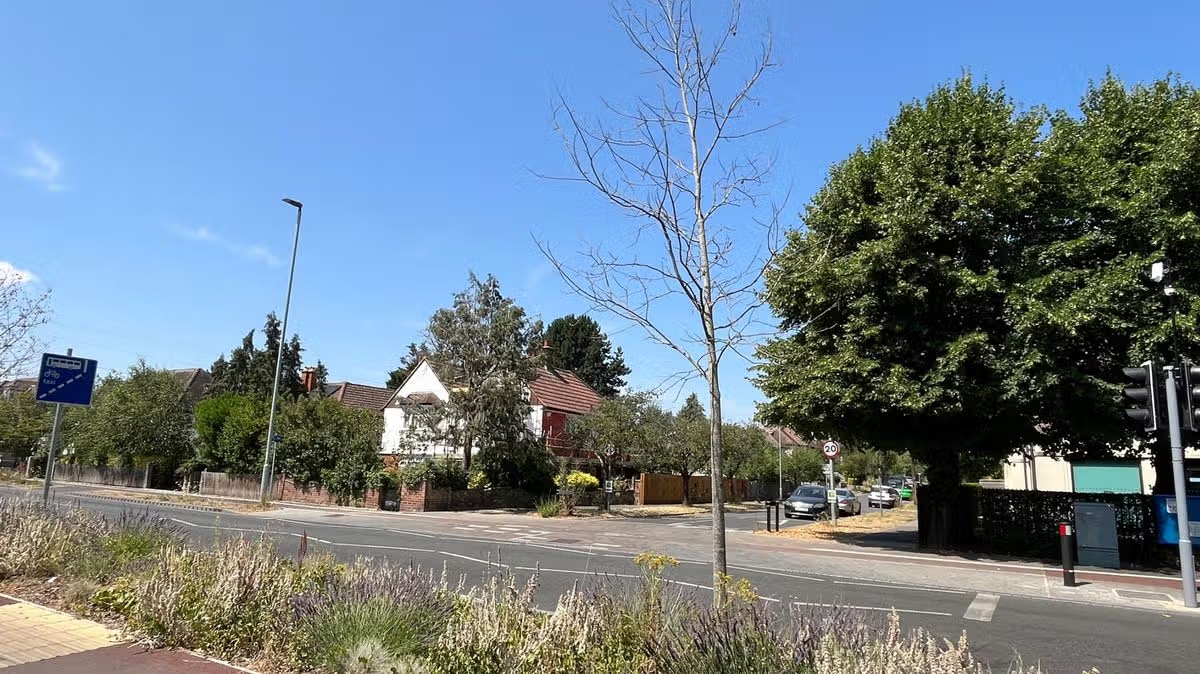
Residents feel nearly 200 trees planted as part of a major road project have been left “neglected”. The Greater Cambridge Partnership (GCP) recently redeveloped Milton Road, aiming to improve public transport, cycle, and walking infrastructure.

Advertisement

As part of the project, the GCP planted 199 new trees. Since the project’s completion, some residents feel the trees have been “abandoned”, and say they have been left in an unappealing state.

Naina Cowell, who’s lived on Milton Road for 47 years, said the trees look “neglected”. She said: “I miss the cherry blossoms. I like the road improvements, but it would have been nice if they planted proper things. I think greater thought could have gone into making the road prettier. Trees are important, but they are neglected.”

Another lady, who wished to remain anonymous, agreed and said the trees were “sad looking”. She added: “They vary in size, like some look fairly bushy, but then some are so small. It makes the road look bad, considering it’s quite a big road into Cambridge. There’s a lot a lot of overgrowth around then that could be better cared for. It doesn’t make the road look very appealing.”

Ashwin Patel, who has lived along the road for over 50 years, said the state of the trees “doesn’t look good”. “It’s not a view I want from my office,” he said. He added: “We don’t have complaints about the trees, as long as someone tidies up. But it’s annoying as they need to be tidied up.”

Advertisement

Andrea, who asked to use only her first name, said the trees look “worse” further down the road. She said: “The project was to make the road better, but I don’t think they thought a lot about the trees and greenery.”

The GCP planted the trees as part of the Milton Road project, but Cambridge City Council now oversees the maintenance of them. A spokesperson for the GCP said it was “sad” to hear about some of the trees along Milton Road.

They added: “When we delivered the Milton Road project in 2024, we planted 199 trees. Last year, we replaced some trees and this year, Cambridge City Council took on the maintenance of the trees. We understand the trees have been added to the City Council’s tree regime and are being managed in accordance with their policies.”

Advertisement

A Cambridge City Council spokesperson said: “Cambridgeshire County Council owns the trees planted through the GCP’s Milton Road improvement scheme, while Cambridge City Council maintains them under existing highway tree arrangements. Scheme funding covered an initial two years of watering and replacement planting, during which survival rates were generally good. After this the trees entered the city council’s routine maintenance programme.”

The spokesperson went on to say that tree establishment and survival is based on a range of factors, including weather, species, planting stock, and site conditions. They added: “The city council monitors trees within its maintenance programme and considers appropriate management interventions according to their condition and individual circumstances.

“An unusually dry winter and spring, followed by prolonged hot weather, have caused stress to trees across Cambridge, including those on Milton Road. River birch trees appear particularly affected, as larger specimens can be harder to establish despite becoming more drought tolerant over time.”

The council said it will continue to work with the GCP to monitor the trees, including through live monitoring by contractors to when they are watered. They added: “[The council] will consider appropriate measures to support those that remain capable of successful establishment, and assess any failures for replacement, subject to available funding and wider planting priorities.”

Advertisement

Source link

Continue Reading

NewsBeat

Man Utd XI vs Wrexham: Predicted lineup, confirmed team news, injury latest for pre-season friendly today

Published

on

Man Utd XI vs Wrexham: Predicted lineup, confirmed team news, injury latest for pre-season friendly today

The majority of United’s representatives in North America will not feature in the first pre-season fixture of the summer, explaining the absences of Bruno Fernandes, Diogo Dalot, Matheus Cunha, Noussair Mazraoui, Altay Bayindir, Amad, Senne Lammens, Kobbie Mainoo, Marcus Rashford, and of course, World Cup 2026 finalist Lisandro Martinez.

Source link

Continue Reading

NewsBeat

Boy, 12, mauled to death by crocodile as he washed hands in river

Published

on

Daily Mirror

WARNING: GRAPHIC CONTENT Horrifying footage from the scene of the attack in Uttar Pradesh, India, captured the moment 12-year-old Sunil was thrashed around by a killer crocodile

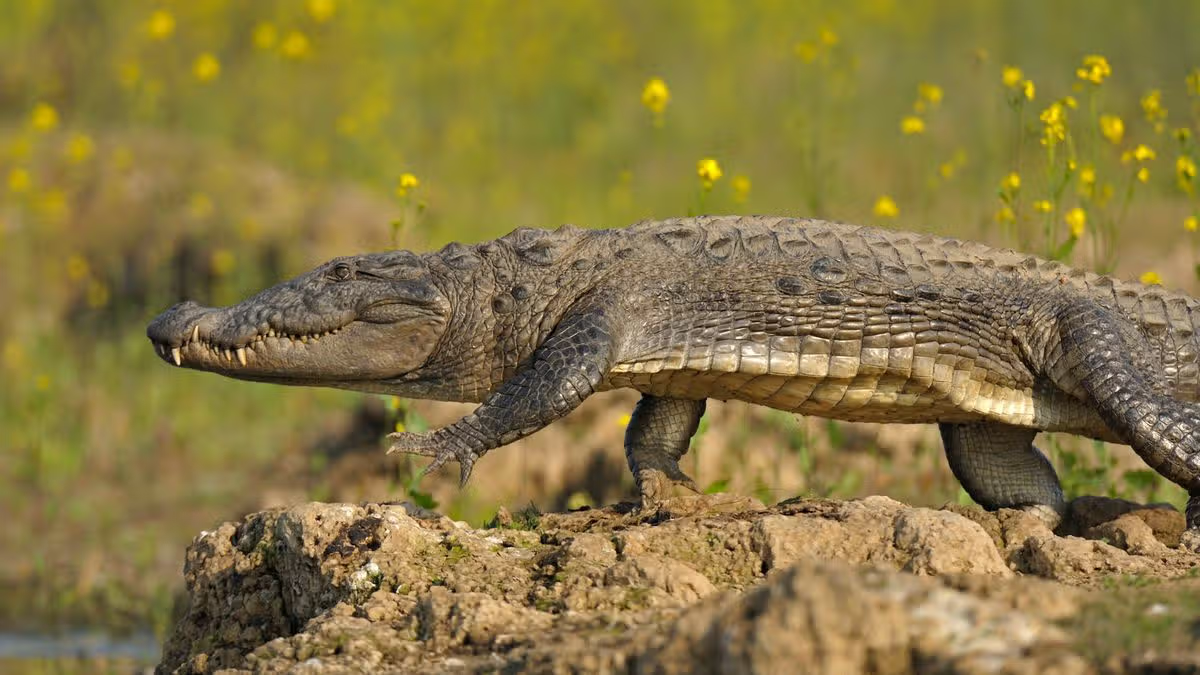
A 12-year-old boy was snatched and hurled around by a crocodile in a deadly attack in front of his uncle as the two knelt down to wash their hands in a river.

Advertisement

Distressing footage captured the moment the reptile thrashed about with the child clamped between its jaws after rising out of the water in Baundi, in India’s Uttar Pradesh, on July 16. The boy, named Sunil, had been helping his uncle plant rice seedlings that afternoon when he and his guardian stopped at the Ghaghara River on the way to their home in Tikuri to wash their hands and feet.

As the two bathed, the youngster’s leg was snatched by the crocodile, which suddenly emerged from the river and dragged him in, leaving bystanders watching on in horror as he was pulled to his doom.

The 6pm attack took place after Sunil had worked for several hours with his uncle, Vijay Raj Singh, and the two had stopped to wash off dirt they had accumulated during the day. Mr Singh raised the alarm when the boy was dragged under water, and tried desperately to free him from the croc’s grip.

Advertisement

Locals, one of whom started filming the shock scenes, quickly tried to intervene but to no avail as bricks, stones and sticks failed to stop the predator’s rampage.

Sunil was repeatedly thrashed for some time before the crocodile made a bid to escape, dragging the boy into deeper water before eventually disappearing from sight. Locals quickly mounted a desperate search for the young boy using bamboo poles to try and locate his body in the water.

After several hours of searching, the group was able to recover Sunil’s remains from the water, with his body removed at around 10pm that day.

Advertisement

Local authorities said his right leg and abdomen had been partially eaten when they found him later in the day, adding that his right leg and lower waist were severely mutilated. TN Maurya, a station house officer from the nearby Baundi police station, confirmed that footage circulating in the aftermath of the attack was real.

Schoolboy Sunil was an orphan who had lost both of his parents some years earlier and was being looked after by his uncle. He is survived by a brother and two sisters

According to local reports, state authorities are set to compensate his remaining family with a payment of 400,000 INR (£3,091) following his death. Forest officials have said they are monitoring the area after the attack, although residents have long used the Ghanghara River waterway for their daily activities despite the continued presence of crocodiles.

Advertisement

Source link

Continue Reading

NewsBeat

South Africa vs Wales LIVE: Score updates, TV channel and start time

Published

on

Wales Online

Steve Tandy has made six changes to the side that lost 35-21 to Argentina in San Juan.

Wing Louis Rees-Zammit replaces Ellis Mee while there is also a new centre partnership with Ben Thomas and Max Llewellyn replacing Joe Hawkins and Eddie James.

There is also a change at outside-half with Dan Edwards selected in place of Sam Costelow.

Advertisement

Alex Mann returns at blindside flanker in place of James Botham while Teddy Williams replaces the injured Ben Carter at lock.

Freddie Thomas, Tommy Reffell and Reuben Morgan-Williams come onto the replacements bench.

Wales: Murray; Rees-Zammit, Llewellyn, B Thomas, Adams; Edwards, Tomos Williams; Carre, Lake (capt), D Lewis, Teddy Williams, Beard, Mann, J Morgan, Wainwright

Replacements: Elias, N Smith, Warren, F Thomas, Reffell, Botham, Morgan-Williams, Hawkins.

Advertisement

Source link

Continue Reading

NewsBeat

Transfer news LIVE: Rogers to Arsenal FC, medical booked; Man Utd to make Kone bid; Chelsea, Liverpool latest

Published

on

Transfer news LIVE: Rogers to Arsenal FC, medical booked; Man Utd to make Kone bid; Chelsea, Liverpool latest

Tottenham have already spent over £200million this summer and remain interested in further reinforcements, though they have rejected an offer from Newcastle for Lucas Bergvall. Liverpool have tied down Dominik Szoboszlai to a new contract but are targeting a forward signing, or two, amid links to Bradley Barcola. Follow the latest transfer news, gossip and rumours live below!

Source link

Continue Reading

NewsBeat

Murder investigation launched in Bolton as woman arrested following death of pensioner

Published

on

Manchester Evening News

If anyone has any information, CCTV footage or mobile phone footage that may relate to GMP’s investigation you can provide it via the Major Incident Public Portal here: Public Portal.

You can also contact police via 101 or the Live Chat at gmp.police.uk, quoting log 744 of 17/07/26.

Alternatively, you can contact the independent charity Crimestoppers, anonymously, on 0800 555 111.

Advertisement

Source link

Continue Reading

Trending

Copyright © 2025